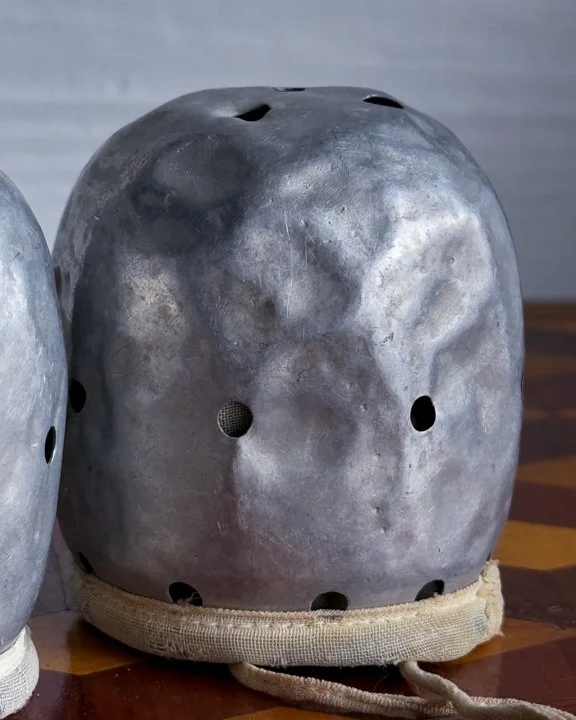
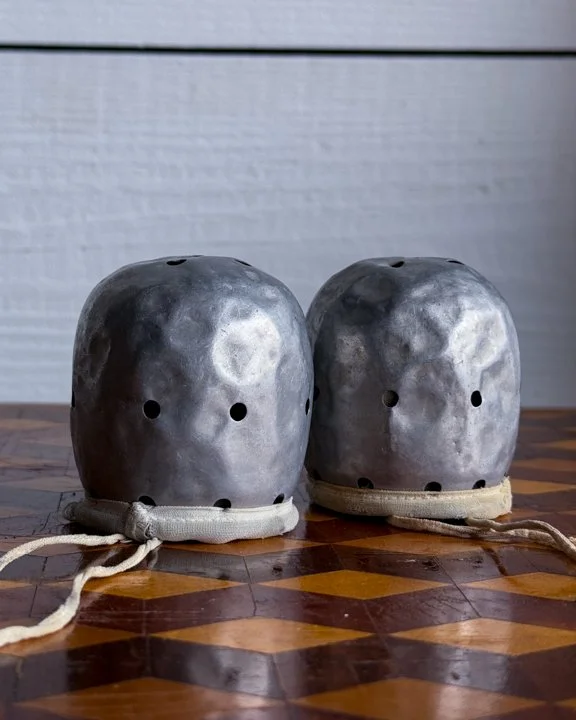
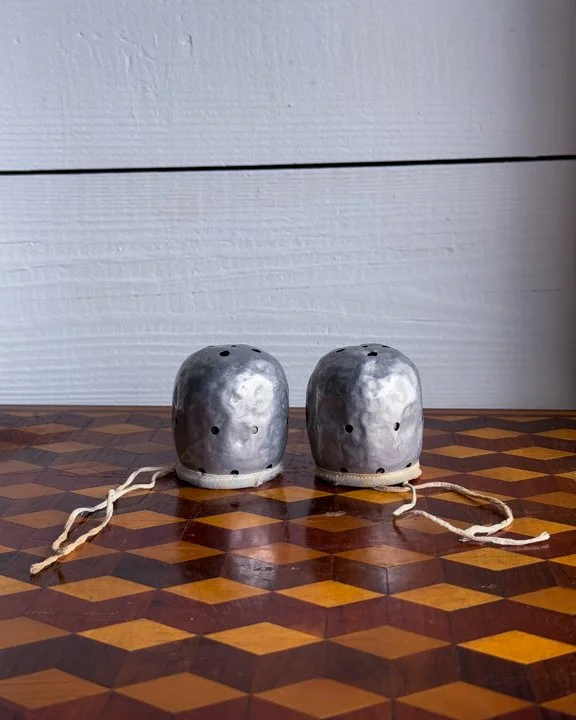
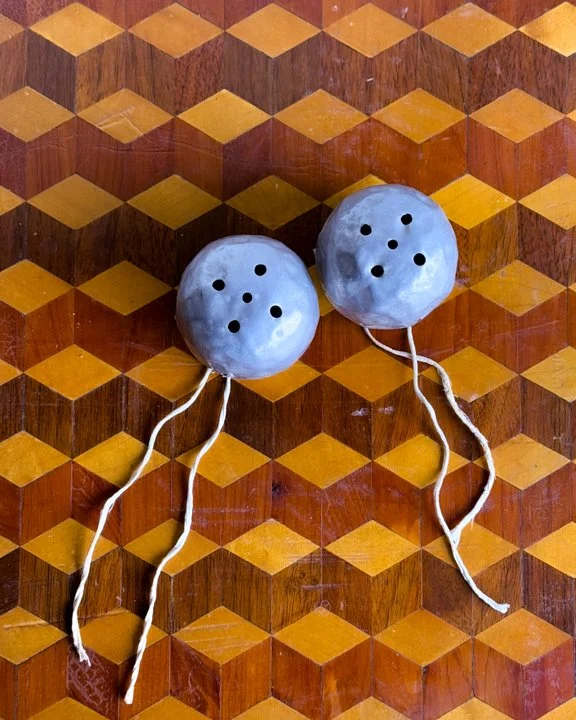
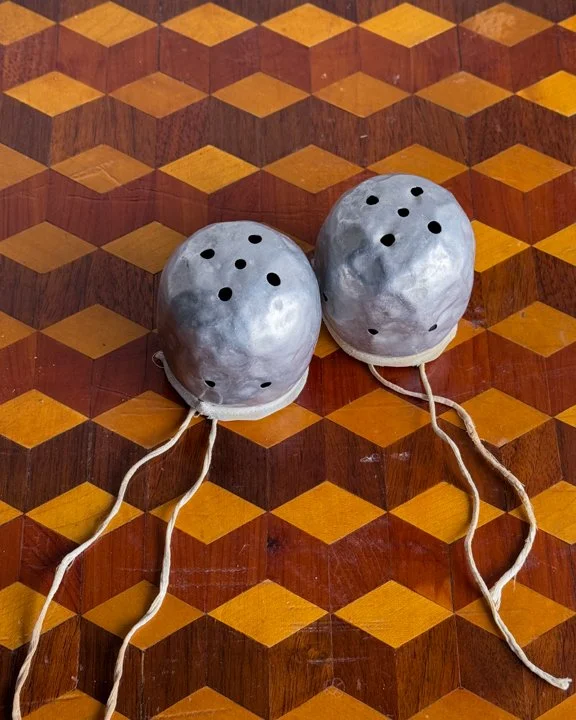

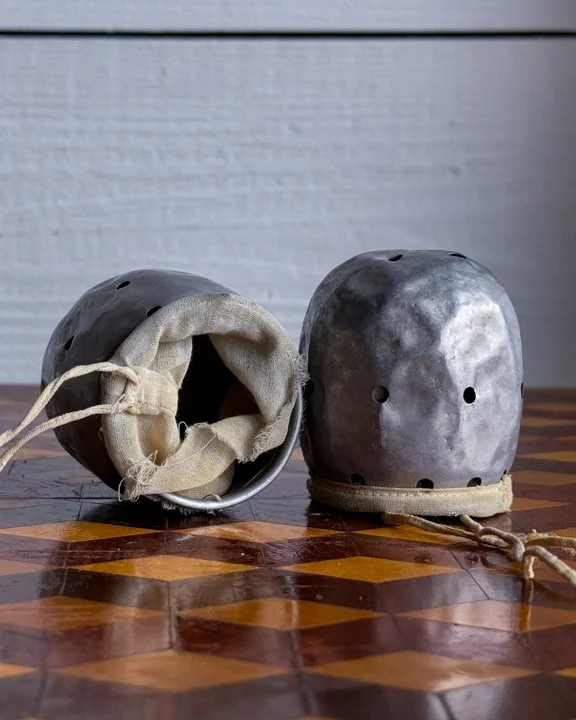
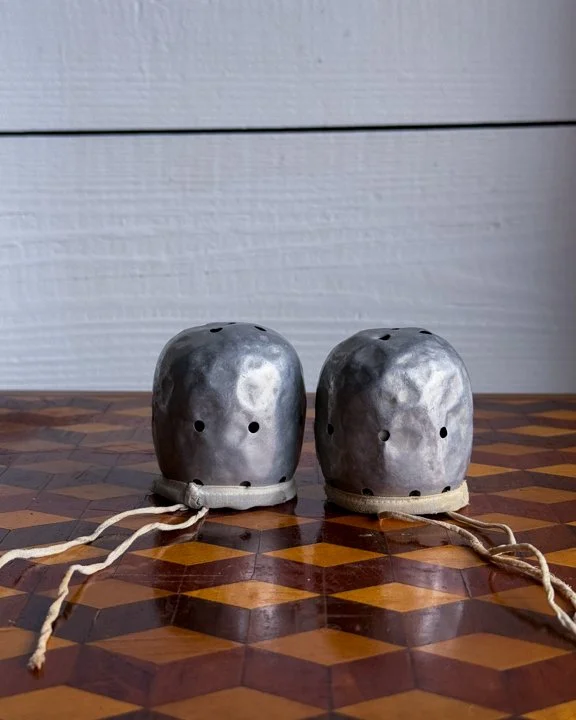
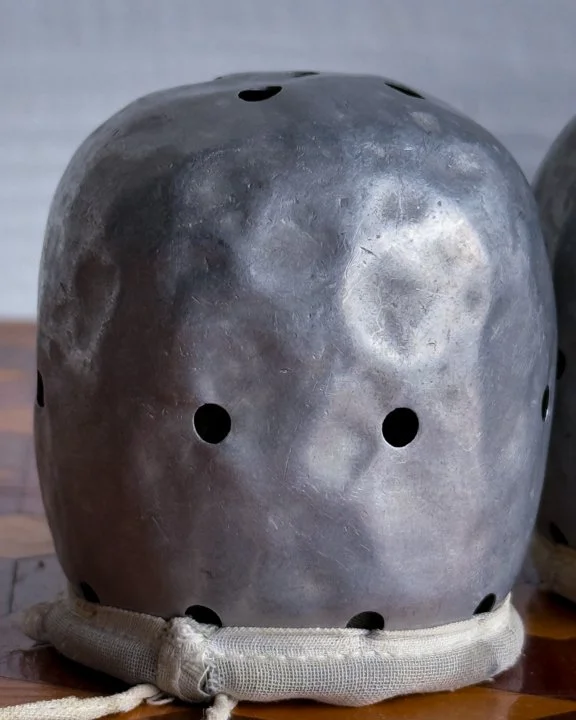

A pair of early 20th-century baby hand guards, hammered from lightweight aluminum with a constellation of air holes punched through for ventilation. Each cap is lined with its original cloth interior and ties, meant to be fastened around a baby’s wrists to keep their tiny, curious fingers from scratching their face or tugging at healing wounds. They’ve got a raw, utilitarian honesty to them—every dent tells you these weren’t made to be pretty but to do a job.
Category History
Early nursing products have a certain practical ingenuity—simple solutions built around real, everyday problems. In the late 19th and early 20th centuries, infant care relied heavily on small, often handmade or lightly manufactured devices designed to protect both baby and parent. Among them were metal baby guards—tiny mitt-like covers or fingertip shields meant to prevent scratching, especially before regular nail trimming became common practice.
These guards were typically made from lightweight metals like tin or silver, sometimes perforated for airflow and shaped to fit over small hands. They might look a bit rigid by today’s standards, but they were meant to be durable, reusable, and easy to clean at a time when hygiene was becoming more widely emphasized.
They existed alongside a broader set of early nursing tools—feeding bottles, teething rings, nipple shields—all part of a growing effort to manage the physical challenges of infant care with practical design. Many of these objects show signs of repeated use: soft dents, polished edges, small adjustments.
What’s interesting is how direct the thinking is. No soft plastics or disposables—just straightforward materials solving immediate problems. Today, they read as both medical curiosities and deeply personal objects, shaped by the quiet routines of caregiving.
A pair of early 20th-century baby hand guards, hammered from lightweight aluminum with a constellation of air holes punched through for ventilation. Each cap is lined with its original cloth interior and ties, meant to be fastened around a baby’s wrists to keep their tiny, curious fingers from scratching their face or tugging at healing wounds. They’ve got a raw, utilitarian honesty to them—every dent tells you these weren’t made to be pretty but to do a job.
Category History
Early nursing products have a certain practical ingenuity—simple solutions built around real, everyday problems. In the late 19th and early 20th centuries, infant care relied heavily on small, often handmade or lightly manufactured devices designed to protect both baby and parent. Among them were metal baby guards—tiny mitt-like covers or fingertip shields meant to prevent scratching, especially before regular nail trimming became common practice.
These guards were typically made from lightweight metals like tin or silver, sometimes perforated for airflow and shaped to fit over small hands. They might look a bit rigid by today’s standards, but they were meant to be durable, reusable, and easy to clean at a time when hygiene was becoming more widely emphasized.
They existed alongside a broader set of early nursing tools—feeding bottles, teething rings, nipple shields—all part of a growing effort to manage the physical challenges of infant care with practical design. Many of these objects show signs of repeated use: soft dents, polished edges, small adjustments.
What’s interesting is how direct the thinking is. No soft plastics or disposables—just straightforward materials solving immediate problems. Today, they read as both medical curiosities and deeply personal objects, shaped by the quiet routines of caregiving.