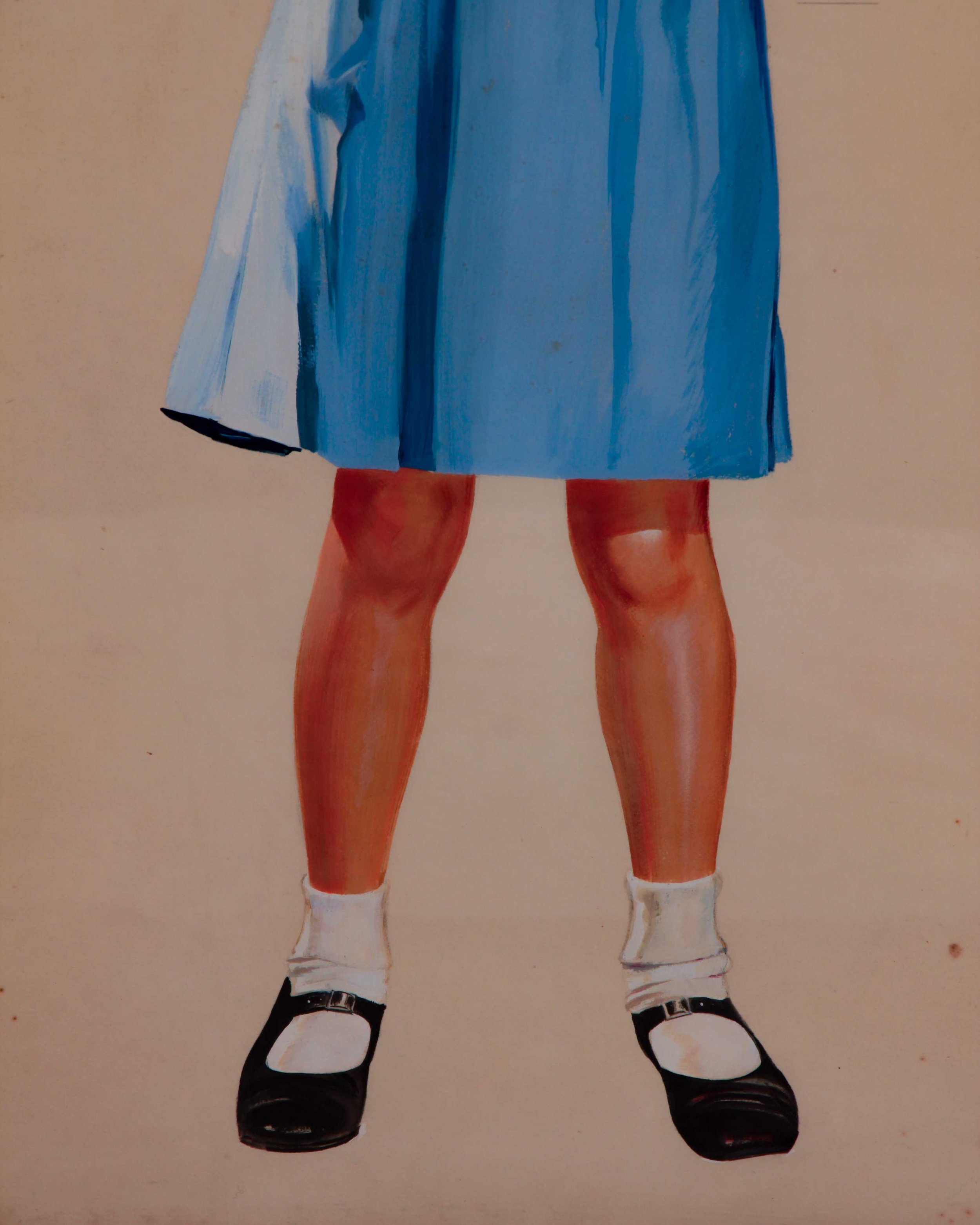
This is the kind of advertising art that quietly does everything right. An original Bamby bread illustration from the 1930s, rendered in gouache and pencil on board, and still carrying all the warmth, optimism, and polish of early American commercial illustration.
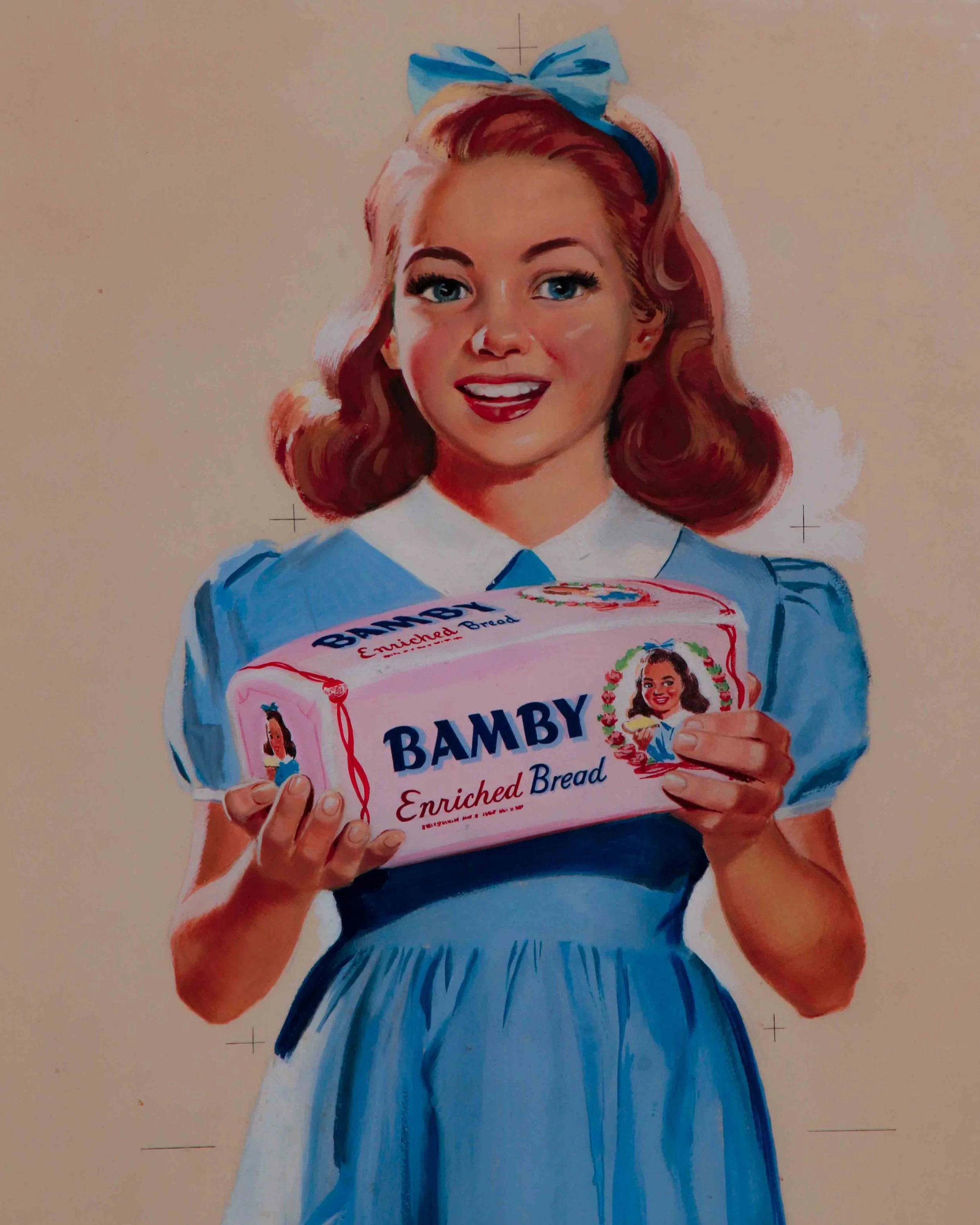
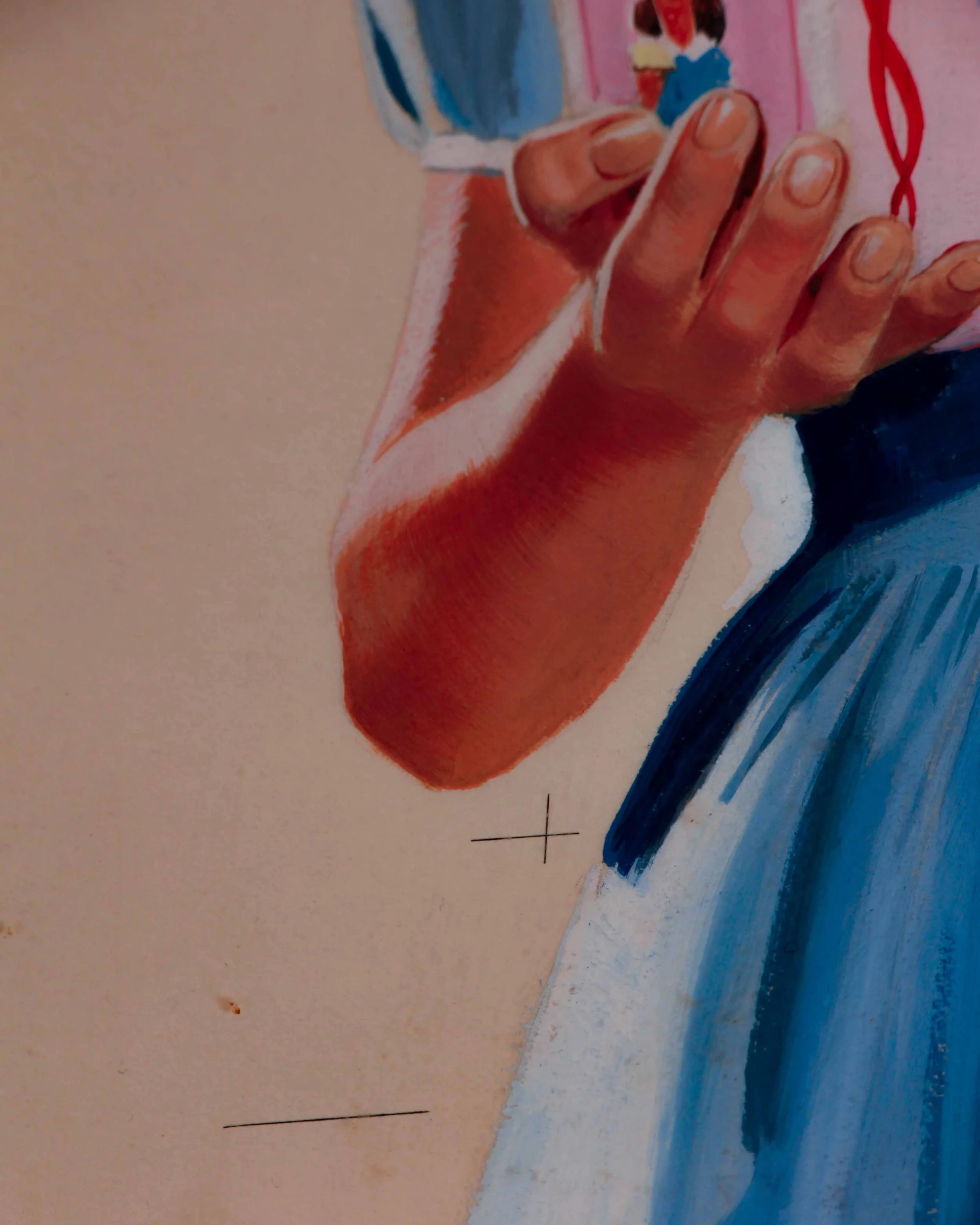
The composition centers on a smiling young girl in a crisp blue dress, proudly presenting a loaf of Bamby Bread like it’s the best news she’s heard all day. Her posture is confident, her expression open and inviting, and the styling hits that sweet spot between wholesome and aspirational that defined the era. The artist’s hand is evident everywhere, from the soft modeling of her face to the carefully painted folds of the dress and the subtle pencil underdrawing that peeks through in places.
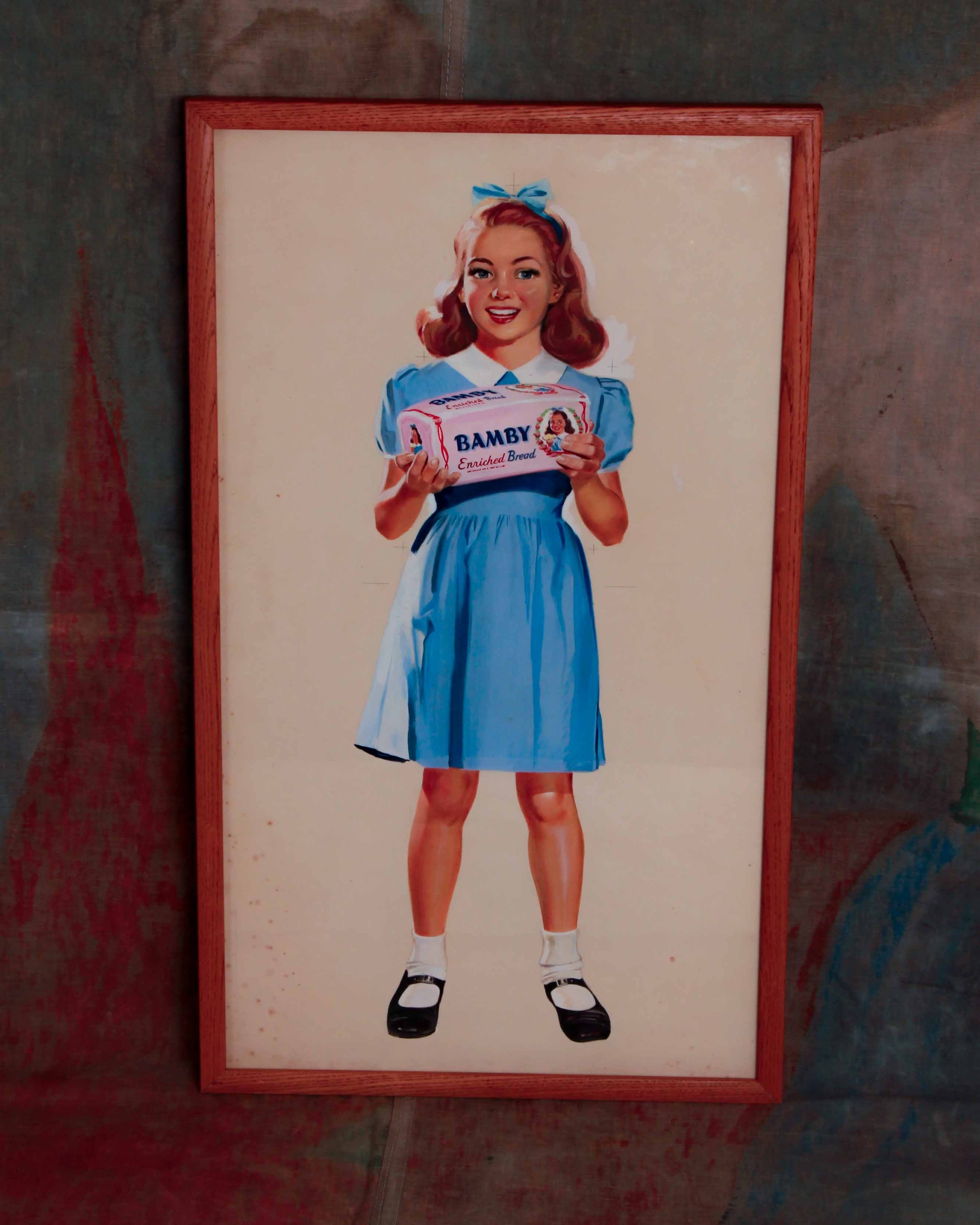
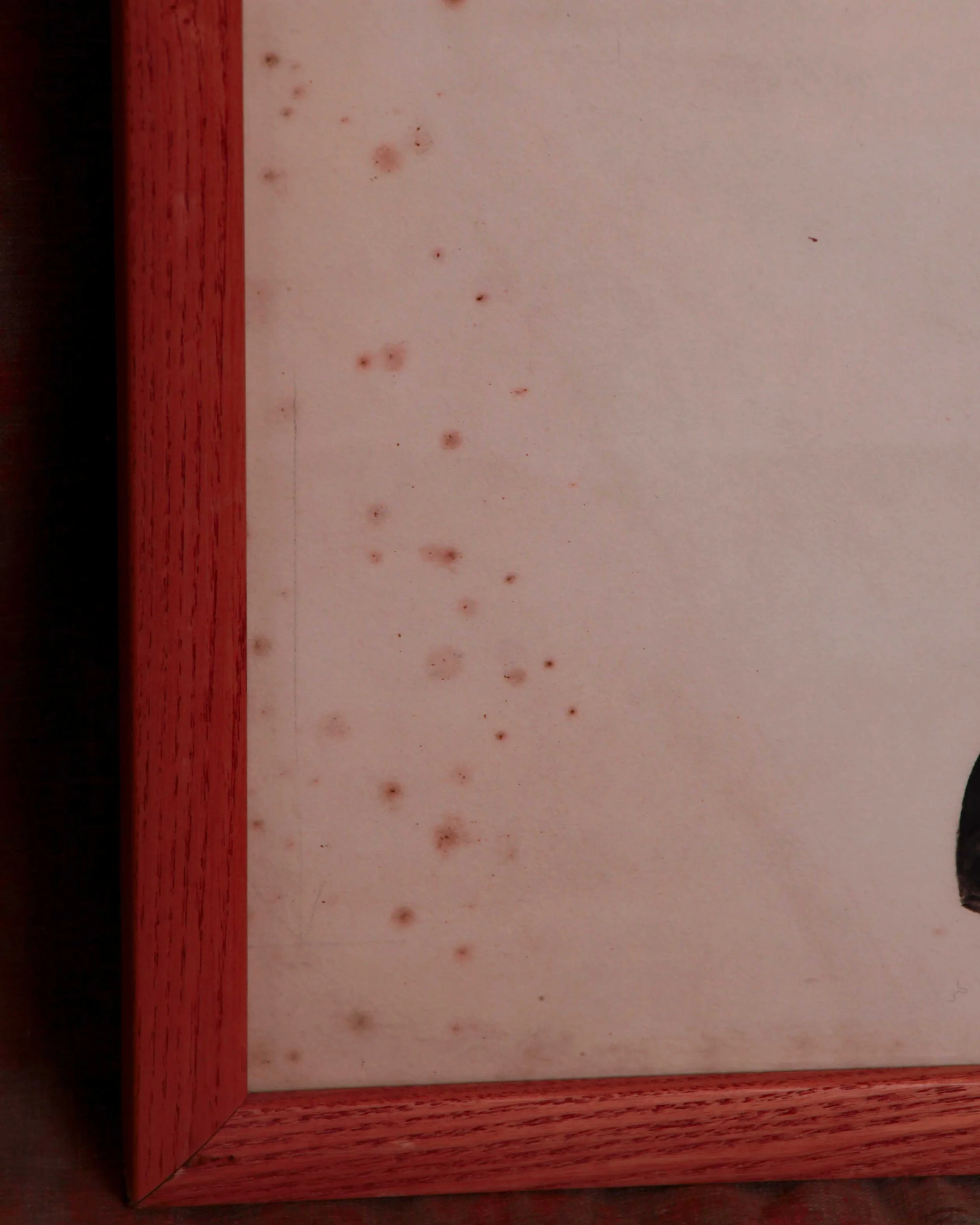
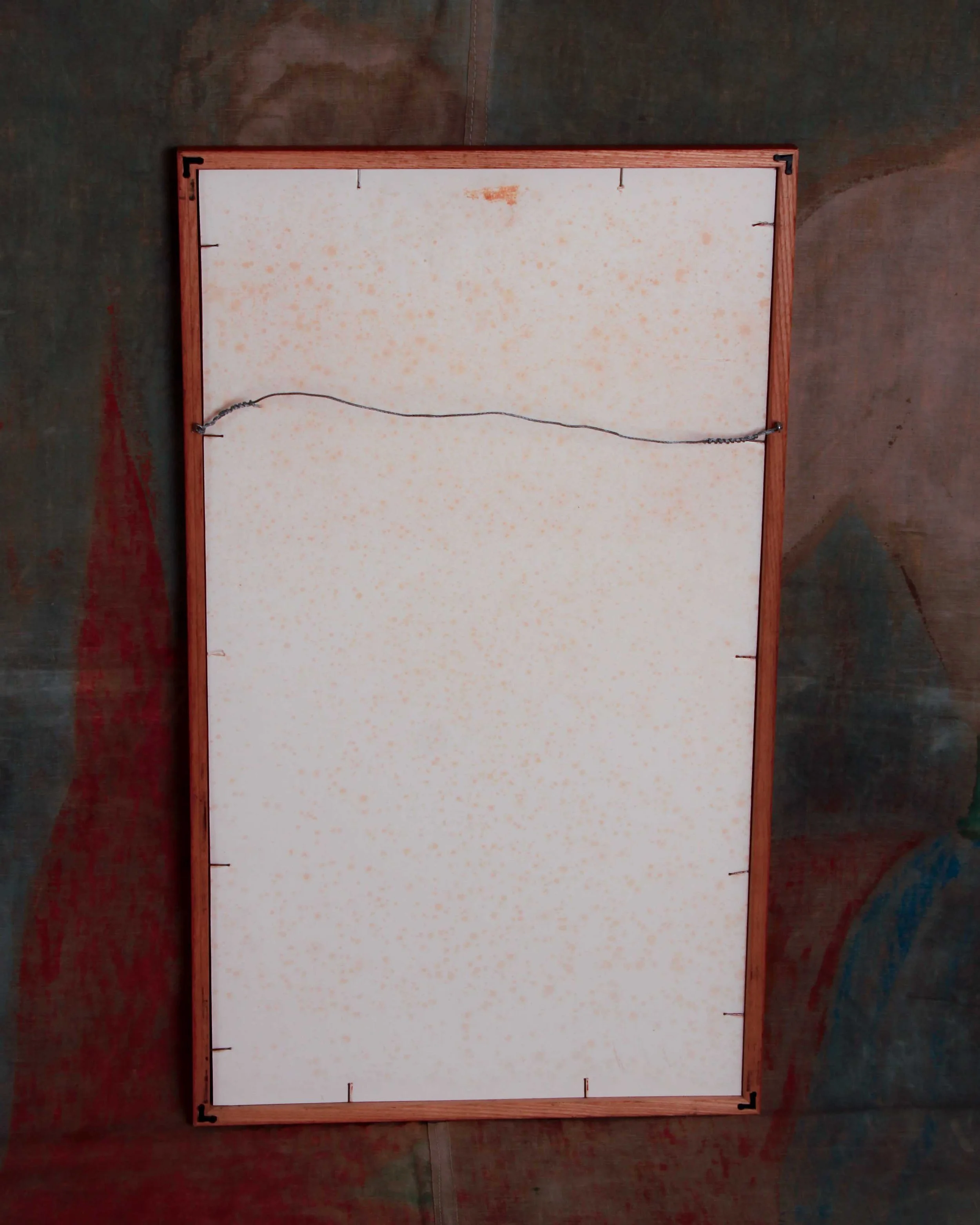
The surface has naturally toned over time, with visible foxing along the lower left edge and some spotting toward the right corner. It’s been handsomely framed and presents beautifully.
Measures 28 x 16 inches.
Category history
Original artwork made for advertising sits in an interesting space—created to sell something, but often with the care and intention of fine art. Before photography and digital design took over, illustrators and painters were hired to produce everything from product labels to large-scale posters. These works were then translated into prints, but the originals remained as the source—the first, most direct version of the idea.
What’s compelling is how much thinking you can see in them. Pencil lines beneath paint, color notes in the margins, adjustments made mid-process. They weren’t meant to be displayed; they were working pieces, part of a larger production chain.
Stylistically, they vary widely—some highly polished, others loose and expressive—but all are guided by clarity. The goal was to catch attention and communicate quickly.
Today, these originals feel more personal than the printed versions they produced. You’re seeing the hand behind the message, not just the message itself. Part artwork, part artifact of commerce, they carry both intention and process in equal measure.
This is the kind of advertising art that quietly does everything right. An original Bamby bread illustration from the 1930s, rendered in gouache and pencil on board, and still carrying all the warmth, optimism, and polish of early American commercial illustration.
The composition centers on a smiling young girl in a crisp blue dress, proudly presenting a loaf of Bamby Bread like it’s the best news she’s heard all day. Her posture is confident, her expression open and inviting, and the styling hits that sweet spot between wholesome and aspirational that defined the era. The artist’s hand is evident everywhere, from the soft modeling of her face to the carefully painted folds of the dress and the subtle pencil underdrawing that peeks through in places.
The surface has naturally toned over time, with visible foxing along the lower left edge and some spotting toward the right corner. It’s been handsomely framed and presents beautifully.
Measures 28 x 16 inches.
Category history
Original artwork made for advertising sits in an interesting space—created to sell something, but often with the care and intention of fine art. Before photography and digital design took over, illustrators and painters were hired to produce everything from product labels to large-scale posters. These works were then translated into prints, but the originals remained as the source—the first, most direct version of the idea.
What’s compelling is how much thinking you can see in them. Pencil lines beneath paint, color notes in the margins, adjustments made mid-process. They weren’t meant to be displayed; they were working pieces, part of a larger production chain.
Stylistically, they vary widely—some highly polished, others loose and expressive—but all are guided by clarity. The goal was to catch attention and communicate quickly.
Today, these originals feel more personal than the printed versions they produced. You’re seeing the hand behind the message, not just the message itself. Part artwork, part artifact of commerce, they carry both intention and process in equal measure.