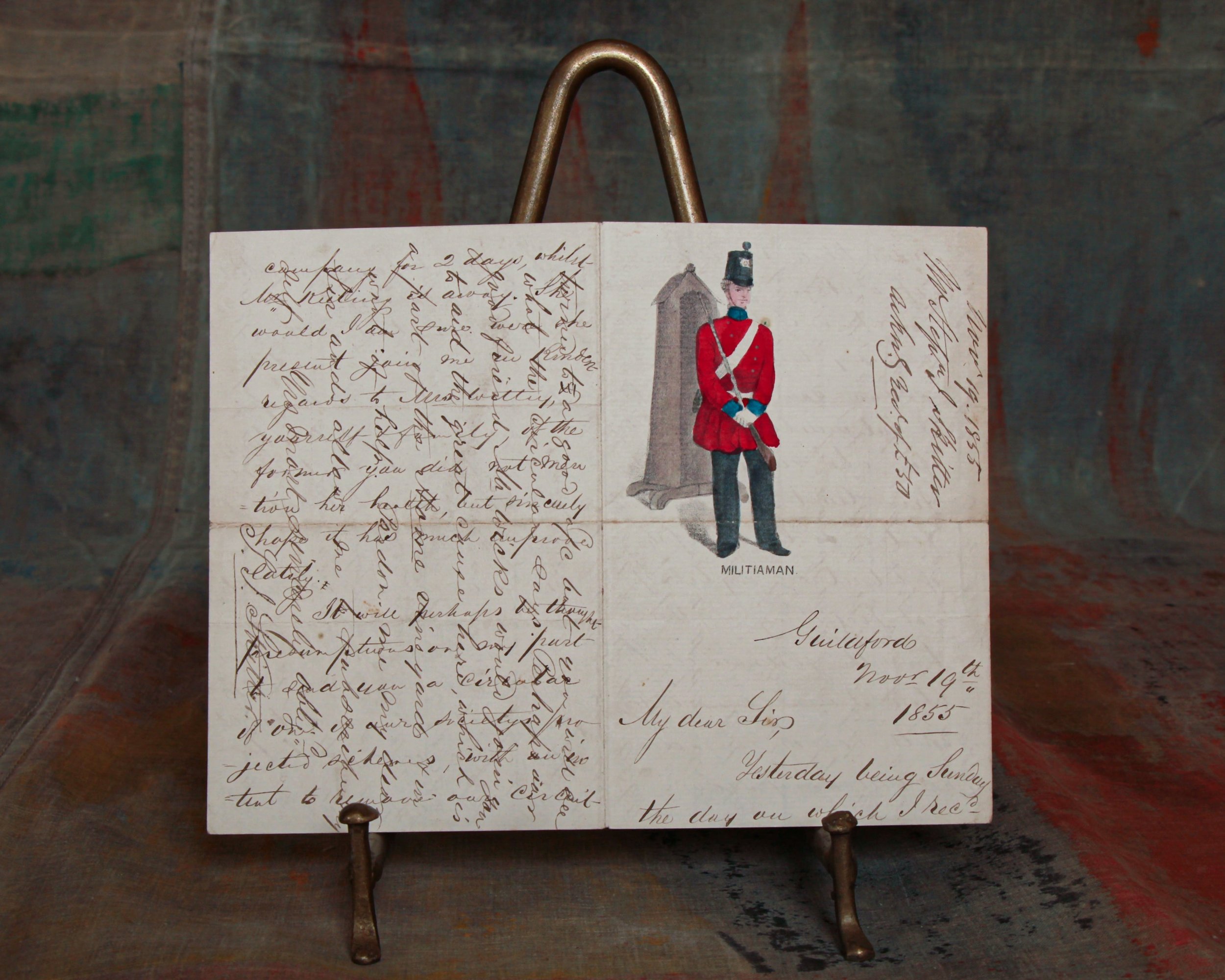
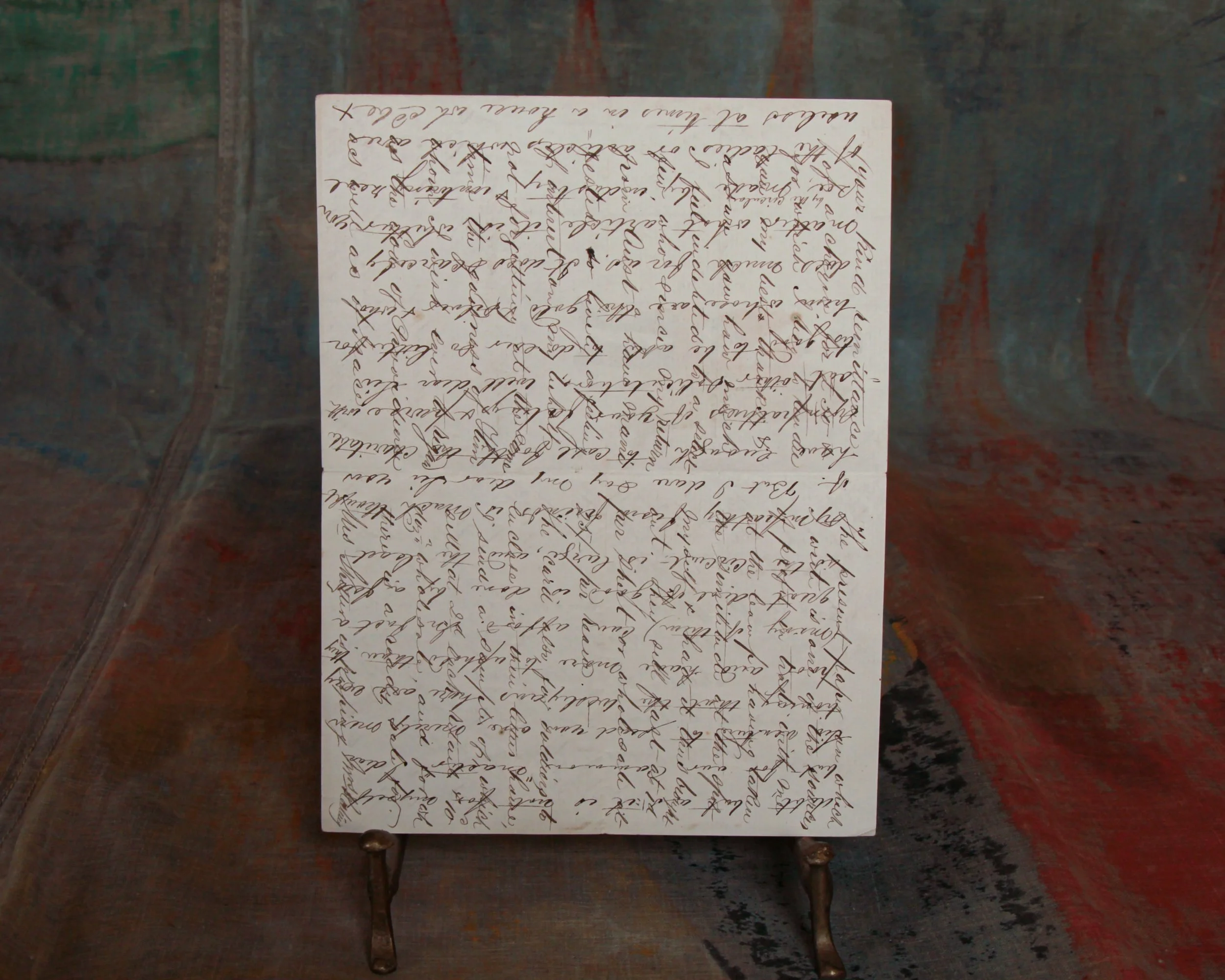
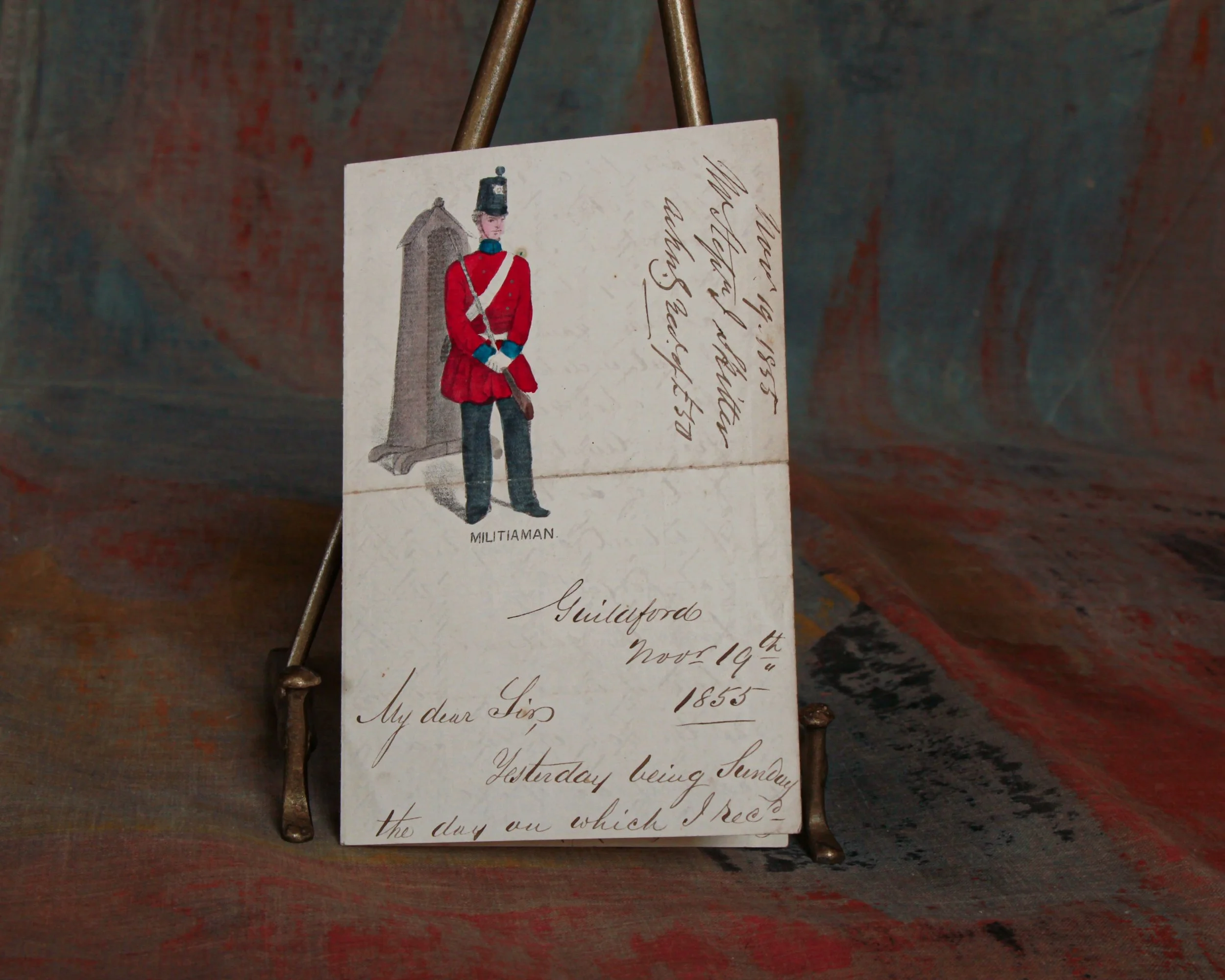
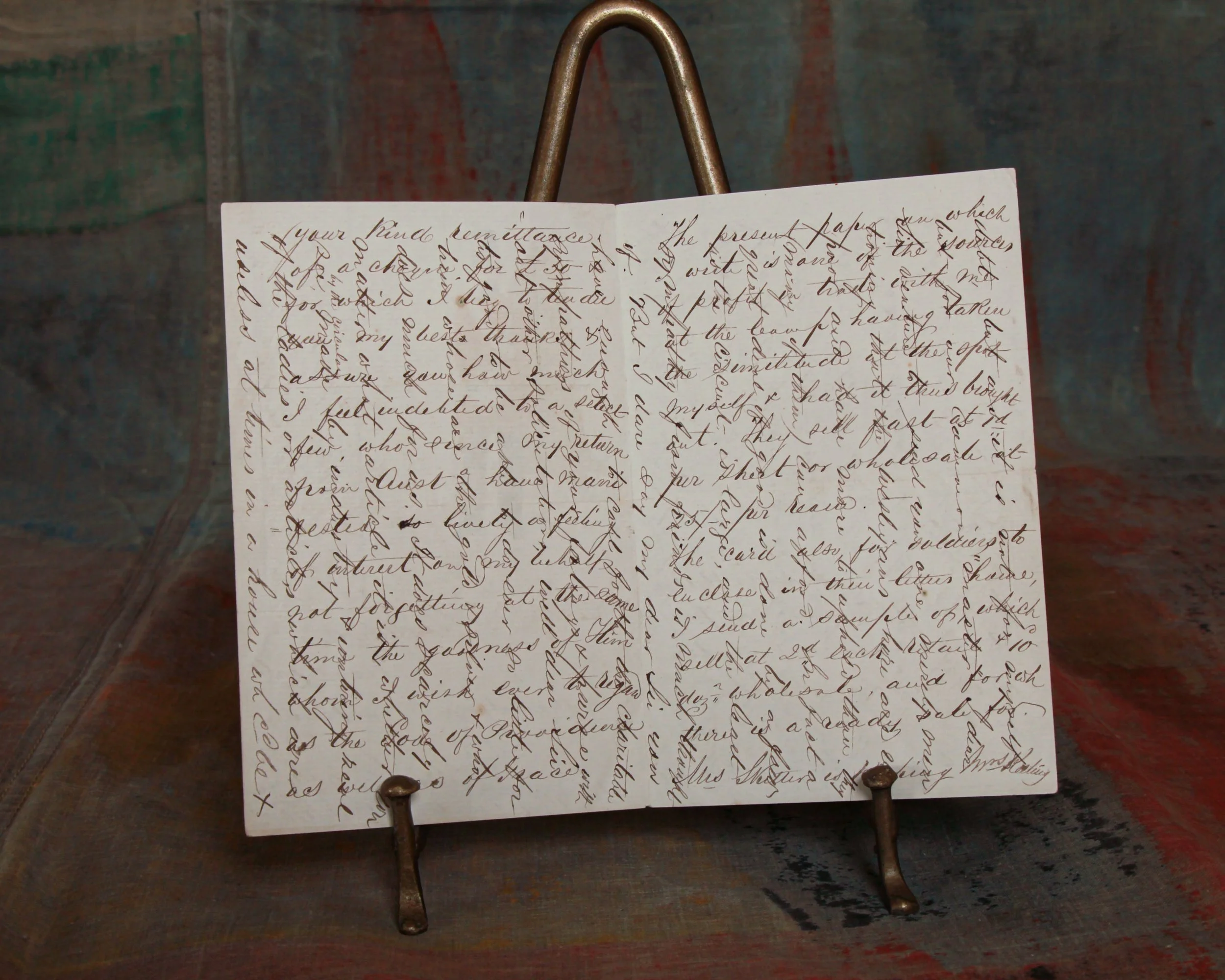
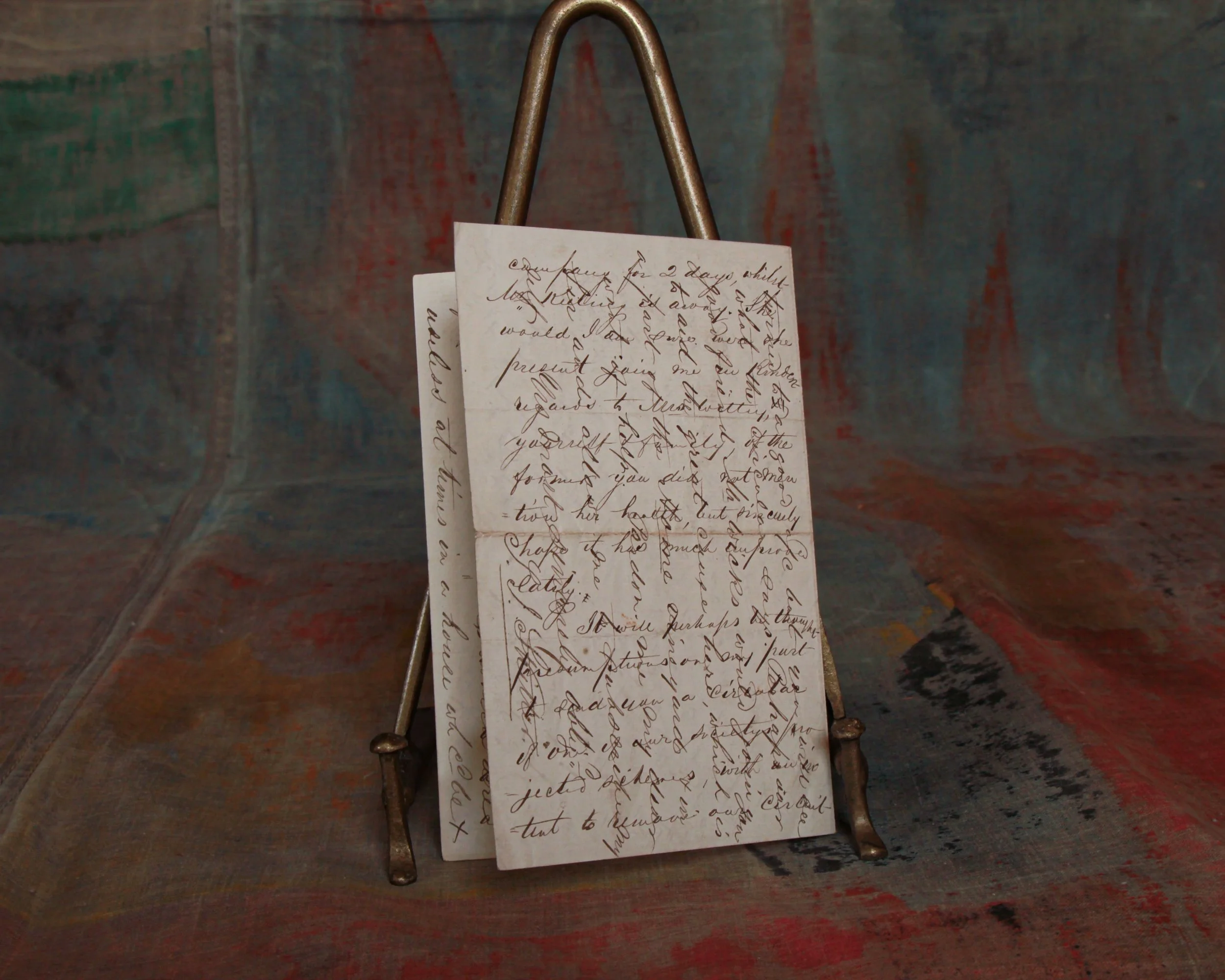
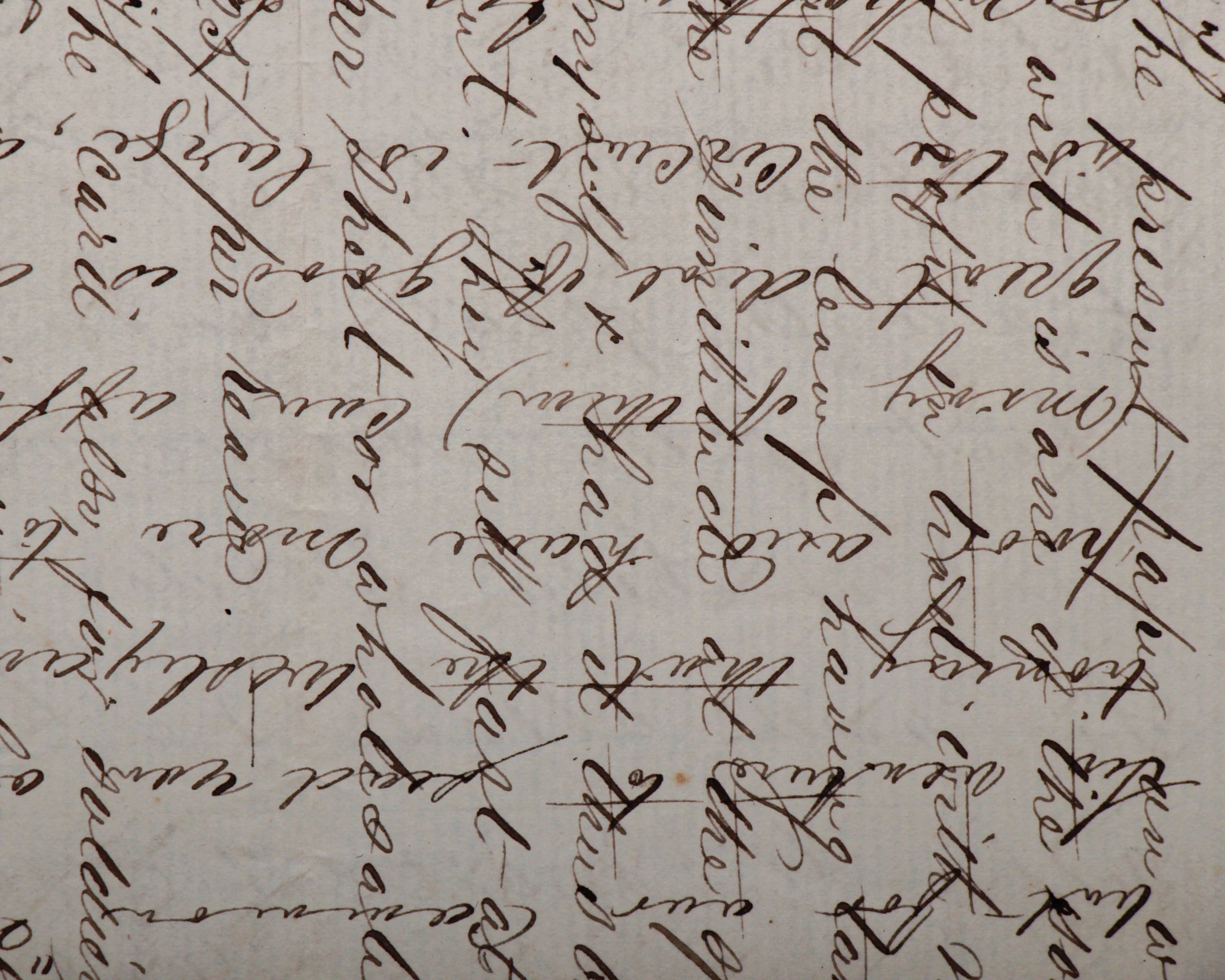
An English cross-written letter dated 1855, created at a time when postage and paper was expensive and ink was precious. The solution was equal parts thrift and ingenuity. Start writing the letter, turn the page ninety degrees, and continue writing directly over the first text. Every inch of paper earns its keep.
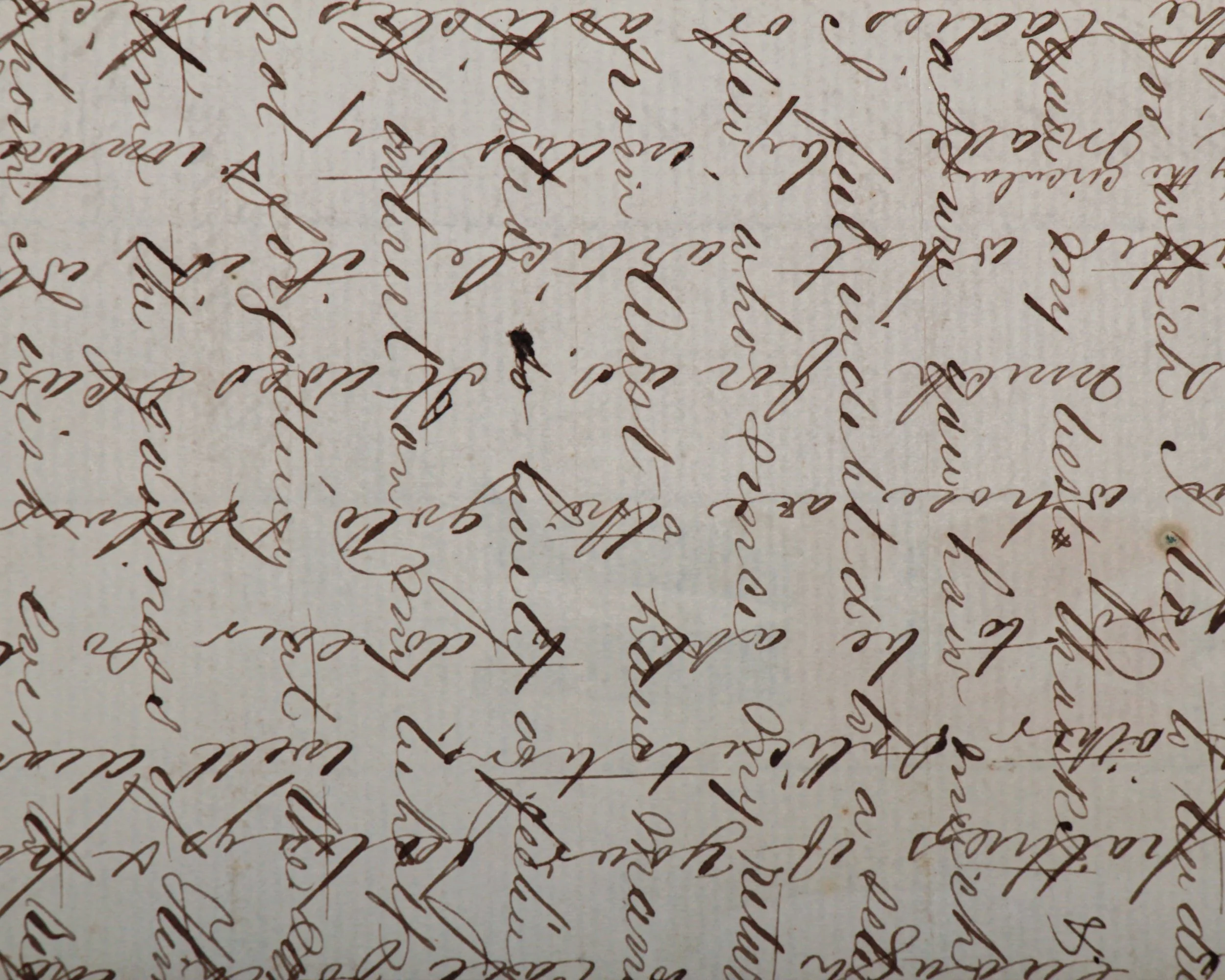
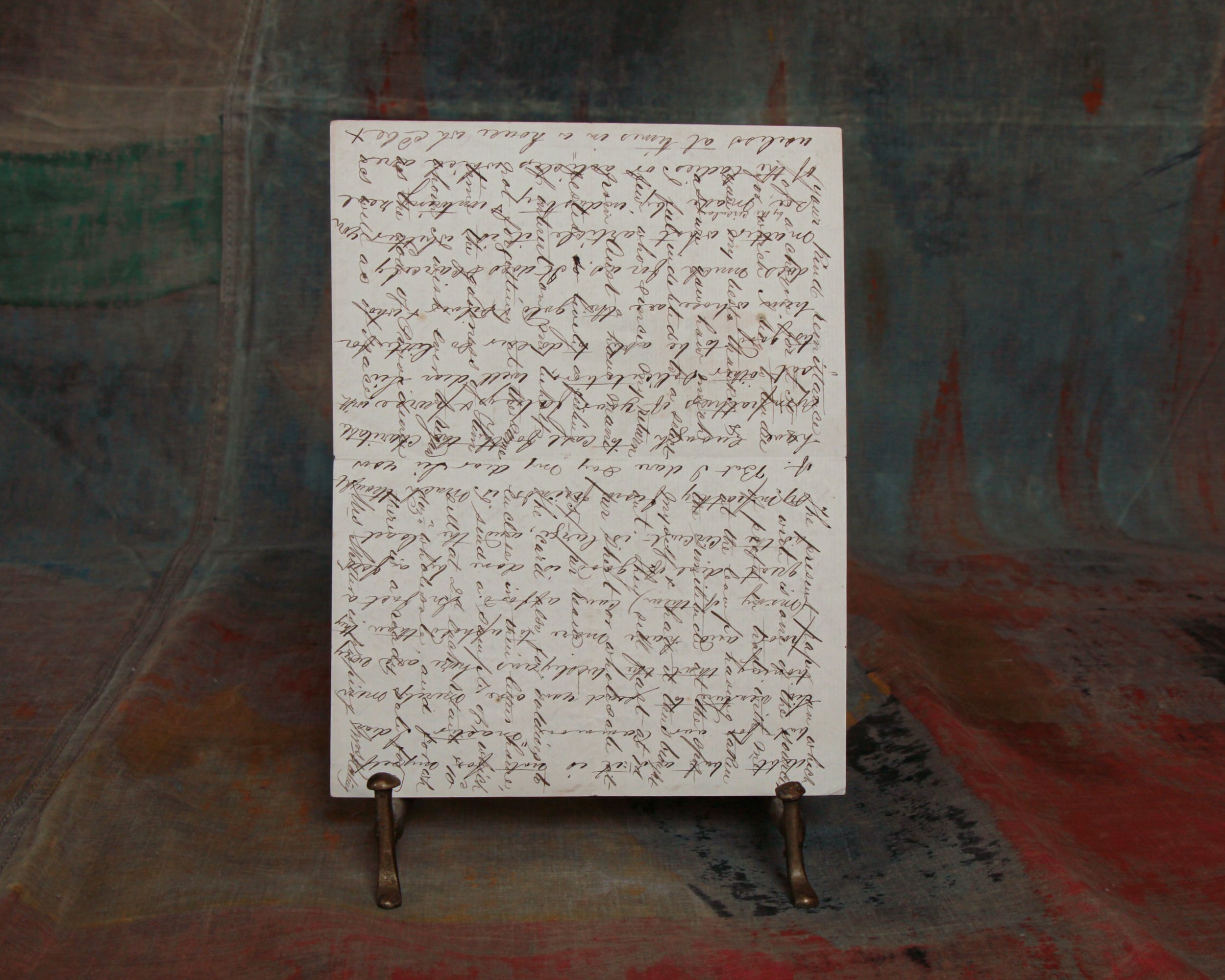
At first glance it looks like beautiful chaos. Lines collide, words overlap, ink crisscrosses itself in a dense lattice of looping handwriting. Spend a moment with it and the logic reveals itself. Two pages worth of writing, sharing the same surface, quietly coexisting. It’s efficient, slightly obsessive, and oddly elegant.
This was a common practice in the 19th century, especially among frequent correspondents, soldiers, travelers, and families trying to stay in touch without paying more than needed. Reading one takes patience and good light. Writing one took confidence and a steady hand. There’s something deeply human about that commitment to saying more, even when resources were limited.
The paper shows its age beautifully, softened by time, with ink that has mellowed but remains legible. The handwriting is fluid and expressive, full of rhythm and personality. It feels intimate.
Today, it stands as a small marvel of analog efficiency. A reminder that long before emails and unlimited characters, people found clever ways to make room for their thoughts. It’s part artifact, part puzzle, and entirely charming.
Category History
A criss-cross letter is part puzzle, part postage-saving trick. Popular in the 19th century, writers would fill a page, then rotate it 90 degrees and write over the existing text, weaving lines into a tight grid. Paper and postage were expensive, so this method squeezed in every possible word. The result looks almost coded—dense, layered, and requiring patience to read. It’s equal parts economy and ingenuity, turning a simple sheet of paper into a compact record of thought, time, and careful communication.
An English cross-written letter dated 1855, created at a time when postage and paper was expensive and ink was precious. The solution was equal parts thrift and ingenuity. Start writing the letter, turn the page ninety degrees, and continue writing directly over the first text. Every inch of paper earns its keep.
At first glance it looks like beautiful chaos. Lines collide, words overlap, ink crisscrosses itself in a dense lattice of looping handwriting. Spend a moment with it and the logic reveals itself. Two pages worth of writing, sharing the same surface, quietly coexisting. It’s efficient, slightly obsessive, and oddly elegant.
This was a common practice in the 19th century, especially among frequent correspondents, soldiers, travelers, and families trying to stay in touch without paying more than needed. Reading one takes patience and good light. Writing one took confidence and a steady hand. There’s something deeply human about that commitment to saying more, even when resources were limited.
The paper shows its age beautifully, softened by time, with ink that has mellowed but remains legible. The handwriting is fluid and expressive, full of rhythm and personality. It feels intimate.
Today, it stands as a small marvel of analog efficiency. A reminder that long before emails and unlimited characters, people found clever ways to make room for their thoughts. It’s part artifact, part puzzle, and entirely charming.
Category History
A criss-cross letter is part puzzle, part postage-saving trick. Popular in the 19th century, writers would fill a page, then rotate it 90 degrees and write over the existing text, weaving lines into a tight grid. Paper and postage were expensive, so this method squeezed in every possible word. The result looks almost coded—dense, layered, and requiring patience to read. It’s equal parts economy and ingenuity, turning a simple sheet of paper into a compact record of thought, time, and careful communication.