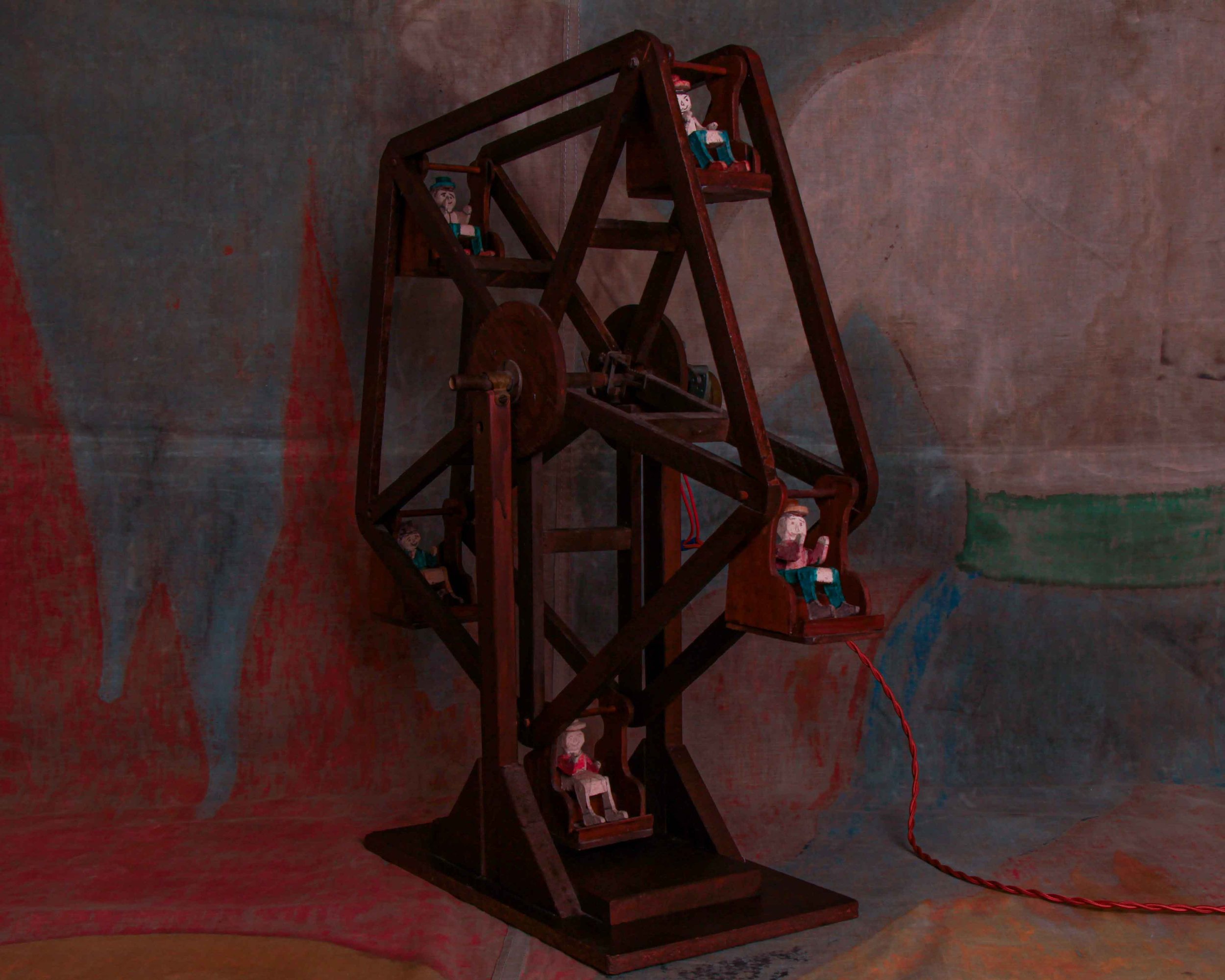
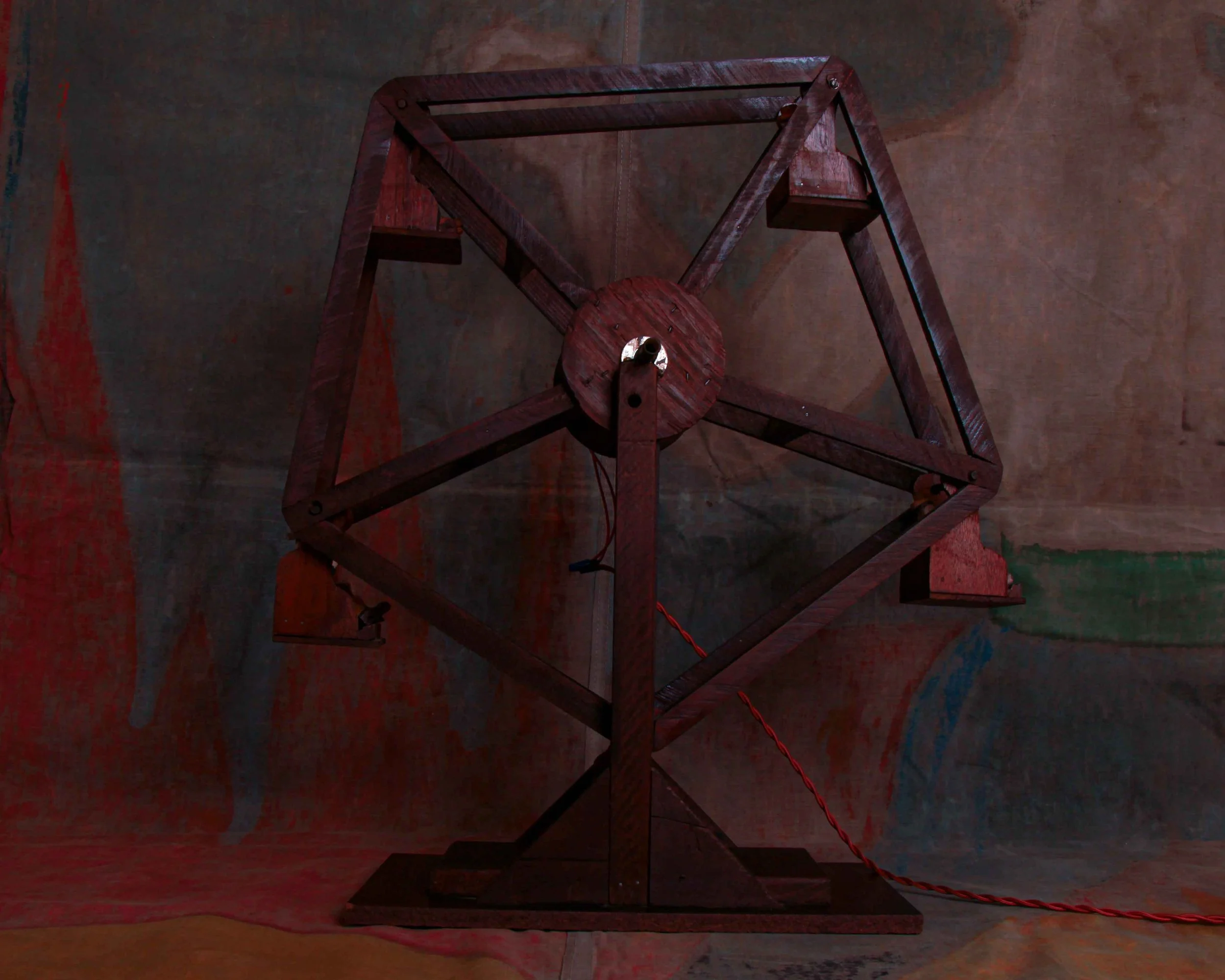
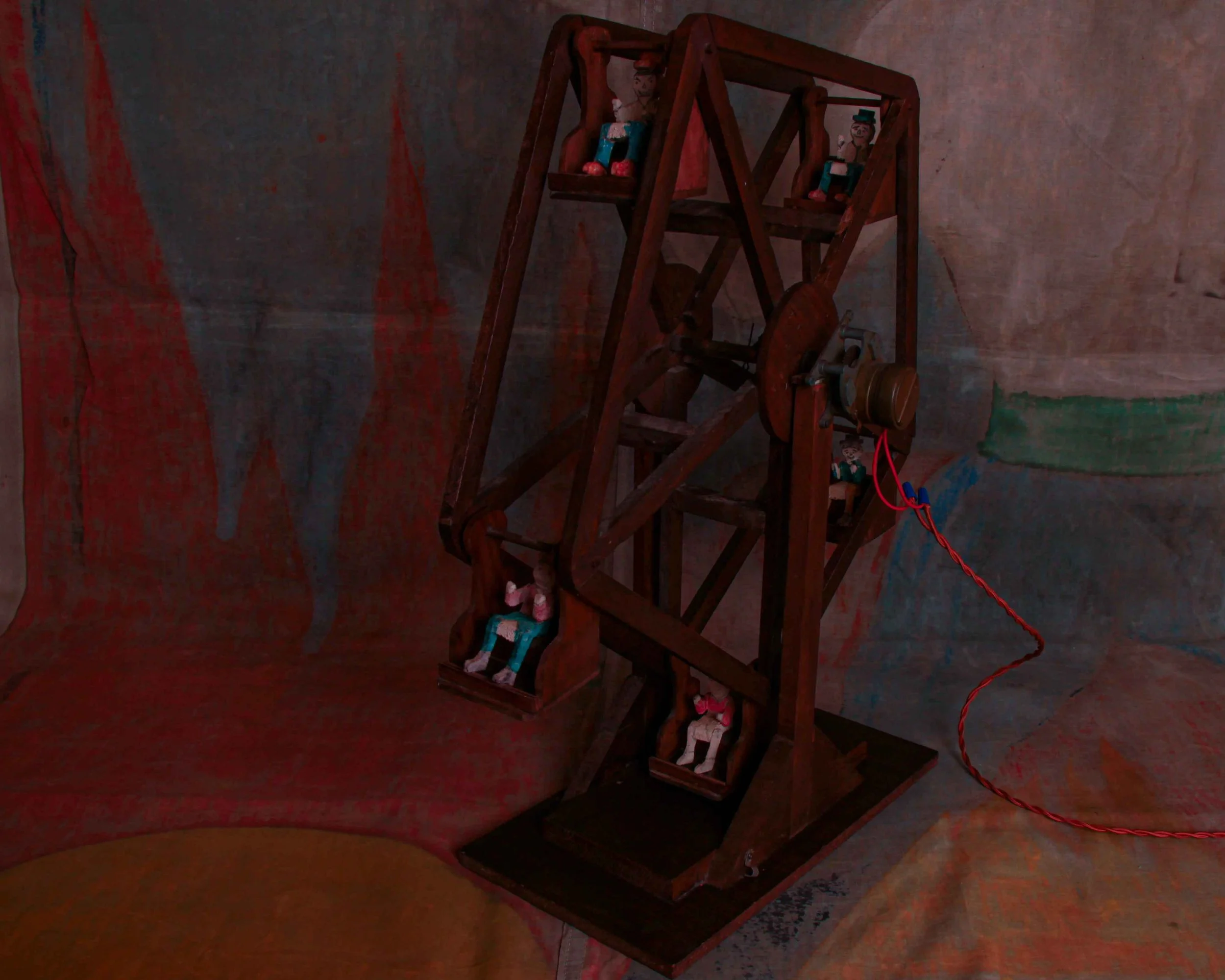
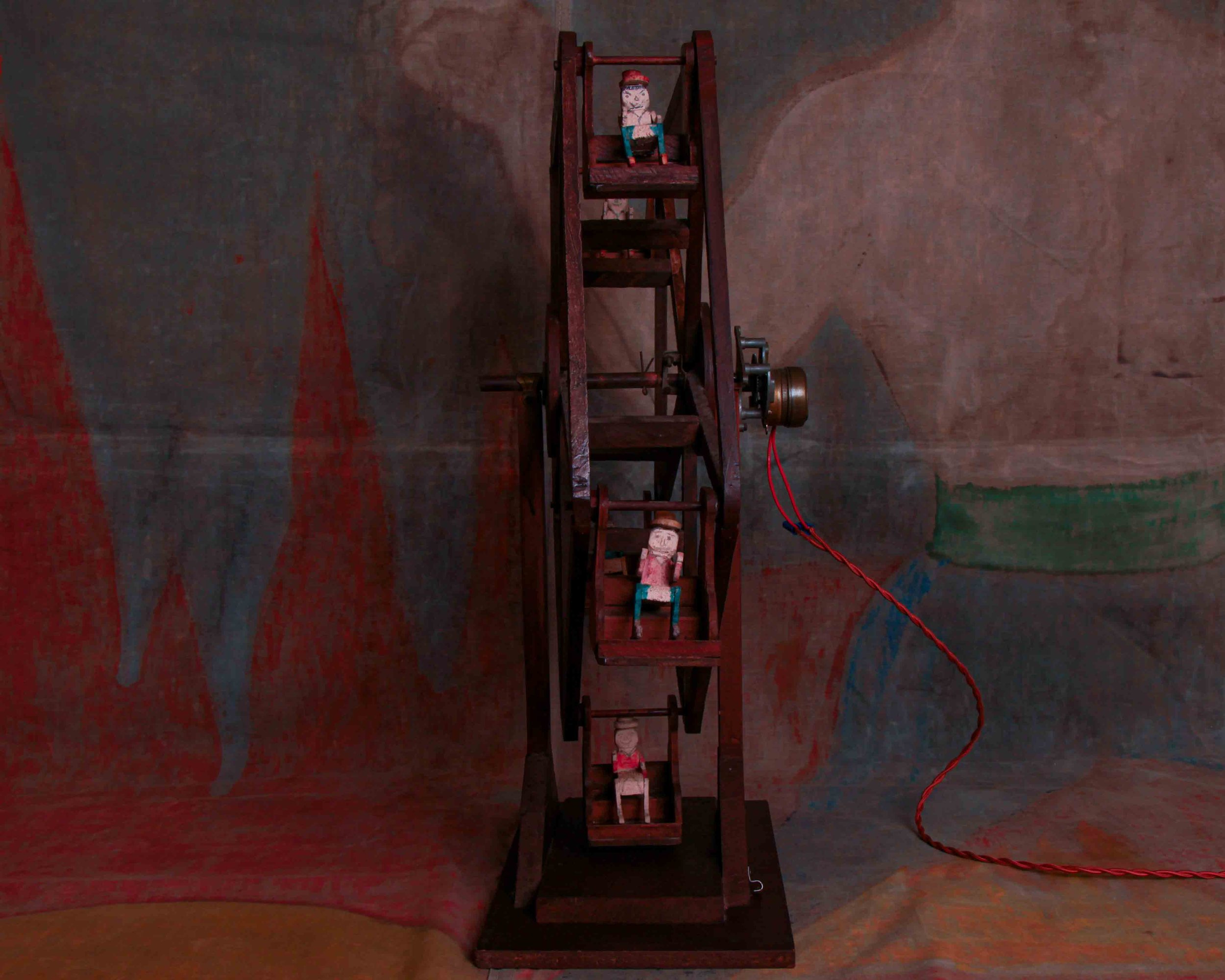
This wonderfully homespun Ferris wheel is made from painted wood and dating to the 1960s, it has that unmistakable folk art confidence: simple geometry, honest materials, and a quiet stubbornness that says “this works because I made it work.”
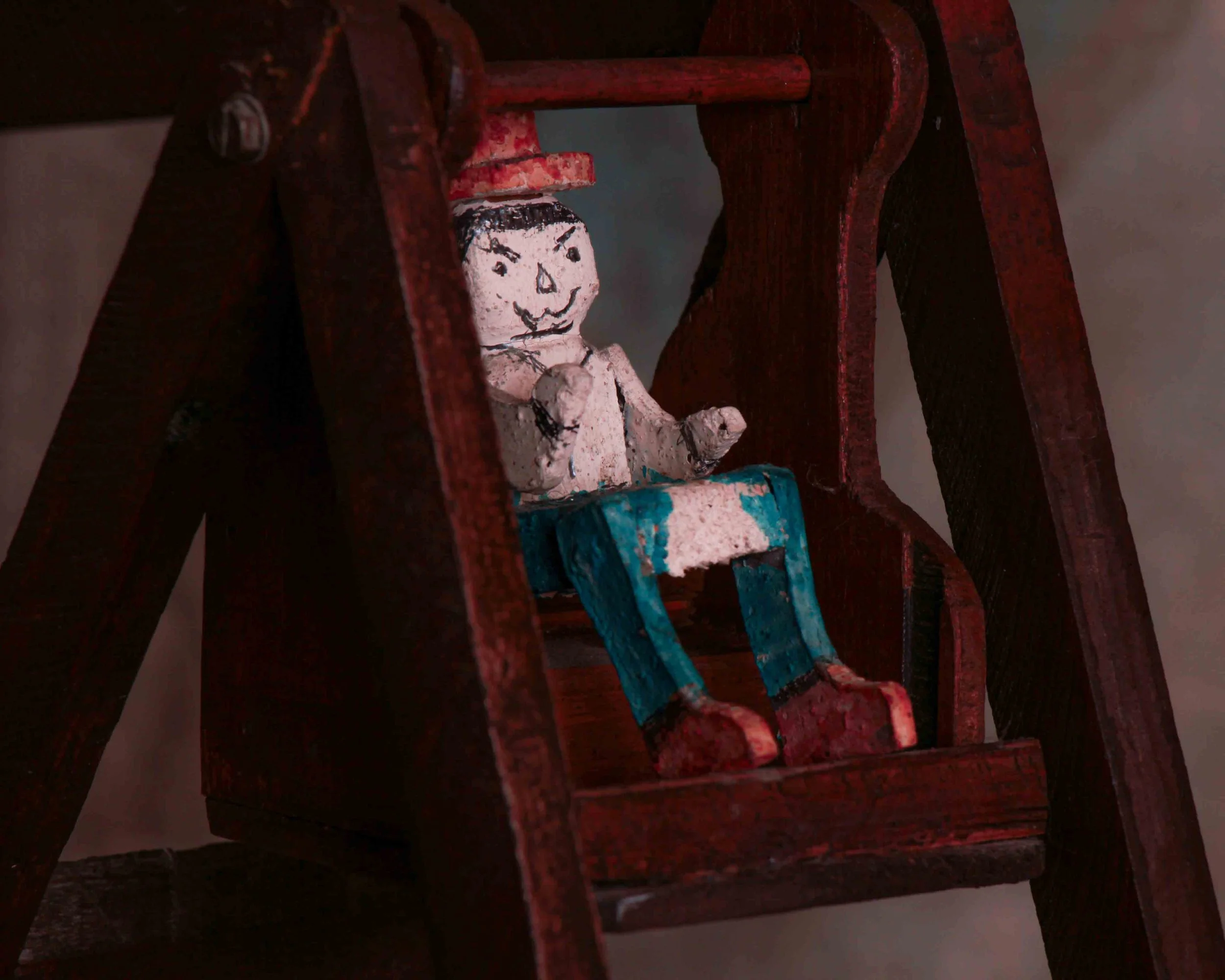
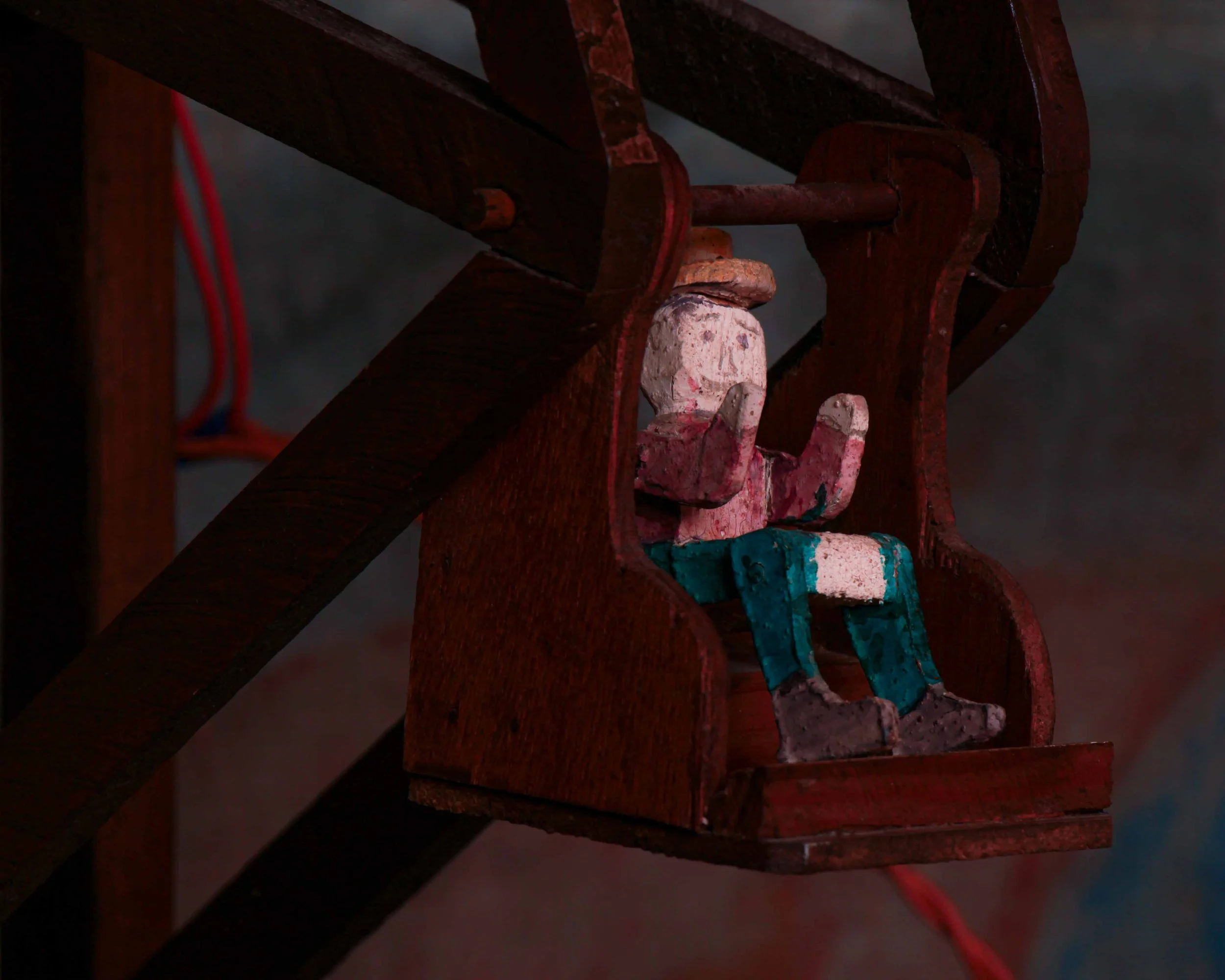
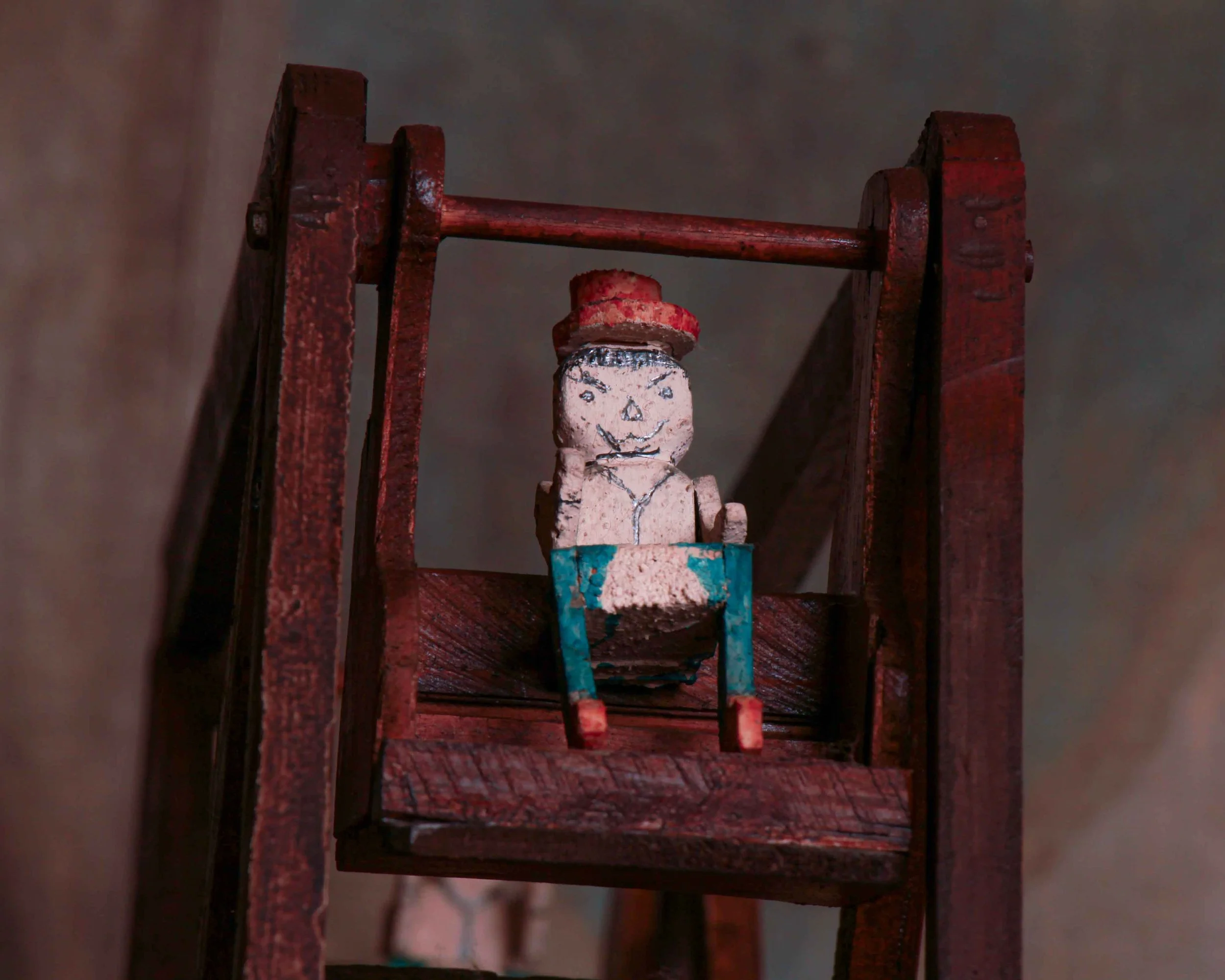
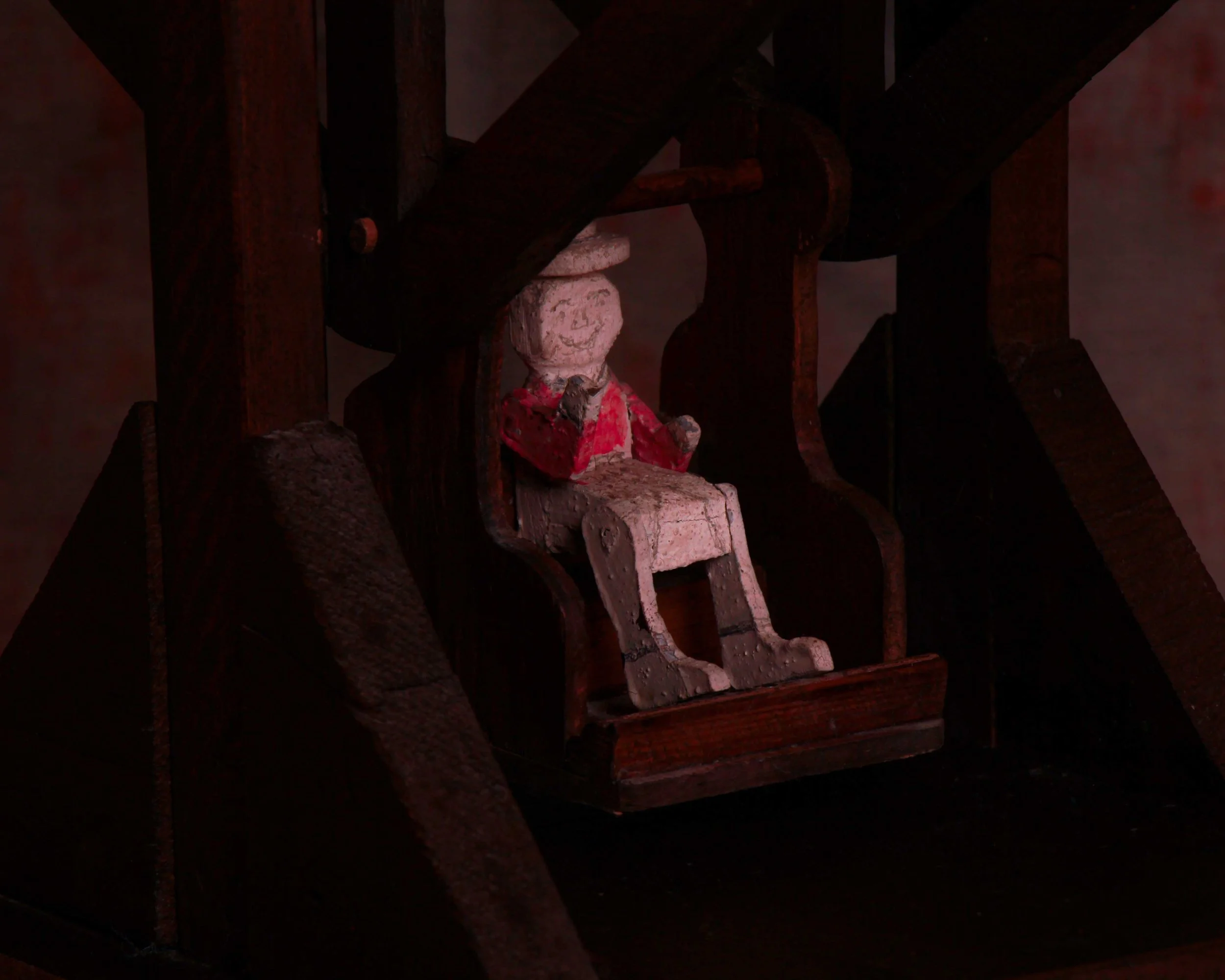
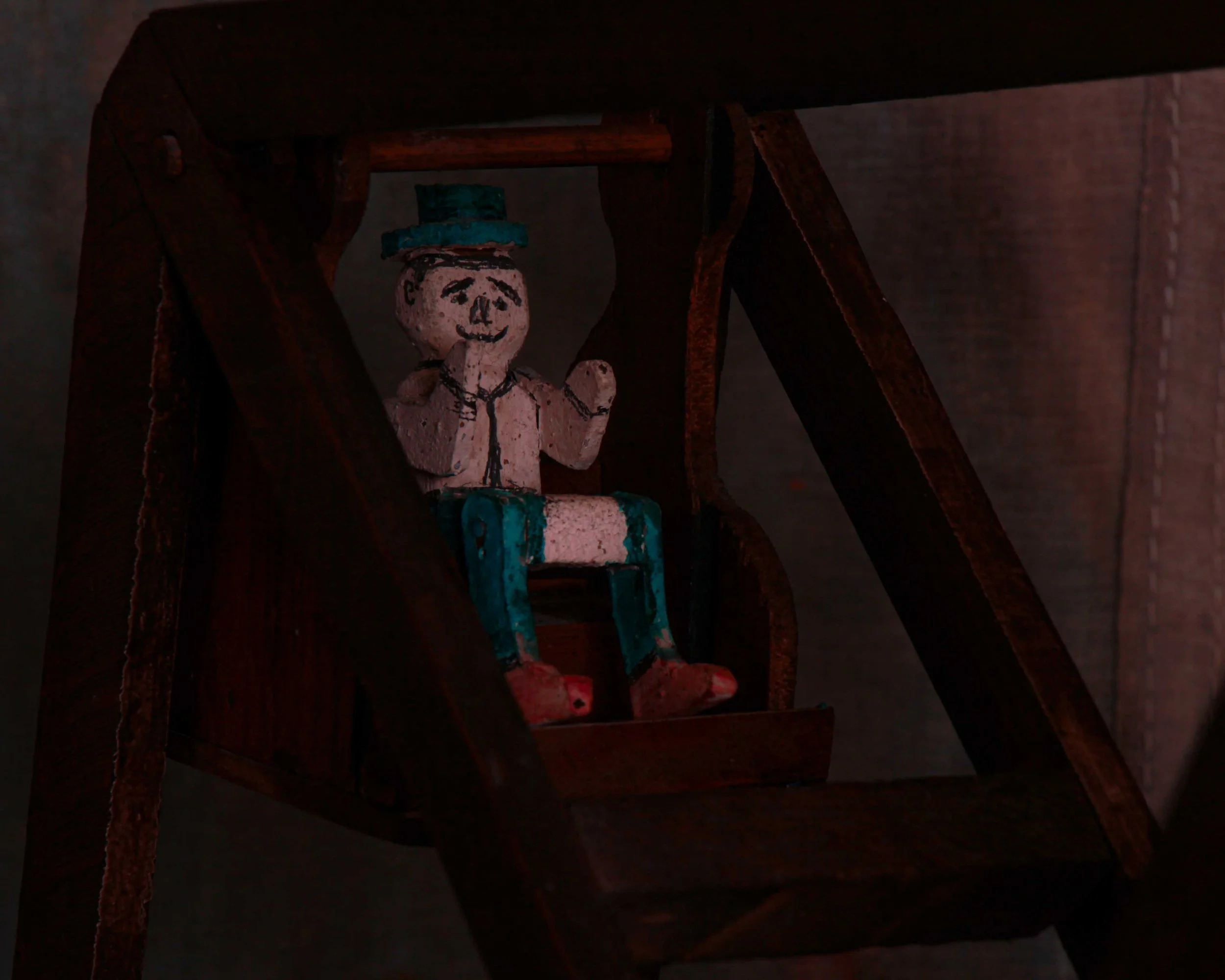
The wheel rises a full 27 inches tall, with chunky wooden supports and hand-painted details that show years of use, tinkering, and admiration. Each little rider sits patiently in their seat, frozen in mid-loop, their expressions hovering somewhere between delight and mild concern. It’s charming, slightly off-kilter, and completely intentional. The kind of object that doesn’t try to be perfect and ends up being better for it.
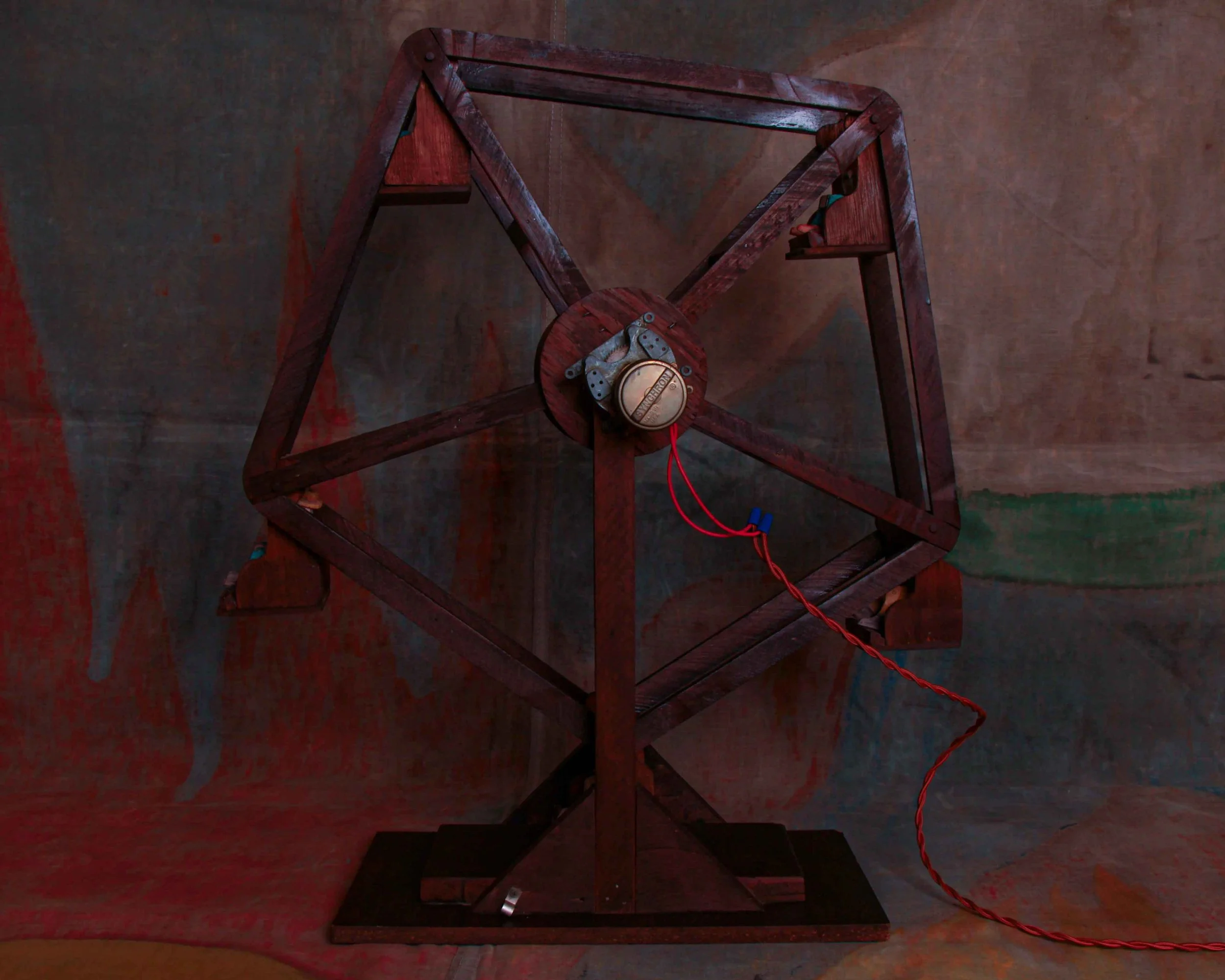
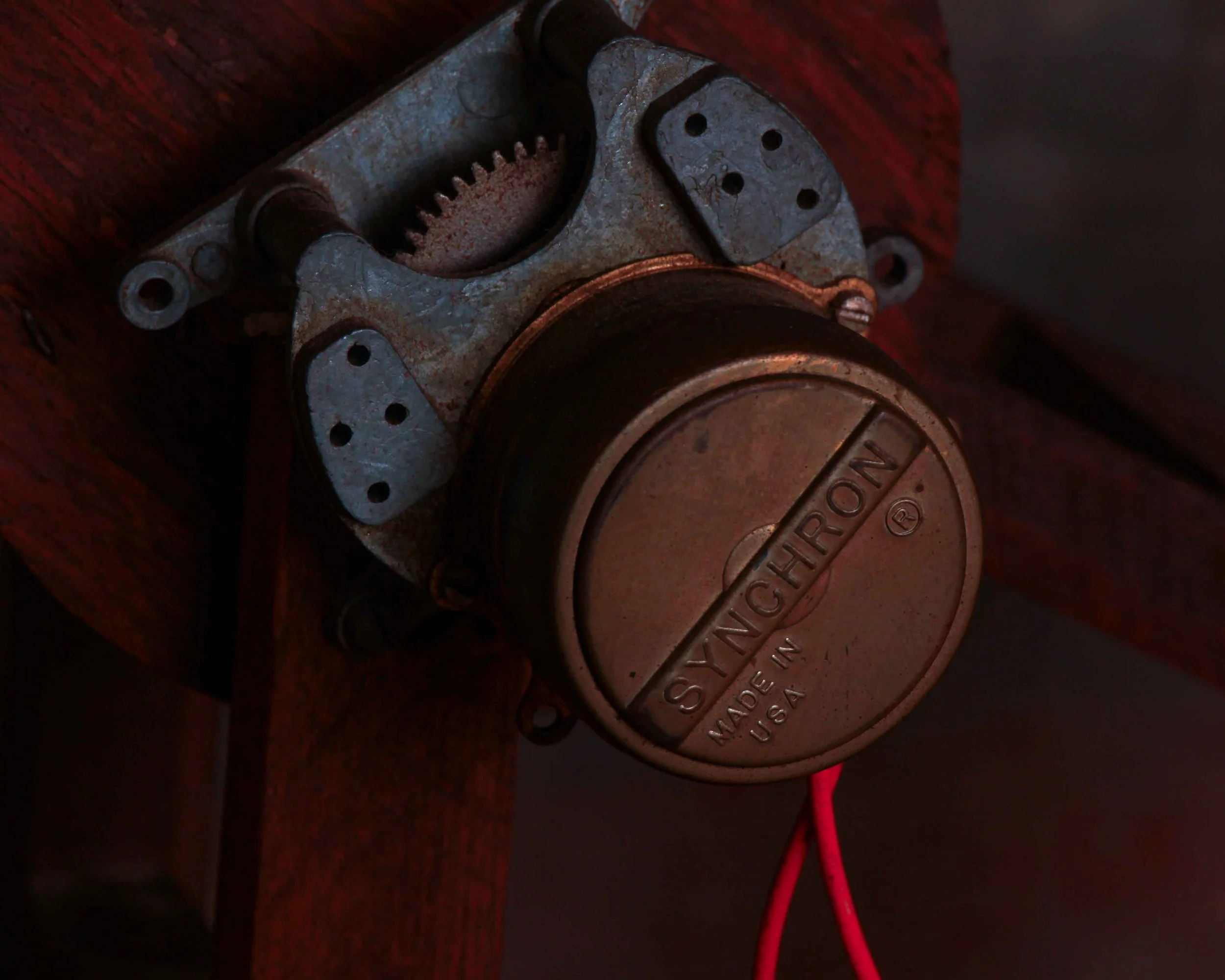
What really seals the deal is the electric motor, which still turns the wheel (barely), bringing the whole thing to life with a gentle, hypnotic rotation. Switch it on and suddenly you’re not just looking at an object, you’re watching a scene unfold.
At 27 inches high by 21 inches wide and 9 inches deep, it’s equal parts whimsy, craftsmanship, and mechanical curiosity. This Ferris wheel is a small handmade tribute to joy, motion, and the pleasure of making something just because you can.
Category History
Folk art lives in that space where making isn’t about fitting into an art world—it’s about expressing something directly, often with whatever is at hand. It’s shaped by necessity, tradition, and instinct rather than formal training. You see it in carved figures, painted signs, stitched textiles, weathervanes, toys—objects that were sometimes made to be useful, sometimes just because someone felt like making them.
What sets folk art apart is its independence. Proportion might bend, perspective might flatten, colors might lean bold or unexpected—but it all works because it’s guided by the maker’s eye, not a rulebook. There’s often a strong sense of place, too. Materials and motifs reflect where it was made, whether that’s rural, coastal, urban, or somewhere in between.
Many pieces carry a kind of quiet storytelling. A carved animal that feels more like a memory than a specimen, a painted scene that captures an event or daily life without worrying about precision. Imperfections aren’t flaws—they’re part of the language.
Over time, these objects shift from everyday use into something more reflective. What was once a tool or decoration becomes a record of how someone saw the world and chose to shape it. Folk art doesn’t try to impress—it connects, directly and without much explanation.
This wonderfully homespun Ferris wheel is made from painted wood and dating to the 1960s, it has that unmistakable folk art confidence: simple geometry, honest materials, and a quiet stubbornness that says “this works because I made it work.”
The wheel rises a full 27 inches tall, with chunky wooden supports and hand-painted details that show years of use, tinkering, and admiration. Each little rider sits patiently in their seat, frozen in mid-loop, their expressions hovering somewhere between delight and mild concern. It’s charming, slightly off-kilter, and completely intentional. The kind of object that doesn’t try to be perfect and ends up being better for it.
What really seals the deal is the electric motor, which still turns the wheel (barely), bringing the whole thing to life with a gentle, hypnotic rotation. Switch it on and suddenly you’re not just looking at an object, you’re watching a scene unfold.
At 27 inches high by 21 inches wide and 9 inches deep, it’s equal parts whimsy, craftsmanship, and mechanical curiosity. This Ferris wheel is a small handmade tribute to joy, motion, and the pleasure of making something just because you can.
Category History
Folk art lives in that space where making isn’t about fitting into an art world—it’s about expressing something directly, often with whatever is at hand. It’s shaped by necessity, tradition, and instinct rather than formal training. You see it in carved figures, painted signs, stitched textiles, weathervanes, toys—objects that were sometimes made to be useful, sometimes just because someone felt like making them.
What sets folk art apart is its independence. Proportion might bend, perspective might flatten, colors might lean bold or unexpected—but it all works because it’s guided by the maker’s eye, not a rulebook. There’s often a strong sense of place, too. Materials and motifs reflect where it was made, whether that’s rural, coastal, urban, or somewhere in between.
Many pieces carry a kind of quiet storytelling. A carved animal that feels more like a memory than a specimen, a painted scene that captures an event or daily life without worrying about precision. Imperfections aren’t flaws—they’re part of the language.
Over time, these objects shift from everyday use into something more reflective. What was once a tool or decoration becomes a record of how someone saw the world and chose to shape it. Folk art doesn’t try to impress—it connects, directly and without much explanation.