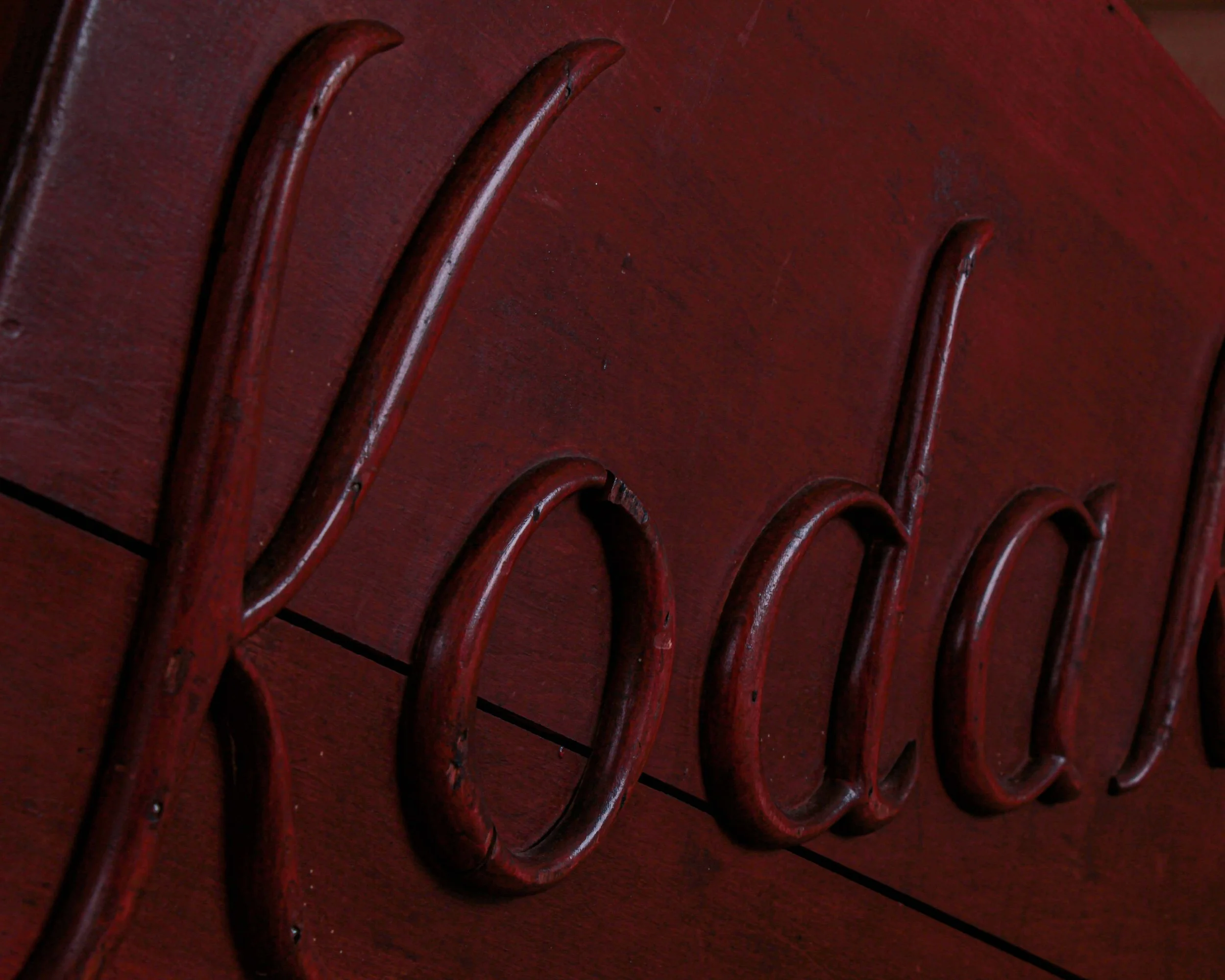
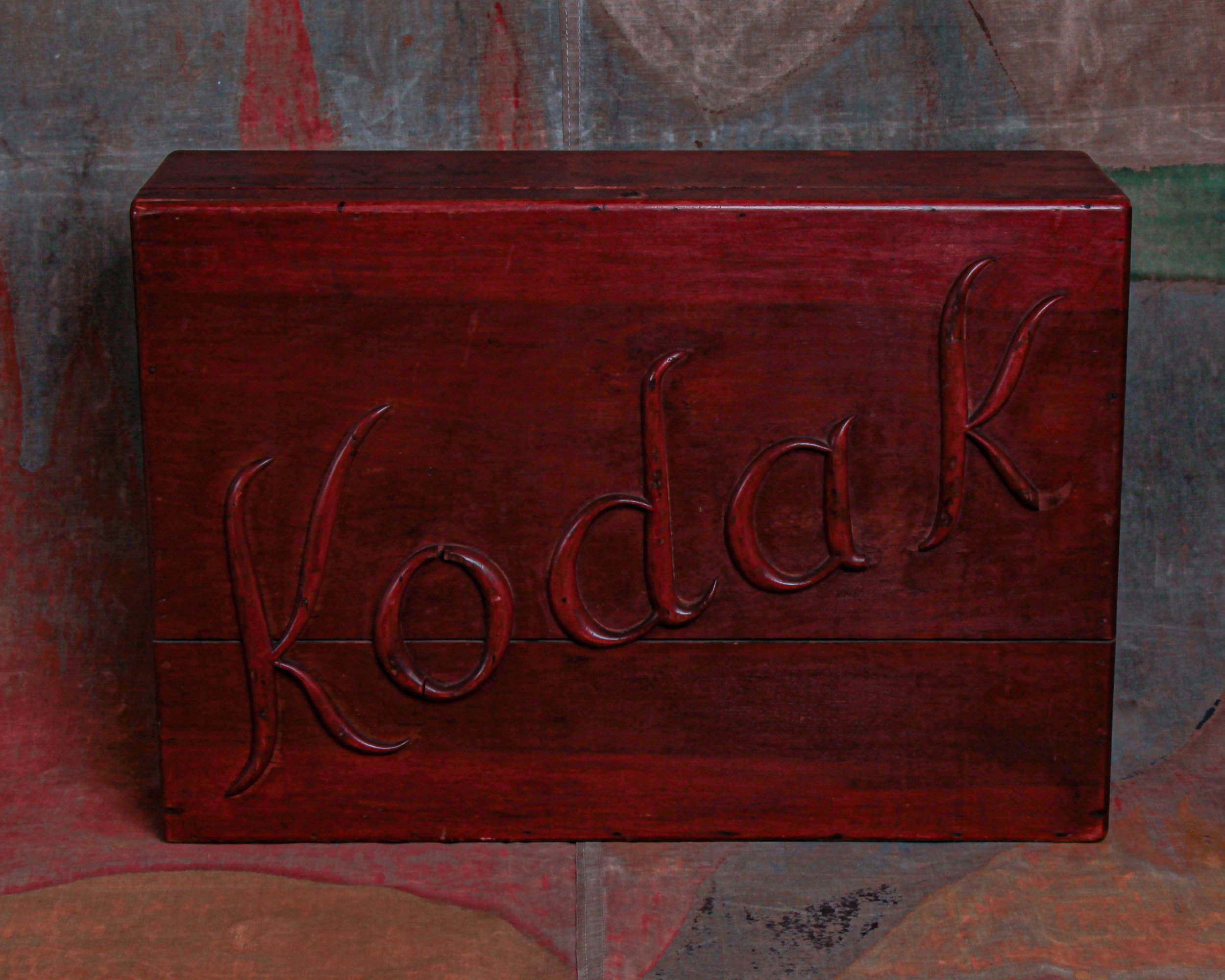
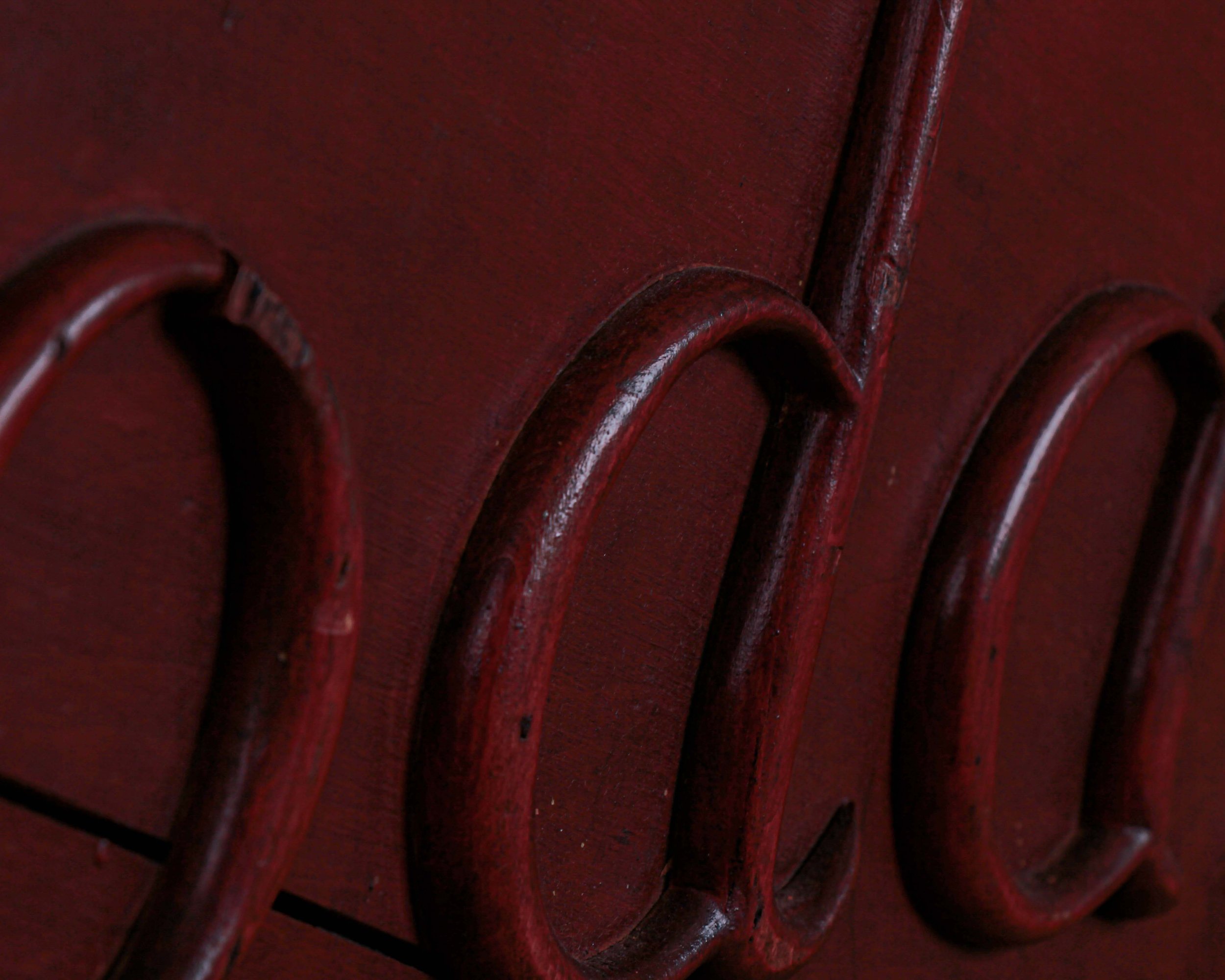
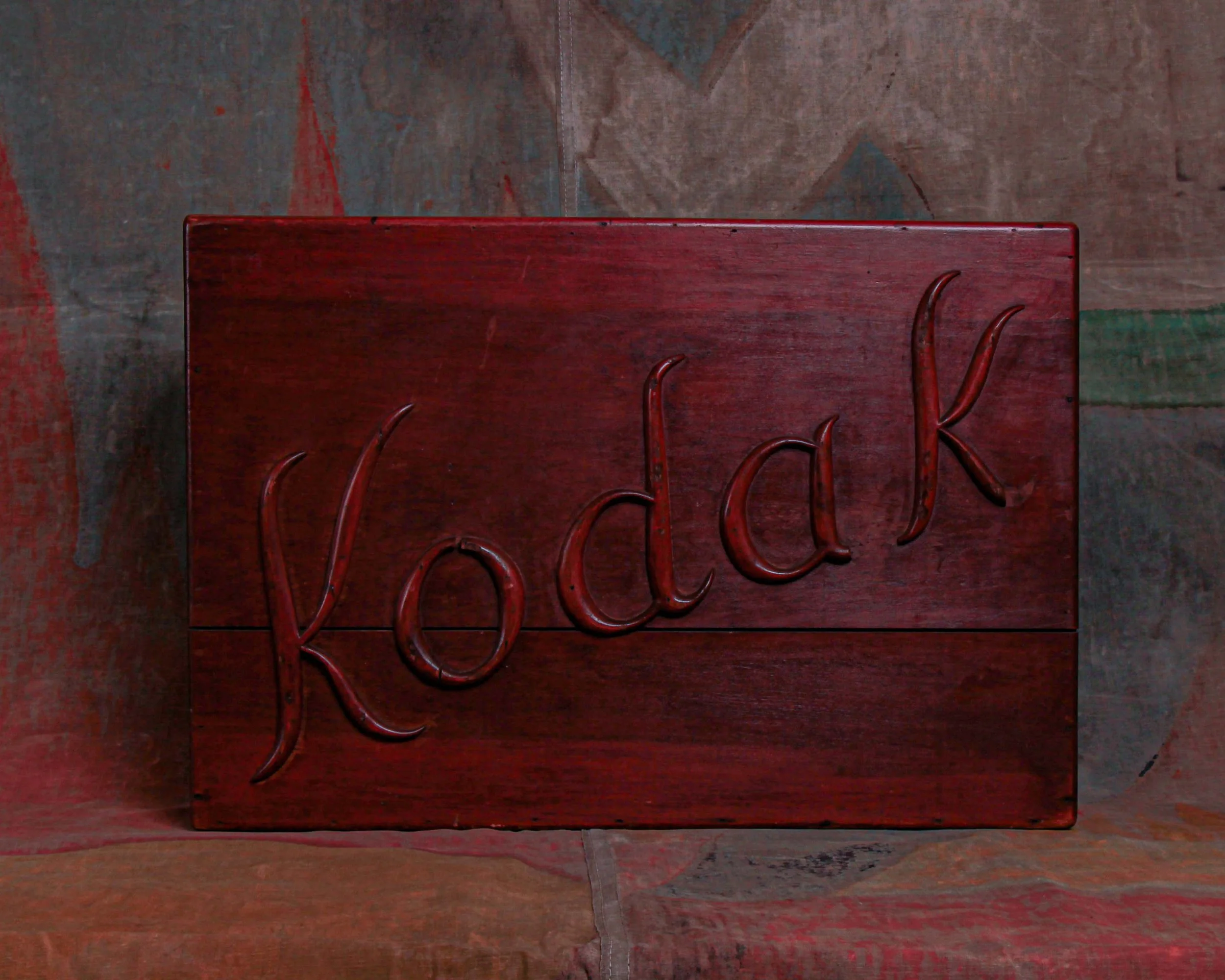
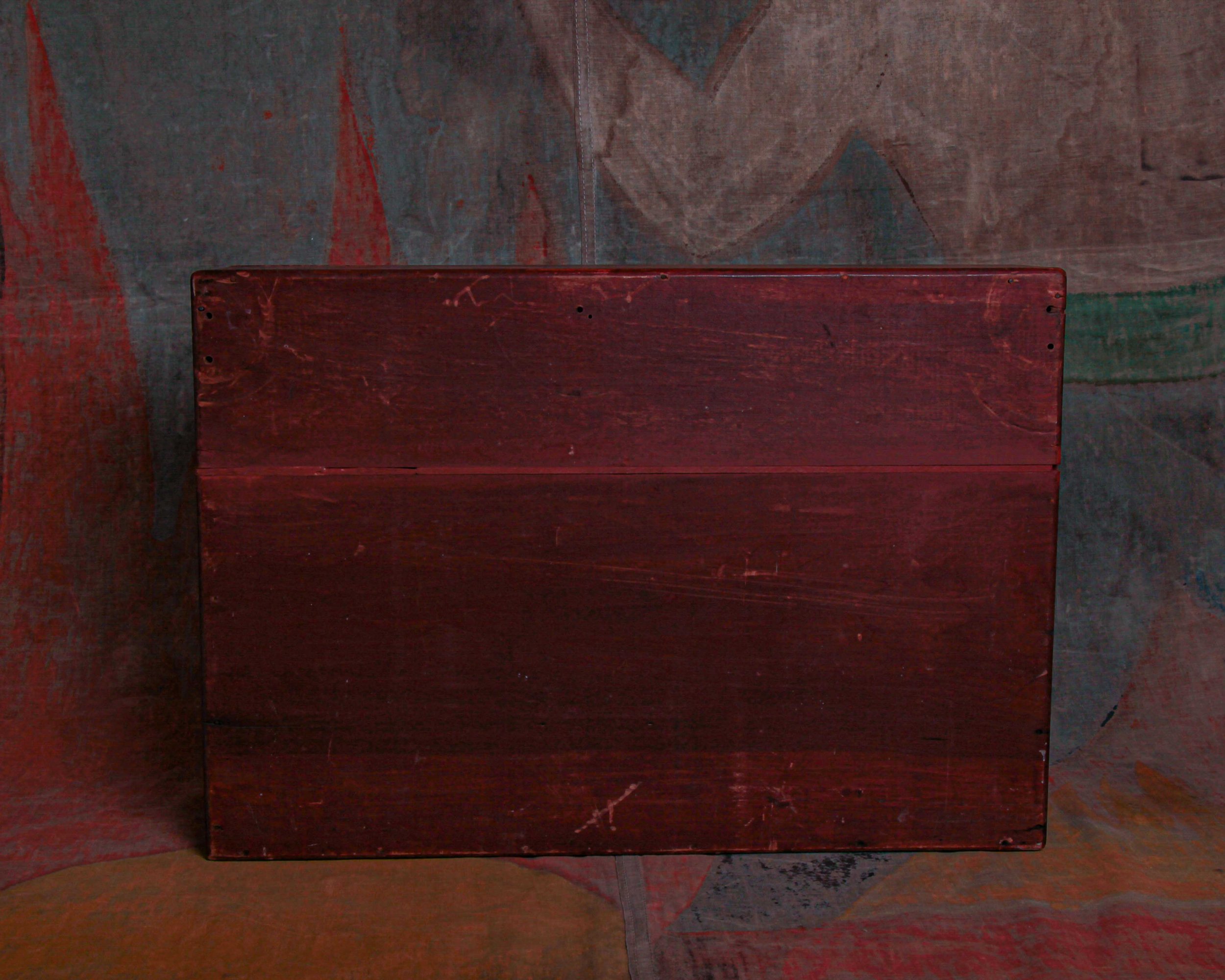
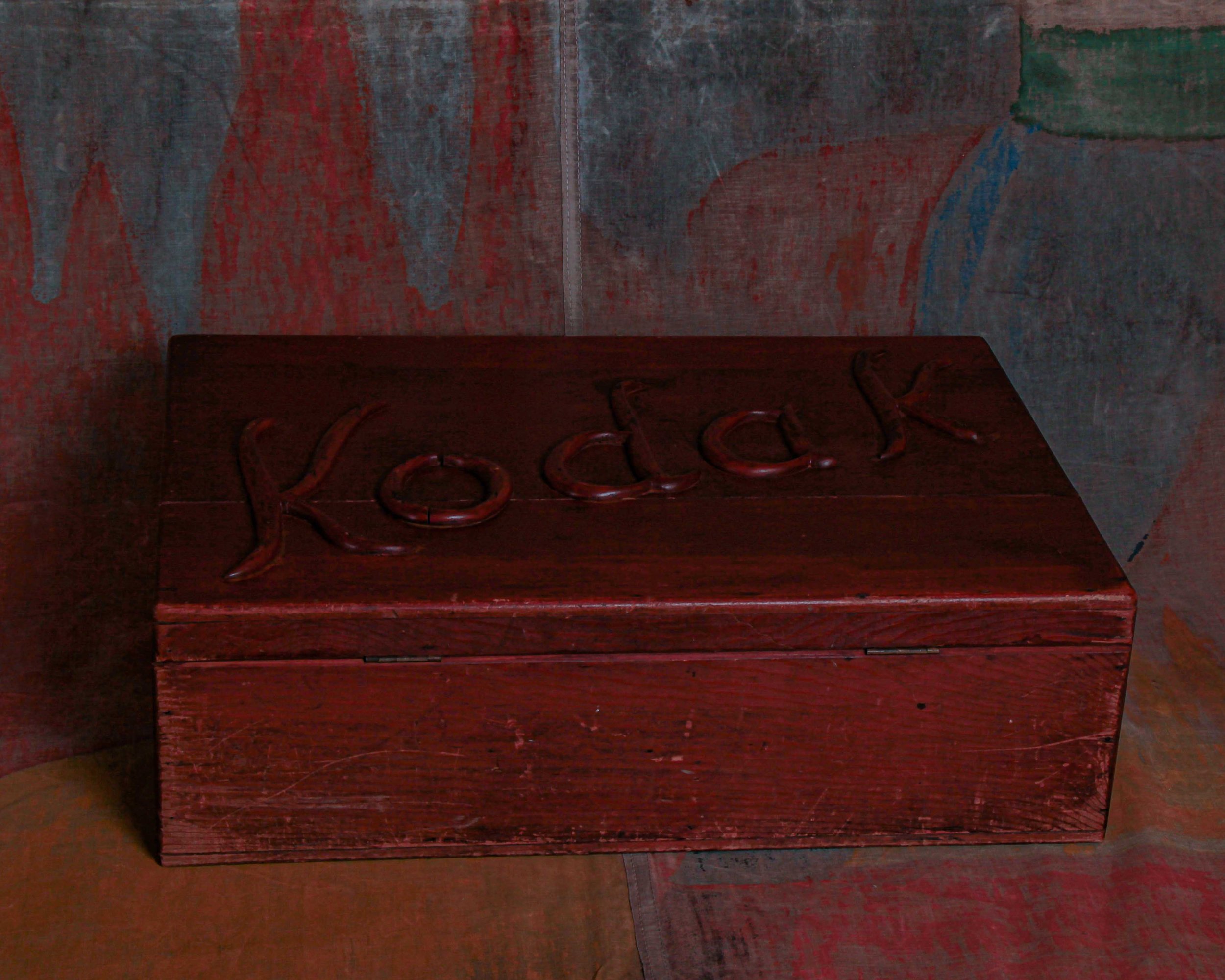
A large 1890s Kodak wooden travel case built for the age of plate photography, when taking a photograph meant packing carefully, thinking ahead, and committing to the moment. The lid is crowned with hand-carved wooden letters spelling “Kodak,” each one individually cut and nailed in place.
It was a working companion, meant to travel, to be opened and closed in the field, to protect fragile glass plates and photographic equipment when photography still felt like a minor miracle.
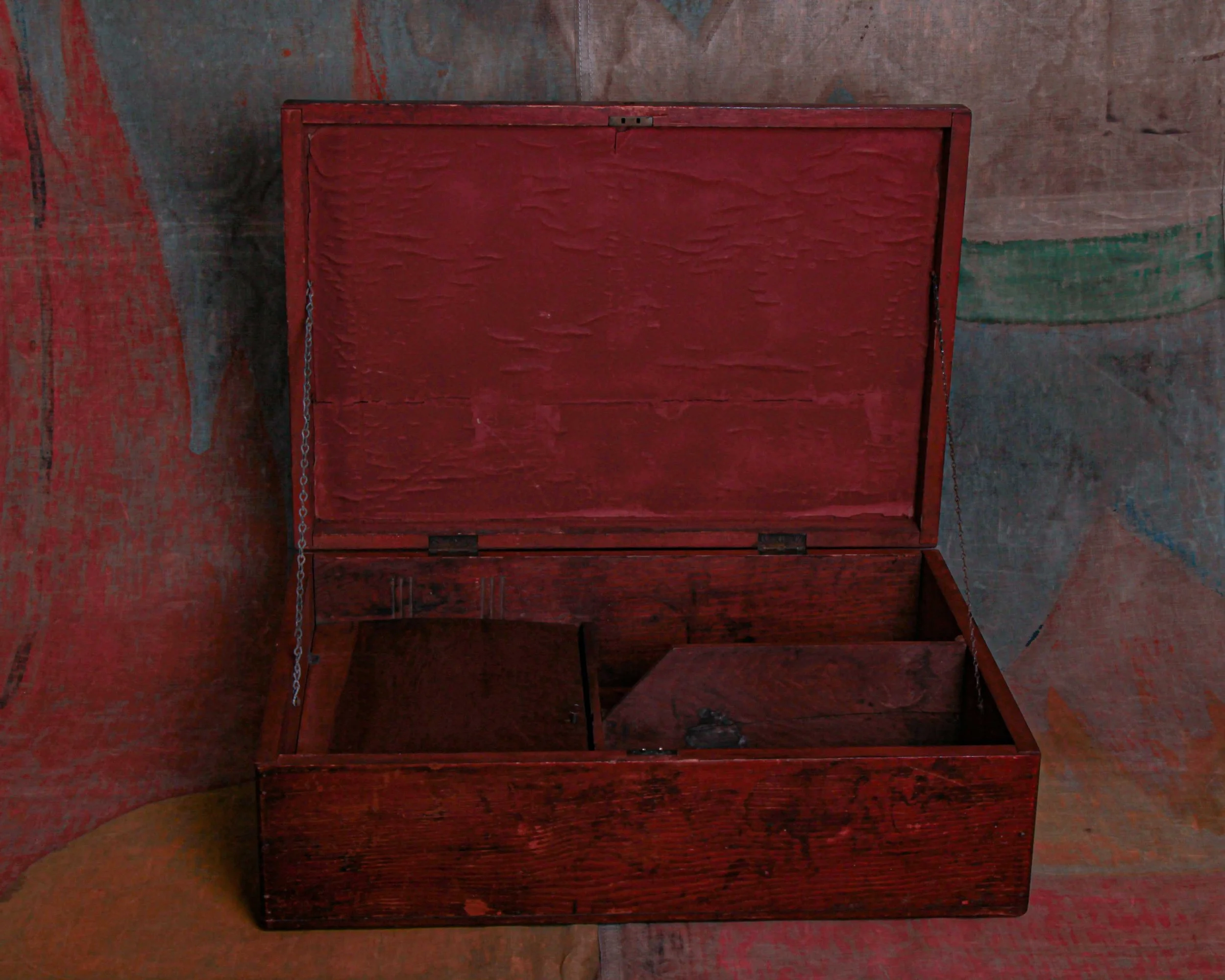
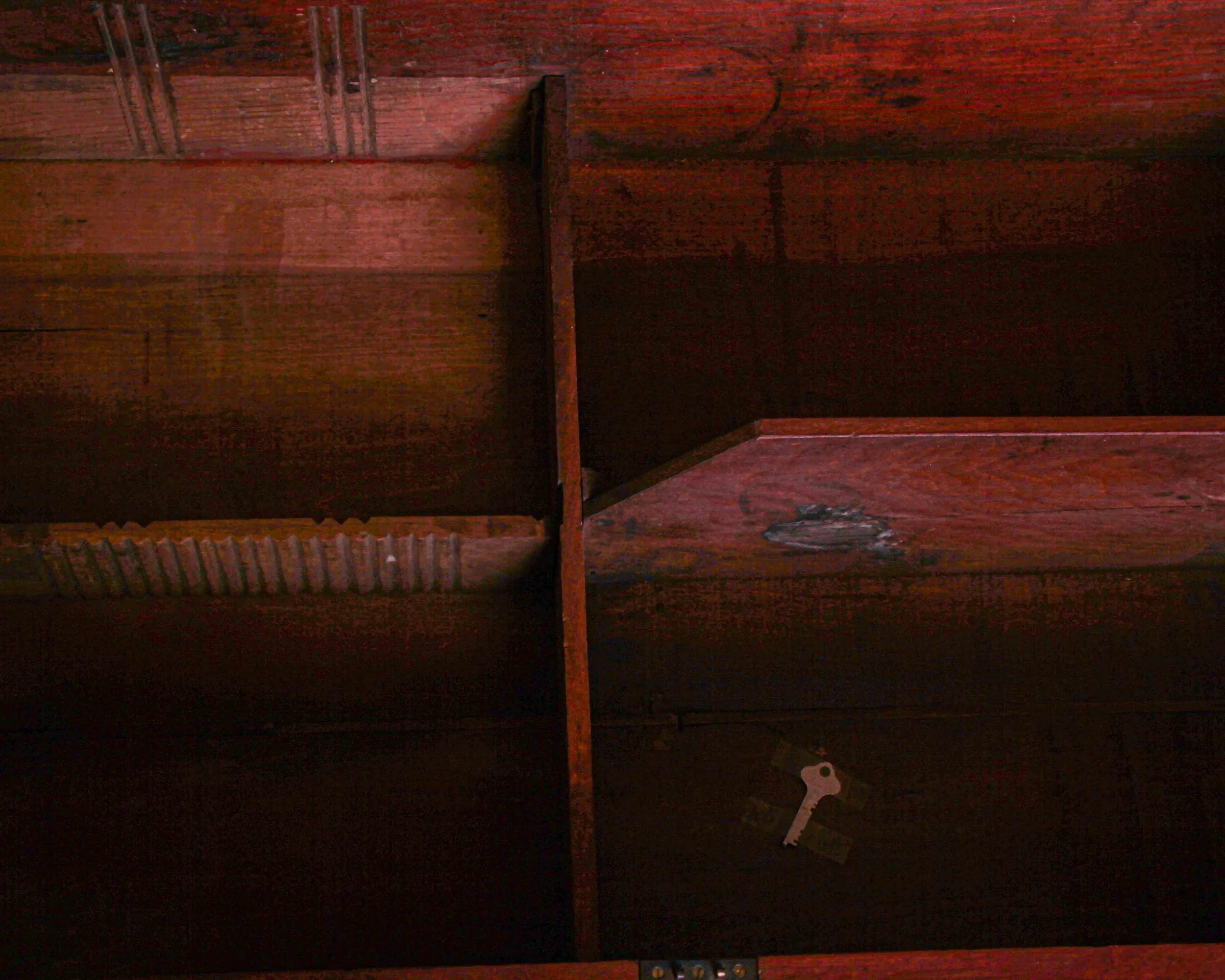
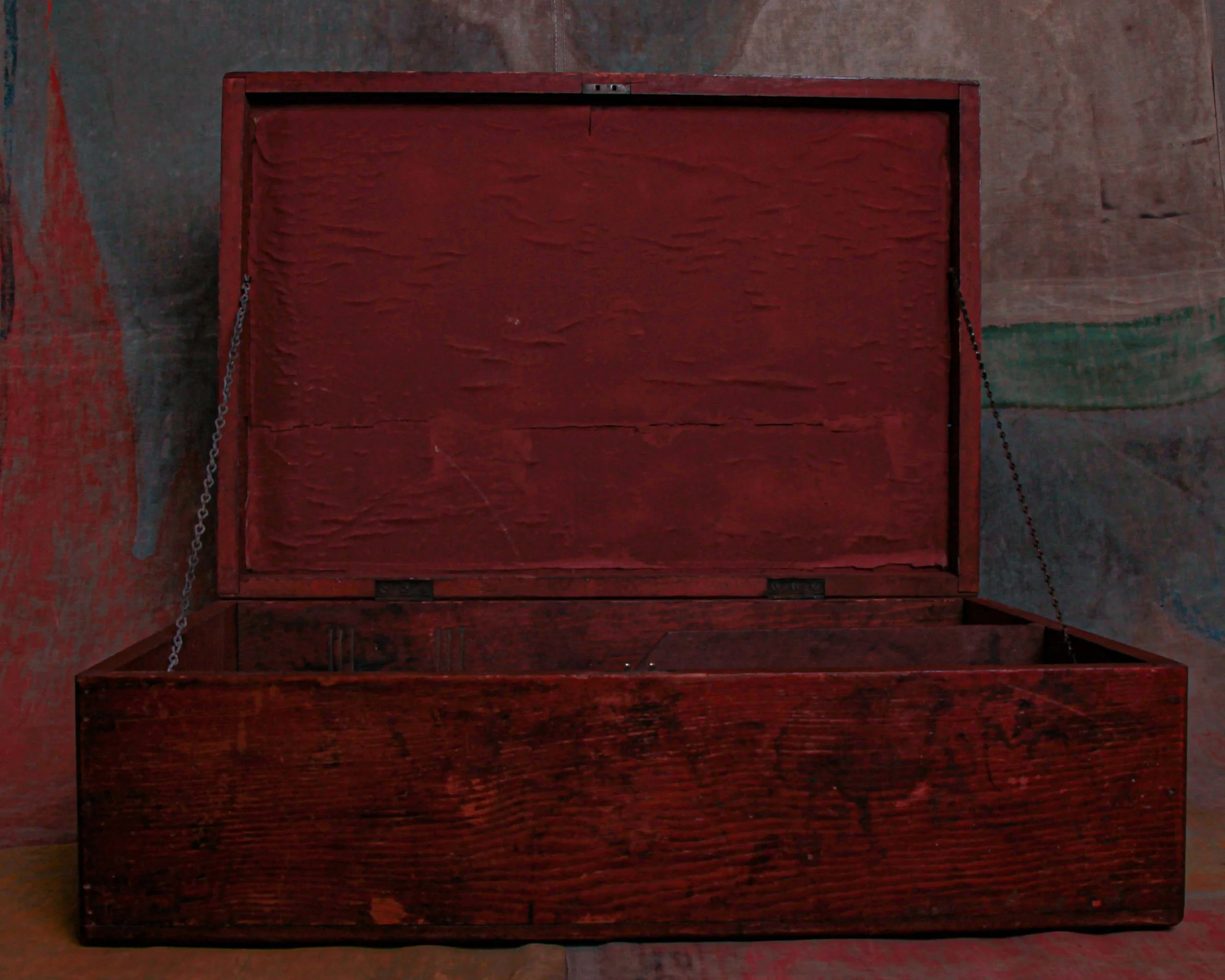
Open the lid and the interior tells its own story. Compartmentalized sections once held plates, chemicals, and tools of the trade, all laid out with purpose. The original interior surface shows heavy, honest wear, along with chain supports that keep the lid from falling back. There’s even a small surviving key tucked inside, a quiet reminder that what lived here was once valuable enough to lock away.
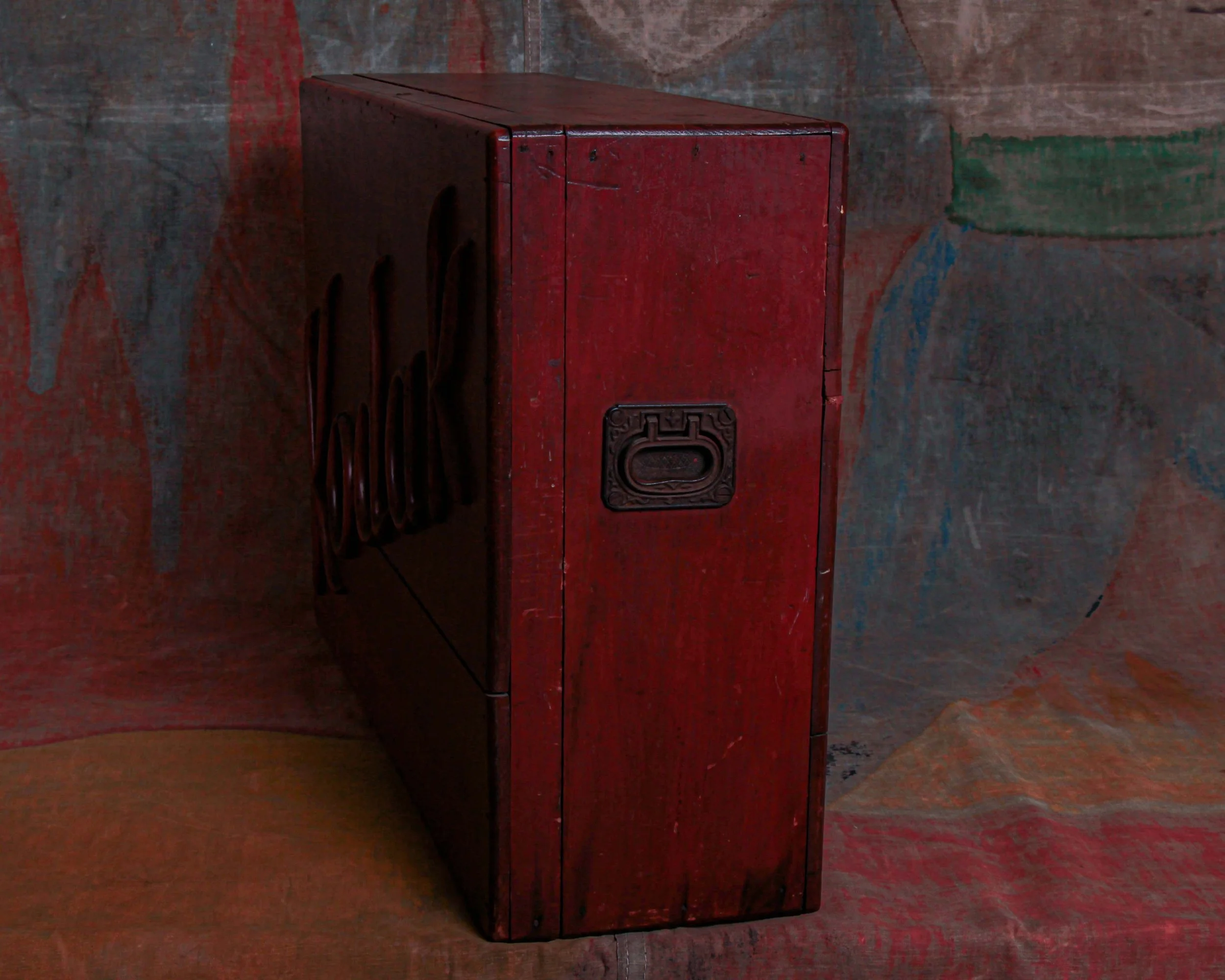
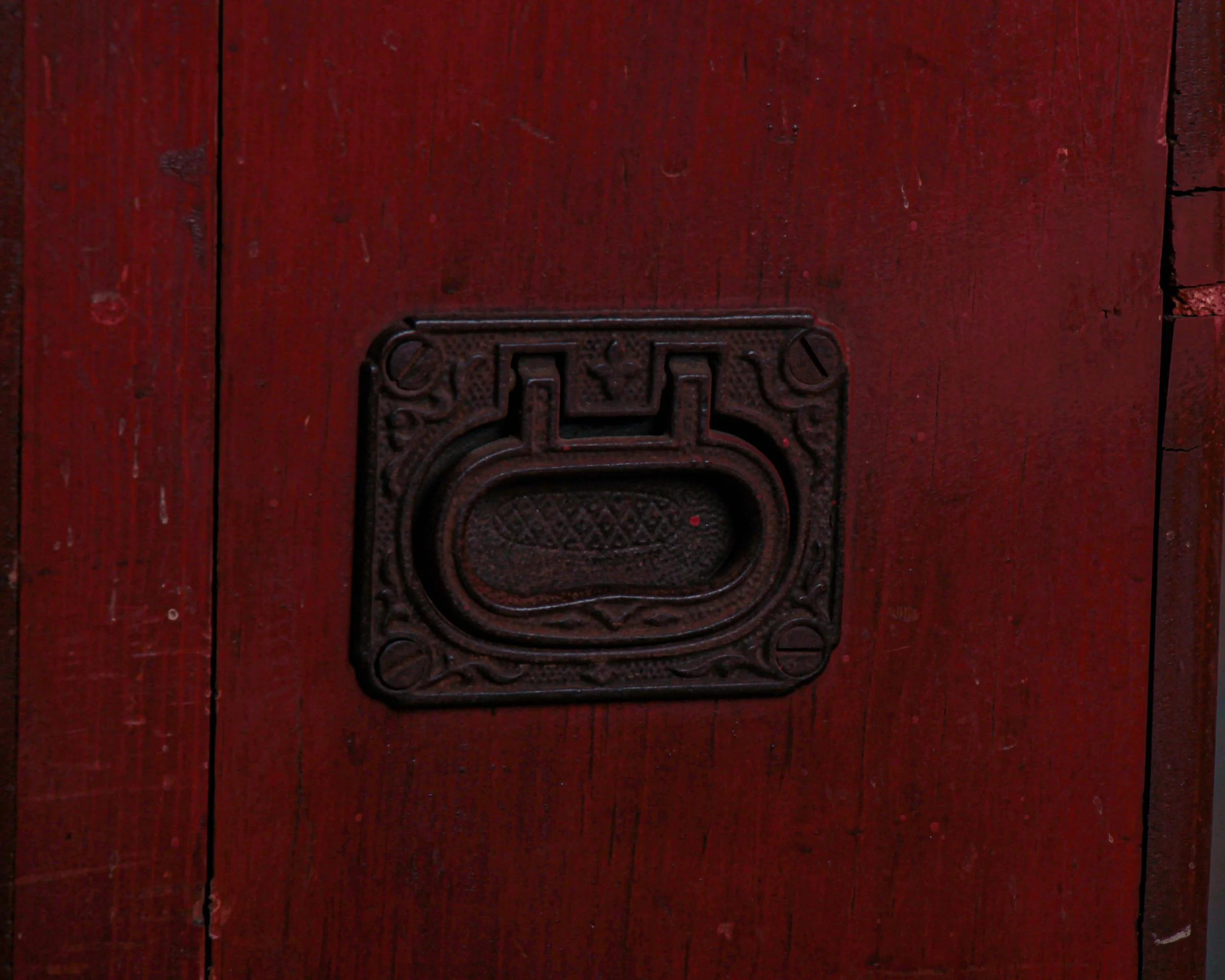
The sides feature sturdy cast metal handles, reinforcing the idea that this chest was meant to be moved, hauled, and trusted. Whether heading into the countryside, onto a city street, or across town to a studio, this case was part of the process. It embodies the era when photography was physical, methodical, and deeply intentional.
Measures 18” x 27” x 8”
Category History
Kodak built its name on a simple promise: photography made easy. Founded in 1888 by George Eastman, the company replaced complex glass plates with roll film and sold cameras preloaded for everyday use. “You press the button, we do the rest” wasn’t just a slogan—it reshaped who could take pictures.
By the early 20th century, Kodak was everywhere, turning snapshots into a habit rather than an event. Their films, papers, and processing systems standardized how images were made and shared.
What makes Kodak interesting is the shift. It helped define modern photography, then struggled to adapt when digital arrived—an innovator caught off guard by its own future.
A large 1890s Kodak wooden travel case built for the age of plate photography, when taking a photograph meant packing carefully, thinking ahead, and committing to the moment. The lid is crowned with hand-carved wooden letters spelling “Kodak,” each one individually cut and nailed in place.
It was a working companion, meant to travel, to be opened and closed in the field, to protect fragile glass plates and photographic equipment when photography still felt like a minor miracle.
Open the lid and the interior tells its own story. Compartmentalized sections once held plates, chemicals, and tools of the trade, all laid out with purpose. The original interior surface shows heavy, honest wear, along with chain supports that keep the lid from falling back. There’s even a small surviving key tucked inside, a quiet reminder that what lived here was once valuable enough to lock away.
The sides feature sturdy cast metal handles, reinforcing the idea that this chest was meant to be moved, hauled, and trusted. Whether heading into the countryside, onto a city street, or across town to a studio, this case was part of the process. It embodies the era when photography was physical, methodical, and deeply intentional.
Measures 18” x 27” x 8”
Category History
Kodak built its name on a simple promise: photography made easy. Founded in 1888 by George Eastman, the company replaced complex glass plates with roll film and sold cameras preloaded for everyday use. “You press the button, we do the rest” wasn’t just a slogan—it reshaped who could take pictures.
By the early 20th century, Kodak was everywhere, turning snapshots into a habit rather than an event. Their films, papers, and processing systems standardized how images were made and shared.
What makes Kodak interesting is the shift. It helped define modern photography, then struggled to adapt when digital arrived—an innovator caught off guard by its own future.