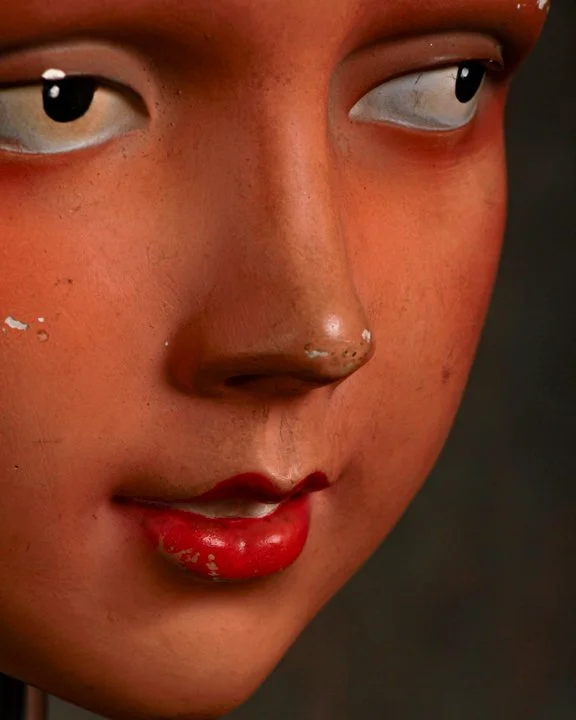
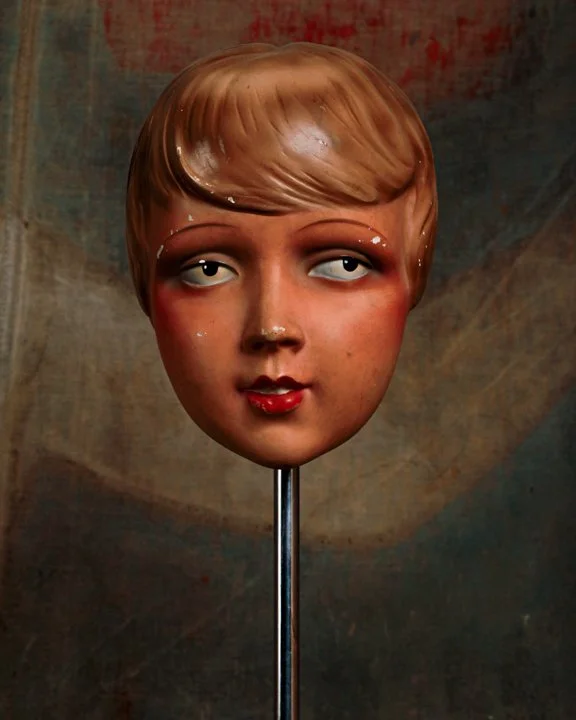
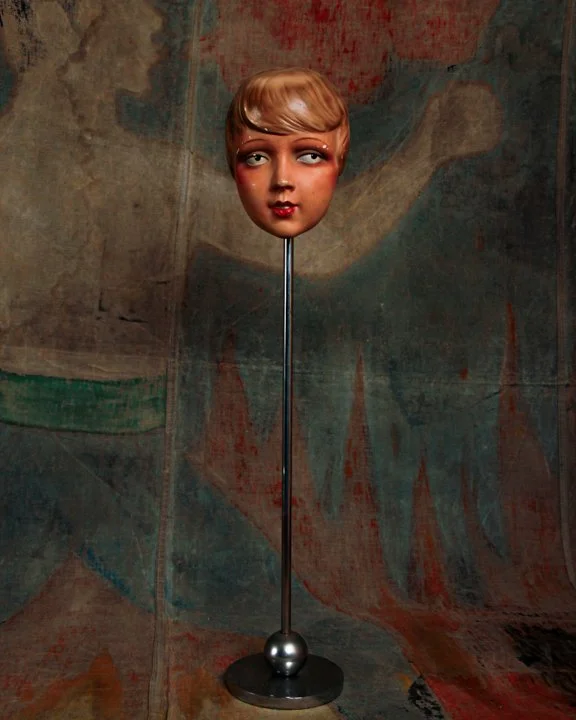
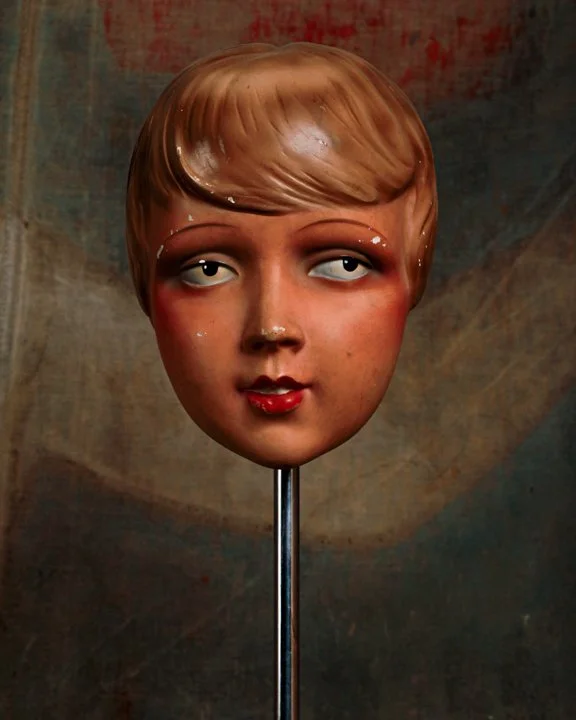
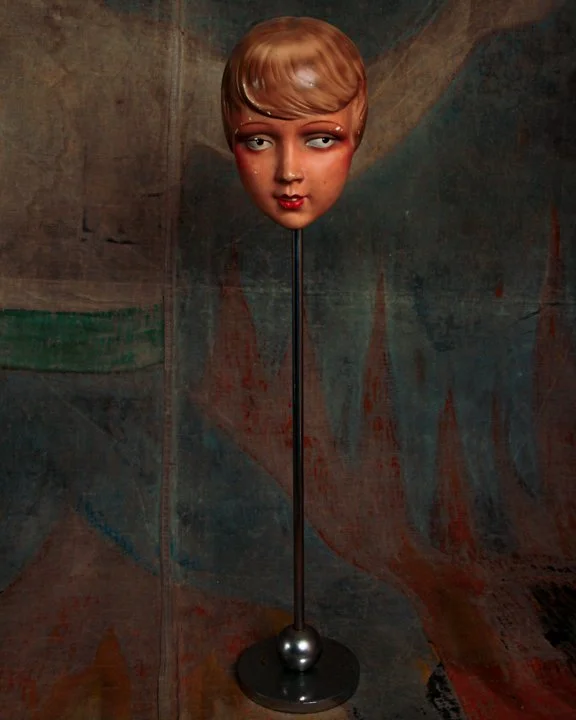
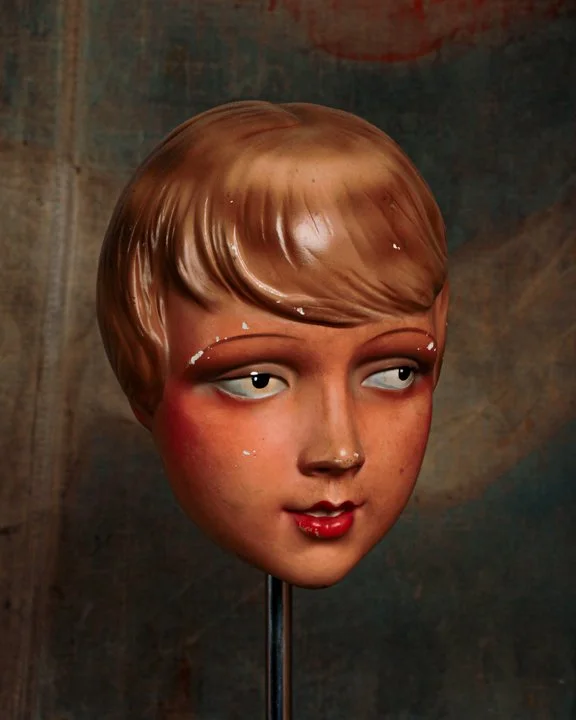
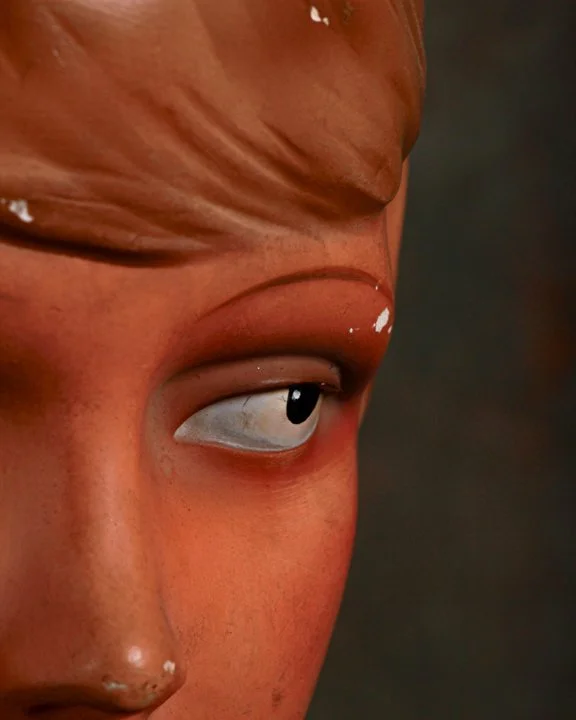
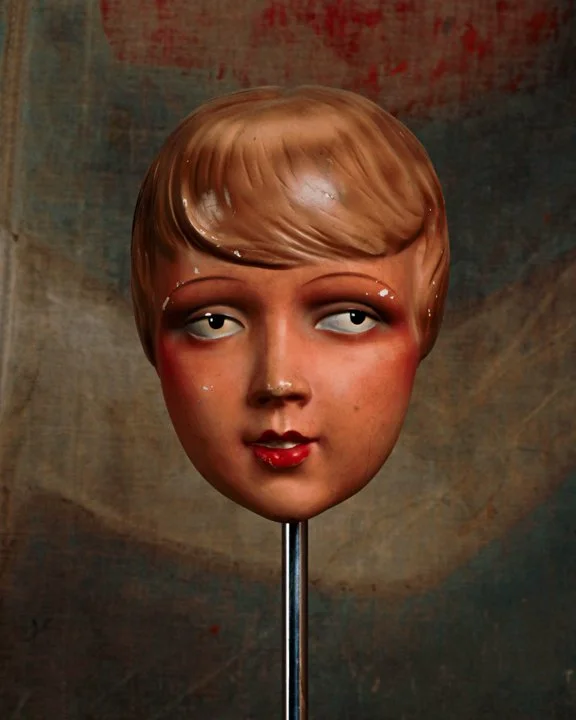
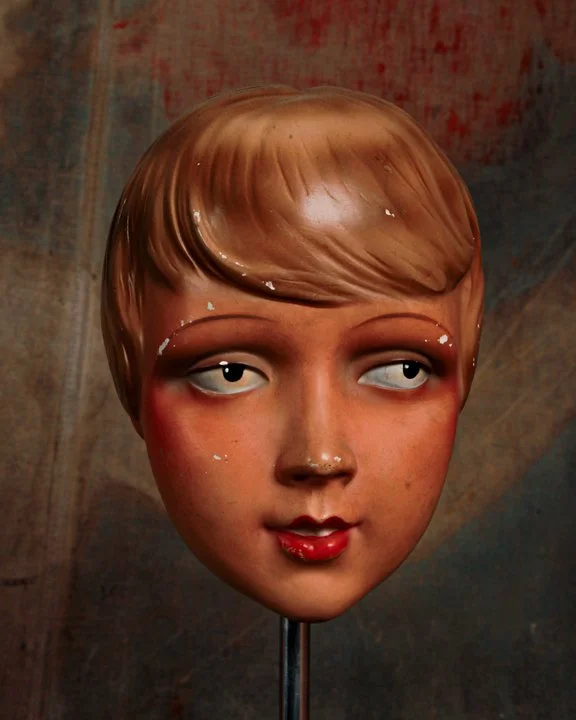
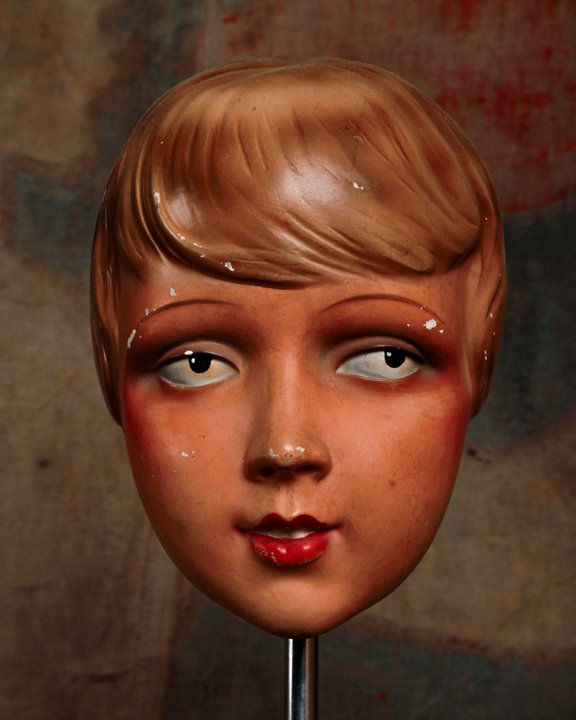
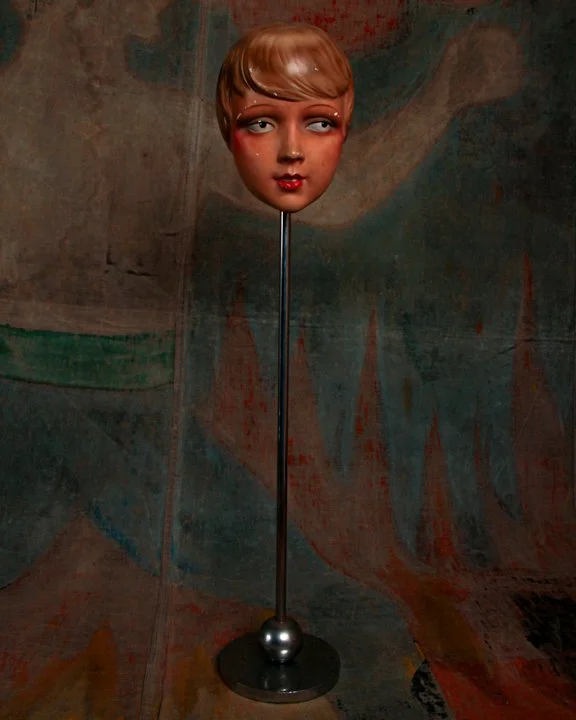
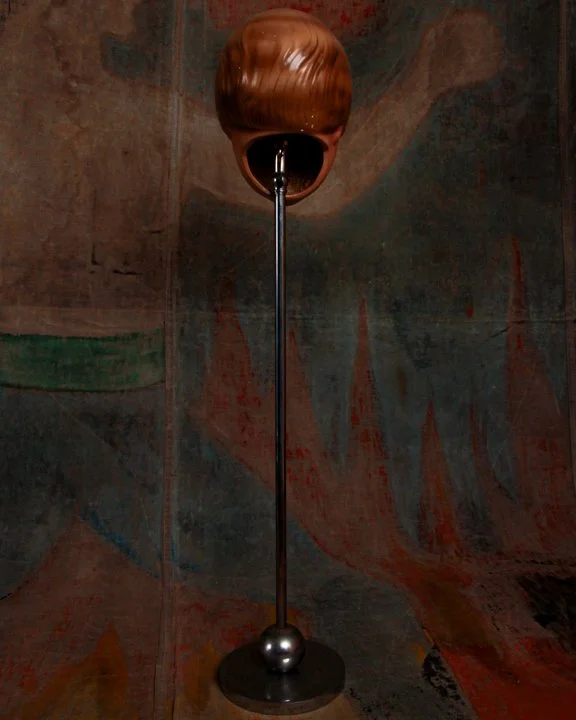
This mannequin head has a slight sidelong gaze that gives her personality, almost attitude. She does not demand attention, but she certainly holds it. Set her on a console, in a vitrine, or among other oddities and she’ll quickly become the quiet protagonist of the room.
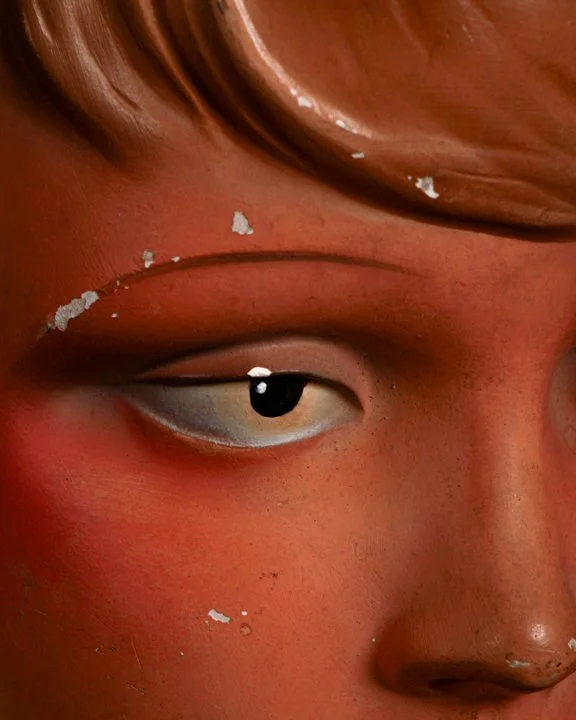
Likely second quarter 20th century, this display head carries all the hallmarks of classic store mannequins. Sculpted composition material with hand painted features, softly modeled cheeks flushed in warm rose, delicately arched brows, and those perfectly lacquered red lips that have just enough wear to remind you they have seen a few seasons come and go. Small chips along the brow and cheek, tiny nicks on the nose, and subtle surface scratches give her that honest, unbothered patina that only time can script.
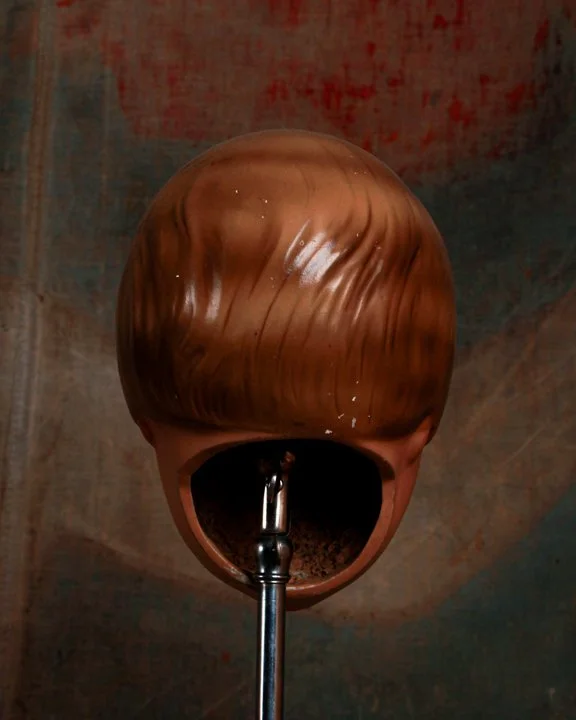
Her molded hair is pure period charm. A neat, sculpted wave swept across the forehead, frozen in that confident, practical style that once framed hats, scarves, and the occasional daring tilt of a department store spotlight. From the back, the hollowed interior reveals her original purpose. She was built to work. Built to sell dreams in a shop window.
Now mounted on a simple metal stand, she feels less like retail equipment and more like sculpture.
Category History
Old mannequin heads are where retail display meets quiet portrait. Made from papier-mâché, composition, plaster, or early plastics, they were designed to present hats, wigs, or cosmetics with just enough personality to draw attention. The features are often slightly idealized—arched brows, defined lips, smooth skin—meant to suggest rather than replicate a face.
What makes them interesting now is how they’ve aged. Paint softens, surfaces crack, expressions shift from polished to a bit uncanny. They carry the memory of storefronts and showrooms, but also read as standalone objects—somewhere between sculpture and artifact, holding a gaze that feels oddly present.
This mannequin head has a slight sidelong gaze that gives her personality, almost attitude. She does not demand attention, but she certainly holds it. Set her on a console, in a vitrine, or among other oddities and she’ll quickly become the quiet protagonist of the room.
Likely second quarter 20th century, this display head carries all the hallmarks of classic store mannequins. Sculpted composition material with hand painted features, softly modeled cheeks flushed in warm rose, delicately arched brows, and those perfectly lacquered red lips that have just enough wear to remind you they have seen a few seasons come and go. Small chips along the brow and cheek, tiny nicks on the nose, and subtle surface scratches give her that honest, unbothered patina that only time can script.
Her molded hair is pure period charm. A neat, sculpted wave swept across the forehead, frozen in that confident, practical style that once framed hats, scarves, and the occasional daring tilt of a department store spotlight. From the back, the hollowed interior reveals her original purpose. She was built to work. Built to sell dreams in a shop window.
Now mounted on a simple metal stand, she feels less like retail equipment and more like sculpture.
Category History
Old mannequin heads are where retail display meets quiet portrait. Made from papier-mâché, composition, plaster, or early plastics, they were designed to present hats, wigs, or cosmetics with just enough personality to draw attention. The features are often slightly idealized—arched brows, defined lips, smooth skin—meant to suggest rather than replicate a face.
What makes them interesting now is how they’ve aged. Paint softens, surfaces crack, expressions shift from polished to a bit uncanny. They carry the memory of storefronts and showrooms, but also read as standalone objects—somewhere between sculpture and artifact, holding a gaze that feels oddly present.