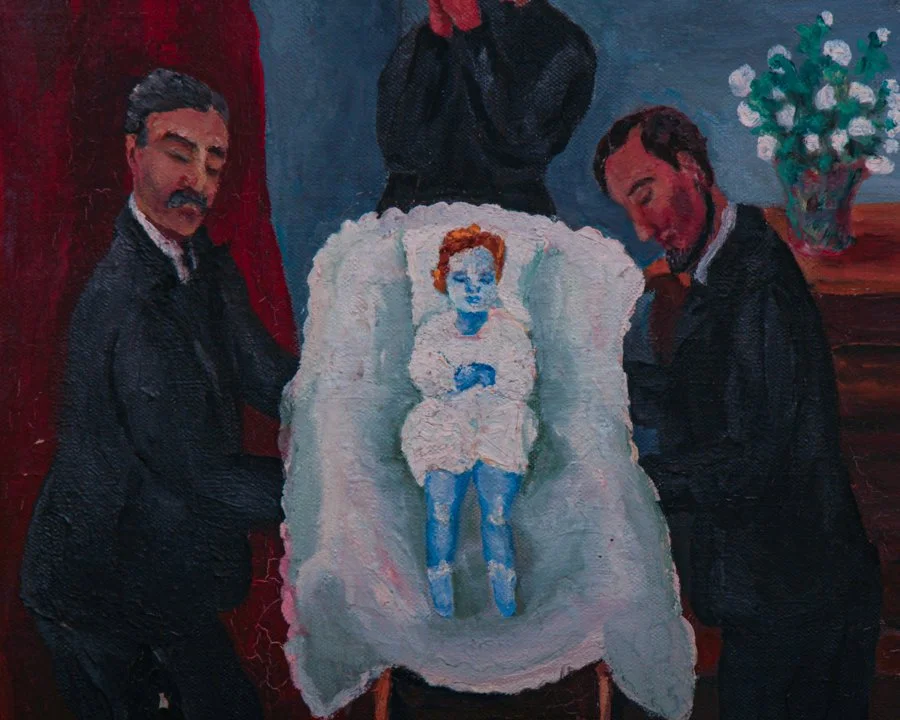
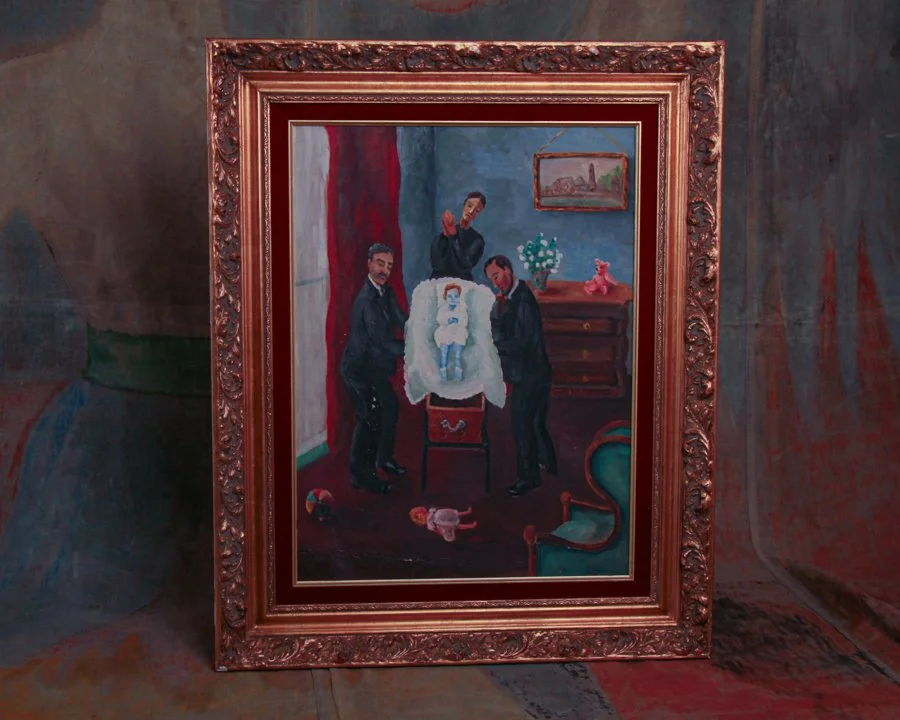
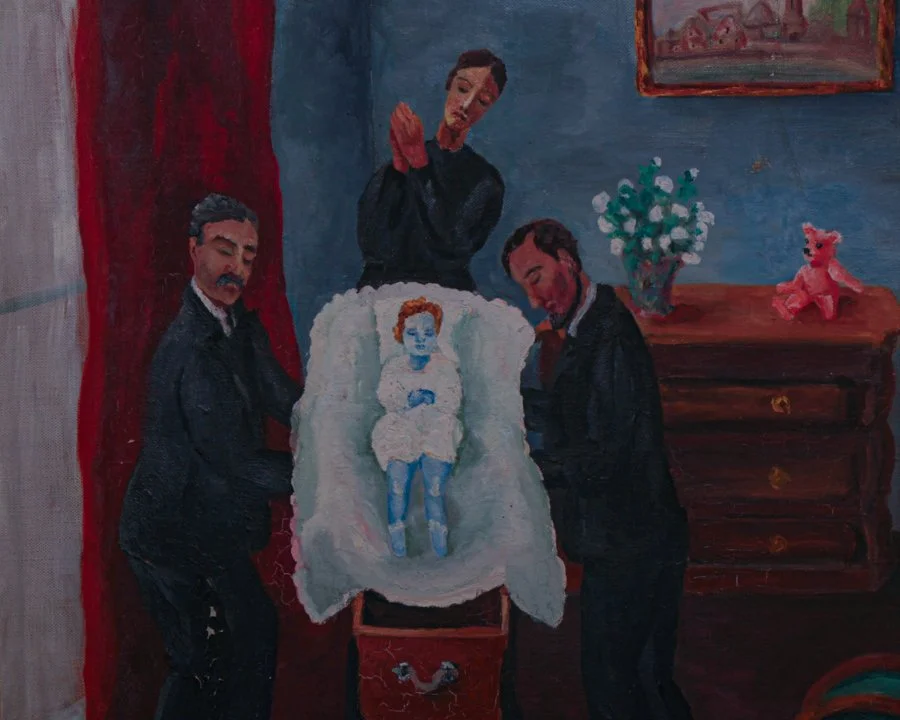
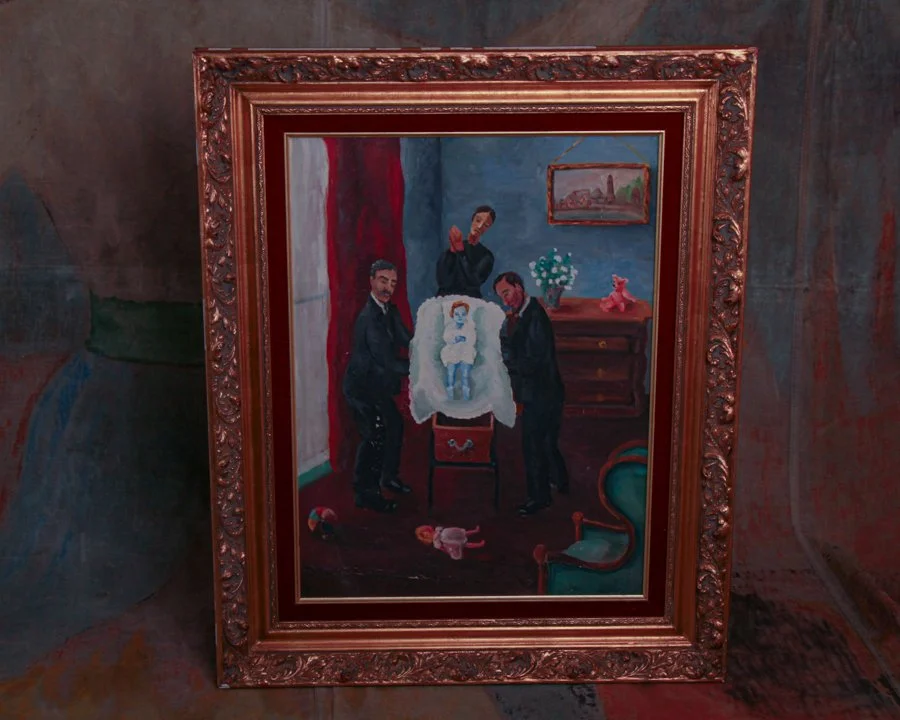
This painting, titled "L'enfant mort" (The Dead Child) and dated December 1936, is a striking and evocative work that portrays a somber and surreal scene. The composition features two men dressed in black suits and a woman dressed in dark formal attire, solemnly gathered around the dead body of a child. Laid out on a white cloth, the two men hold the child over a minute casket-reminiscent of a funeral or a ceremonial setting. The figures' postures and expressions suggest grief or reverence.
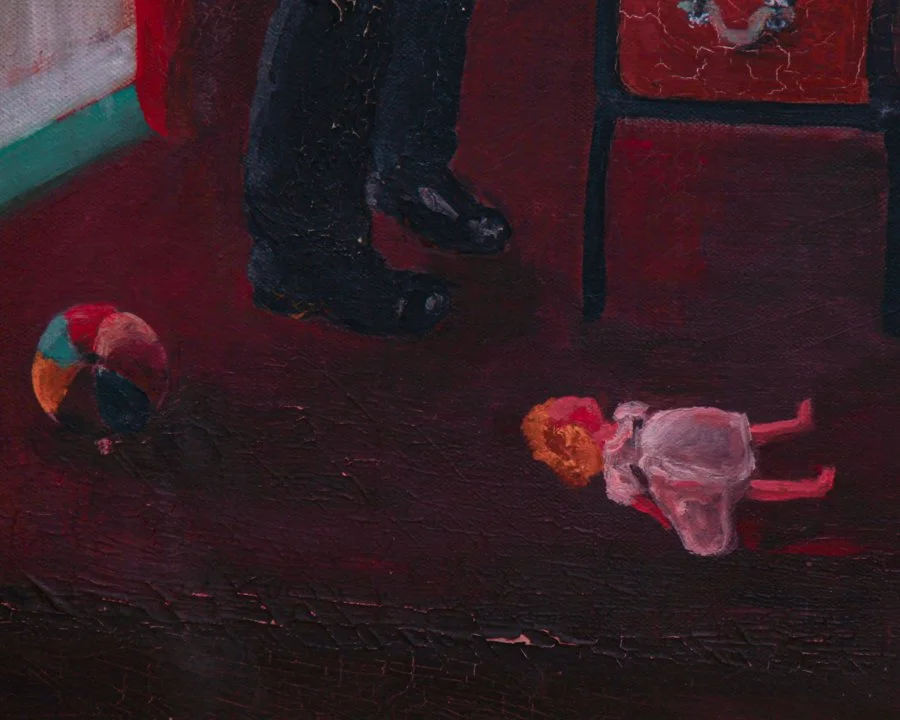
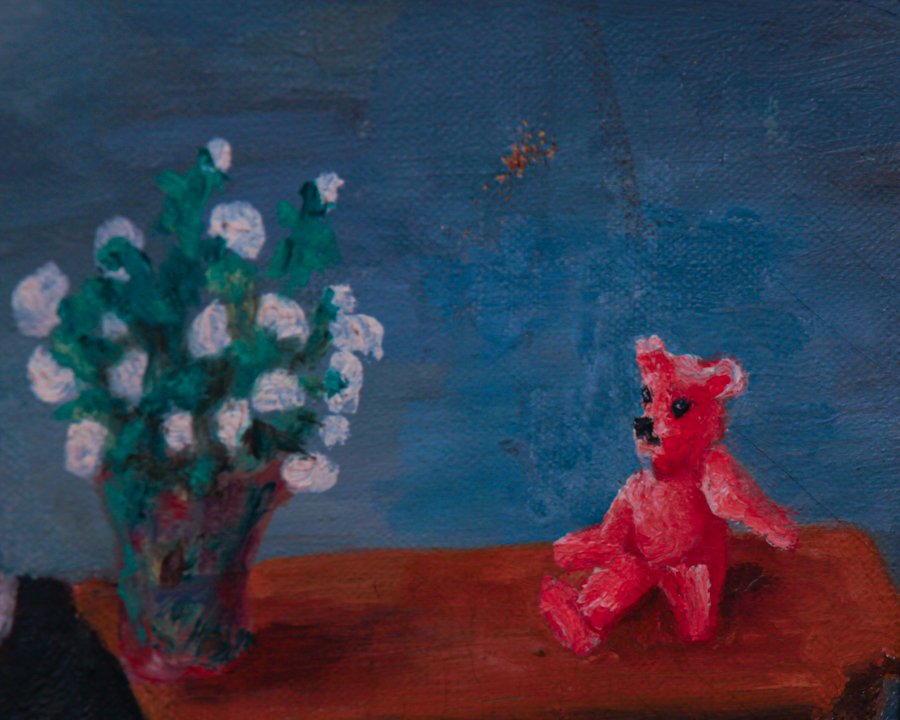
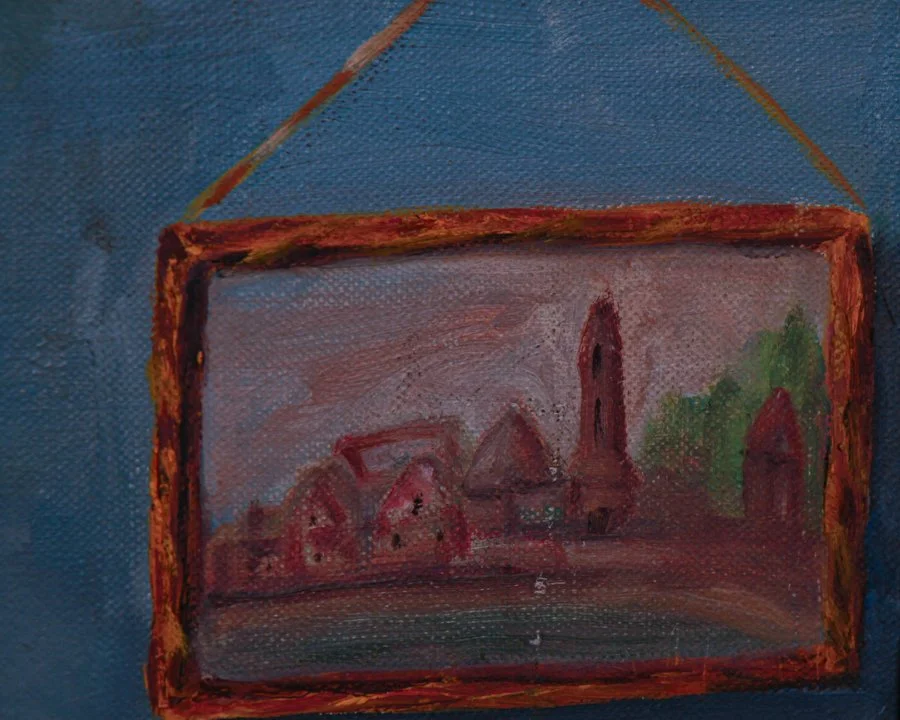
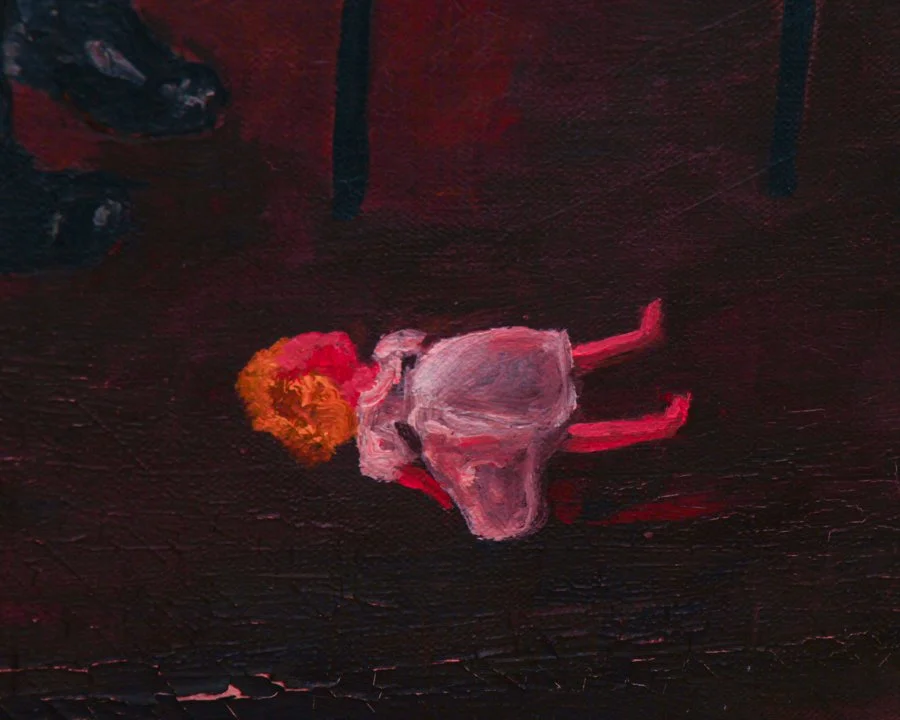
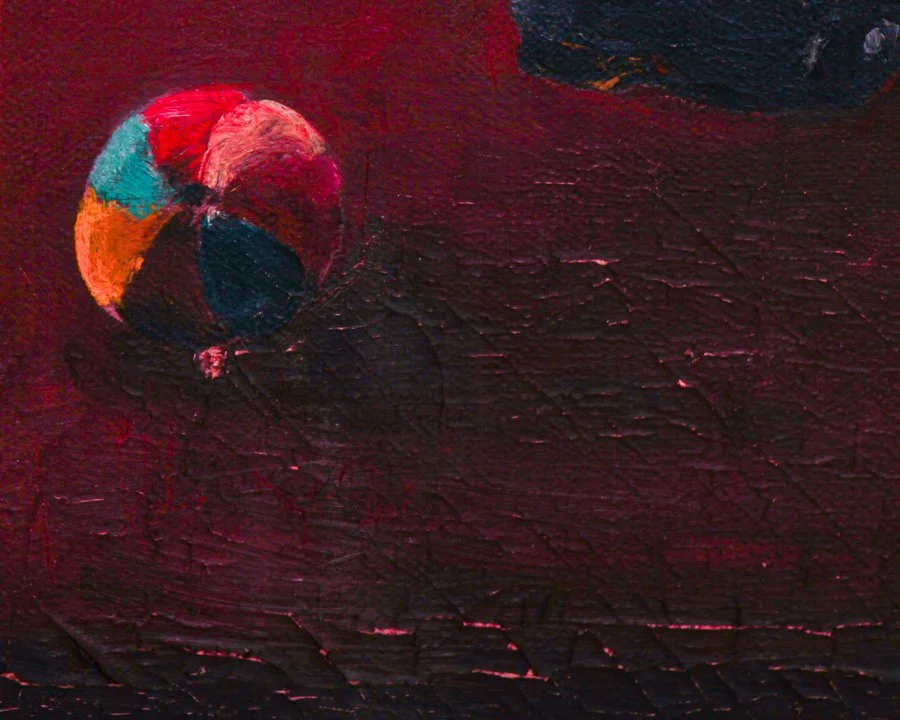
The room is a modest interior with deep red curtains, a chest of drawers adorned with a vase of flowers and a pink teddy bear. A small painting hangs over the dresser and a green upholstered chair is propped in the opposite corner. Toys scattered on the floor, including a doll and a ball, further enhance the unsettling juxtaposition of childhood innocence and mourning.
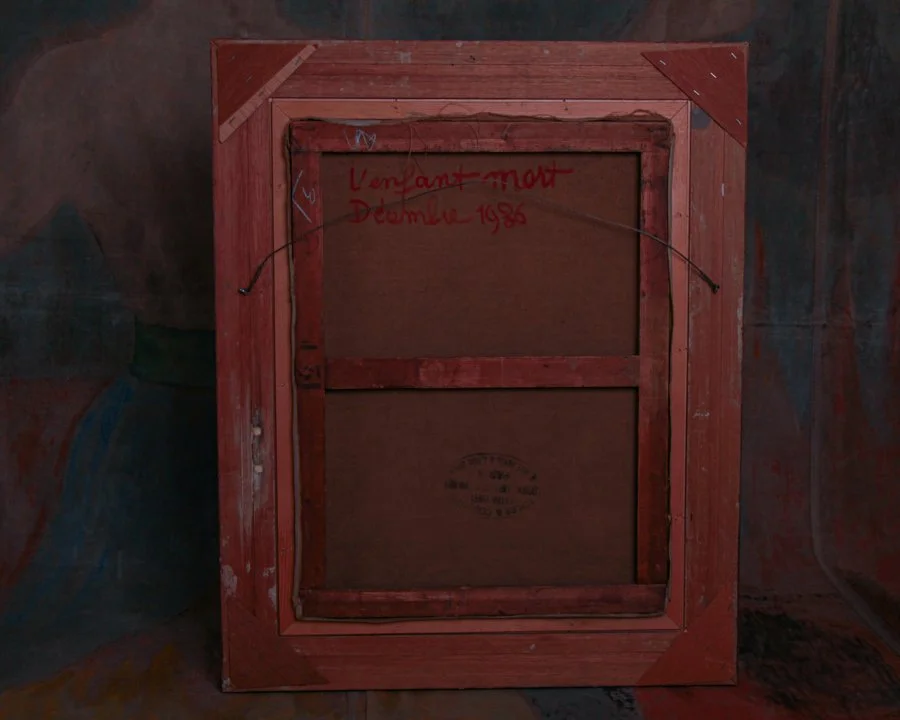
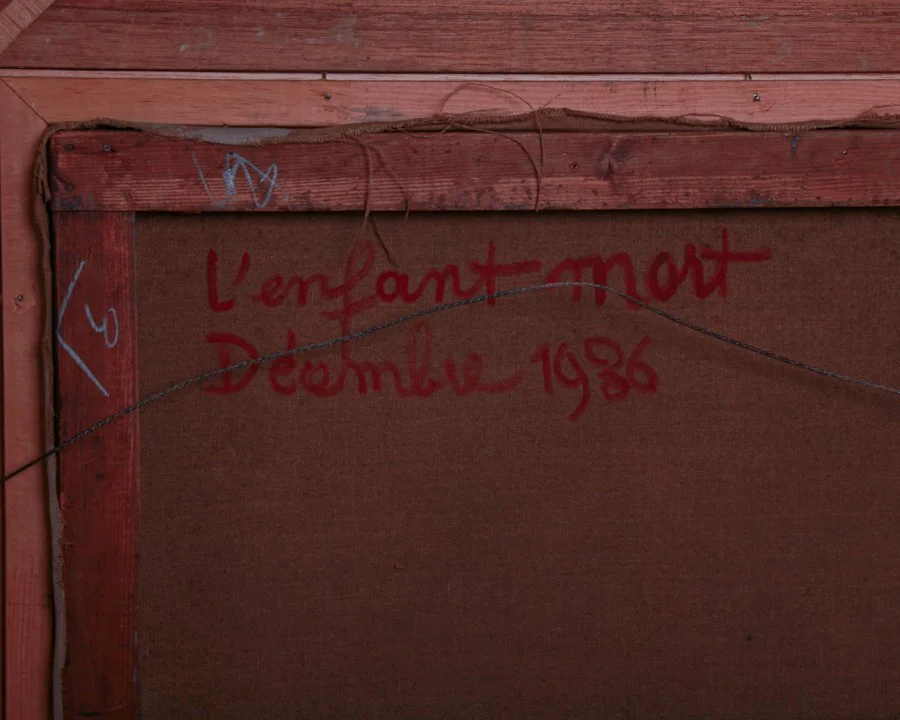
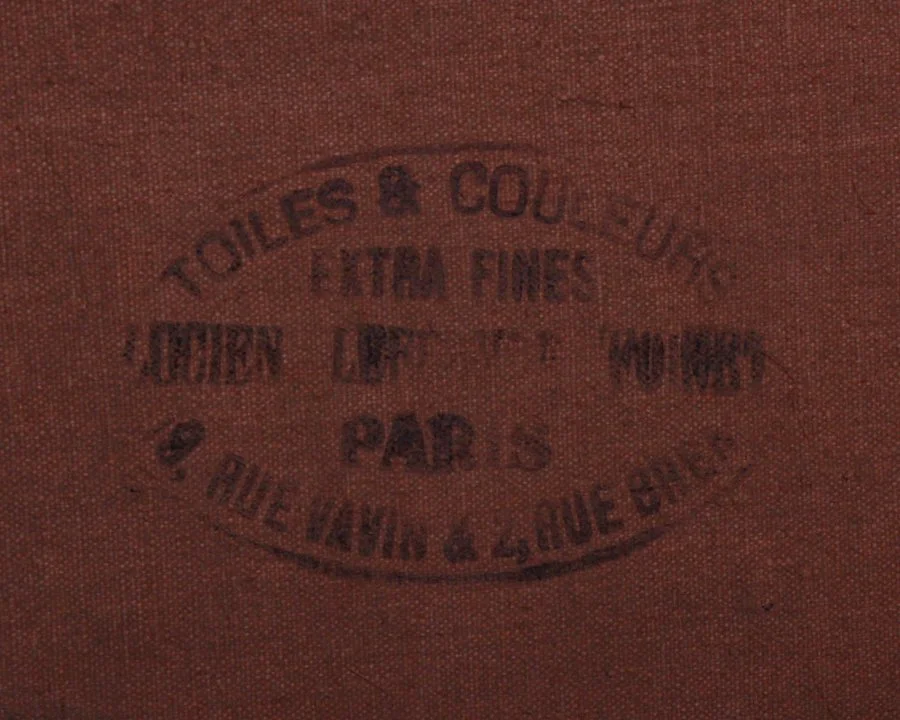
The style suggests a folk-art influence, with a focus on storytelling and emotion rather than strict realism. The ornate golden frame enhances its presence, lending it an air of gravitas and importance. The back of the canvas reveals markings indicative of its French origin, including a stamp from a fine art supplier in Paris and the handwritten title.
Category History
Late 19th to early 20th century oil paintings sit right at a turning point, where tradition meets a growing appetite for looseness and speed. Artists were still working within long-established studio practices—stretching canvas, sizing it with glue, then building up layers of ground—but the way paint was handled began to shift. Academic painters layered thin glazes, slowly building depth and polish. Others, especially influenced by Impressionism, worked more directly, laying down color in thicker, visible strokes.
Oil paint itself made all of this possible. It dries slowly, giving artists time to blend, adjust, scrape back, or completely rethink a passage. Many would begin with a loose underdrawing or tonal block-in, establishing composition and light before committing to color. From there, the painting could evolve in stages or be pushed forward all at once, depending on the artist’s approach.
What’s compelling about works from this period is the tension between control and freedom. You often see areas that are tightly rendered sitting right next to passages that feel almost unfinished. Brushwork becomes part of the story, not something to hide. These paintings don’t just show what the artist saw—they show how they worked, decision by decision, layer by layer.
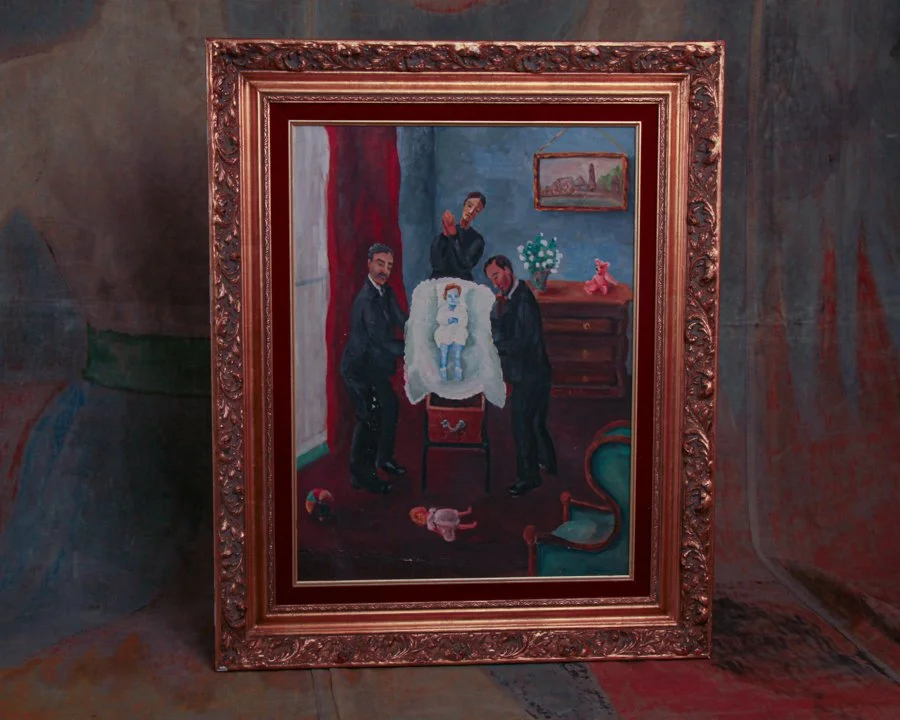
This painting, titled "L'enfant mort" (The Dead Child) and dated December 1936, is a striking and evocative work that portrays a somber and surreal scene. The composition features two men dressed in black suits and a woman dressed in dark formal attire, solemnly gathered around the dead body of a child. Laid out on a white cloth, the two men hold the child over a minute casket-reminiscent of a funeral or a ceremonial setting. The figures' postures and expressions suggest grief or reverence.
The room is a modest interior with deep red curtains, a chest of drawers adorned with a vase of flowers and a pink teddy bear. A small painting hangs over the dresser and a green upholstered chair is propped in the opposite corner. Toys scattered on the floor, including a doll and a ball, further enhance the unsettling juxtaposition of childhood innocence and mourning.
The style suggests a folk-art influence, with a focus on storytelling and emotion rather than strict realism. The ornate golden frame enhances its presence, lending it an air of gravitas and importance. The back of the canvas reveals markings indicative of its French origin, including a stamp from a fine art supplier in Paris and the handwritten title.
Category History
Late 19th to early 20th century oil paintings sit right at a turning point, where tradition meets a growing appetite for looseness and speed. Artists were still working within long-established studio practices—stretching canvas, sizing it with glue, then building up layers of ground—but the way paint was handled began to shift. Academic painters layered thin glazes, slowly building depth and polish. Others, especially influenced by Impressionism, worked more directly, laying down color in thicker, visible strokes.
Oil paint itself made all of this possible. It dries slowly, giving artists time to blend, adjust, scrape back, or completely rethink a passage. Many would begin with a loose underdrawing or tonal block-in, establishing composition and light before committing to color. From there, the painting could evolve in stages or be pushed forward all at once, depending on the artist’s approach.
What’s compelling about works from this period is the tension between control and freedom. You often see areas that are tightly rendered sitting right next to passages that feel almost unfinished. Brushwork becomes part of the story, not something to hide. These paintings don’t just show what the artist saw—they show how they worked, decision by decision, layer by layer.