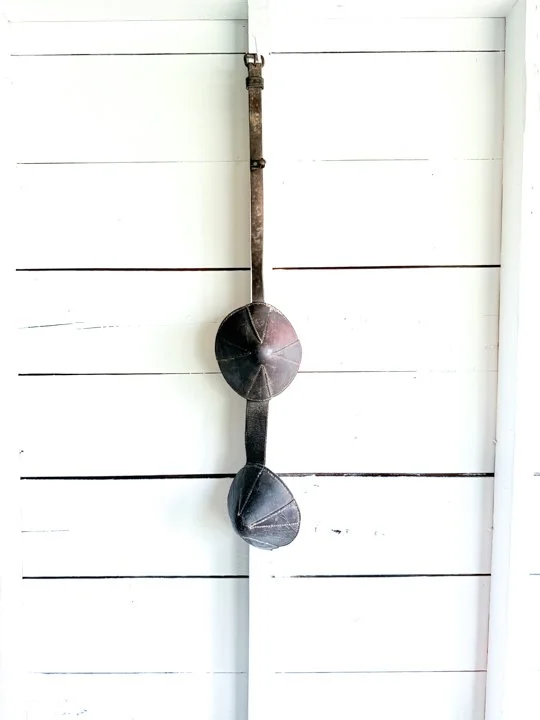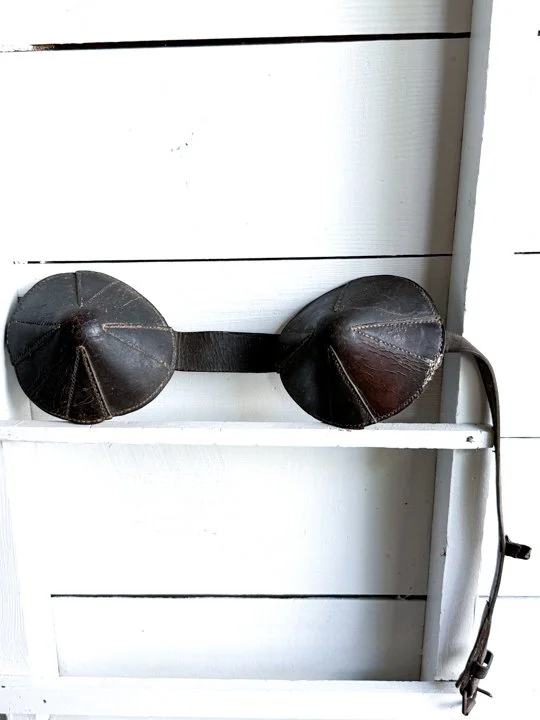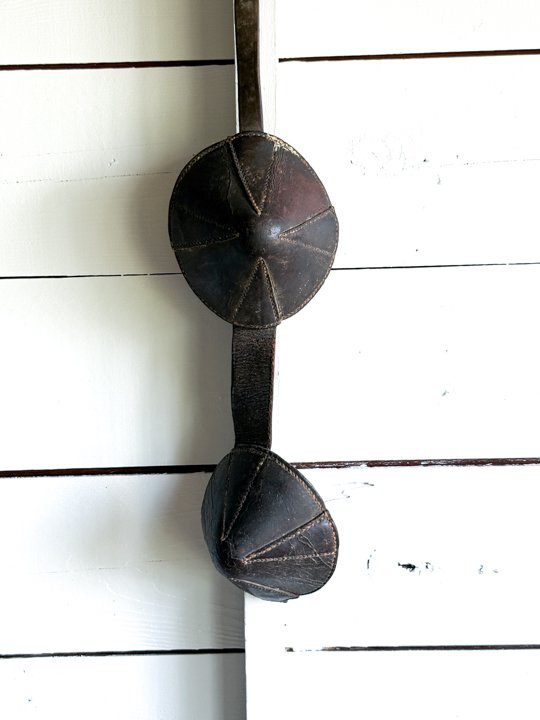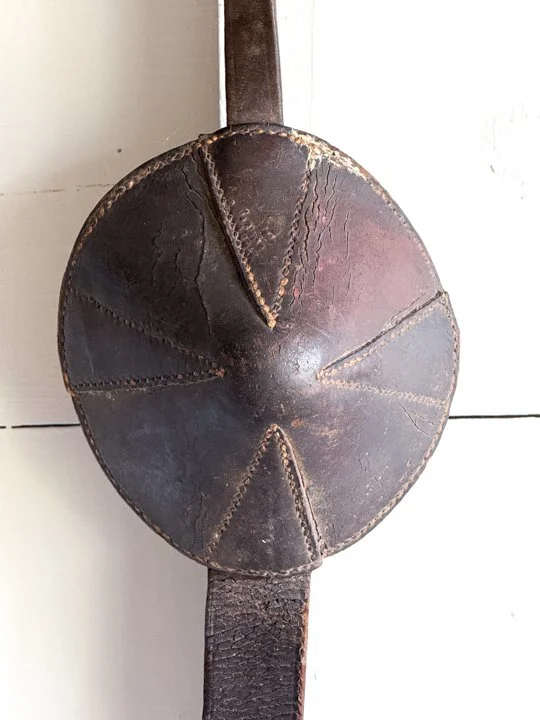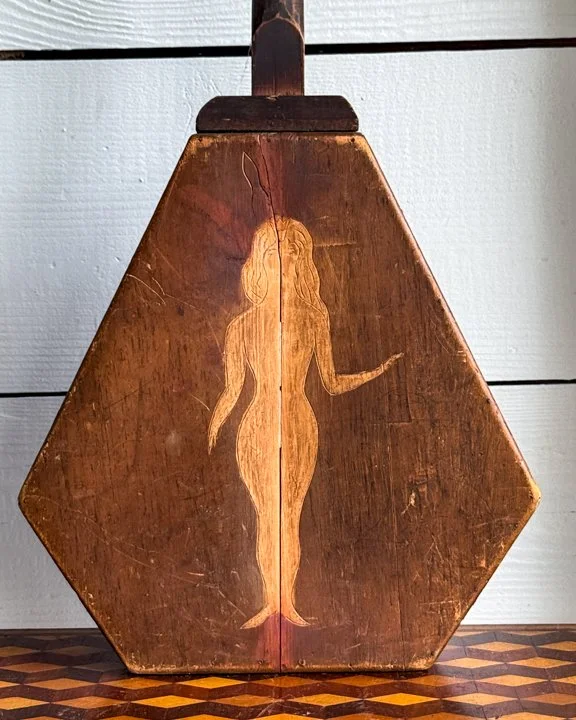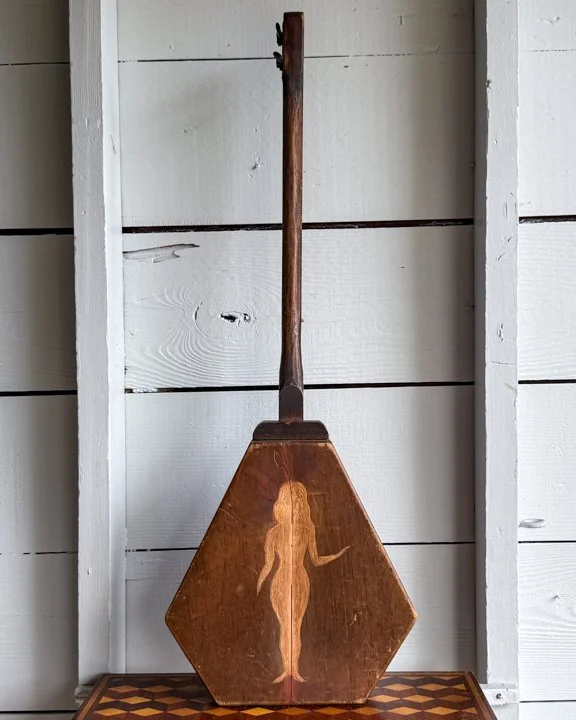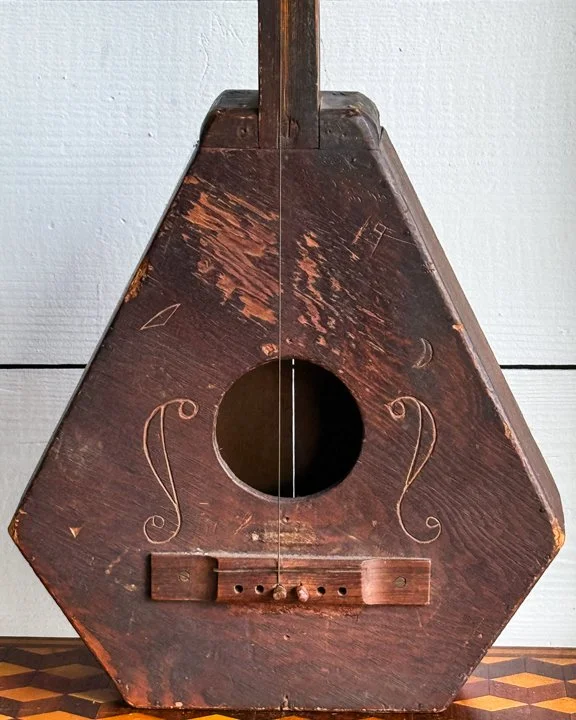
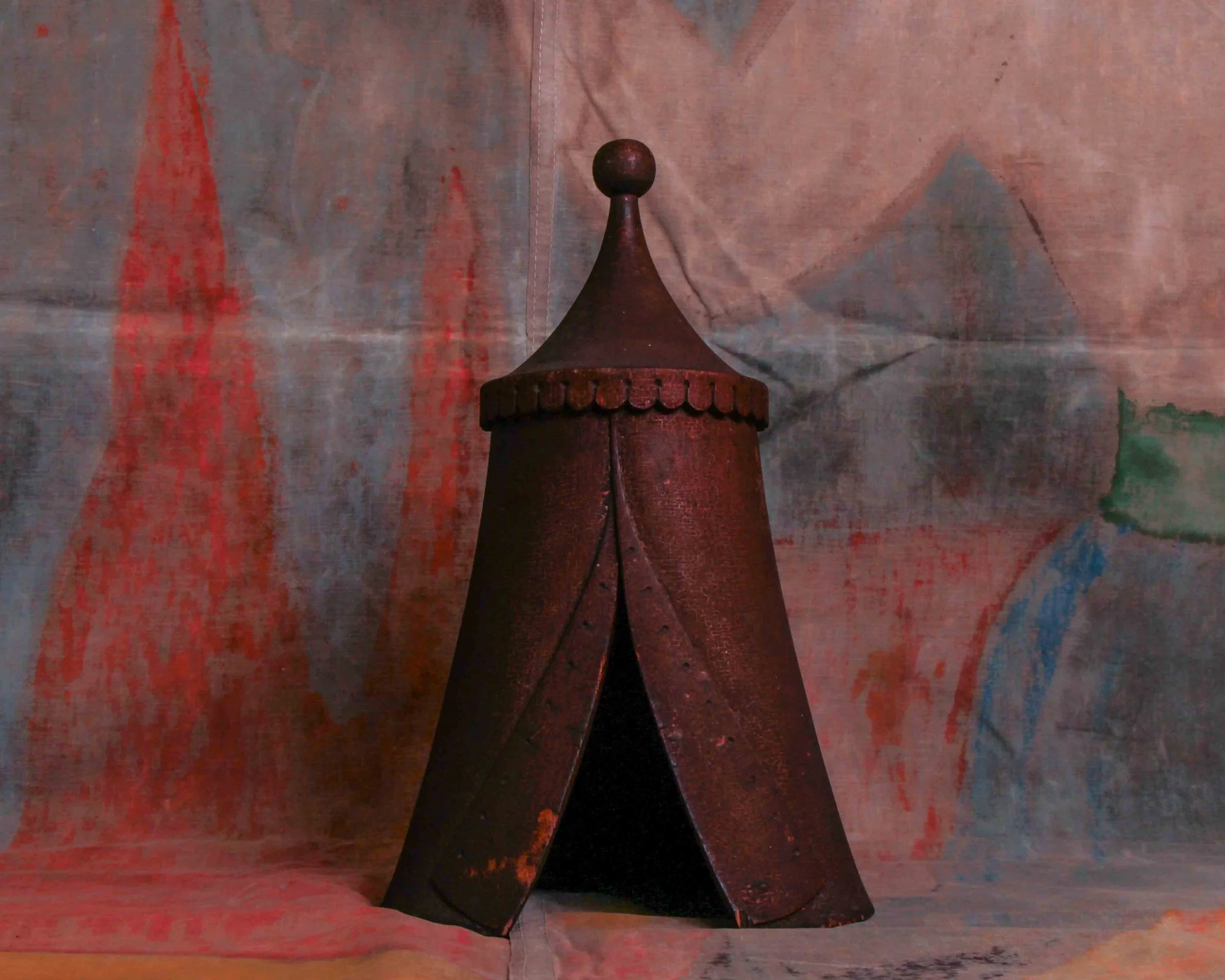
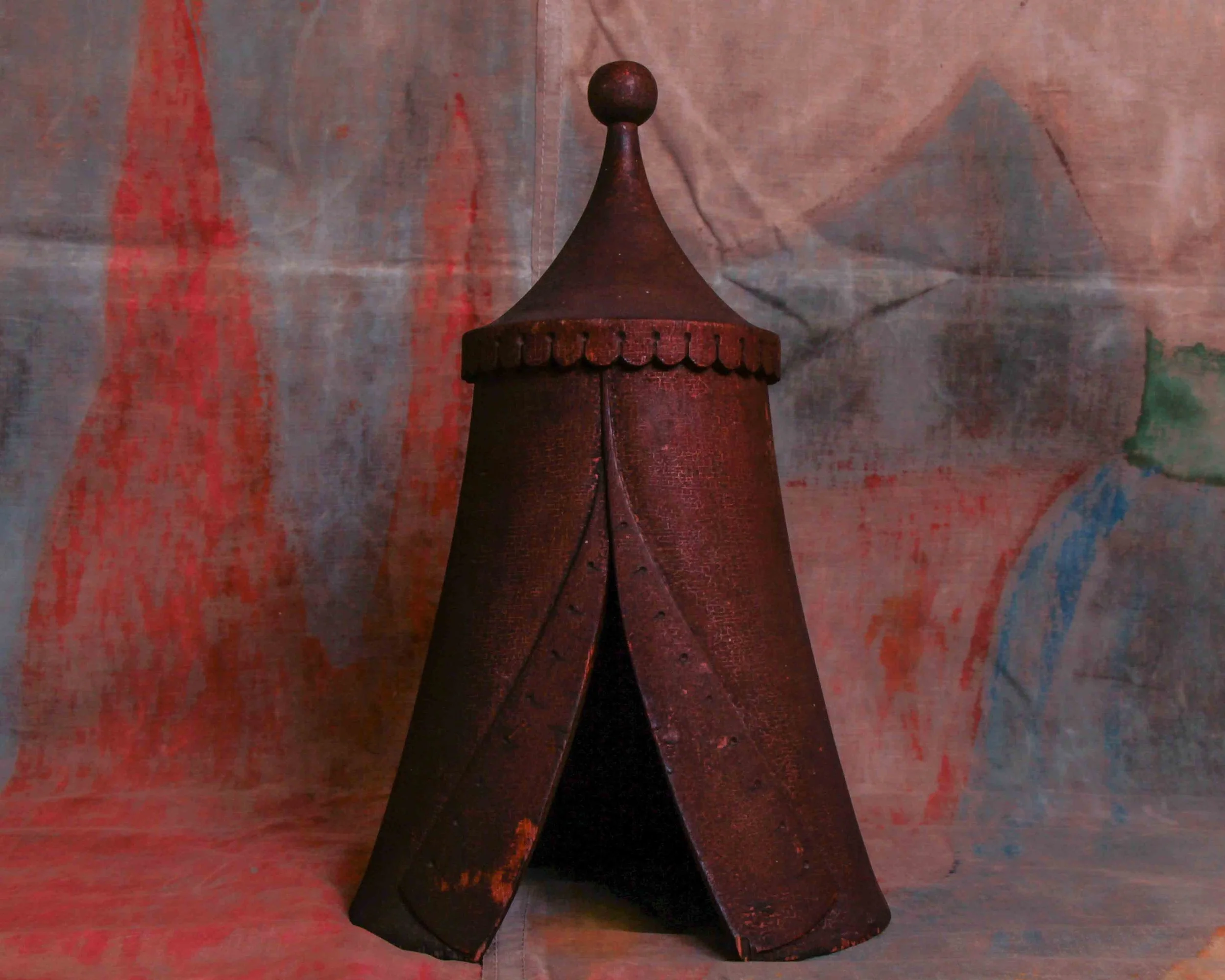
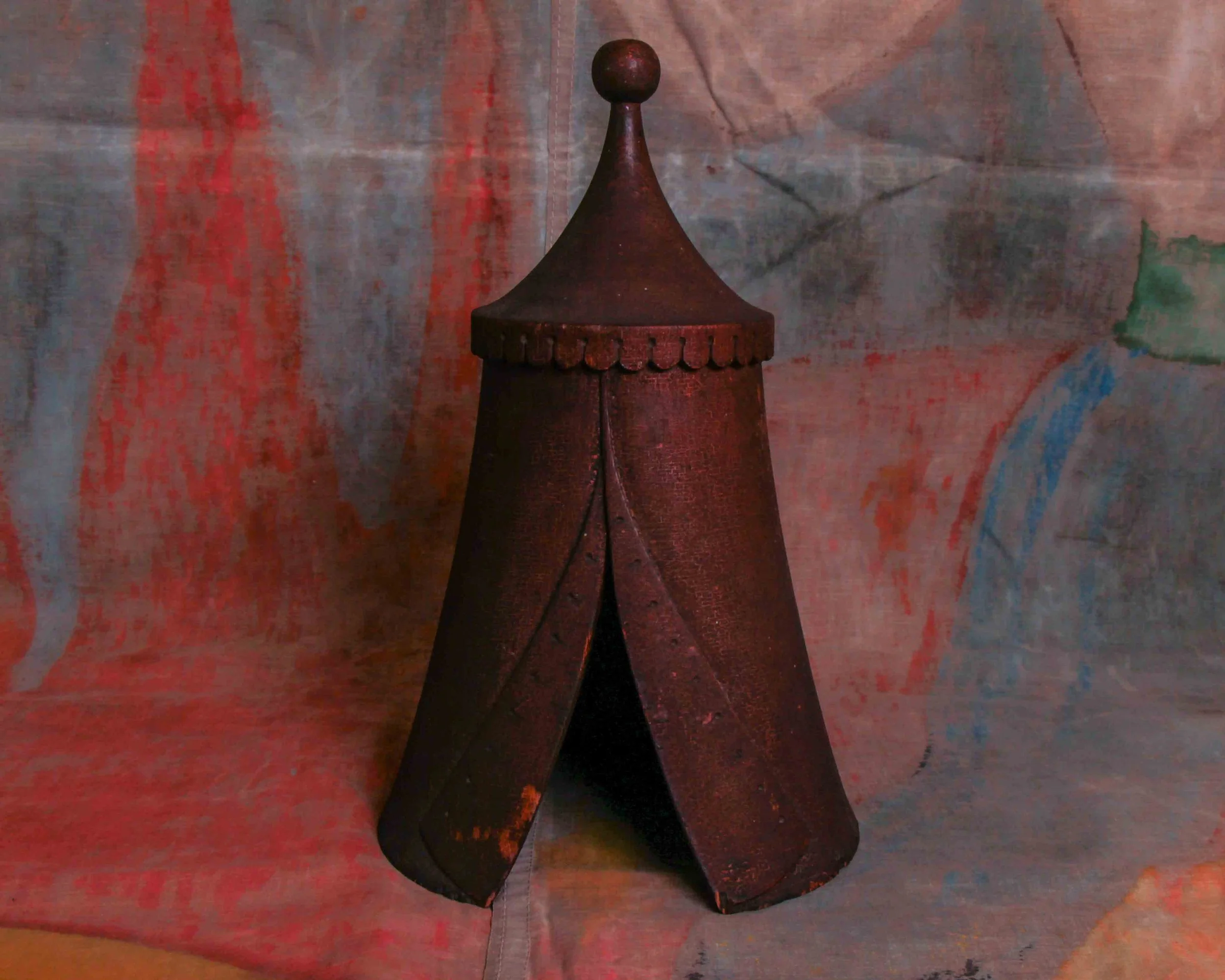
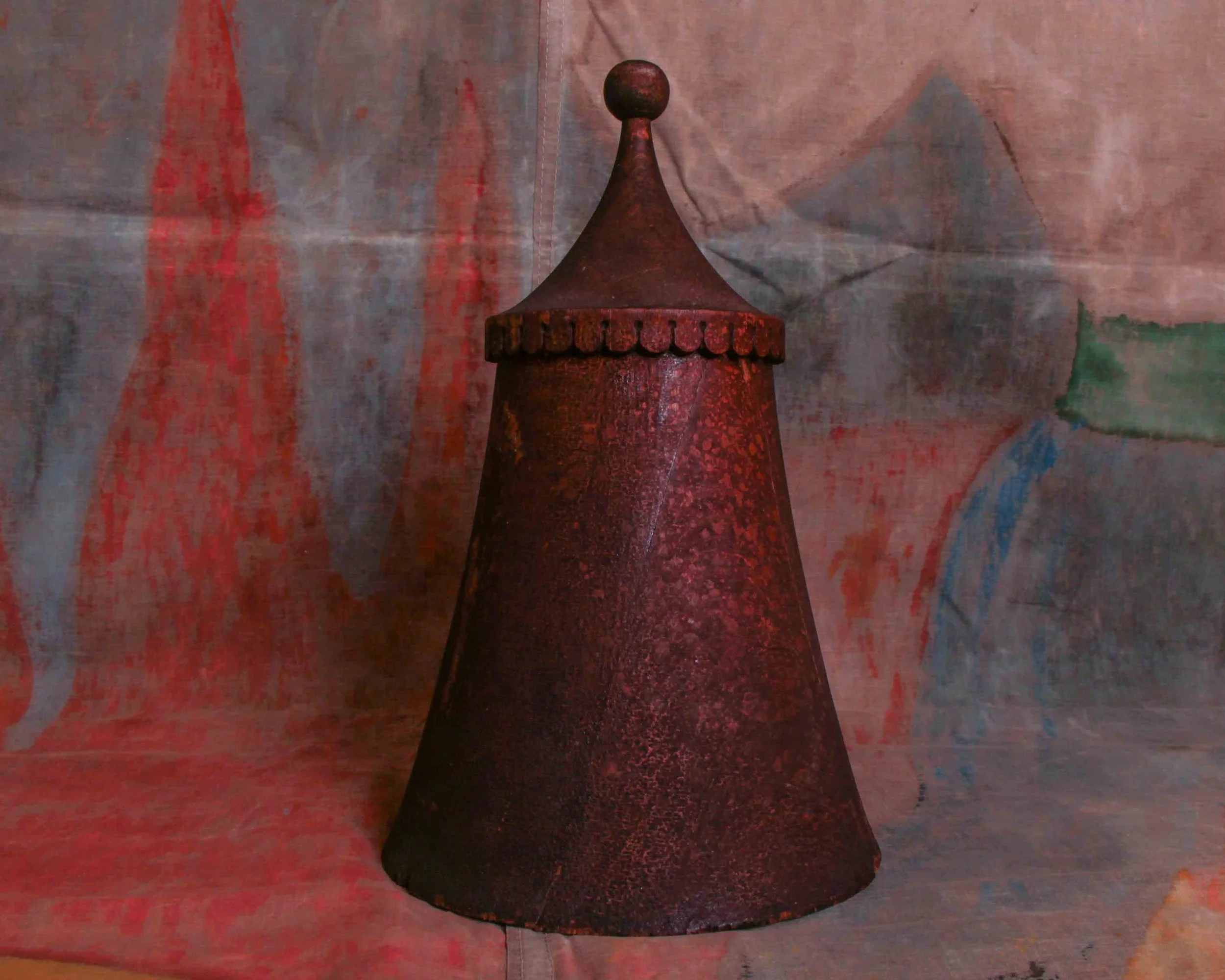
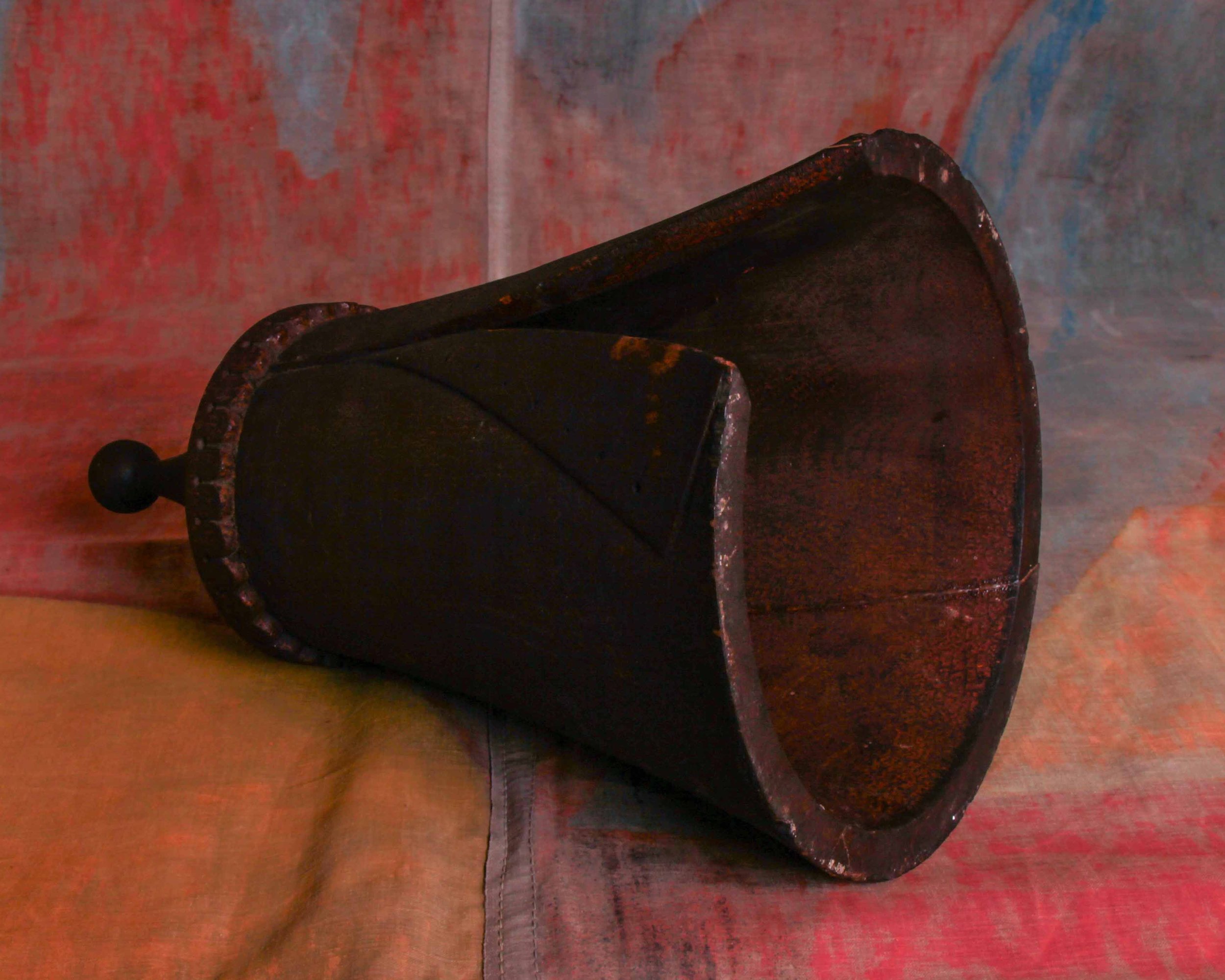
Carved around 1880, this wooden tent comes from the Encampment Degree of the Independent Order of Odd Fellows, where symbolism mattered just as much as craftsmanship. The tent represents the transitory nature of life, the idea that we’re all passing through rather than putting down permanent roots.
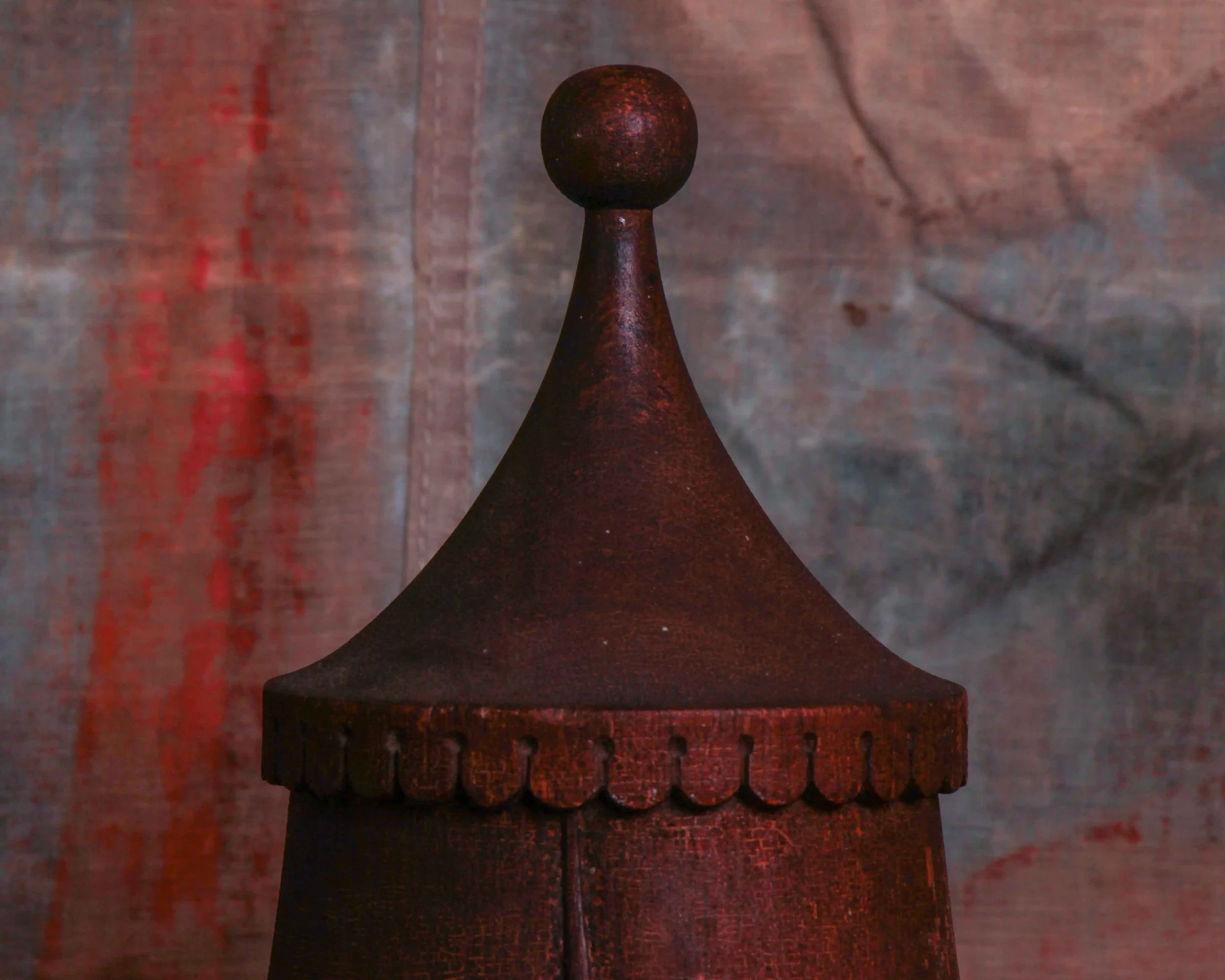
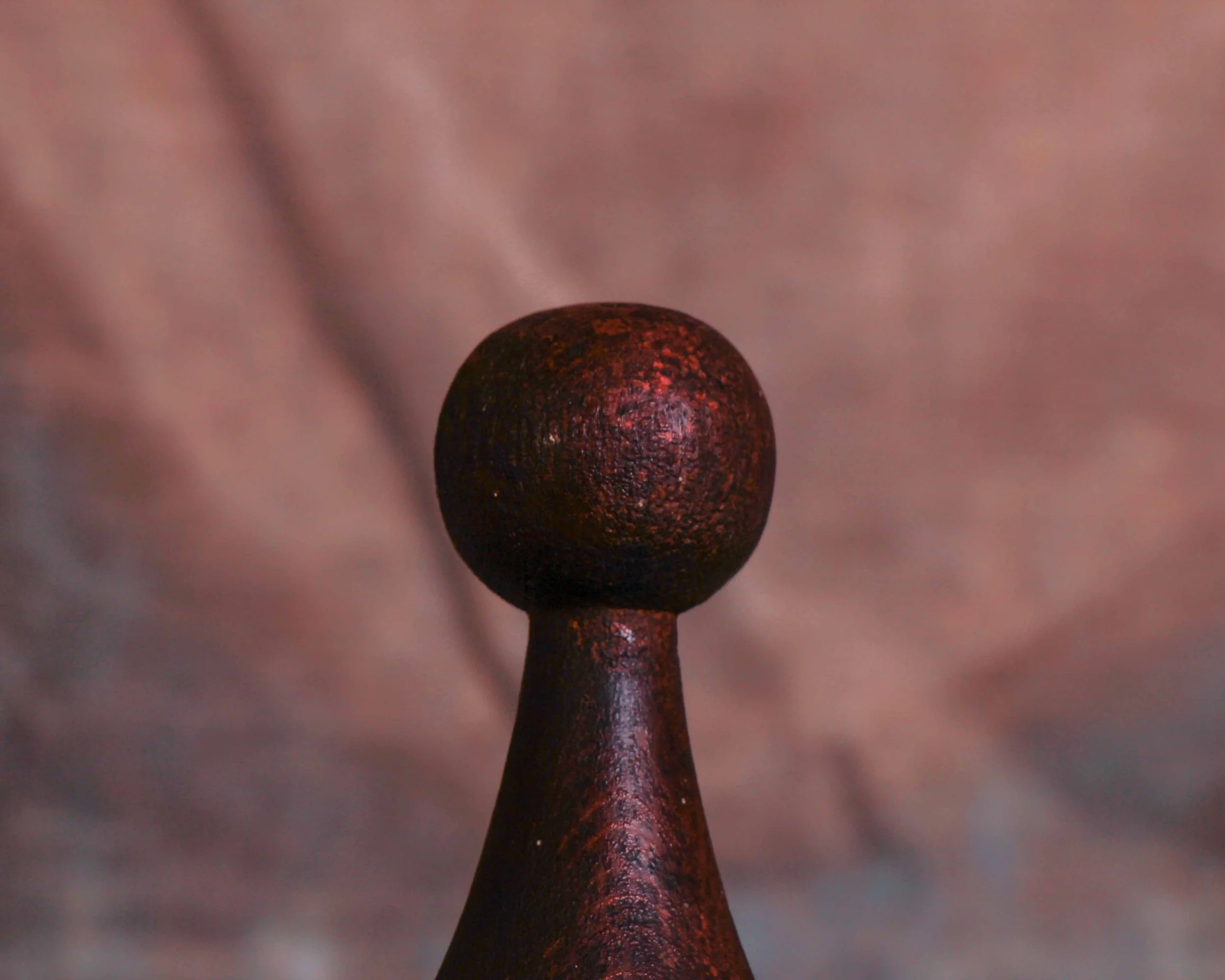
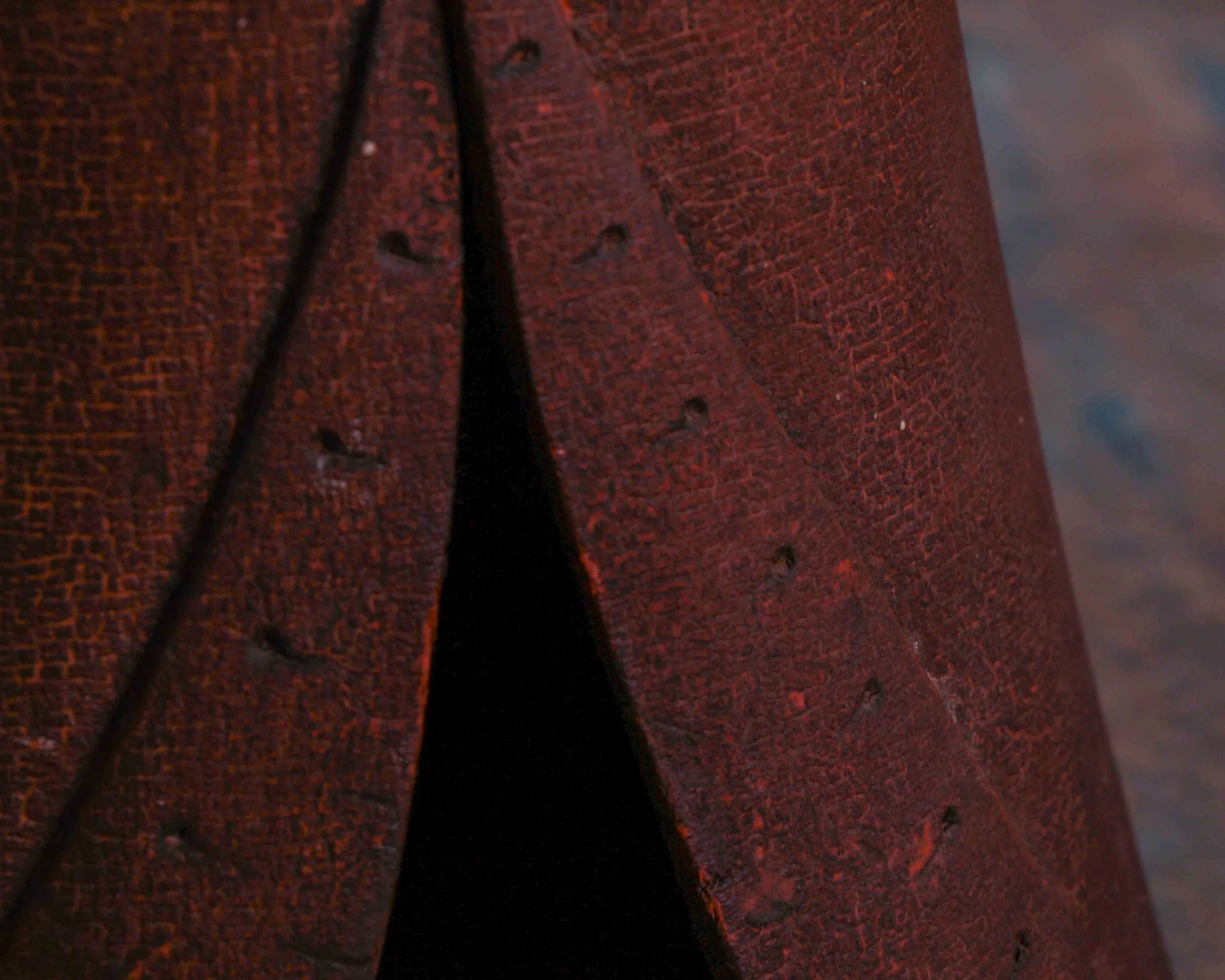
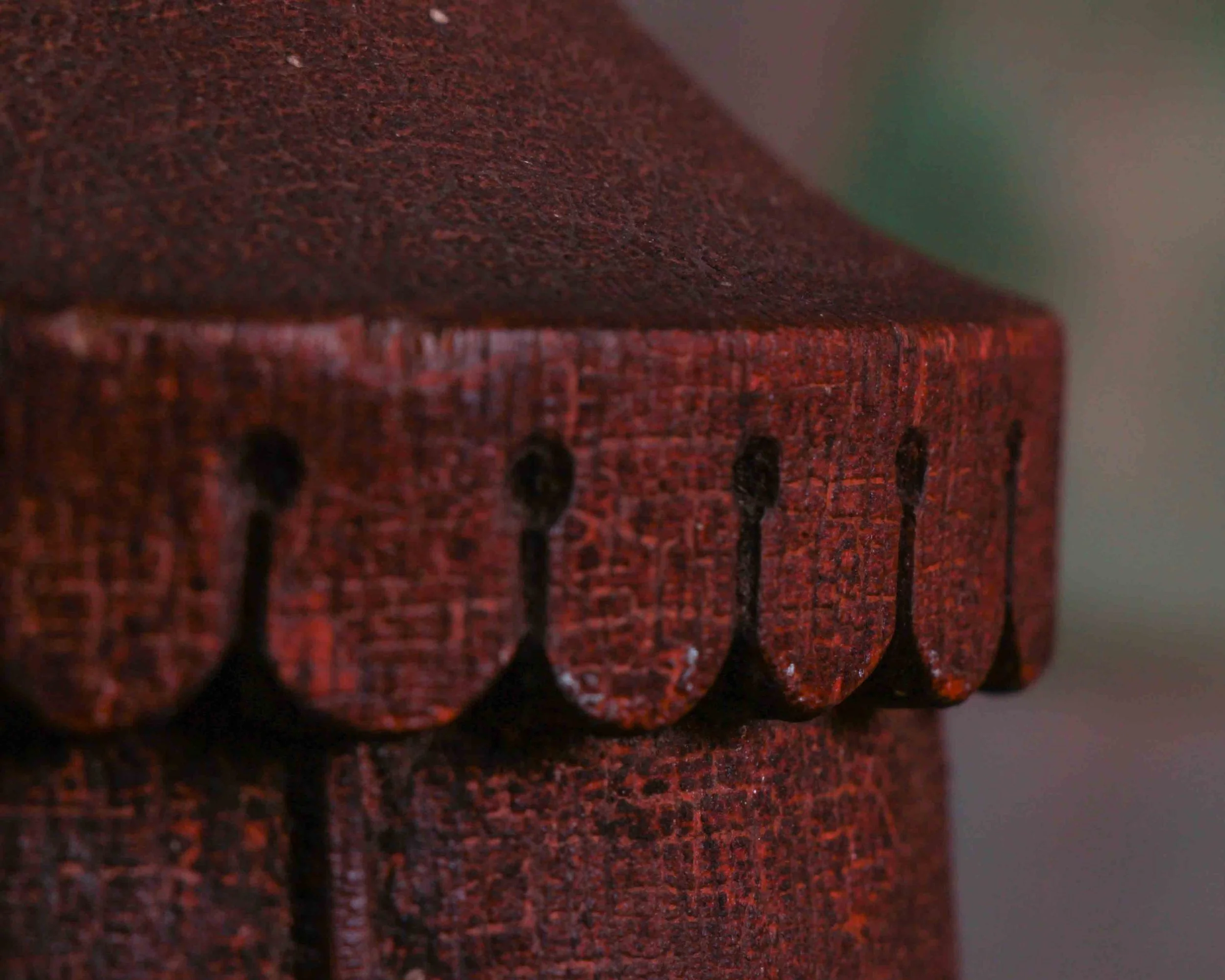
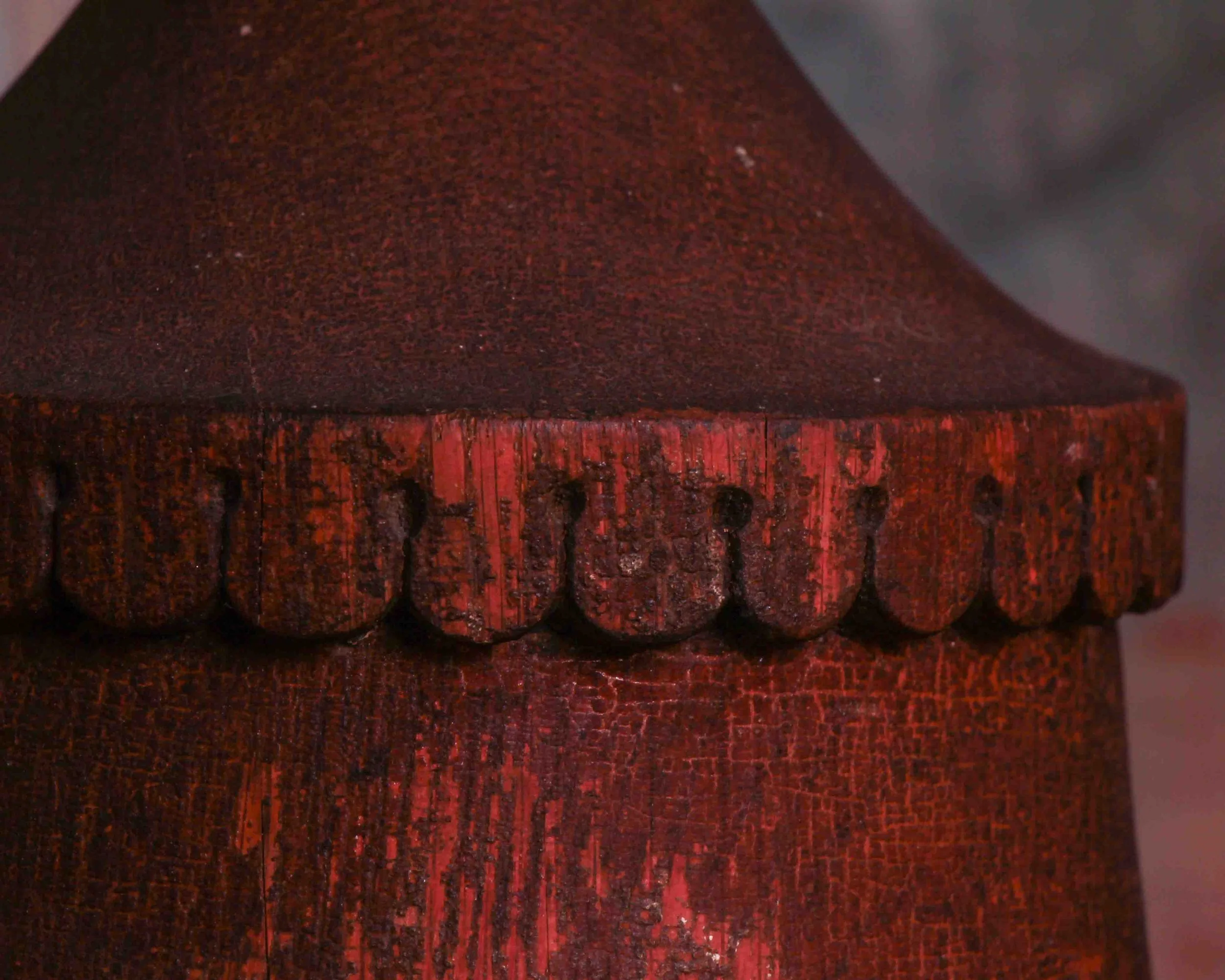
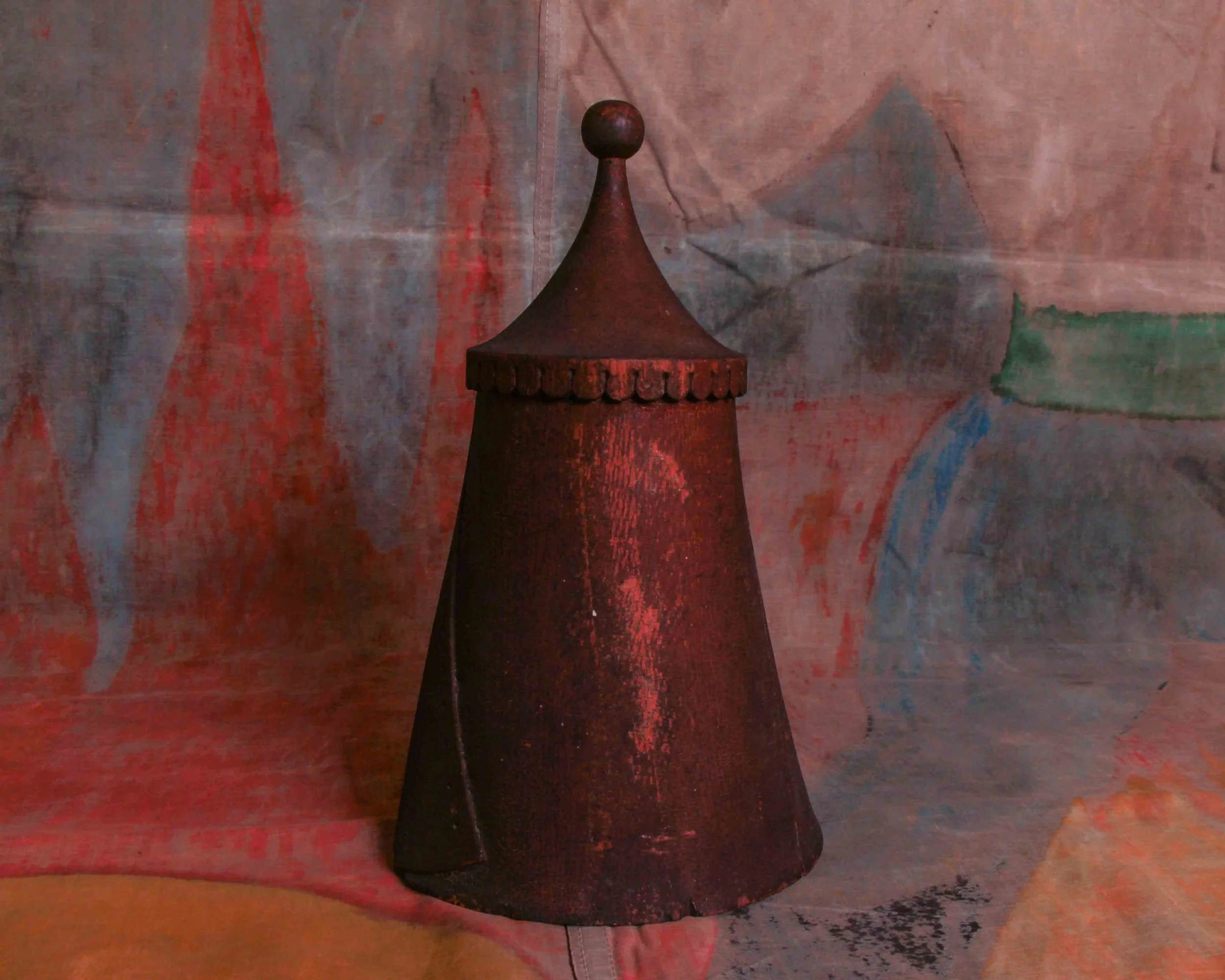
The carving is beautifully restrained. A tapered, conical body opens at the front with draped “flaps,” carefully shaped to suggest fabric pulled back and pinned in place. Around the top runs a scalloped band, adding just enough ornament without tipping into excess. The turned finial at the peak finishes the piece with a quiet sense of ceremony.
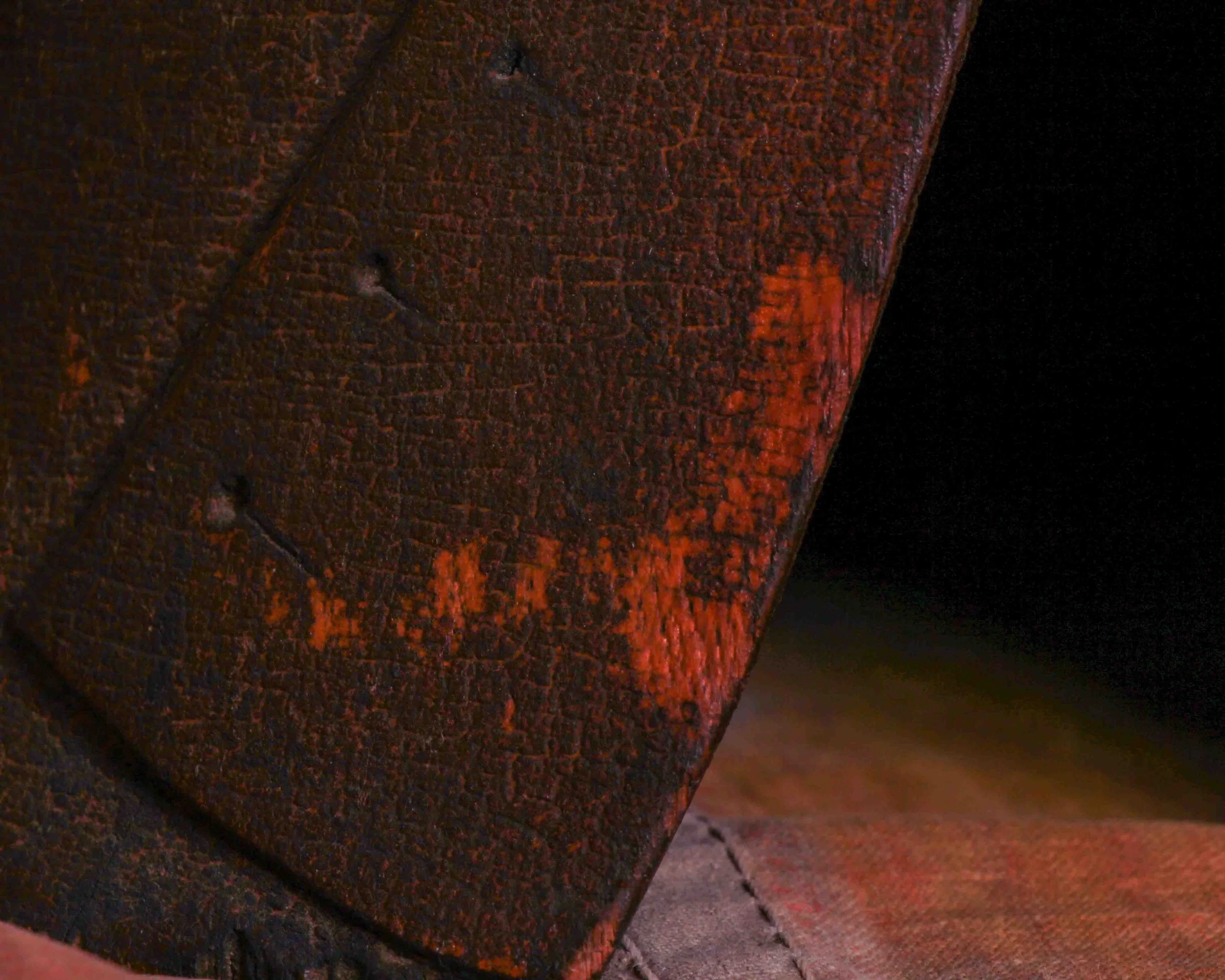
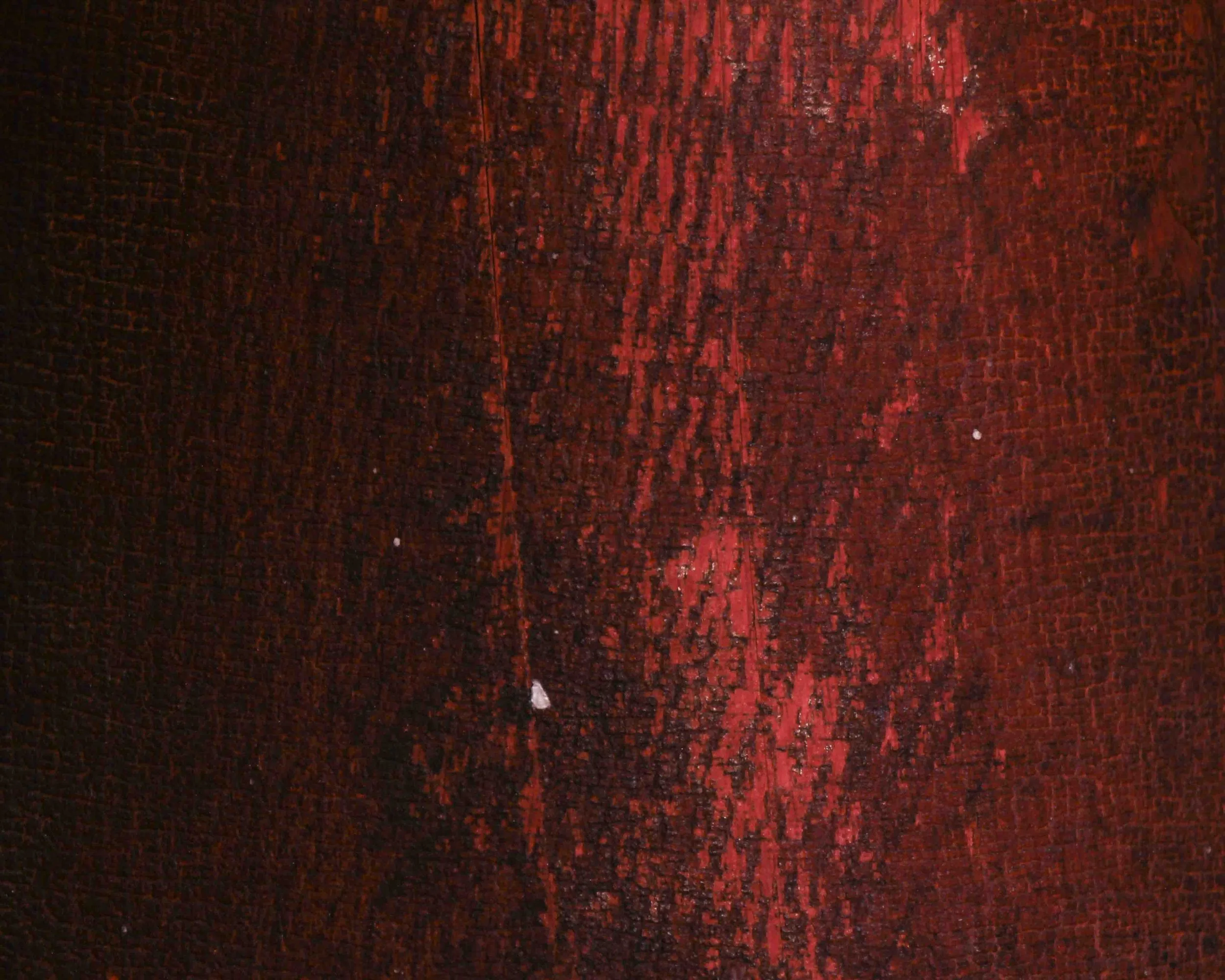
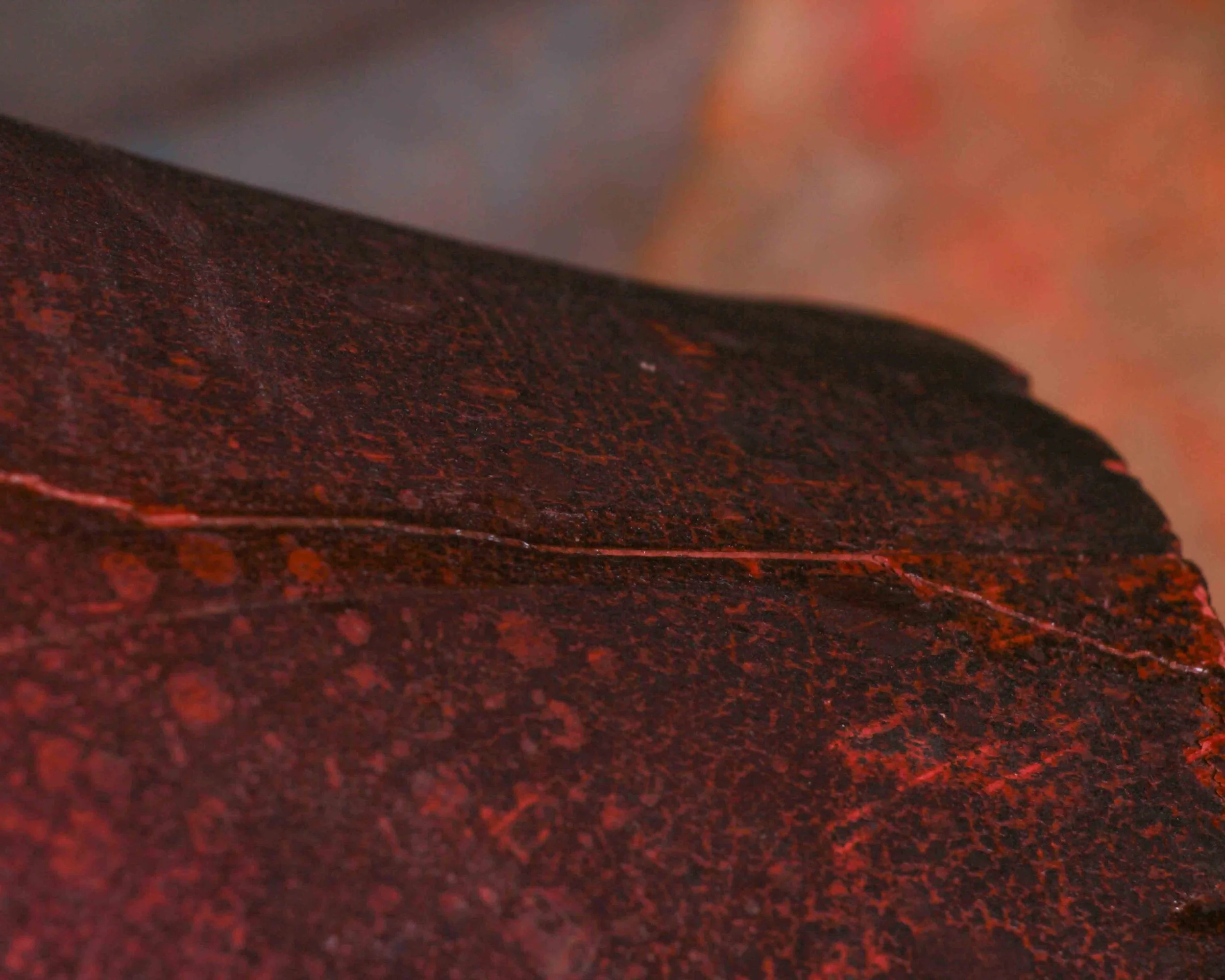
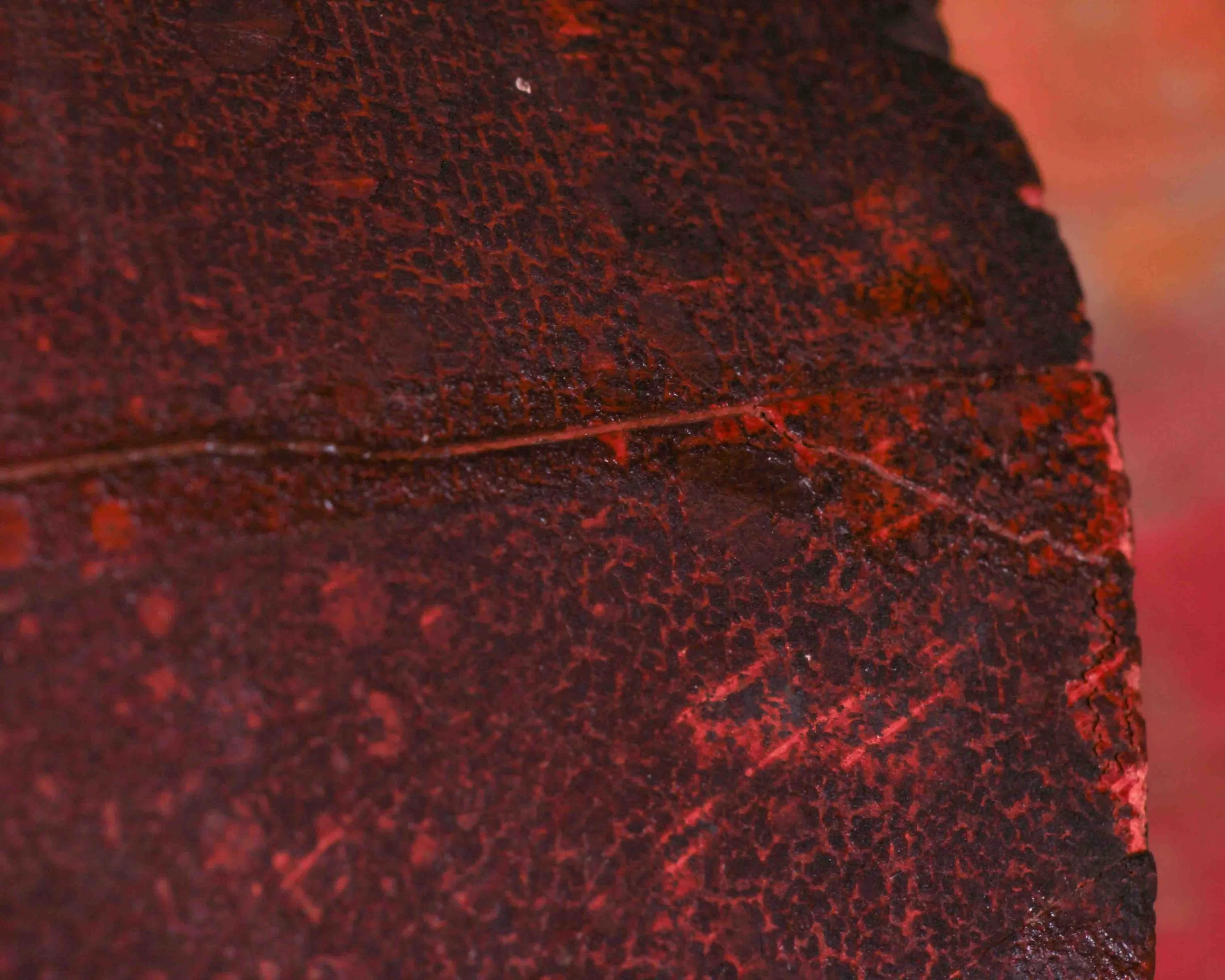
The original varnish has developed a rich craquelure, a fine network of age lines that only comes from time and patience. The dark, reddish-brown finish has mellowed and softened, with subtle wear that highlights the carved details rather than distracting from them.
At 17 inches tall with a diameter of 9½ inches, it has real presence without being overbearing. It reads immediately as something intentional, symbolic, and slightly mysterious. As a display object today, it works on several levels. Part fraternal history, part folk sculpture, part philosophical reminder rendered in wood.
IOOF
The Independent Order of Odd Fellows, often shortened to IOOF, is one of those fraternal organizations that feels part civic club, part theater troupe, part mutual aid network. Founded in the 18th century and firmly established in the United States by the 19th, the Odd Fellows were built around a simple idea: members look after one another. Before social safety nets, that meant real support—financial help, burial services, care for widows and orphans.
But the way they delivered that message was anything but plain. Meetings were structured around ritual, with degrees that members advanced through, each one accompanied by symbolic lessons about friendship, love, and truth. And with those rituals came props—lots of them.
Lodge rooms were often outfitted like stage sets. Painted backdrops, banners, staffs, costumes, ceremonial collars, even coffins and skeletons used as memento mori reminders. Objects weren’t just decorative; they were tools for storytelling, designed to make abstract ideas feel immediate. A blindfold might represent ignorance, a staff guidance, a skeletal figure the inevitability of death.
What’s striking is how seriously the symbolism was taken. These rituals created a shared language among members, reinforcing identity and community through repeated performance.
Today, the surviving props carry that layered history. Slightly worn, sometimes a bit theatrical in the best way, they read as both artifacts of belief and objects of craft. Not just remnants of secret meetings, but pieces of a system that blended support, symbolism, and a touch of stagecraft to make its point stick.
Many lodges also functioned as social hubs, hosting events, gatherings, and charitable activities that extended beyond members. The objects reflect that dual life—ceremonial yet communal, formal yet deeply rooted in everyday connection and shared responsibility.
Carved around 1880, this wooden tent comes from the Encampment Degree of the Independent Order of Odd Fellows, where symbolism mattered just as much as craftsmanship. The tent represents the transitory nature of life, the idea that we’re all passing through rather than putting down permanent roots.
The carving is beautifully restrained. A tapered, conical body opens at the front with draped “flaps,” carefully shaped to suggest fabric pulled back and pinned in place. Around the top runs a scalloped band, adding just enough ornament without tipping into excess. The turned finial at the peak finishes the piece with a quiet sense of ceremony.
The original varnish has developed a rich craquelure, a fine network of age lines that only comes from time and patience. The dark, reddish-brown finish has mellowed and softened, with subtle wear that highlights the carved details rather than distracting from them.
At 17 inches tall with a diameter of 9½ inches, it has real presence without being overbearing. It reads immediately as something intentional, symbolic, and slightly mysterious. As a display object today, it works on several levels. Part fraternal history, part folk sculpture, part philosophical reminder rendered in wood.
IOOF
The Independent Order of Odd Fellows, often shortened to IOOF, is one of those fraternal organizations that feels part civic club, part theater troupe, part mutual aid network. Founded in the 18th century and firmly established in the United States by the 19th, the Odd Fellows were built around a simple idea: members look after one another. Before social safety nets, that meant real support—financial help, burial services, care for widows and orphans.
But the way they delivered that message was anything but plain. Meetings were structured around ritual, with degrees that members advanced through, each one accompanied by symbolic lessons about friendship, love, and truth. And with those rituals came props—lots of them.
Lodge rooms were often outfitted like stage sets. Painted backdrops, banners, staffs, costumes, ceremonial collars, even coffins and skeletons used as memento mori reminders. Objects weren’t just decorative; they were tools for storytelling, designed to make abstract ideas feel immediate. A blindfold might represent ignorance, a staff guidance, a skeletal figure the inevitability of death.
What’s striking is how seriously the symbolism was taken. These rituals created a shared language among members, reinforcing identity and community through repeated performance.
Today, the surviving props carry that layered history. Slightly worn, sometimes a bit theatrical in the best way, they read as both artifacts of belief and objects of craft. Not just remnants of secret meetings, but pieces of a system that blended support, symbolism, and a touch of stagecraft to make its point stick.
Many lodges also functioned as social hubs, hosting events, gatherings, and charitable activities that extended beyond members. The objects reflect that dual life—ceremonial yet communal, formal yet deeply rooted in everyday connection and shared responsibility.