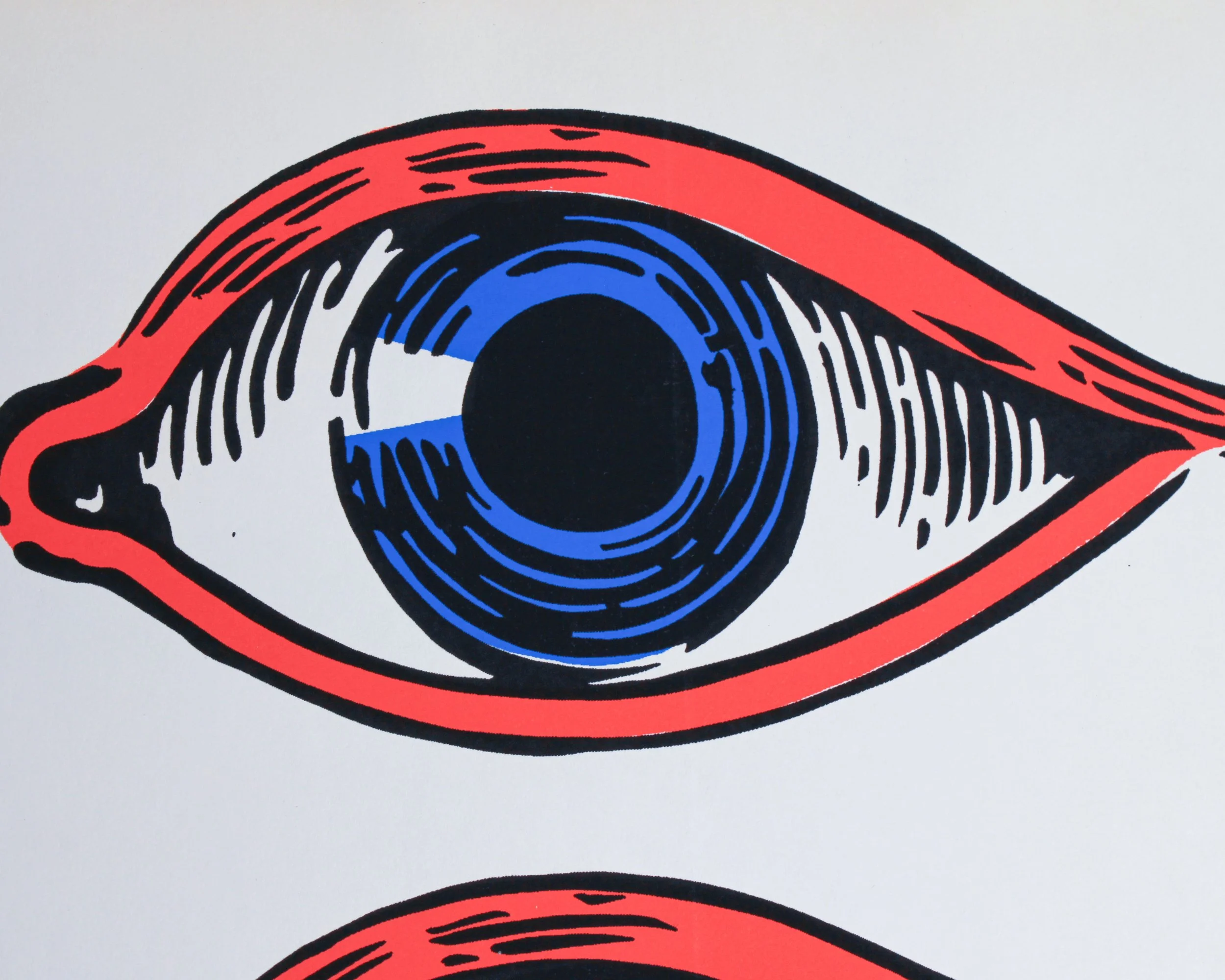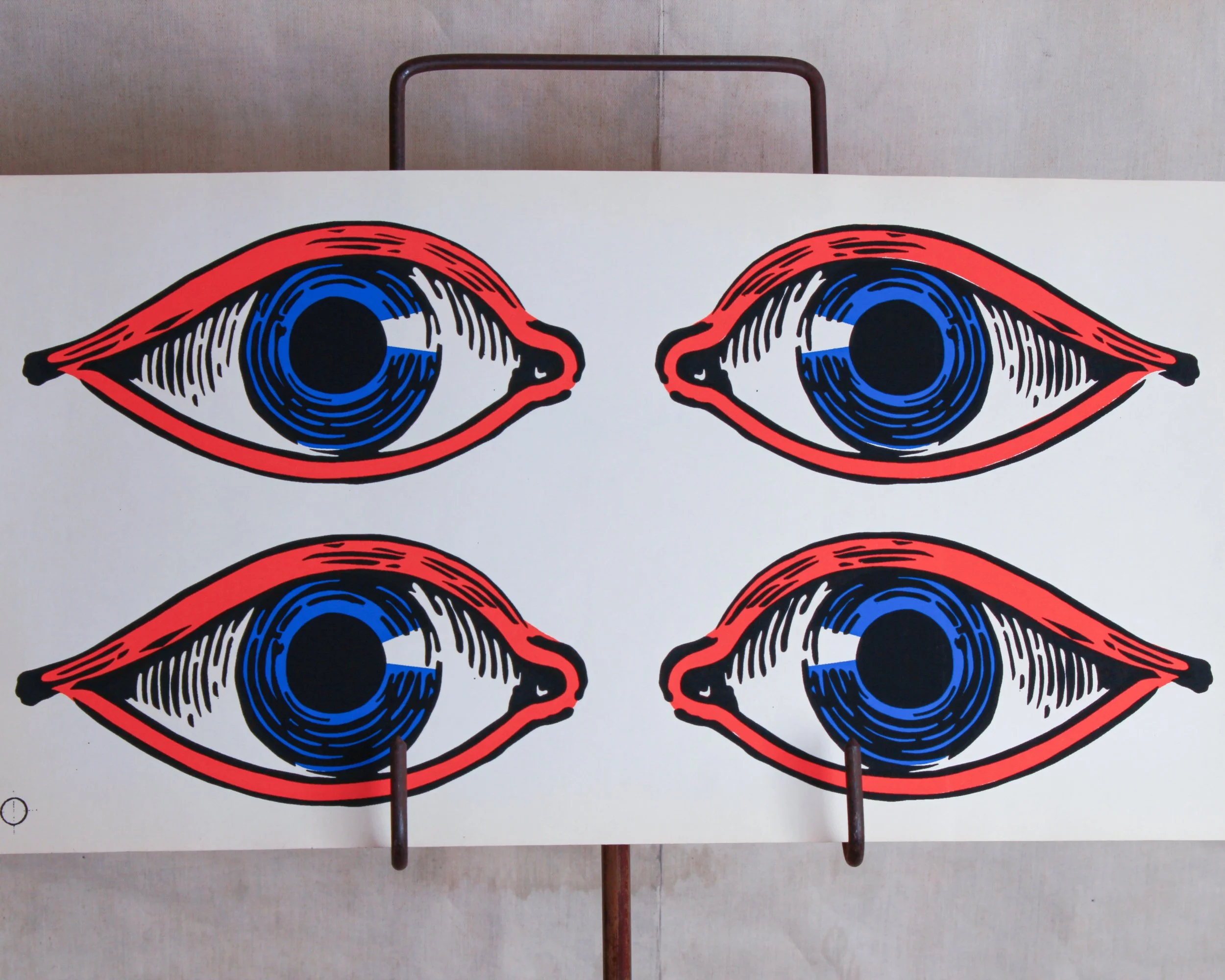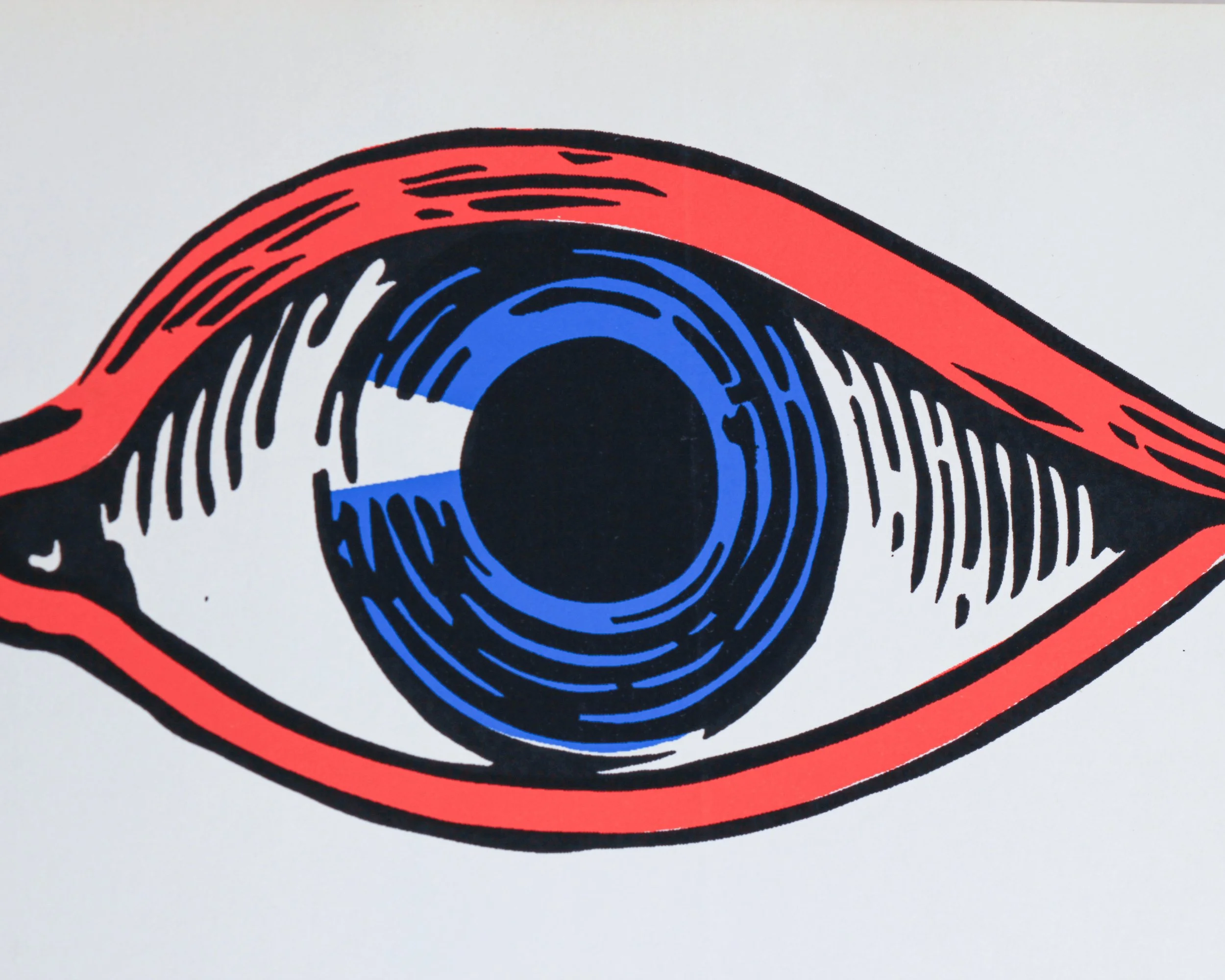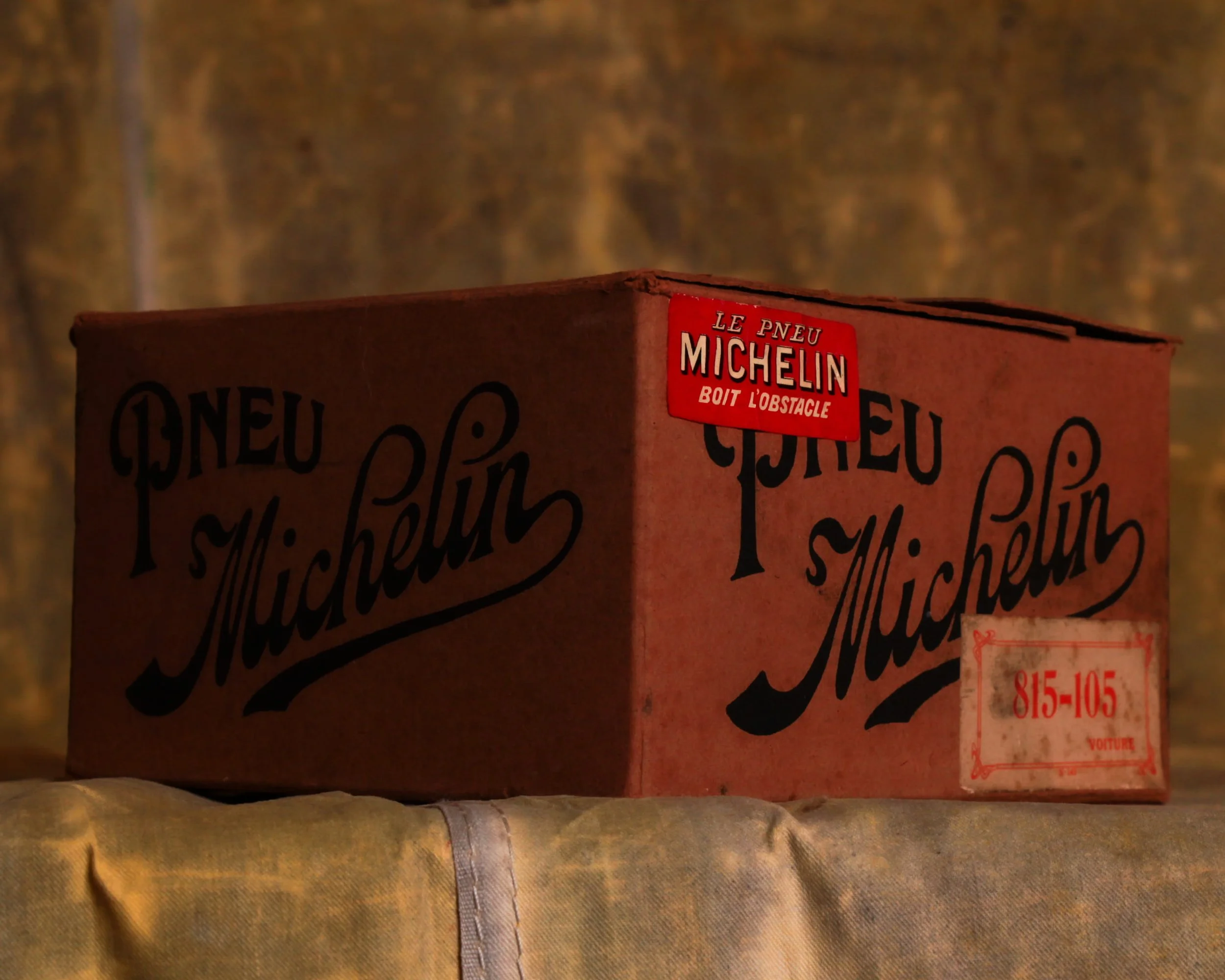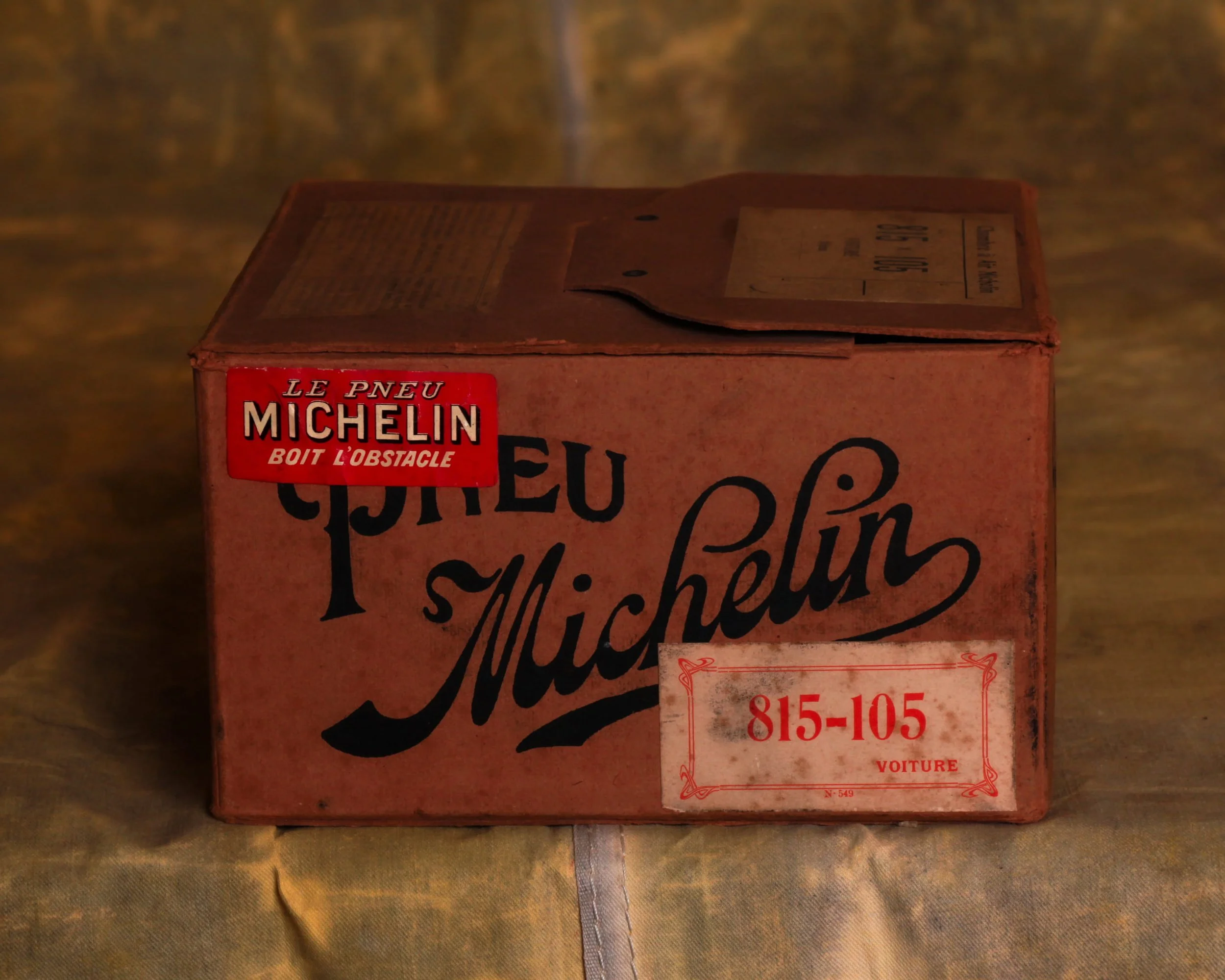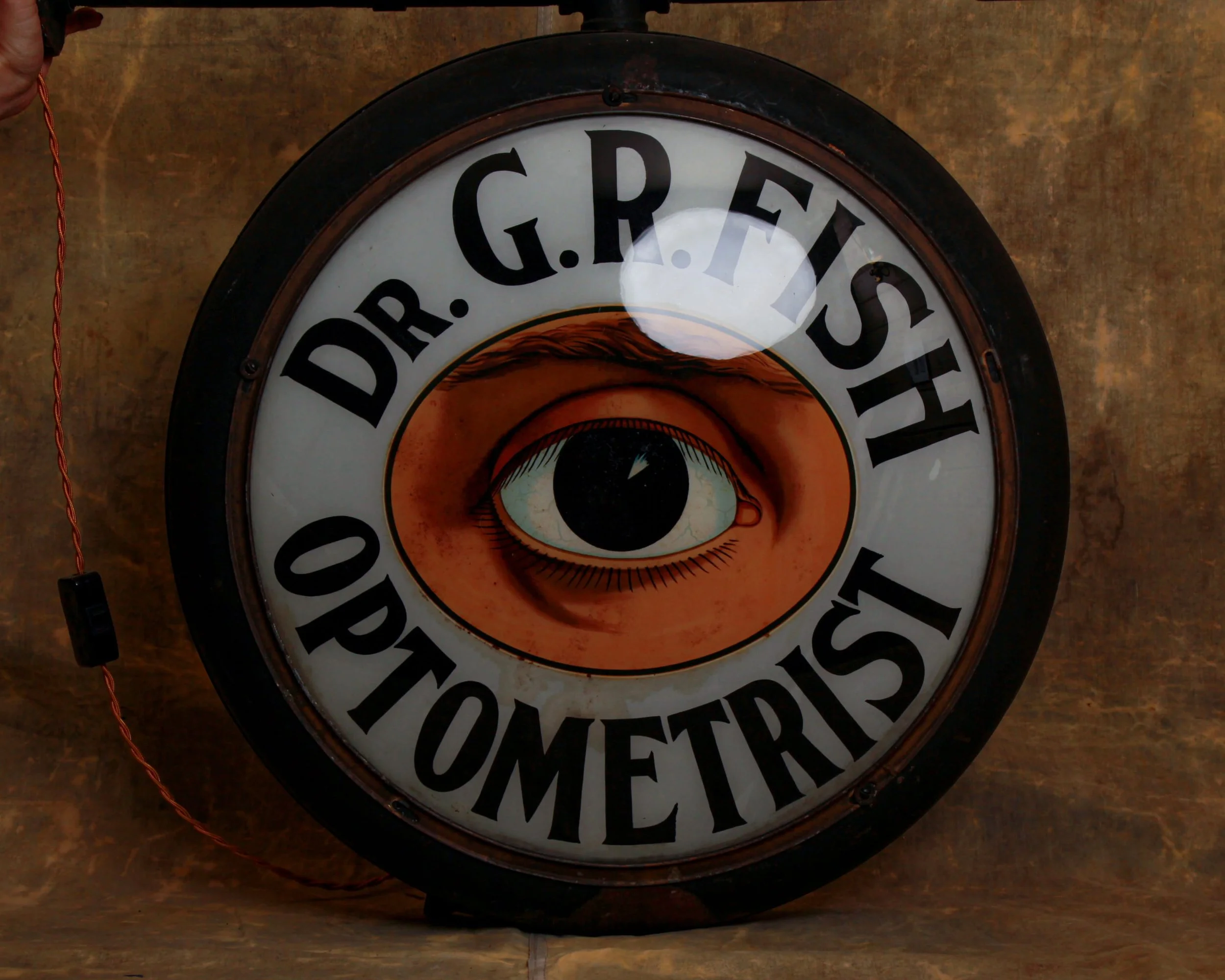
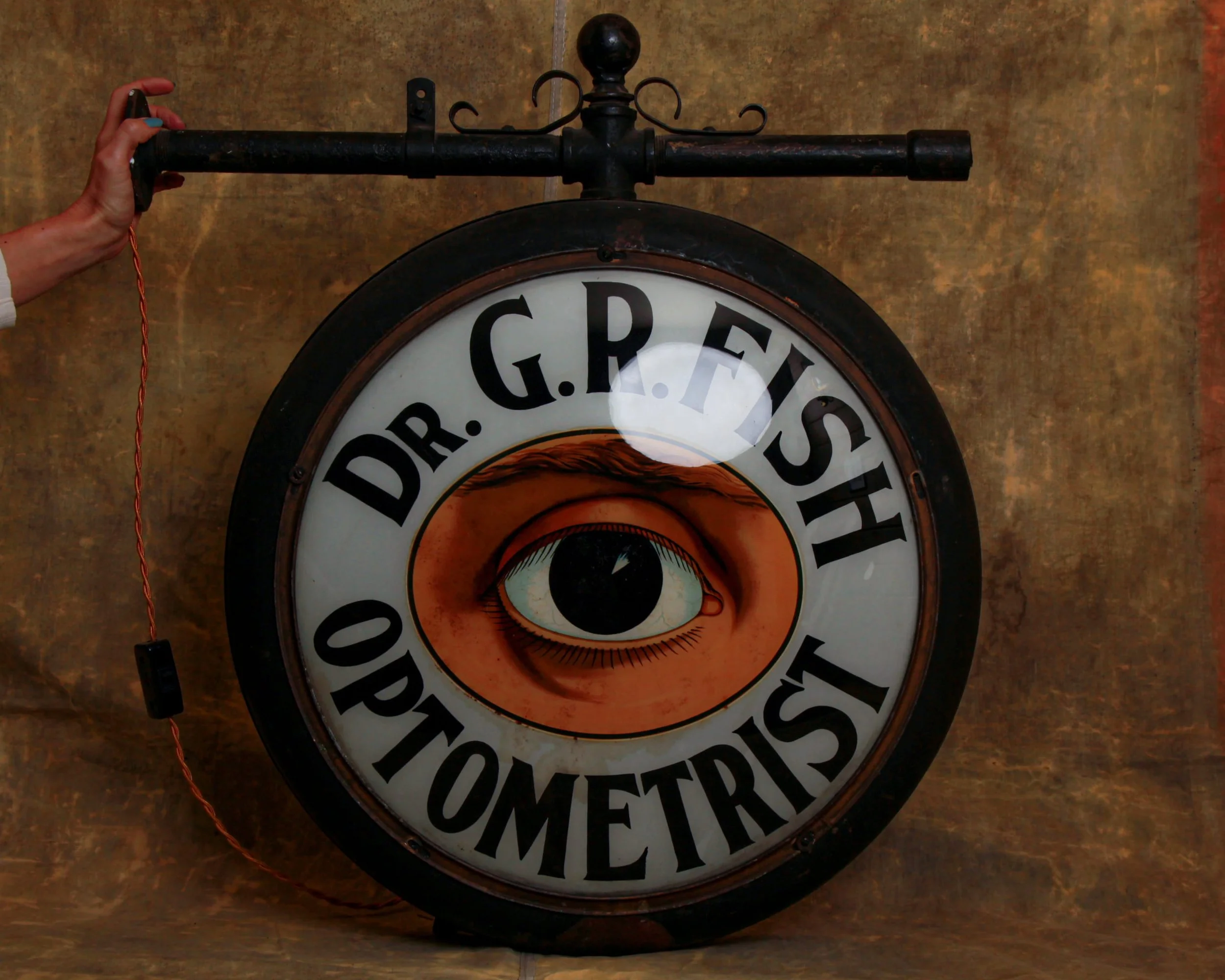
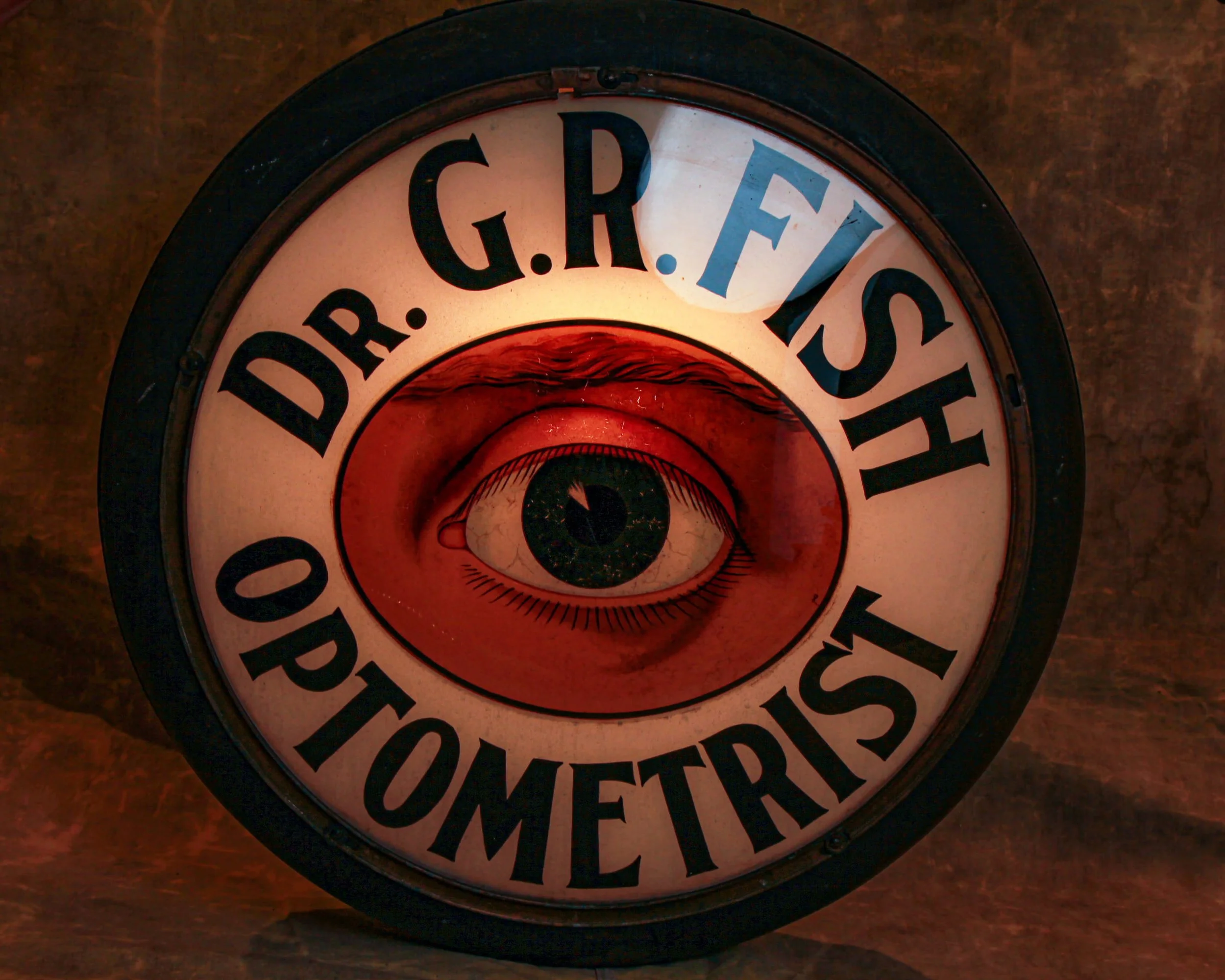
Early 20th century optometrist’s trade sign, double-sided and built around luminous milk glass panels—it features a single, unblinking eye at its center, encircled by bold lettering that reads “Dr. G.R. Fish Optometrist.”
The milk glass has that beautiful, softly diffused glow that only this material can deliver. When lit, the eye comes alive, the iris deepening, the sclera showing its delicate crackle, the lashes rendered in fine, deliberate strokes. Even unlit, the surface holds a gentle warmth, with subtle age lines and minor imperfections that speak to decades of service rather than storage.
The sign is housed in its original metal can with a rich, darkened patina, and retains its bracket, complete with decorative iron scrollwork and mounting arm. That bracket is not just functional, it is part of the silhouette. It gives the piece presence. From the side, it reads like a proper piece of street architecture. From the front, it is pure graphic punch.
Category History
Old trade signs were the original storefront handshake—clear, direct, and built to be understood at a glance. Before standardized branding, dentists, cobblers, optometrists, and every trade in between relied on signs made from wood, metal, or glass to signal what they did and who they were.
Wooden examples were often hand-painted, with bold lettering and simple imagery shaped by the maker’s hand. Metal signs—tin or iron—brought durability and sharper graphics, while reverse-painted glass added a touch of refinement, catching light in a way that made even a straightforward message feel considered.
What makes these signs compelling now is their individuality. No templates, no uniformity—just decisions made in real time about color, scale, and layout. Weather, use, and time softened edges, chipped paint, and added layers of history.
They’re equal parts advertisement and object, carrying not just a profession, but a presence—one that still reads clearly, even decades later.
Early 20th century optometrist’s trade sign, double-sided and built around luminous milk glass panels—it features a single, unblinking eye at its center, encircled by bold lettering that reads “Dr. G.R. Fish Optometrist.”
The milk glass has that beautiful, softly diffused glow that only this material can deliver. When lit, the eye comes alive, the iris deepening, the sclera showing its delicate crackle, the lashes rendered in fine, deliberate strokes. Even unlit, the surface holds a gentle warmth, with subtle age lines and minor imperfections that speak to decades of service rather than storage.
The sign is housed in its original metal can with a rich, darkened patina, and retains its bracket, complete with decorative iron scrollwork and mounting arm. That bracket is not just functional, it is part of the silhouette. It gives the piece presence. From the side, it reads like a proper piece of street architecture. From the front, it is pure graphic punch.
Category History
Old trade signs were the original storefront handshake—clear, direct, and built to be understood at a glance. Before standardized branding, dentists, cobblers, optometrists, and every trade in between relied on signs made from wood, metal, or glass to signal what they did and who they were.
Wooden examples were often hand-painted, with bold lettering and simple imagery shaped by the maker’s hand. Metal signs—tin or iron—brought durability and sharper graphics, while reverse-painted glass added a touch of refinement, catching light in a way that made even a straightforward message feel considered.
What makes these signs compelling now is their individuality. No templates, no uniformity—just decisions made in real time about color, scale, and layout. Weather, use, and time softened edges, chipped paint, and added layers of history.
They’re equal parts advertisement and object, carrying not just a profession, but a presence—one that still reads clearly, even decades later.