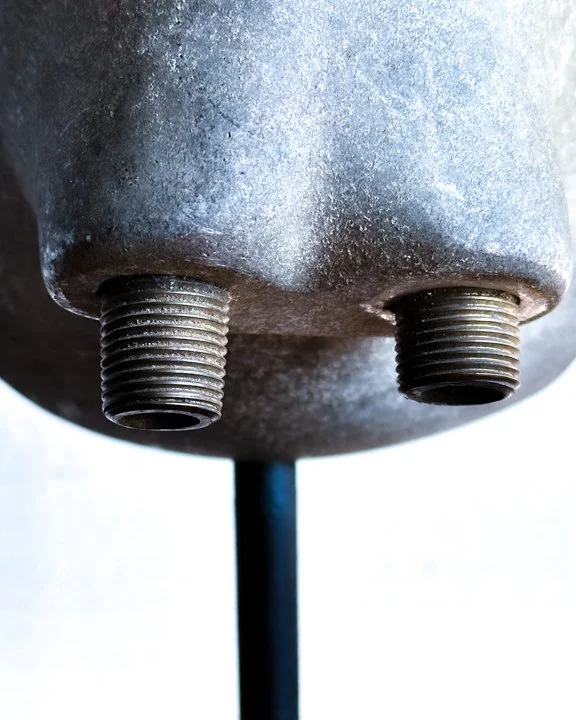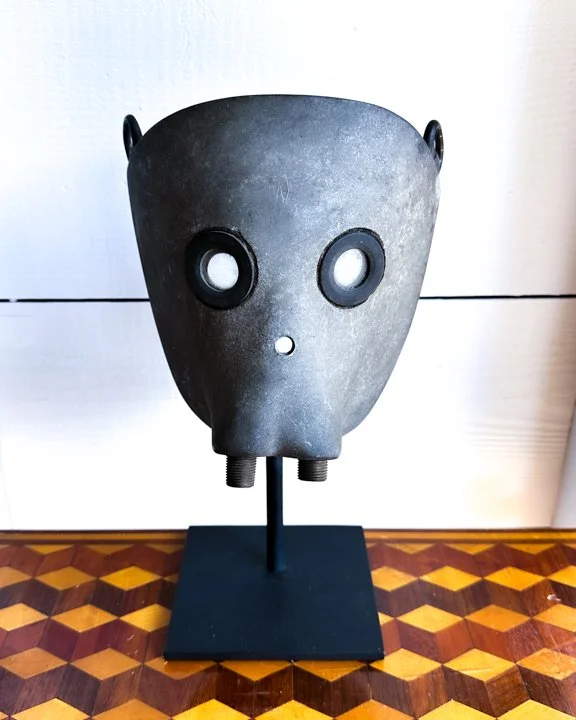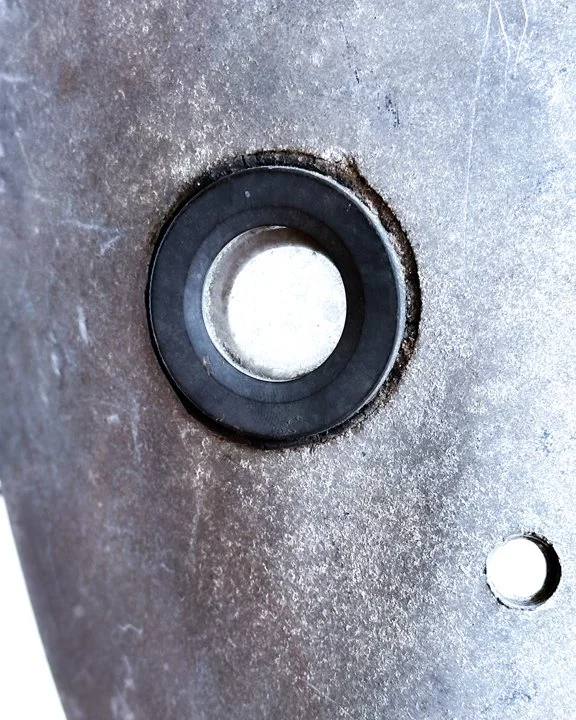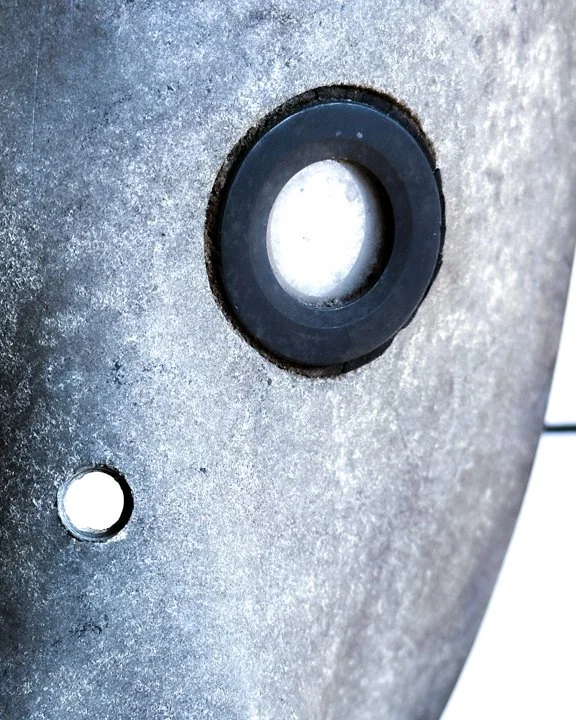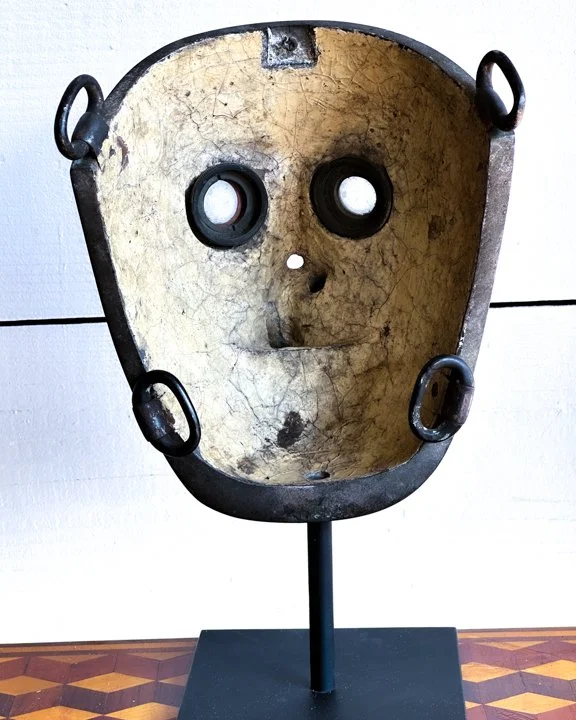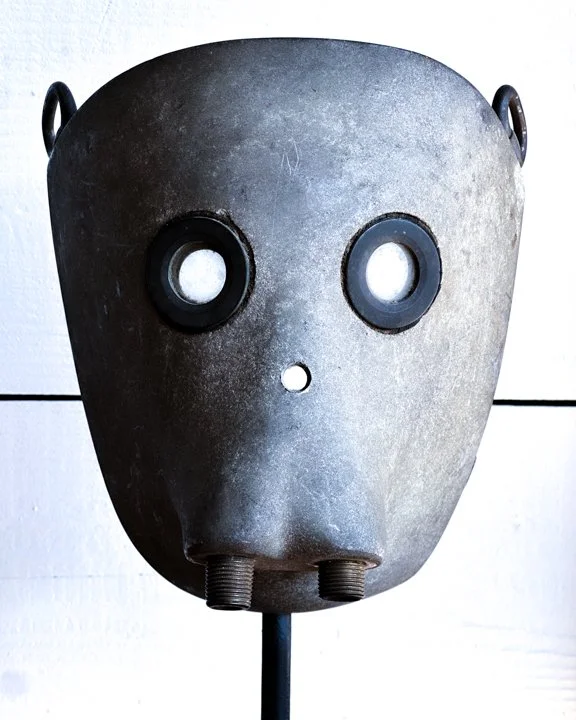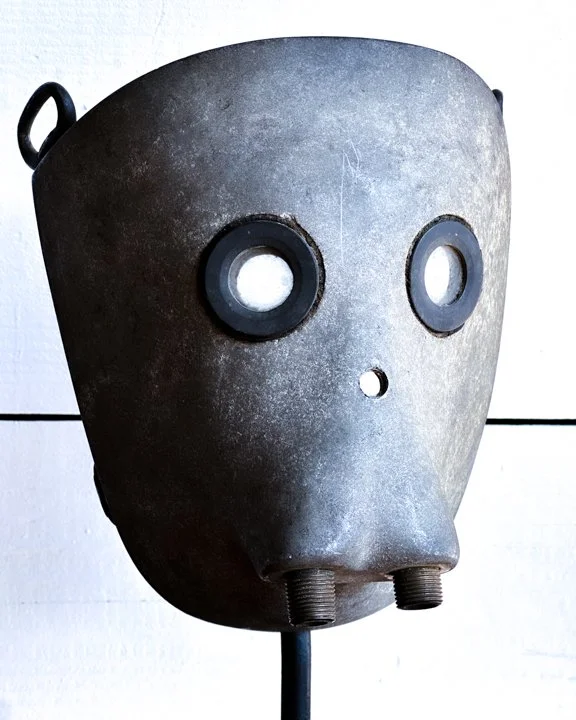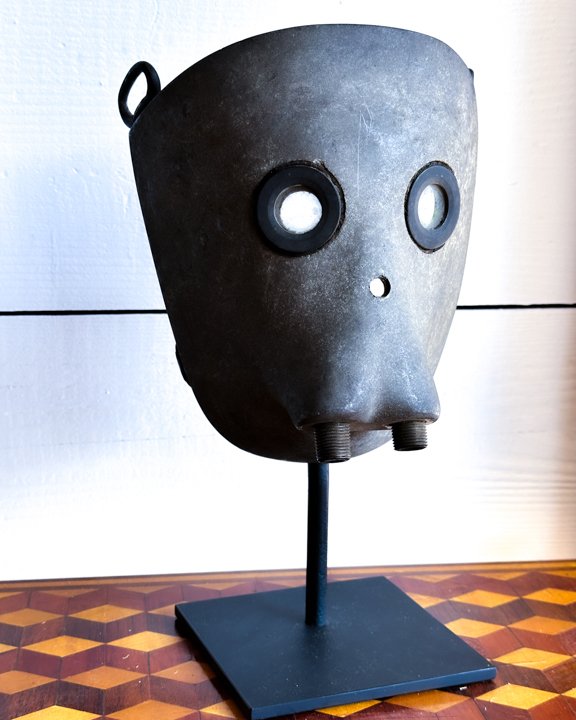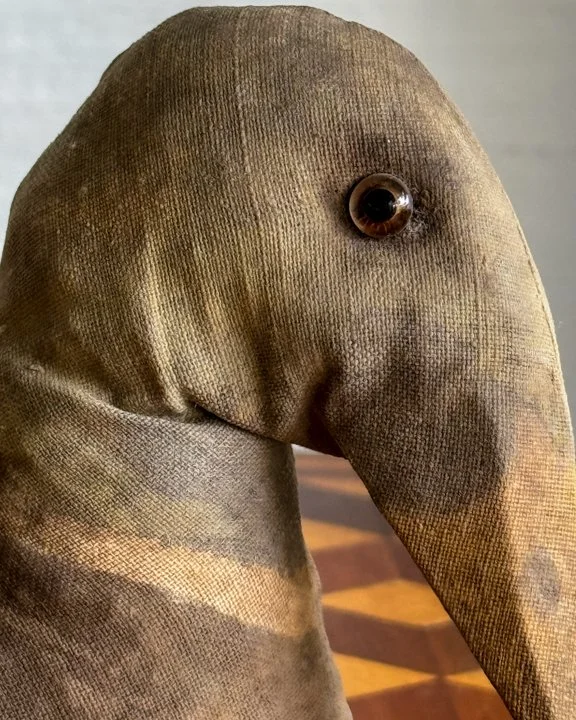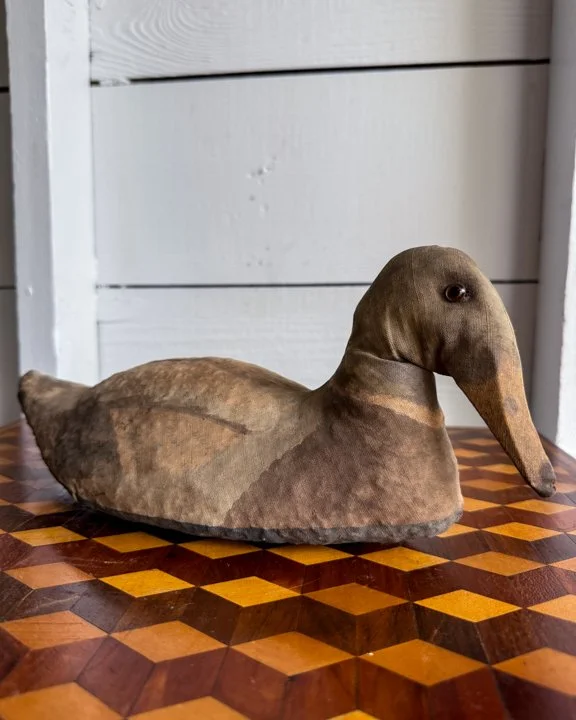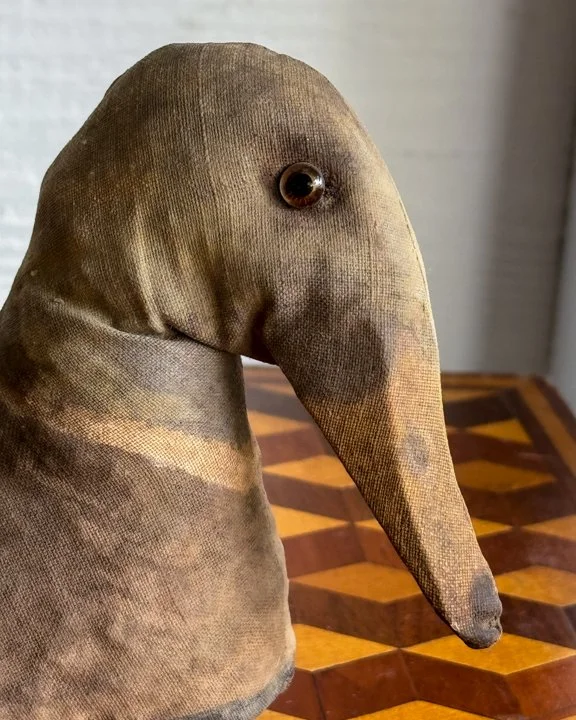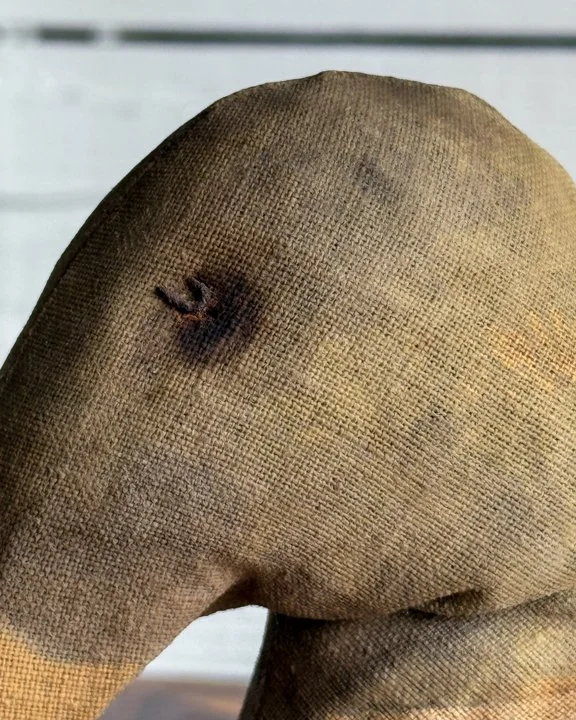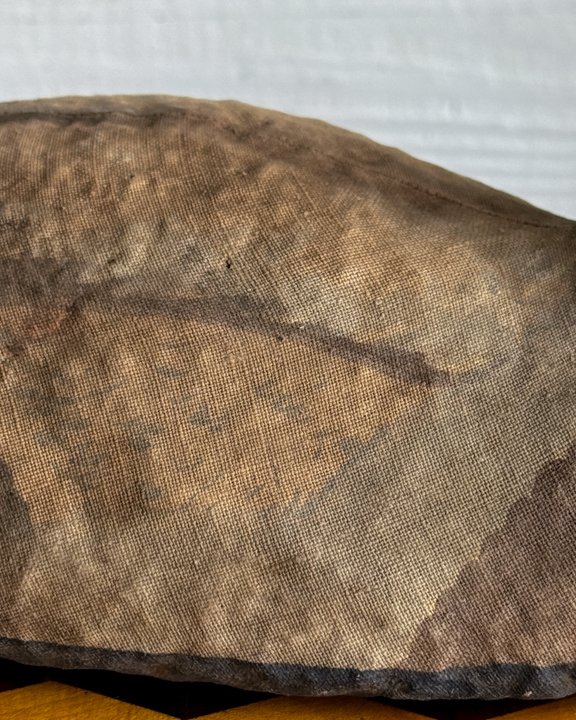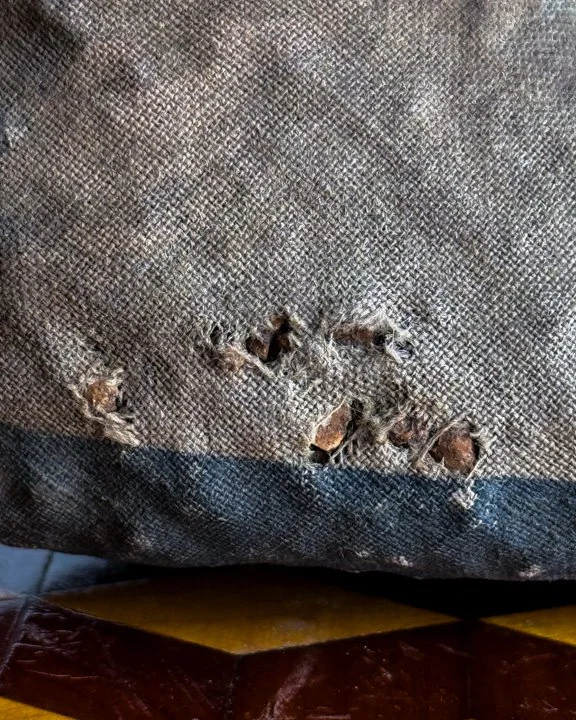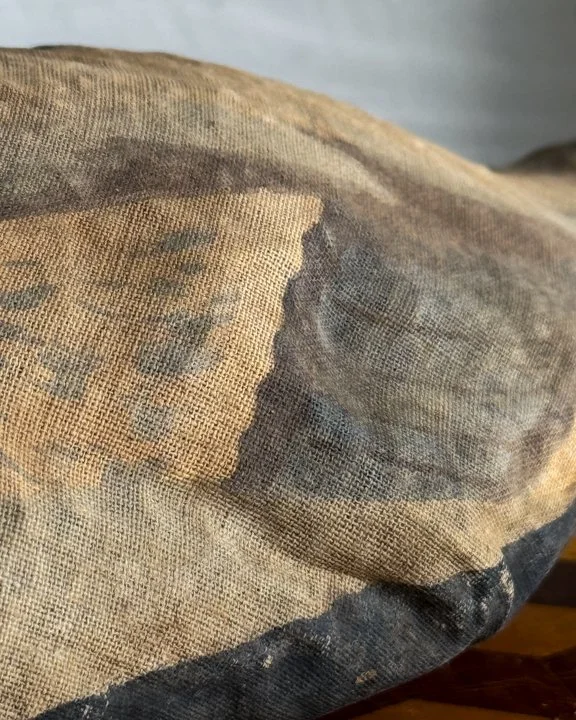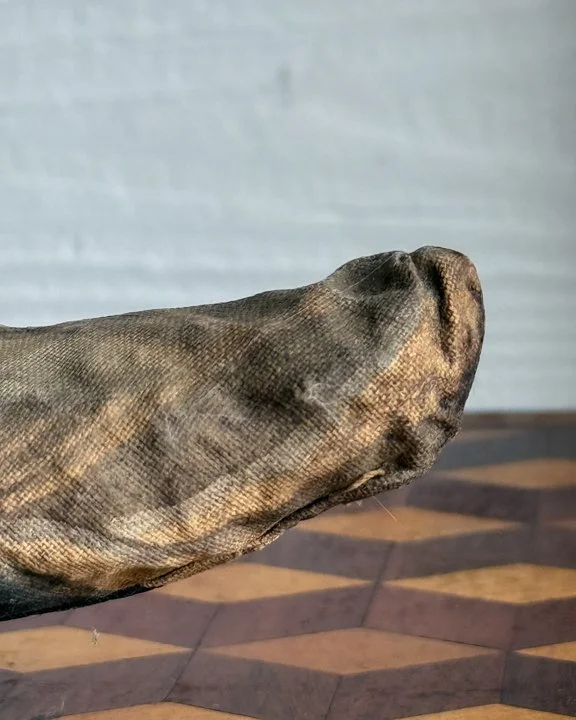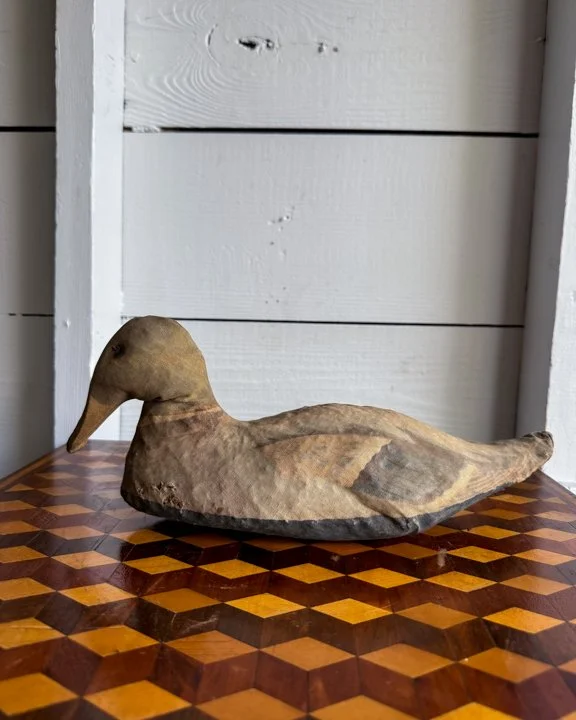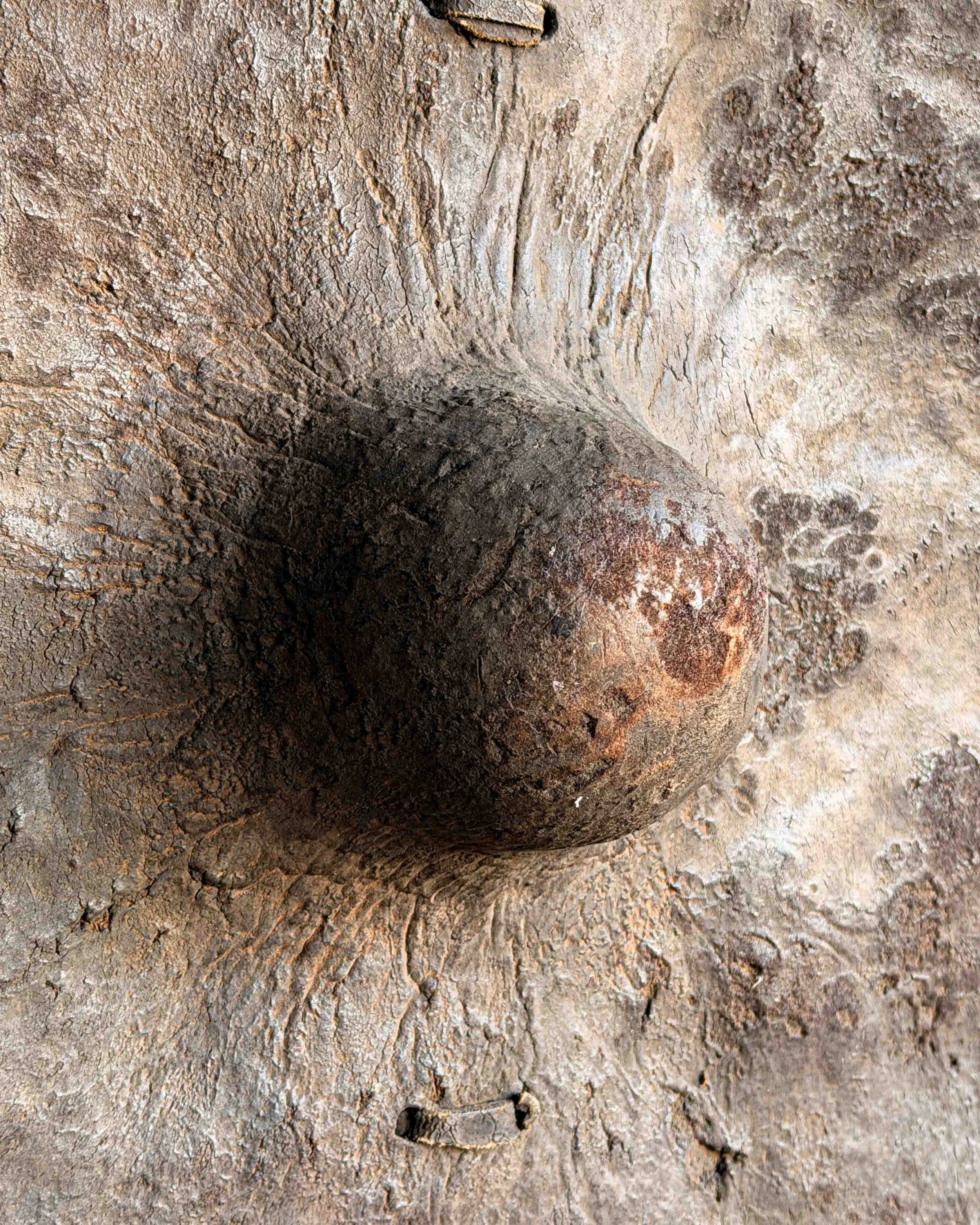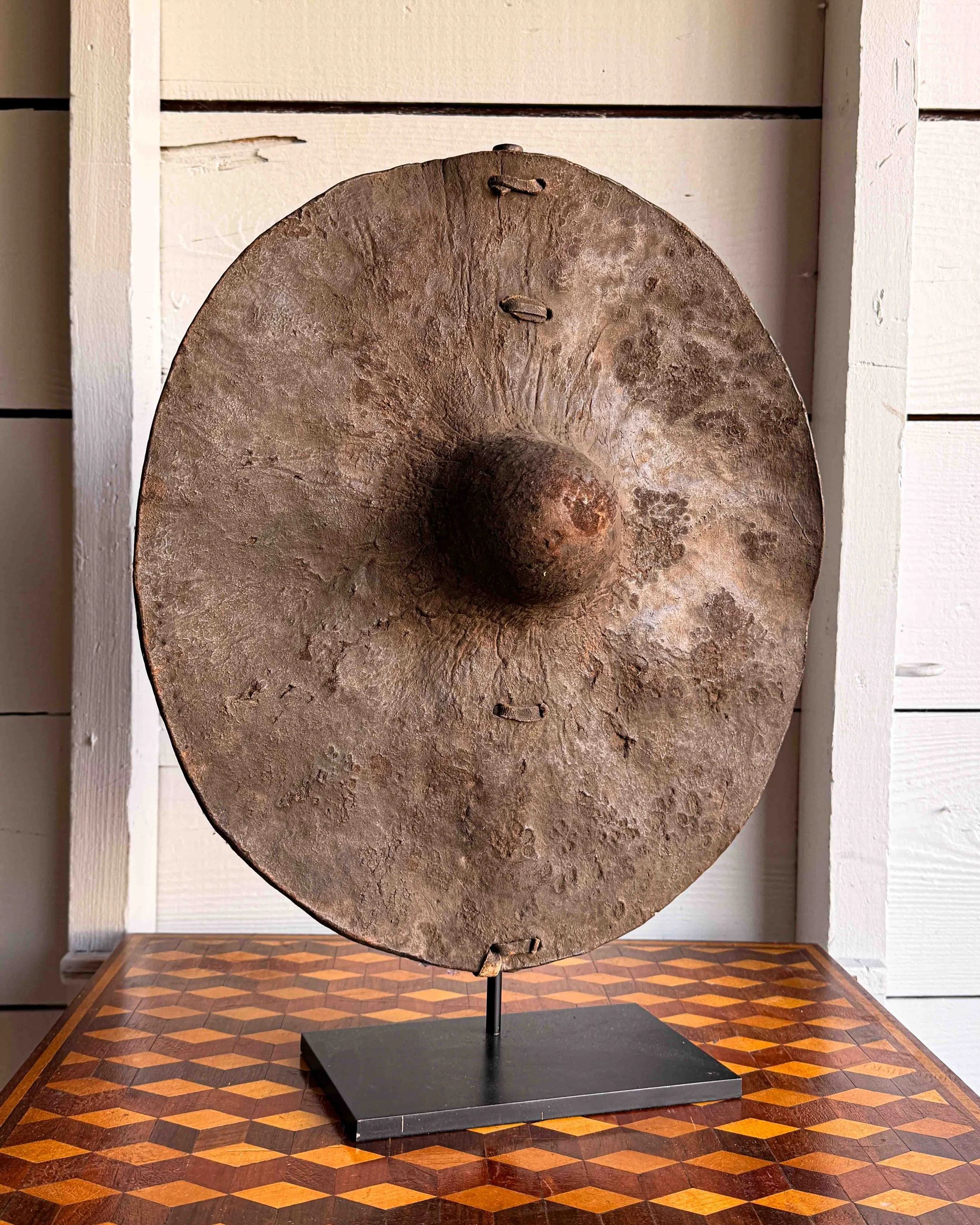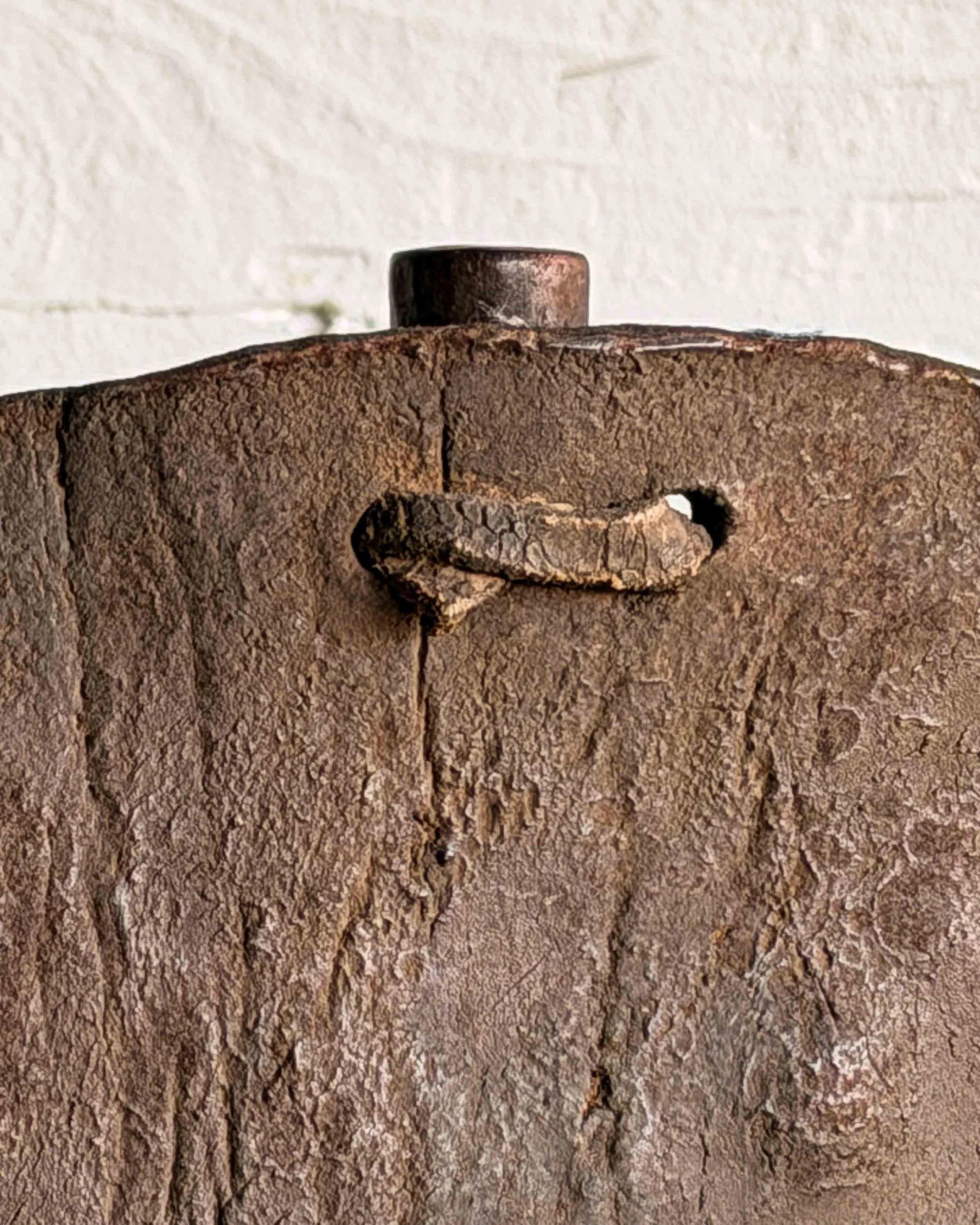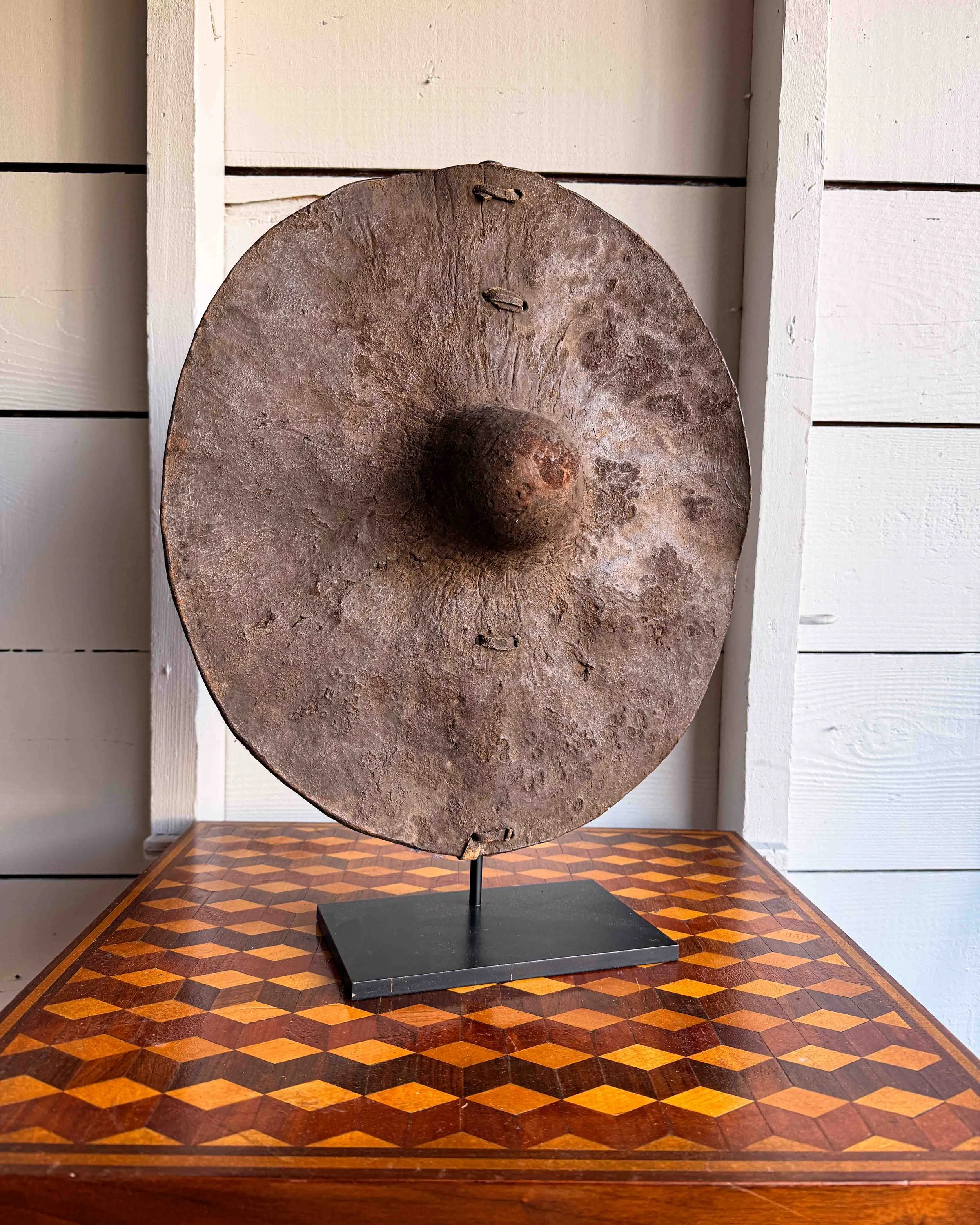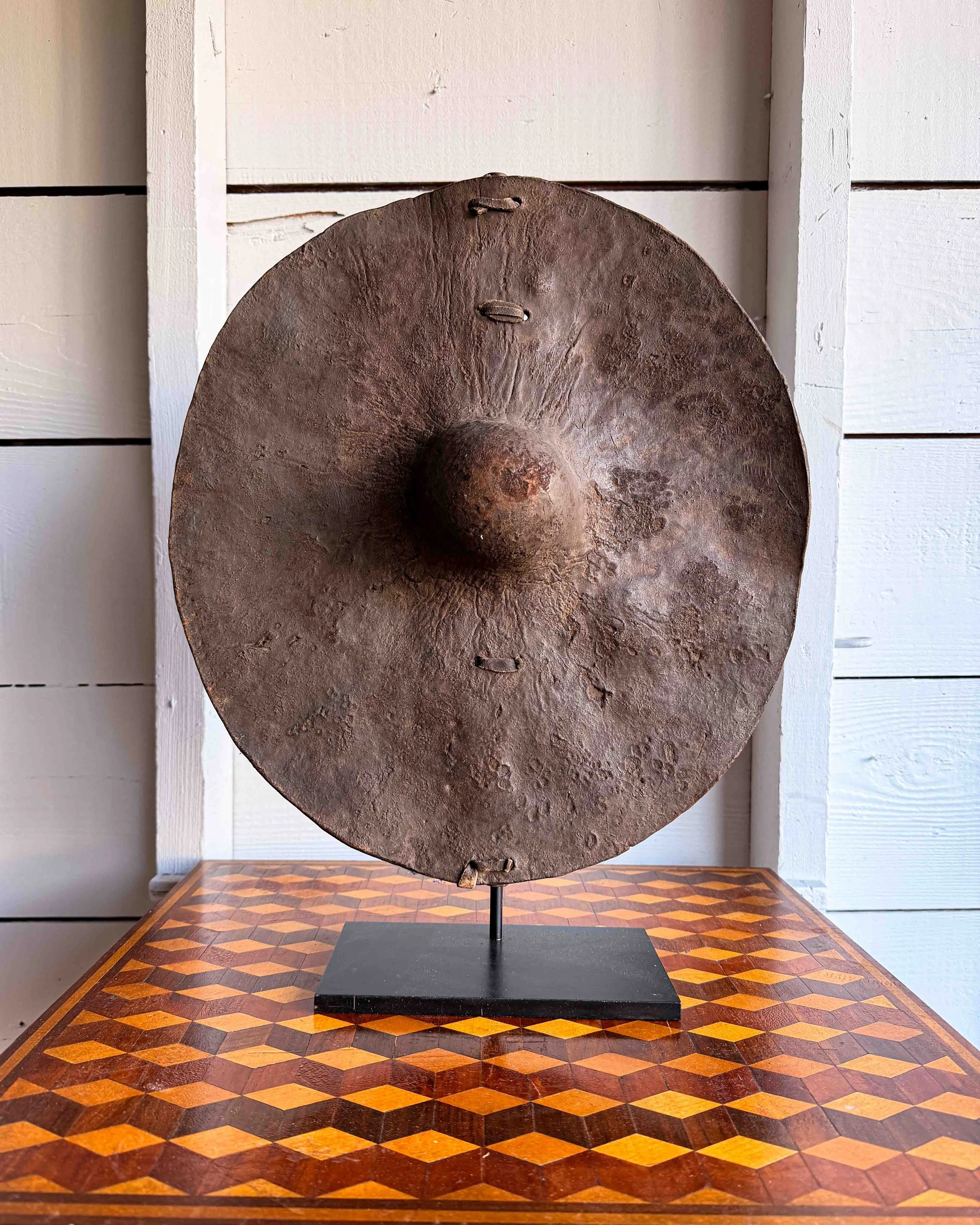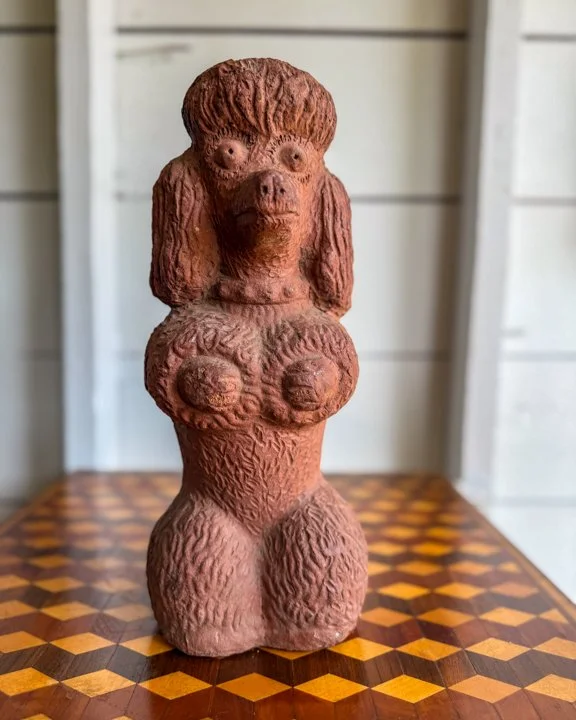
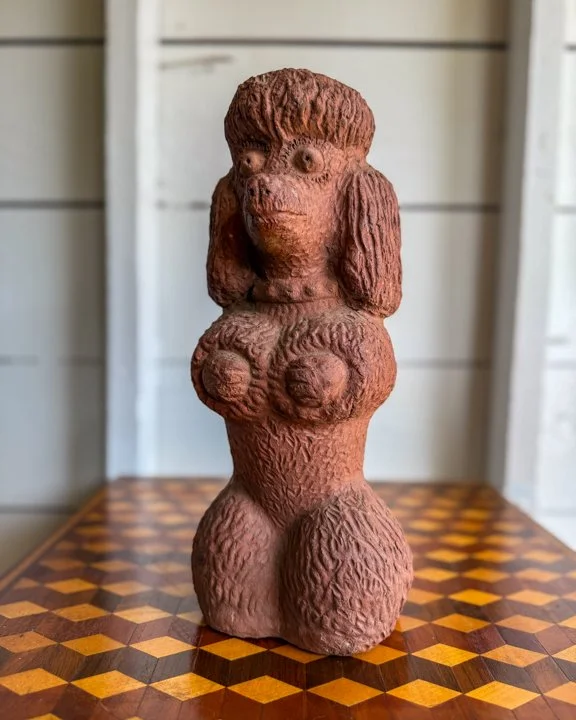
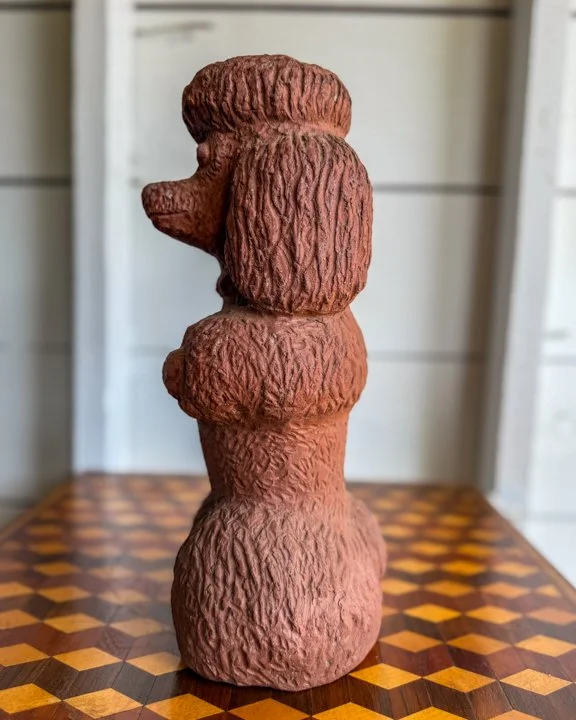
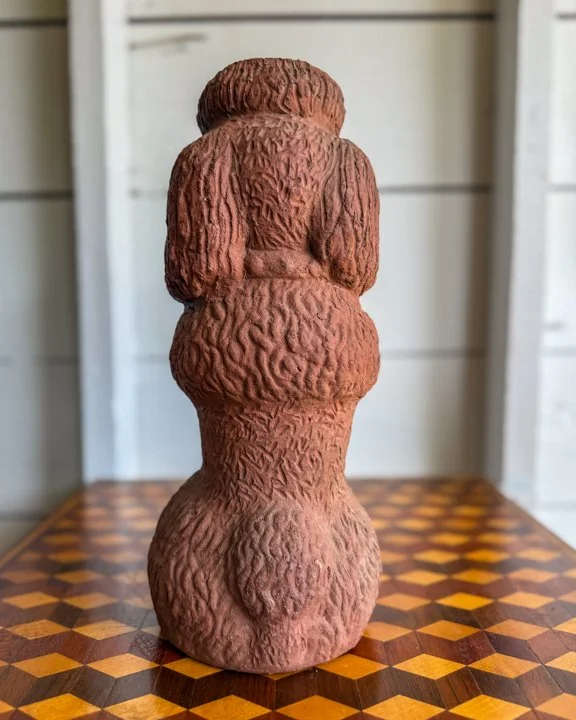
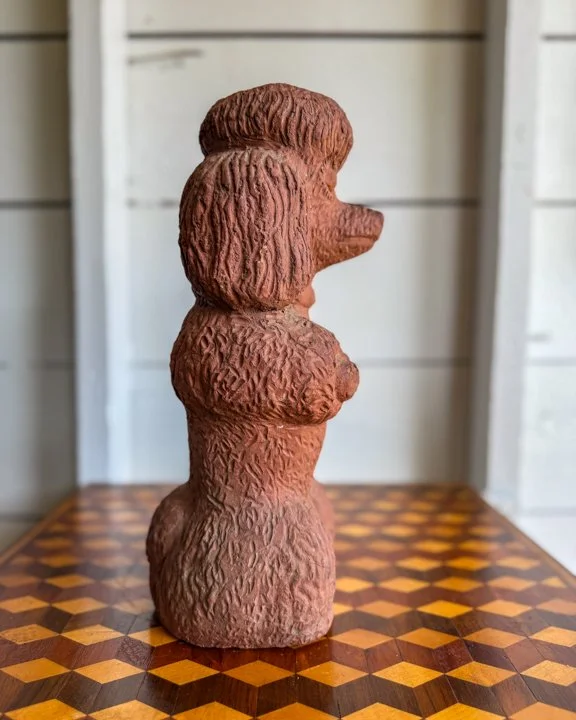
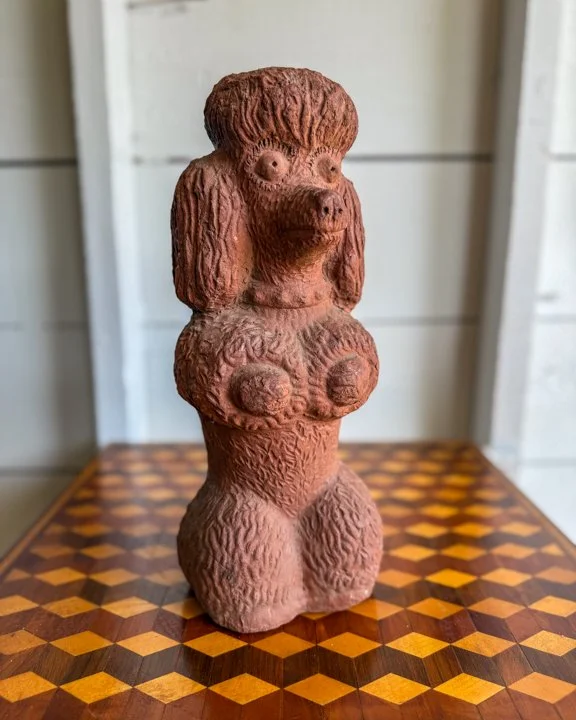
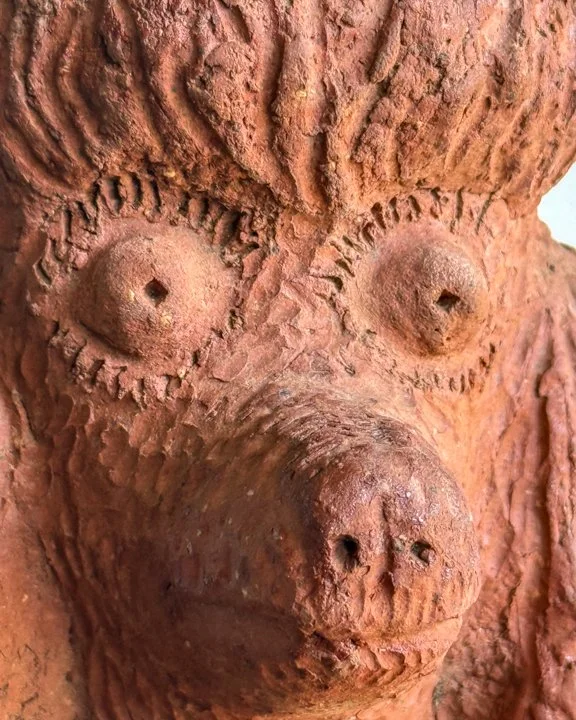
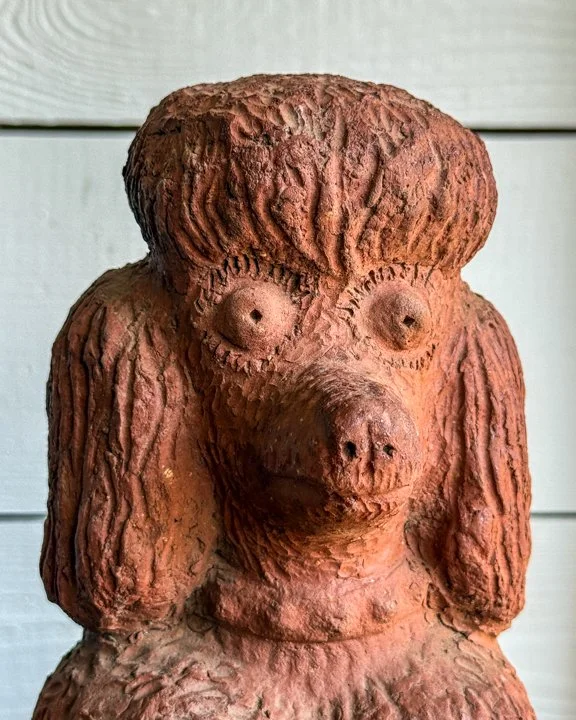
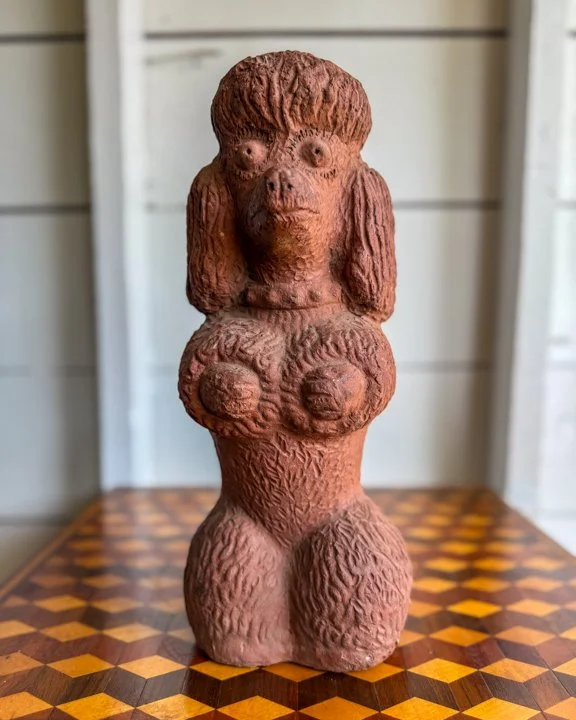
This terracotta poodle sits squarely in the wonderfully strange world of sewer art—a term collectors use for handmade clay figures molded from local sewer tile or fired in community clay works, often by self-taught artists in the early to mid-1900s. These pieces were never meant for galleries; they were expressions of humor, craft, and curiosity, shaped from the same red clay that once lined America’s sewer pipes.
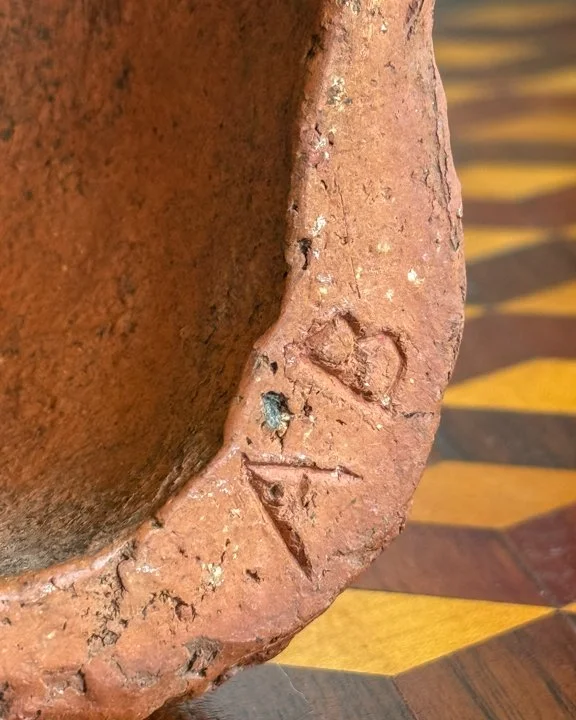
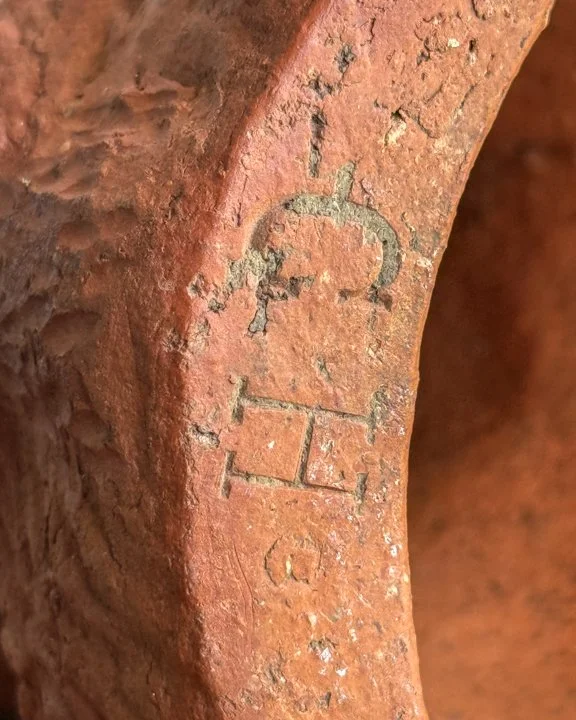
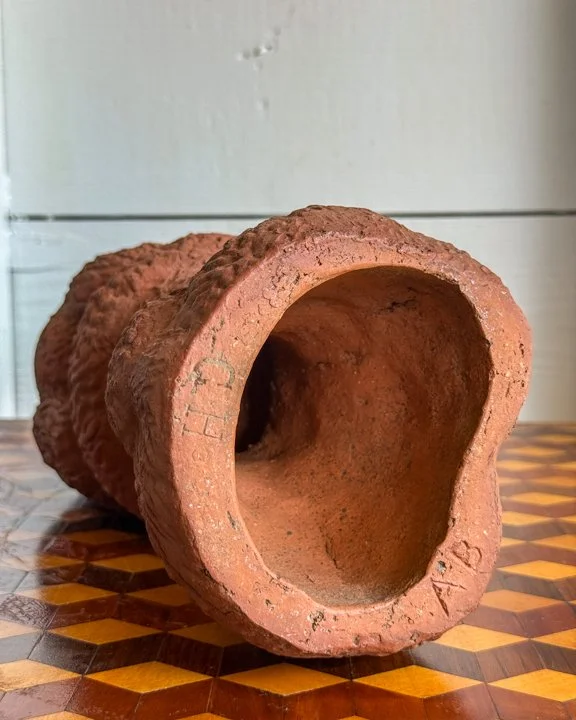
Here, that tradition meets pure eccentricity. The artist turned the humble material into a voluptuous poodle. The rough, tactile surface, exaggerated features, and bold, primitive detailing give it an unmistakable folk-art energy. Signed with a series of impressed marks along the base.
Category History
Folk art lives in that space where making isn’t about fitting into an art world—it’s about expressing something directly, often with whatever is at hand. It’s shaped by necessity, tradition, and instinct rather than formal training. You see it in carved figures, painted signs, stitched textiles, weathervanes, toys—objects that were sometimes made to be useful, sometimes just because someone felt like making them.
What sets folk art apart is its independence. Proportion might bend, perspective might flatten, colors might lean bold or unexpected—but it all works because it’s guided by the maker’s eye, not a rulebook. There’s often a strong sense of place, too. Materials and motifs reflect where it was made, whether that’s rural, coastal, urban, or somewhere in between.
Many pieces carry a kind of quiet storytelling. A carved animal that feels more like a memory than a specimen, a painted scene that captures an event or daily life without worrying about precision. Imperfections aren’t flaws—they’re part of the language.
Over time, these objects shift from everyday use into something more reflective. What was once a tool or decoration becomes a record of how someone saw the world and chose to shape it. Folk art doesn’t try to impress—it connects, directly and without much explanation.
This terracotta poodle sits squarely in the wonderfully strange world of sewer art—a term collectors use for handmade clay figures molded from local sewer tile or fired in community clay works, often by self-taught artists in the early to mid-1900s. These pieces were never meant for galleries; they were expressions of humor, craft, and curiosity, shaped from the same red clay that once lined America’s sewer pipes.
Here, that tradition meets pure eccentricity. The artist turned the humble material into a voluptuous poodle. The rough, tactile surface, exaggerated features, and bold, primitive detailing give it an unmistakable folk-art energy. Signed with a series of impressed marks along the base.
Category History
Folk art lives in that space where making isn’t about fitting into an art world—it’s about expressing something directly, often with whatever is at hand. It’s shaped by necessity, tradition, and instinct rather than formal training. You see it in carved figures, painted signs, stitched textiles, weathervanes, toys—objects that were sometimes made to be useful, sometimes just because someone felt like making them.
What sets folk art apart is its independence. Proportion might bend, perspective might flatten, colors might lean bold or unexpected—but it all works because it’s guided by the maker’s eye, not a rulebook. There’s often a strong sense of place, too. Materials and motifs reflect where it was made, whether that’s rural, coastal, urban, or somewhere in between.
Many pieces carry a kind of quiet storytelling. A carved animal that feels more like a memory than a specimen, a painted scene that captures an event or daily life without worrying about precision. Imperfections aren’t flaws—they’re part of the language.
Over time, these objects shift from everyday use into something more reflective. What was once a tool or decoration becomes a record of how someone saw the world and chose to shape it. Folk art doesn’t try to impress—it connects, directly and without much explanation.