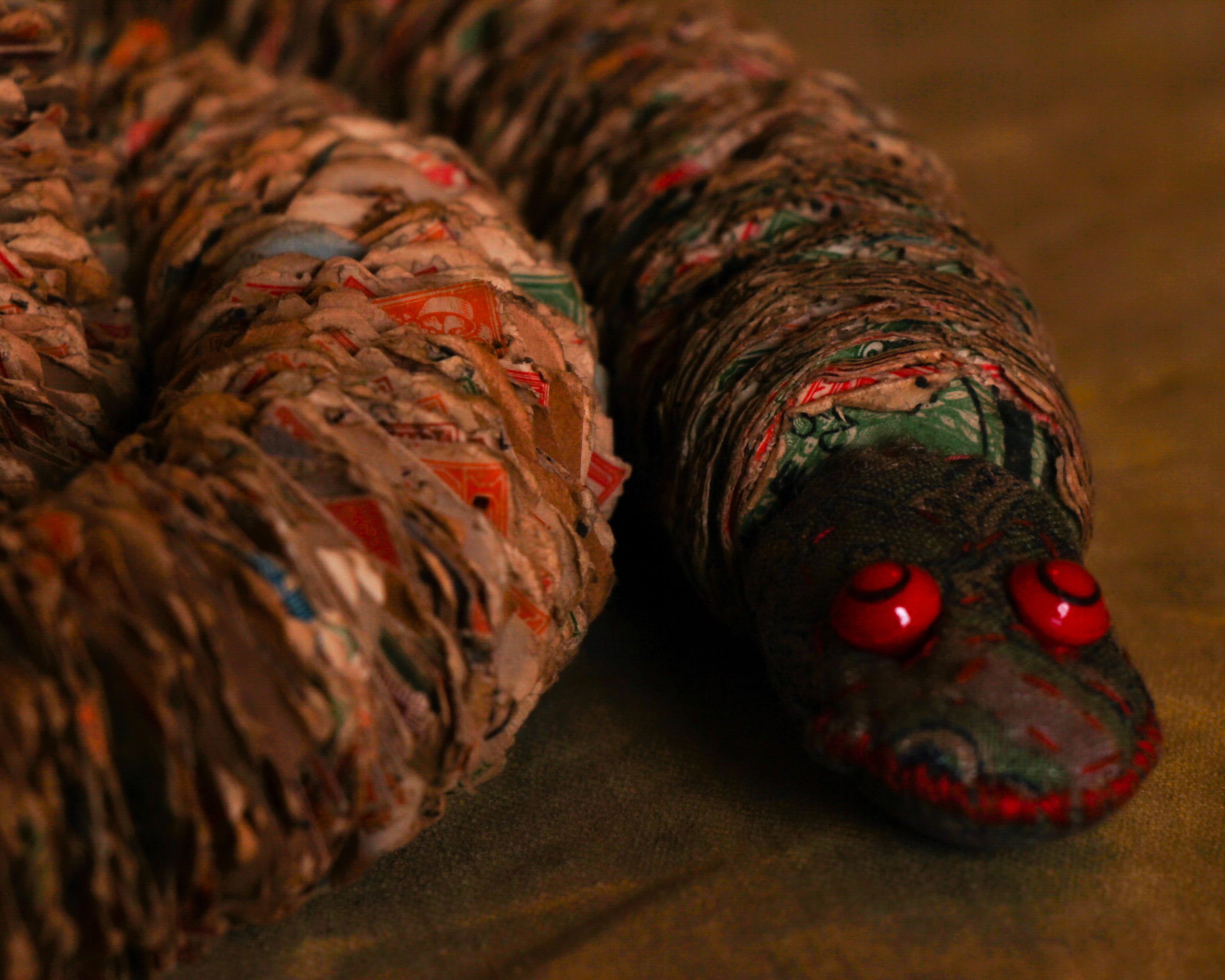
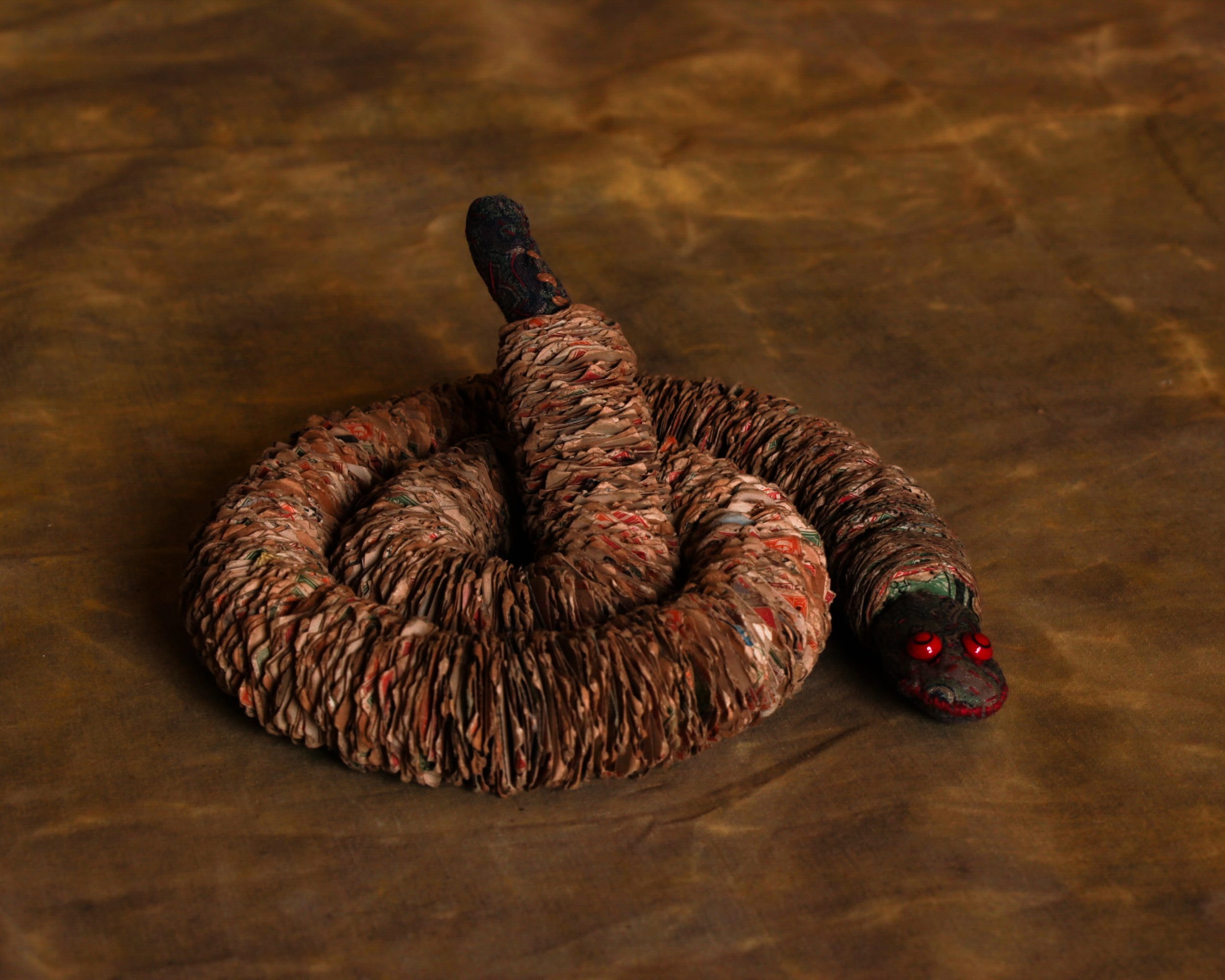
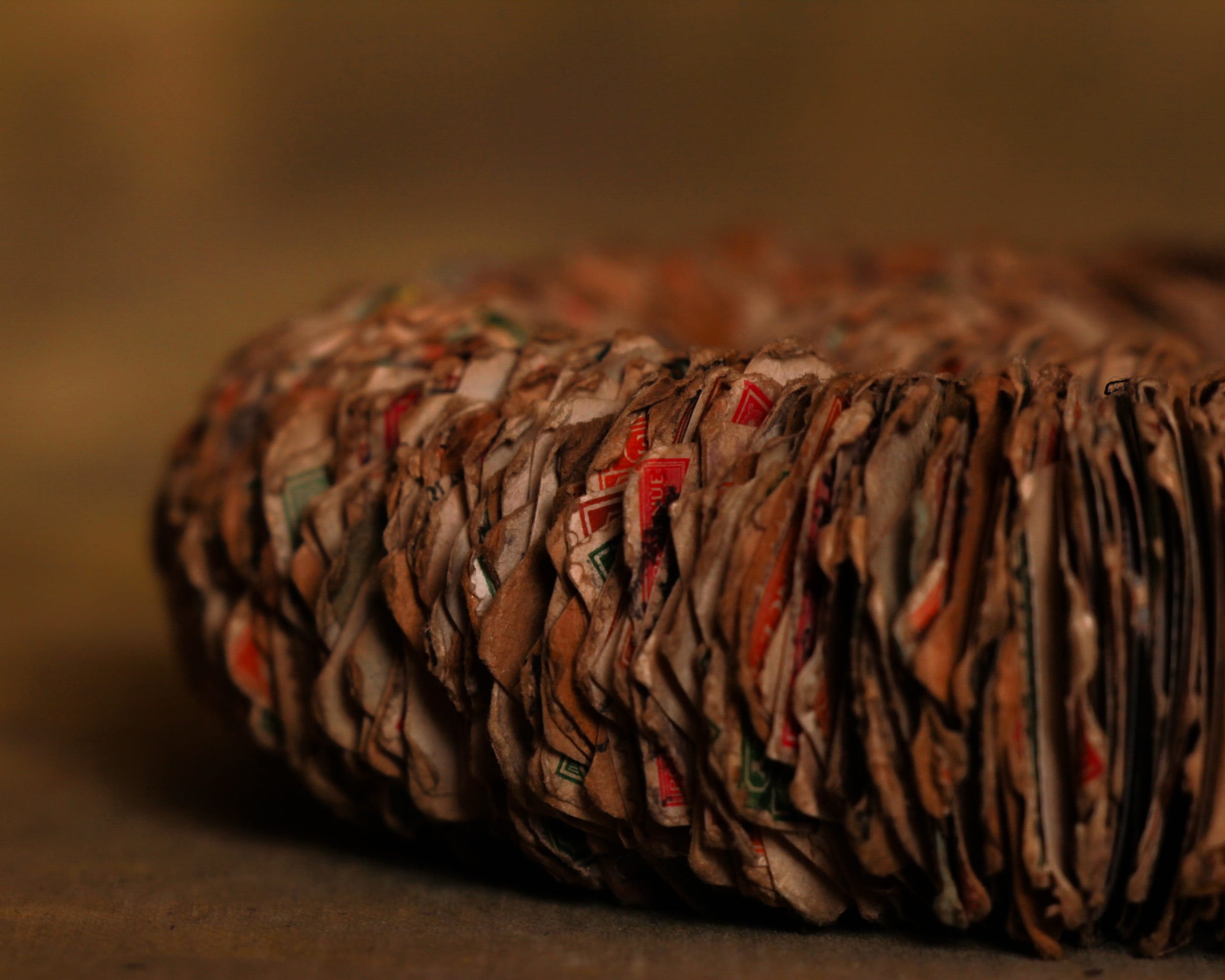
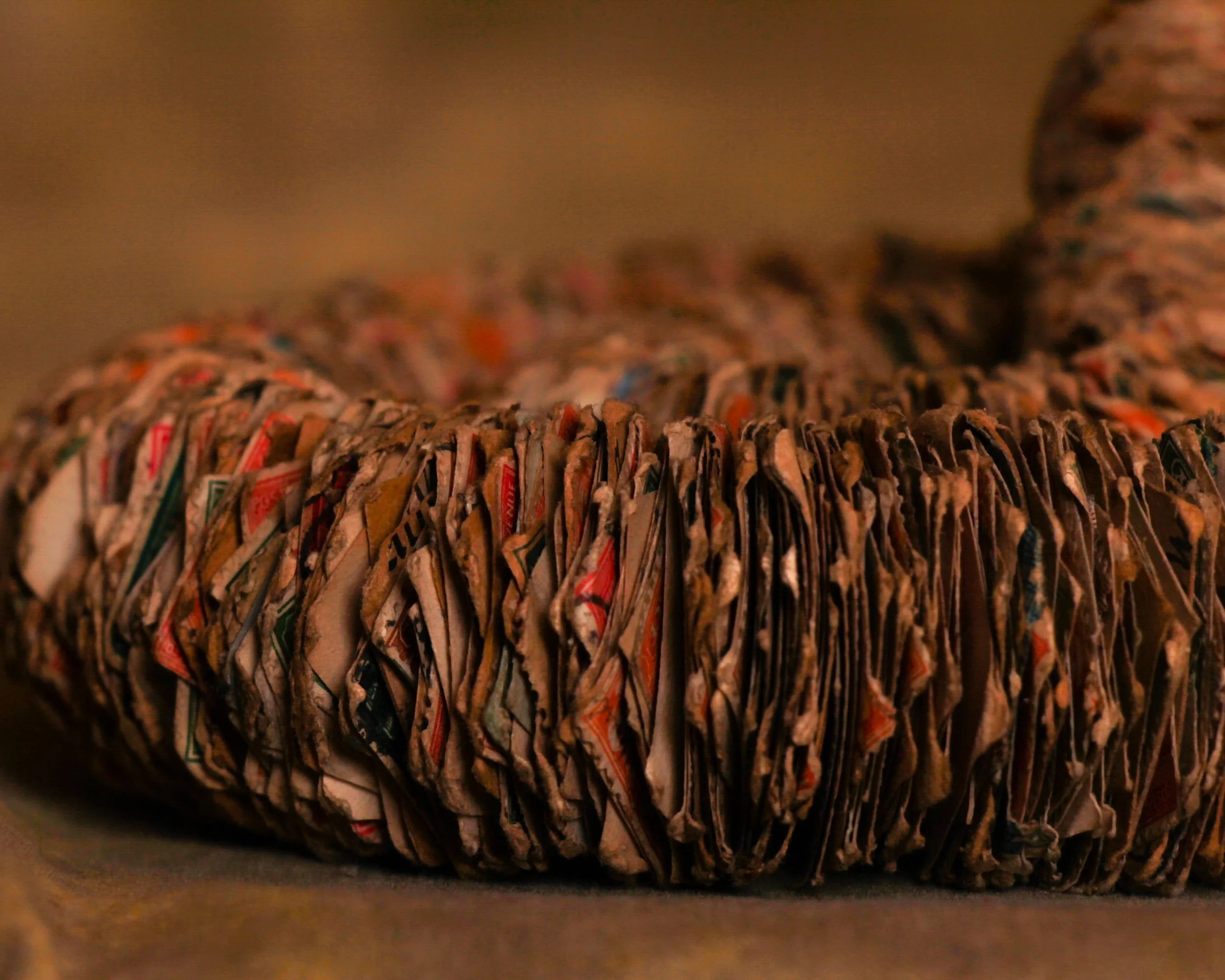
An extraordinary early 20th-century folk art snake, coiled with intention and patience, built almost entirely from approximately 4,200 Victorian and Edwardian postage stamps. Red and black fragments of once-ordinary correspondence are folded, layered, and packed so tightly they become scales, giving the body a dense, rippling texture that feels both organic and improbably meticulous.
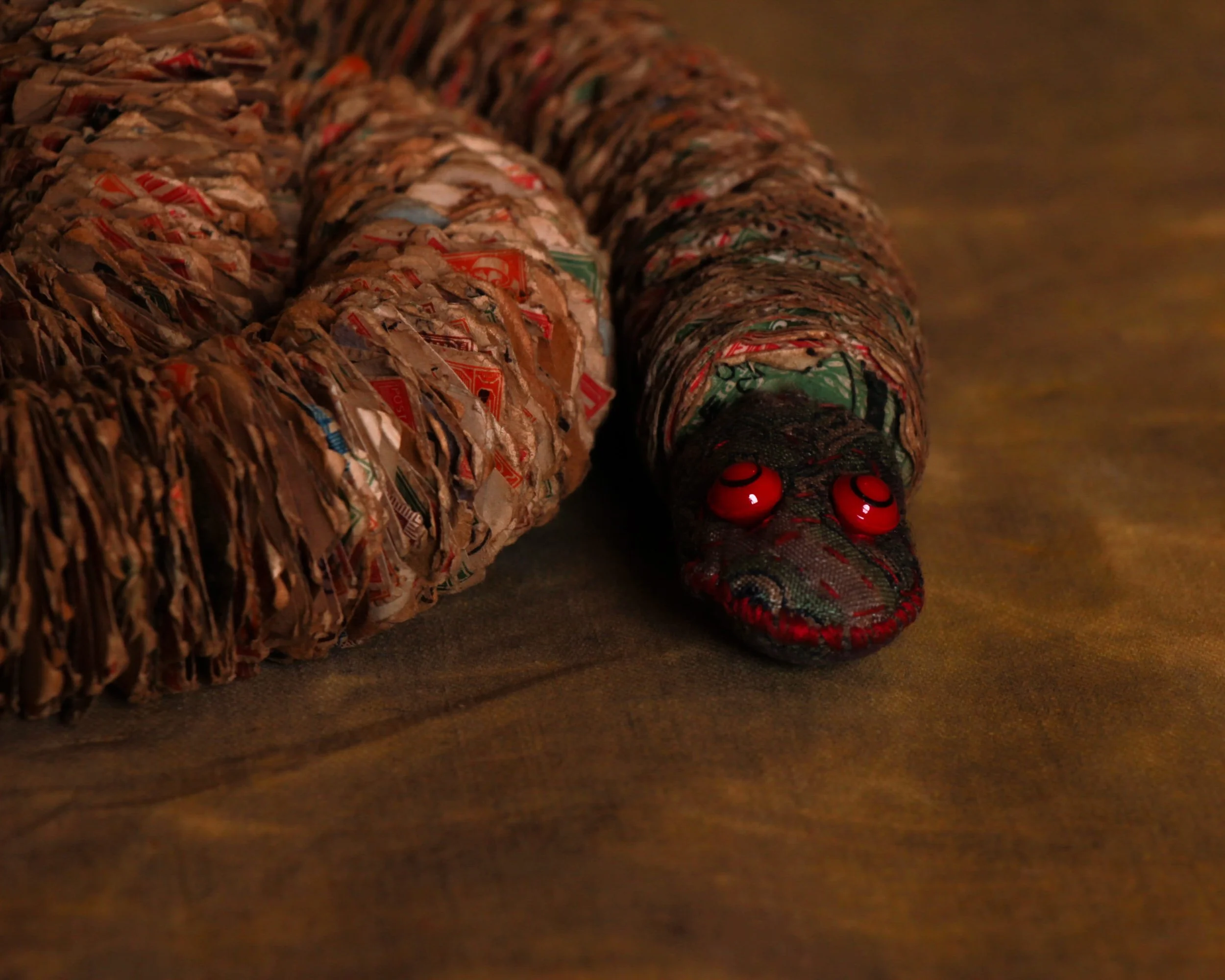
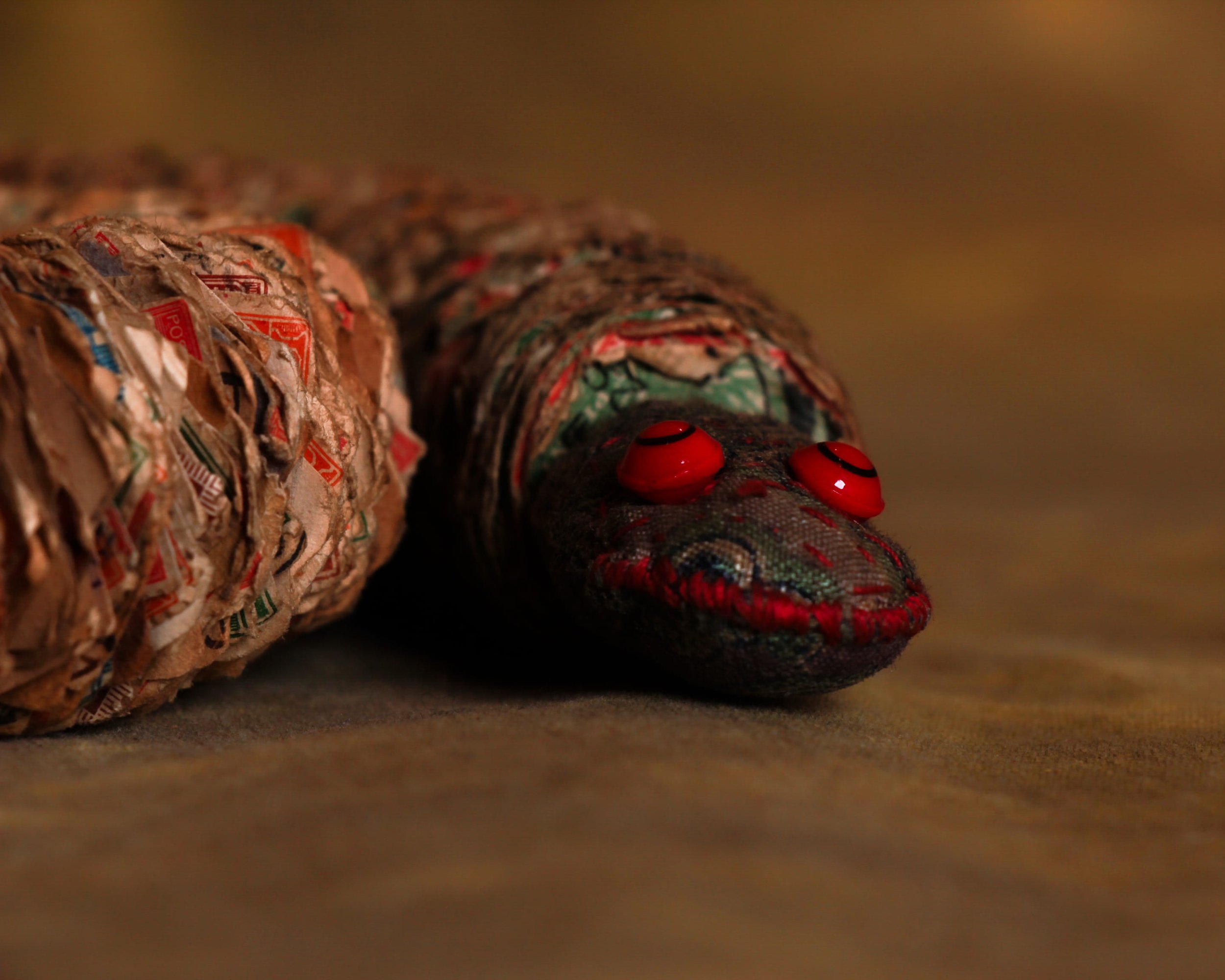
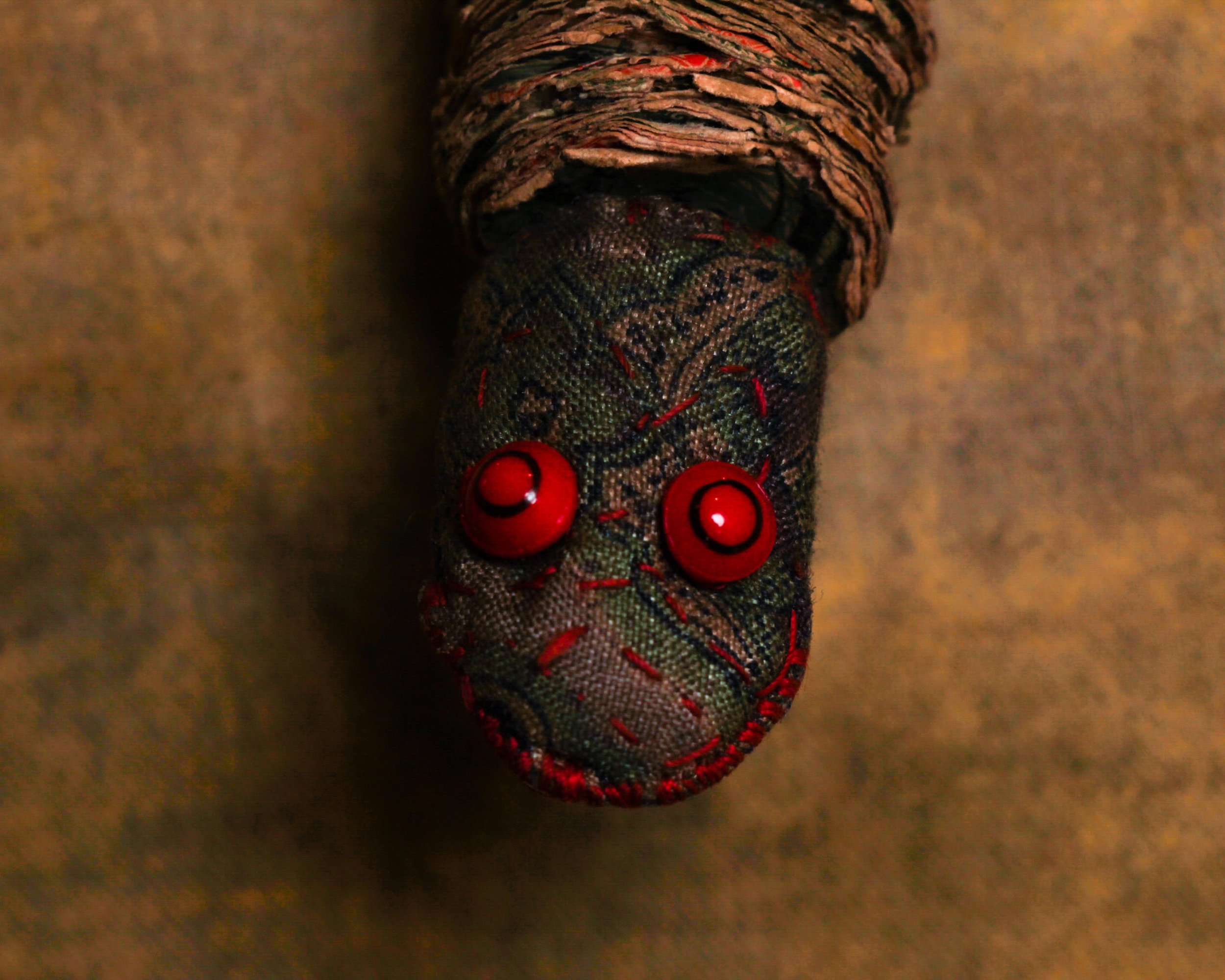
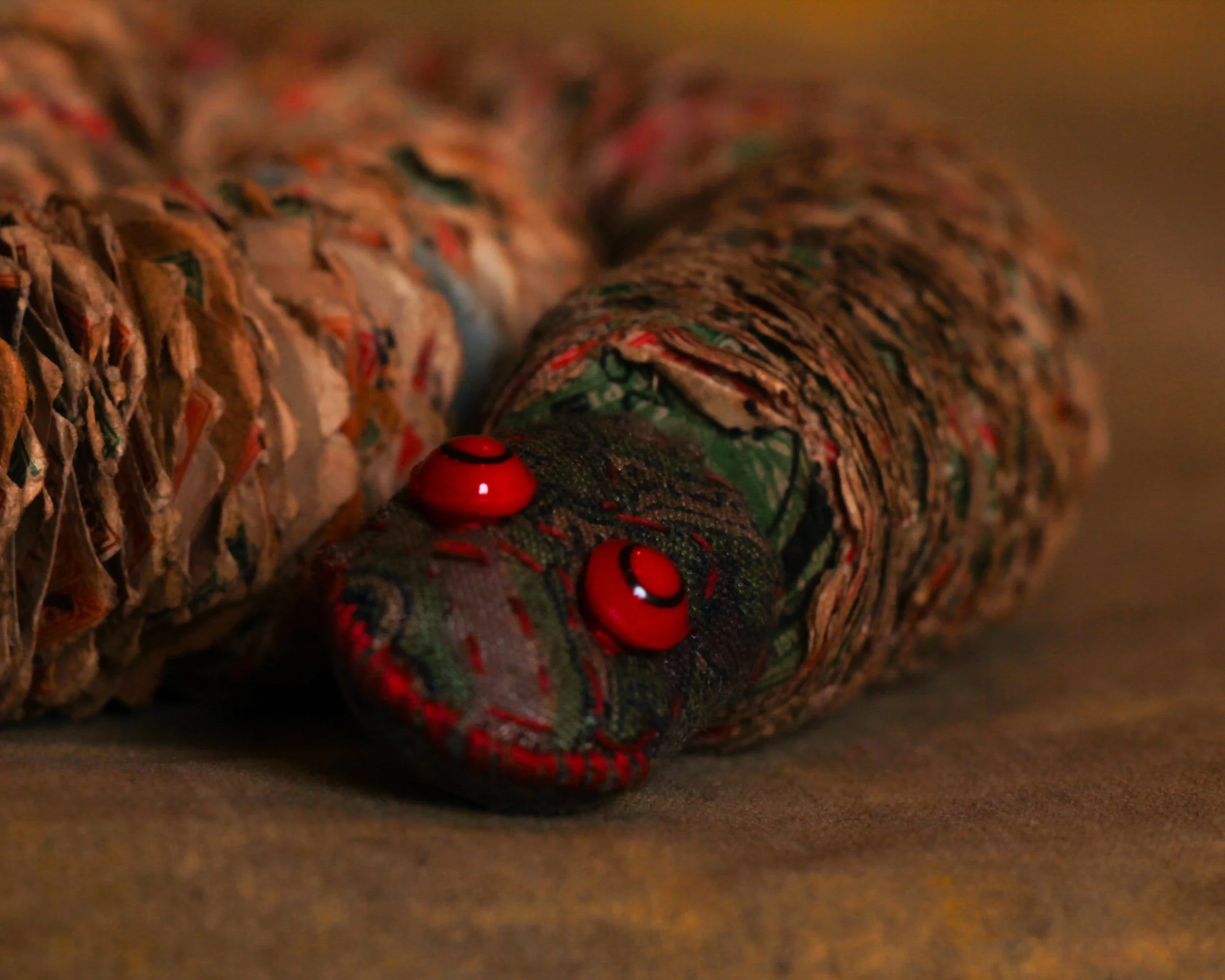
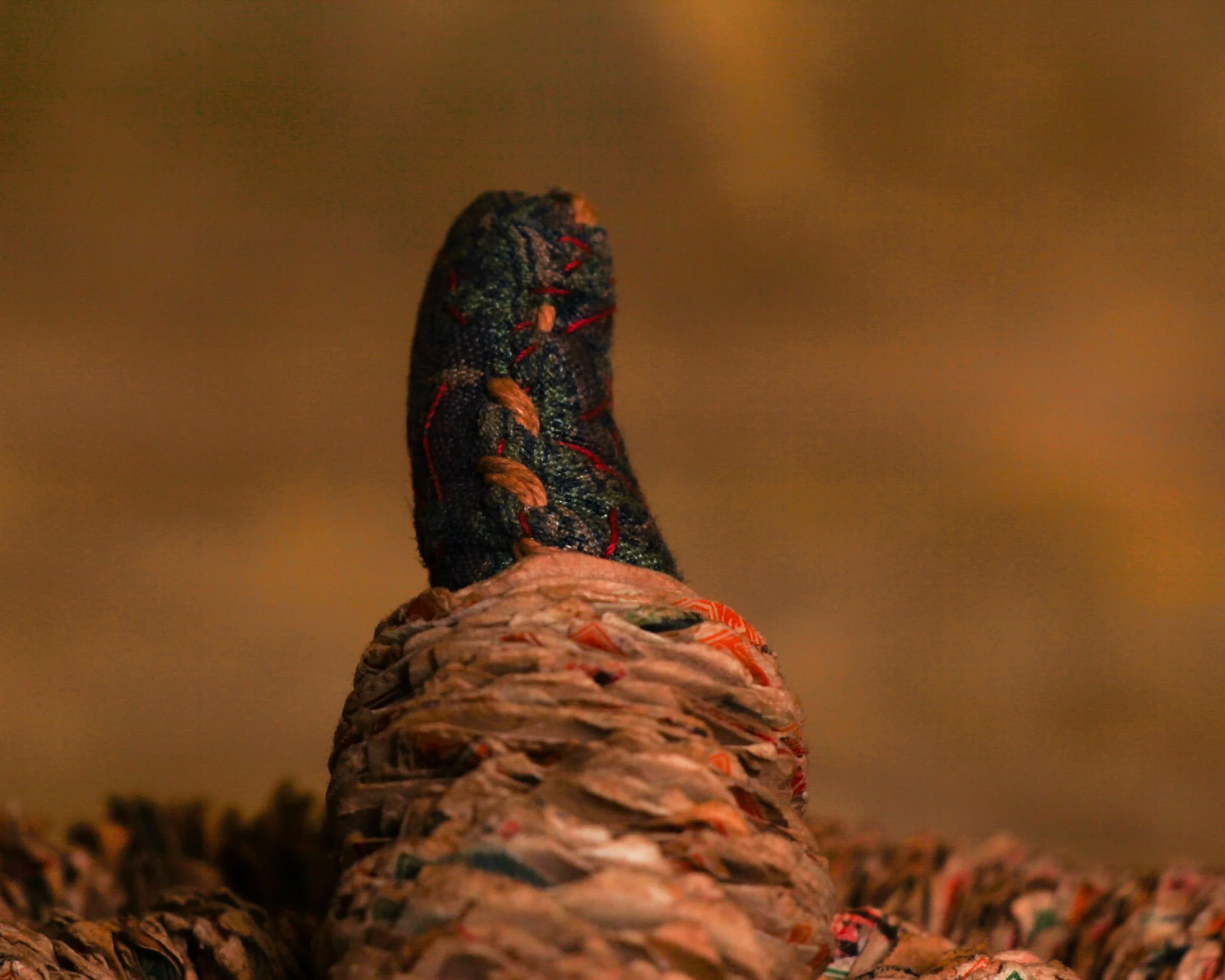
The head and tail are formed from fabric, softly stitched and subtly expressive, with bright red button eyes that glow just enough to feel alert without tipping into menace. There’s a gentle humor here, but also a seriousness of craft. Every stamp was placed by hand—slowly turning the ephemera of daily life into something oddly alive.
Up close, the surface is full of small discoveries. Bits of typography, partial postmarks, flashes of color peeking through the brown patina of age. The stamps have mellowed beautifully, giving the snake a warmth and depth that only paper and time can produce. At 75 cm long, it has real presence, whether coiled in a nook or stretched out on a shelf.
Category History
Folk art lives in that space where making isn’t about fitting into an art world—it’s about expressing something directly, often with whatever is at hand. It’s shaped by necessity, tradition, and instinct rather than formal training. You see it in carved figures, painted signs, stitched textiles, weathervanes, toys—objects that were sometimes made to be useful, sometimes just because someone felt like making them.
What sets folk art apart is its independence. Proportion might bend, perspective might flatten, colors might lean bold or unexpected—but it all works because it’s guided by the maker’s eye, not a rulebook. There’s often a strong sense of place, too. Materials and motifs reflect where it was made, whether that’s rural, coastal, urban, or somewhere in between.
Many pieces carry a kind of quiet storytelling. A carved animal that feels more like a memory than a specimen, a painted scene that captures an event or daily life without worrying about precision. Imperfections aren’t flaws—they’re part of the language.
Over time, these objects shift from everyday use into something more reflective. What was once a tool or decoration becomes a record of how someone saw the world and chose to shape it. Folk art doesn’t try to impress—it connects, directly and without much explanation.
An extraordinary early 20th-century folk art snake, coiled with intention and patience, built almost entirely from approximately 4,200 Victorian and Edwardian postage stamps. Red and black fragments of once-ordinary correspondence are folded, layered, and packed so tightly they become scales, giving the body a dense, rippling texture that feels both organic and improbably meticulous.
The head and tail are formed from fabric, softly stitched and subtly expressive, with bright red button eyes that glow just enough to feel alert without tipping into menace. There’s a gentle humor here, but also a seriousness of craft. Every stamp was placed by hand—slowly turning the ephemera of daily life into something oddly alive.
Up close, the surface is full of small discoveries. Bits of typography, partial postmarks, flashes of color peeking through the brown patina of age. The stamps have mellowed beautifully, giving the snake a warmth and depth that only paper and time can produce. At 75 cm long, it has real presence, whether coiled in a nook or stretched out on a shelf.
Category History
Folk art lives in that space where making isn’t about fitting into an art world—it’s about expressing something directly, often with whatever is at hand. It’s shaped by necessity, tradition, and instinct rather than formal training. You see it in carved figures, painted signs, stitched textiles, weathervanes, toys—objects that were sometimes made to be useful, sometimes just because someone felt like making them.
What sets folk art apart is its independence. Proportion might bend, perspective might flatten, colors might lean bold or unexpected—but it all works because it’s guided by the maker’s eye, not a rulebook. There’s often a strong sense of place, too. Materials and motifs reflect where it was made, whether that’s rural, coastal, urban, or somewhere in between.
Many pieces carry a kind of quiet storytelling. A carved animal that feels more like a memory than a specimen, a painted scene that captures an event or daily life without worrying about precision. Imperfections aren’t flaws—they’re part of the language.
Over time, these objects shift from everyday use into something more reflective. What was once a tool or decoration becomes a record of how someone saw the world and chose to shape it. Folk art doesn’t try to impress—it connects, directly and without much explanation.