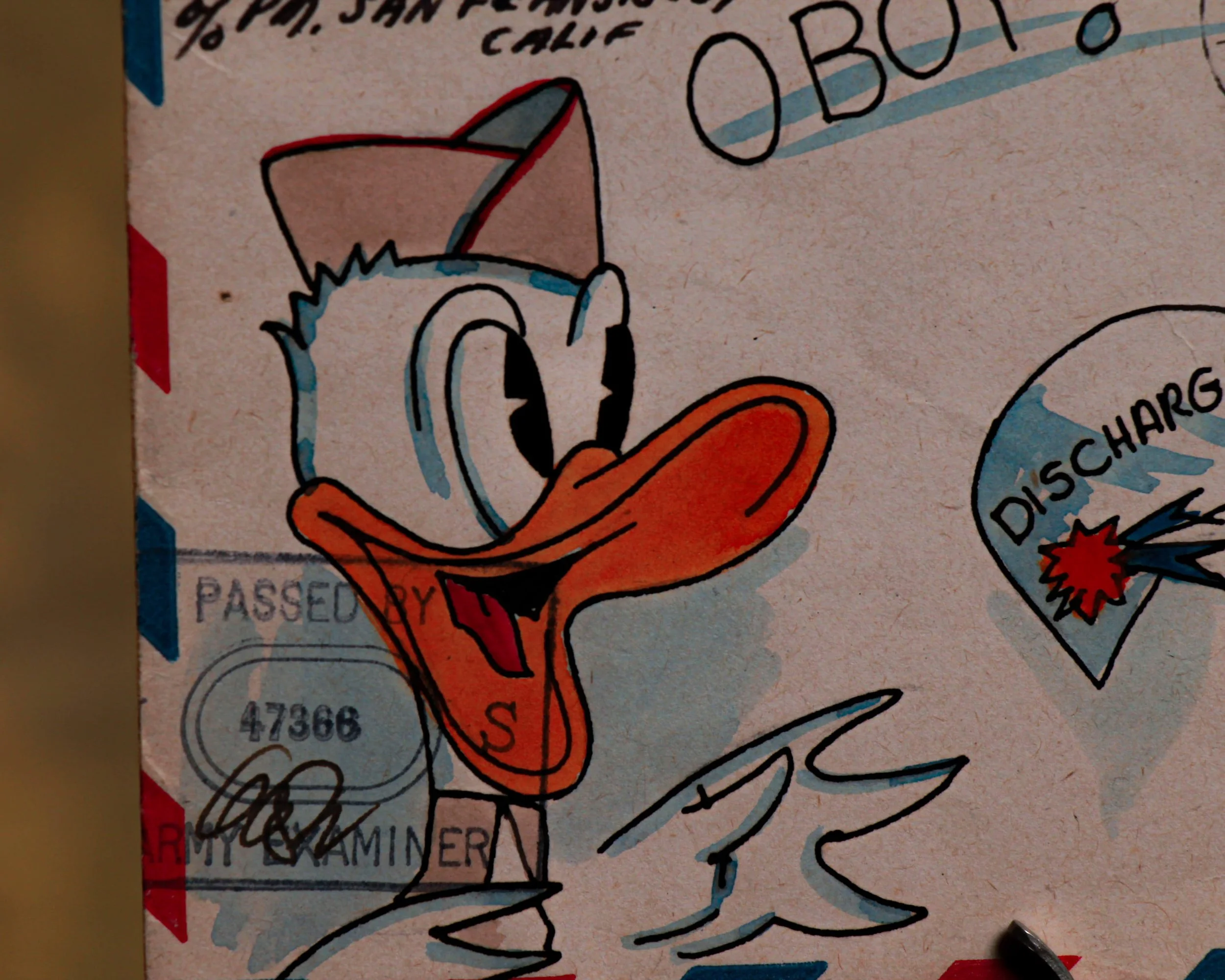
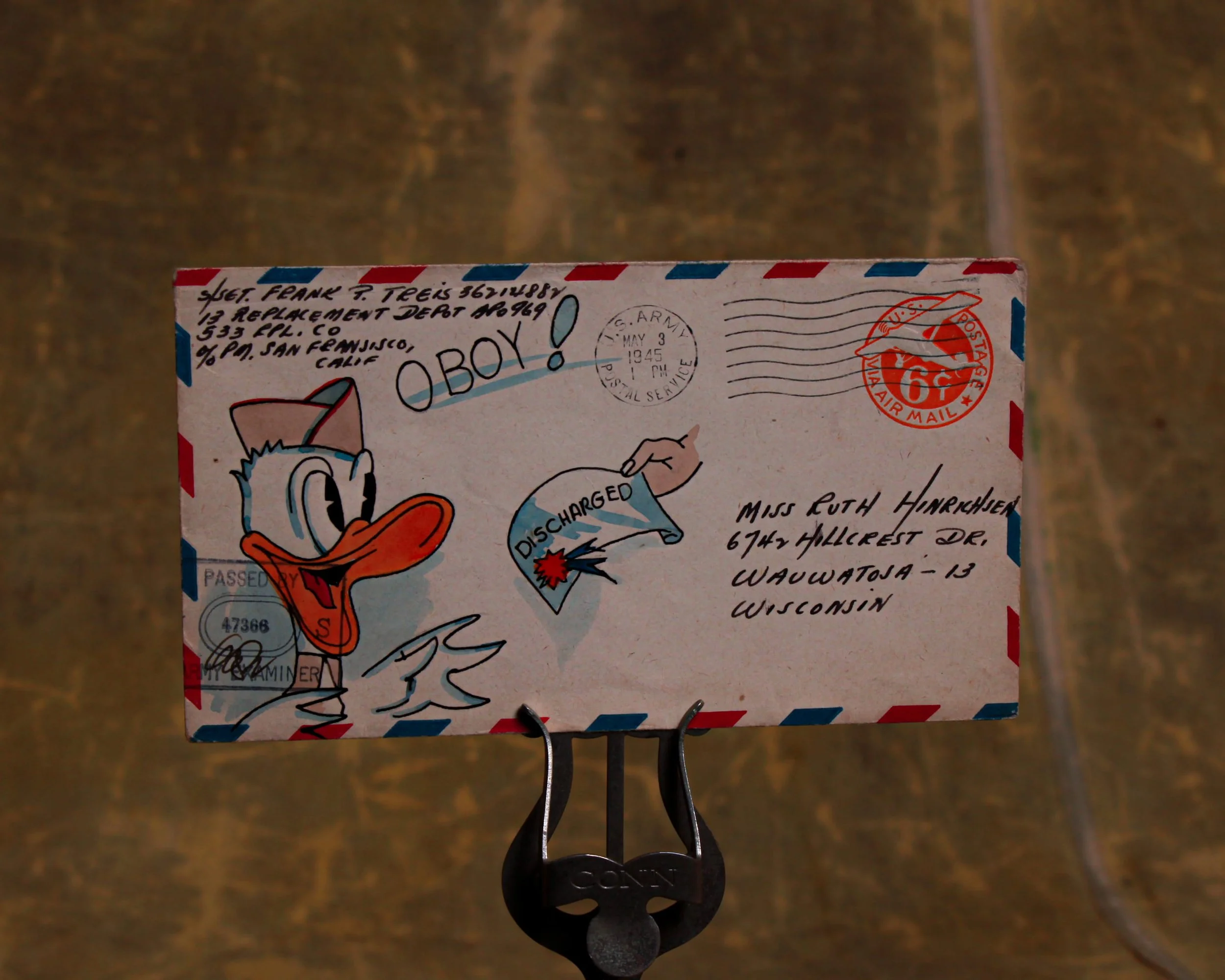
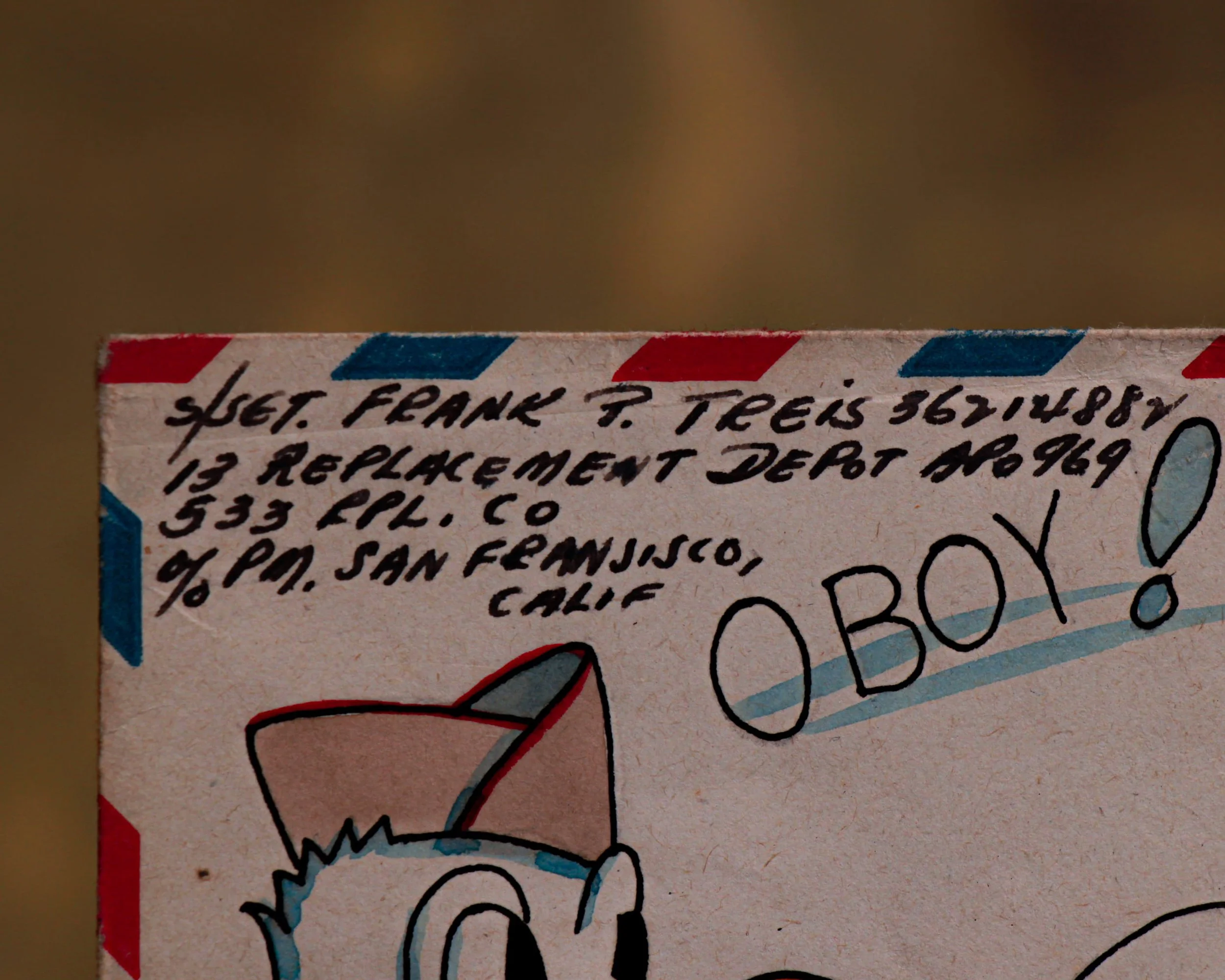
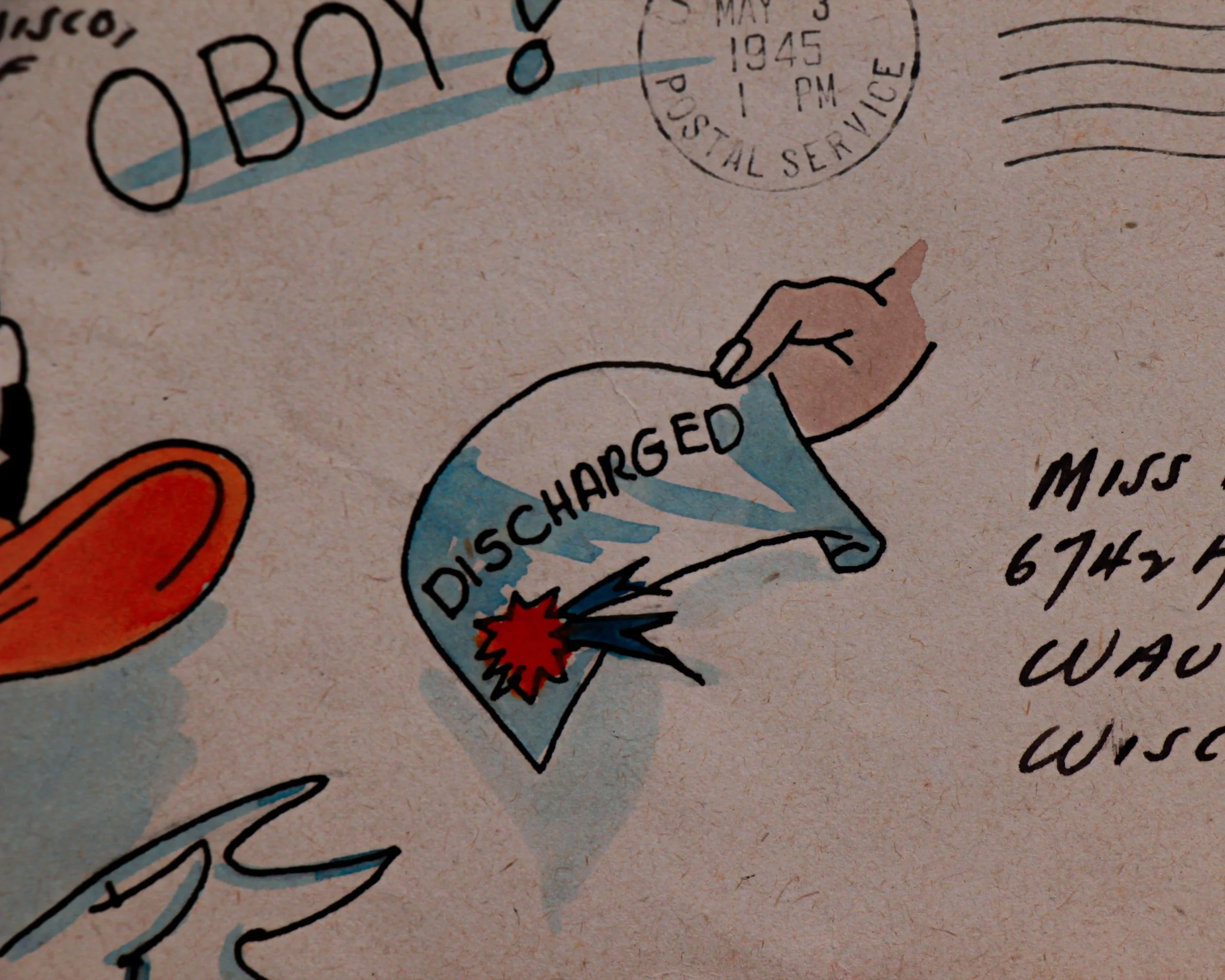
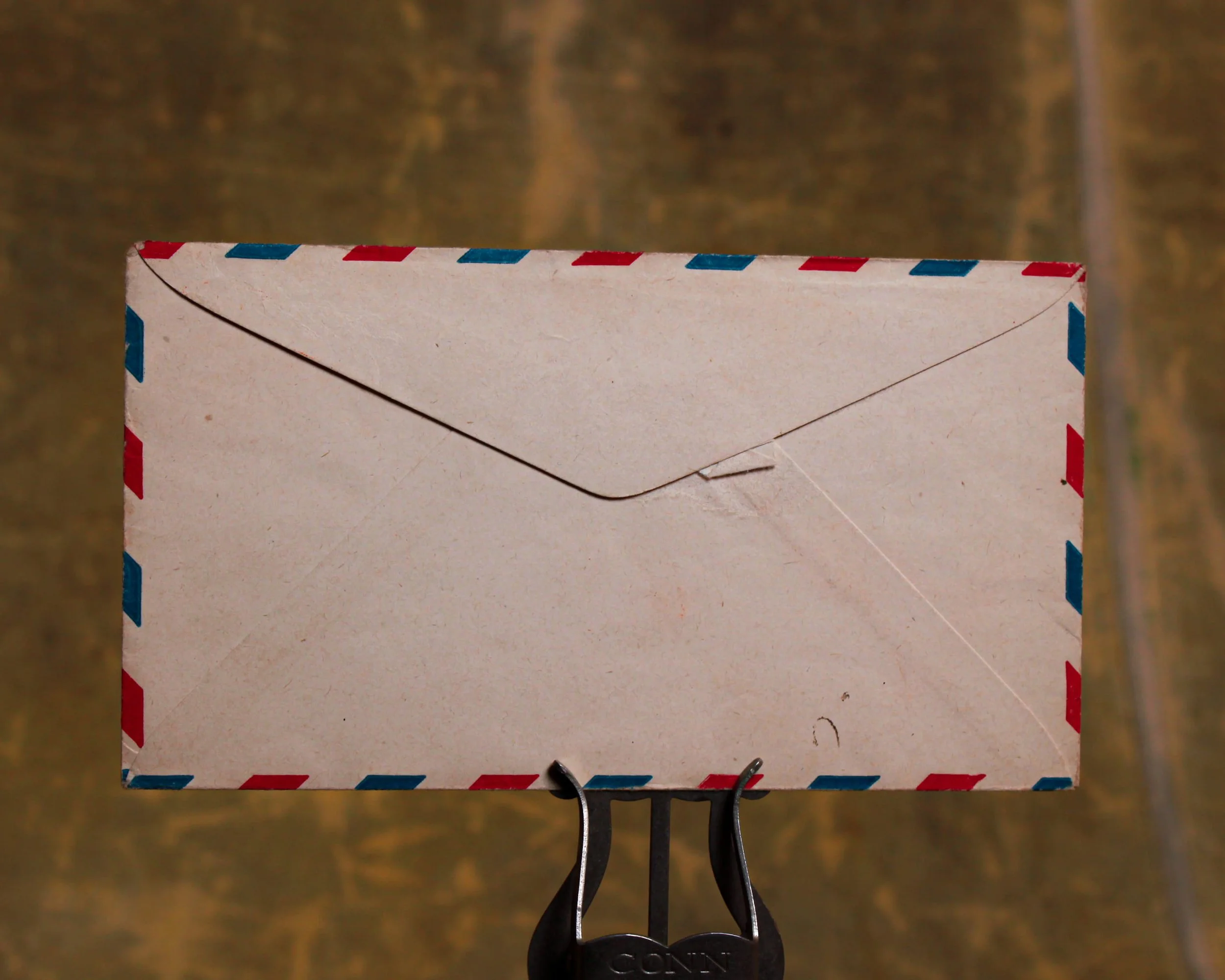
A wonderfully human piece of wartime correspondence, almost certainly sent by a serviceman eager to deliver the best possible message in the simplest way. Scrawled across the face in confident, celebratory lettering is a single word: “OBOY!” Underlined for emphasis, like he couldn’t quite contain himself. Below, Donald Duck is grinning and gesturing, holding a certificate boldly stamped “DISCHARGED.”
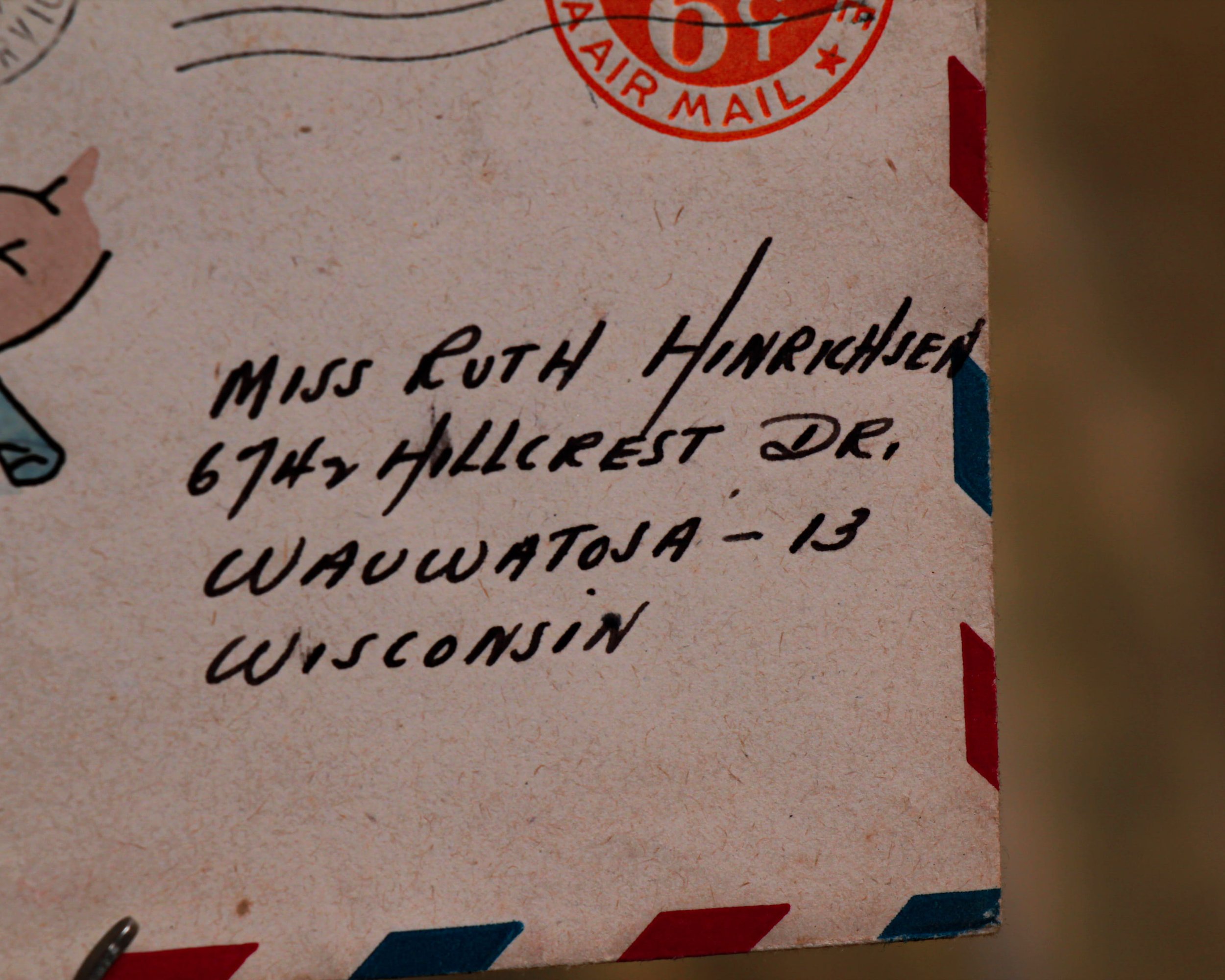
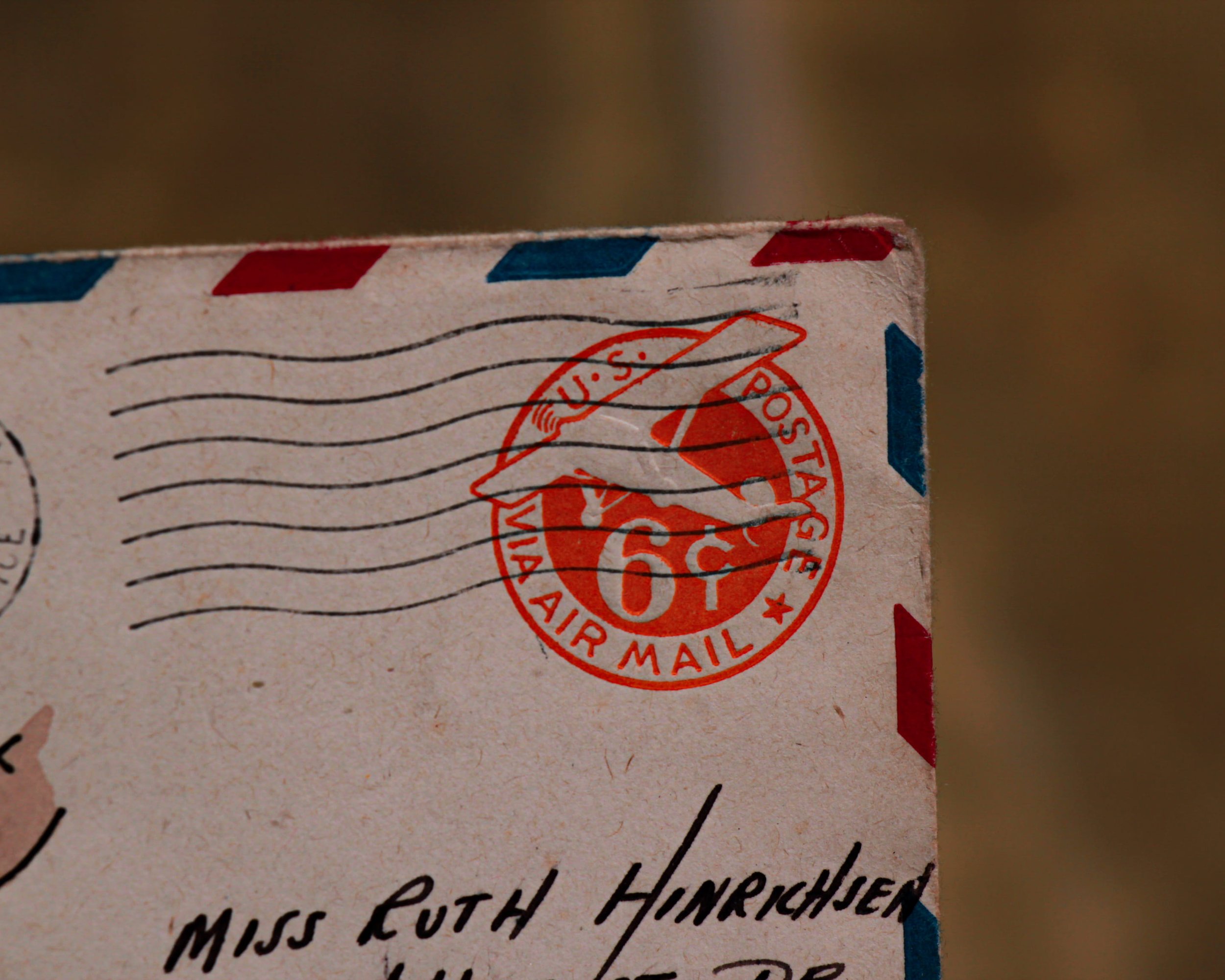
Postmarked May 3, 1945, this airmail envelope lands right at the emotional edge of the war’s end. Addressed to a Miss Ruth Hinrichsen in Wauwatosa, Wisconsin, you can imagine it being written quickly, maybe in a barracks or a temporary office, the sender already halfway home in his mind.
Category History
WWII soldier-made artwork shows up in the margins—on helmets, footlockers, jackets, scrap paper, even the sides of vehicles. It wasn’t official, and it wasn’t precious. It was something to do, a way to pass time, claim a bit of space, or leave a mark in a place that rarely felt personal.
Materials were whatever was available: paint from the motor pool, pencil stubs, ink, scavenged brushes. The imagery ranged from unit insignia and hometown references to pin-ups, cartoons, and quick, dark humor that made sense in context. Some pieces were careful and detailed, others loose and immediate—done between tasks, in tents, or on the move.
What makes this work compelling is how direct it is. There’s no separation between maker and moment. You see personality, boredom, pride, fear—sometimes all in the same piece. Names, dates, inside jokes—small anchors in an unstable environment.
On equipment, the artwork often became part of the object’s identity. A painted nose on a plane, a slogan on a jeep—these weren’t just decorations, they were signals of belonging.
Most of it wasn’t meant to last. That it survives at all gives it weight. Not polished, not staged—just fragments of presence, carried through time on whatever surface was close at hand.
A wonderfully human piece of wartime correspondence, almost certainly sent by a serviceman eager to deliver the best possible message in the simplest way. Scrawled across the face in confident, celebratory lettering is a single word: “OBOY!” Underlined for emphasis, like he couldn’t quite contain himself. Below, Donald Duck is grinning and gesturing, holding a certificate boldly stamped “DISCHARGED.”
Postmarked May 3, 1945, this airmail envelope lands right at the emotional edge of the war’s end. Addressed to a Miss Ruth Hinrichsen in Wauwatosa, Wisconsin, you can imagine it being written quickly, maybe in a barracks or a temporary office, the sender already halfway home in his mind.
Category History
WWII soldier-made artwork shows up in the margins—on helmets, footlockers, jackets, scrap paper, even the sides of vehicles. It wasn’t official, and it wasn’t precious. It was something to do, a way to pass time, claim a bit of space, or leave a mark in a place that rarely felt personal.
Materials were whatever was available: paint from the motor pool, pencil stubs, ink, scavenged brushes. The imagery ranged from unit insignia and hometown references to pin-ups, cartoons, and quick, dark humor that made sense in context. Some pieces were careful and detailed, others loose and immediate—done between tasks, in tents, or on the move.
What makes this work compelling is how direct it is. There’s no separation between maker and moment. You see personality, boredom, pride, fear—sometimes all in the same piece. Names, dates, inside jokes—small anchors in an unstable environment.
On equipment, the artwork often became part of the object’s identity. A painted nose on a plane, a slogan on a jeep—these weren’t just decorations, they were signals of belonging.
Most of it wasn’t meant to last. That it survives at all gives it weight. Not polished, not staged—just fragments of presence, carried through time on whatever surface was close at hand.