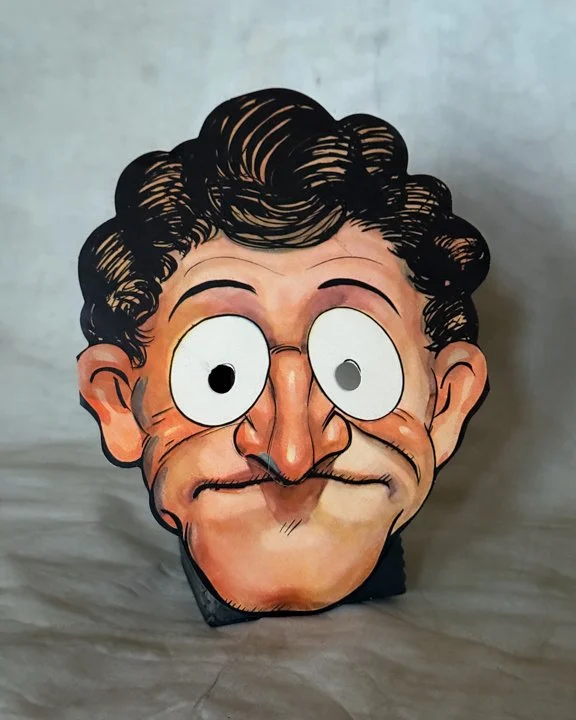
Meet Emmy Schmaltz — one of the more unforgettable faces of early American comic history, here immortalized in bright lithographed cardstock. This 1933 paper mask, issued by the Famous Artists Syndicate, brings to life a character straight out of the Moon Mullins universe — all exaggerated expression and old-school charm.
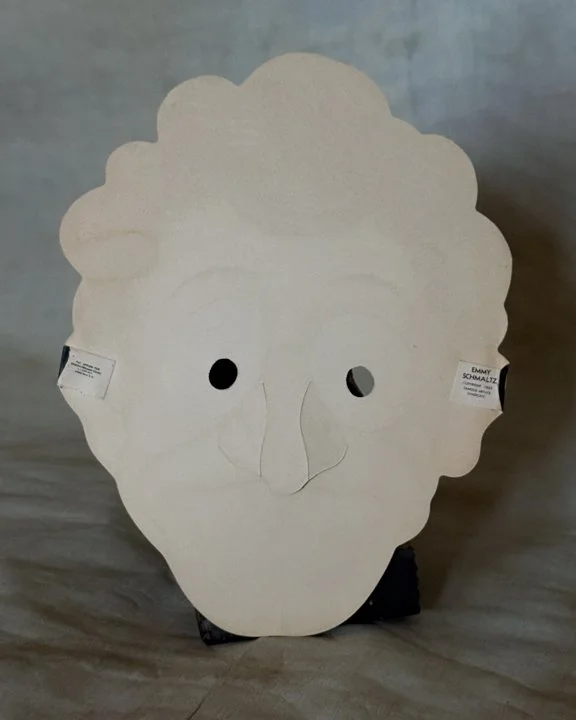
Handsome in its own offbeat way, this piece features Emmy’s signature curly hair, cartoonishly bulbous nose, and pursed smirk — the kind of face you could spot across a crowded speakeasy. With cutouts for the eyes and a fold-up nose detail, it was designed to be worn, laughed at, and likely discarded — which makes its survival nearly a century later a small miracle.
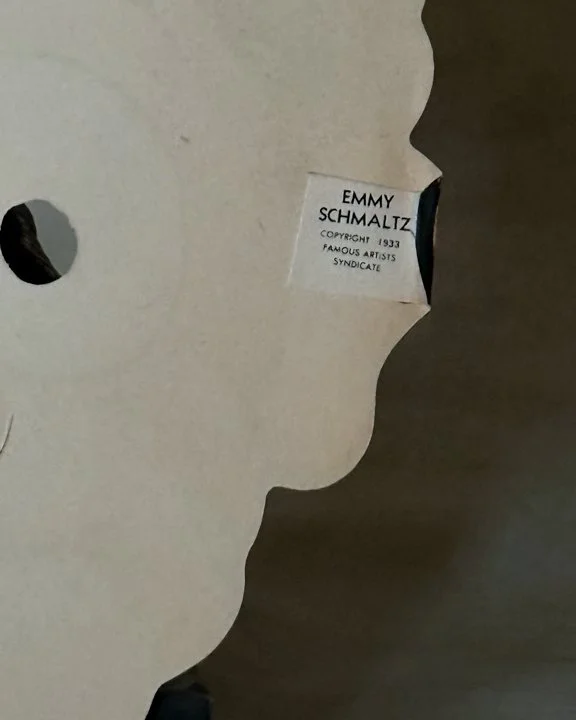
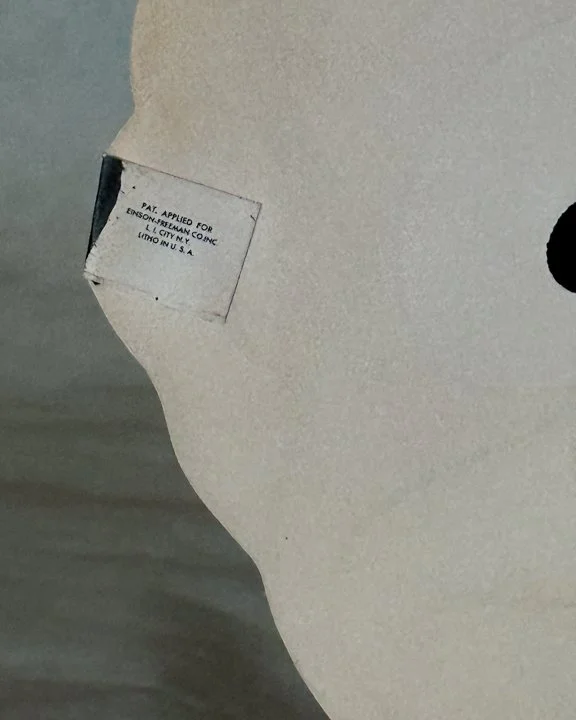
Printed in the U.S.A. by Ensign-Litho of New York, the mask bears its original copyright label and that classic 1930s palette of warm reds, ochres, and inky blacks.
Category History
Frank Willard’s Moon Mullins debuted in 1923 and quickly carved out its own lane in the crowded world of newspaper comics. Set in a scrappy, working-class neighborhood, the strip followed Moon, a perpetually broke, good-natured loafer, and a cast of characters who felt pulled straight from everyday life—boarding houses, back alleys, and all.
Willard had a sharp ear for dialogue and a loose, expressive drawing style that gave the strip its rhythm. The humor wasn’t polished or high-minded—it was grounded, a little rough, and often centered on small schemes, domestic friction, and the constant juggling of money and pride.
What made Moon Mullins stand out was its tone. It didn’t romanticize its world, but it didn’t judge it either. There’s a warmth to the characters, even when they’re at their most flawed.
At its peak, the strip ran in hundreds of papers and inspired merchandise and adaptations, but it’s the everyday texture that sticks. It reads like a snapshot of its time—unfiltered, a little crooked, and full of personality.
Meet Emmy Schmaltz — one of the more unforgettable faces of early American comic history, here immortalized in bright lithographed cardstock. This 1933 paper mask, issued by the Famous Artists Syndicate, brings to life a character straight out of the Moon Mullins universe — all exaggerated expression and old-school charm.
Handsome in its own offbeat way, this piece features Emmy’s signature curly hair, cartoonishly bulbous nose, and pursed smirk — the kind of face you could spot across a crowded speakeasy. With cutouts for the eyes and a fold-up nose detail, it was designed to be worn, laughed at, and likely discarded — which makes its survival nearly a century later a small miracle.
Printed in the U.S.A. by Ensign-Litho of New York, the mask bears its original copyright label and that classic 1930s palette of warm reds, ochres, and inky blacks.
Category History
Frank Willard’s Moon Mullins debuted in 1923 and quickly carved out its own lane in the crowded world of newspaper comics. Set in a scrappy, working-class neighborhood, the strip followed Moon, a perpetually broke, good-natured loafer, and a cast of characters who felt pulled straight from everyday life—boarding houses, back alleys, and all.
Willard had a sharp ear for dialogue and a loose, expressive drawing style that gave the strip its rhythm. The humor wasn’t polished or high-minded—it was grounded, a little rough, and often centered on small schemes, domestic friction, and the constant juggling of money and pride.
What made Moon Mullins stand out was its tone. It didn’t romanticize its world, but it didn’t judge it either. There’s a warmth to the characters, even when they’re at their most flawed.
At its peak, the strip ran in hundreds of papers and inspired merchandise and adaptations, but it’s the everyday texture that sticks. It reads like a snapshot of its time—unfiltered, a little crooked, and full of personality.