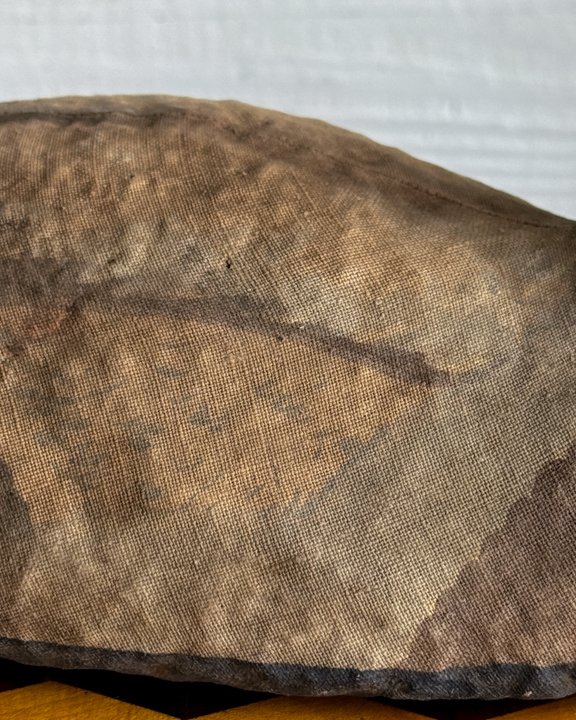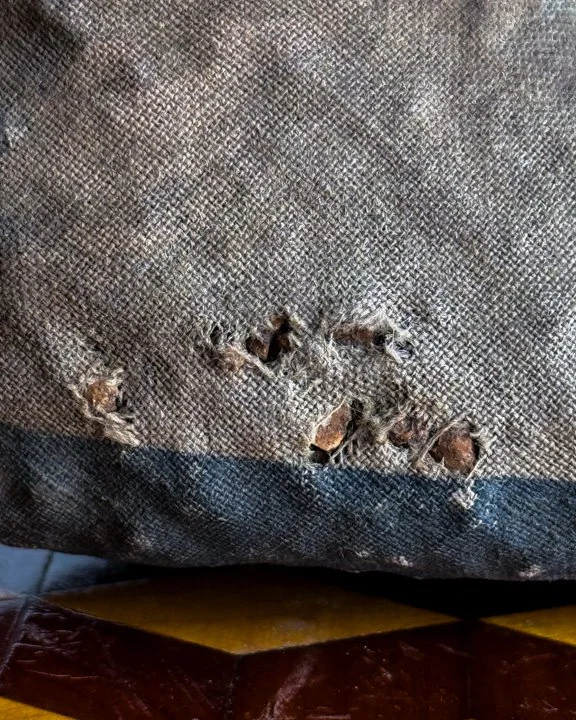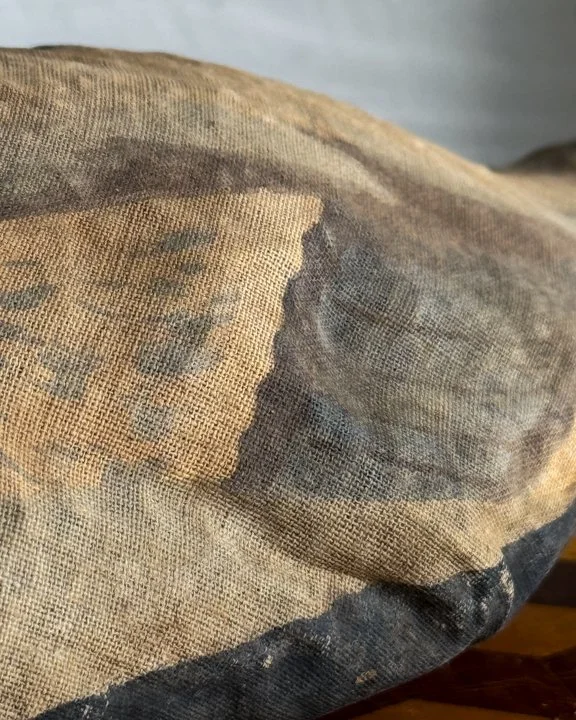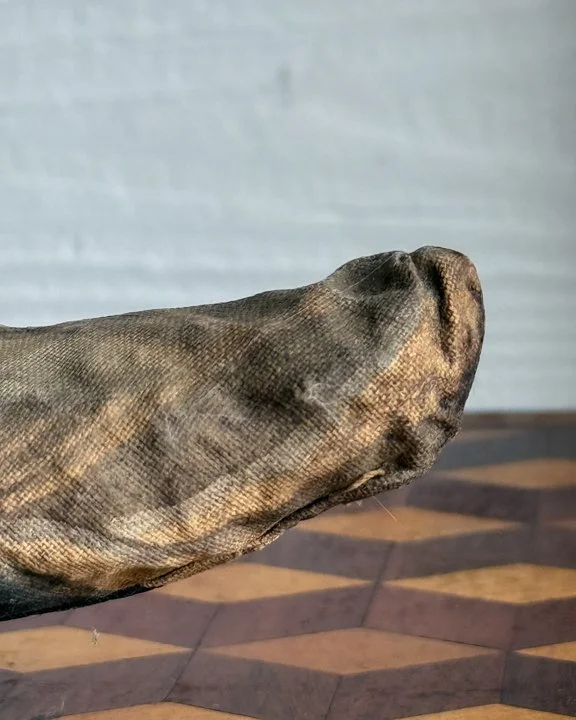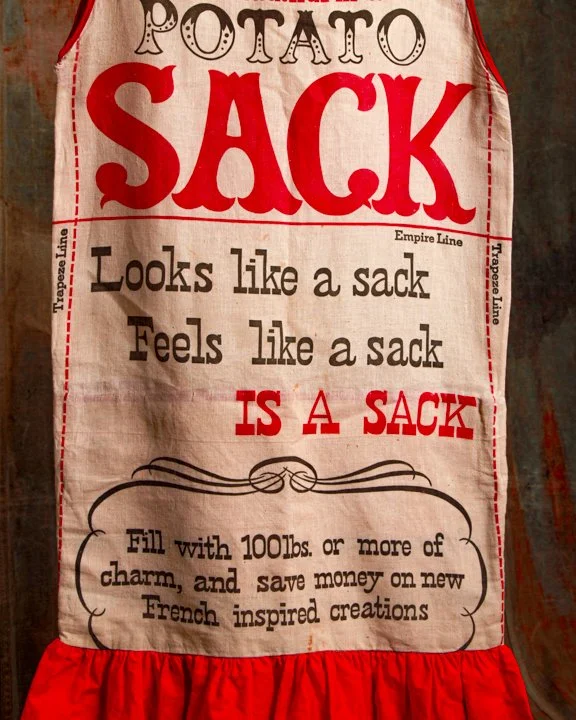
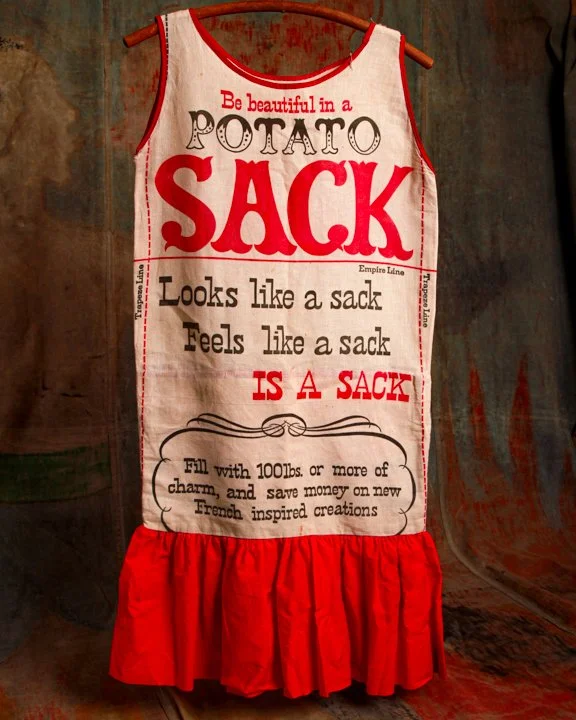
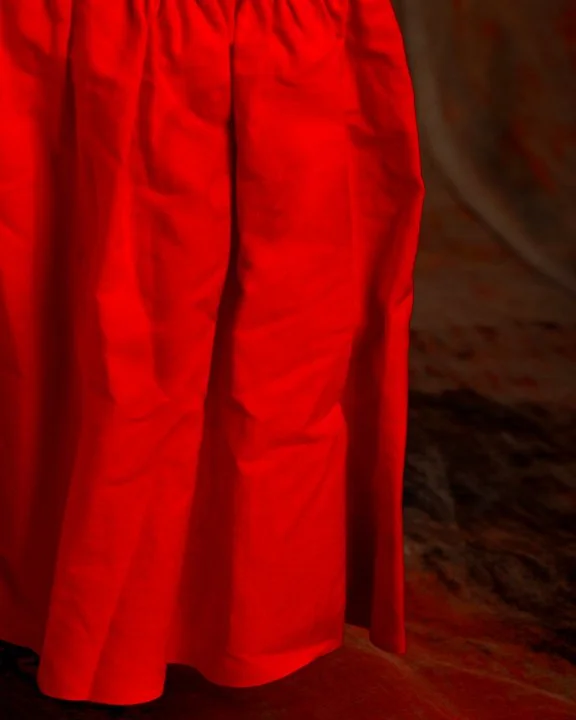
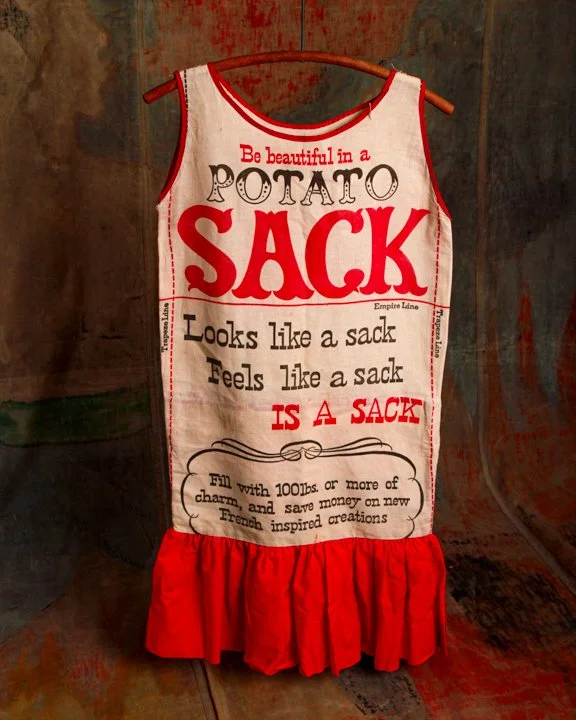
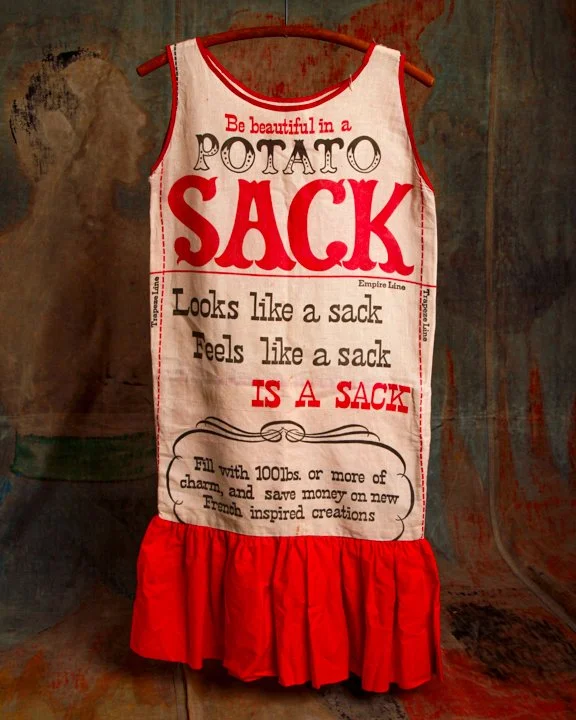

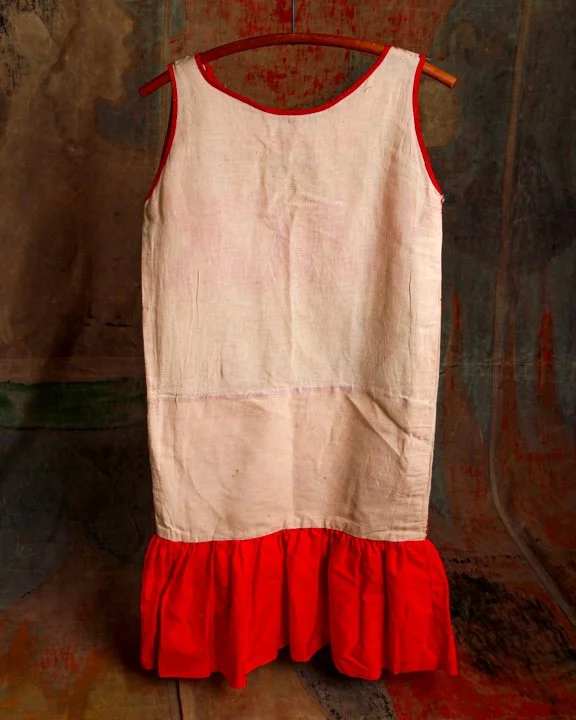
This brilliantly tongue-in-cheek potato sack dress reads like a comedy sketch and wears like a dare. Hand-sewn from actual sack cloth with bold red graphics and a ruffled hem, it boasts slogans like “Be beautiful in a POTATO SACK” and “Looks like a sack. Feels like a sack. IS A SACK.” It even suggests you “fill with 100 lbs. or more of charm,” which feels like both a challenge and a compliment.
Category History
Mid-century dresses made from potato sacks are one of those moments where necessity quietly turns into style. During the 1930s and into the 1940s, when resources were tight and fabric could be scarce or expensive, families—especially in rural areas—looked at what they already had. Flour and feed sacks, often made from sturdy cotton, became an obvious answer.
Manufacturers caught on quickly. What started as plain utility sacks evolved into printed ones—florals, checks, small repeating patterns—knowing they’d likely be repurposed into clothing. Labels were sometimes designed to wash out easily, or printed in less conspicuous areas, a small nod to the second life of the fabric.
The dresses themselves were practical: simple cuts, gathered waists, short sleeves. But within that simplicity, there’s a lot of ingenuity. Matching patterns across seams, making the most of limited yardage, turning something utilitarian into something wearable—and often quite charming.
What makes them compelling now is the mix of resourcefulness and quiet design awareness. They weren’t made as statements, but they carry one anyway. You can see the hand of the maker in every decision.
They’re less about scarcity and more about adaptation—proof that good design doesn’t always start with ideal materials, just with what’s available and a bit of intention. And in many cases, these garments were worn proudly, not hidden, becoming everyday expressions of resilience and creativity.
This brilliantly tongue-in-cheek potato sack dress reads like a comedy sketch and wears like a dare. Hand-sewn from actual sack cloth with bold red graphics and a ruffled hem, it boasts slogans like “Be beautiful in a POTATO SACK” and “Looks like a sack. Feels like a sack. IS A SACK.” It even suggests you “fill with 100 lbs. or more of charm,” which feels like both a challenge and a compliment.
Category History
Mid-century dresses made from potato sacks are one of those moments where necessity quietly turns into style. During the 1930s and into the 1940s, when resources were tight and fabric could be scarce or expensive, families—especially in rural areas—looked at what they already had. Flour and feed sacks, often made from sturdy cotton, became an obvious answer.
Manufacturers caught on quickly. What started as plain utility sacks evolved into printed ones—florals, checks, small repeating patterns—knowing they’d likely be repurposed into clothing. Labels were sometimes designed to wash out easily, or printed in less conspicuous areas, a small nod to the second life of the fabric.
The dresses themselves were practical: simple cuts, gathered waists, short sleeves. But within that simplicity, there’s a lot of ingenuity. Matching patterns across seams, making the most of limited yardage, turning something utilitarian into something wearable—and often quite charming.
What makes them compelling now is the mix of resourcefulness and quiet design awareness. They weren’t made as statements, but they carry one anyway. You can see the hand of the maker in every decision.
They’re less about scarcity and more about adaptation—proof that good design doesn’t always start with ideal materials, just with what’s available and a bit of intention. And in many cases, these garments were worn proudly, not hidden, becoming everyday expressions of resilience and creativity.