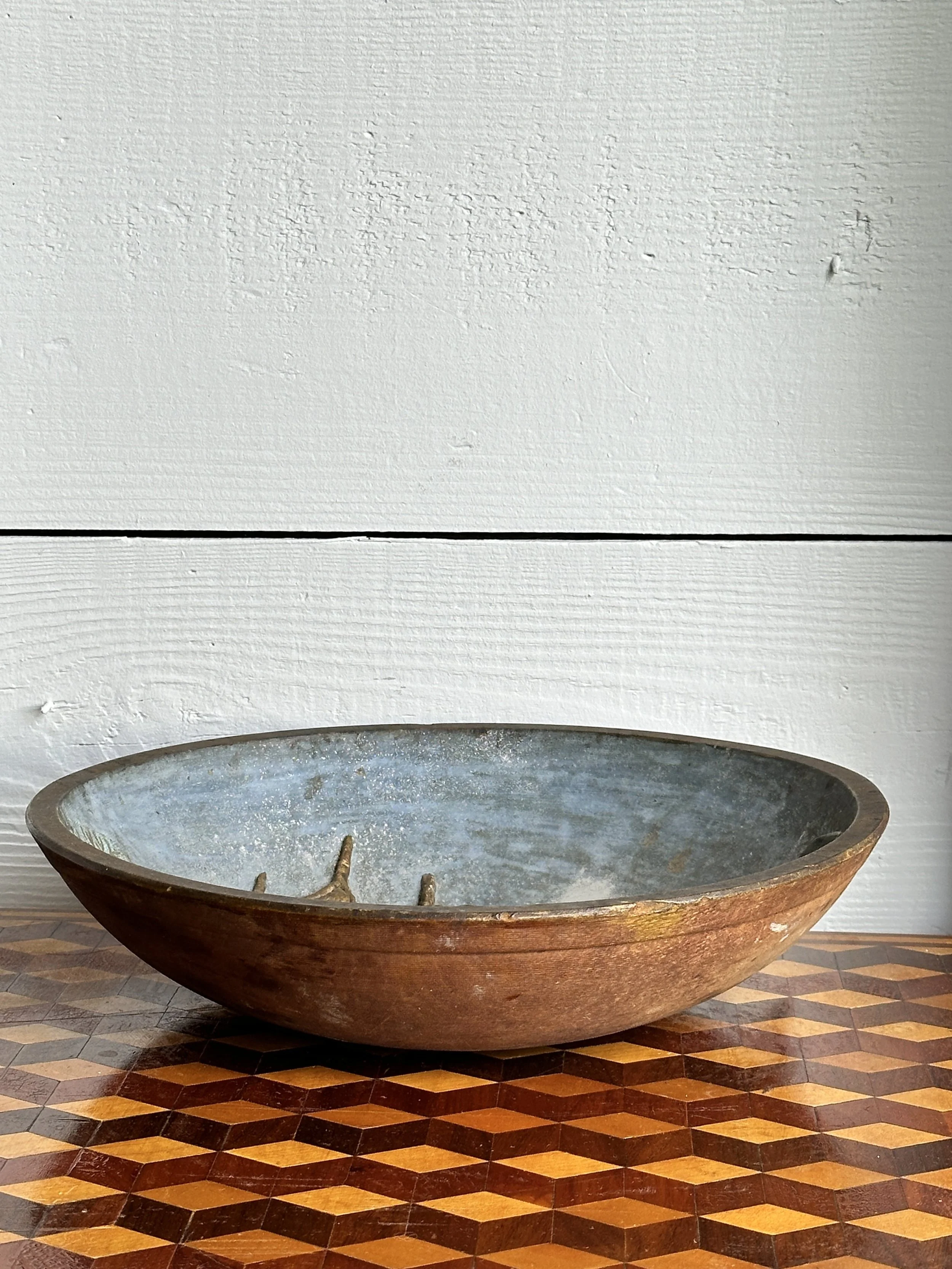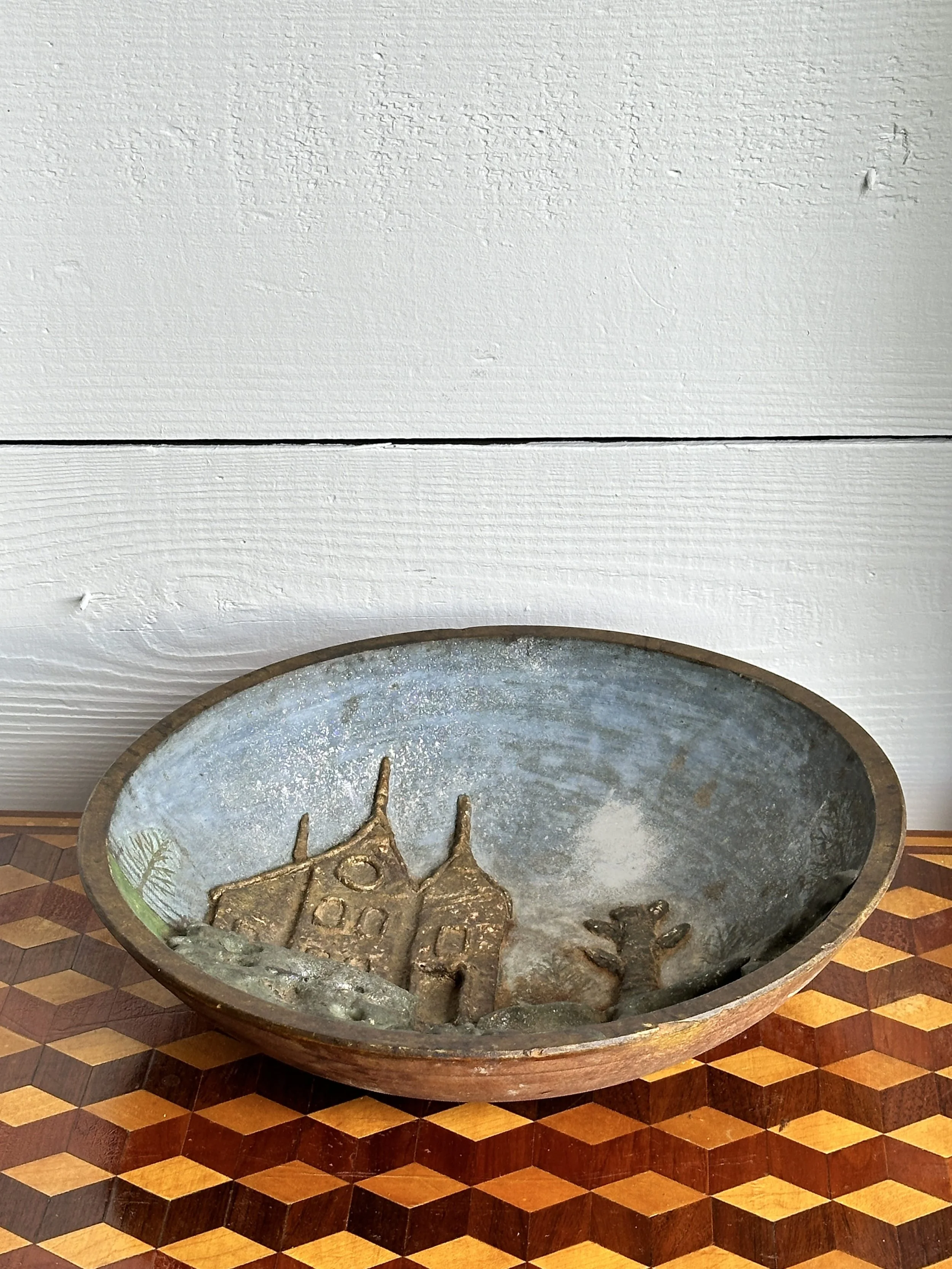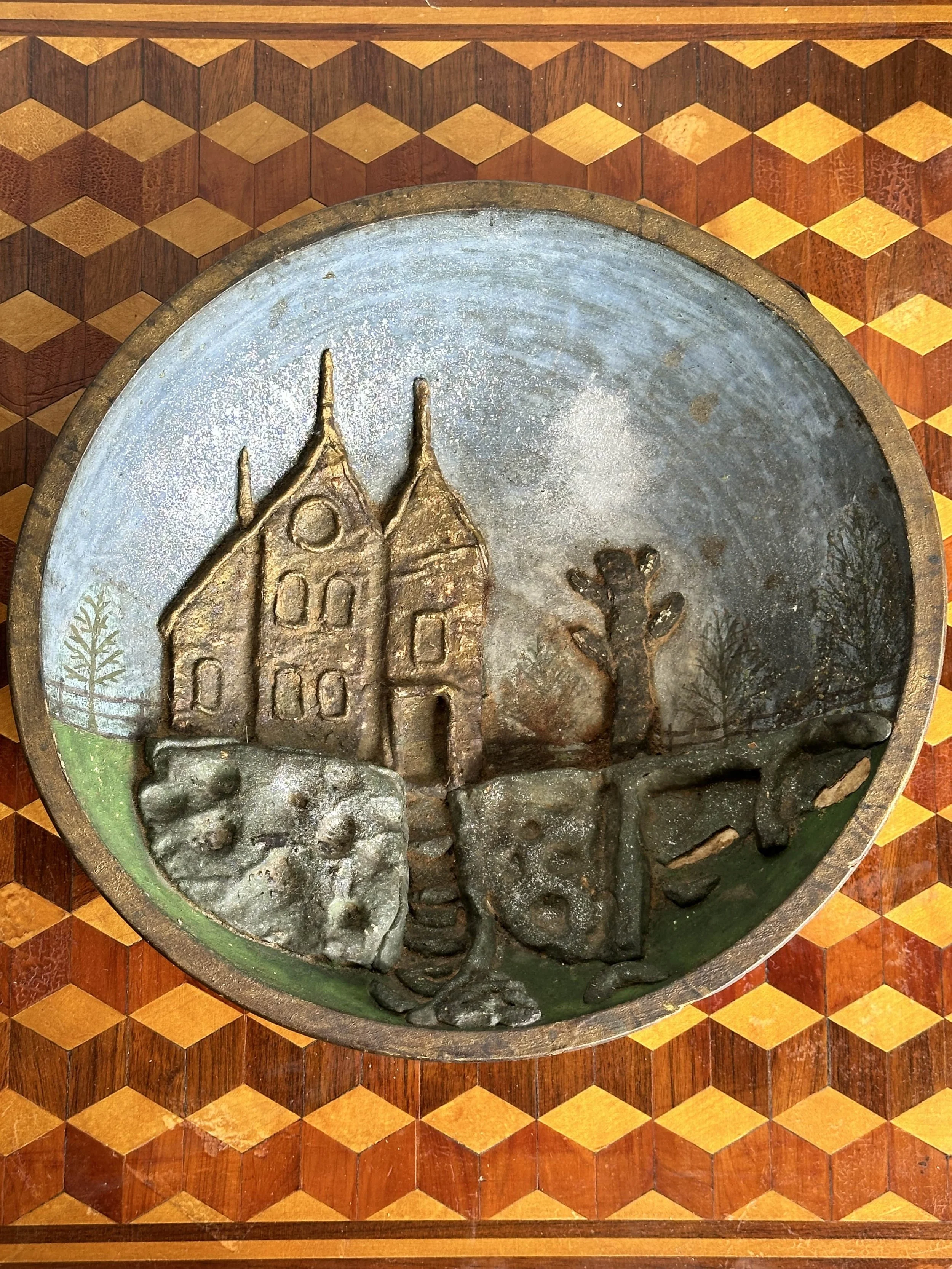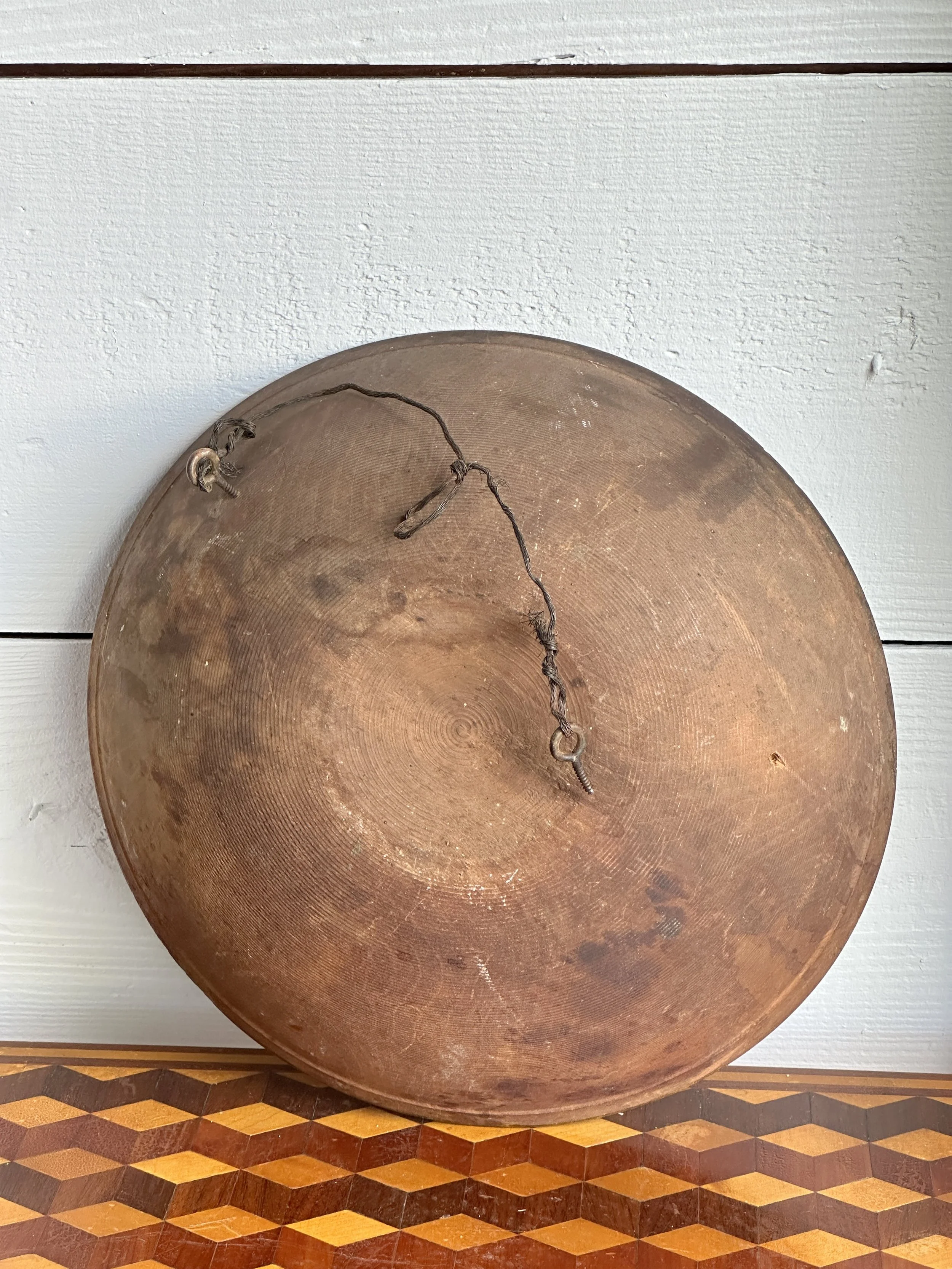
ITEM NOT AVAILABLE IMMEDIATELY—INQUIRE IF INTERESTED hello@heimweeantiques.com
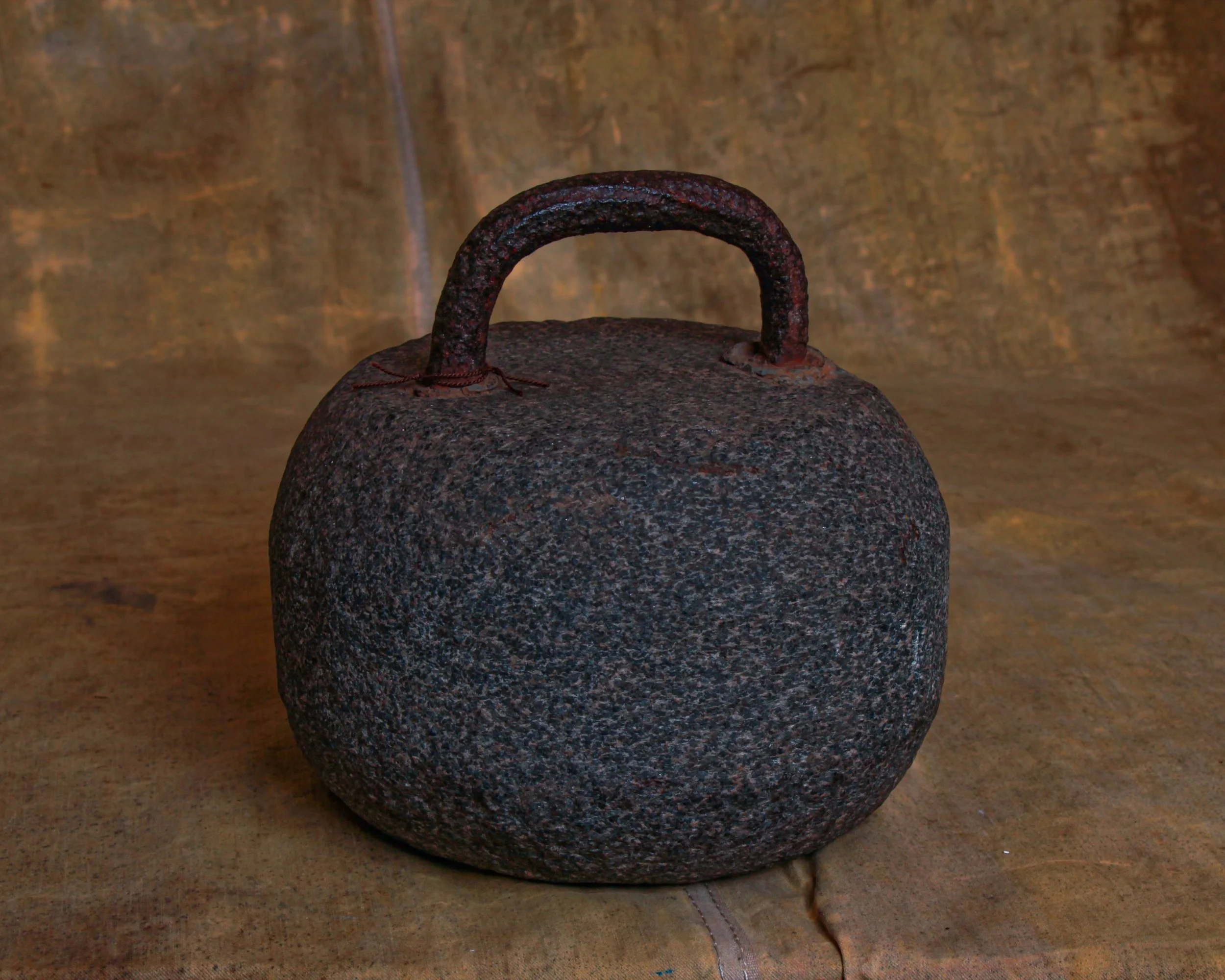
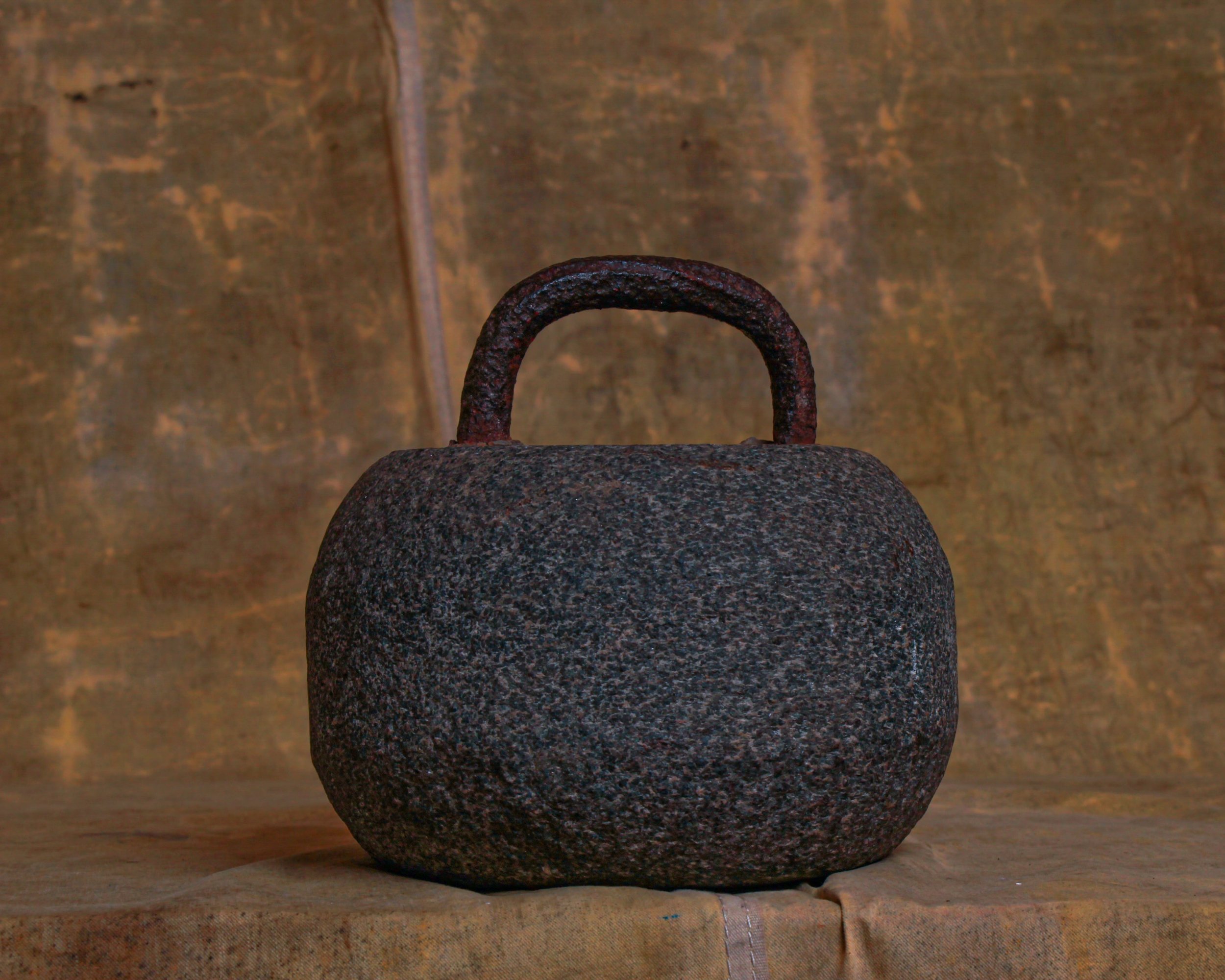
Step back in frozen time with this early 19th century granite single-soled curling stone from Scotland. Carved from solid granite, this gem is a captivating piece of history, transporting you to the frosty winter landscapes where curling enthusiasts once fiercely battled for victory.
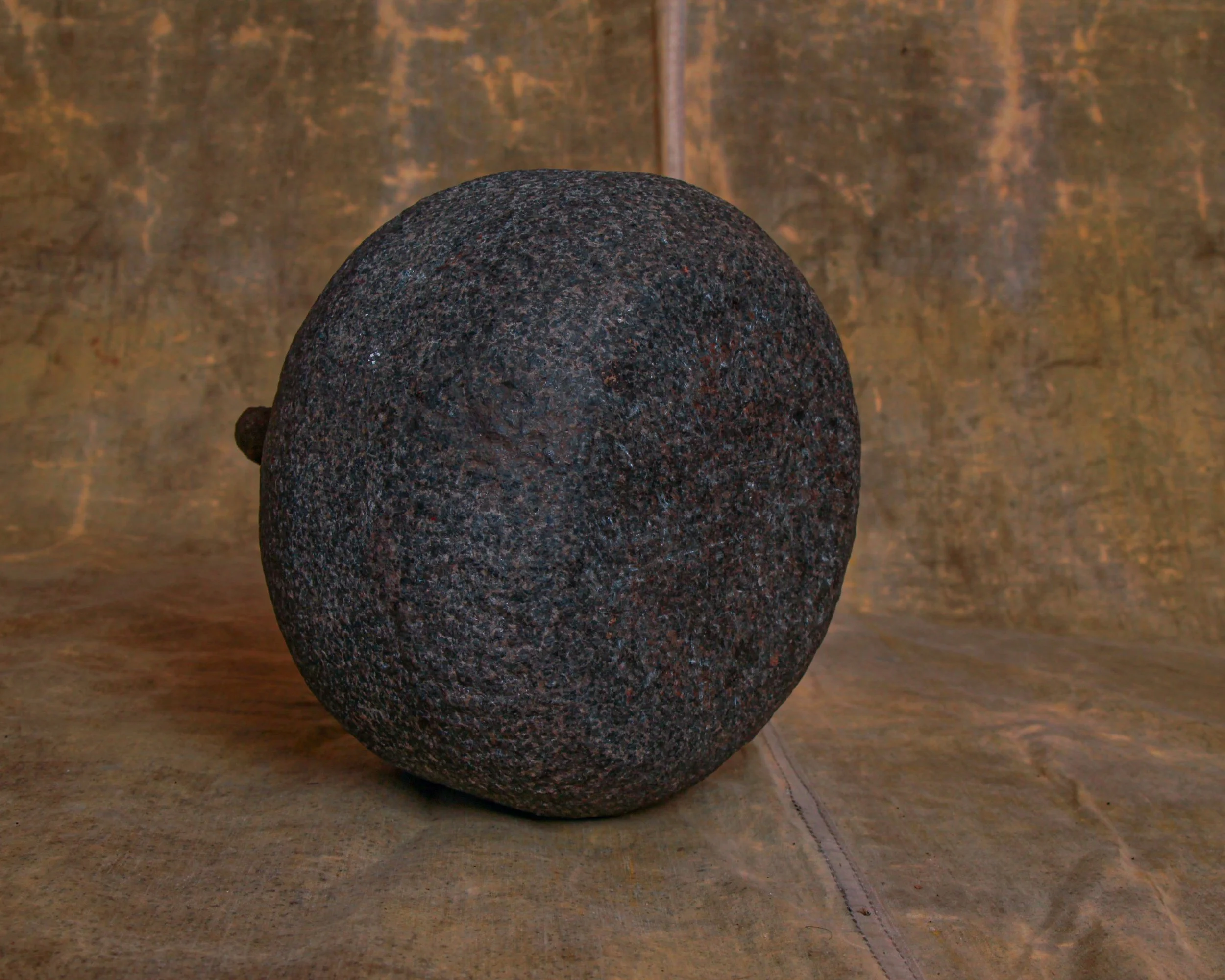
The weathered surface of this stone tells tales of countless matches played on icy ponds and frozen lakes, each scrape and scratch a testament to the dedication and passion of those who wielded it. Its single sole design reflects the simplicity and elegance of the era.
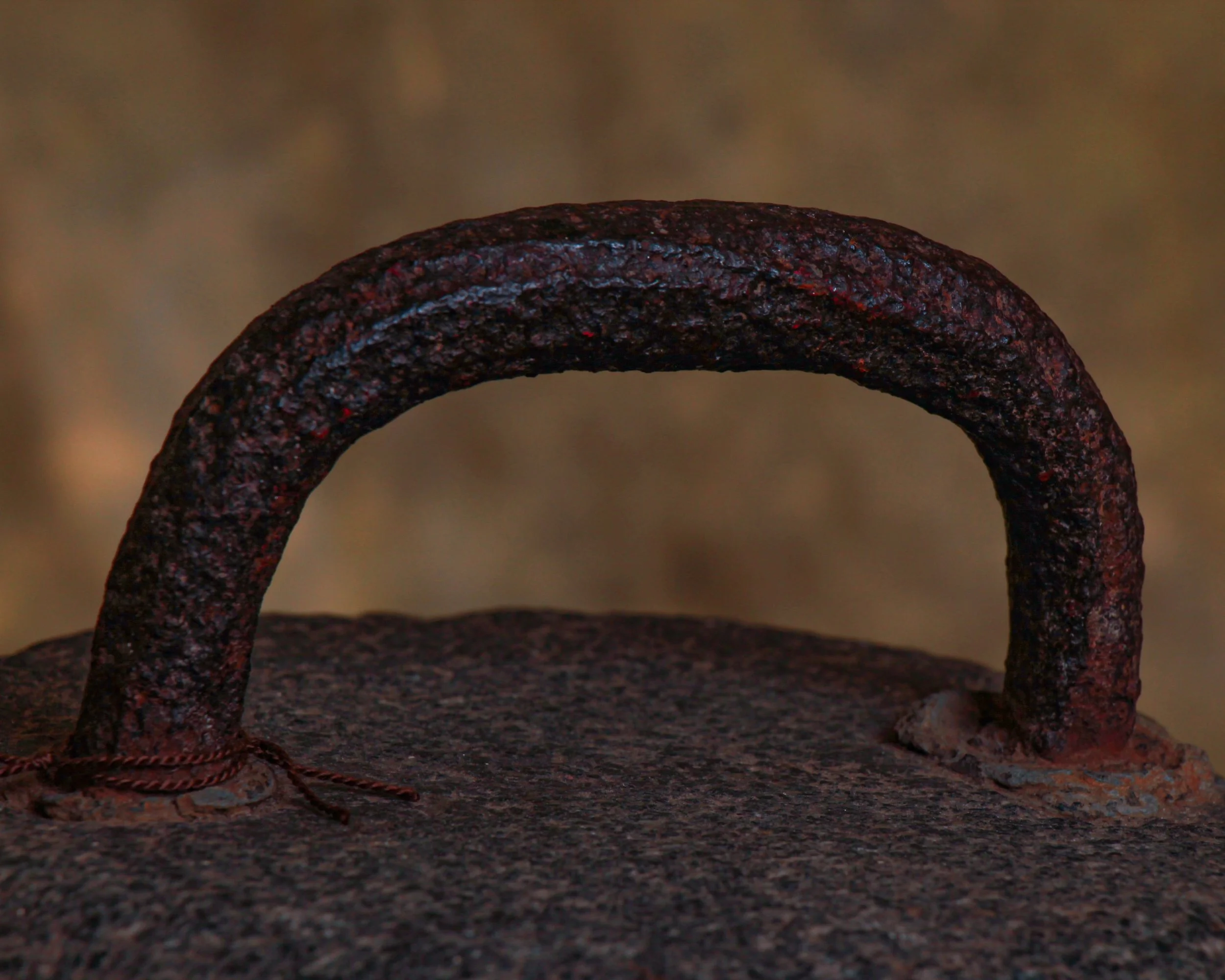
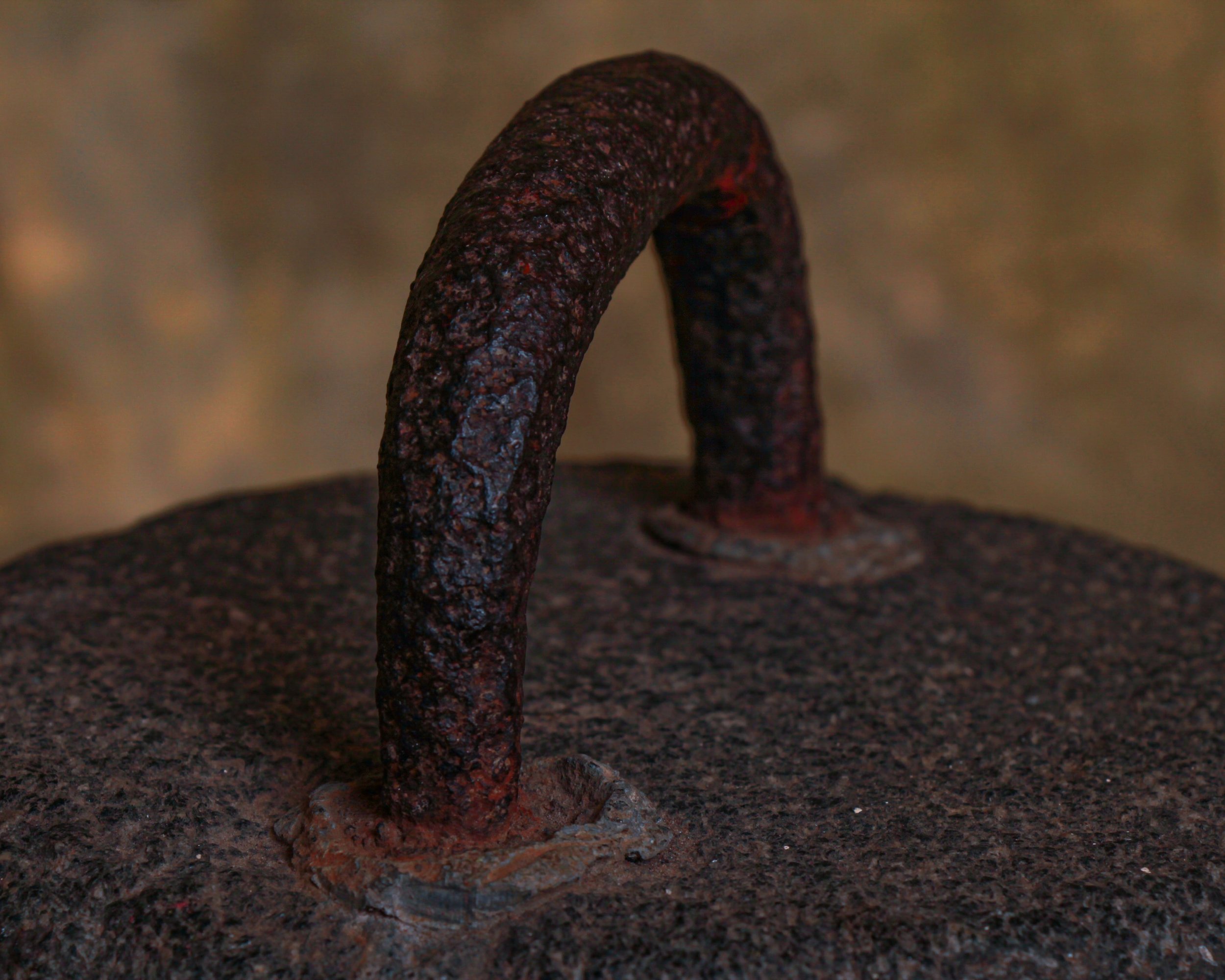
The forged iron metal hoop handle, worn with age, adds a touch of ruggedness to this otherwise refined piece. It speaks of the strength and resilience needed to conquer the icy terrain and master the art of curling. The handle’s weathered patina tells stories of countless hands that have grasped it, each leaving their mark and adding to the stone’s rich history.
Imagine the players who once held this stone, their breath visible in the brisk winter air as they strategized and prepared to release it down the icy track. Feel the weight of history in your hands as you imagine the anticipation and excitement that coursed through them, their hearts pounding with every slide.
Weighs 35 pounds and measures W 8” x D 8” x H 8”
Category History
19th century Scottish curling sits right at the intersection of sport, craft, and winter ritual. Played on frozen lochs and ponds, the game itself is simple—slide a heavy stone toward a target—but the equipment tells the deeper story. Early curling stones were carved from dense local granite, prized for its durability and smooth finish. Ailsa Craig, a small island off Scotland’s west coast, became the gold standard, its stone tough enough to withstand years of impact without chipping.
Each stone was hand-shaped, often with iron or wooden handles fixed into the top, giving every piece slight variations in weight and balance. They weren’t standardized in the modern sense, which meant players developed a feel for their own stone—how it traveled, how it “curled” across the ice.
What stands out is how tactile the whole thing is. These stones were meant to be gripped with cold hands, pushed with intent, and used again and again. Today, they carry that history in their worn surfaces—part sporting equipment, part beautifully simple object shaped by use, weather, and tradition.
ITEM NOT AVAILABLE IMMEDIATELY—INQUIRE IF INTERESTED hello@heimweeantiques.com
Step back in frozen time with this early 19th century granite single-soled curling stone from Scotland. Carved from solid granite, this gem is a captivating piece of history, transporting you to the frosty winter landscapes where curling enthusiasts once fiercely battled for victory.
The weathered surface of this stone tells tales of countless matches played on icy ponds and frozen lakes, each scrape and scratch a testament to the dedication and passion of those who wielded it. Its single sole design reflects the simplicity and elegance of the era.
The forged iron metal hoop handle, worn with age, adds a touch of ruggedness to this otherwise refined piece. It speaks of the strength and resilience needed to conquer the icy terrain and master the art of curling. The handle’s weathered patina tells stories of countless hands that have grasped it, each leaving their mark and adding to the stone’s rich history.
Imagine the players who once held this stone, their breath visible in the brisk winter air as they strategized and prepared to release it down the icy track. Feel the weight of history in your hands as you imagine the anticipation and excitement that coursed through them, their hearts pounding with every slide.
Weighs 35 pounds and measures W 8” x D 8” x H 8”
Category History
19th century Scottish curling sits right at the intersection of sport, craft, and winter ritual. Played on frozen lochs and ponds, the game itself is simple—slide a heavy stone toward a target—but the equipment tells the deeper story. Early curling stones were carved from dense local granite, prized for its durability and smooth finish. Ailsa Craig, a small island off Scotland’s west coast, became the gold standard, its stone tough enough to withstand years of impact without chipping.
Each stone was hand-shaped, often with iron or wooden handles fixed into the top, giving every piece slight variations in weight and balance. They weren’t standardized in the modern sense, which meant players developed a feel for their own stone—how it traveled, how it “curled” across the ice.
What stands out is how tactile the whole thing is. These stones were meant to be gripped with cold hands, pushed with intent, and used again and again. Today, they carry that history in their worn surfaces—part sporting equipment, part beautifully simple object shaped by use, weather, and tradition.