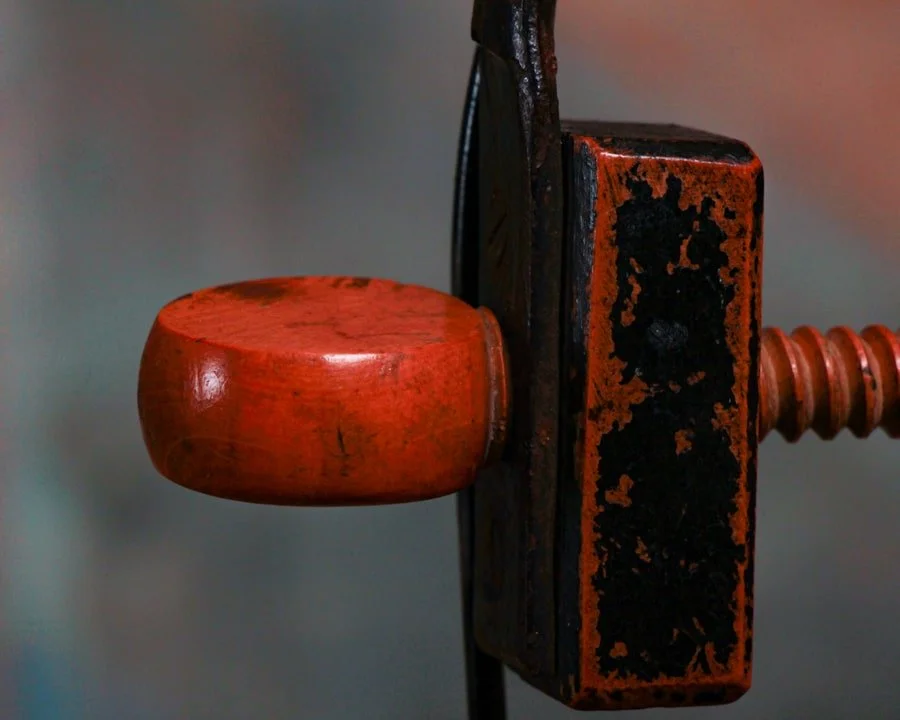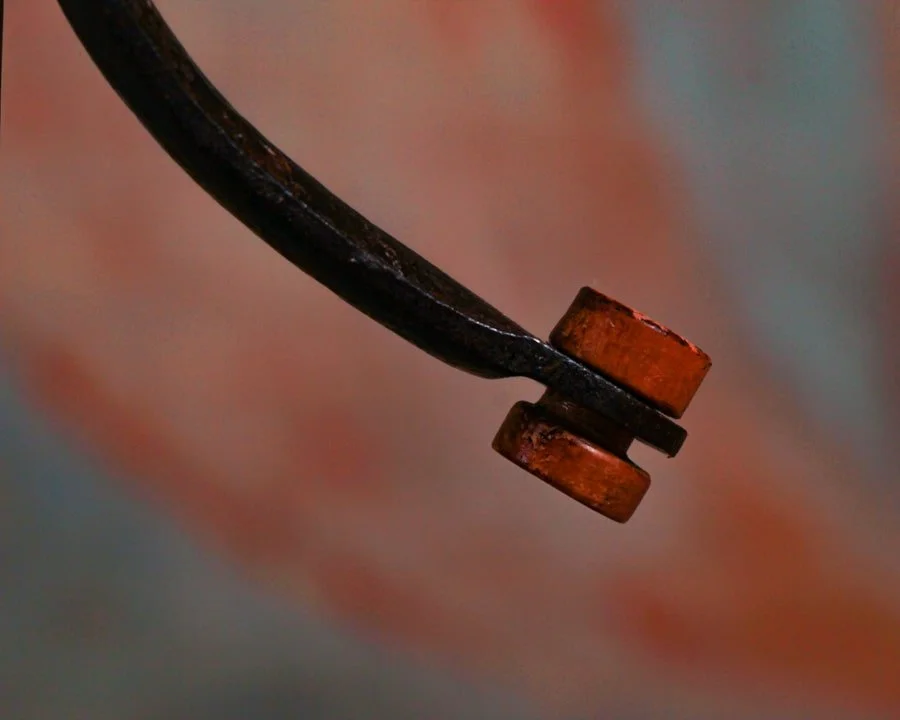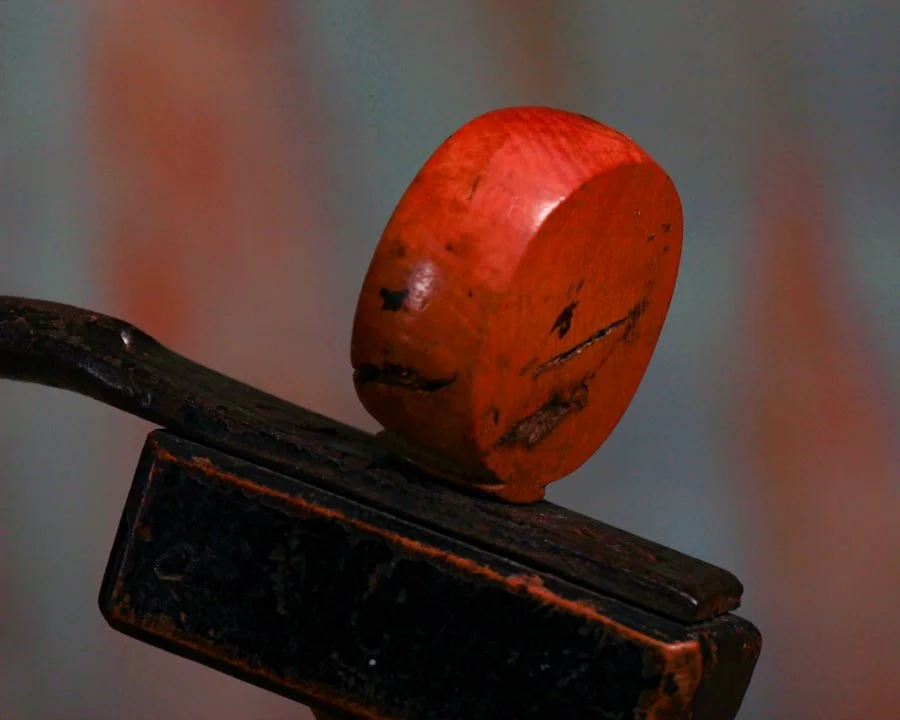
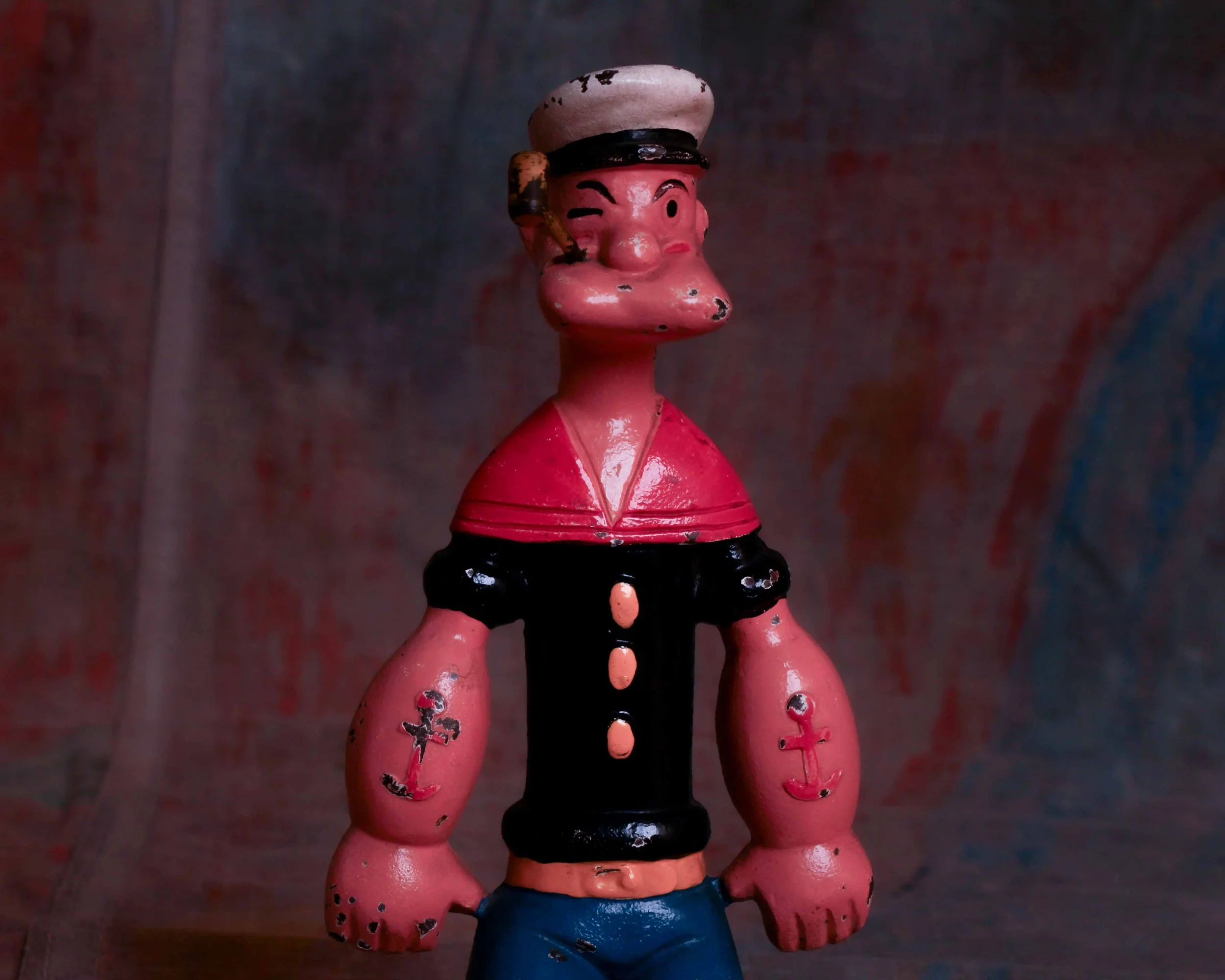
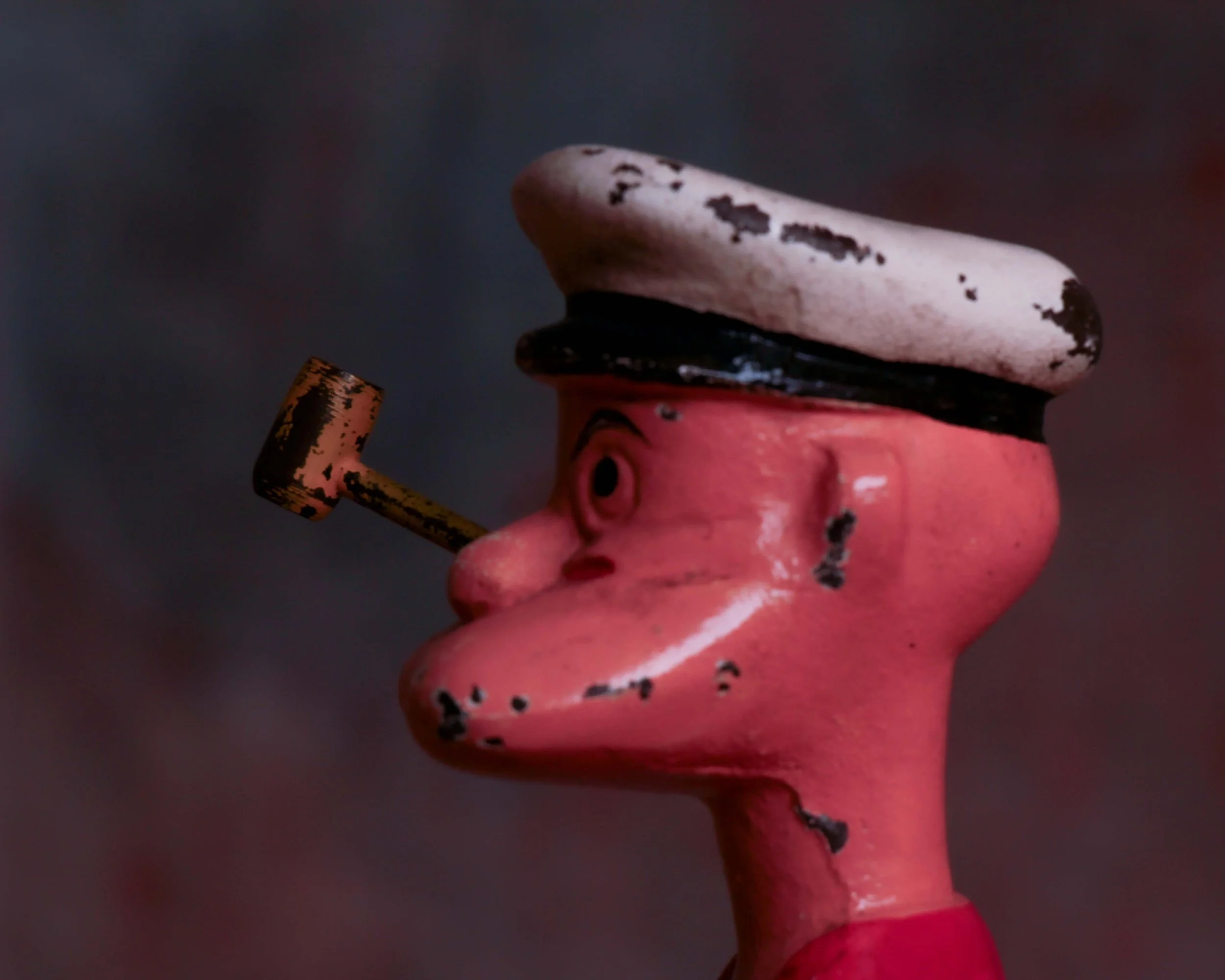
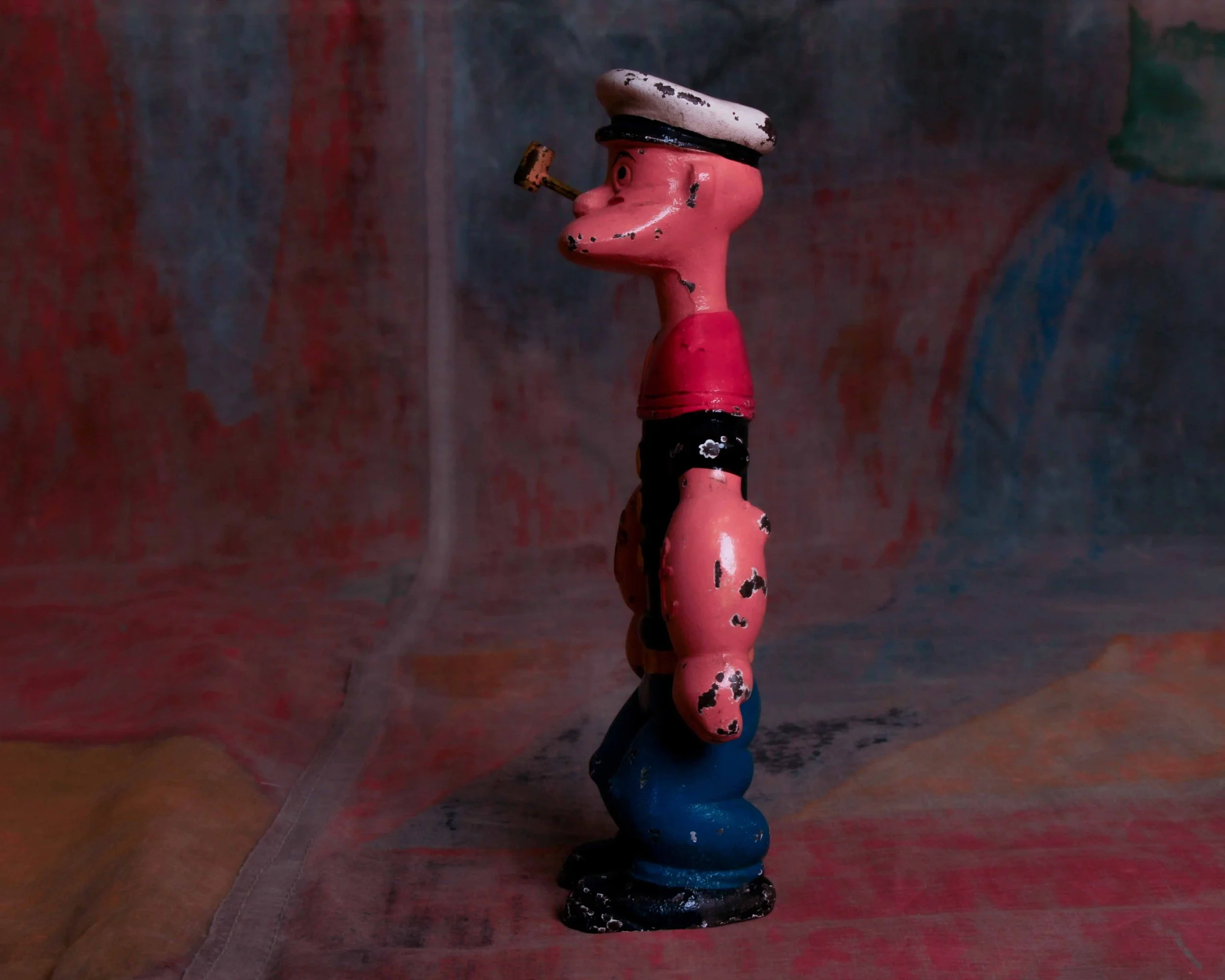
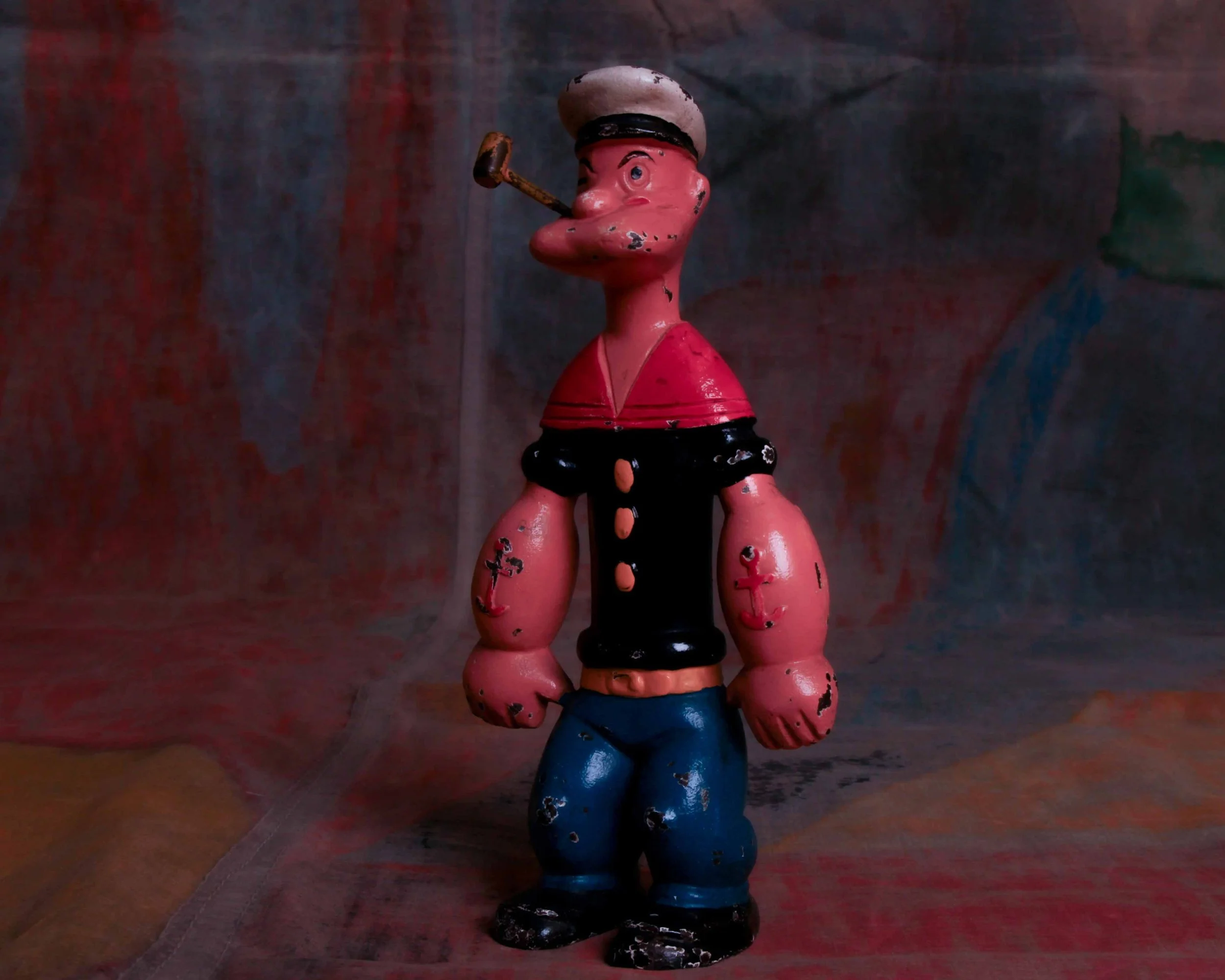
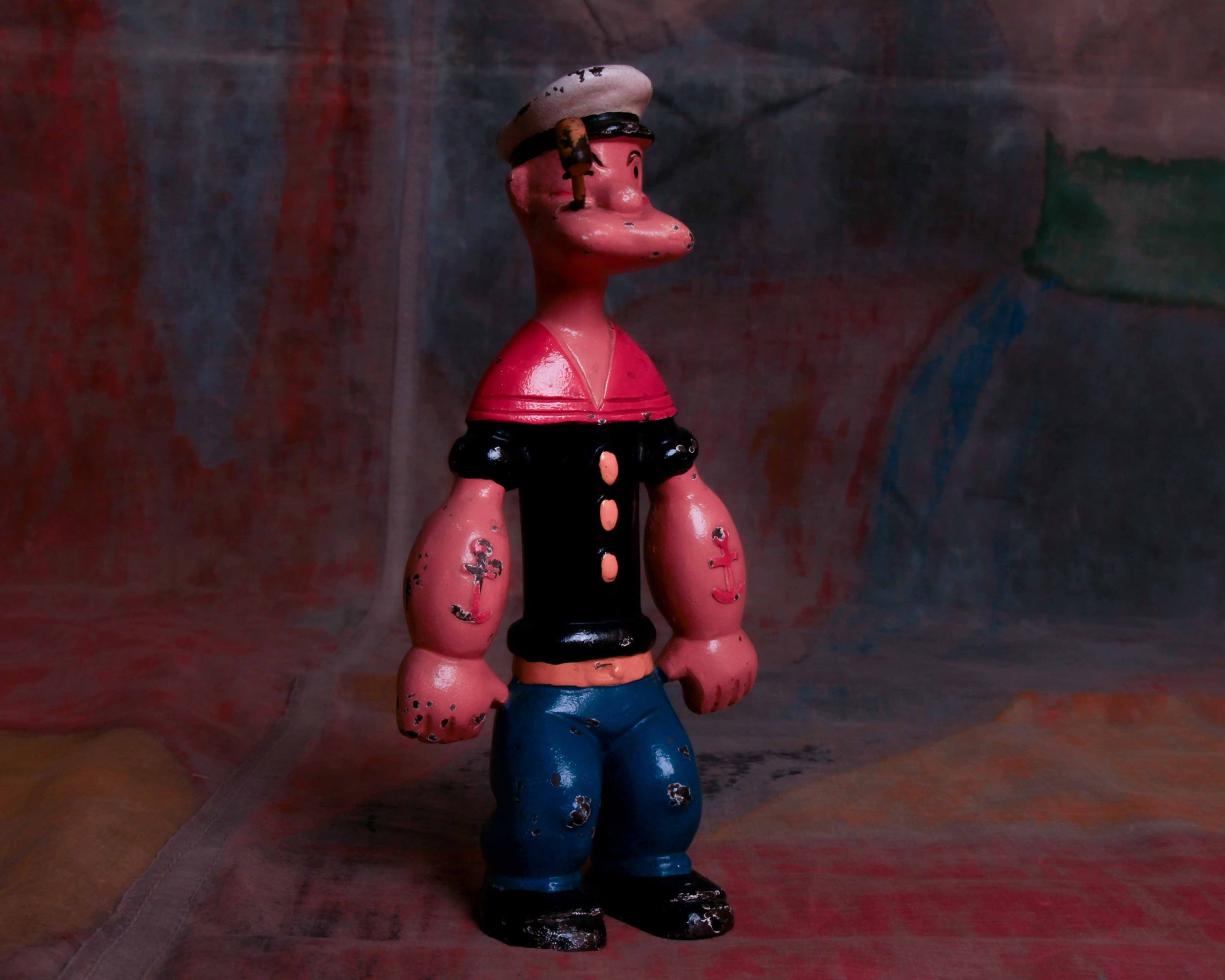
This cast iron doorstop by Hubley is one of the best examples known to exist.
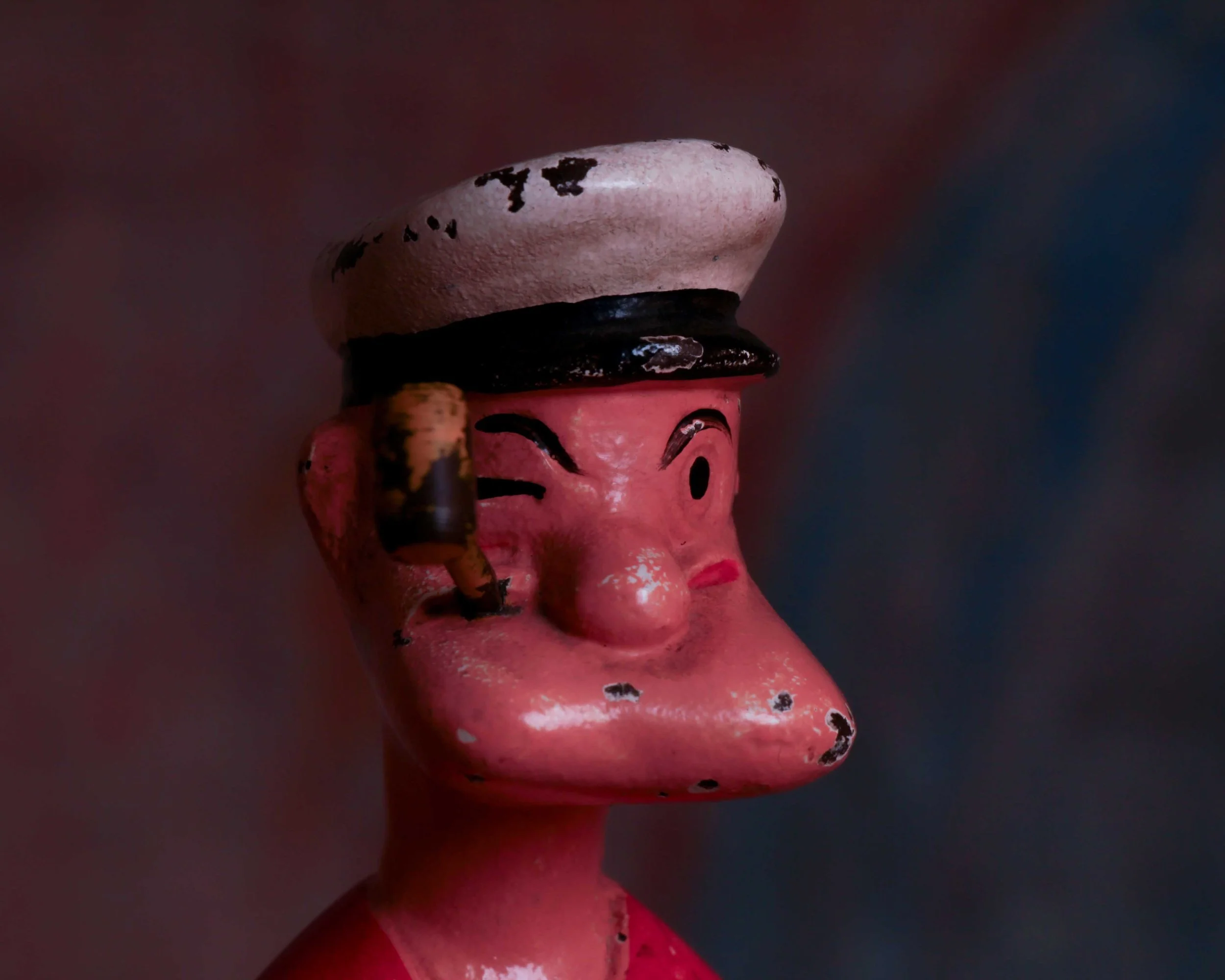
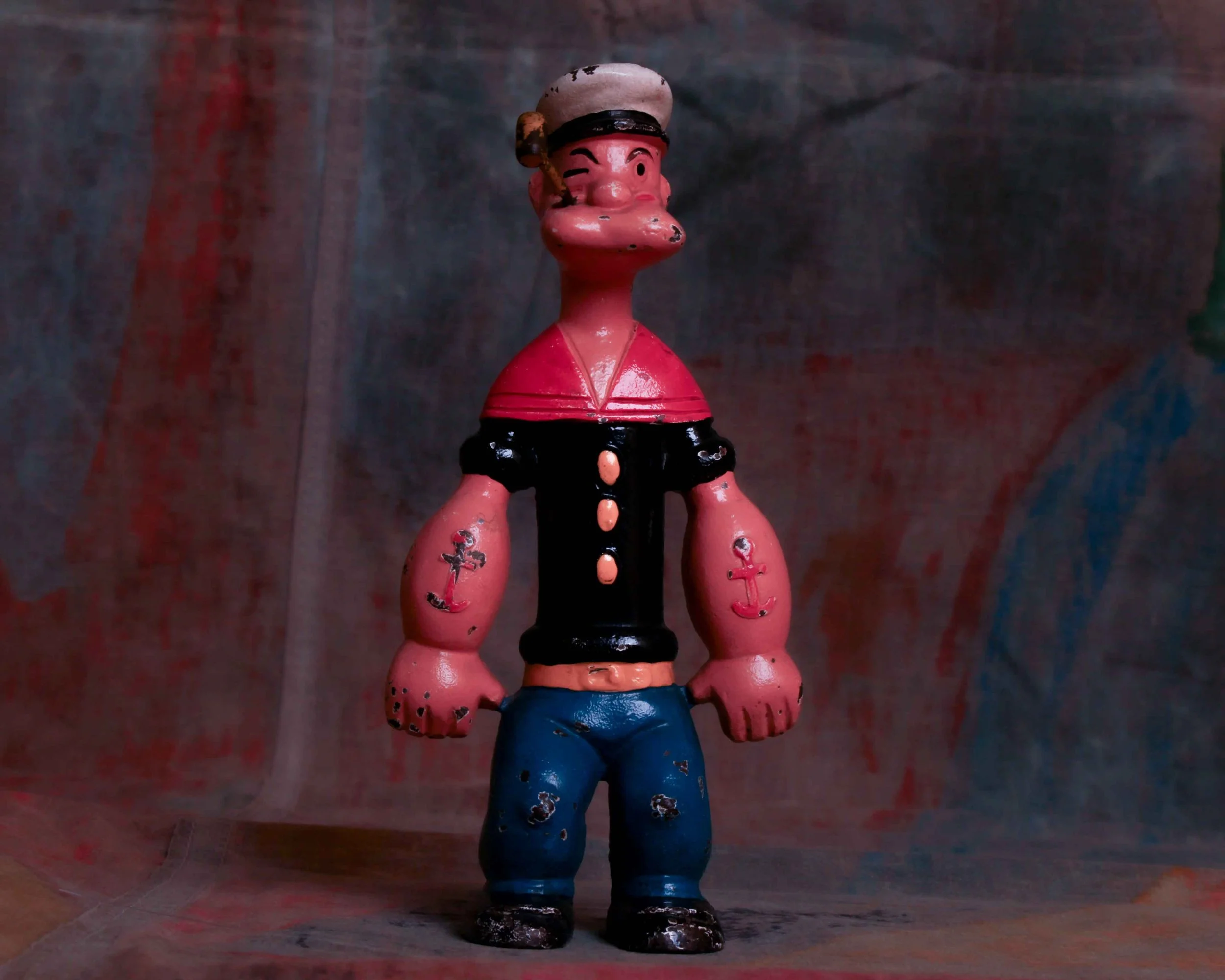
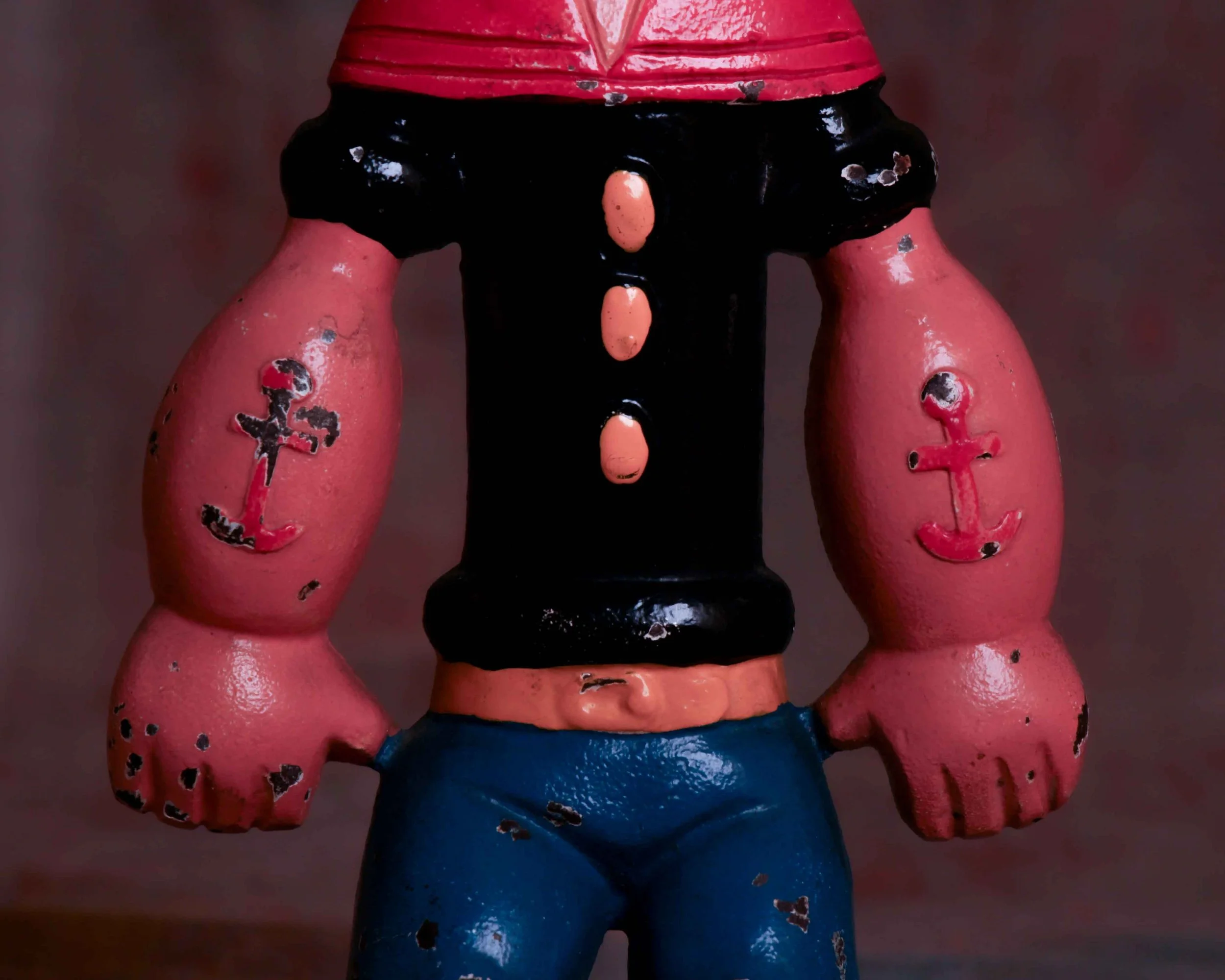
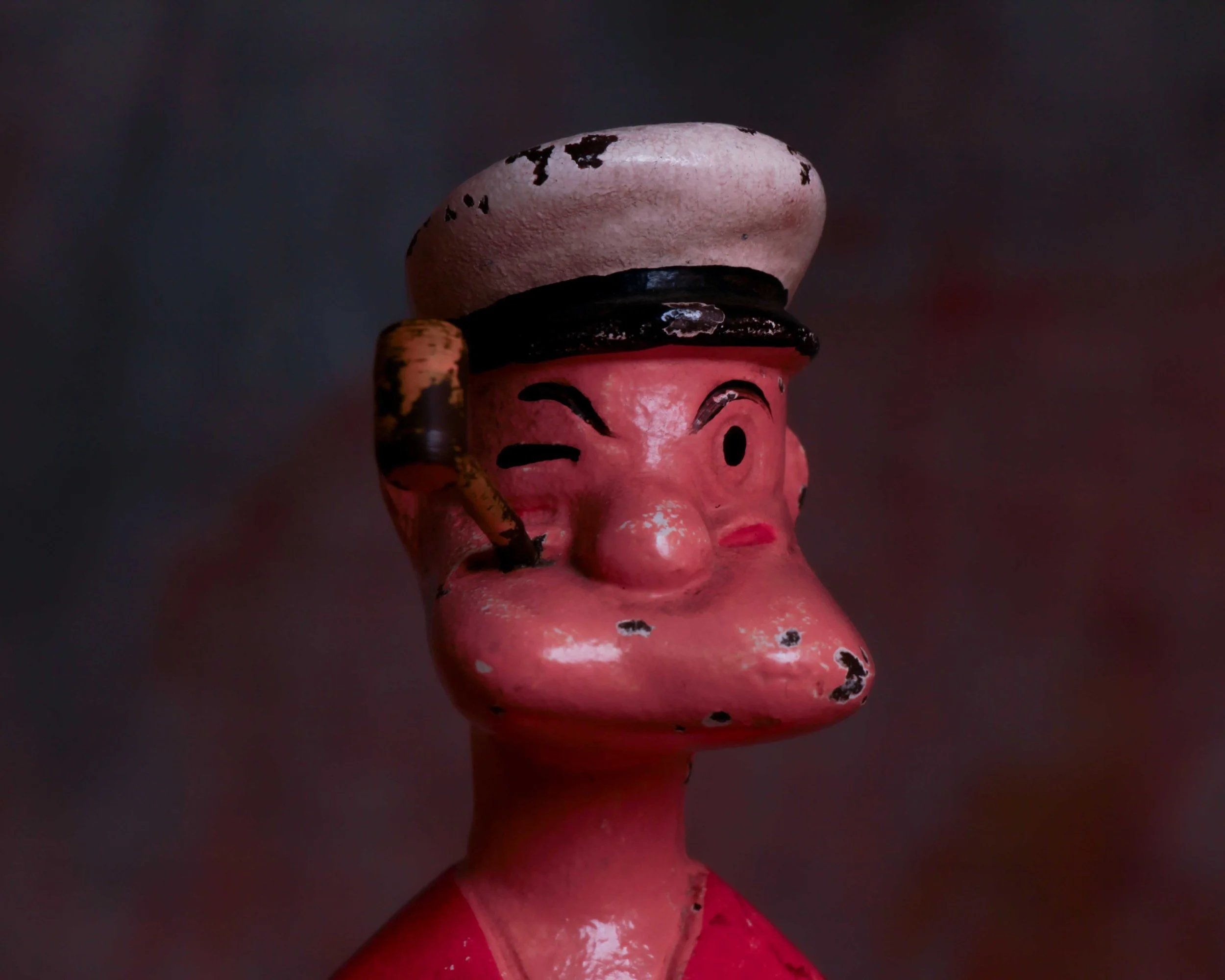
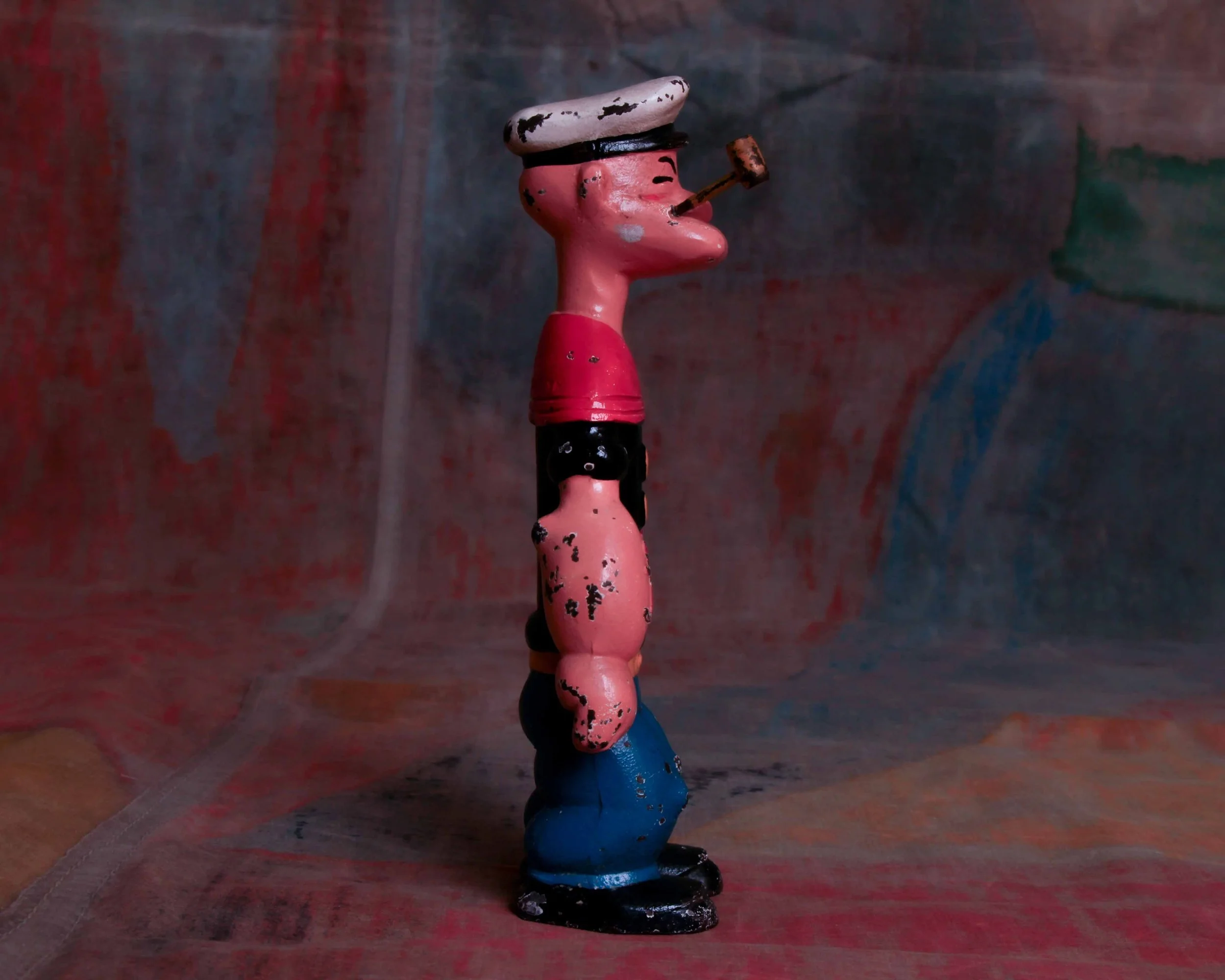
Depicting Popeye standing tall with fists clenched and pipe firmly planted, this example captures everything that made the character an instant icon. The proportions are pure Popeye: massive forearms, compact torso, planted stance, and that unmistakable squint. The original paint is still vibrant, with rich reds, deep black, bright blue trousers, and warm yellow accents that pop beautifully against the iron.
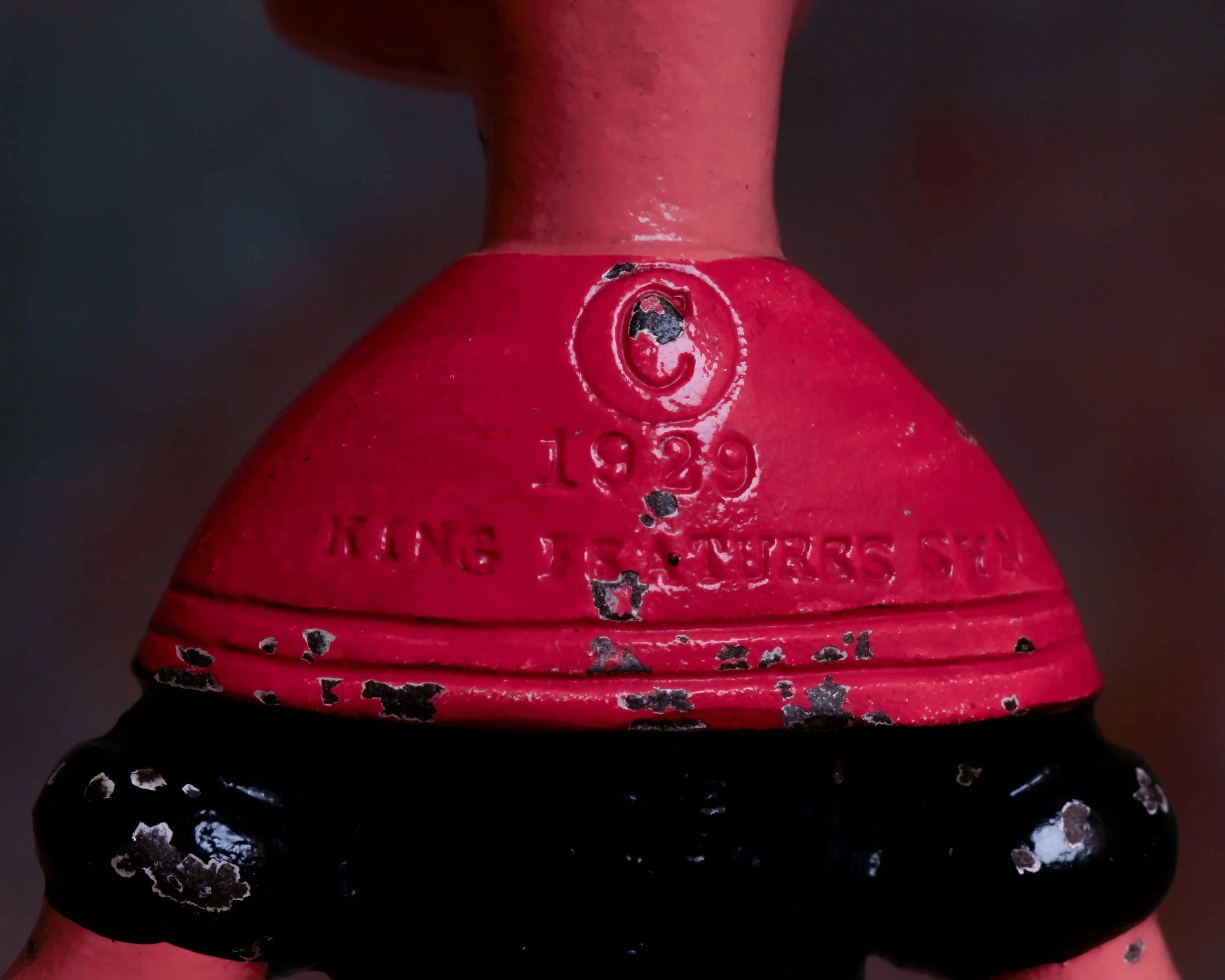
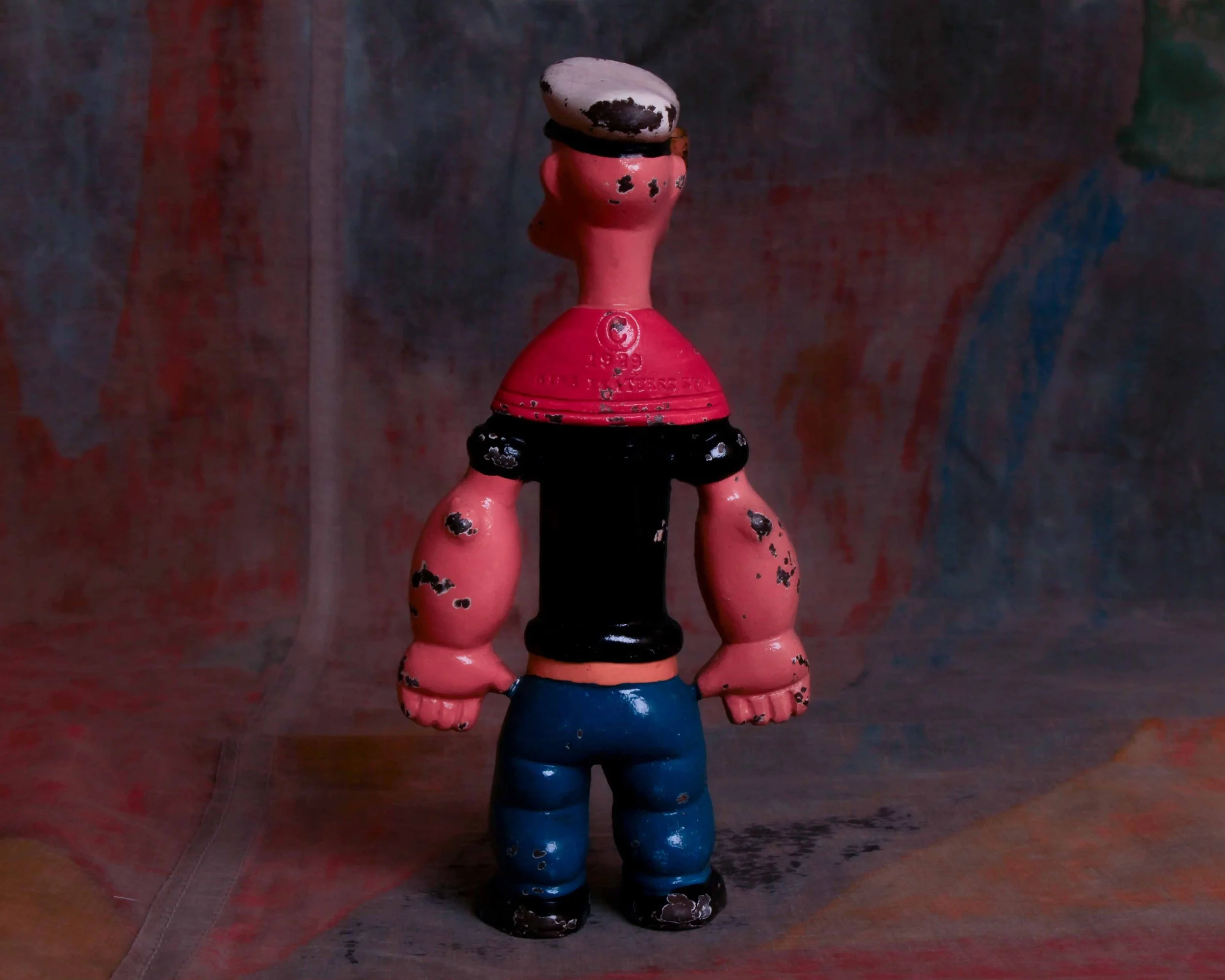
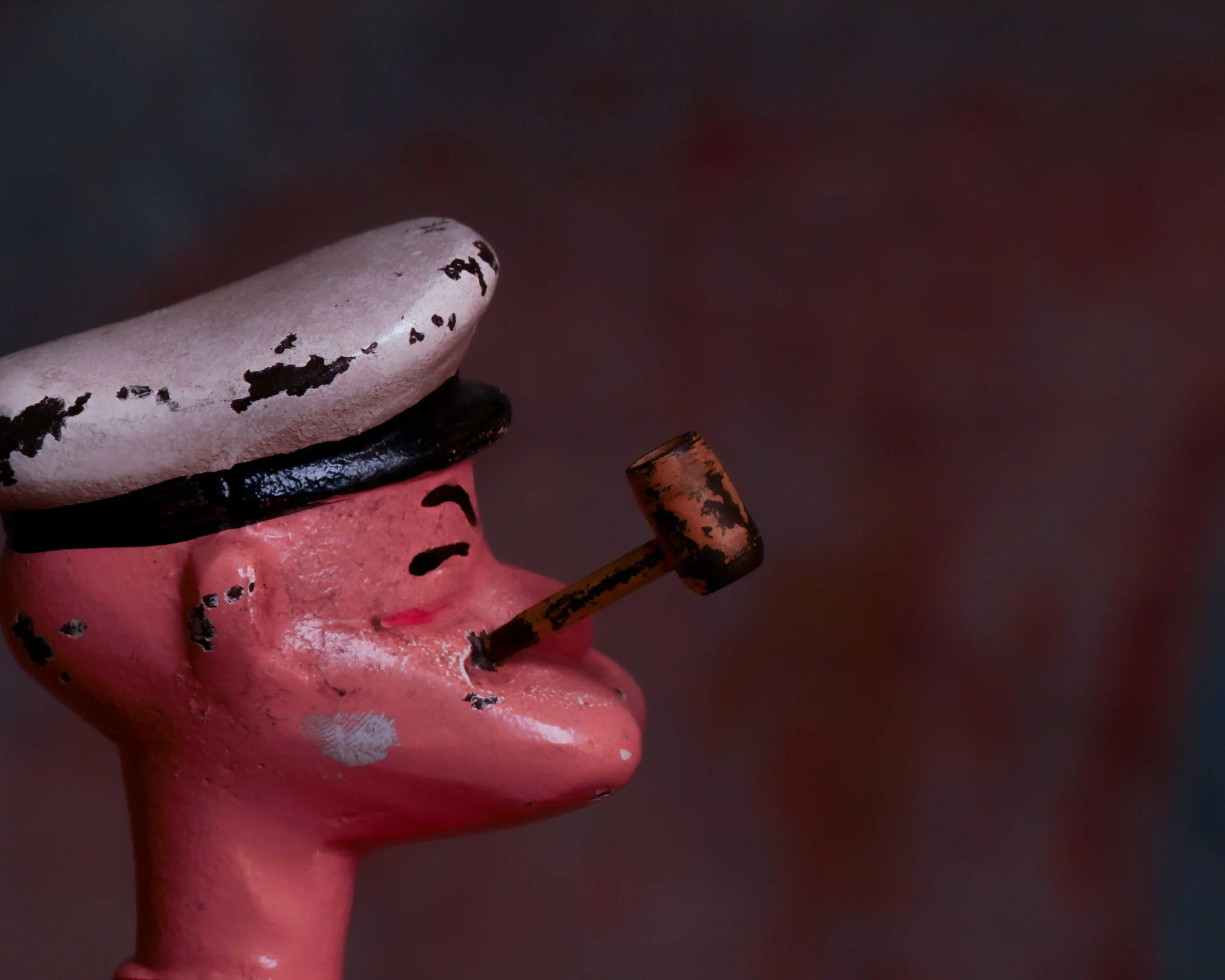
Turn him around and there it is, crisply cast into the back: “1929 King Features Syn.”, tying this piece directly to the golden age of American comics and licensing. The pipe is original and intact, a detail that’s often missing and one of the first things collectors look for. Its survival here makes a real difference.
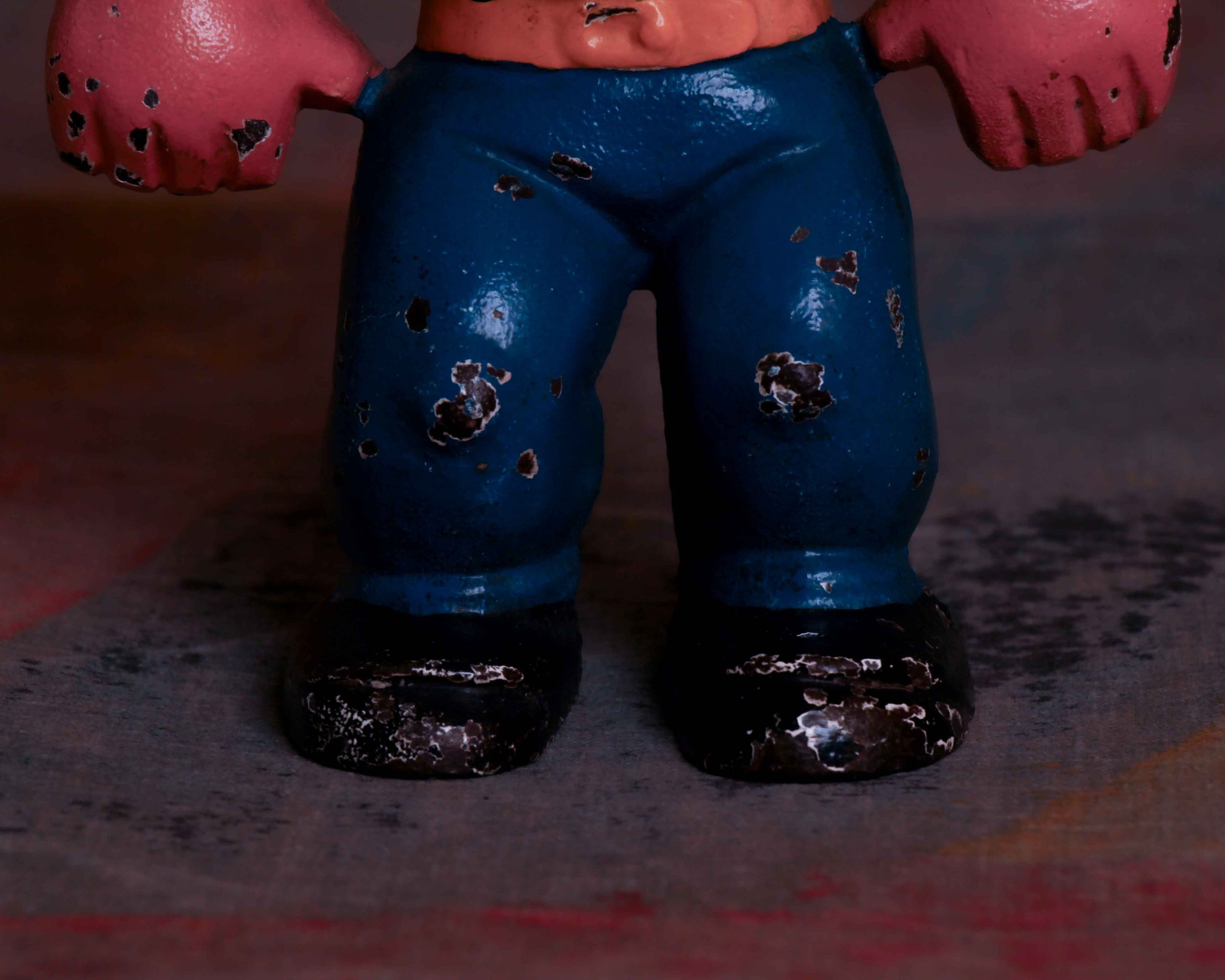
Yes, there’s wear. Honest chipping, scattered scuffs, and rubbed edges from decades of use. At roughly 9 inches tall, whether it’s holding a door, anchoring a shelf, or just standing there looking tough, Popeye still gets the job done.
Category History
Old cast iron toys are built like they mean it. Produced mainly in the late 19th and early 20th centuries, they were cast in solid iron and painted by hand, often depicting banks, vehicles, animals, or everyday scenes. Weight was part of the appeal—these weren’t fragile playthings, but objects meant to be handled, dropped, and kept.
Many doubled as mechanical banks, with simple levers or triggers that brought the piece to life while collecting coins. The casting process left subtle seams and textures, while the paint—often bright and slightly uneven—added personality.
What stands out now is their durability and presence. Chips, wear, and softened edges aren’t damage so much as evidence of use. They feel closer to small sculptures than toys—solid, direct, and made to last well beyond the play they were built for.
This cast iron doorstop by Hubley is one of the best examples known to exist.
Depicting Popeye standing tall with fists clenched and pipe firmly planted, this example captures everything that made the character an instant icon. The proportions are pure Popeye: massive forearms, compact torso, planted stance, and that unmistakable squint. The original paint is still vibrant, with rich reds, deep black, bright blue trousers, and warm yellow accents that pop beautifully against the iron.
Turn him around and there it is, crisply cast into the back: “1929 King Features Syn.”, tying this piece directly to the golden age of American comics and licensing. The pipe is original and intact, a detail that’s often missing and one of the first things collectors look for. Its survival here makes a real difference.
Yes, there’s wear. Honest chipping, scattered scuffs, and rubbed edges from decades of use. At roughly 9 inches tall, whether it’s holding a door, anchoring a shelf, or just standing there looking tough, Popeye still gets the job done.
Category History
Old cast iron toys are built like they mean it. Produced mainly in the late 19th and early 20th centuries, they were cast in solid iron and painted by hand, often depicting banks, vehicles, animals, or everyday scenes. Weight was part of the appeal—these weren’t fragile playthings, but objects meant to be handled, dropped, and kept.
Many doubled as mechanical banks, with simple levers or triggers that brought the piece to life while collecting coins. The casting process left subtle seams and textures, while the paint—often bright and slightly uneven—added personality.
What stands out now is their durability and presence. Chips, wear, and softened edges aren’t damage so much as evidence of use. They feel closer to small sculptures than toys—solid, direct, and made to last well beyond the play they were built for.