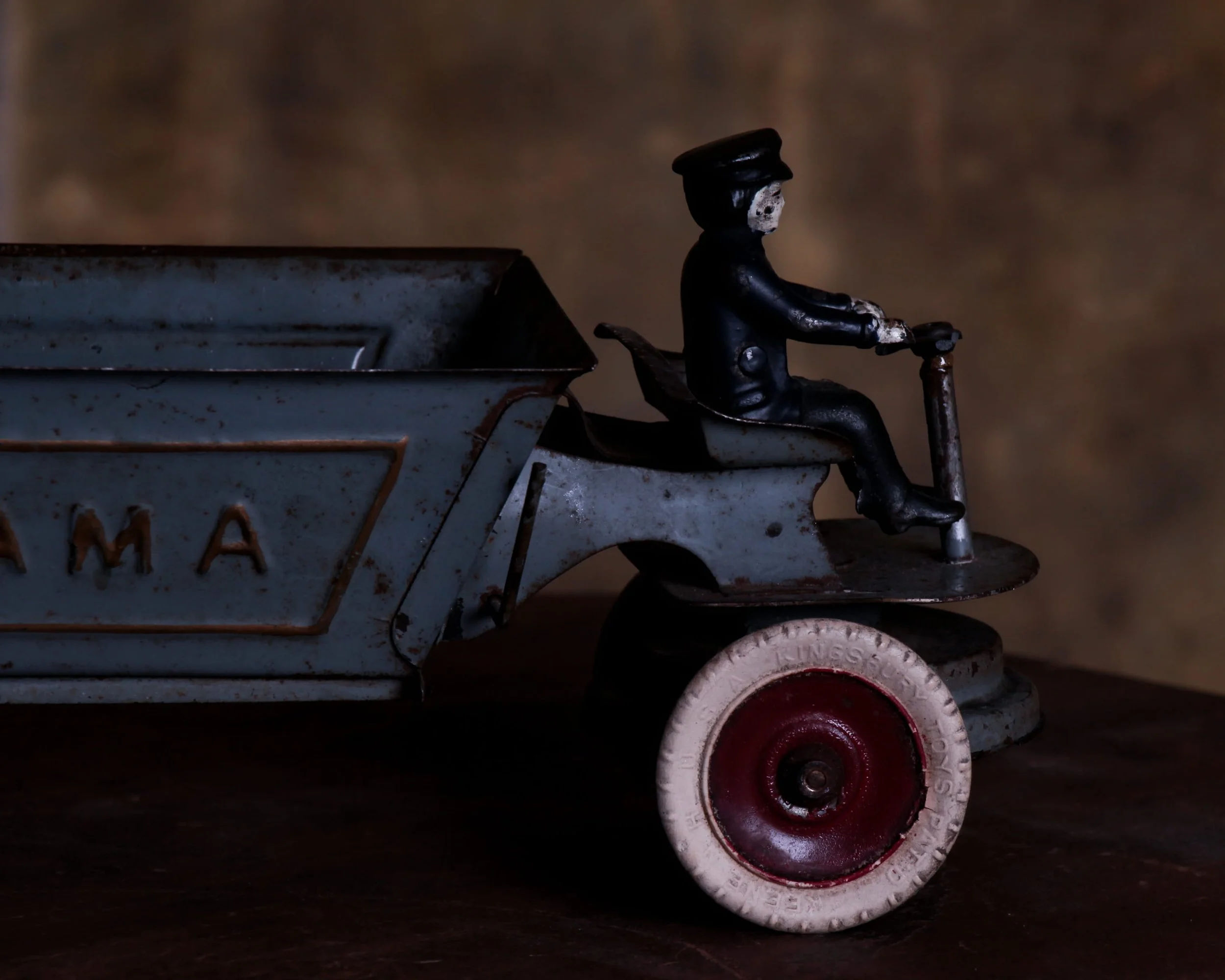
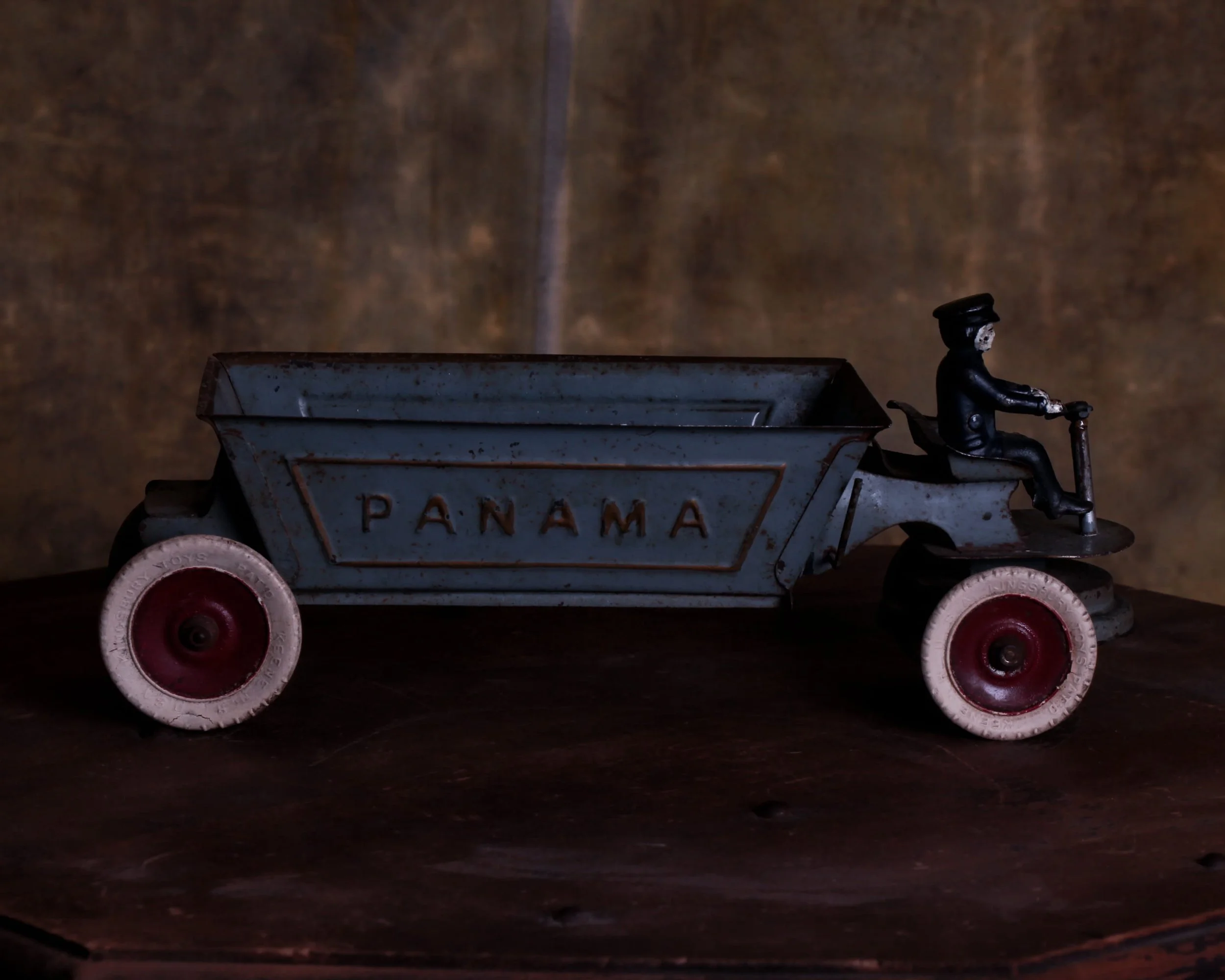
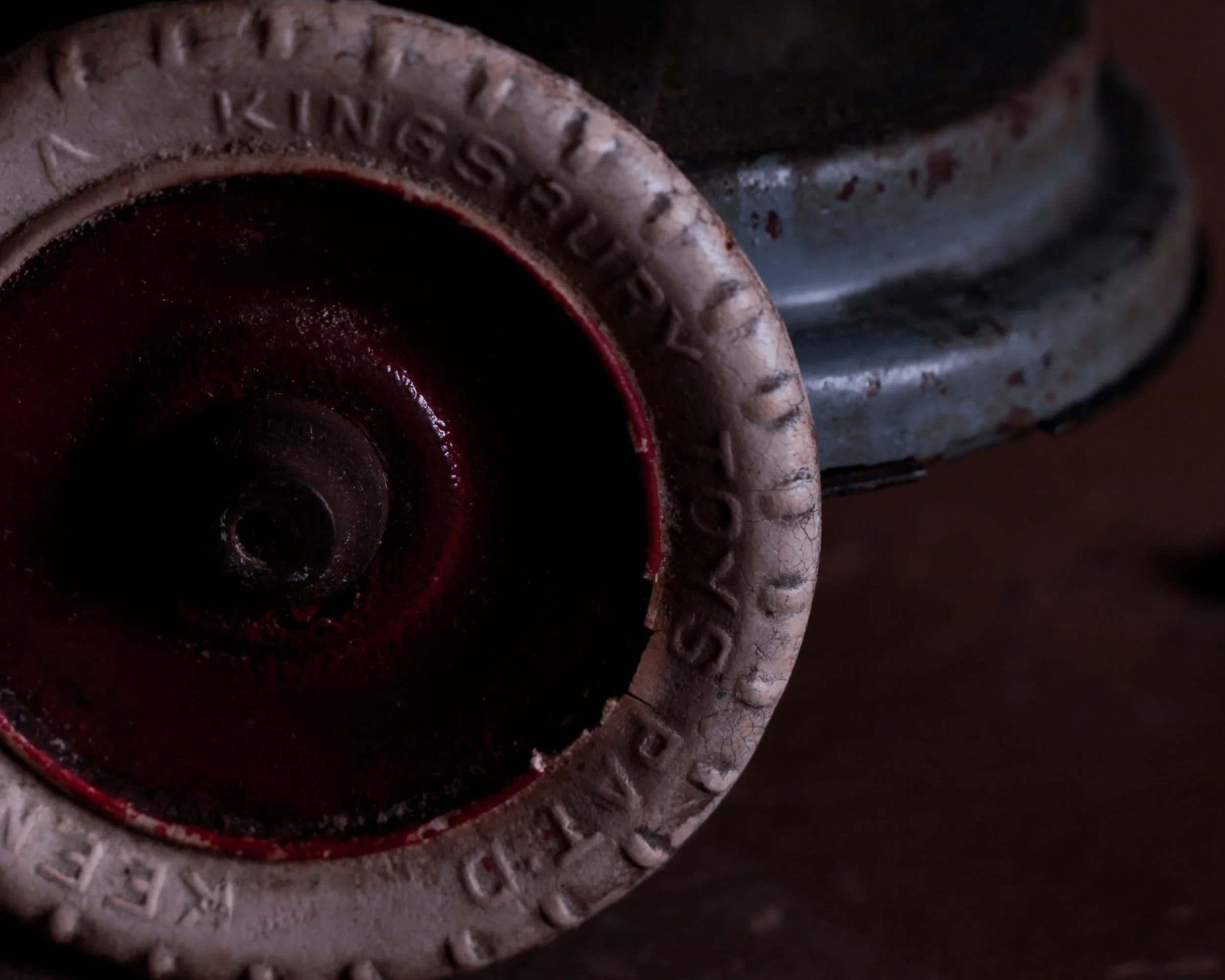
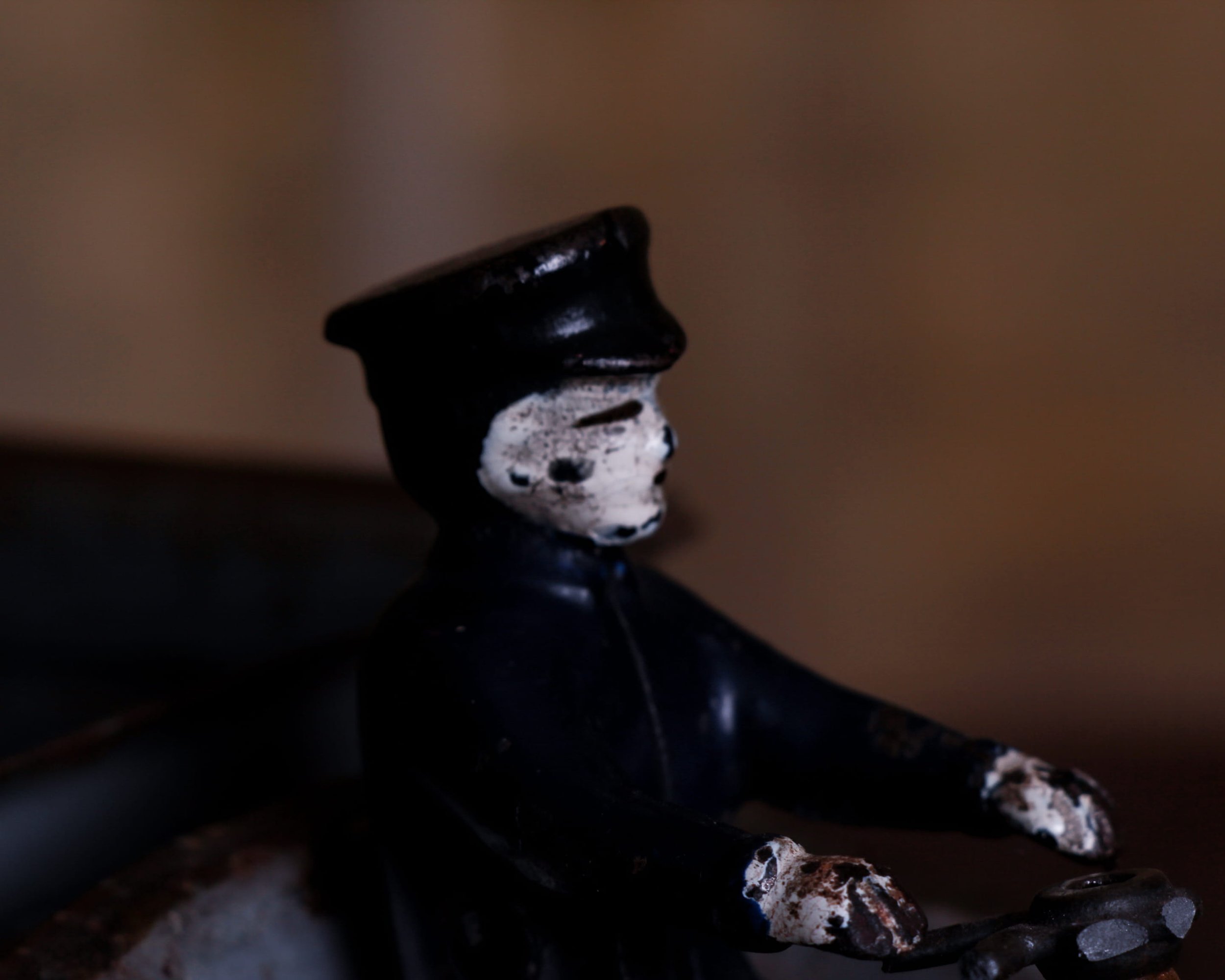
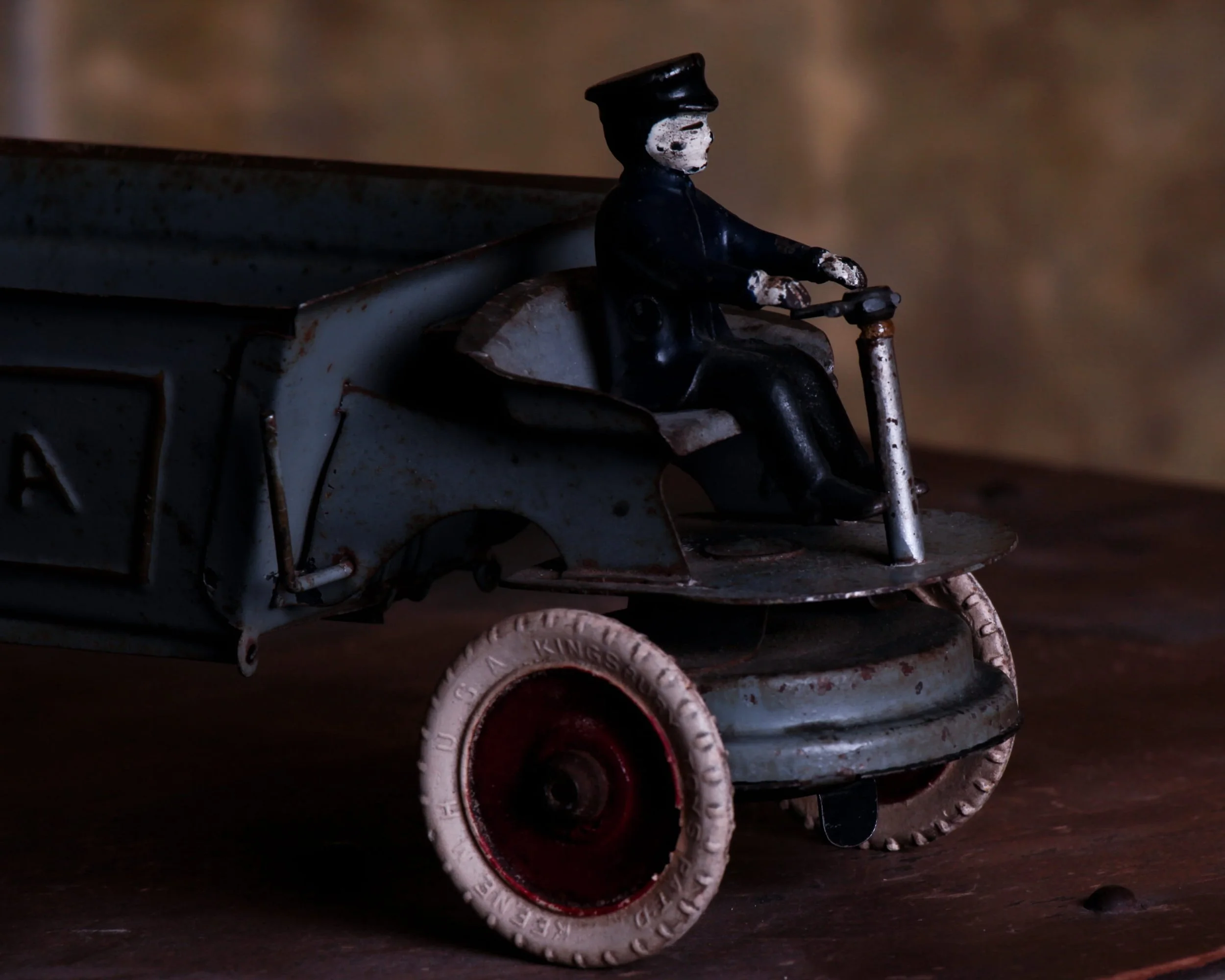
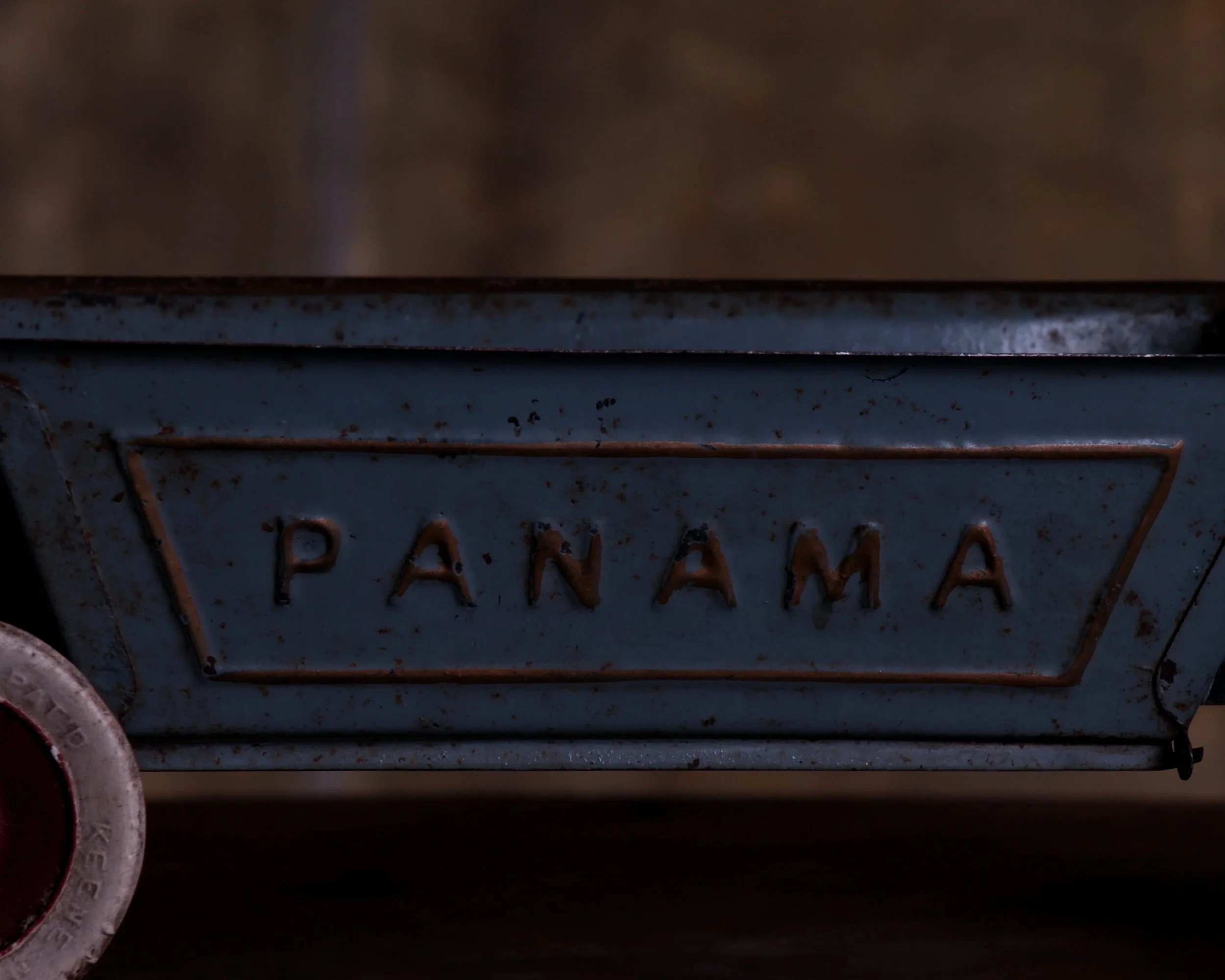
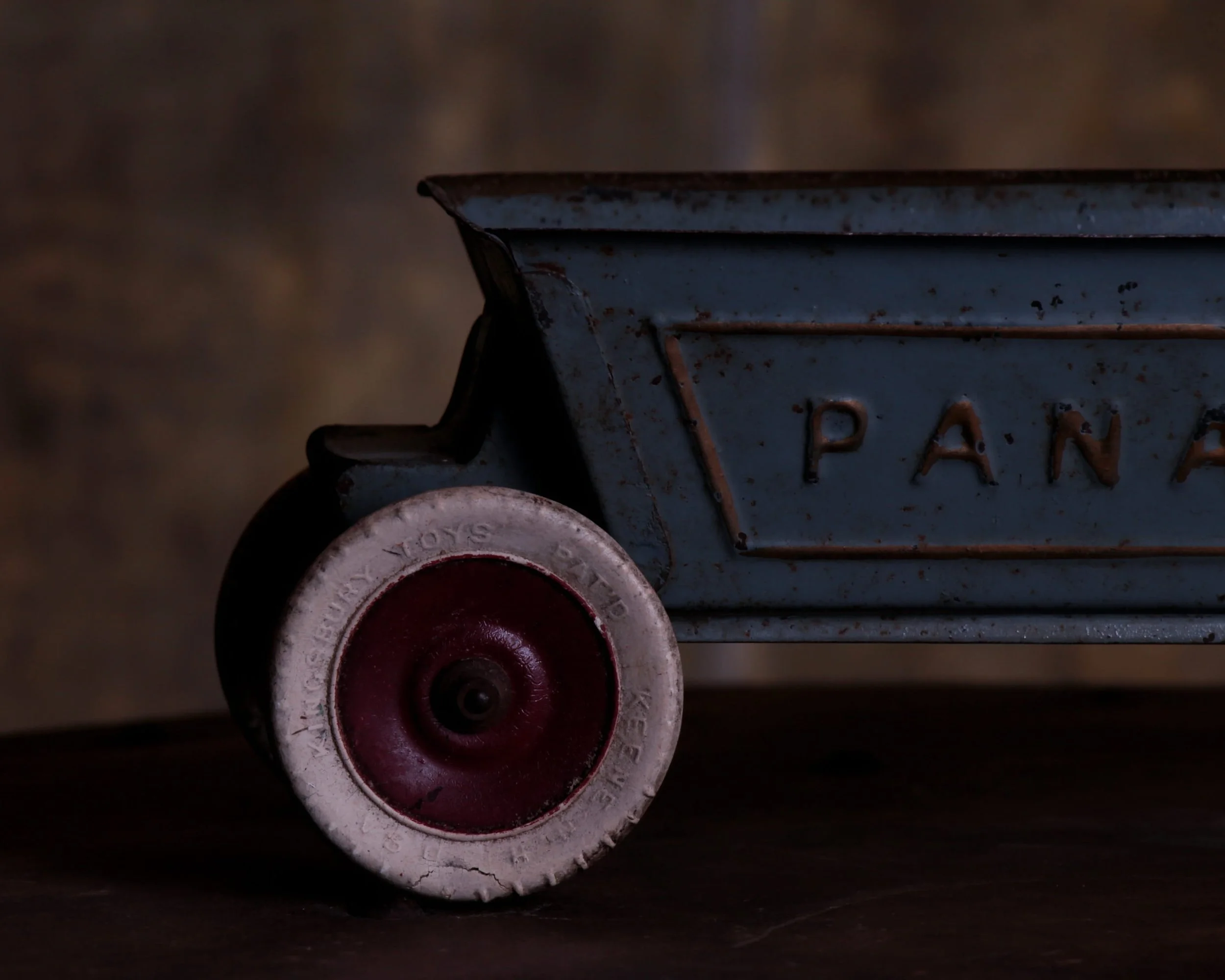
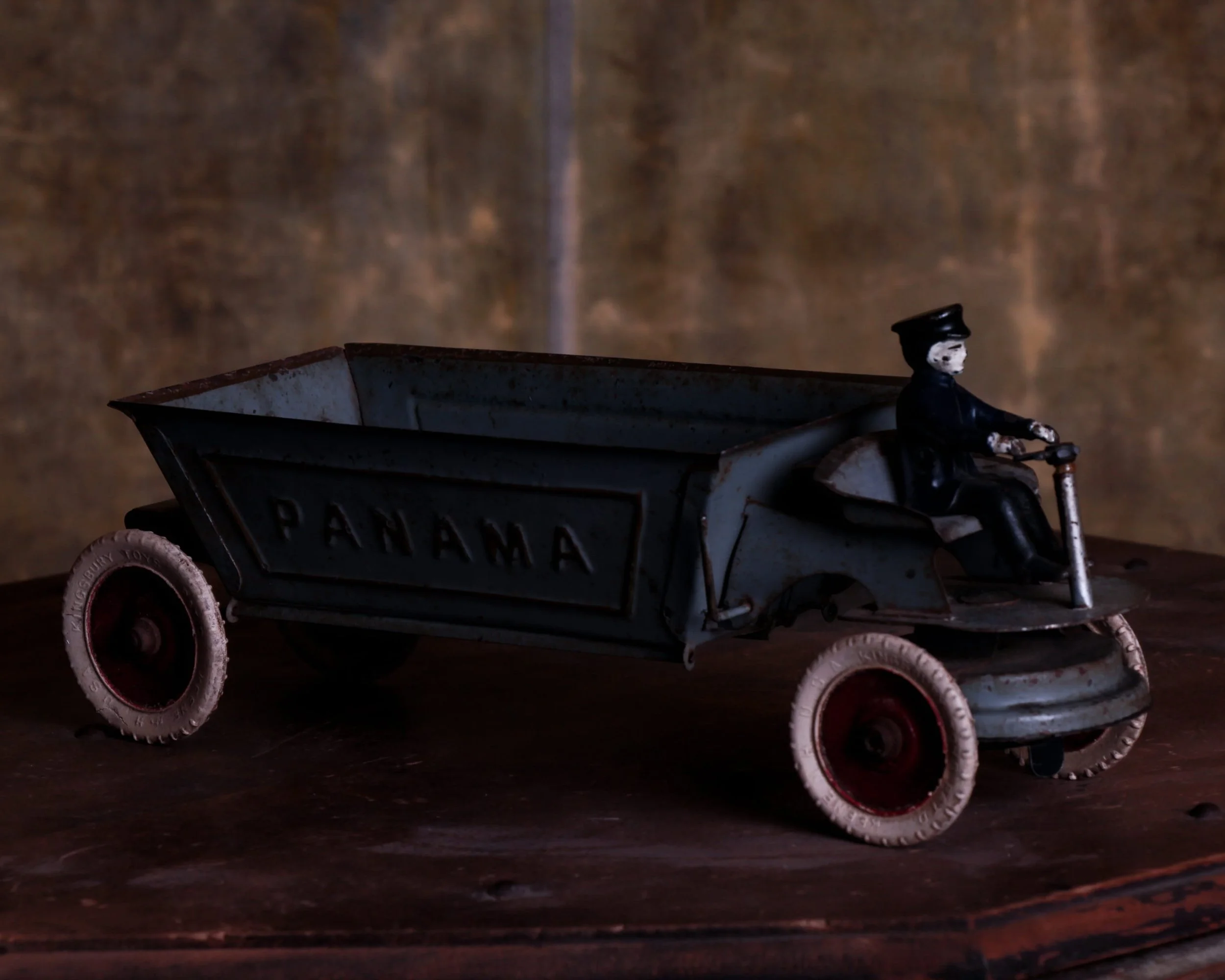
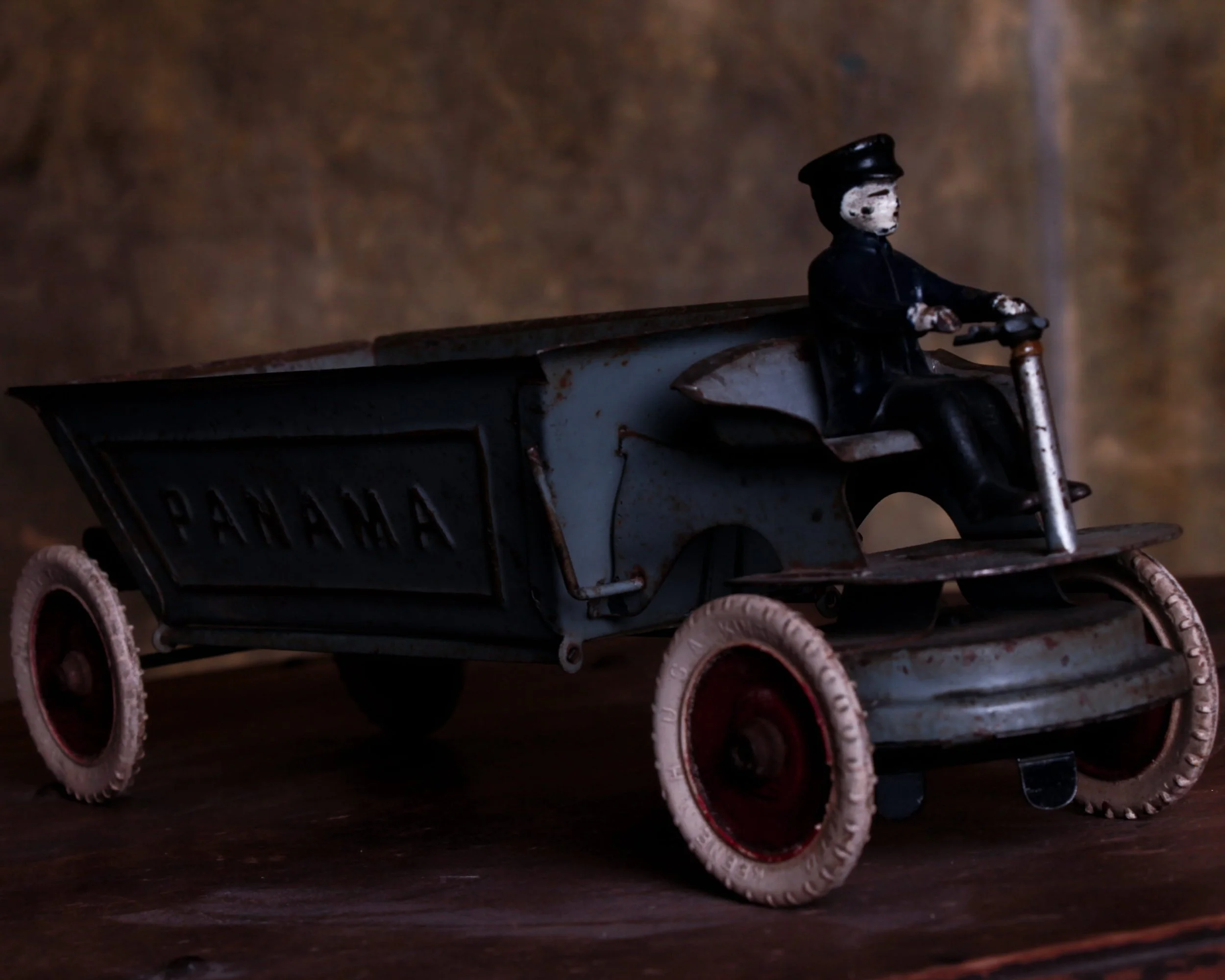
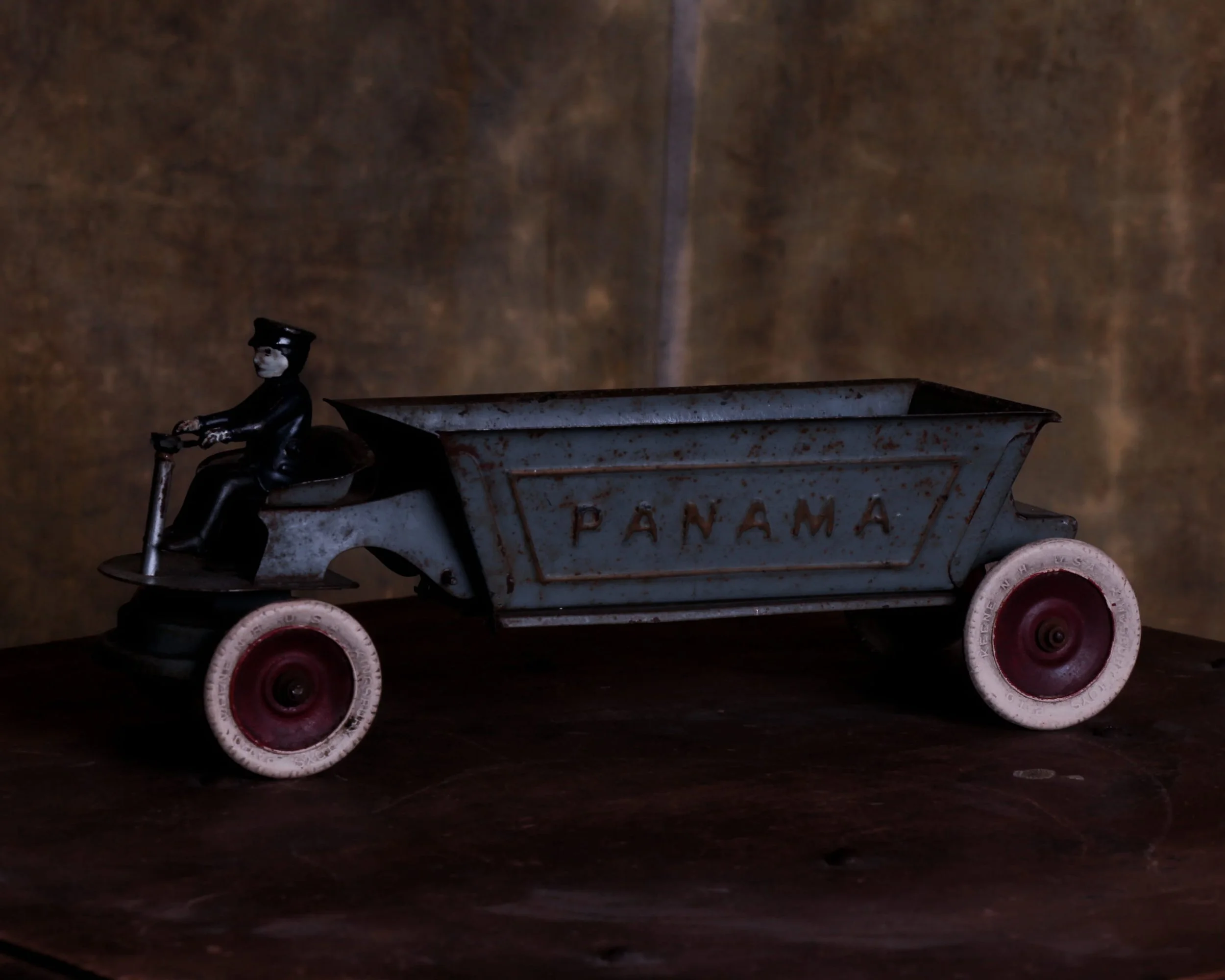
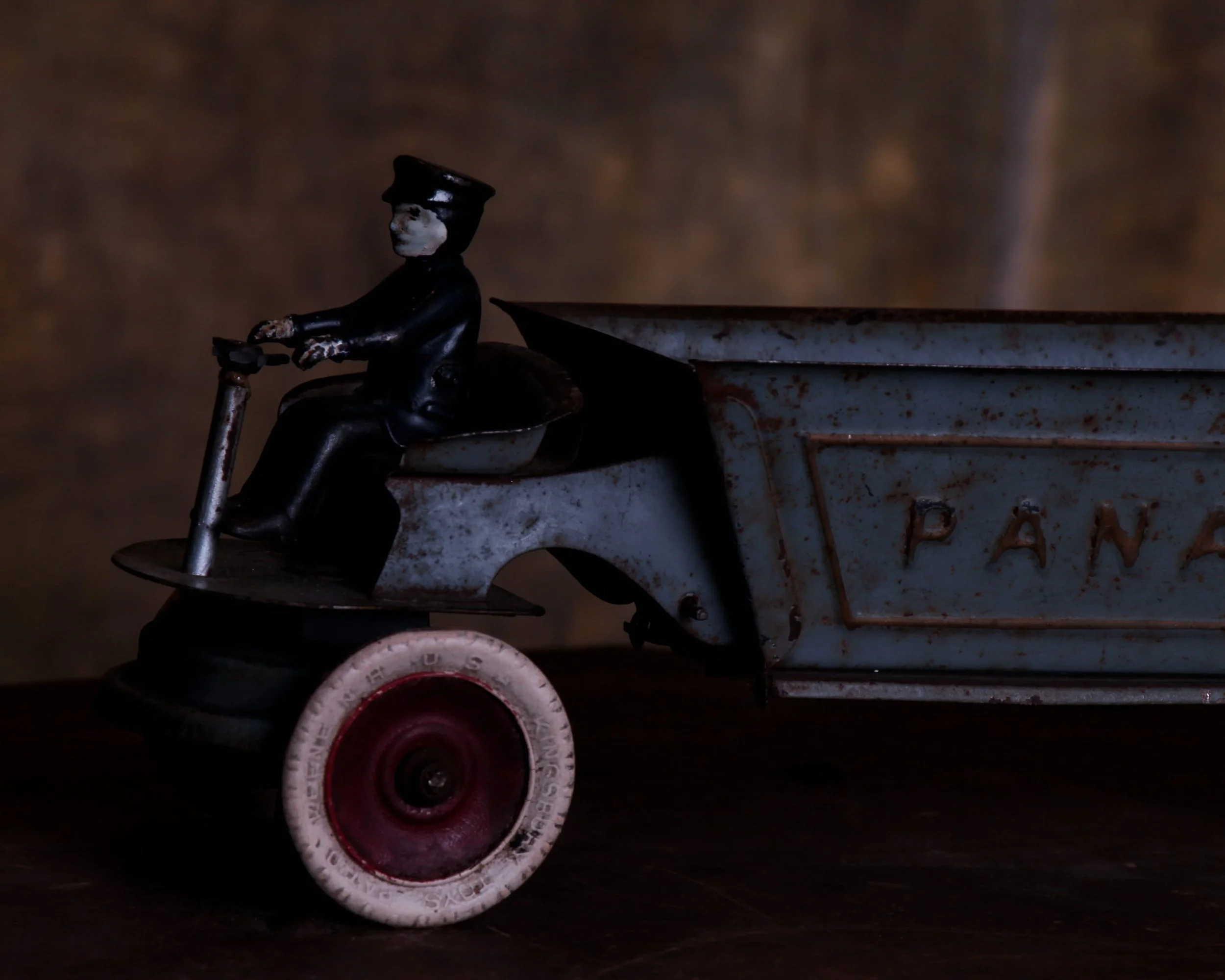
The Kingsbury "Panama" pressed steel wind-up dump truck, rolled out in 1923 and is still ready for action. This 14-inch brute has a steel body with a deep blue-grey paint job, "PANAMA" embossed proudly on both sides, and those thick original white rubber tires stamped with the Kingsbury Toys logo. The driver, cast in black and a deep blue with just enough face paint left to still look a little haunted, grips his handlebars with a fixed determination.
Kingsbury
Kingsbury pressed steel toys land right at the intersection of early industrial muscle and childhood imagination. Produced in the 1910s and 1920s by the Kingsbury Manufacturing Company in Keene, New Hampshire, these toys were built using the same techniques shaping full-scale industry—pressed sheet steel, riveted construction, and no-nonsense assembly.
Unlike cast iron toys, which were heavy and brittle, pressed steel allowed for larger forms without the same weight. Trucks, construction equipment, and vehicles were the stars—objects that mirrored the rapidly changing American landscape, where roads, machines, and infrastructure were becoming part of everyday life.
The design language is straightforward. Bold shapes, minimal ornament, and just enough painted detail to suggest function—grilles, headlights, company markings. They weren’t trying to be delicate or overly realistic. They were built to be used, pushed, dragged, and occasionally knocked around without falling apart.
What makes Kingsbury pieces stand out is their scale and presence. Even smaller examples feel substantial, with a kind of industrial honesty that reflects how they were made. Over time, the paint wears down, edges soften, and the metal picks up dents—each mark a record of play rather than neglect.
Today, they read as both toys and artifacts of early manufacturing. Practical, durable, and tied closely to the world they came from—where making things strong mattered just as much as making them fun.
The Kingsbury "Panama" pressed steel wind-up dump truck, rolled out in 1923 and is still ready for action. This 14-inch brute has a steel body with a deep blue-grey paint job, "PANAMA" embossed proudly on both sides, and those thick original white rubber tires stamped with the Kingsbury Toys logo. The driver, cast in black and a deep blue with just enough face paint left to still look a little haunted, grips his handlebars with a fixed determination.
Kingsbury
Kingsbury pressed steel toys land right at the intersection of early industrial muscle and childhood imagination. Produced in the 1910s and 1920s by the Kingsbury Manufacturing Company in Keene, New Hampshire, these toys were built using the same techniques shaping full-scale industry—pressed sheet steel, riveted construction, and no-nonsense assembly.
Unlike cast iron toys, which were heavy and brittle, pressed steel allowed for larger forms without the same weight. Trucks, construction equipment, and vehicles were the stars—objects that mirrored the rapidly changing American landscape, where roads, machines, and infrastructure were becoming part of everyday life.
The design language is straightforward. Bold shapes, minimal ornament, and just enough painted detail to suggest function—grilles, headlights, company markings. They weren’t trying to be delicate or overly realistic. They were built to be used, pushed, dragged, and occasionally knocked around without falling apart.
What makes Kingsbury pieces stand out is their scale and presence. Even smaller examples feel substantial, with a kind of industrial honesty that reflects how they were made. Over time, the paint wears down, edges soften, and the metal picks up dents—each mark a record of play rather than neglect.
Today, they read as both toys and artifacts of early manufacturing. Practical, durable, and tied closely to the world they came from—where making things strong mattered just as much as making them fun.