

ITEM NOT AVAILABLE IMMEDIATELY—INQUIRE IF INTERESTED hello@heimweeantiques.com
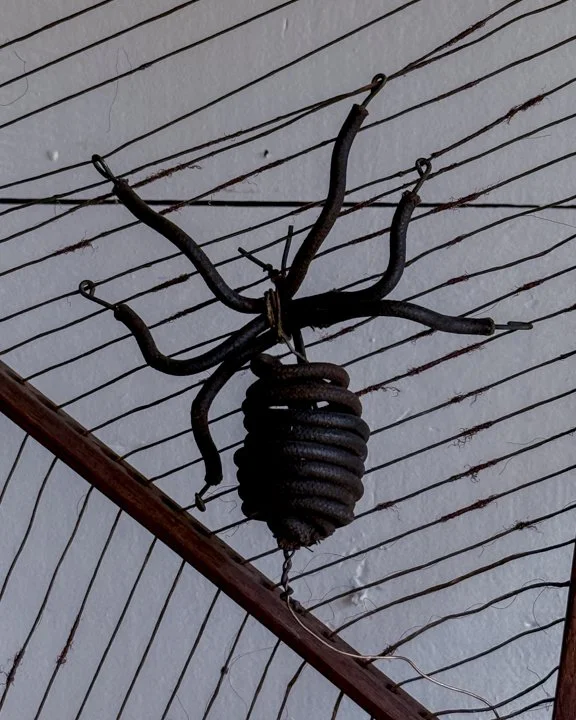
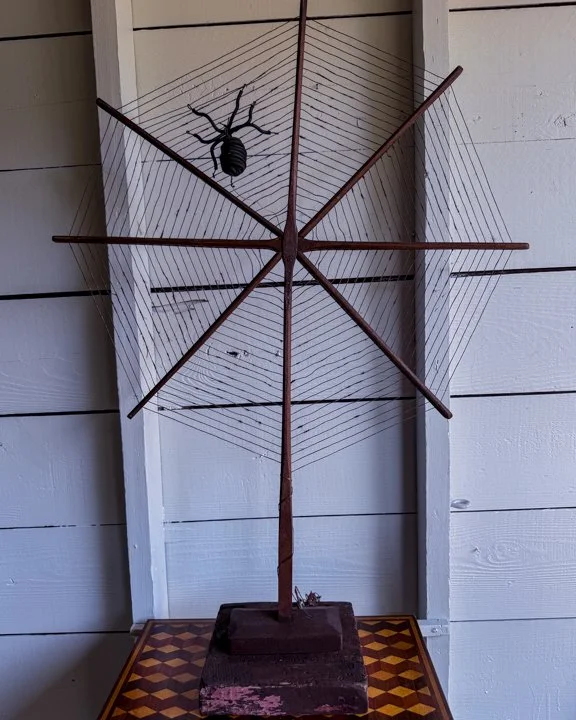
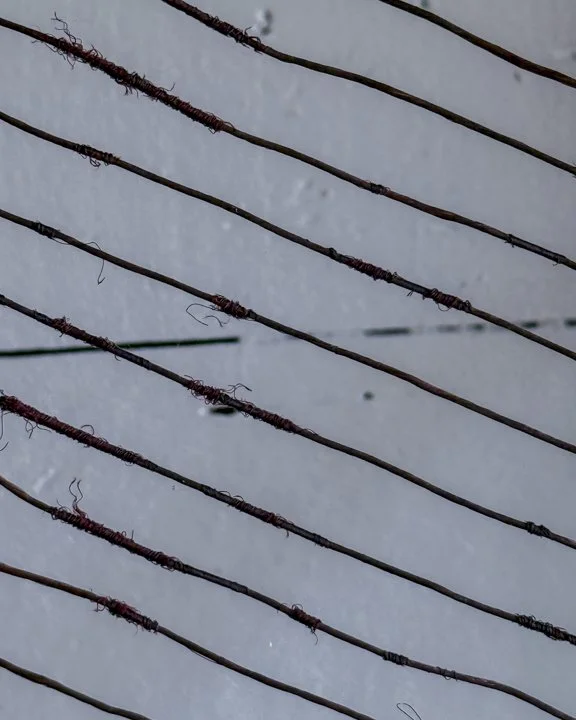
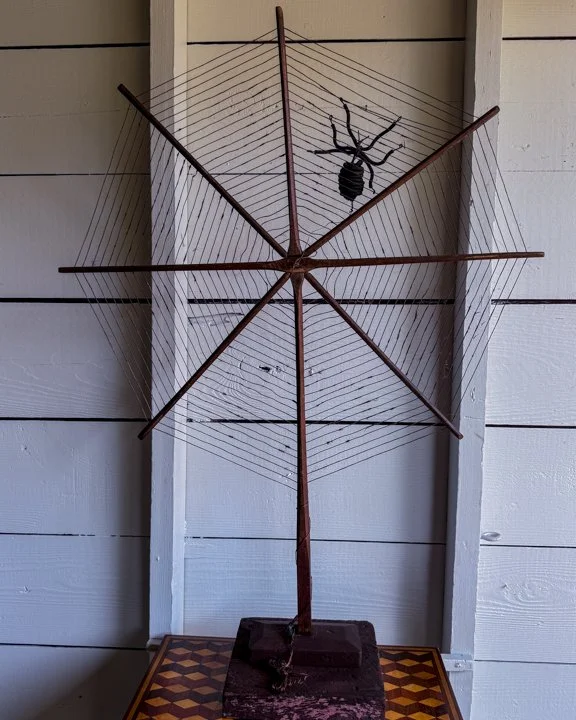
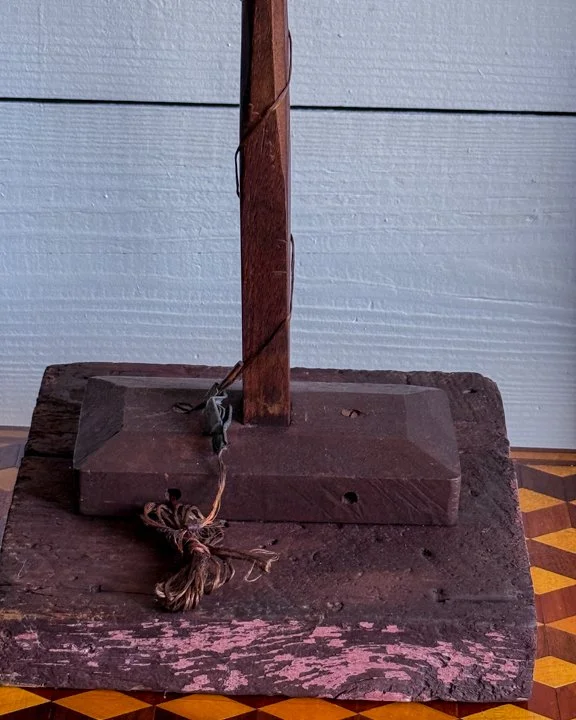
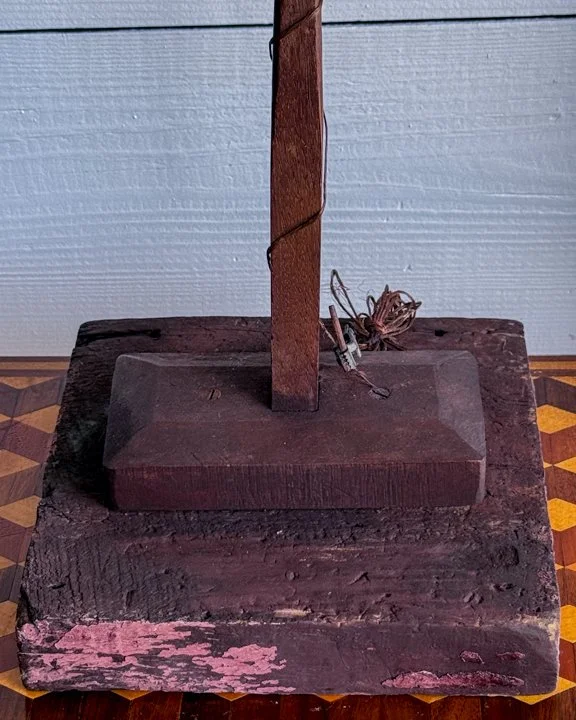
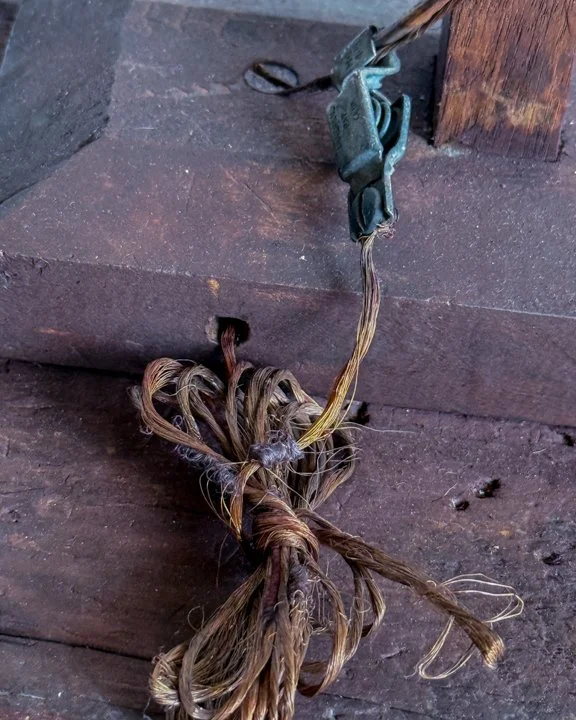
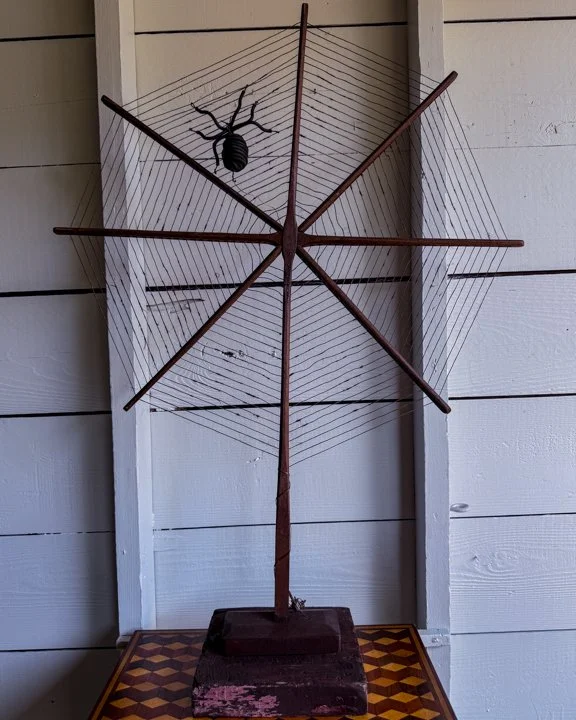
Tube radio loop antenna, once used to pull signals out of thin air. Crafted from wood and wrapped with carefully spaced copper wire, it’s equal parts sculpture and science. The delicate web-like construction has the eerie precision of a spider’s handiwork, and in this case, that’s not just metaphor—there’s an actual sculptural spider woven right into the design, adding a darkly playful touch. Mounted on a weathered base with remnants of old maroon paint and old fabric cord.
Category History
The loop antenna on a tube radio is one of those parts you don’t notice until you understand what it’s doing—and then it becomes the whole show. Common in radios from the 1930s through the 1950s, these antennas were usually built as flat coils of wire mounted to a cardboard or wooden frame, often tucked inside the cabinet or attached to the back.
Unlike long external wires, loop antennas were compact and directional. You could actually “tune” reception by physically rotating the radio, aligning the loop to pull in a station more clearly or reject interference. It turned listening into a small, hands-on adjustment—part science, part instinct.
The design itself is simple but effective. Multiple turns of wire increase sensitivity, while the loop shape helps isolate signals, especially in the AM band. In many sets, the antenna was integrated directly into the tuning circuit, working in tandem with the radio’s capacitors to lock onto frequencies.
What makes them interesting now is their quiet ingenuity. No excess, no flash—just a coil doing a precise job. Often fragile, with paper backing and thin wire, surviving examples show repairs, breaks, or careful preservation.
They’re a reminder that early electronics weren’t sealed off. You could see how they worked, adjust them, and feel the signal come in.
ITEM NOT AVAILABLE IMMEDIATELY—INQUIRE IF INTERESTED hello@heimweeantiques.com
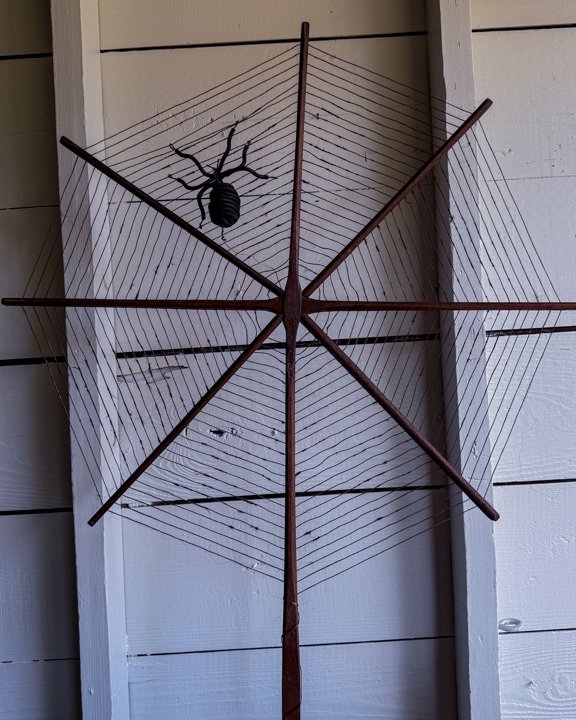
Tube radio loop antenna, once used to pull signals out of thin air. Crafted from wood and wrapped with carefully spaced copper wire, it’s equal parts sculpture and science. The delicate web-like construction has the eerie precision of a spider’s handiwork, and in this case, that’s not just metaphor—there’s an actual sculptural spider woven right into the design, adding a darkly playful touch. Mounted on a weathered base with remnants of old maroon paint and old fabric cord.
Category History
The loop antenna on a tube radio is one of those parts you don’t notice until you understand what it’s doing—and then it becomes the whole show. Common in radios from the 1930s through the 1950s, these antennas were usually built as flat coils of wire mounted to a cardboard or wooden frame, often tucked inside the cabinet or attached to the back.
Unlike long external wires, loop antennas were compact and directional. You could actually “tune” reception by physically rotating the radio, aligning the loop to pull in a station more clearly or reject interference. It turned listening into a small, hands-on adjustment—part science, part instinct.
The design itself is simple but effective. Multiple turns of wire increase sensitivity, while the loop shape helps isolate signals, especially in the AM band. In many sets, the antenna was integrated directly into the tuning circuit, working in tandem with the radio’s capacitors to lock onto frequencies.
What makes them interesting now is their quiet ingenuity. No excess, no flash—just a coil doing a precise job. Often fragile, with paper backing and thin wire, surviving examples show repairs, breaks, or careful preservation.
They’re a reminder that early electronics weren’t sealed off. You could see how they worked, adjust them, and feel the signal come in.