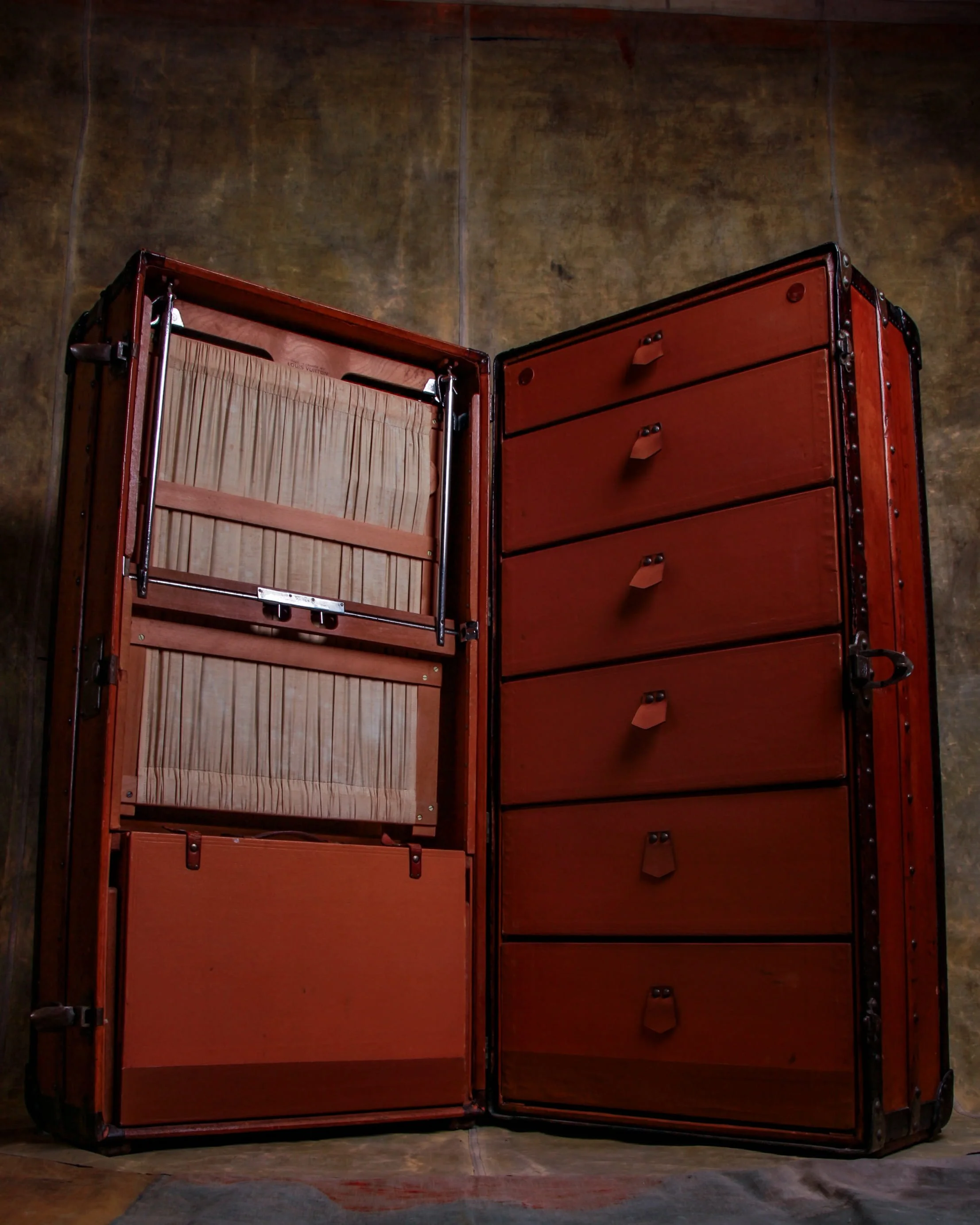
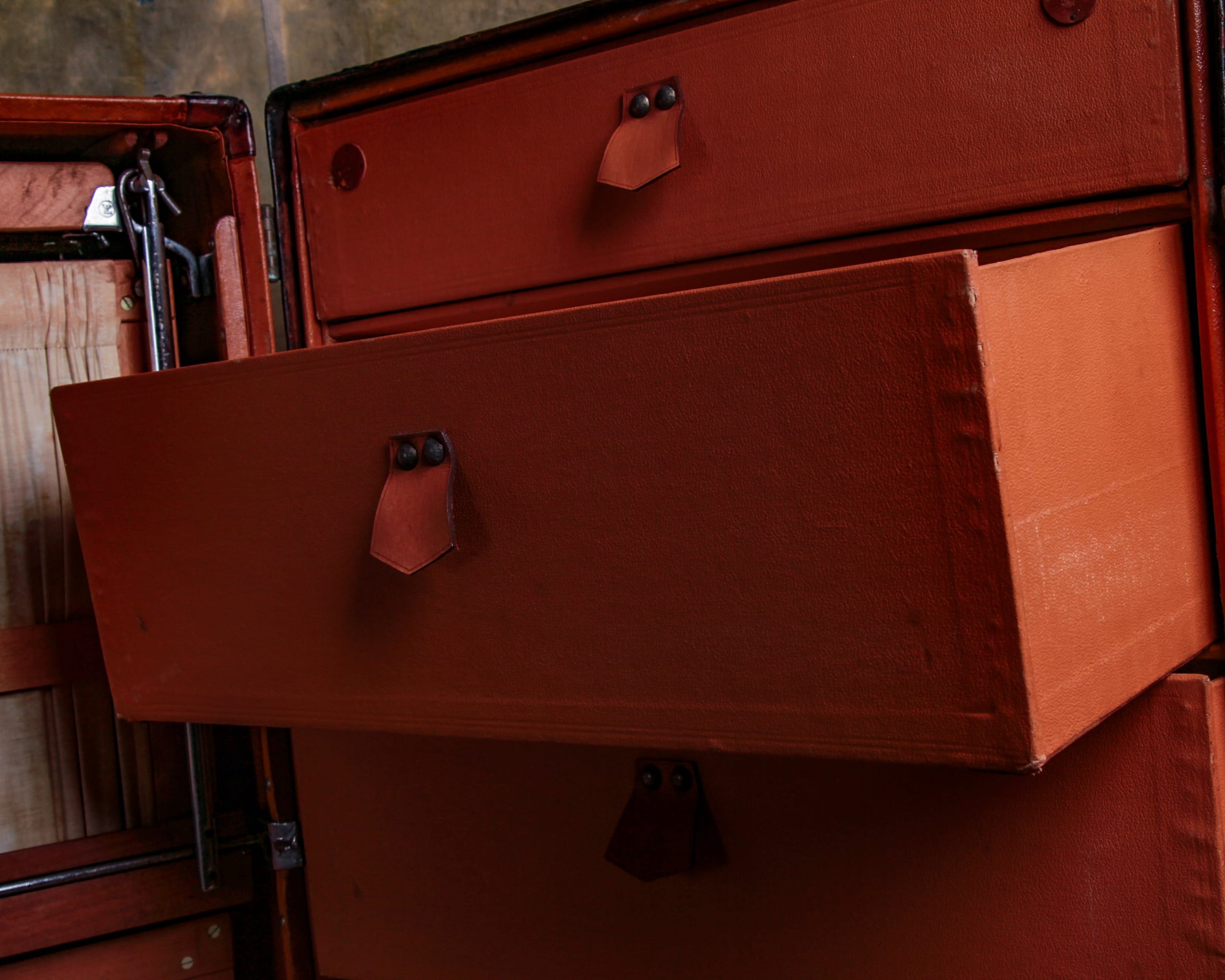
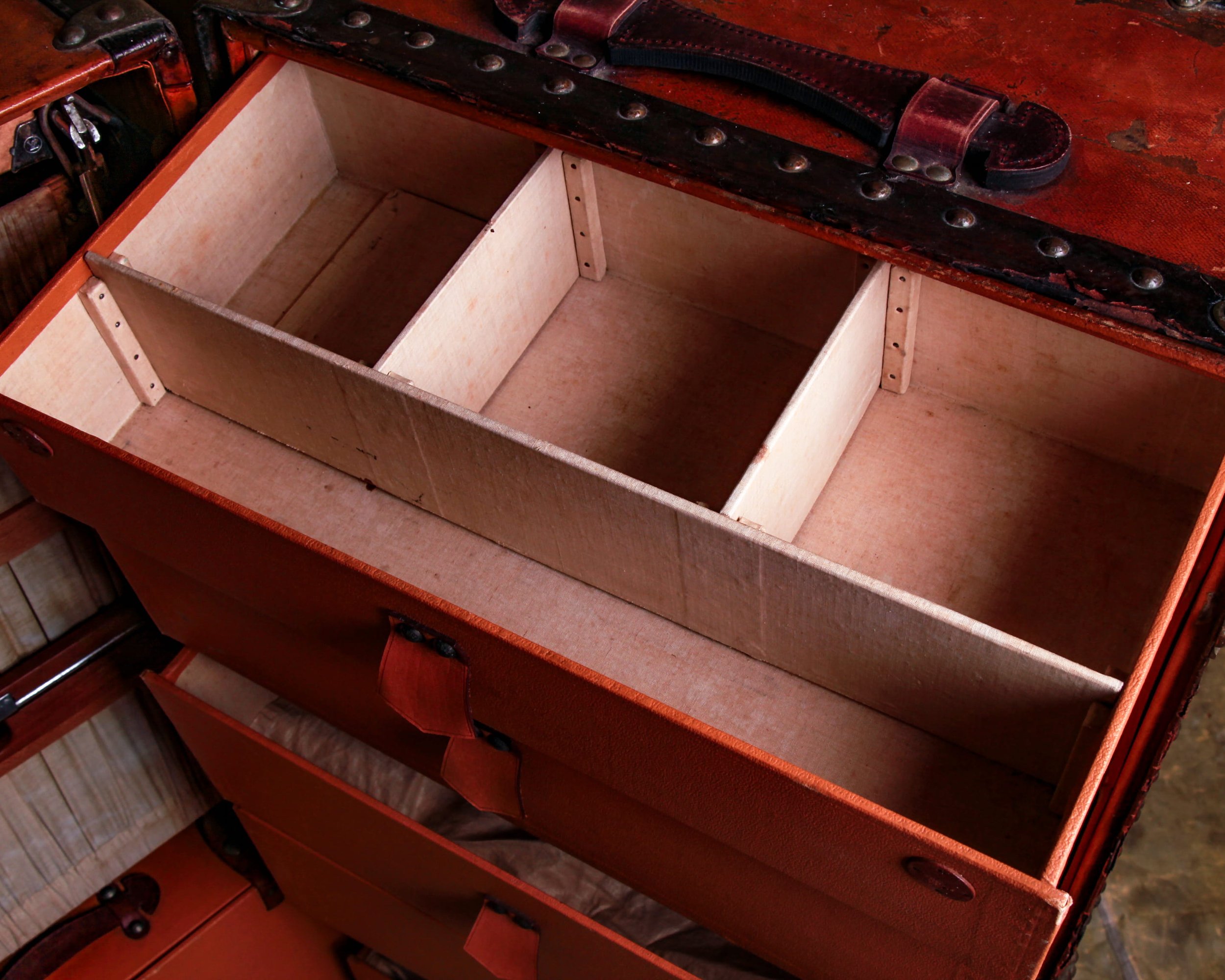
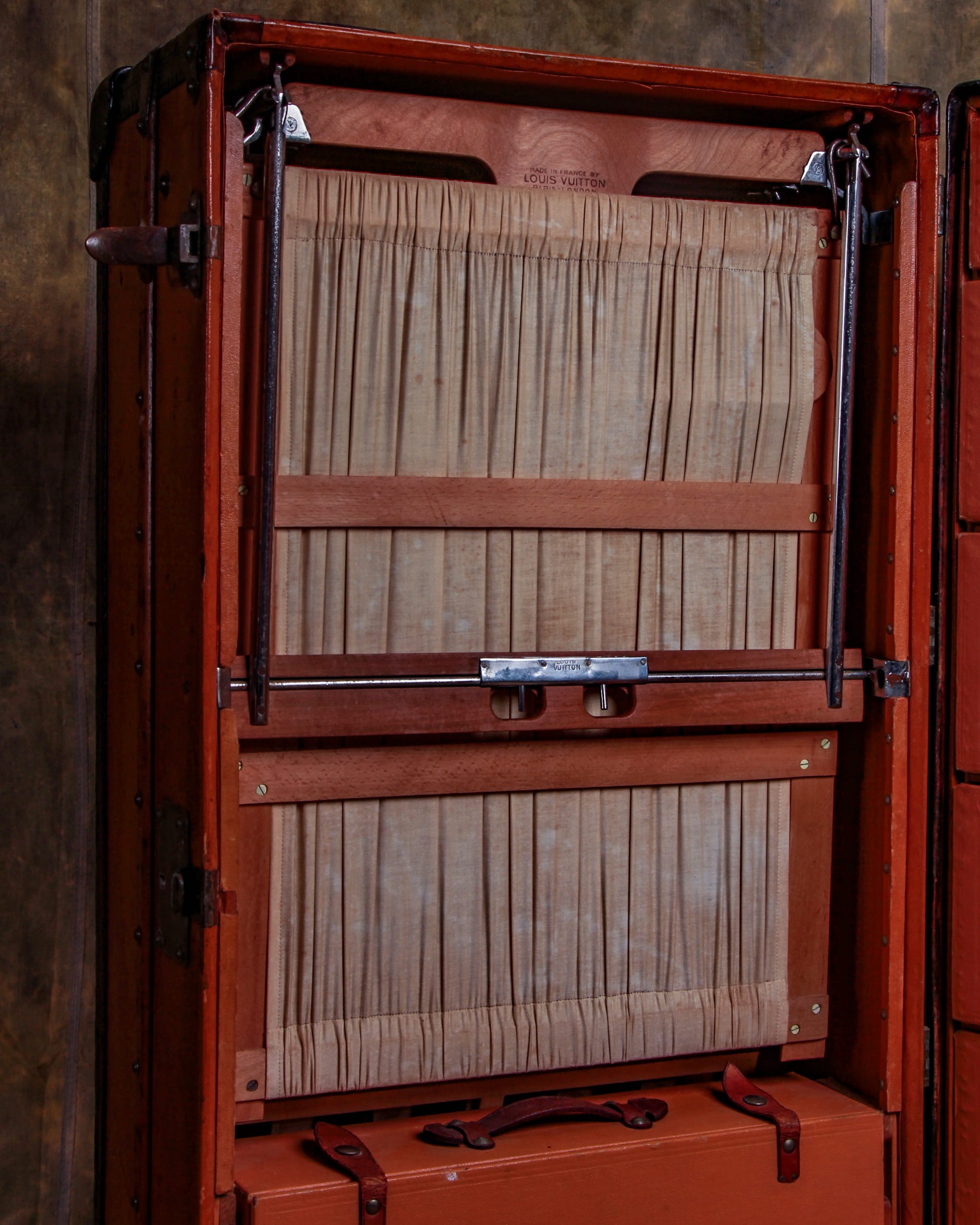
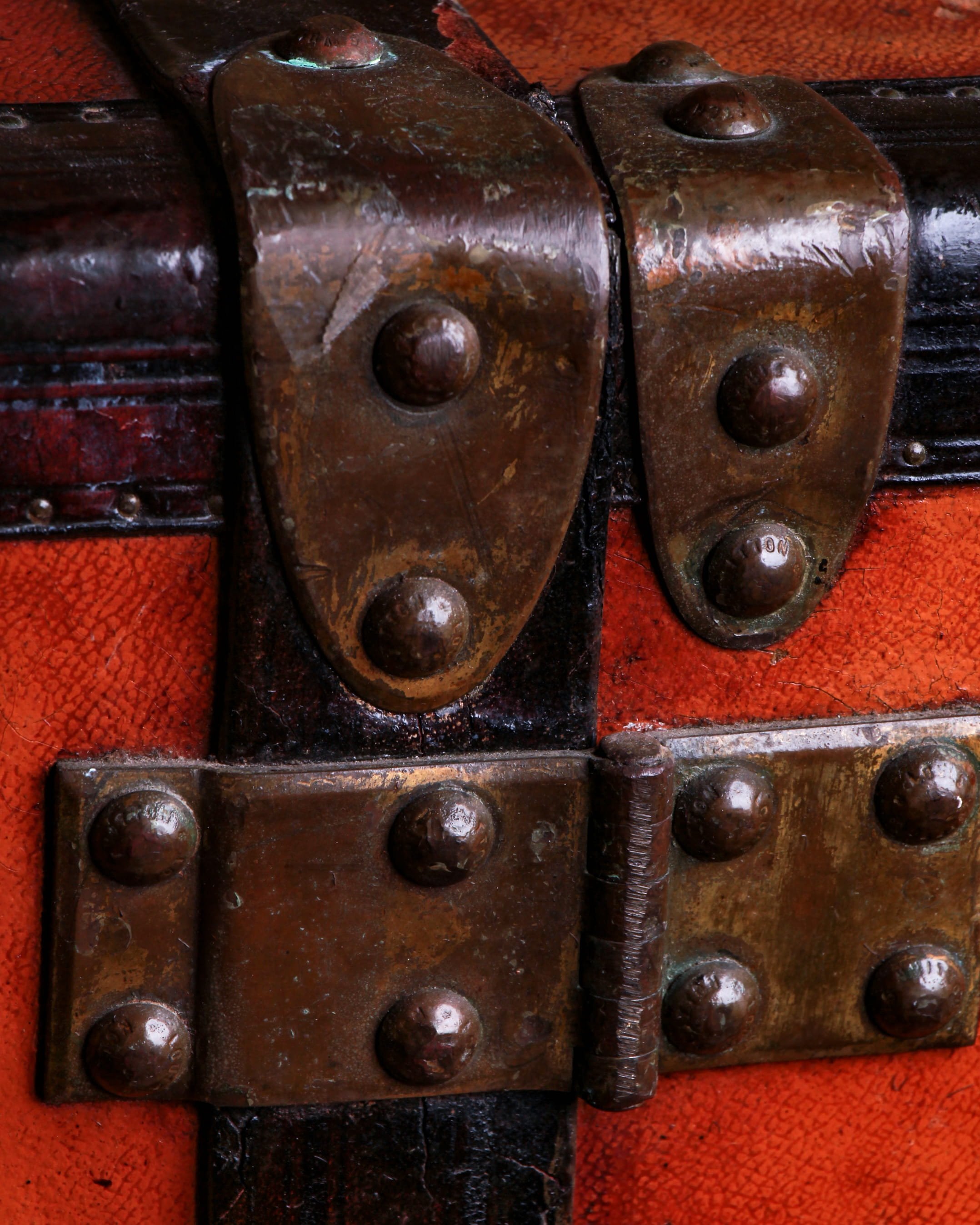
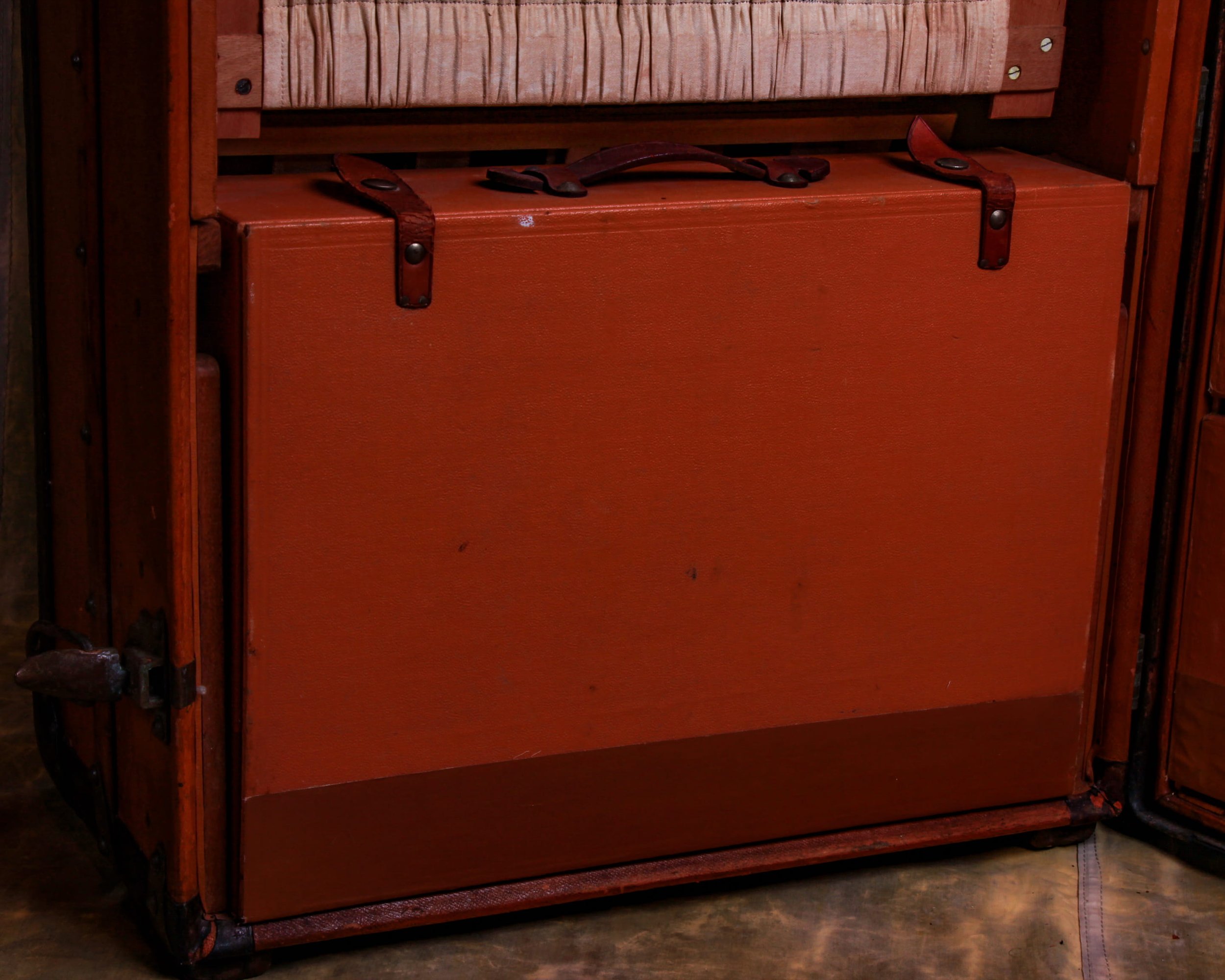
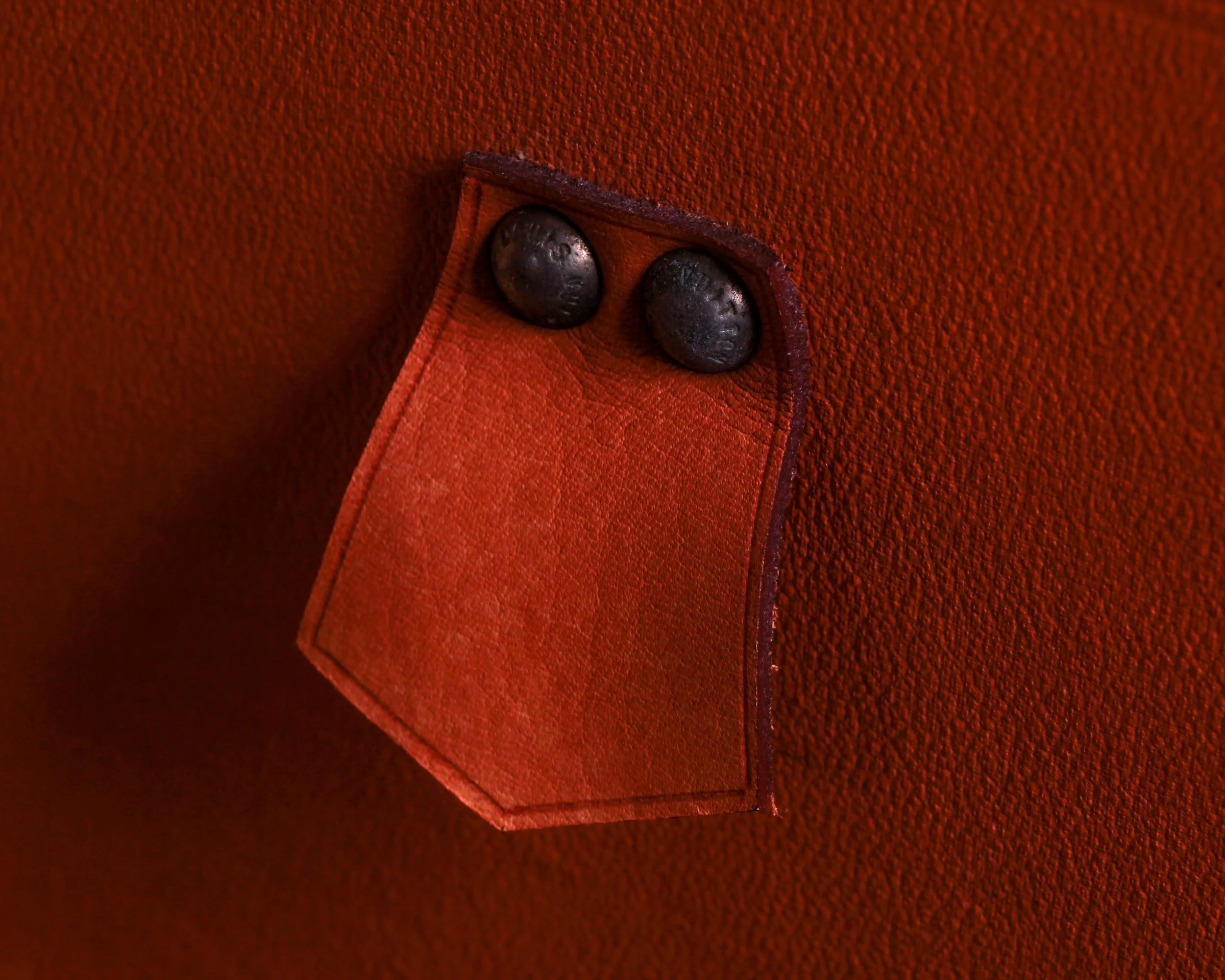
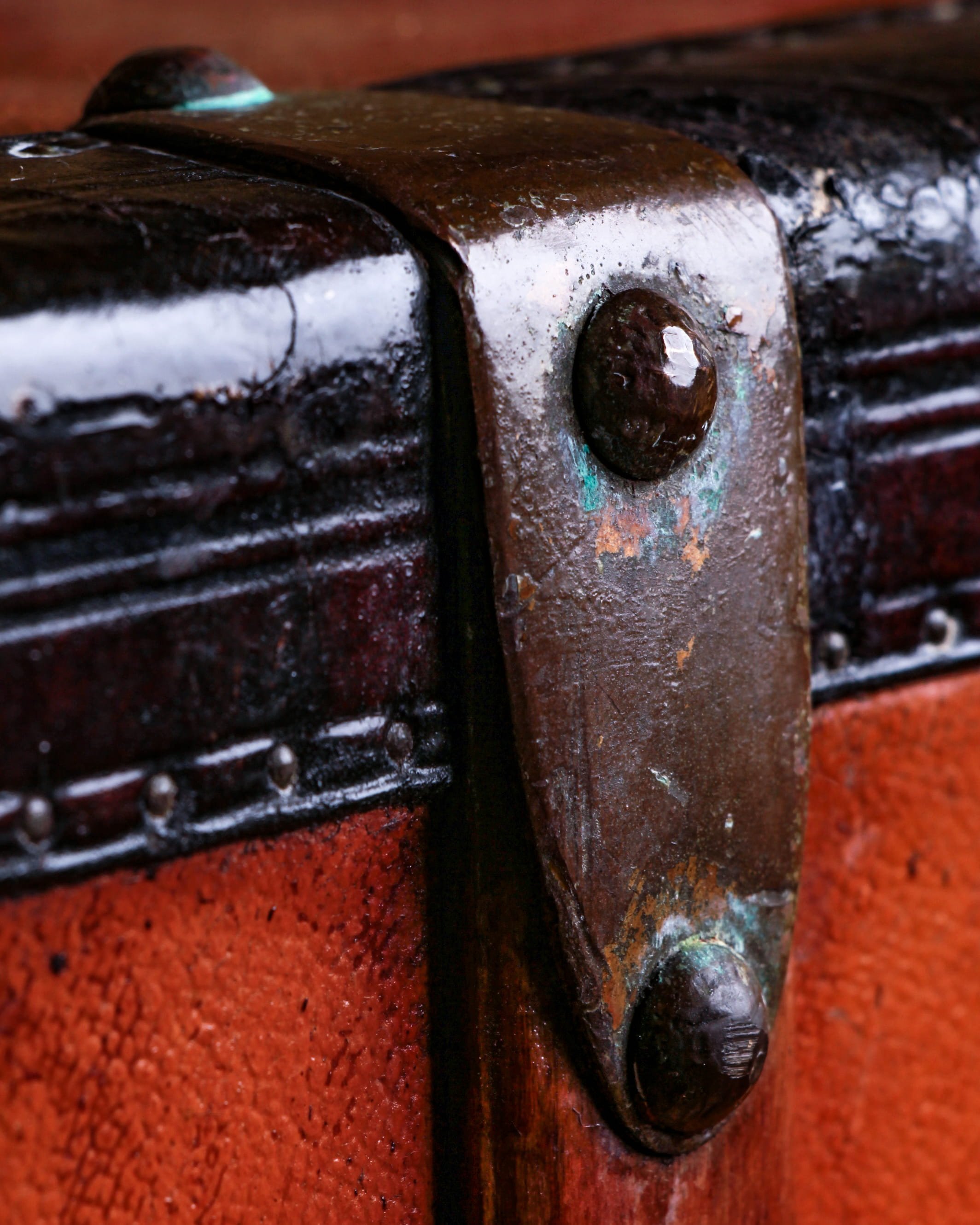
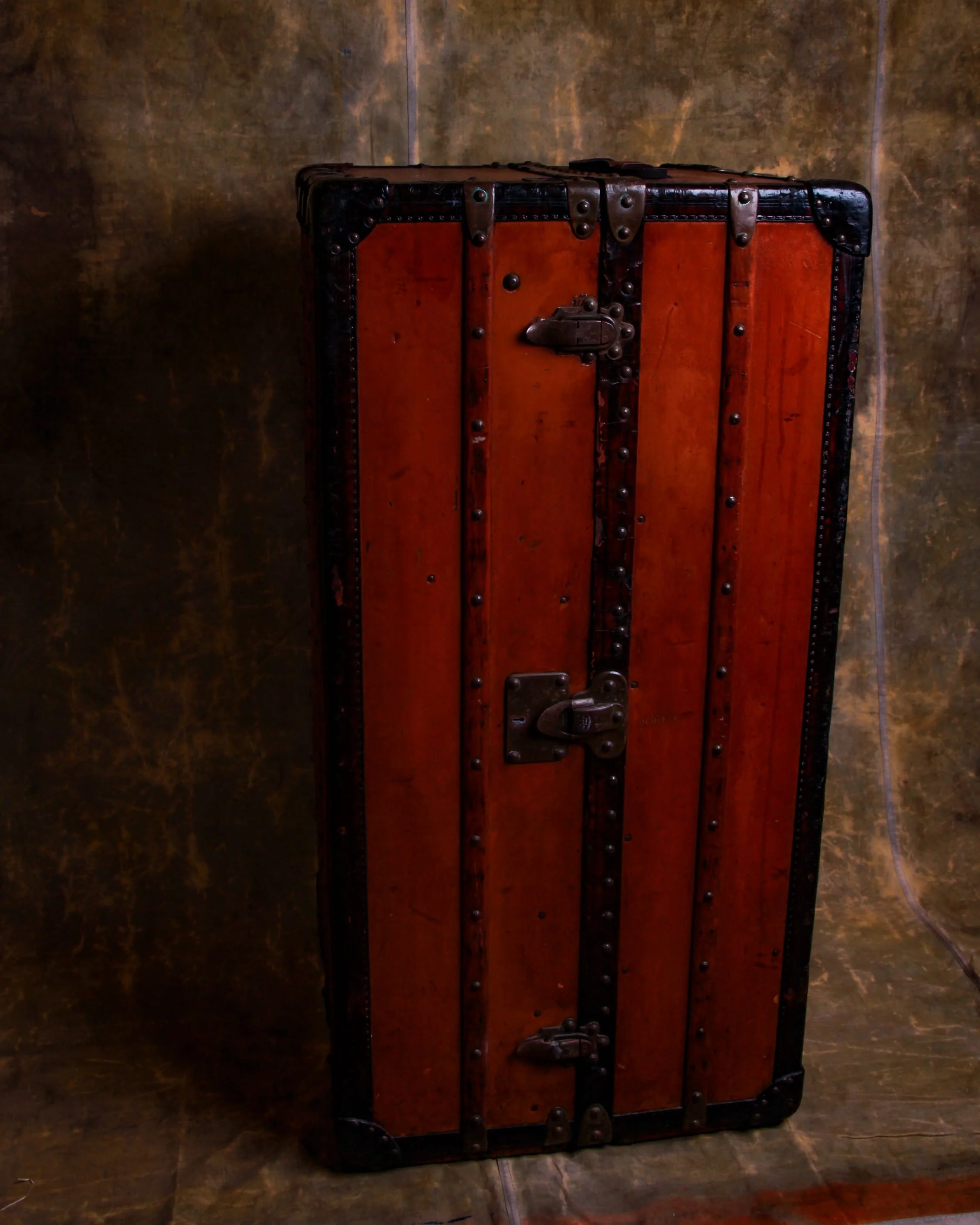
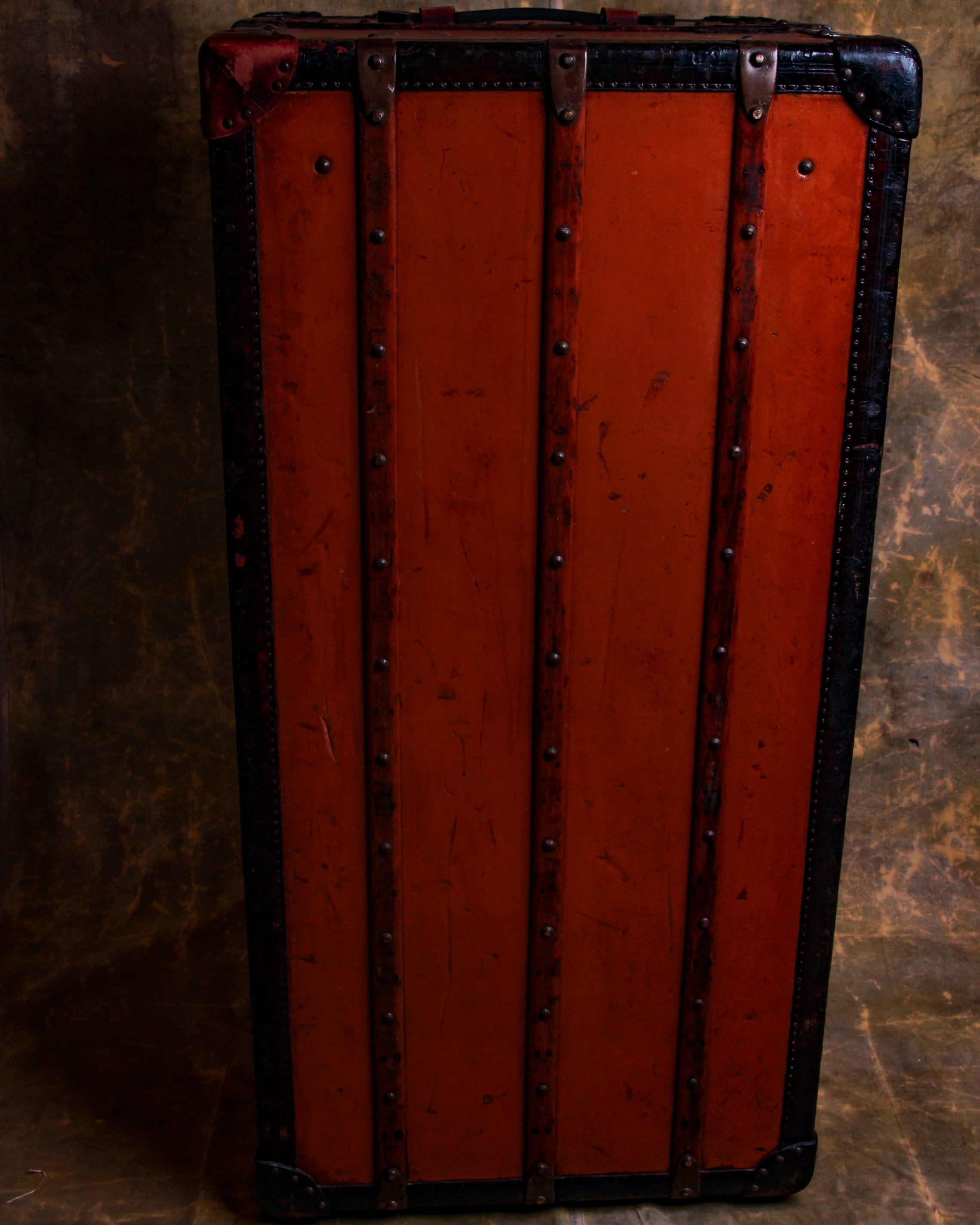
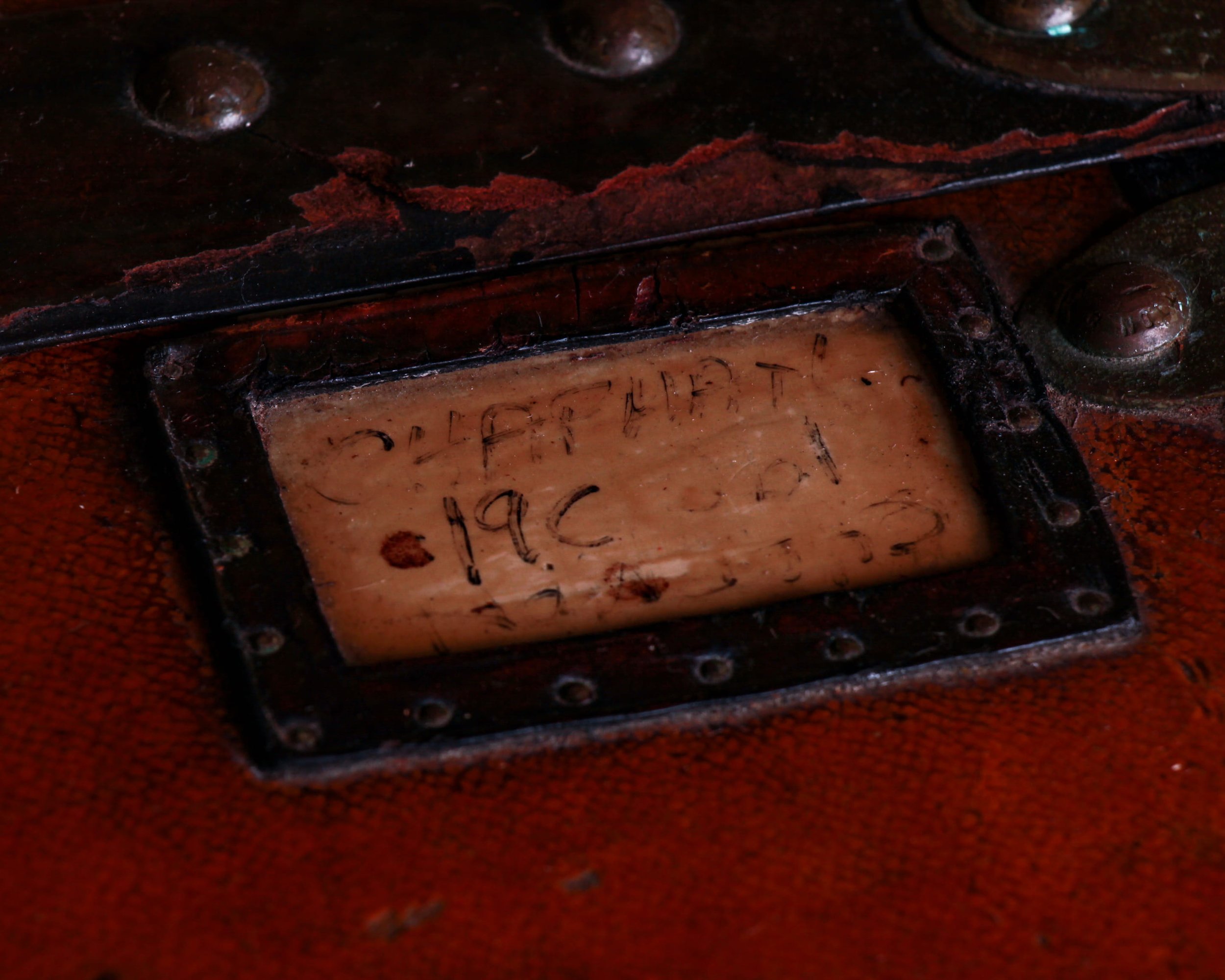
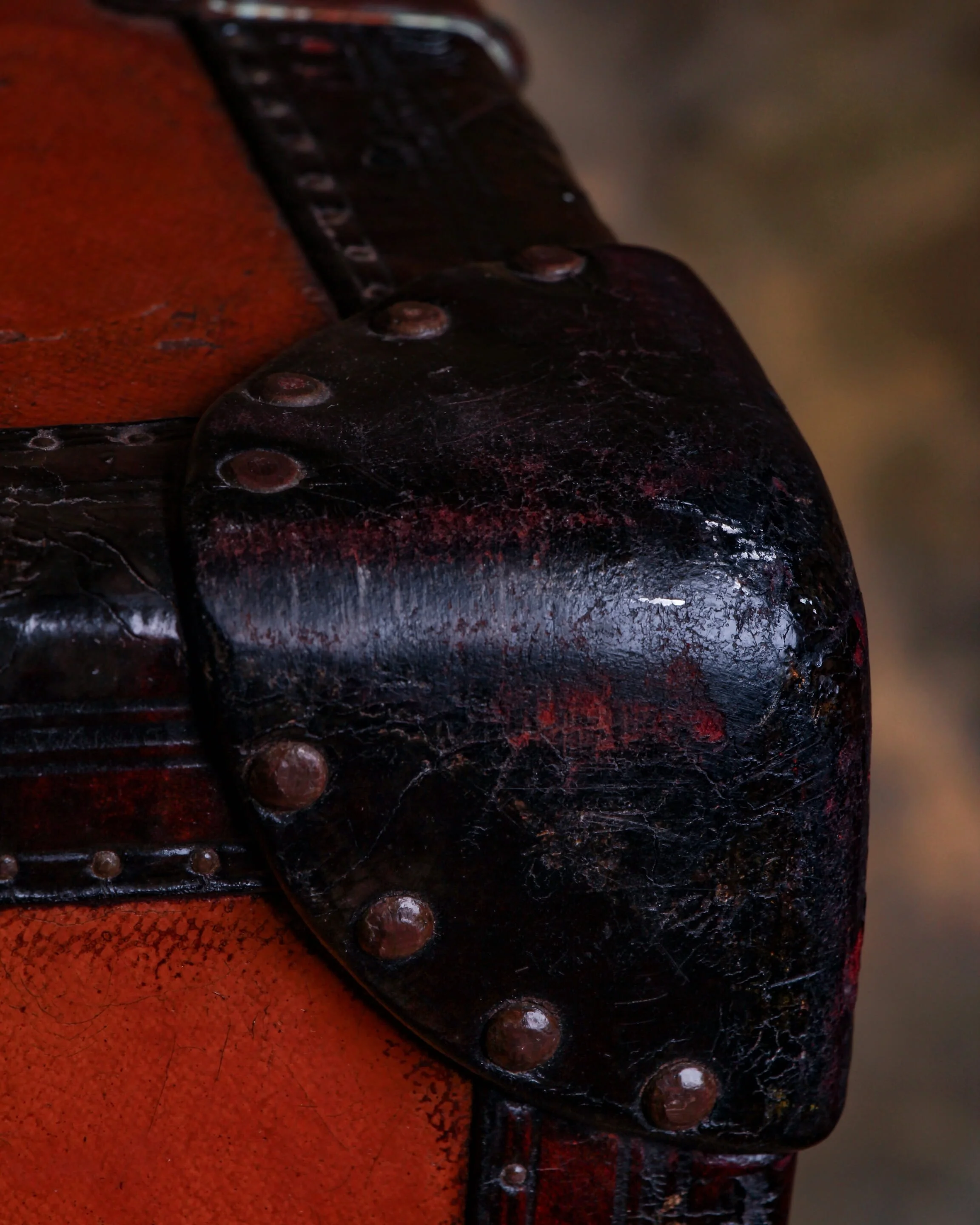
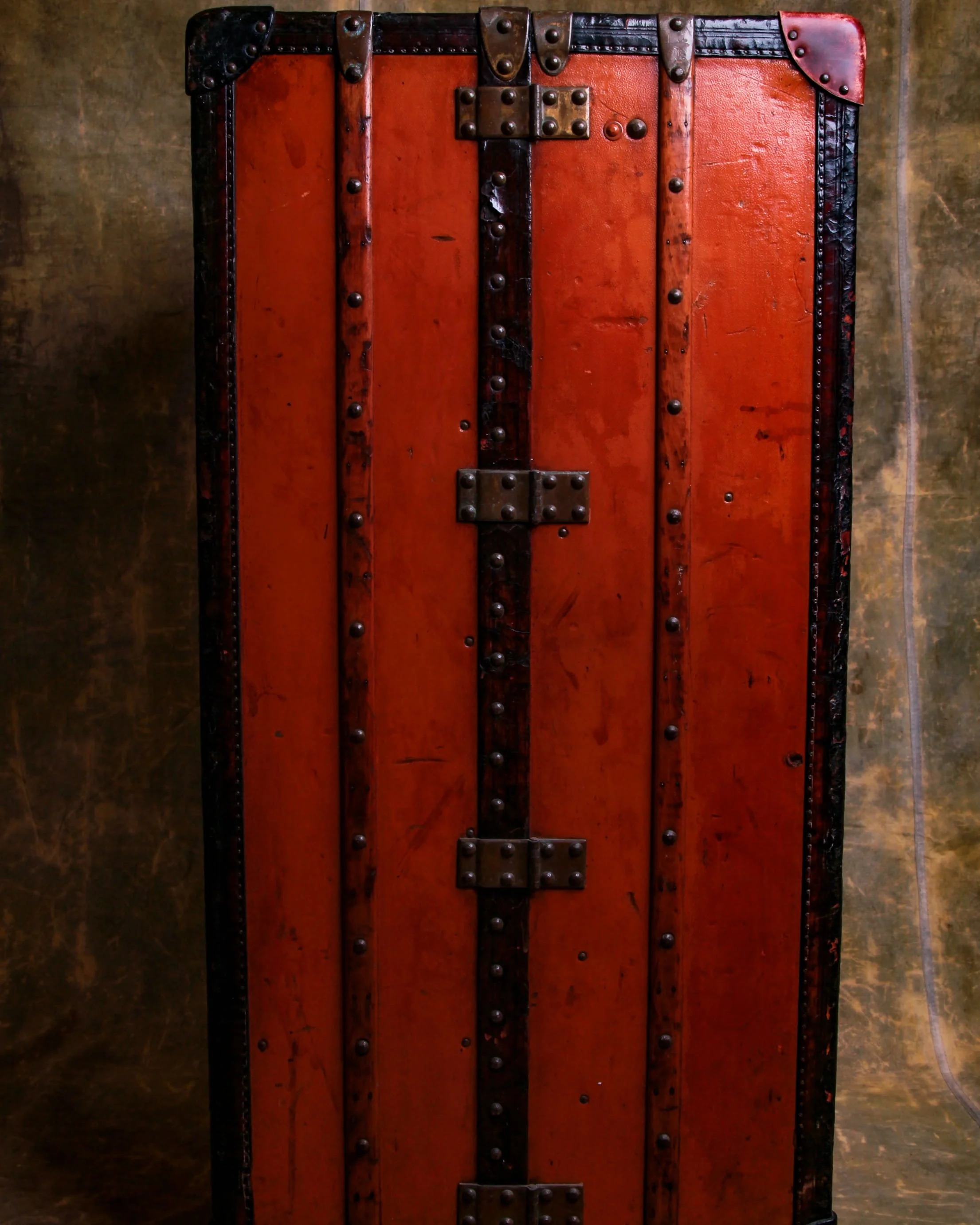
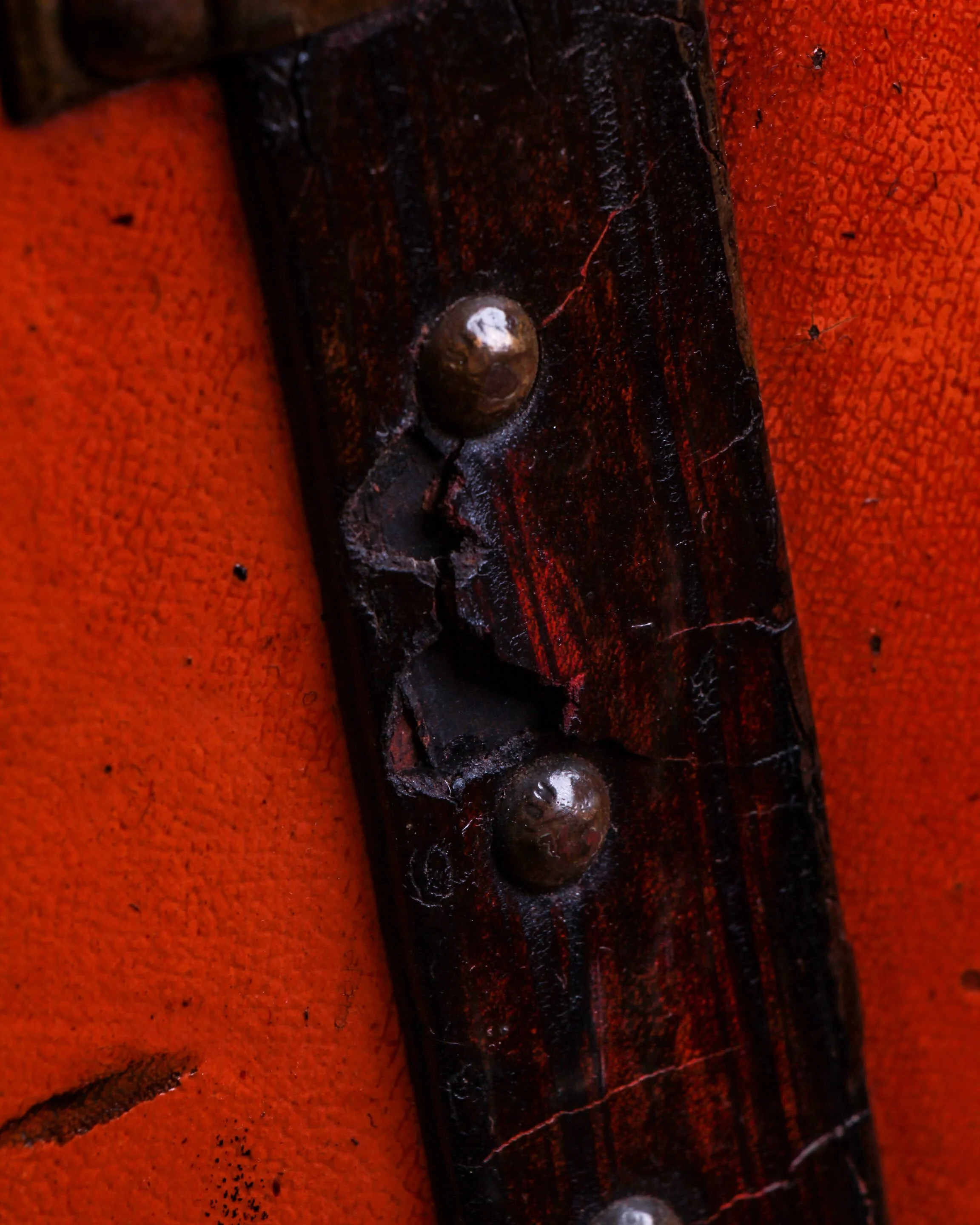
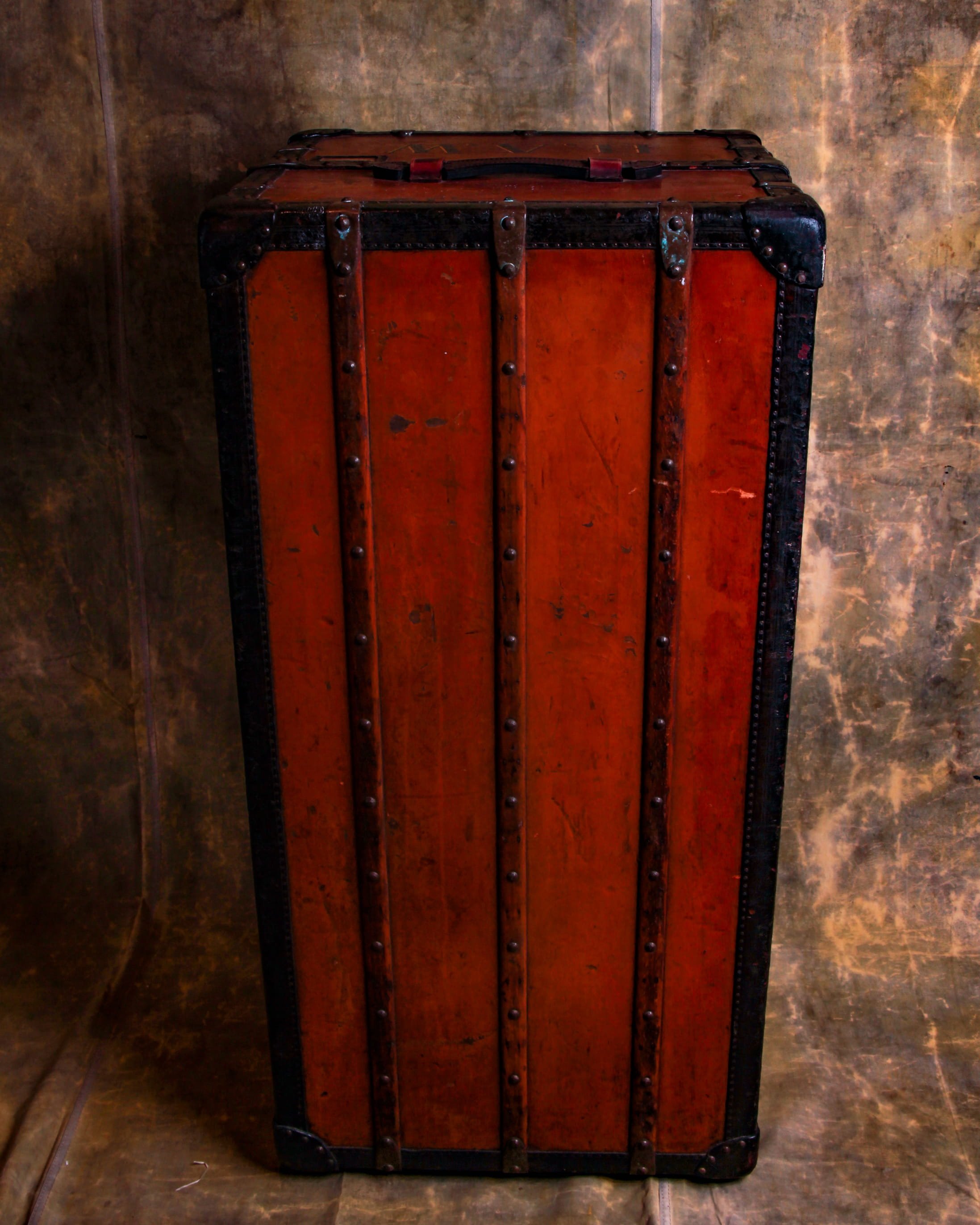
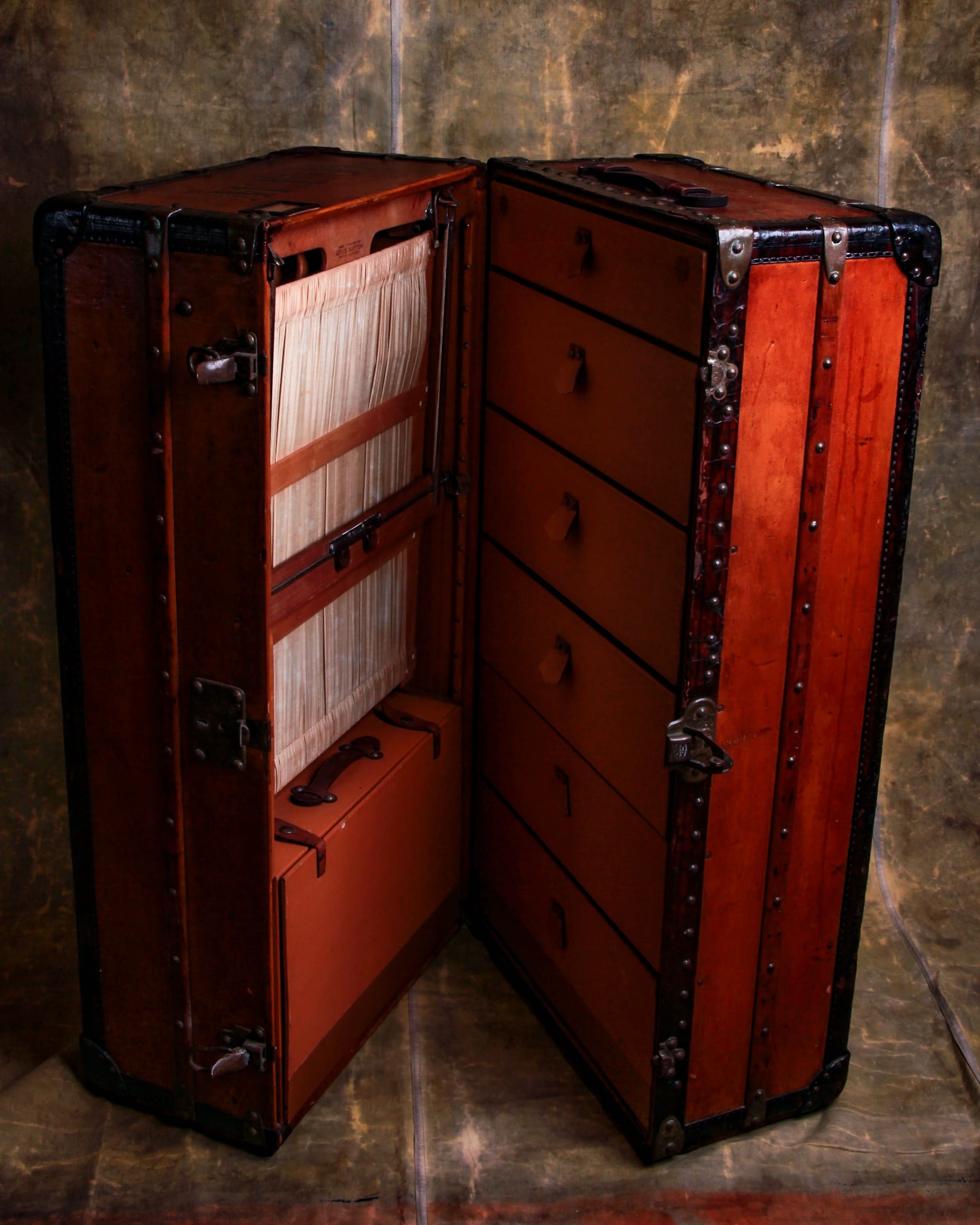
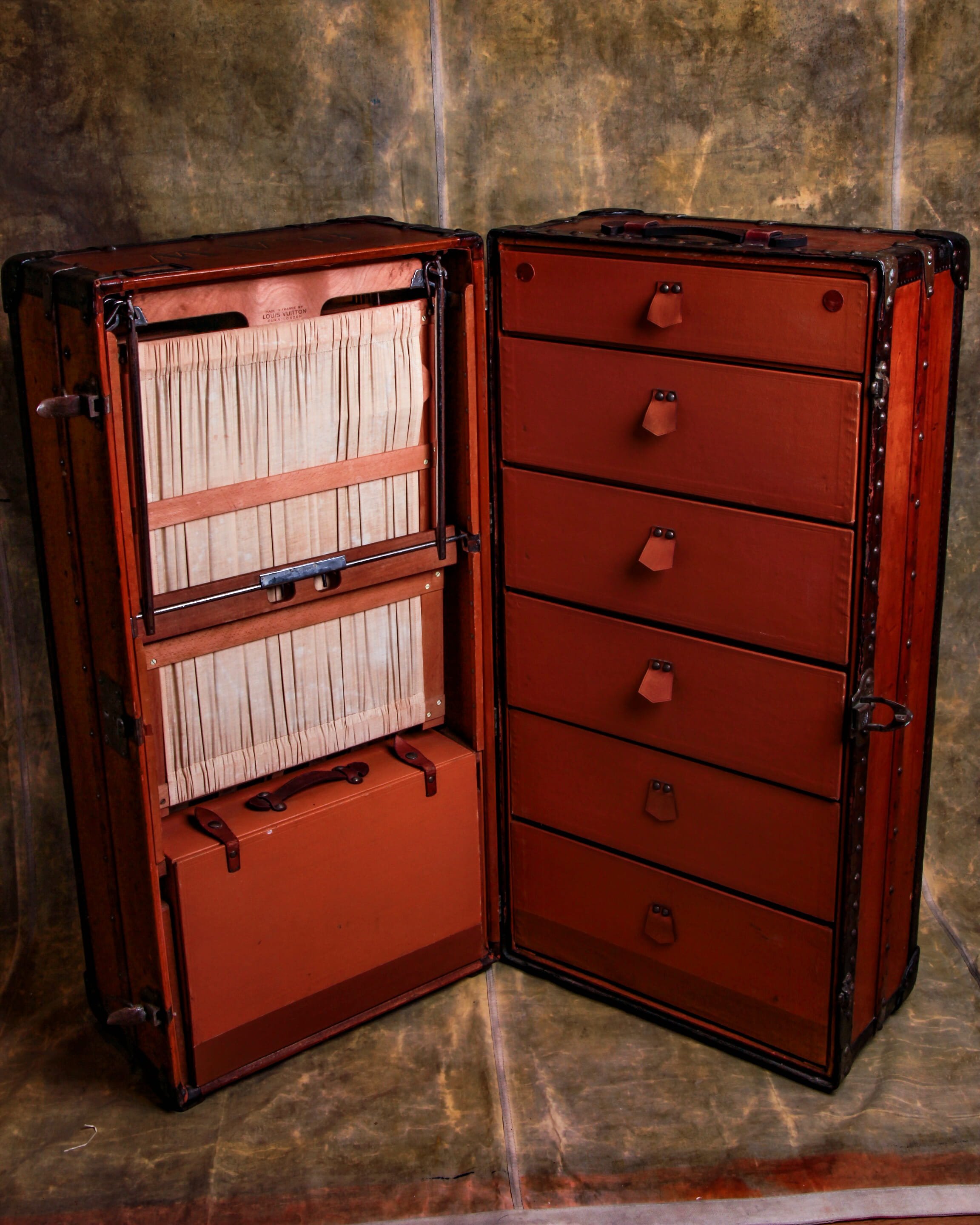
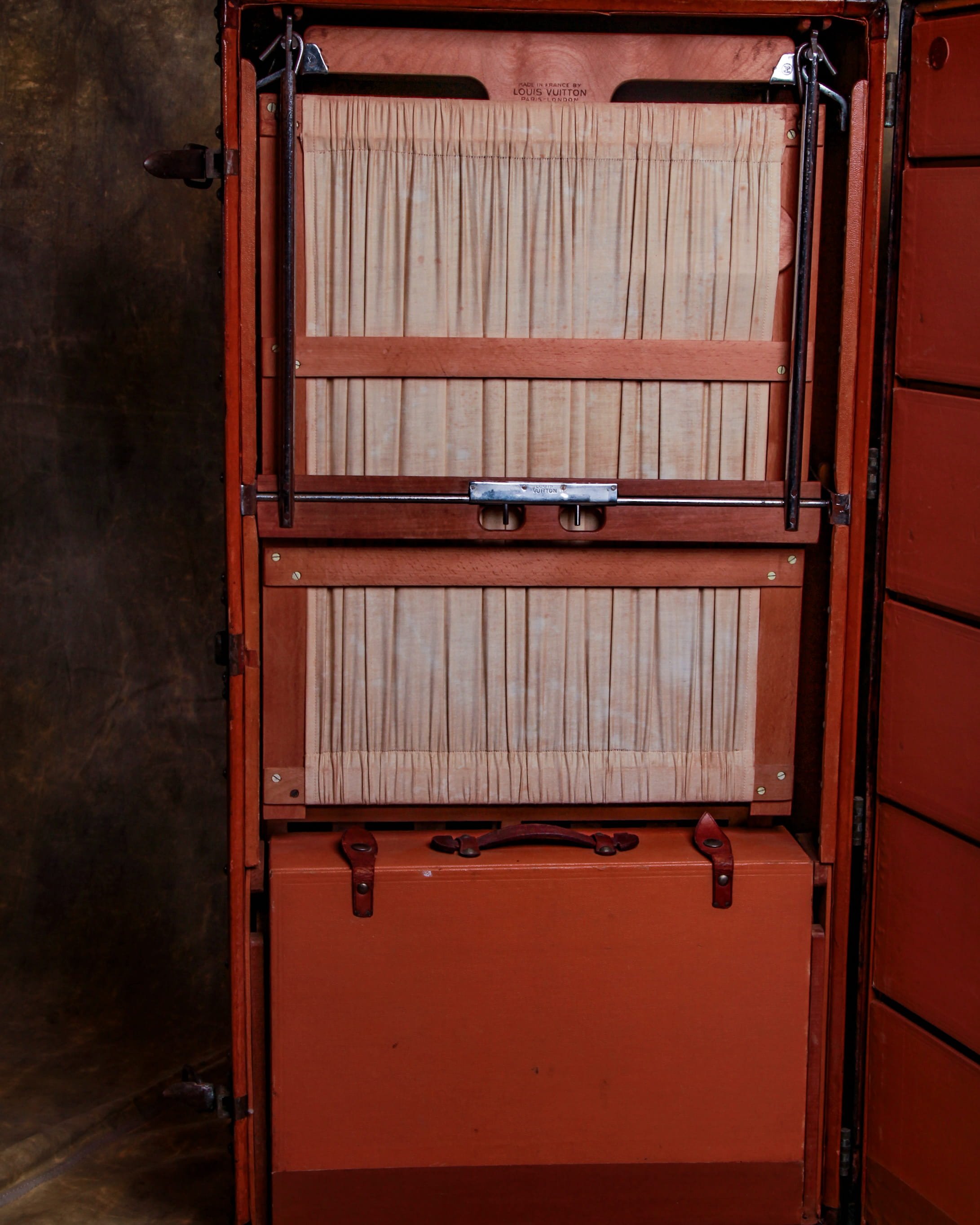
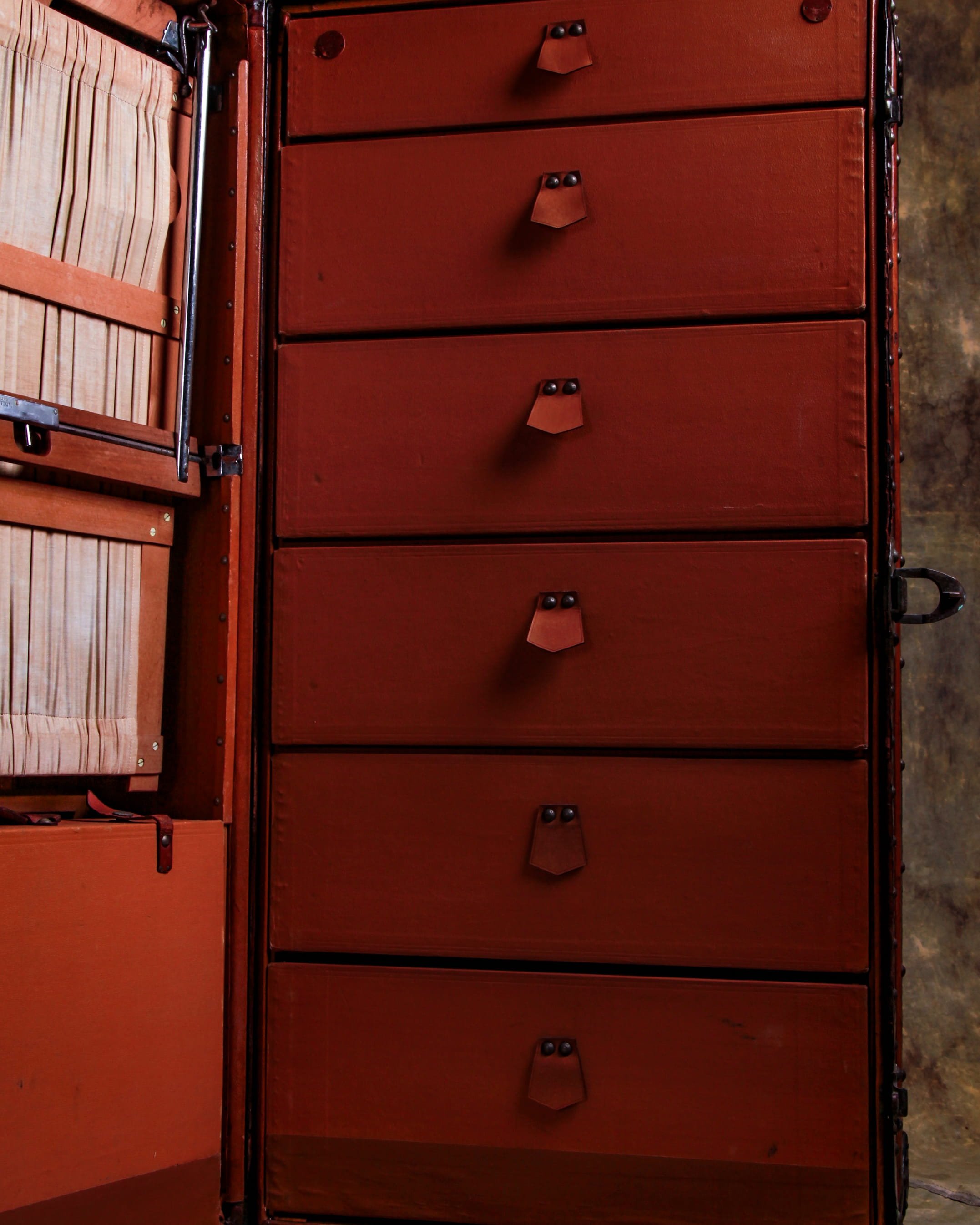
Early 1900s Louis Vuitton orange Vuitonitte wardrobe trunk sporting the initials H.A.W. (Vuitonitte is a coated fabric originally intended for automobile luggage. The waterproof, lightweight, resistant material could even be colored to match the finish of any car body). It features a hanging compartment with a partition, assorted hangers, and a small briefcase-the other side includes six graduated drawers. The large frame of this trunk used to be transported lying down, but would have been used standing on one end. The side on which the wardrobe rests is fitted with slats to raise the body and preserve the handle.
Measures: 44" × 22" × 23"
LV Trunks
Louis Vuitton antique trunks start with travel, but quickly move into something more considered. Founded in 1854, Louis Vuitton built its early reputation on flat-topped trunks designed to stack easily—a practical shift from the rounded lids that dominated before. It was a small design change with big impact, especially as train and steamship travel expanded.
Construction was meticulous. Lightweight yet durable wooden frames, reinforced corners, and layered canvas exteriors made the trunks both functional and resilient. Interiors were often customized—compartments for garments, trays for accessories—turning each piece into a kind of portable system.
What sets these trunks apart is how design and identity intertwined. Patterns like the Damier and later Monogram canvas weren’t just decorative—they helped deter imitation while creating a recognizable visual language.
Over time, these trunks pick up a specific kind of wear. Scuffed edges, travel labels, softened handles—marks of movement rather than neglect. They feel used, and that’s the point.
Today, they sit somewhere between luggage and furniture. Still structured, still purposeful, but carrying the weight of journeys long finished.
They’re not just containers. They’re records—of travel, of craft, and of a moment when getting somewhere required planning, patience, and a well-made place to put your things.
Early 1900s Louis Vuitton orange Vuitonitte wardrobe trunk sporting the initials H.A.W. (Vuitonitte is a coated fabric originally intended for automobile luggage. The waterproof, lightweight, resistant material could even be colored to match the finish of any car body). It features a hanging compartment with a partition, assorted hangers, and a small briefcase-the other side includes six graduated drawers. The large frame of this trunk used to be transported lying down, but would have been used standing on one end. The side on which the wardrobe rests is fitted with slats to raise the body and preserve the handle.
Measures: 44" × 22" × 23"
LV Trunks
Louis Vuitton antique trunks start with travel, but quickly move into something more considered. Founded in 1854, Louis Vuitton built its early reputation on flat-topped trunks designed to stack easily—a practical shift from the rounded lids that dominated before. It was a small design change with big impact, especially as train and steamship travel expanded.
Construction was meticulous. Lightweight yet durable wooden frames, reinforced corners, and layered canvas exteriors made the trunks both functional and resilient. Interiors were often customized—compartments for garments, trays for accessories—turning each piece into a kind of portable system.
What sets these trunks apart is how design and identity intertwined. Patterns like the Damier and later Monogram canvas weren’t just decorative—they helped deter imitation while creating a recognizable visual language.
Over time, these trunks pick up a specific kind of wear. Scuffed edges, travel labels, softened handles—marks of movement rather than neglect. They feel used, and that’s the point.
Today, they sit somewhere between luggage and furniture. Still structured, still purposeful, but carrying the weight of journeys long finished.
They’re not just containers. They’re records—of travel, of craft, and of a moment when getting somewhere required planning, patience, and a well-made place to put your things.