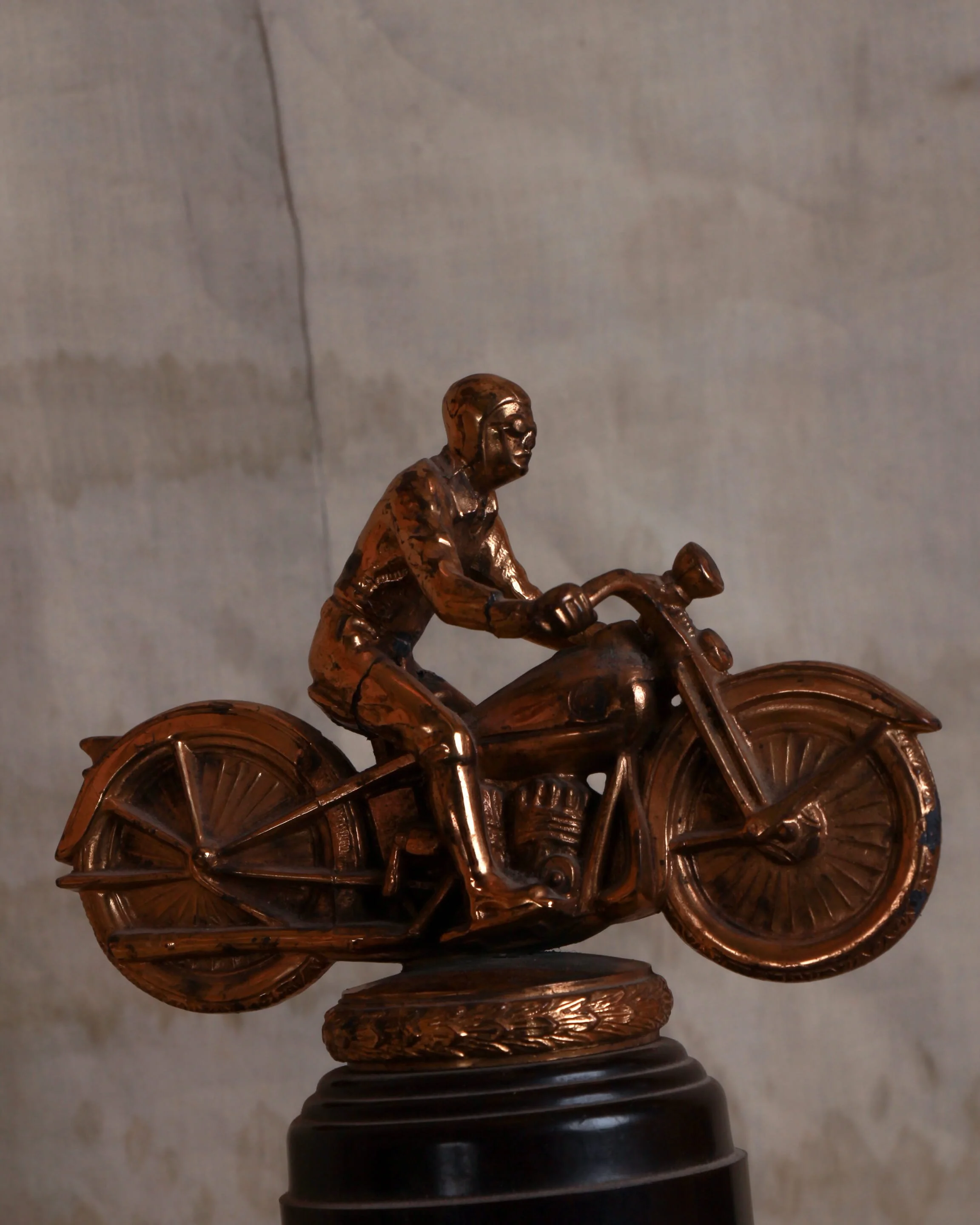
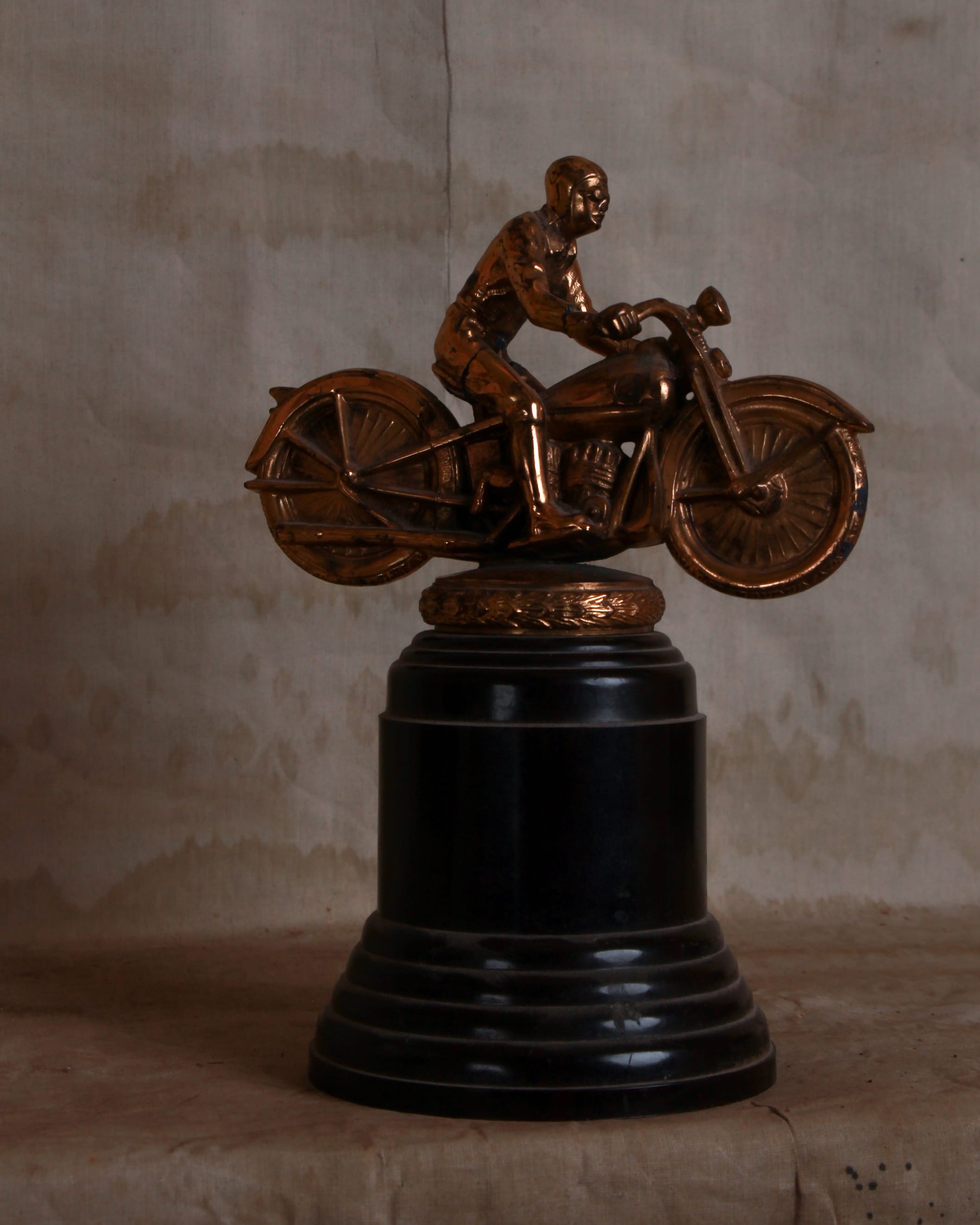
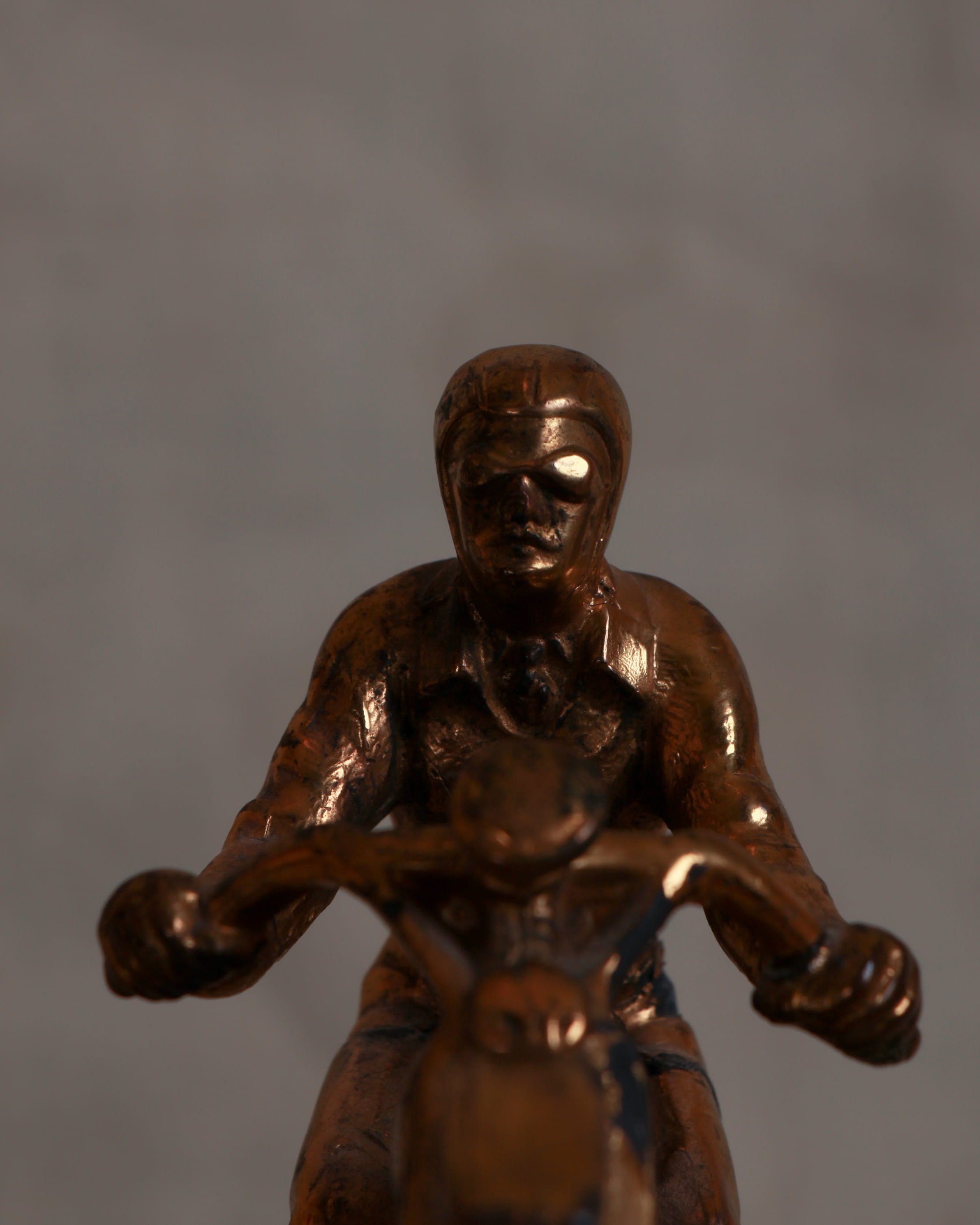
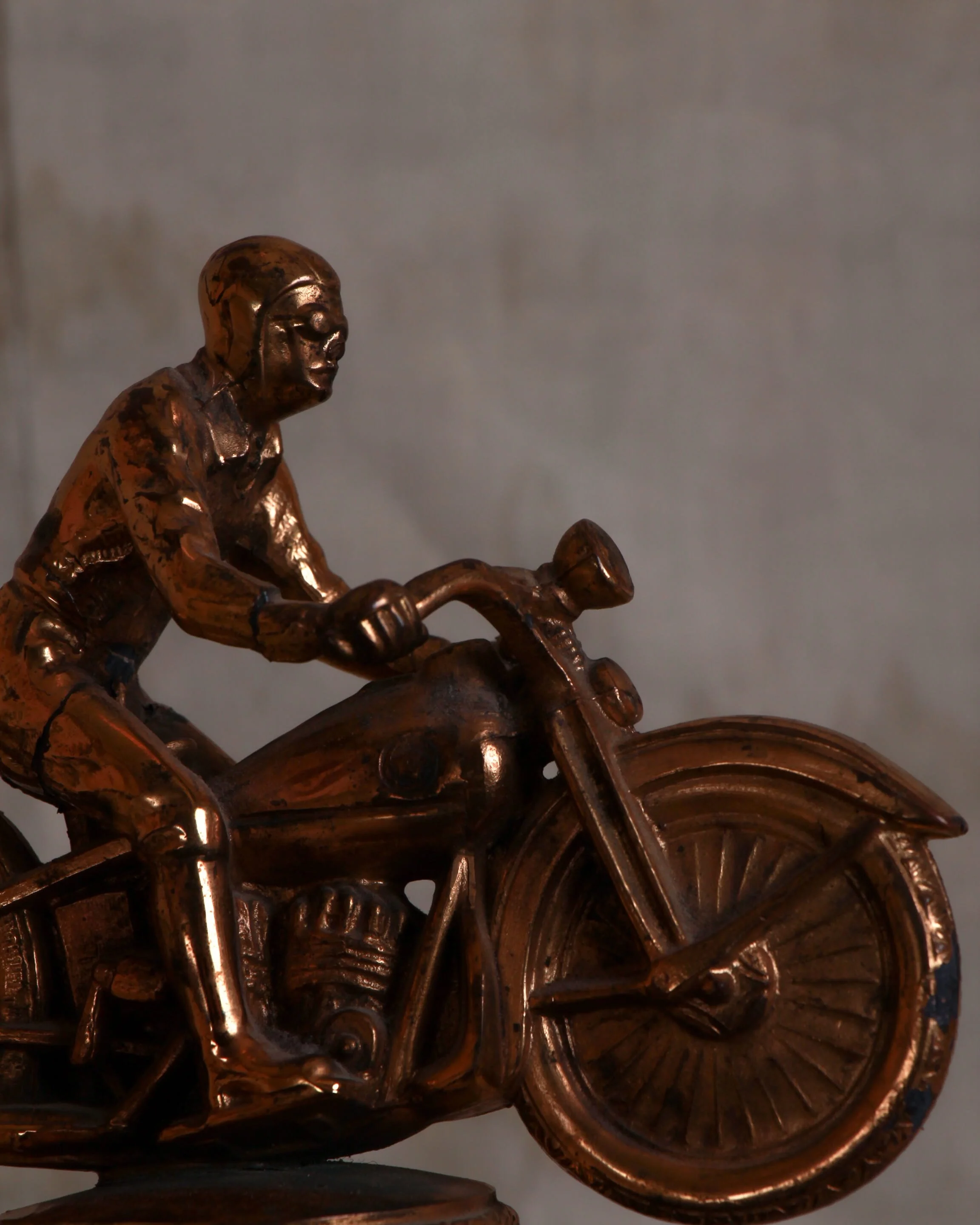
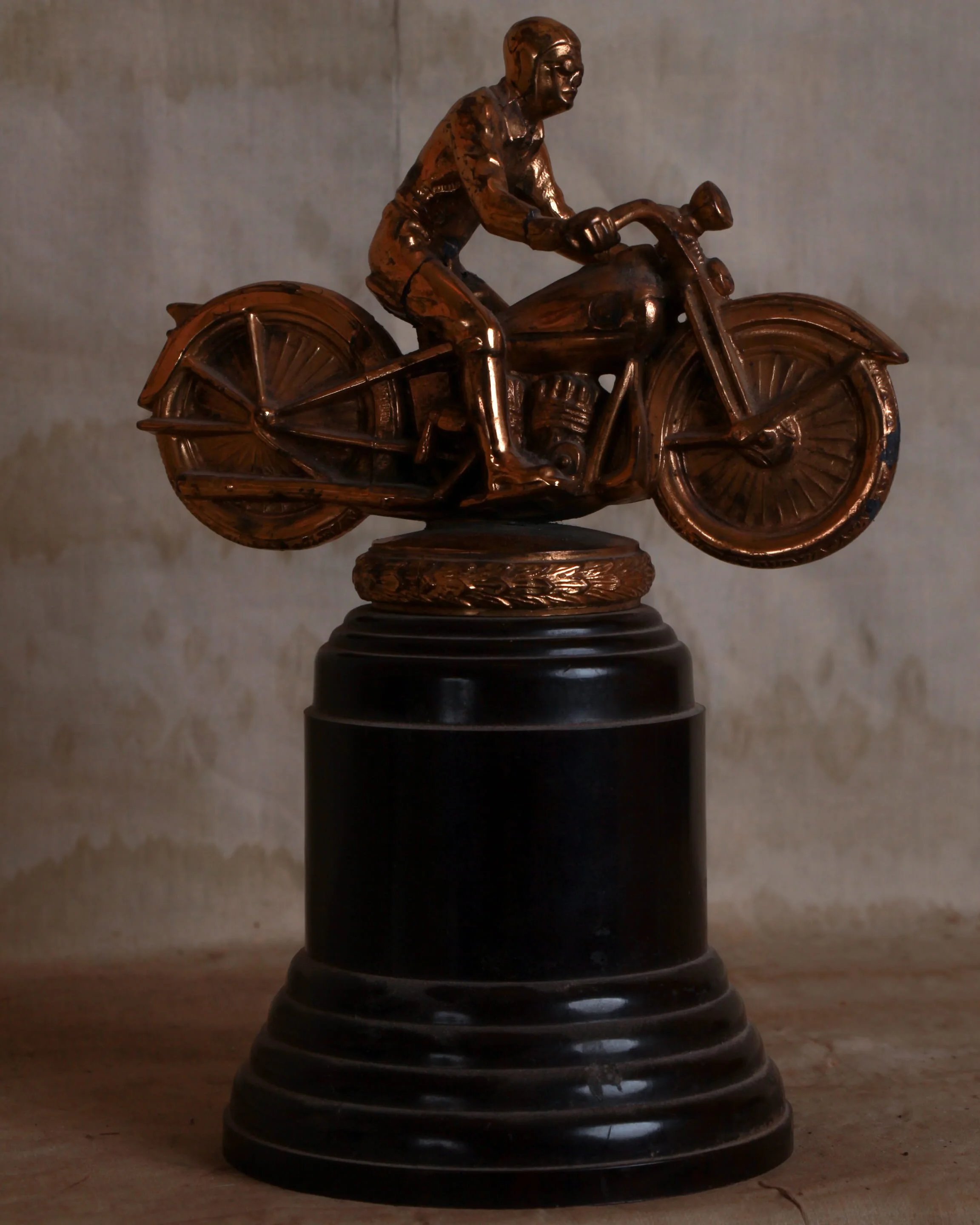
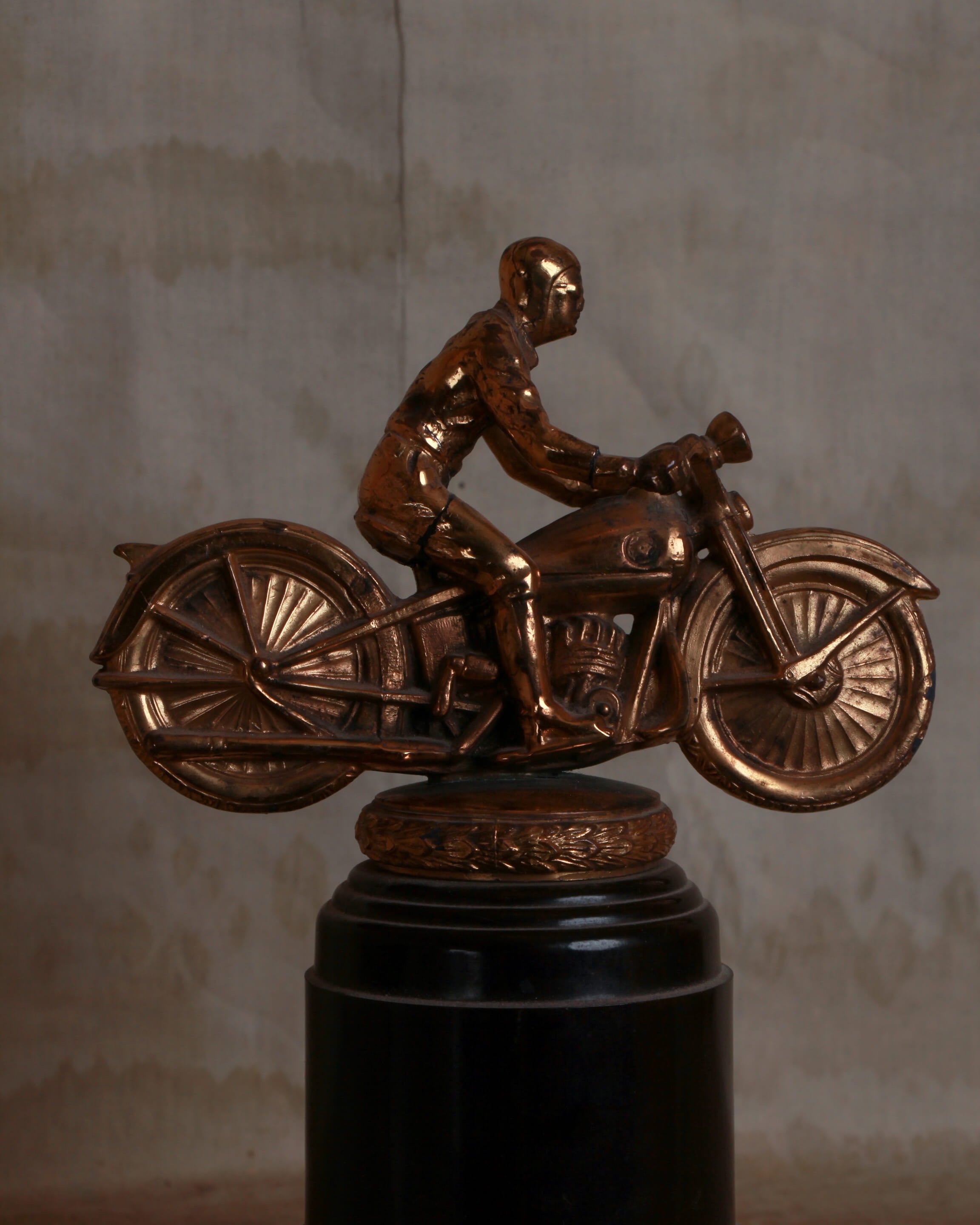
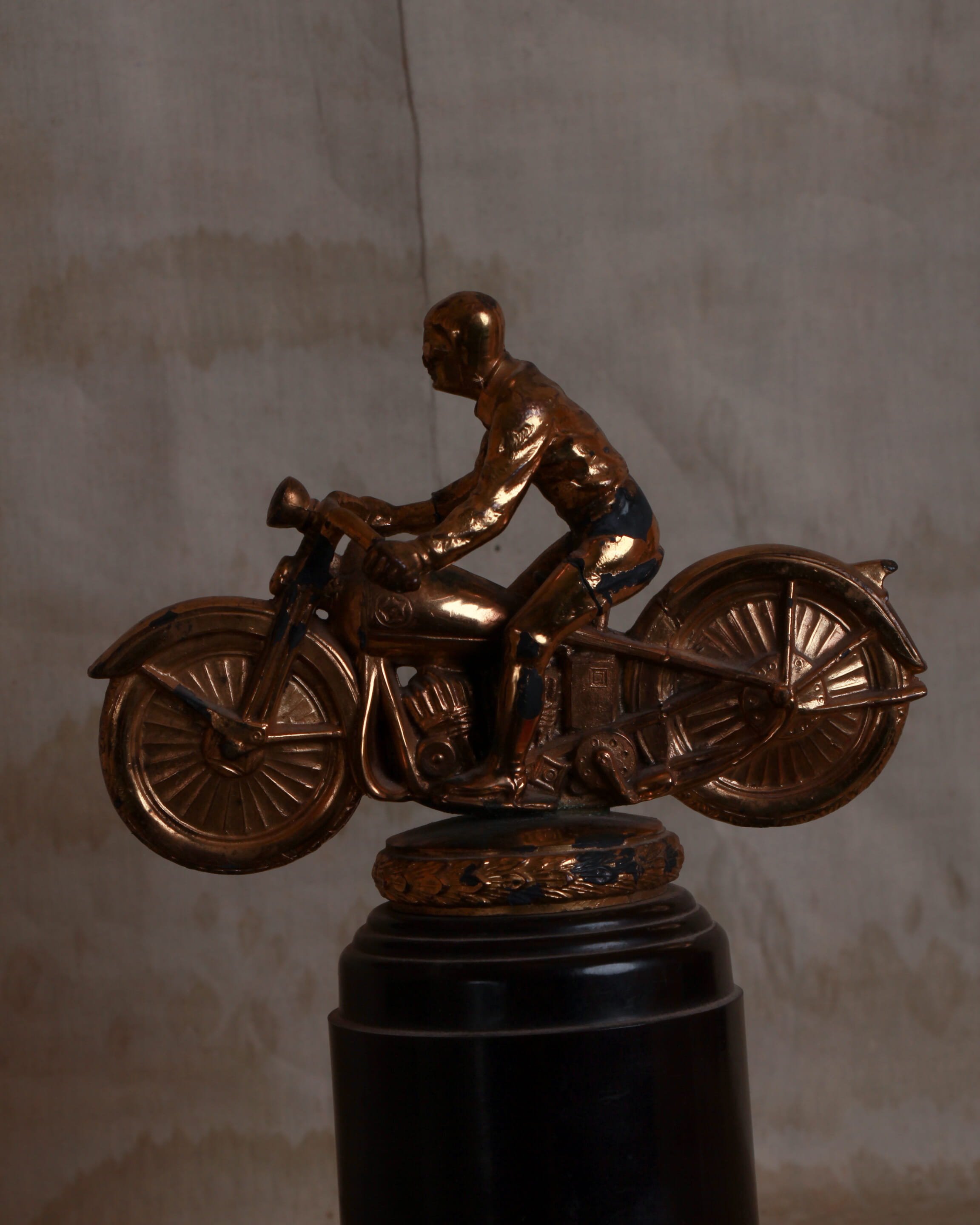
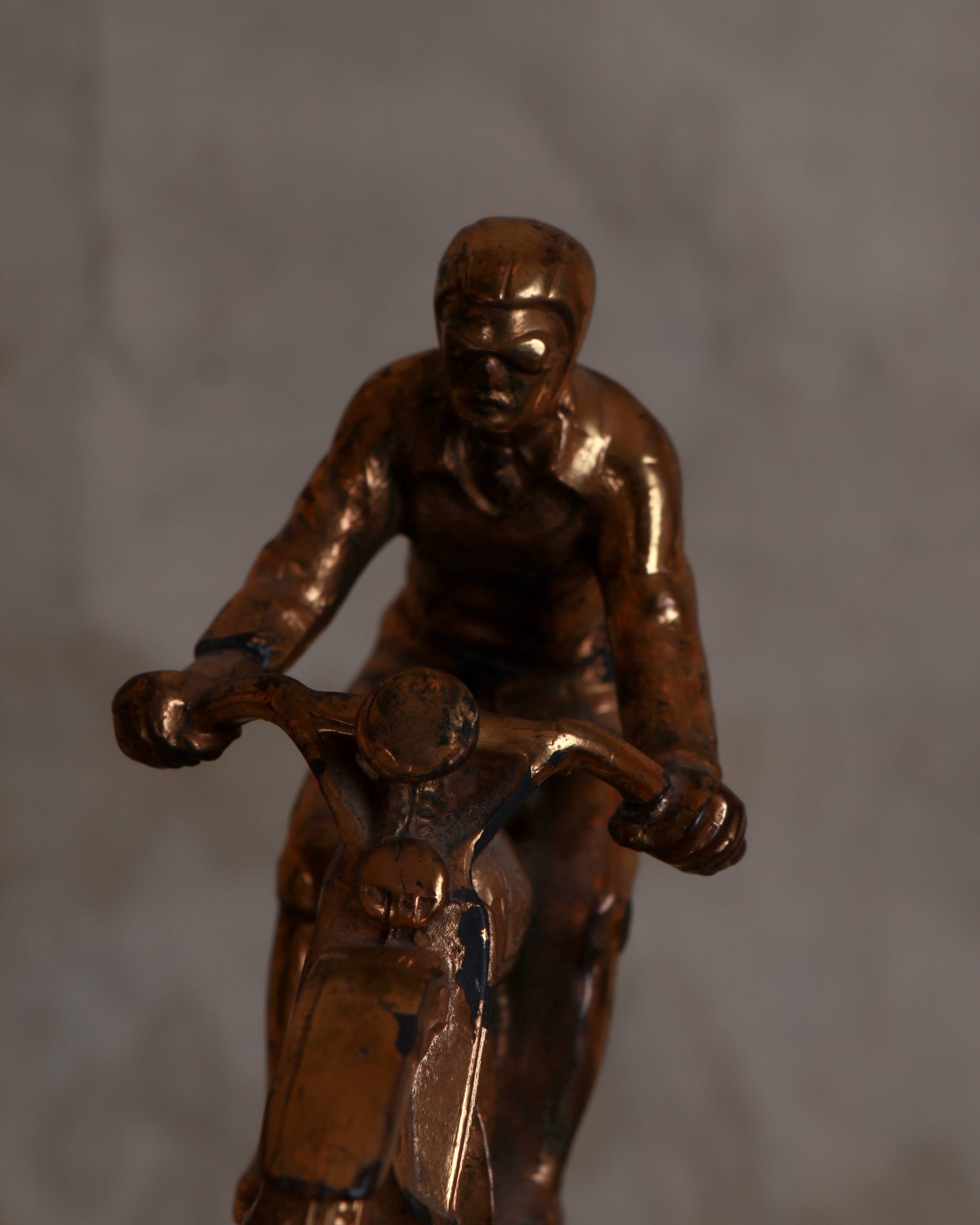
There’s a certain kind of confidence baked into this 1940s motorcycle trophy—the kind that doesn’t need engraving to tell you it was earned the hard way. Cast in a warm, coppery metal and perched on a stepped black base, the whole piece feels like motion paused mid-breath. The rider leans forward, elbows tucked, body low over the tank in that unmistakable racing posture—somewhere between control and chaos.
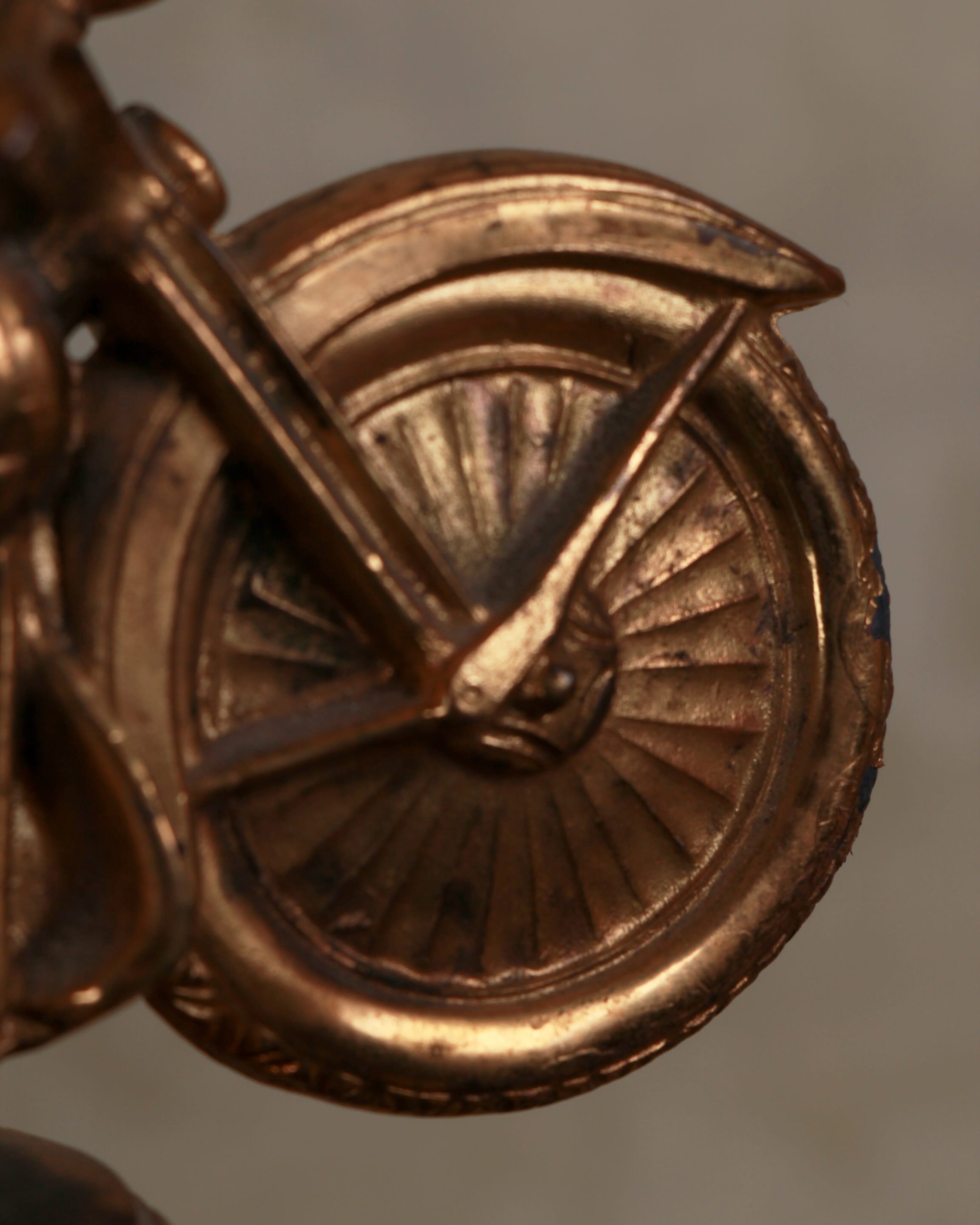
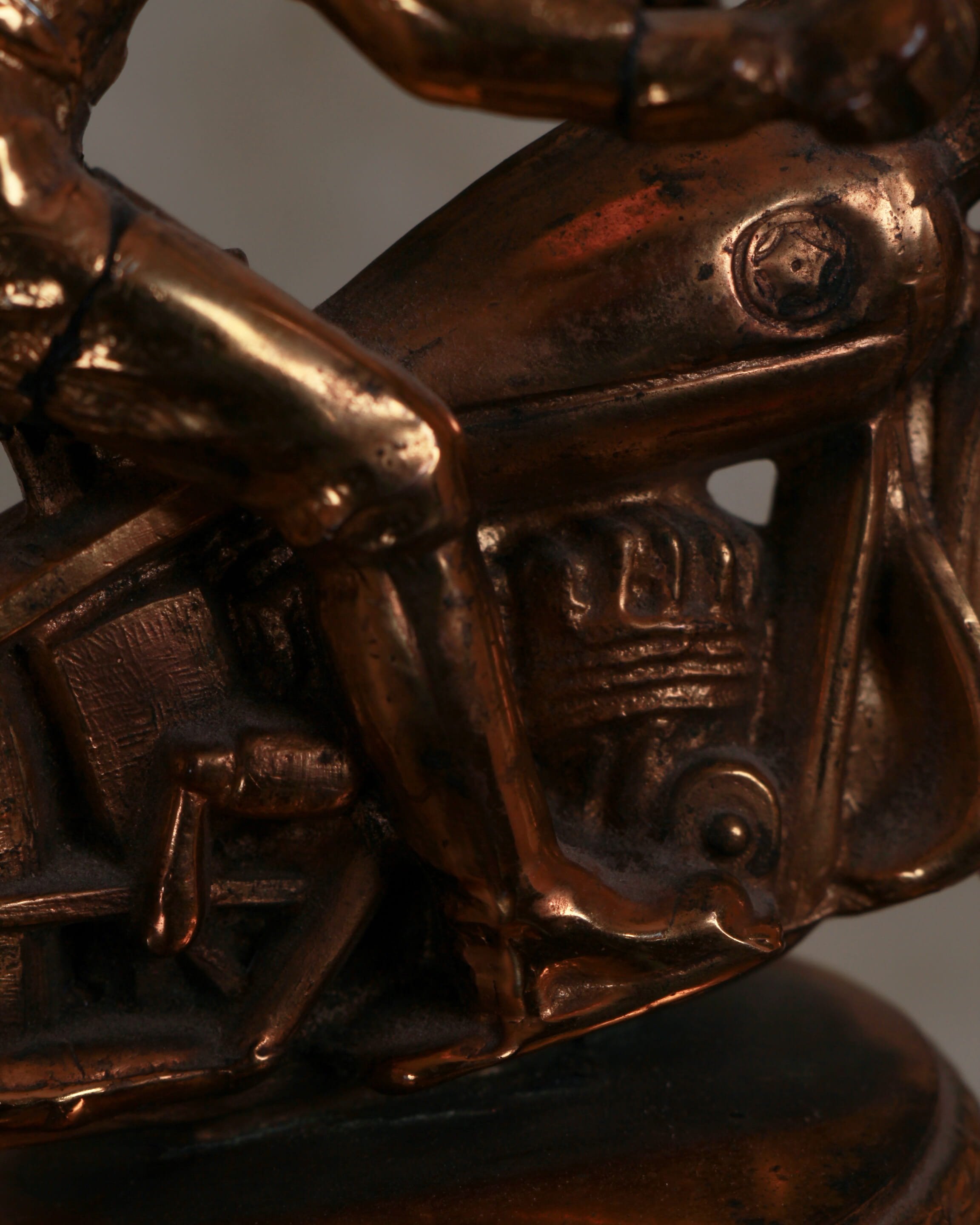
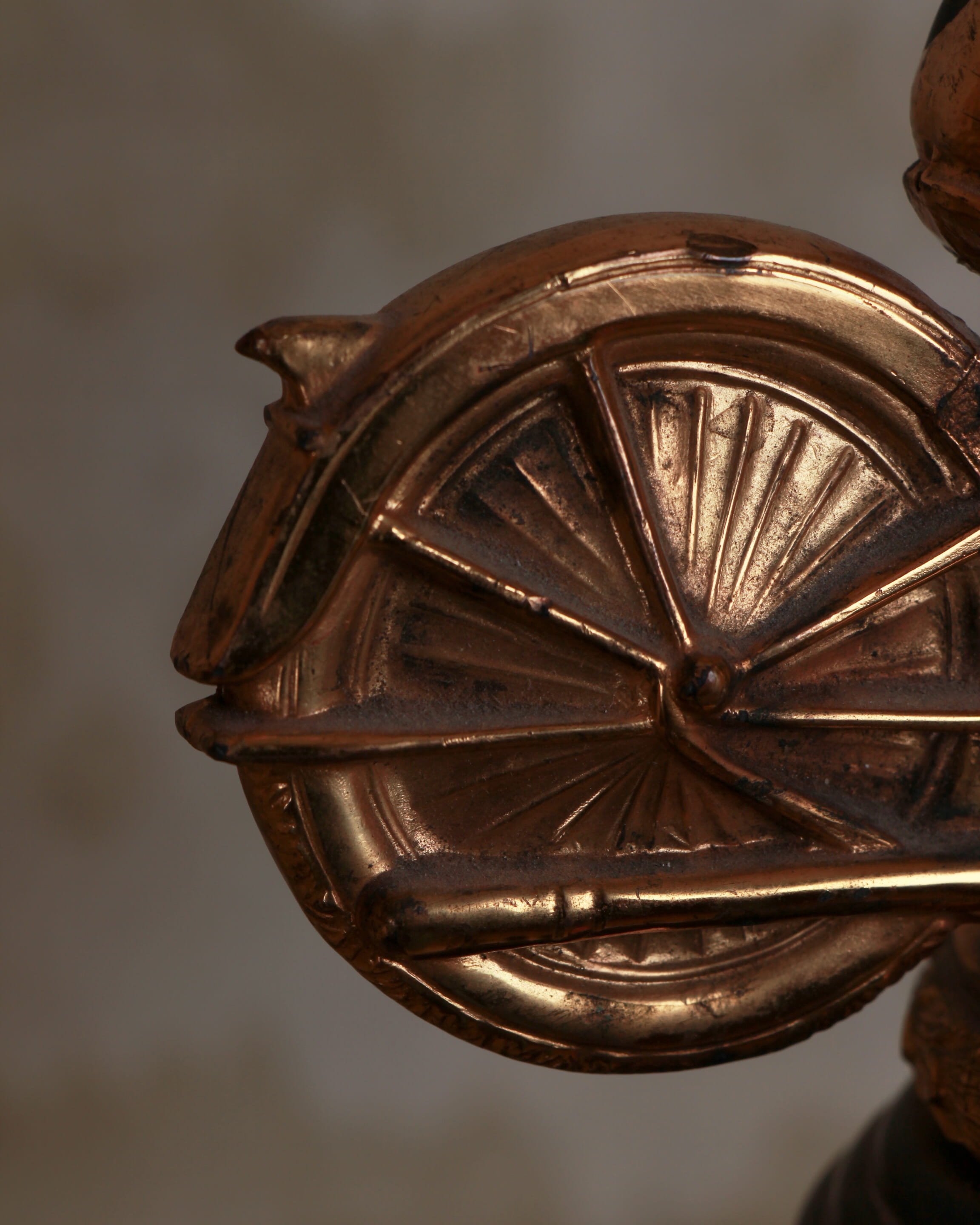
The detailing is surprisingly sharp for something that was produced as an award rather than a sculpture. You can pick out the engine block, the suggestion of exhaust, the ridged pattern of the wheels, even the slight tension in the rider’s grip. It’s not fussy, but it’s intentional—just enough information to sell the speed.
What really makes it, though, is the surface. The metal has developed a deep, uneven patina over time, with darker areas settling into the recesses and brighter highlights catching along the edges—helmet, shoulders, wheel rims. It gives the whole figure a sense of wear that feels appropriate, like it’s been through a few races of its own.
Mounted on that classic tiered base, it carries the visual language of mid-century trophies—solid, a little dramatic, meant to be displayed proudly on a shelf or in a case. Whether it once marked a local dirt track victory or a club race win, it holds onto that moment of recognition.
Now it reads less as a prize and more as a snapshot—of speed, of craftsmanship, of a time when racing was raw and a trophy like this meant you’d actually held your nerve.
Motorcycle Trophies
Motorcycle trophies are small monuments to speed and nerve. Mid-20th century examples often feature riders frozen mid-race, cast in metal and mounted on bold bases. Awarded at local tracks or club events, they mark victories earned through grit, balance, and a willingness to push just a little further.
There’s a certain kind of confidence baked into this 1940s motorcycle trophy—the kind that doesn’t need engraving to tell you it was earned the hard way. Cast in a warm, coppery metal and perched on a stepped black base, the whole piece feels like motion paused mid-breath. The rider leans forward, elbows tucked, body low over the tank in that unmistakable racing posture—somewhere between control and chaos.
The detailing is surprisingly sharp for something that was produced as an award rather than a sculpture. You can pick out the engine block, the suggestion of exhaust, the ridged pattern of the wheels, even the slight tension in the rider’s grip. It’s not fussy, but it’s intentional—just enough information to sell the speed.
What really makes it, though, is the surface. The metal has developed a deep, uneven patina over time, with darker areas settling into the recesses and brighter highlights catching along the edges—helmet, shoulders, wheel rims. It gives the whole figure a sense of wear that feels appropriate, like it’s been through a few races of its own.
Mounted on that classic tiered base, it carries the visual language of mid-century trophies—solid, a little dramatic, meant to be displayed proudly on a shelf or in a case. Whether it once marked a local dirt track victory or a club race win, it holds onto that moment of recognition.
Now it reads less as a prize and more as a snapshot—of speed, of craftsmanship, of a time when racing was raw and a trophy like this meant you’d actually held your nerve.
Motorcycle Trophies
Motorcycle trophies are small monuments to speed and nerve. Mid-20th century examples often feature riders frozen mid-race, cast in metal and mounted on bold bases. Awarded at local tracks or club events, they mark victories earned through grit, balance, and a willingness to push just a little further.