ITEM NOT AVAILABLE IMMEDIATELY—INQUIRE IF INTERESTED hello@heimweeantiques.com
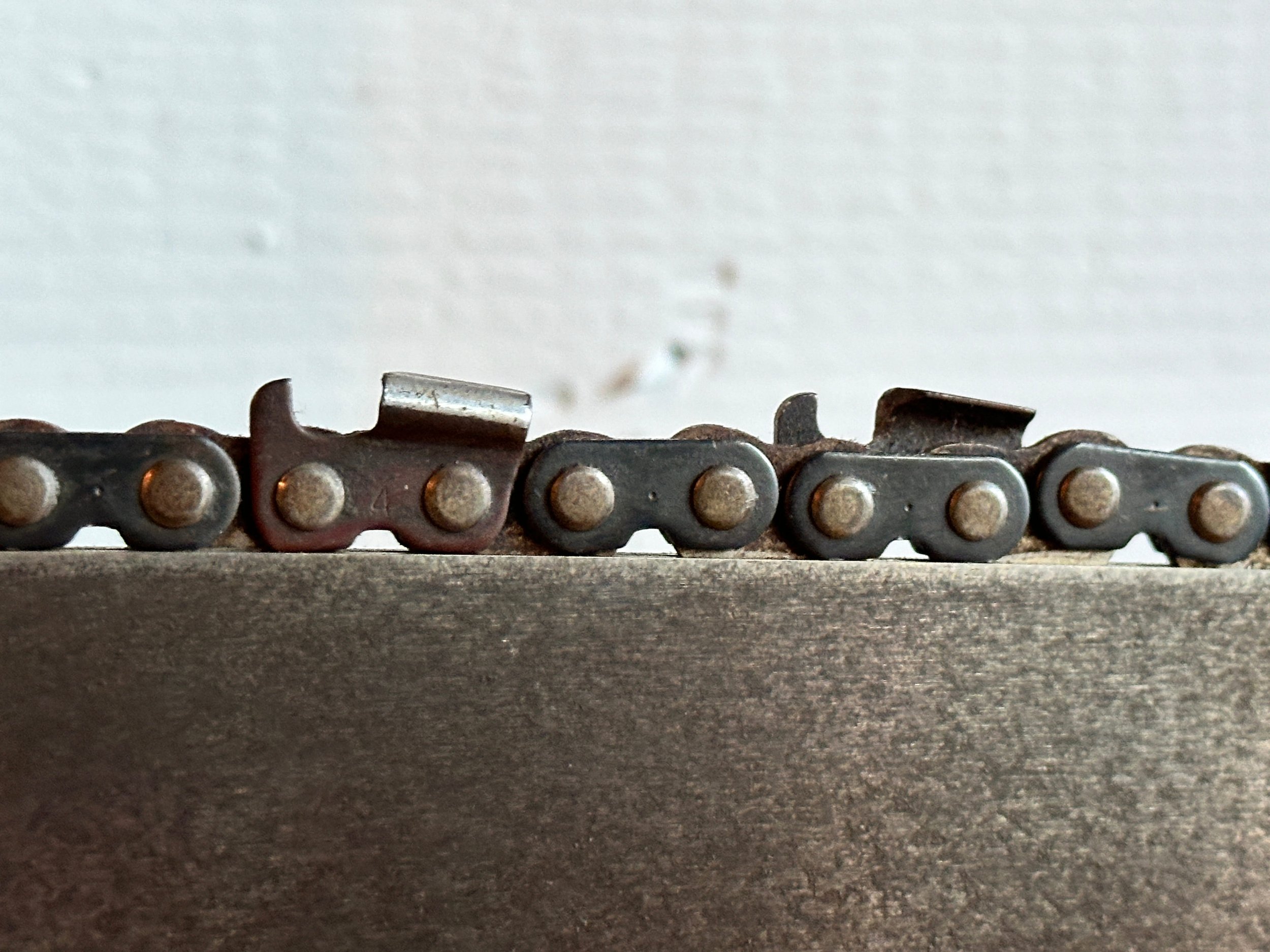
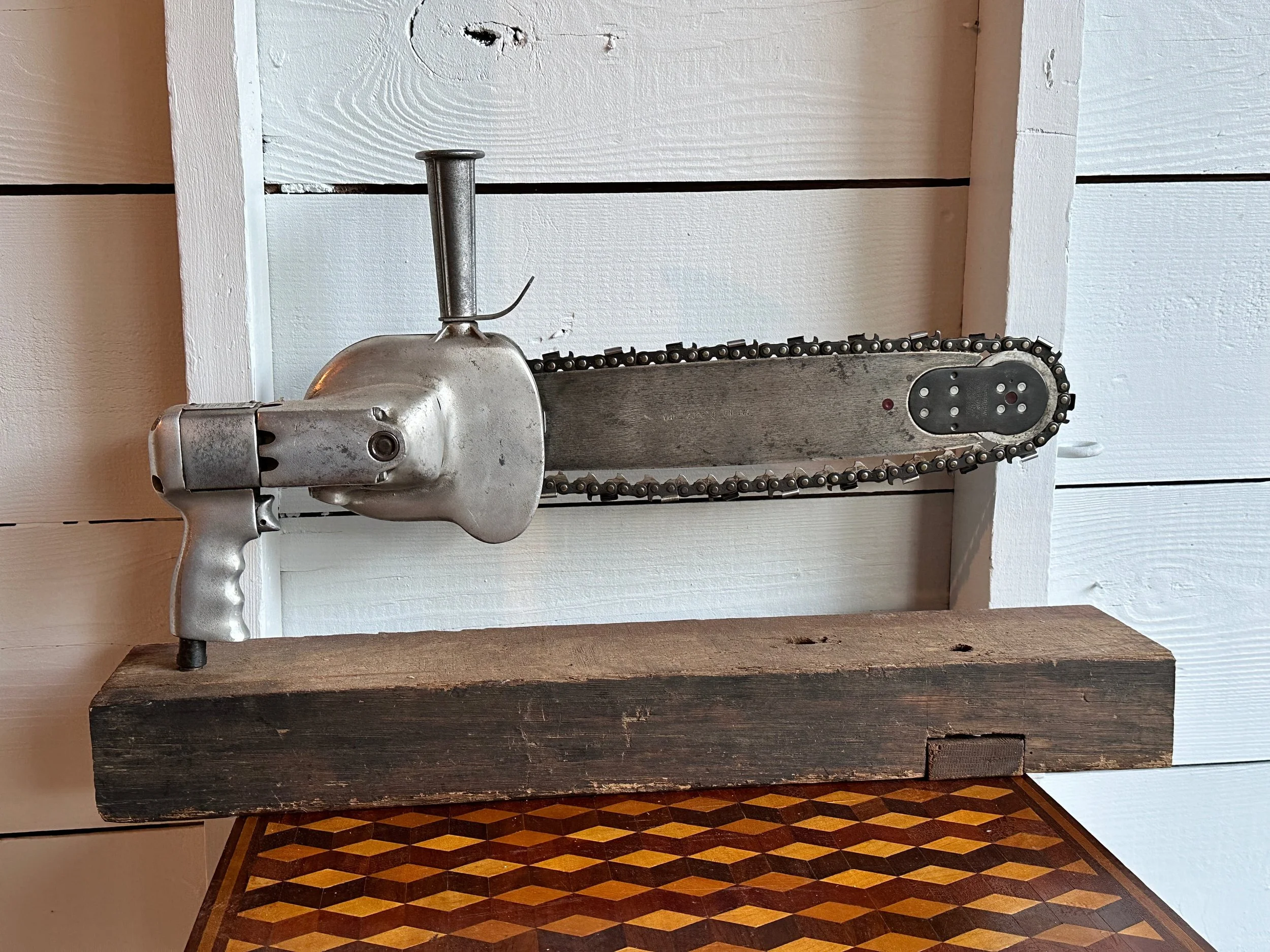
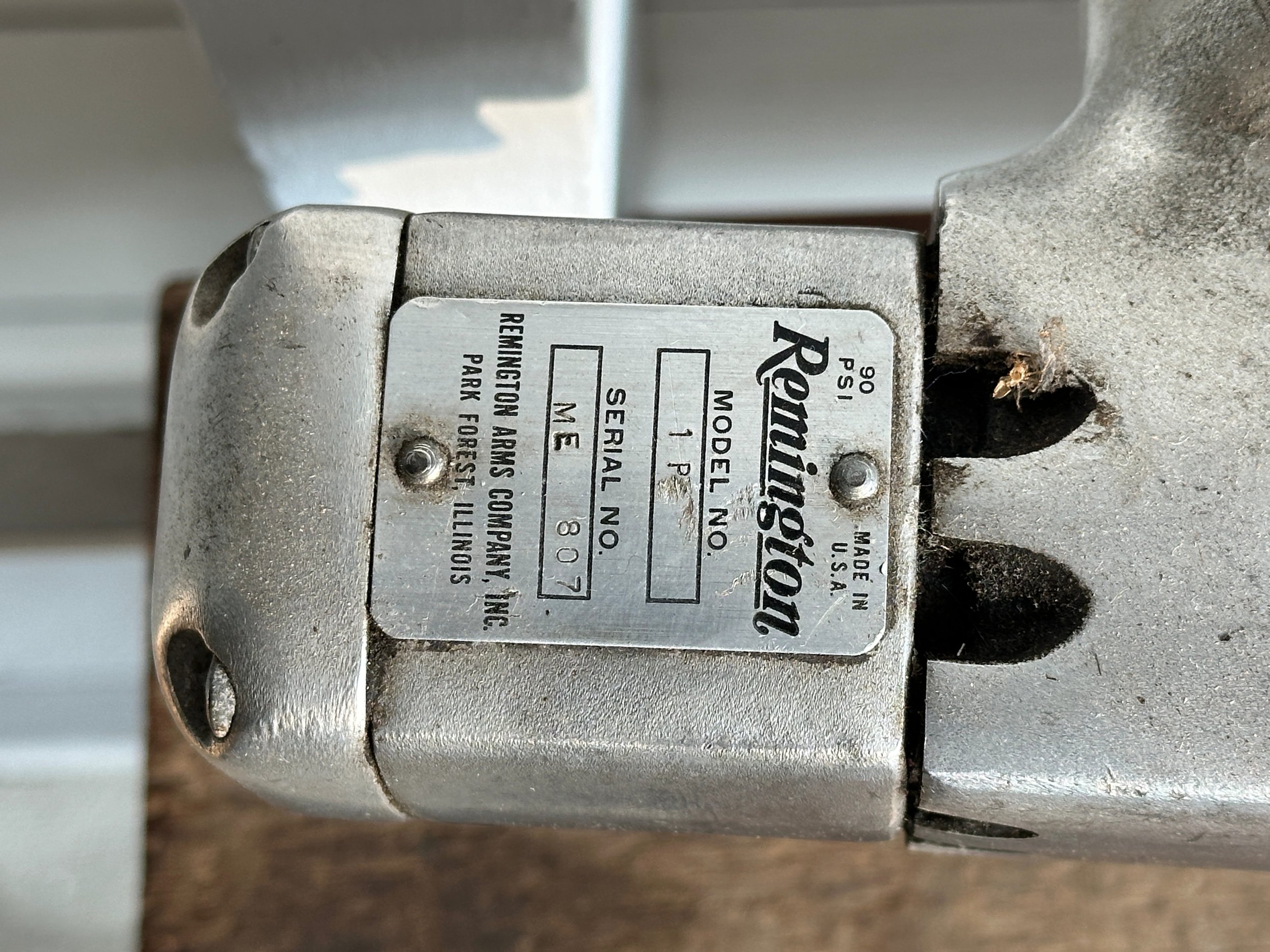
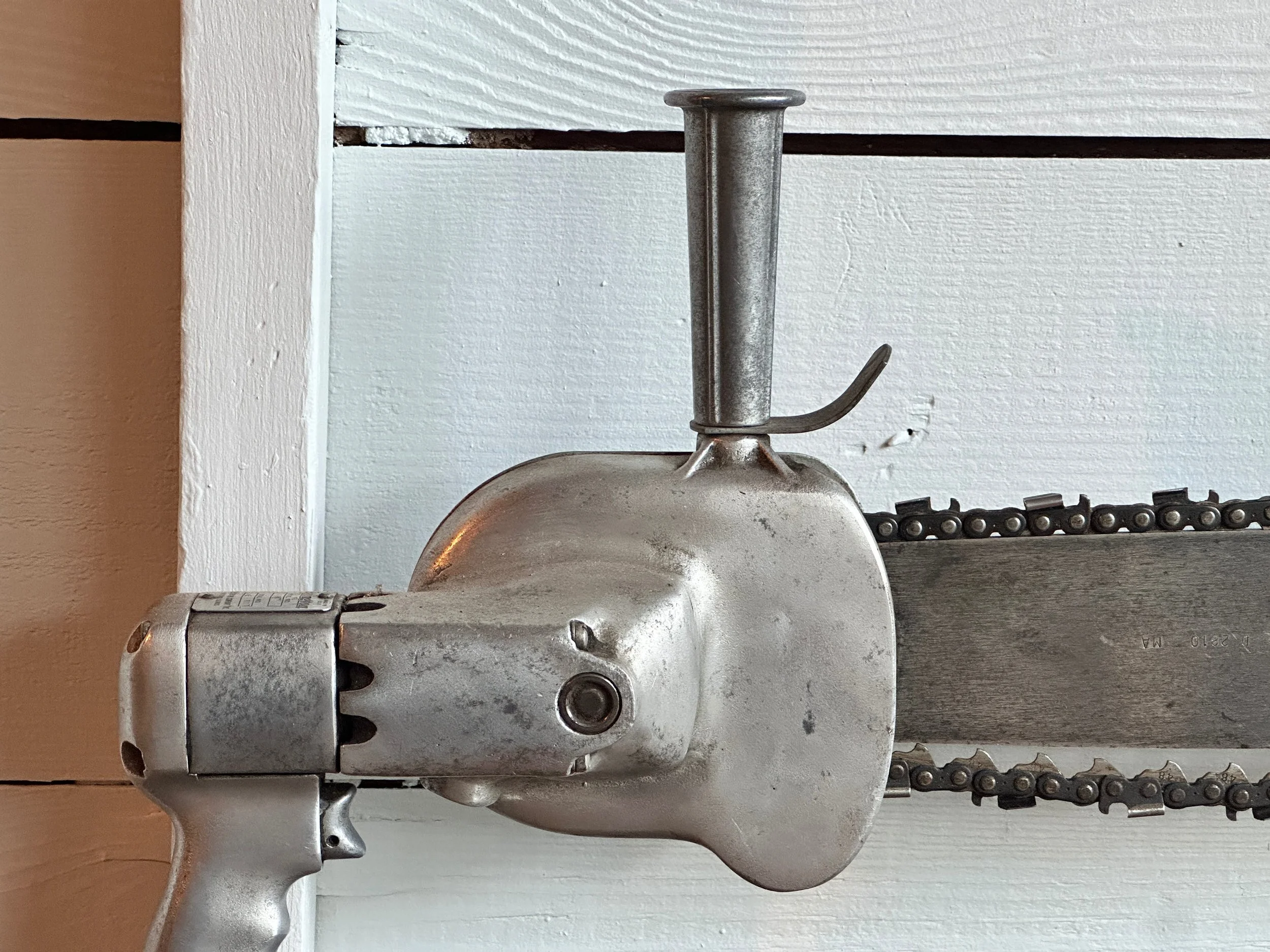
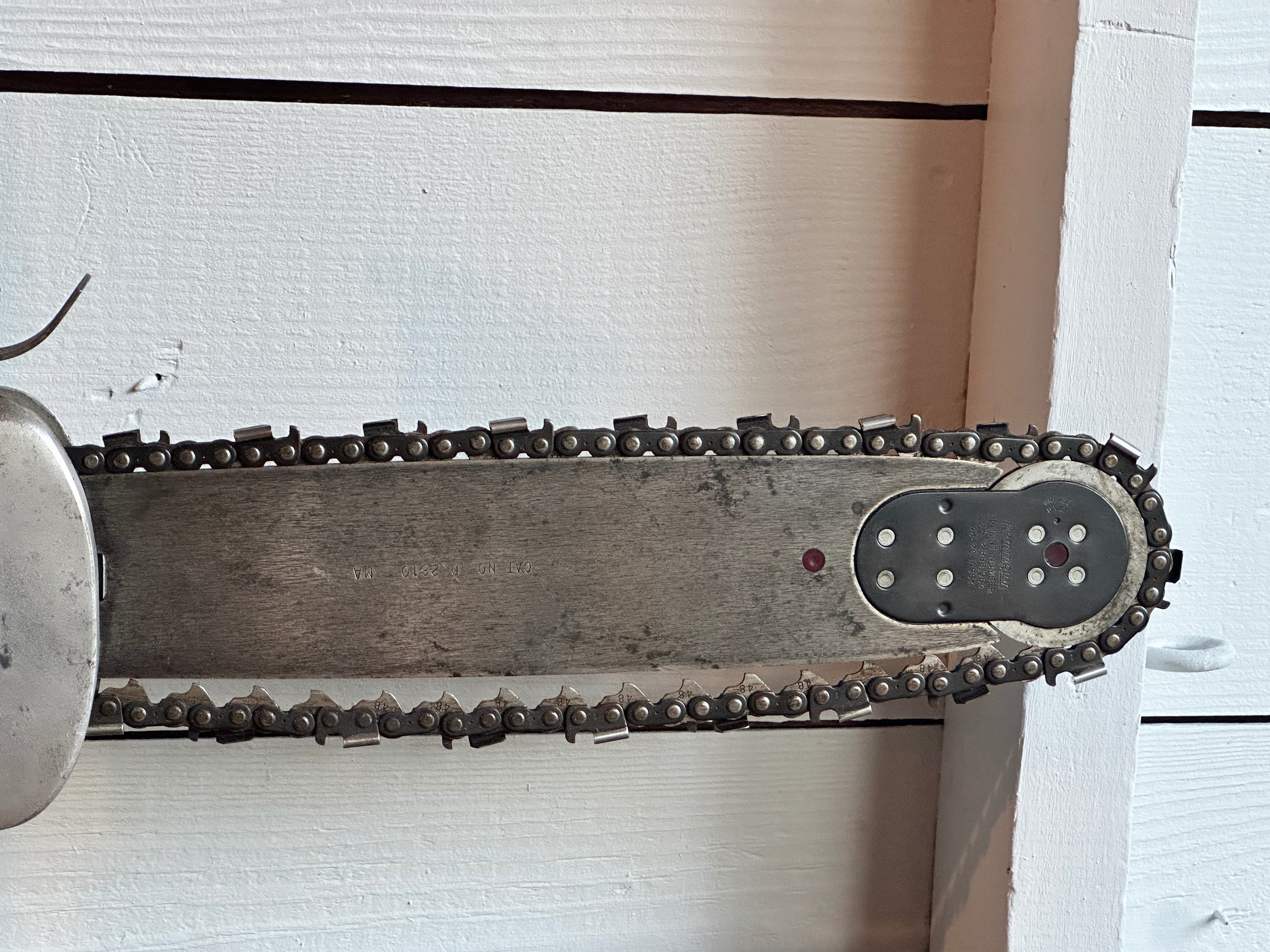
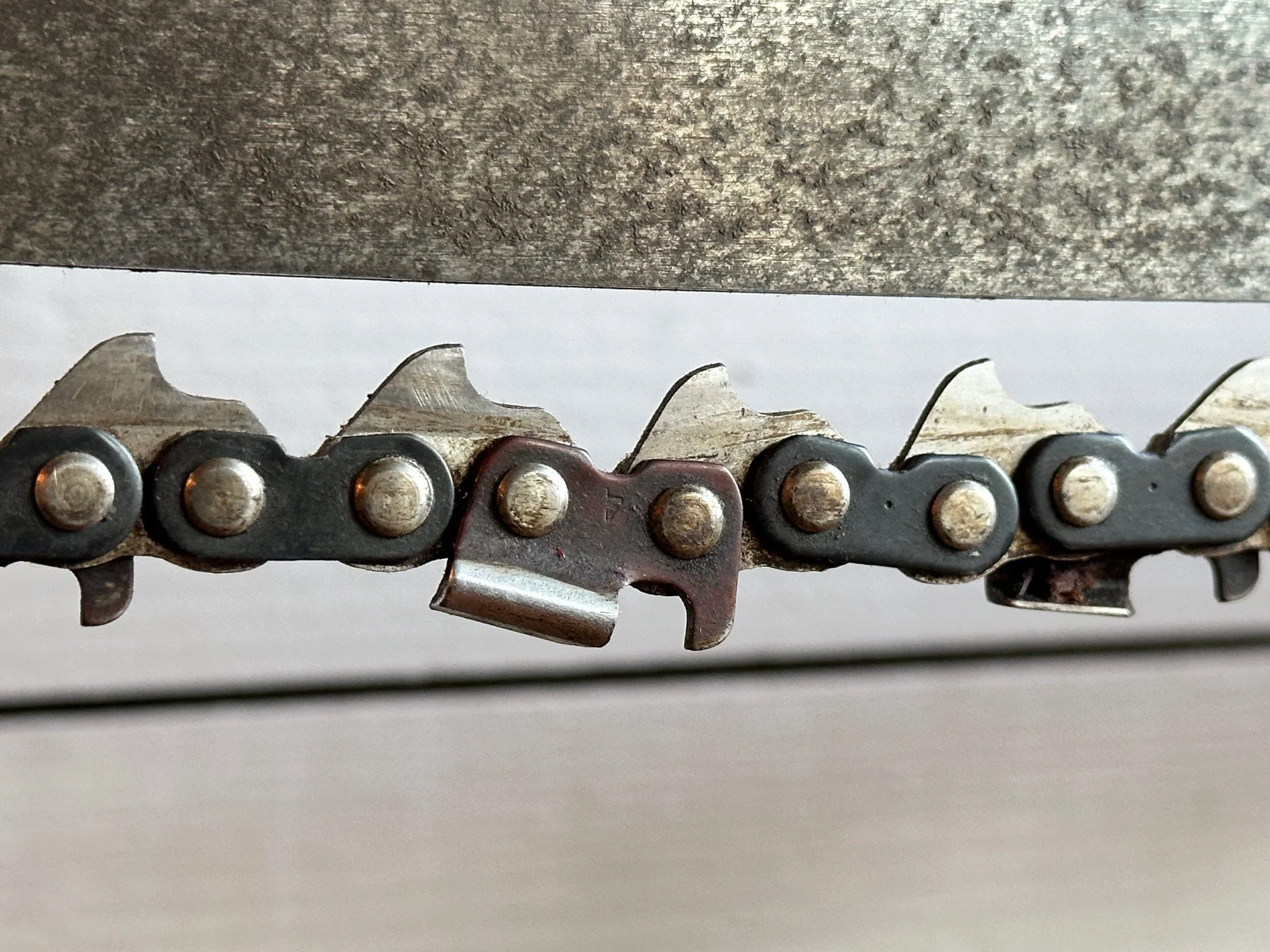
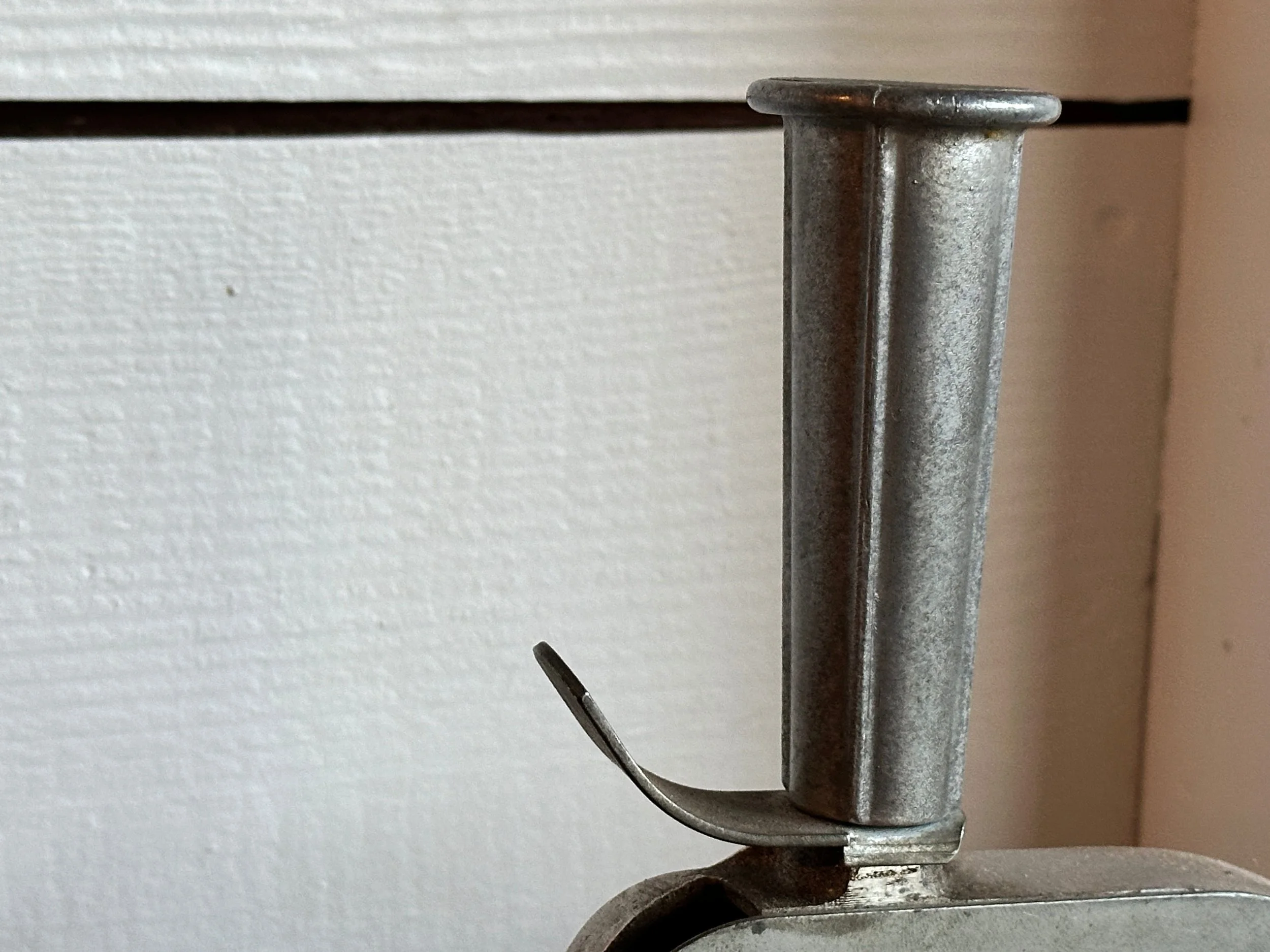
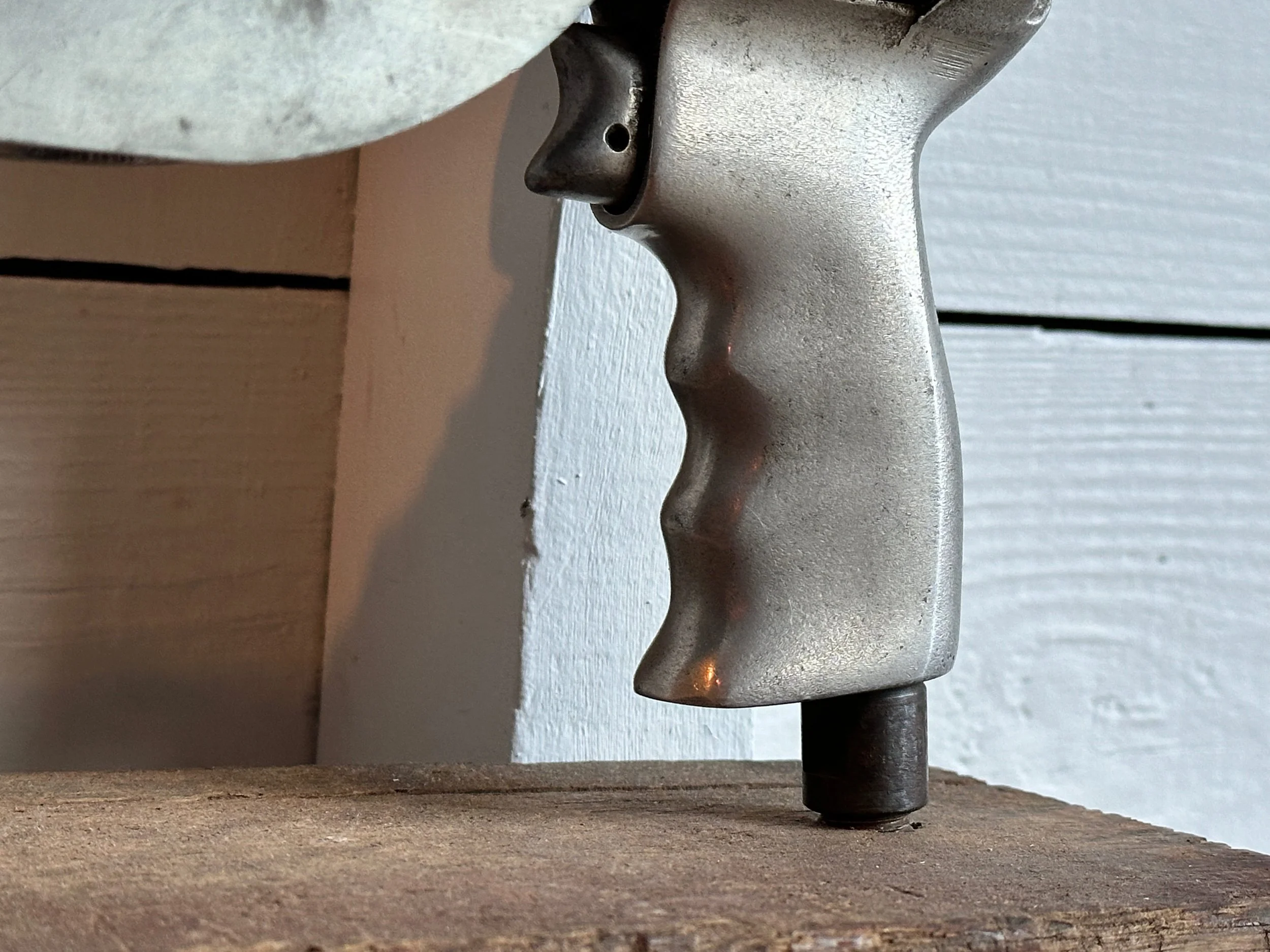
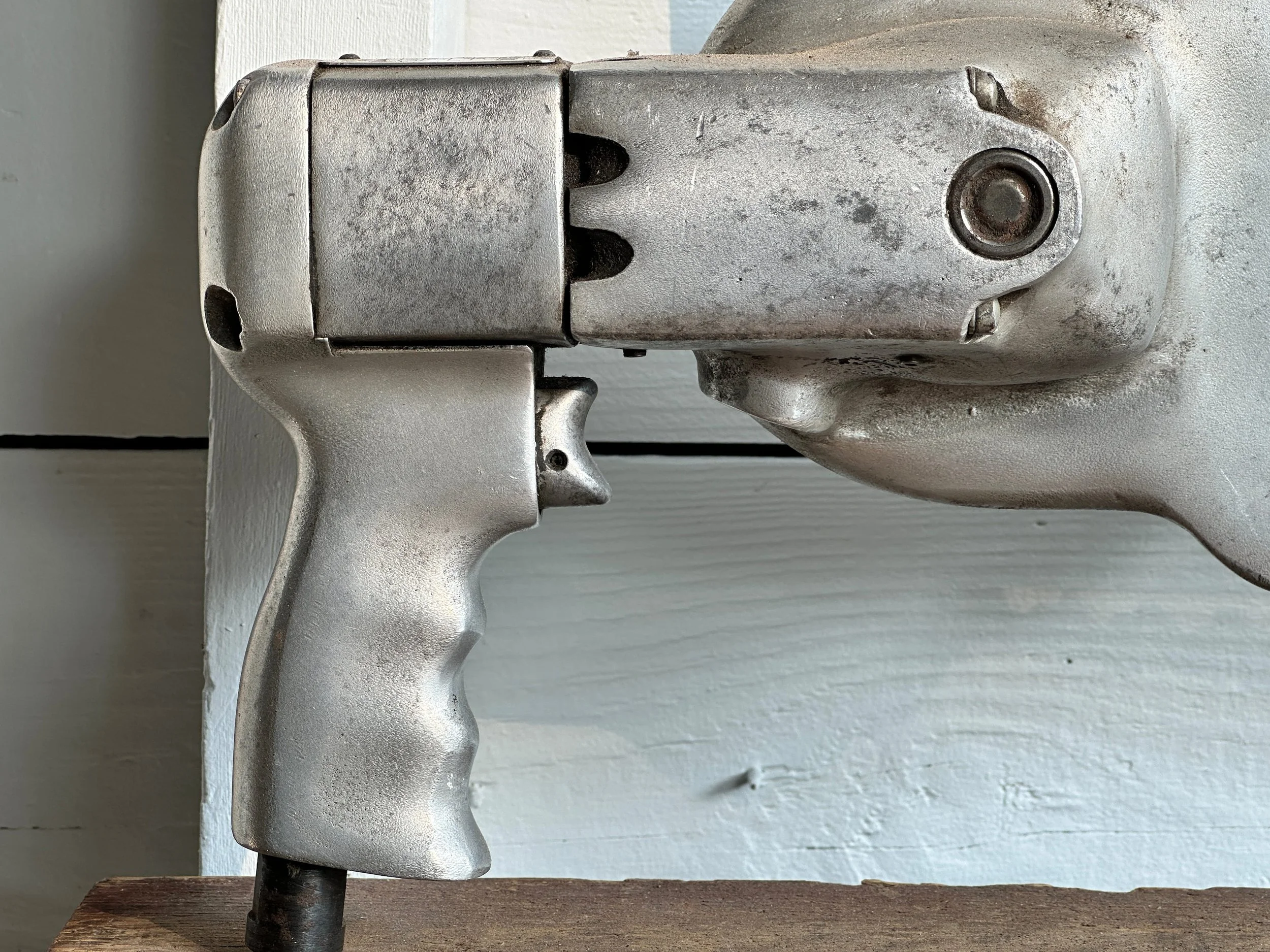
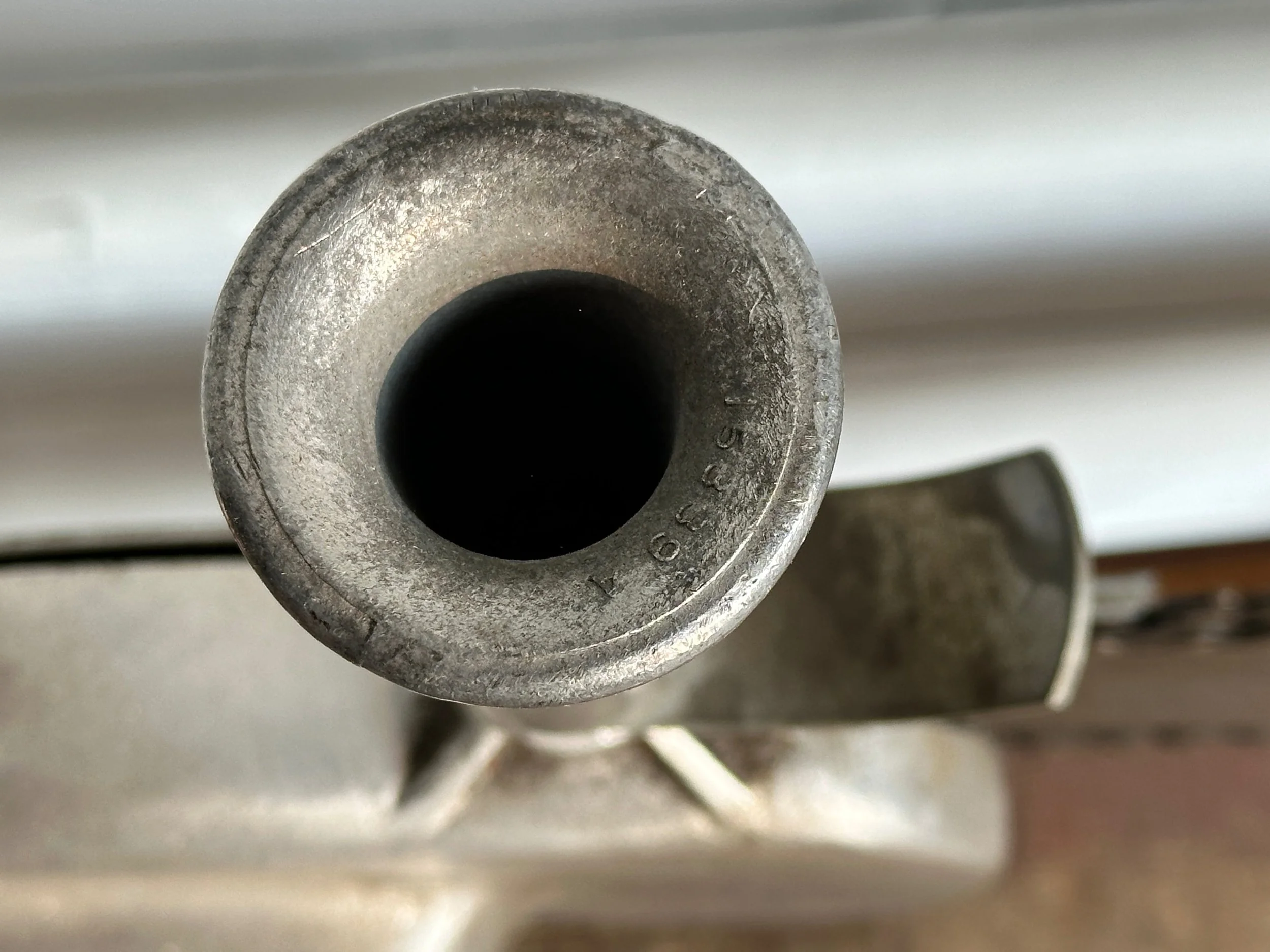
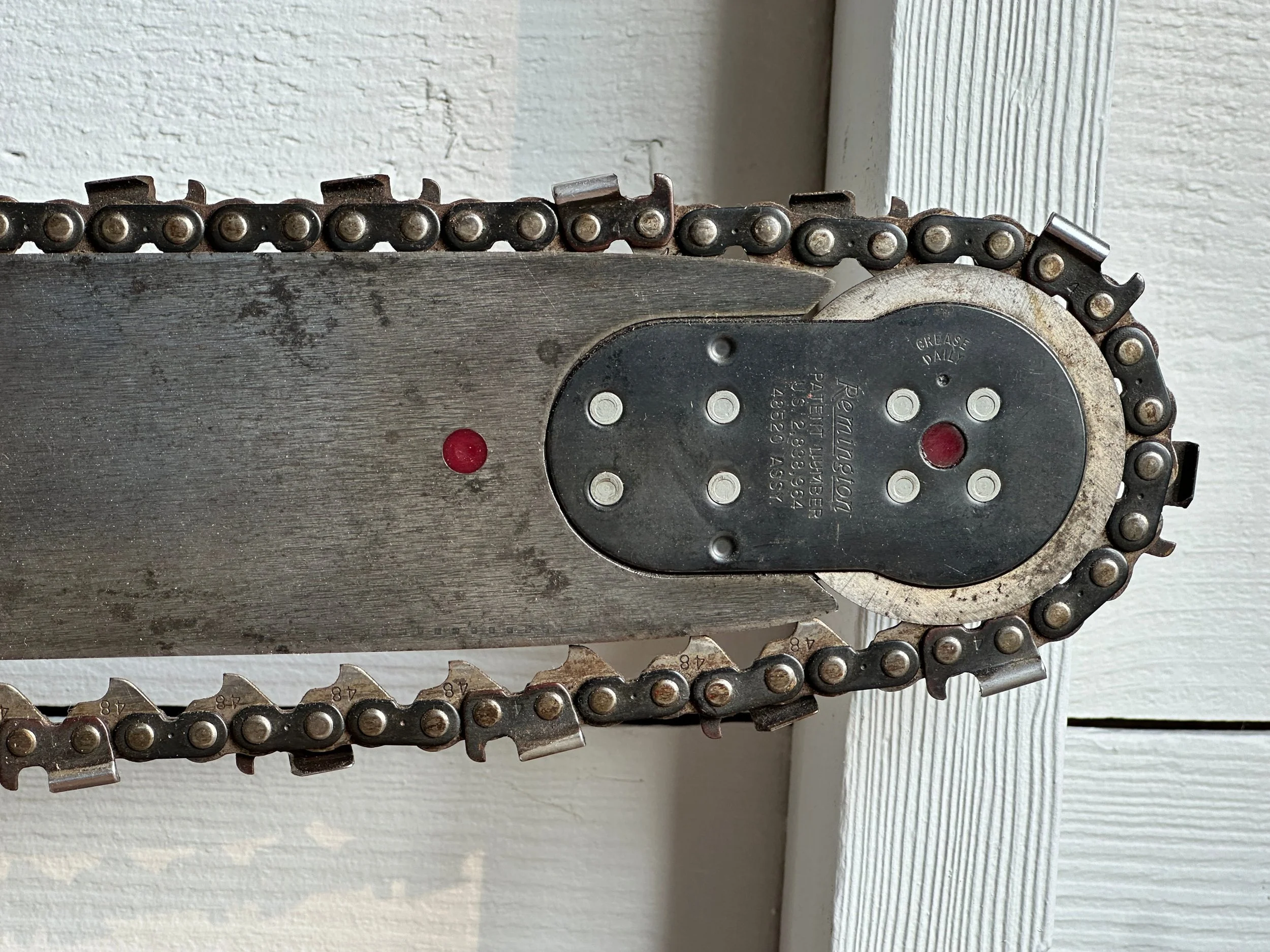
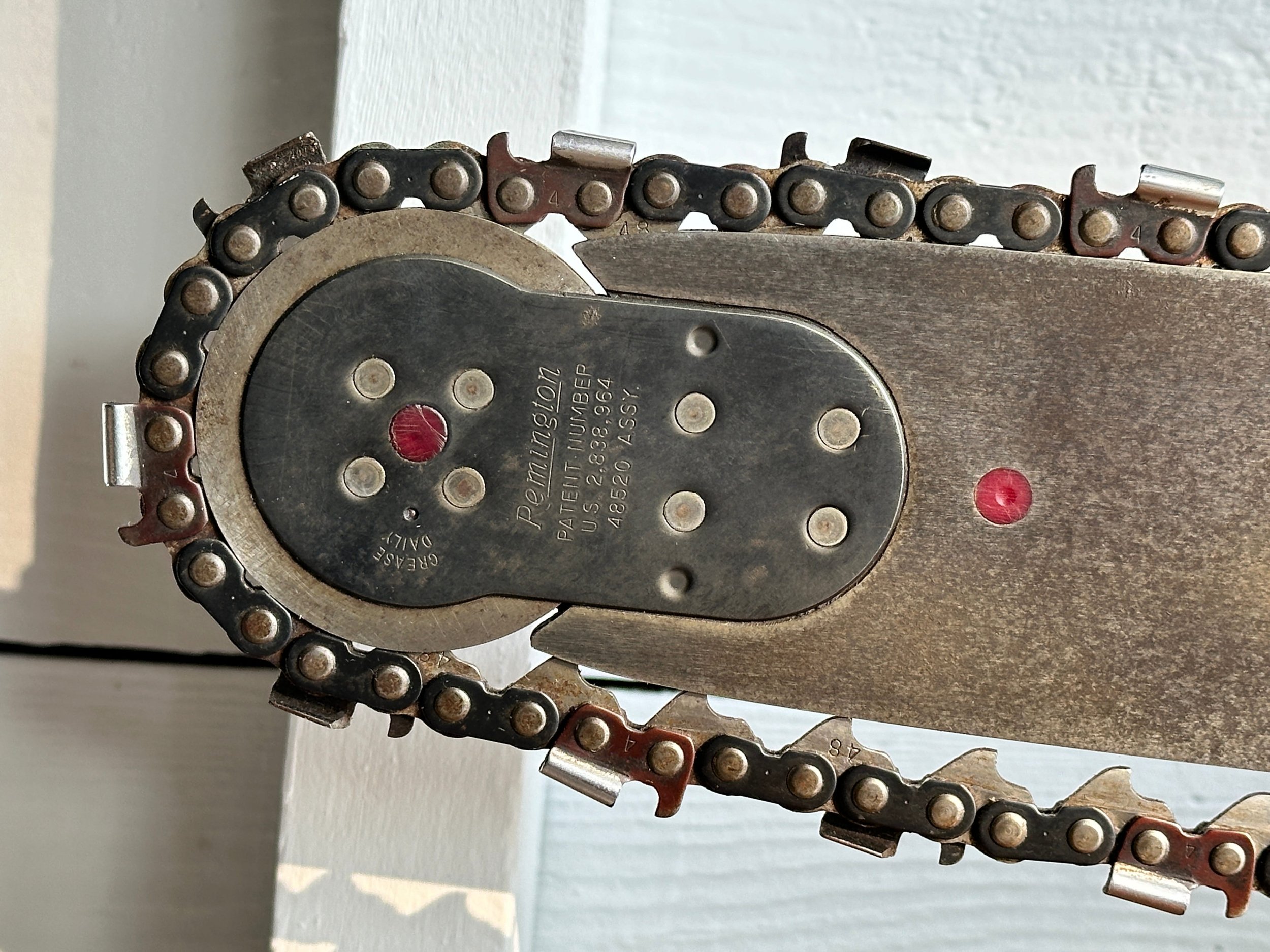
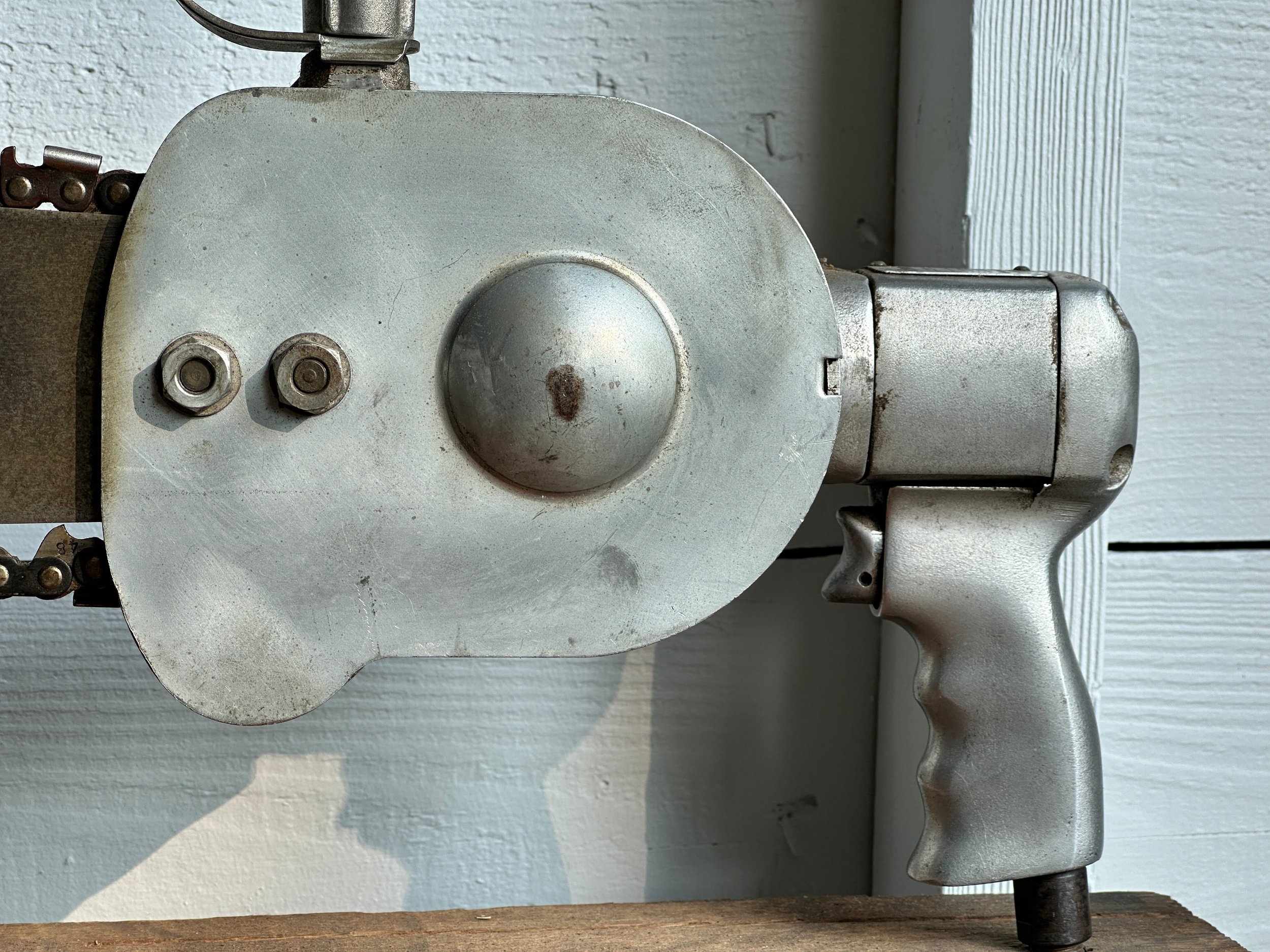
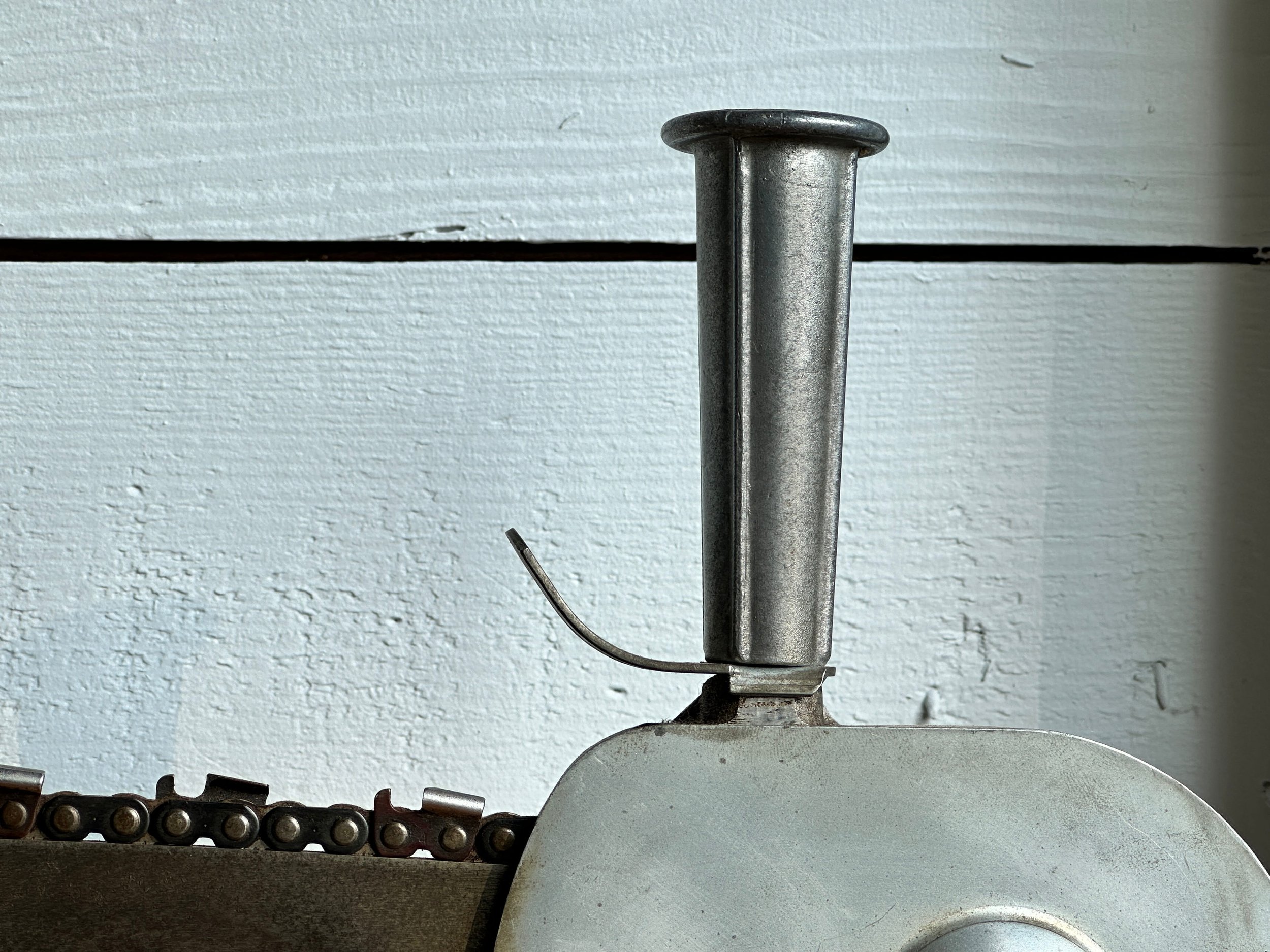
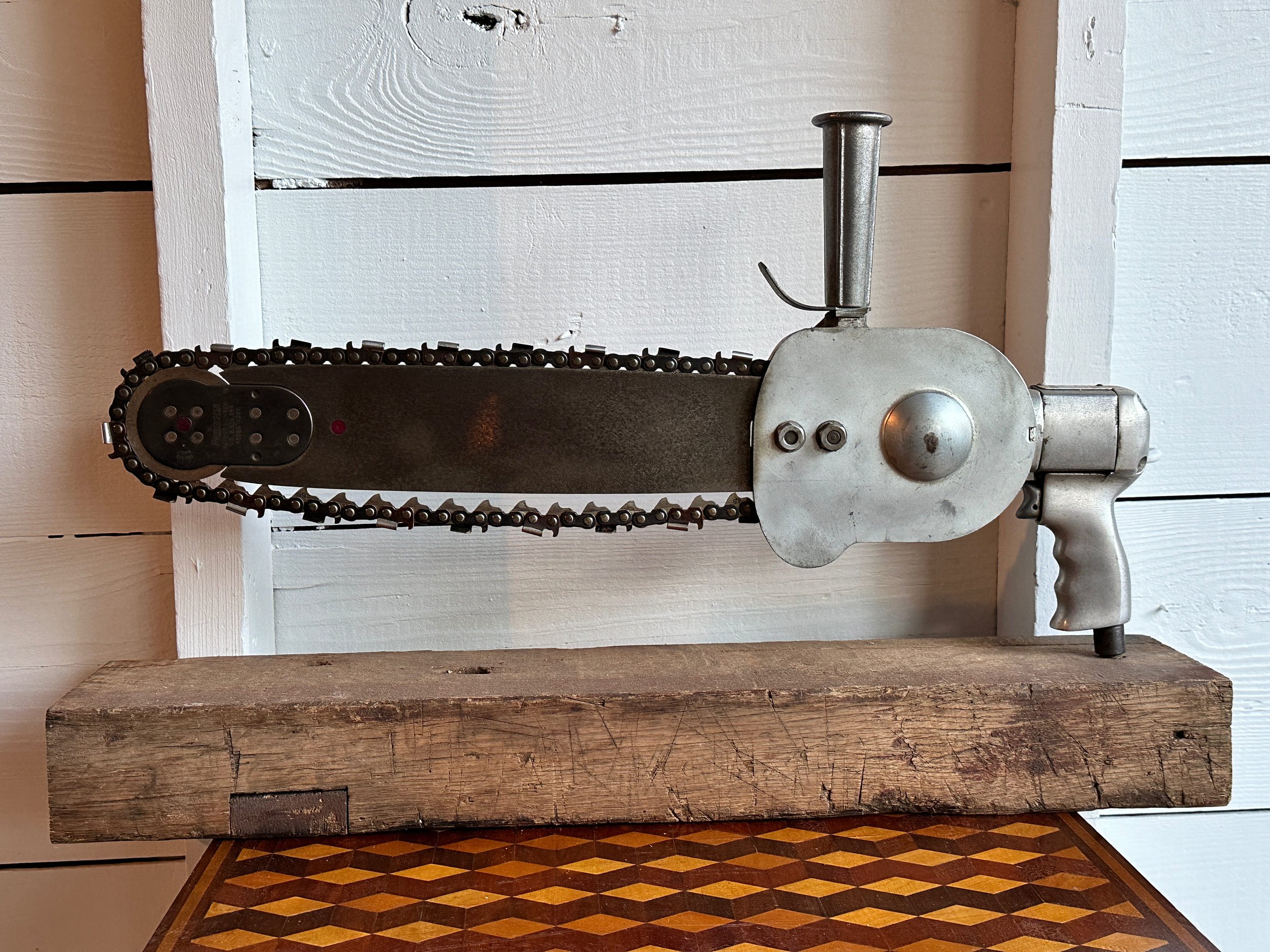
Here's a piece that's part sculpture, part machine-age marvel: a post-war Remington Model 1P aluminum chainsaw, mounted cleanly on a block of old hardwood like some kind of industrial trophy. Built in the 1940s by Remington Arms Co. in Park Forest, Illinois, this thing was engineered for utility, but it's aged into something closer to art. The all-aluminum housing has that smooth matte finish only decades of use can deliver, and the bar and chain are still fully intact-down to the tiny stamped patent numbers and "GREASE DAILY" warning etched on the sprocket. The pistol grip and oil reservoir still have that fighter-plane-meets-factory-tool vibe. It measures about 26 inches long—a true relic from the era when everything was overbuilt and unapologetically mechanical.
Remington Chainsaws
Remington chainsaws in the 1940s come out of a moment when tools were evolving quickly to meet real-world demands. Best known for typewriters and firearms, Remington expanded into power equipment as industries like logging, construction, and land clearing pushed for faster, more efficient methods. The chainsaw, still a relatively new technology, fit right into that shift.
These early machines were far from the compact tools we think of today. They were heavy, loud, and often required two operators—one on each end—just to control the cut. Powered by gasoline engines, they traded portability for raw cutting ability, making them especially useful for felling large trees or tackling dense timber.
What stands out is the engineering mindset behind them. Durability came first. Thick metal housings, exposed mechanical components, and straightforward construction made them easier to repair in the field. They weren’t designed to be delicate—they were built to work, and to keep working.
Using one required skill and awareness. There were fewer built-in safety features, so handling them was as much about experience as strength. But for those who knew how to use them, they represented a major leap forward.
Today, these early Remington chainsaws read as both industrial artifact and milestone—marking the point where manual labor began to give way to mechanized force in a very visible, very physical way.
ITEM NOT AVAILABLE IMMEDIATELY—INQUIRE IF INTERESTED hello@heimweeantiques.com
Here's a piece that's part sculpture, part machine-age marvel: a post-war Remington Model 1P aluminum chainsaw, mounted cleanly on a block of old hardwood like some kind of industrial trophy. Built in the 1940s by Remington Arms Co. in Park Forest, Illinois, this thing was engineered for utility, but it's aged into something closer to art. The all-aluminum housing has that smooth matte finish only decades of use can deliver, and the bar and chain are still fully intact-down to the tiny stamped patent numbers and "GREASE DAILY" warning etched on the sprocket. The pistol grip and oil reservoir still have that fighter-plane-meets-factory-tool vibe. It measures about 26 inches long—a true relic from the era when everything was overbuilt and unapologetically mechanical.
Remington Chainsaws
Remington chainsaws in the 1940s come out of a moment when tools were evolving quickly to meet real-world demands. Best known for typewriters and firearms, Remington expanded into power equipment as industries like logging, construction, and land clearing pushed for faster, more efficient methods. The chainsaw, still a relatively new technology, fit right into that shift.
These early machines were far from the compact tools we think of today. They were heavy, loud, and often required two operators—one on each end—just to control the cut. Powered by gasoline engines, they traded portability for raw cutting ability, making them especially useful for felling large trees or tackling dense timber.
What stands out is the engineering mindset behind them. Durability came first. Thick metal housings, exposed mechanical components, and straightforward construction made them easier to repair in the field. They weren’t designed to be delicate—they were built to work, and to keep working.
Using one required skill and awareness. There were fewer built-in safety features, so handling them was as much about experience as strength. But for those who knew how to use them, they represented a major leap forward.
Today, these early Remington chainsaws read as both industrial artifact and milestone—marking the point where manual labor began to give way to mechanized force in a very visible, very physical way.