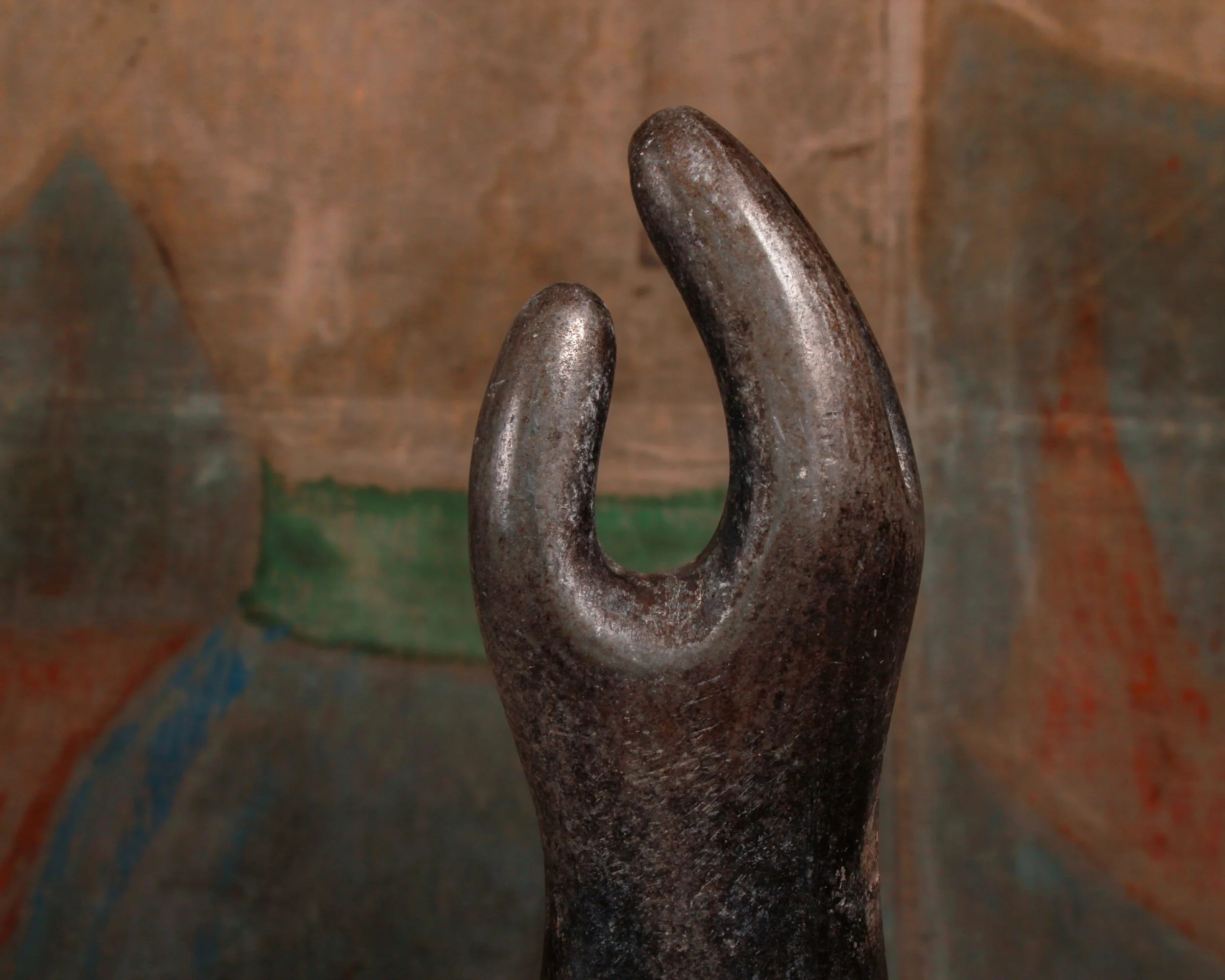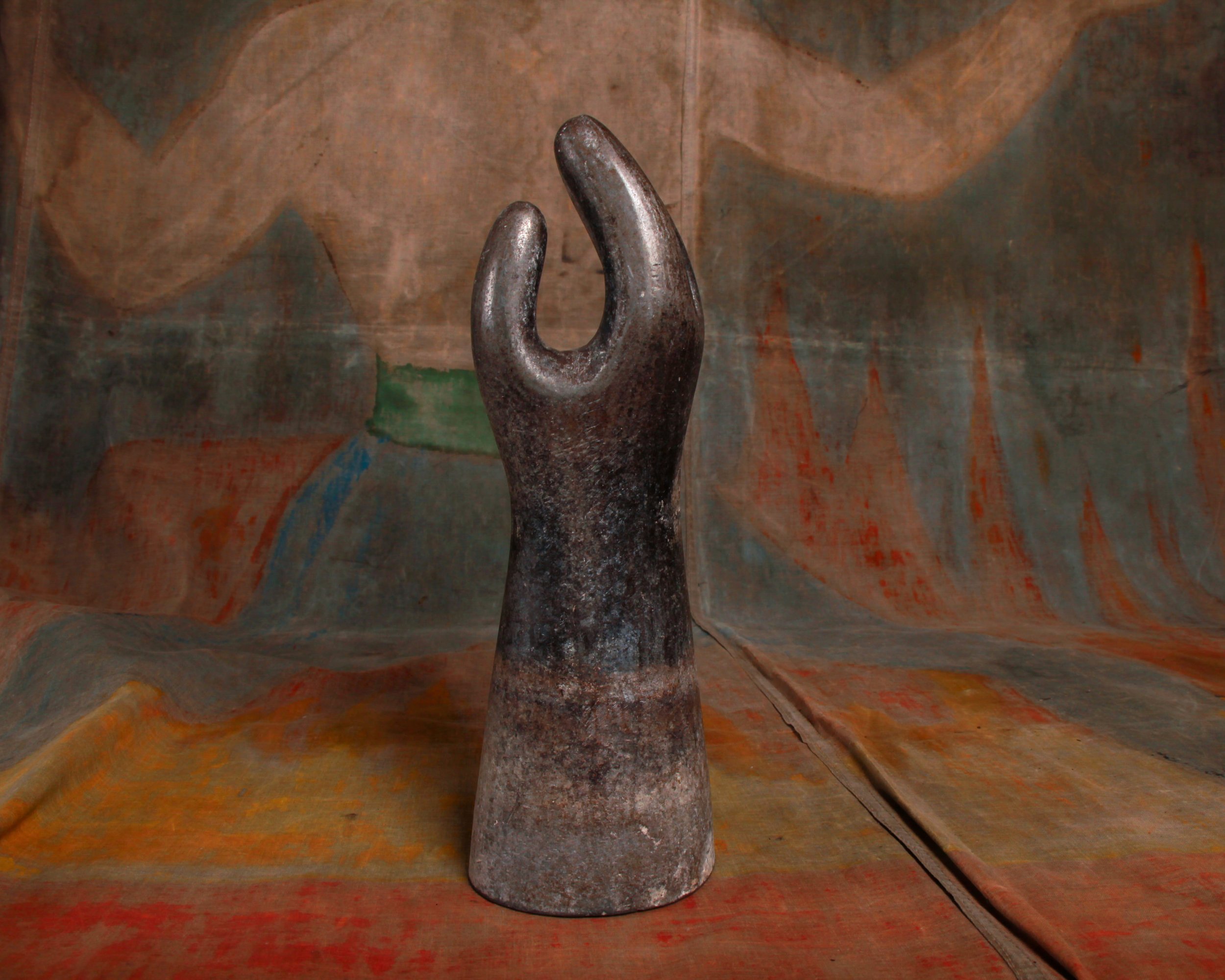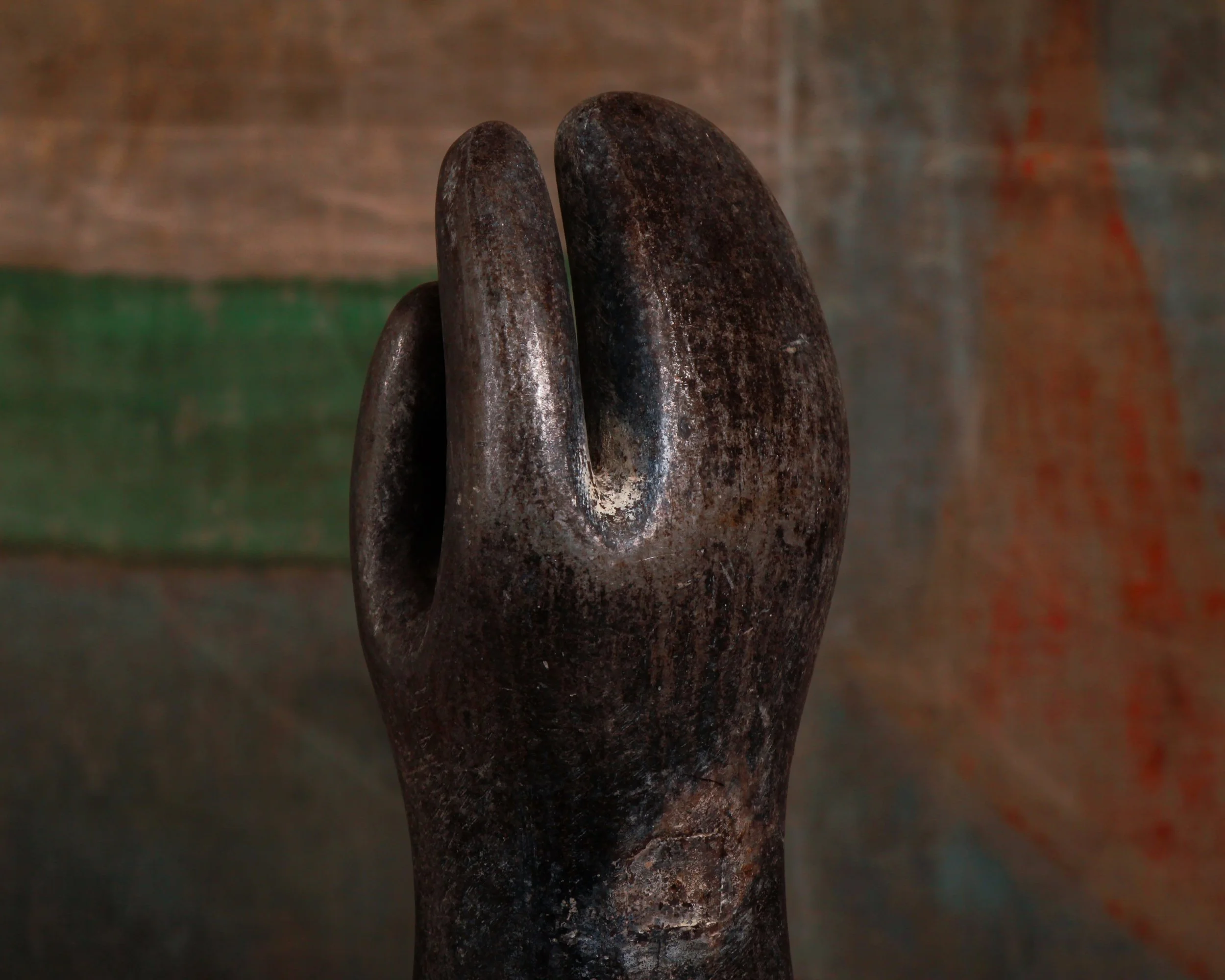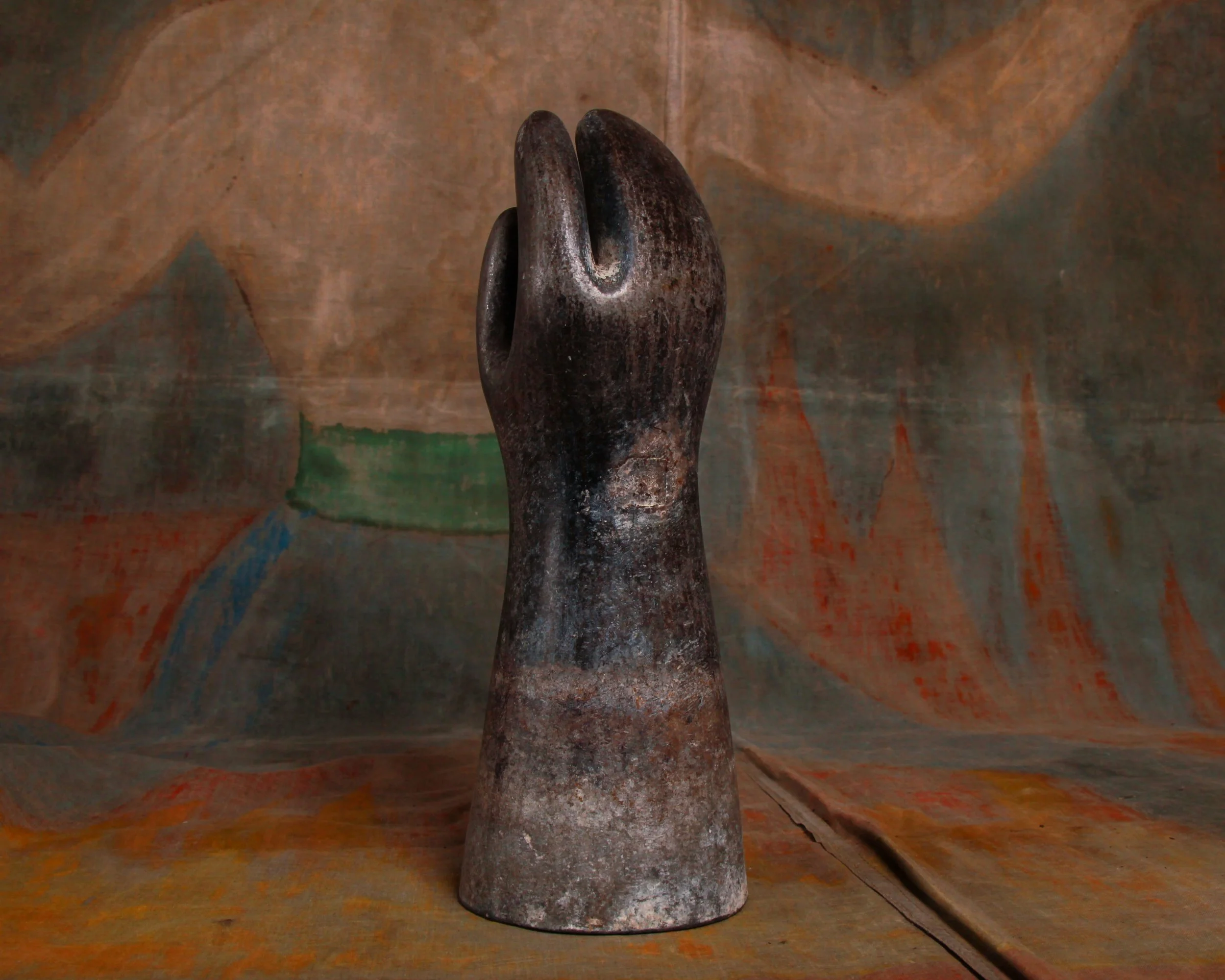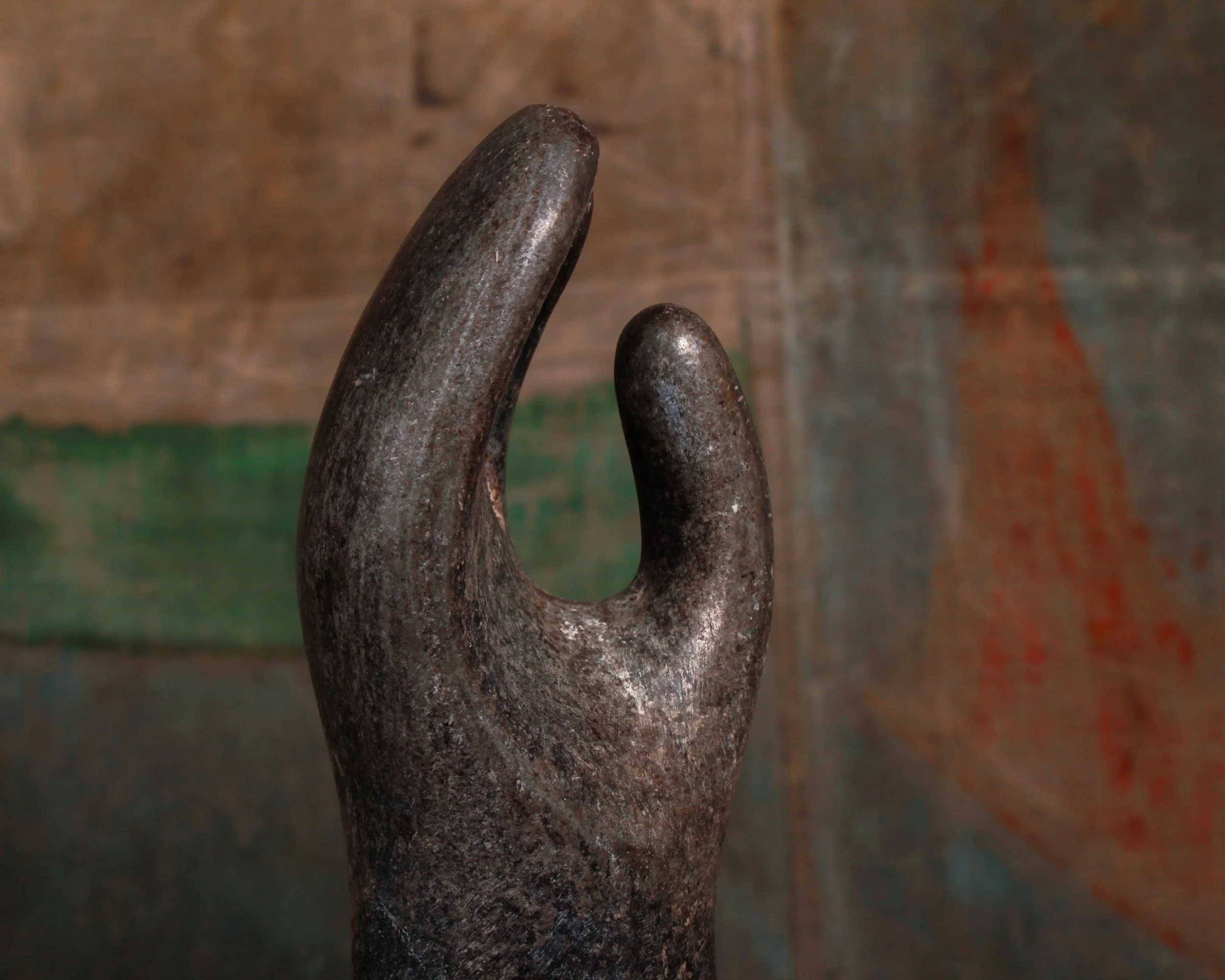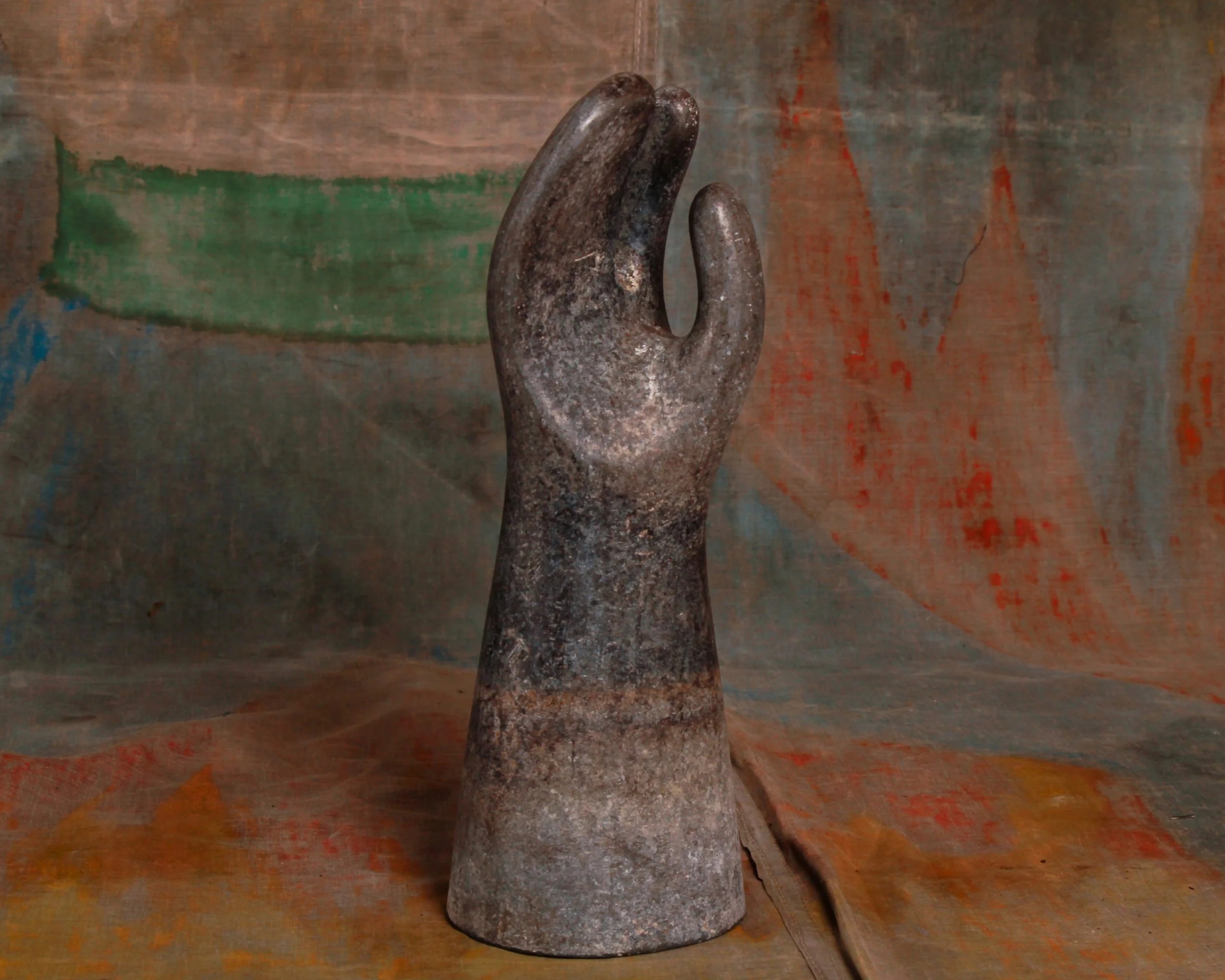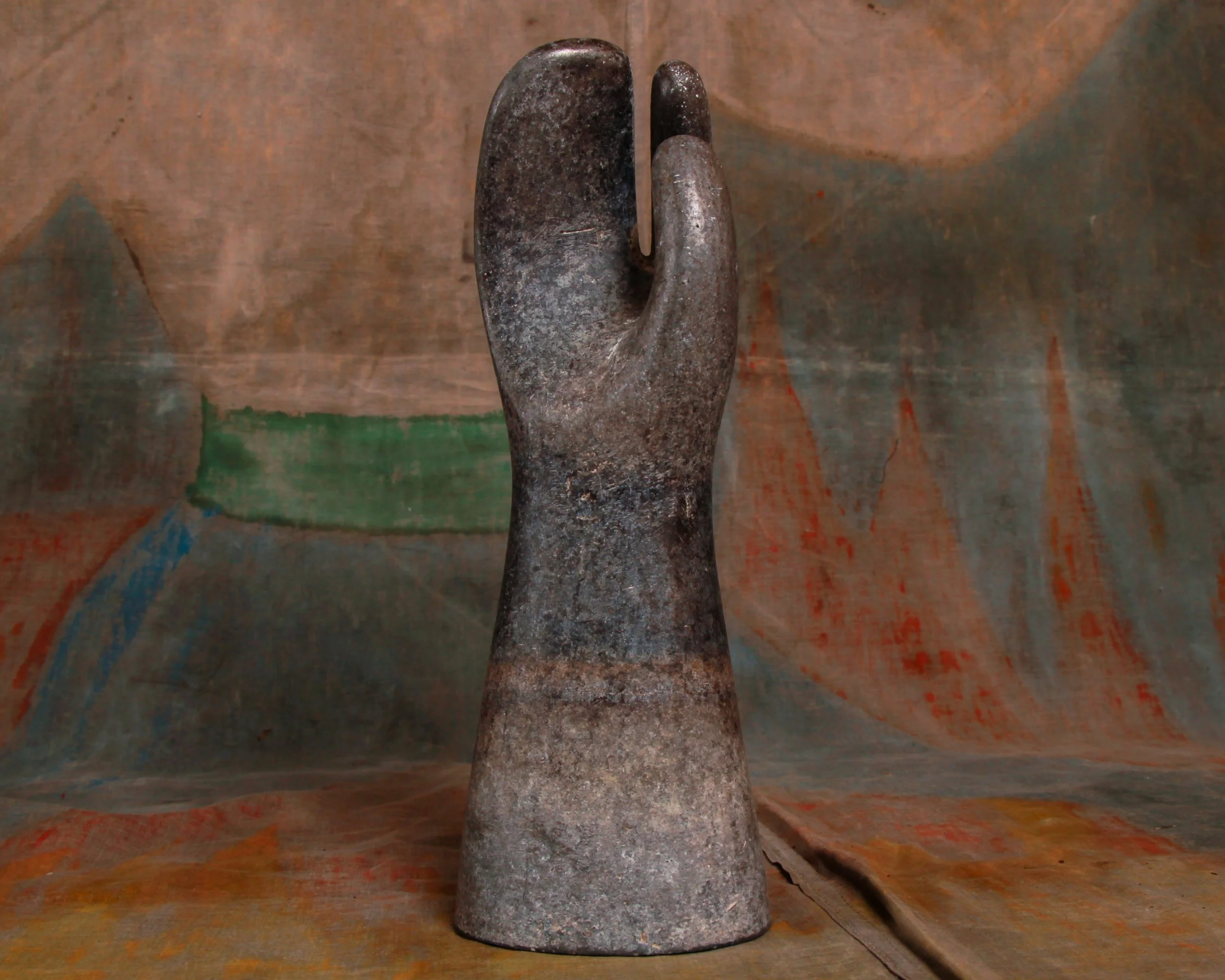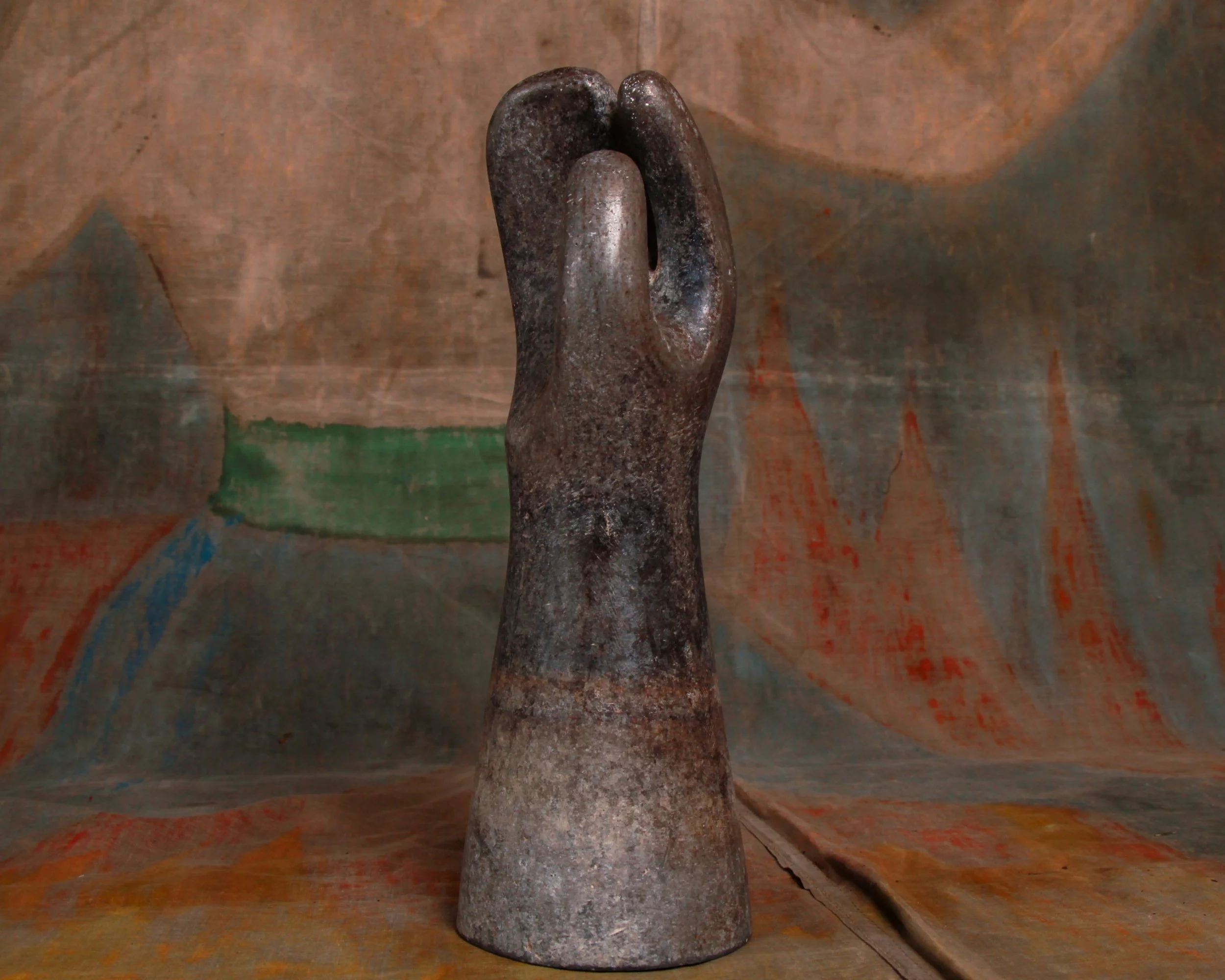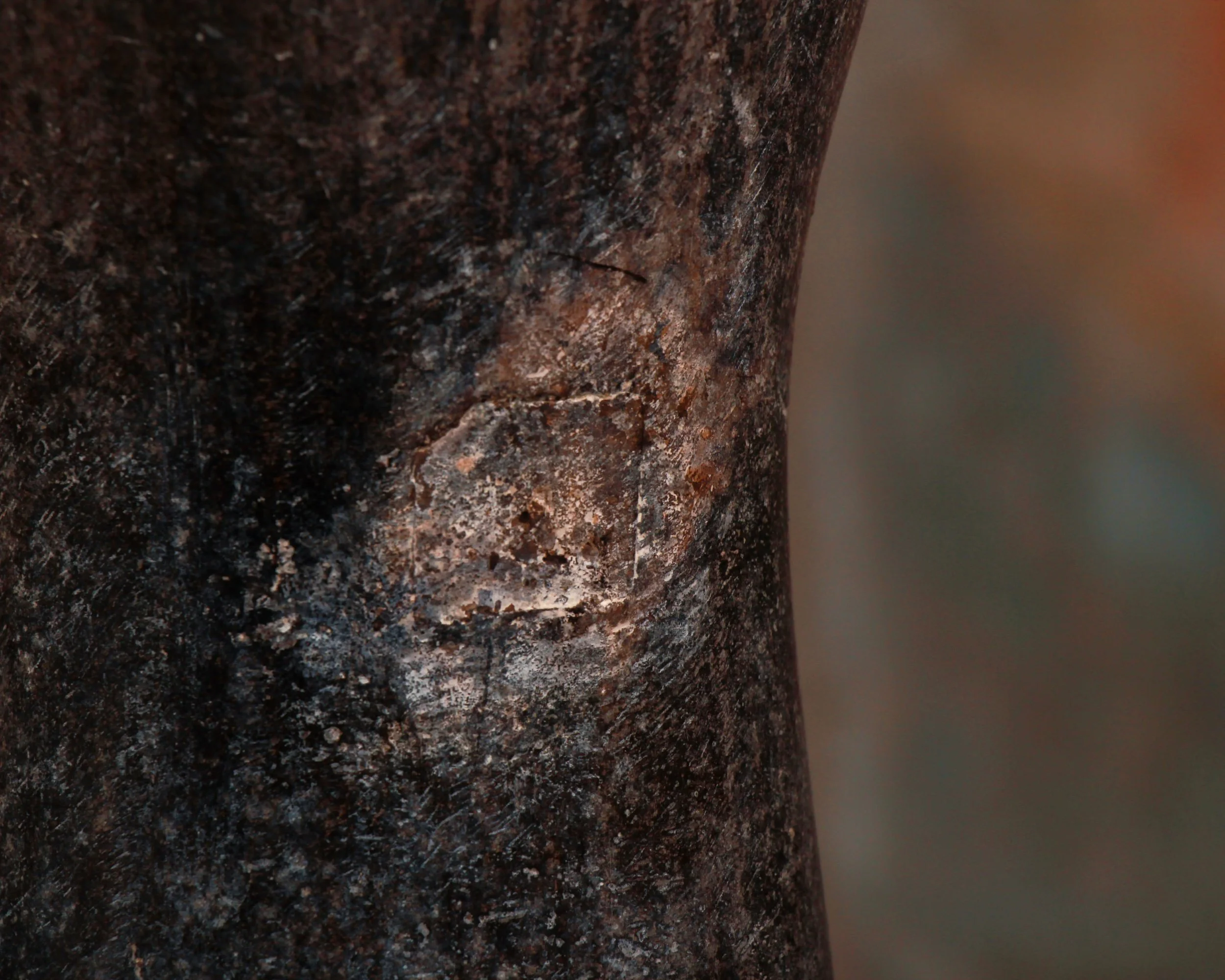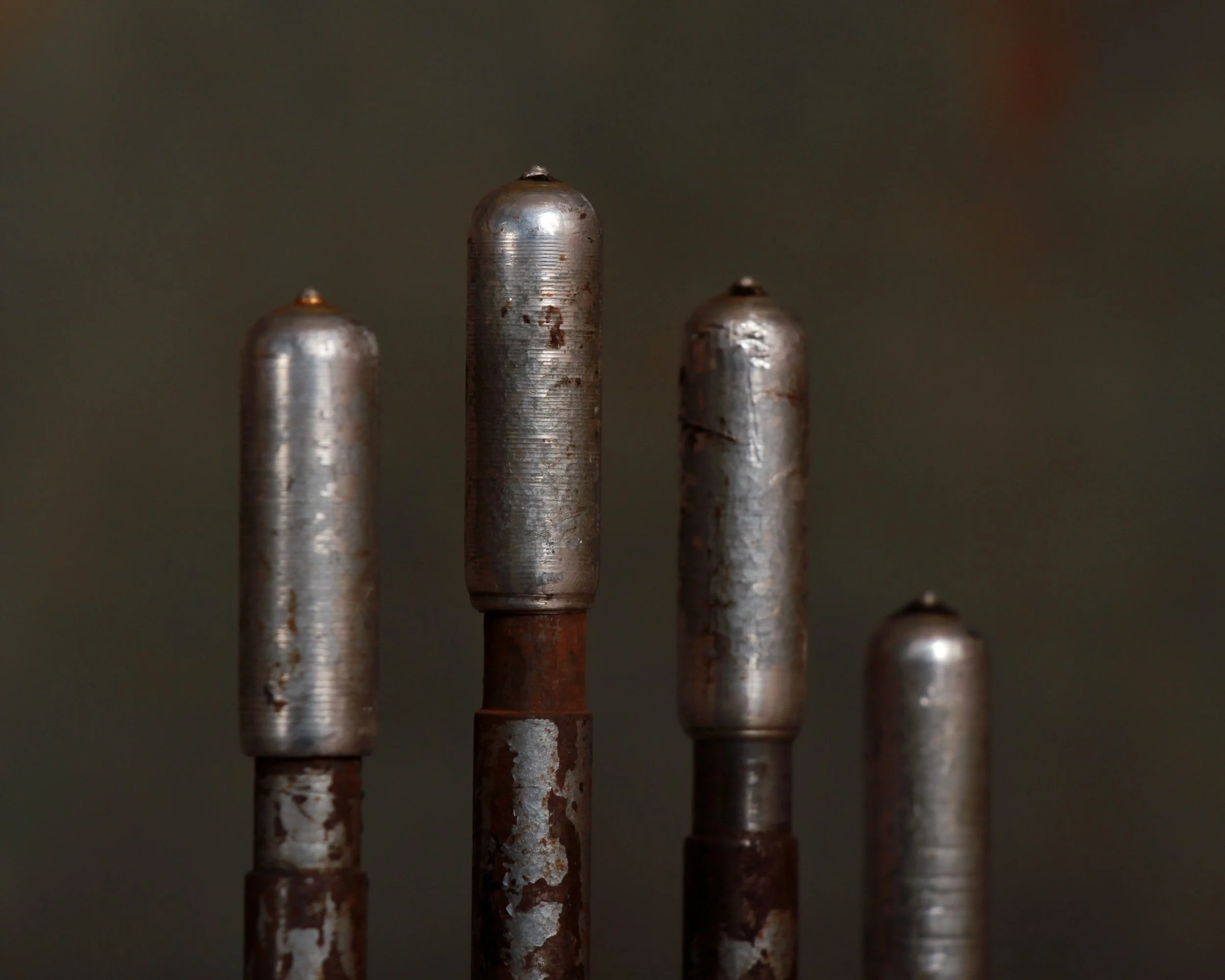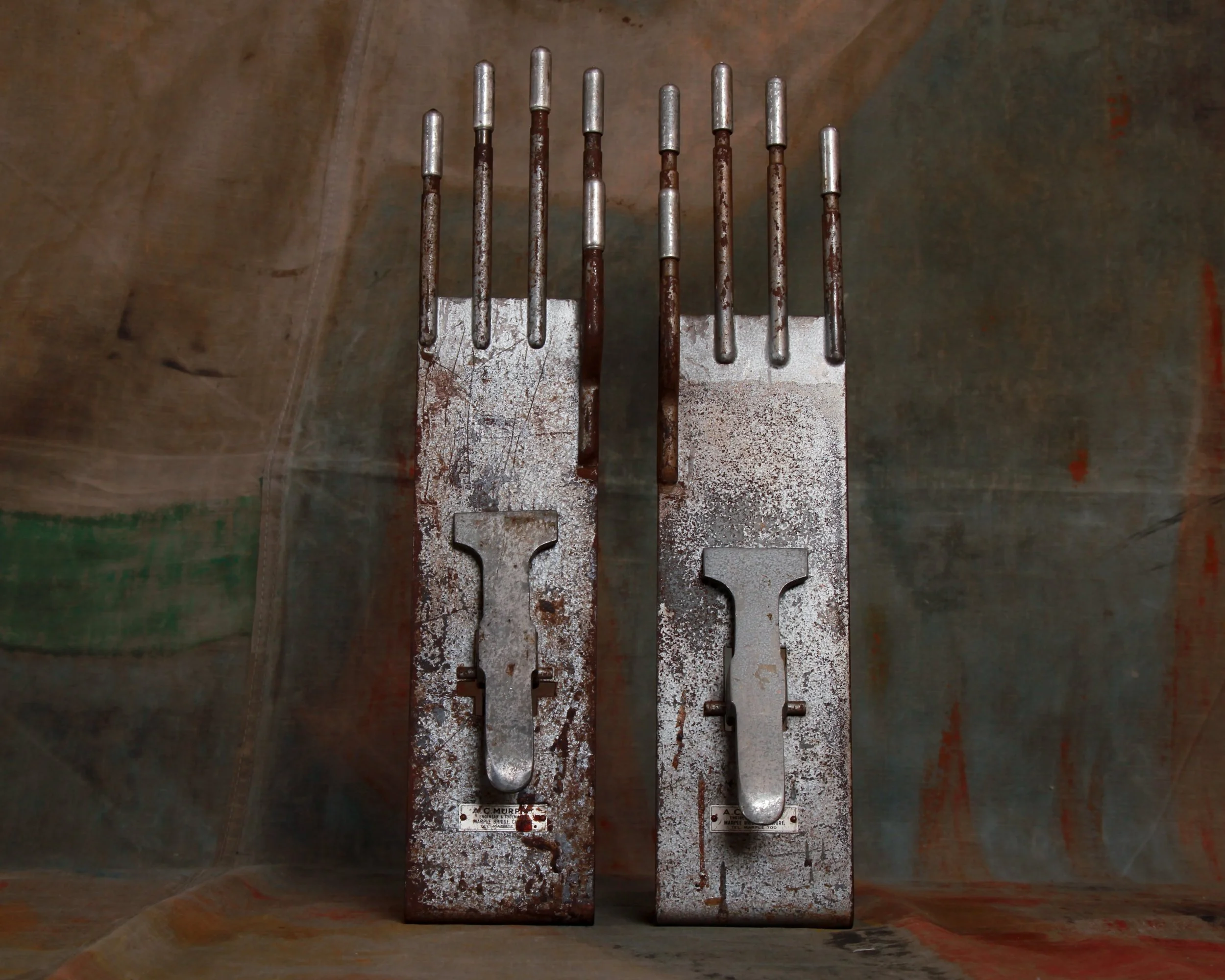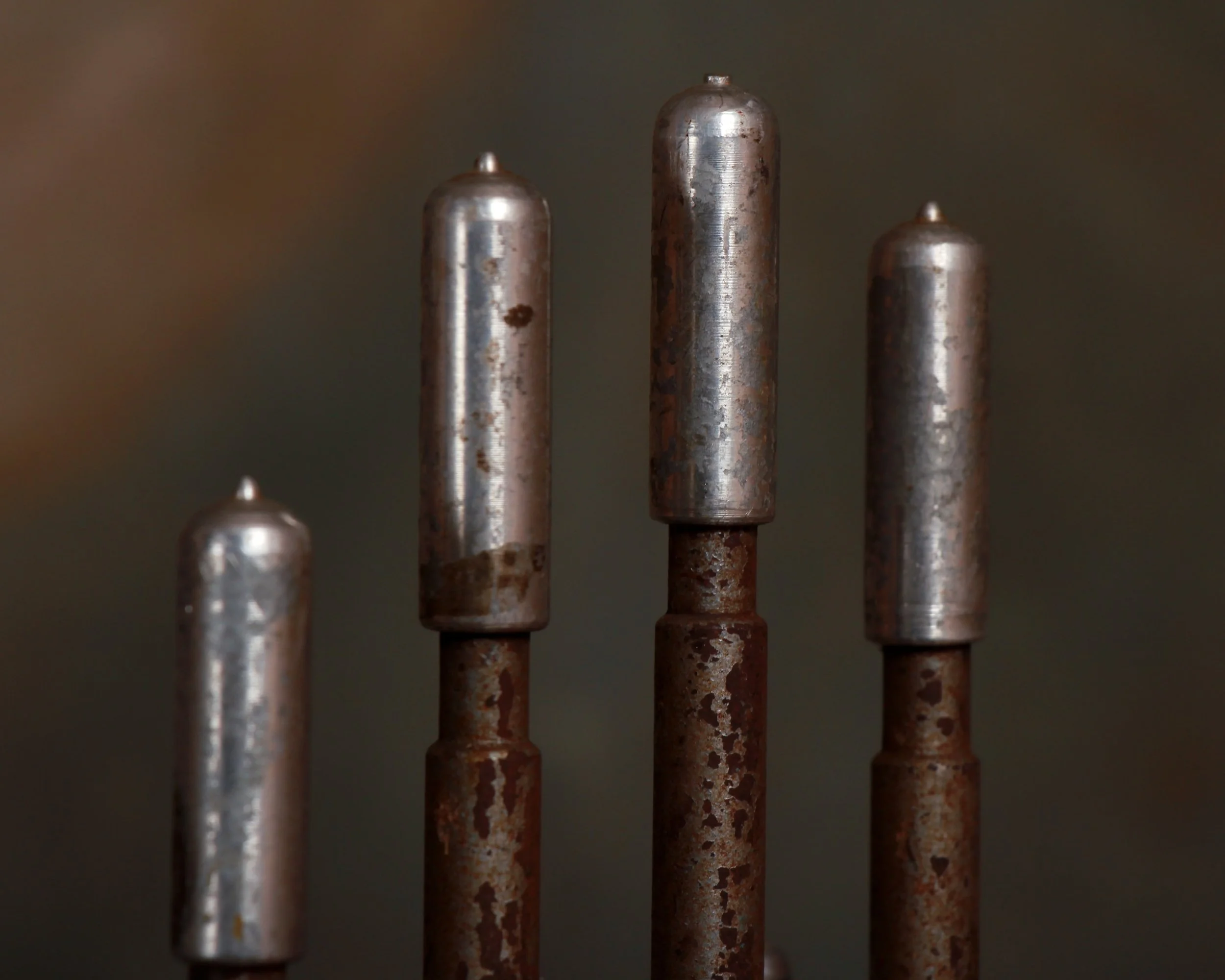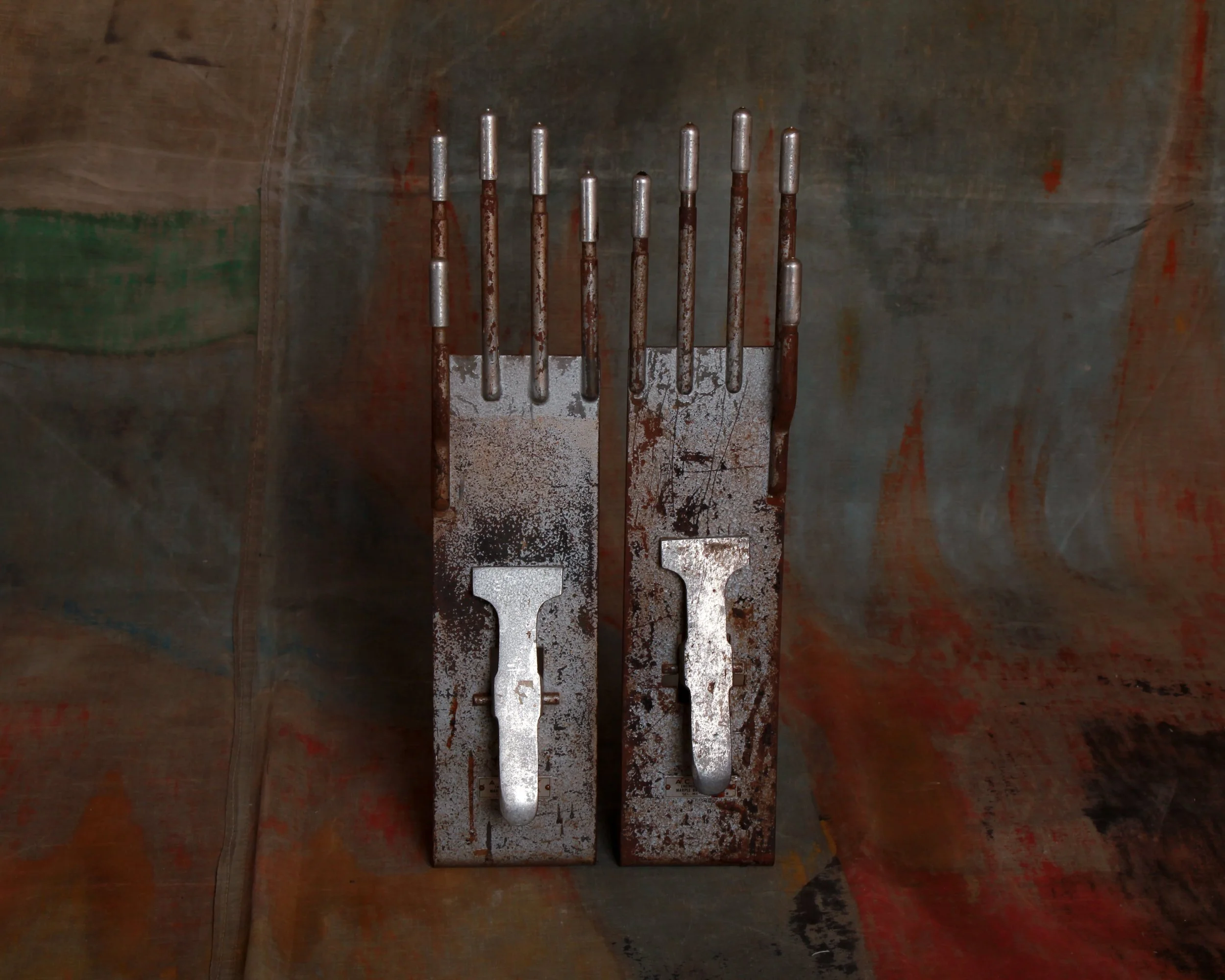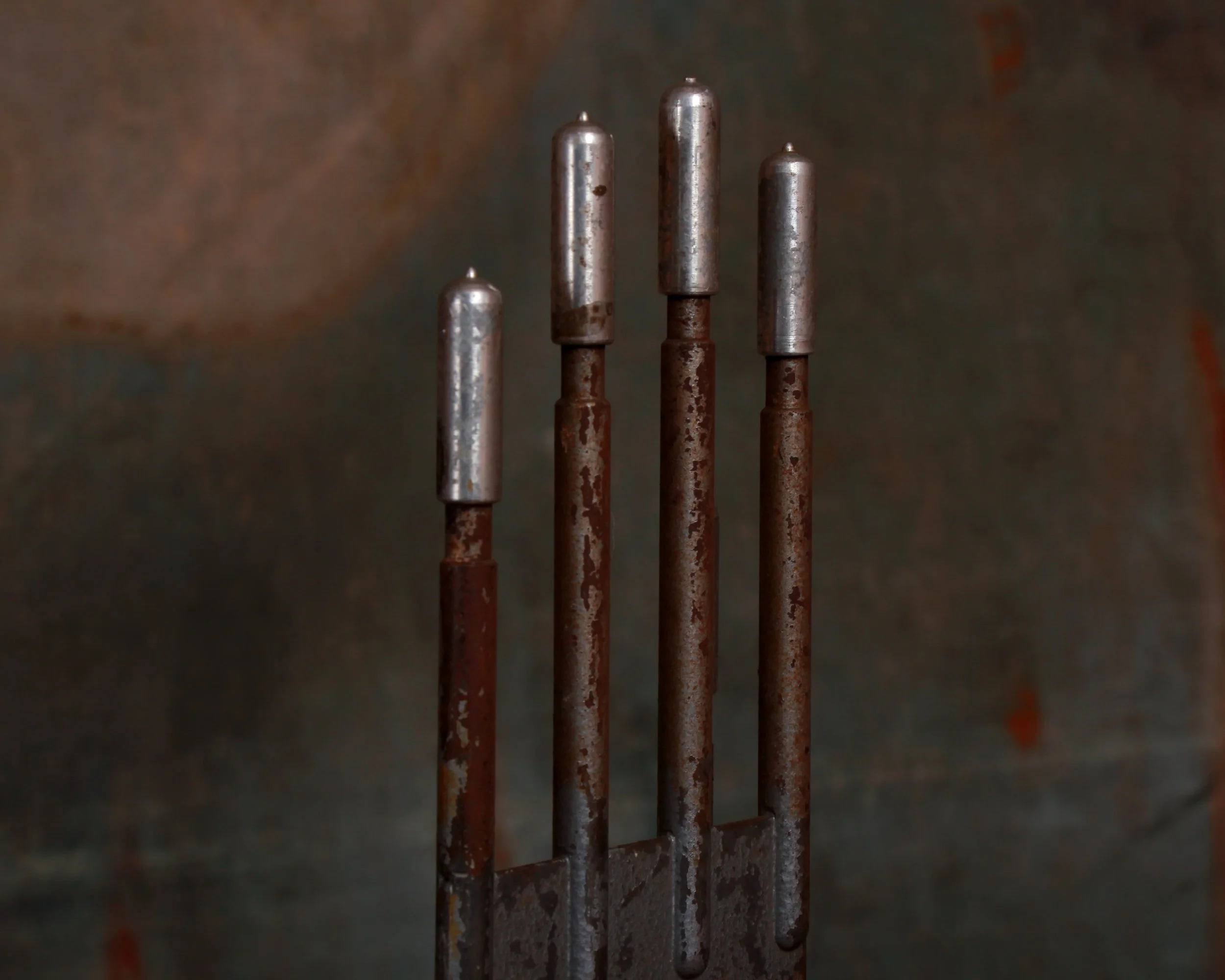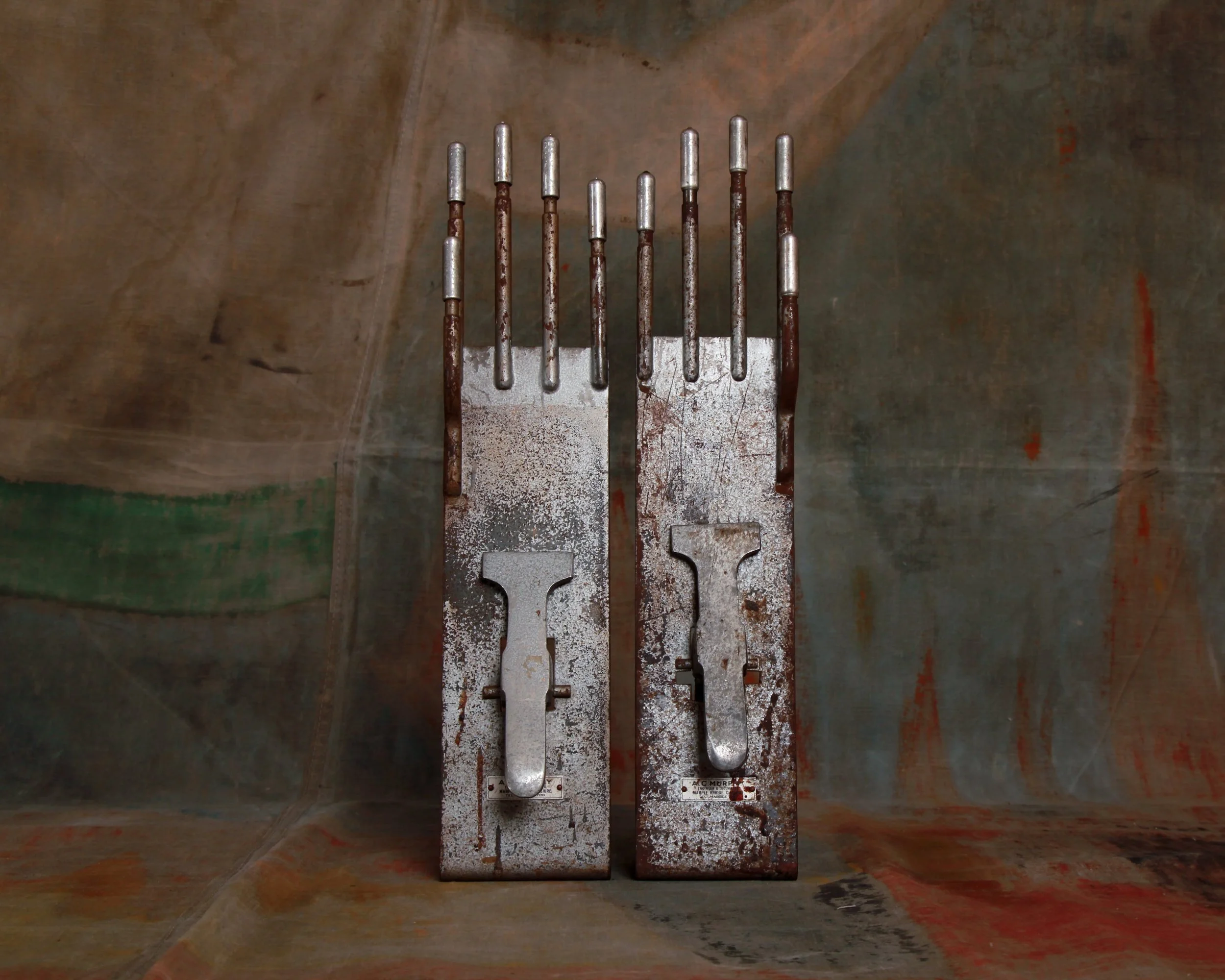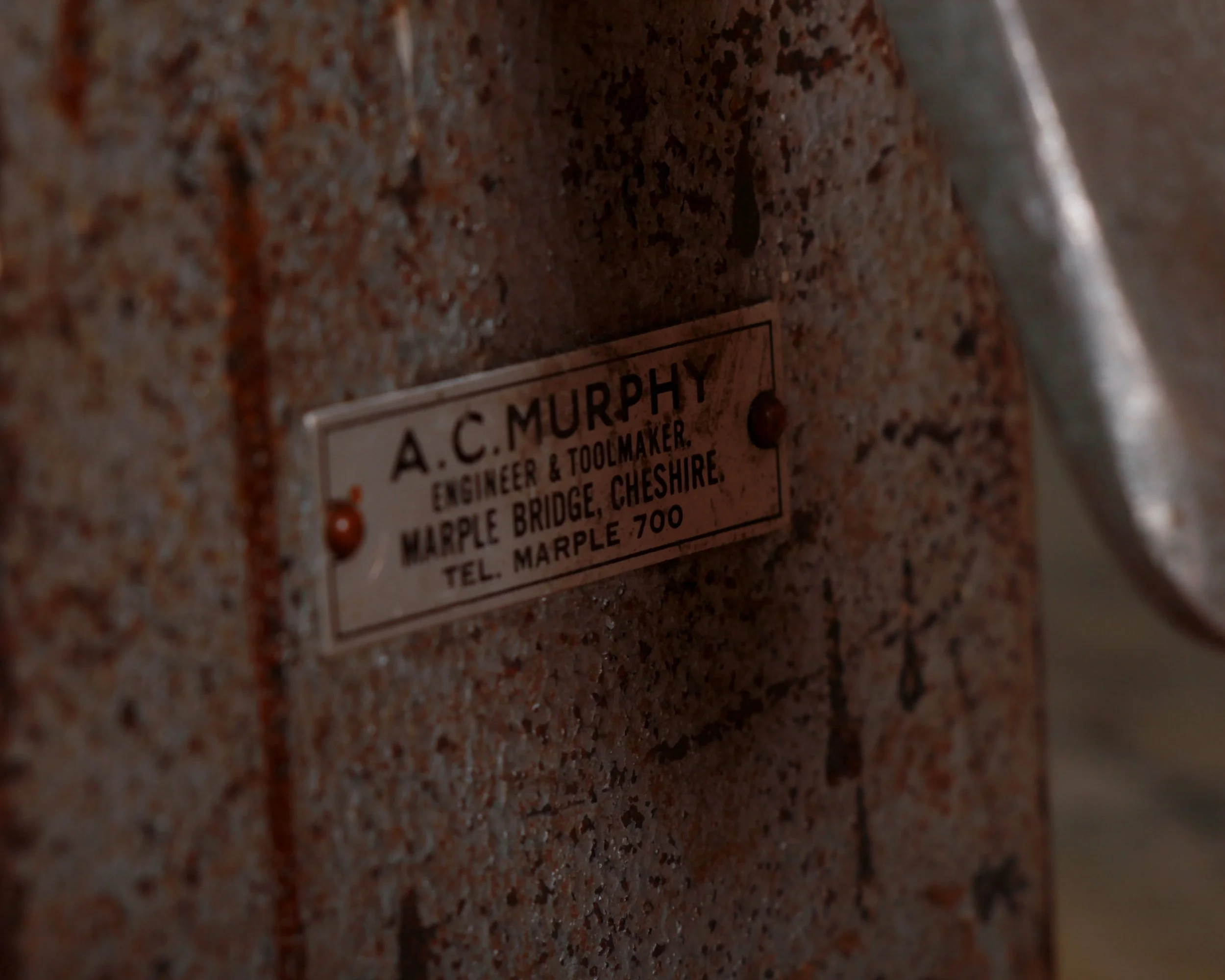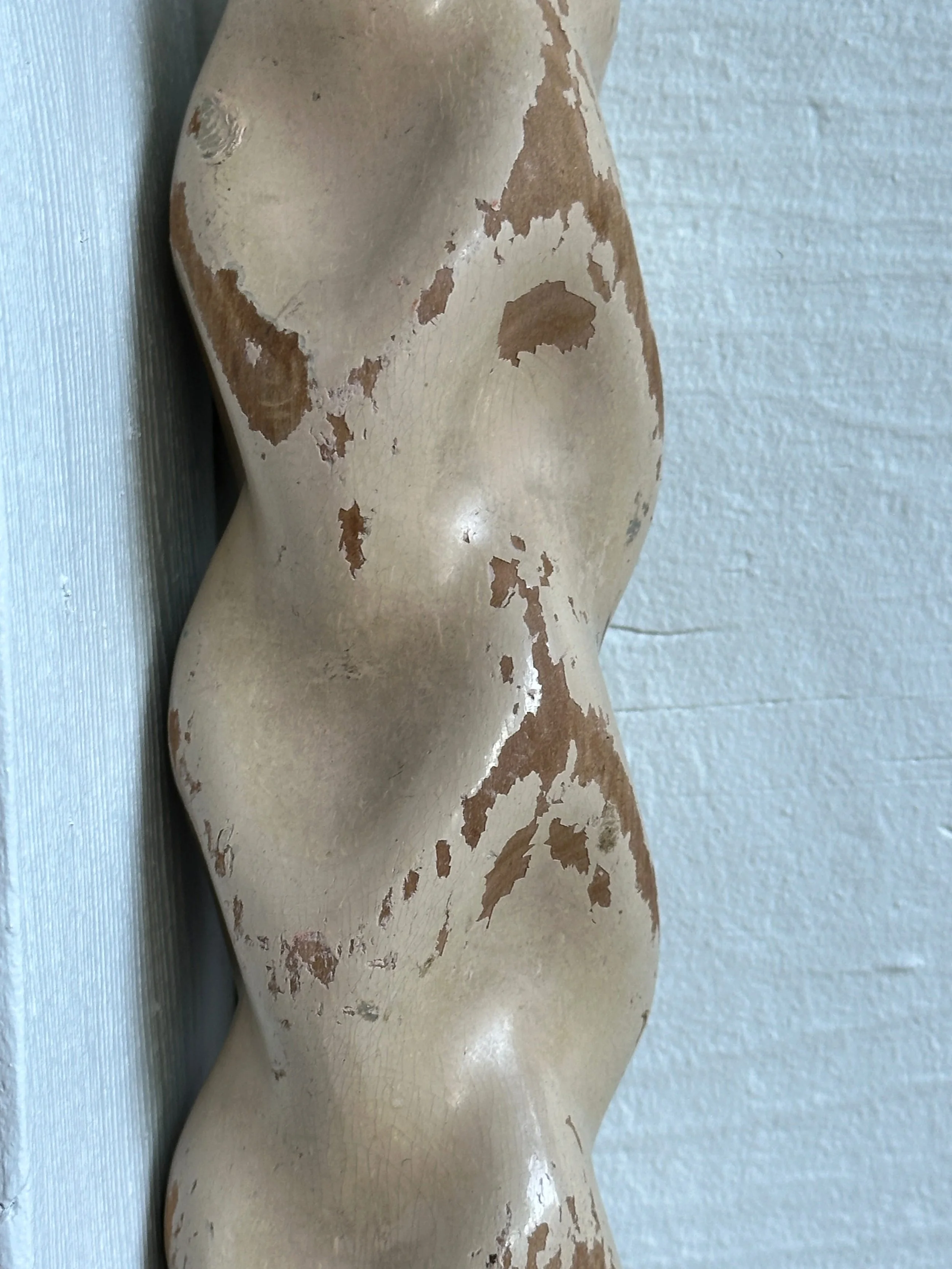
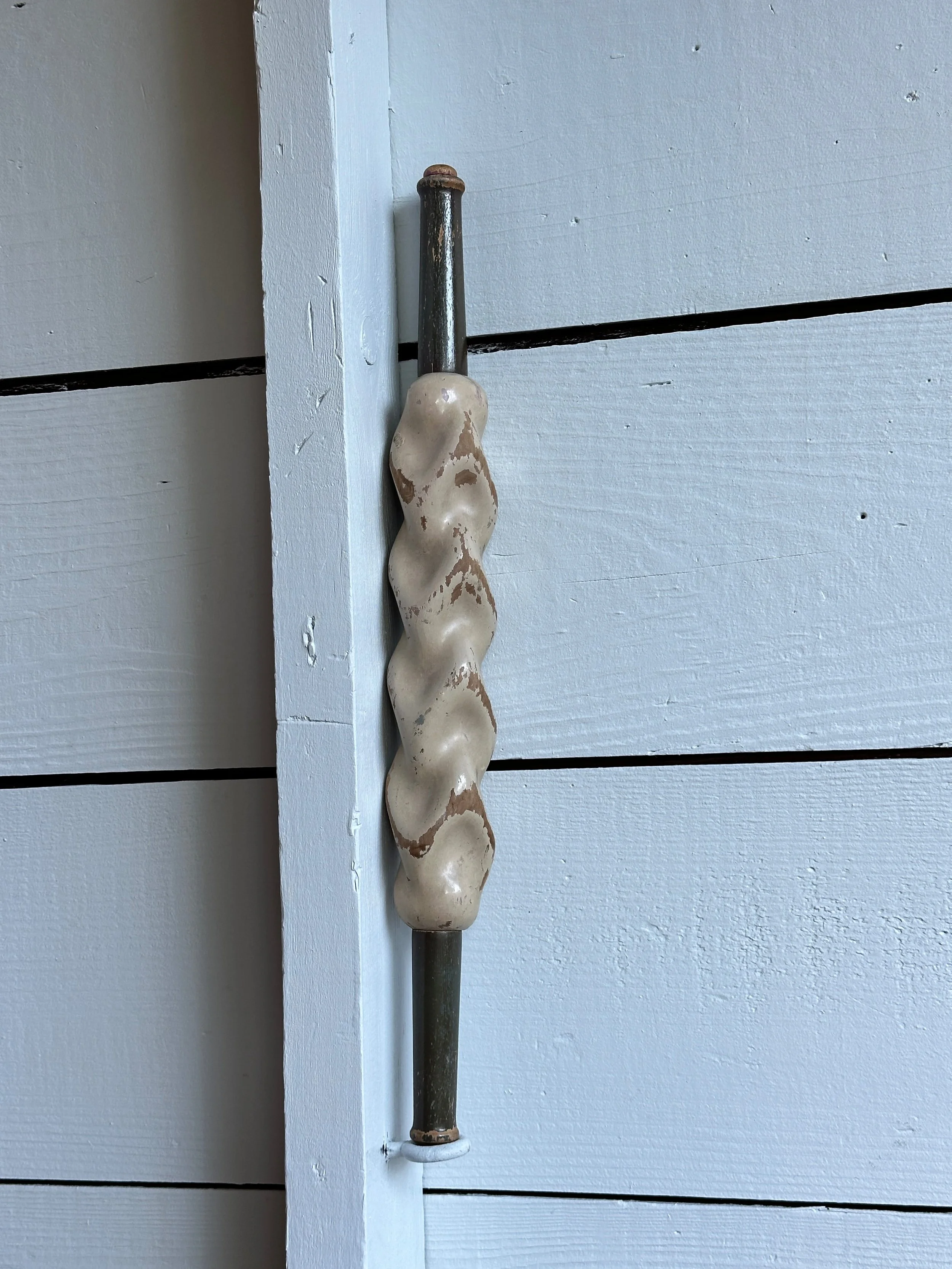
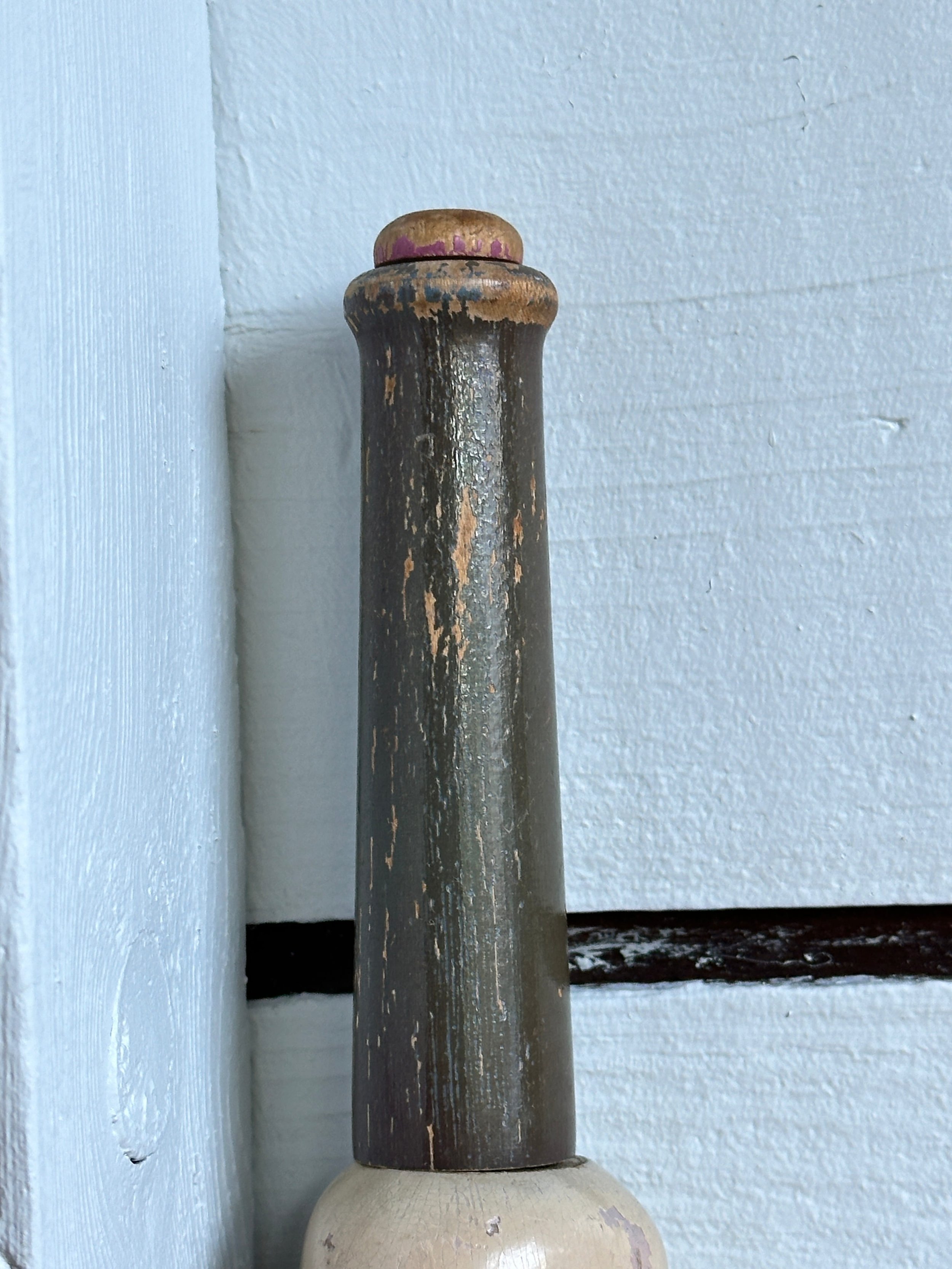
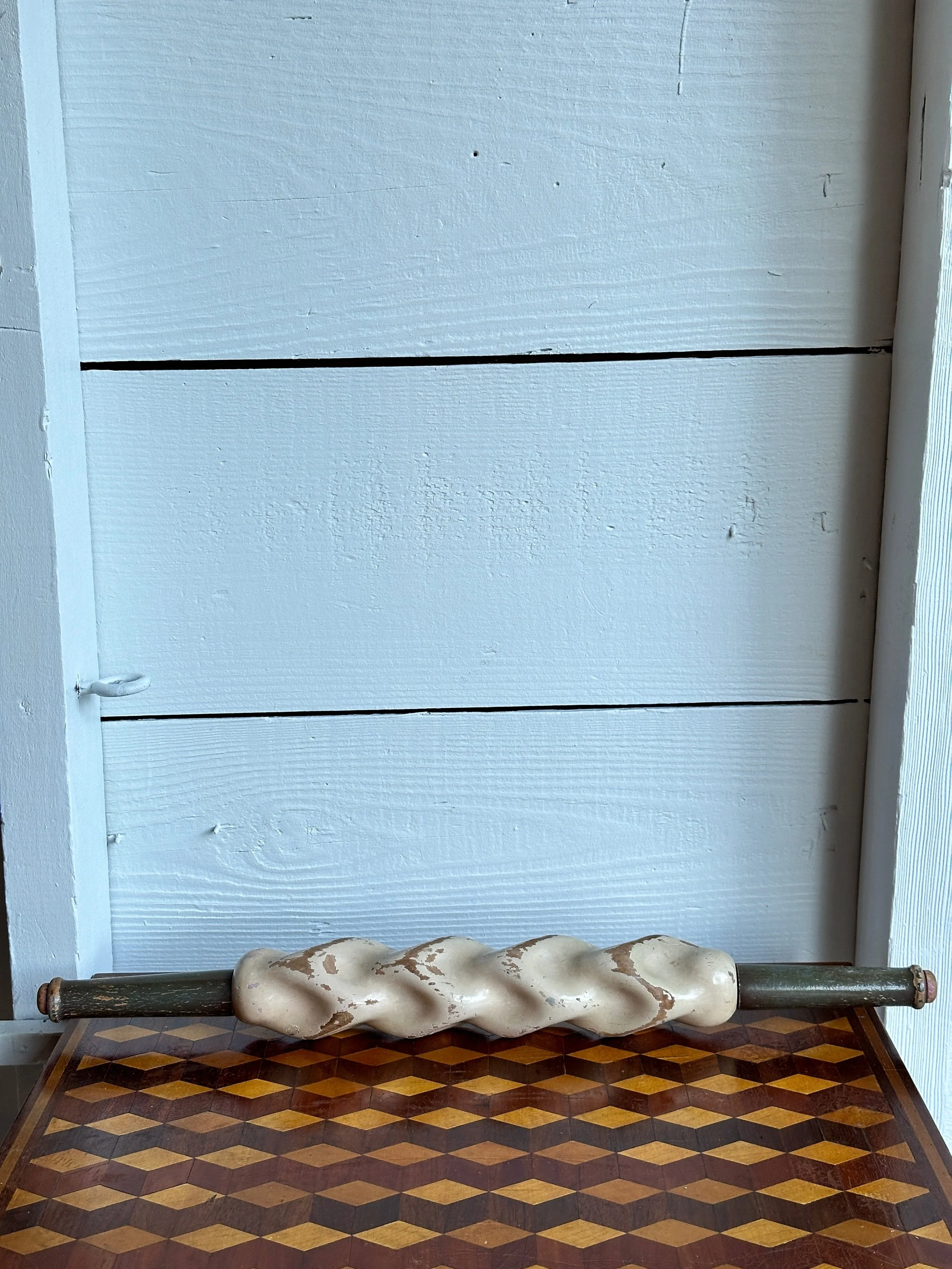
This thing looks like it rolled straight out of a surrealist kitchen-or maybe a backstage prop room from a mid-century theater production. Either way, it's not your average rolling pin. The middle section is carved into a deep, undulating twist that feels more sculptural than practical, painted in a once-creamy tone now charmingly flaked and worn, revealing the wood beneath. The handles are long, turned, and painted a dark olive green, capped off with subtle wooden knobs that add just a bit of flourish.
Whether it was meant for massages or play a supporting role on stage is anyone's guess, but one thing's for sure-it has presence. A touch of whimsy, a lot of patina, and just enough oddity to make you pause and wonder.
Category History
Vintage massage devices are a reminder that relief didn’t always come from specialized tools—it often came from whatever was within reach. Before the rise of modern electric massagers, people relied on simple, sometimes improvised objects to work out tension. A rolling pin is a perfect example: designed for dough, repurposed for muscle.
In the late 19th and early 20th centuries, massage was already recognized for its therapeutic value, tied to circulation, recovery, and general well-being. But access to professional treatment wasn’t always practical, so home solutions filled the gap. Household items—wooden rollers, glass bottles, even carved tools—became stand-ins for more formal equipment.
Eventually, manufacturers caught on. Purpose-built devices began to appear, often made of wood or early plastics, with ridges, handles, or rotating parts designed to mimic kneading or pressure. Some were marketed for health, others for beauty, promising everything from relaxation to improved complexion.
What’s interesting about these objects is their blend of ingenuity and trial-and-error. There’s no universal design language—just a series of ideas about what might feel good or work effectively. A rolling pin becomes a massage tool not because it was intended to be one, but because it could be.
Today, these pieces read as both practical and slightly eccentric. They reflect a hands-on approach to the body—simple tools, direct contact, and a willingness to experiment.
This thing looks like it rolled straight out of a surrealist kitchen-or maybe a backstage prop room from a mid-century theater production. Either way, it's not your average rolling pin. The middle section is carved into a deep, undulating twist that feels more sculptural than practical, painted in a once-creamy tone now charmingly flaked and worn, revealing the wood beneath. The handles are long, turned, and painted a dark olive green, capped off with subtle wooden knobs that add just a bit of flourish.
Whether it was meant for massages or play a supporting role on stage is anyone's guess, but one thing's for sure-it has presence. A touch of whimsy, a lot of patina, and just enough oddity to make you pause and wonder.
Category History
Vintage massage devices are a reminder that relief didn’t always come from specialized tools—it often came from whatever was within reach. Before the rise of modern electric massagers, people relied on simple, sometimes improvised objects to work out tension. A rolling pin is a perfect example: designed for dough, repurposed for muscle.
In the late 19th and early 20th centuries, massage was already recognized for its therapeutic value, tied to circulation, recovery, and general well-being. But access to professional treatment wasn’t always practical, so home solutions filled the gap. Household items—wooden rollers, glass bottles, even carved tools—became stand-ins for more formal equipment.
Eventually, manufacturers caught on. Purpose-built devices began to appear, often made of wood or early plastics, with ridges, handles, or rotating parts designed to mimic kneading or pressure. Some were marketed for health, others for beauty, promising everything from relaxation to improved complexion.
What’s interesting about these objects is their blend of ingenuity and trial-and-error. There’s no universal design language—just a series of ideas about what might feel good or work effectively. A rolling pin becomes a massage tool not because it was intended to be one, but because it could be.
Today, these pieces read as both practical and slightly eccentric. They reflect a hands-on approach to the body—simple tools, direct contact, and a willingness to experiment.