ITEM NOT AVAILABLE IMMEDIATELY—INQUIRE IF INTERESTED hello@heimweeantiques.com
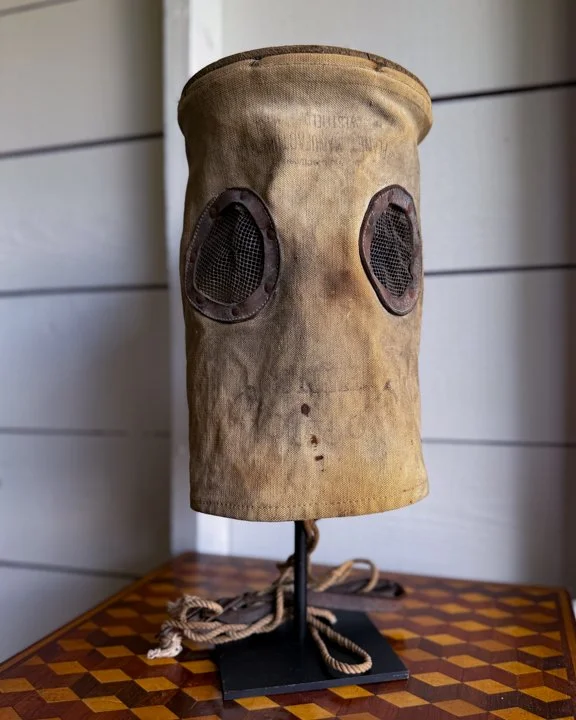
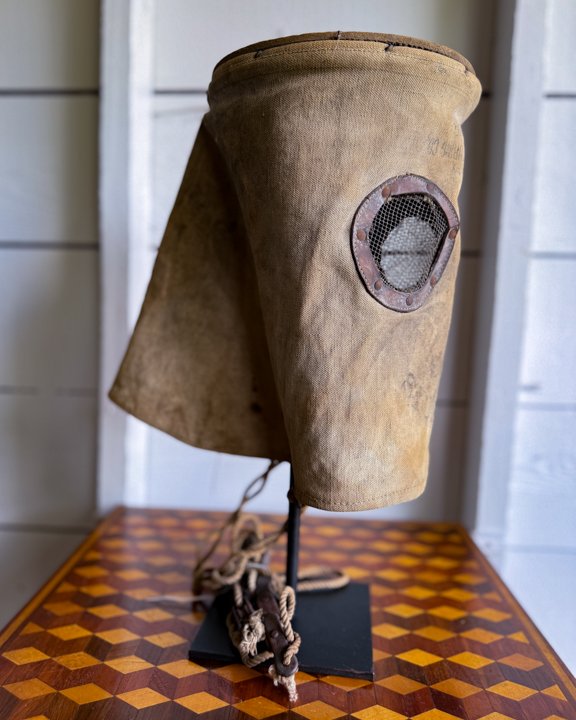
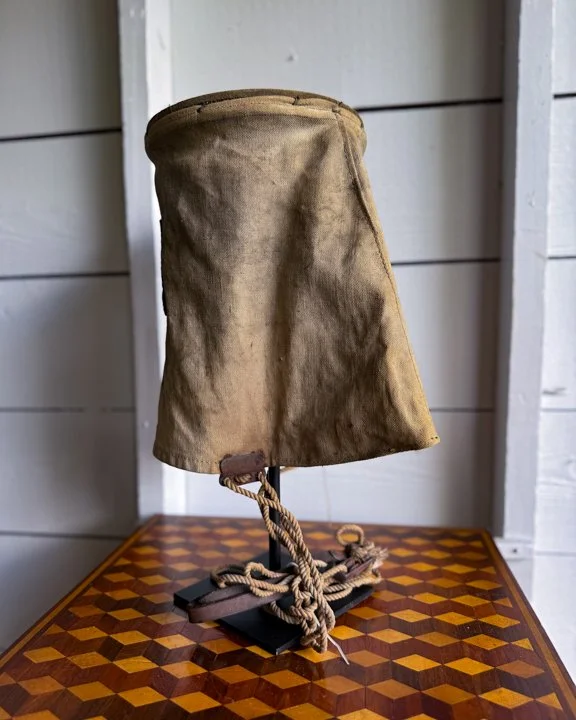
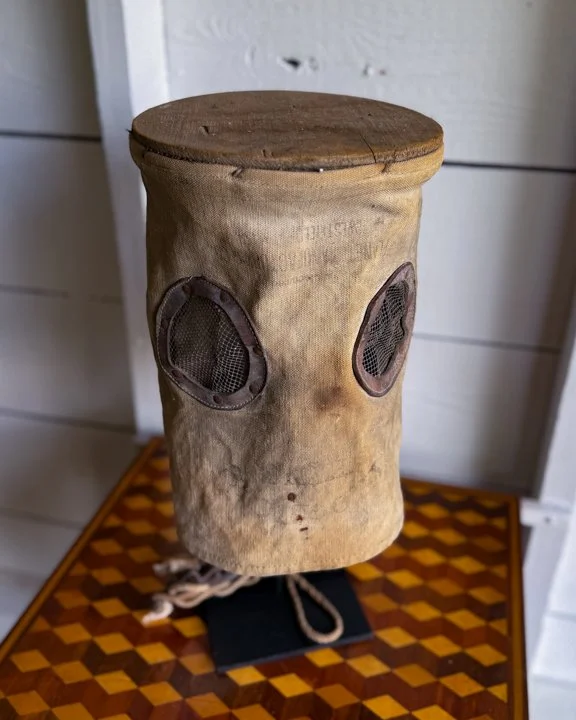
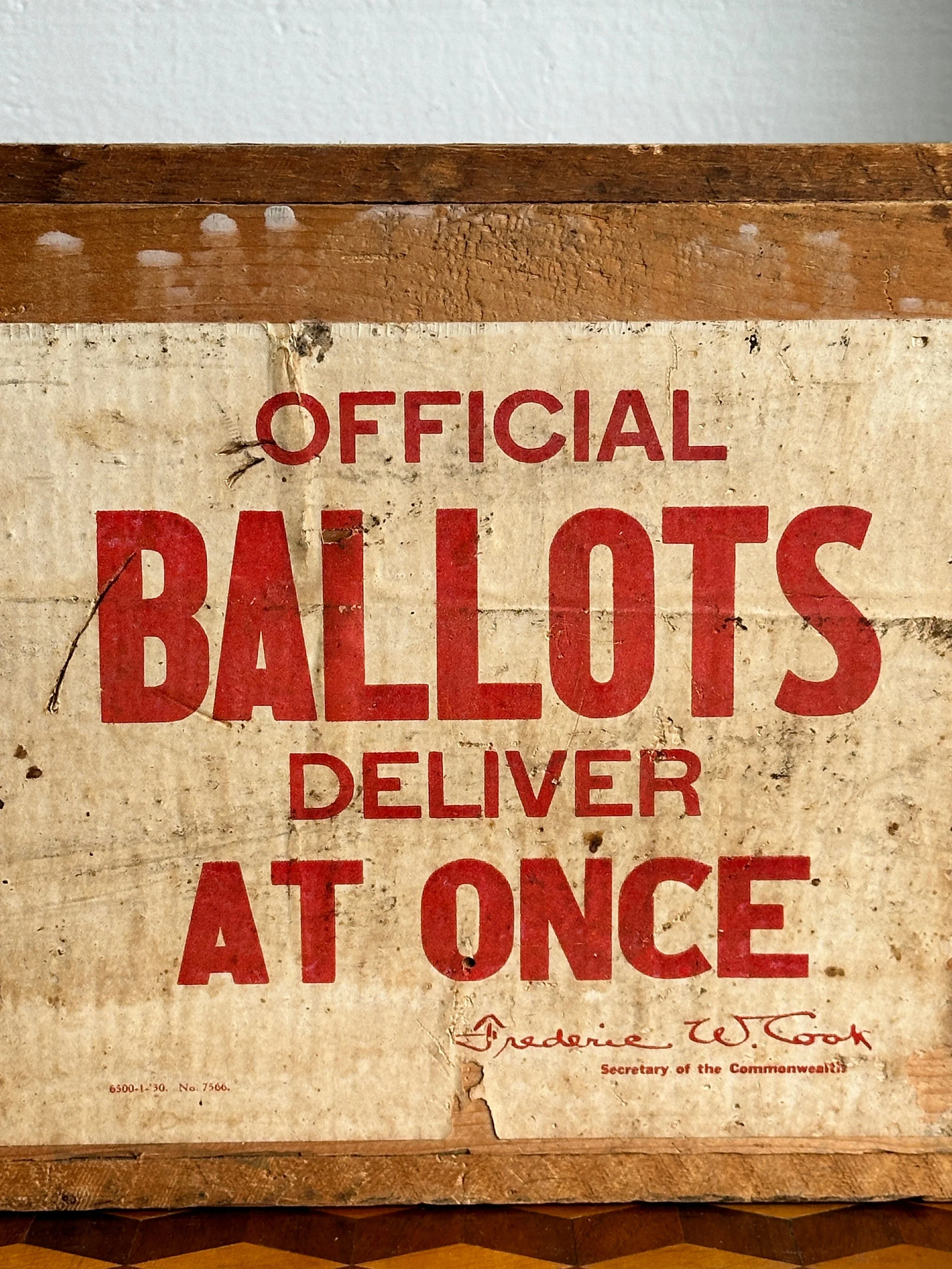
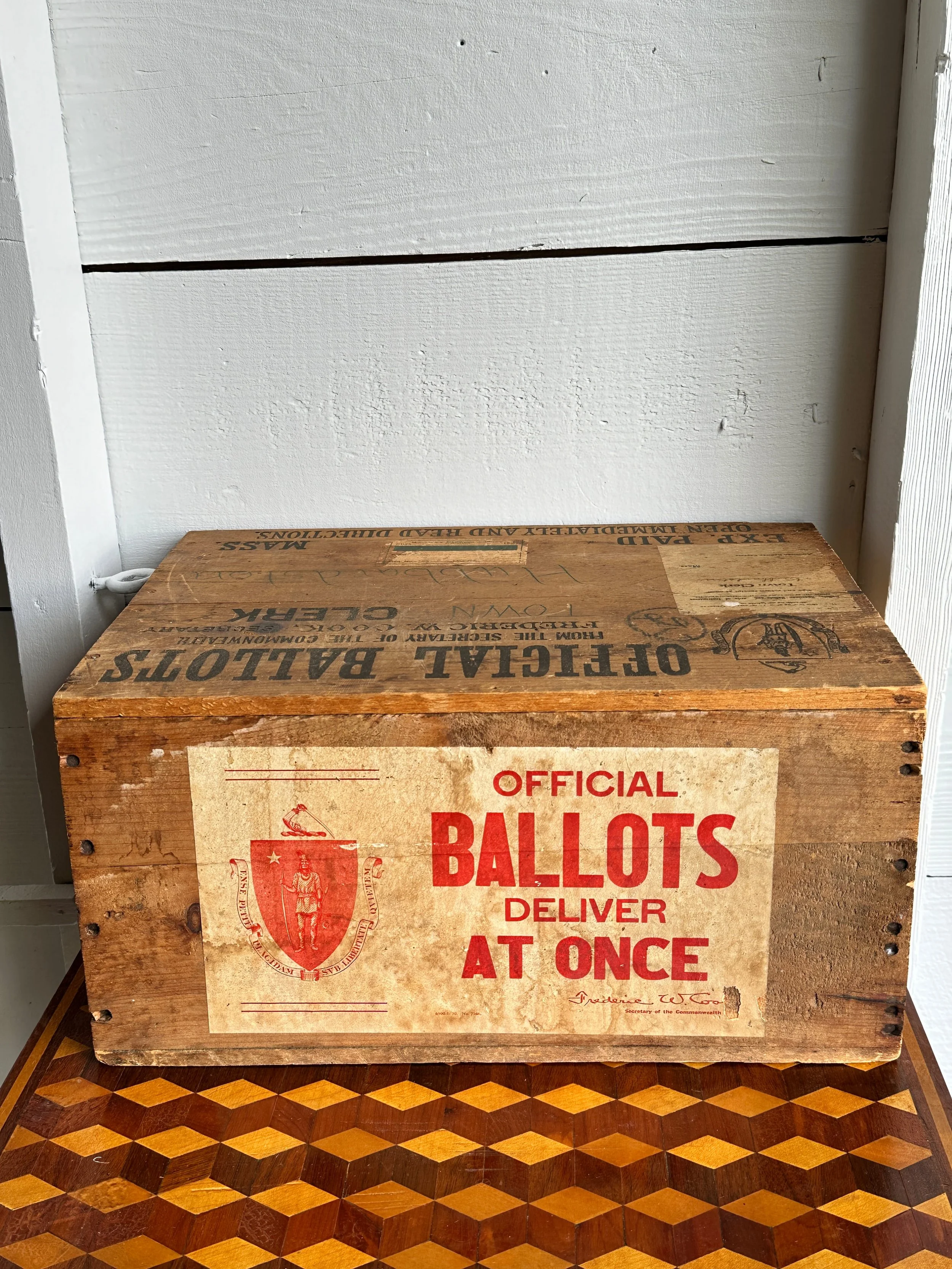
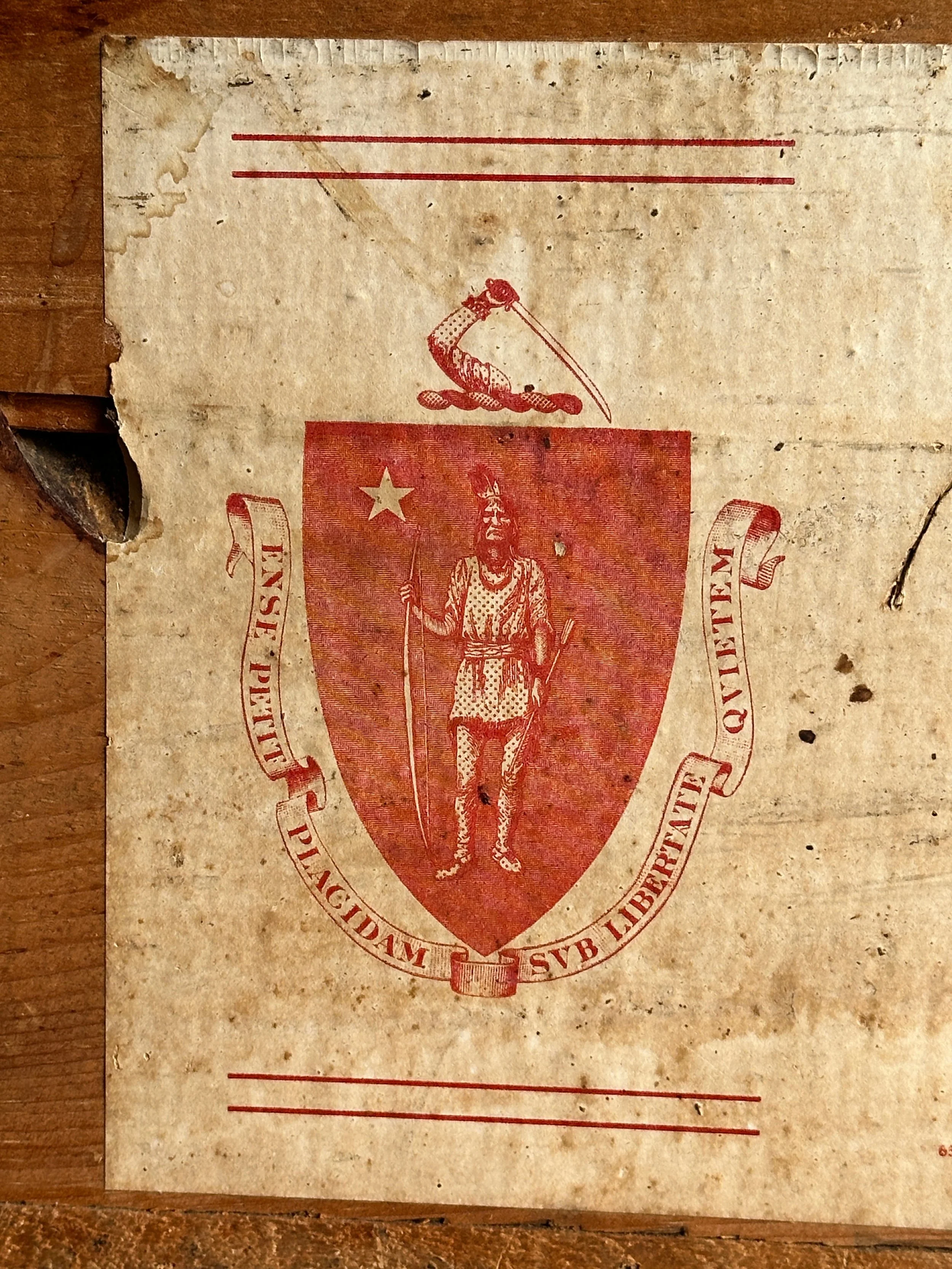
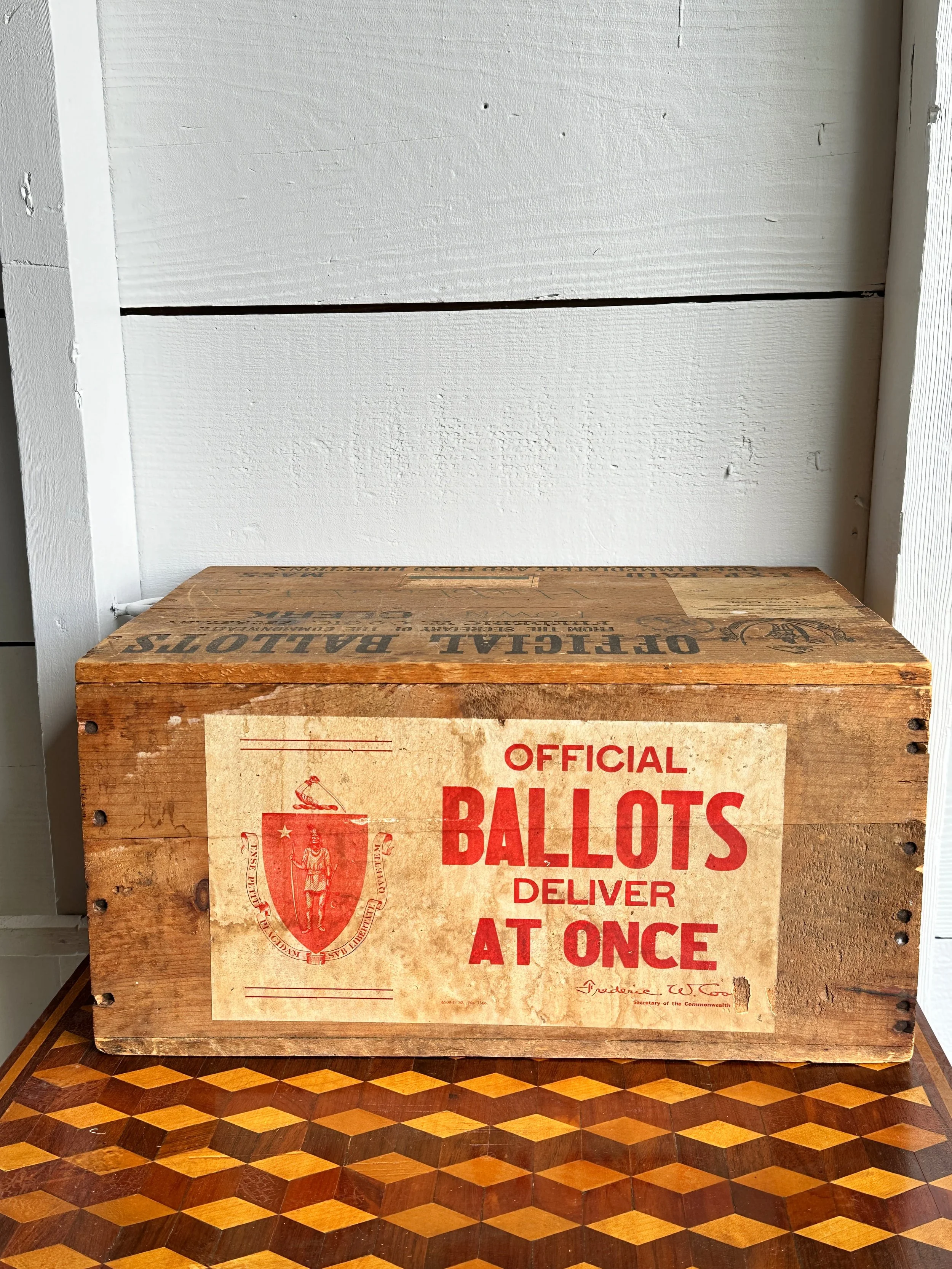
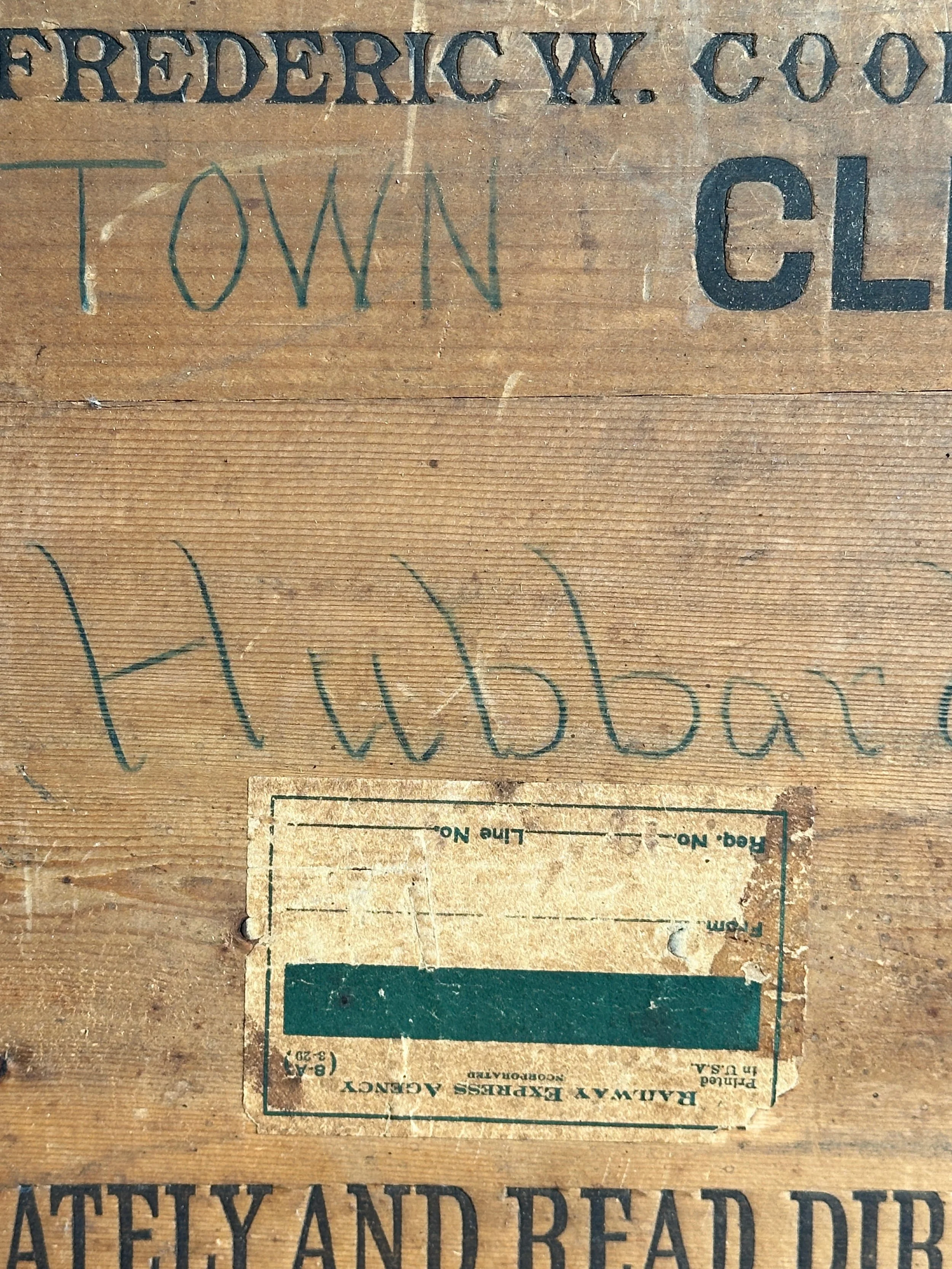
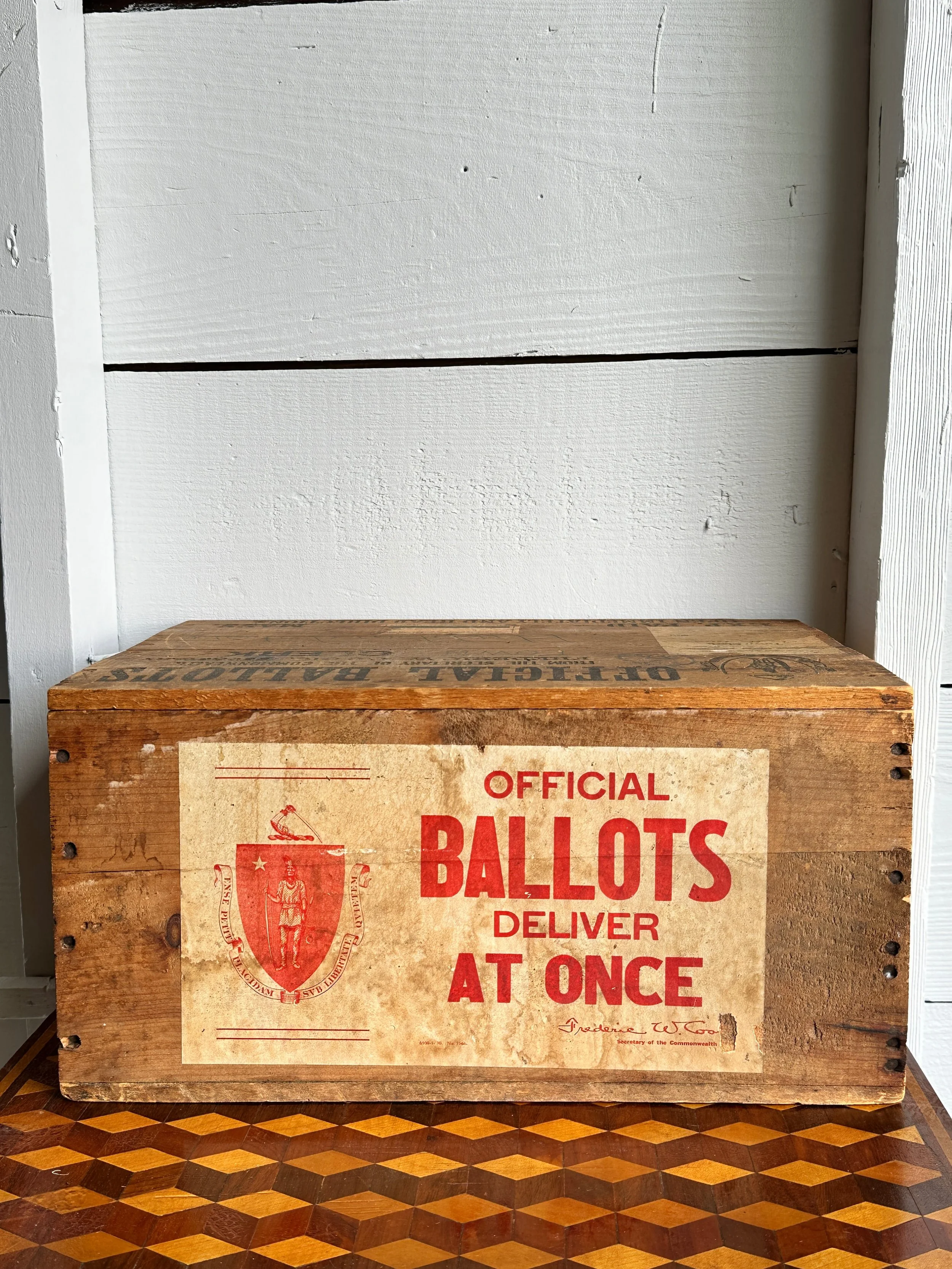
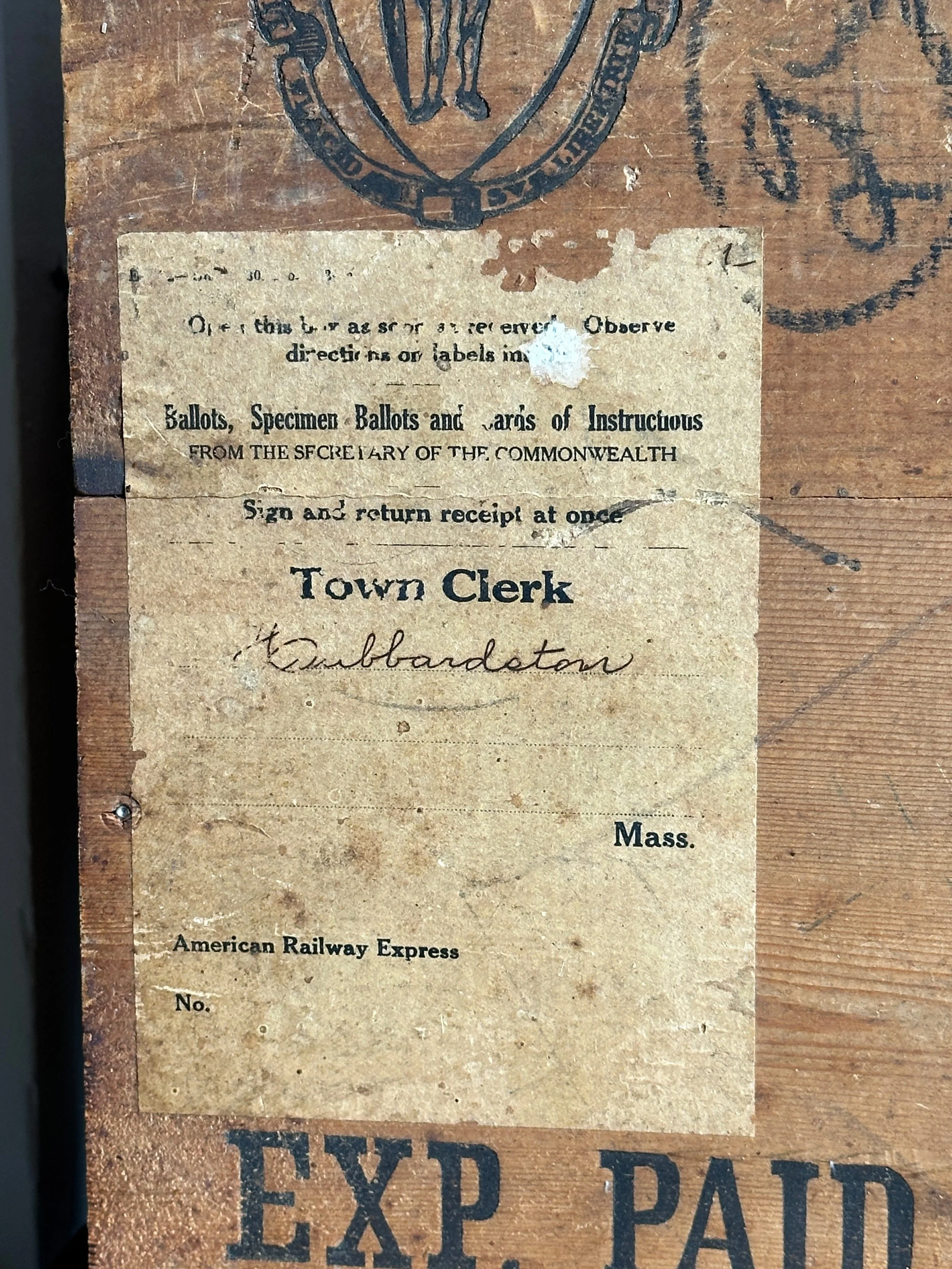
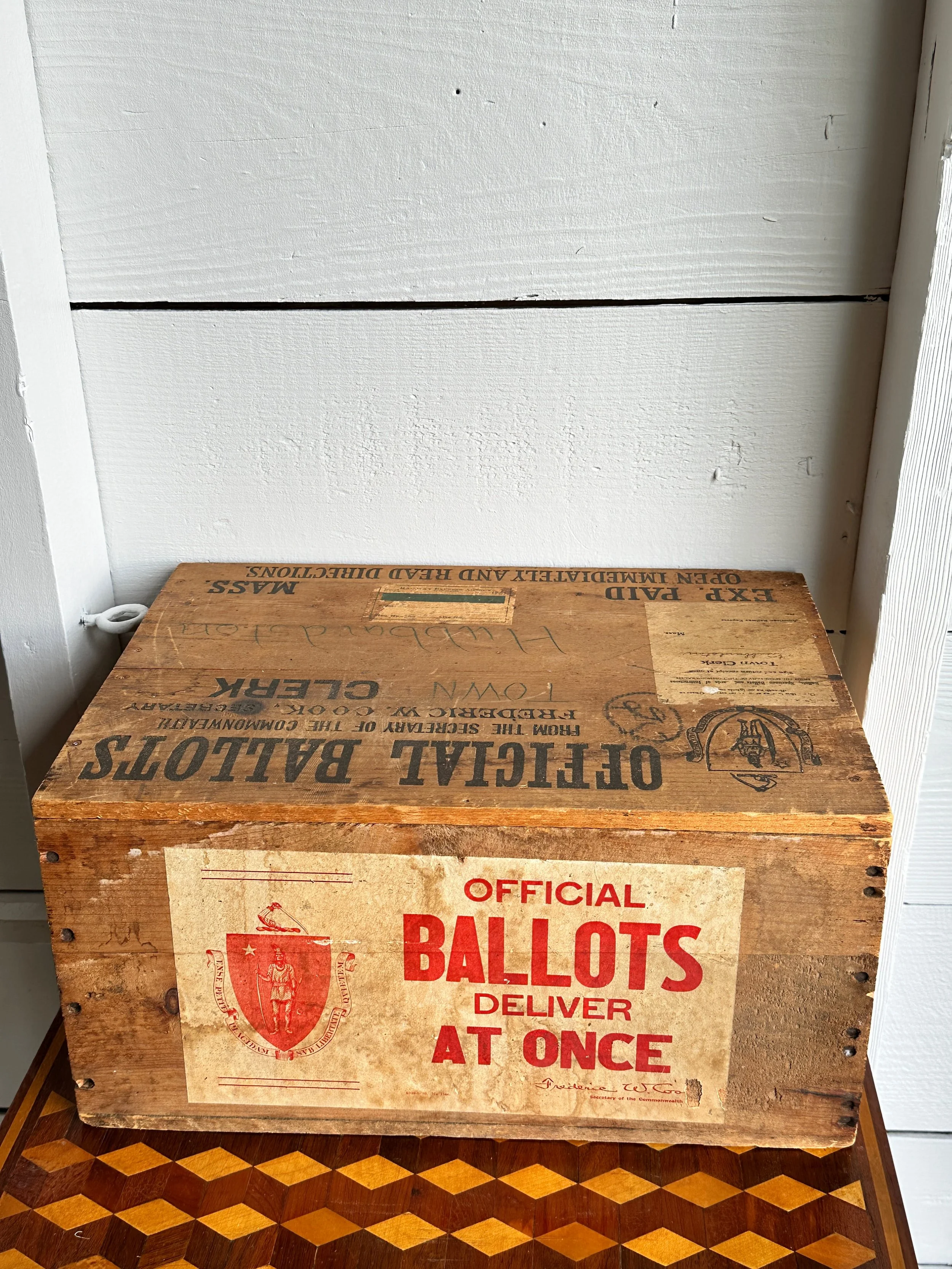
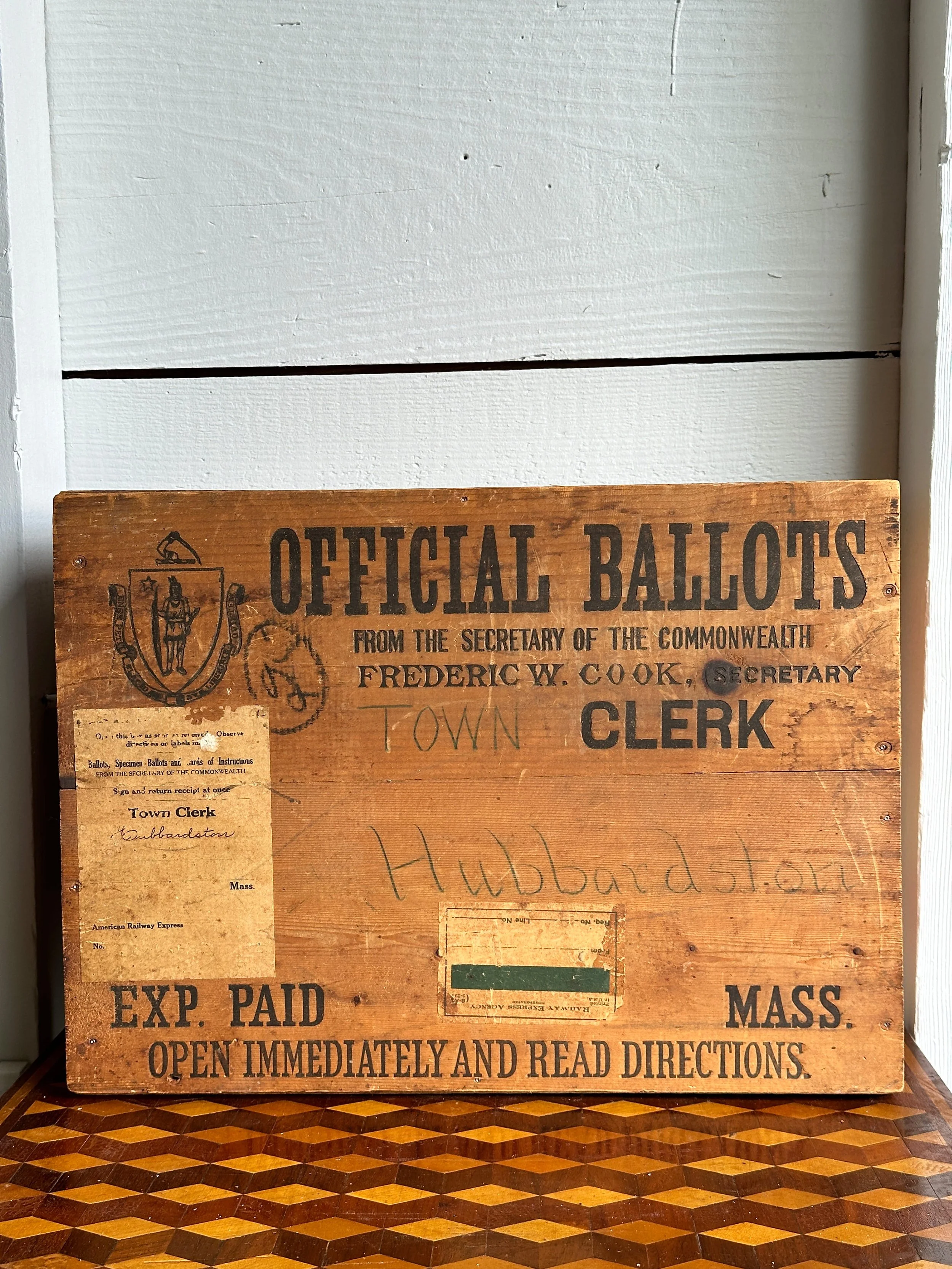
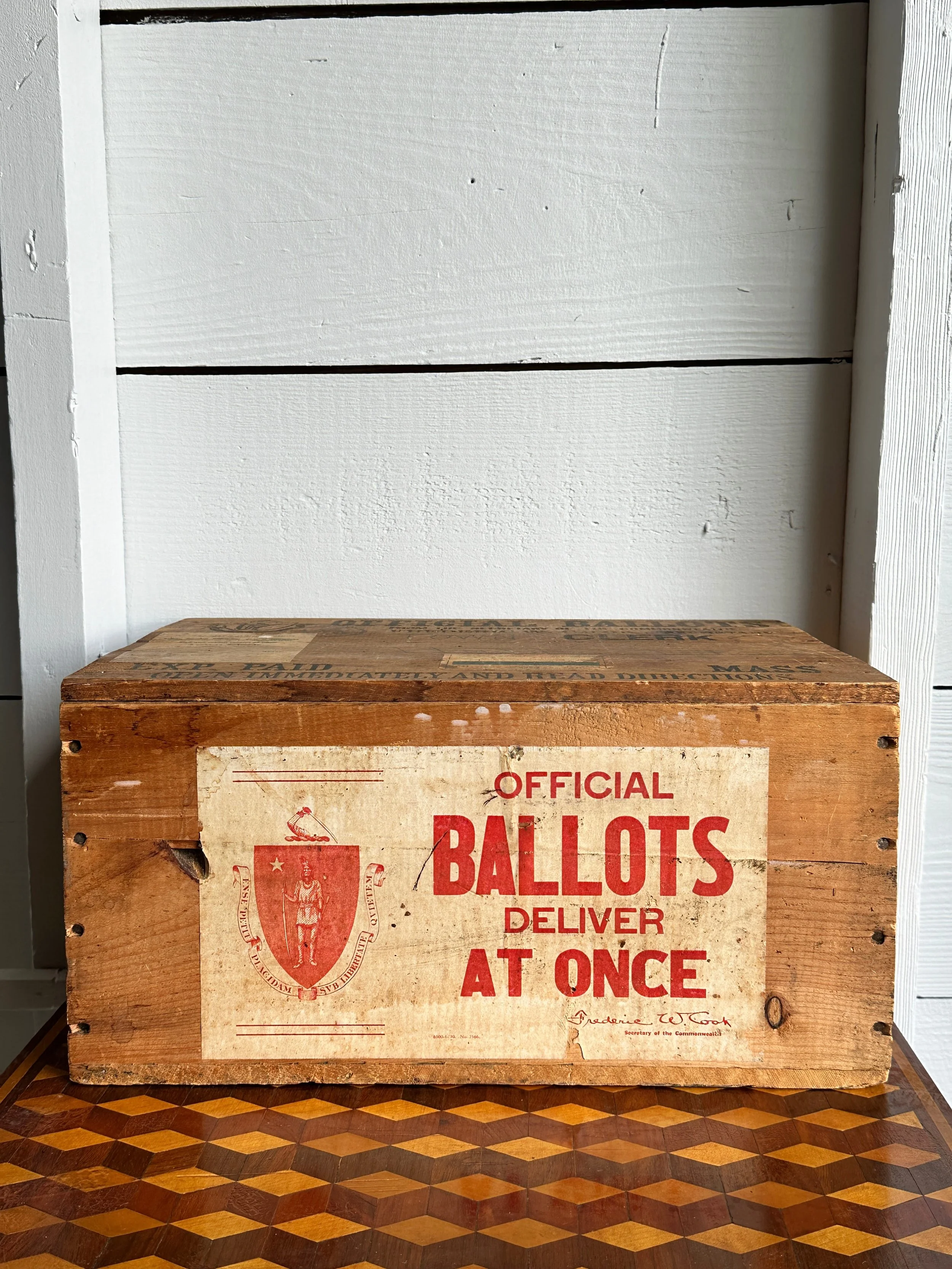
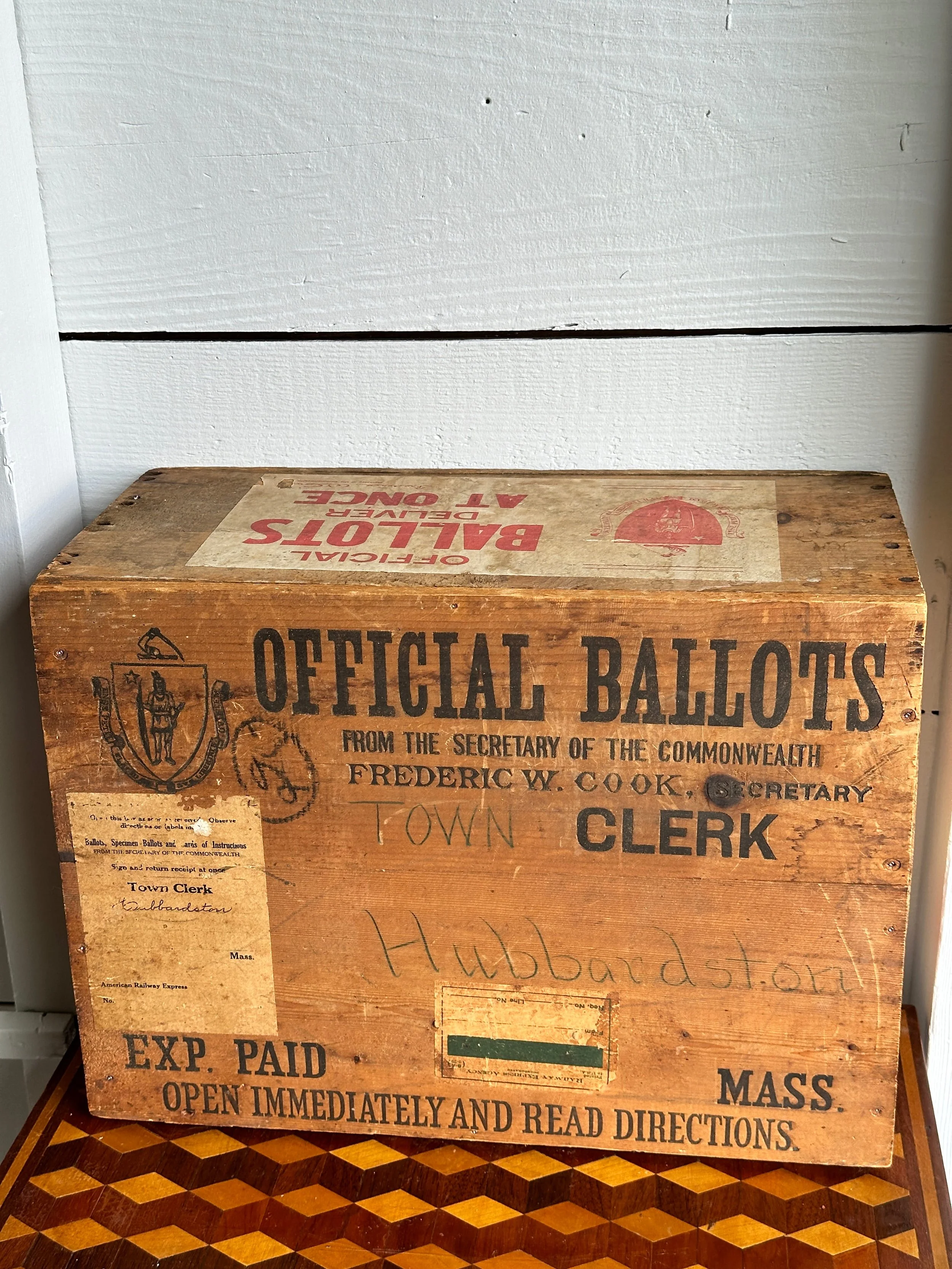
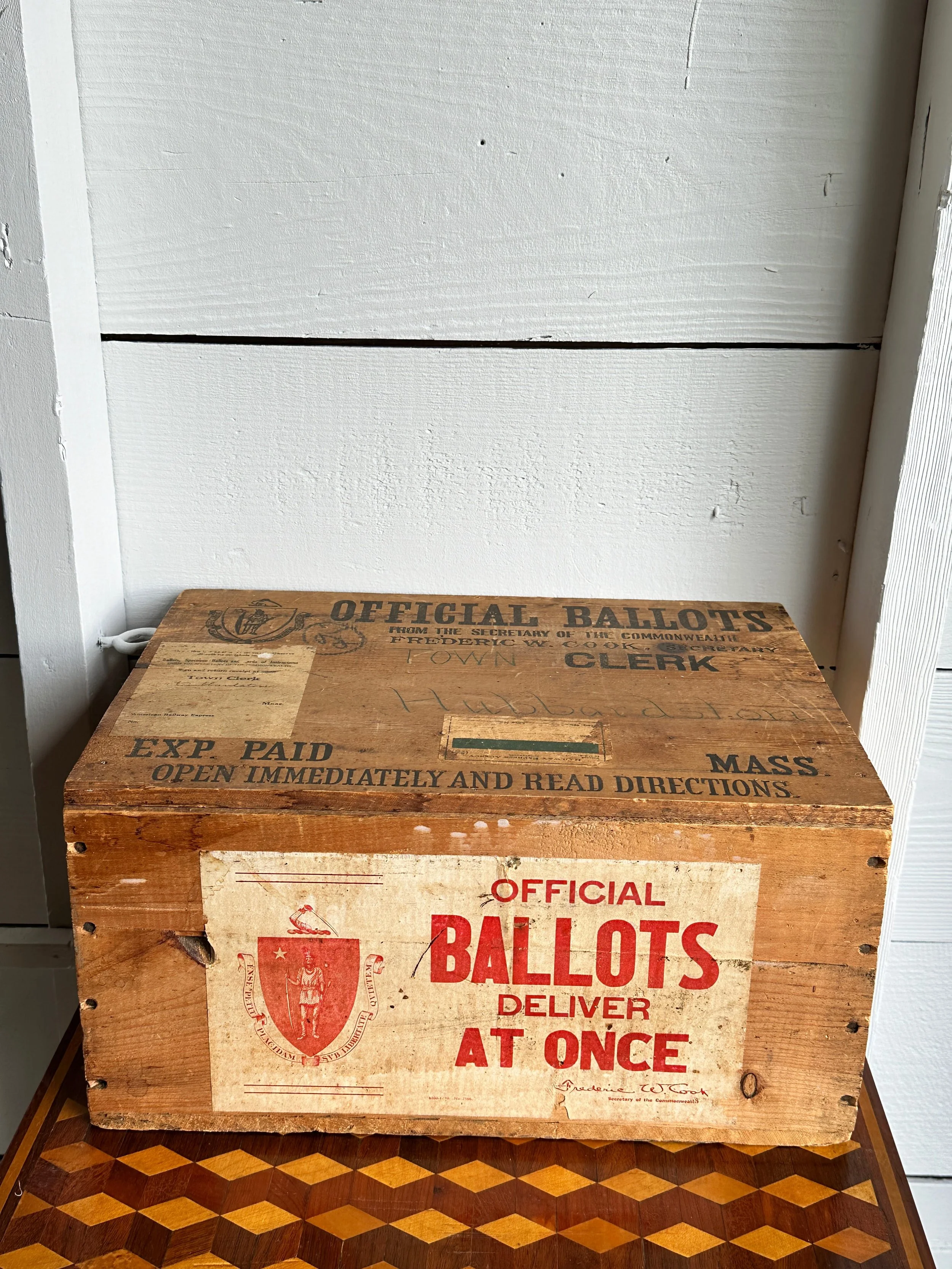
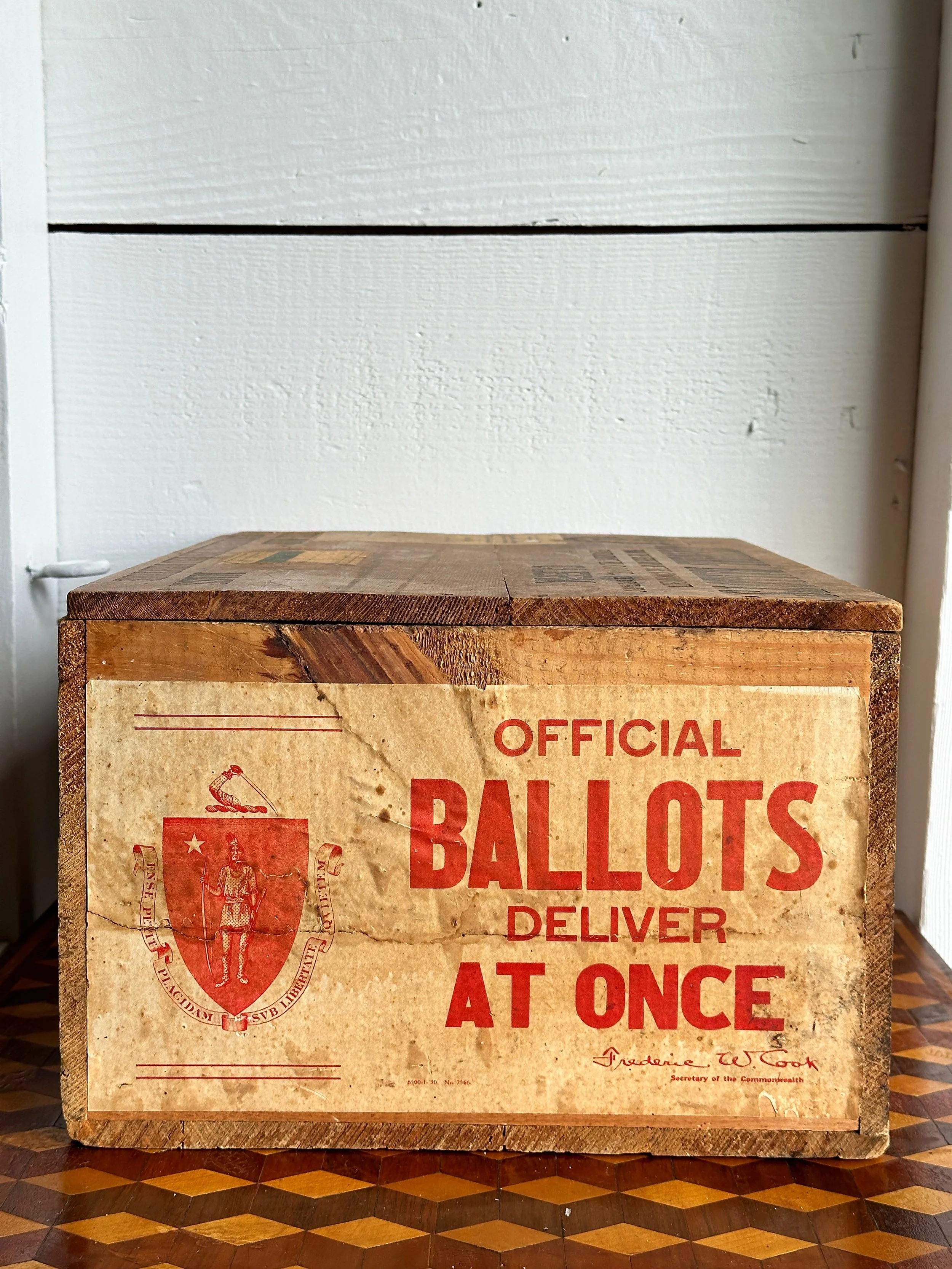
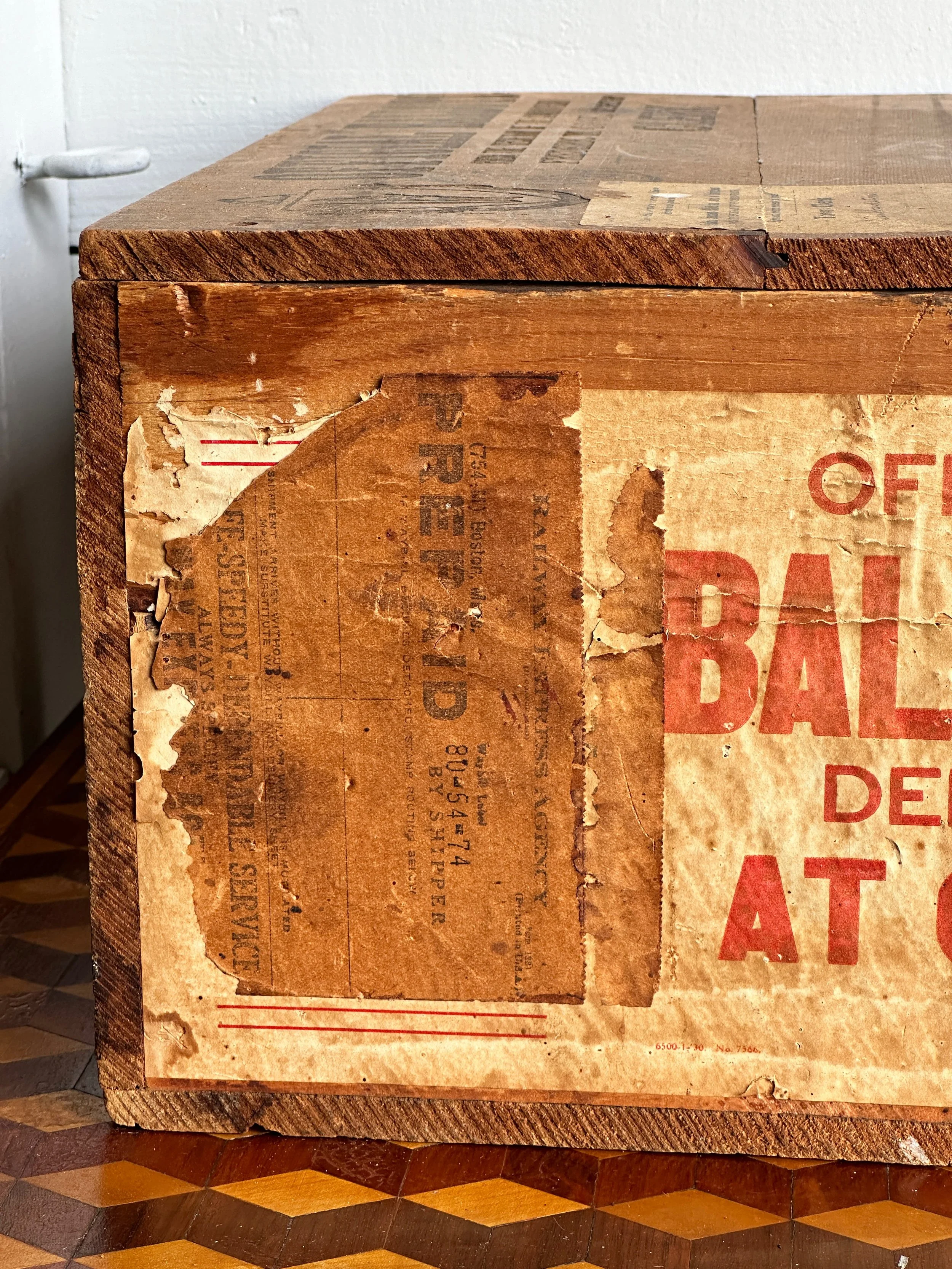
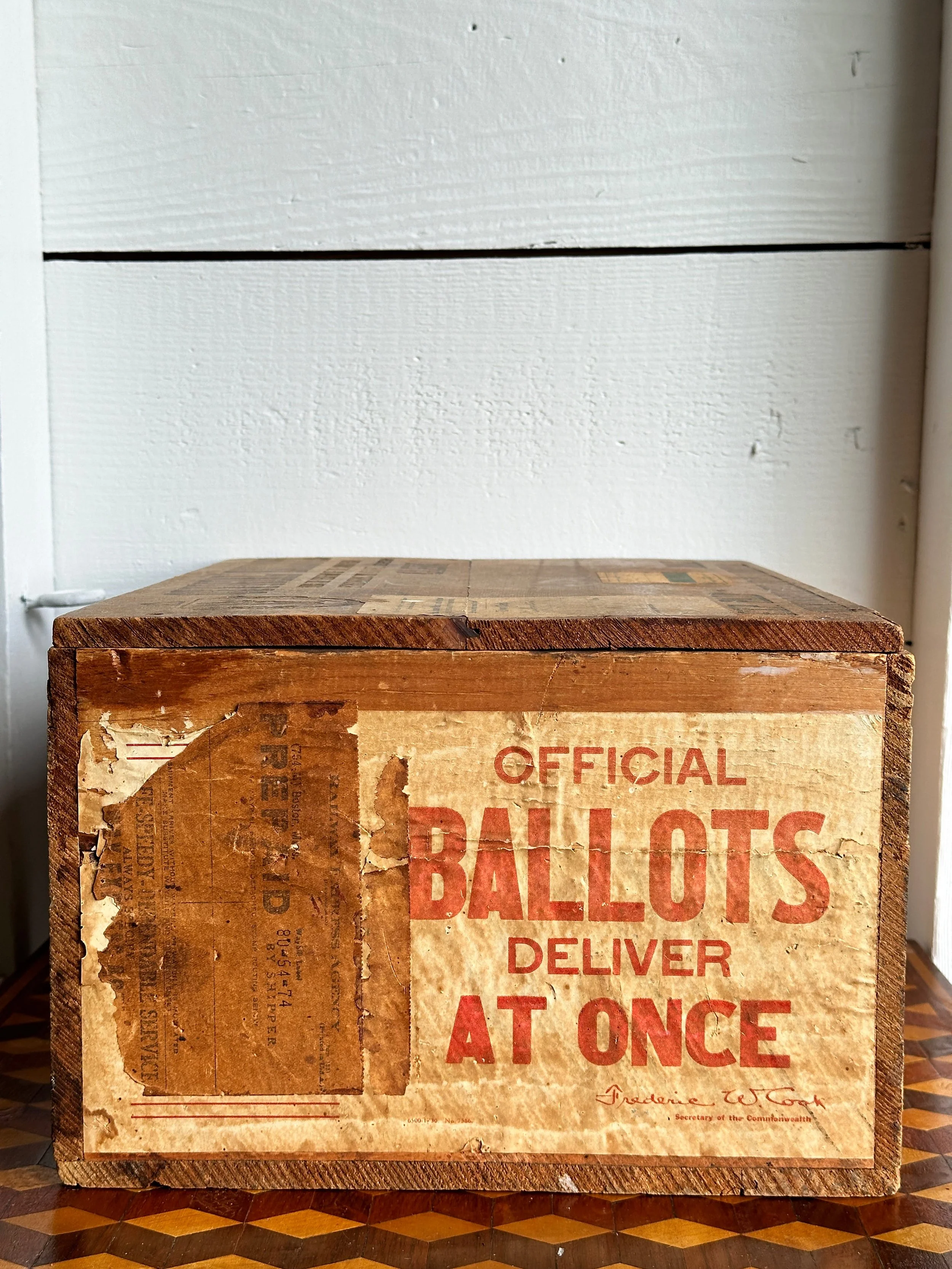
Here's an early 20th-century wooden ballot box from the Commonwealth of Massachusetts, with "OFFICIAL BALLOTS - DELIVER AT ONCE" stenciled boldly on every side, as if it hasn't stopped yelling since 1930. The box was addressed to the Town Clerk of Hubbardston, MA, and is covered in original stencils, hand-scrawled town markings, and even remnants of the old American Railway Express shipping label. One side bears the seal of Massachusetts and the signature of Secretary Frederic W. Cook, who served from 1921 to 1949—so that gives us a nice window into when this box was actively doing its job in democracy's paper trail. The dovetailed construction is solid and shows plenty of wear and grit, which somehow makes it even better. Hard to find and even harder to ignore.
Category History
Ballot boxes from Massachusetts in the 1930s sit right at an interesting crossroads, where older, almost ritualistic voting traditions meet the early push toward modern election systems. By that point, the state had already spent decades trying to clean up and standardize elections, especially after the chaos and corruption that marked 19th-century voting. The introduction of the “Australian ballot” in the late 1800s had changed everything. Instead of party-printed ballots handed out in the open, voters were now given standardized, government-issued ballots and cast them in private. The ballot box became less of a public spectacle and more of a quiet endpoint to a very personal act.
Physically, these boxes were often made of wood or metal, built to feel solid and trustworthy. Many had narrow slots, internal compartments, and locking mechanisms designed to prevent tampering. Some were paired with mechanical voting machines, which Massachusetts began adopting in certain areas in the early 20th century, but paper ballots and traditional boxes remained widely used, especially in smaller towns.
The process itself had a certain choreography. Voters would check in, have their names marked off in large ledger books, and receive their ballot. Privacy booths—simple curtained or partitioned spaces—allowed them to fill it out away from watchful eyes. Once complete, the ballot was folded and dropped into the box, often under the supervision of election officials from multiple parties to ensure fairness.
What’s compelling about these ballot boxes is how much responsibility they carried. They weren’t just containers, they were the physical guardians of trust in a system still proving itself. Every scuff, worn edge, or replaced lock hints at long days of use, local elections, heated debates, and quiet civic participation.
Today, they read as humble objects, but in their time, they were essential. Not flashy, not symbolic in an obvious way, just dependable. Which, in a democracy, is kind of the whole point.
ITEM NOT AVAILABLE IMMEDIATELY—INQUIRE IF INTERESTED hello@heimweeantiques.com
Here's an early 20th-century wooden ballot box from the Commonwealth of Massachusetts, with "OFFICIAL BALLOTS - DELIVER AT ONCE" stenciled boldly on every side, as if it hasn't stopped yelling since 1930. The box was addressed to the Town Clerk of Hubbardston, MA, and is covered in original stencils, hand-scrawled town markings, and even remnants of the old American Railway Express shipping label. One side bears the seal of Massachusetts and the signature of Secretary Frederic W. Cook, who served from 1921 to 1949—so that gives us a nice window into when this box was actively doing its job in democracy's paper trail. The dovetailed construction is solid and shows plenty of wear and grit, which somehow makes it even better. Hard to find and even harder to ignore.
Category History
Ballot boxes from Massachusetts in the 1930s sit right at an interesting crossroads, where older, almost ritualistic voting traditions meet the early push toward modern election systems. By that point, the state had already spent decades trying to clean up and standardize elections, especially after the chaos and corruption that marked 19th-century voting. The introduction of the “Australian ballot” in the late 1800s had changed everything. Instead of party-printed ballots handed out in the open, voters were now given standardized, government-issued ballots and cast them in private. The ballot box became less of a public spectacle and more of a quiet endpoint to a very personal act.
Physically, these boxes were often made of wood or metal, built to feel solid and trustworthy. Many had narrow slots, internal compartments, and locking mechanisms designed to prevent tampering. Some were paired with mechanical voting machines, which Massachusetts began adopting in certain areas in the early 20th century, but paper ballots and traditional boxes remained widely used, especially in smaller towns.
The process itself had a certain choreography. Voters would check in, have their names marked off in large ledger books, and receive their ballot. Privacy booths—simple curtained or partitioned spaces—allowed them to fill it out away from watchful eyes. Once complete, the ballot was folded and dropped into the box, often under the supervision of election officials from multiple parties to ensure fairness.
What’s compelling about these ballot boxes is how much responsibility they carried. They weren’t just containers, they were the physical guardians of trust in a system still proving itself. Every scuff, worn edge, or replaced lock hints at long days of use, local elections, heated debates, and quiet civic participation.
Today, they read as humble objects, but in their time, they were essential. Not flashy, not symbolic in an obvious way, just dependable. Which, in a democracy, is kind of the whole point.