
Tintype, Ambrotype, Daguerreotype: A Collector's Guide to the Differences
Early photography produced some of the most intimate and historically significant objects in the antique world. Small, personal, and often remarkably well preserved, these images offer a direct visual connection to the people and lives of the nineteenth century in a way that few other antiques can match.
The three formats that collectors encounter most frequently are the daguerreotype, the ambrotype, and the tintype. Each was produced using a different process, during a different period, and carries a different set of characteristics that affect both identification and value.
At Heimwee Antiques, early photography forms part of our broader antique art collection. Understanding the differences between these formats is the foundation of collecting them with confidence.
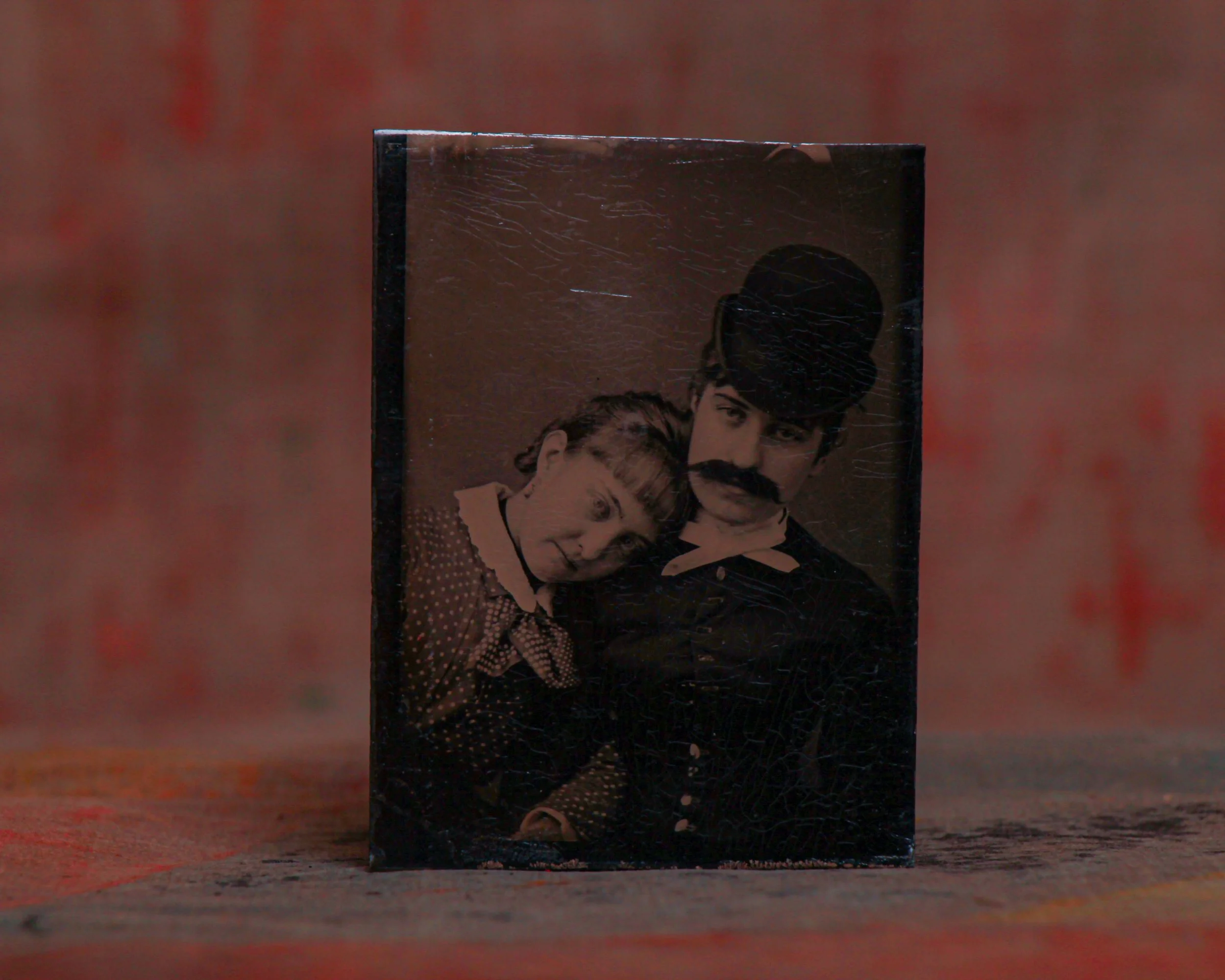
Table of Contents
What Is a Daguerreotype?
The First Widely Used Photographic Format
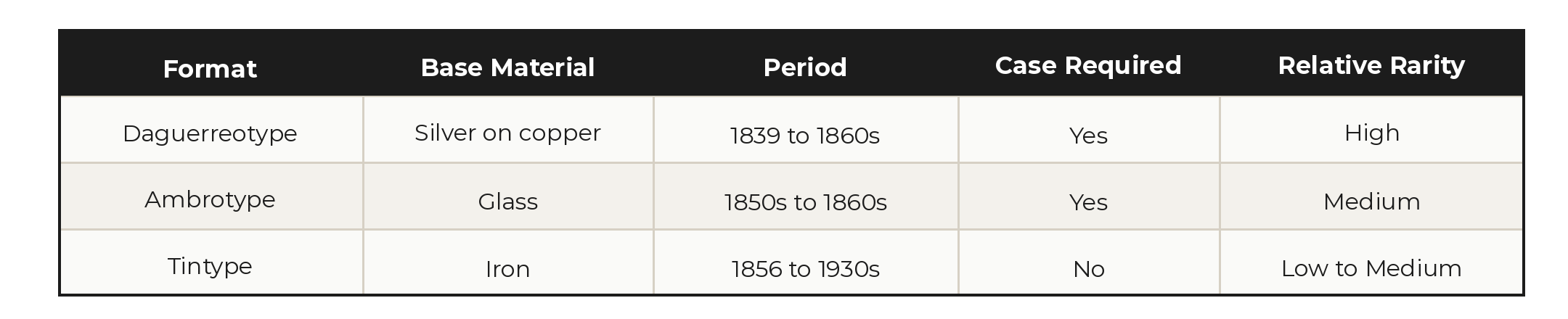
The daguerreotype was introduced in 1839 and represents the earliest widely available photographic process. Images were produced on a silver coated copper plate that was exposed to light and developed using mercury vapour. The result was an image of extraordinary sharpness and tonal range with no negative, meaning each daguerreotype is a unique original.
How to Identify One
Daguerreotypes have a mirror-like surface that shifts between a positive and negative image depending on the angle at which it is viewed. They are almost always housed in a protective case, typically with a velvet or silk lining and a brass mat, because the surface is extremely fragile and susceptible to tarnishing. Handling a daguerreotype outside its case will cause permanent damage.
Collecting Daguerreotypes
Daguerreotypes are the most technically sophisticated of the three formats and are generally the most sought after by serious collectors. Subject matter significantly affects value. Military portraits, occupational images showing tools or uniforms, and images of identifiable individuals or locations command the most interest. Condition of both the image and the case is critical.
What Is an Ambrotype?
A More Accessible Alternative
The ambrotype was developed in the early 1850s as a cheaper and faster alternative to the daguerreotype. Images were produced on a glass plate coated with collodion and backed with dark material, typically black paper, cloth, or paint, which gave the underexposed negative the appearance of a positive image.
How to Identify One
Ambrotypes share the same case format as daguerreotypes and are frequently confused with them by inexperienced buyers. The key difference is that an ambrotype does not have the mirror-like quality of a daguerreotype. The image appears as a straightforward positive regardless of the viewing angle. Removing the dark backing from an ambrotype reveals the underlying negative.
Collecting Ambrotypes
Ambrotypes were produced in large quantities during the 1850s and 1860s, making them more readily available to collectors than daguerreotypes. Their value is similarly influenced by subject matter, condition, and the quality of the original case. Hand tinted examples, where colour was applied to clothing, jewellery, or cheeks by the photographer, are particularly desirable.
What Is a Tintype?
The Most Widely Produced Format
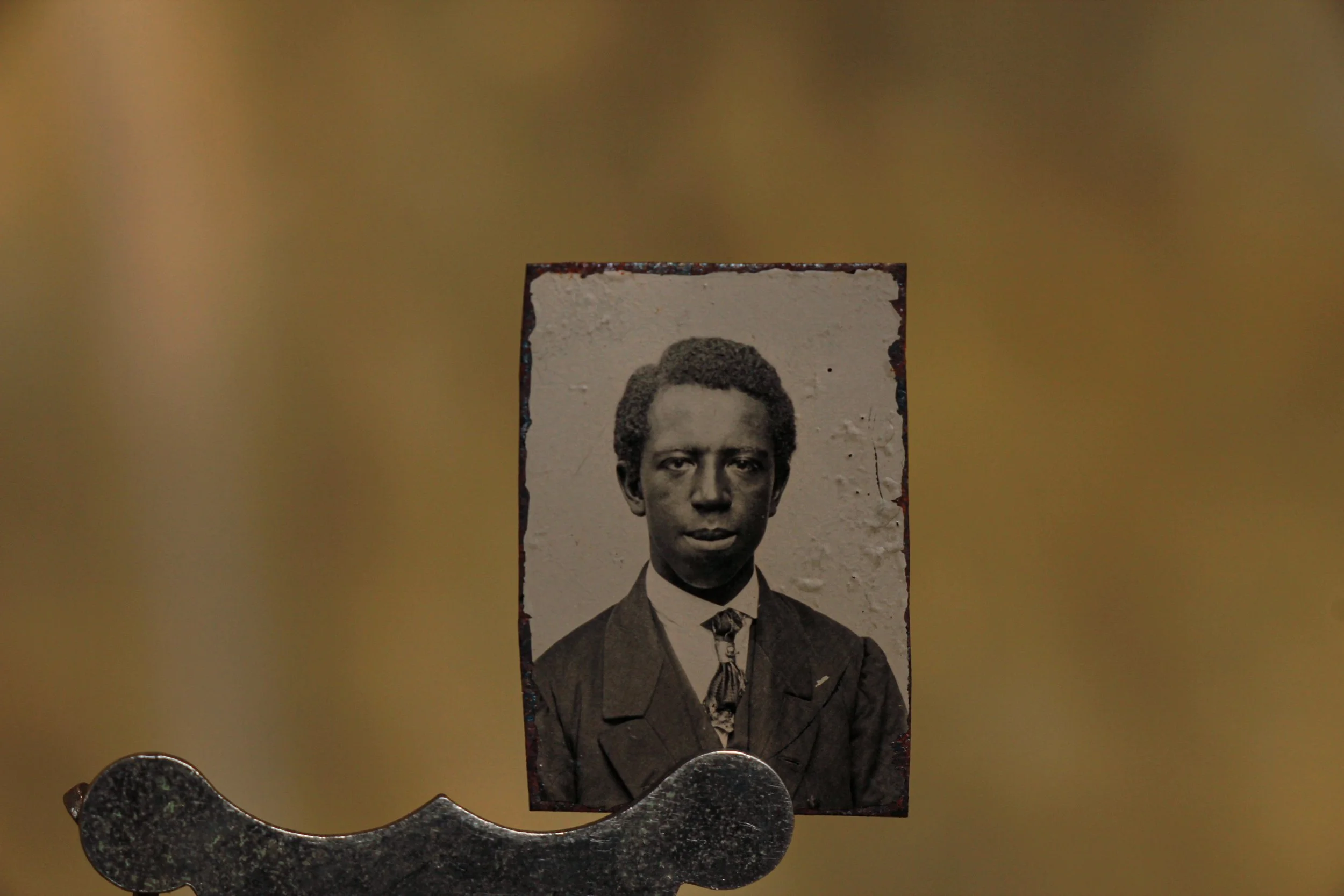
The tintype, also known as a ferrotype, was introduced in the mid 1850s and became the dominant portrait format for the latter half of the nineteenth century and into the early twentieth. Images were produced on a thin iron plate coated with a dark lacquer and then a light sensitive emulsion. They were inexpensive to produce, durable, and did not require a case, making them accessible to a much wider population than earlier formats.
How to Identify One
Tintypes are identified by their thin metal base, which is magnetic. Running a magnet over the surface of a suspected tintype is the simplest authentication test available. The image surface is typically matt rather than reflective and the overall appearance is slightly lower in contrast and tonal range than a daguerreotype or ambrotype of equivalent age.
Collecting Tintypes
Because tintypes were produced in such large quantities, they are the most commonly available of the three formats and generally the most affordable entry point for new collectors. Despite their abundance, strong examples command real interest. Civil War era military portraits, occupational images, and unusual formats including gem tintypes, which were produced in very small sizes, are among the most collectible.
Comparing the Three Formats
A Practical Guide for Buyers
What Affects Value Across All Three
Regardless of format, the factors that most significantly affect the value of antique photographs are consistent. Subject matter is the primary driver, with occupational portraits, military images, children, and unusual subjects commanding the most interest. Condition of the image surface and any associated case or housing is the second major factor. Finally, any hand applied colour, unusual format, or identifiable provenance adds material value to pieces across all three categories.
Where Early Photography Fits in a Collection
Beyond the Image
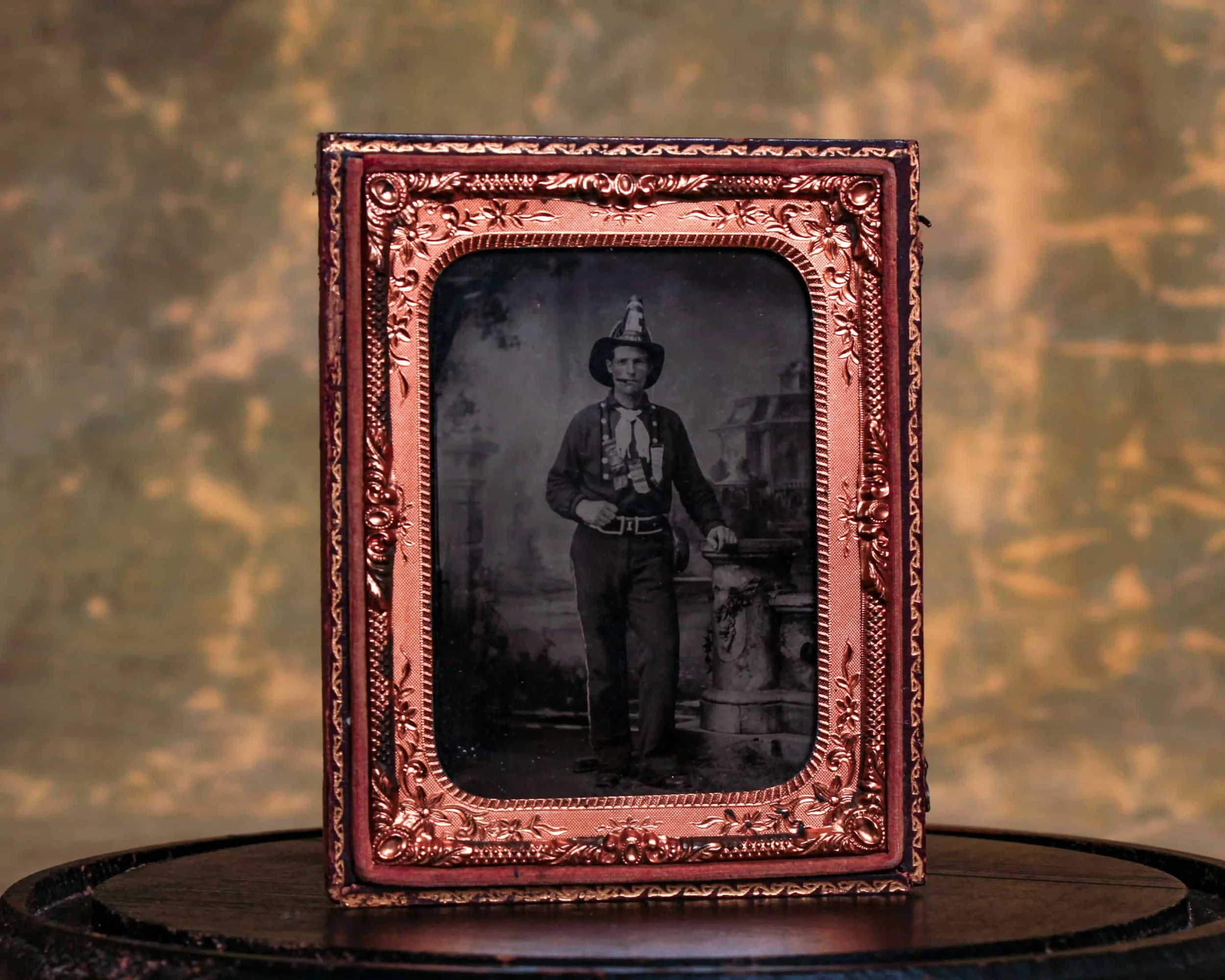
Early photographic formats are antiques in the fullest sense. The image is only part of what makes them collectible. The case, the mat, the backing material, and the physical object itself all contribute to the overall piece. Collectors who approach early photography purely as images miss much of what makes the format interesting.
Displaying Antique Photographs
Daguerreotypes and ambrotypes are best kept in their original cases, which were designed to protect fragile surfaces from light and handling. Tintypes are more robust and can be displayed more freely, though direct sunlight should always be avoided.
Early photographic formats displayed together create a layered visual record of a period in which the technology of image making was developing rapidly and the results were being felt in every level of society.Explore early photography and antique works on paper in the Heimwee antique art collection.
Frequently Asked Questions
-
Daguerreotypes are produced on a silver coated copper plate and have a mirror-like surface that shifts between positive and negative depending on viewing angle. Tintypes are produced on a thin iron plate with a matt surface. Daguerreotypes are earlier, rarer, and generally more valuable than tintypes.
-
Both formats are typically housed in similar protective cases, but a daguerreotype has a reflective mirror-like surface that changes appearance with the viewing angle. An ambrotype appears as a consistent positive image regardless of angle and lacks the metallic reflectivity of a daguerreotype.
-
Tintypes vary considerably in value depending on subject matter, condition, and format. Common portrait tintypes are widely available and modestly priced. Military portraits, occupational images, and unusual formats such as gem tintypes are significantly more collectible and command higher prices accordingly.
-
Daguerreotypes and ambrotypes should be kept in their original cases away from light and humidity. Tintypes are more robust but should similarly be kept away from direct sunlight and moisture. Handling should be minimal and always by the edges to avoid transferring oils to the image surface.
-
Antique photographs are sourced from estate sales, private collections, and specialist dealers. At Heimwee, early photography appears within the antique art collection and is selected for its condition, subject matter, and historical interest.
