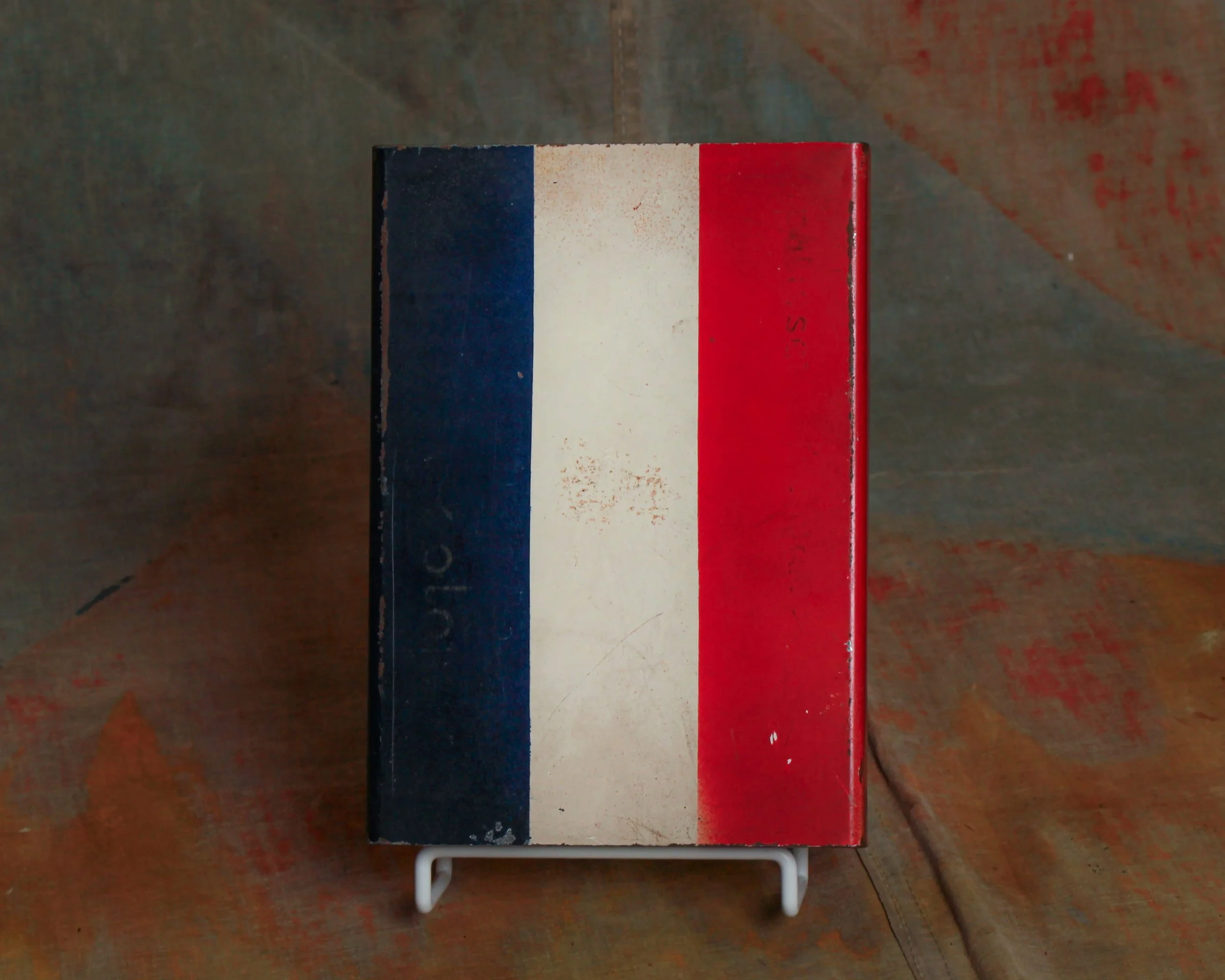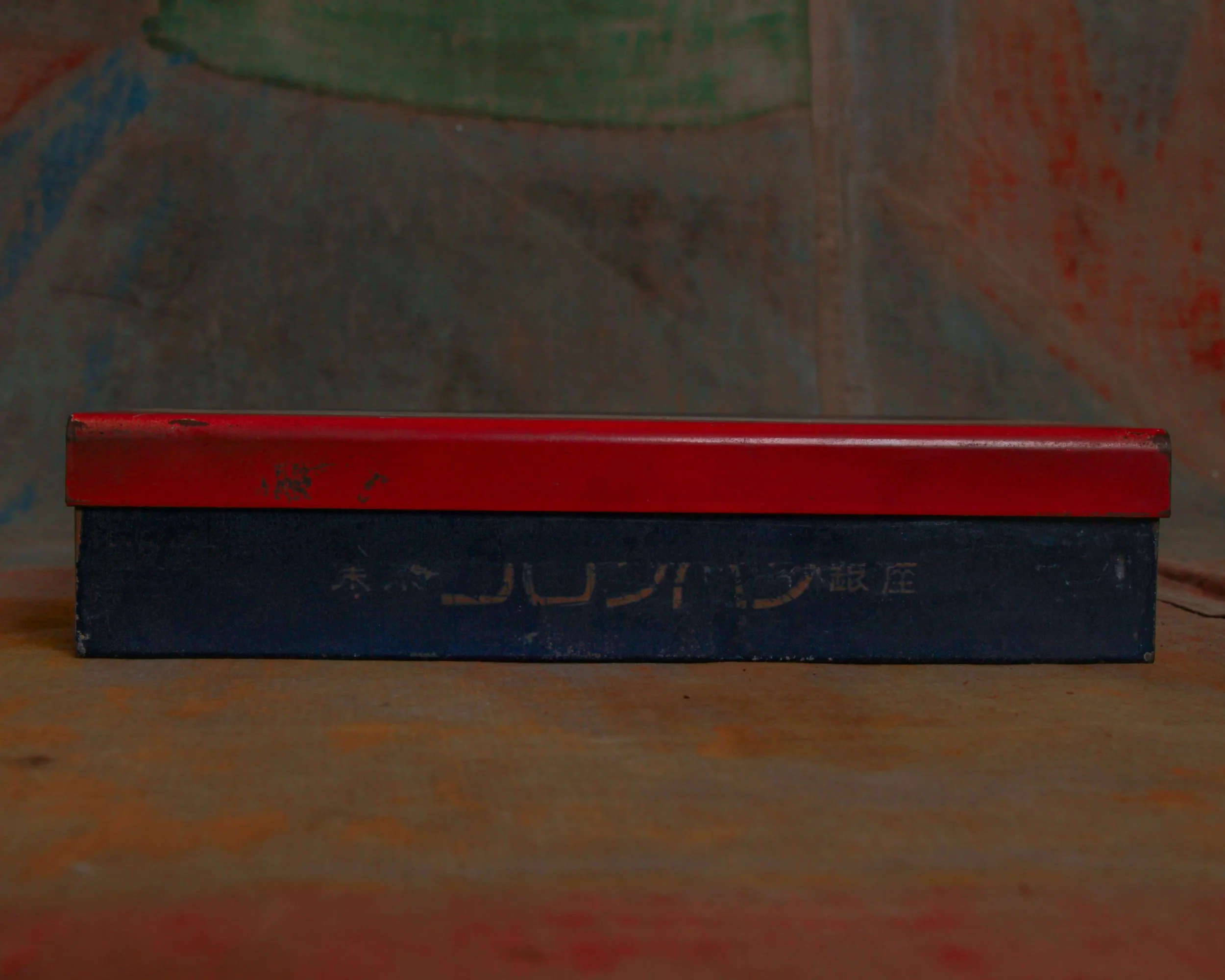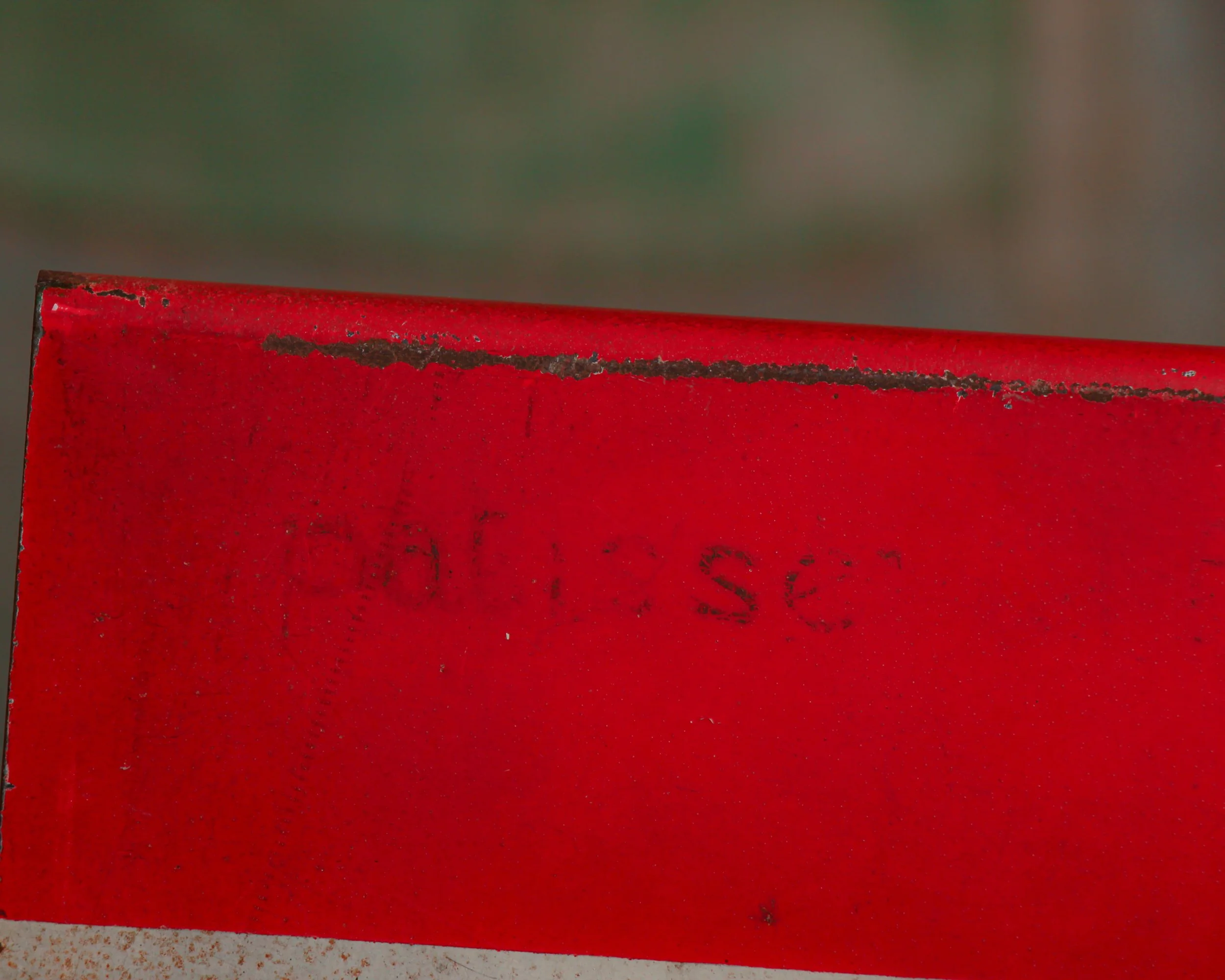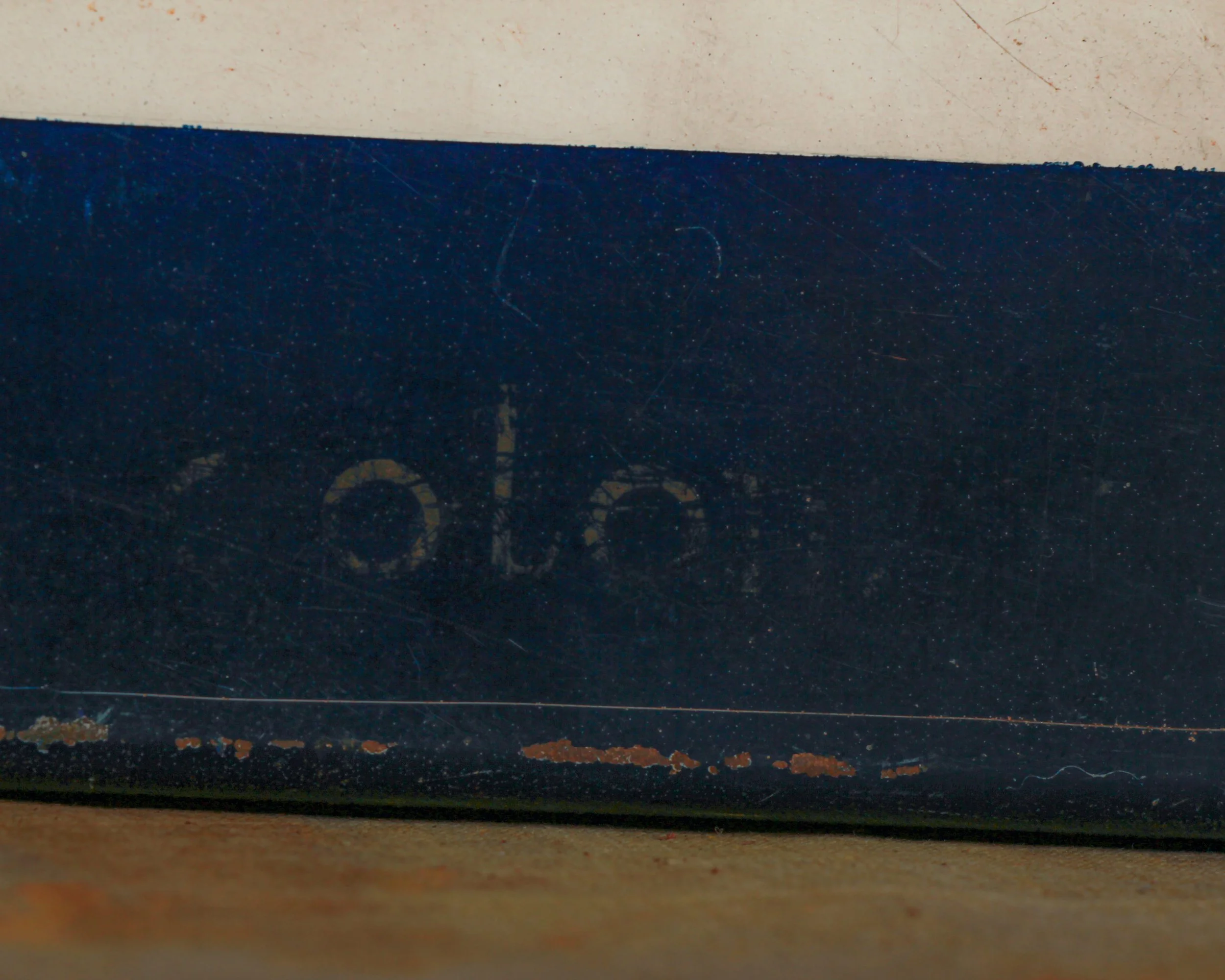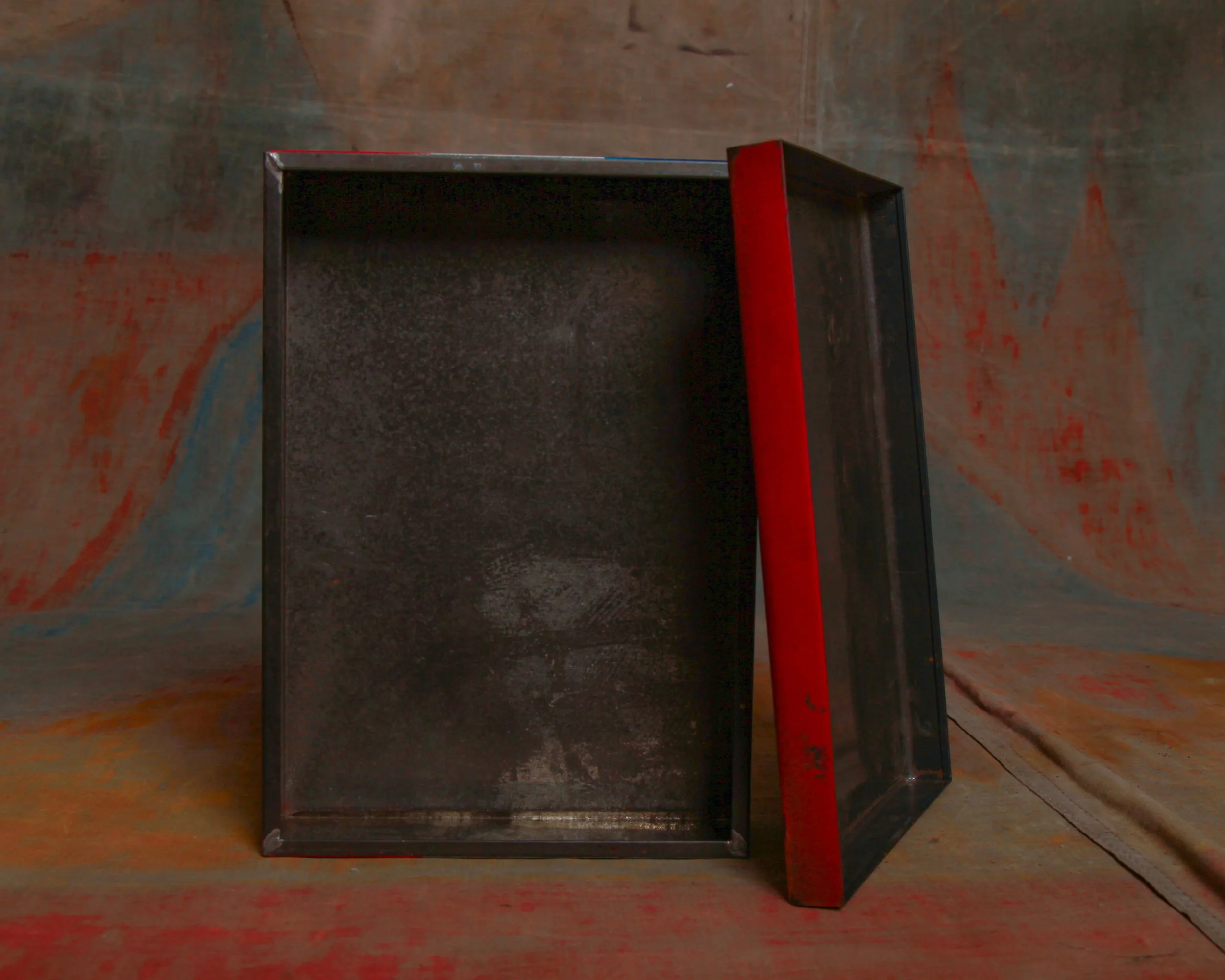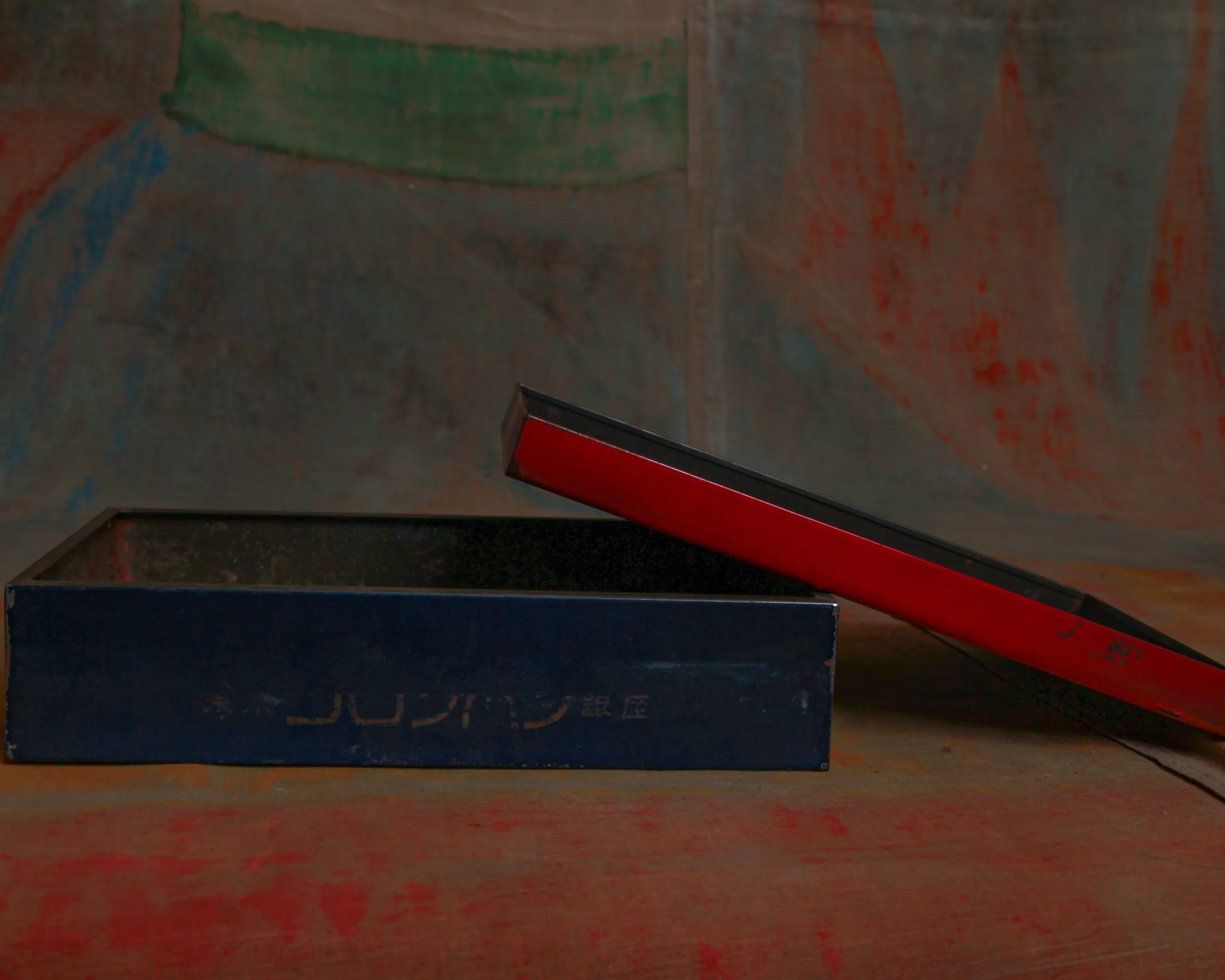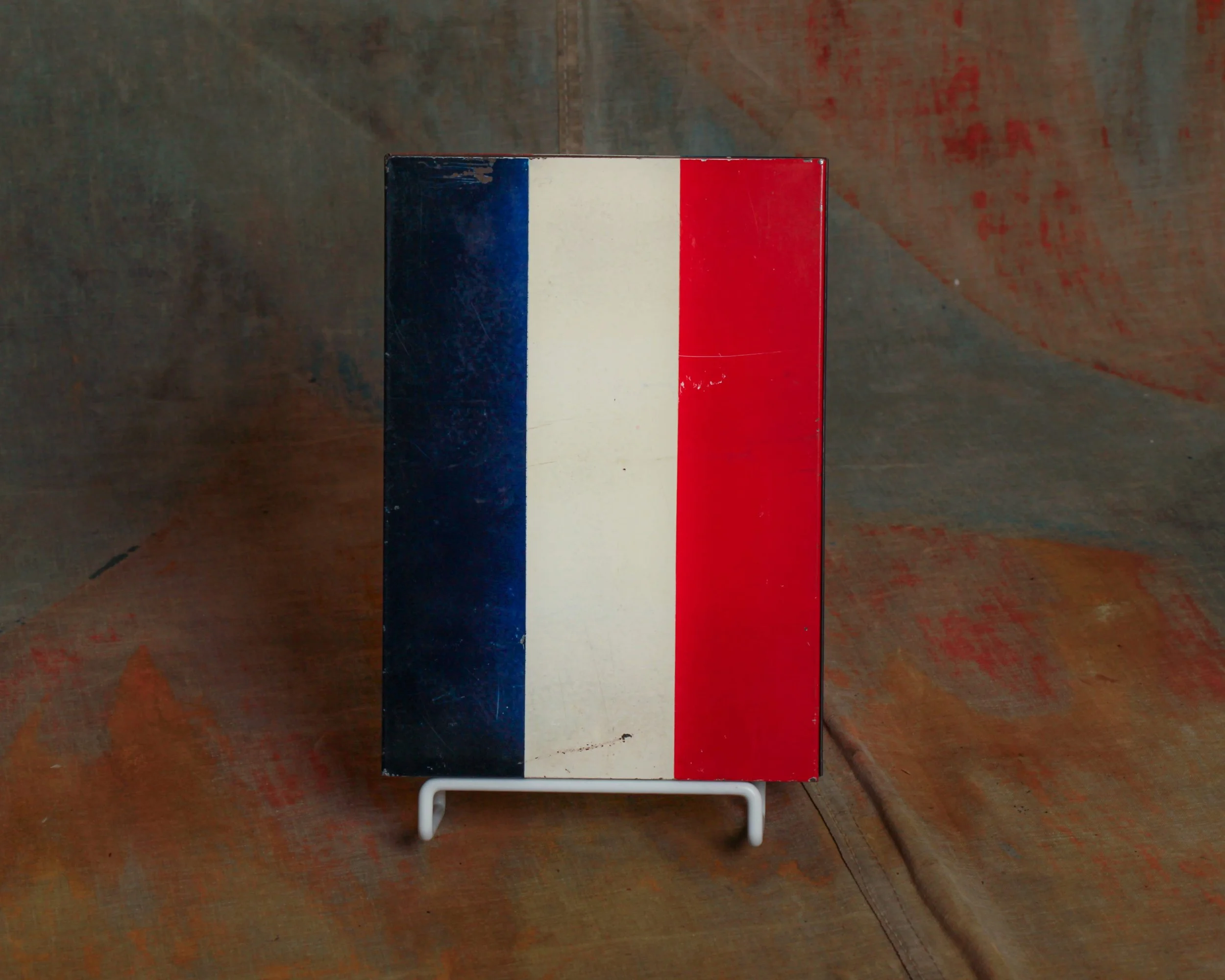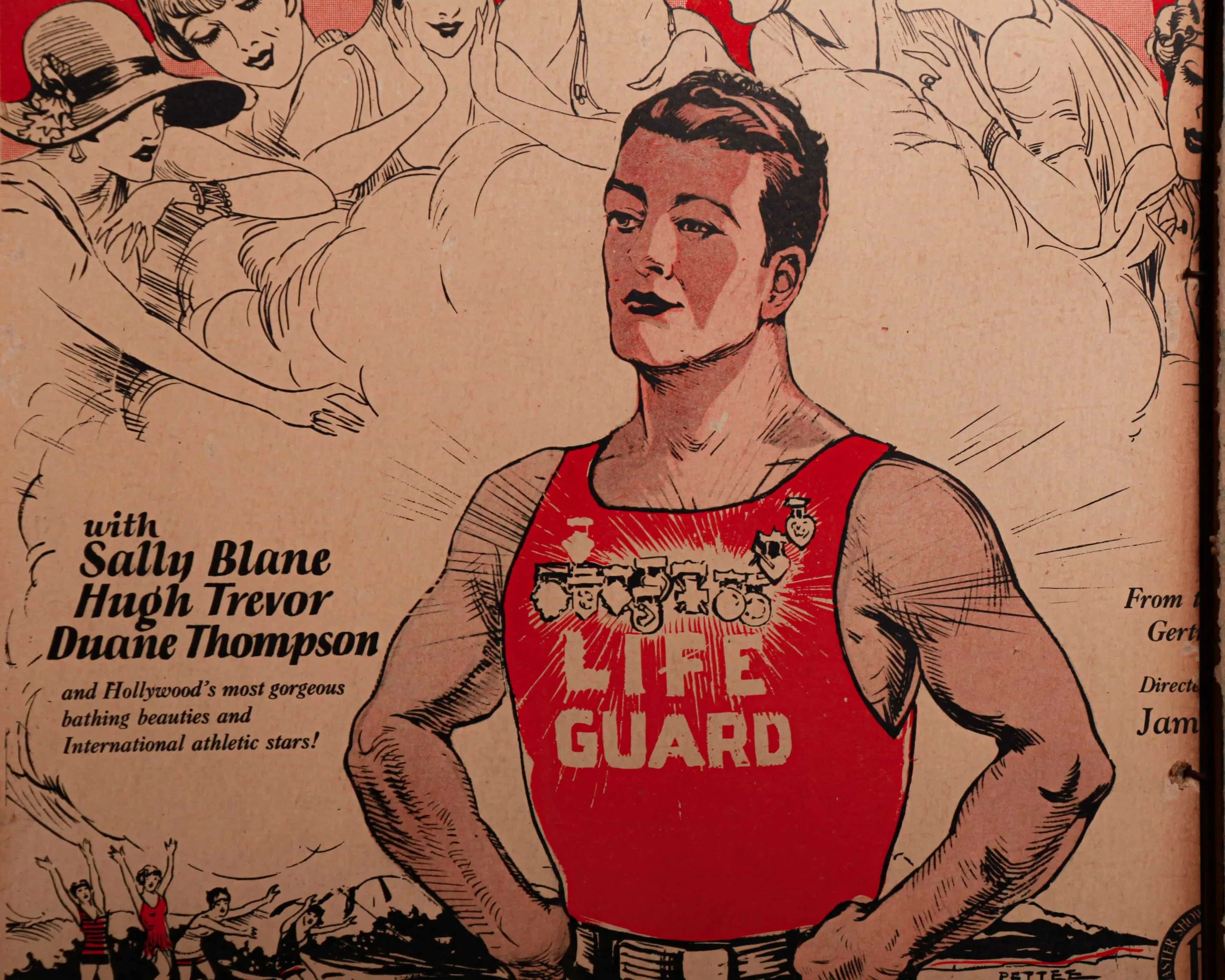
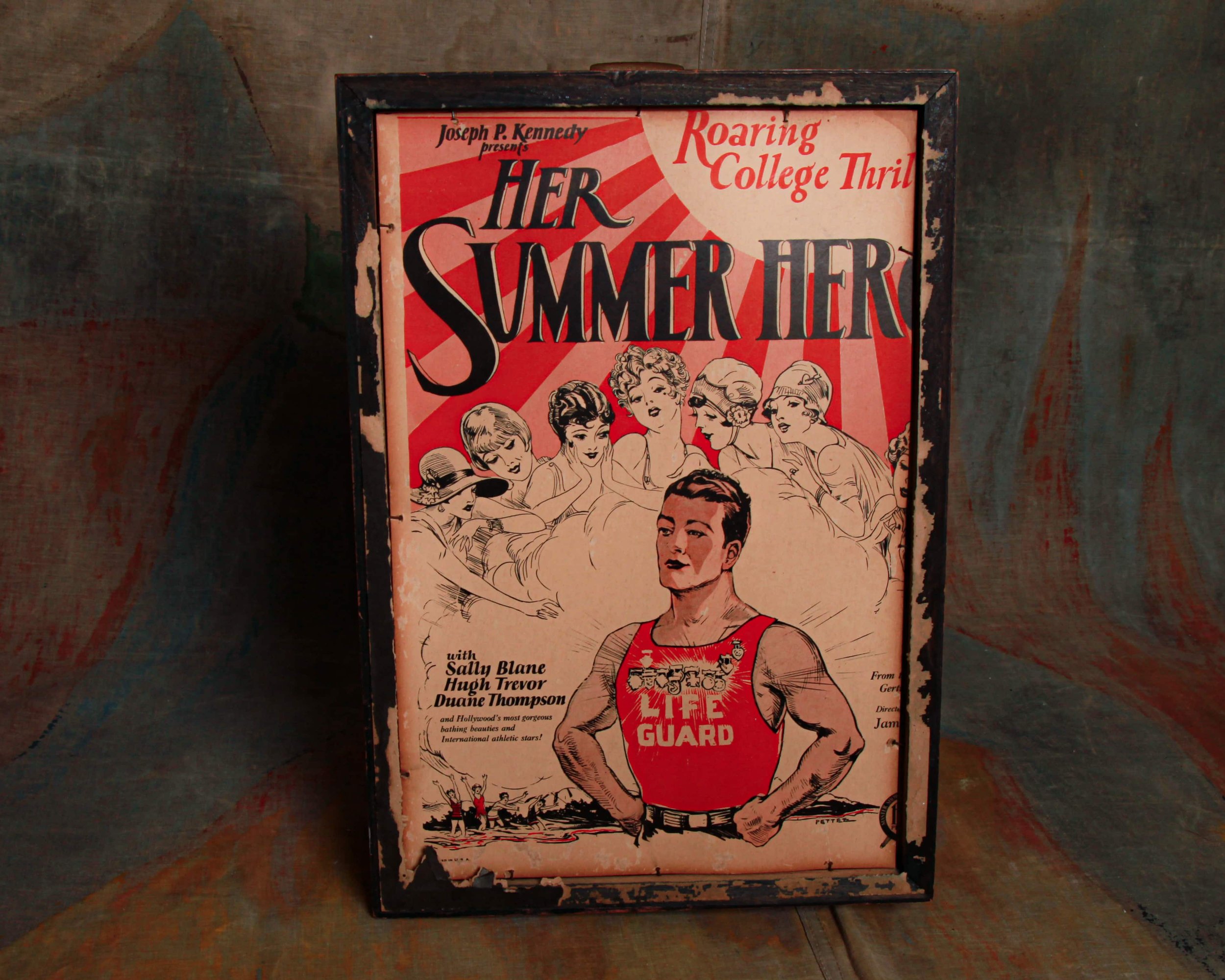
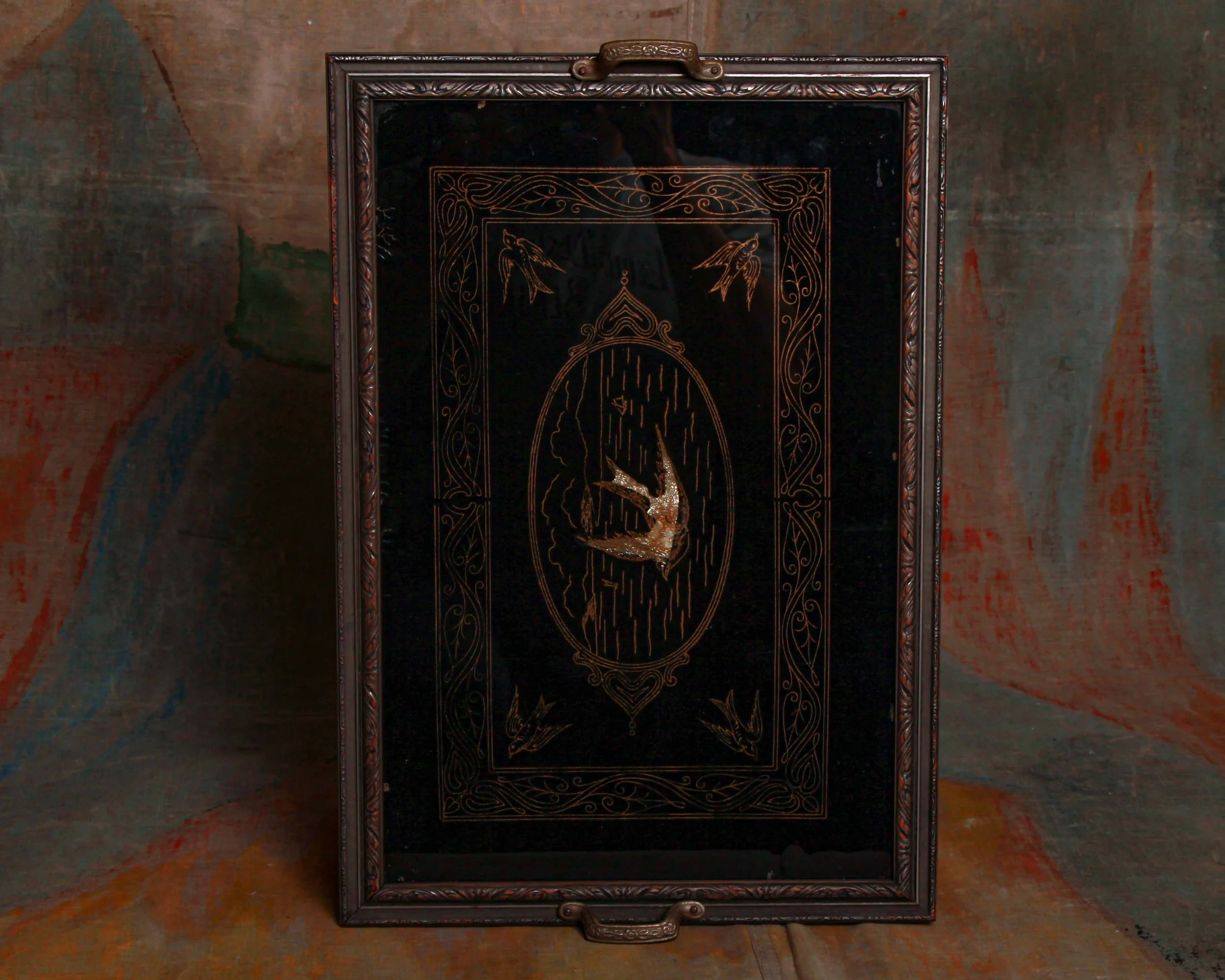
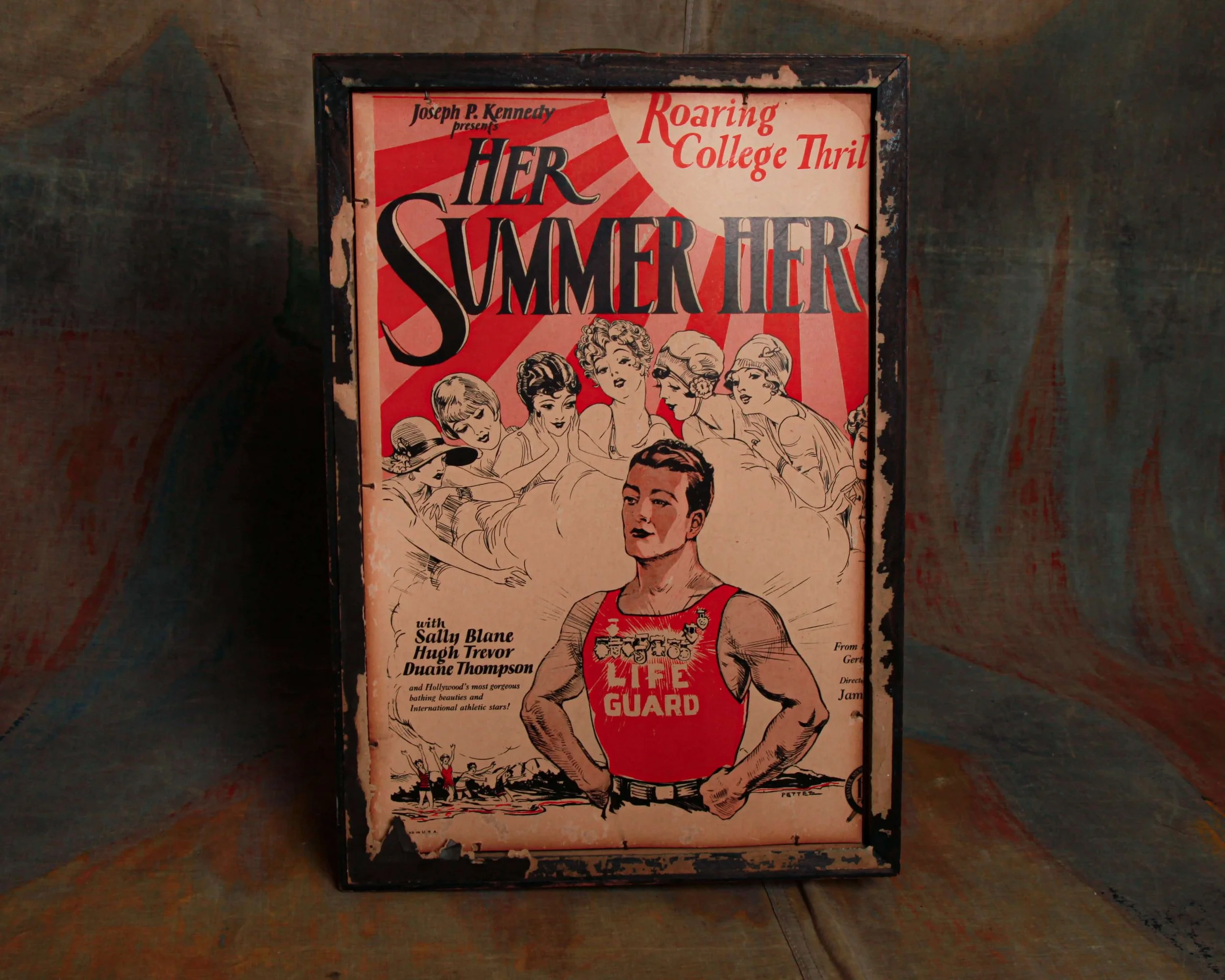
This piece is the definition of an accidental treasure. At first glance, it looks like a perfectly ordinary serving tray—dark, decorative, and framed with that typical utilitarian elegance. But flip it over, and suddenly you’re in a whole other world. Someone, at some unknown point, decided to line the back with a bit of advertising ephemera—a movie poster for “Her Summer Hero” (a 1928 silent film comedy drama) complete with bold graphics, lifeguard bravado, and a chorus line of adoring beachgoers.
It’s impossible not to wonder about the why. Was it simply a handy scrap of cardboard reinforcement, or did someone think, “Well, this makes a perfectly good back panel”? Either way, the result is this quirky hybrid object: one side proper and decorative, the other pure pop-culture kitsch.
Her Summer Hero
Her Summer Hero (1928) lands in that lively stretch of late silent-era filmmaking when studios were leaning into pace, charm, and just enough spectacle to keep audiences hooked. Produced by Fox Film Corporation, it fits neatly into the romantic comedy mold of the time—light on its feet, driven by personality, and built around a series of misunderstandings, reversals, and quick emotional turns.
The late 1920s were a transitional moment. Sound was just around the corner, but silent film had already reached a kind of technical and visual confidence. Performances were expressive but more controlled than earlier decades, and storytelling relied on rhythm—editing, gesture, and visual cues doing most of the work.
What makes films like Her Summer Hero interesting now is how direct they feel. No dialogue to lean on, just movement and timing carrying the narrative. Locations, costumes, and set design do a lot of heavy lifting, creating atmosphere without explanation.
It’s a snapshot of a medium at its peak, right before everything changed. Polished, efficient, and designed to entertain, it shows how much could be conveyed without a single spoken word—just image, pace, and a bit of charm.
This piece is the definition of an accidental treasure. At first glance, it looks like a perfectly ordinary serving tray—dark, decorative, and framed with that typical utilitarian elegance. But flip it over, and suddenly you’re in a whole other world. Someone, at some unknown point, decided to line the back with a bit of advertising ephemera—a movie poster for “Her Summer Hero” (a 1928 silent film comedy drama) complete with bold graphics, lifeguard bravado, and a chorus line of adoring beachgoers.
It’s impossible not to wonder about the why. Was it simply a handy scrap of cardboard reinforcement, or did someone think, “Well, this makes a perfectly good back panel”? Either way, the result is this quirky hybrid object: one side proper and decorative, the other pure pop-culture kitsch.
Her Summer Hero
Her Summer Hero (1928) lands in that lively stretch of late silent-era filmmaking when studios were leaning into pace, charm, and just enough spectacle to keep audiences hooked. Produced by Fox Film Corporation, it fits neatly into the romantic comedy mold of the time—light on its feet, driven by personality, and built around a series of misunderstandings, reversals, and quick emotional turns.
The late 1920s were a transitional moment. Sound was just around the corner, but silent film had already reached a kind of technical and visual confidence. Performances were expressive but more controlled than earlier decades, and storytelling relied on rhythm—editing, gesture, and visual cues doing most of the work.
What makes films like Her Summer Hero interesting now is how direct they feel. No dialogue to lean on, just movement and timing carrying the narrative. Locations, costumes, and set design do a lot of heavy lifting, creating atmosphere without explanation.
It’s a snapshot of a medium at its peak, right before everything changed. Polished, efficient, and designed to entertain, it shows how much could be conveyed without a single spoken word—just image, pace, and a bit of charm.