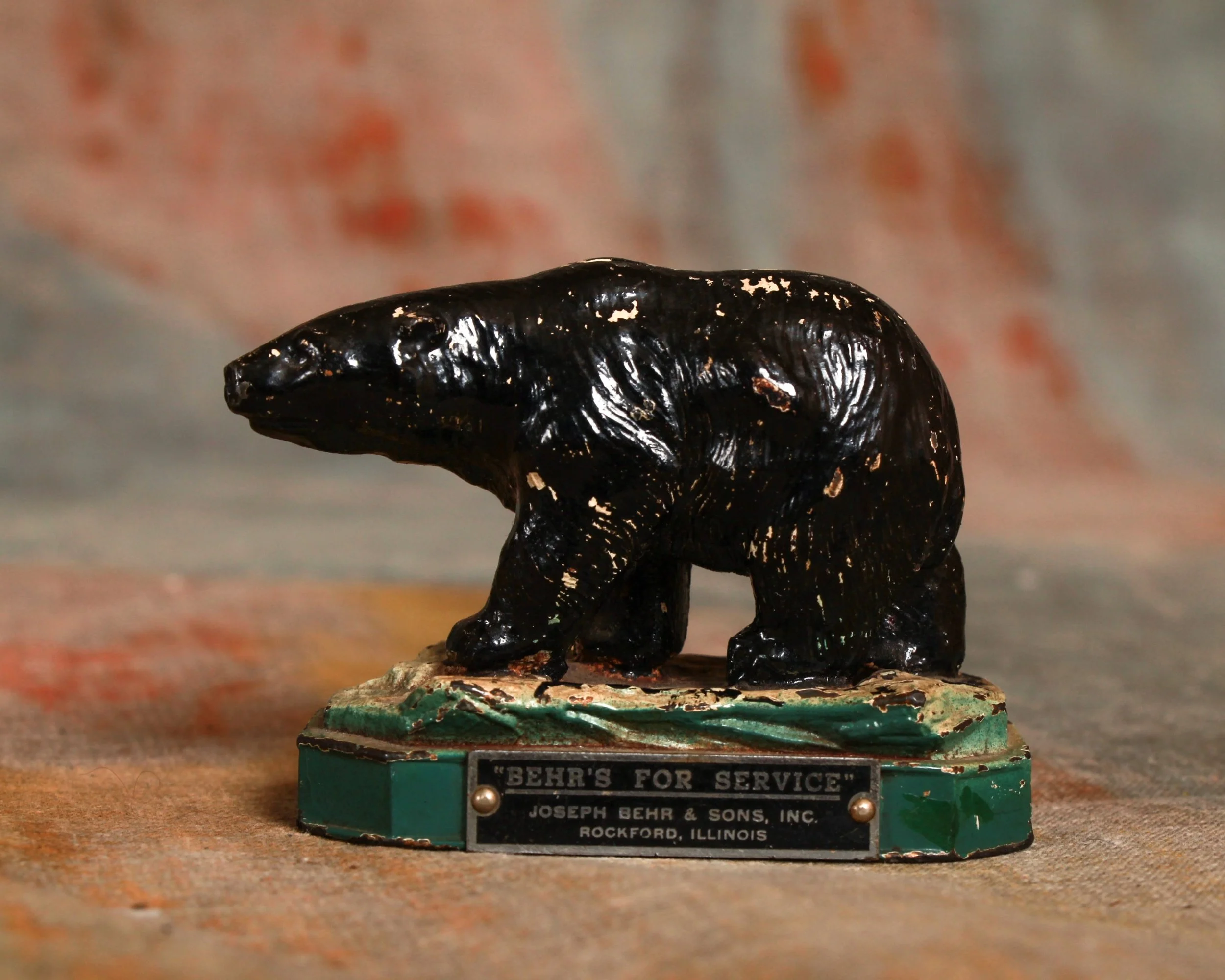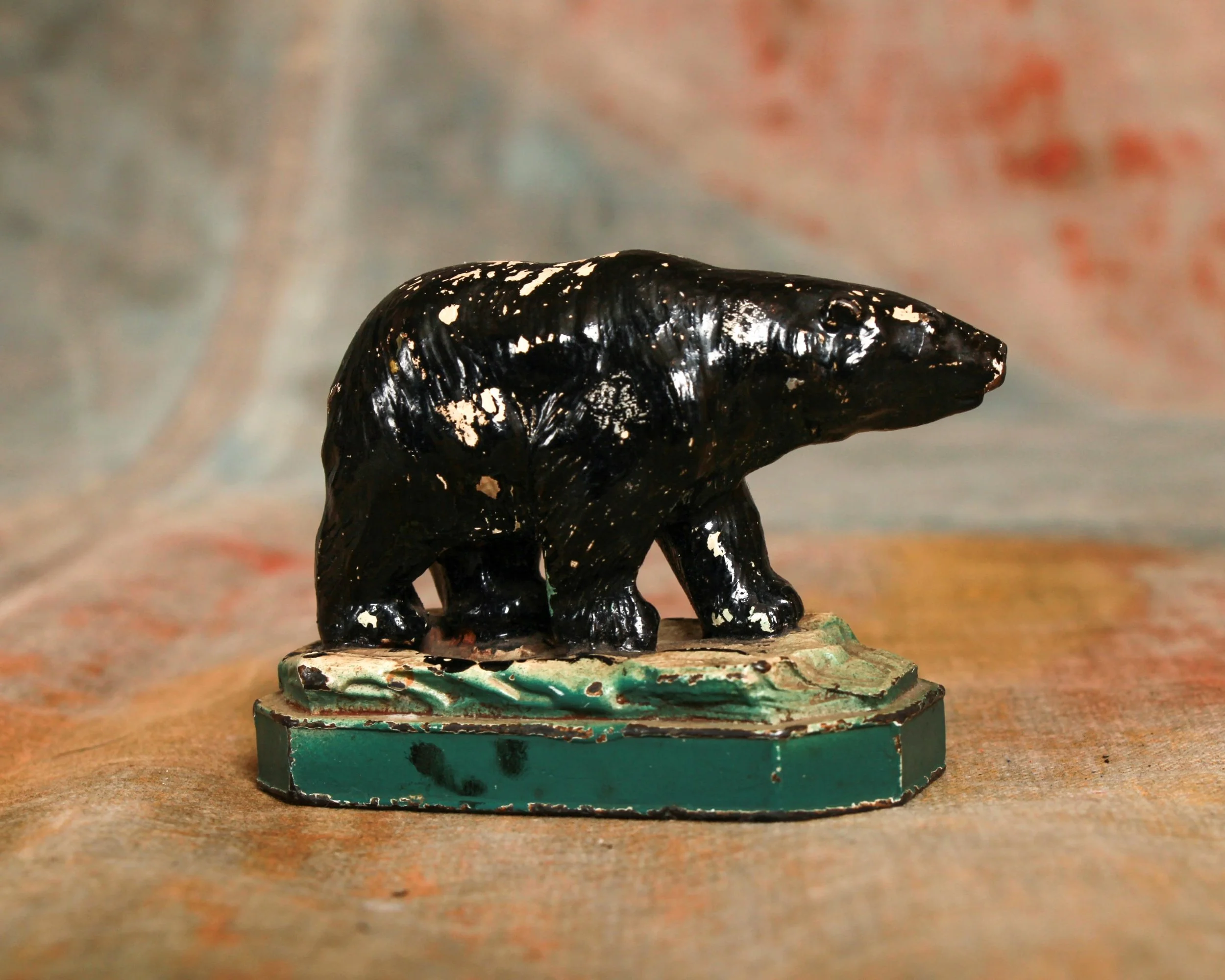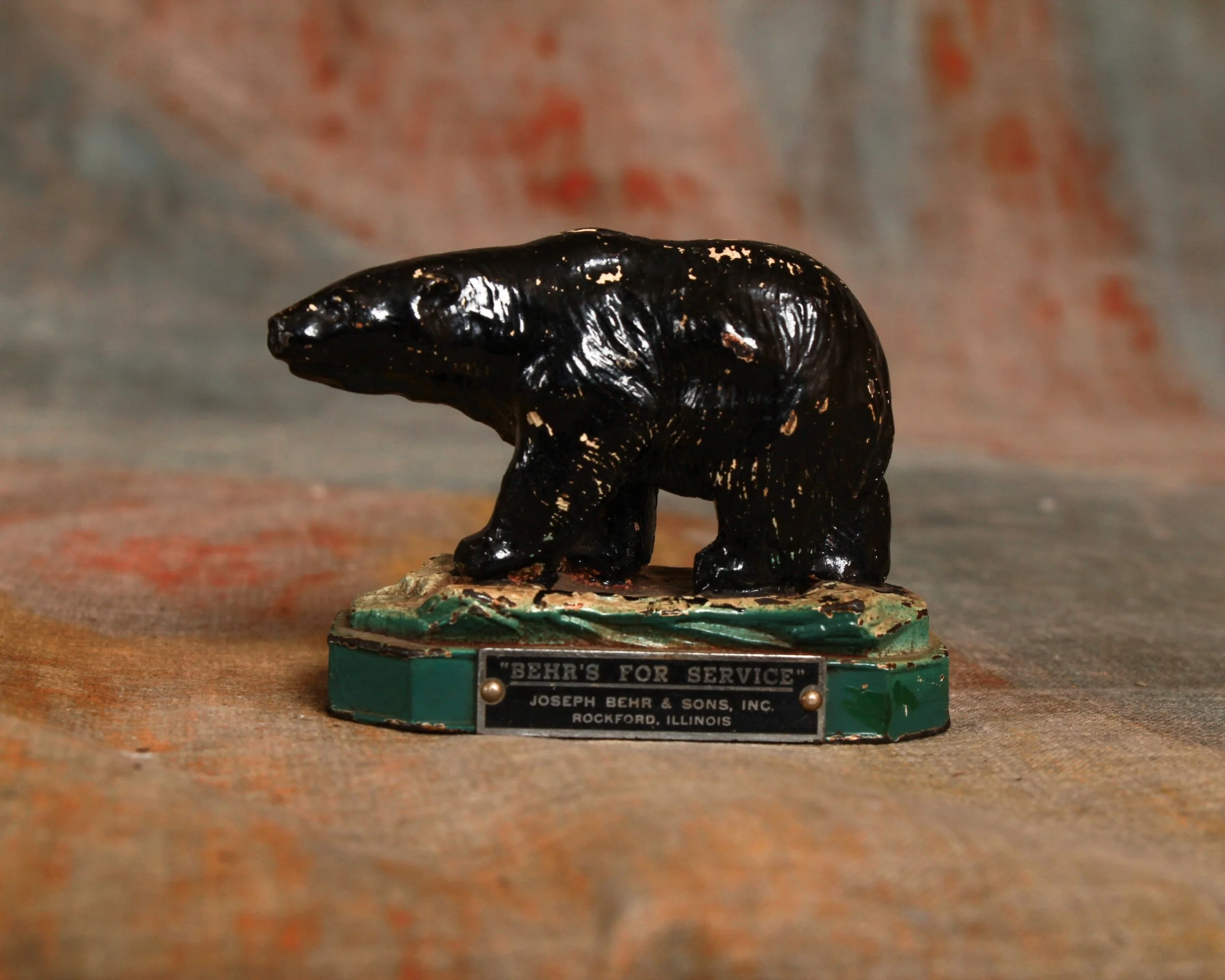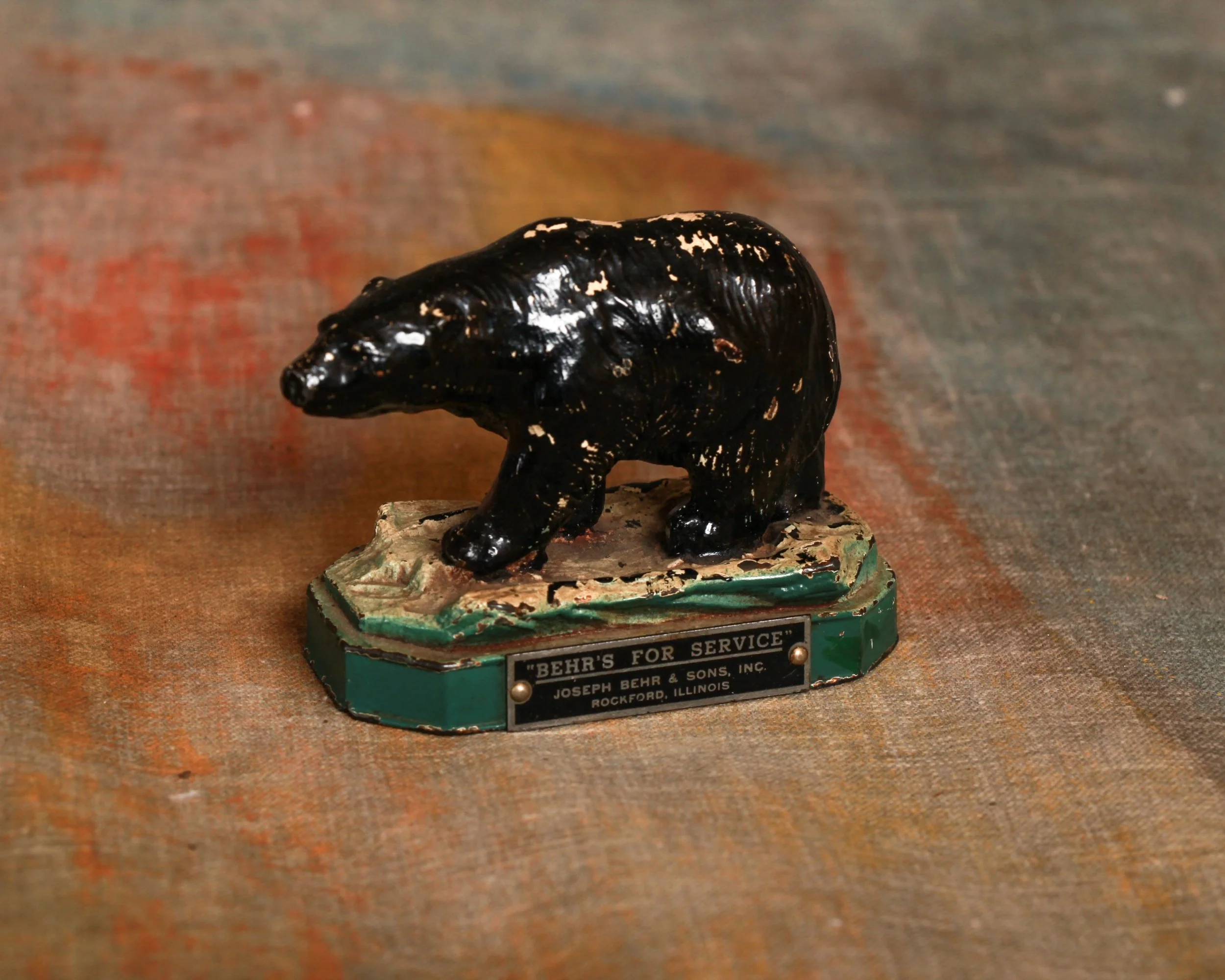
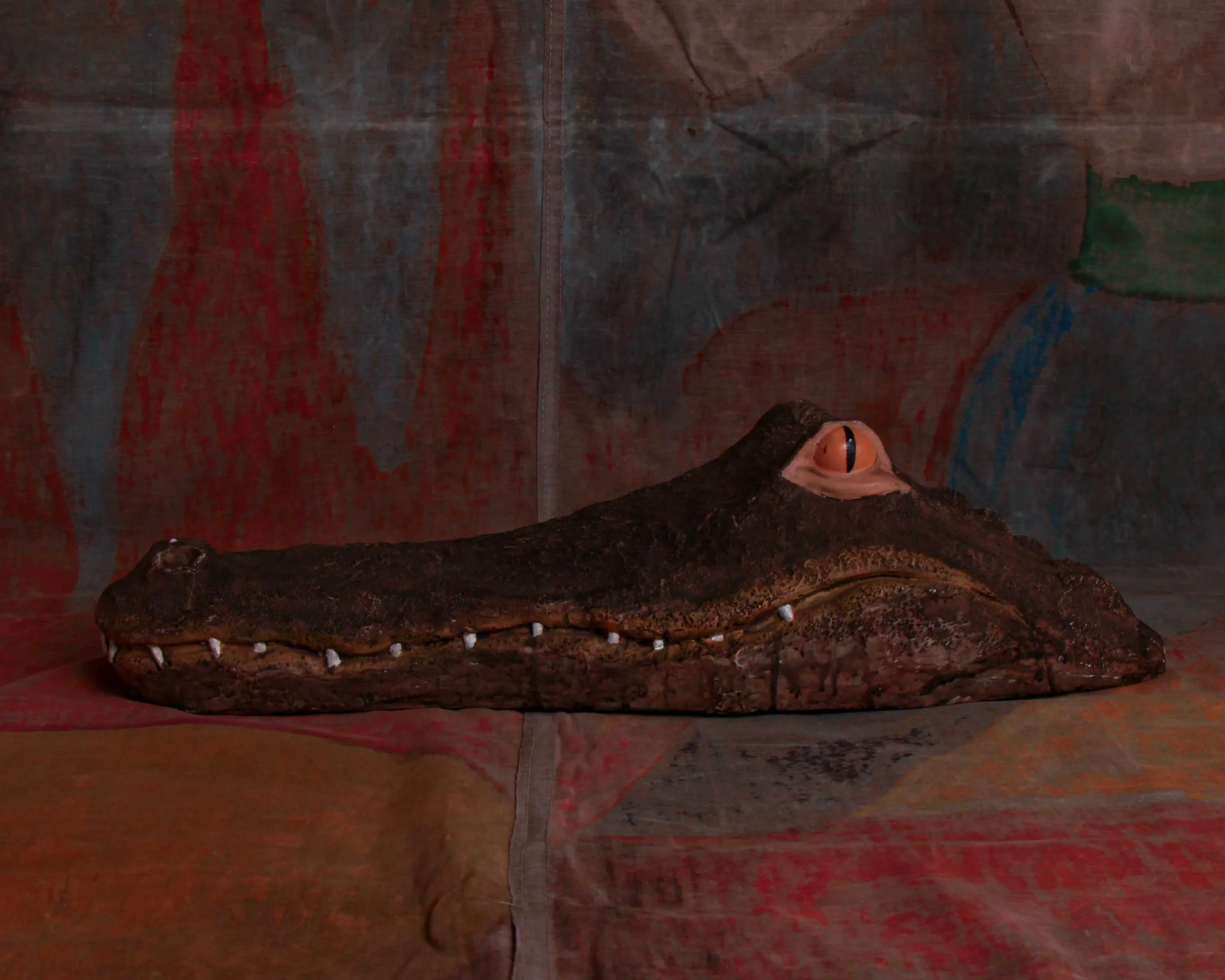
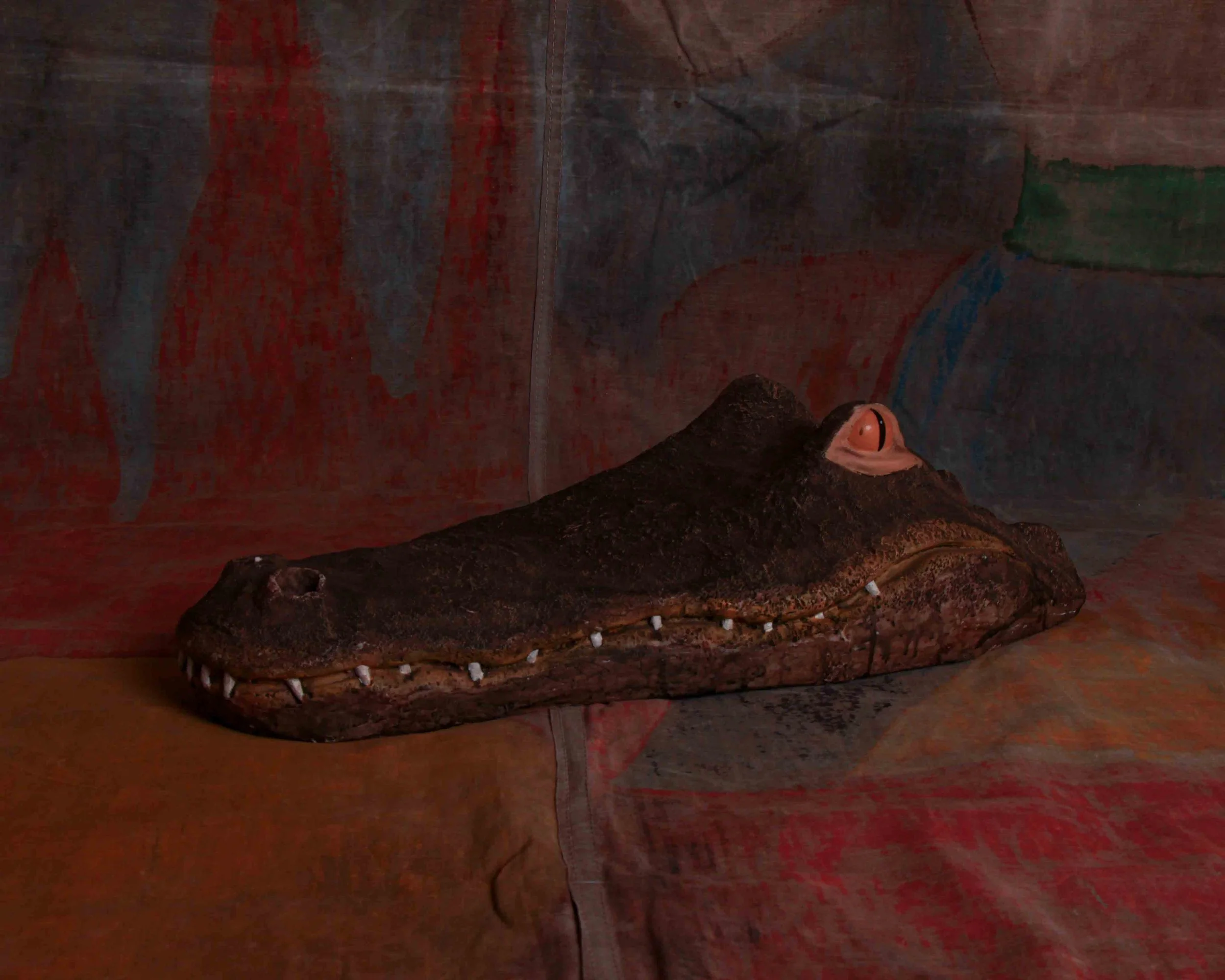
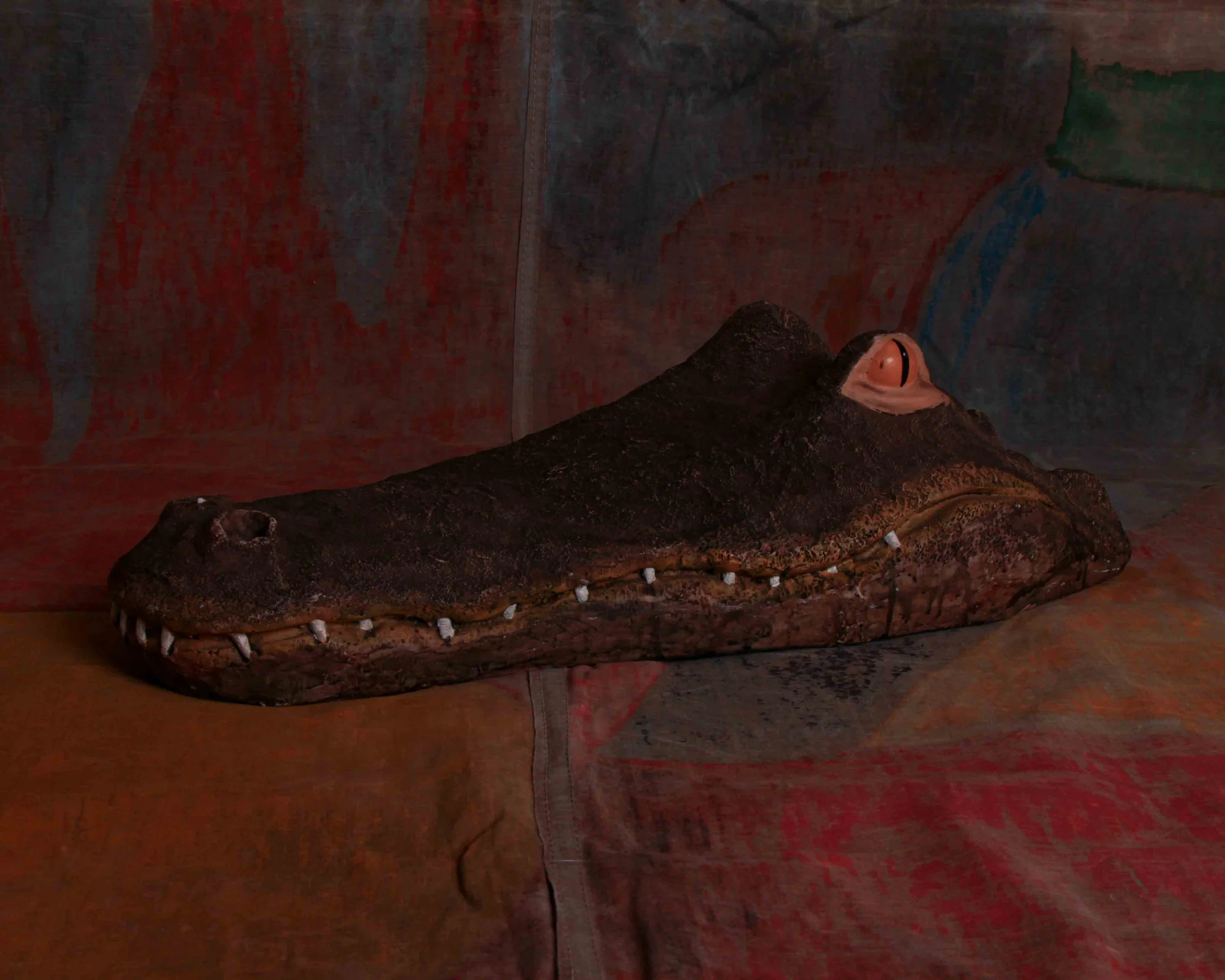
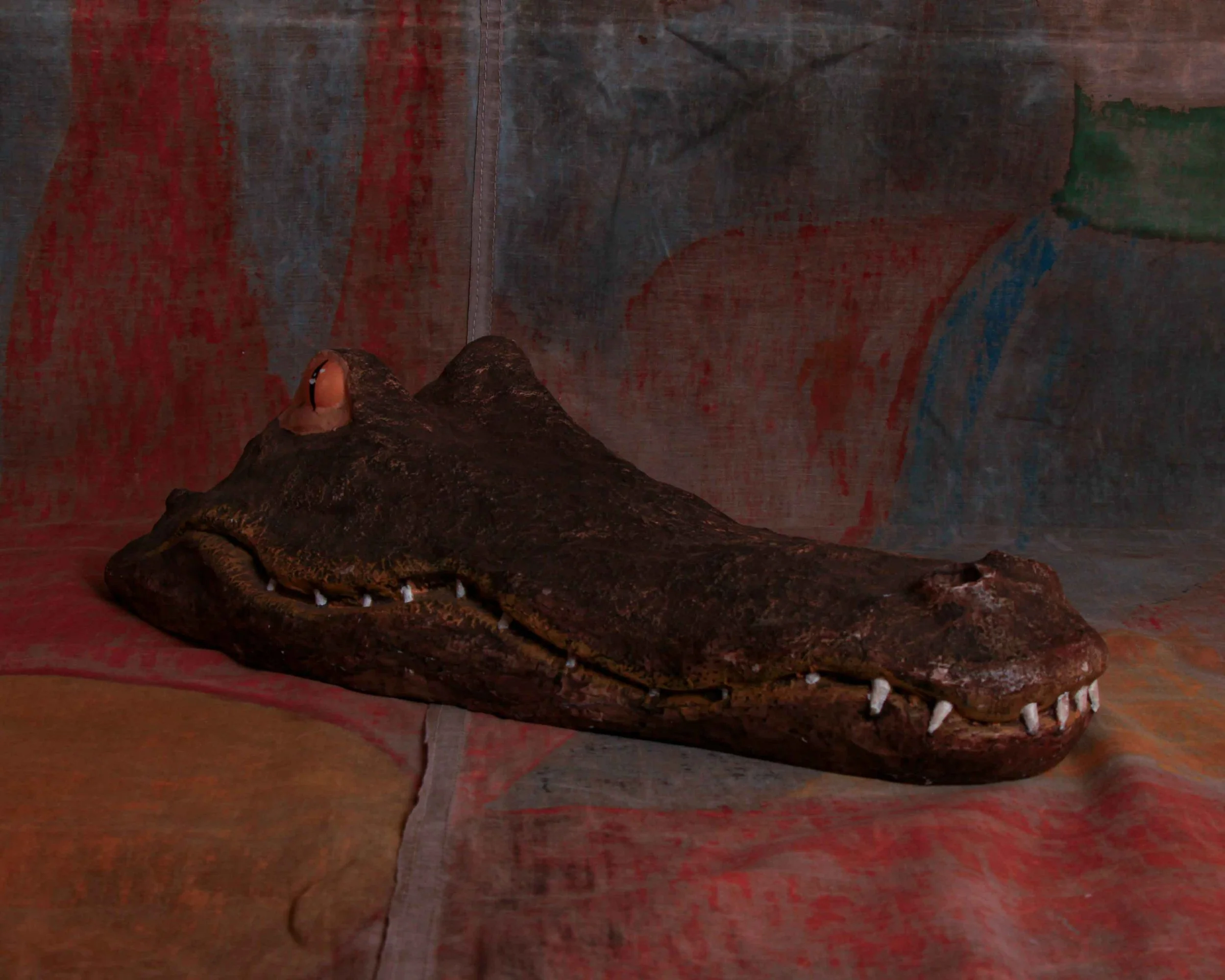
This plaster alligator looks like it’s been caught mid-thought, half-submerged in an imaginary swamp, doing that timeless alligator thing of appearing completely still while quietly sizing you up.
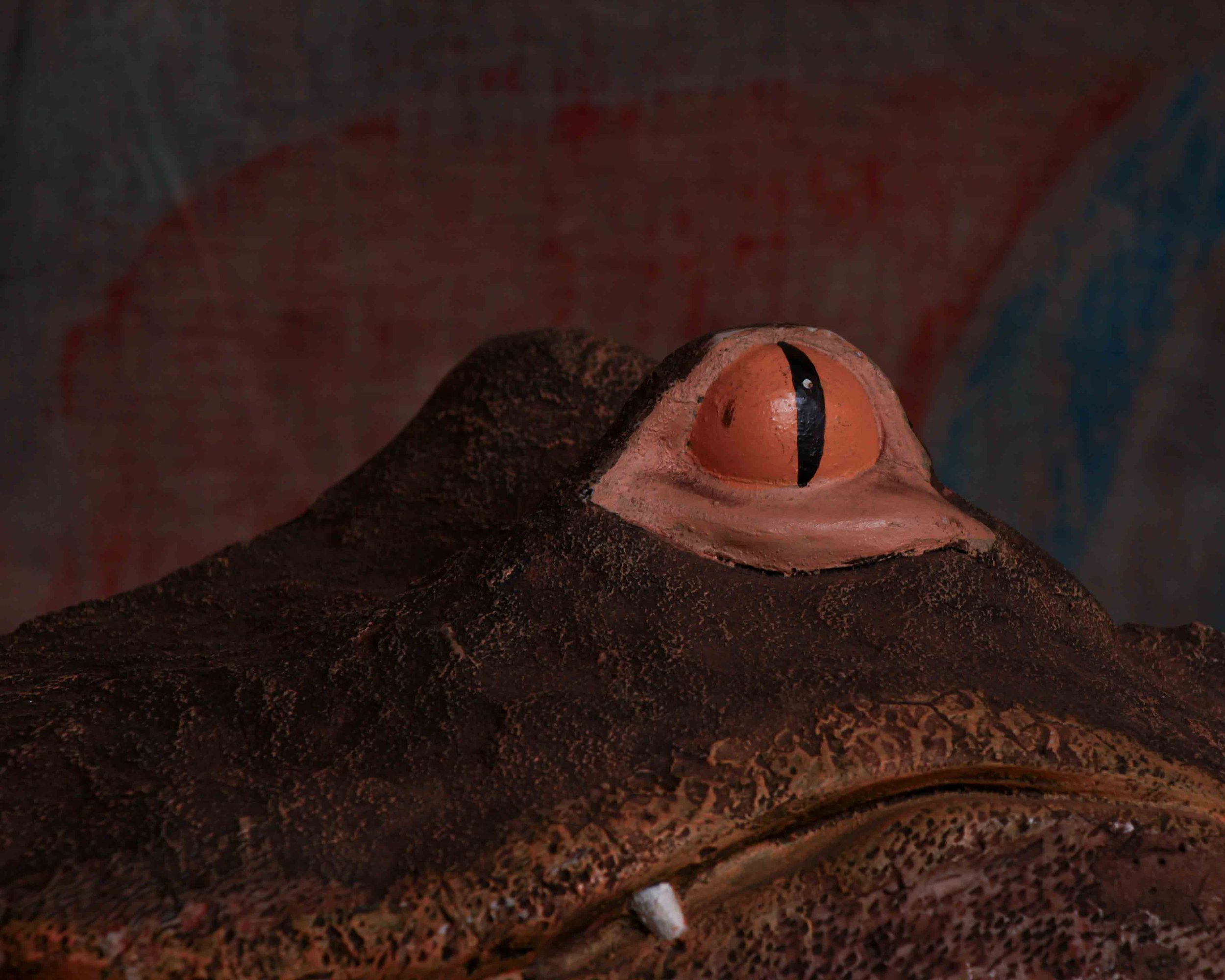
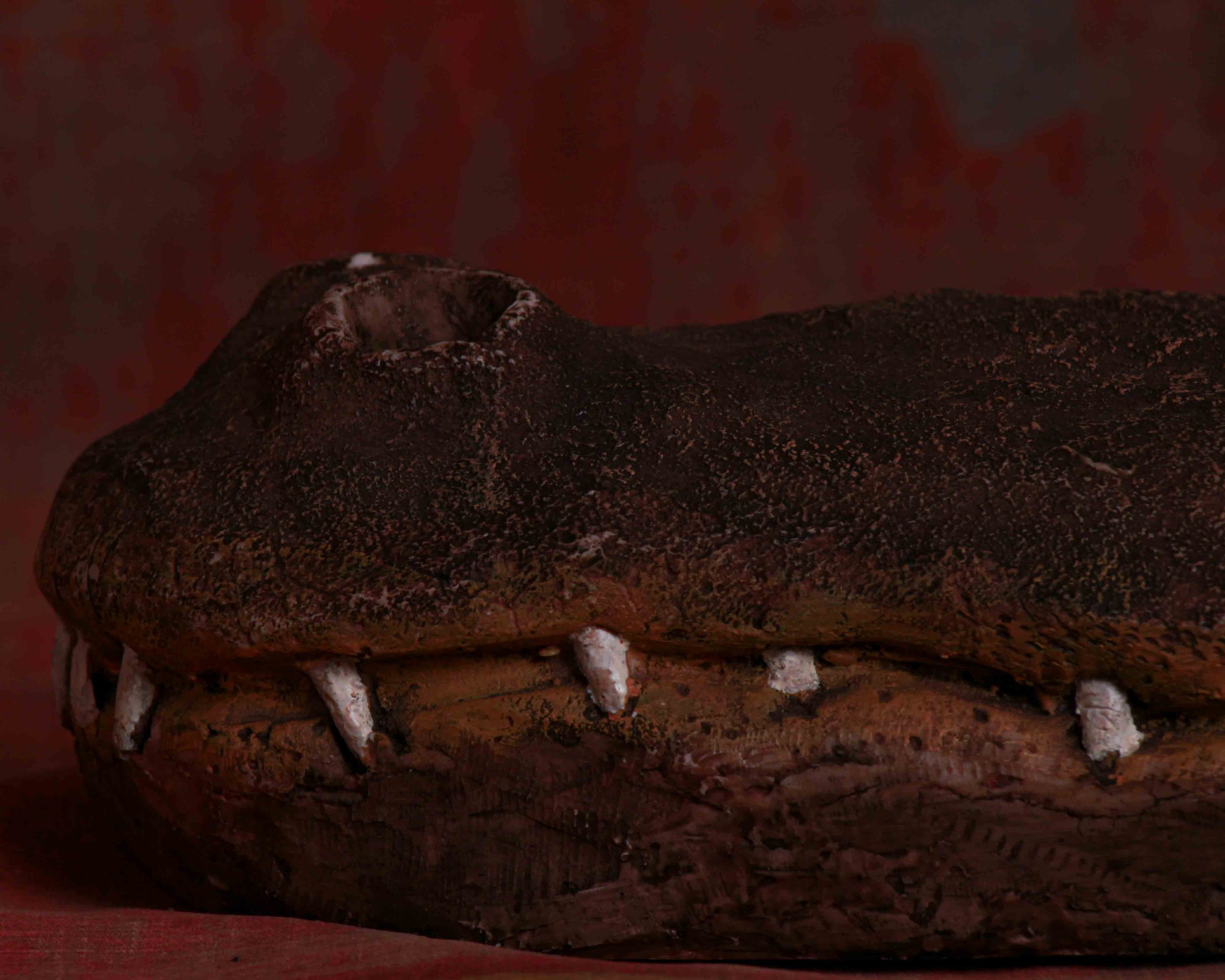
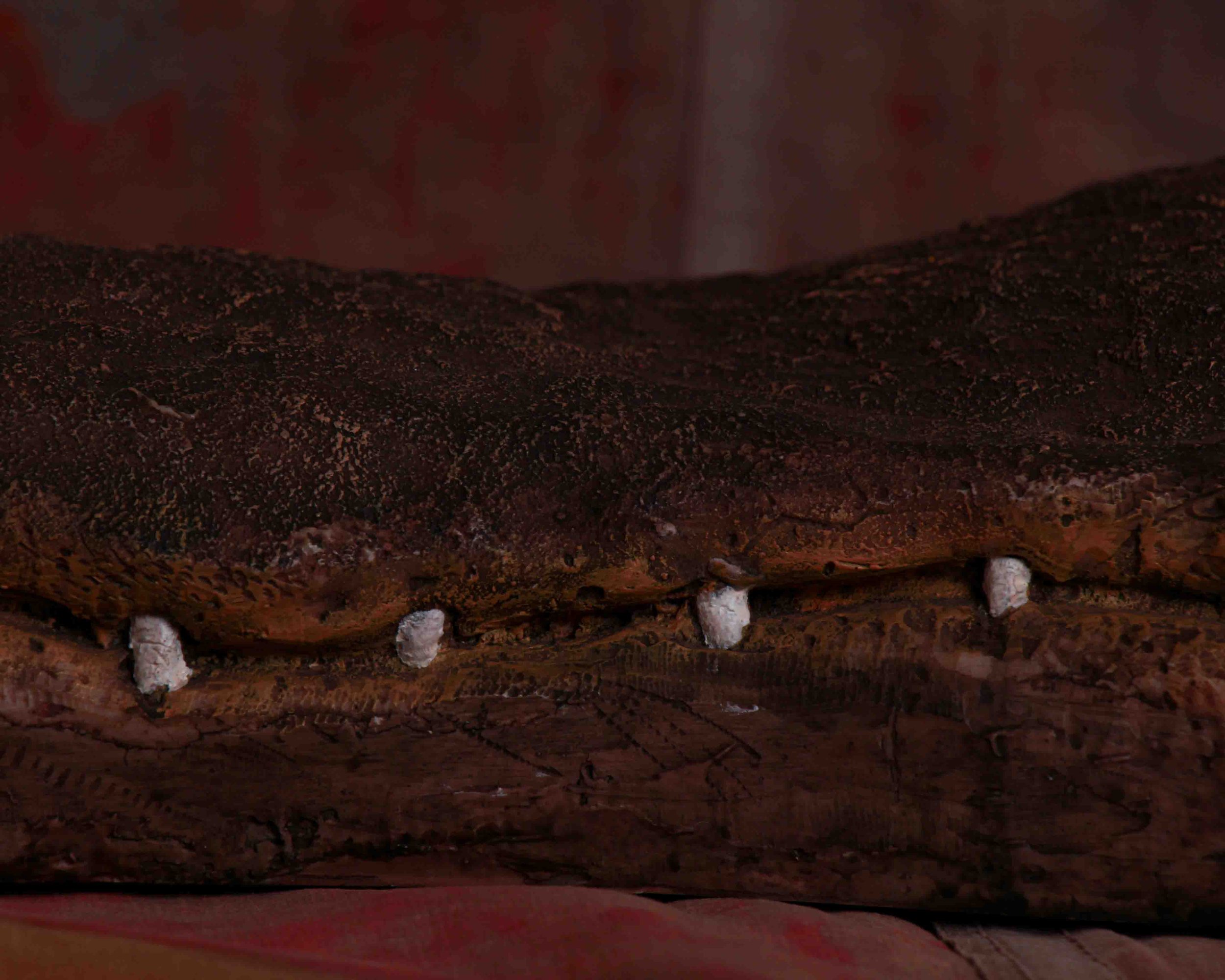
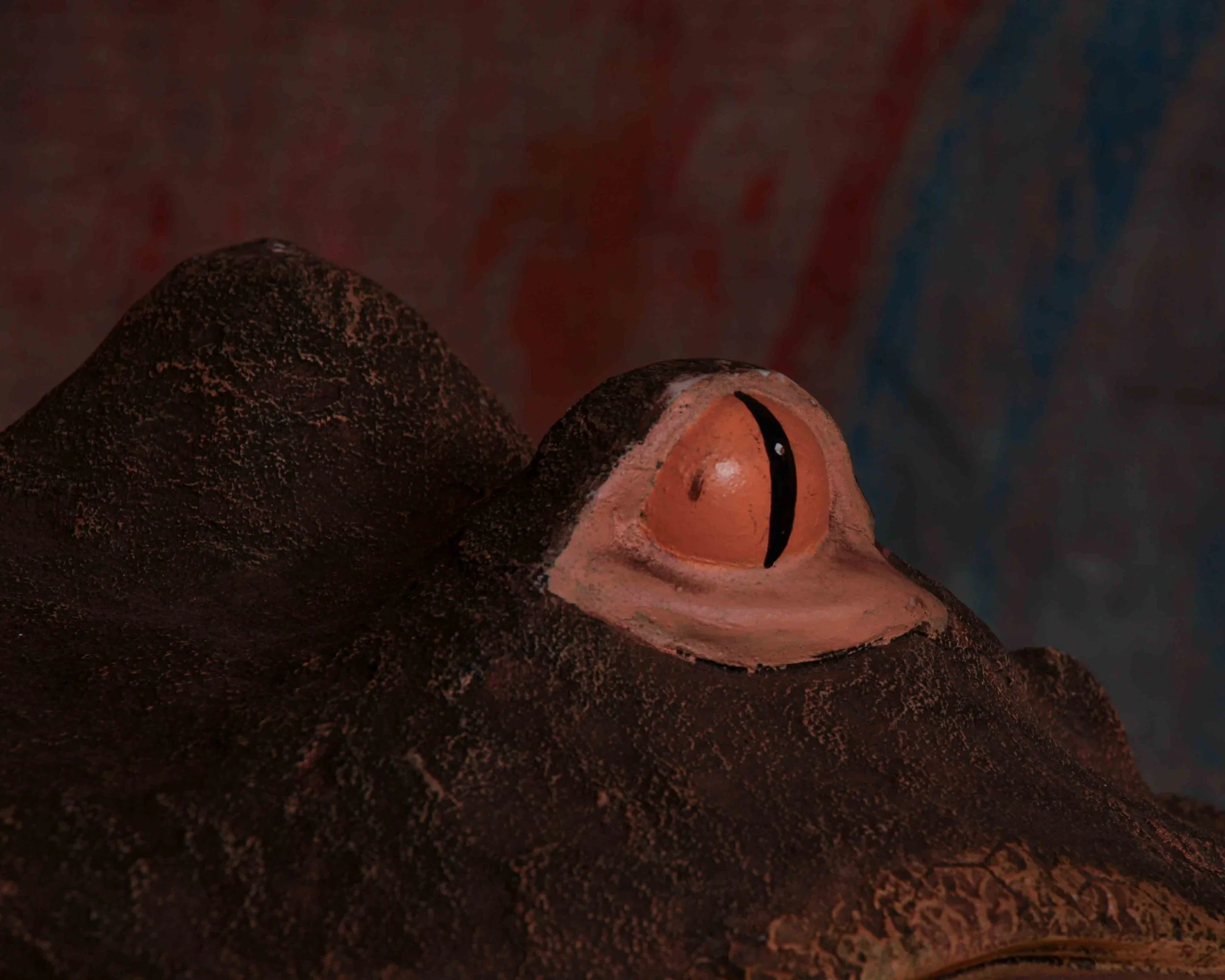
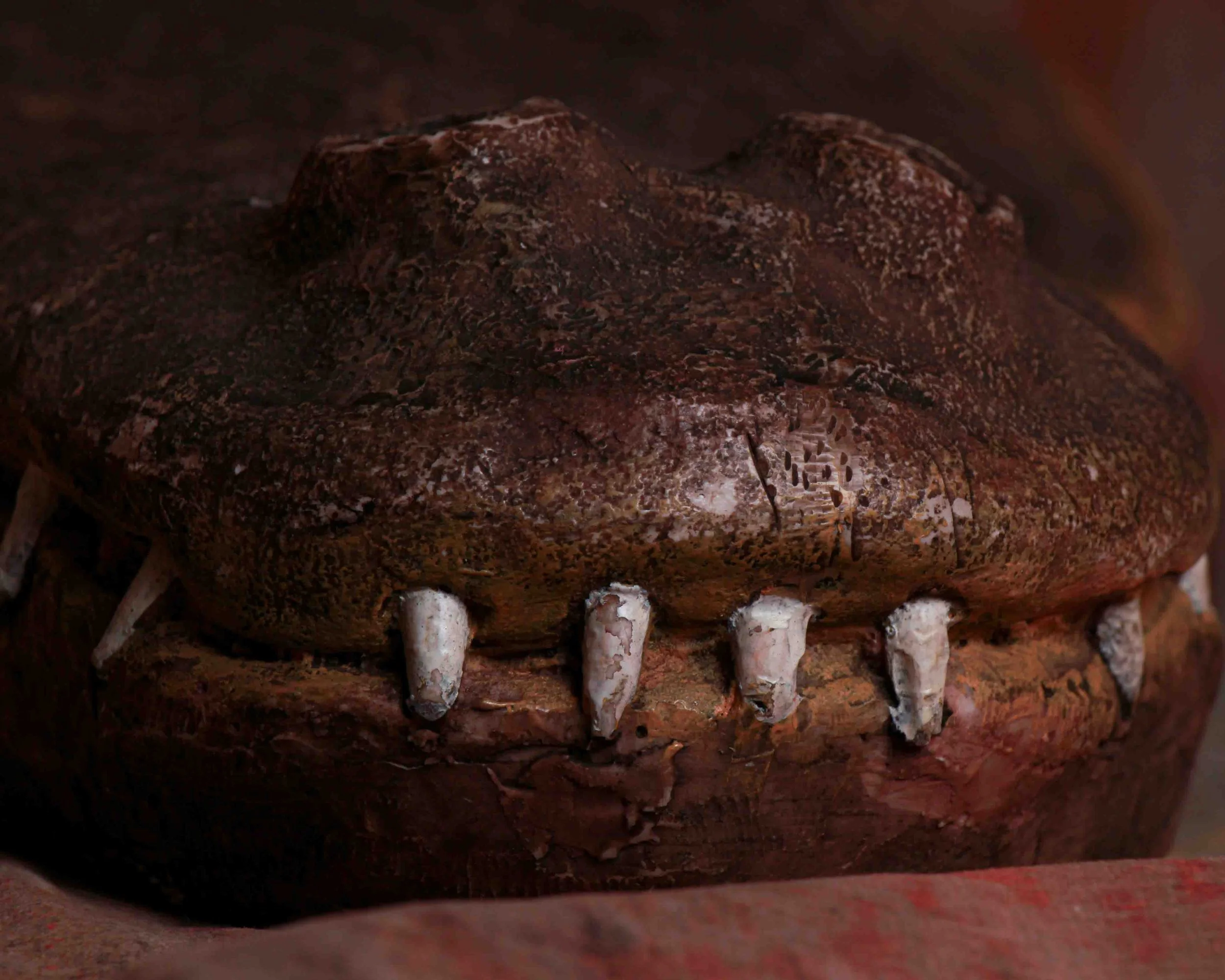
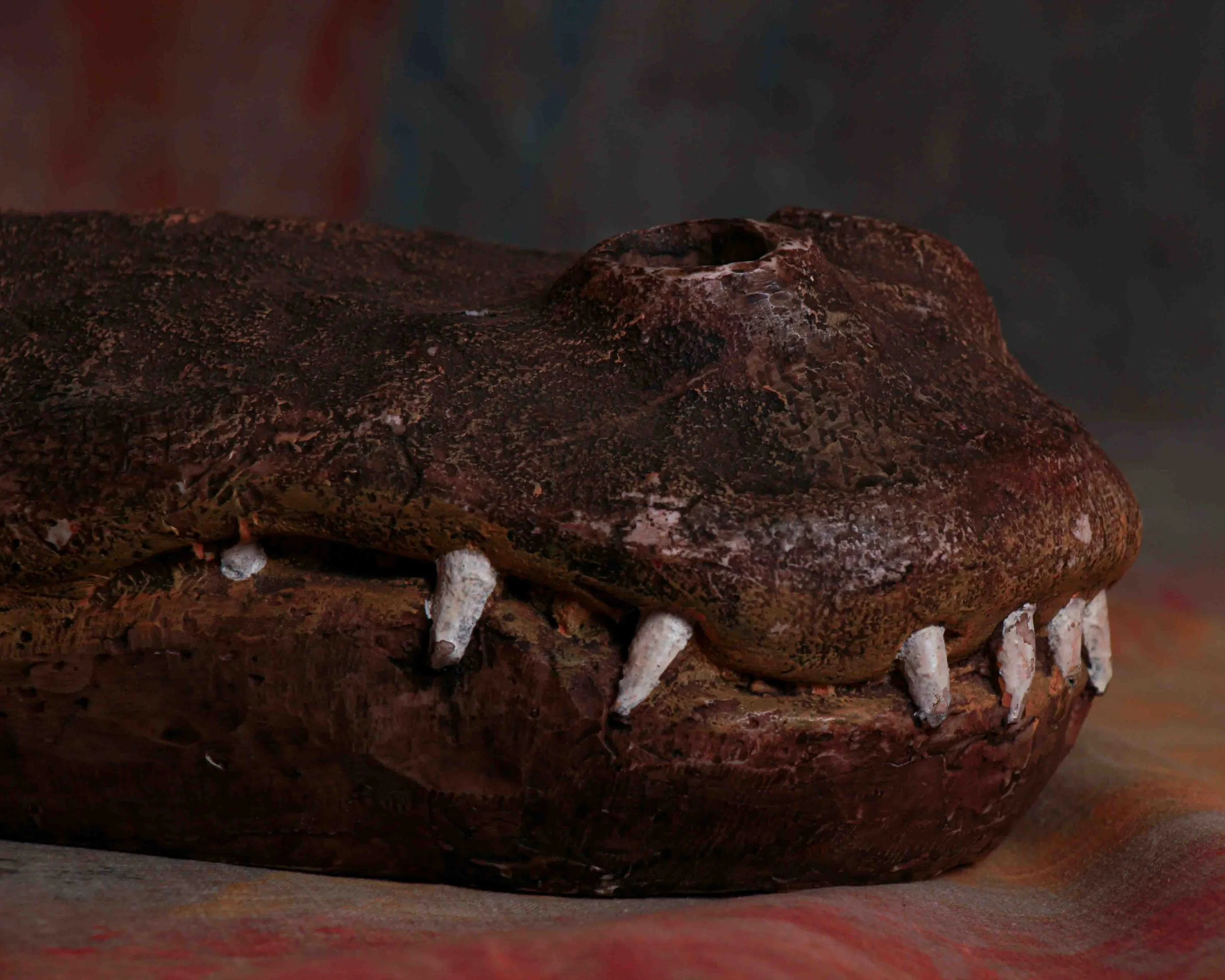
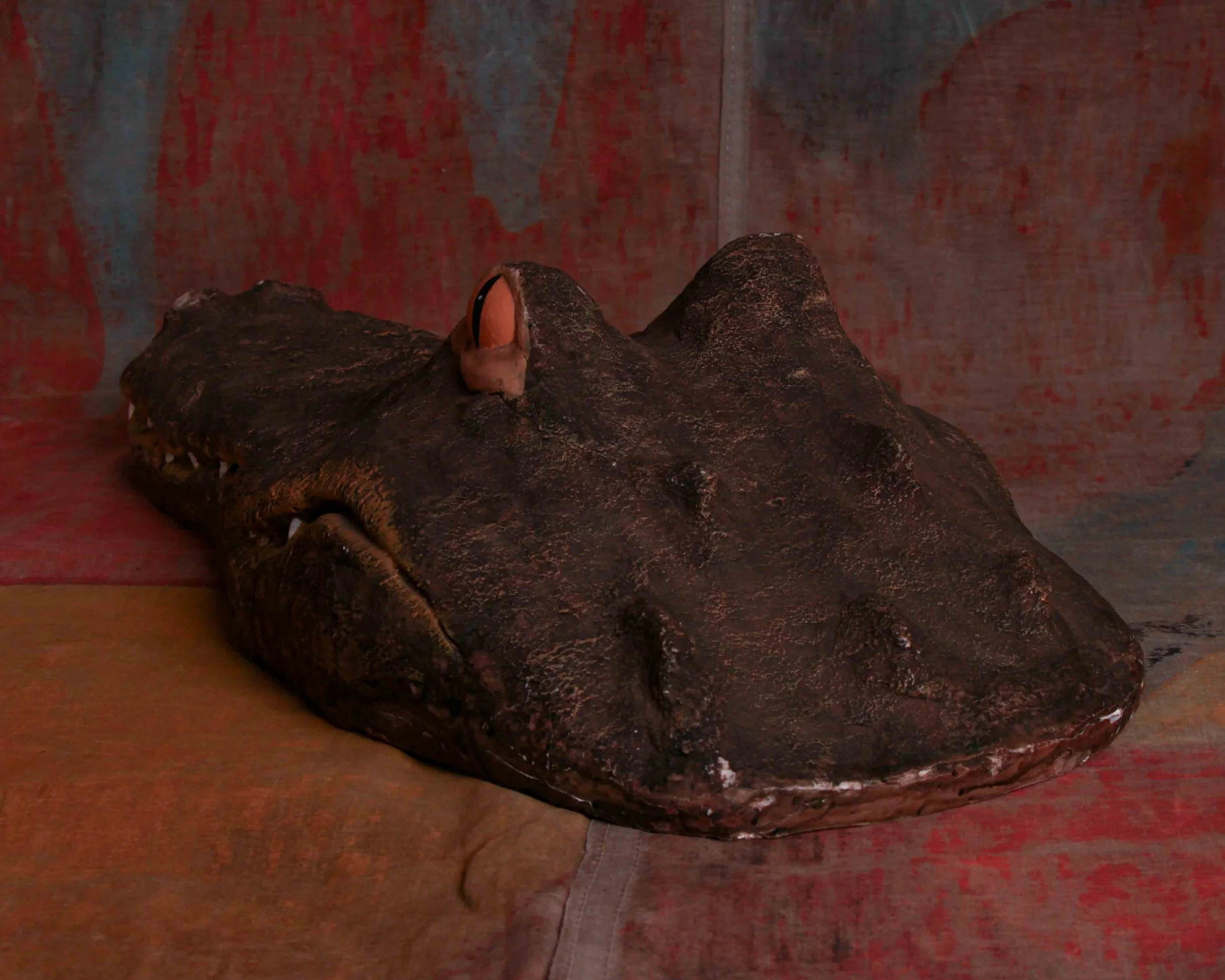
The head is broad and blunt, unmistakably alligator, with a heavy brow that rises into a soft ridge before tapering back along the skull. Along the jawline, small, irregular teeth peek out in a quiet, uneven rhythm. One painted eye peers upward with a lazy, sideways glance, orange and slit-pupiled, equal parts watchful and unimpressed. It’s not aggressive, but it’s certainly alert, the kind of look that says it’s seen plenty and isn’t in a rush to react.
It’s sculptural, a little humorous, and oddly calm. The kind of piece that doesn’t shout for attention but quietly commands it once you notice.
Measures:
Height: 6 in
Width: 25 in
Depth: 11.5 in
Category History
Old plaster sculptures live in that in-between space—part finished object, part working step. Plaster is everywhere in studios. It was affordable, easy to shape, and ideal for casting from an original model. Artists used it to test forms, create studies, or produce multiples before committing to more permanent materials like bronze or marble.
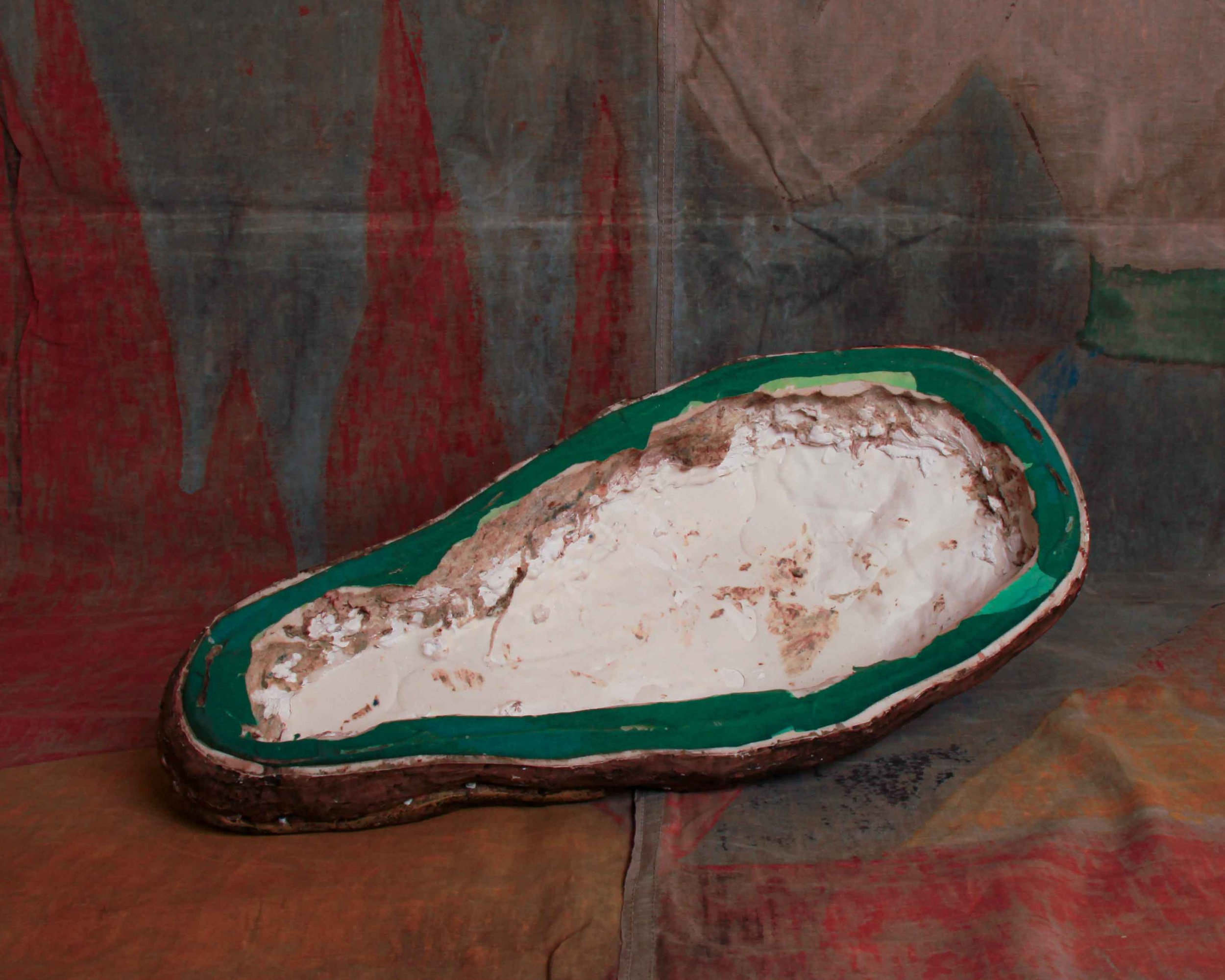
The surface tells the story. You’ll often see tool marks, seams from molds, and areas that feel slightly unfinished. Unlike polished stone, plaster keeps the process visible. It’s direct, a bit fragile, and surprisingly expressive.
Plaster was also used for reproductions—classical busts, decorative figures, architectural elements—making art more accessible beyond elite spaces. These pieces moved through classrooms, homes, and workshops, picking up wear along the way.
What makes them compelling now is that mix of intention and immediacy. They don’t hide how they were made. Chips, repairs, softened edges—they all read as part of the object’s life. Less about permanence, more about presence.
This plaster alligator looks like it’s been caught mid-thought, half-submerged in an imaginary swamp, doing that timeless alligator thing of appearing completely still while quietly sizing you up.
The head is broad and blunt, unmistakably alligator, with a heavy brow that rises into a soft ridge before tapering back along the skull. Along the jawline, small, irregular teeth peek out in a quiet, uneven rhythm. One painted eye peers upward with a lazy, sideways glance, orange and slit-pupiled, equal parts watchful and unimpressed. It’s not aggressive, but it’s certainly alert, the kind of look that says it’s seen plenty and isn’t in a rush to react.
It’s sculptural, a little humorous, and oddly calm. The kind of piece that doesn’t shout for attention but quietly commands it once you notice.
Measures:
Height: 6 in
Width: 25 in
Depth: 11.5 in
Category History
Old plaster sculptures live in that in-between space—part finished object, part working step. Plaster is everywhere in studios. It was affordable, easy to shape, and ideal for casting from an original model. Artists used it to test forms, create studies, or produce multiples before committing to more permanent materials like bronze or marble.
The surface tells the story. You’ll often see tool marks, seams from molds, and areas that feel slightly unfinished. Unlike polished stone, plaster keeps the process visible. It’s direct, a bit fragile, and surprisingly expressive.
Plaster was also used for reproductions—classical busts, decorative figures, architectural elements—making art more accessible beyond elite spaces. These pieces moved through classrooms, homes, and workshops, picking up wear along the way.
What makes them compelling now is that mix of intention and immediacy. They don’t hide how they were made. Chips, repairs, softened edges—they all read as part of the object’s life. Less about permanence, more about presence.