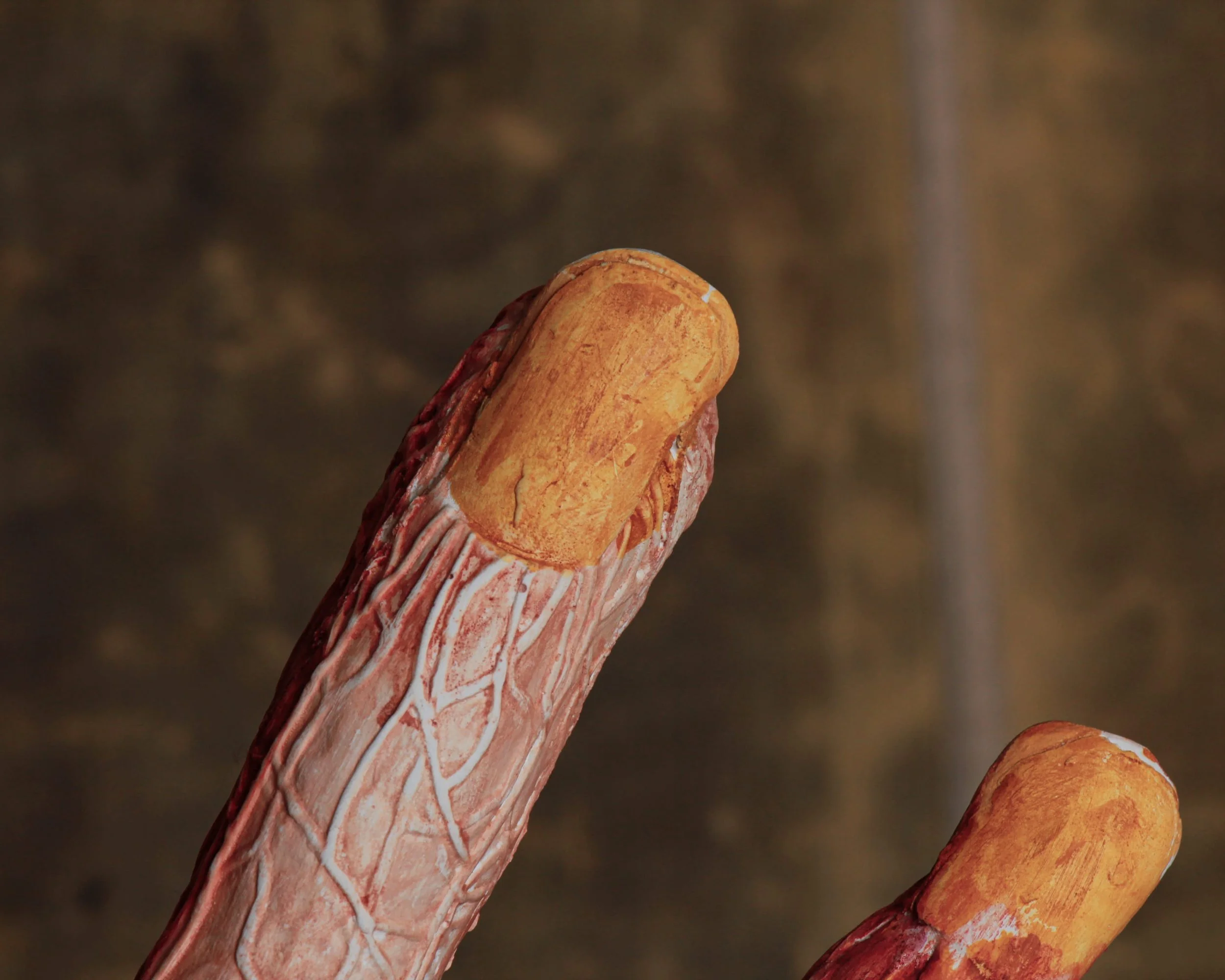
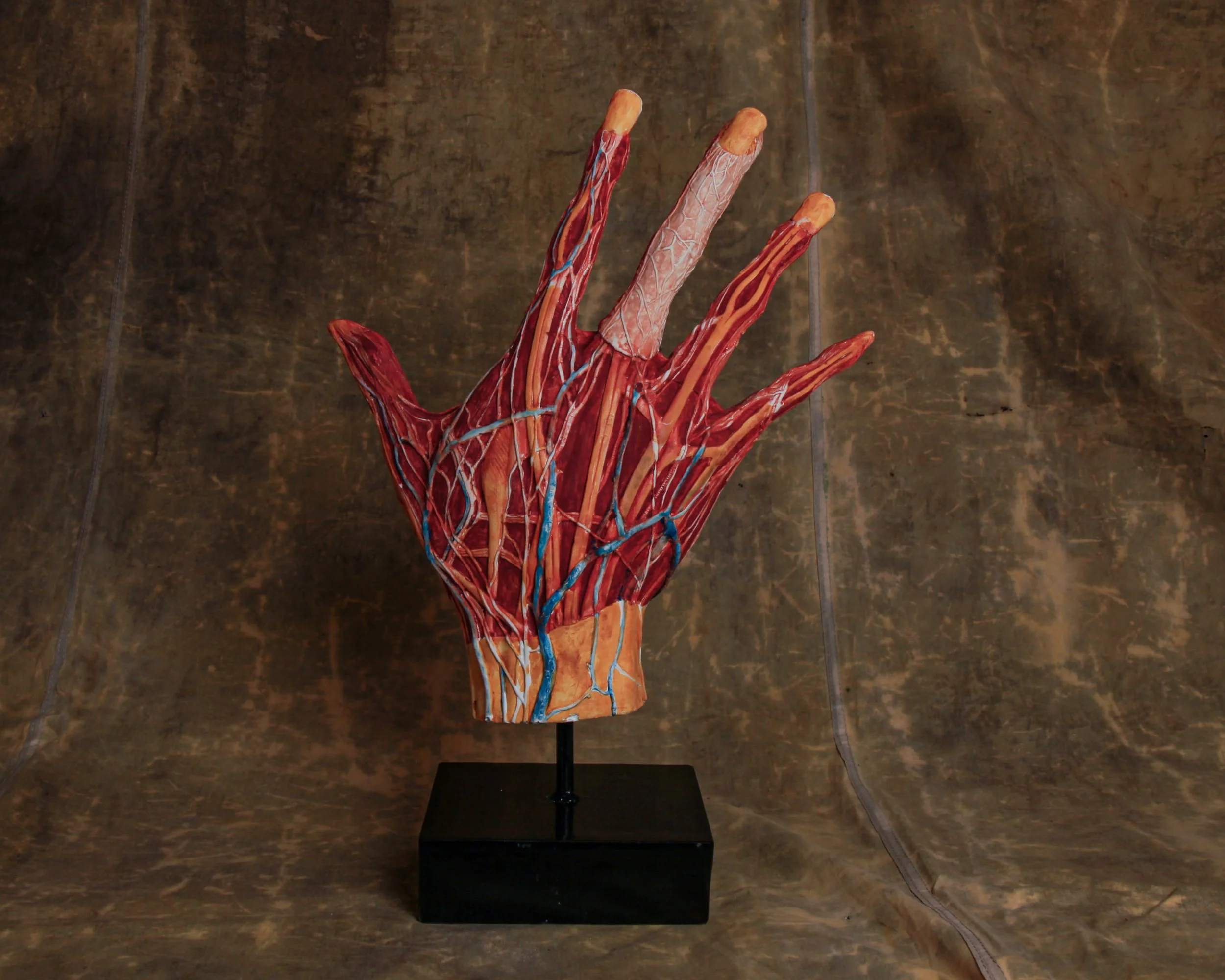
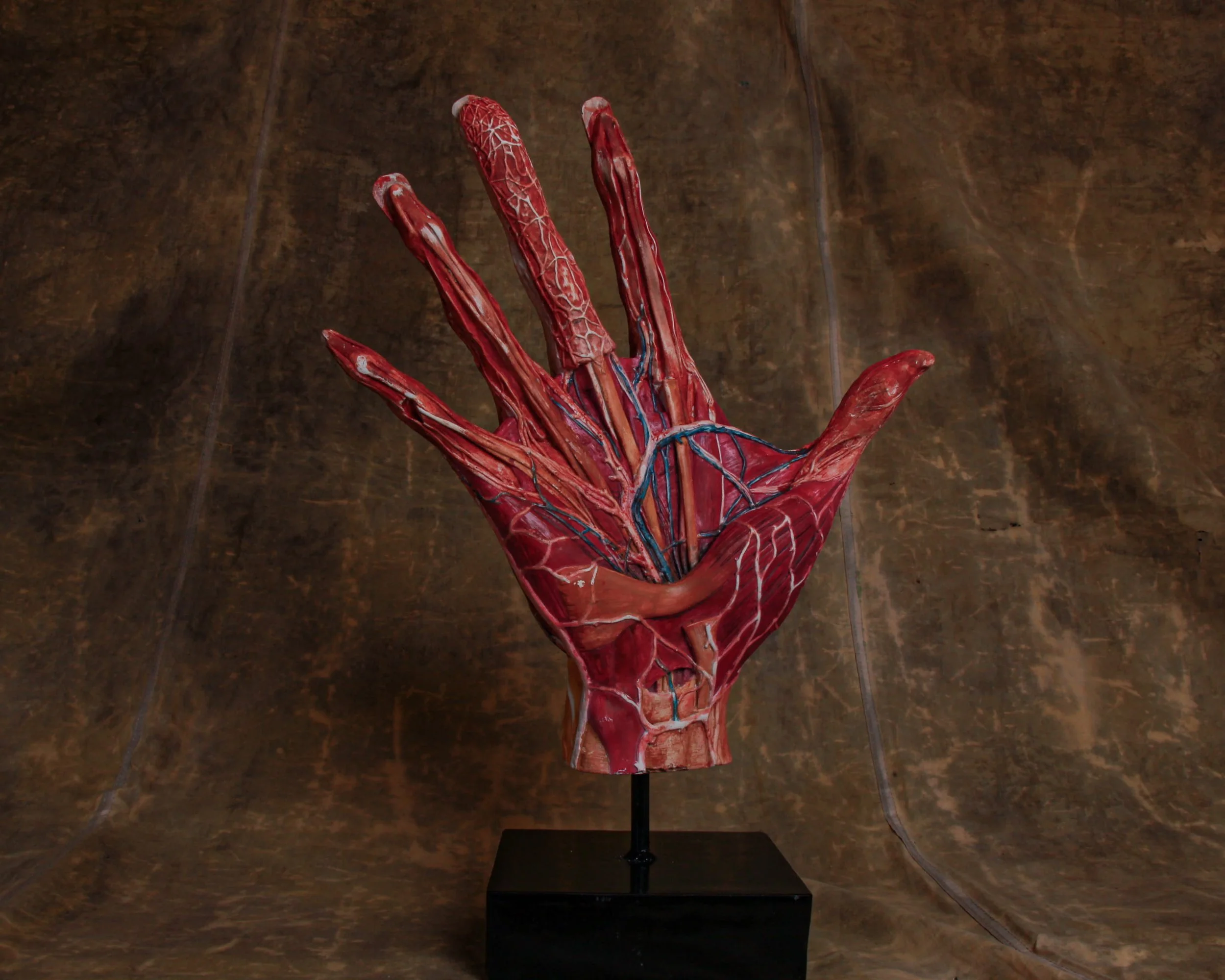
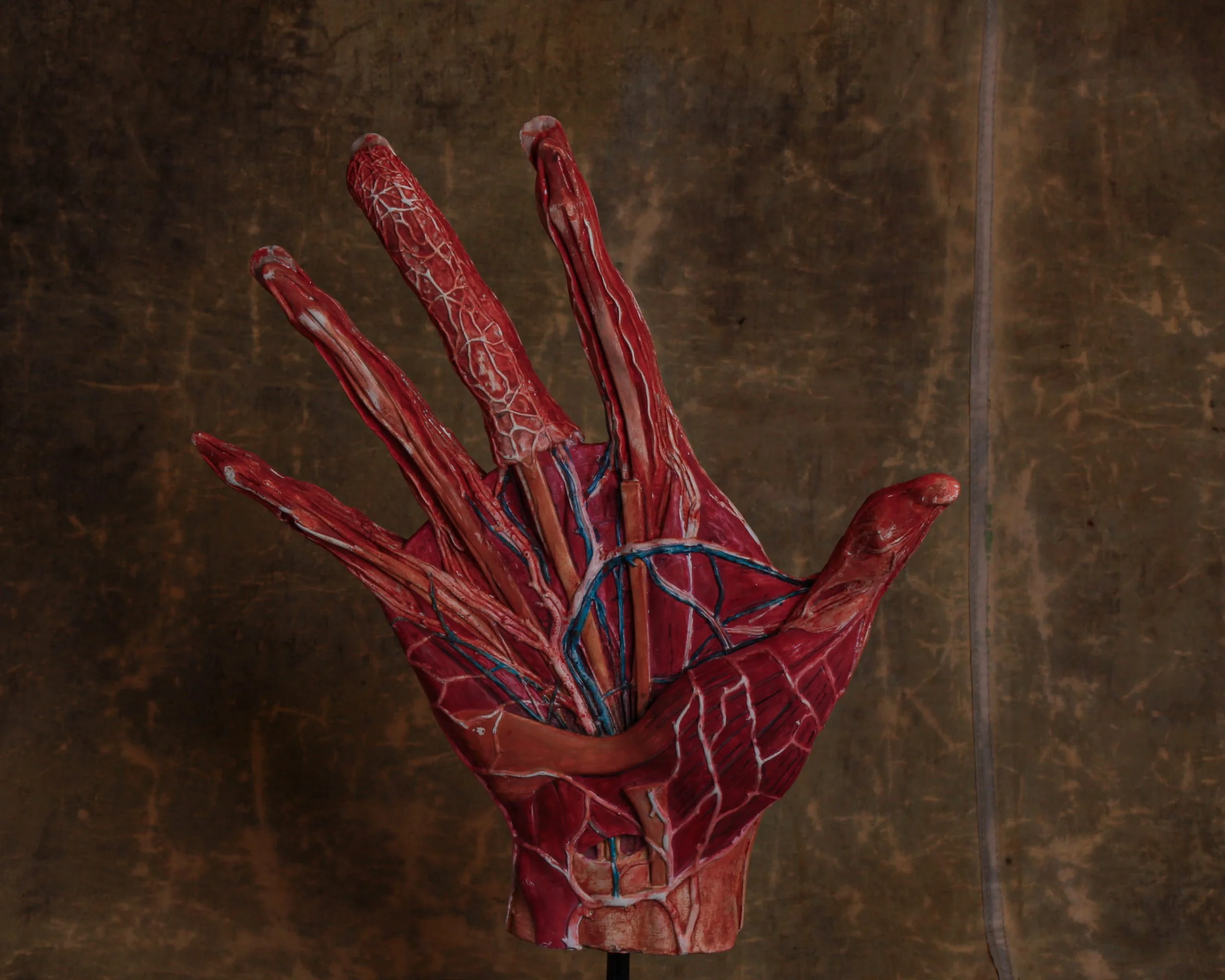
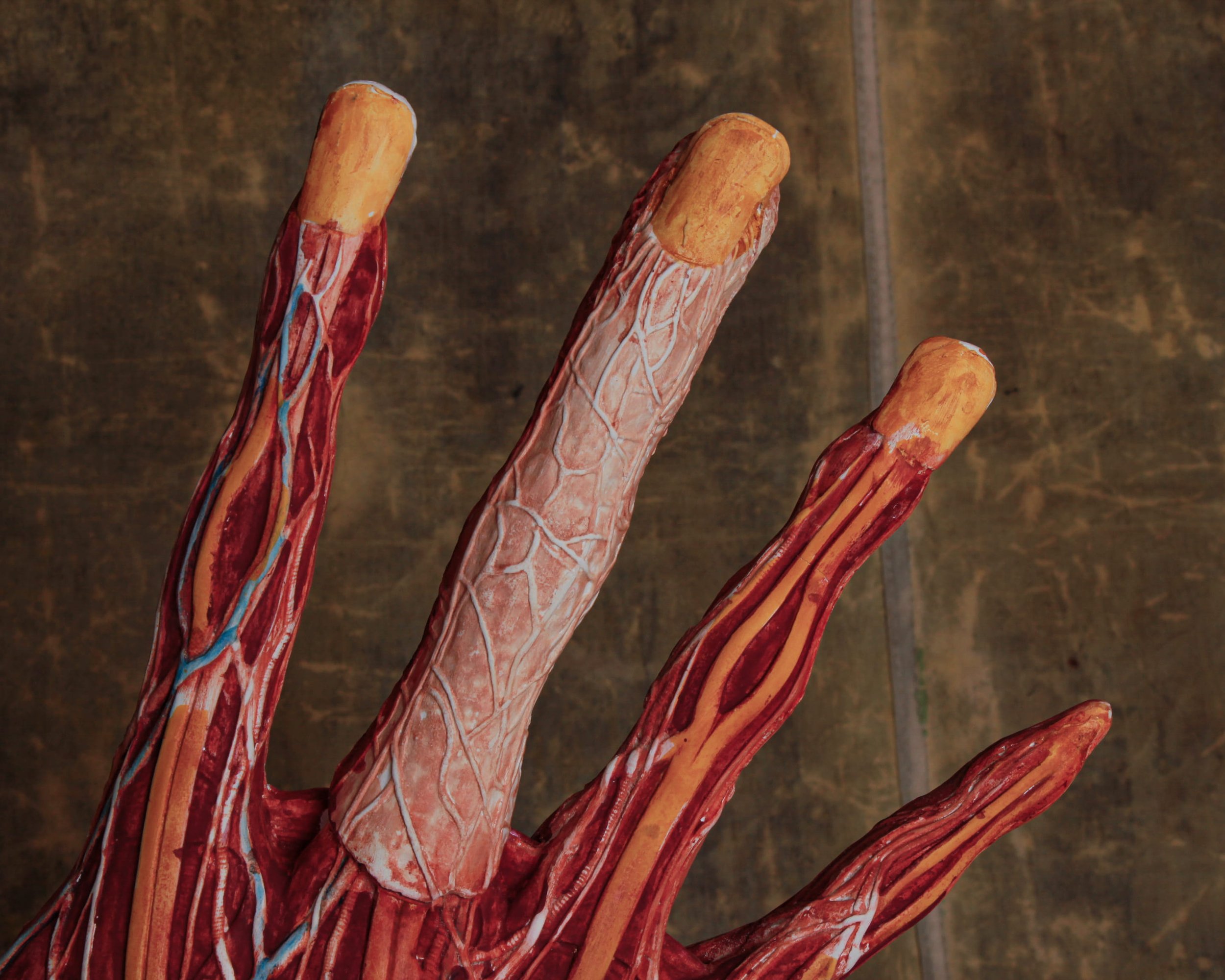
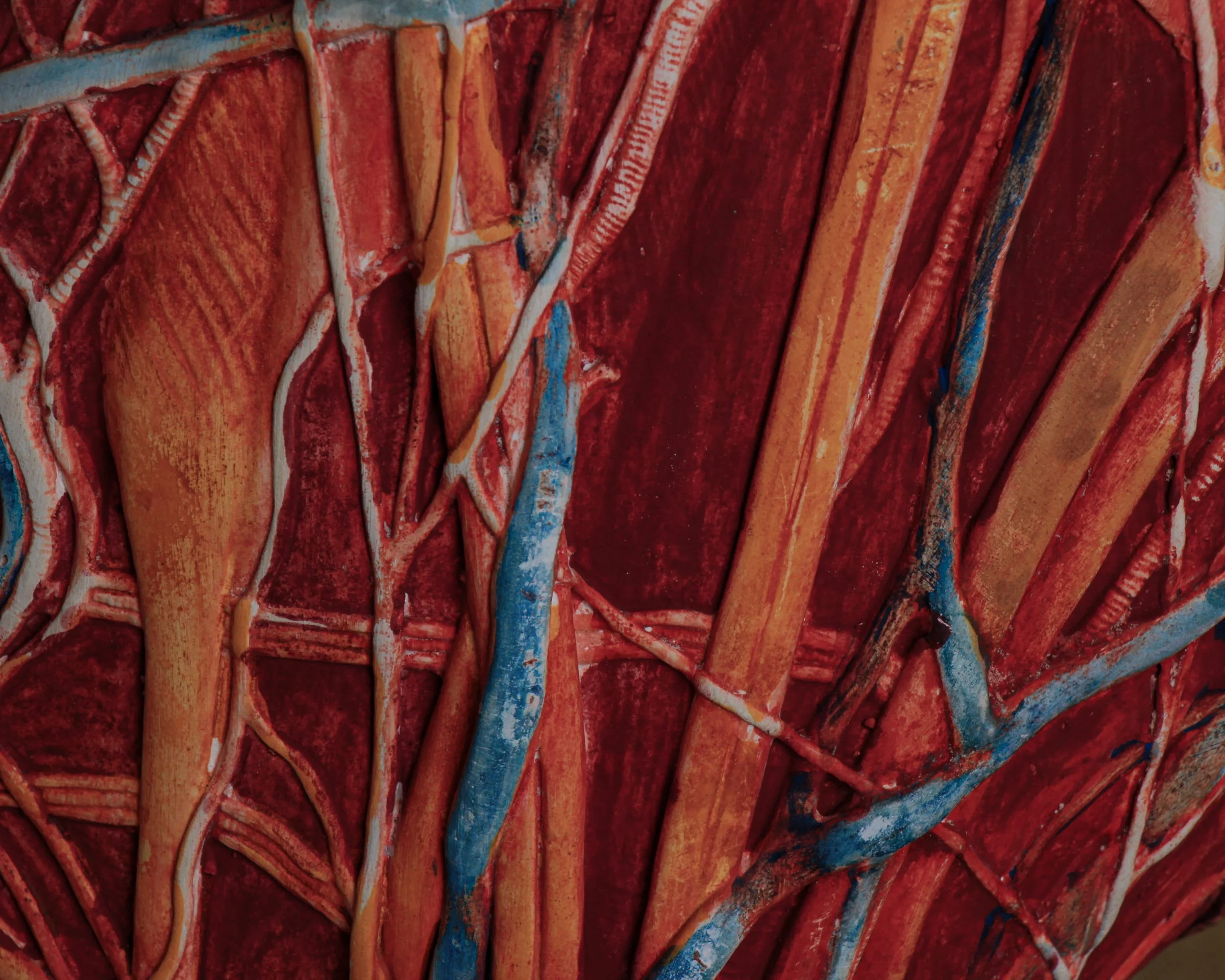
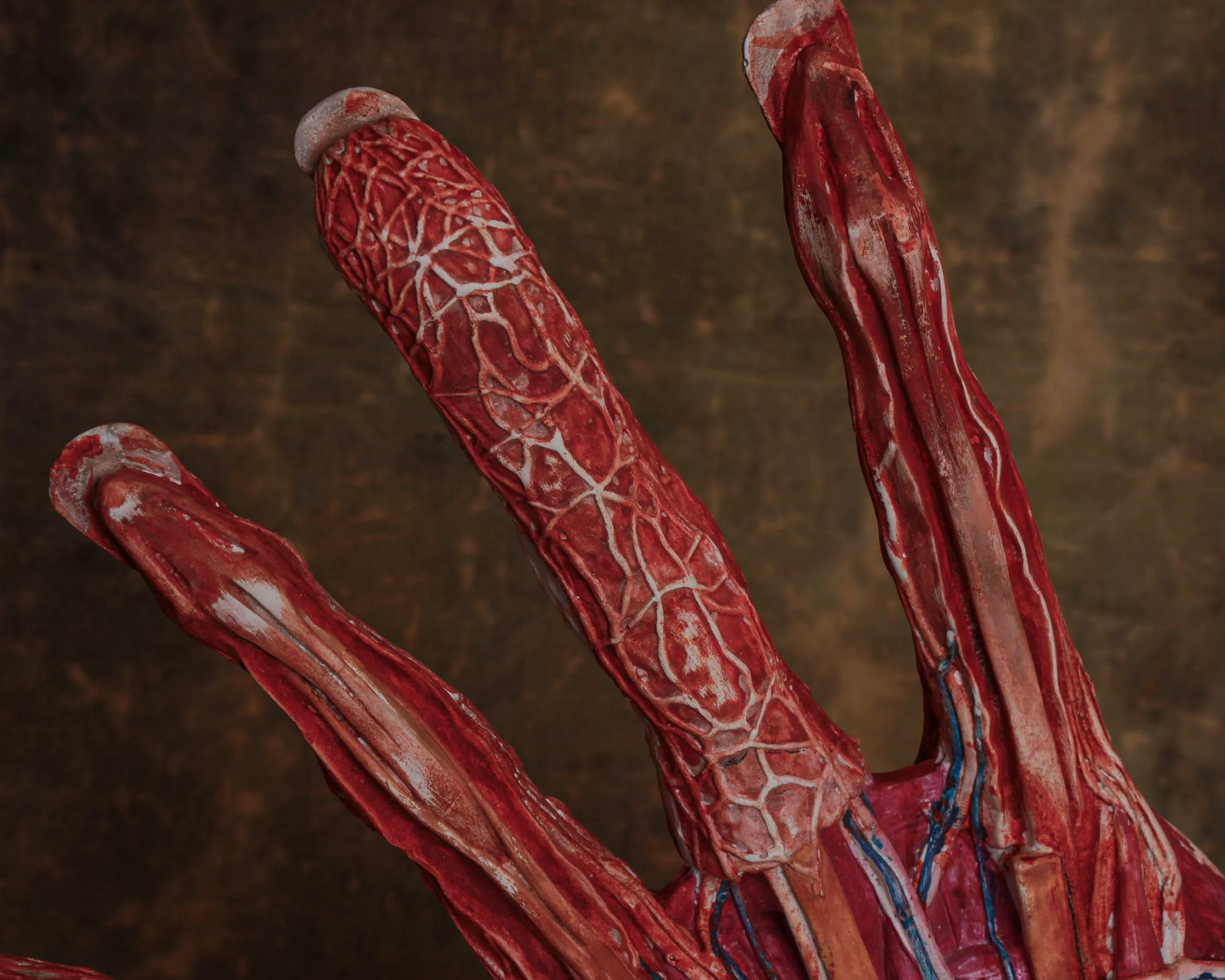
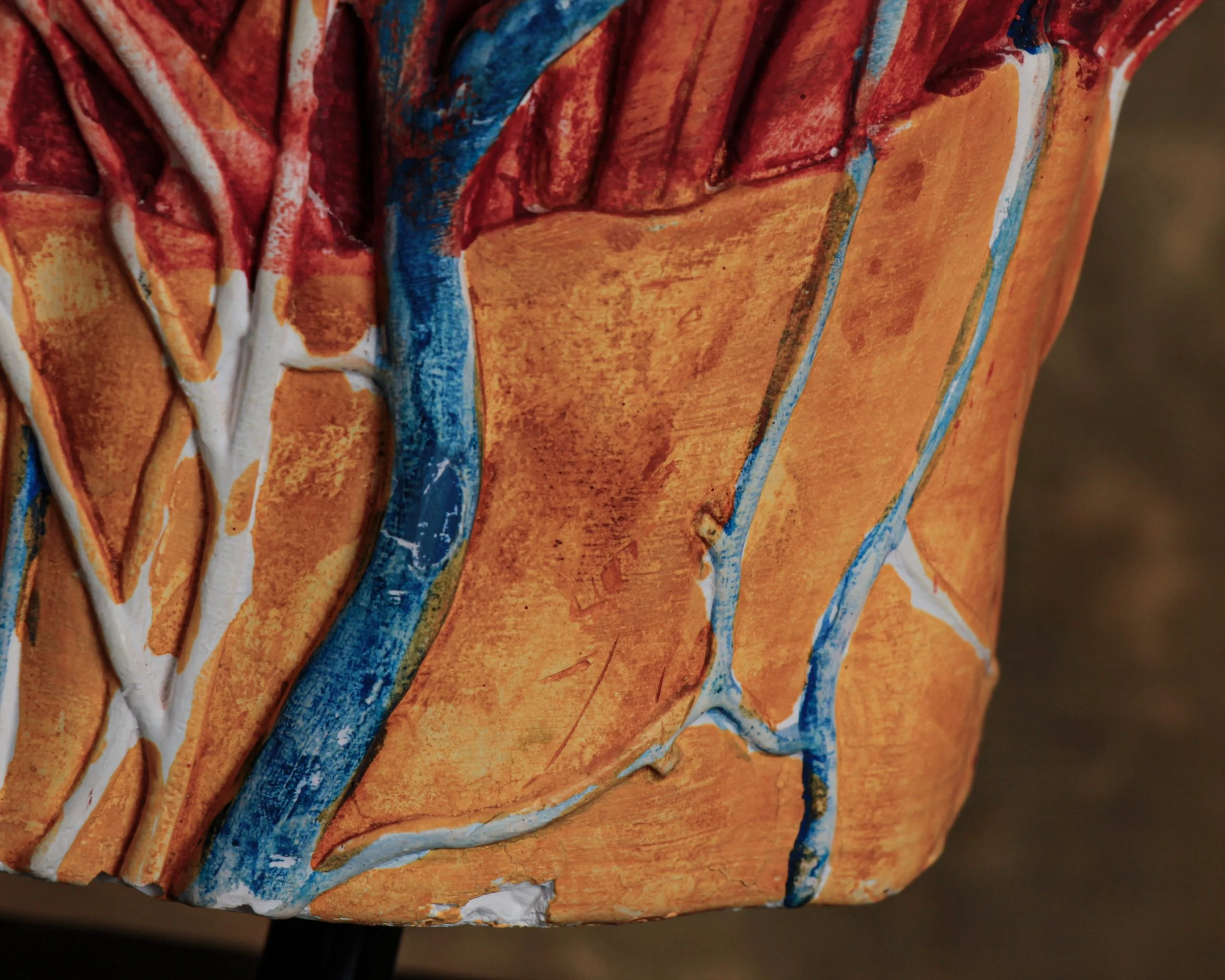
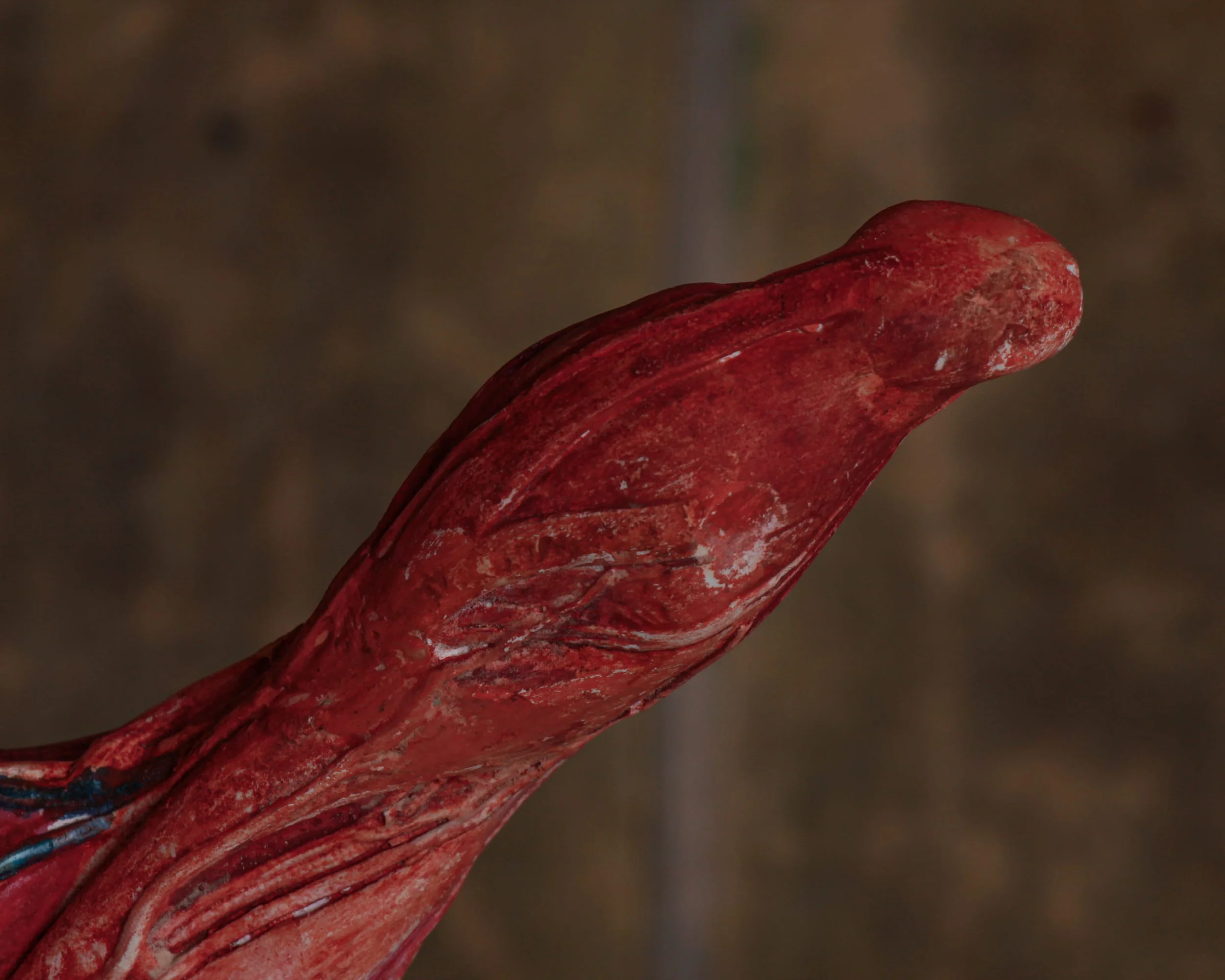
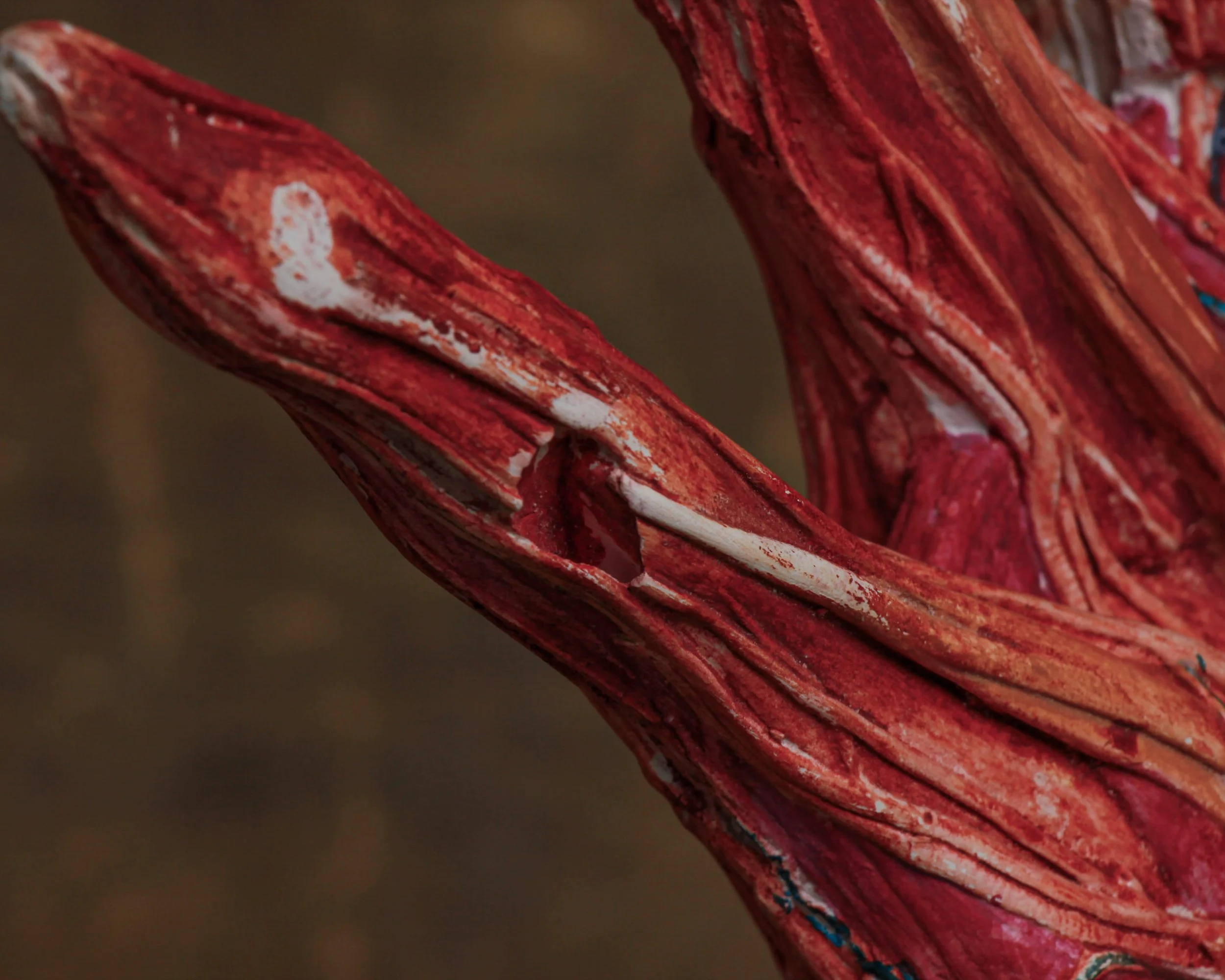
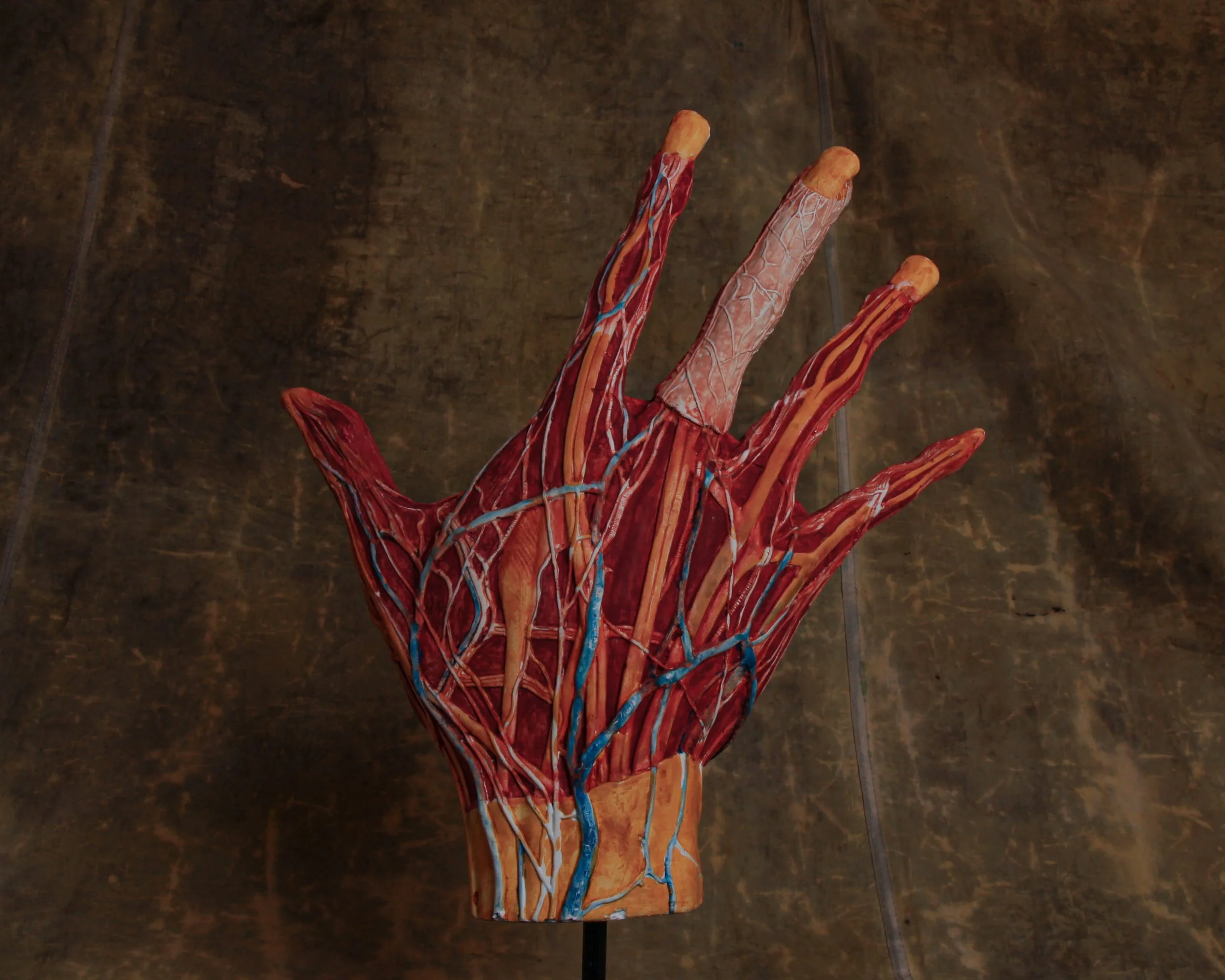
This early 20th century French anatomical hand model was made as a teaching tool, the kind that would have sat in a classroom or lecture hall, guiding students through the mechanics beneath the skin. Muscle, tendon, and vein are all mapped out in lacquered plaster, each layer simplified just enough to teach, but still detailed enough to hold your attention. The color work does most of the talking—deep reds, pale striations, and those winding blue veins that feel almost too alive for something fixed in place.
Mounted on a custom heavy steel stand, it carries itself with a certain presence. Not delicate, not decorative in the traditional sense, but undeniably striking. There’s a sculptural quality to the gesture of the hand itself, fingers extended in a way that feels almost expressive, like it’s mid-explanation.
Possibly attributed to Maison Deyrolle, the Paris institution known for producing educational models of this kind, it fits squarely into a period when learning was tactile and visual. You didn’t just read about anatomy, you stood in front of it.
Condition reflects its working life. Surface wear throughout, small losses, and a repair to one fingernail, all consistent with decades of handling and use. Nothing that takes away from it, if anything, it reinforces the fact that this wasn’t made to sit quietly.
Measures 20.5 inches high, 16.5 inches wide, and 4 inches deep, with an 8 inch square base.
Equal parts study object and conversation piece, it’s the kind of thing that doesn’t just sit in a room, it changes it.
Anatomical Models
In the 1930s, anatomical plaster models like this hand were essential teaching tools in medical schools, especially in Europe. Before widespread access to modern imaging or preserved specimens, these hand-painted forms offered a durable, repeatable way to study musculature and vascular systems. Makers like Deyrolle helped standardize visual learning through craft and precision.
This early 20th century French anatomical hand model was made as a teaching tool, the kind that would have sat in a classroom or lecture hall, guiding students through the mechanics beneath the skin. Muscle, tendon, and vein are all mapped out in lacquered plaster, each layer simplified just enough to teach, but still detailed enough to hold your attention. The color work does most of the talking—deep reds, pale striations, and those winding blue veins that feel almost too alive for something fixed in place.
Mounted on a custom heavy steel stand, it carries itself with a certain presence. Not delicate, not decorative in the traditional sense, but undeniably striking. There’s a sculptural quality to the gesture of the hand itself, fingers extended in a way that feels almost expressive, like it’s mid-explanation.
Possibly attributed to Maison Deyrolle, the Paris institution known for producing educational models of this kind, it fits squarely into a period when learning was tactile and visual. You didn’t just read about anatomy, you stood in front of it.
Condition reflects its working life. Surface wear throughout, small losses, and a repair to one fingernail, all consistent with decades of handling and use. Nothing that takes away from it, if anything, it reinforces the fact that this wasn’t made to sit quietly.
Measures 20.5 inches high, 16.5 inches wide, and 4 inches deep, with an 8 inch square base.
Equal parts study object and conversation piece, it’s the kind of thing that doesn’t just sit in a room, it changes it.
Anatomical Models
In the 1930s, anatomical plaster models like this hand were essential teaching tools in medical schools, especially in Europe. Before widespread access to modern imaging or preserved specimens, these hand-painted forms offered a durable, repeatable way to study musculature and vascular systems. Makers like Deyrolle helped standardize visual learning through craft and precision.