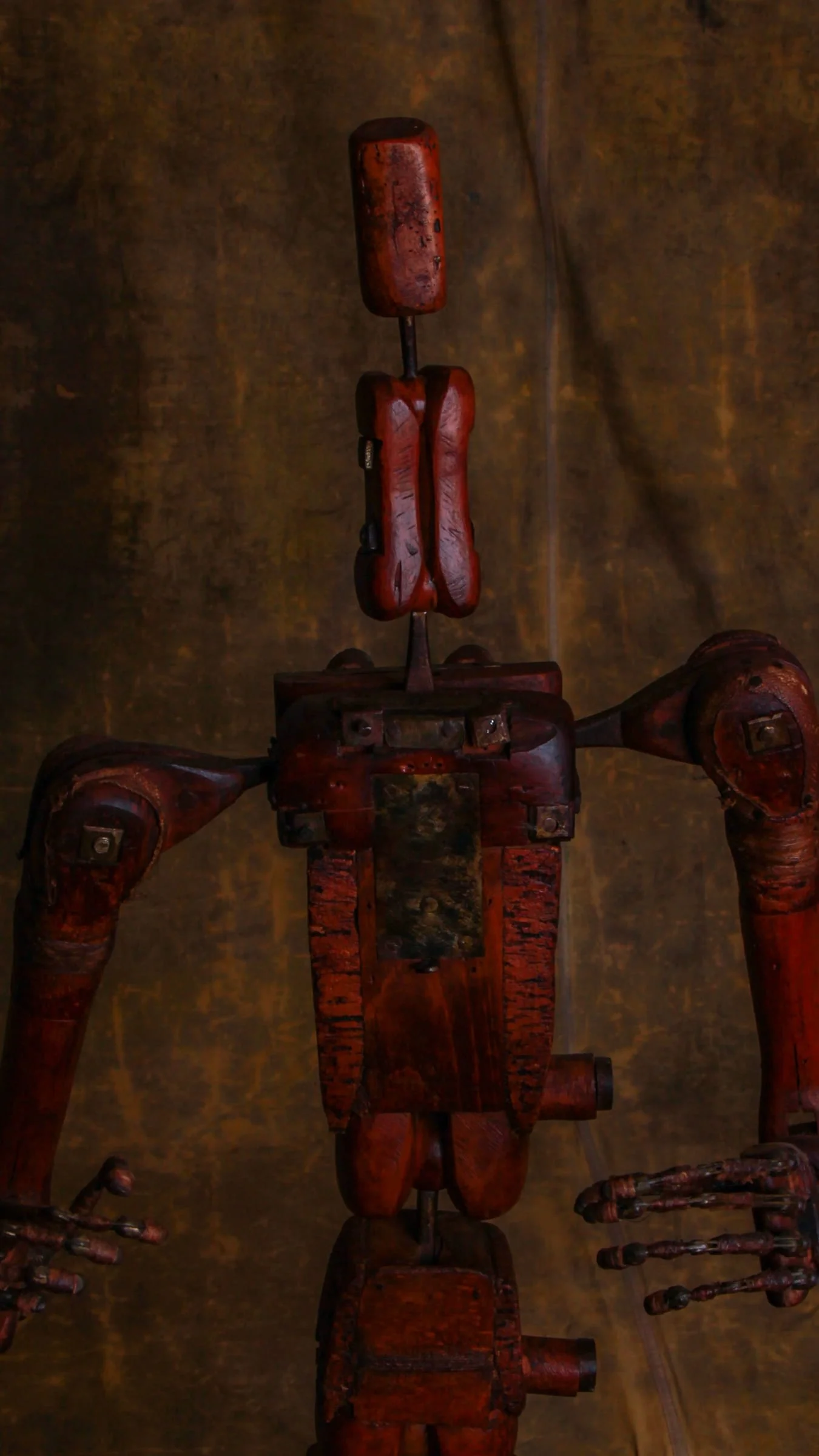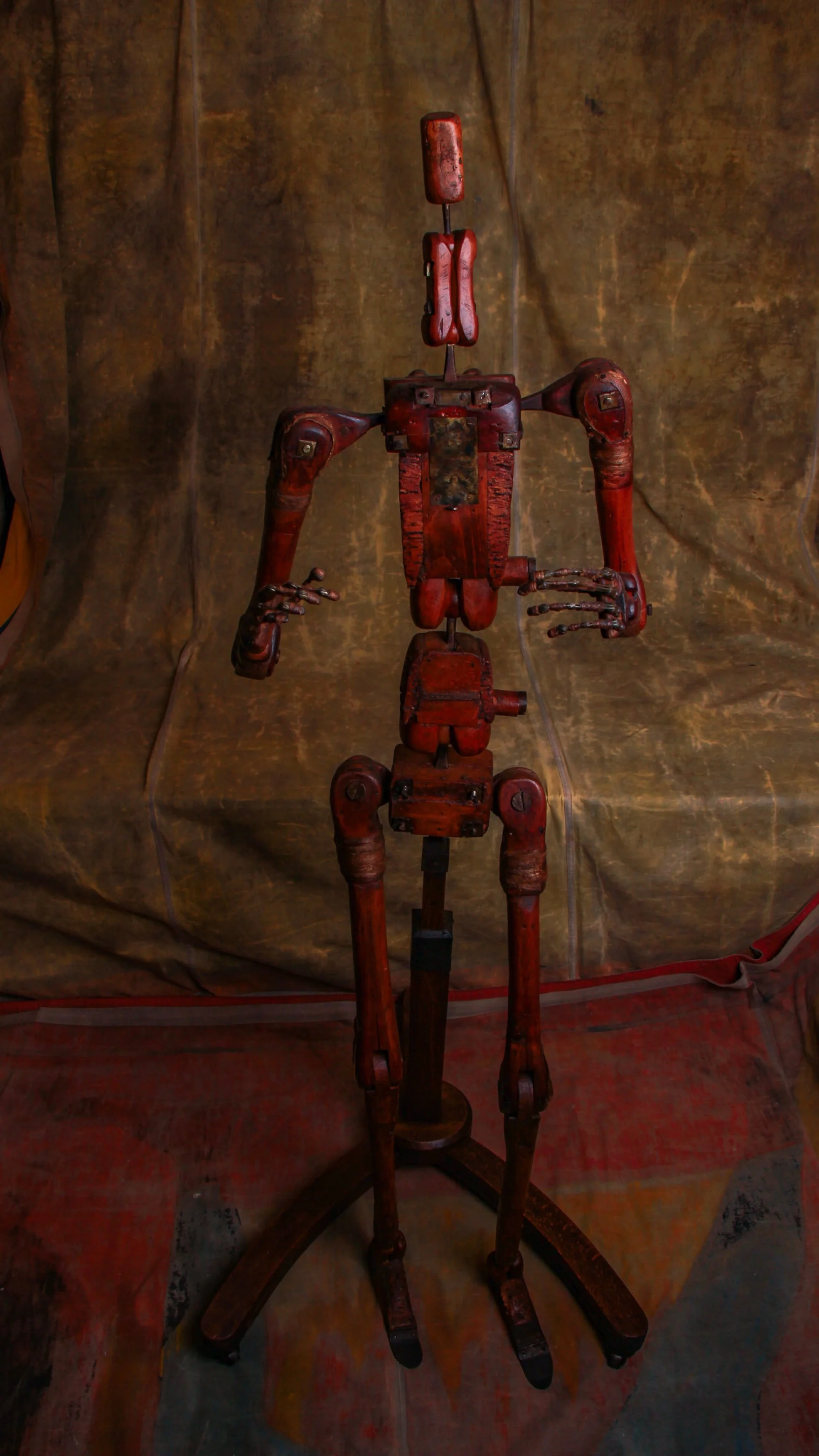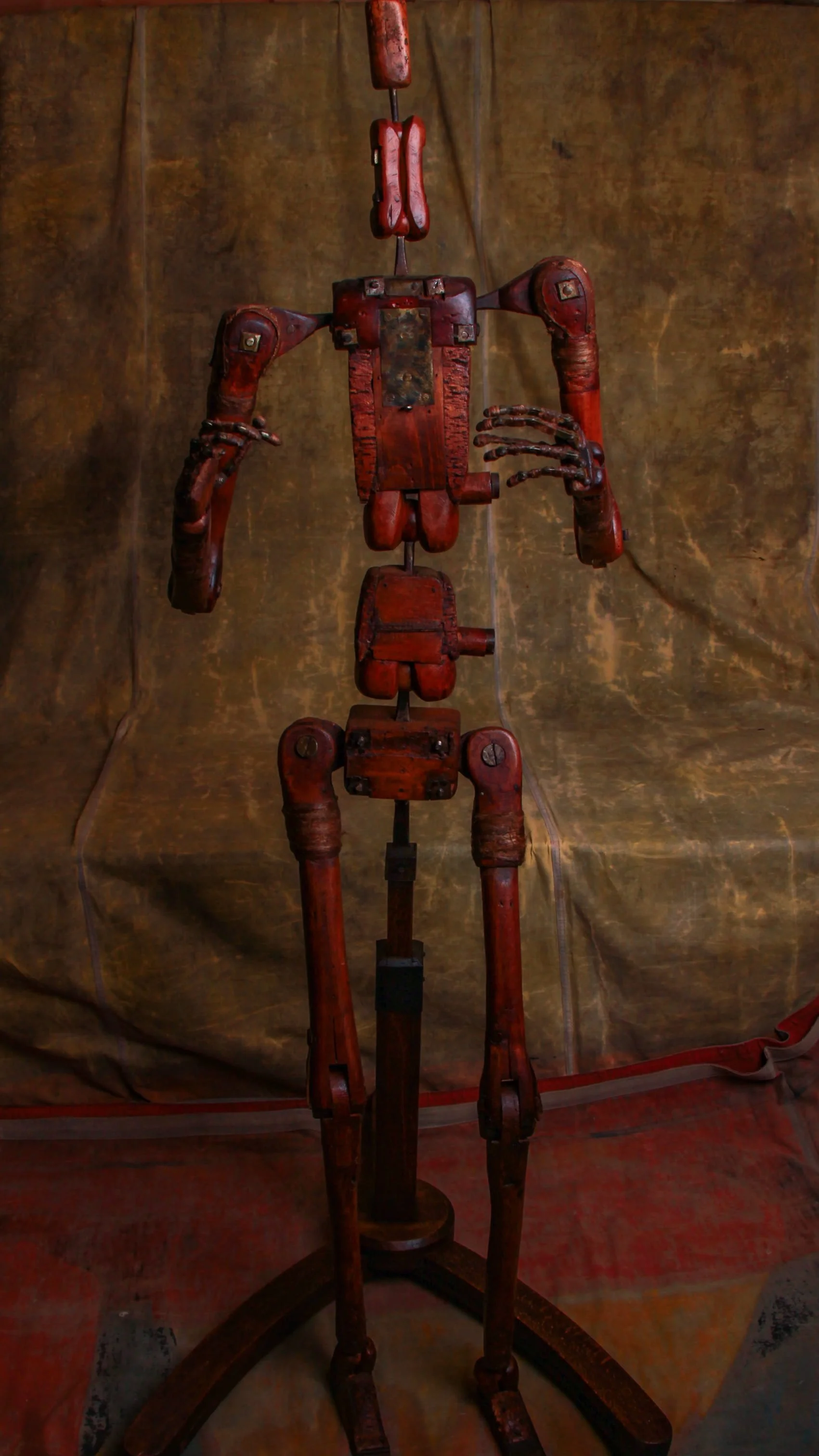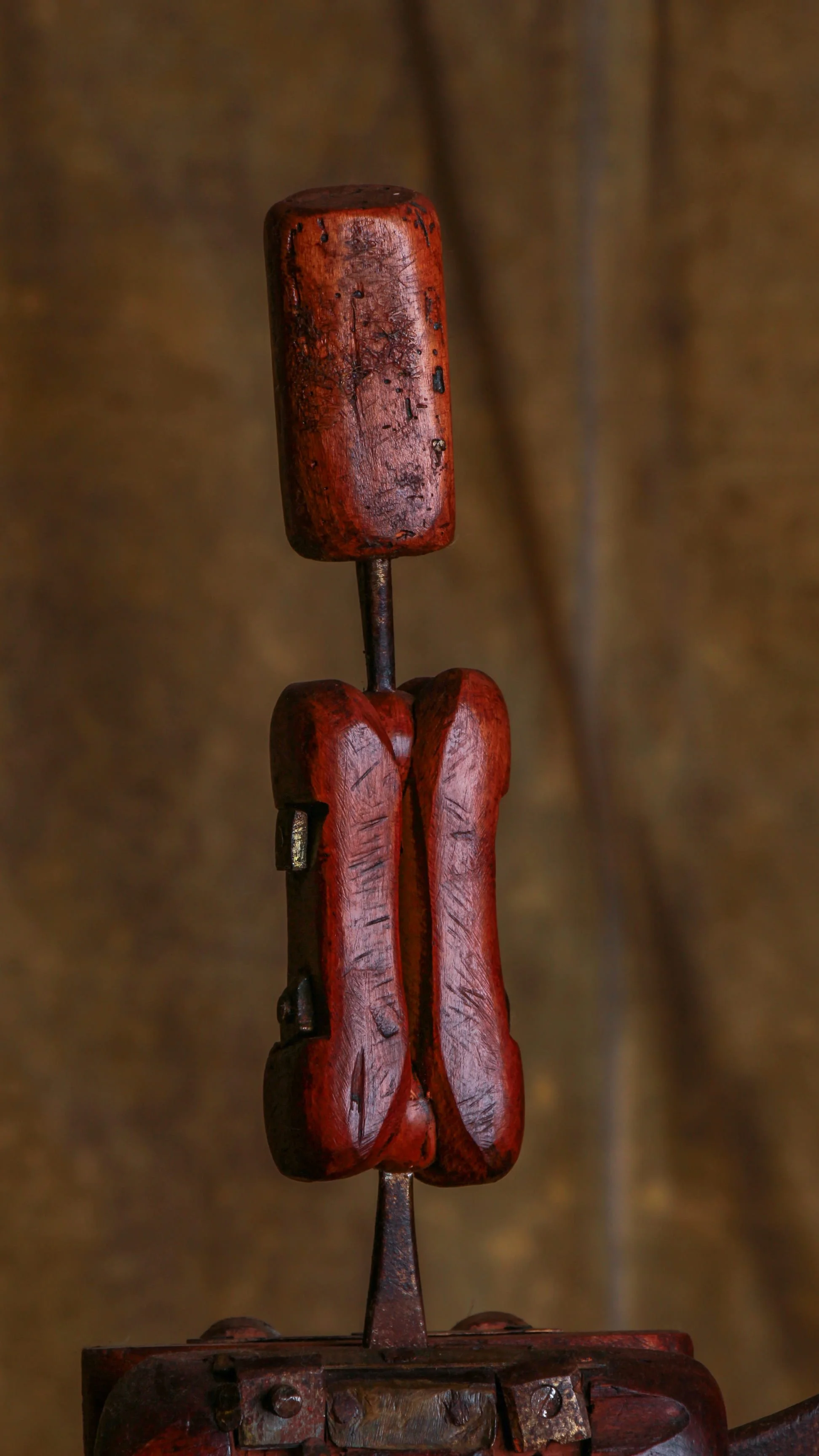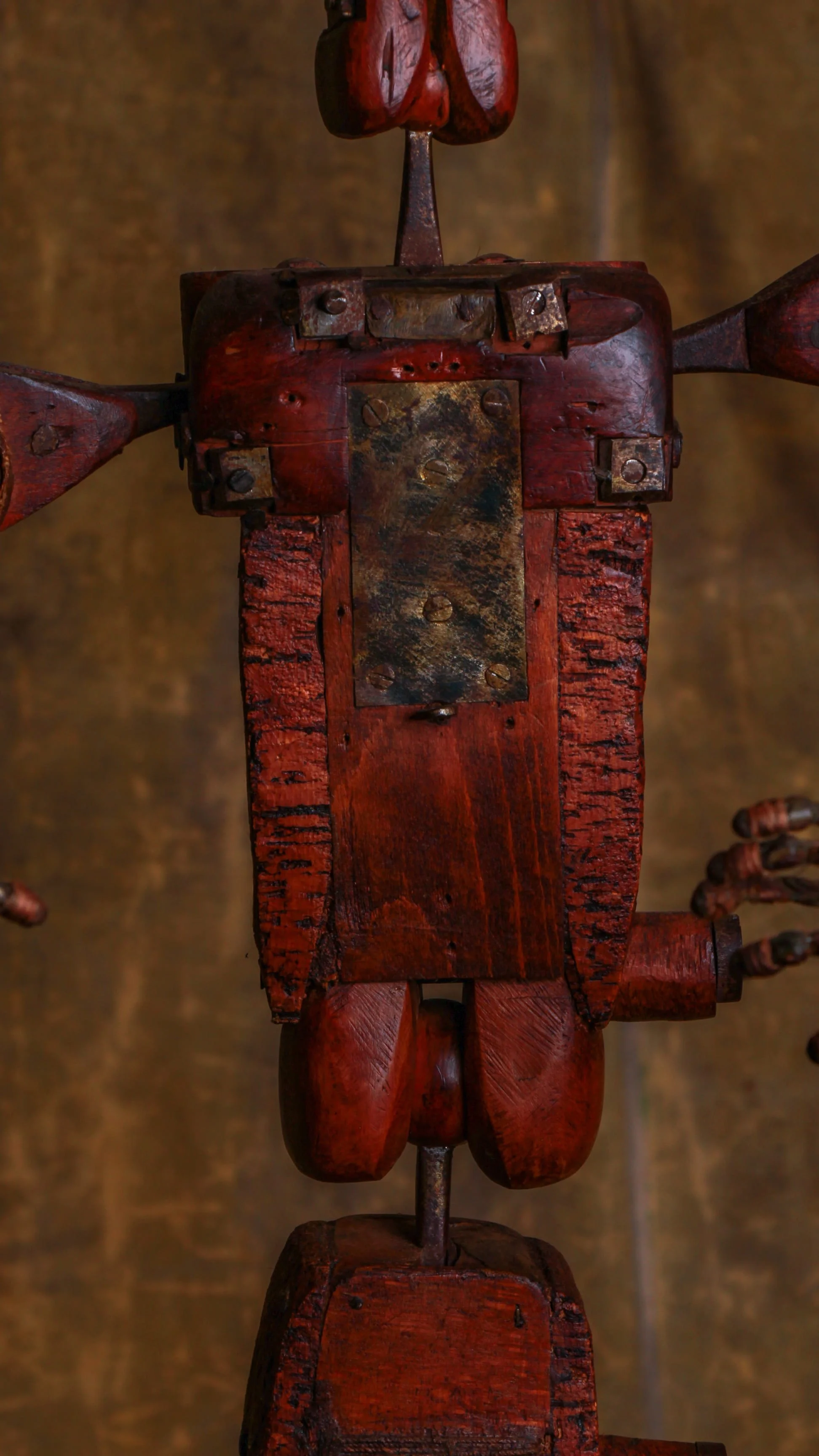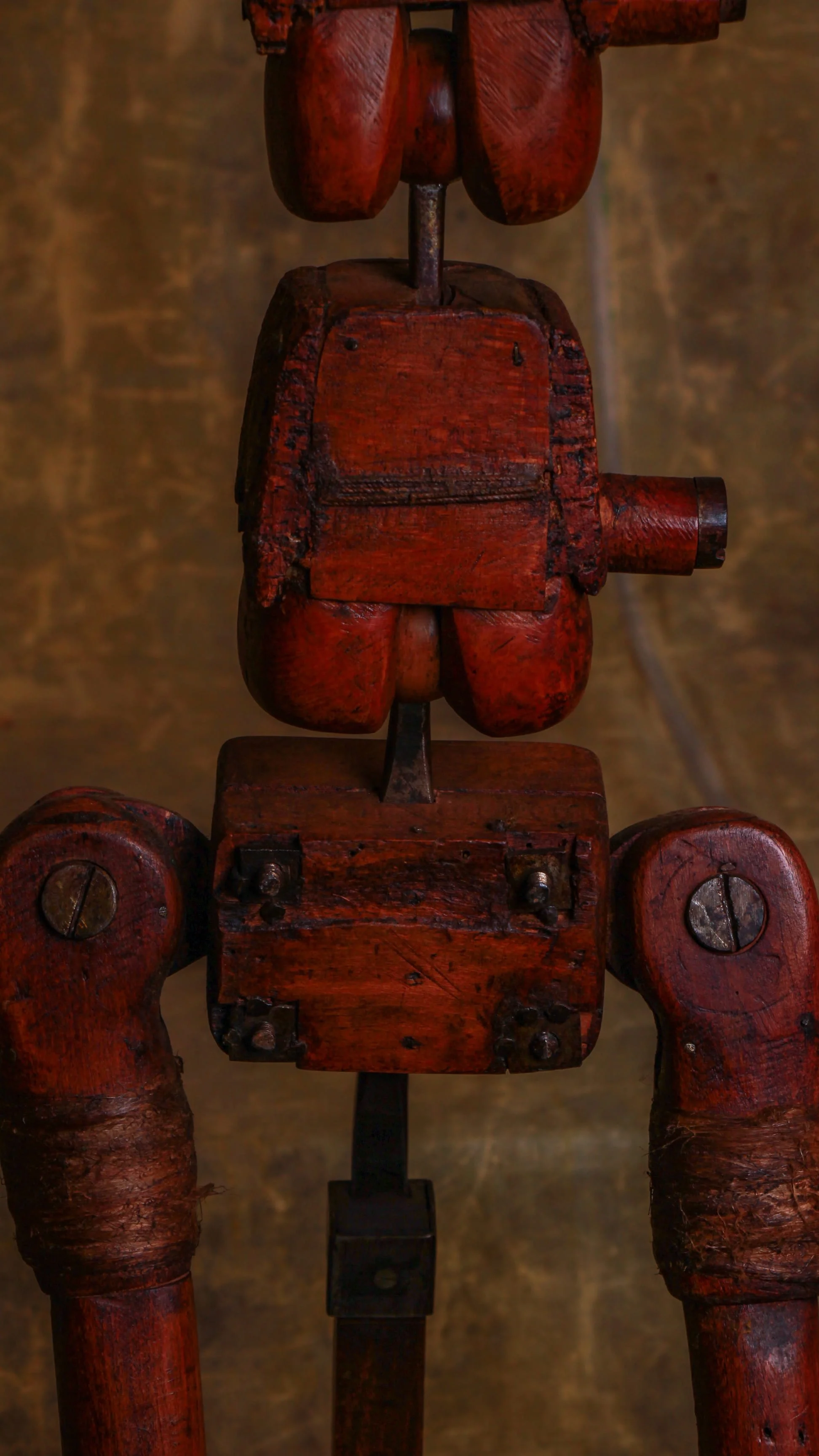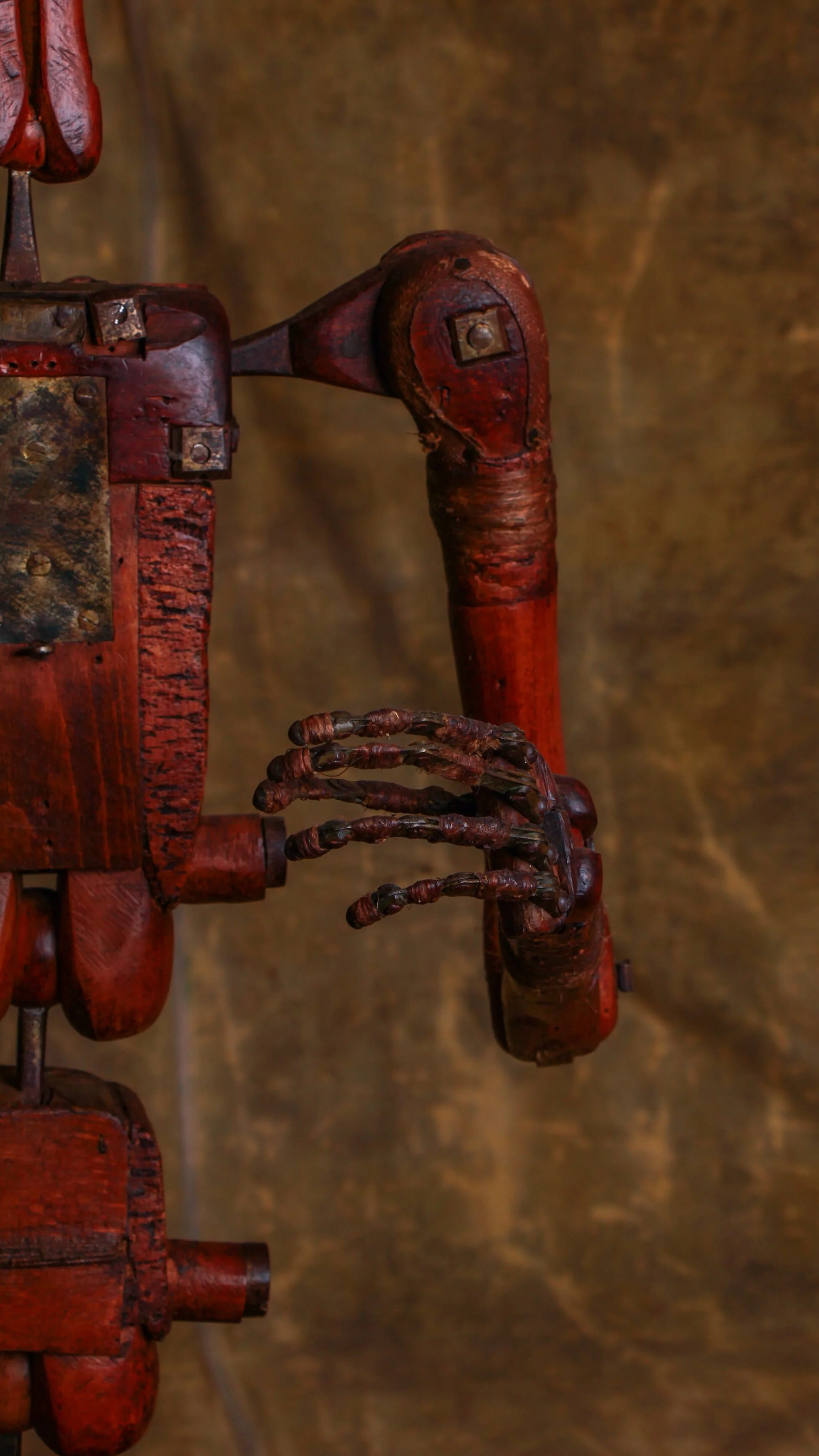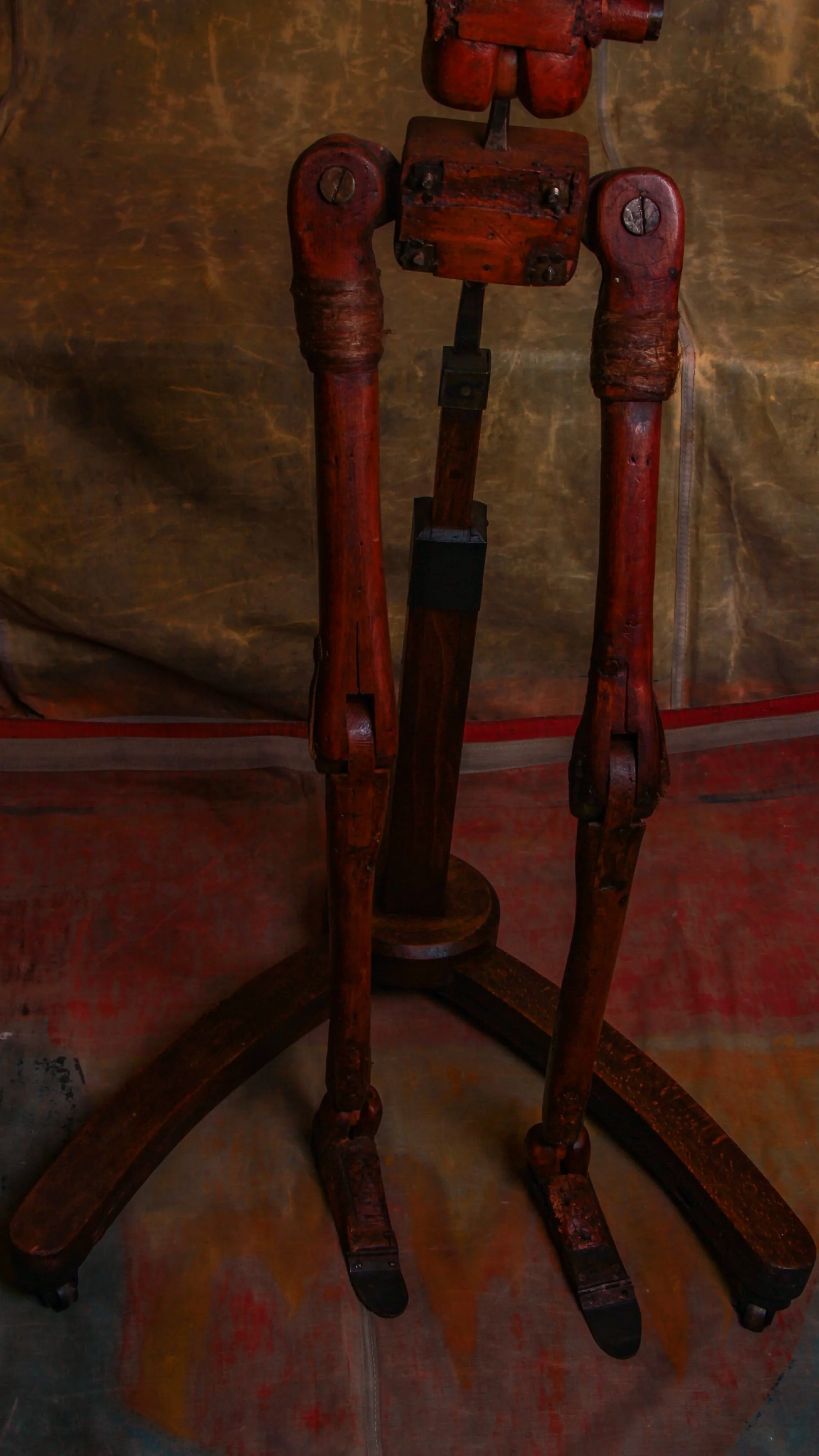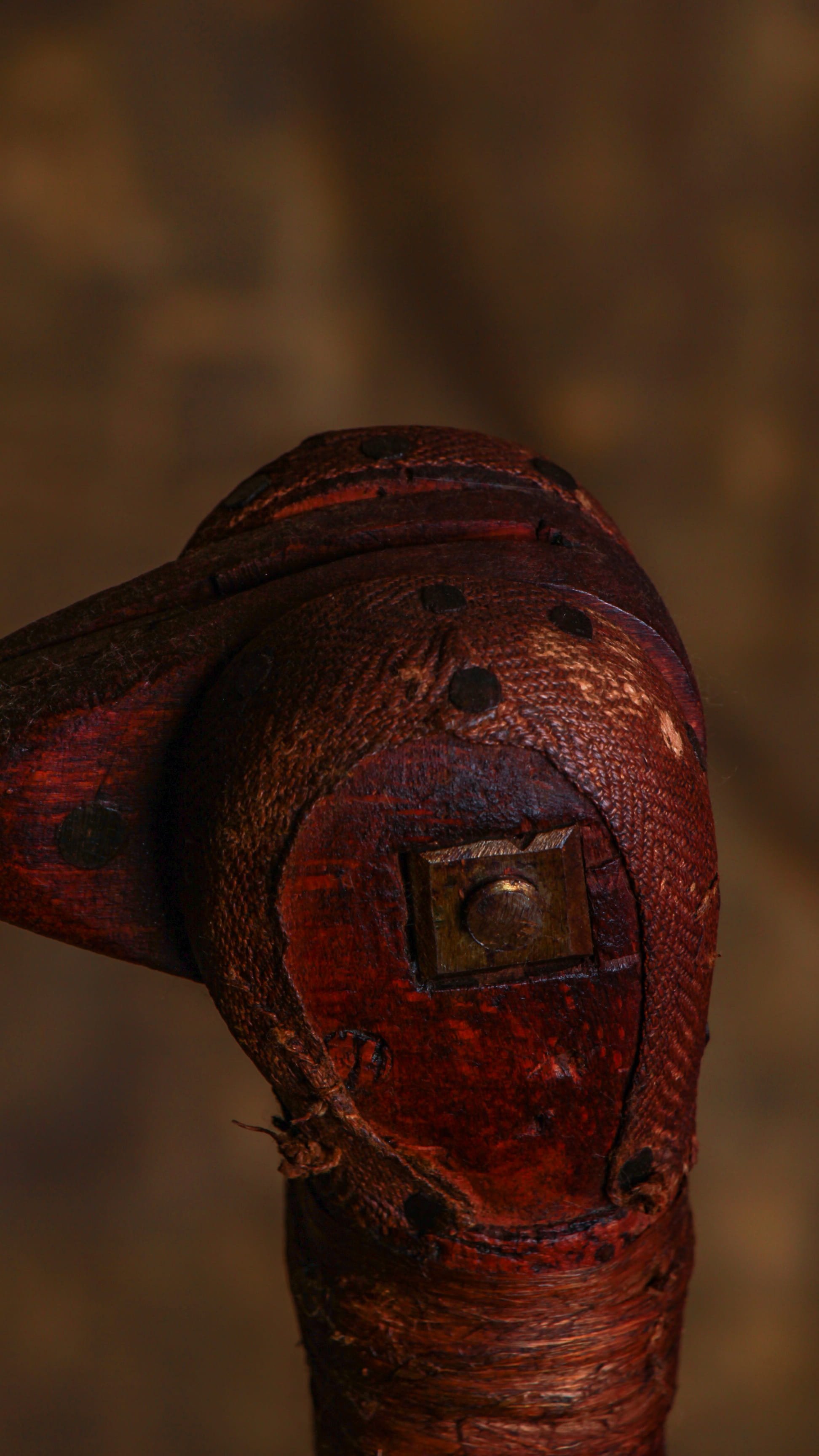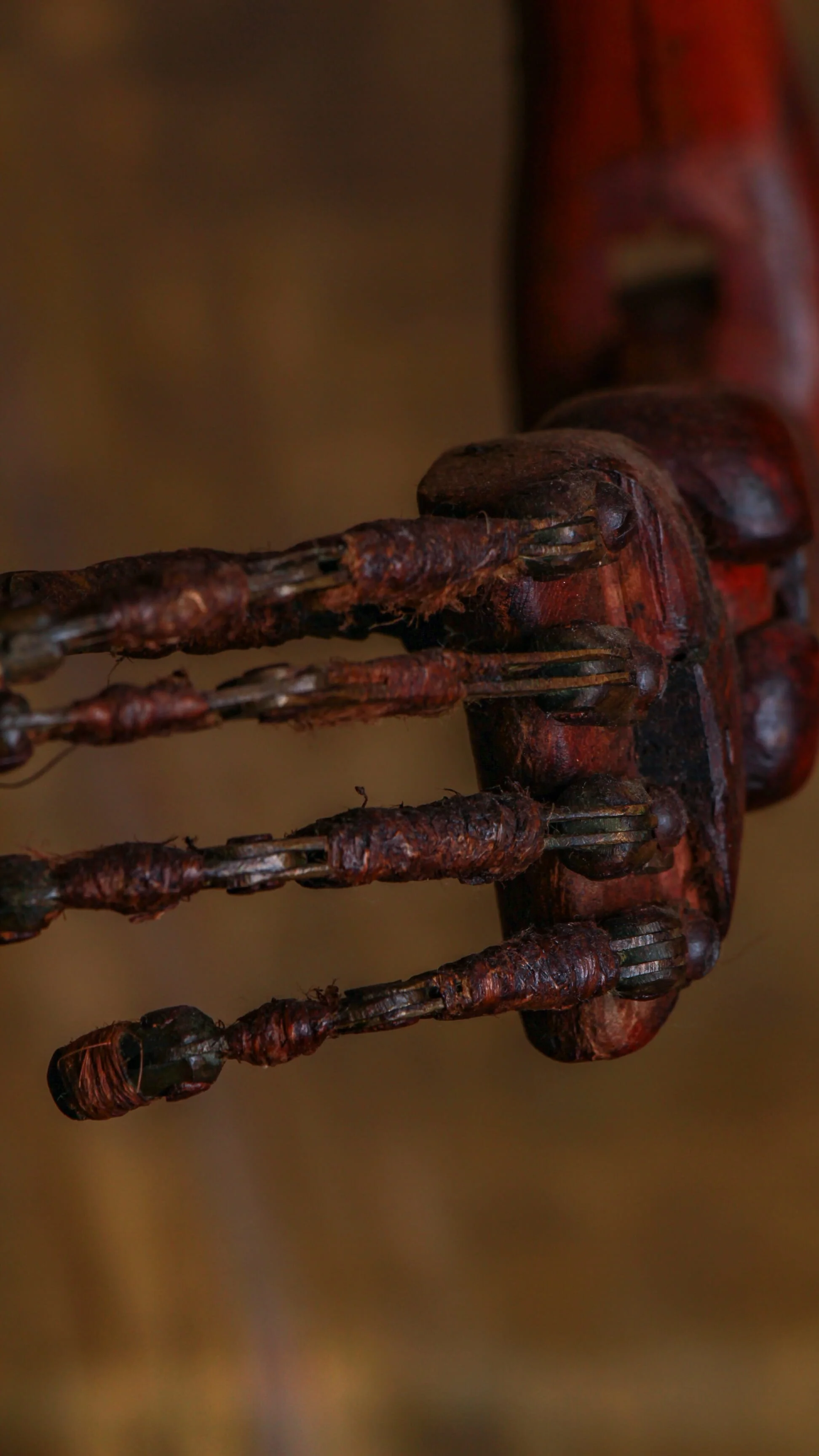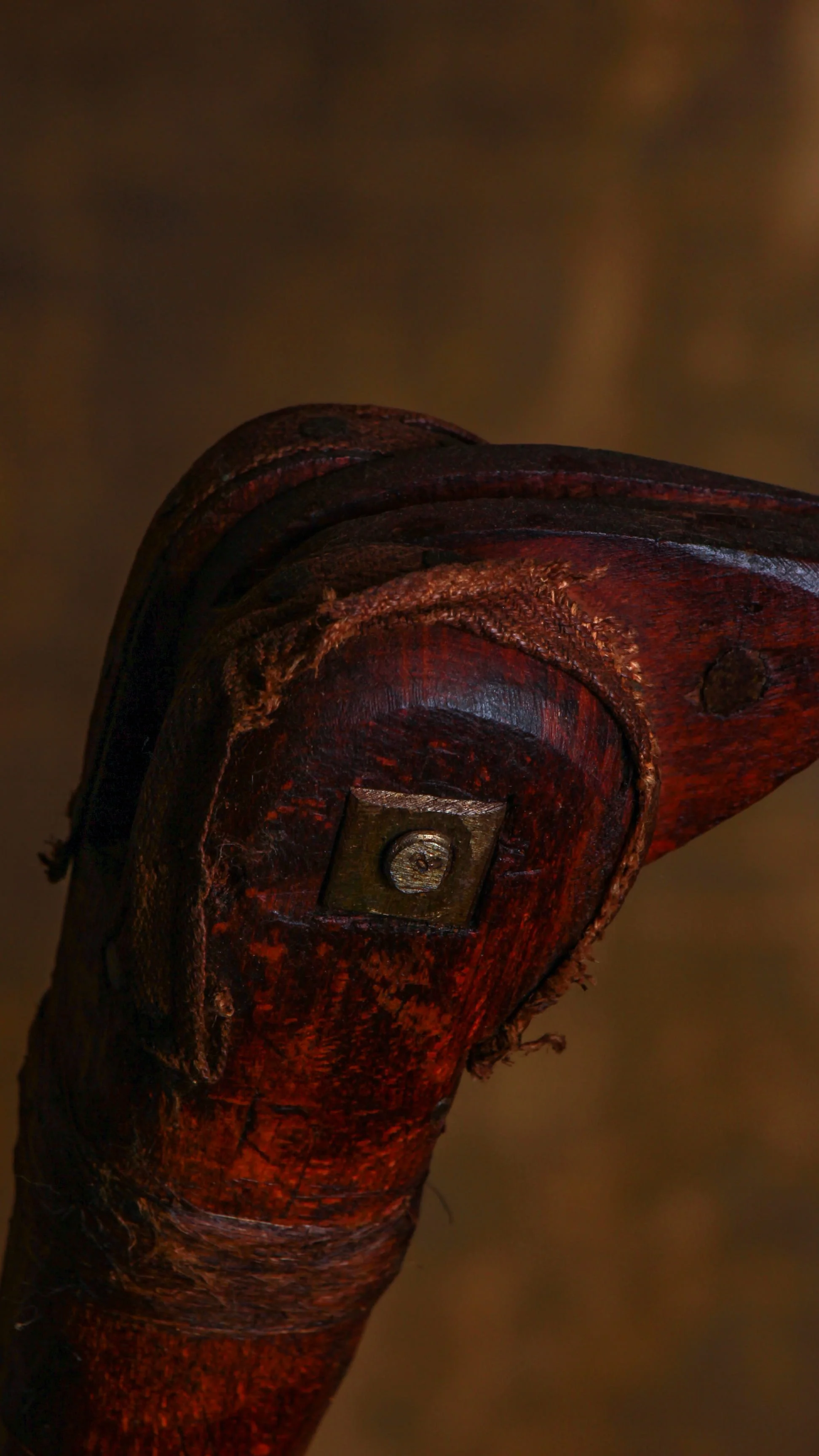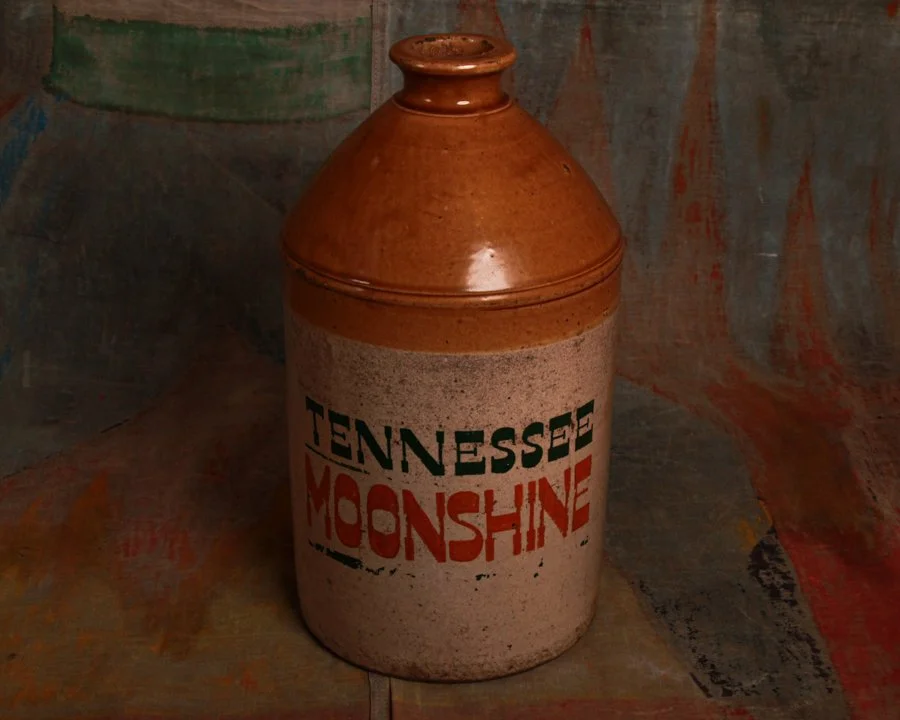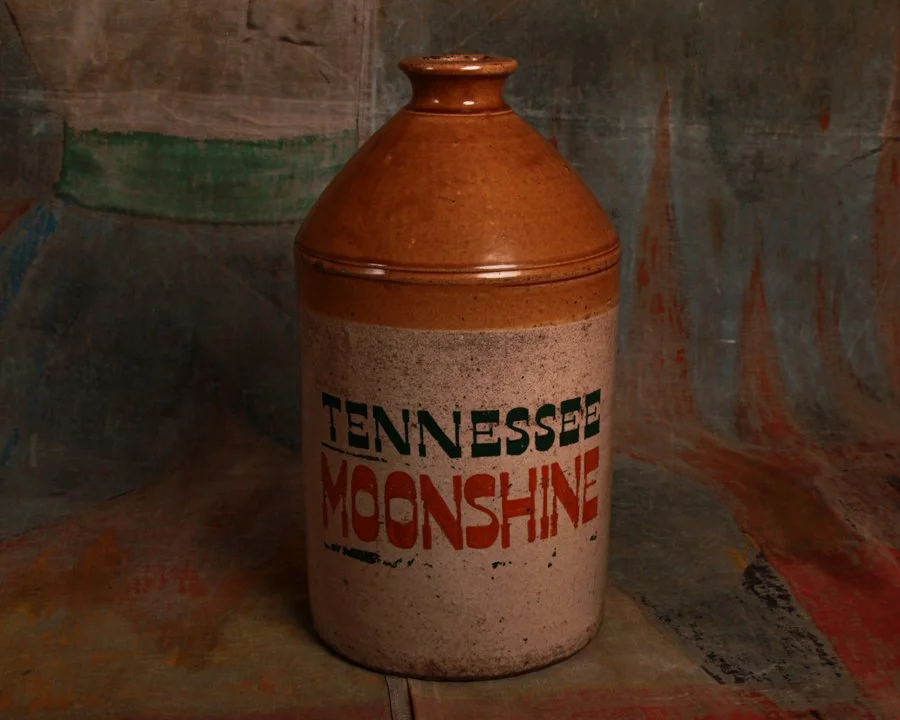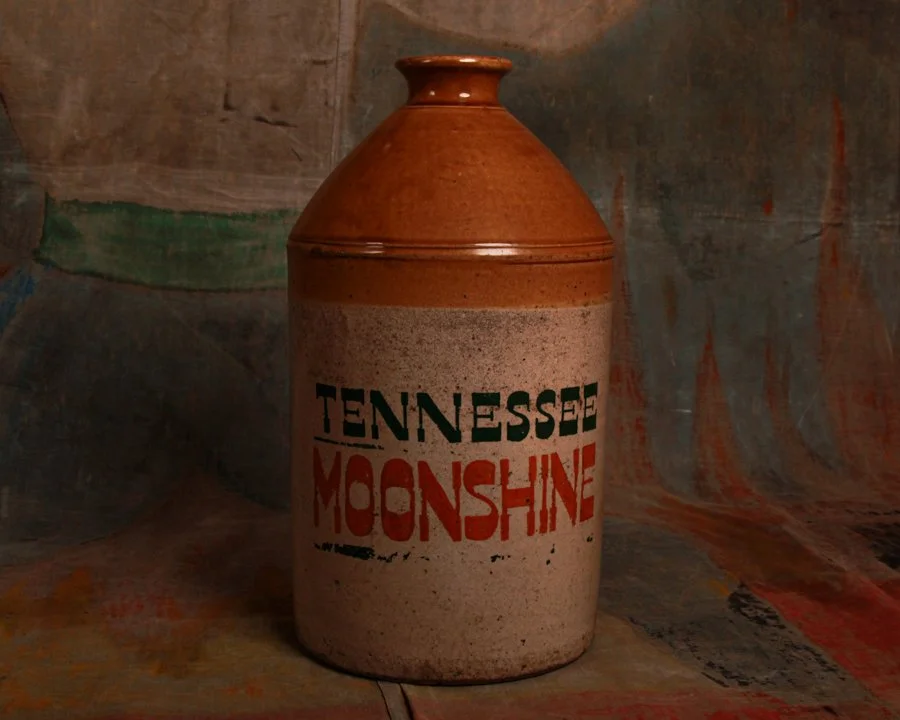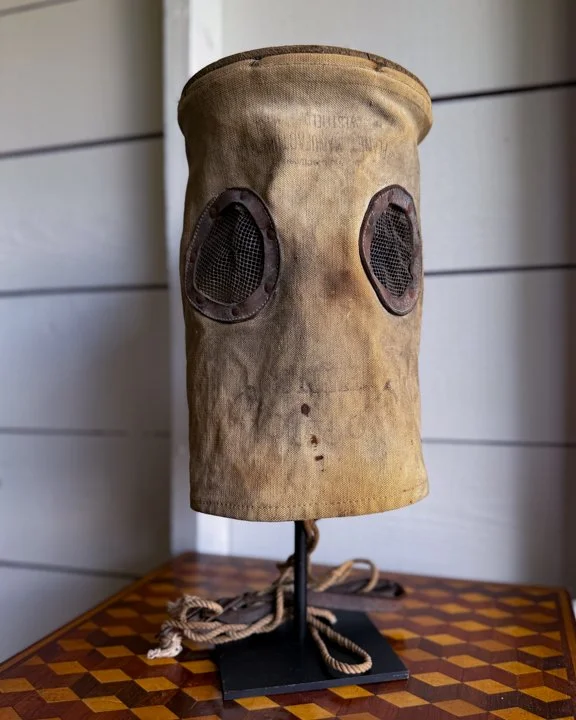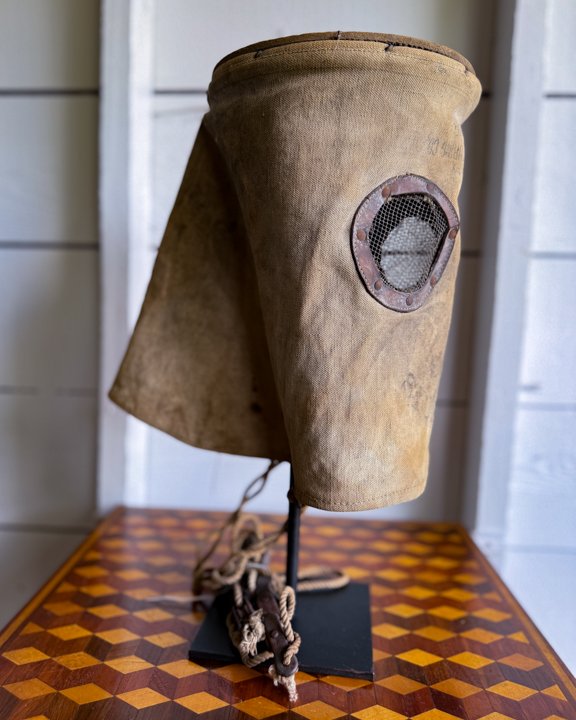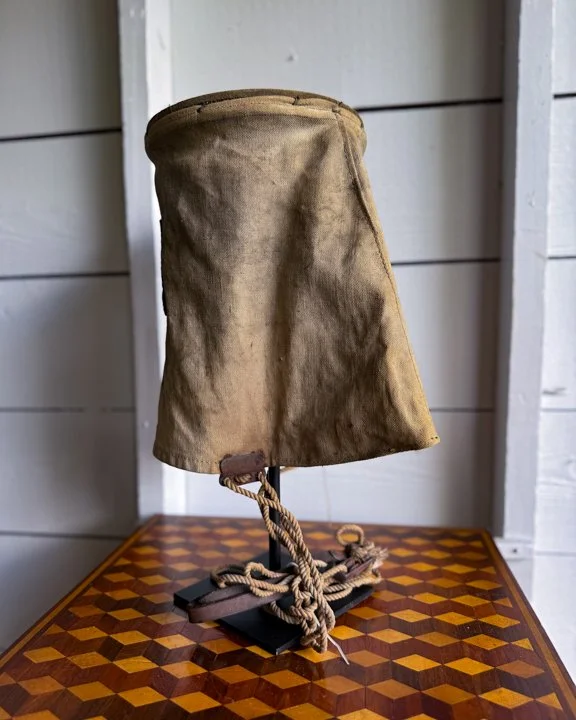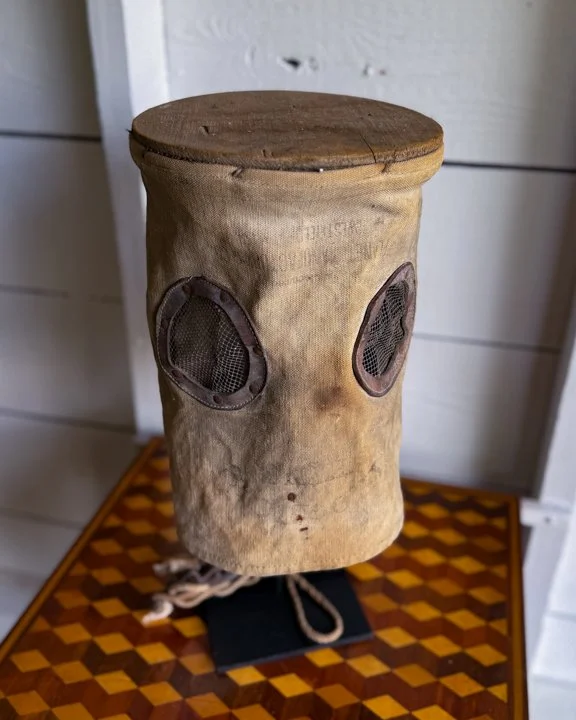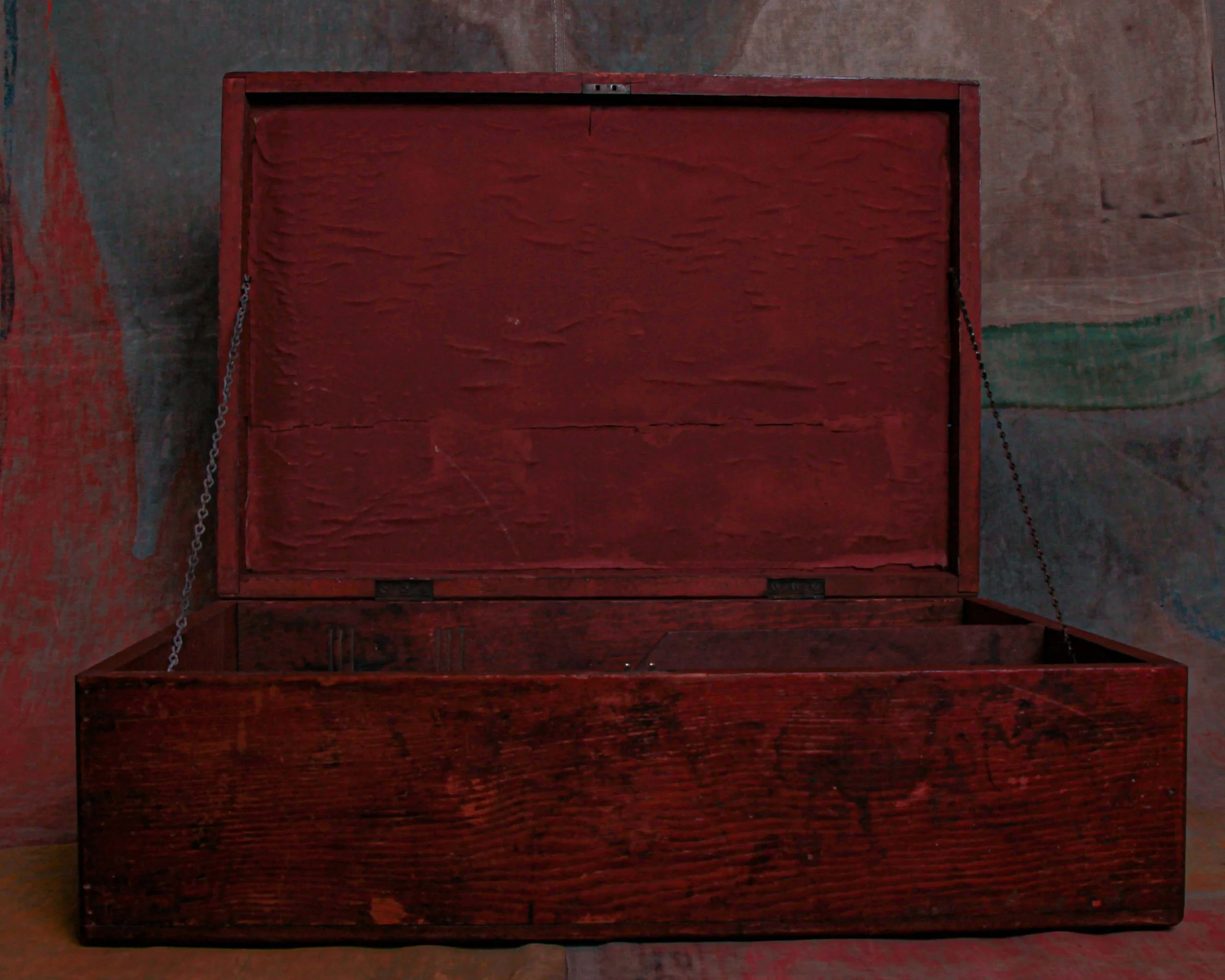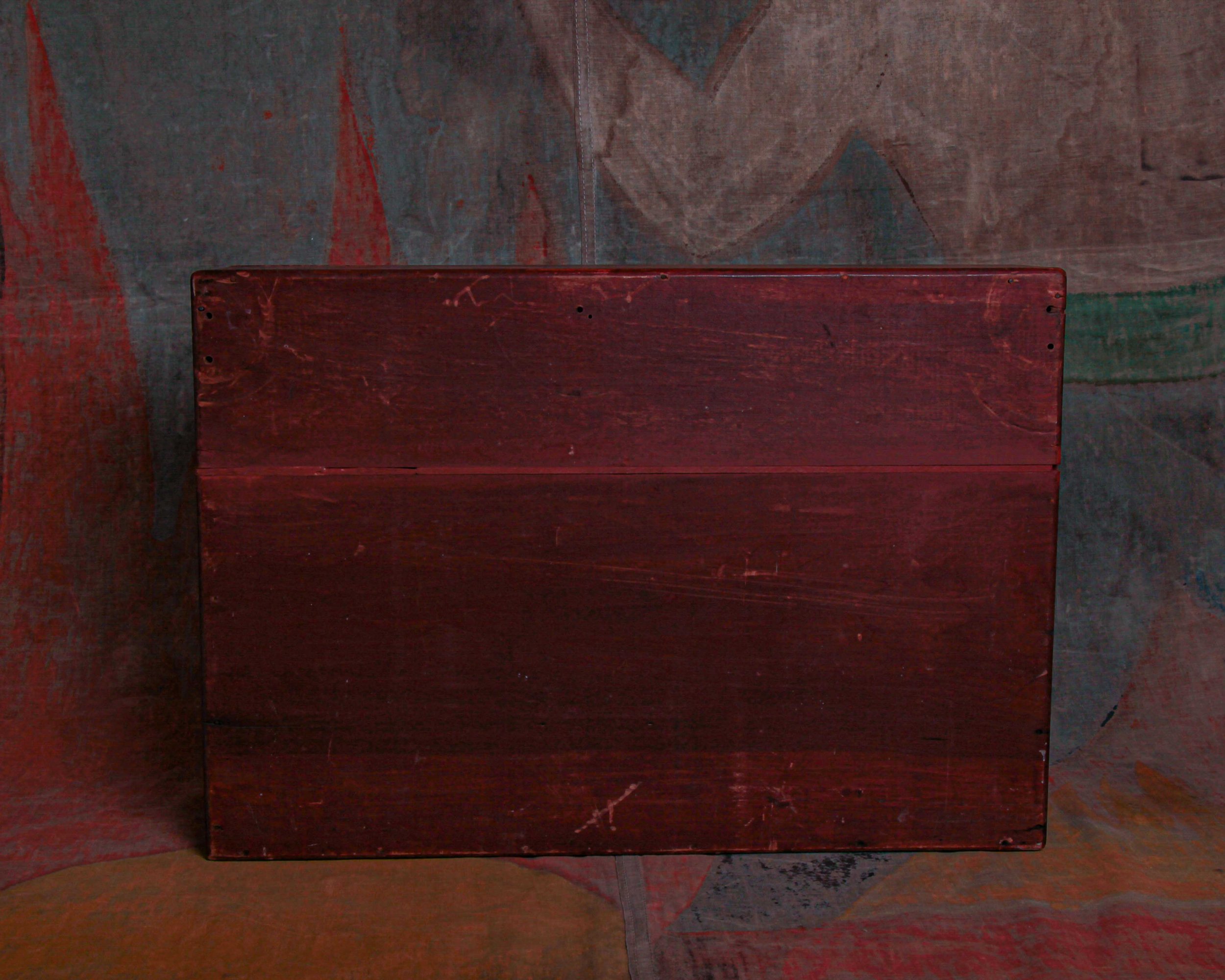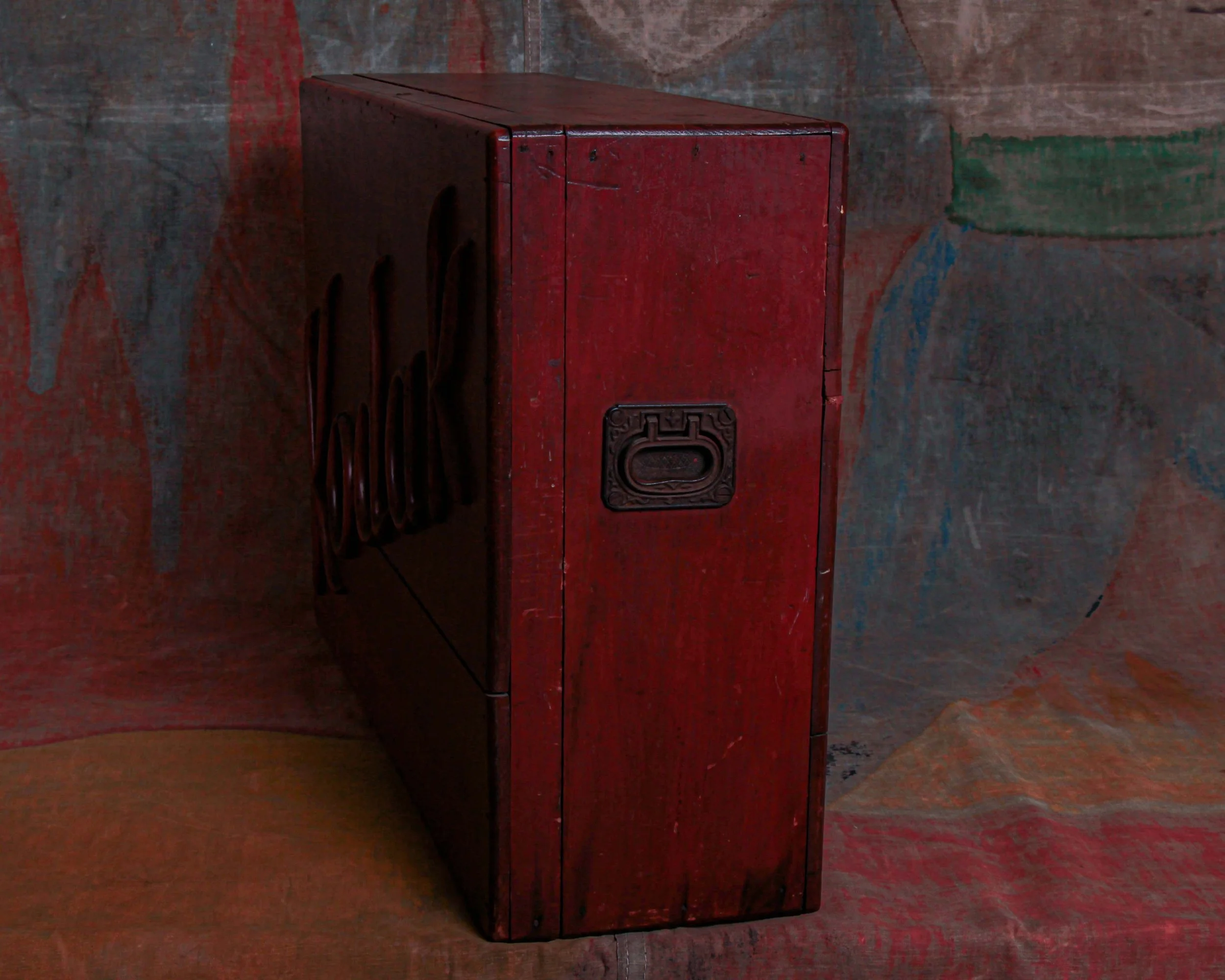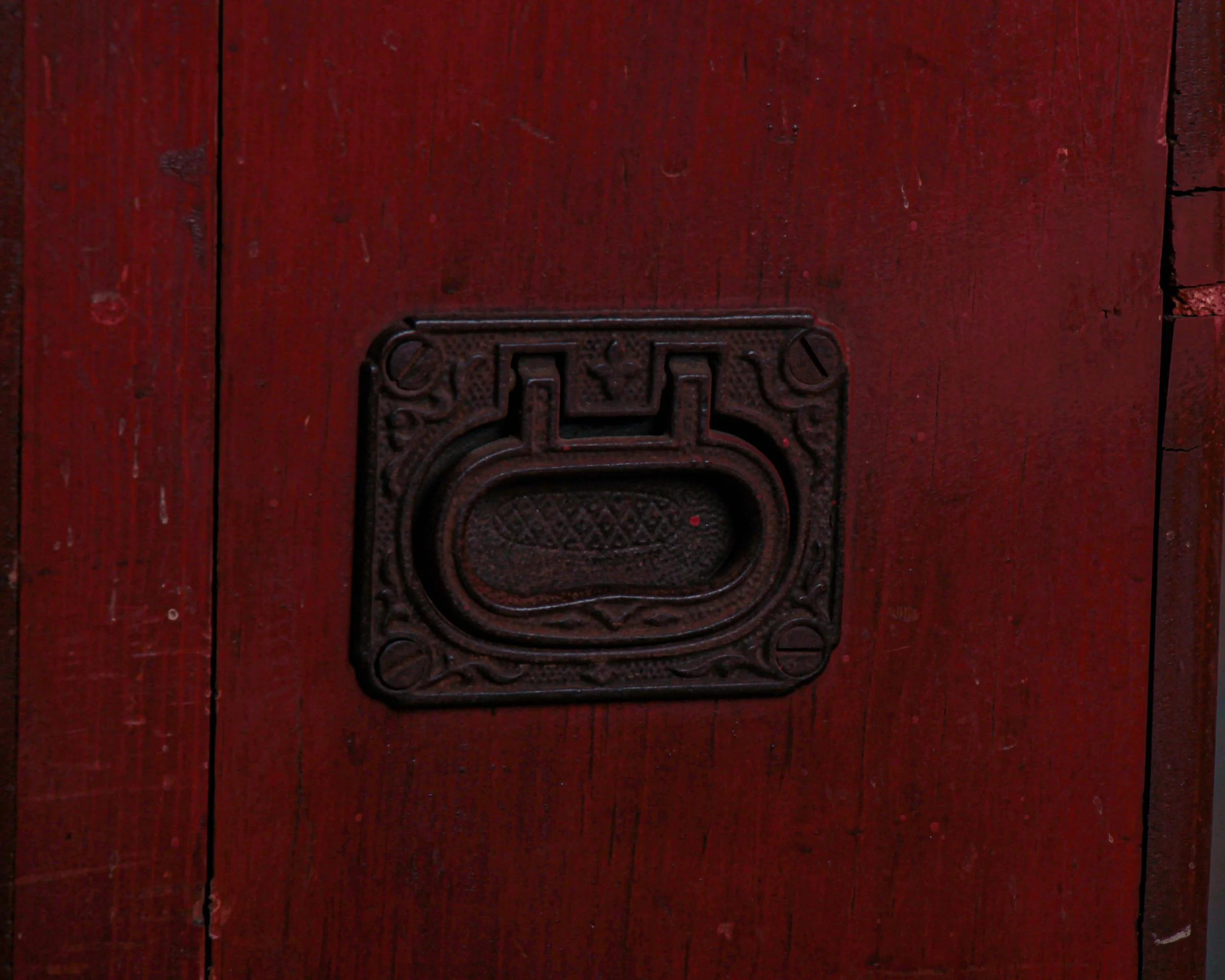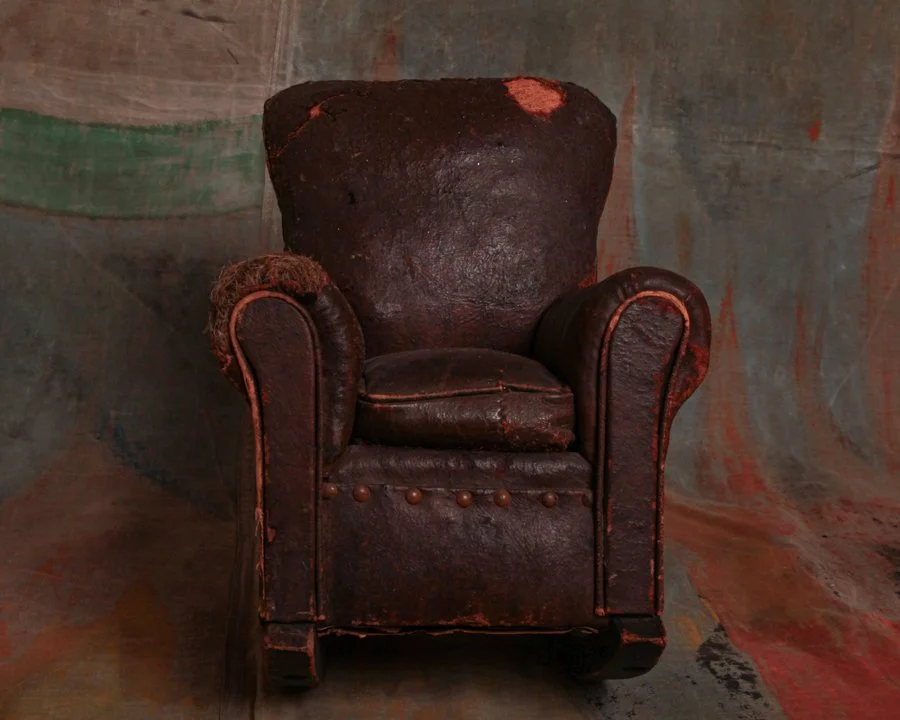
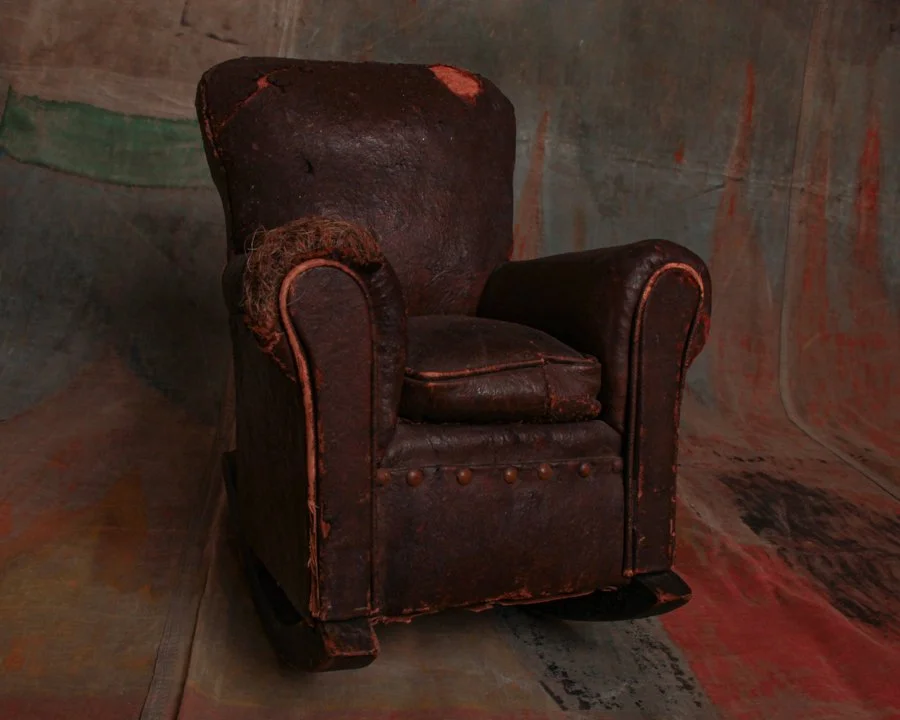
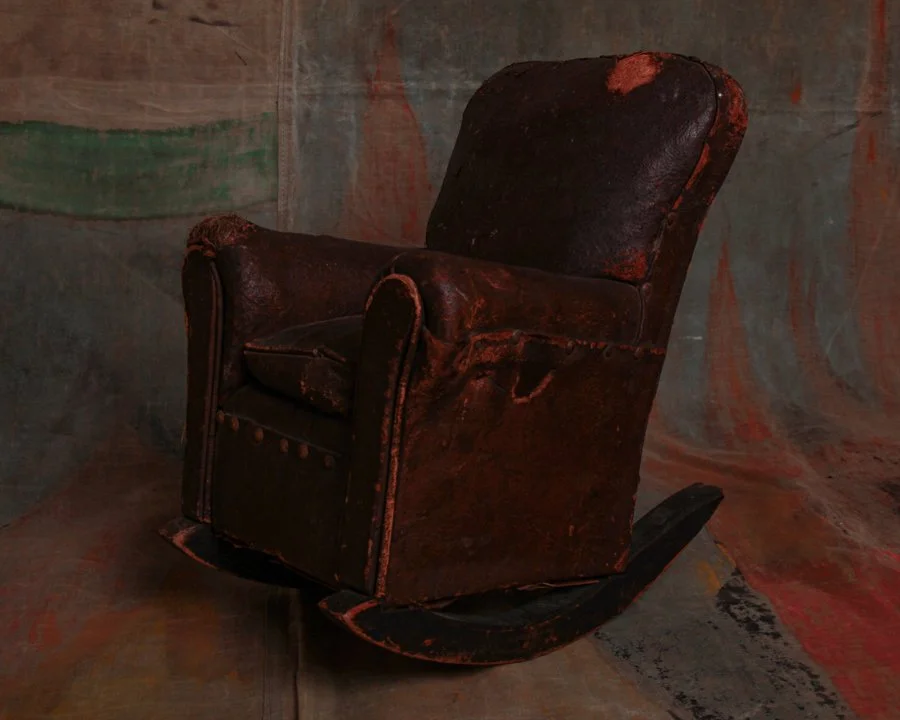
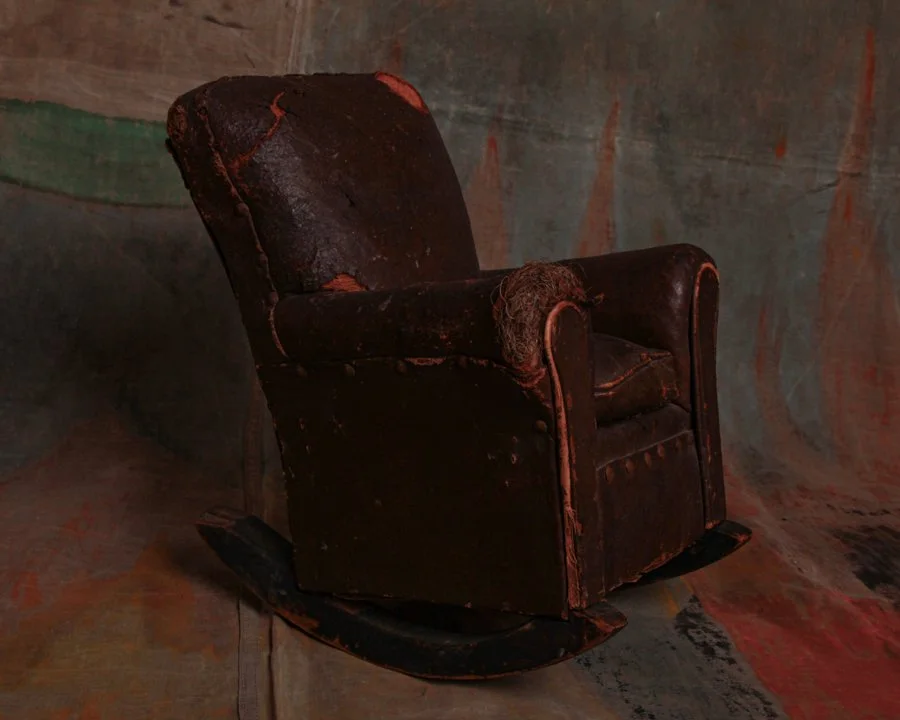
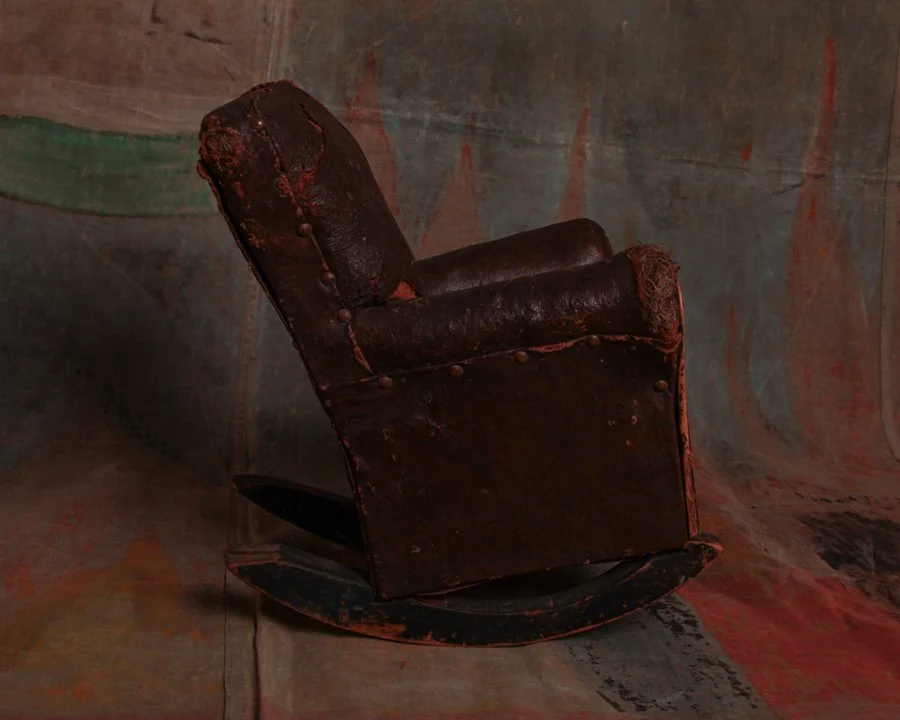
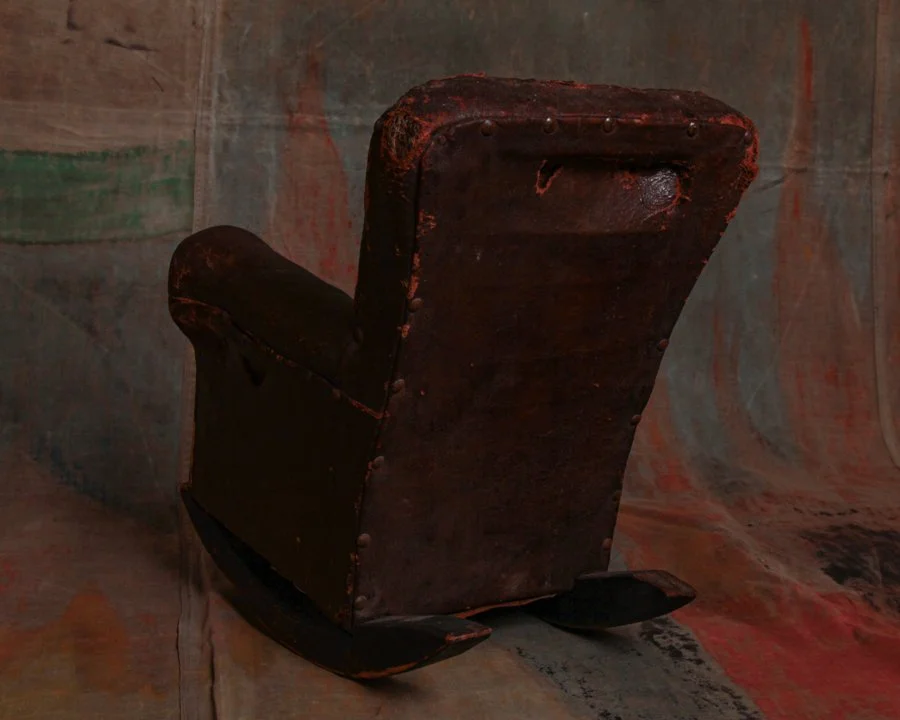
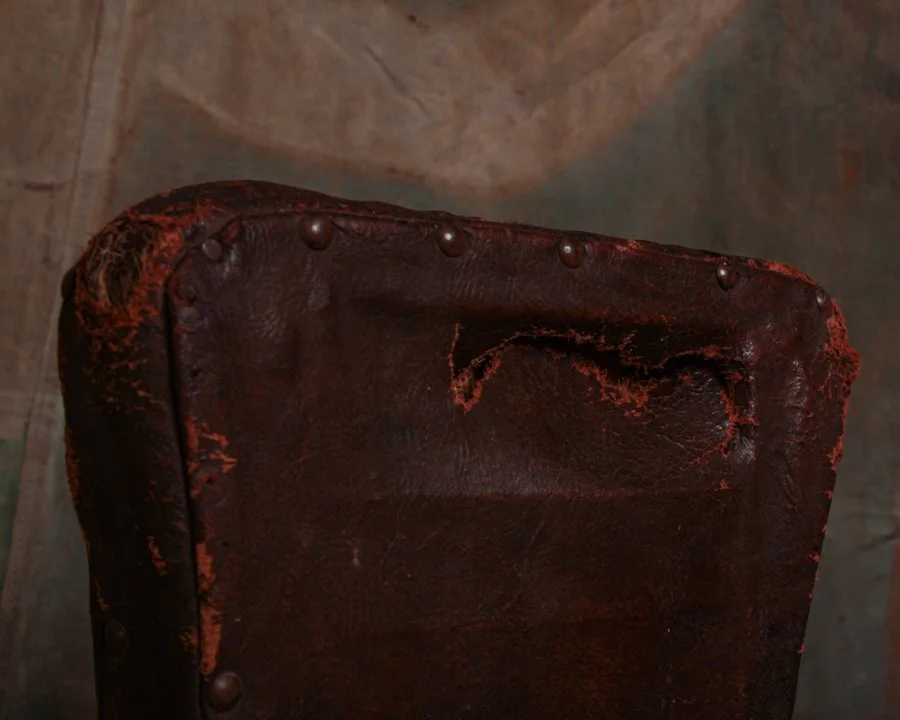
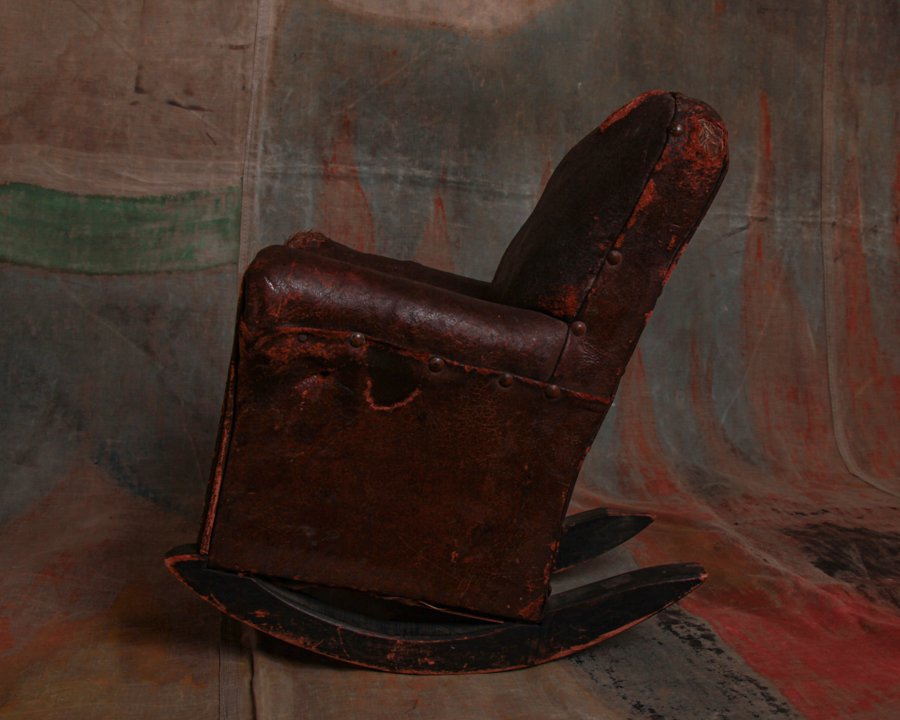
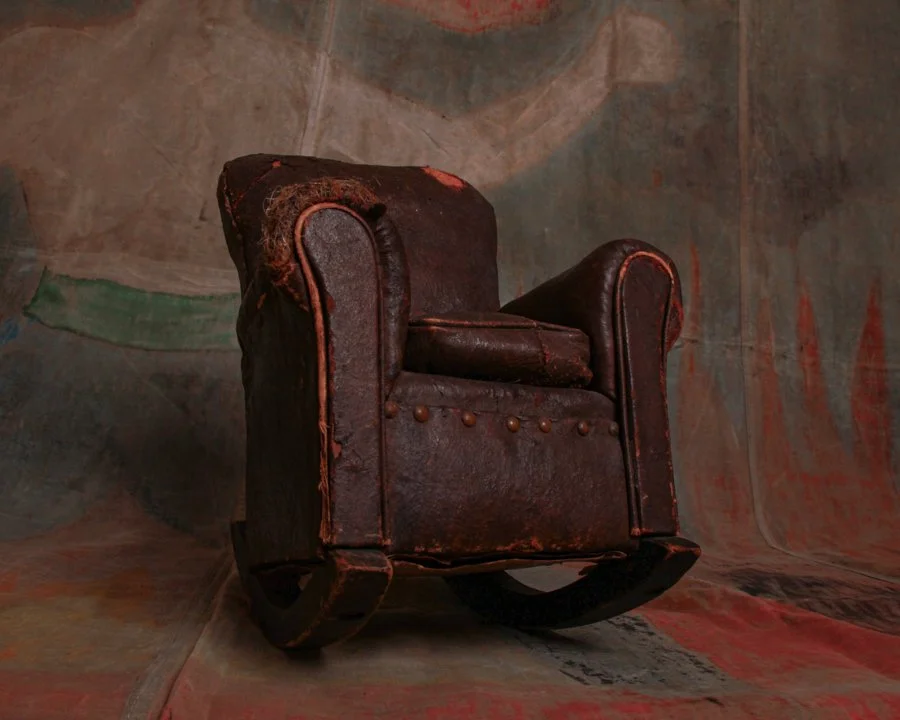
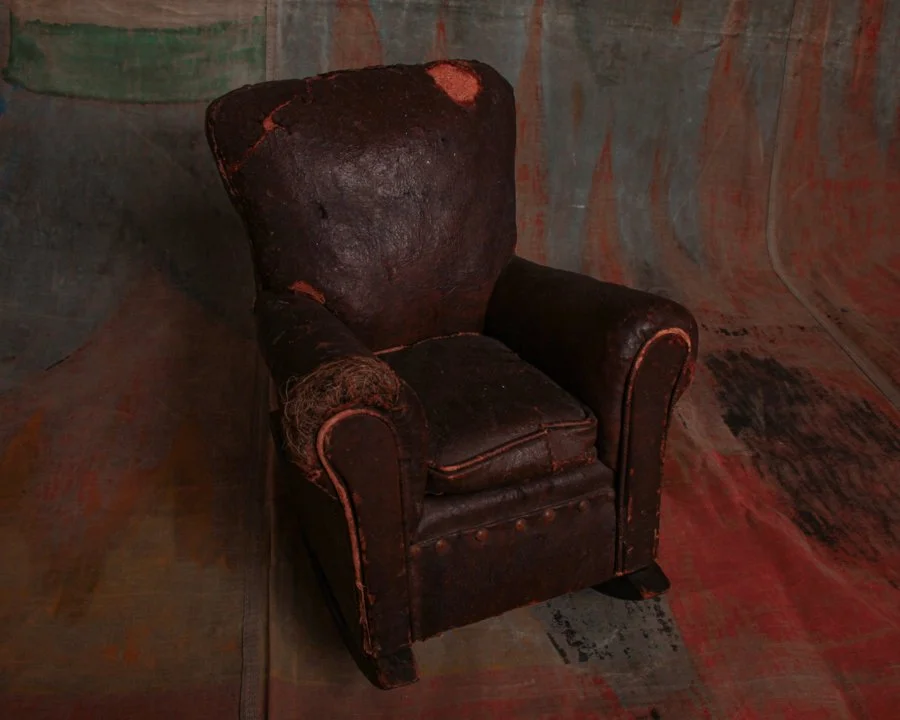
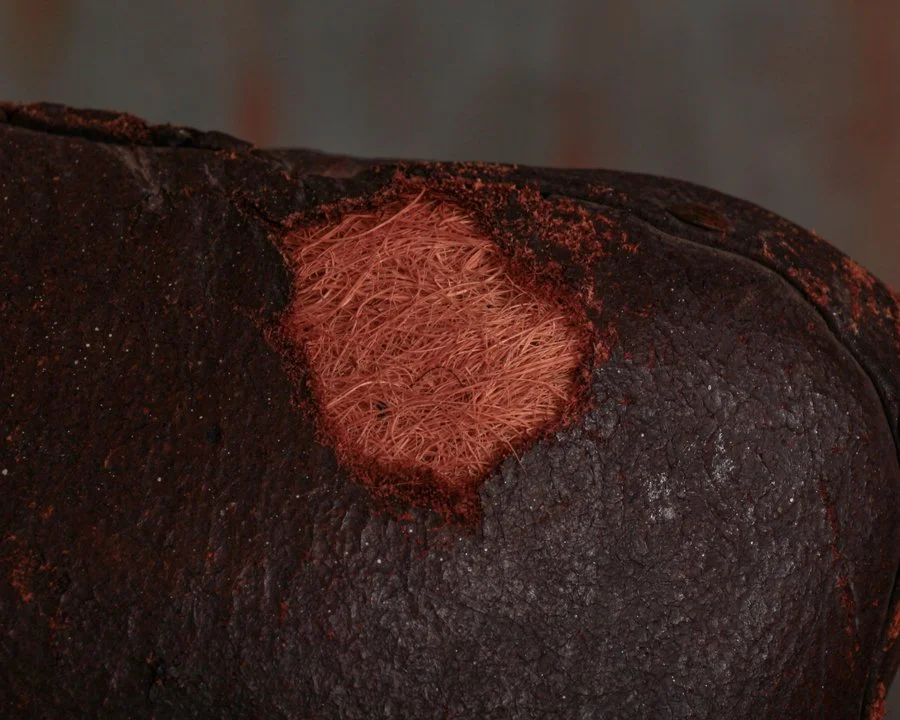
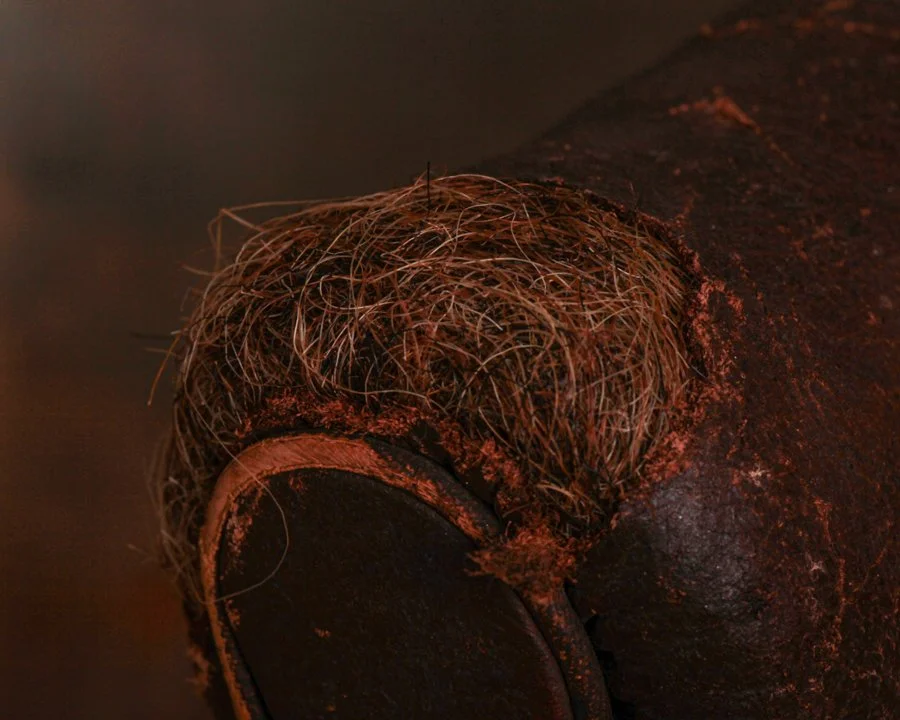
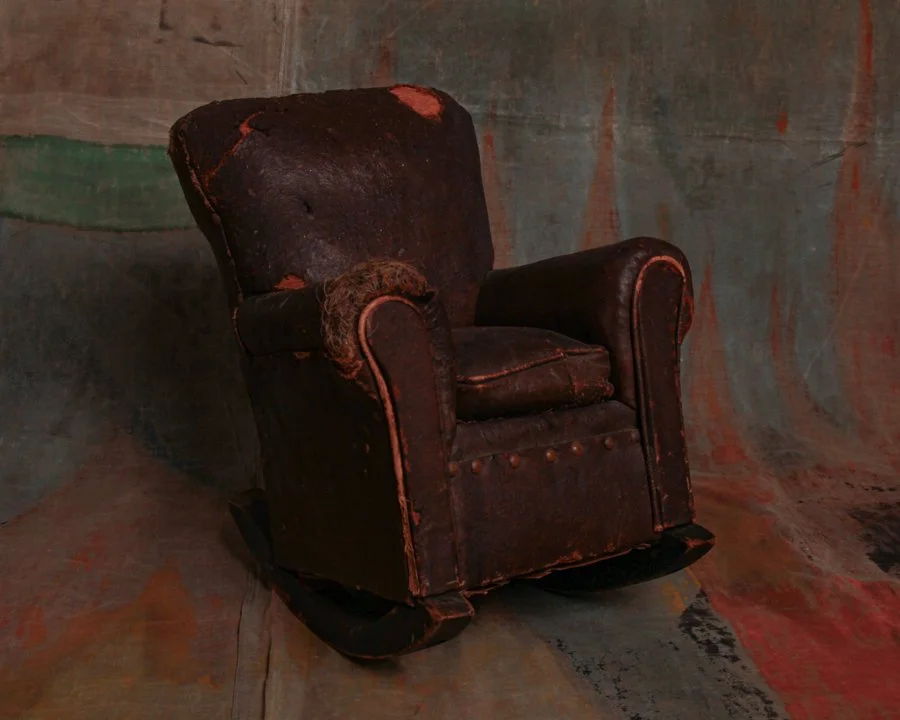
This salesman sample was once a top-tier sales tool, a meticulously crafted miniature meant to convince buyers of the real deal's quality. It's got that classic club chair silhouette—rolled arms, deep seat, and nailhead trim—but time and use have left their mark in the best possible way. The leather has worn down to reveal the raw, fibrous stuffing in places, giving it a rugged, almost sculptural quality. The surface is cracked and aged to perfection, the dark brown leather patina rich with warmth and history.
What once functioned as a persuasive object now reads as something far more tactile and honest—less about selling, more about showing how well something can age when it’s truly been handled and lived with.
Category History
Old salesman samples are small objects with a big job—they were the pitch. Before catalogs and digital images, traveling salesmen carried miniature versions of what they were selling: stoves, tools, furniture, even clothing. Scaled down but carefully made, these samples let buyers see construction, materials, and design without hauling the full-size item around.
They weren’t toys, though they often look like them now. They were working tools, built to demonstrate quality and win orders. Details mattered—hinges that functioned, drawers that opened, stitching that mirrored the real thing.
What makes them compelling today is that balance between precision and charm. They carry the logic of the full-sized object but in a more approachable form. Many show wear from handling—softened edges, small repairs, signs of being passed from hand to hand.
They’re snapshots of commerce in motion, where persuasion relied on something you could hold, inspect, and trust. In many cases, they also doubled as conversation starters, drawing attention in showrooms or on the road. They made abstract ideas tangible, turning a sales pitch into something immediate and memorable, with craftsmanship doing most of the talking.
This salesman sample was once a top-tier sales tool, a meticulously crafted miniature meant to convince buyers of the real deal's quality. It's got that classic club chair silhouette—rolled arms, deep seat, and nailhead trim—but time and use have left their mark in the best possible way. The leather has worn down to reveal the raw, fibrous stuffing in places, giving it a rugged, almost sculptural quality. The surface is cracked and aged to perfection, the dark brown leather patina rich with warmth and history.
What once functioned as a persuasive object now reads as something far more tactile and honest—less about selling, more about showing how well something can age when it’s truly been handled and lived with.
Category History
Old salesman samples are small objects with a big job—they were the pitch. Before catalogs and digital images, traveling salesmen carried miniature versions of what they were selling: stoves, tools, furniture, even clothing. Scaled down but carefully made, these samples let buyers see construction, materials, and design without hauling the full-size item around.
They weren’t toys, though they often look like them now. They were working tools, built to demonstrate quality and win orders. Details mattered—hinges that functioned, drawers that opened, stitching that mirrored the real thing.
What makes them compelling today is that balance between precision and charm. They carry the logic of the full-sized object but in a more approachable form. Many show wear from handling—softened edges, small repairs, signs of being passed from hand to hand.
They’re snapshots of commerce in motion, where persuasion relied on something you could hold, inspect, and trust. In many cases, they also doubled as conversation starters, drawing attention in showrooms or on the road. They made abstract ideas tangible, turning a sales pitch into something immediate and memorable, with craftsmanship doing most of the talking.