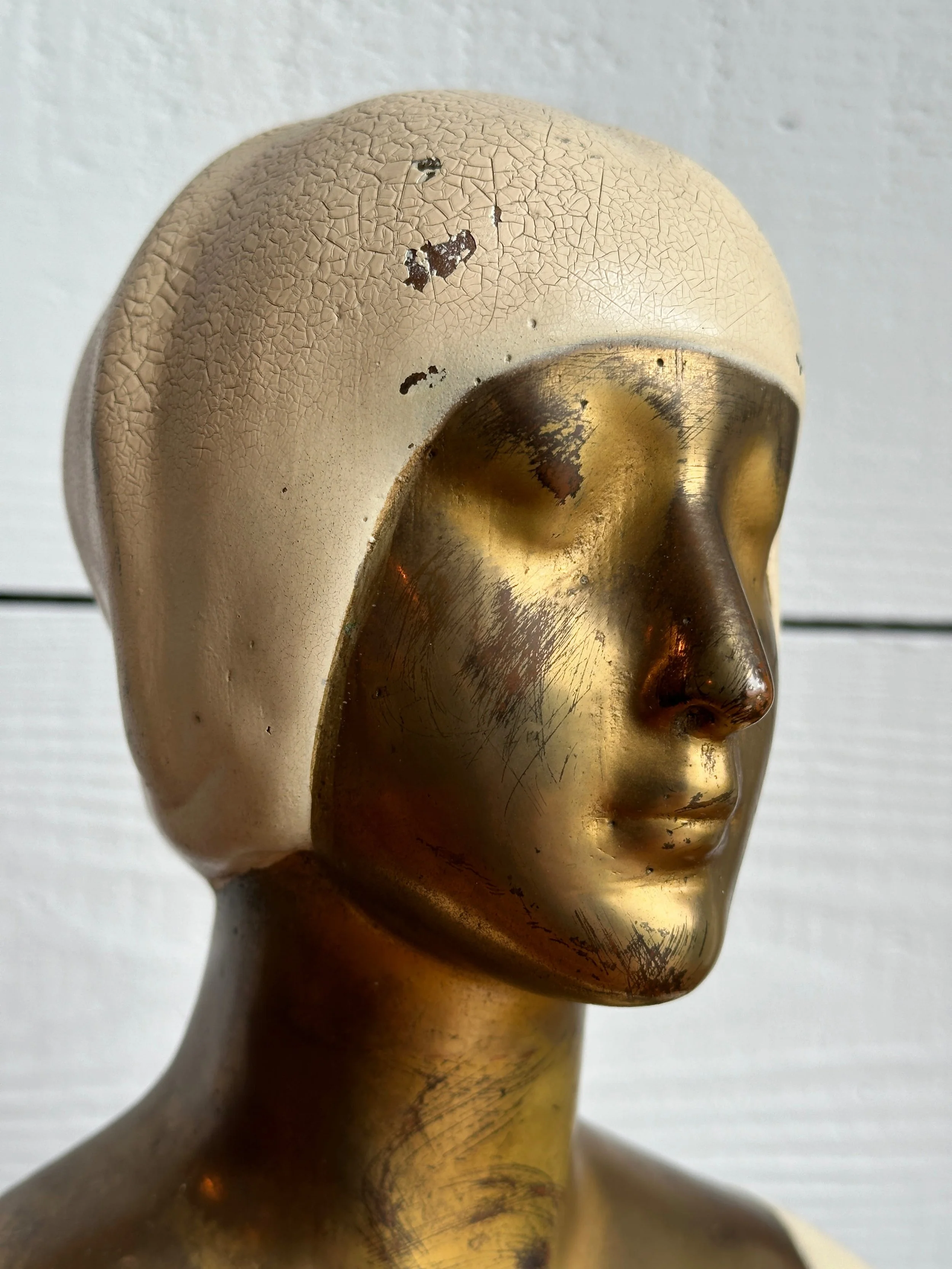
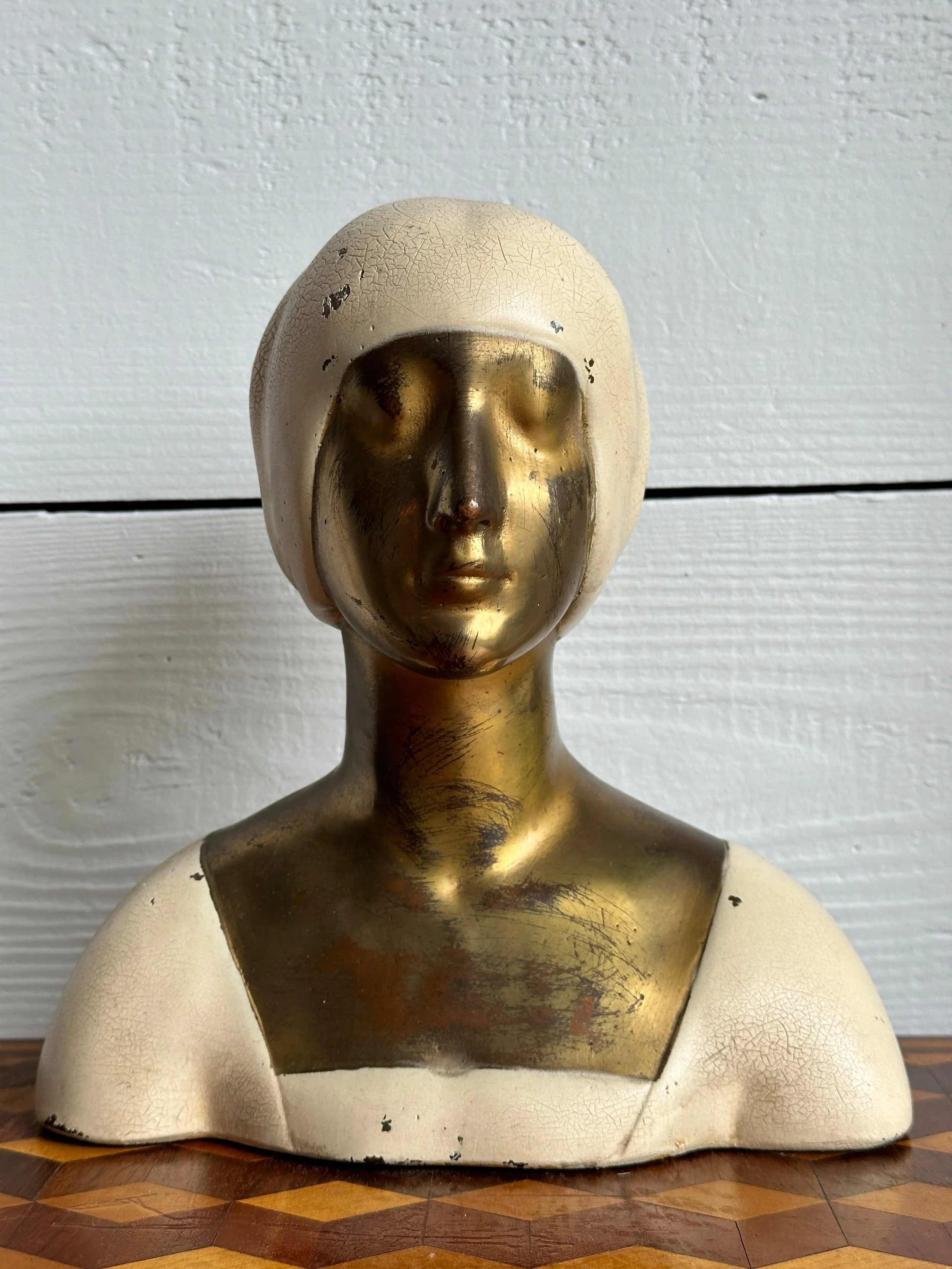
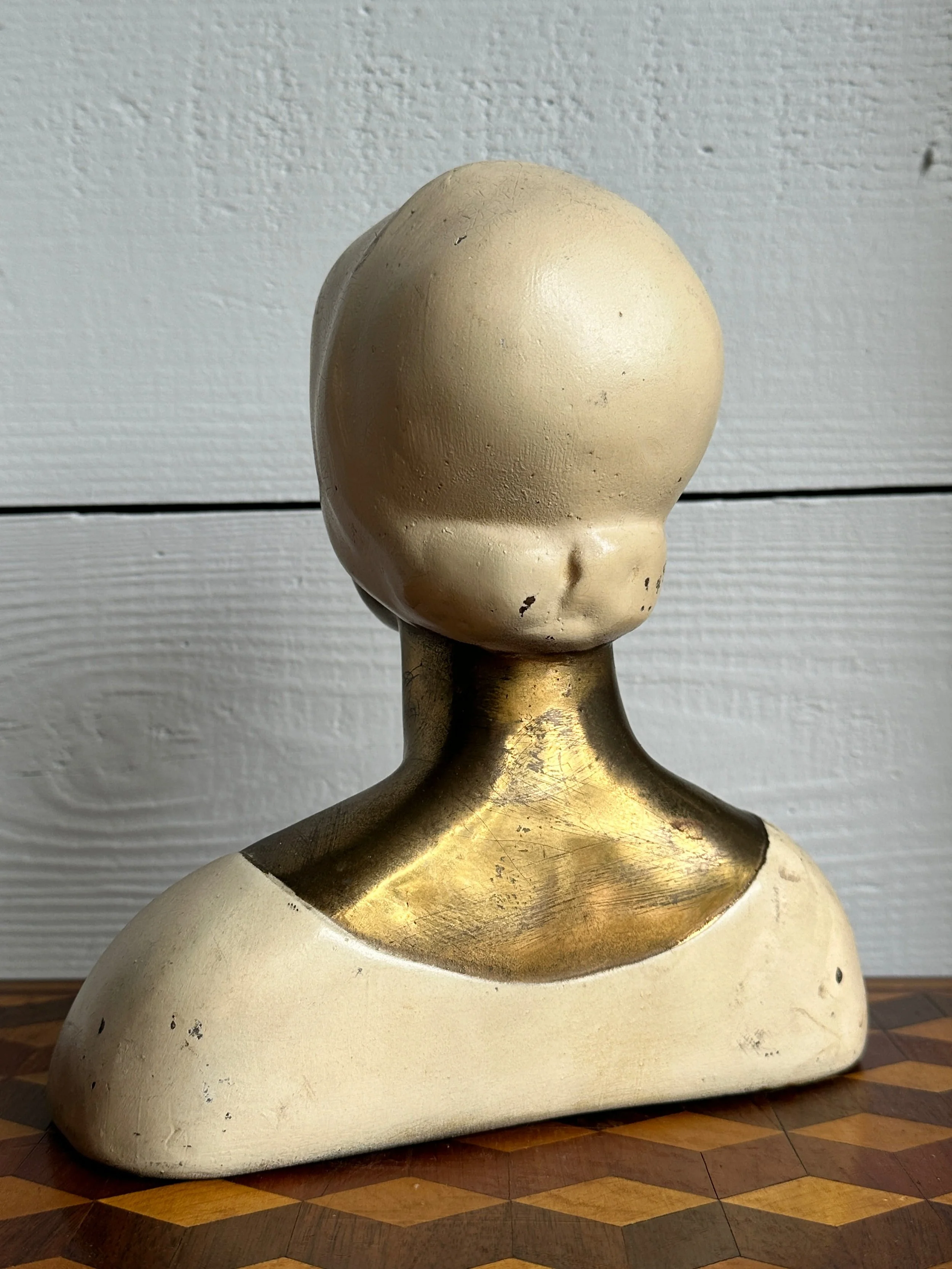
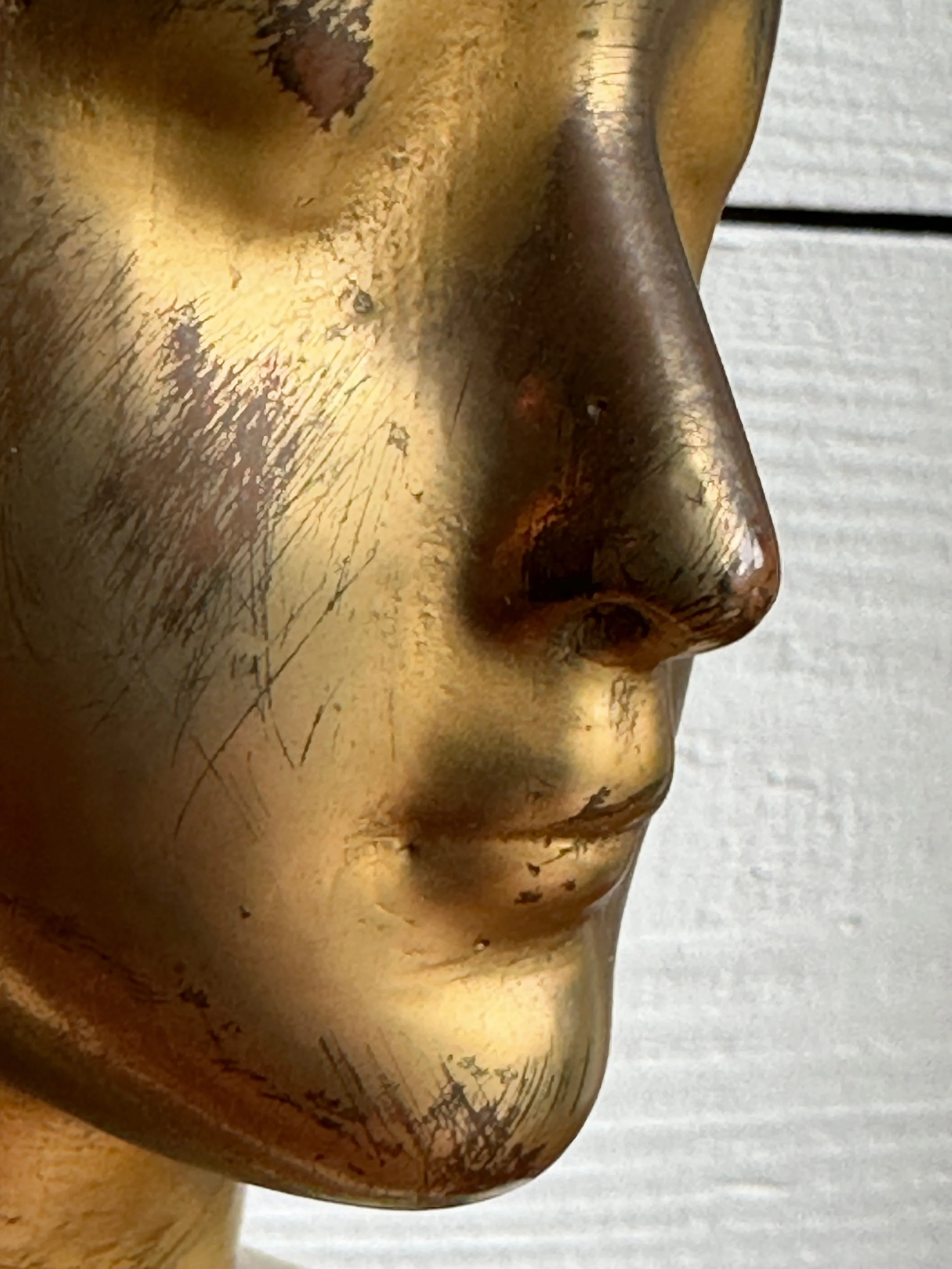
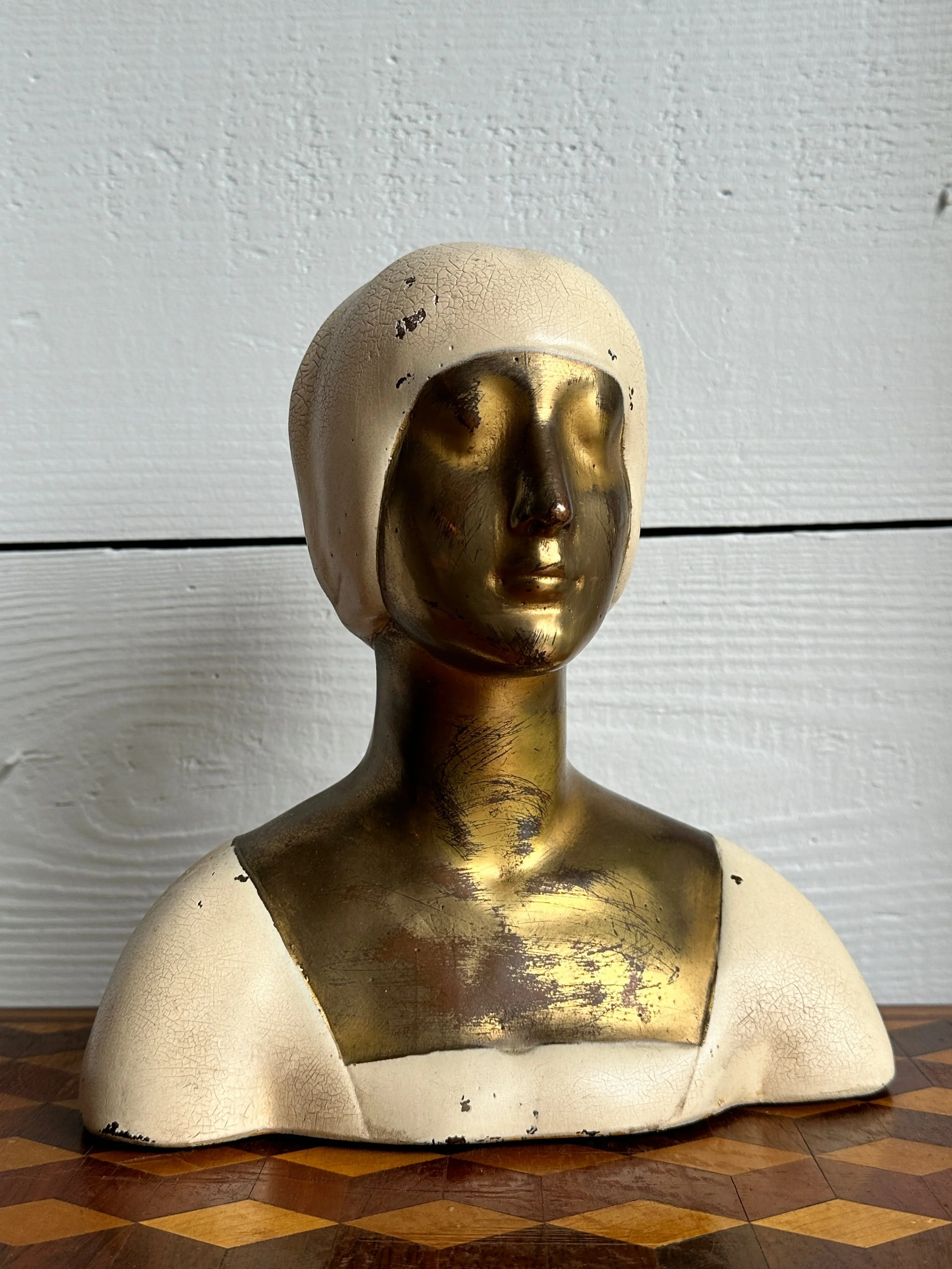
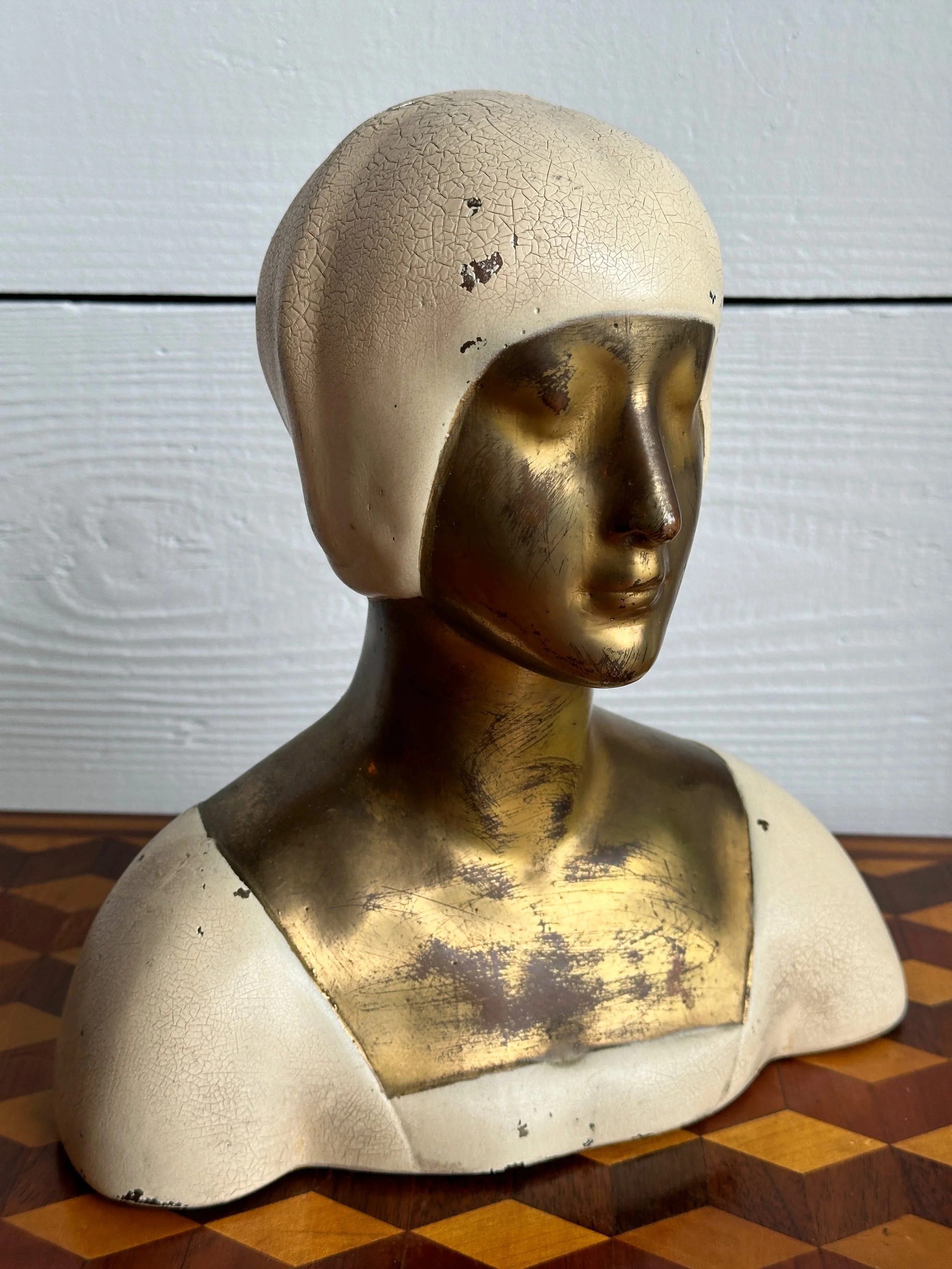
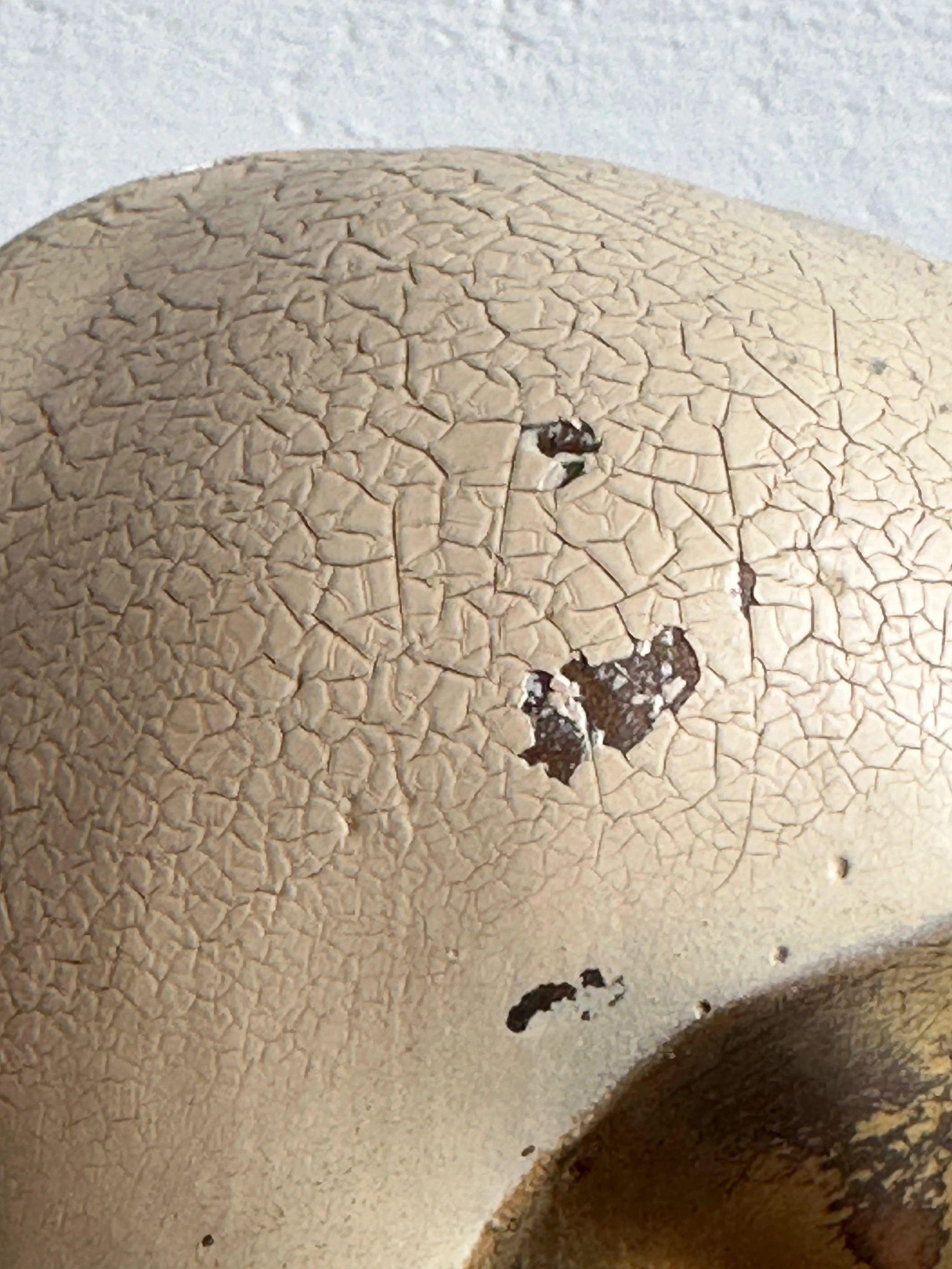
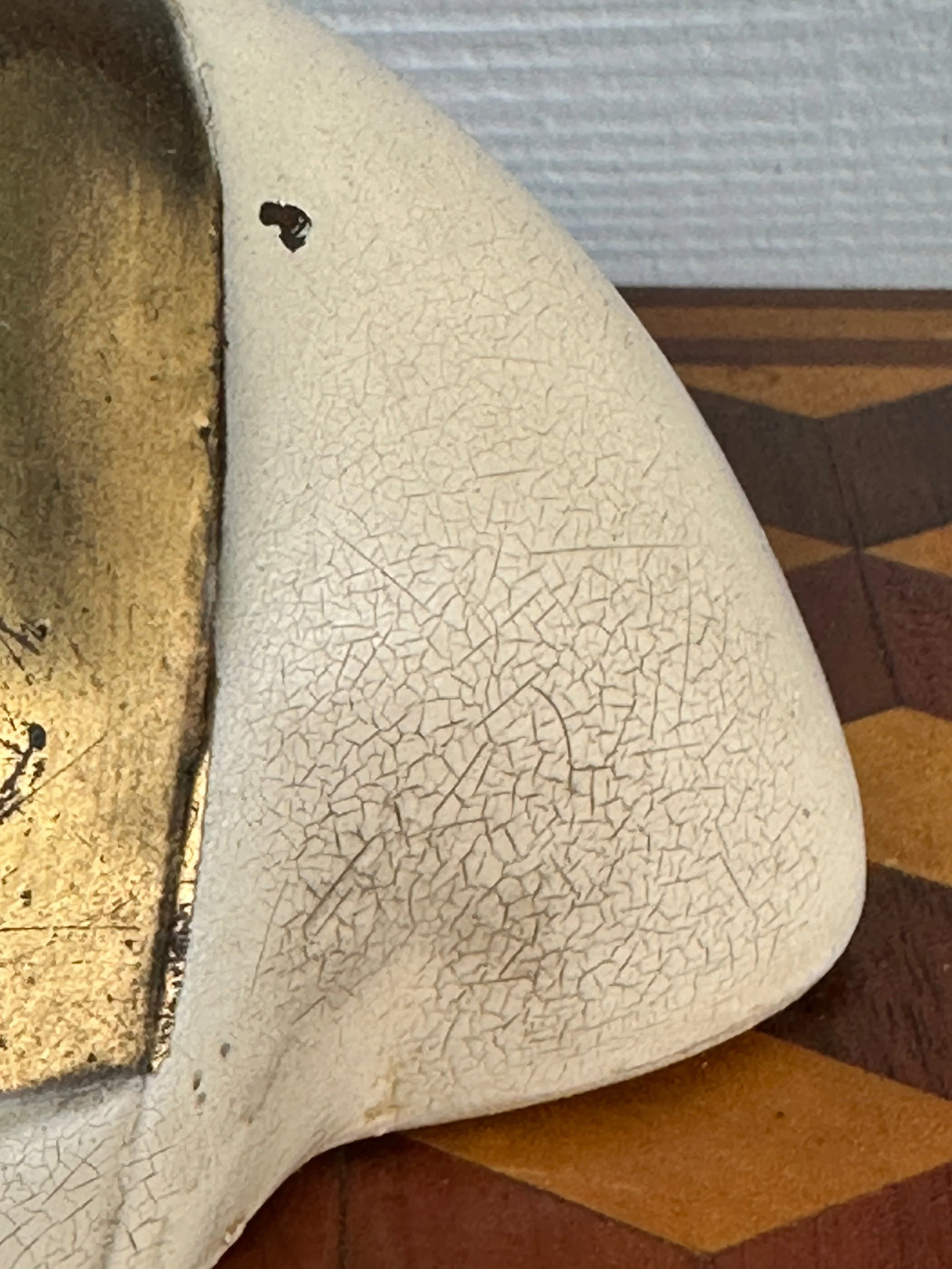
Here is an Art Deco polychromed bronze bust, cast in a striking gold and aged ivory finish. The surface is wonderfully worn, with that all-natural craquelure and patina that only time can pull off. Her stylized bob and minimalist neckline are pure 1930s glamour (less flapper, more streamlined modernism). The form is crisp but softened by decades of gentle aging, with a few scattered chips and scratches that just add to her mystery.
Measures about 9 inches tall, 9 inches wide, and 5 inches deep.
Category History
1930s Art Deco polychromed bronzes are where precision casting meets a taste for drama. These pieces grew out of the broader Art Deco movement—streamlined forms, clean geometry, and a fascination with speed, modernity, and the human figure in motion. Bronze gave sculptors a crisp, durable medium to work with, but the addition of polychrome—carefully applied color—brought warmth and personality back into the metal.
Figures are often elongated, poised, and confident. Dancers mid-step, athletes in motion, stylized animals caught in a moment of tension or grace. The color isn’t heavy-handed; it’s selective. Skin tones, garments, or accents are picked out with subtle painted finishes or enamel-like applications, often paired with contrasting materials like marble or onyx bases.
What’s interesting is the balance. These works feel modern, even now, but they’re rooted in craftsmanship. The casting is sharp, the surfaces are controlled, and the color is applied with intention rather than excess.
Many were produced in France and Austria, where small foundries and ateliers collaborated with designers to create pieces that could live comfortably in both private interiors and public spaces.
Today, they read as confident objects. Not overly ornate, not minimal either—just composed. They carry that 1930s sense of optimism, where design leaned forward, but still kept one hand on tradition.
Here is an Art Deco polychromed bronze bust, cast in a striking gold and aged ivory finish. The surface is wonderfully worn, with that all-natural craquelure and patina that only time can pull off. Her stylized bob and minimalist neckline are pure 1930s glamour (less flapper, more streamlined modernism). The form is crisp but softened by decades of gentle aging, with a few scattered chips and scratches that just add to her mystery.
Measures about 9 inches tall, 9 inches wide, and 5 inches deep.
Category History
1930s Art Deco polychromed bronzes are where precision casting meets a taste for drama. These pieces grew out of the broader Art Deco movement—streamlined forms, clean geometry, and a fascination with speed, modernity, and the human figure in motion. Bronze gave sculptors a crisp, durable medium to work with, but the addition of polychrome—carefully applied color—brought warmth and personality back into the metal.
Figures are often elongated, poised, and confident. Dancers mid-step, athletes in motion, stylized animals caught in a moment of tension or grace. The color isn’t heavy-handed; it’s selective. Skin tones, garments, or accents are picked out with subtle painted finishes or enamel-like applications, often paired with contrasting materials like marble or onyx bases.
What’s interesting is the balance. These works feel modern, even now, but they’re rooted in craftsmanship. The casting is sharp, the surfaces are controlled, and the color is applied with intention rather than excess.
Many were produced in France and Austria, where small foundries and ateliers collaborated with designers to create pieces that could live comfortably in both private interiors and public spaces.
Today, they read as confident objects. Not overly ornate, not minimal either—just composed. They carry that 1930s sense of optimism, where design leaned forward, but still kept one hand on tradition.