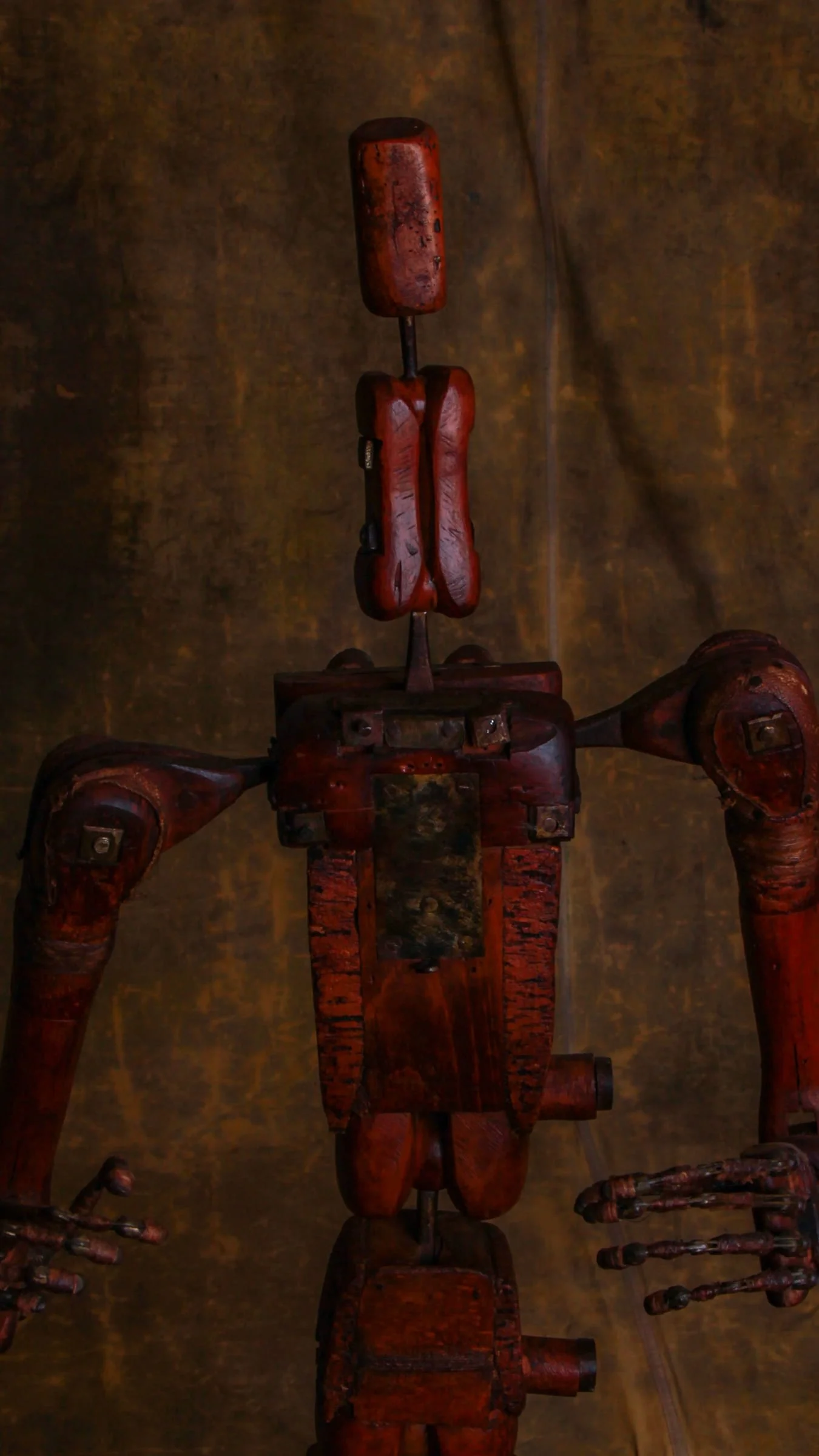
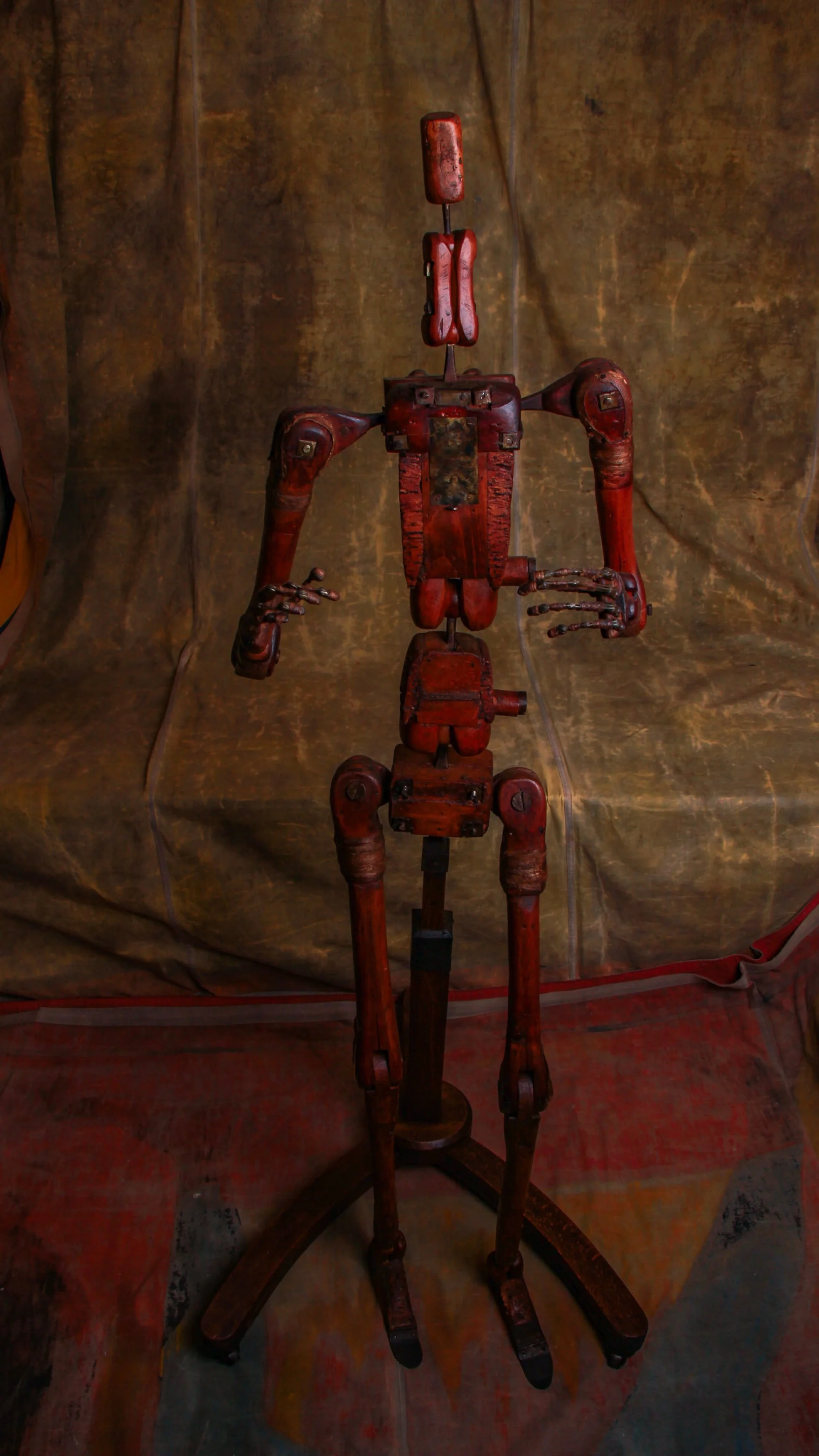
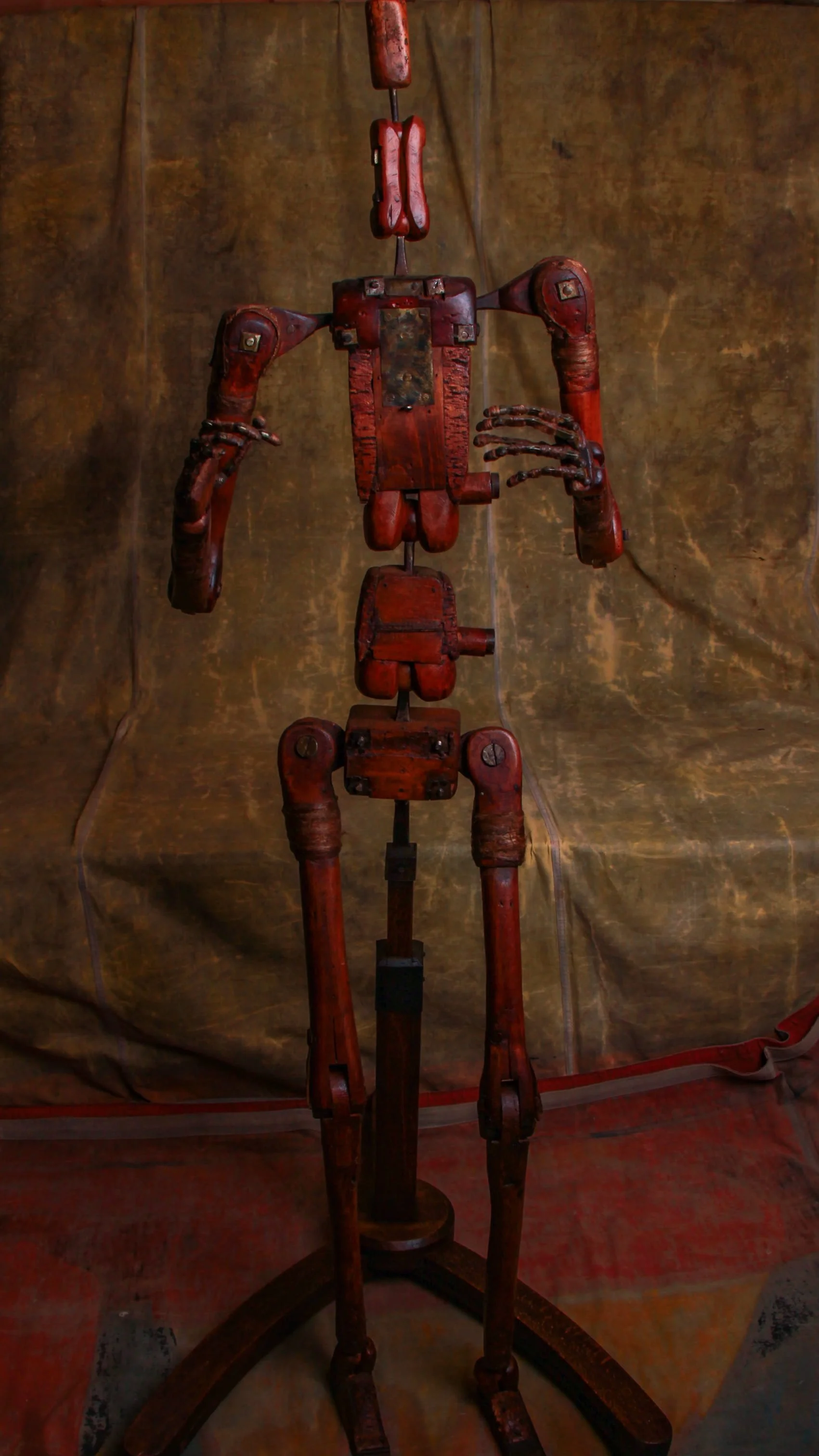
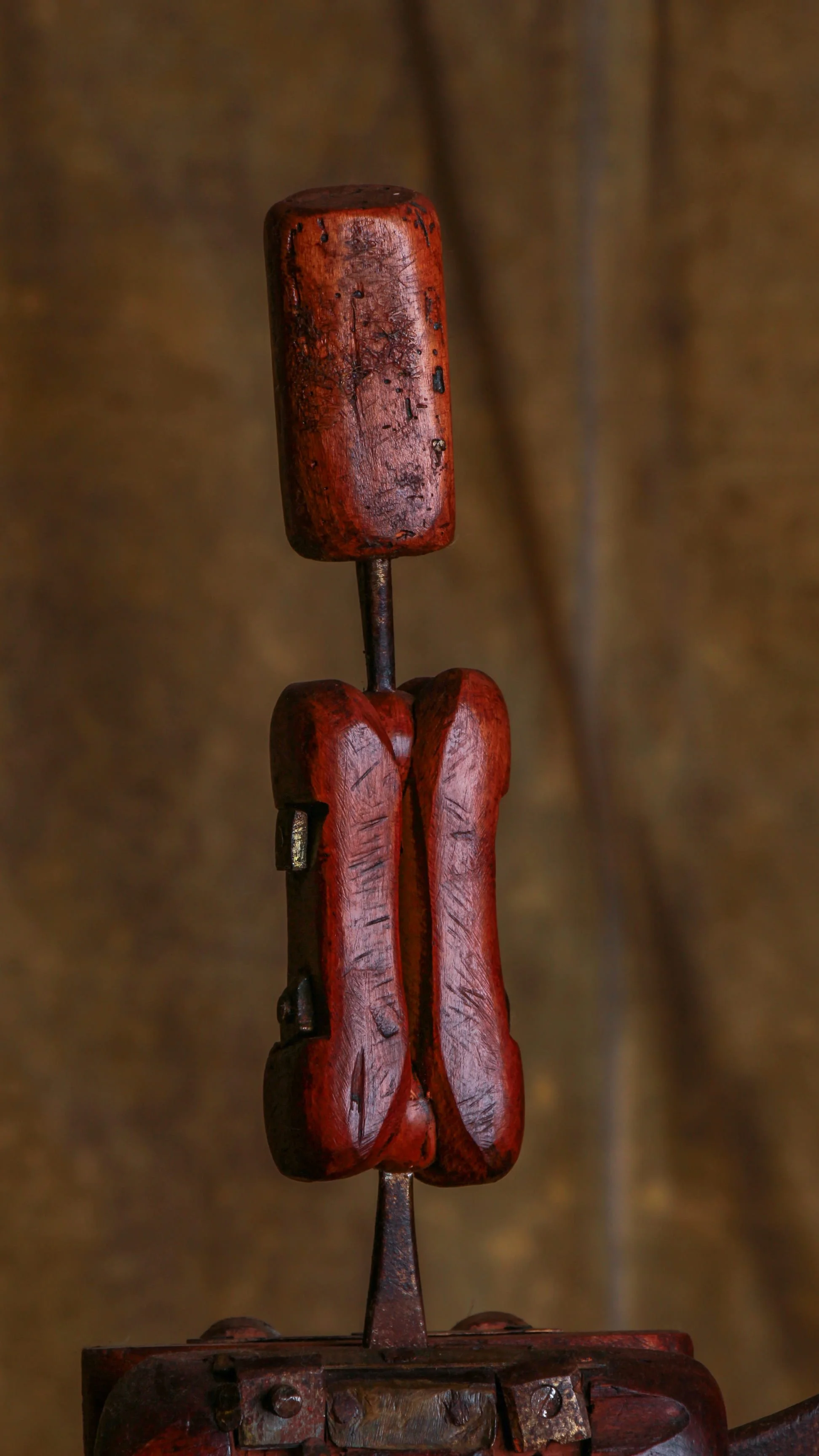
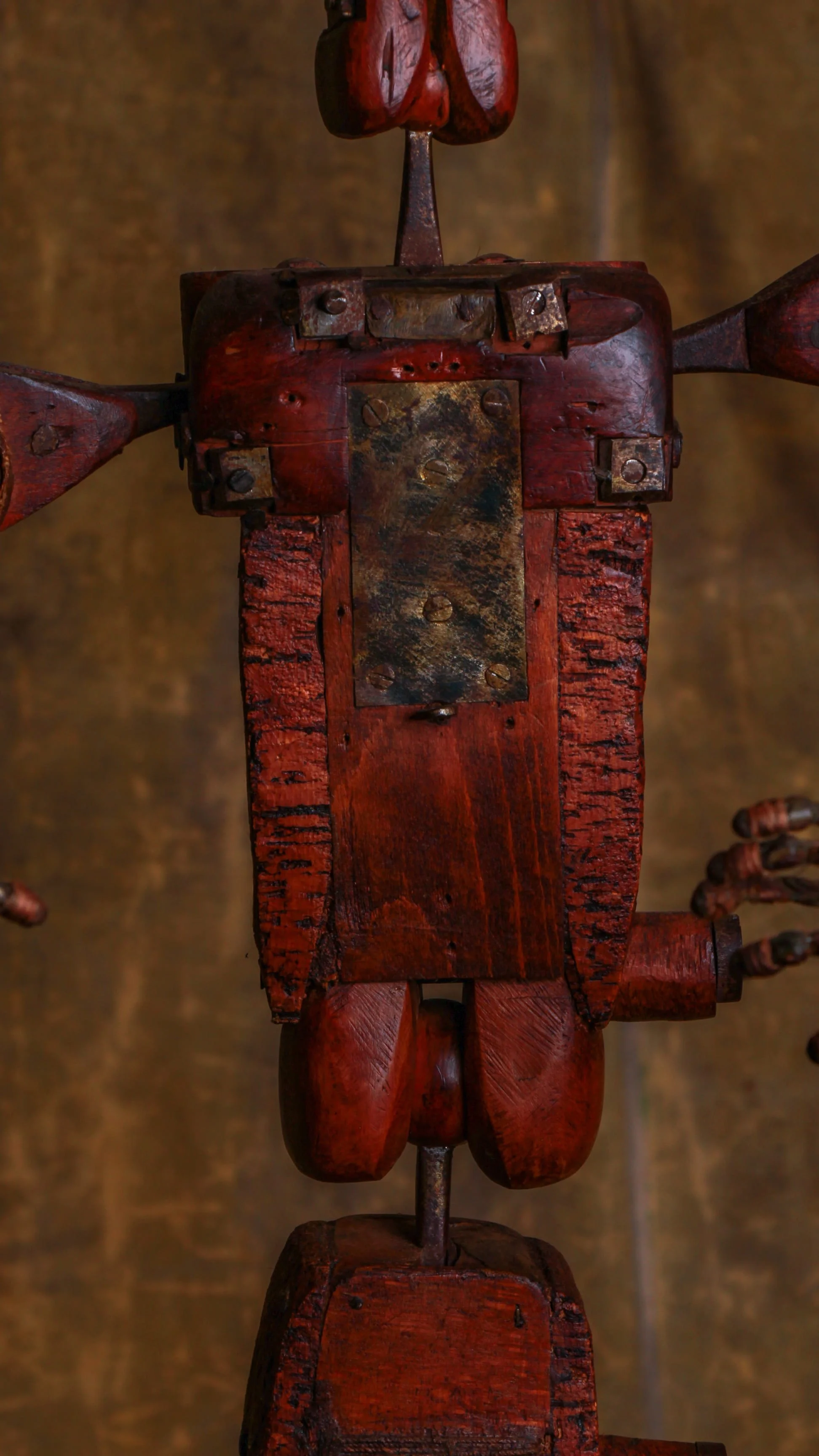
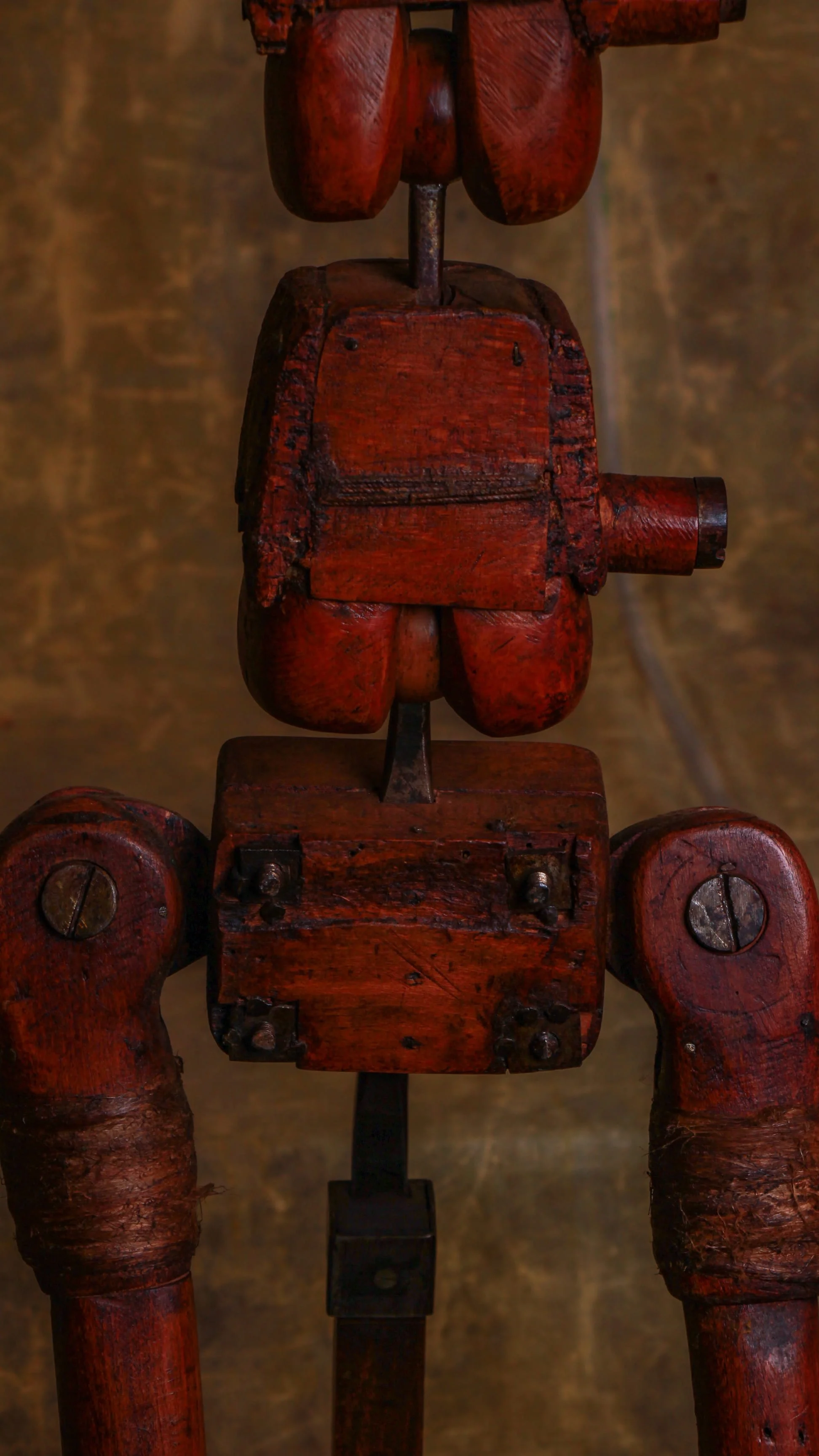
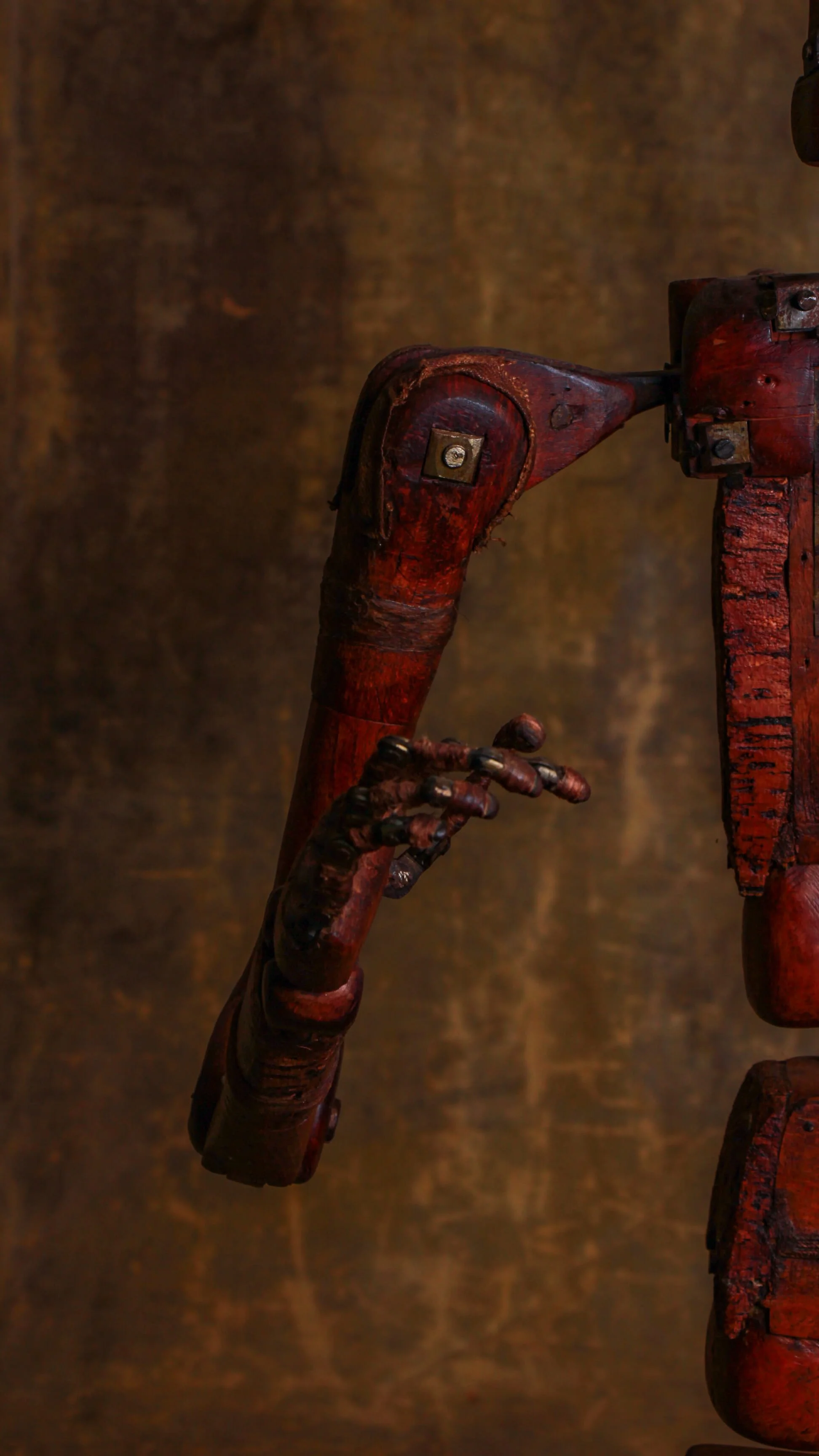
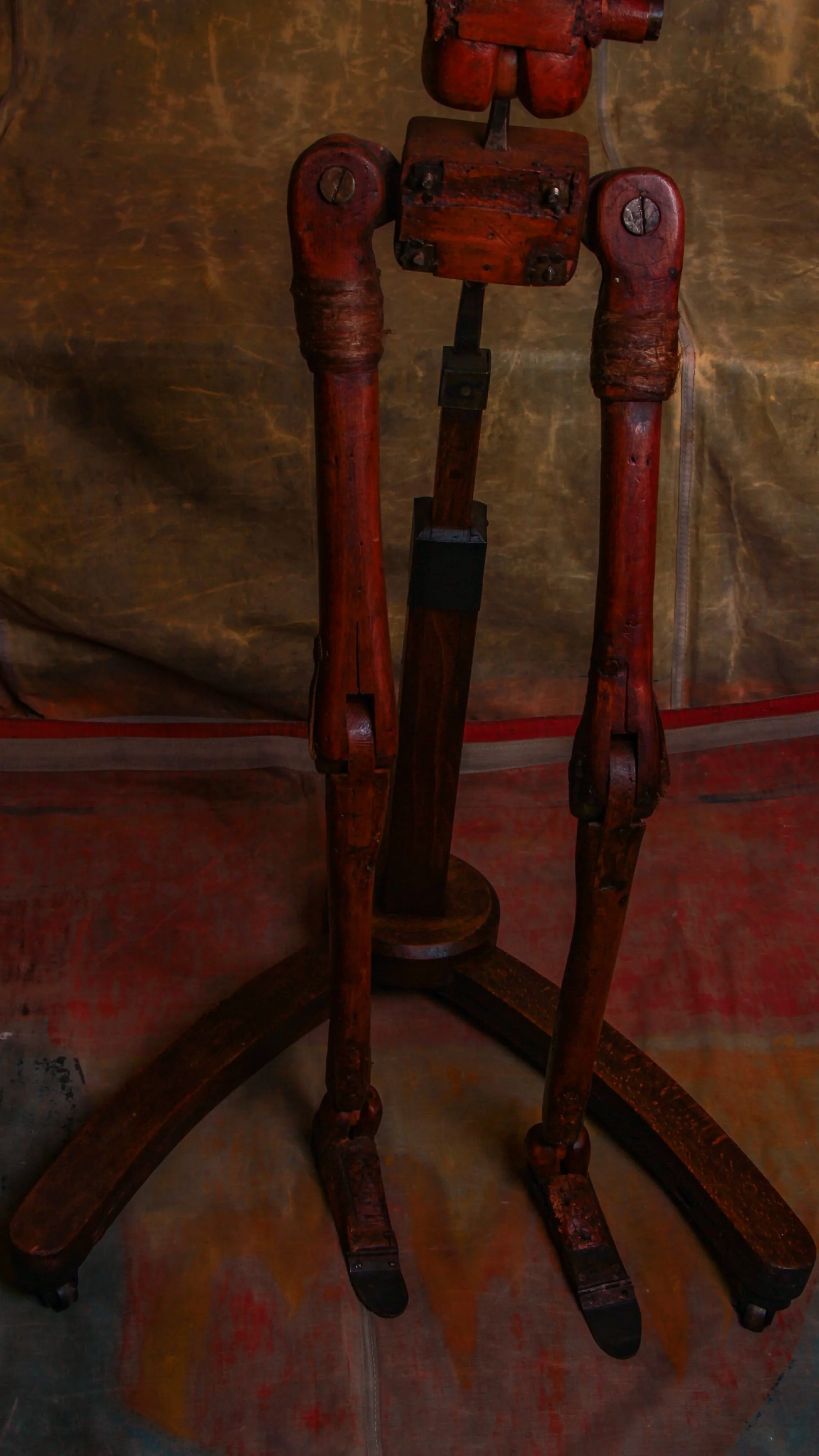
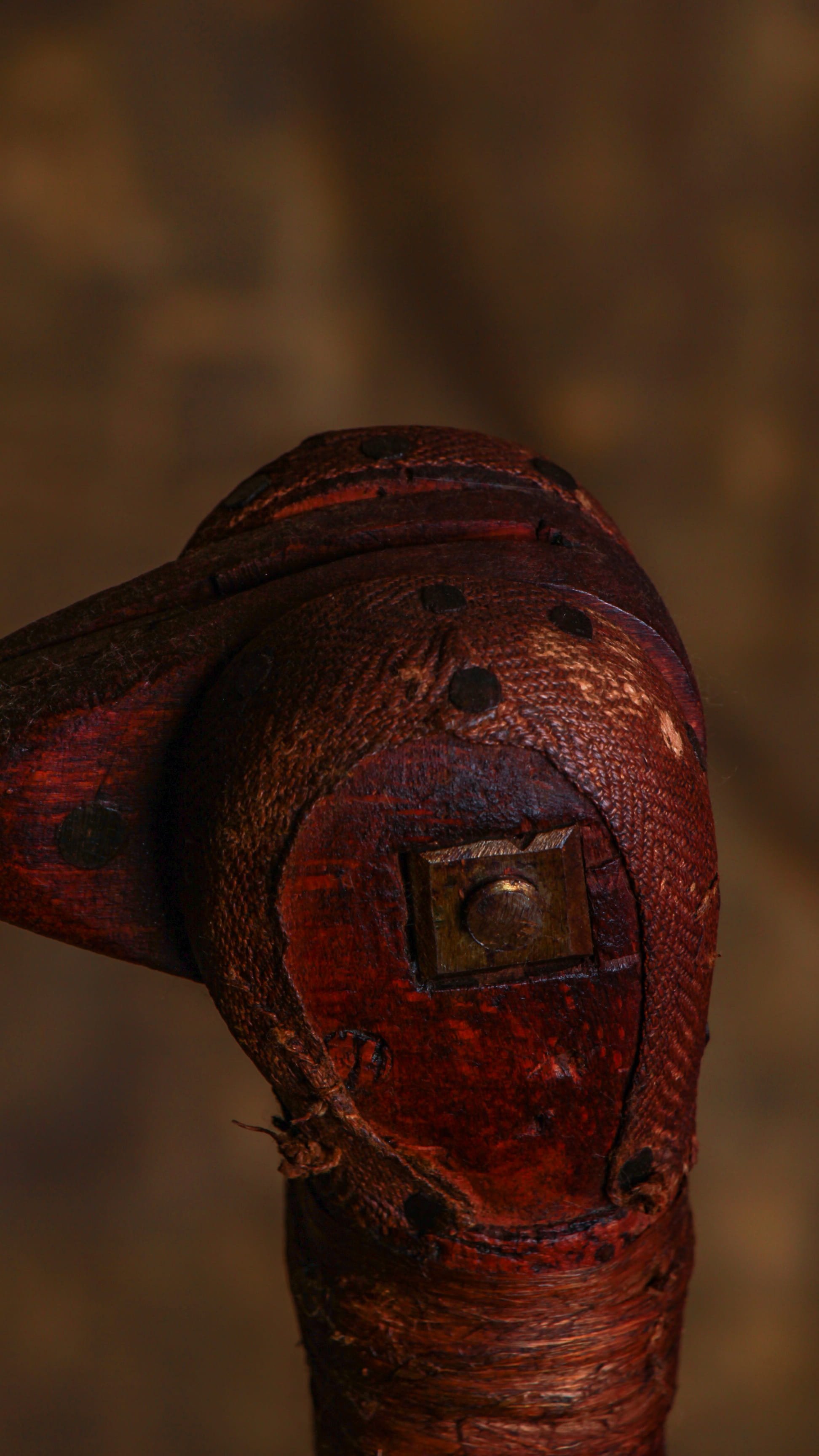
There’s something wonderfully unnerving about this late 18th century articulated mannequin by François-Pierre Guillois. At first glance, it reads almost like a figure pulled from an unfinished experiment. Half anatomy study, half mechanical apparition. The proportions are intentionally abstracted, the body reduced to a sequence of carved wooden forms connected by iron rods, leather hinges, wrapped joints, and tiny handmade fasteners that feel more surgical than decorative.
Guillois mannequins were working tools, built for artists who needed to understand movement, posture, and the mechanics of the human figure before photography could freeze a gesture in place. But this one pushes far beyond simple studio equipment. The long limbs, articulated fingers, and narrow stacked head give it a presence that feels startlingly modern, almost proto-robotic, despite being over two centuries old.
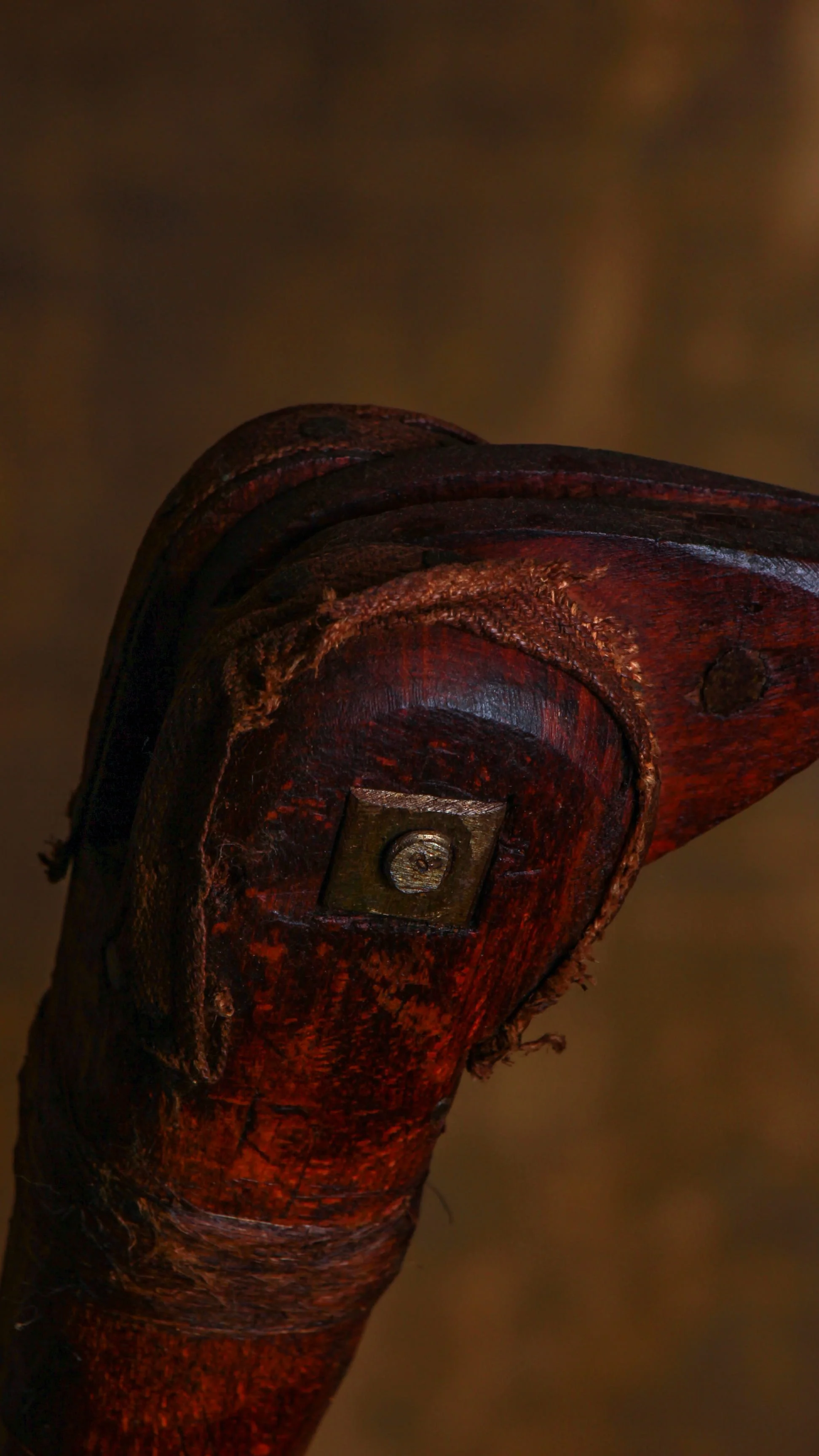
The surface is exceptional. Deep oxblood red lacquer worn smooth in places from handling, with scratches, chips, darkened brass plates, and layers of age that settle naturally into every edge and joint. You can see the construction thinking as much as the craftsmanship. Nothing hidden, nothing overly refined. Every screw, wrap, and pivot point remains visible, giving the figure an honesty that makes contemporary artist mannequins feel sterile by comparison.
Mounted on its original stand, it holds itself somewhere between sculpture and instrument. From certain angles it feels theatrical, from others oddly fragile, like it could collapse or come alive depending on the light in the room.
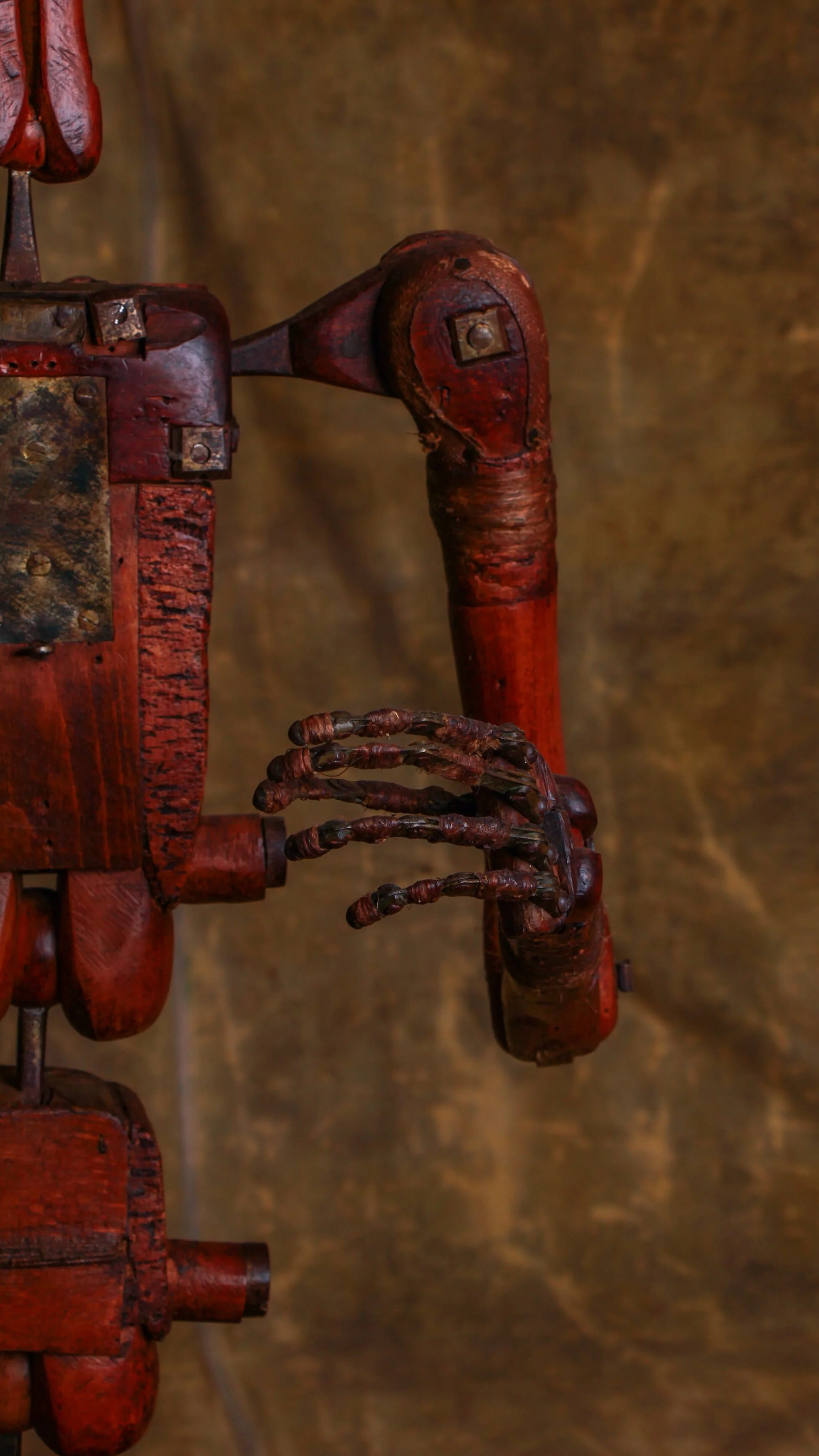
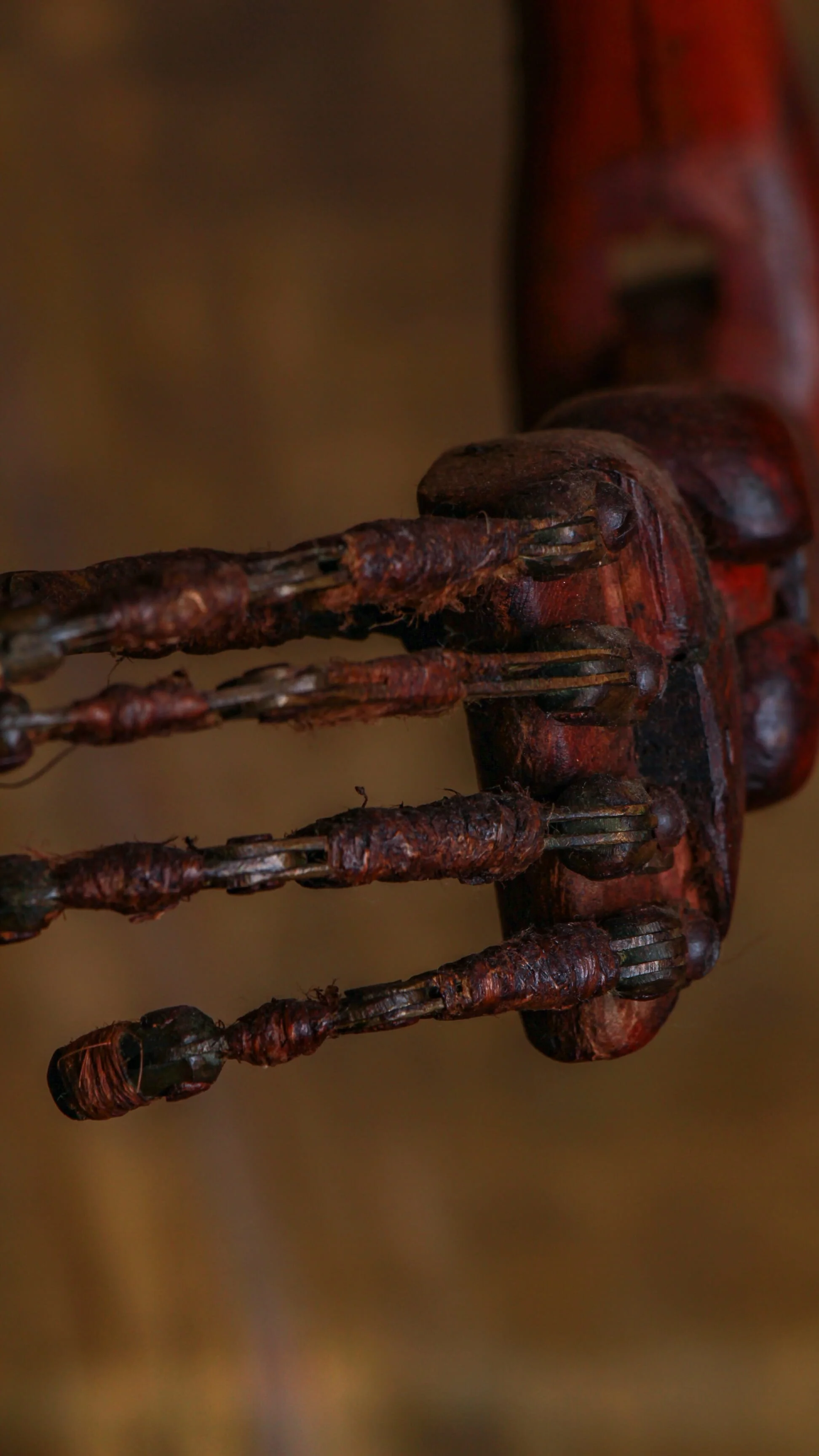
The articulated wire fingers are especially good. Slightly tense, slightly clawed, they give the mannequin an unexpected emotional charge, as though it’s caught mid-thought rather than mid-pose.
A rare survival from the late Enlightenment period, when art, anatomy, engineering, and curiosity still comfortably occupied the same table.
There’s something wonderfully unnerving about this late 18th century articulated mannequin by François-Pierre Guillois. At first glance, it reads almost like a figure pulled from an unfinished experiment. Half anatomy study, half mechanical apparition. The proportions are intentionally abstracted, the body reduced to a sequence of carved wooden forms connected by iron rods, leather hinges, wrapped joints, and tiny handmade fasteners that feel more surgical than decorative.
Guillois mannequins were working tools, built for artists who needed to understand movement, posture, and the mechanics of the human figure before photography could freeze a gesture in place. But this one pushes far beyond simple studio equipment. The long limbs, articulated fingers, and narrow stacked head give it a presence that feels startlingly modern, almost proto-robotic, despite being over two centuries old.
The surface is exceptional. Deep oxblood red lacquer worn smooth in places from handling, with scratches, chips, darkened brass plates, and layers of age that settle naturally into every edge and joint. You can see the construction thinking as much as the craftsmanship. Nothing hidden, nothing overly refined. Every screw, wrap, and pivot point remains visible, giving the figure an honesty that makes contemporary artist mannequins feel sterile by comparison.
Mounted on its original stand, it holds itself somewhere between sculpture and instrument. From certain angles it feels theatrical, from others oddly fragile, like it could collapse or come alive depending on the light in the room.
The articulated wire fingers are especially good. Slightly tense, slightly clawed, they give the mannequin an unexpected emotional charge, as though it’s caught mid-thought rather than mid-pose.
A rare survival from the late Enlightenment period, when art, anatomy, engineering, and curiosity still comfortably occupied the same table.