ITEM NOT AVAILABLE IMMEDIATELY—INQUIRE IF INTERESTED hello@heimweeantiques.com
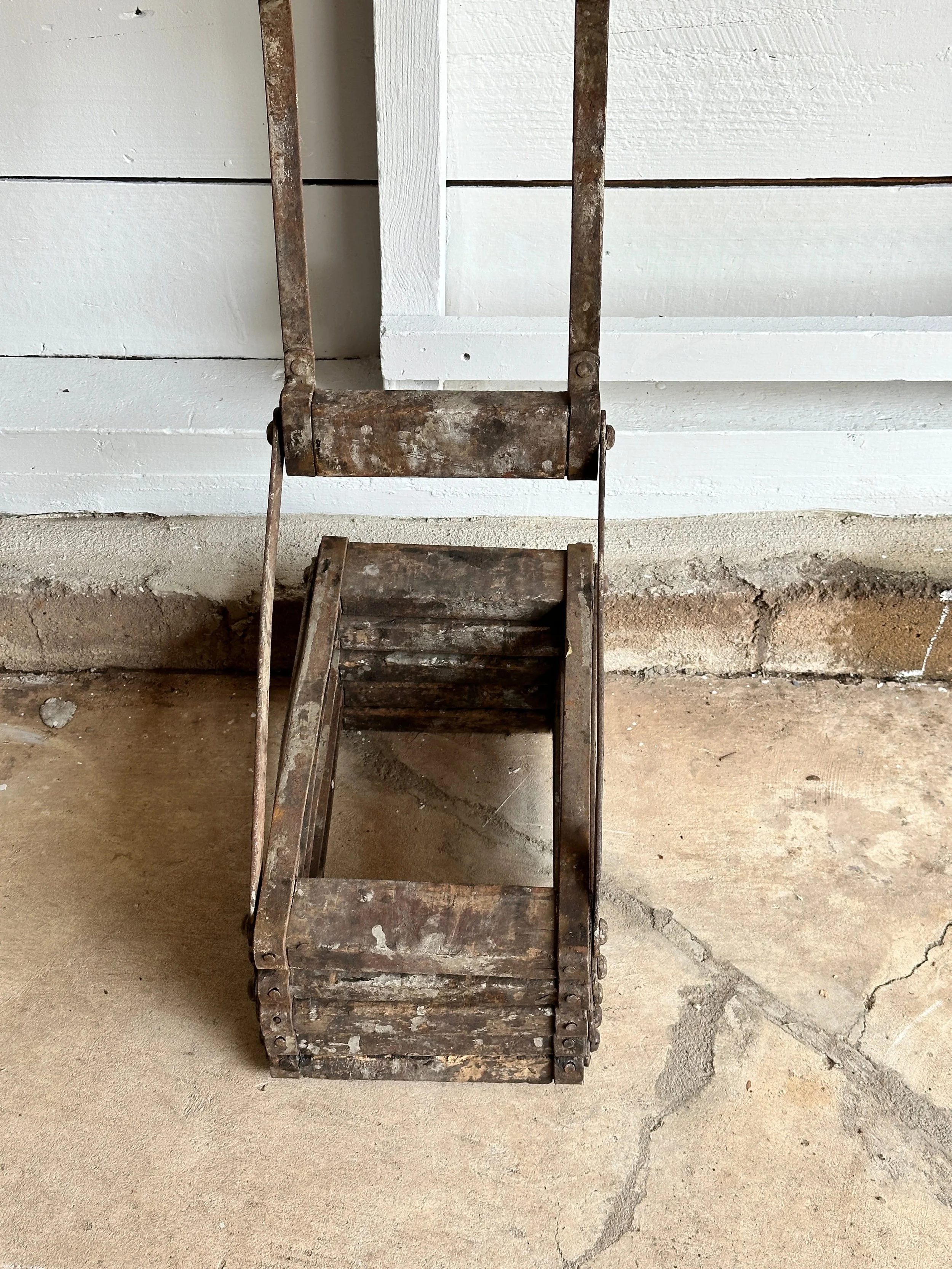
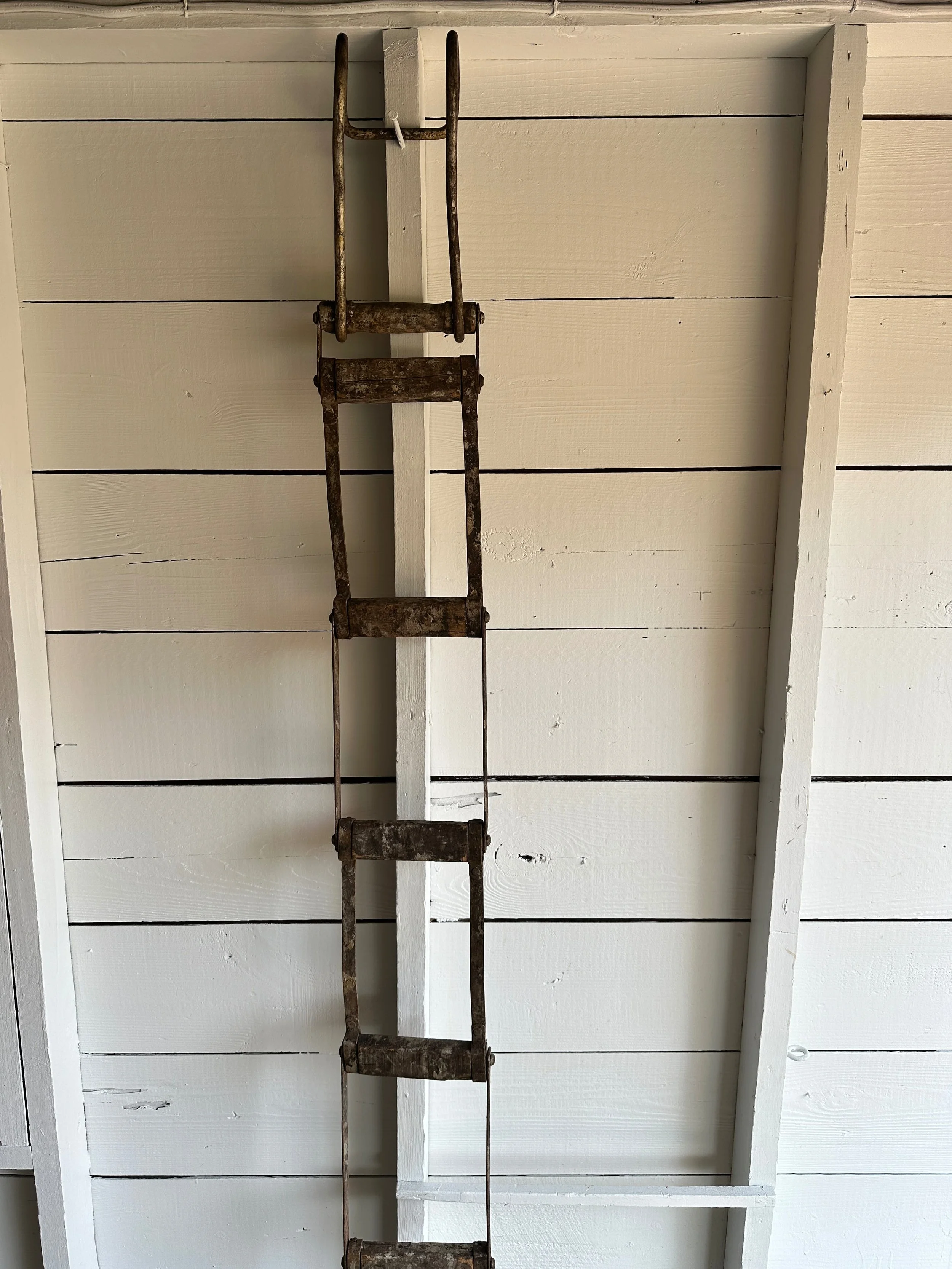
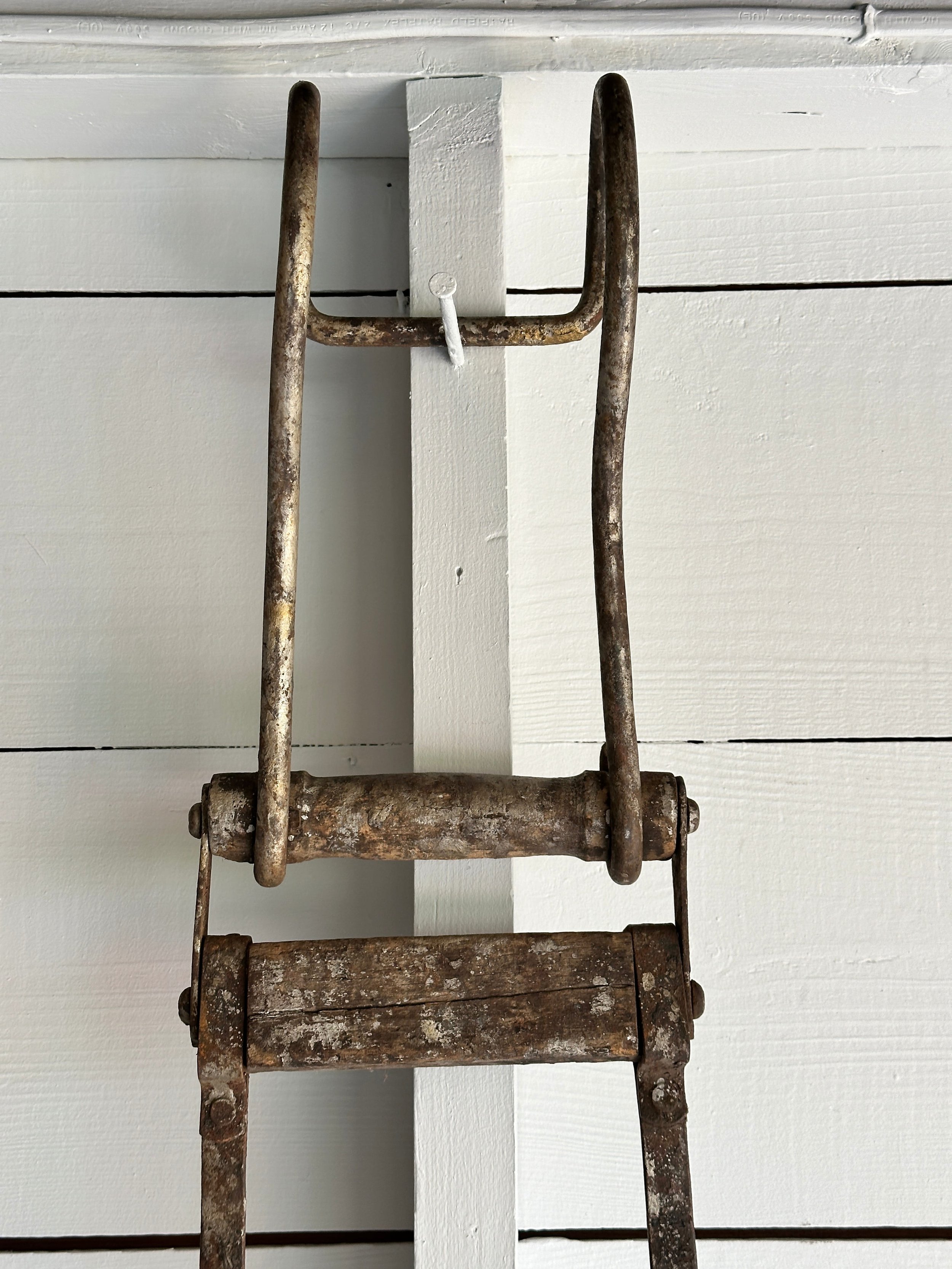
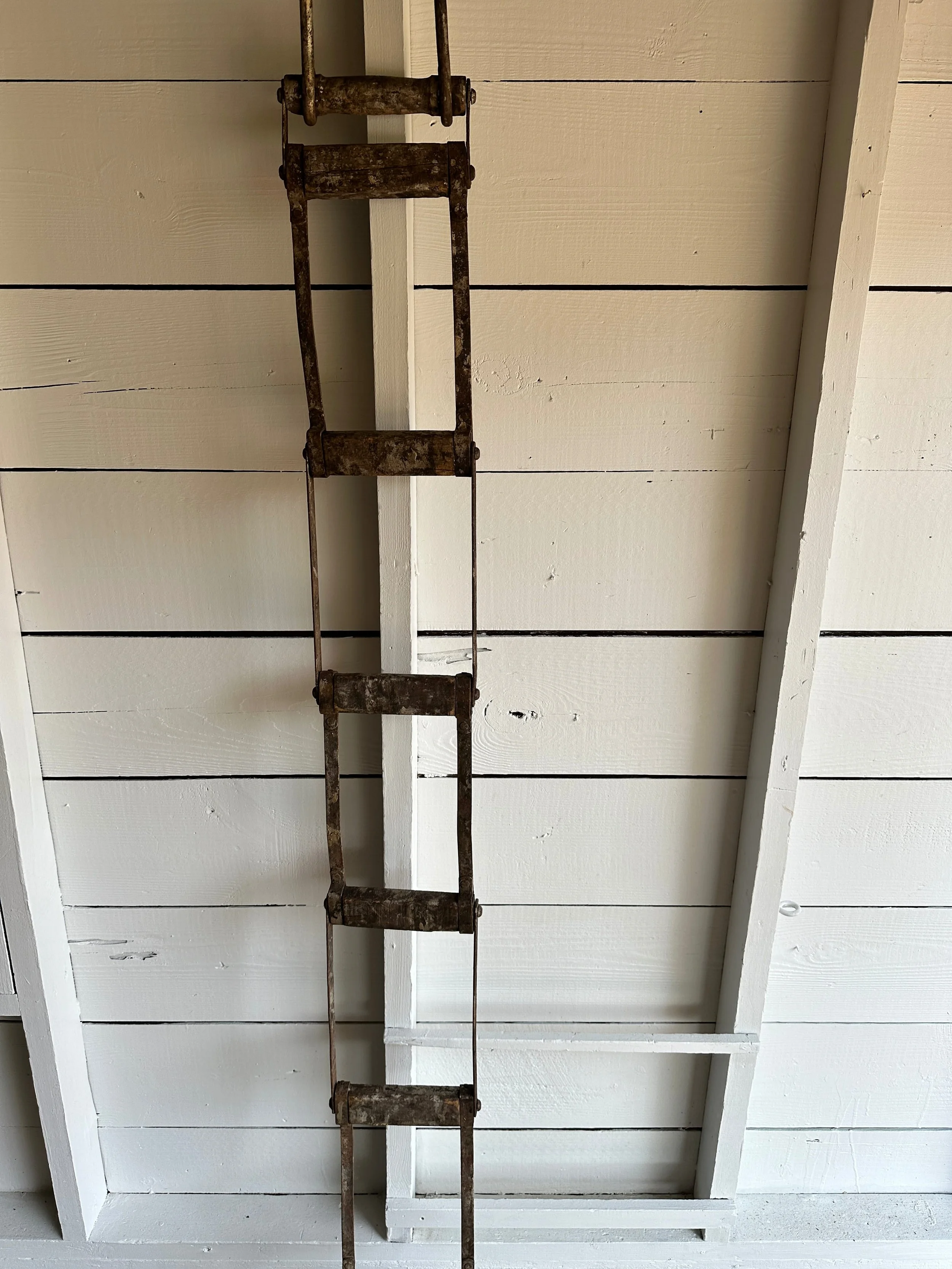
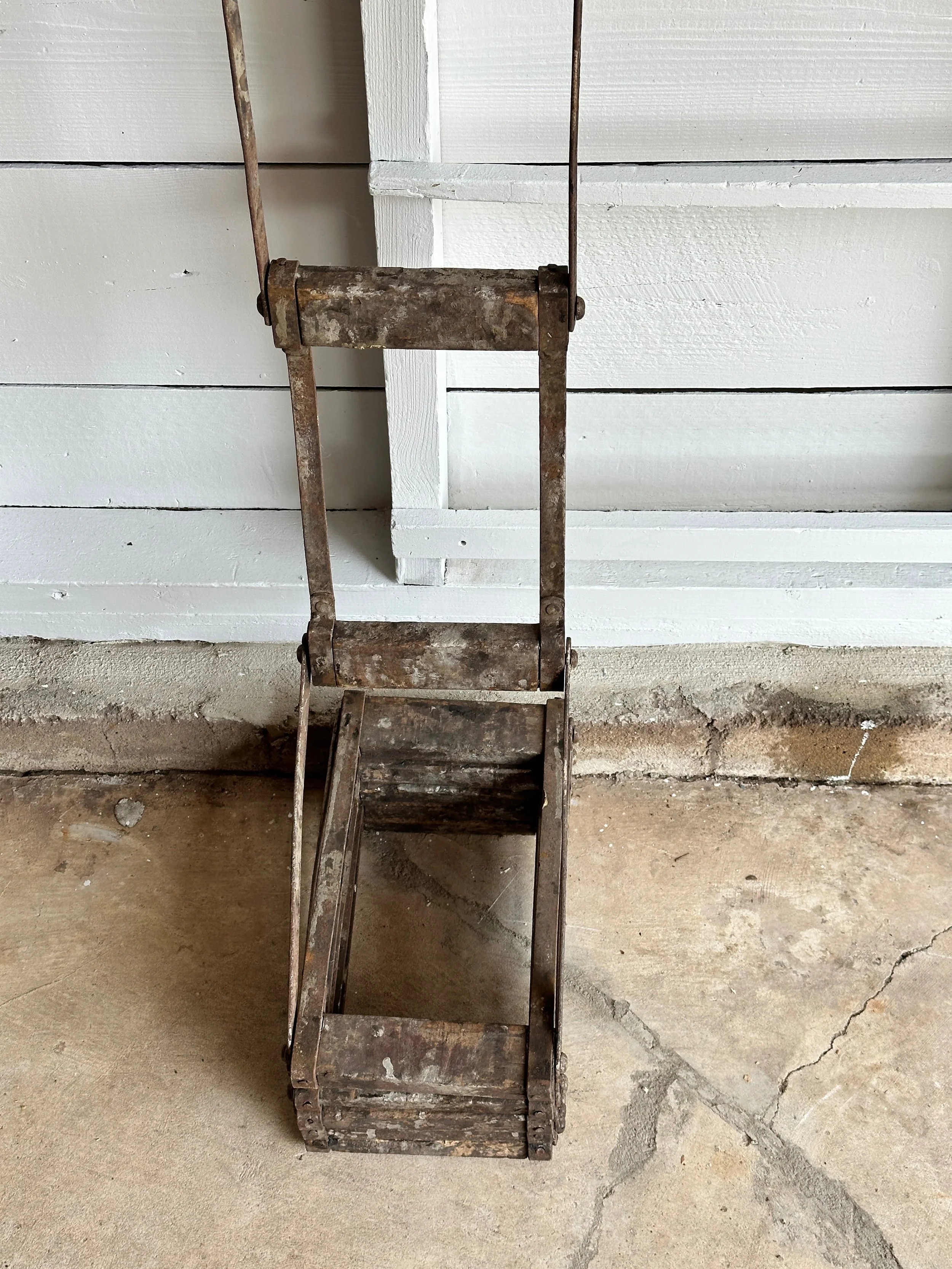
Straight out of an old hangar, this collapsible aircraft ladder is the real deal. Circa 1920s, it was designed for mechanics to access the fuselage during service and repairs. Constructed of hardwood steps and pressed steel side brackets, it folds up like a concertina and still has its original patina of age and elbow grease. The hooked top was made to latch securely to the plane's frame, while the flexible desian let it collapse flat against the wall when not in use. A rare survivor from the early days of aviation maintenance.
Category History
A 1920s folding service aircraft ladder belongs to that early chapter of aviation when everything was still being figured out—on the ground as much as in the air. Aircraft were smaller, lighter, and often parked out in open fields, so access wasn’t built in. Ladders like these were essential, used by mechanics, pilots, and crew to reach cockpits, engines, and fuel ports.
The design is all about portability and efficiency. Typically made from wood or lightweight metal, with simple hinges and locking braces, they could fold flat, be carried easily, and set up quickly wherever needed. No wasted parts, no excess weight—just enough structure to do the job safely.
What’s interesting is how closely they reflect the mindset of early aviation: practical, adaptable, and a little improvised. These weren’t mass-standardized pieces yet. Variations in construction and detail are common, shaped by workshop methods or specific needs.
Over time, they pick up the marks of use—worn steps, oil stains, repairs—evidence of long hours spent around machines that demanded constant attention.
Today, they read as more than tools. There’s a quiet elegance in their simplicity, a kind of honest engineering that mirrors the aircraft they once served—functional, direct, and built to keep things moving.
ITEM NOT AVAILABLE IMMEDIATELY—INQUIRE IF INTERESTED hello@heimweeantiques.com
Straight out of an old hangar, this collapsible aircraft ladder is the real deal. Circa 1920s, it was designed for mechanics to access the fuselage during service and repairs. Constructed of hardwood steps and pressed steel side brackets, it folds up like a concertina and still has its original patina of age and elbow grease. The hooked top was made to latch securely to the plane's frame, while the flexible desian let it collapse flat against the wall when not in use. A rare survivor from the early days of aviation maintenance.
Category History
A 1920s folding service aircraft ladder belongs to that early chapter of aviation when everything was still being figured out—on the ground as much as in the air. Aircraft were smaller, lighter, and often parked out in open fields, so access wasn’t built in. Ladders like these were essential, used by mechanics, pilots, and crew to reach cockpits, engines, and fuel ports.
The design is all about portability and efficiency. Typically made from wood or lightweight metal, with simple hinges and locking braces, they could fold flat, be carried easily, and set up quickly wherever needed. No wasted parts, no excess weight—just enough structure to do the job safely.
What’s interesting is how closely they reflect the mindset of early aviation: practical, adaptable, and a little improvised. These weren’t mass-standardized pieces yet. Variations in construction and detail are common, shaped by workshop methods or specific needs.
Over time, they pick up the marks of use—worn steps, oil stains, repairs—evidence of long hours spent around machines that demanded constant attention.
Today, they read as more than tools. There’s a quiet elegance in their simplicity, a kind of honest engineering that mirrors the aircraft they once served—functional, direct, and built to keep things moving.