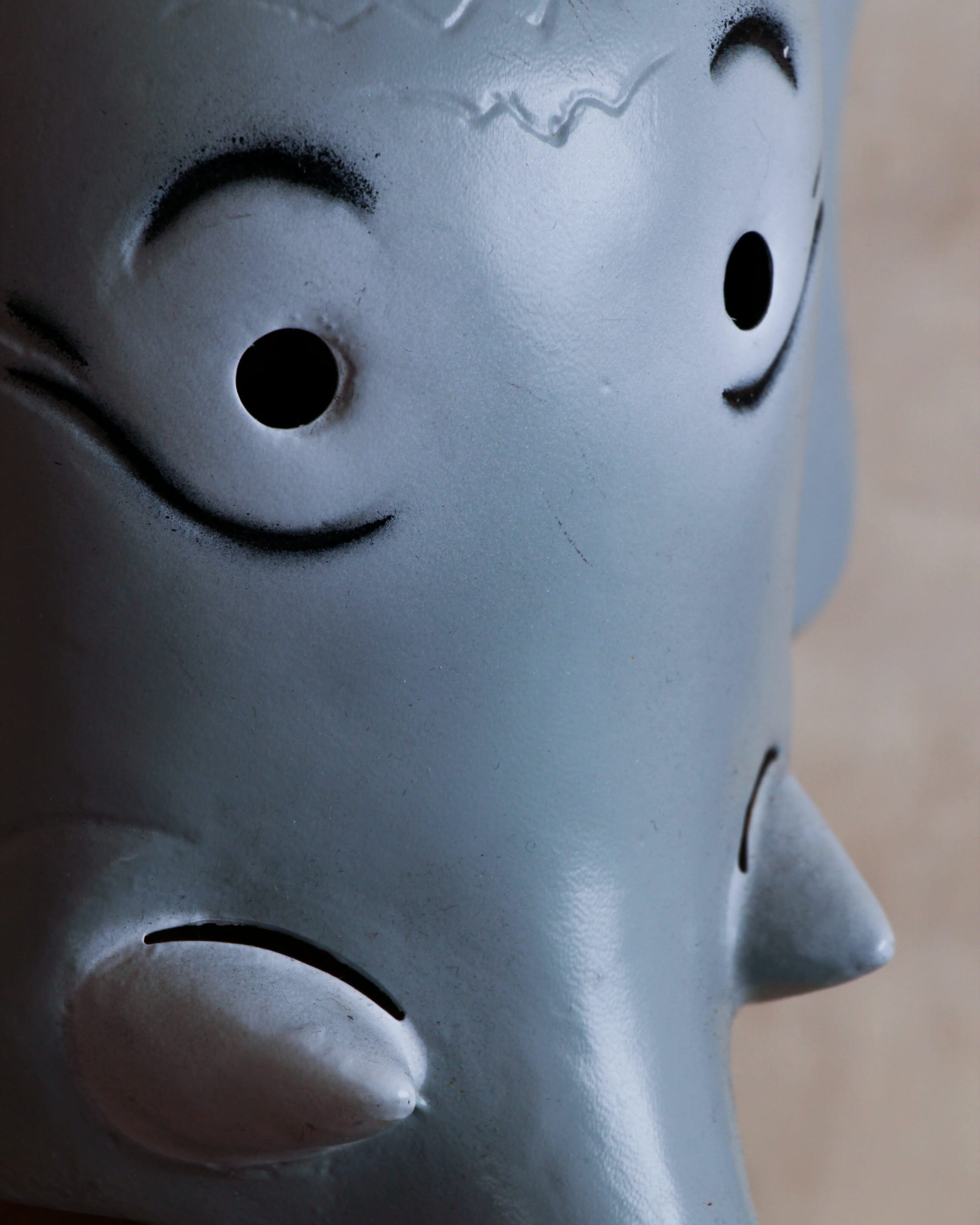
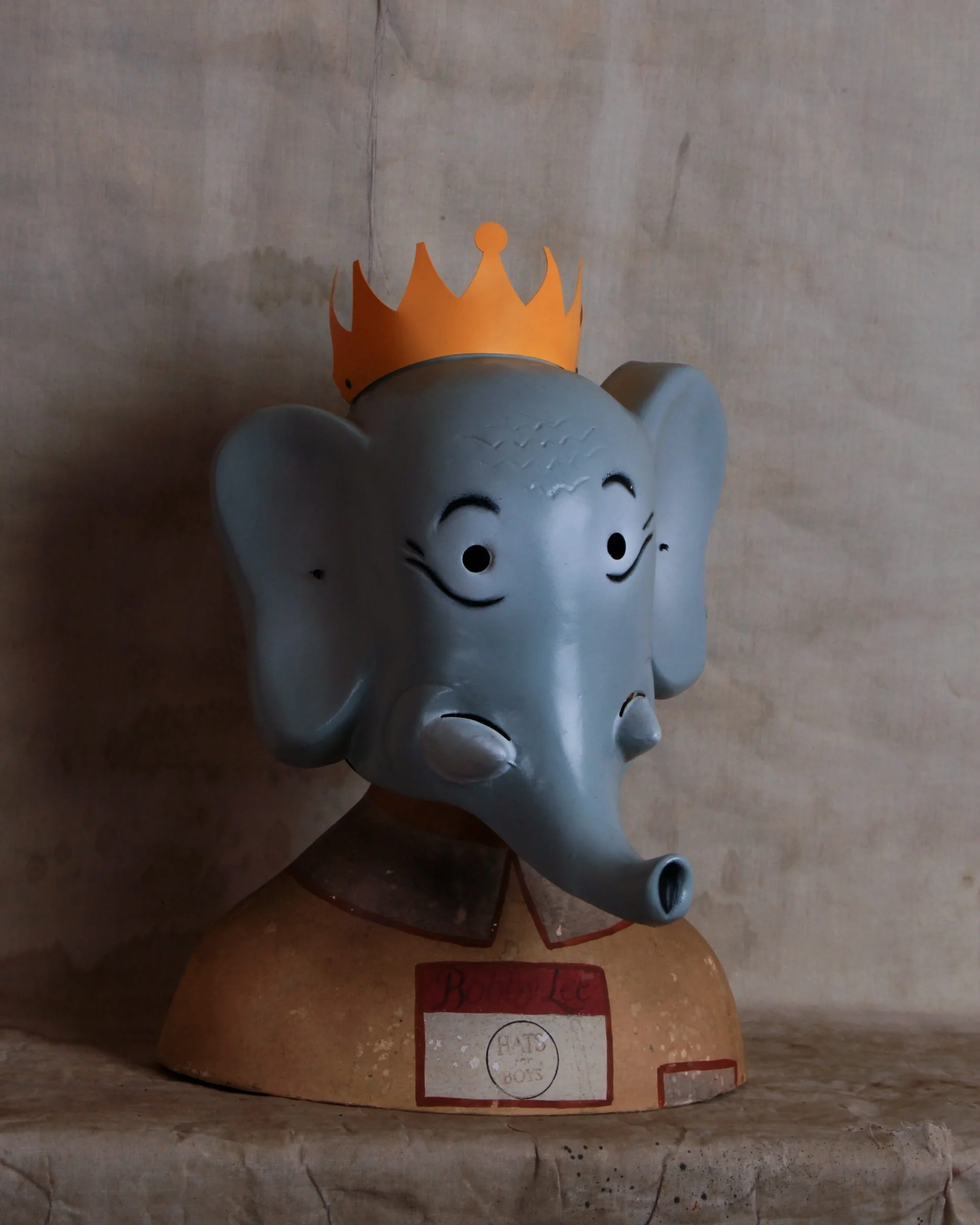
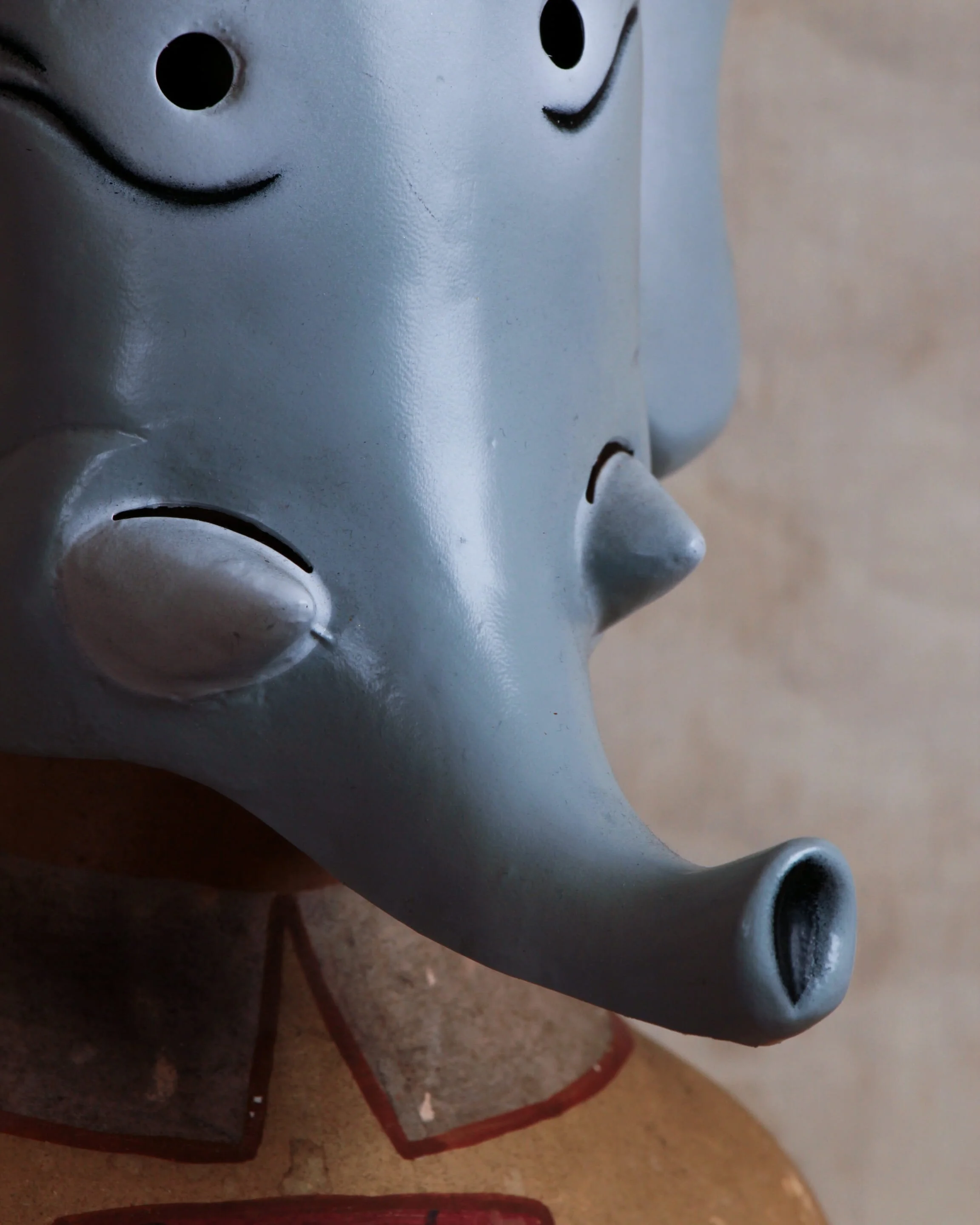
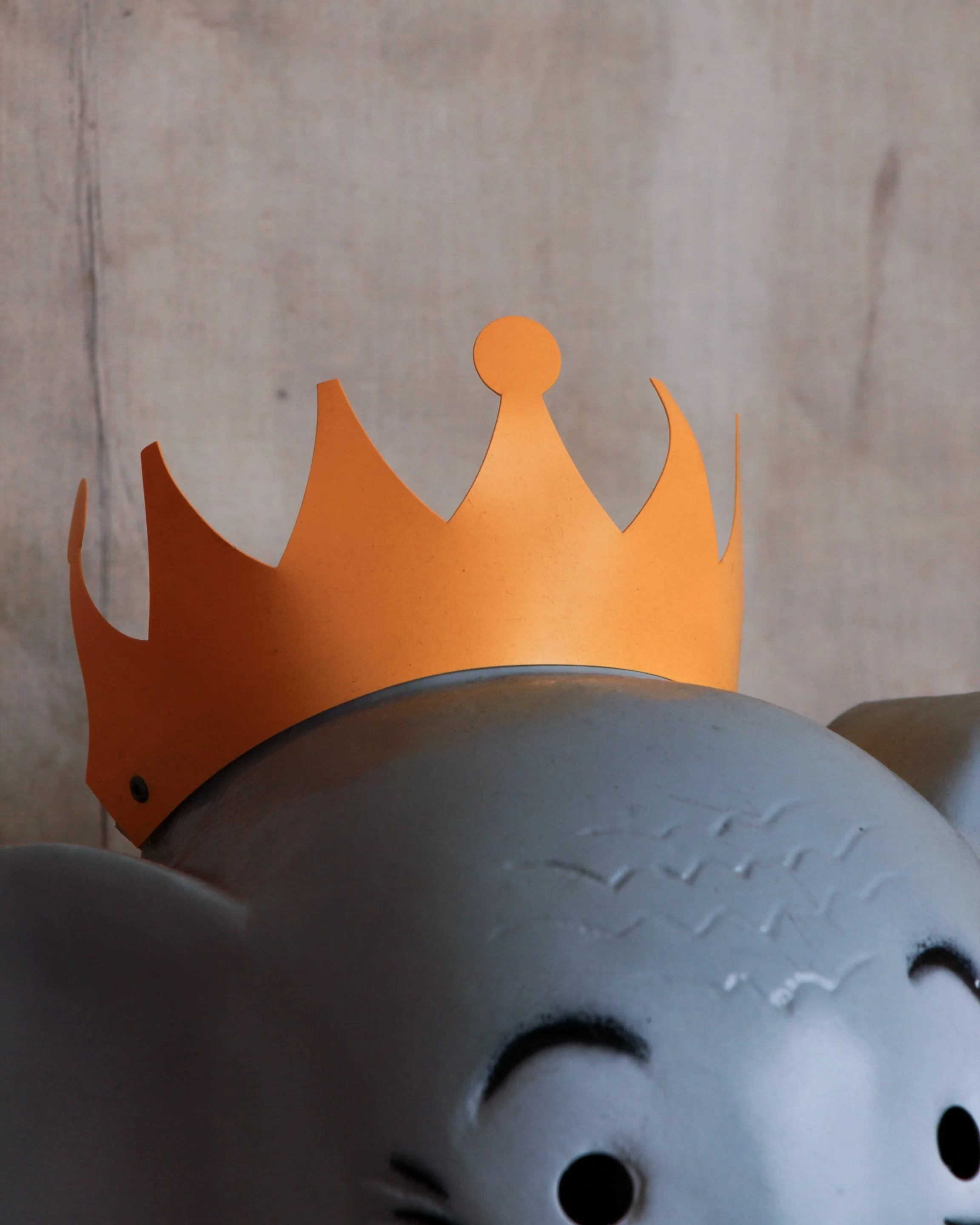

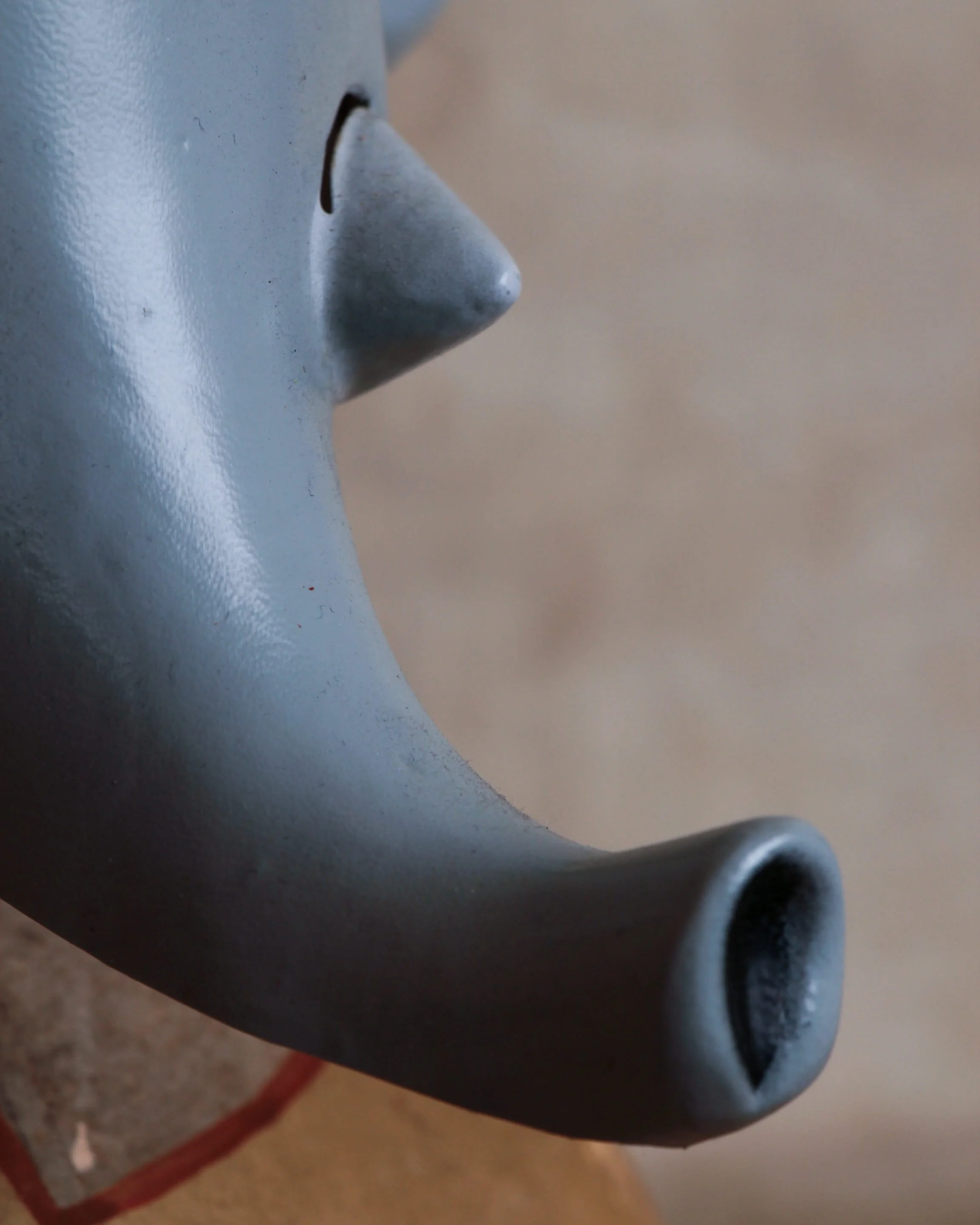
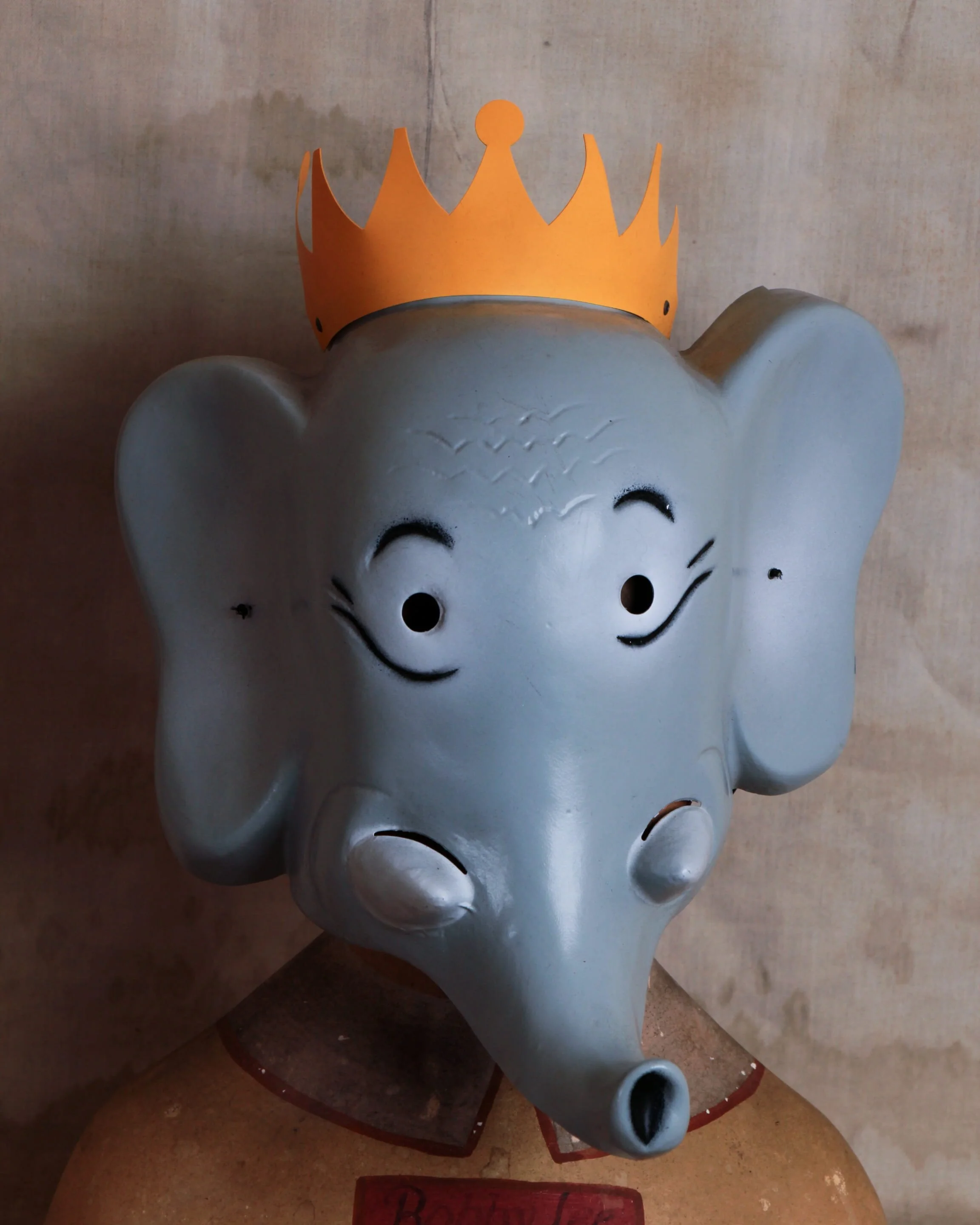
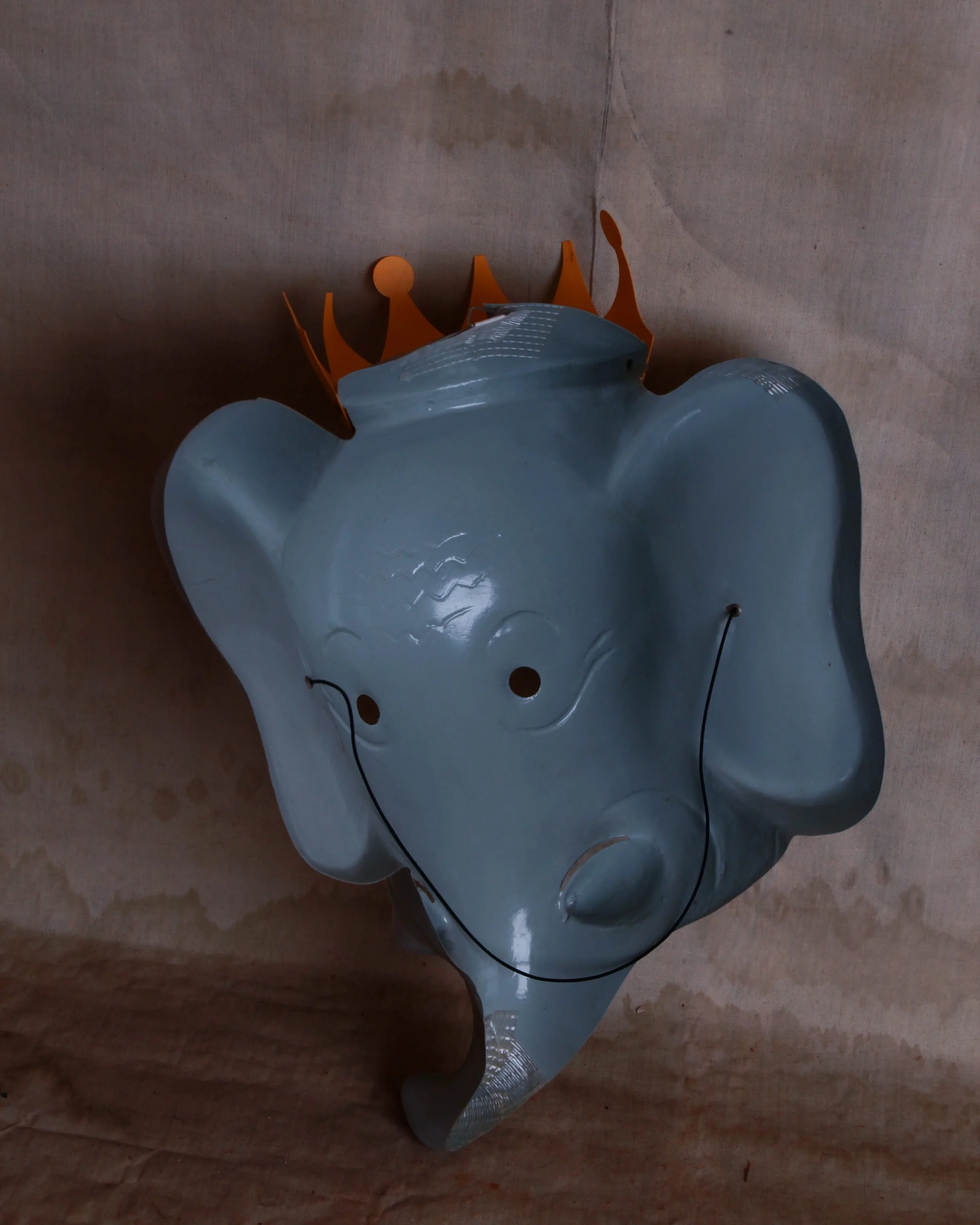
This official 1970s Babar mask by French maker Cesar has all the quiet charm of the storybook king, with just enough wear to prove it’s lived a life. Soft blue plastic, wide ears, and that long, unmistakable trunk, topped with the bright yellow crown that somehow survived the decades intact.
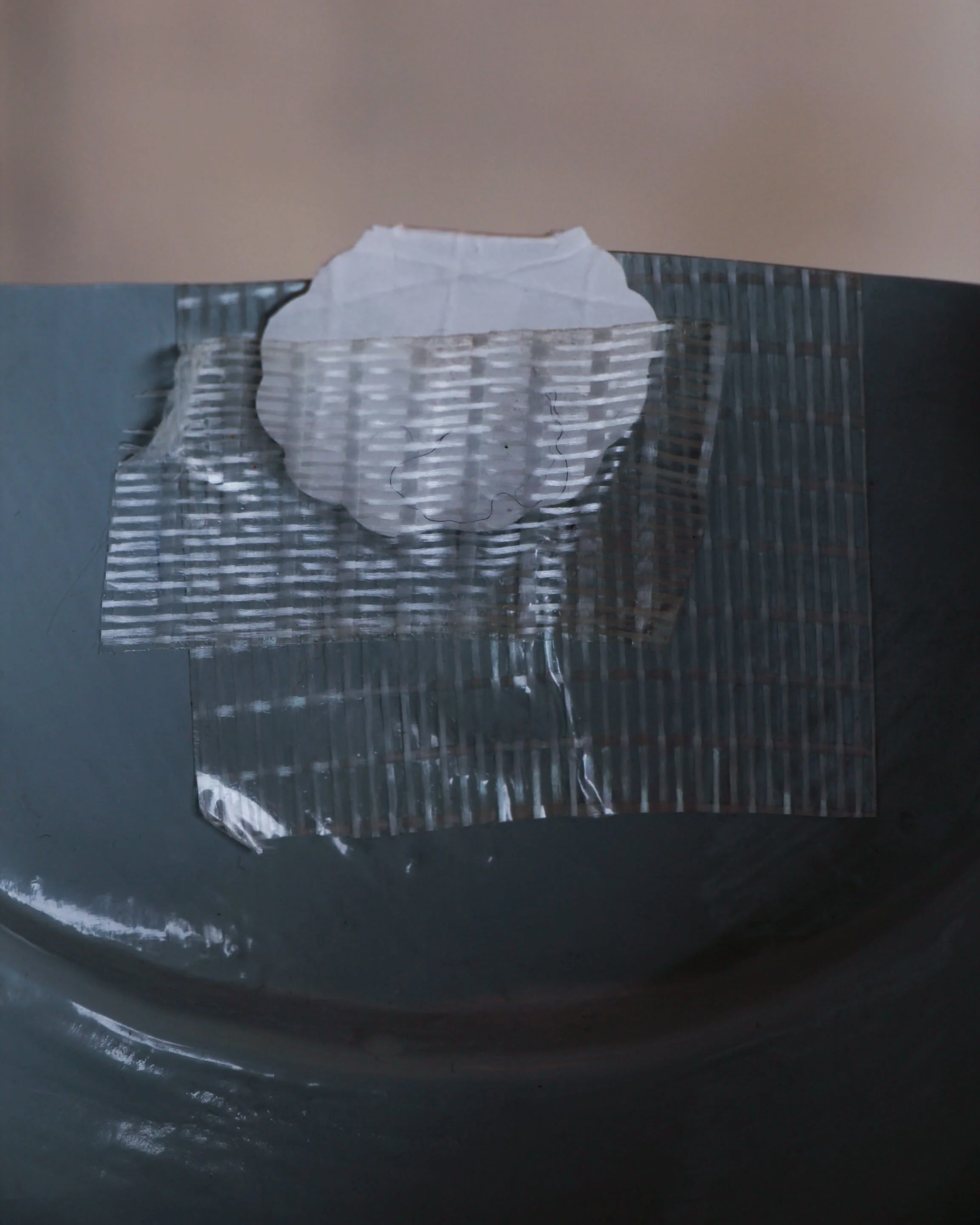
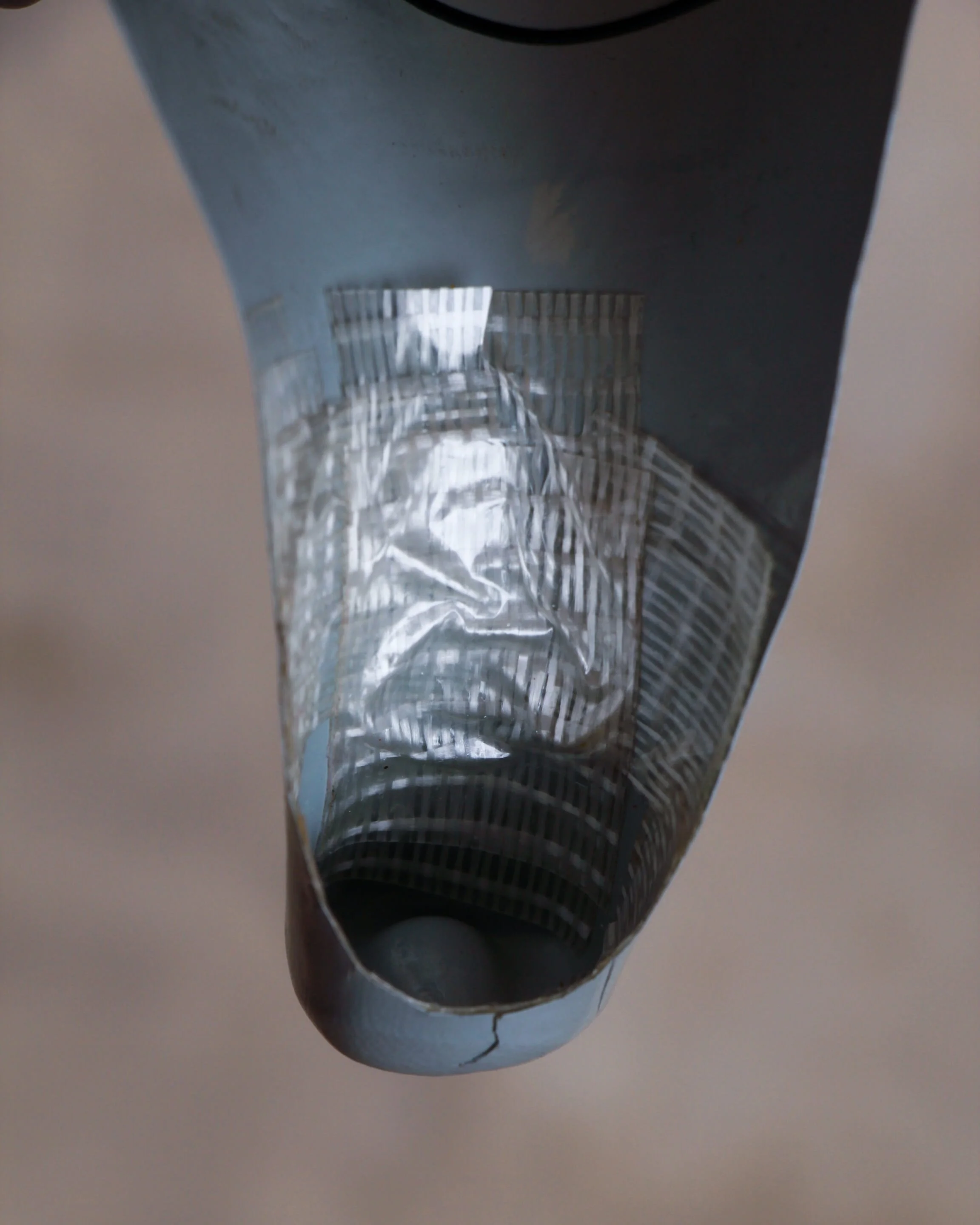
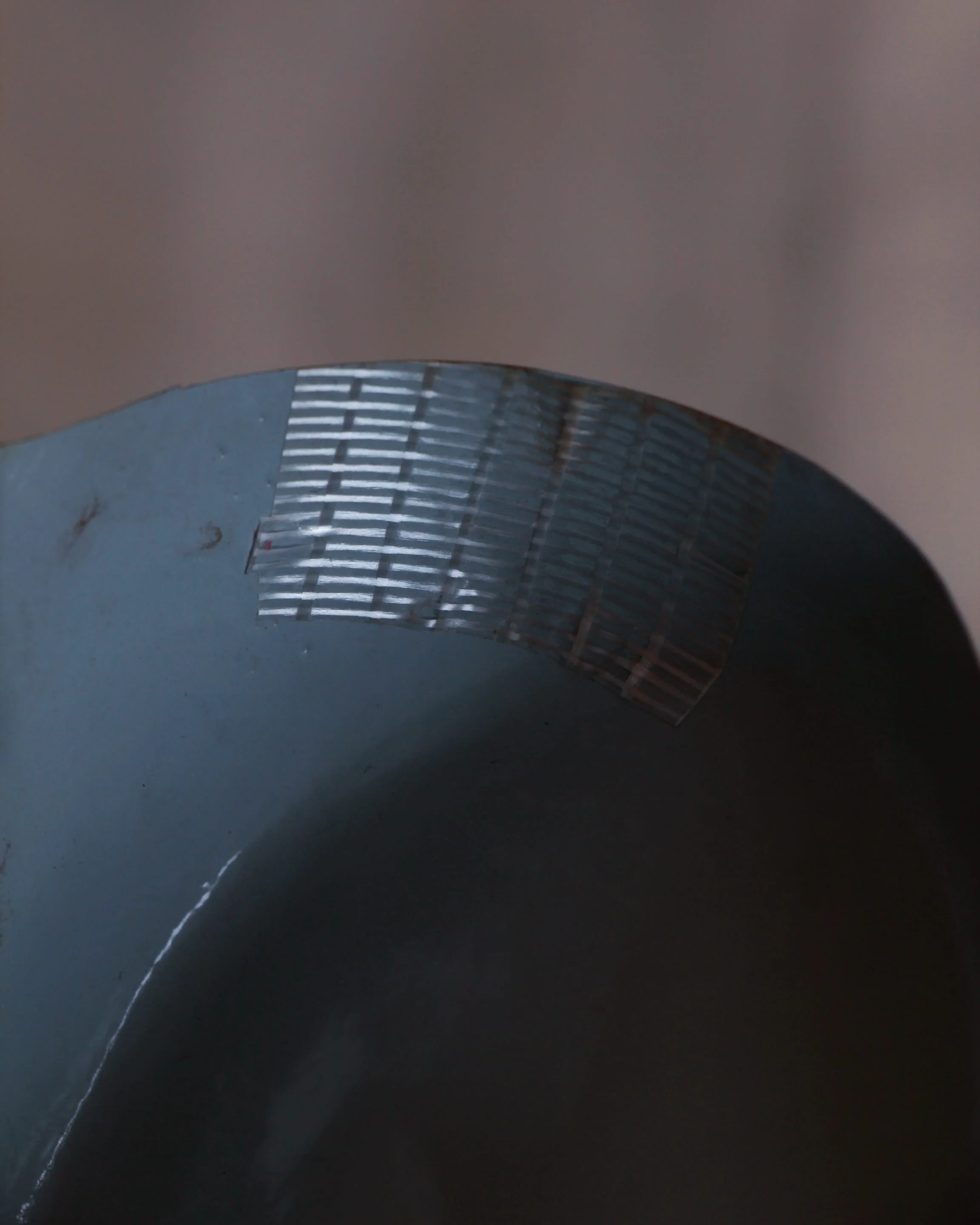
It’s a tough one to come by, especially in this kind of honest condition. There are a few tape repairs from the inside—visible at the head, ear, and along the trunk—done to keep things together but structurally sound. Surface shows light age wear and handling, but the overall look still lands exactly where you want it.
Mannequin bust not included.
Babar
Babar begins with a simple story and quietly expands into a world. Created in the 1930s by Jean de Brunhoff, the character first appeared as a children’s tale told within a family, then turned into a series of illustrated books that balanced charm with a surprisingly structured narrative.
At its core, Babar is an elephant who leaves the forest, encounters human society, and returns to build something new—part jungle, part city. The stories move between innocence and order, blending adventure with ideas about culture, learning, and leadership.
Visually, the books are just as important as the text. Clean lines, soft colors, and composed scenes give everything a calm, almost architectural feel. Nothing is overcrowded. Each page has space to breathe.
What makes Babar interesting is that duality. It’s a children’s story, but it carries layers—colonial influence, ideas of progress, and a certain European perspective on structure and civility. It’s gentle on the surface, more complex underneath.
Over time, Babar moved beyond books into toys, animations, and merchandise, but the original appeal holds. Simple, deliberate, and quietly distinctive—an imagined world that still feels carefully constructed.
This official 1970s Babar mask by French maker Cesar has all the quiet charm of the storybook king, with just enough wear to prove it’s lived a life. Soft blue plastic, wide ears, and that long, unmistakable trunk, topped with the bright yellow crown that somehow survived the decades intact.
It’s a tough one to come by, especially in this kind of honest condition. There are a few tape repairs from the inside—visible at the head, ear, and along the trunk—done to keep things together but structurally sound. Surface shows light age wear and handling, but the overall look still lands exactly where you want it.
Mannequin bust not included.
Babar
Babar begins with a simple story and quietly expands into a world. Created in the 1930s by Jean de Brunhoff, the character first appeared as a children’s tale told within a family, then turned into a series of illustrated books that balanced charm with a surprisingly structured narrative.
At its core, Babar is an elephant who leaves the forest, encounters human society, and returns to build something new—part jungle, part city. The stories move between innocence and order, blending adventure with ideas about culture, learning, and leadership.
Visually, the books are just as important as the text. Clean lines, soft colors, and composed scenes give everything a calm, almost architectural feel. Nothing is overcrowded. Each page has space to breathe.
What makes Babar interesting is that duality. It’s a children’s story, but it carries layers—colonial influence, ideas of progress, and a certain European perspective on structure and civility. It’s gentle on the surface, more complex underneath.
Over time, Babar moved beyond books into toys, animations, and merchandise, but the original appeal holds. Simple, deliberate, and quietly distinctive—an imagined world that still feels carefully constructed.