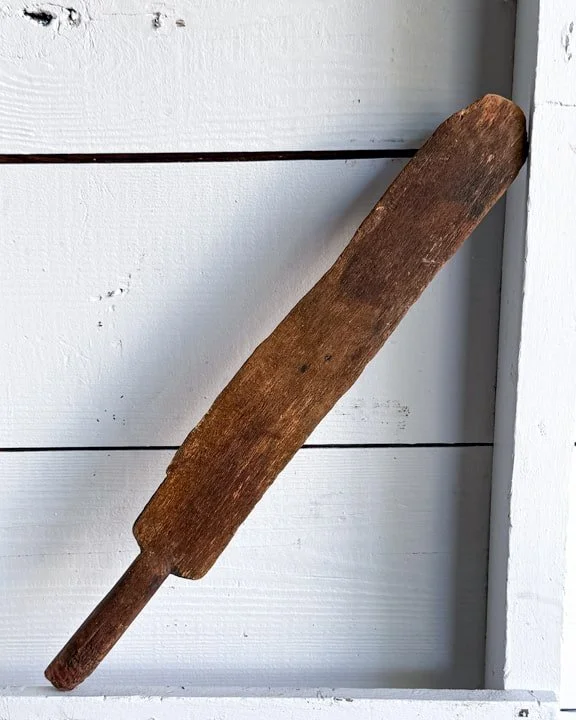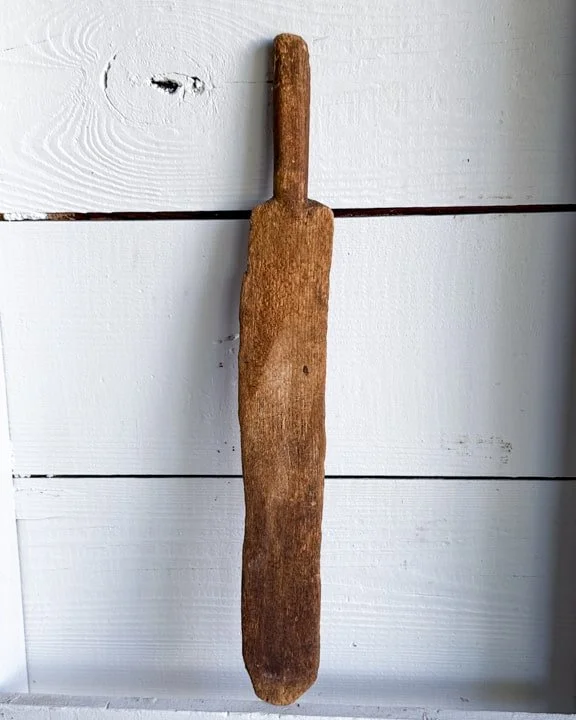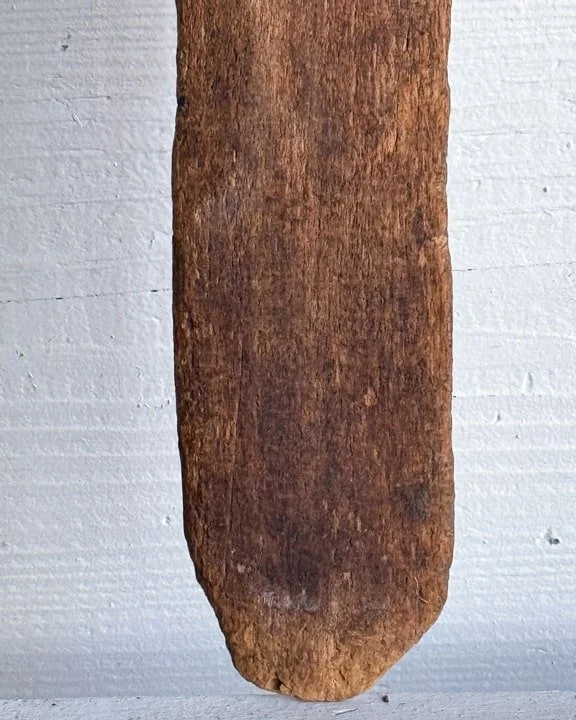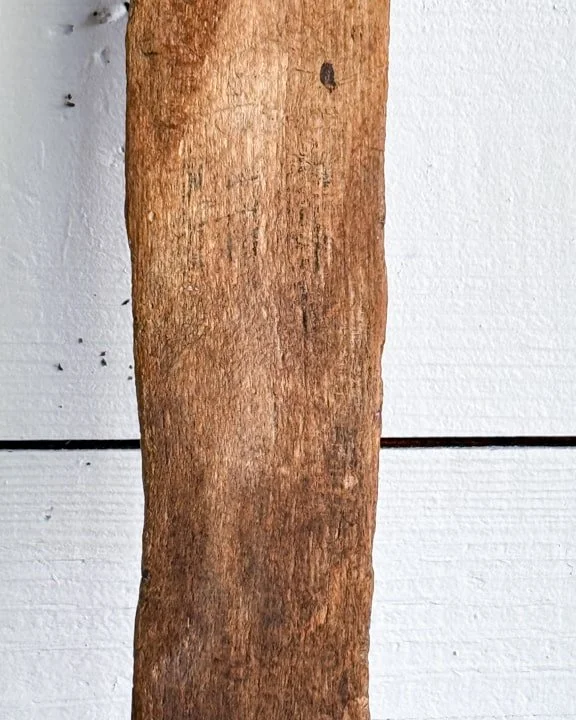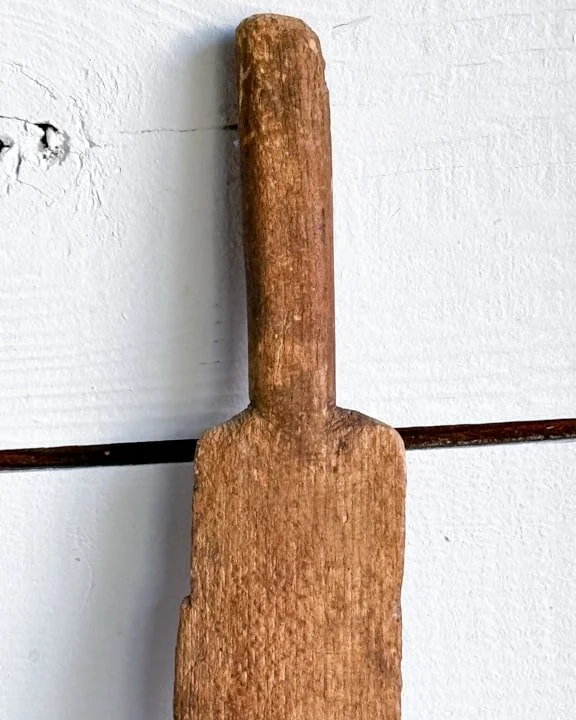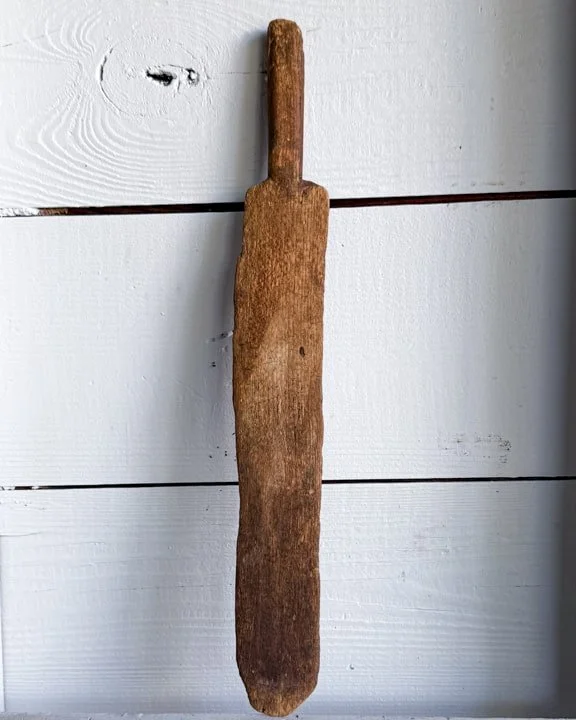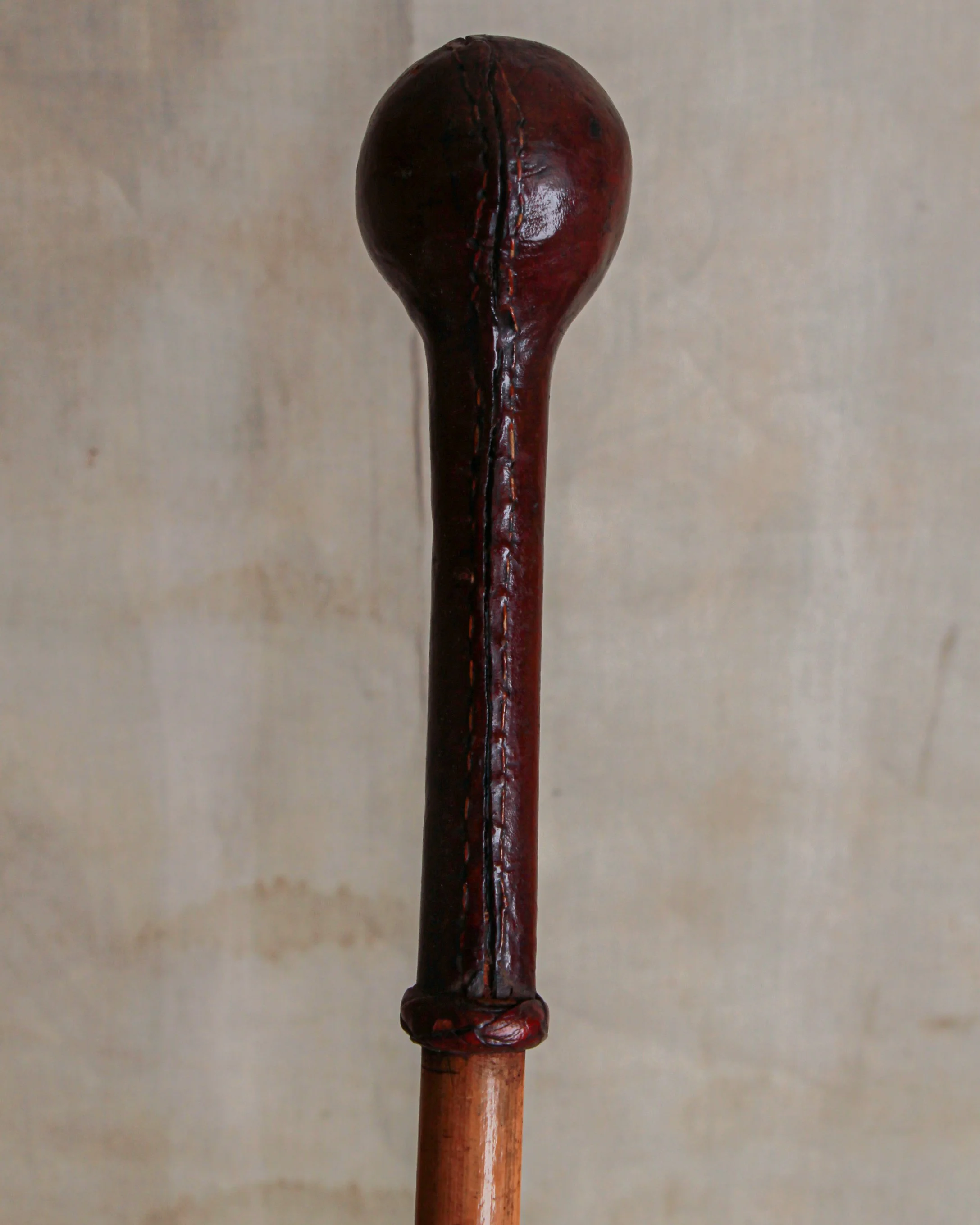
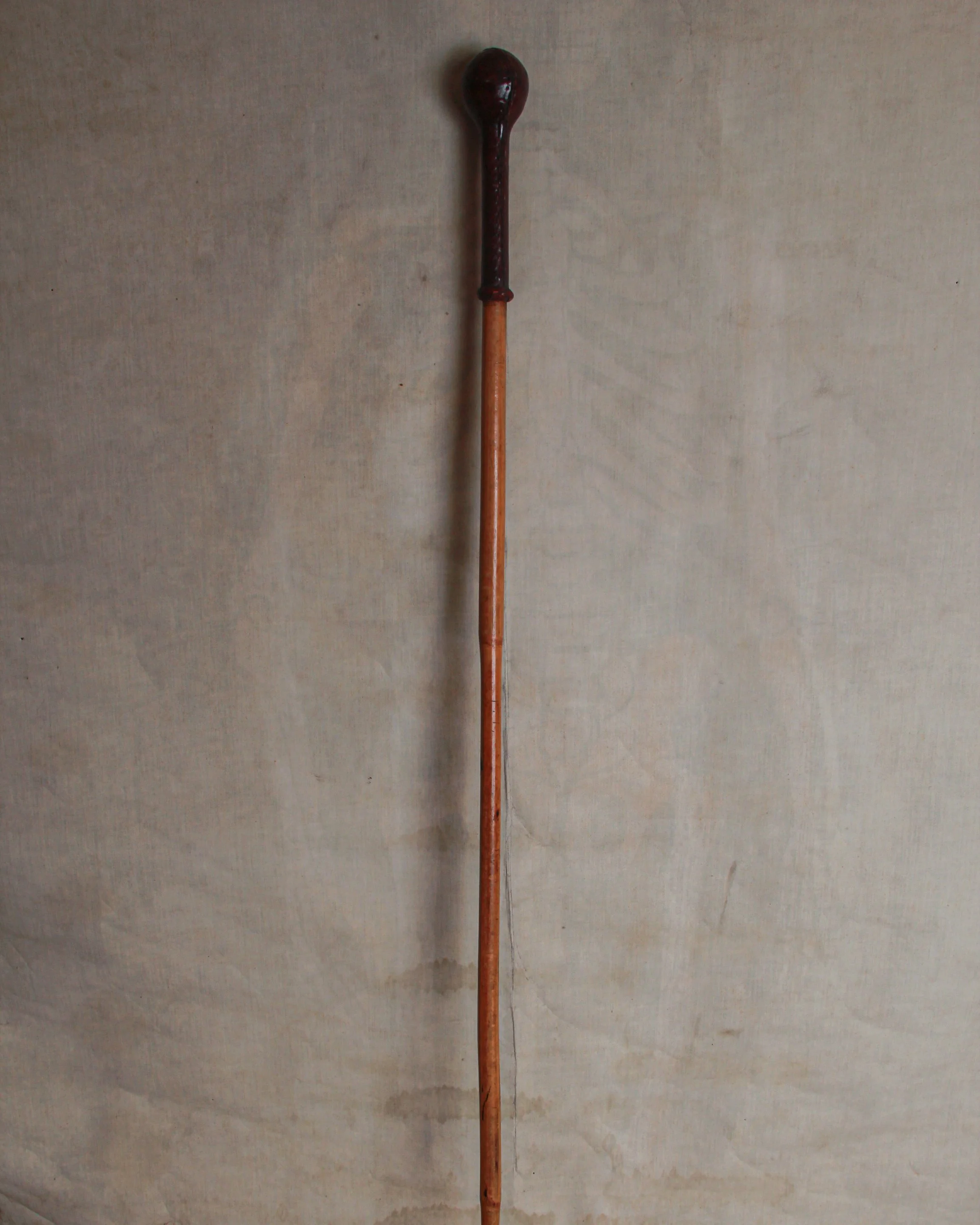
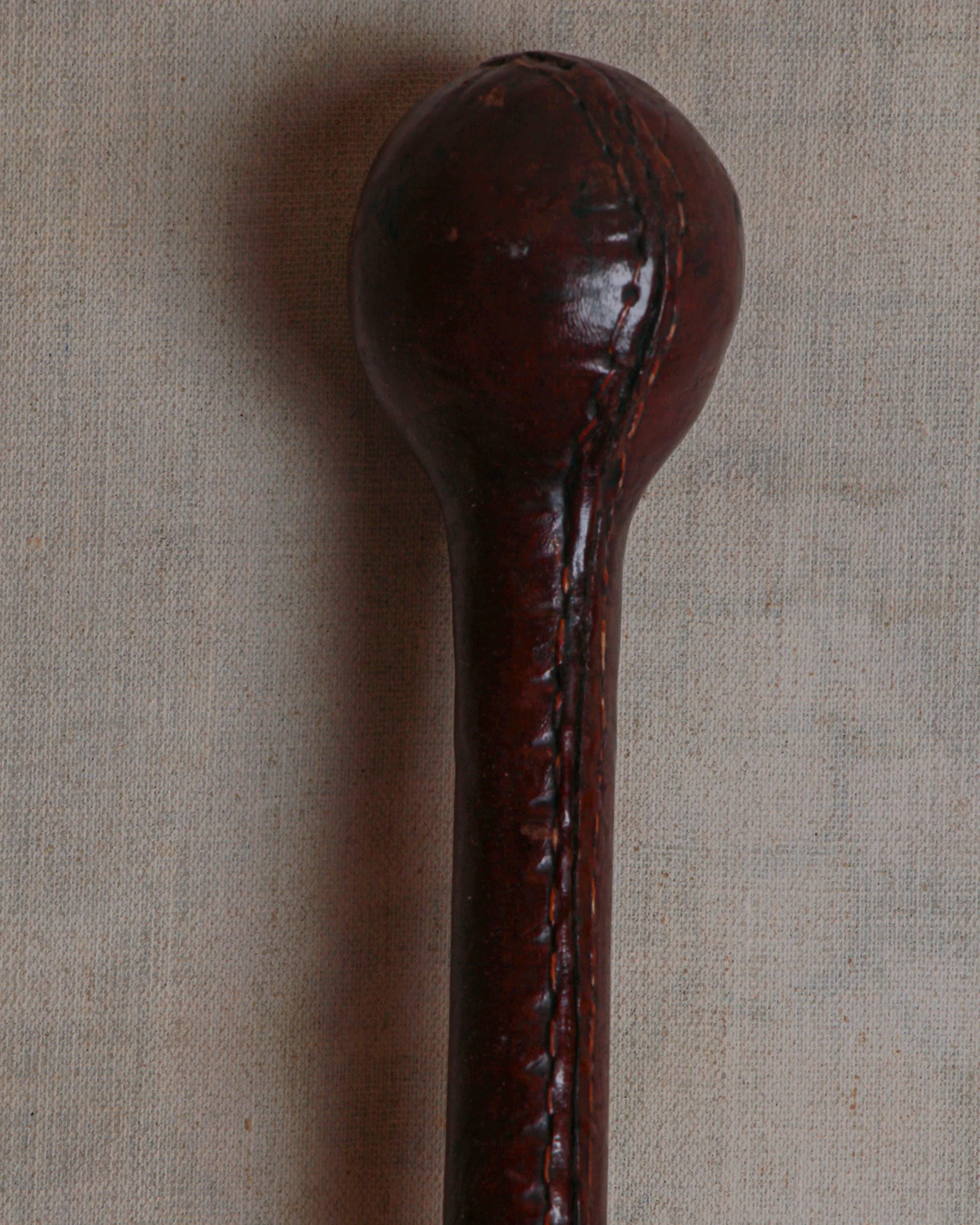
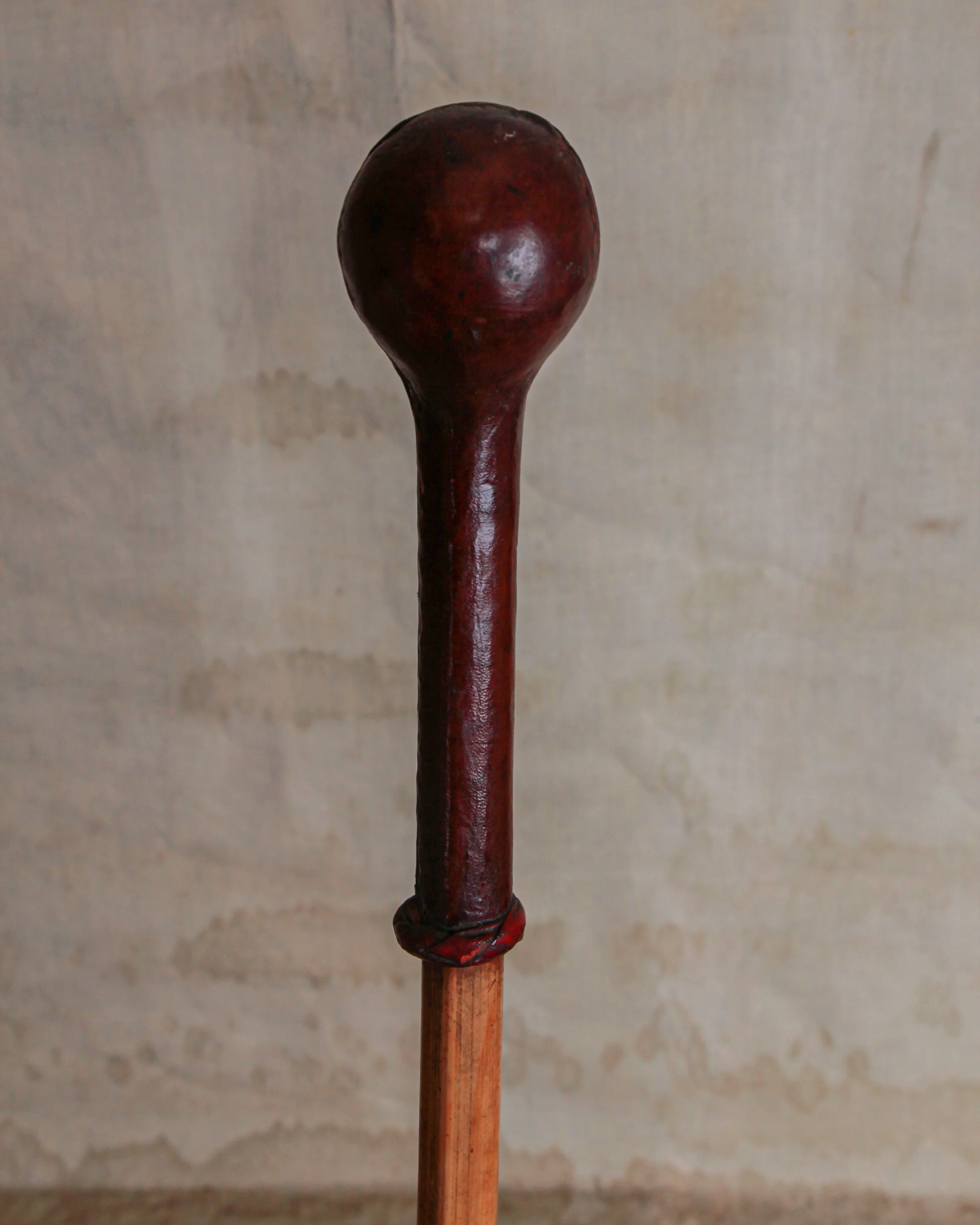
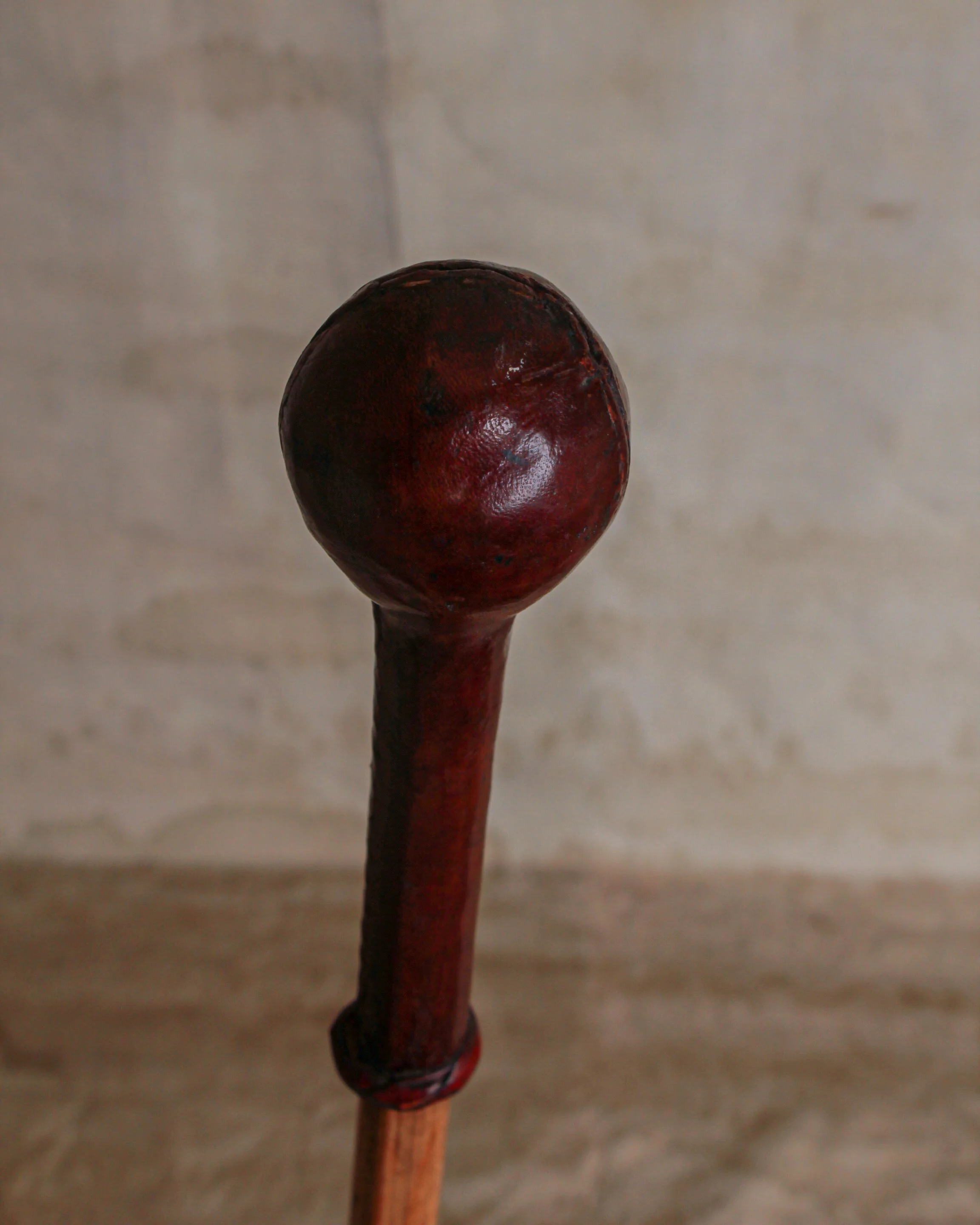
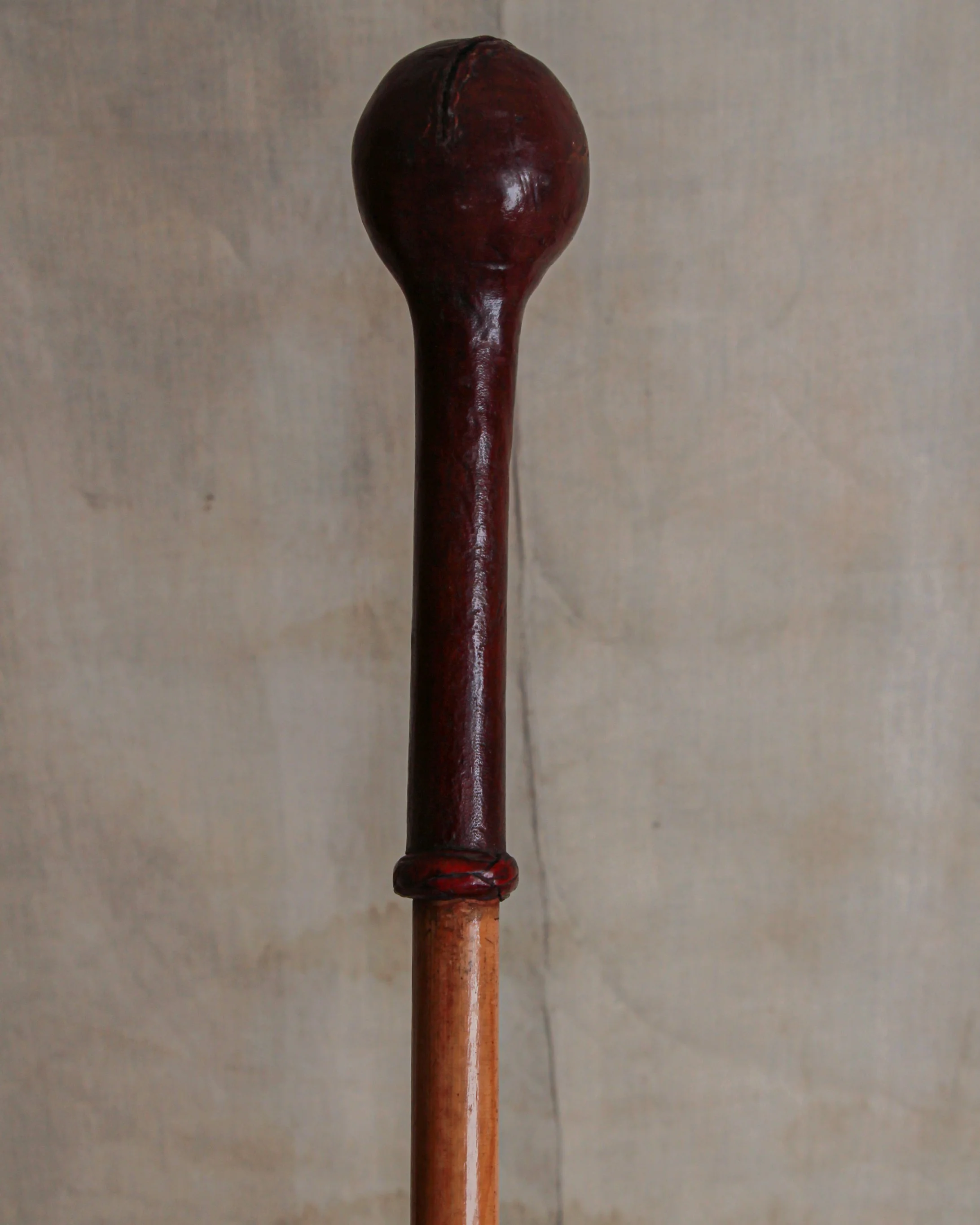
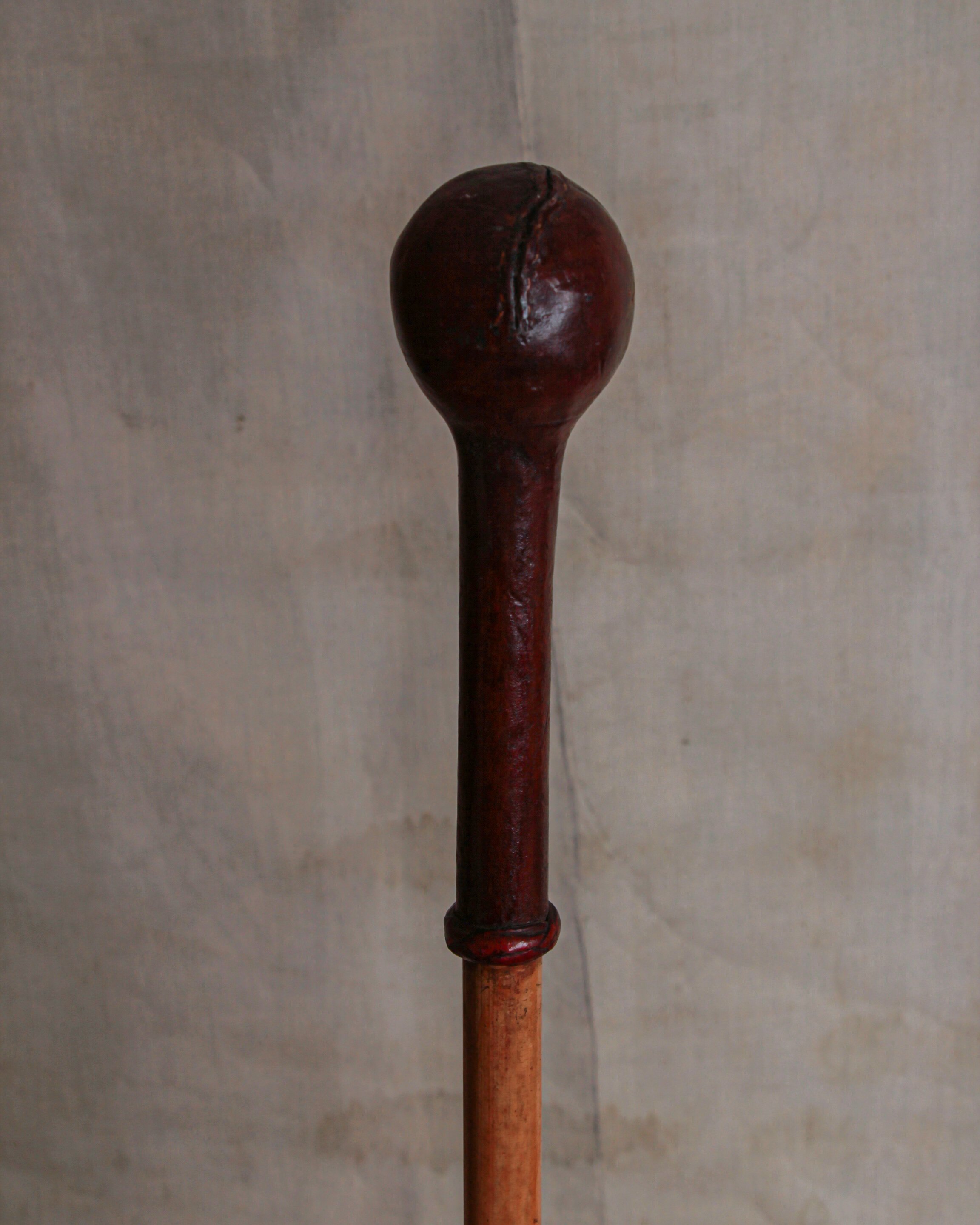
This antique walking stick has a wonderfully simple construction, with a long, slender wooden shaft topped by a dark brown leather-covered handle. The handle is especially nice, shaped with a rounded bulb at the top and a long narrow grip below, all finished with visible hand stitching running along one side. A small wrapped leather collar marks the transition from handle to shaft and gives the whole piece a slightly more finished look.
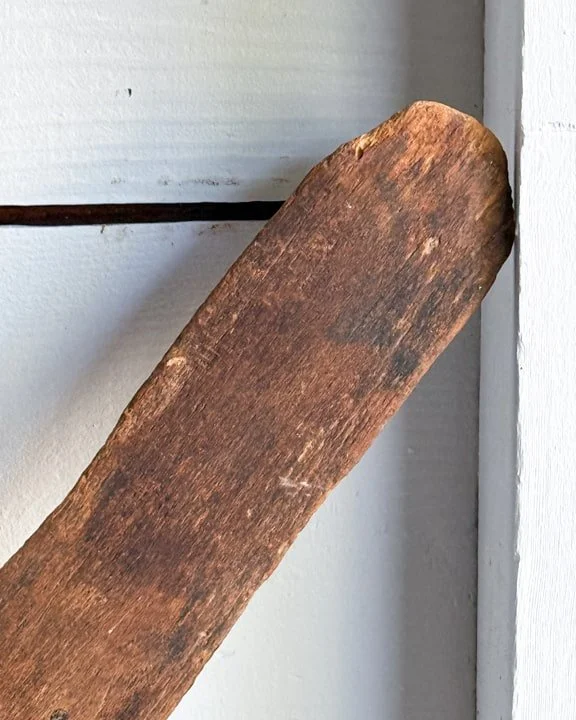
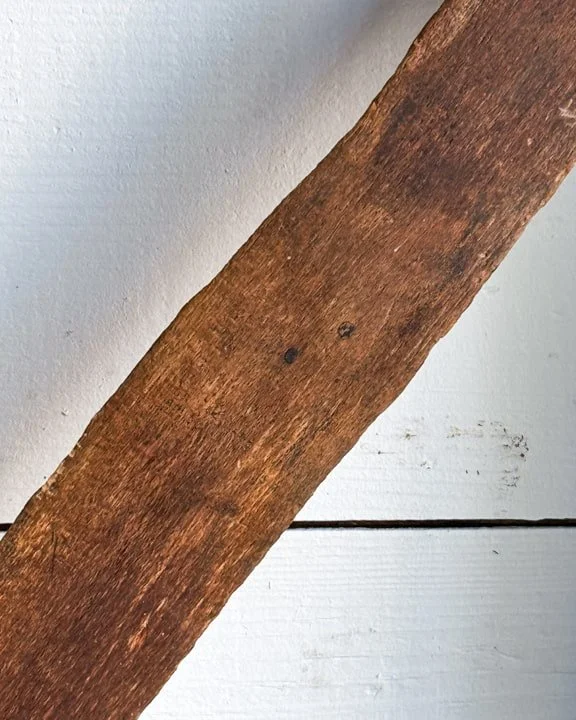
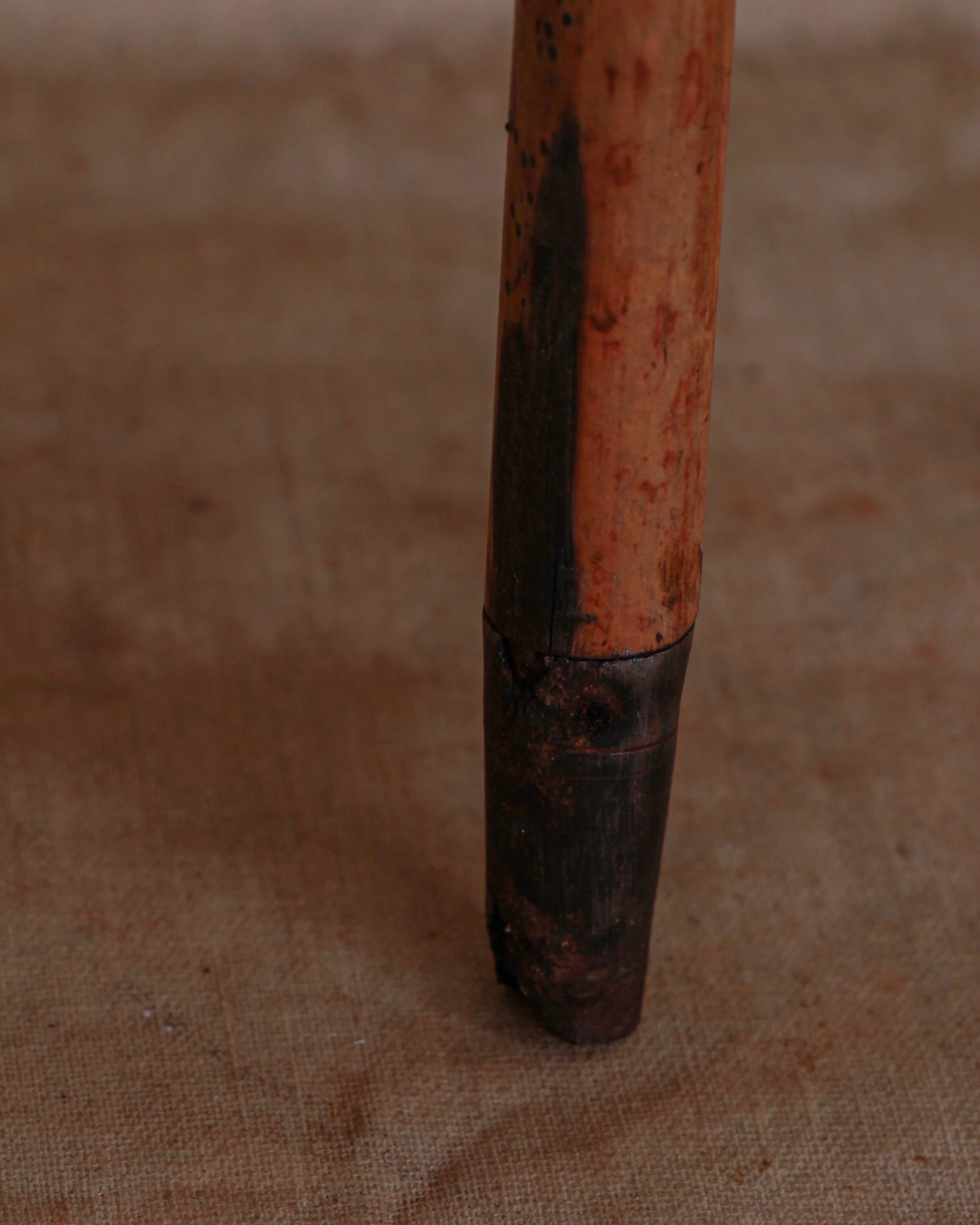
At the opposite end is a dark metal ferrule, fitted over the tip of the wooden shaft to protect it from wear. The wood has developed a warm honey-brown color, with scattered marks, scratches, staining, and surface wear from use. The leather has darkened considerably with age and shows creasing, scuffs, and irregularities along the stitched seam, all of which give it a pleasantly well-used character.
Walking sticks became especially fashionable during the 18th and 19th centuries, when they moved beyond being purely practical objects and became part of everyday dress. By the Victorian and Edwardian periods, a gentleman’s cane could say quite a bit about its owner. Handles were made from an enormous range of materials, including horn, silver, ivory, wood, leather, and occasionally far more eccentric choices.
Leather-covered grips were practical as well as attractive, providing a comfortable surface in the hand while allowing makers to shape handles without relying on expensive materials. Some examples were made for everyday walking, while others were associated with sporting, military, equestrian, or country pursuits.
This example is refreshingly understated. There is no elaborate silver mount or carved decoration, just good materials, honest construction, and evidence of years of handling. The stitched leather top gives it just enough personality, while the slim proportions and old surface make it an appealing piece of functional history.
This antique walking stick has a wonderfully simple construction, with a long, slender wooden shaft topped by a dark brown leather-covered handle. The handle is especially nice, shaped with a rounded bulb at the top and a long narrow grip below, all finished with visible hand stitching running along one side. A small wrapped leather collar marks the transition from handle to shaft and gives the whole piece a slightly more finished look.
At the opposite end is a dark metal ferrule, fitted over the tip of the wooden shaft to protect it from wear. The wood has developed a warm honey-brown color, with scattered marks, scratches, staining, and surface wear from use. The leather has darkened considerably with age and shows creasing, scuffs, and irregularities along the stitched seam, all of which give it a pleasantly well-used character.
Walking sticks became especially fashionable during the 18th and 19th centuries, when they moved beyond being purely practical objects and became part of everyday dress. By the Victorian and Edwardian periods, a gentleman’s cane could say quite a bit about its owner. Handles were made from an enormous range of materials, including horn, silver, ivory, wood, leather, and occasionally far more eccentric choices.
Leather-covered grips were practical as well as attractive, providing a comfortable surface in the hand while allowing makers to shape handles without relying on expensive materials. Some examples were made for everyday walking, while others were associated with sporting, military, equestrian, or country pursuits.
This example is refreshingly understated. There is no elaborate silver mount or carved decoration, just good materials, honest construction, and evidence of years of handling. The stitched leather top gives it just enough personality, while the slim proportions and old surface make it an appealing piece of functional history.