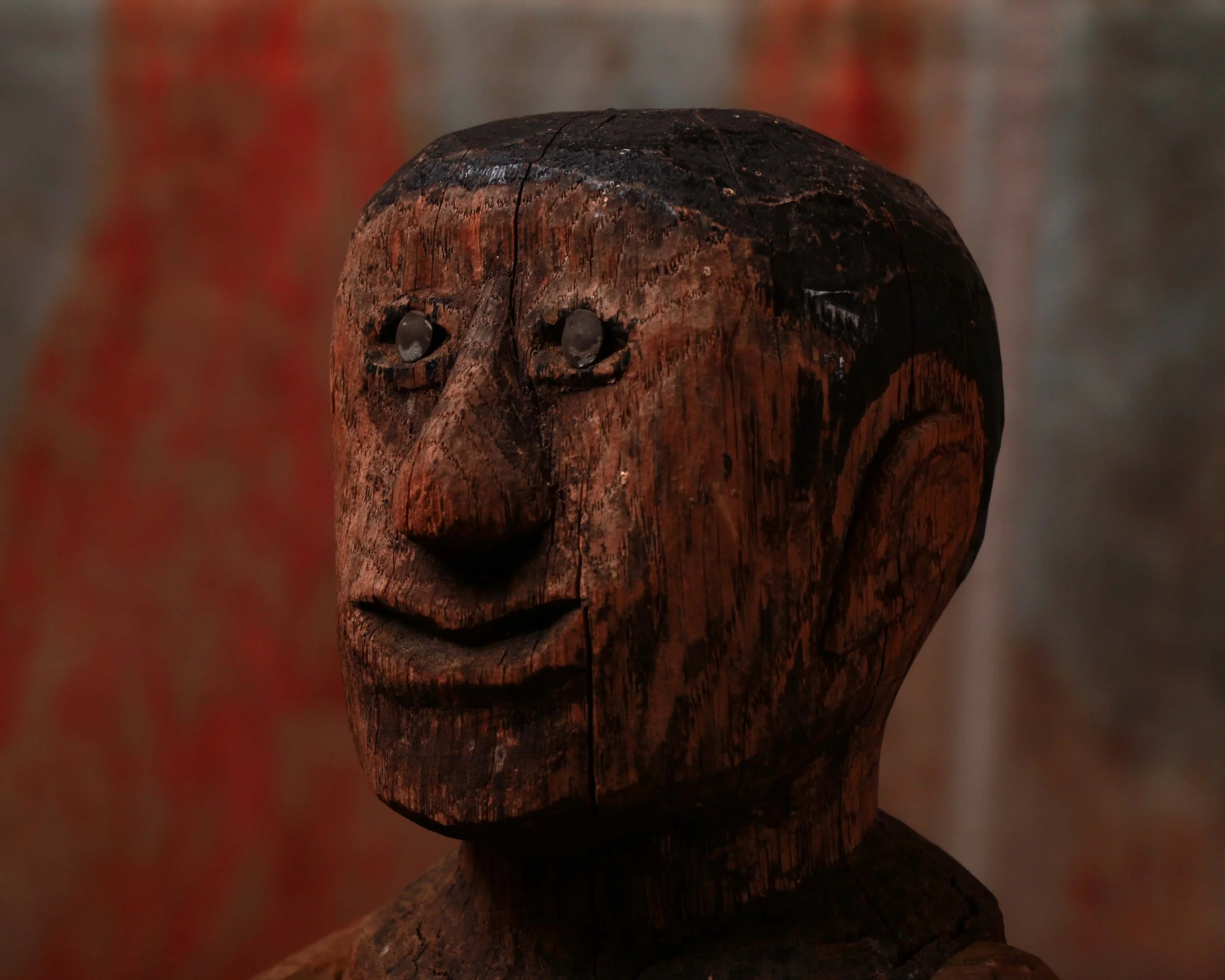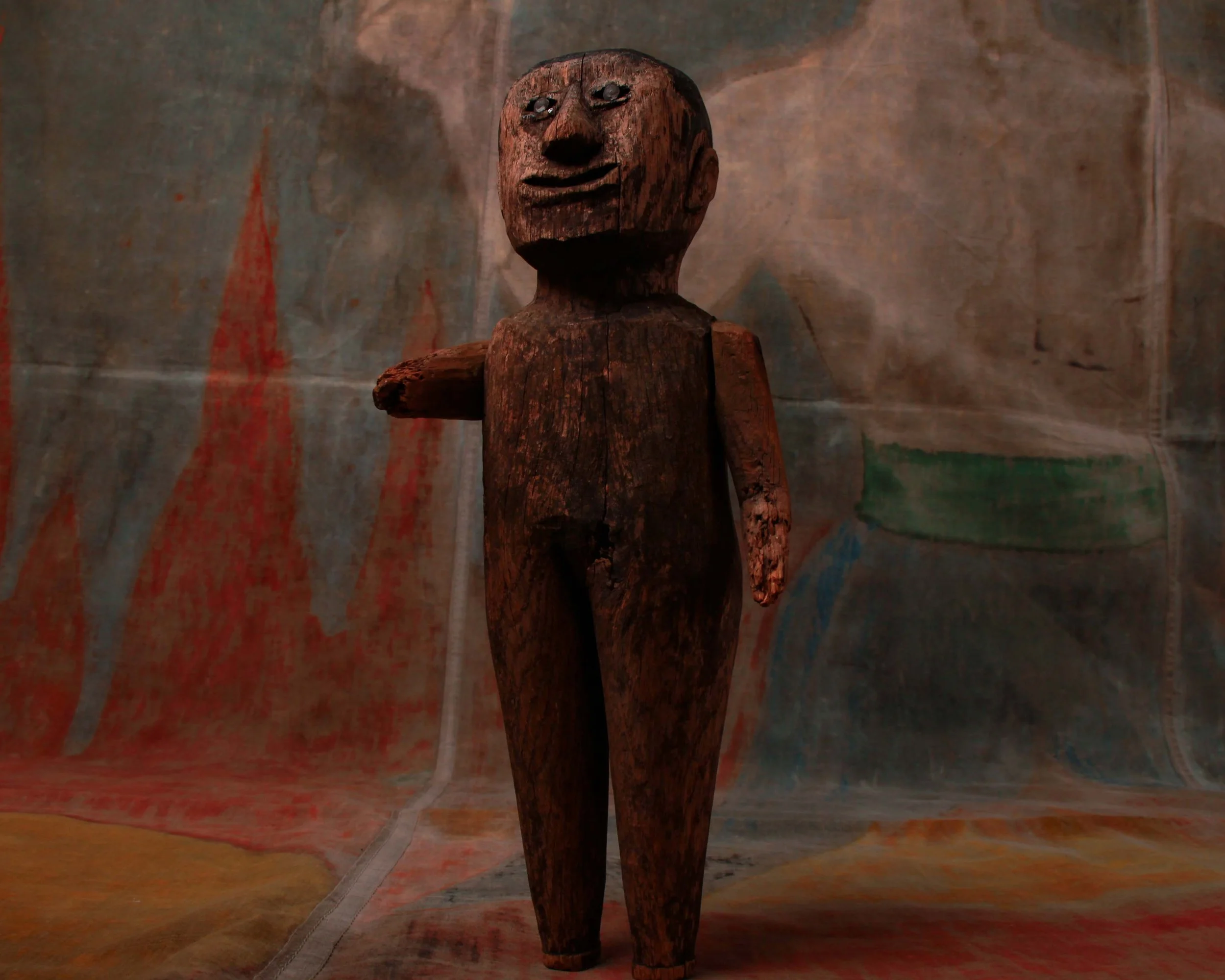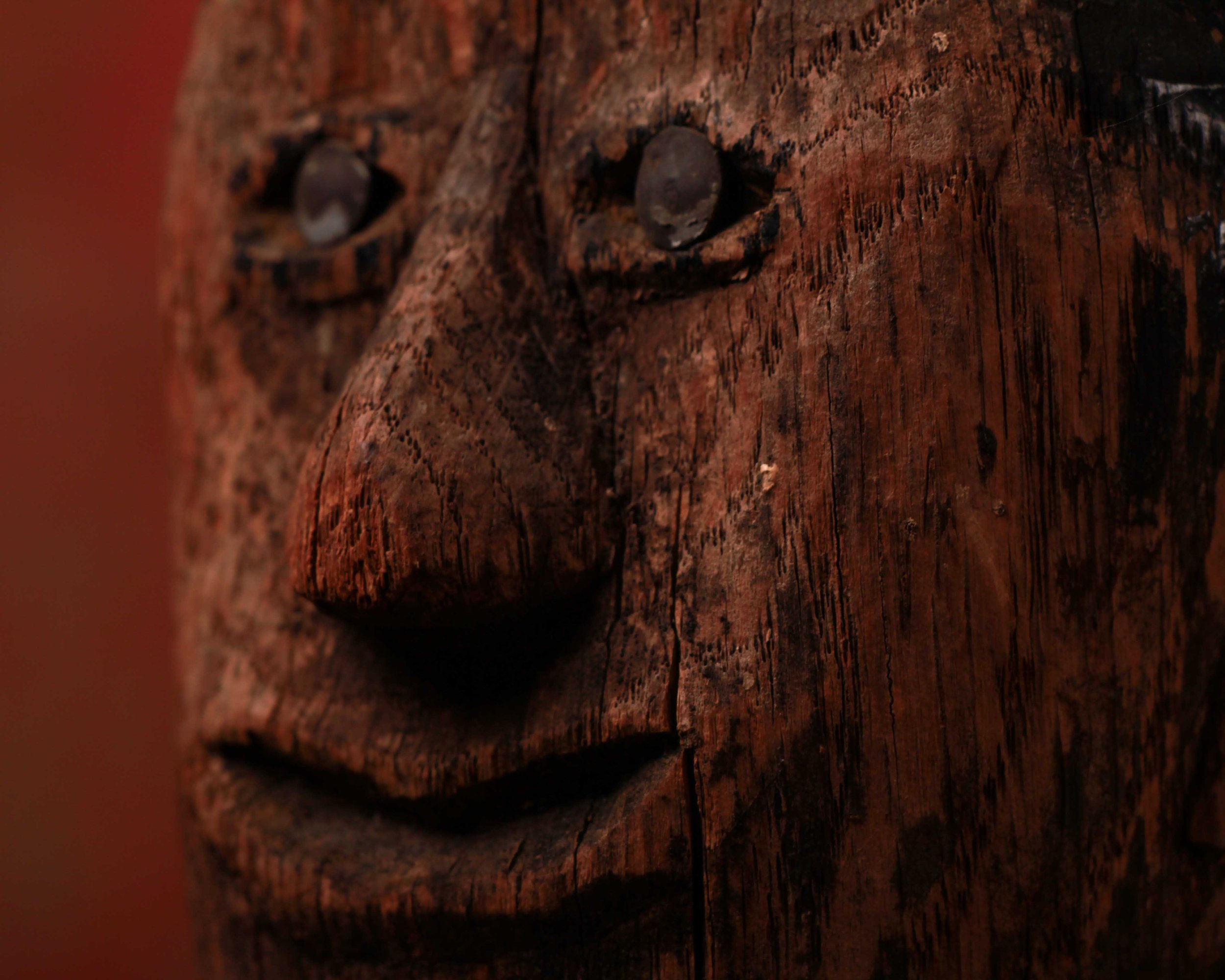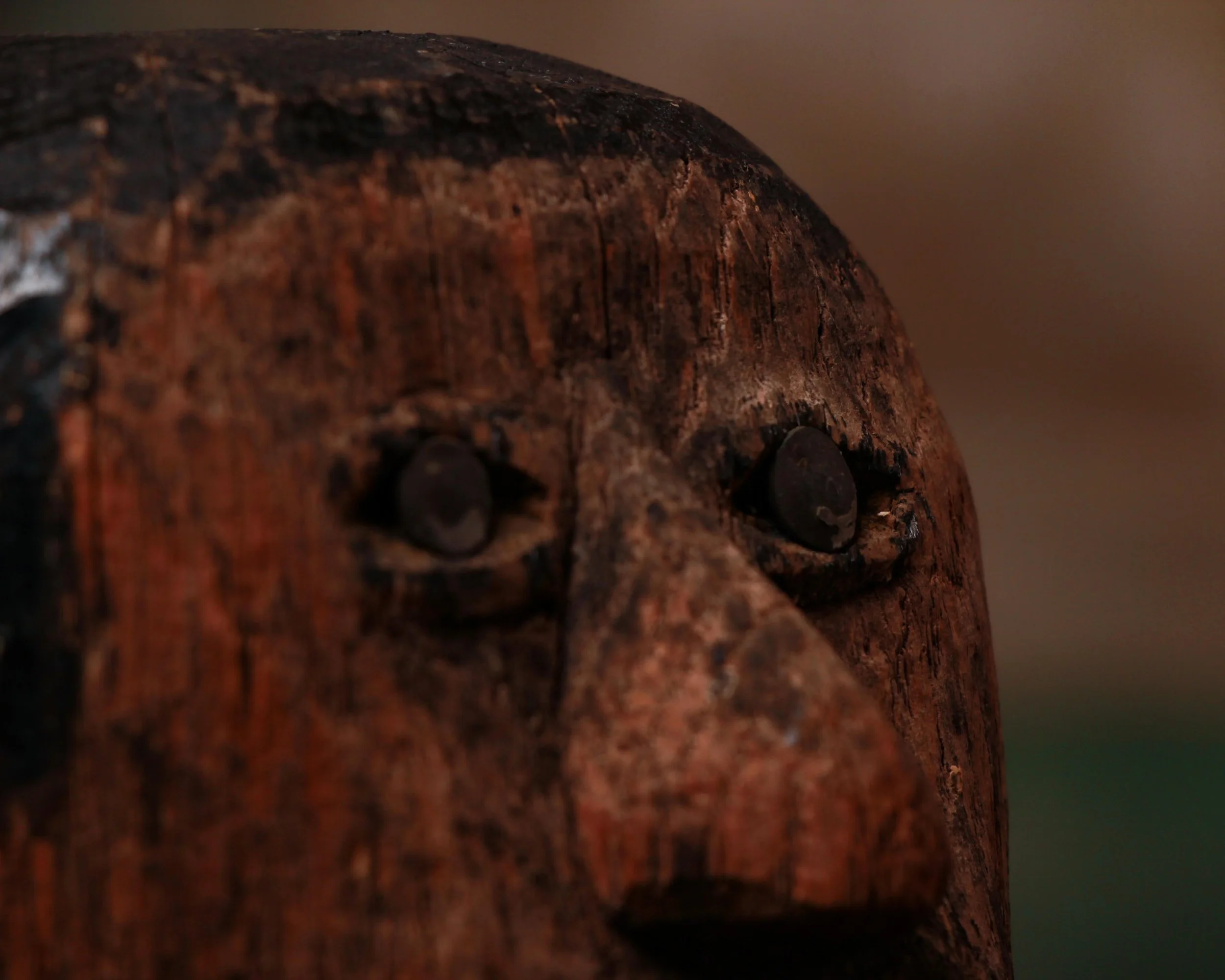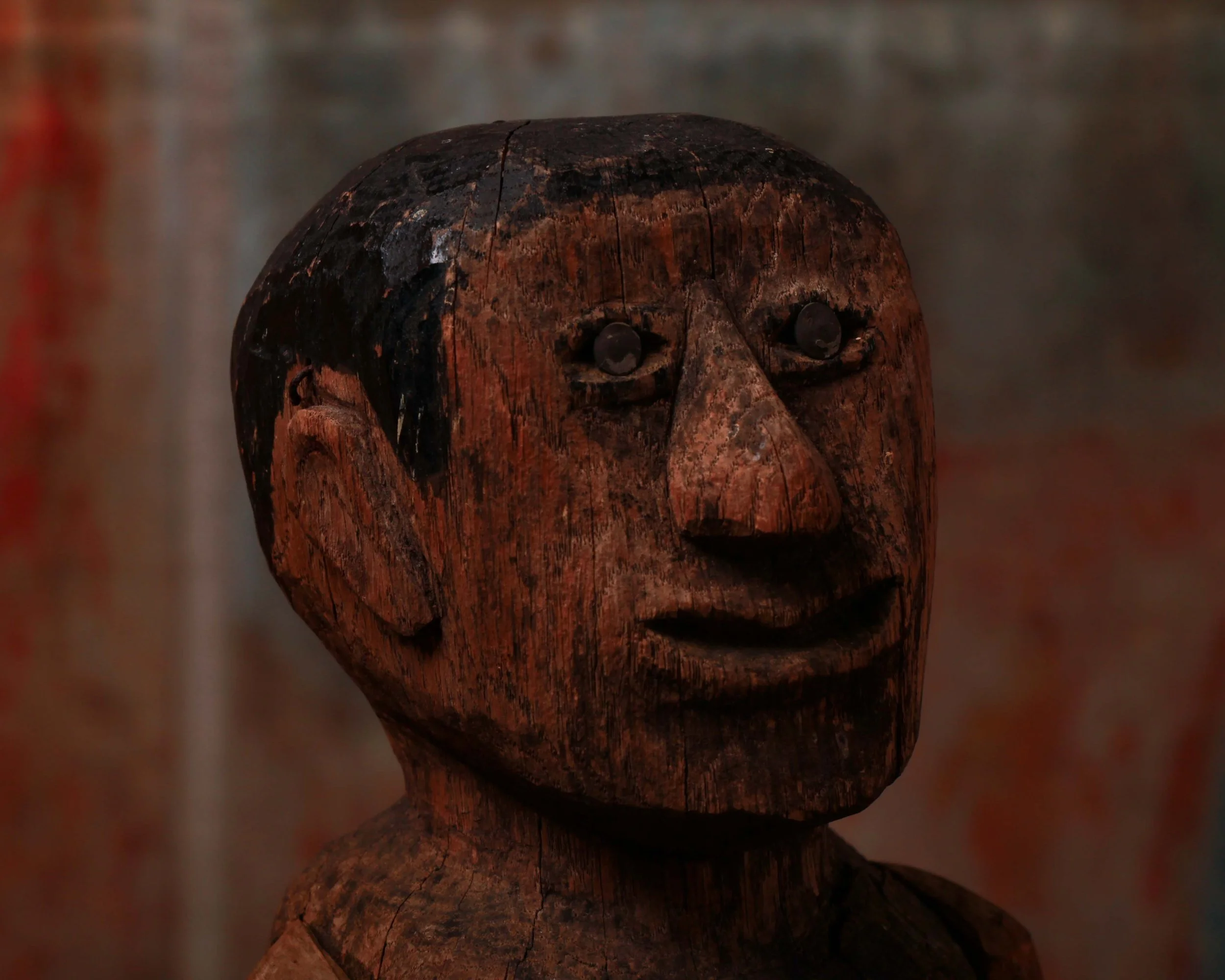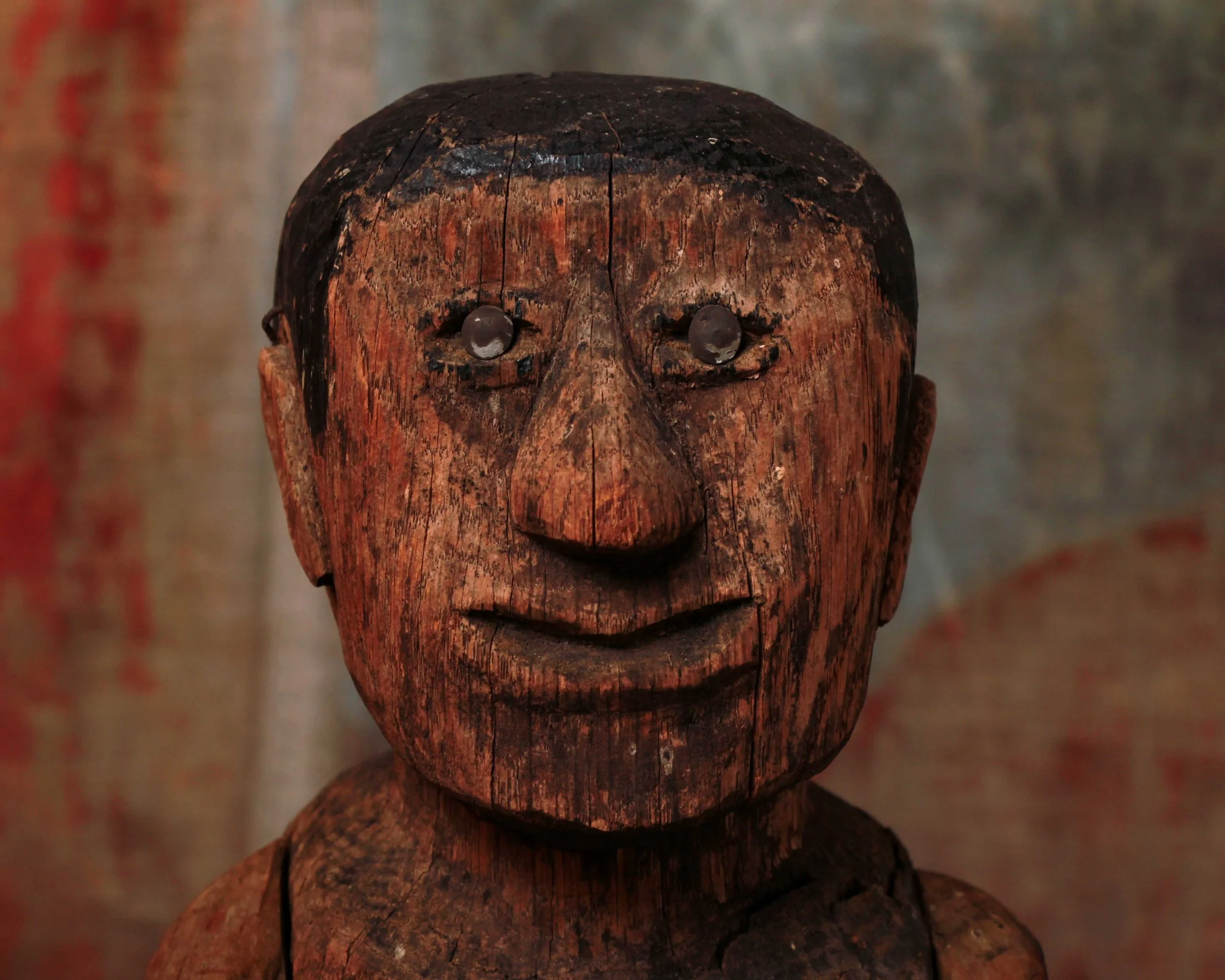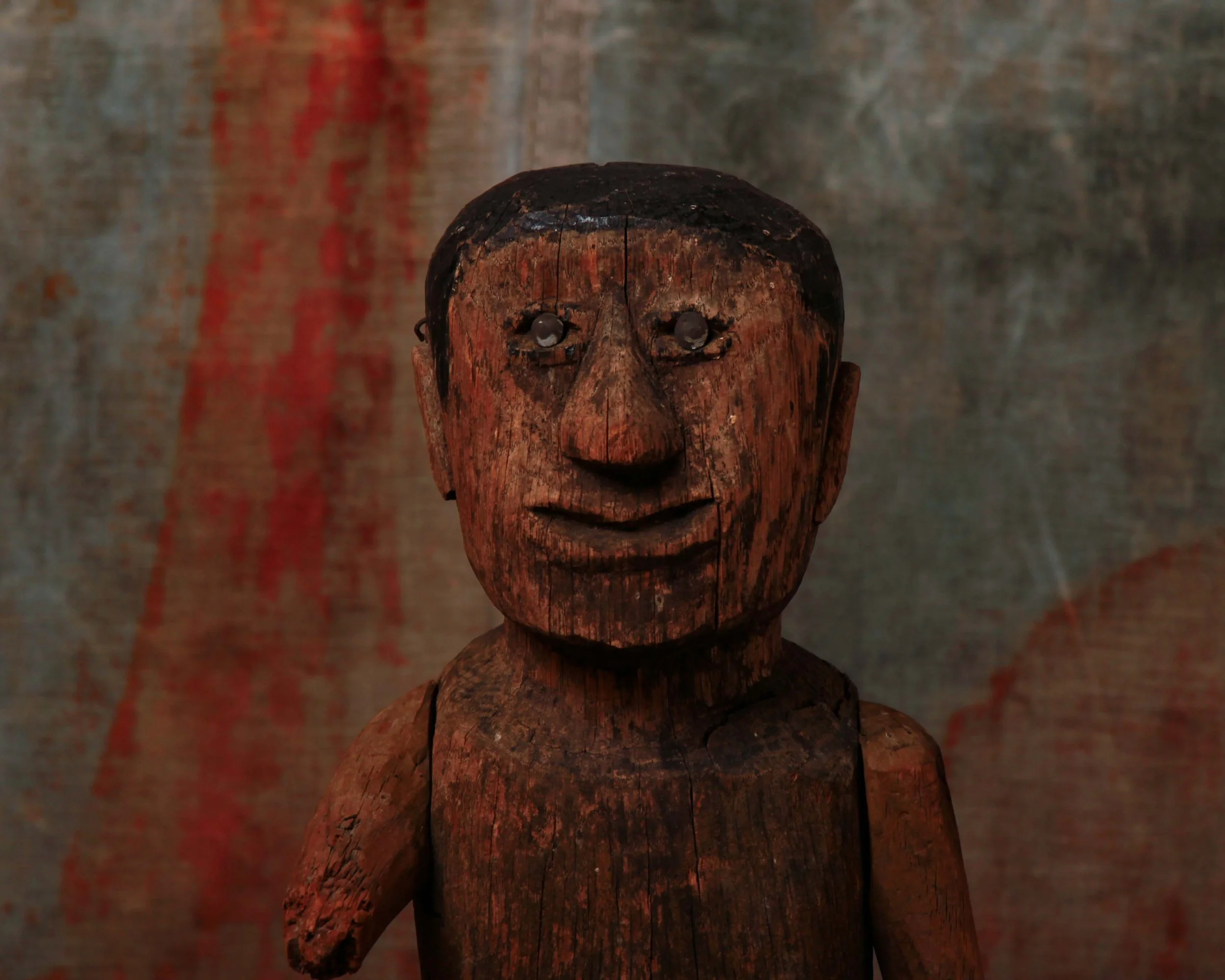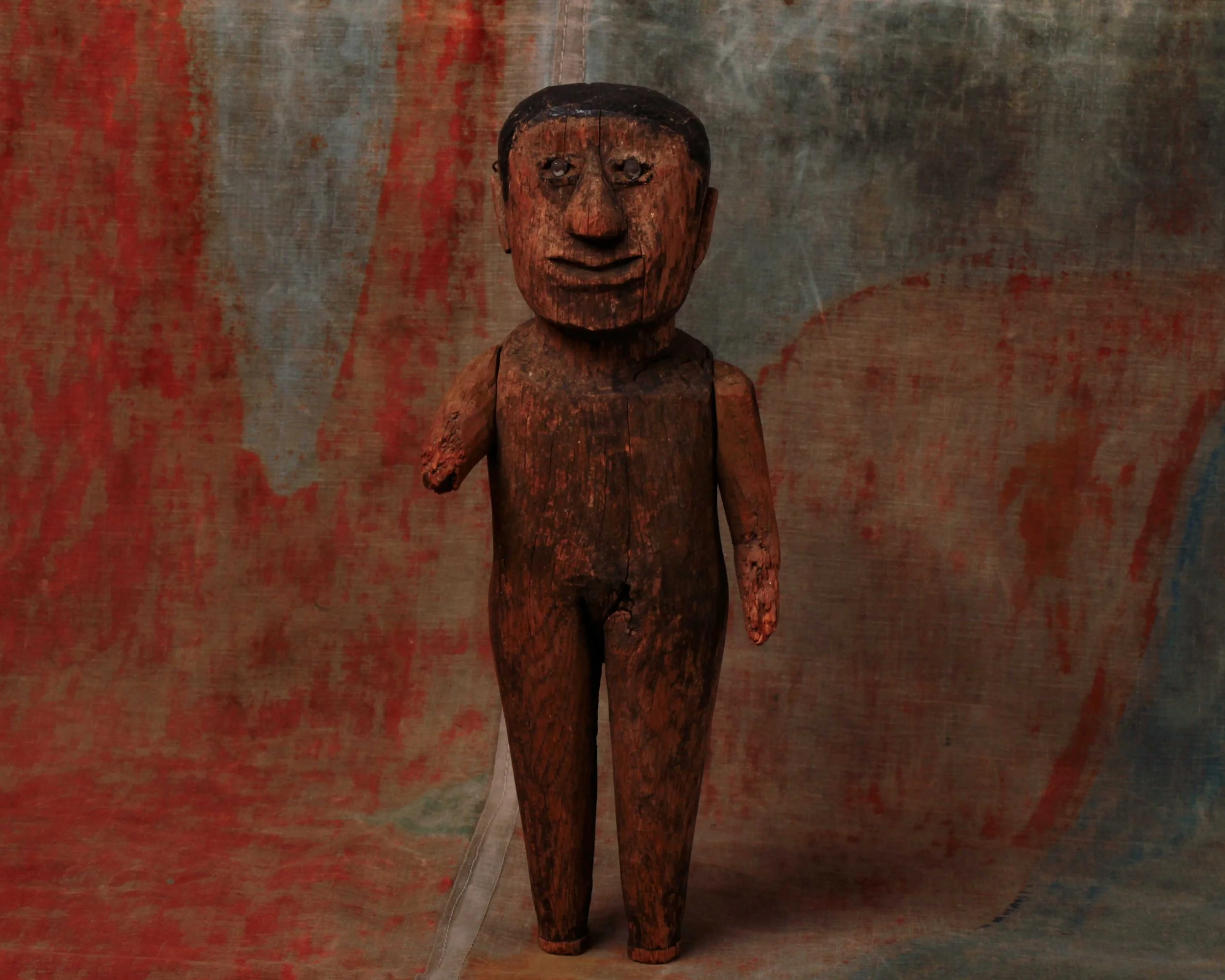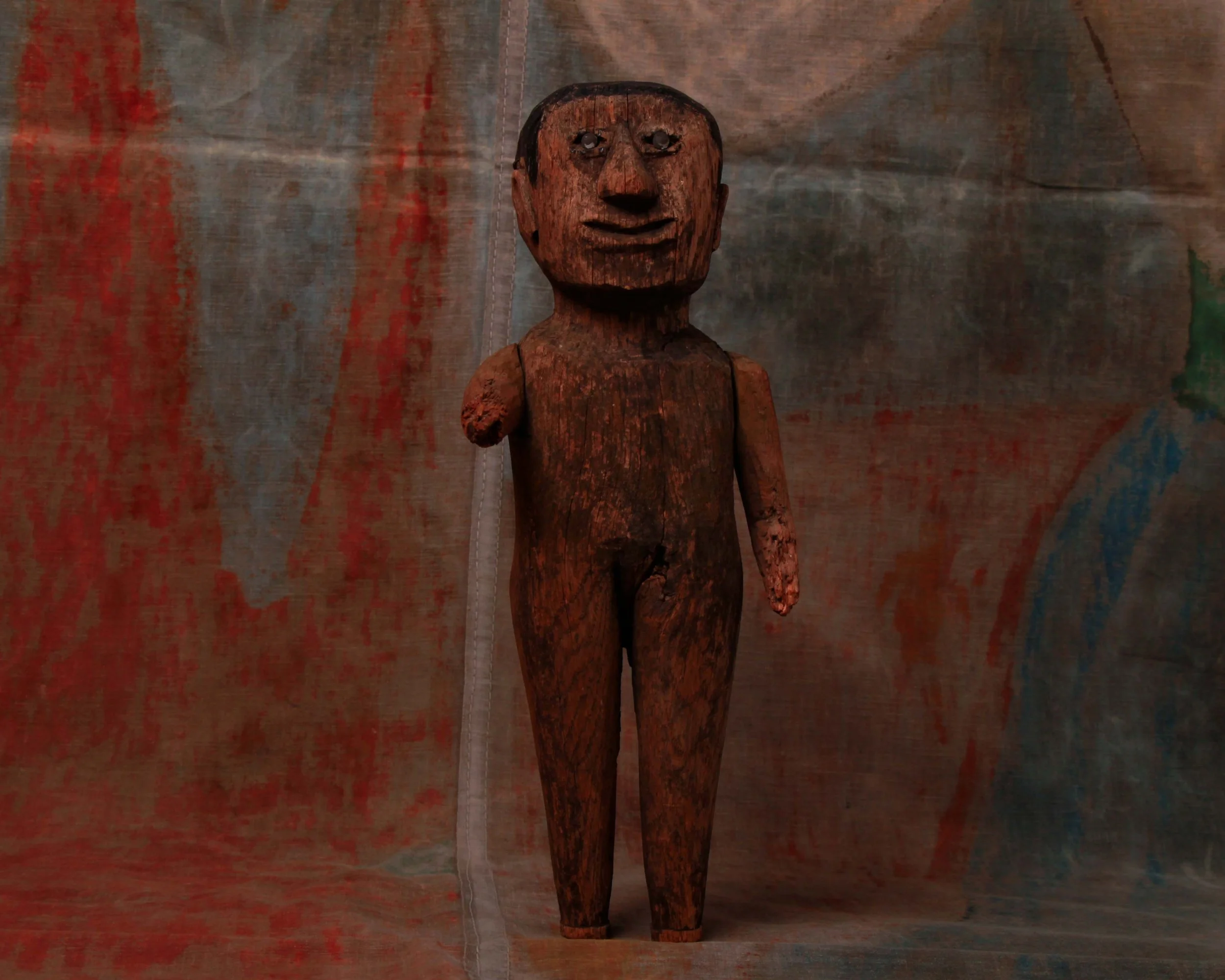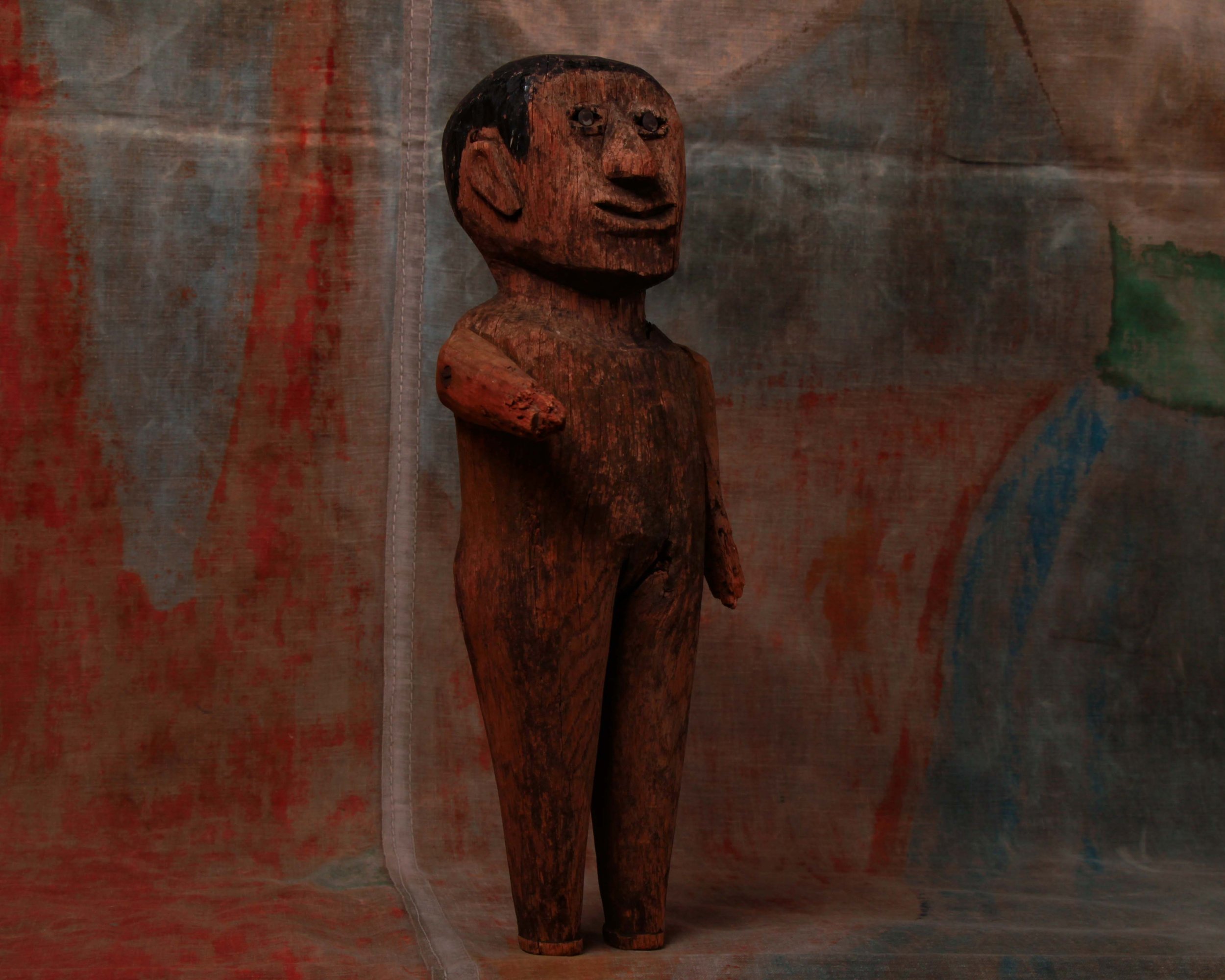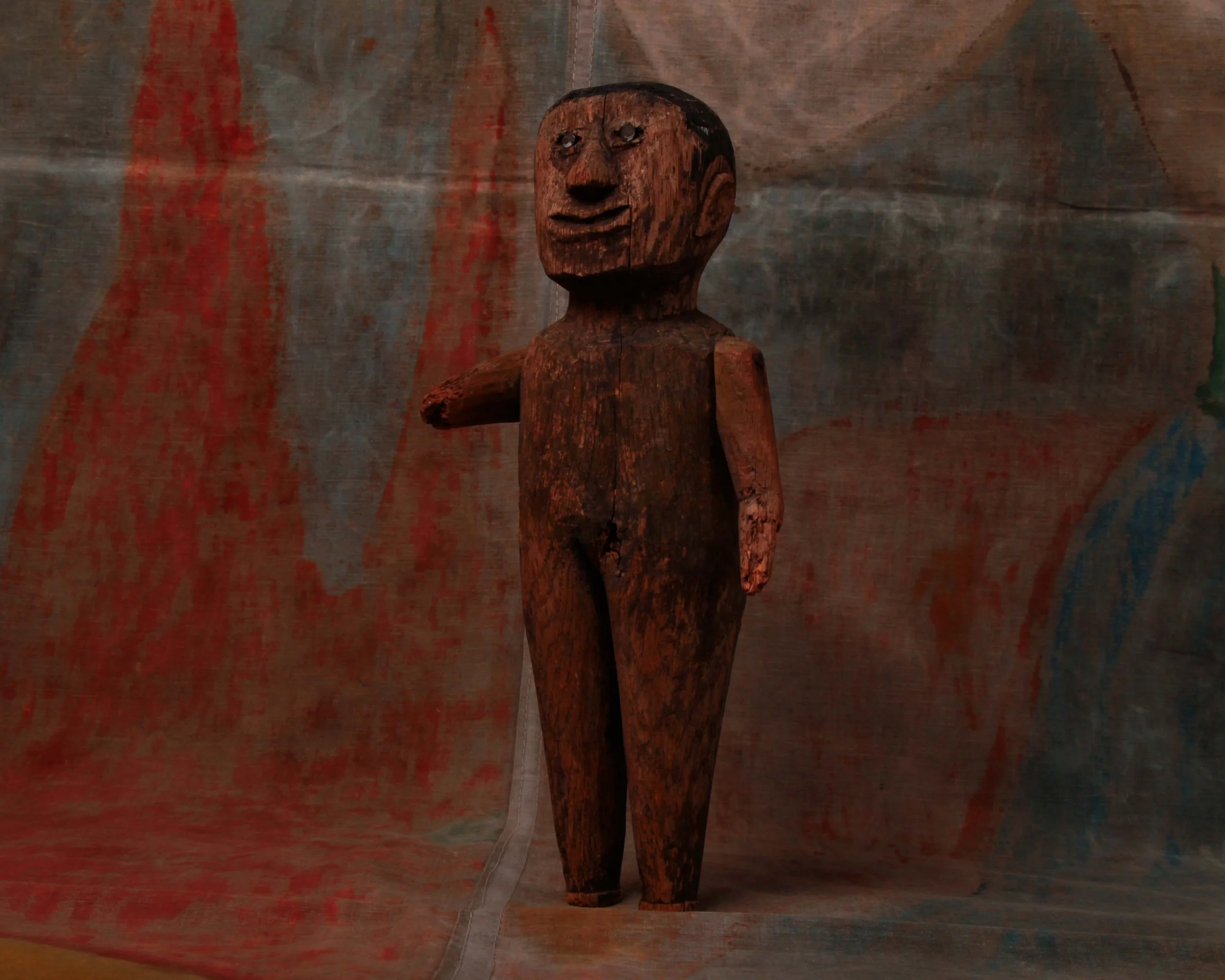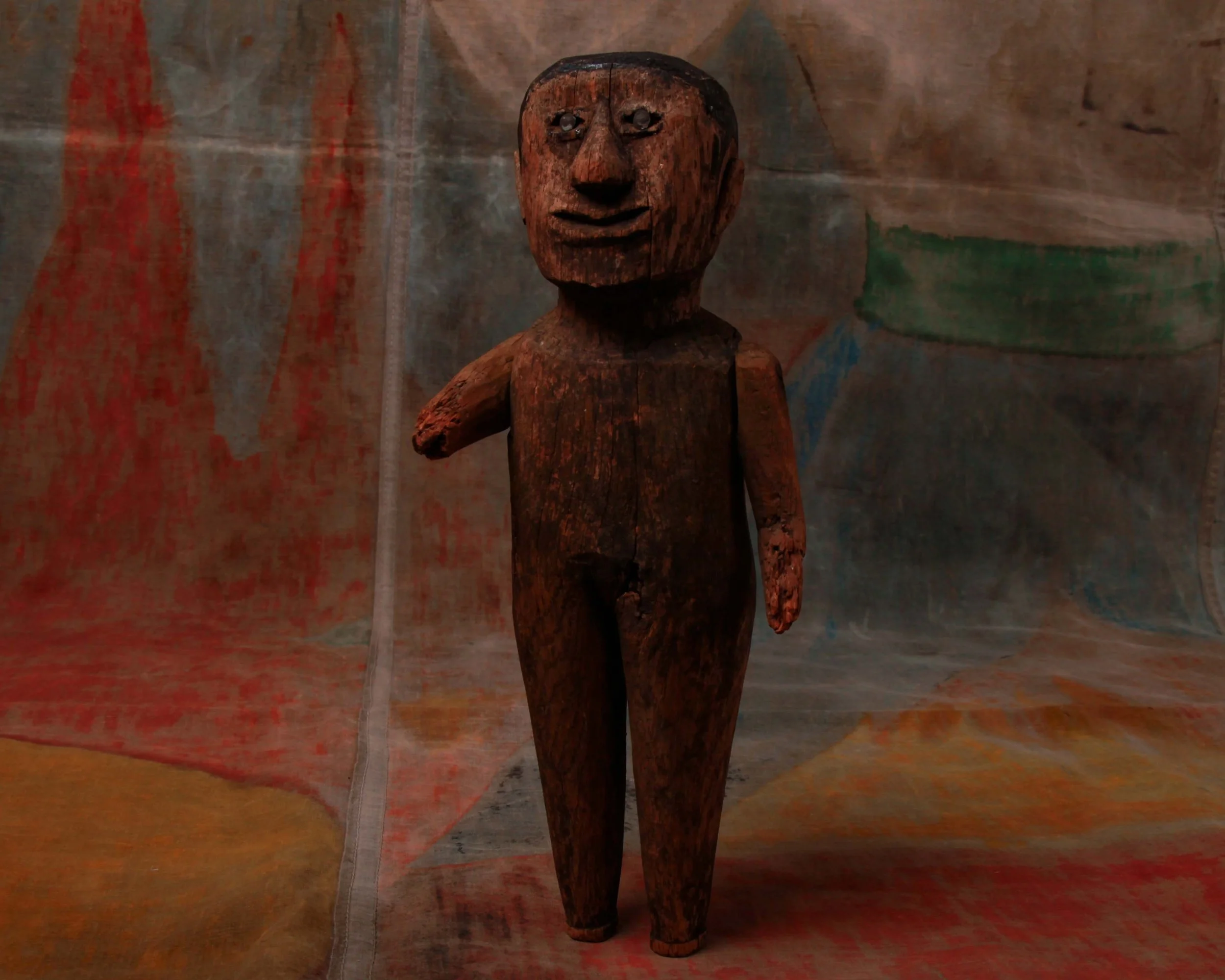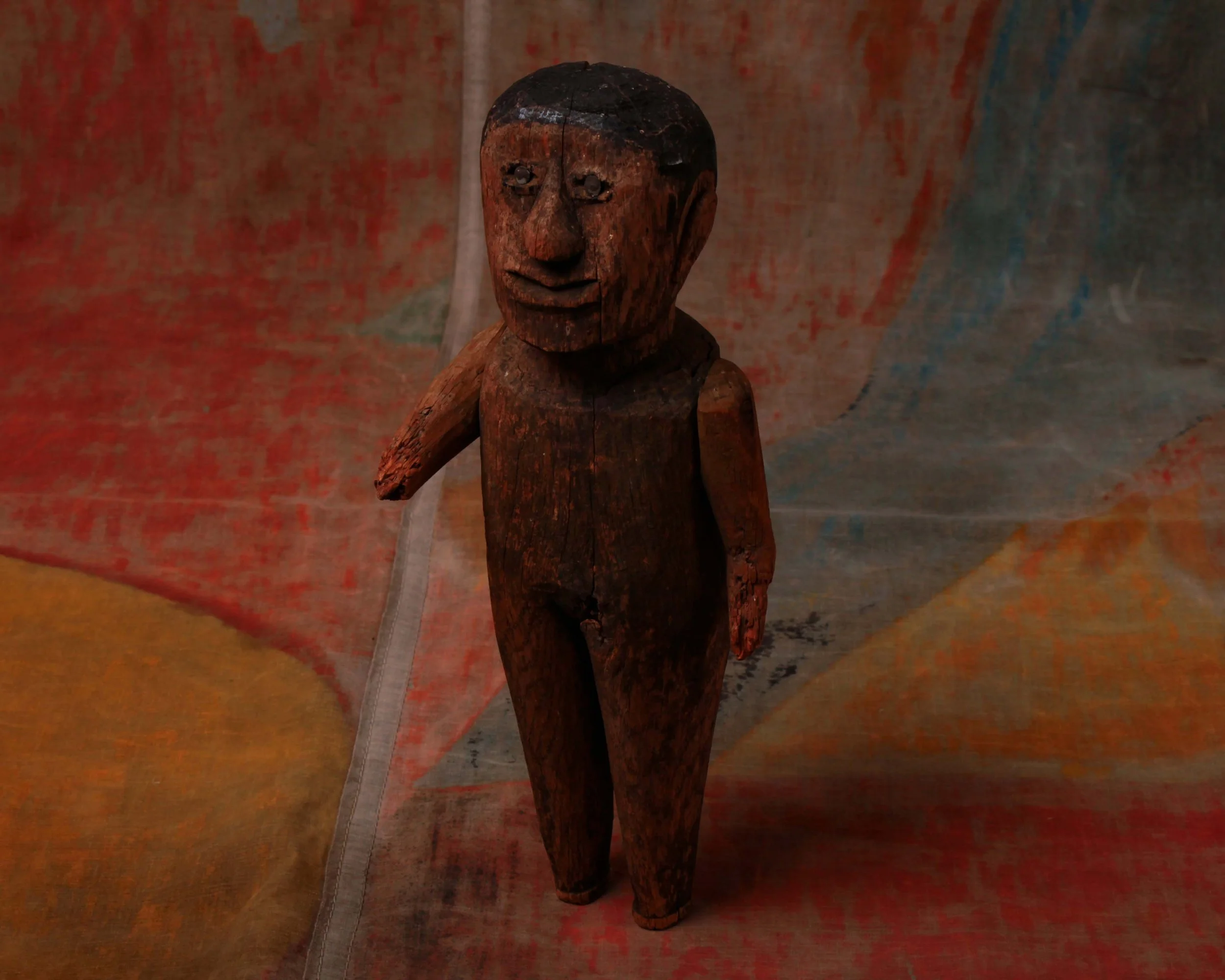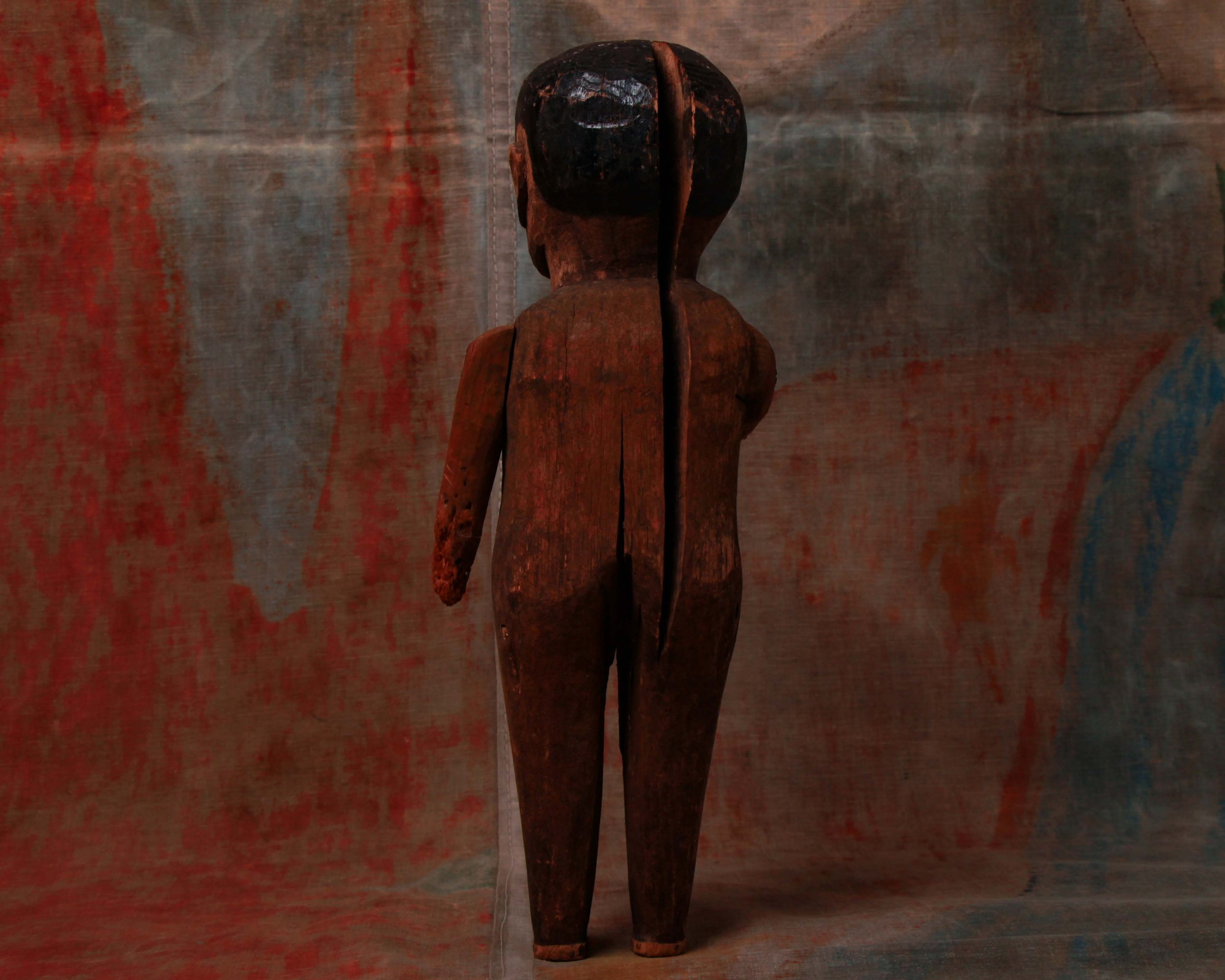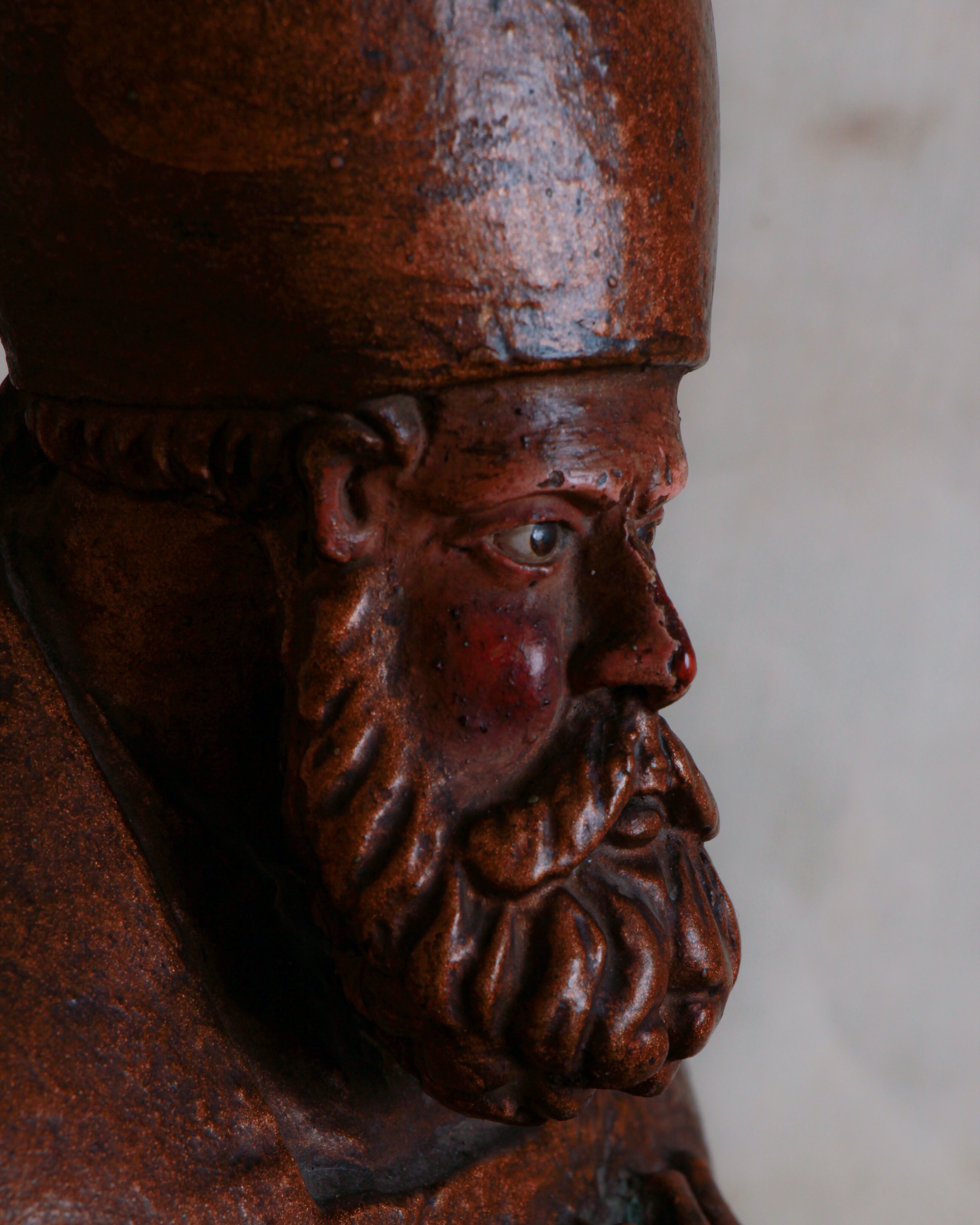
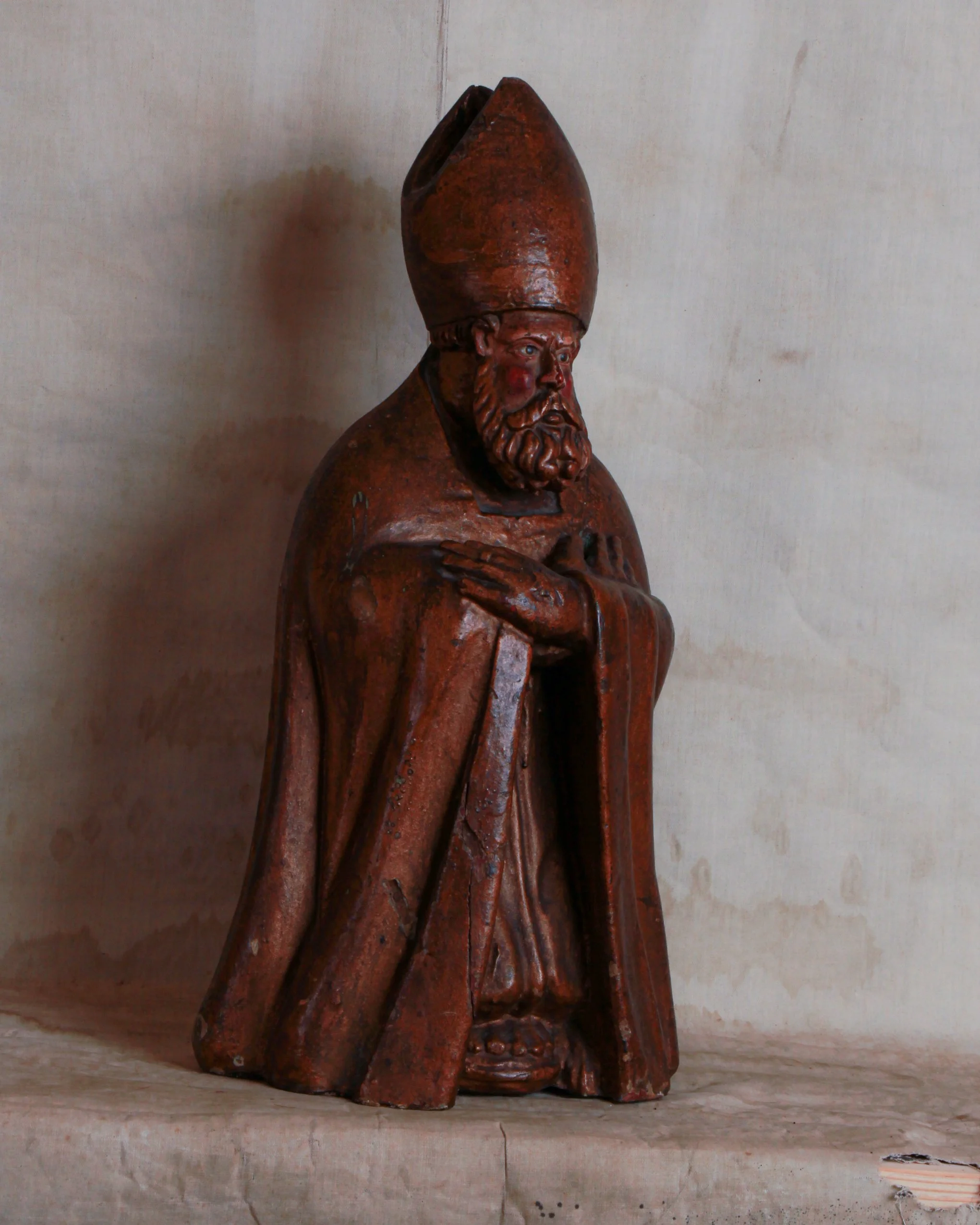
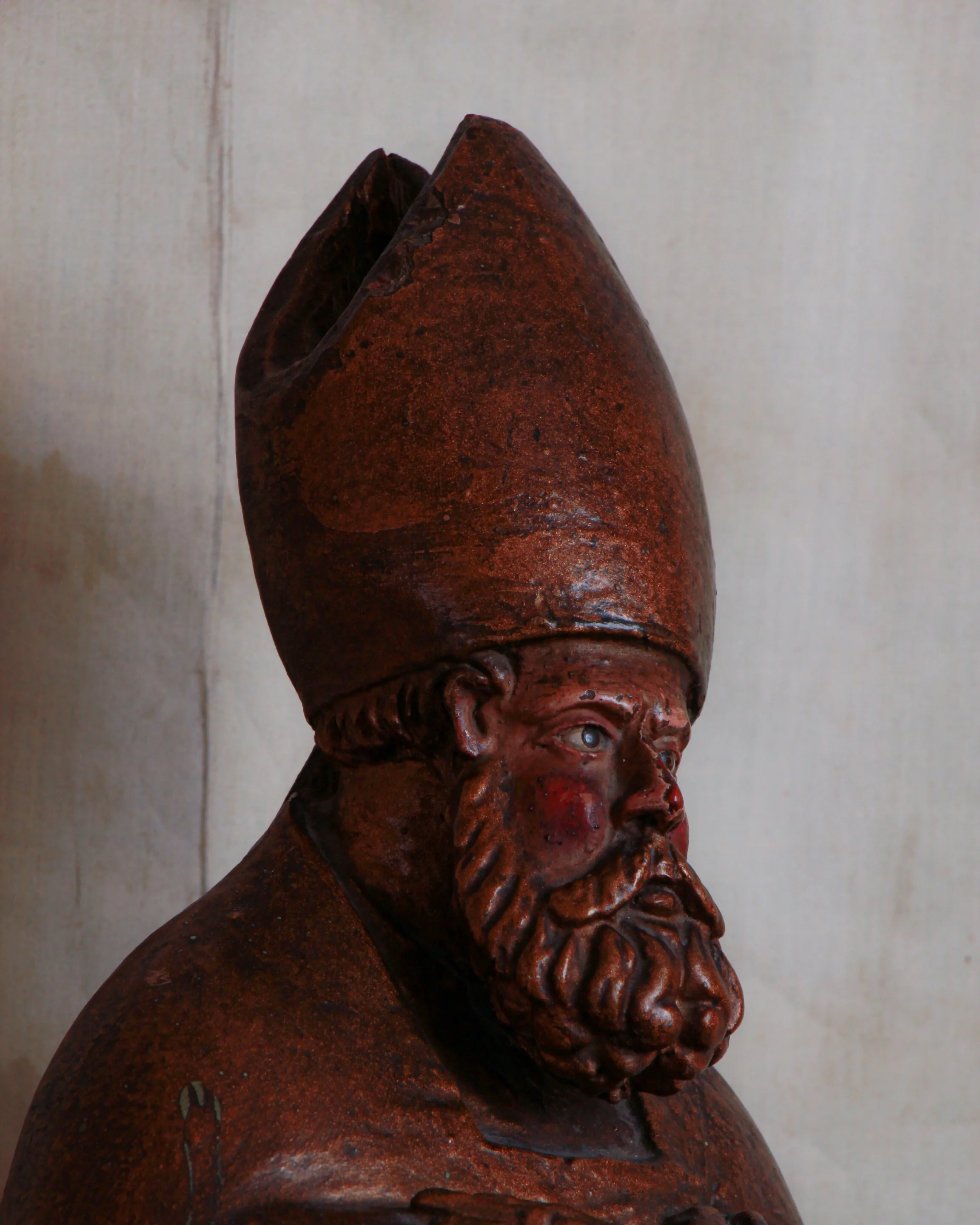
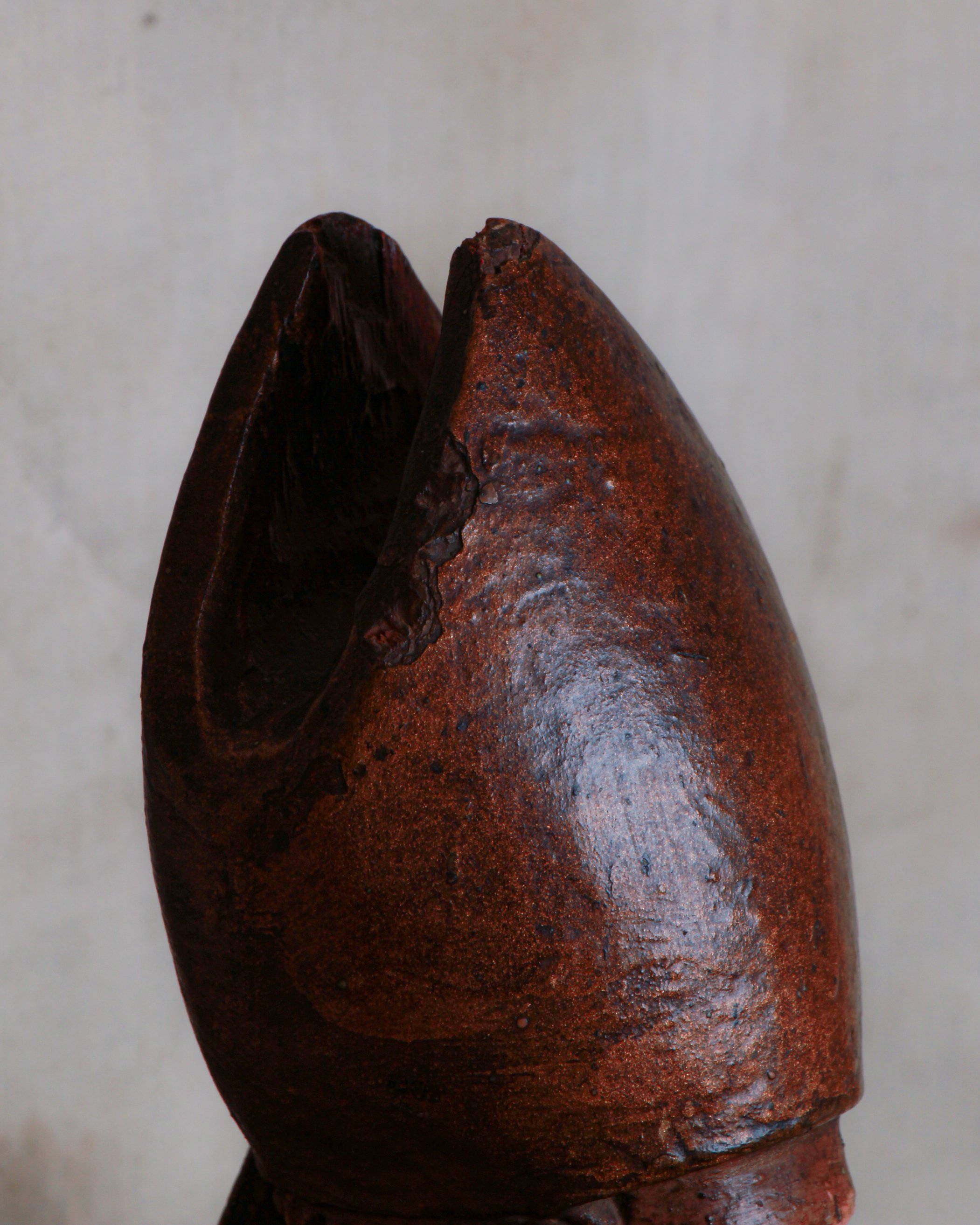
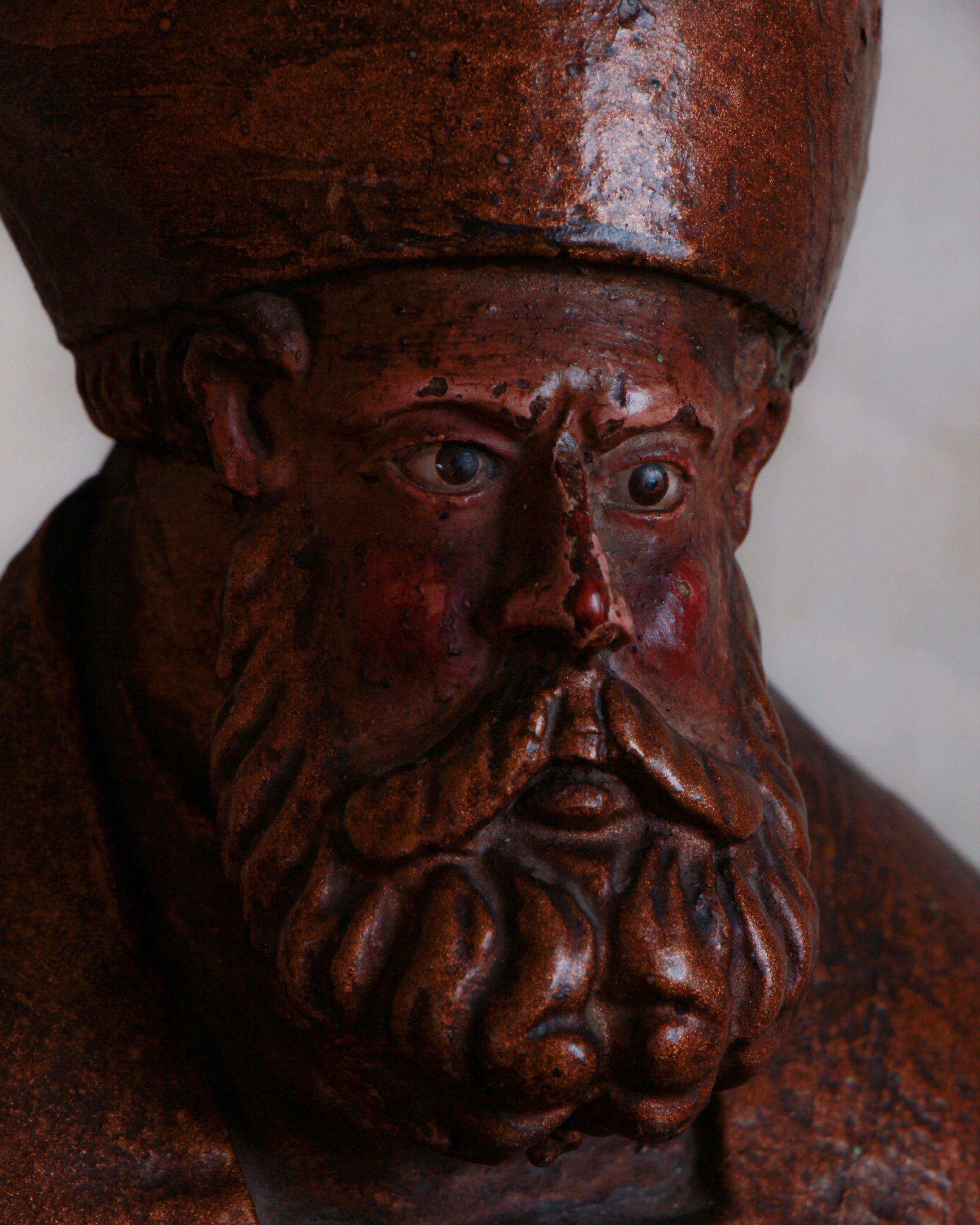
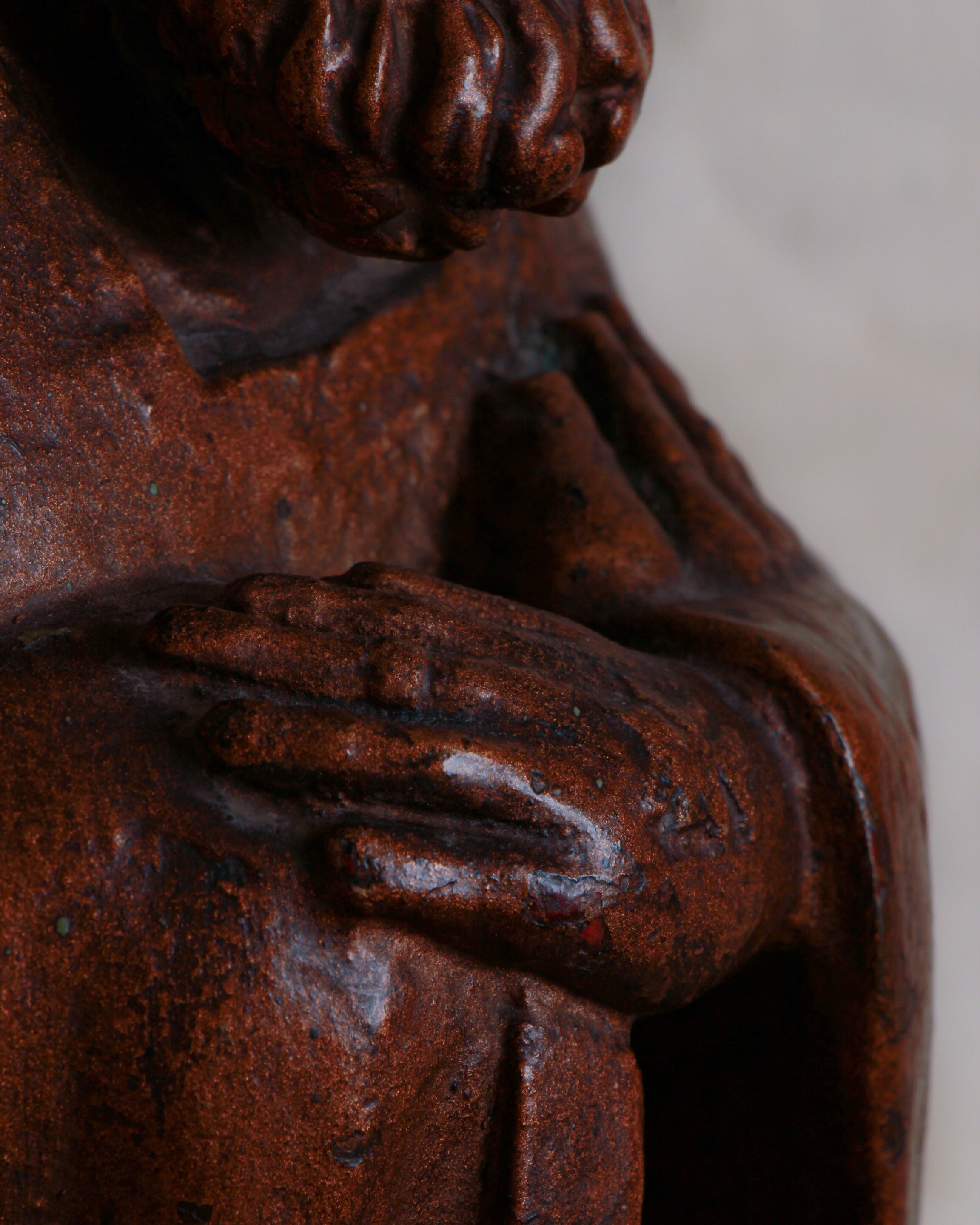
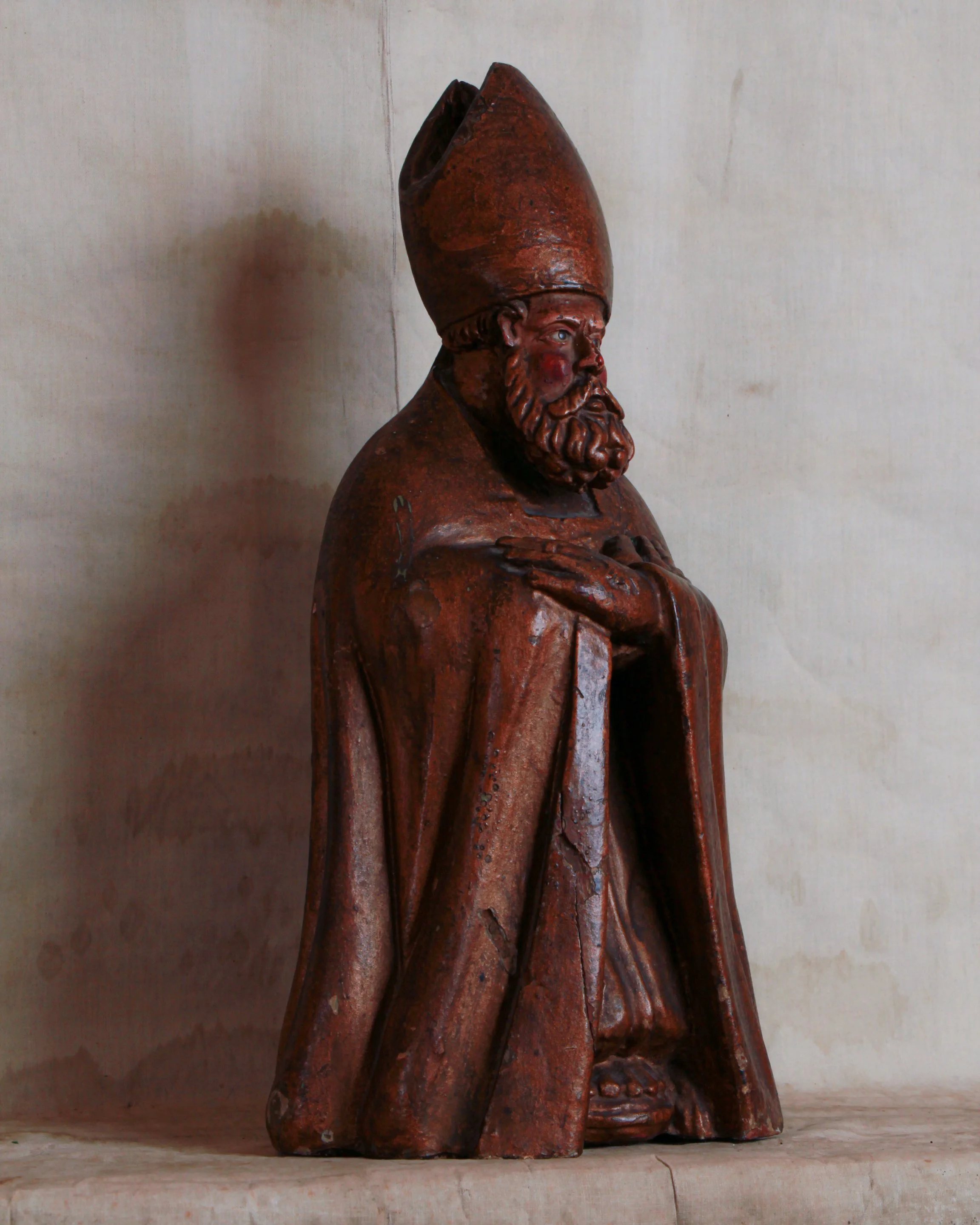
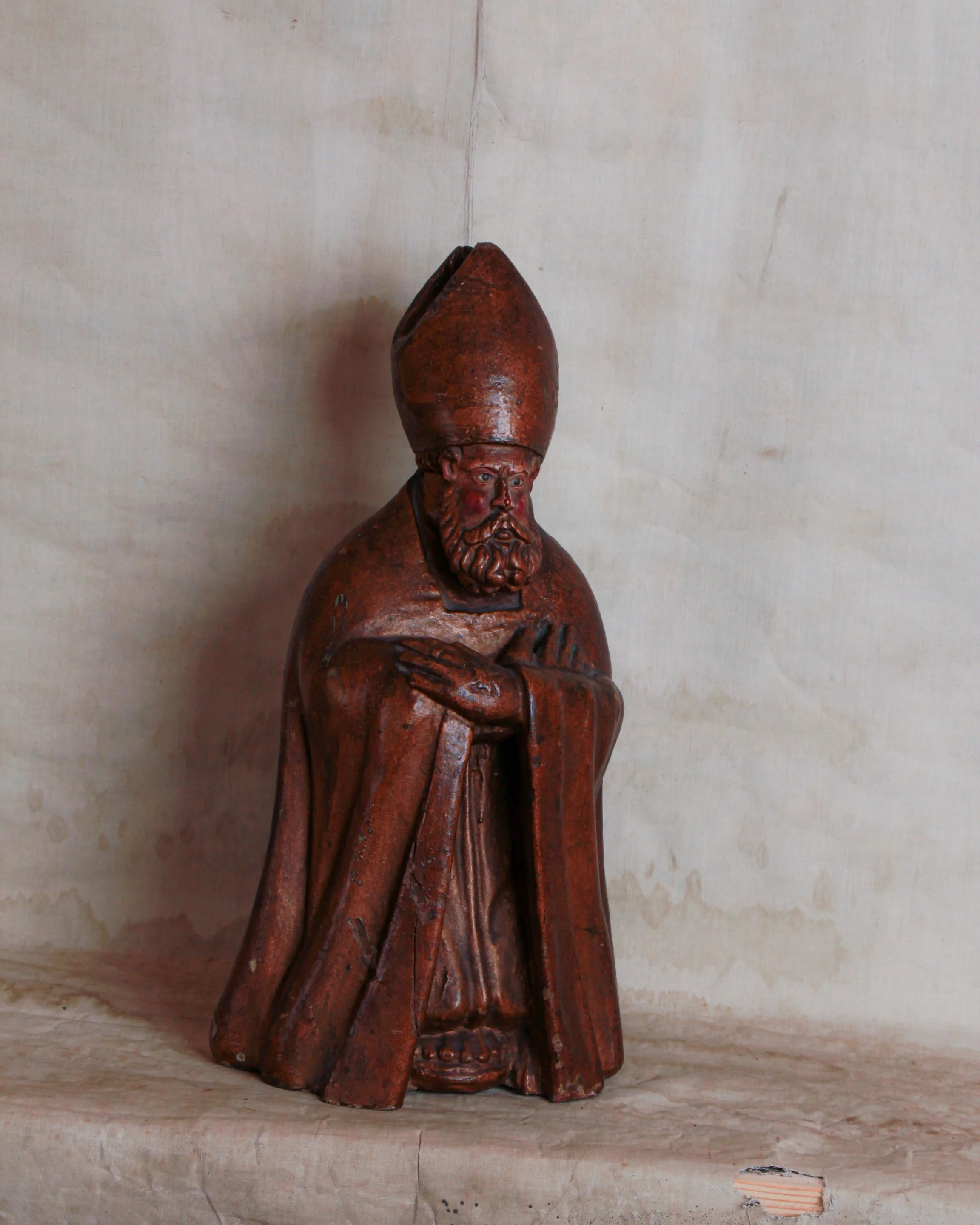
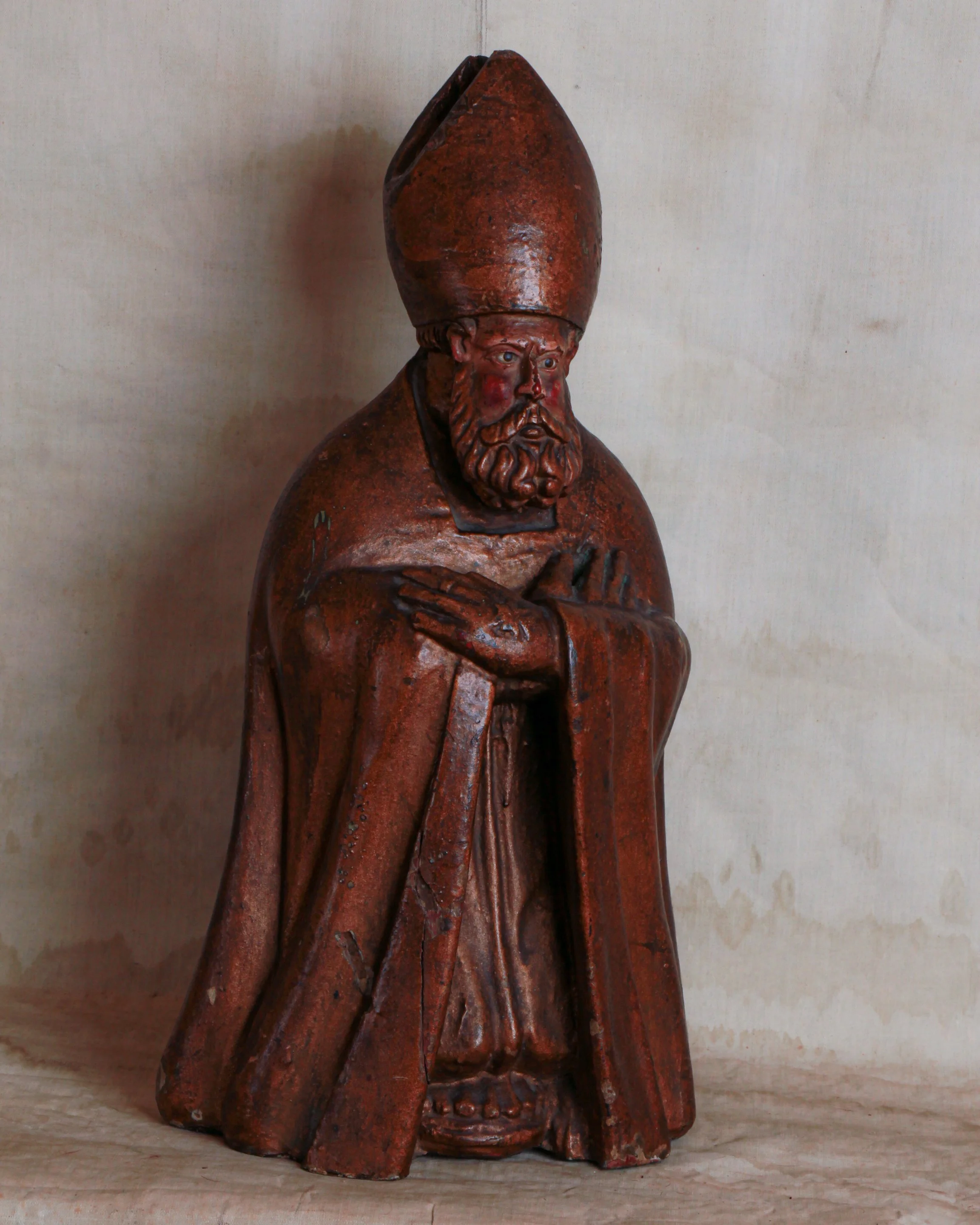
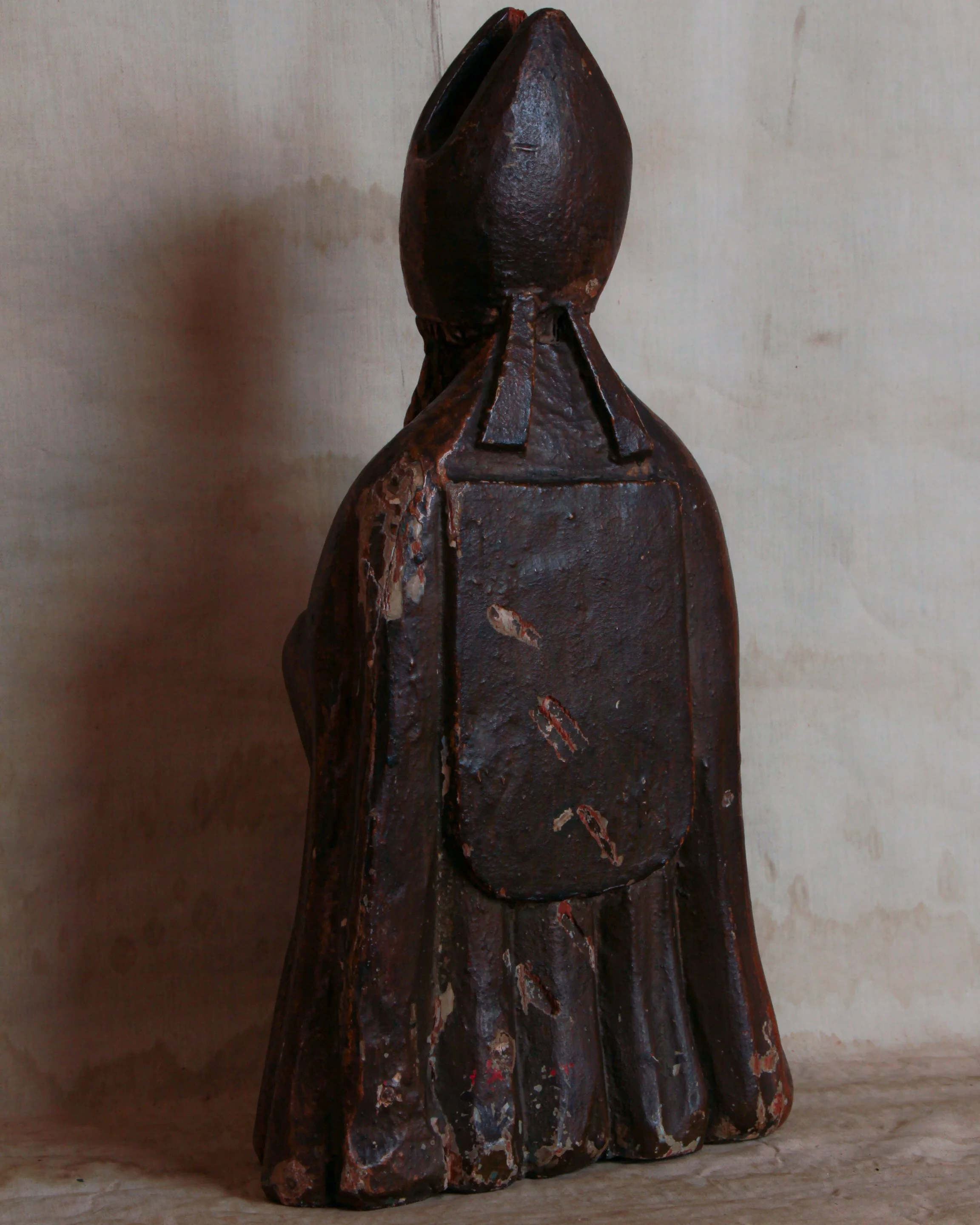
Carved in 17th century Provence, this wooden bishop stands slightly forward, hands crossed at the chest, caught somewhere between blessing and contemplation. The face is where it really lands—wide, watchful eyes, a full, almost architectural beard, and just enough color still clinging to the cheeks. The mitre rises high and slightly imperfect, giving the whole figure a subtle imbalance that feels human rather than formal.
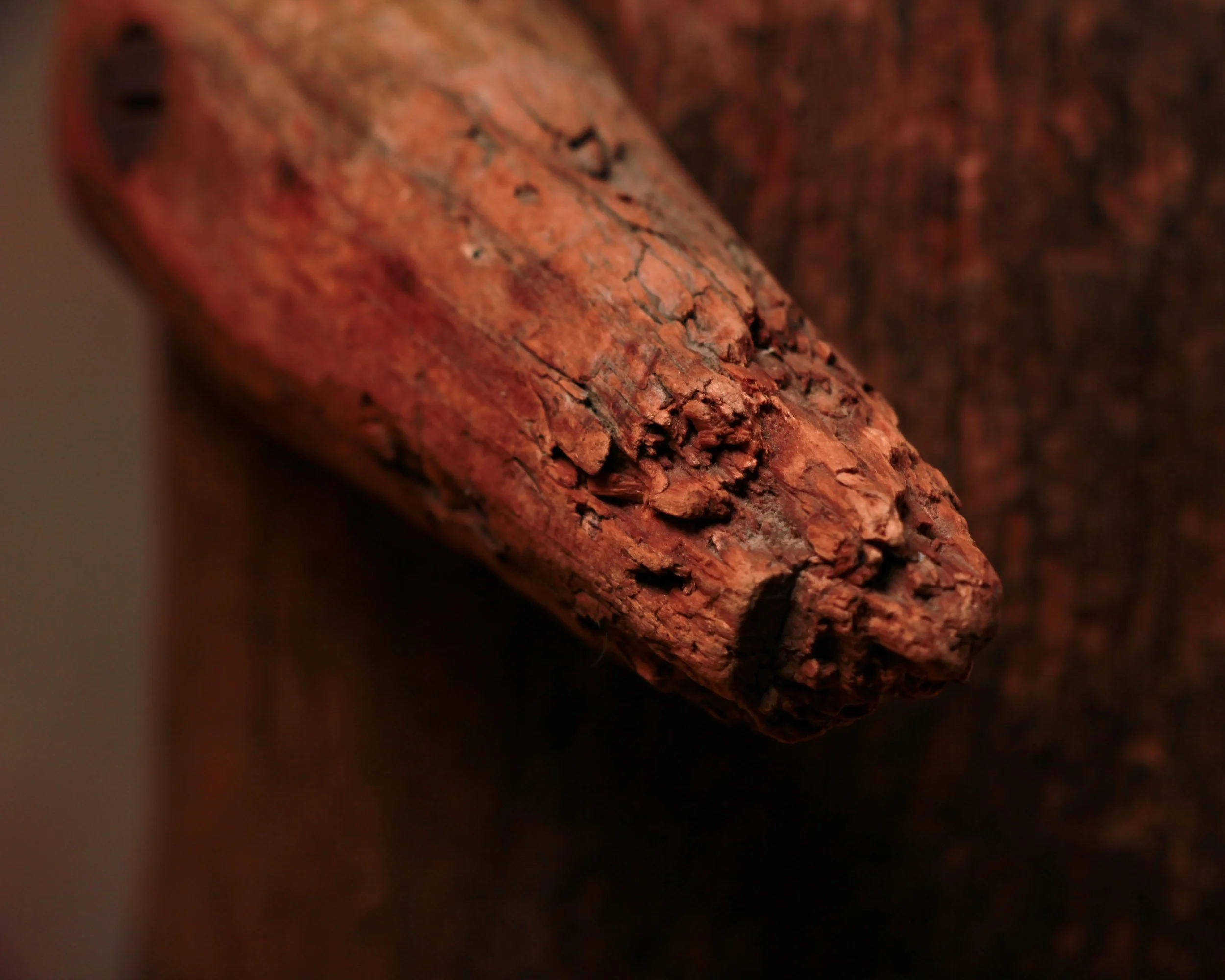
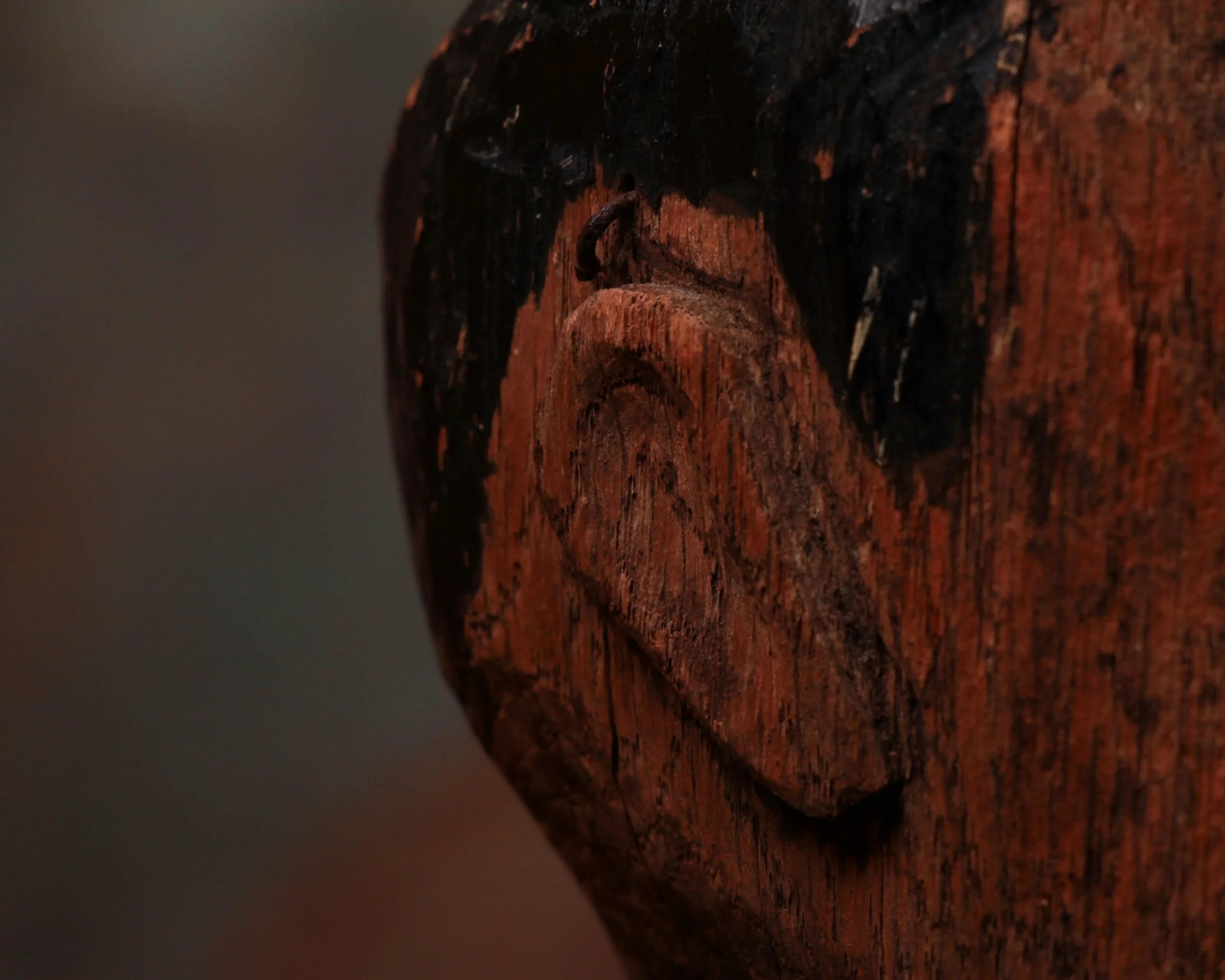
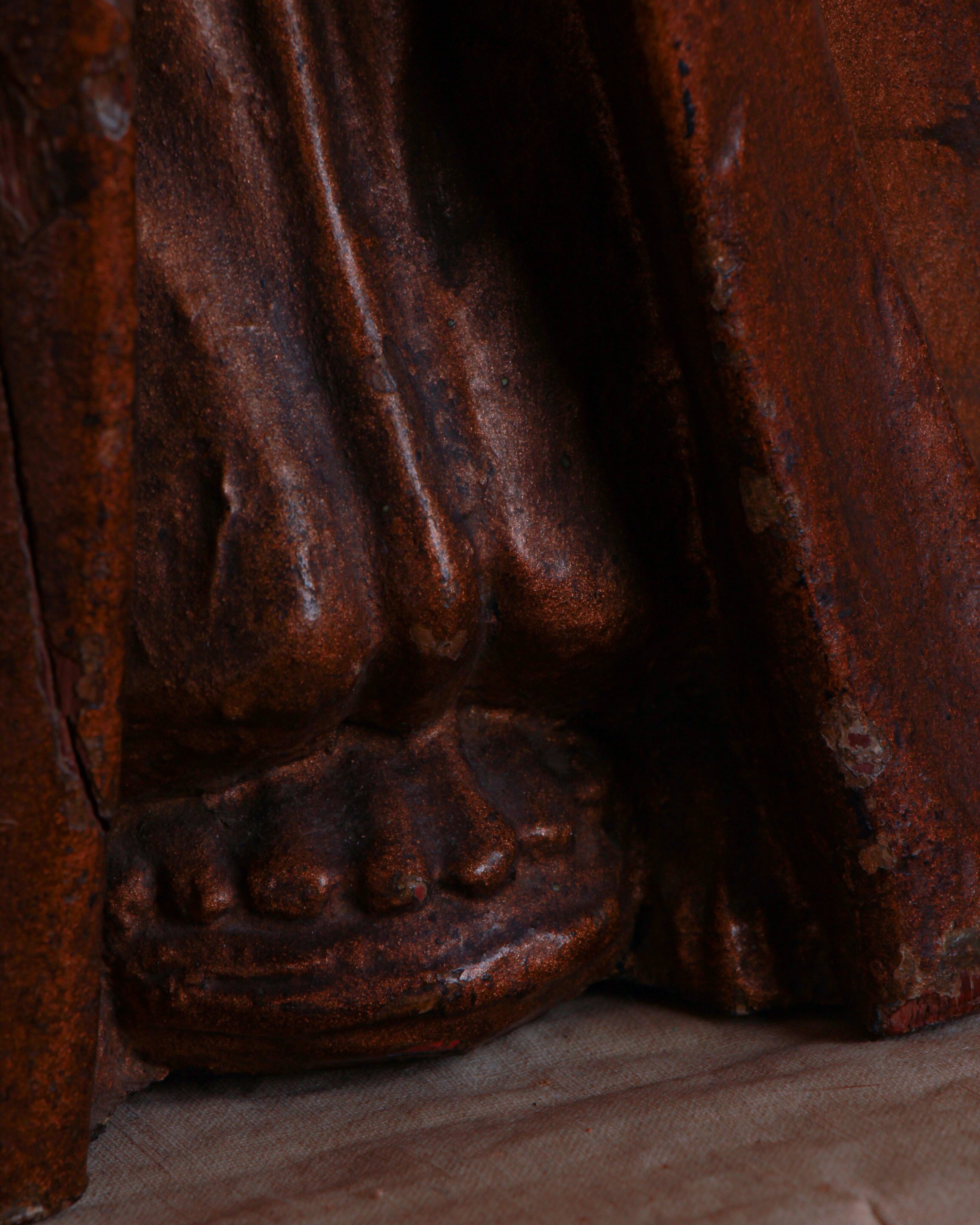
What’s especially good here is the honesty of it. This wasn’t made for display in the modern sense. It lived in a chapel, part of a devotional setting, meant to be seen in candlelight, not under scrutiny. The wear tells that story—chips, losses, and a patina that only comes from time and handling, not intention.
At 16 inches tall, it has real weight without being oversized.
Sourced in France.
Provence Chapels
Private chapels in Provence have a way of feeling both intimate and quietly monumental. Many date back to the 16th and 17th centuries, when landowning families, small religious communities, and even rural estates built their own places of worship rather than relying solely on distant parish churches. In a region shaped by agriculture, long travel distances, and periods of instability, having a chapel close to home wasn’t just a luxury, it was practical.
Architecturally, they tend to be modest. Thick stone walls, simple altars, and restrained decoration, often softened by time and candle smoke. But inside, they were deeply personal spaces. Families commissioned carved figures, saints, and devotional objects that reflected their particular loyalties, fears, and hopes. These weren’t grand statements, they were acts of faith scaled to everyday life.
Over time, many of these chapels fell out of regular use, especially after the French Revolution and later shifts in rural life. What remains today often carries that layered history, part sacred space, part time capsule, shaped as much by devotion as by the quiet passage of years.
Carved in 17th century Provence, this wooden bishop stands slightly forward, hands crossed at the chest, caught somewhere between blessing and contemplation. The face is where it really lands—wide, watchful eyes, a full, almost architectural beard, and just enough color still clinging to the cheeks. The mitre rises high and slightly imperfect, giving the whole figure a subtle imbalance that feels human rather than formal.
What’s especially good here is the honesty of it. This wasn’t made for display in the modern sense. It lived in a chapel, part of a devotional setting, meant to be seen in candlelight, not under scrutiny. The wear tells that story—chips, losses, and a patina that only comes from time and handling, not intention.
At 16 inches tall, it has real weight without being oversized.
Sourced in France.
Provence Chapels
Private chapels in Provence have a way of feeling both intimate and quietly monumental. Many date back to the 16th and 17th centuries, when landowning families, small religious communities, and even rural estates built their own places of worship rather than relying solely on distant parish churches. In a region shaped by agriculture, long travel distances, and periods of instability, having a chapel close to home wasn’t just a luxury, it was practical.
Architecturally, they tend to be modest. Thick stone walls, simple altars, and restrained decoration, often softened by time and candle smoke. But inside, they were deeply personal spaces. Families commissioned carved figures, saints, and devotional objects that reflected their particular loyalties, fears, and hopes. These weren’t grand statements, they were acts of faith scaled to everyday life.
Over time, many of these chapels fell out of regular use, especially after the French Revolution and later shifts in rural life. What remains today often carries that layered history, part sacred space, part time capsule, shaped as much by devotion as by the quiet passage of years.