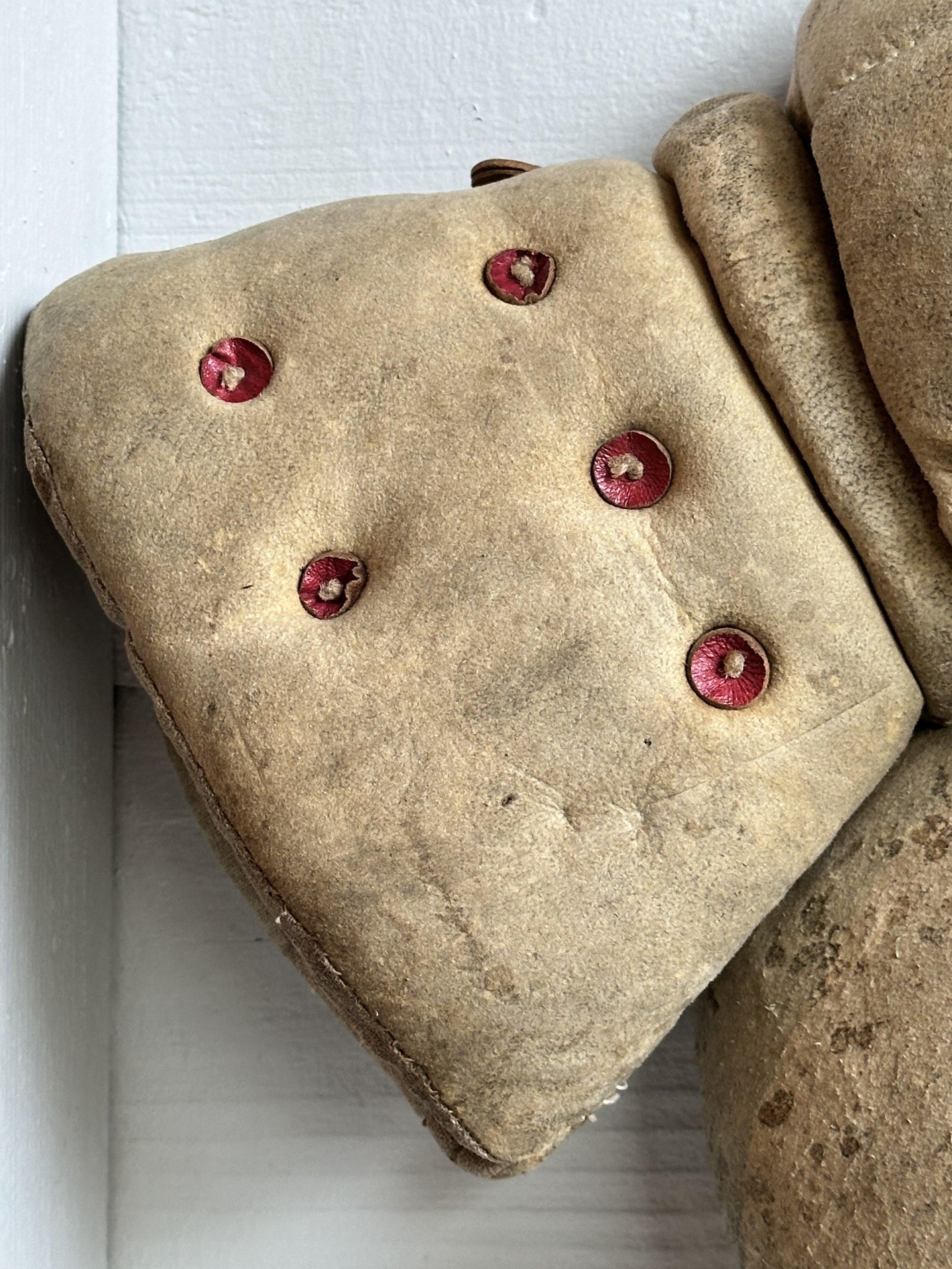
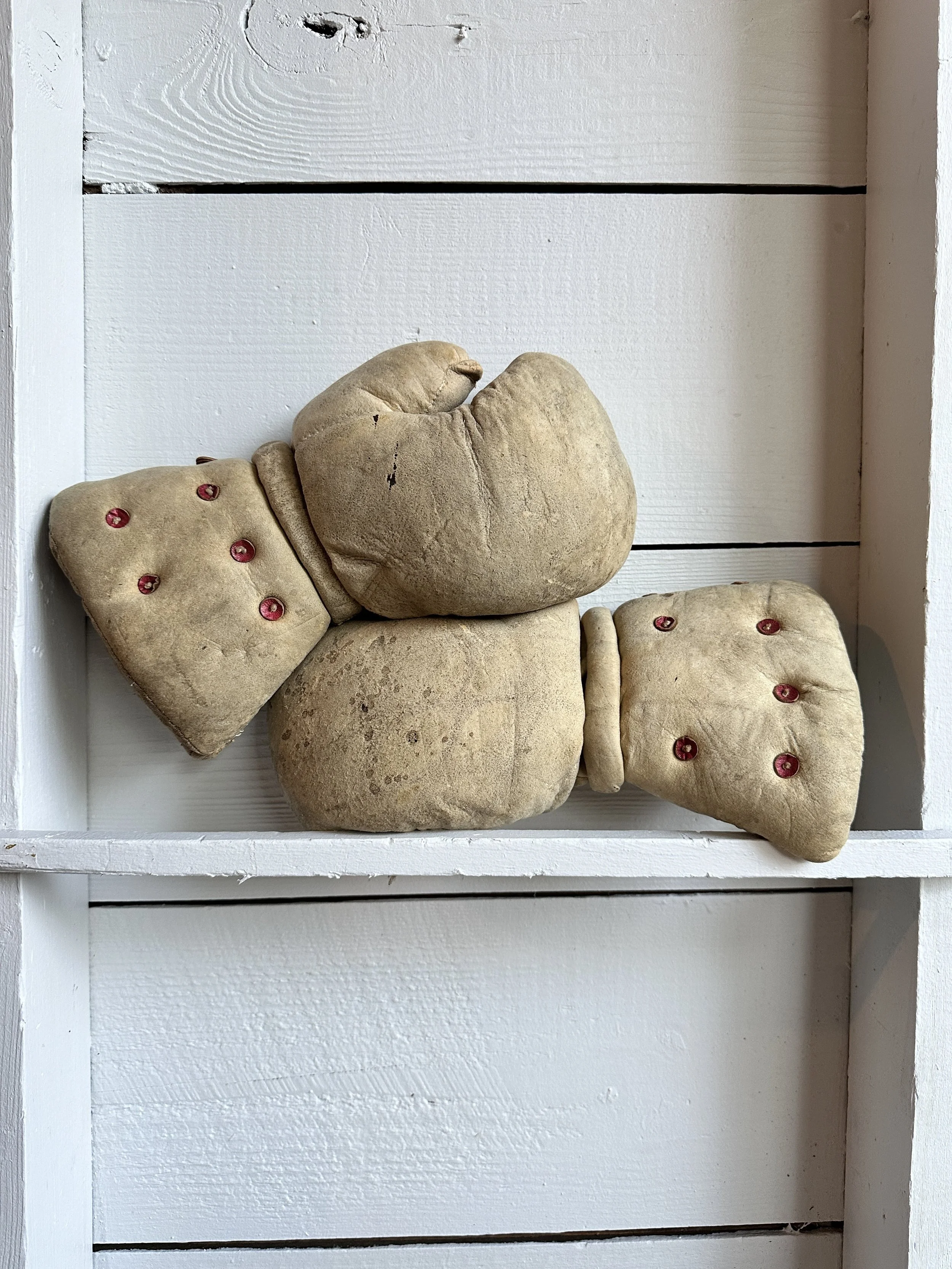

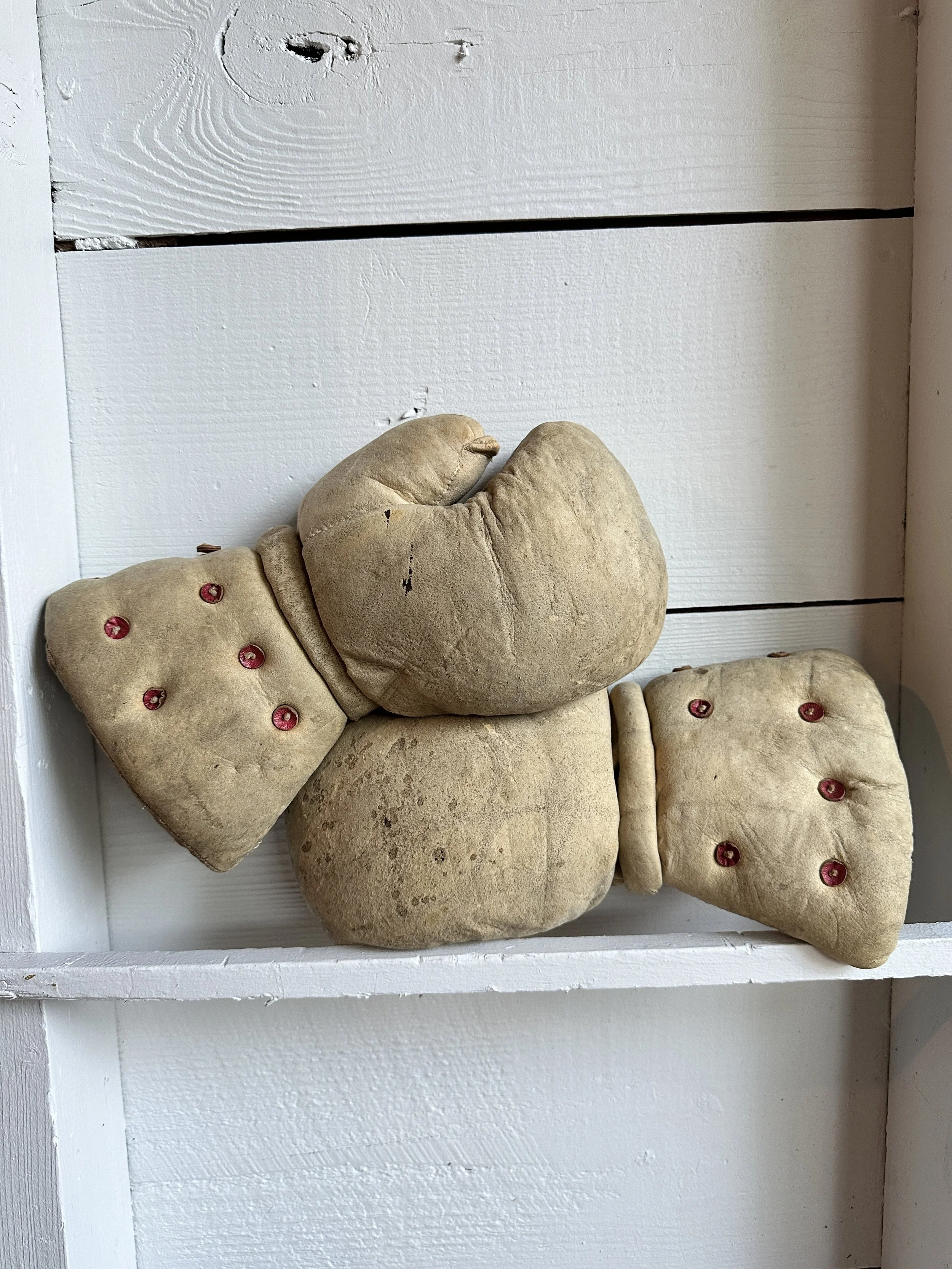
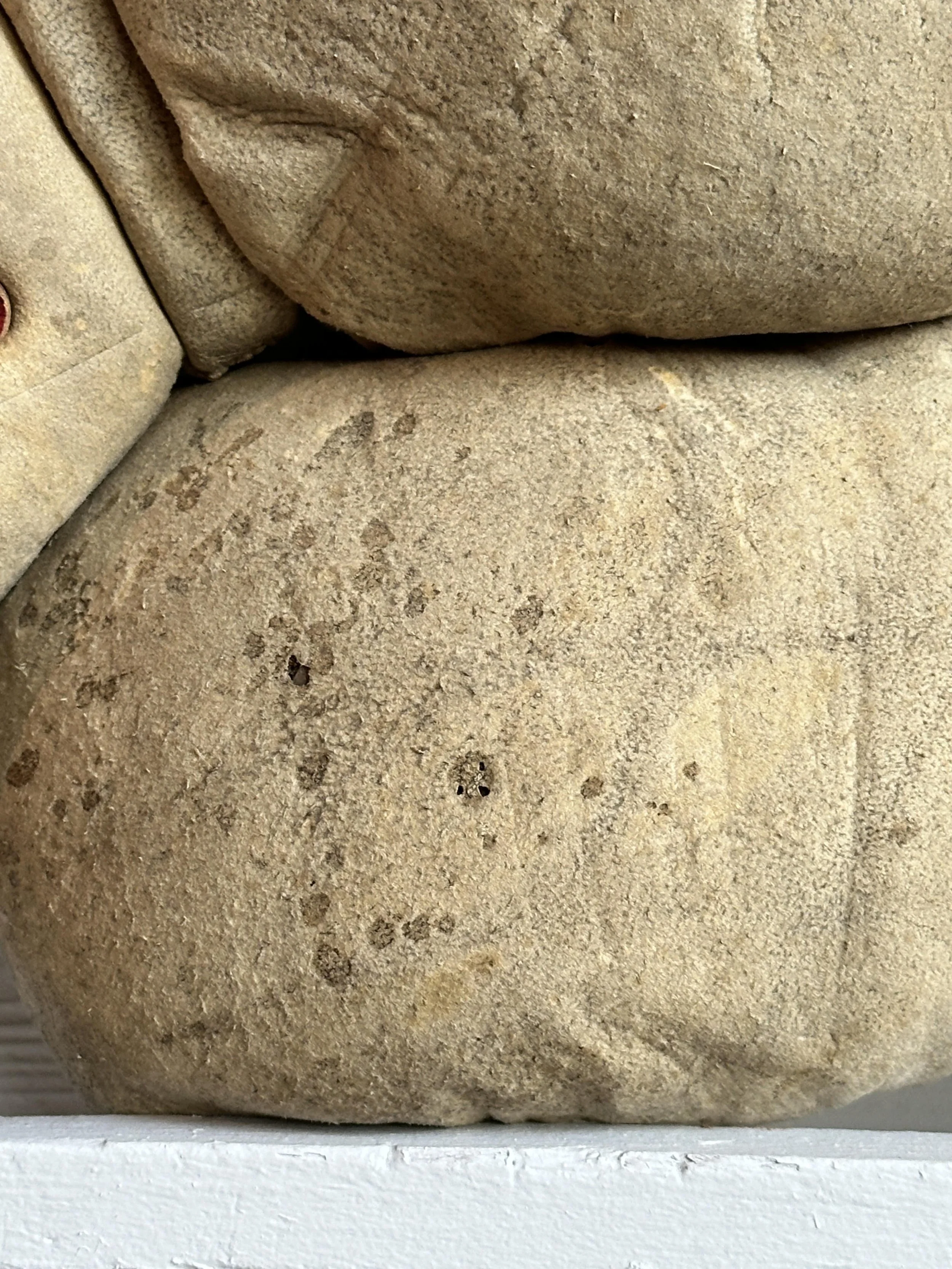
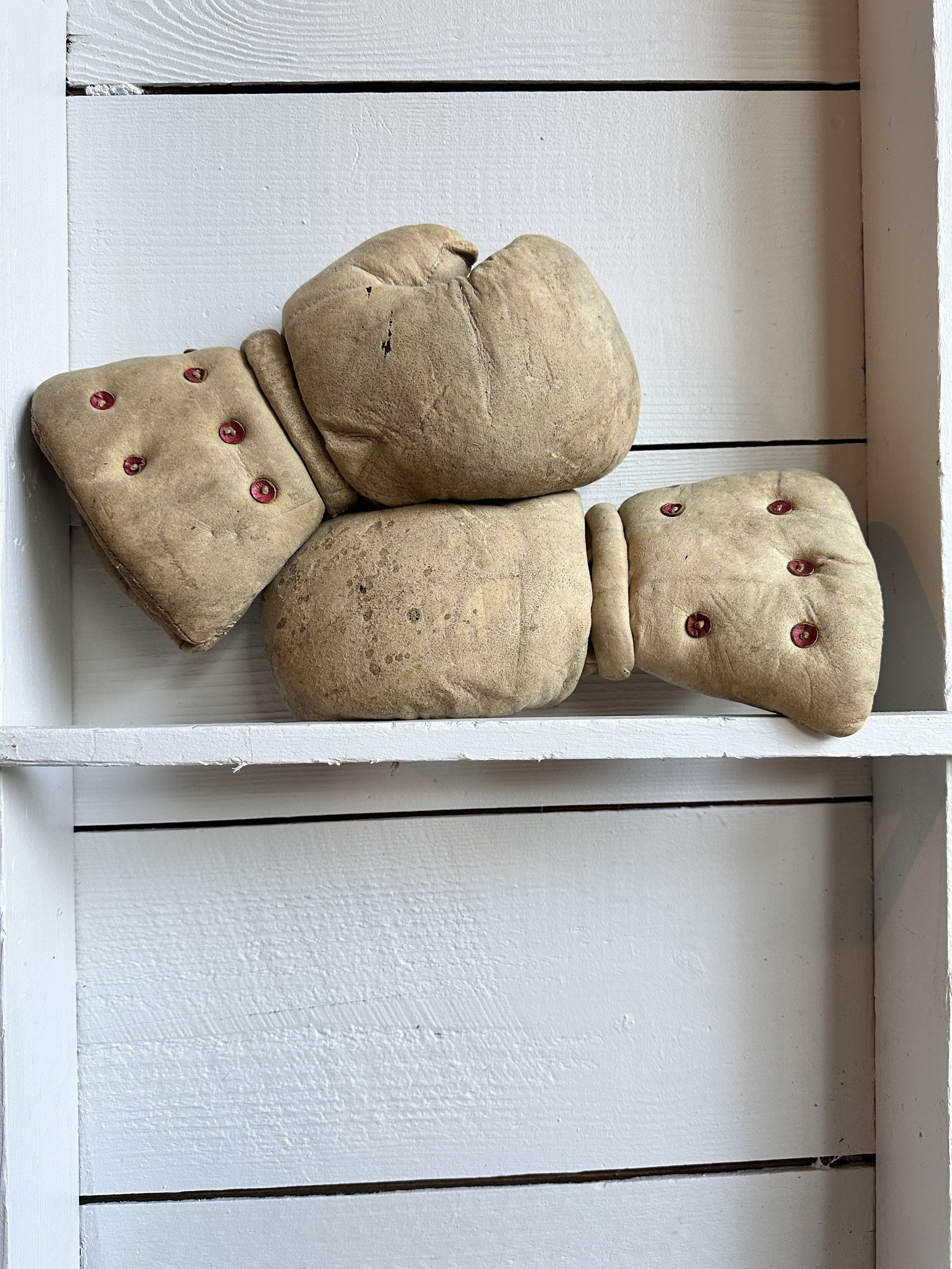
These quirky handmade gloves are something else. Whether they were ever thrown in the ring or just trotted out for a stage brawl, they’ve clearly seen action. Made of soft, worn suede with puffed-out padding and dot-patterned holes stitched in red, these oversized mitts look like they were built less for throwing jabs and more for theatrical haymakers—possibly vaudeville or early stage boxing scenes. They’re stiff and bulbous in that exaggerated way that leans more comedic than combative. You’ll never see these again.
Category History
Old, one-of-a-kind theater props live in that sweet spot between illusion and craftsmanship. Built to read from the back row, they often lean a little exaggerated—slightly larger, slightly bolder, just off enough to feel right under stage lights. But behind that theatrical flourish is real making. Wood frames, carved details, layered paint, stitched fabric—each piece designed to survive rehearsals, quick changes, and the occasional rough handling backstage.
What makes these props stand out is that they were rarely standardized. Unlike film, where duplication is easier, stage work often relied on a prop master or local maker building exactly what was needed for a specific production. That means each piece carries its own logic—how it’s weighted, where it’s reinforced, how it’s meant to be seen rather than closely inspected.
The best examples strike a balance: convincing at a distance, charming up close. You’ll find brushwork left visible, seams that don’t quite hide, repairs layered in over time. They weren’t trying to fool you completely—they were helping tell a story.
After the curtain closed, many were discarded or repurposed. The survivors carry that history with them. Slightly worn, a bit eccentric, and full of character. Not just objects, but fragments of performances that once needed them to exist, and to be believed.
These quirky handmade gloves are something else. Whether they were ever thrown in the ring or just trotted out for a stage brawl, they’ve clearly seen action. Made of soft, worn suede with puffed-out padding and dot-patterned holes stitched in red, these oversized mitts look like they were built less for throwing jabs and more for theatrical haymakers—possibly vaudeville or early stage boxing scenes. They’re stiff and bulbous in that exaggerated way that leans more comedic than combative. You’ll never see these again.
Category History
Old, one-of-a-kind theater props live in that sweet spot between illusion and craftsmanship. Built to read from the back row, they often lean a little exaggerated—slightly larger, slightly bolder, just off enough to feel right under stage lights. But behind that theatrical flourish is real making. Wood frames, carved details, layered paint, stitched fabric—each piece designed to survive rehearsals, quick changes, and the occasional rough handling backstage.
What makes these props stand out is that they were rarely standardized. Unlike film, where duplication is easier, stage work often relied on a prop master or local maker building exactly what was needed for a specific production. That means each piece carries its own logic—how it’s weighted, where it’s reinforced, how it’s meant to be seen rather than closely inspected.
The best examples strike a balance: convincing at a distance, charming up close. You’ll find brushwork left visible, seams that don’t quite hide, repairs layered in over time. They weren’t trying to fool you completely—they were helping tell a story.
After the curtain closed, many were discarded or repurposed. The survivors carry that history with them. Slightly worn, a bit eccentric, and full of character. Not just objects, but fragments of performances that once needed them to exist, and to be believed.