
Part military prototype, part engineering thought experiment, and part science-fiction fantasy made tangible, this extraordinary scratch-built hover vehicle model captures the restless ingenuity of wartime innovation. Created as a proof-of-concept presentation piece by the British Aircraft Corporation and shown to the British Ministry of Defence during the Second World War era, it represents the kind of bold thinking that flourished when conventional solutions no longer seemed enough.
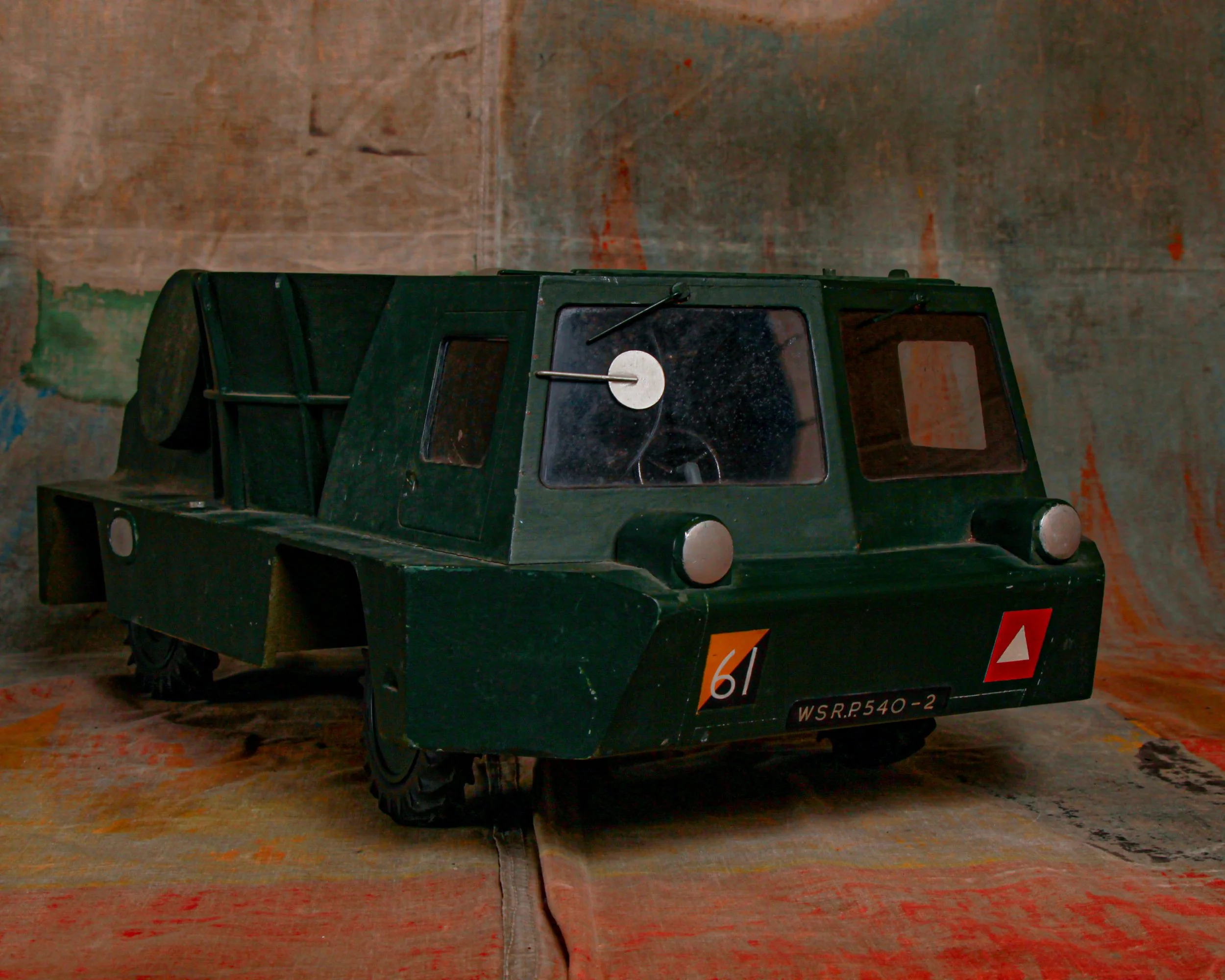
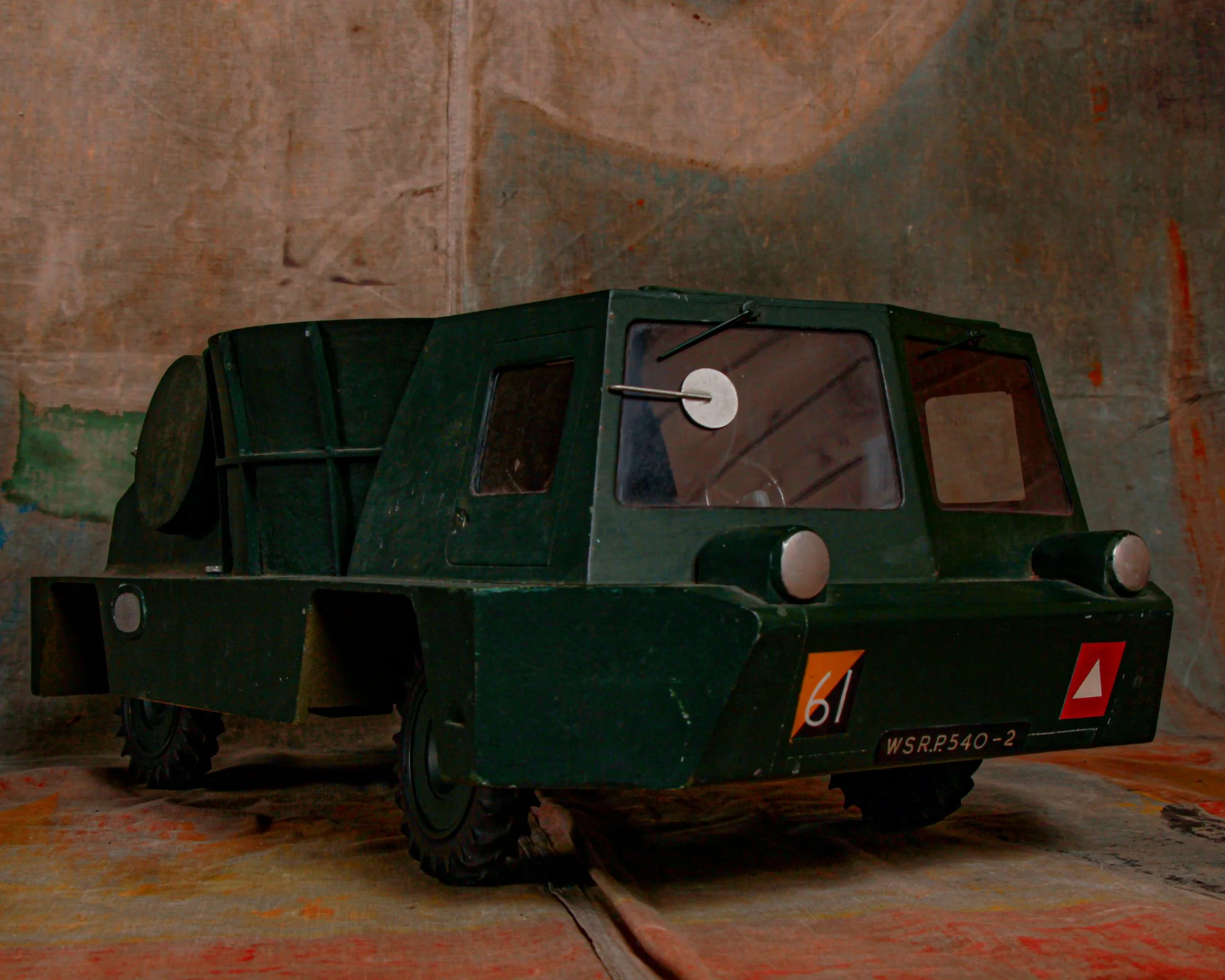
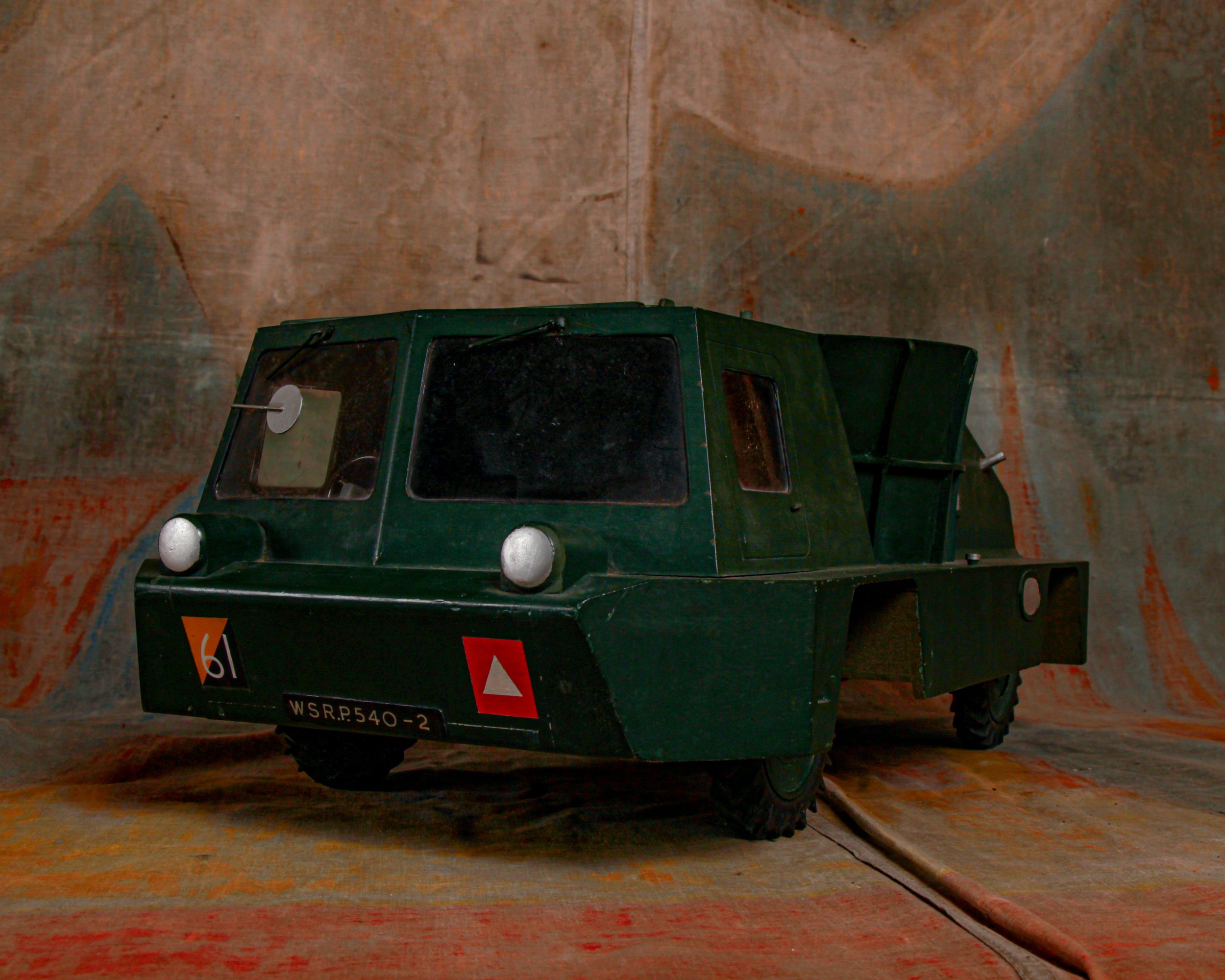
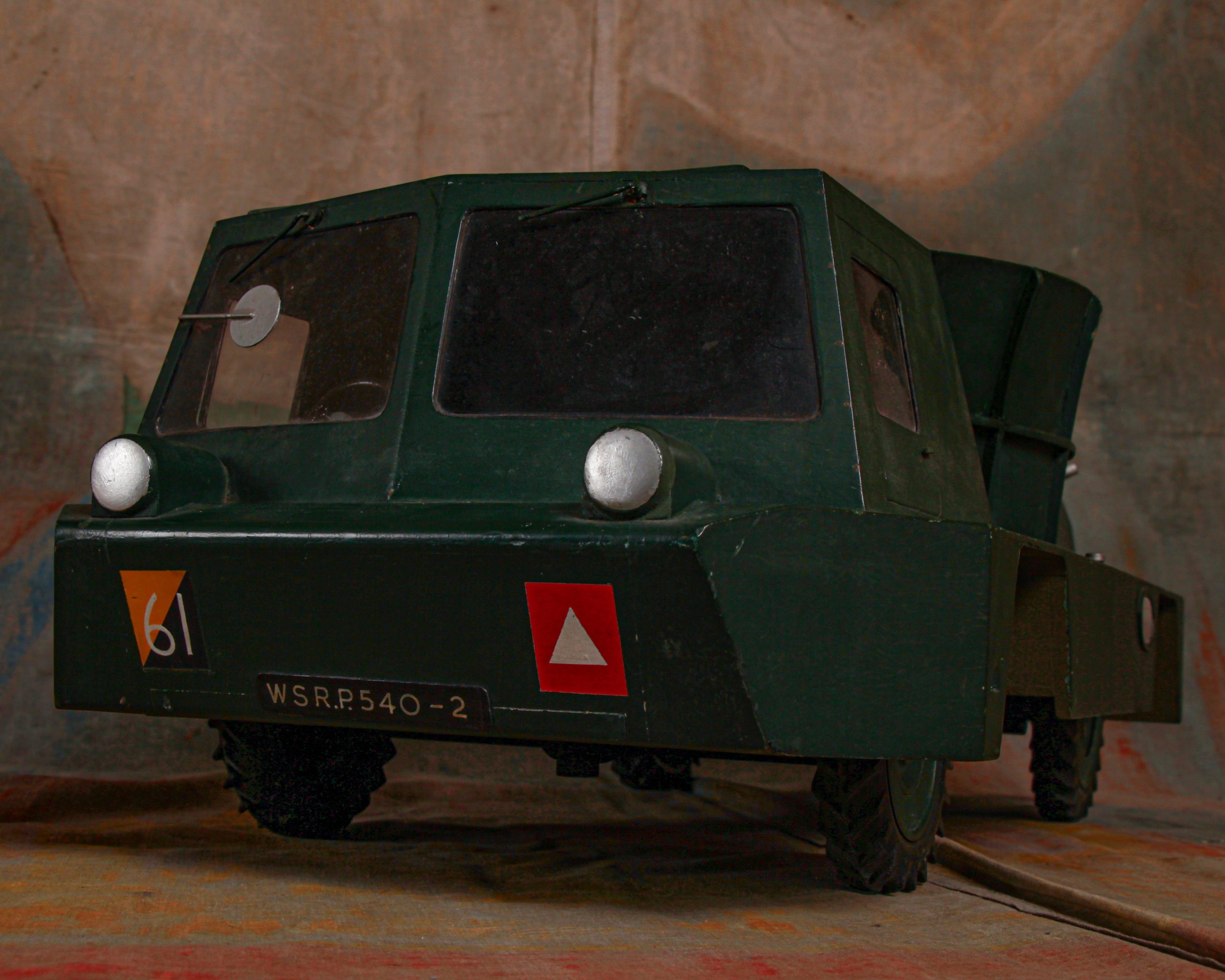
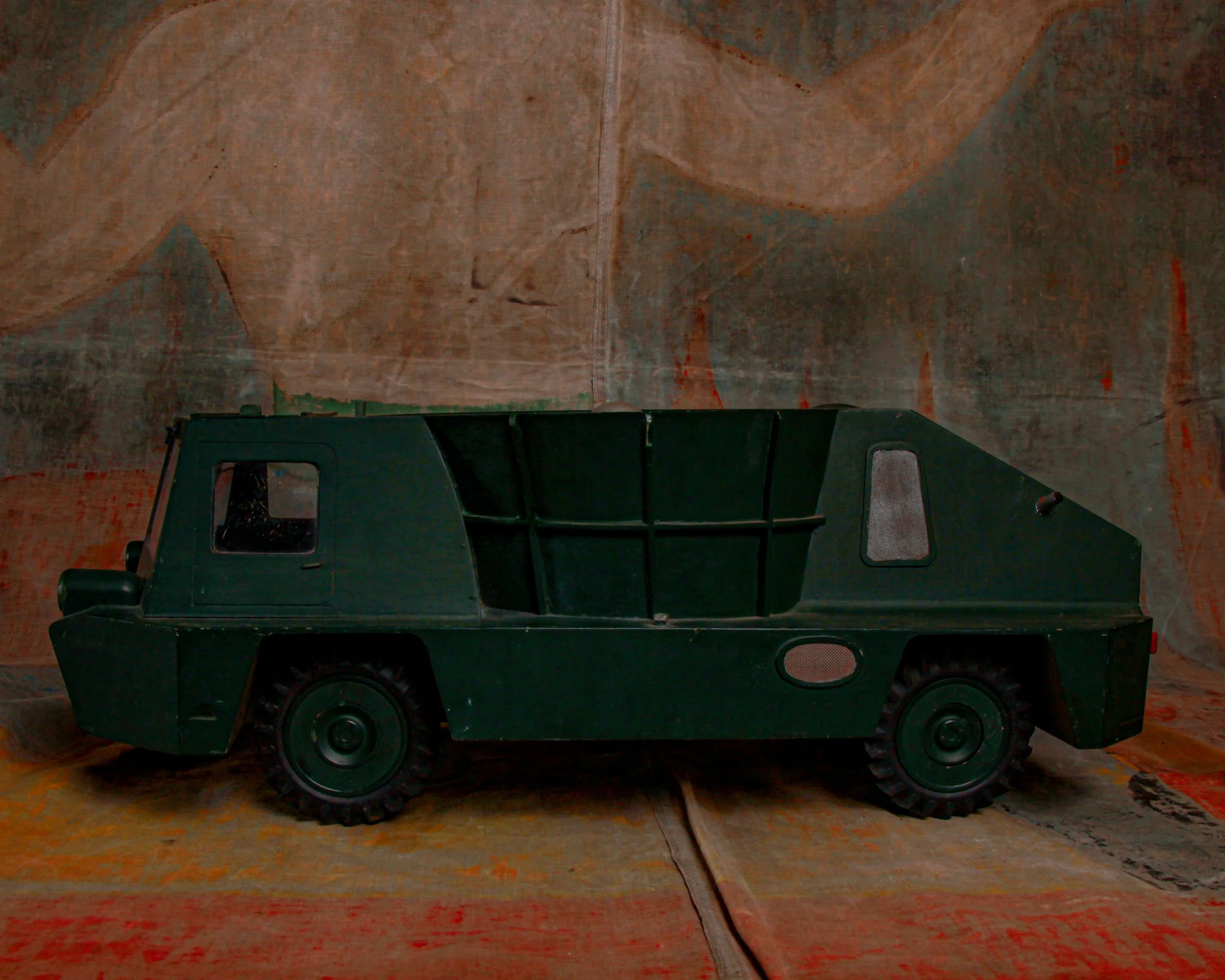
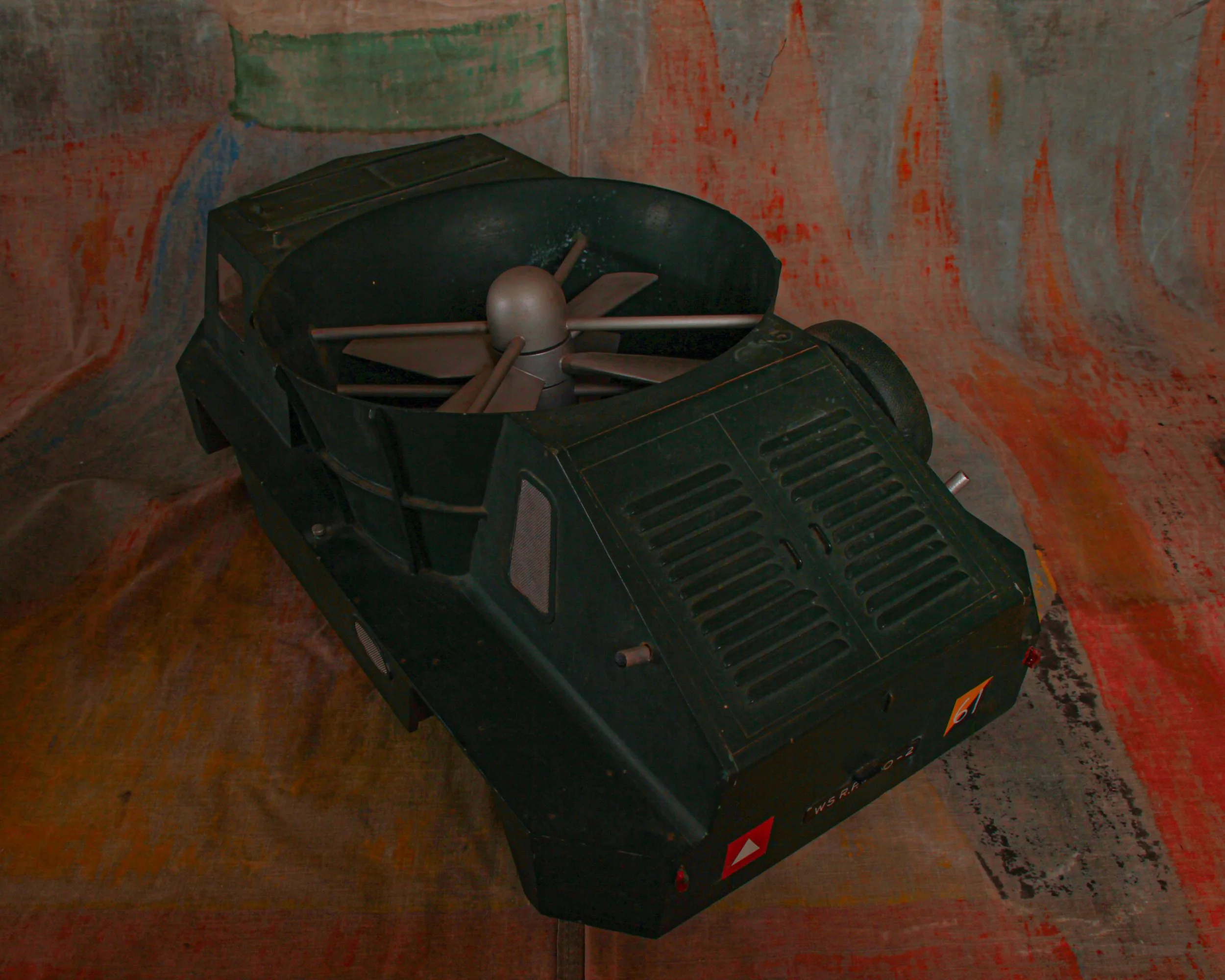
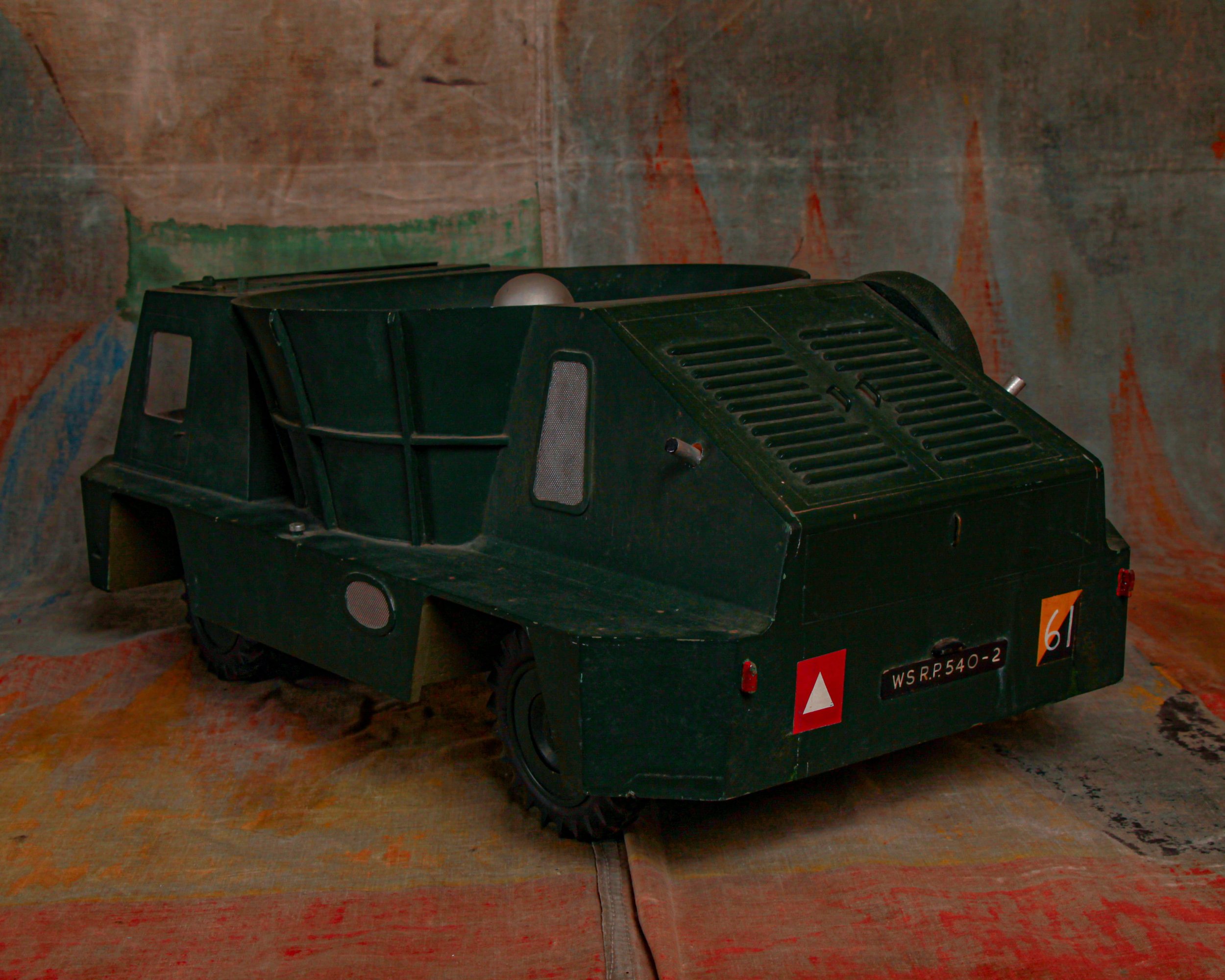
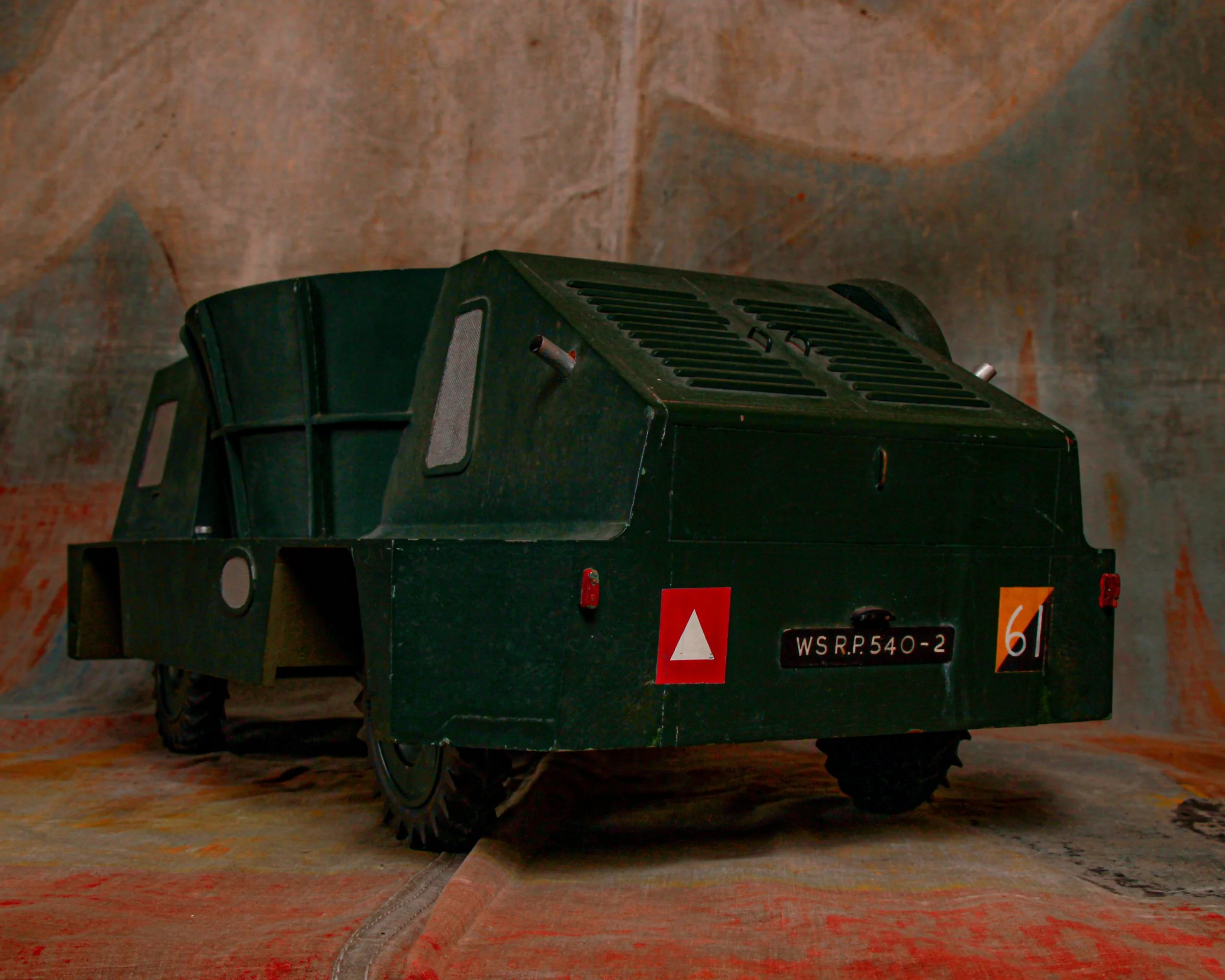
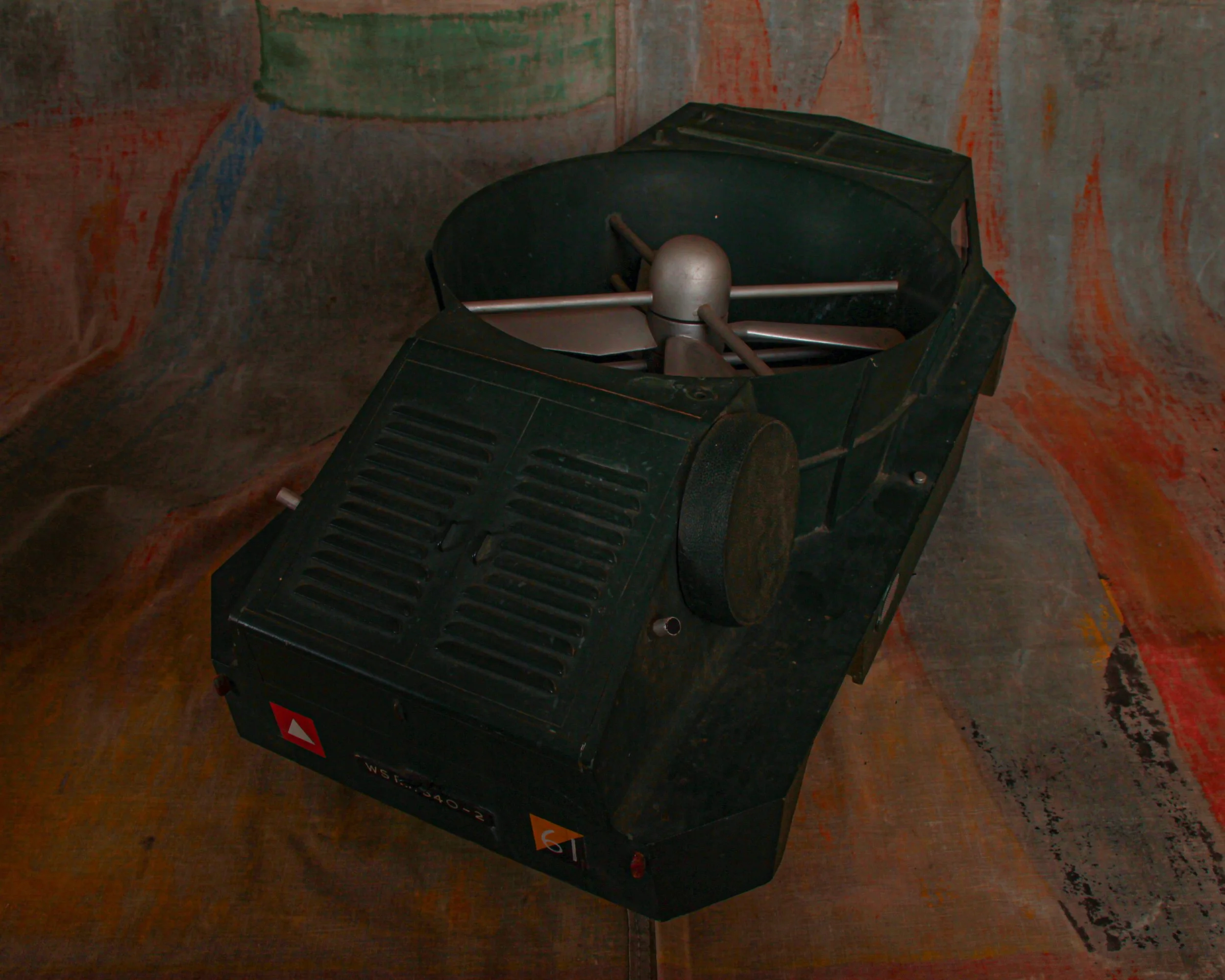
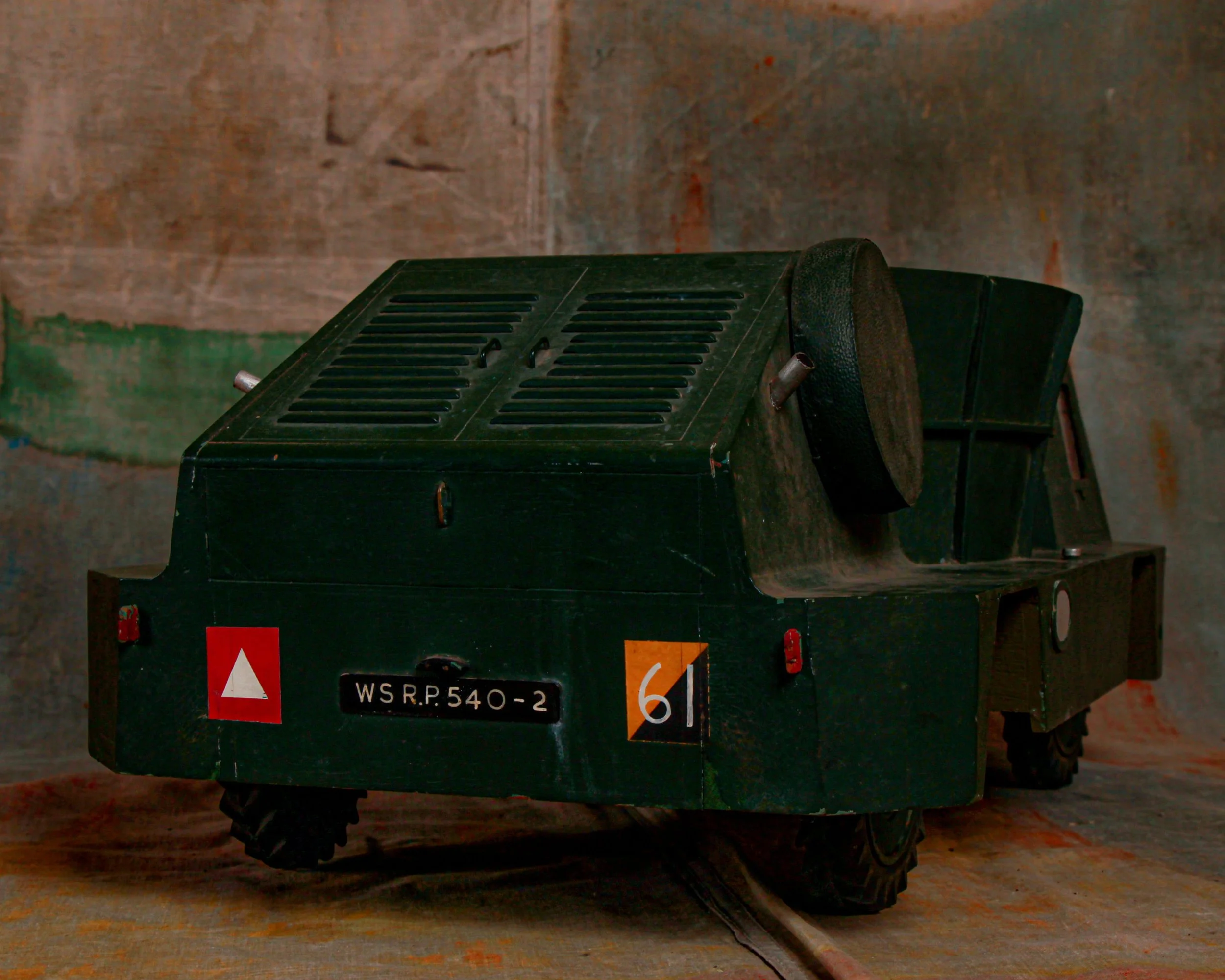
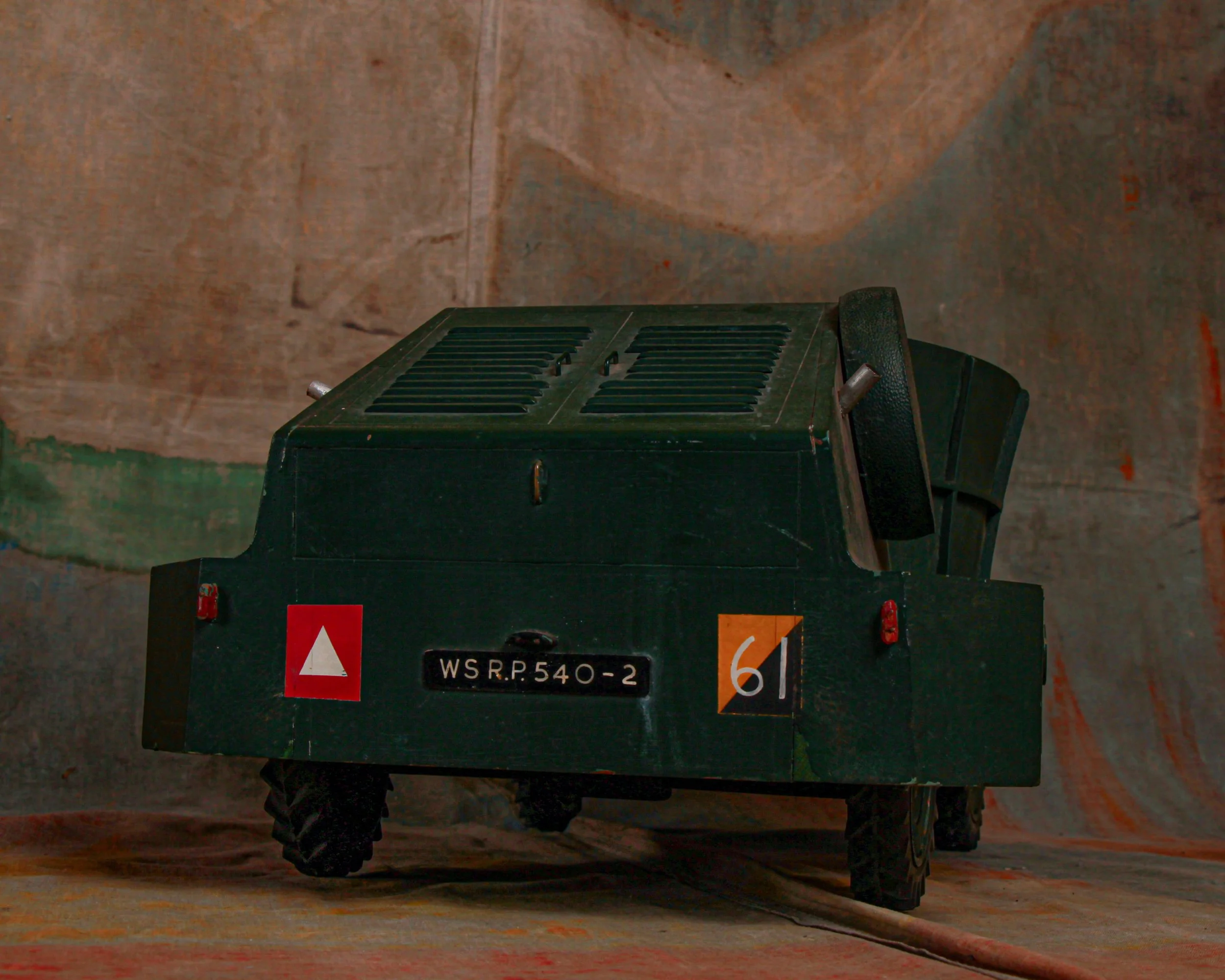
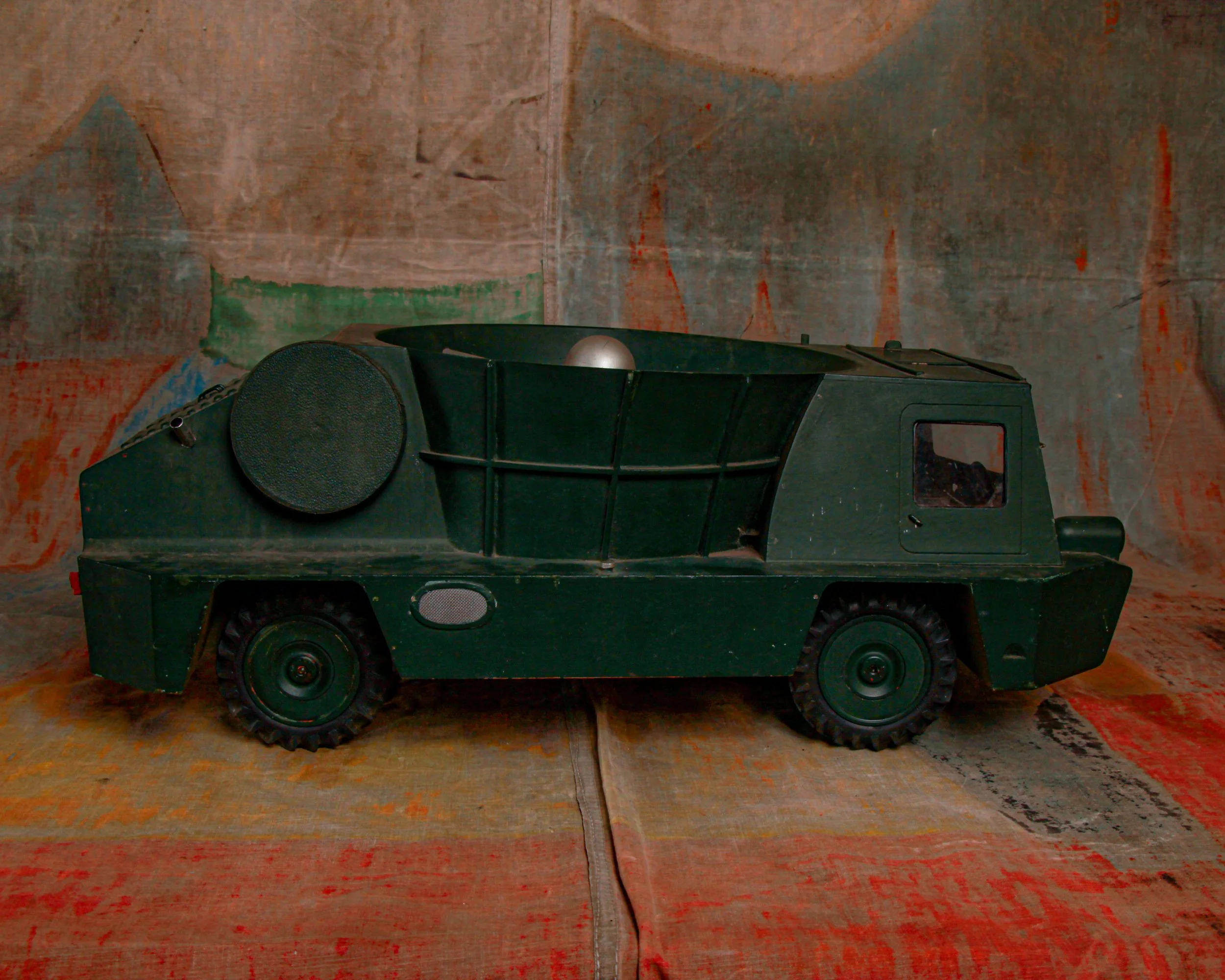
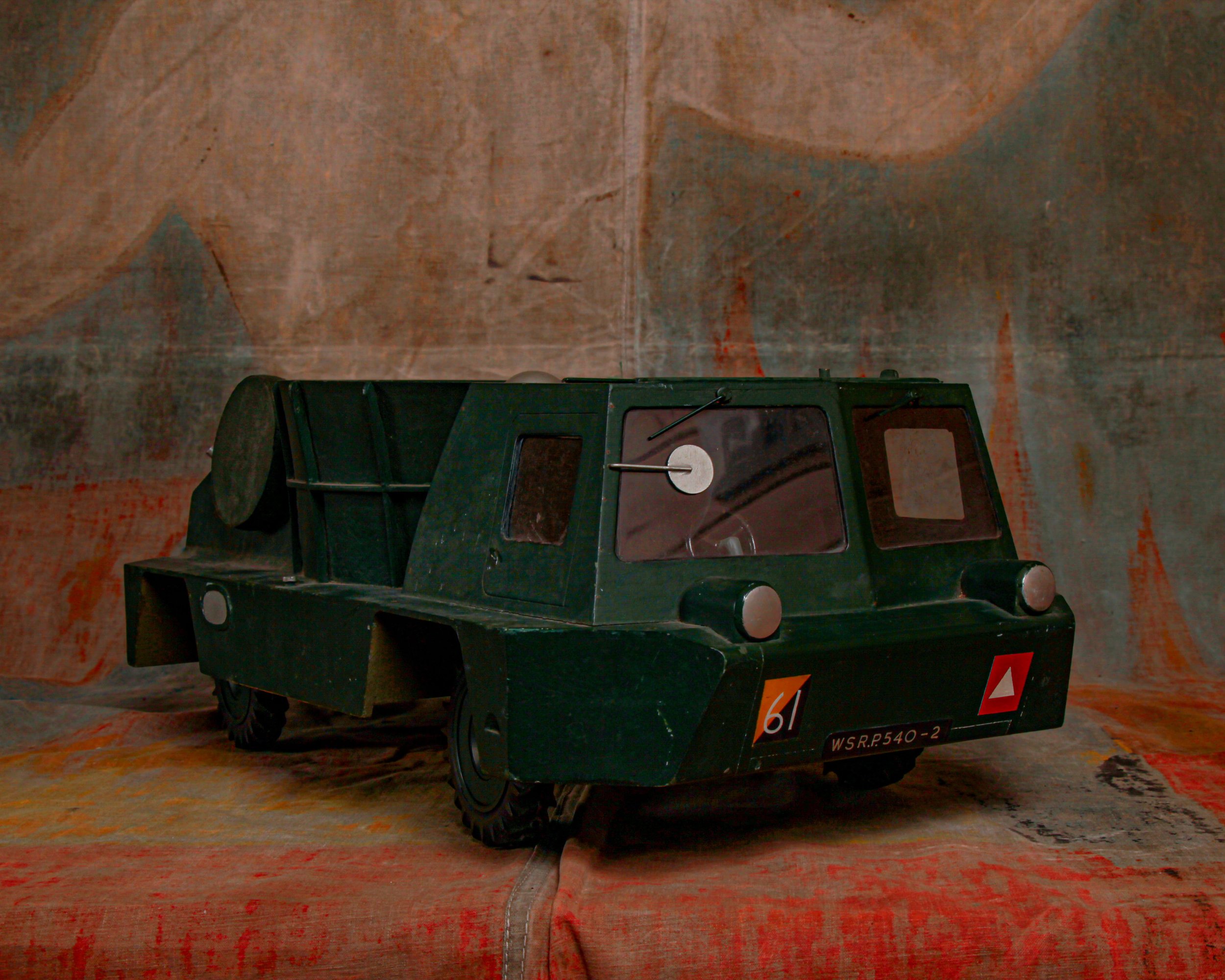
At first glance, the vehicle appears almost familiar. Its cab-forward design, rugged stance, and utility-truck proportions suggest a practical military workhorse. Then your eye drifts to the rear, where practicality gives way to imagination. A massive shrouded rotor dominates the back of the vehicle, hinting at a machine designed to skim, float, or traverse terrain that would stop ordinary vehicles in their tracks. It is easy to picture engineers gathered around this very model, debating possibilities, testing ideas, and imagining how future battlefields might be conquered through entirely new forms of mobility.
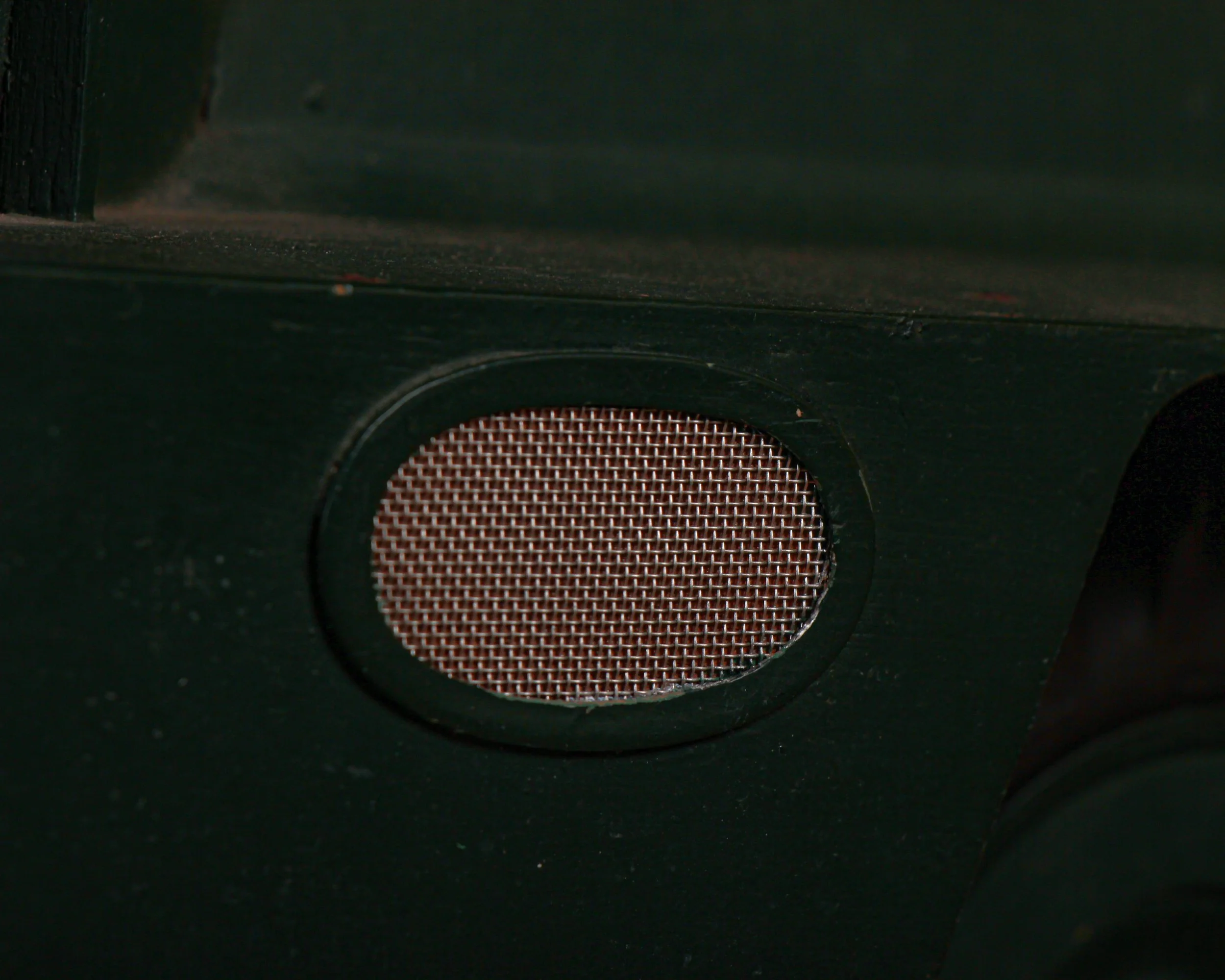
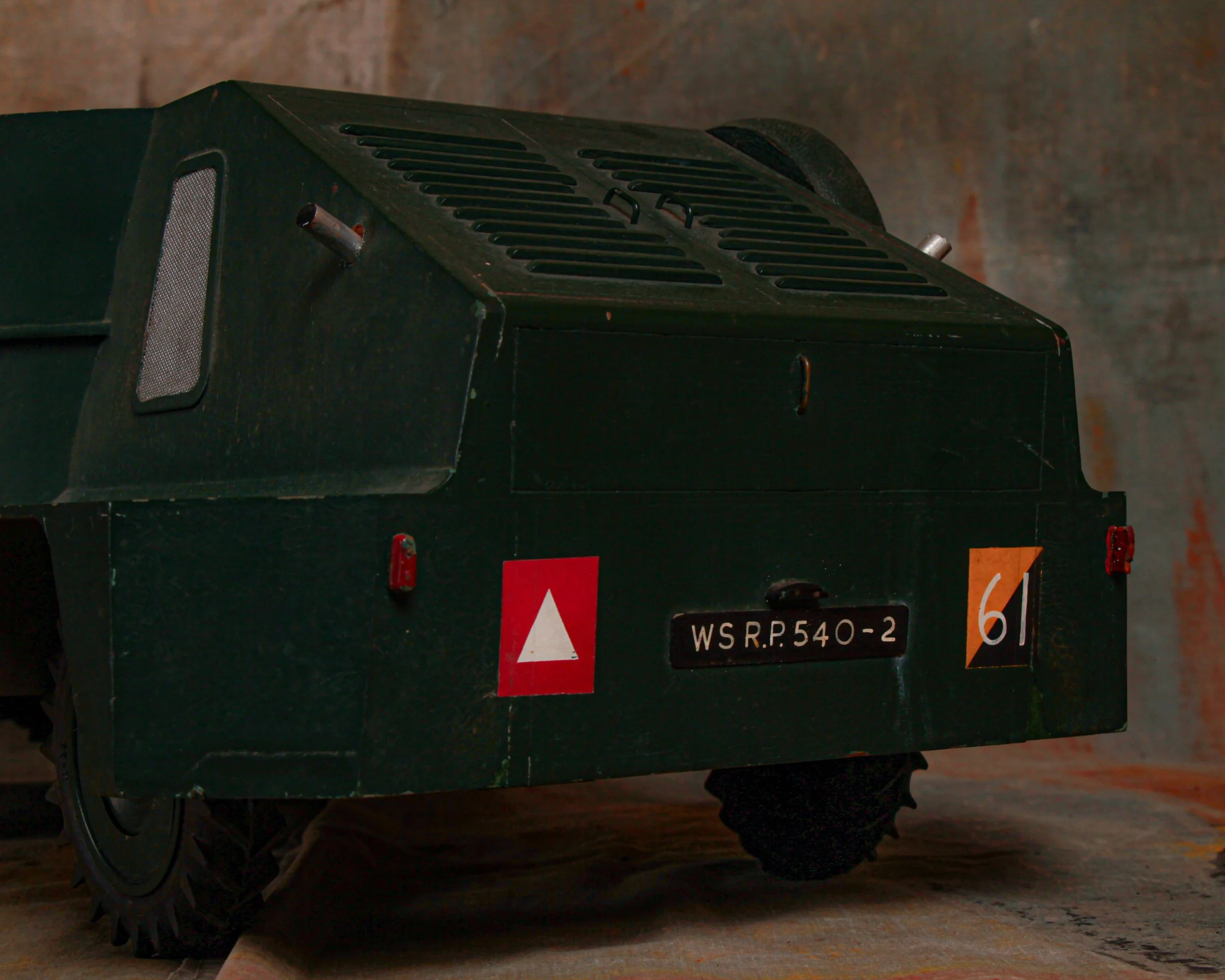
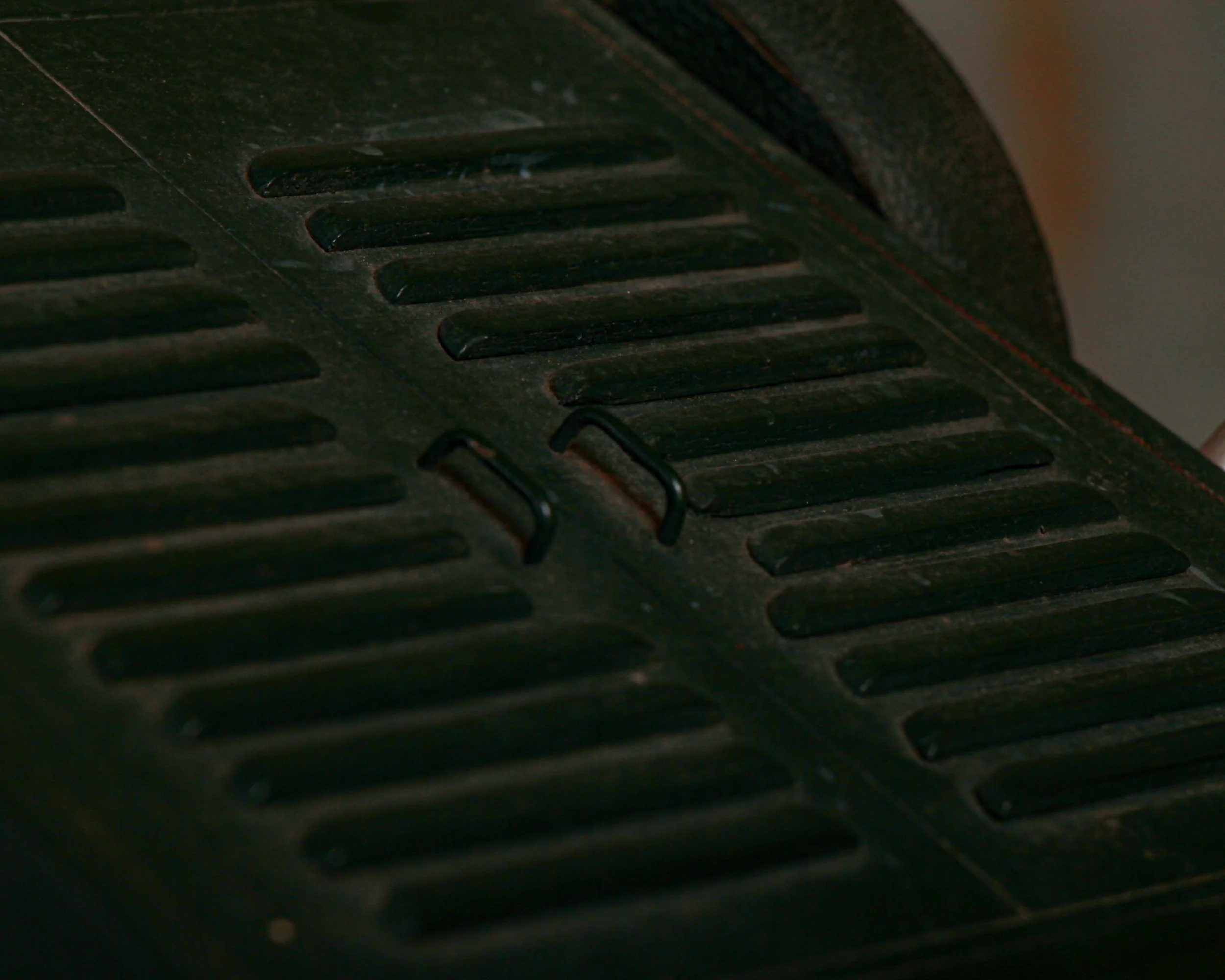
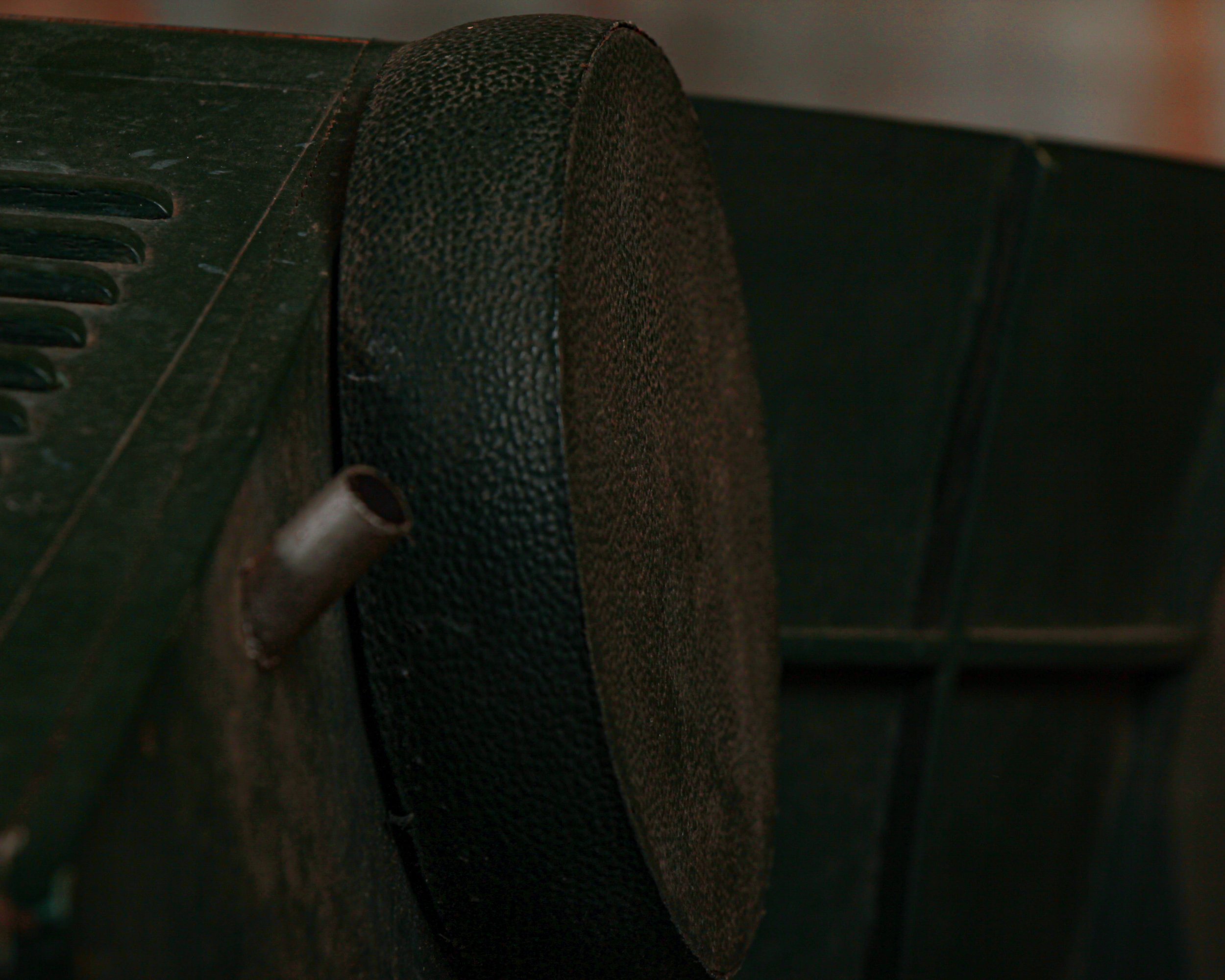
What makes this model especially appealing is that it was never intended as a toy or decorative object. It was built to communicate an idea. Every panel, vent, window, and mechanical detail serves a purpose, offering a glimpse into a period when innovation often began with hand-built prototypes and persuasive physical models rather than computer renderings.
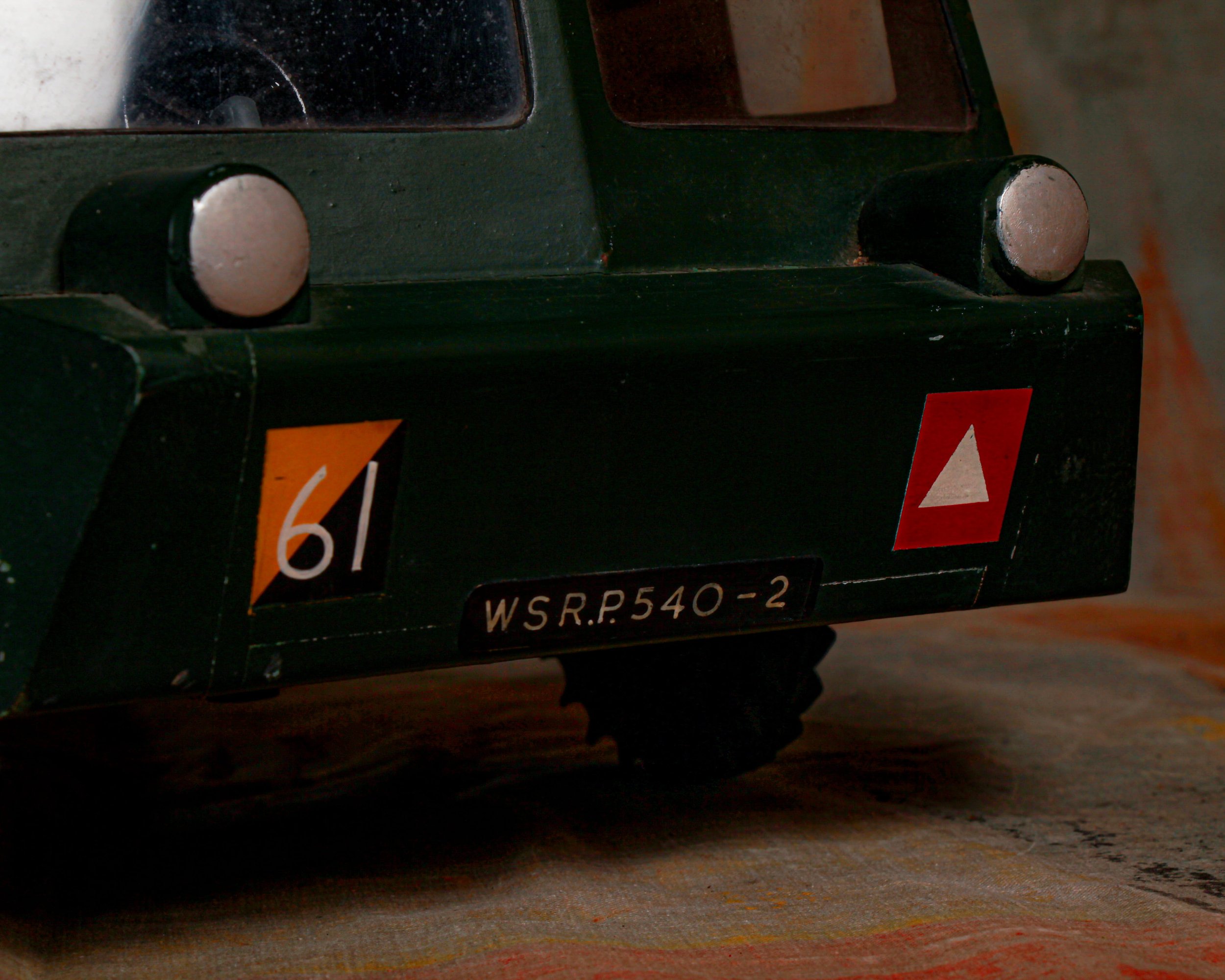
The model possesses a wonderfully honest, workshop-built character. Its military green finish, hand-applied details, and functional construction reflect the practical nature of its original purpose. Decades later, those qualities remain intact.
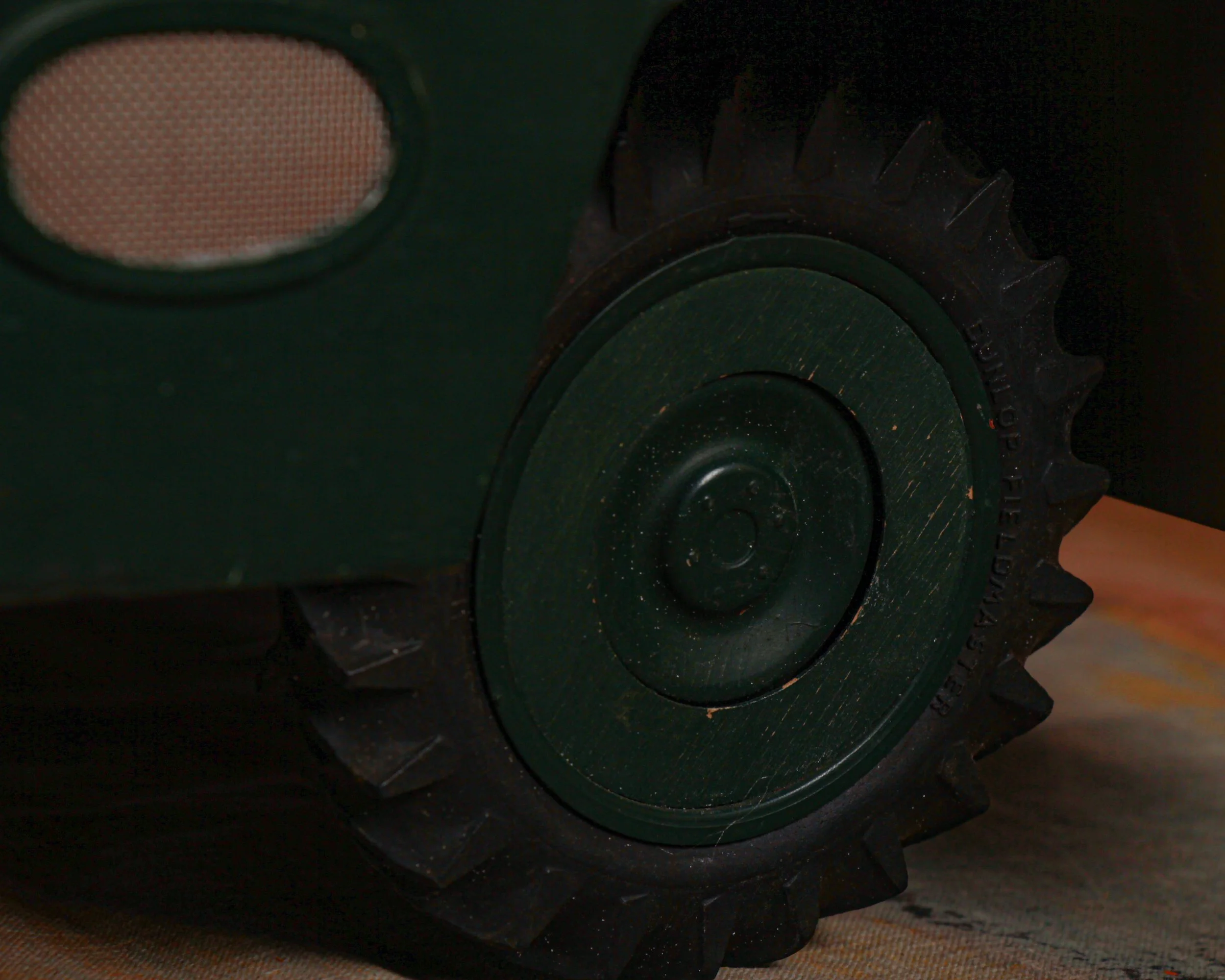
Condition is consistent with age and use. Scratches, touch-ups, scattered losses, broken elements, and imperfections are present throughout, all contributing to its authentic appearance and history. Despite these flaws, the model remains structurally sound and displays exceptionally well.
Rarely does an object so effectively bridge military history, industrial design, and speculative engineering. Whether viewed as a relic of wartime innovation or a fascinating "what if?" from the drawing board, this one-of-a-kind hover vehicle model is a remarkable survivor from an age of fearless experimentation.
Part military prototype, part engineering thought experiment, and part science-fiction fantasy made tangible, this extraordinary scratch-built hover vehicle model captures the restless ingenuity of wartime innovation. Created as a proof-of-concept presentation piece by the British Aircraft Corporation and shown to the British Ministry of Defence during the Second World War era, it represents the kind of bold thinking that flourished when conventional solutions no longer seemed enough.
At first glance, the vehicle appears almost familiar. Its cab-forward design, rugged stance, and utility-truck proportions suggest a practical military workhorse. Then your eye drifts to the rear, where practicality gives way to imagination. A massive shrouded rotor dominates the back of the vehicle, hinting at a machine designed to skim, float, or traverse terrain that would stop ordinary vehicles in their tracks. It is easy to picture engineers gathered around this very model, debating possibilities, testing ideas, and imagining how future battlefields might be conquered through entirely new forms of mobility.
What makes this model especially appealing is that it was never intended as a toy or decorative object. It was built to communicate an idea. Every panel, vent, window, and mechanical detail serves a purpose, offering a glimpse into a period when innovation often began with hand-built prototypes and persuasive physical models rather than computer renderings.
The model possesses a wonderfully honest, workshop-built character. Its military green finish, hand-applied details, and functional construction reflect the practical nature of its original purpose. Decades later, those qualities remain intact.
Condition is consistent with age and use. Scratches, touch-ups, scattered losses, broken elements, and imperfections are present throughout, all contributing to its authentic appearance and history. Despite these flaws, the model remains structurally sound and displays exceptionally well.
Rarely does an object so effectively bridge military history, industrial design, and speculative engineering. Whether viewed as a relic of wartime innovation or a fascinating "what if?" from the drawing board, this one-of-a-kind hover vehicle model is a remarkable survivor from an age of fearless experimentation.