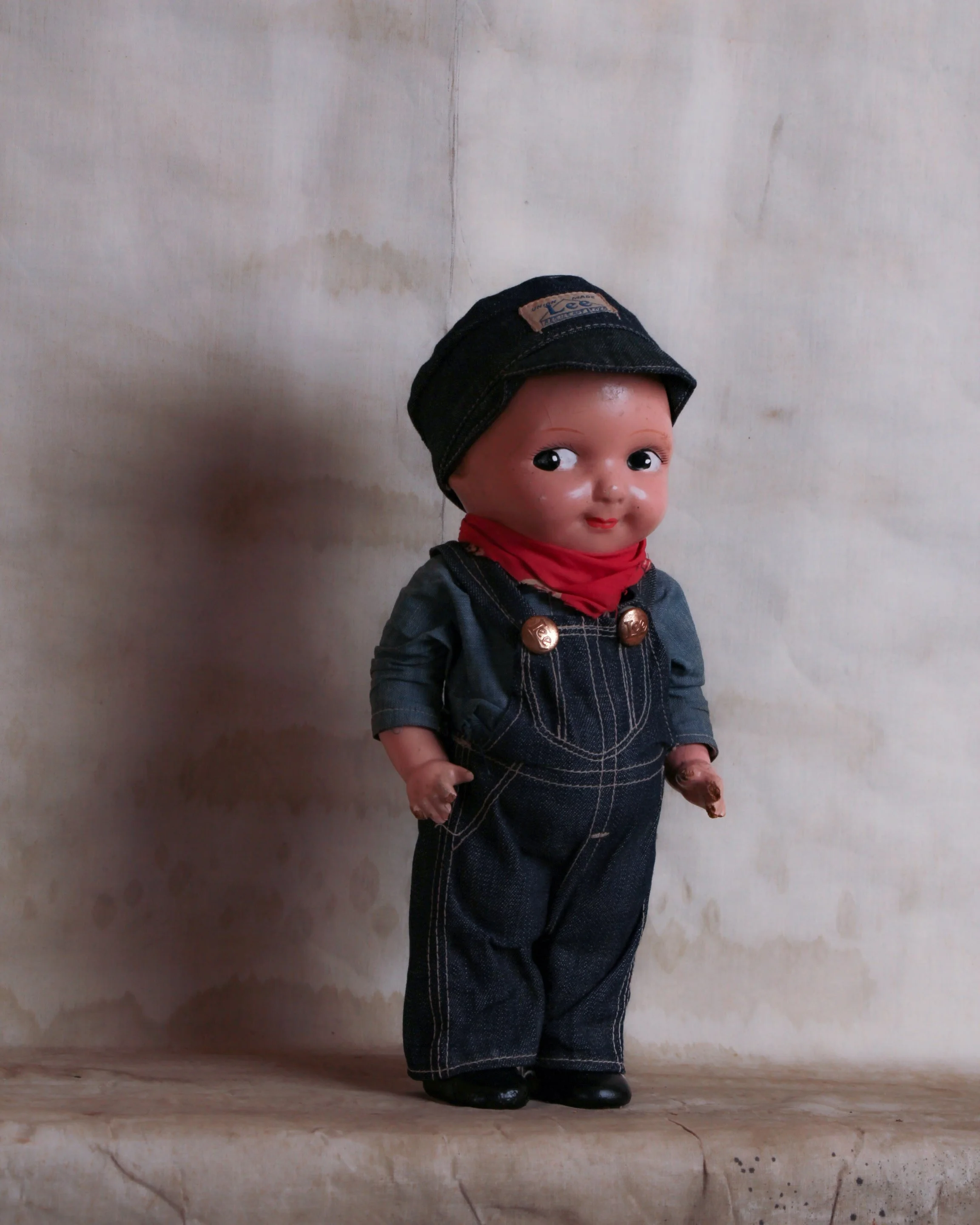
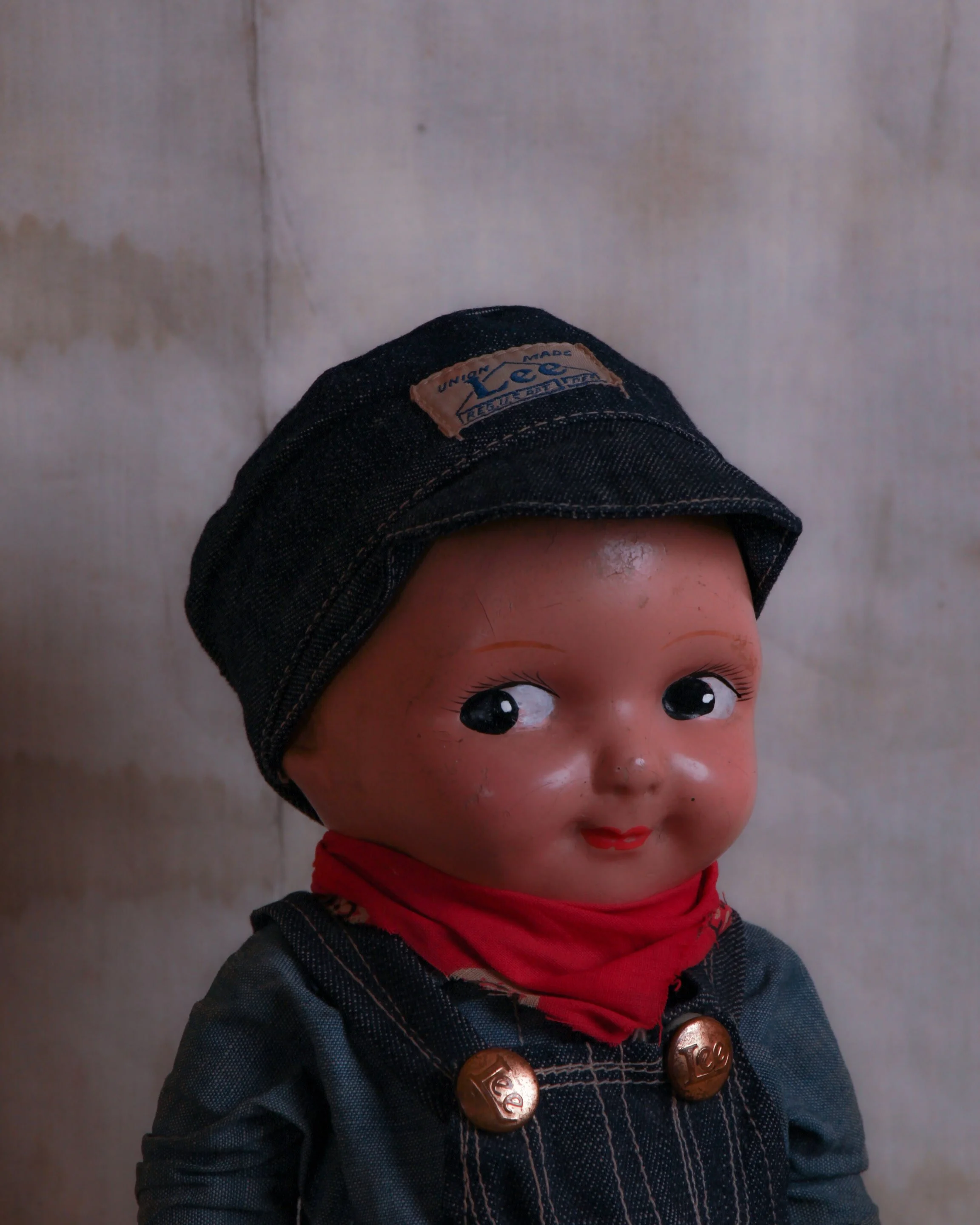

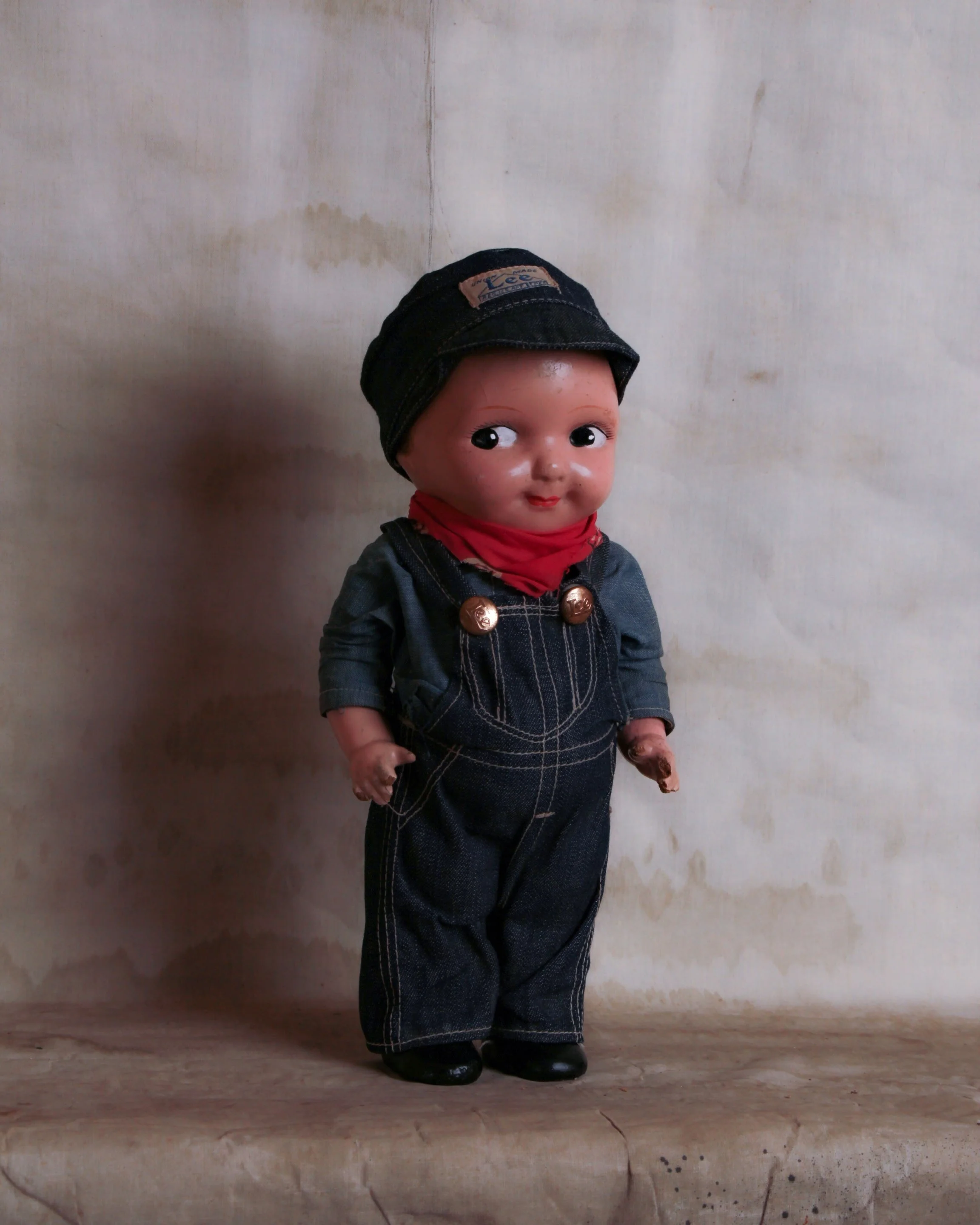
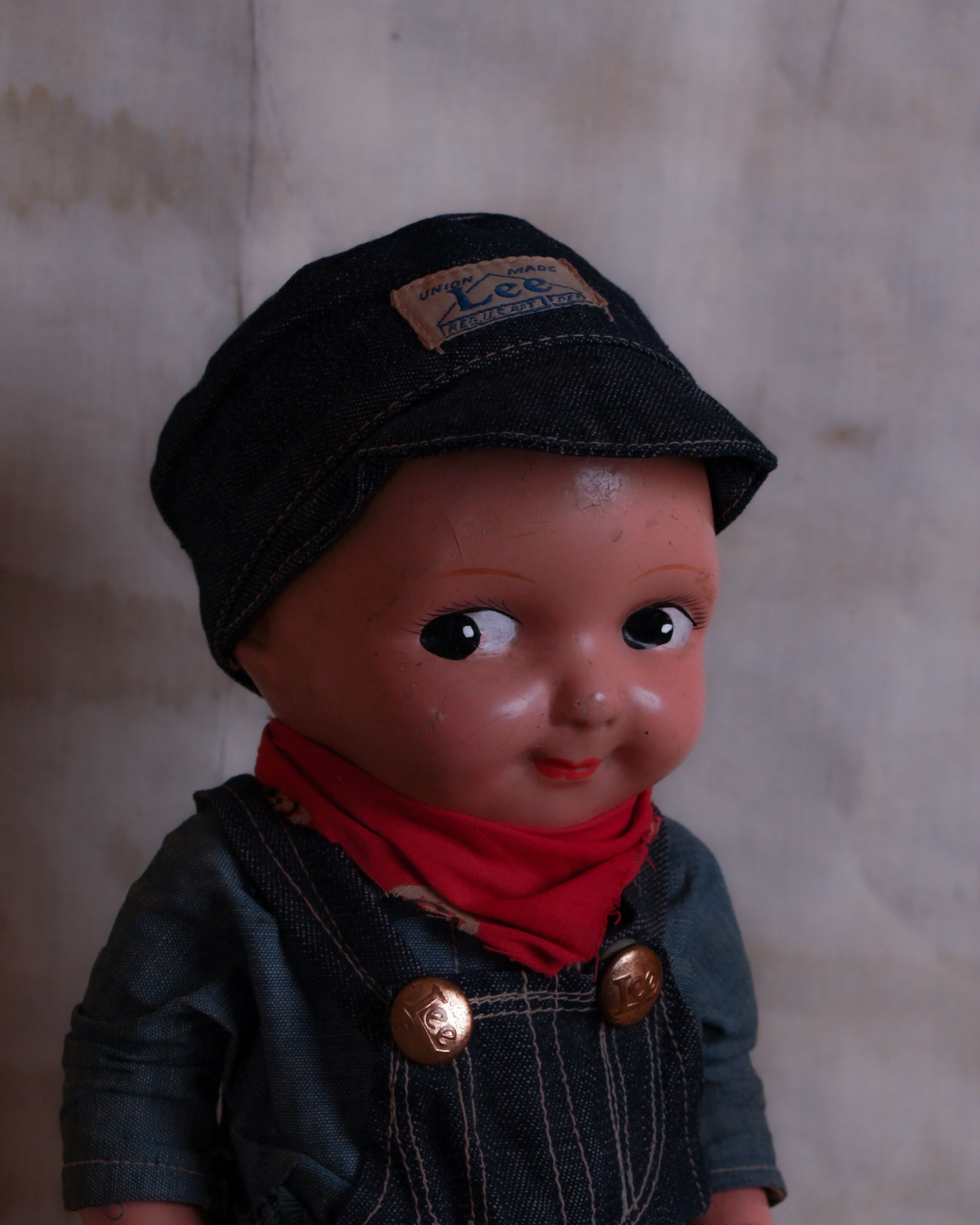
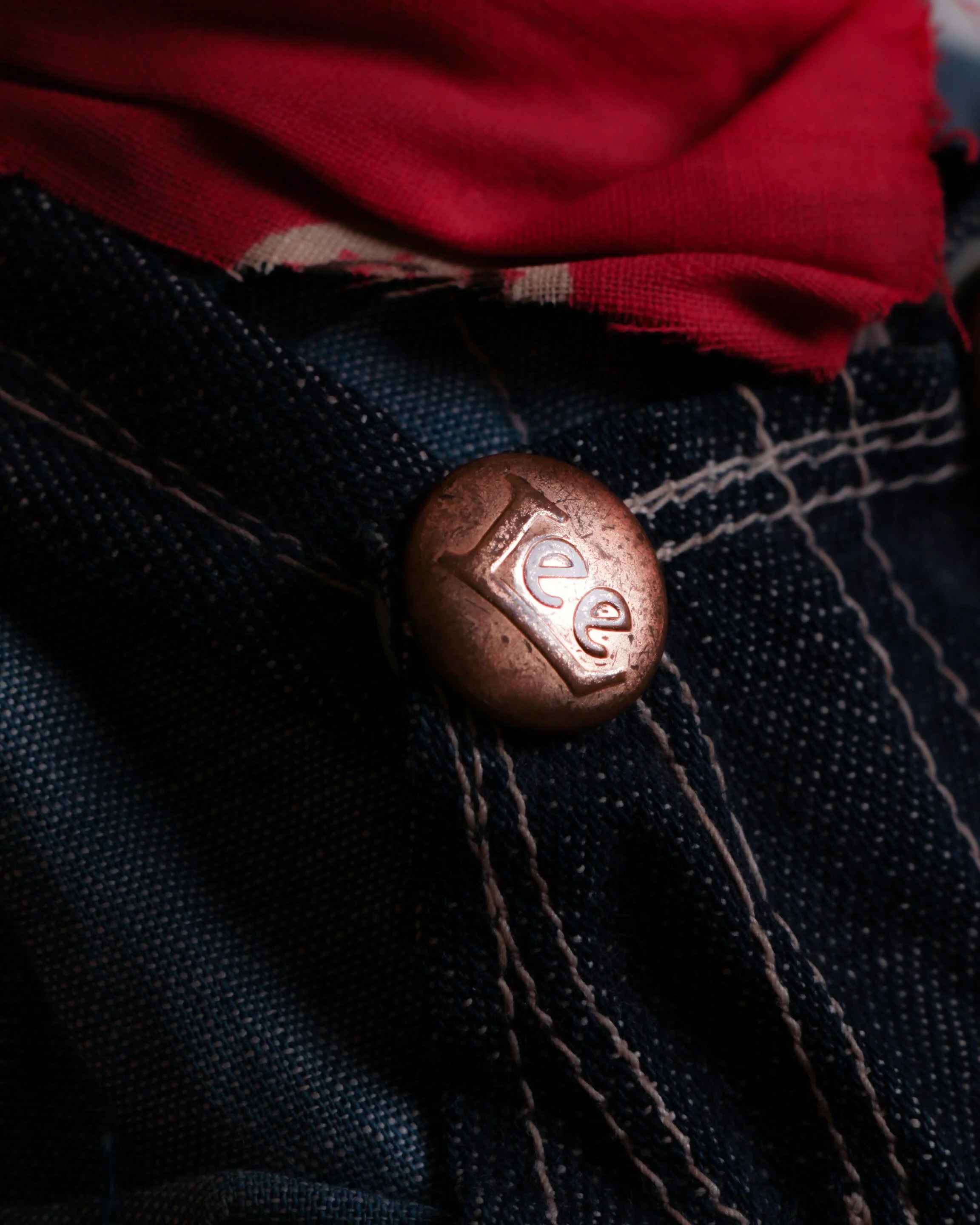
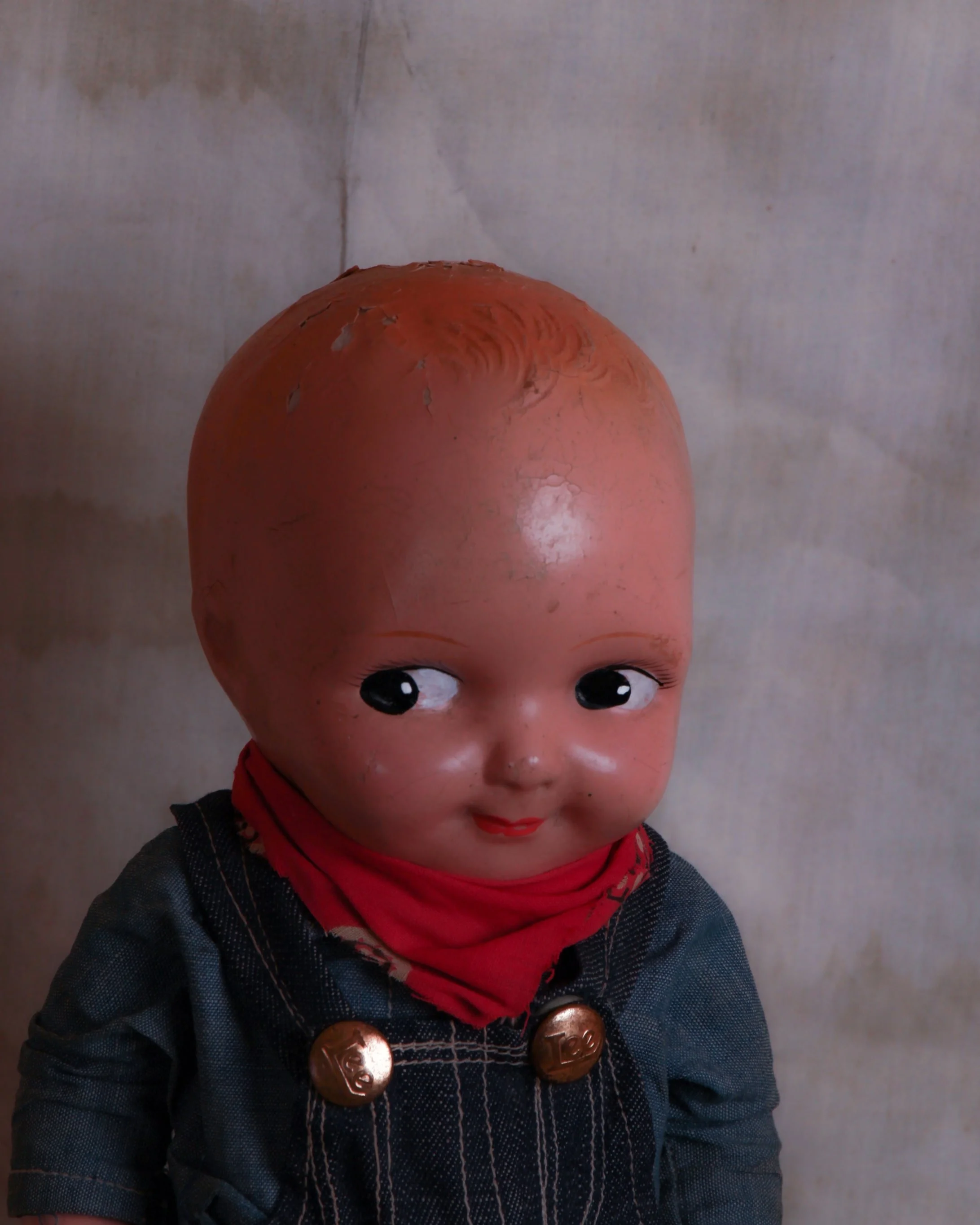
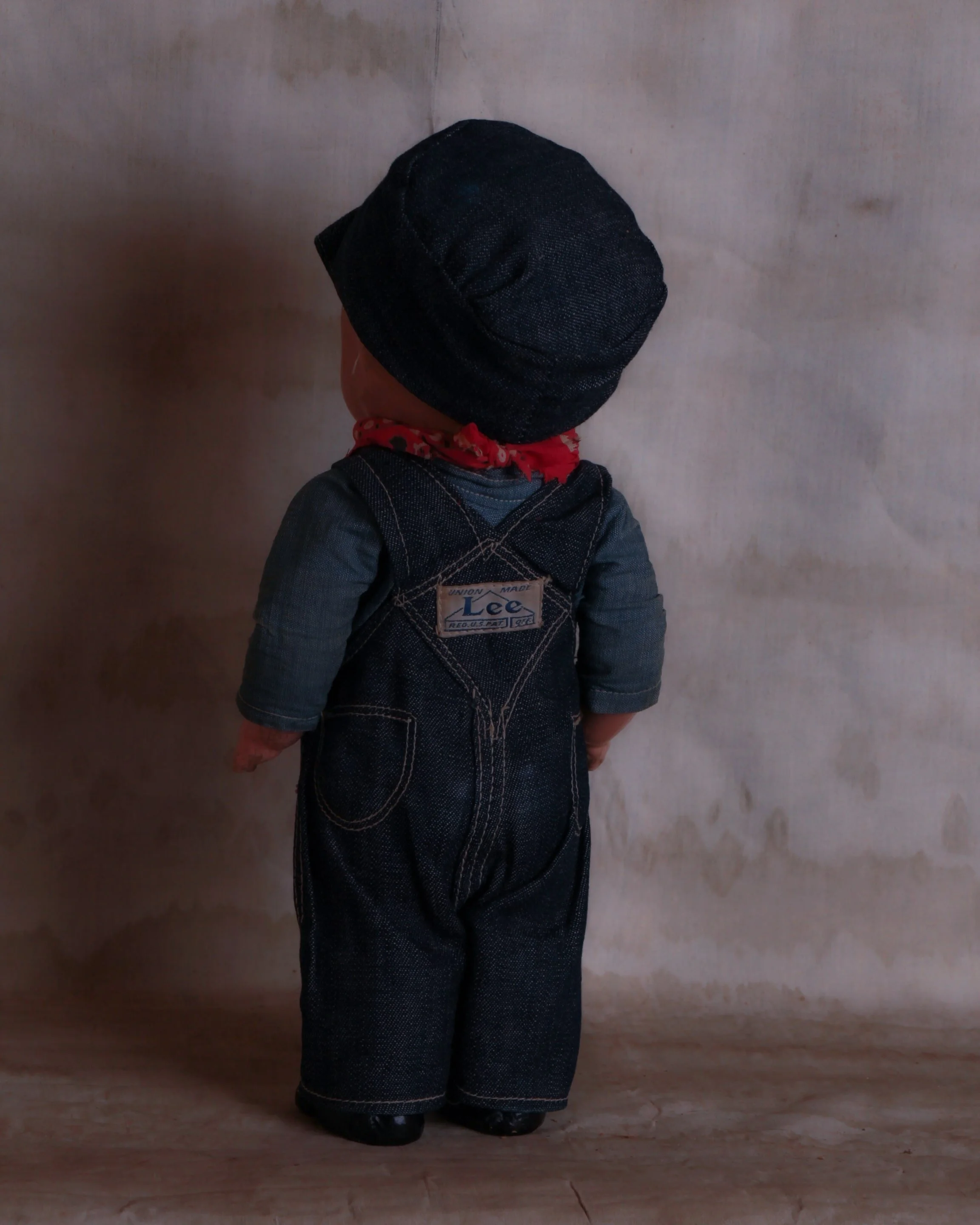

Meet the original denim influencer: a 1920s Buddy Lee composition advertising doll decked out in full Union Made Lee overalls, complete with embossed copper buttons, red neckerchief, and matching denim engineer cap. At just under 14 inches tall, he may be pint-sized, but he’s dressed to union-spec perfection. These dolls were originally made as store displays, helping Lee jeans market their workwear, and this little guy still delivers plenty of charm nearly a century later.
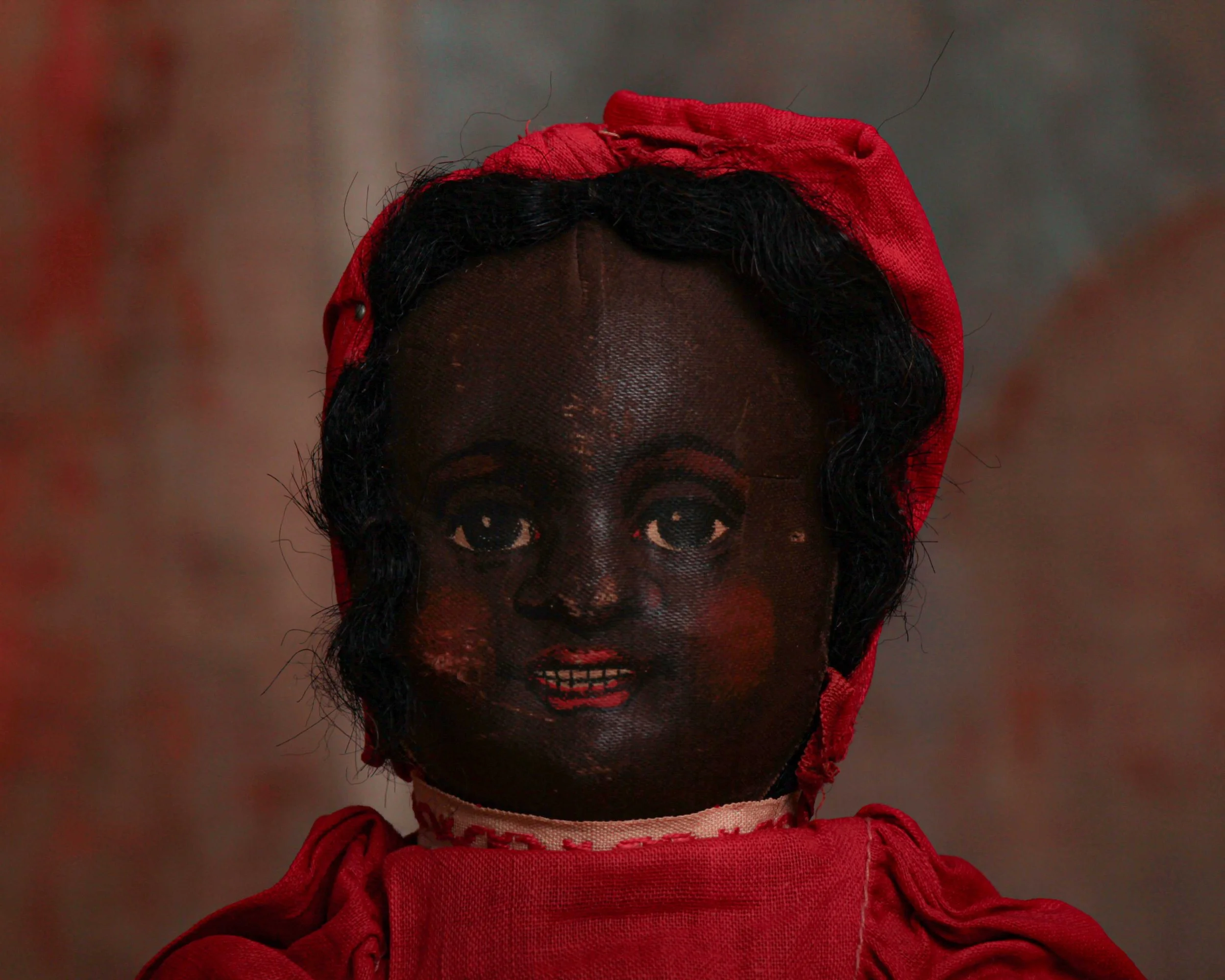
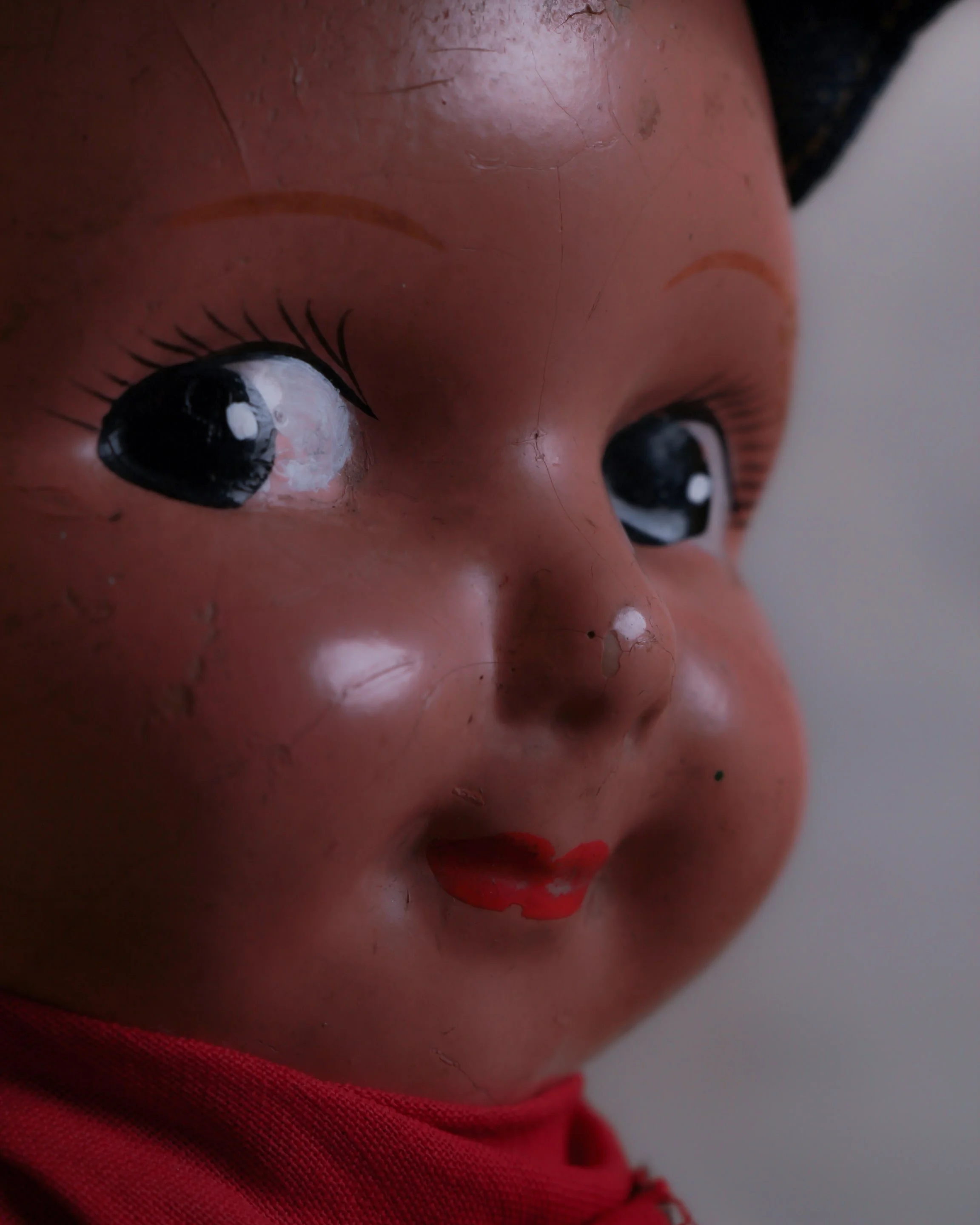
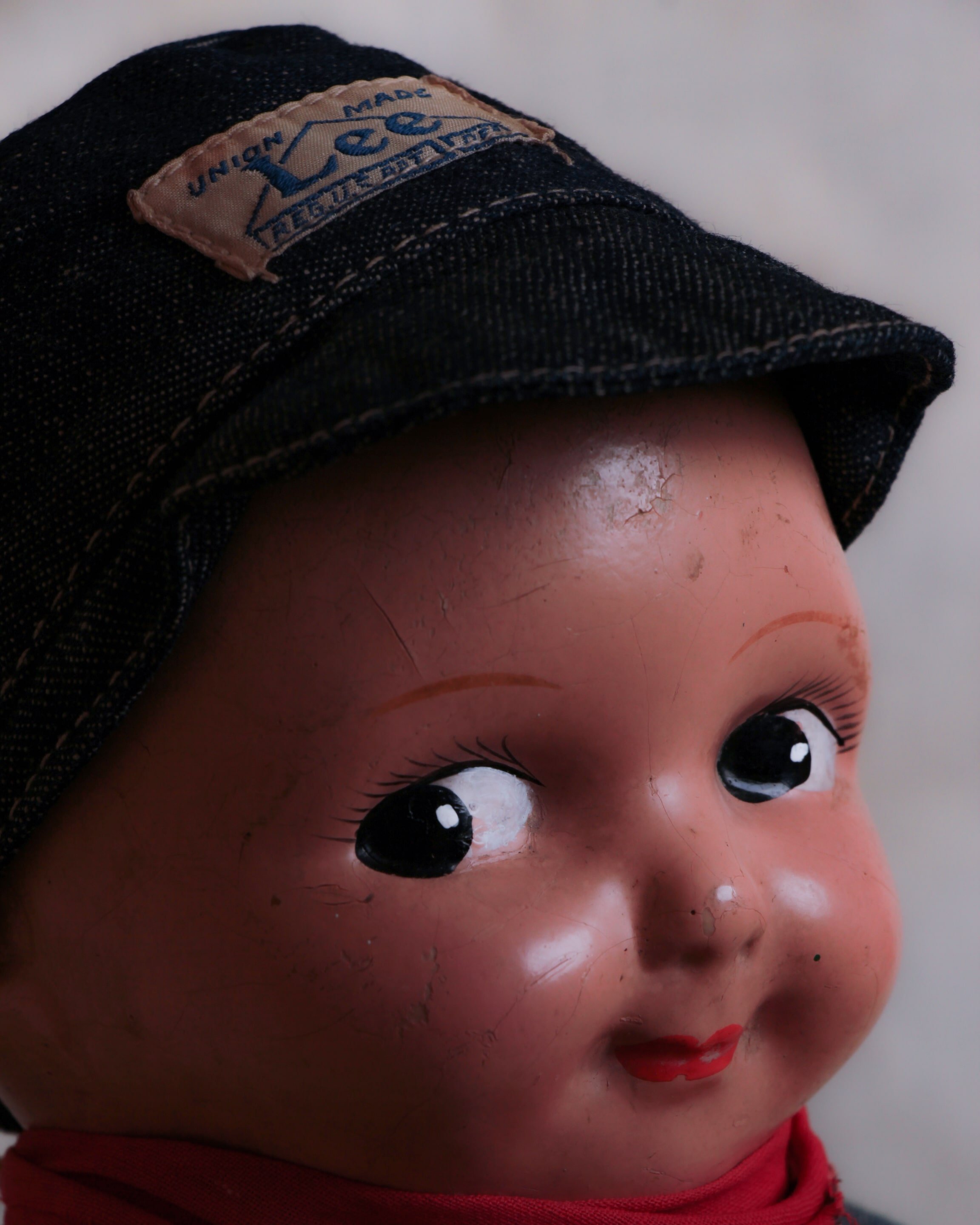
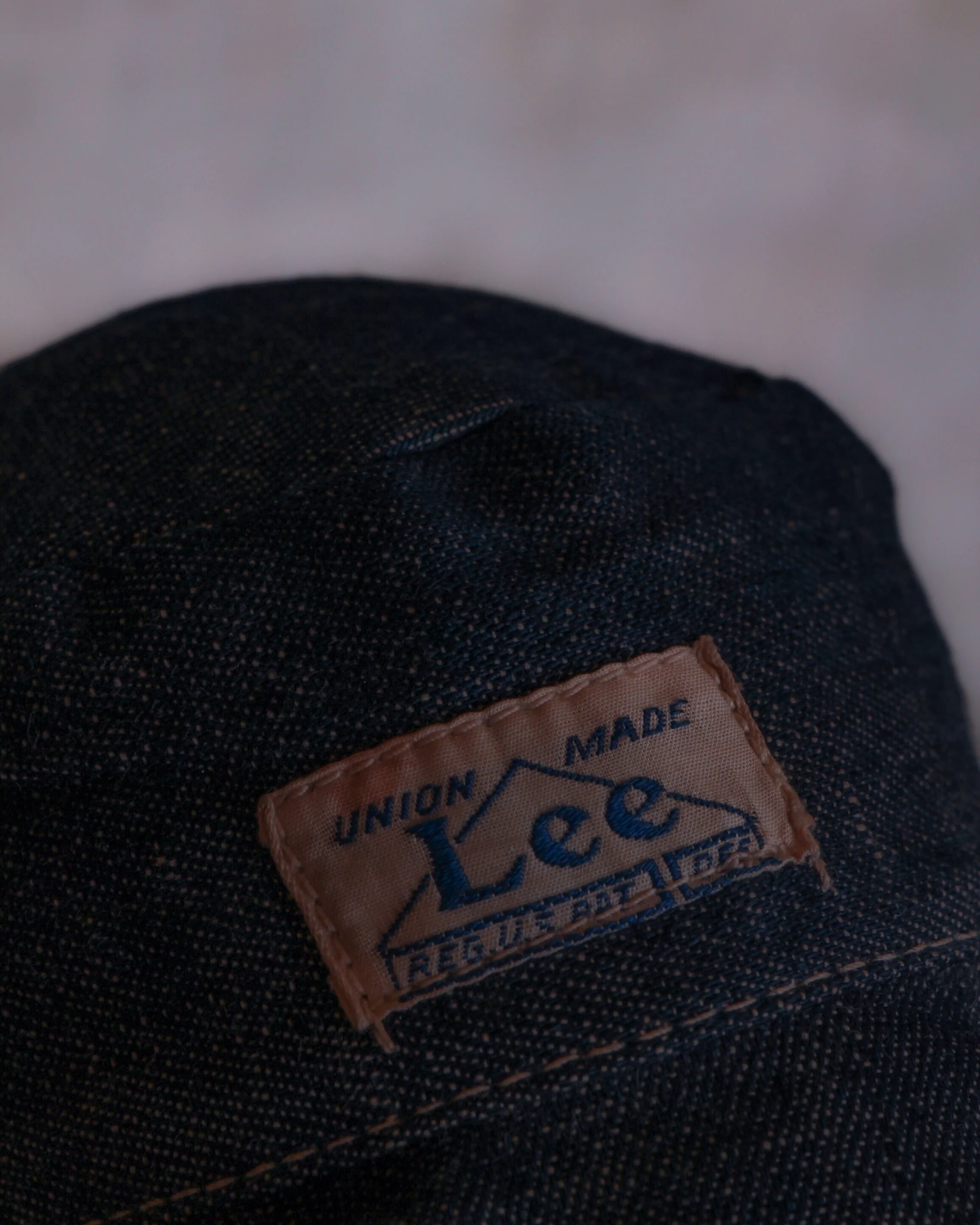
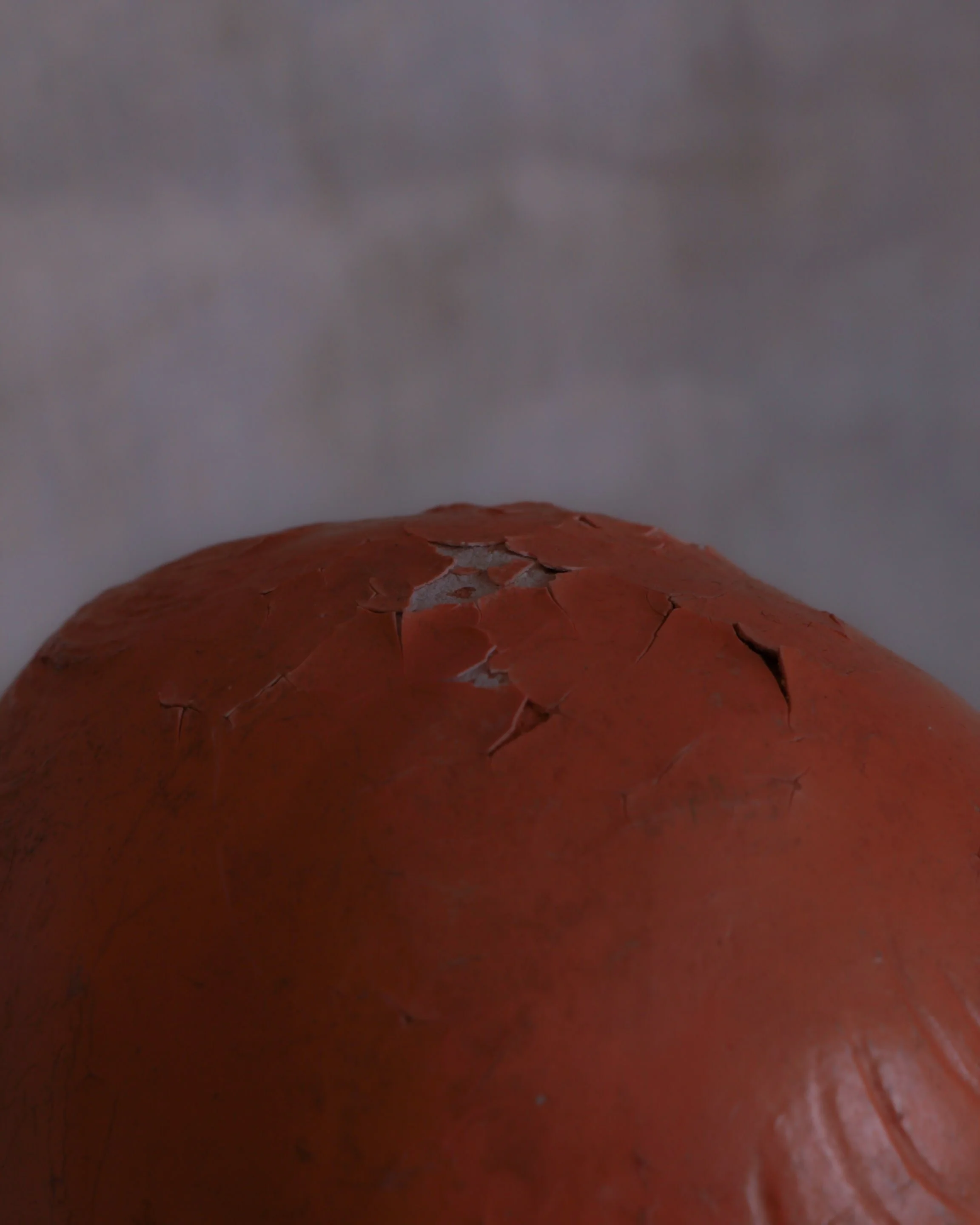
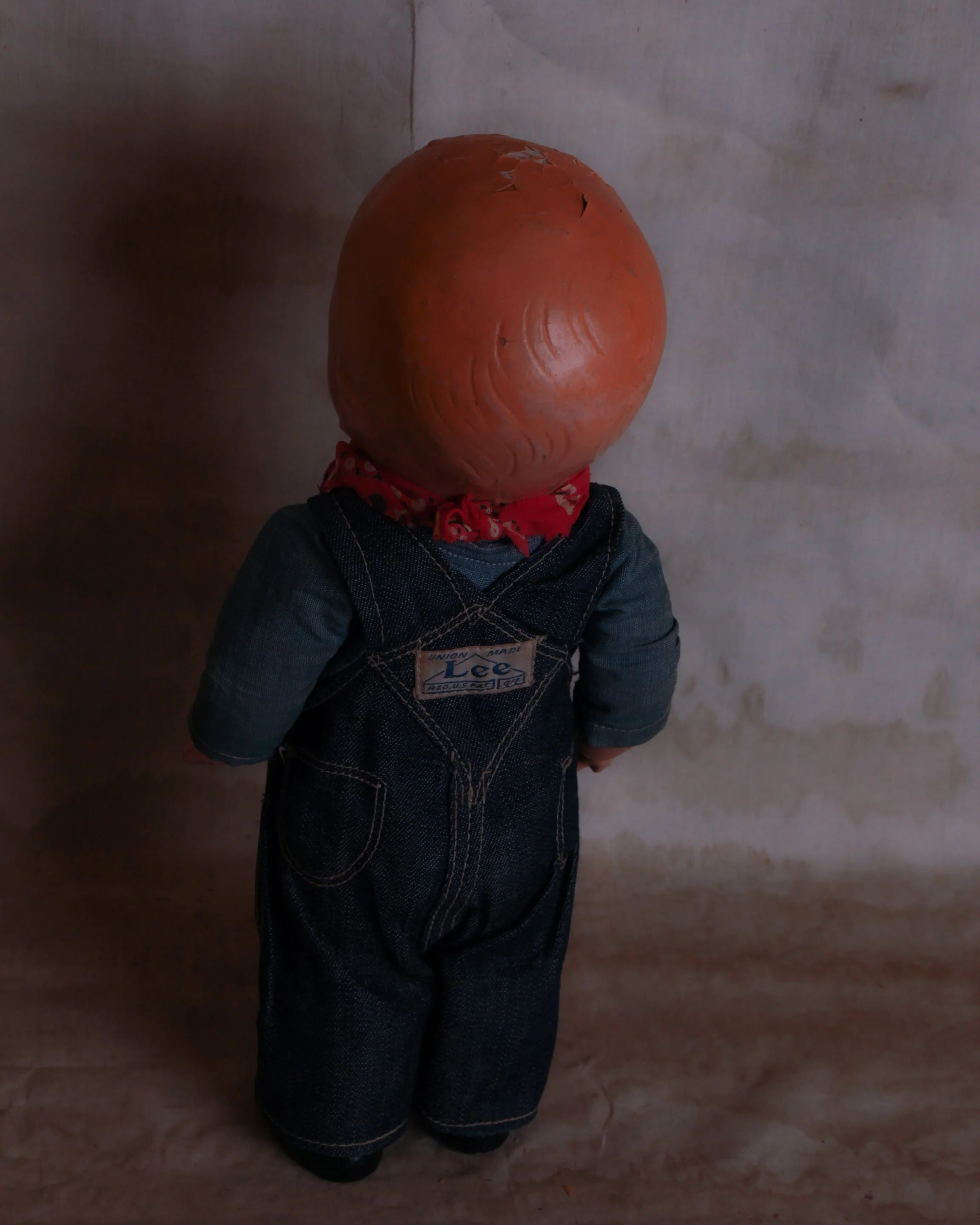
The painted composition face is all rosy cheeks, sly smile, and side-eye confidence—like he knows he's the best-dressed doll on the shelf. His hands show signs of wear, and the top of his head has a patch where the original paint has flaked off—visible when the hat is removed, but totally hidden when he’s dressed. The denim is original and in great condition, with that unmistakable old-school Lee label stitched right across the back.
Category History
Buddy Lee dolls first appeared in the early 1920s as pint-sized pitchmen for the H.D. Lee Company, a Kansas workwear brand built on durability and no-nonsense design. Instead of glossy ads, Lee put their product in people’s hands—literally—through these small, dressed-to-the-nines figures wearing miniature versions of their overalls, jackets, and uniforms.
The earliest examples were made of composition, a mix of sawdust and glue pressed into molds, giving them a solid, slightly textured feel. They were meant for store counters, not toy chests—handled often, picked up, examined, and remembered. That wear you see today—fine cracks, softened paint—isn’t a flaw, it’s proof they did their job.
What makes them interesting is how they blur the line between advertising and object. They’re equal parts salesman’s sample, display piece, and cultural snapshot of American labor at the time. Later versions moved into plastic, but the 1920s composition dolls carry a warmth—and a bit more soul—that’s hard to fake.
Meet the original denim influencer: a 1920s Buddy Lee composition advertising doll decked out in full Union Made Lee overalls, complete with embossed copper buttons, red neckerchief, and matching denim engineer cap. At just under 14 inches tall, he may be pint-sized, but he’s dressed to union-spec perfection. These dolls were originally made as store displays, helping Lee jeans market their workwear, and this little guy still delivers plenty of charm nearly a century later.
The painted composition face is all rosy cheeks, sly smile, and side-eye confidence—like he knows he's the best-dressed doll on the shelf. His hands show signs of wear, and the top of his head has a patch where the original paint has flaked off—visible when the hat is removed, but totally hidden when he’s dressed. The denim is original and in great condition, with that unmistakable old-school Lee label stitched right across the back.
Category History
Buddy Lee dolls first appeared in the early 1920s as pint-sized pitchmen for the H.D. Lee Company, a Kansas workwear brand built on durability and no-nonsense design. Instead of glossy ads, Lee put their product in people’s hands—literally—through these small, dressed-to-the-nines figures wearing miniature versions of their overalls, jackets, and uniforms.
The earliest examples were made of composition, a mix of sawdust and glue pressed into molds, giving them a solid, slightly textured feel. They were meant for store counters, not toy chests—handled often, picked up, examined, and remembered. That wear you see today—fine cracks, softened paint—isn’t a flaw, it’s proof they did their job.
What makes them interesting is how they blur the line between advertising and object. They’re equal parts salesman’s sample, display piece, and cultural snapshot of American labor at the time. Later versions moved into plastic, but the 1920s composition dolls carry a warmth—and a bit more soul—that’s hard to fake.