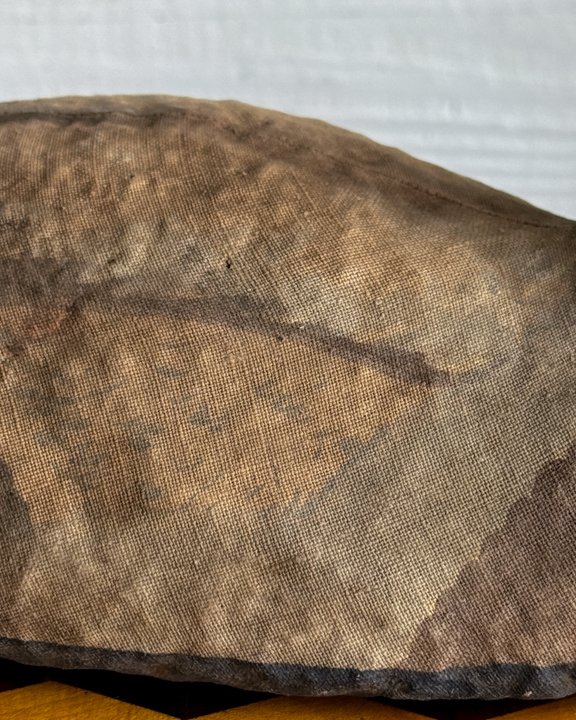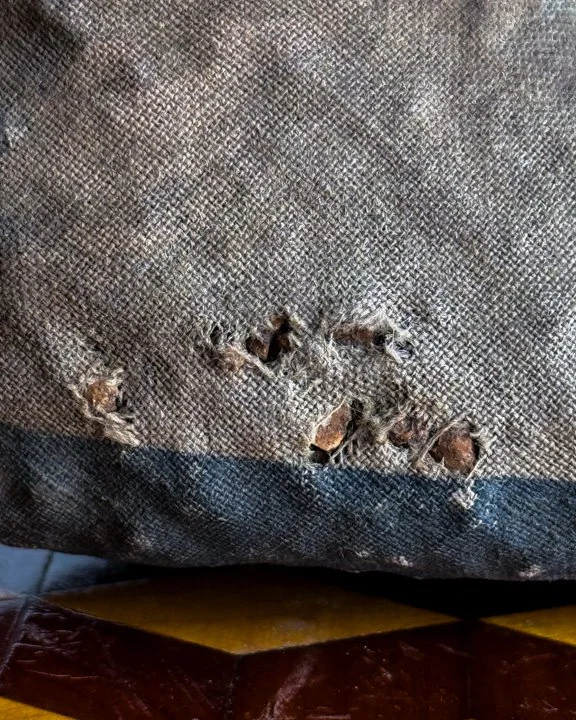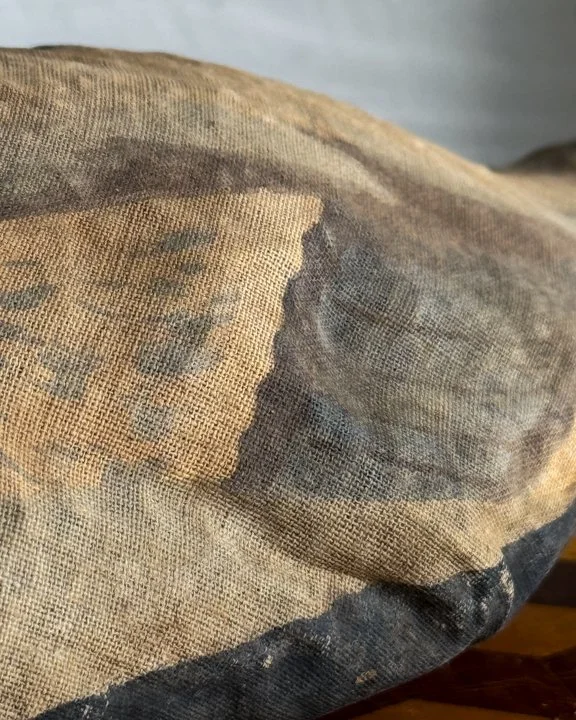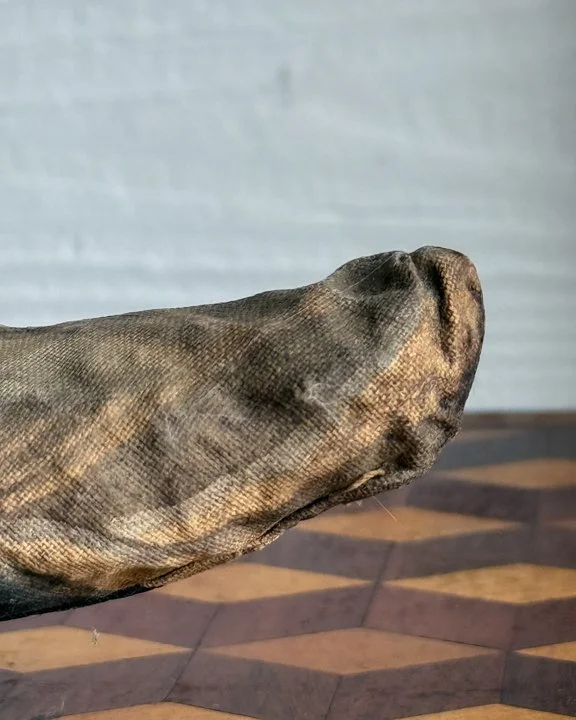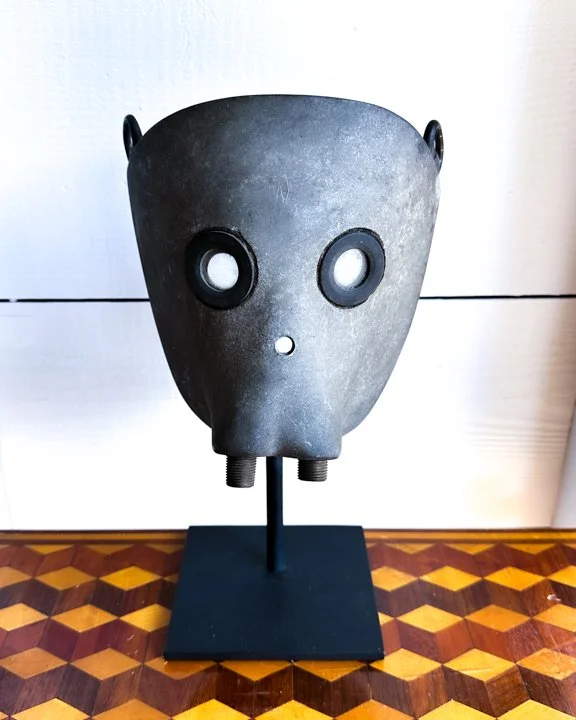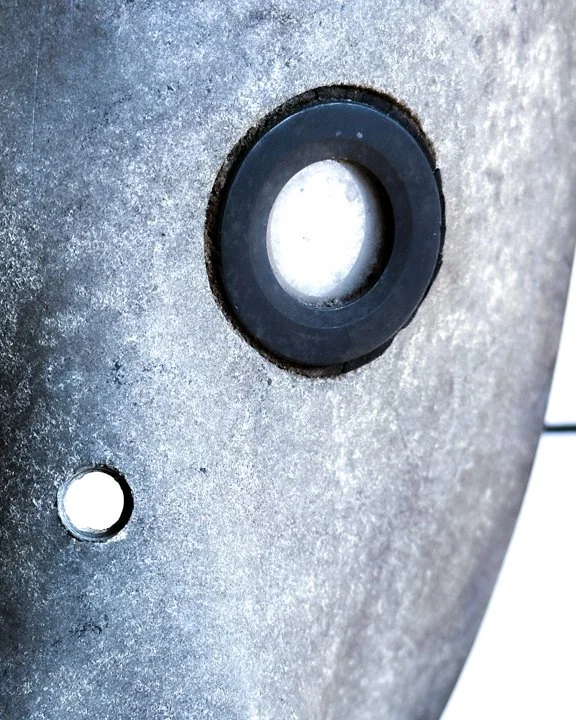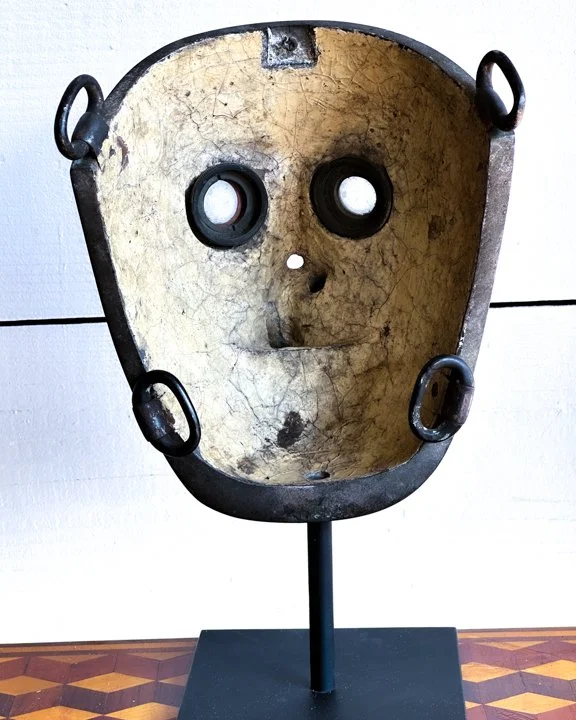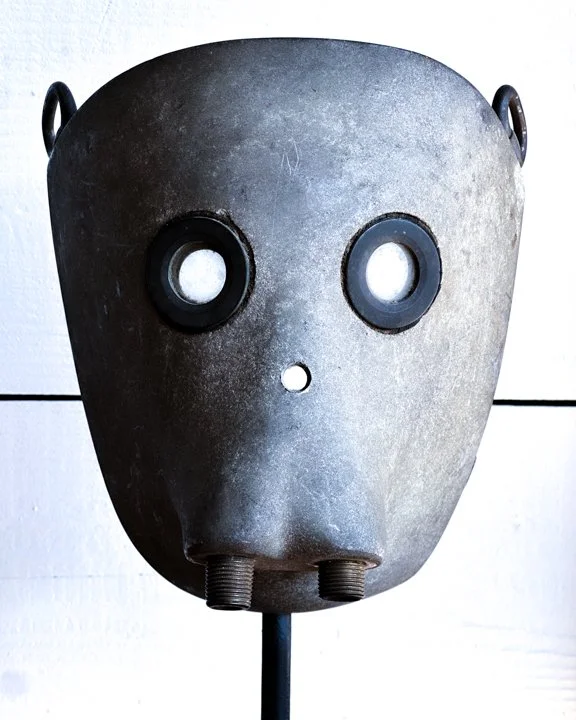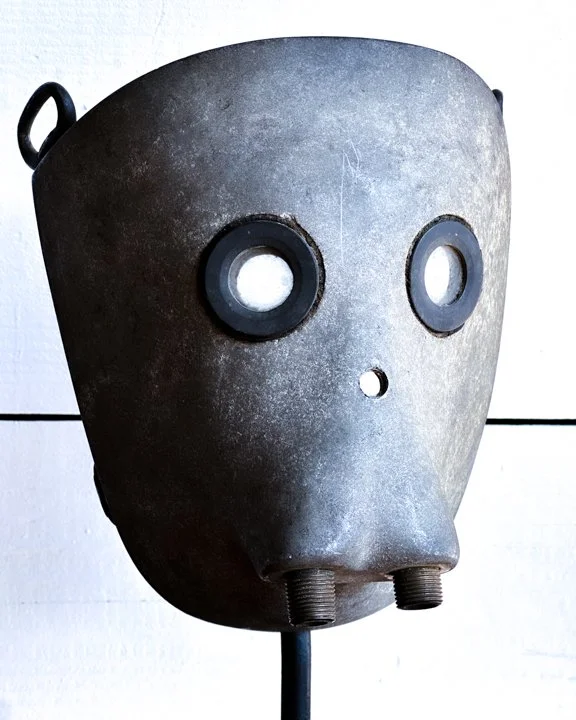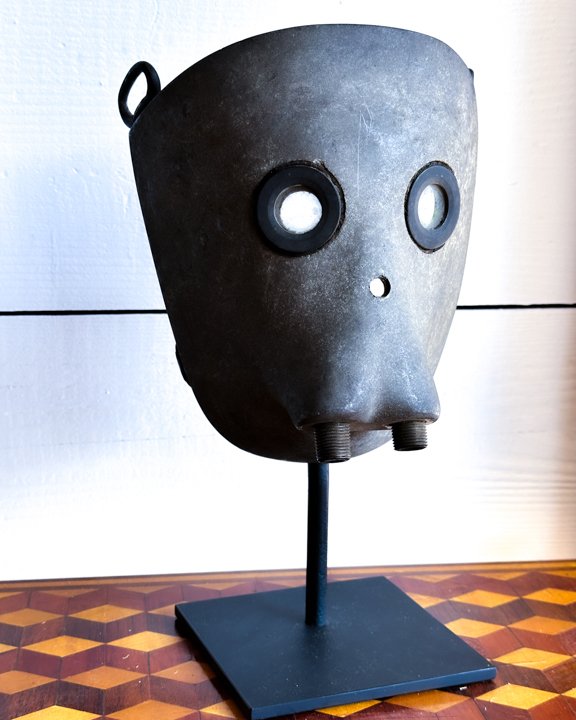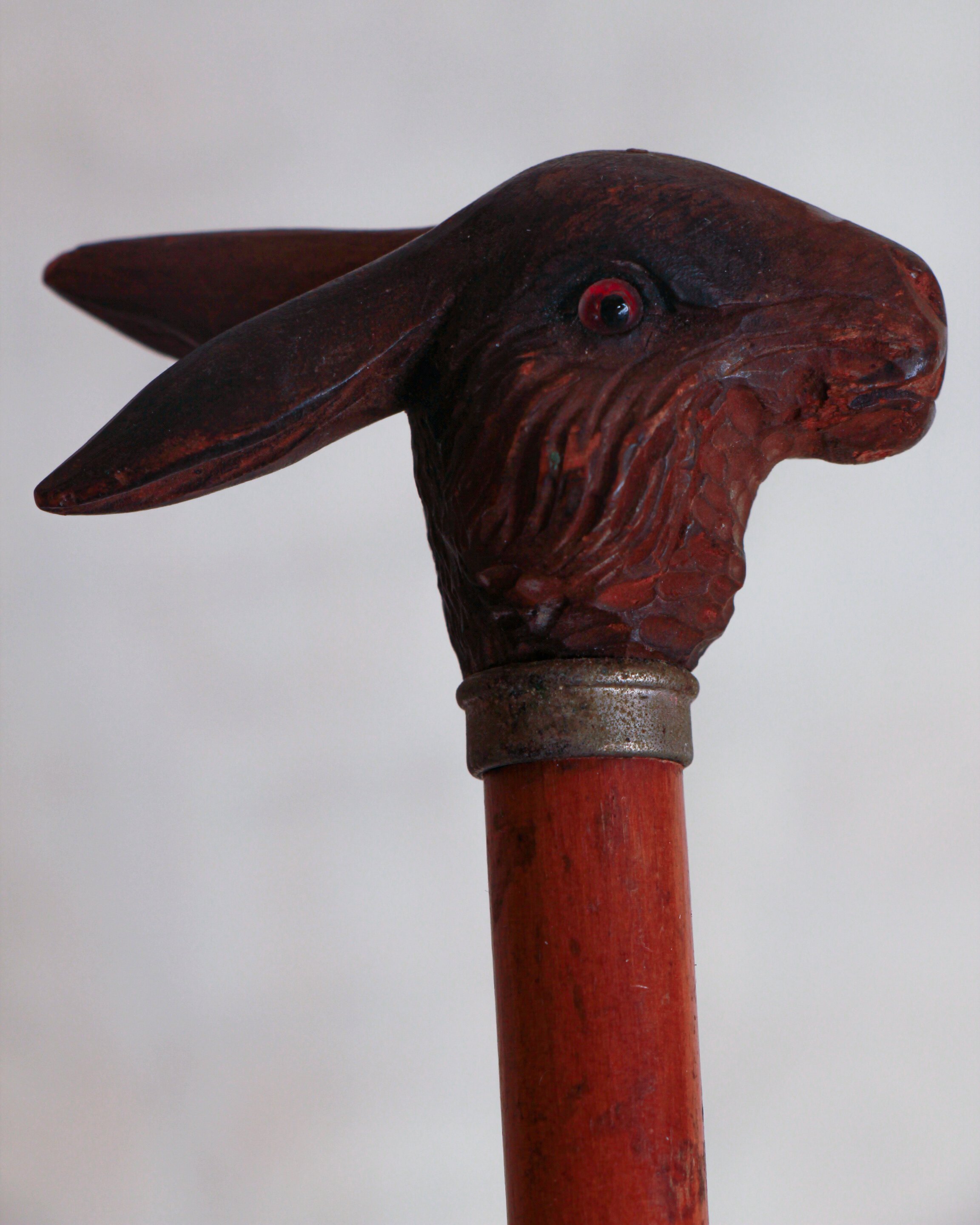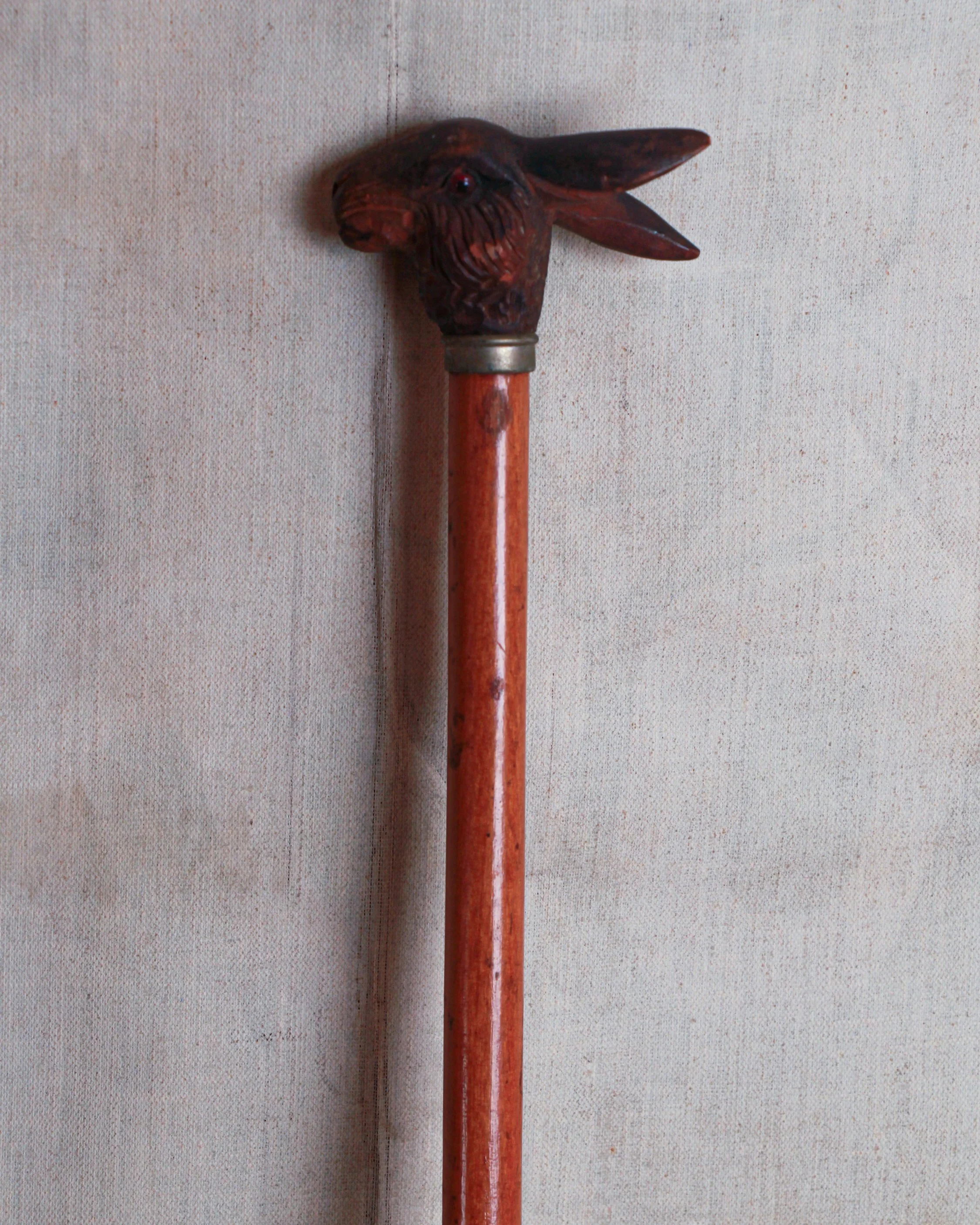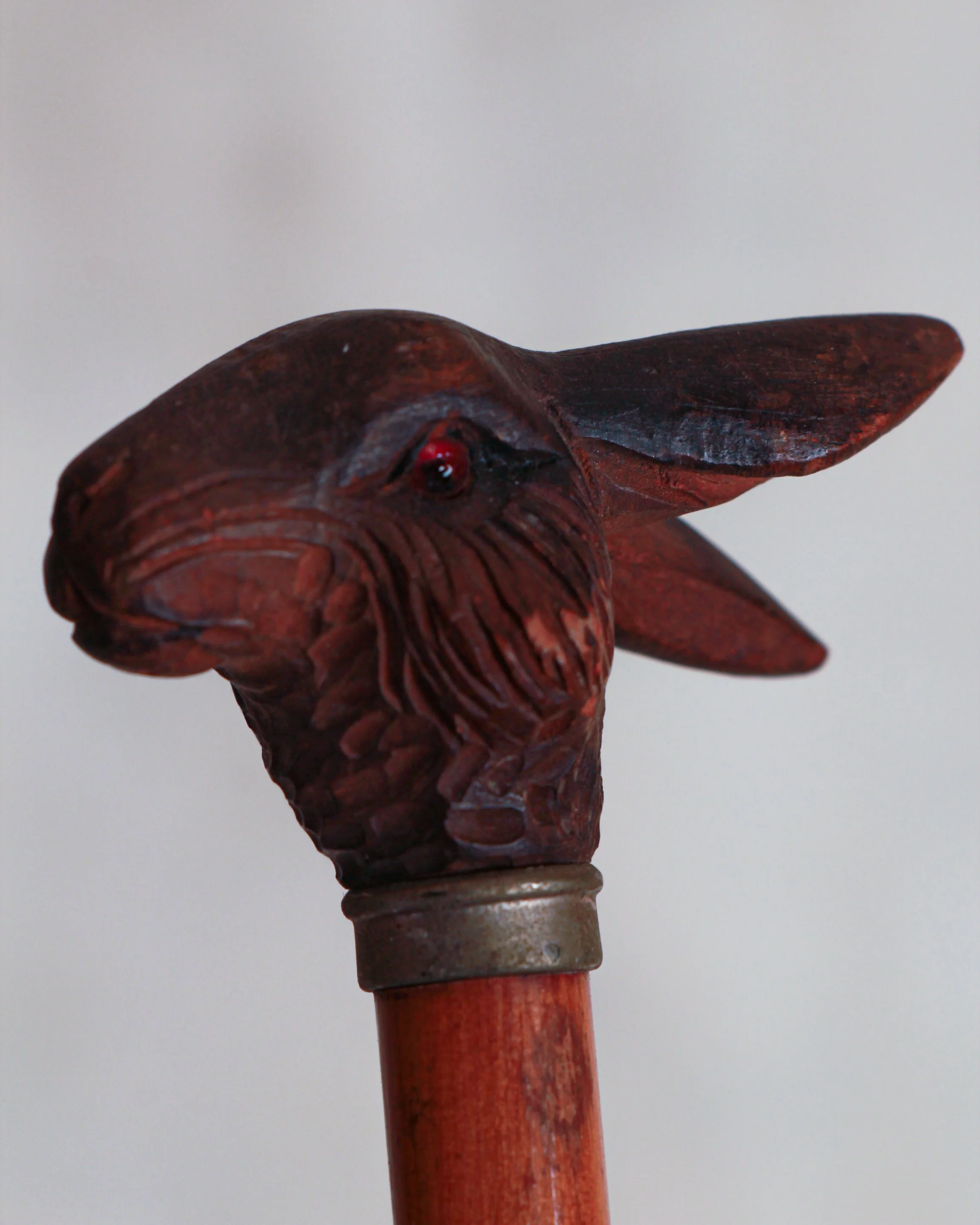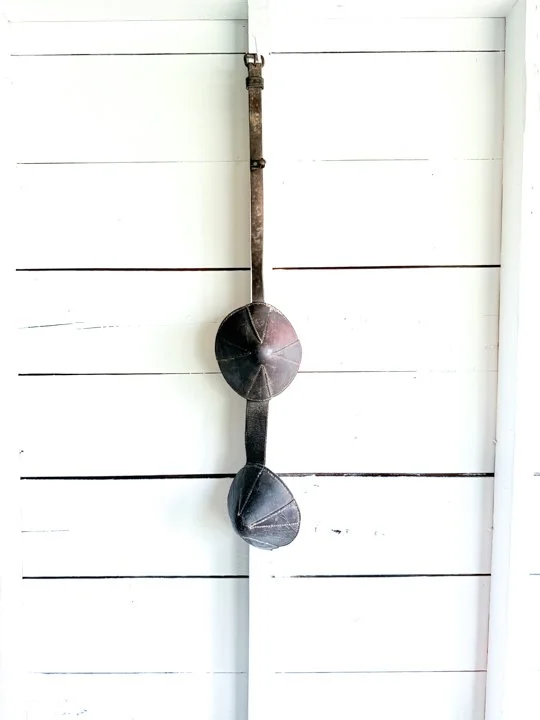
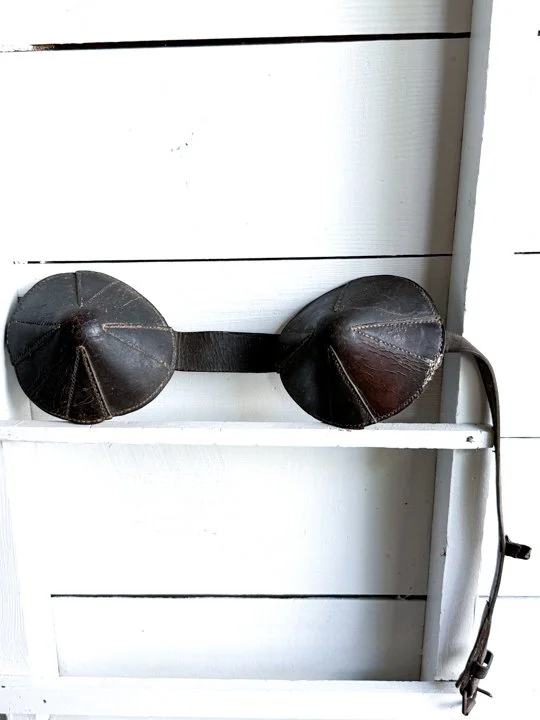
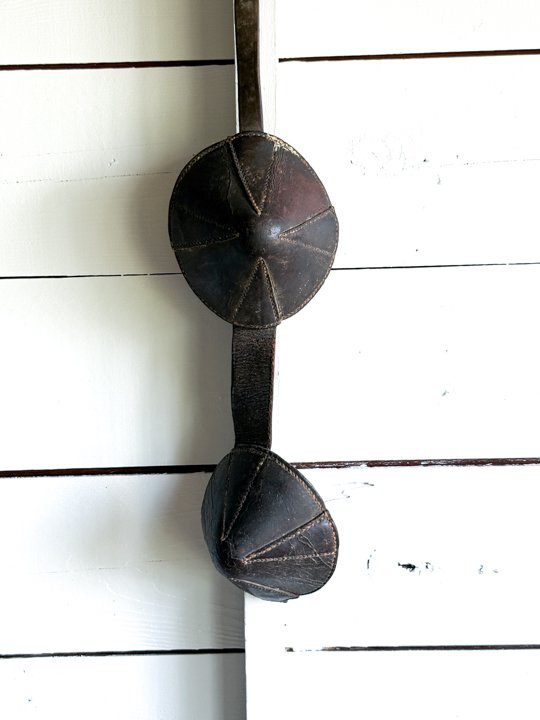
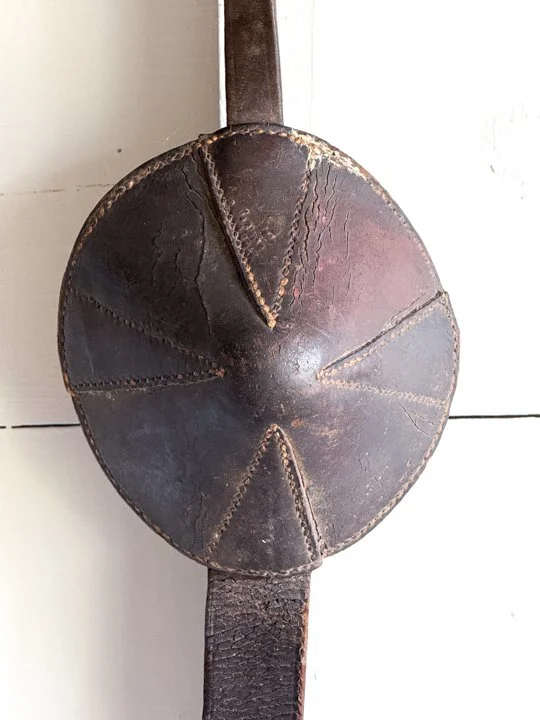
This antique bull blinder is as rugged and purposeful as it looks—crafted from thick, hand-stitched leather with two dramatic domed covers meant to shield a bull’s vision. Circa early 20th century, these were strapped onto the animal’s head to calm its temper and keep it from charging at every distraction. The construction is as much about function as it is about form: heavy, durable leather stitched into starburst patterns, giving each eye cover a sculptural quality.
Bull Blinders
Early leather bull blinders are a straightforward solution to a very specific problem: how do you manage an animal built for strength and distraction? Used primarily in farming, transport, and livestock handling, these blinders limited a bull’s field of vision, helping keep it focused and less reactive to movement on either side.
Typically made from thick, durable leather, they were shaped to fit securely around the head, often attached to a halter or harness system. The leather needed to be both rigid and forgiving—stiff enough to hold its form, but flexible enough to move with the animal. Over time, it would soften, molding slightly to the shape it was used on.
What’s interesting is how minimal the design is. No unnecessary elements, just curved flaps or side panels positioned to block peripheral vision while leaving a clear path forward. It’s control through reduction rather than force.
You’ll often see heavy wear on surviving examples—creased leather, darkened surfaces, stretched straps, repairs where stress points gave out. These weren’t occasional-use items; they were part of daily work.
Today, they read as both utilitarian object and sculptural form. The curves, the stitching, the patina—all shaped by use. Not decorative, but visually strong. A piece of equipment that reflects a time when managing animals relied on simple, well-made solutions grounded in observation and experience.
This antique bull blinder is as rugged and purposeful as it looks—crafted from thick, hand-stitched leather with two dramatic domed covers meant to shield a bull’s vision. Circa early 20th century, these were strapped onto the animal’s head to calm its temper and keep it from charging at every distraction. The construction is as much about function as it is about form: heavy, durable leather stitched into starburst patterns, giving each eye cover a sculptural quality.
Bull Blinders
Early leather bull blinders are a straightforward solution to a very specific problem: how do you manage an animal built for strength and distraction? Used primarily in farming, transport, and livestock handling, these blinders limited a bull’s field of vision, helping keep it focused and less reactive to movement on either side.
Typically made from thick, durable leather, they were shaped to fit securely around the head, often attached to a halter or harness system. The leather needed to be both rigid and forgiving—stiff enough to hold its form, but flexible enough to move with the animal. Over time, it would soften, molding slightly to the shape it was used on.
What’s interesting is how minimal the design is. No unnecessary elements, just curved flaps or side panels positioned to block peripheral vision while leaving a clear path forward. It’s control through reduction rather than force.
You’ll often see heavy wear on surviving examples—creased leather, darkened surfaces, stretched straps, repairs where stress points gave out. These weren’t occasional-use items; they were part of daily work.
Today, they read as both utilitarian object and sculptural form. The curves, the stitching, the patina—all shaped by use. Not decorative, but visually strong. A piece of equipment that reflects a time when managing animals relied on simple, well-made solutions grounded in observation and experience.