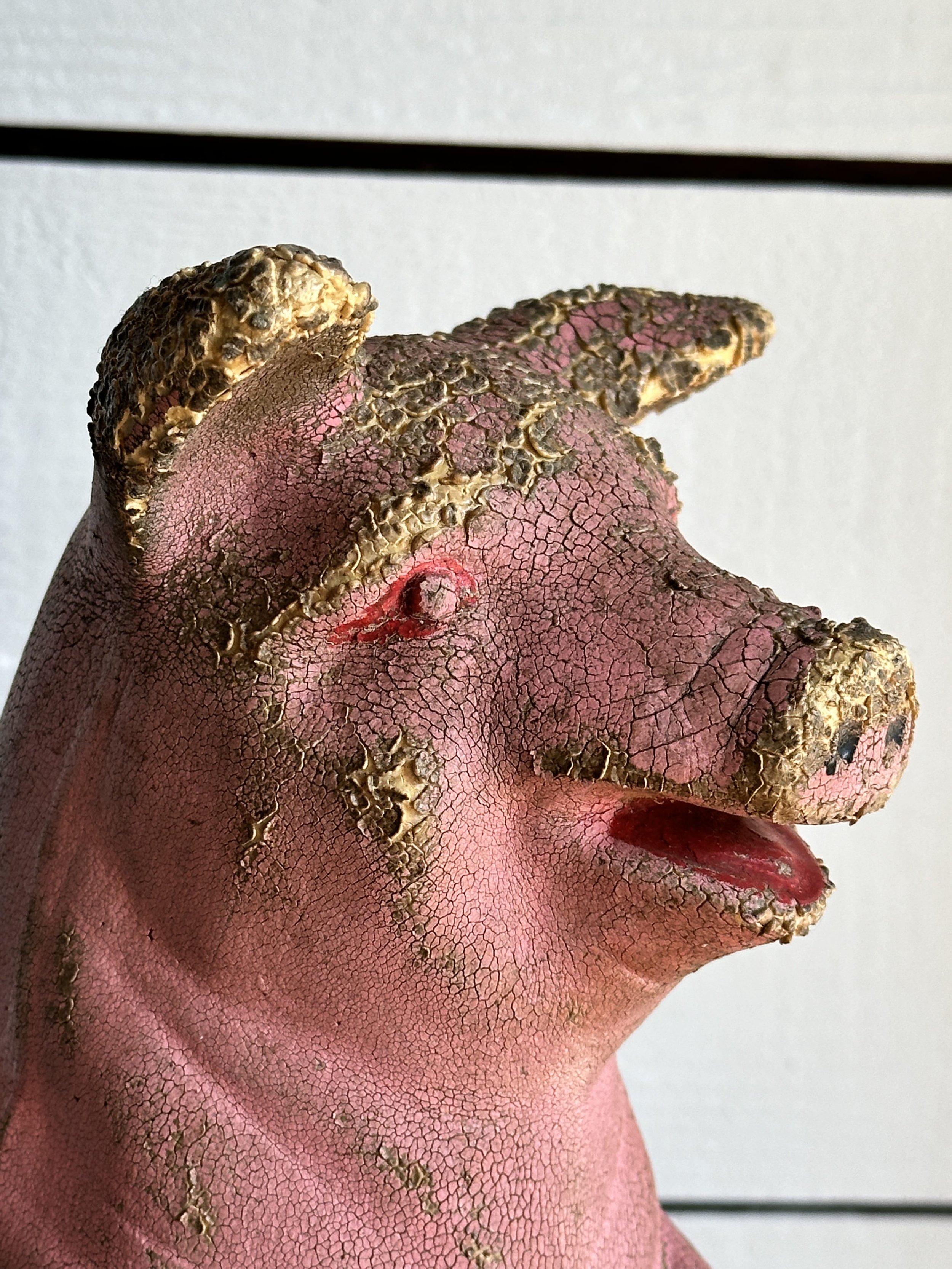
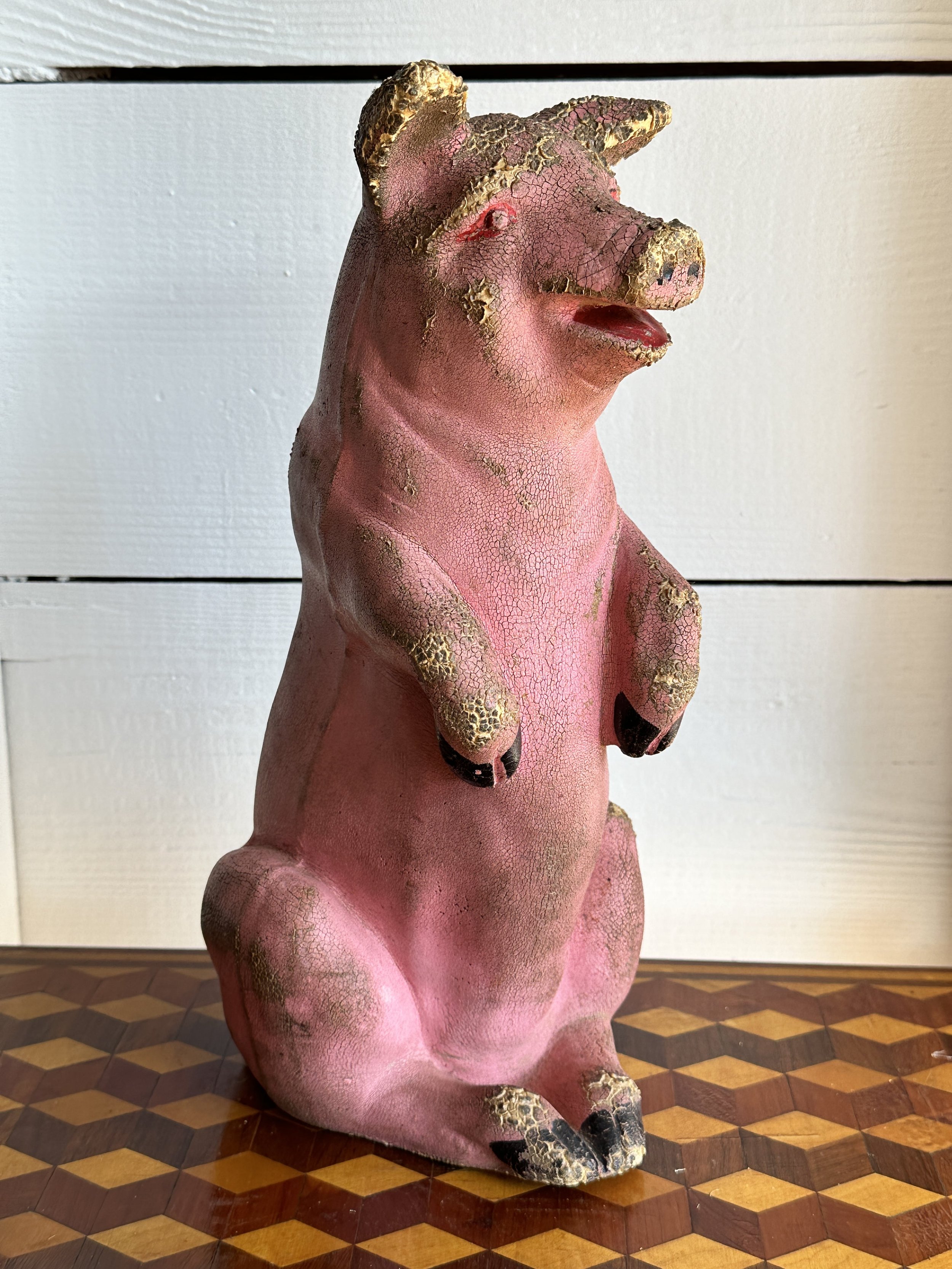
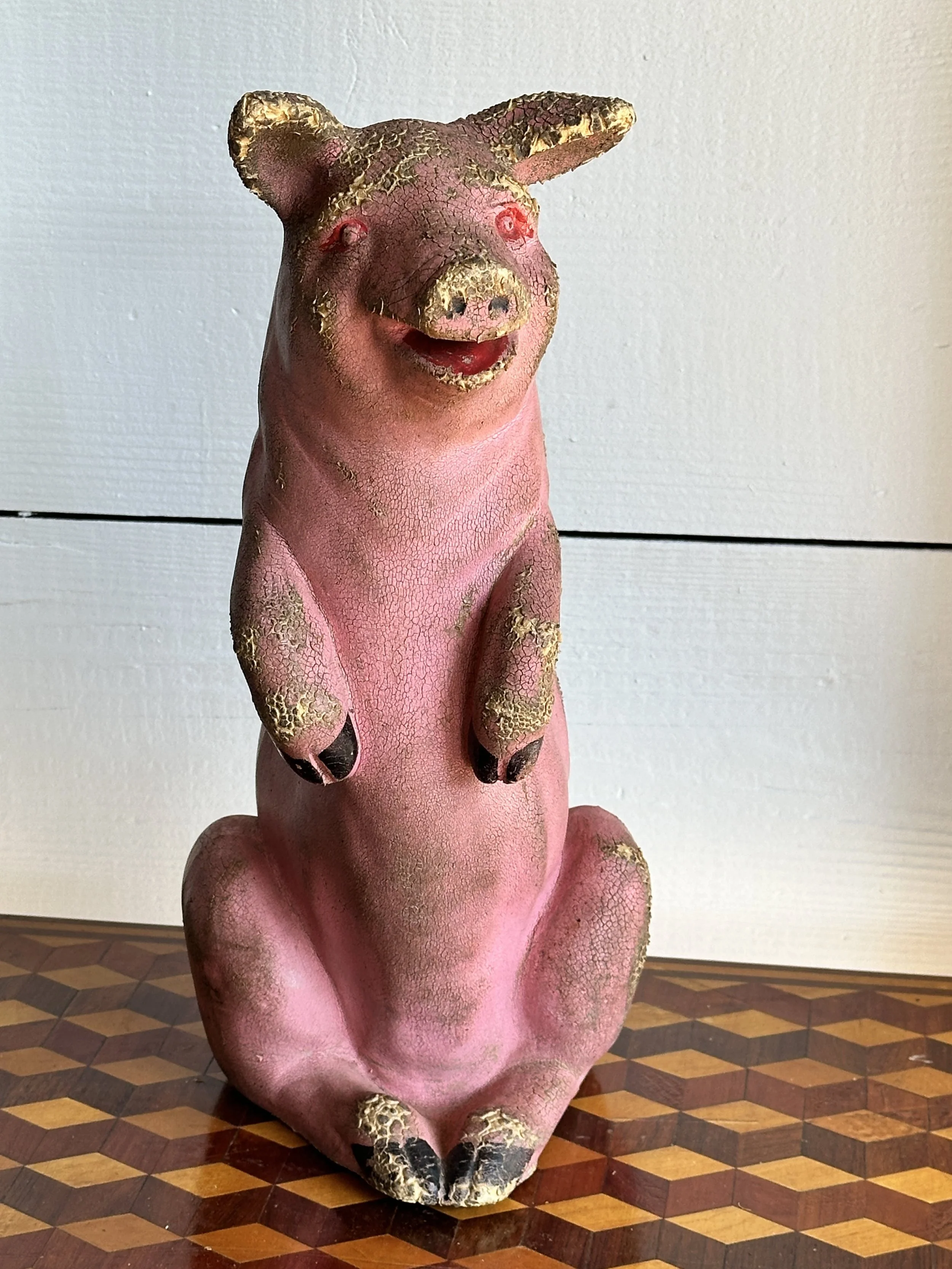
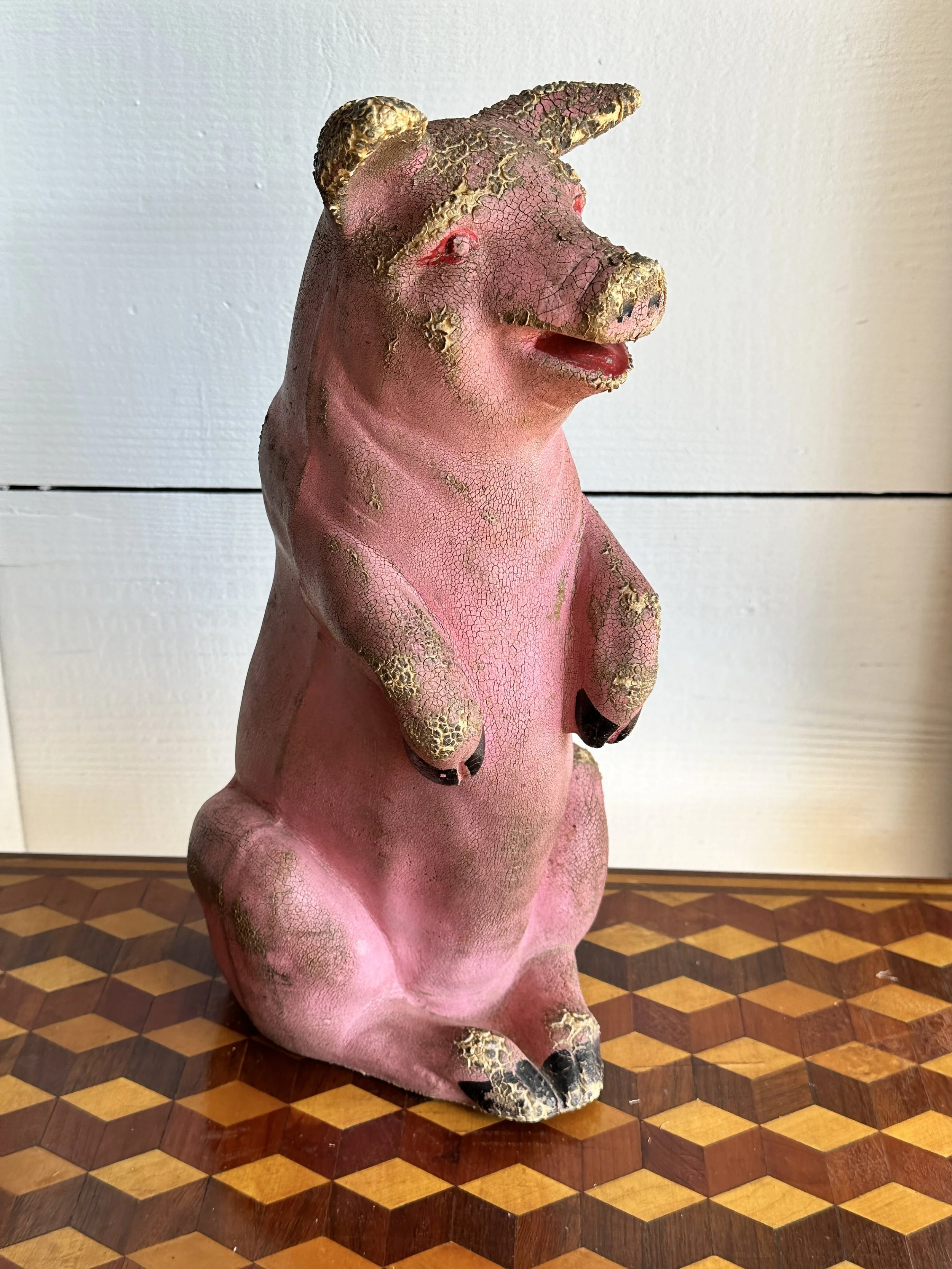
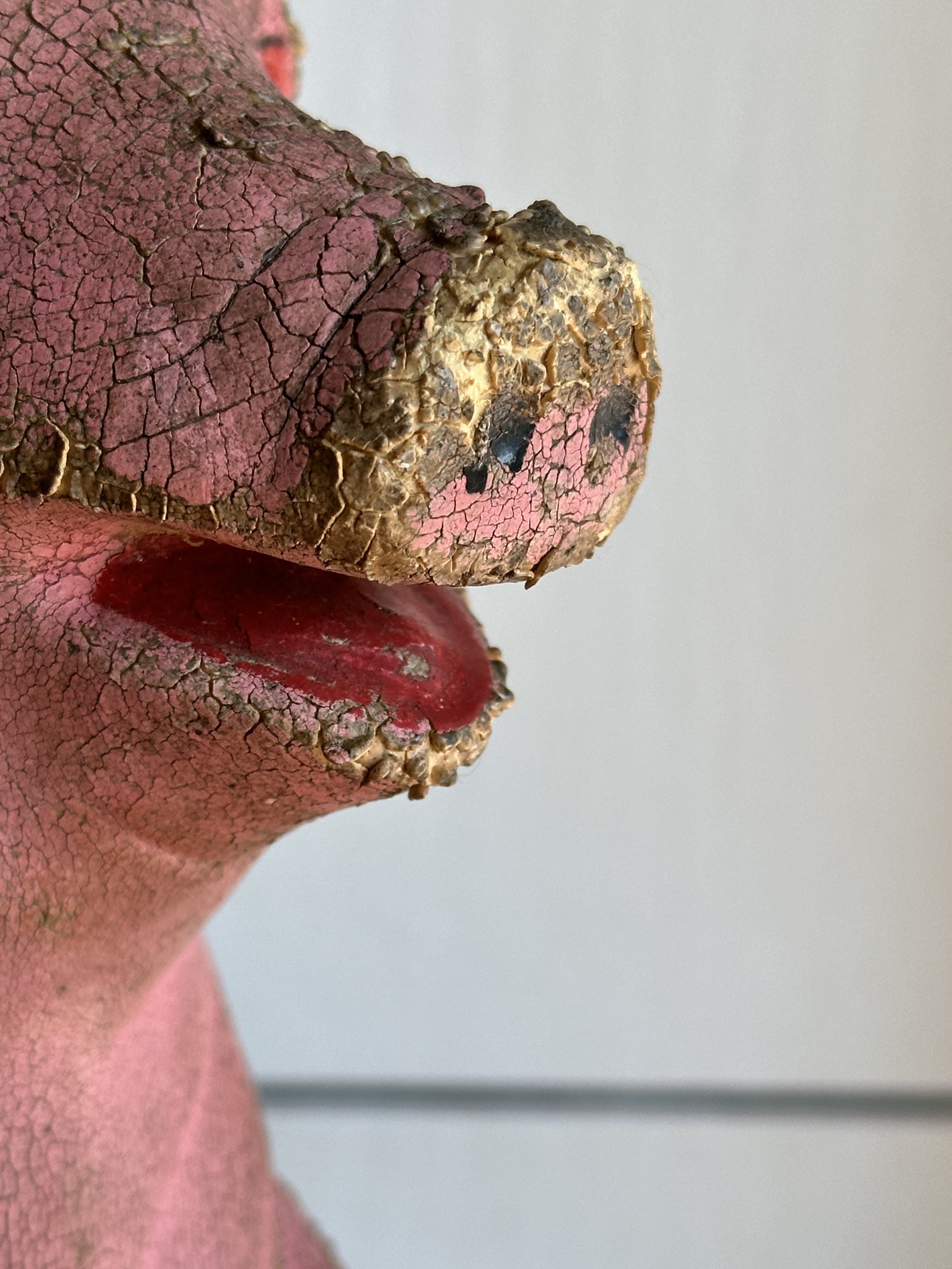
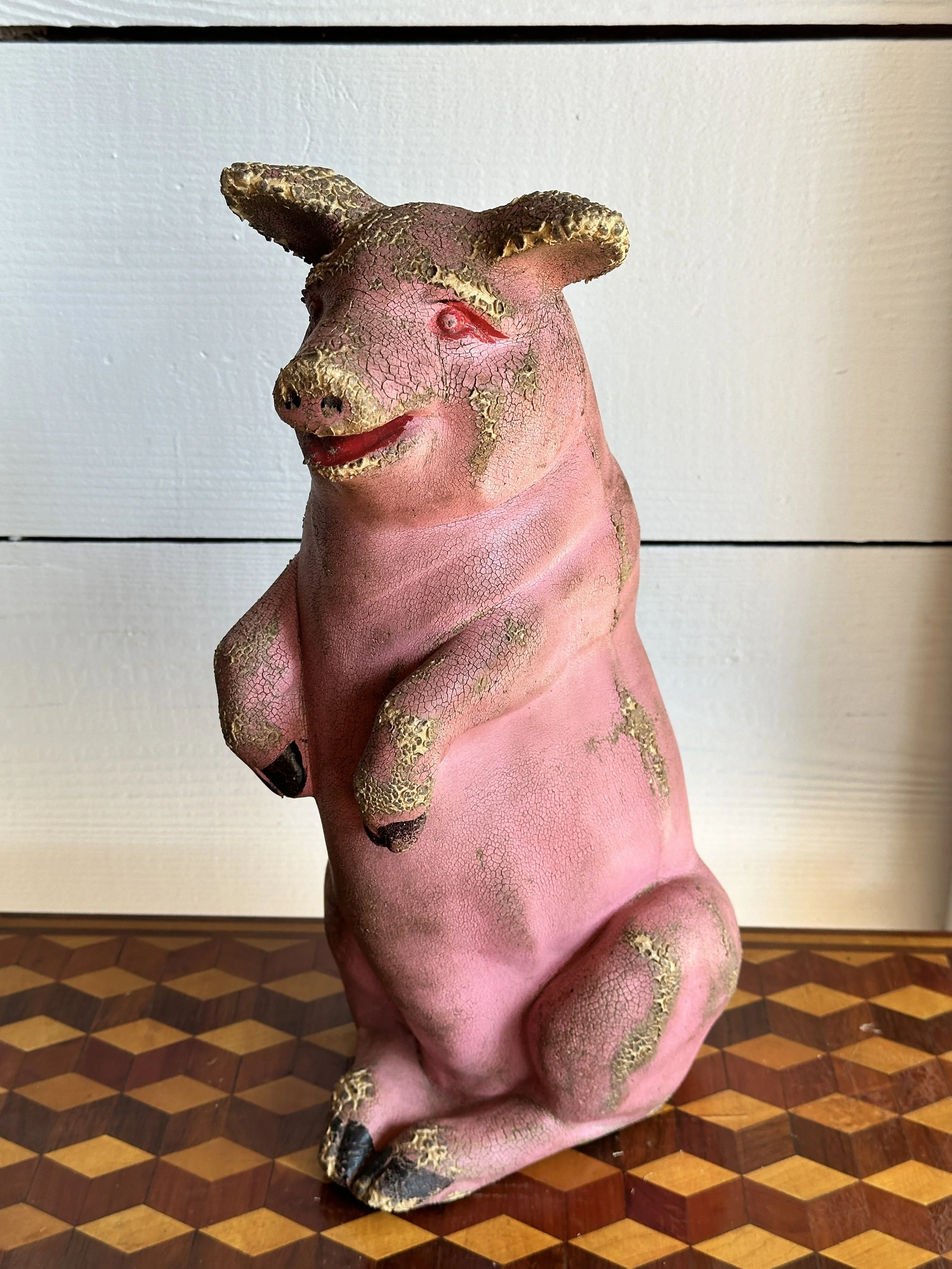
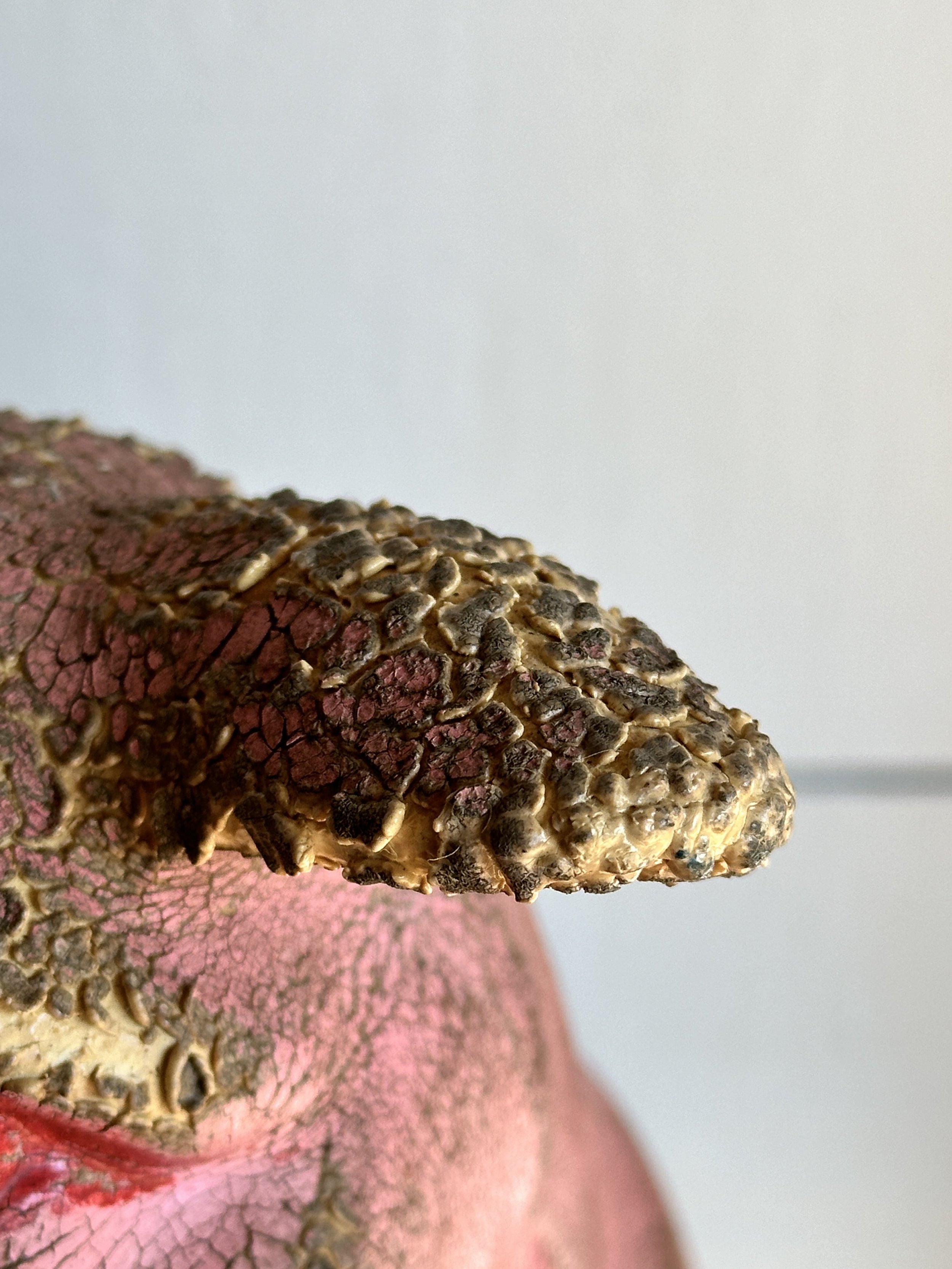
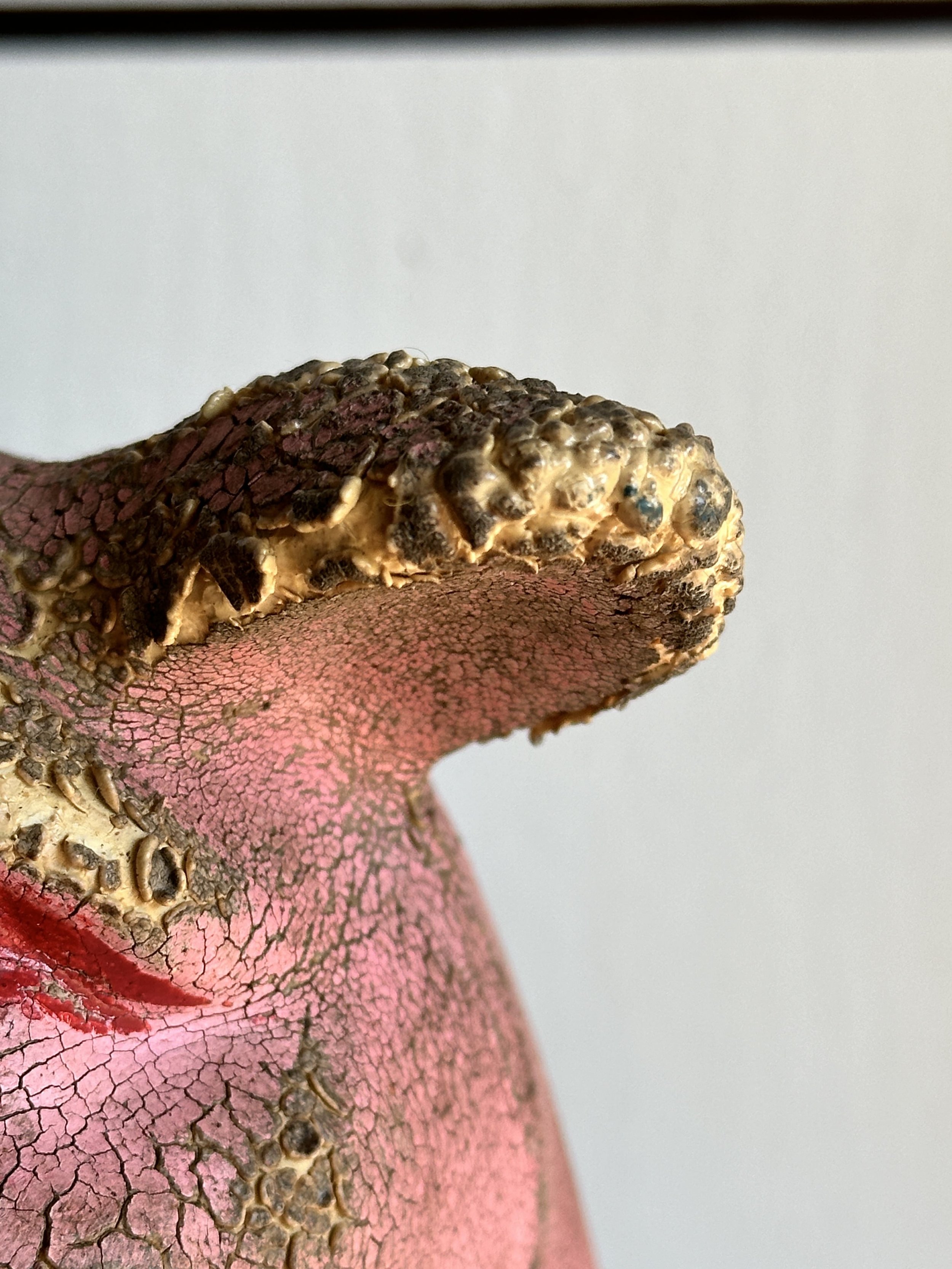
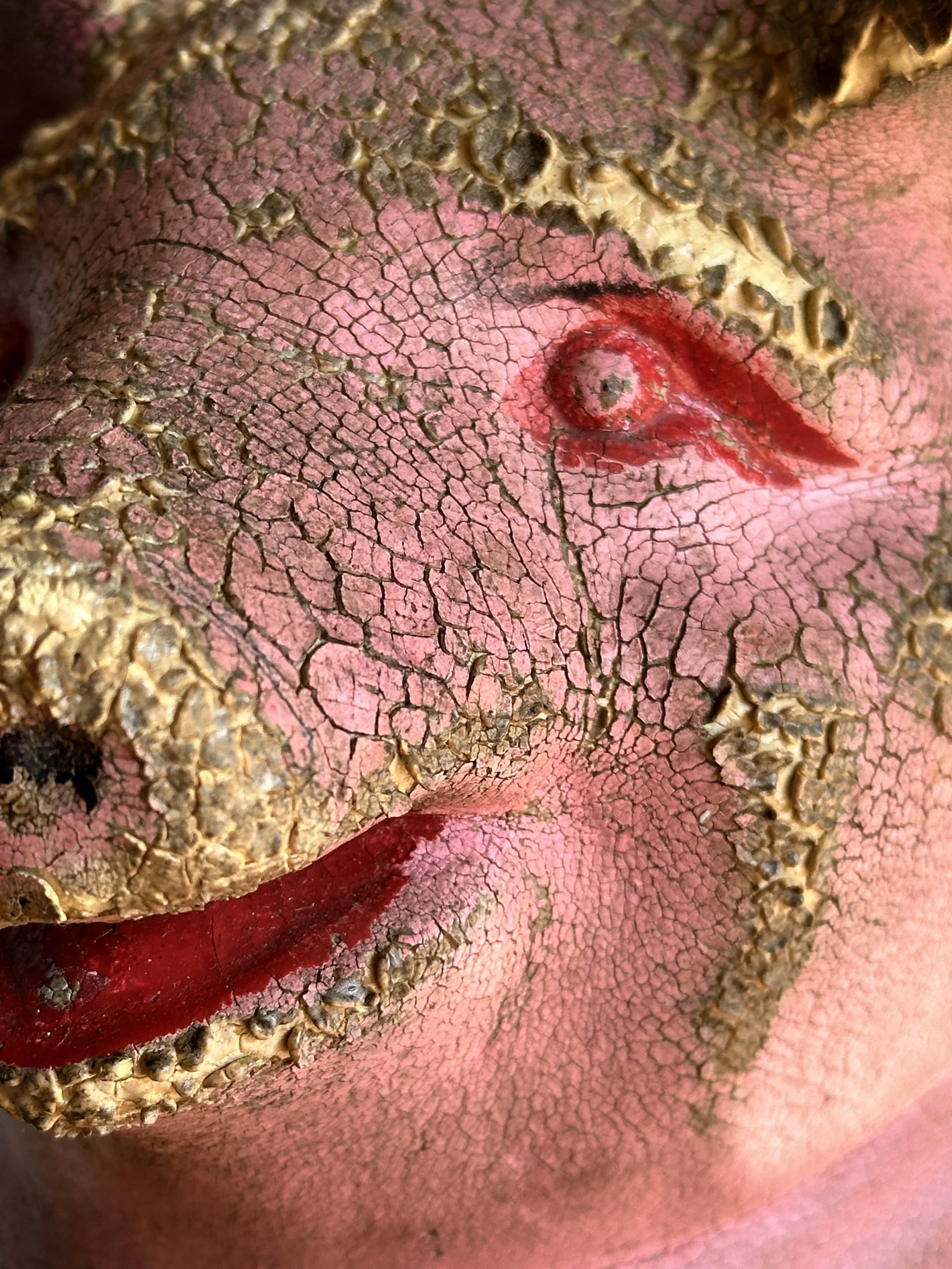
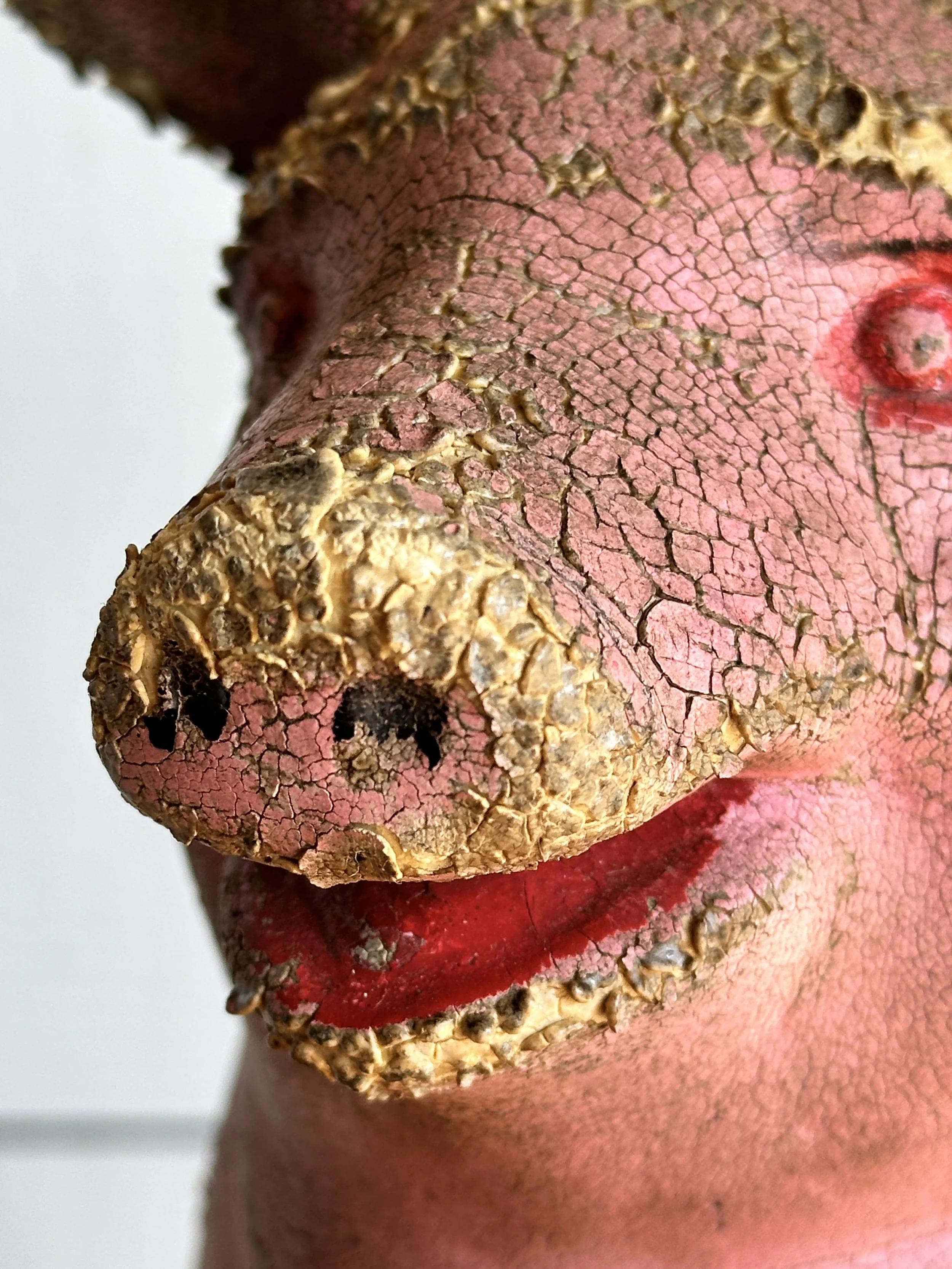
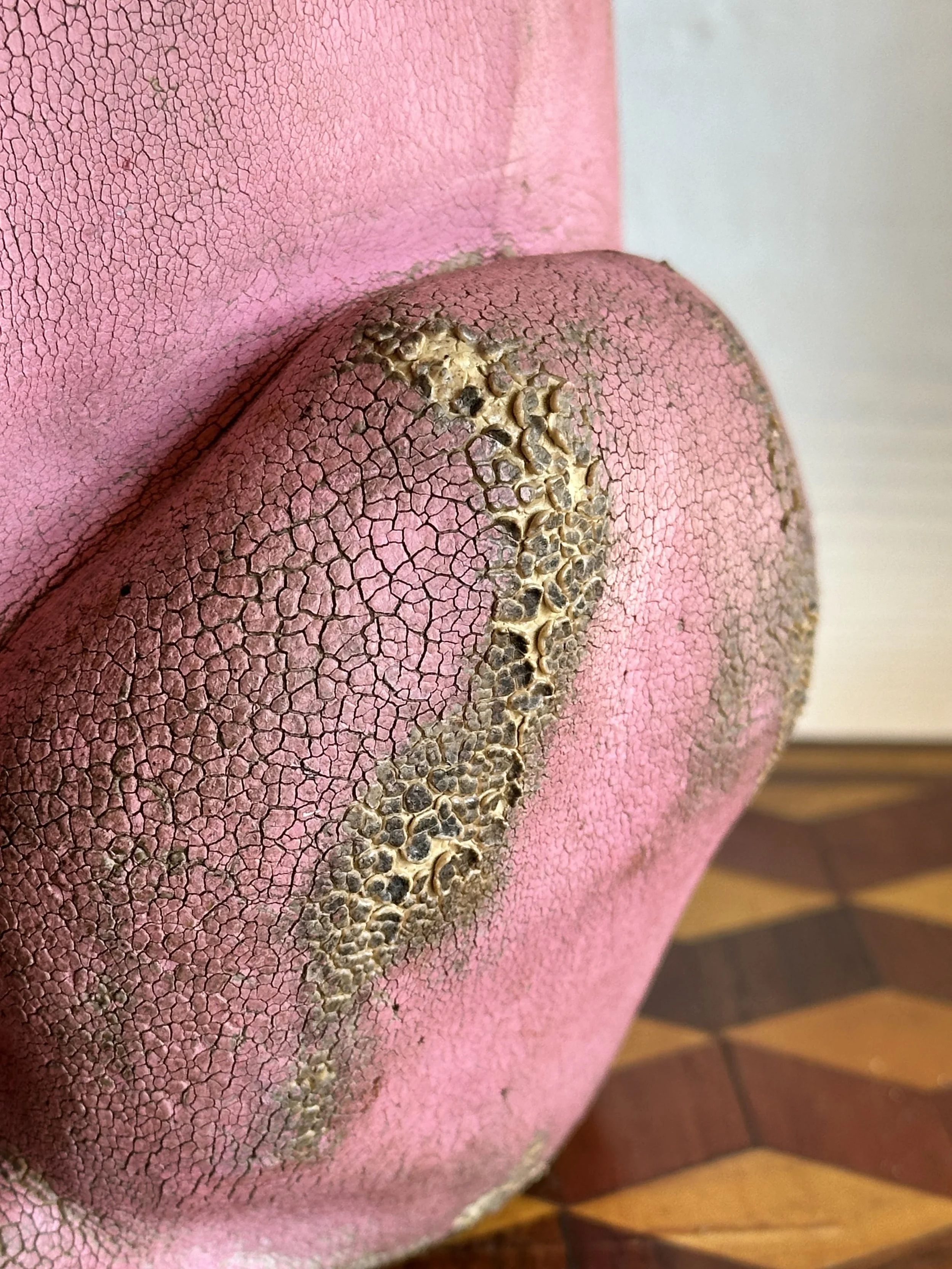
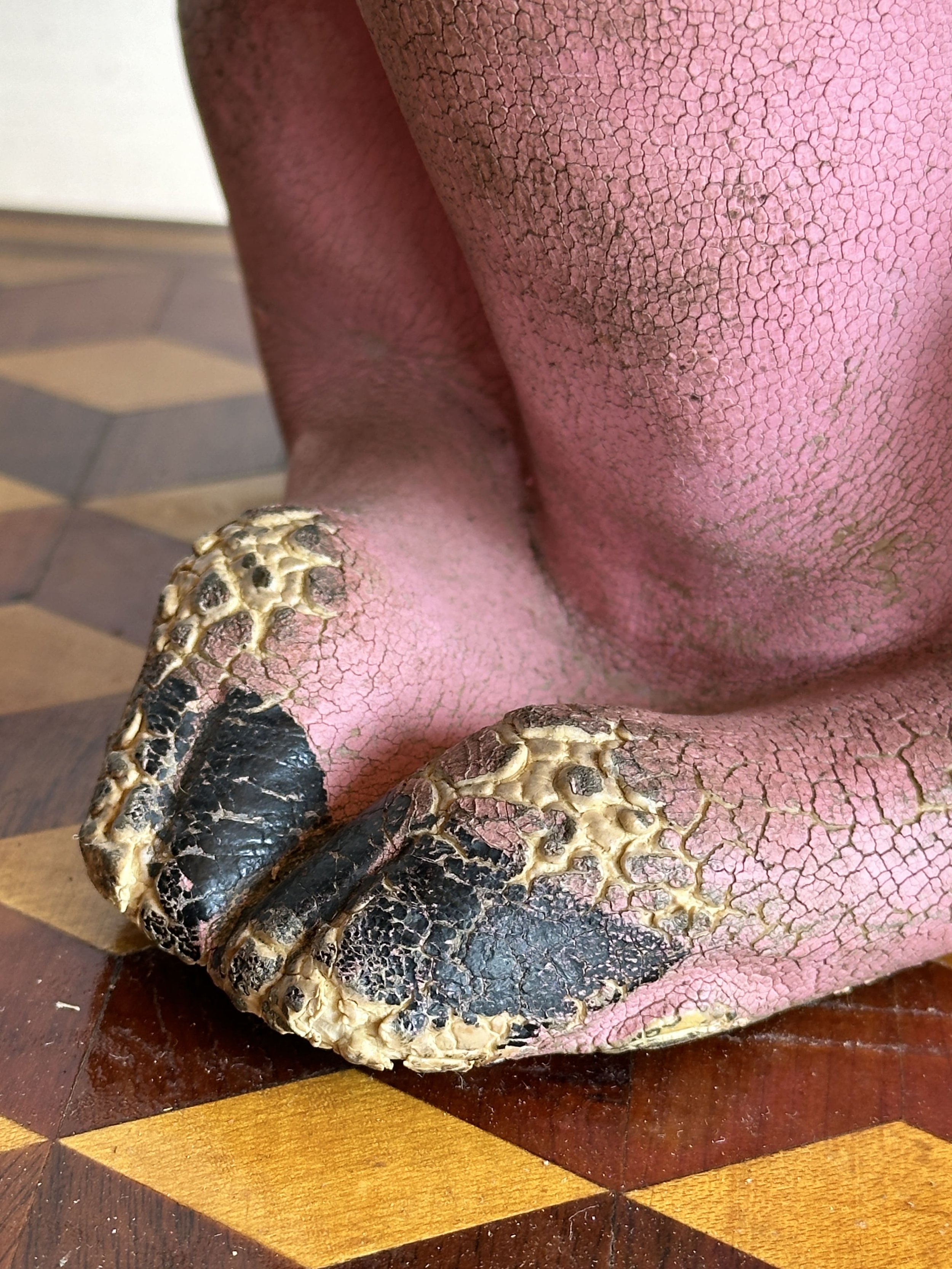
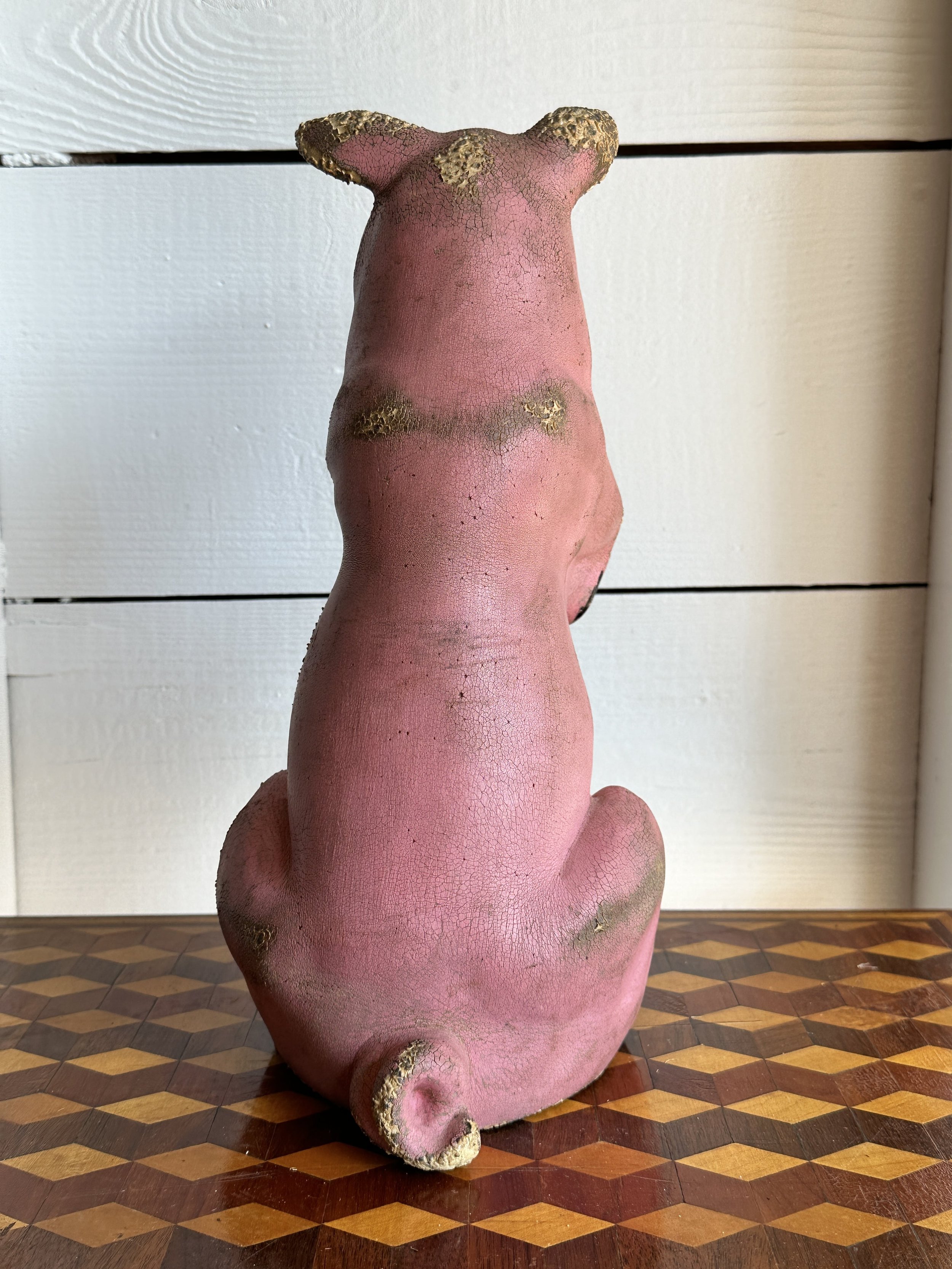
A seated pig figure that was almost certainly made as a butcher’s shop display, made of rubber with painted surface. Standing upright like it’s waiting politely at the counter, the pig is finished in faded pink with details in black and red, and remnants of gold paint that have aged into a wonderfully cracked and crazed surface.
There’s a slight softness to the form, a gentle give that contrasts with the crisp painted features. The wear feels right—handled, moved, maybe even pointed at by customers—turning it into something more than display, closer to a character.
Butchers
Early butchers were equal parts tradesman, technician, and public figure. Long before refrigeration and industrial processing, they worked at the front line of food supply, turning whole animals into usable cuts with speed and precision. Markets, street stalls, and small shops were their domain—places where the work was visible, not hidden.
Skill mattered. Butchery wasn’t just about cutting meat, it was about understanding anatomy, yield, and timing. Different cuts served different purposes, and knowing how to break down an animal efficiently meant less waste and better use of every part. Tools were simple but specialized—cleavers, knives, hooks—kept sharp and handled with confidence.
Presentation played a role too. Meat was arranged deliberately, both for preservation and appeal. In an era without packaging, display was the interface between butcher and customer.
What makes early butchers interesting now is how complete the practice was. It wasn’t segmented into supply chains—it was direct. The butcher knew the animal, the cuts, and often the customer.
There’s also a practical honesty to it. Nothing was wasted. Offal, bones, fat—all found their place.
Today, that level of familiarity feels distant, but the foundations remain. Precision, efficiency, and respect for the material. A trade built on repetition, knowledge, and a steady hand.
A seated pig figure that was almost certainly made as a butcher’s shop display, made of rubber with painted surface. Standing upright like it’s waiting politely at the counter, the pig is finished in faded pink with details in black and red, and remnants of gold paint that have aged into a wonderfully cracked and crazed surface.
There’s a slight softness to the form, a gentle give that contrasts with the crisp painted features. The wear feels right—handled, moved, maybe even pointed at by customers—turning it into something more than display, closer to a character.
Butchers
Early butchers were equal parts tradesman, technician, and public figure. Long before refrigeration and industrial processing, they worked at the front line of food supply, turning whole animals into usable cuts with speed and precision. Markets, street stalls, and small shops were their domain—places where the work was visible, not hidden.
Skill mattered. Butchery wasn’t just about cutting meat, it was about understanding anatomy, yield, and timing. Different cuts served different purposes, and knowing how to break down an animal efficiently meant less waste and better use of every part. Tools were simple but specialized—cleavers, knives, hooks—kept sharp and handled with confidence.
Presentation played a role too. Meat was arranged deliberately, both for preservation and appeal. In an era without packaging, display was the interface between butcher and customer.
What makes early butchers interesting now is how complete the practice was. It wasn’t segmented into supply chains—it was direct. The butcher knew the animal, the cuts, and often the customer.
There’s also a practical honesty to it. Nothing was wasted. Offal, bones, fat—all found their place.
Today, that level of familiarity feels distant, but the foundations remain. Precision, efficiency, and respect for the material. A trade built on repetition, knowledge, and a steady hand.