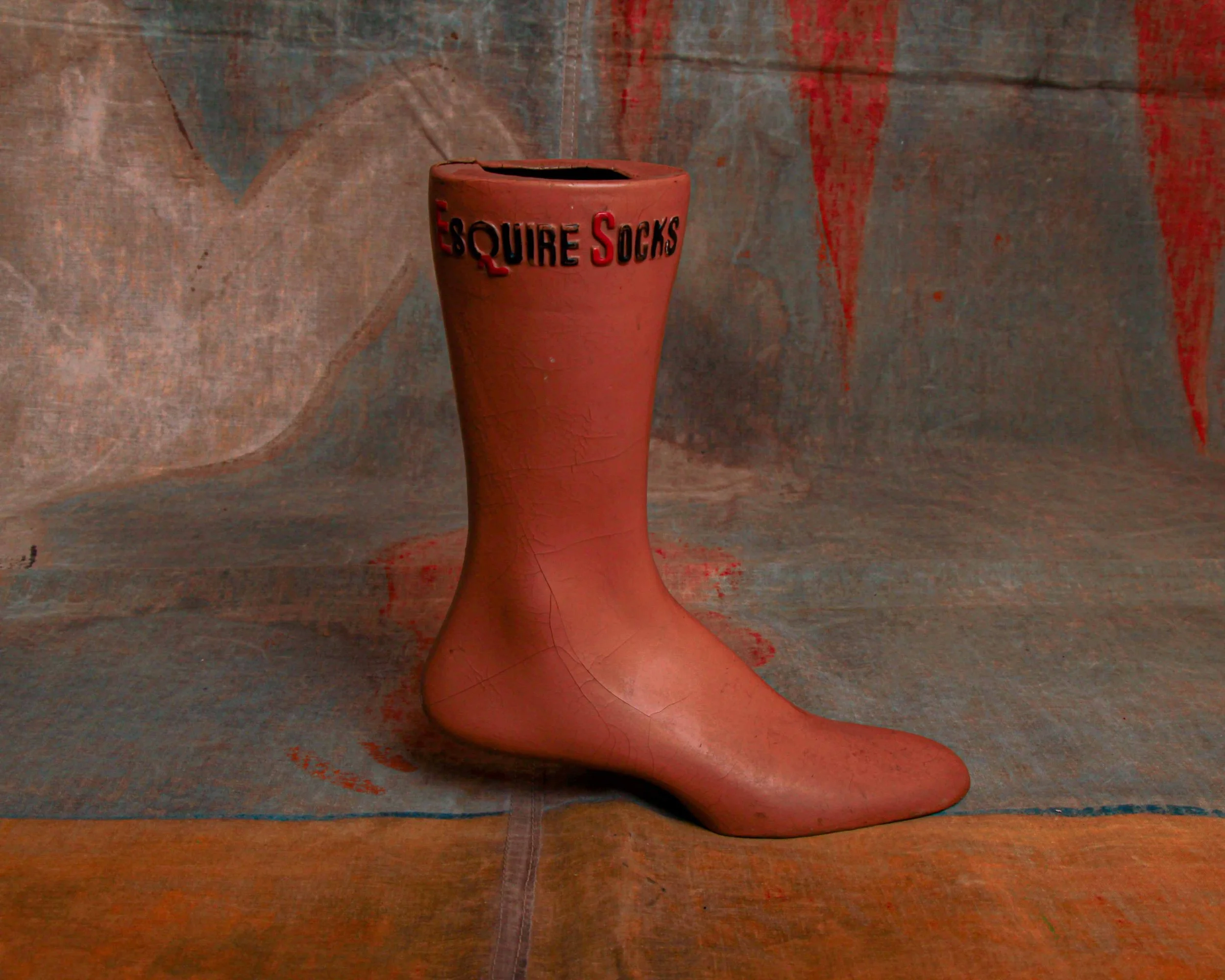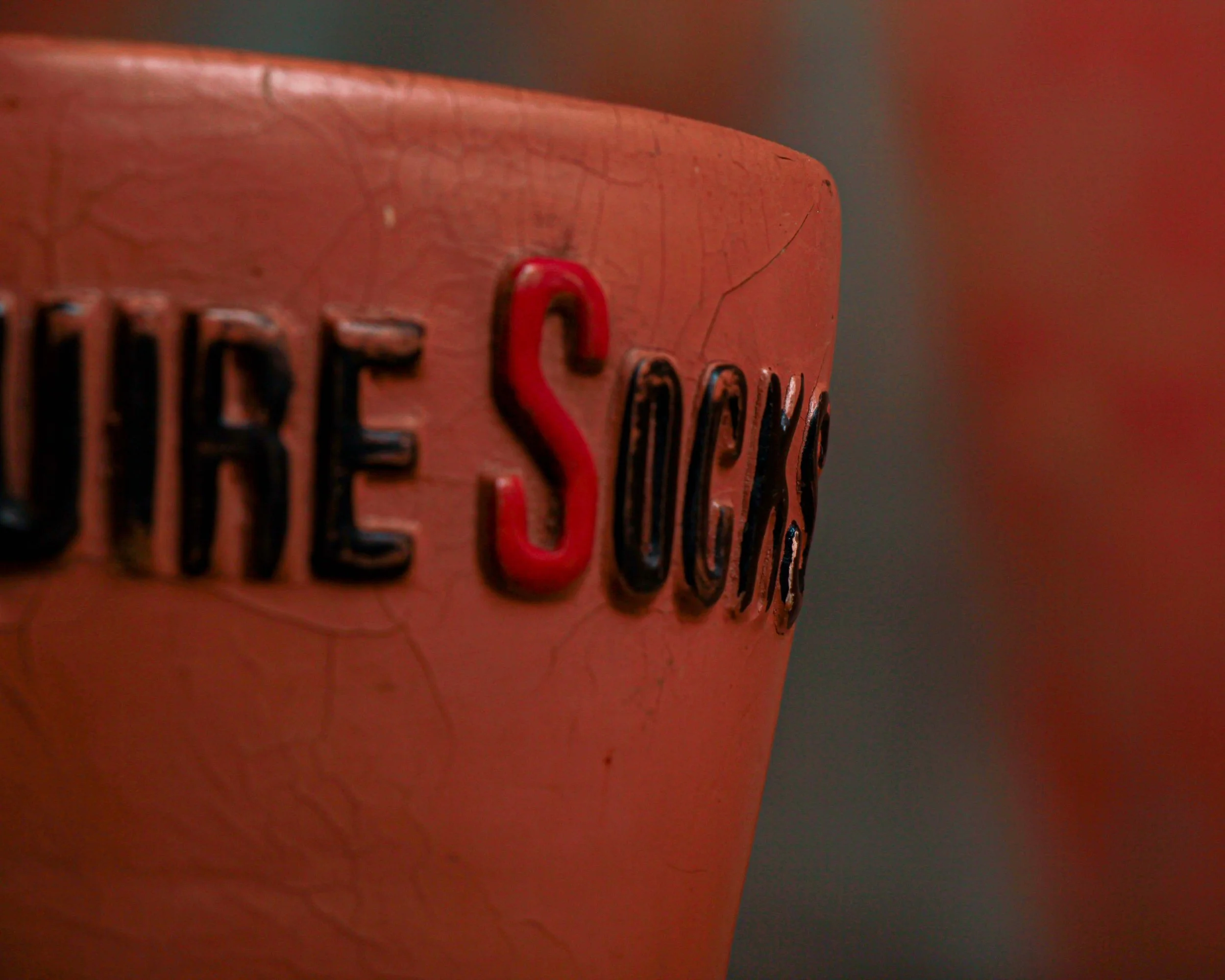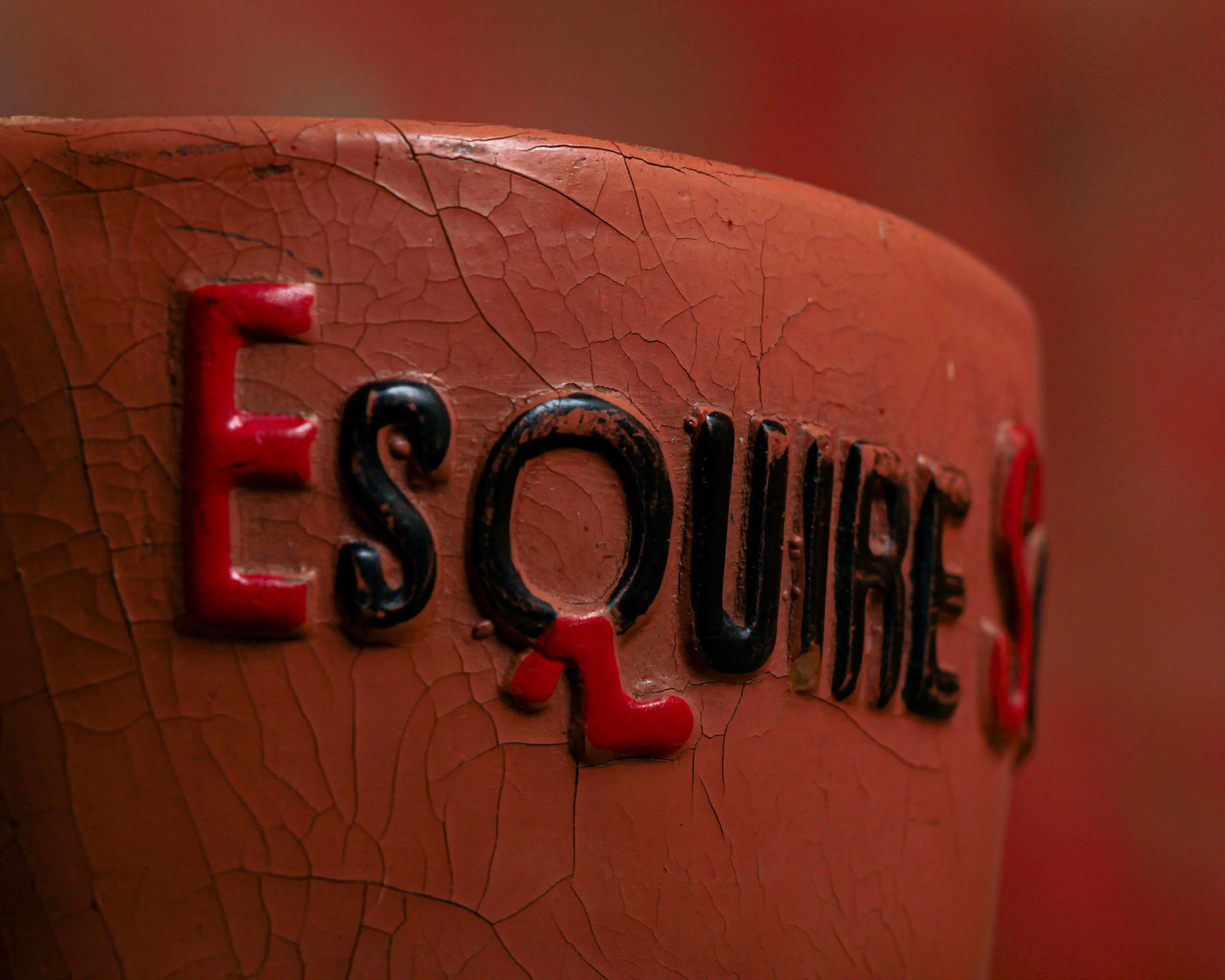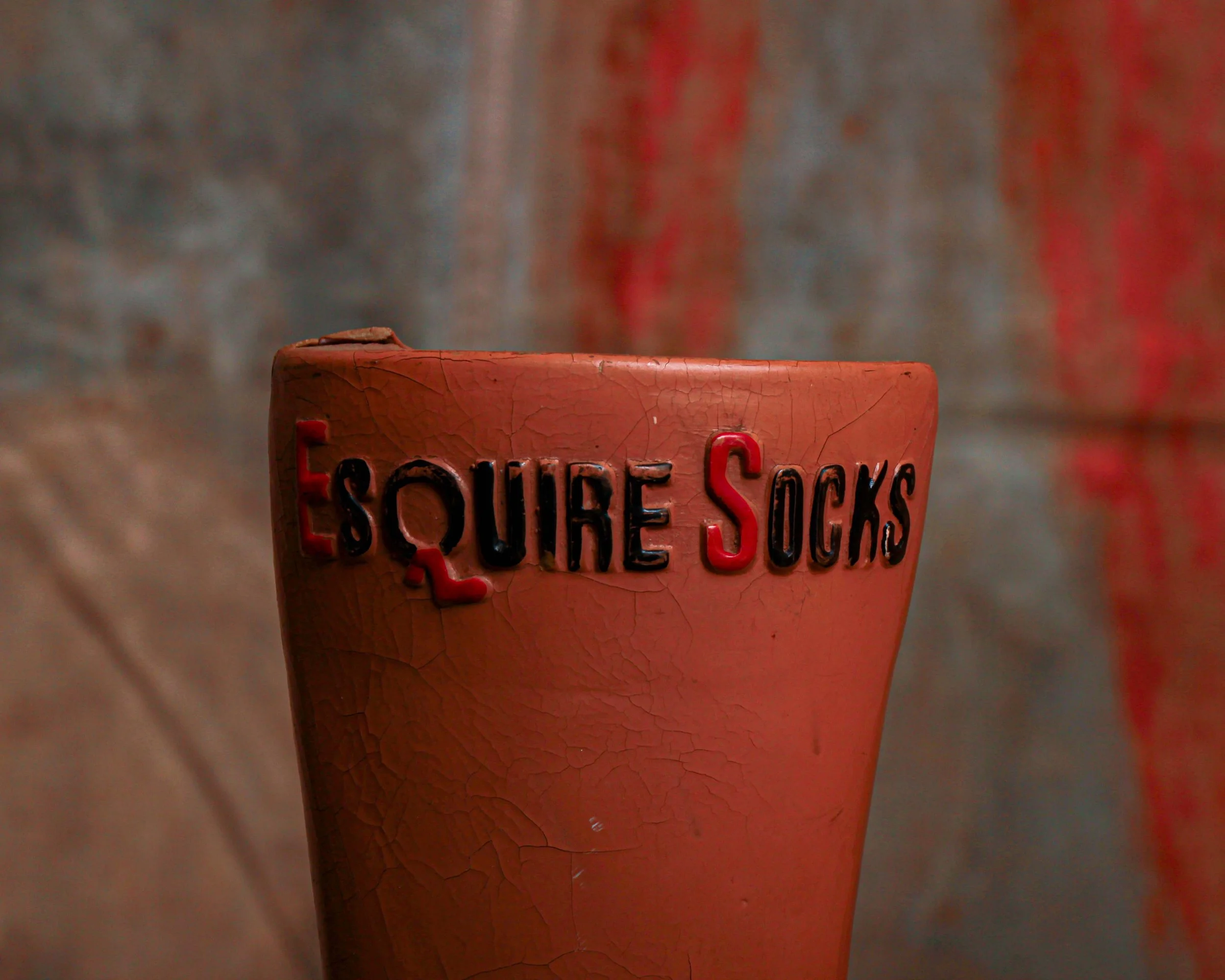
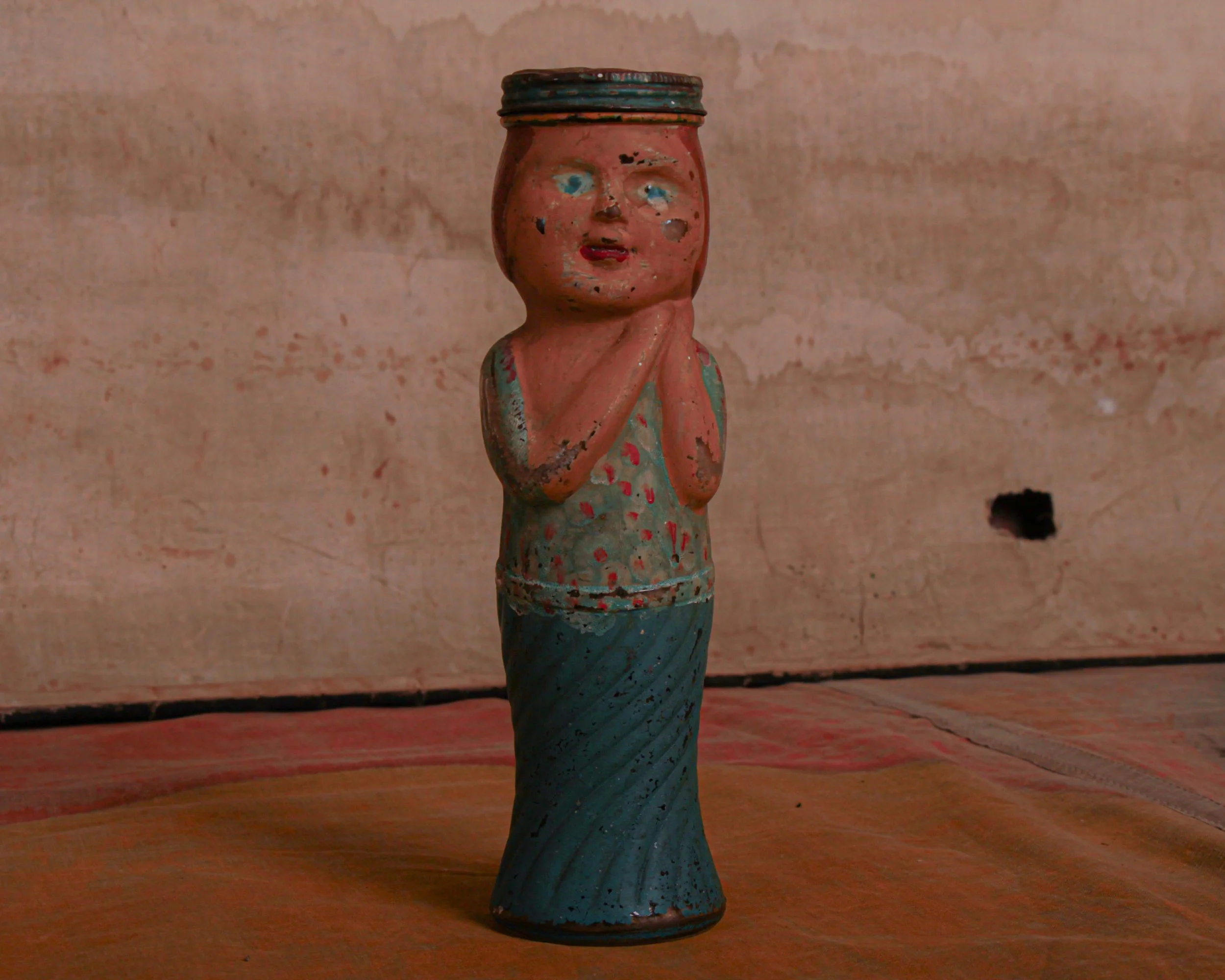
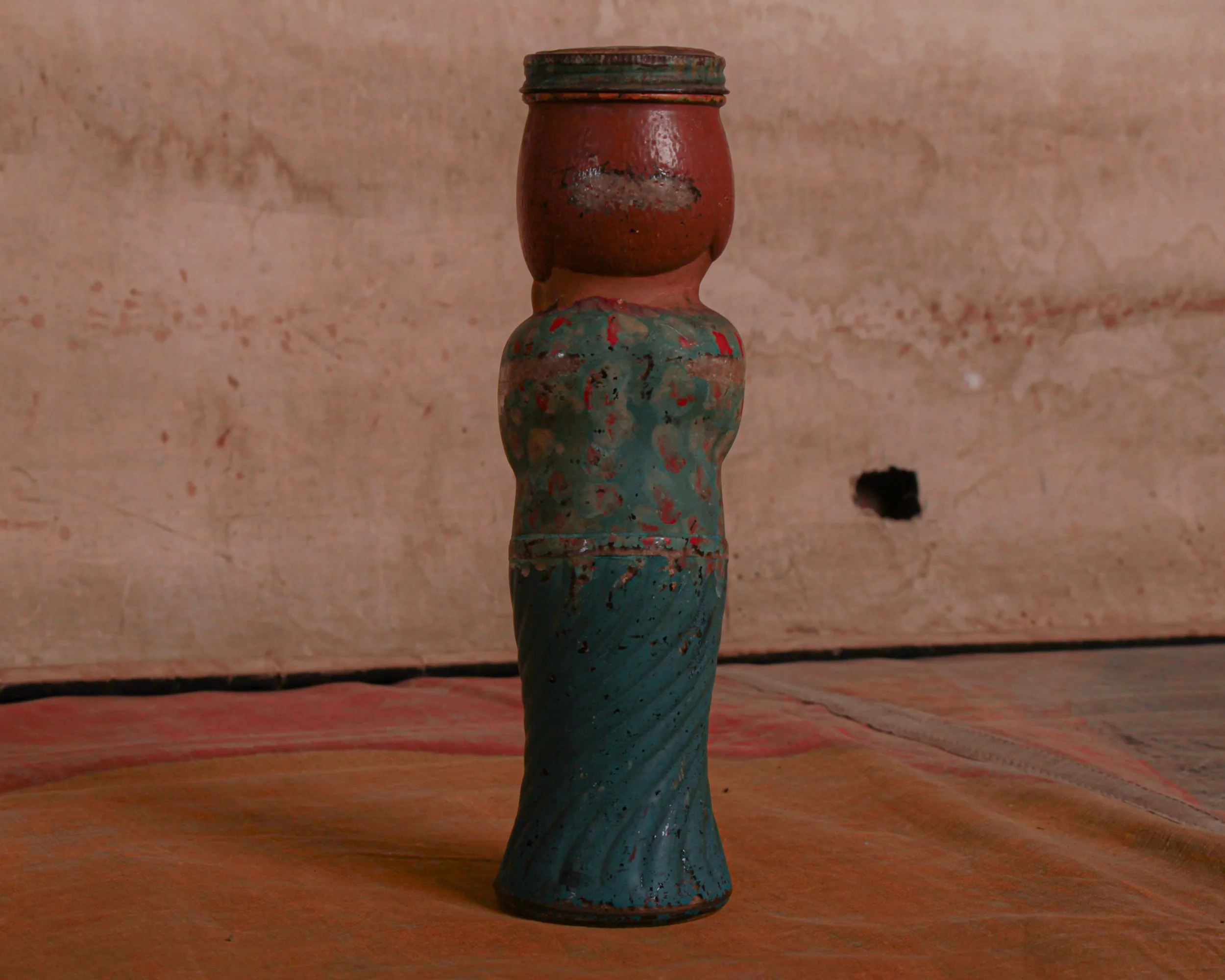
At its core, it’s an antique candy jar, the kind that once sat on a counter quietly doing the hard work of temptation. Somewhere along the way, it was reinvented with a wonderfully naive hand, transforming it into a small, sculptural figure that now reads as folk art more than shopware.
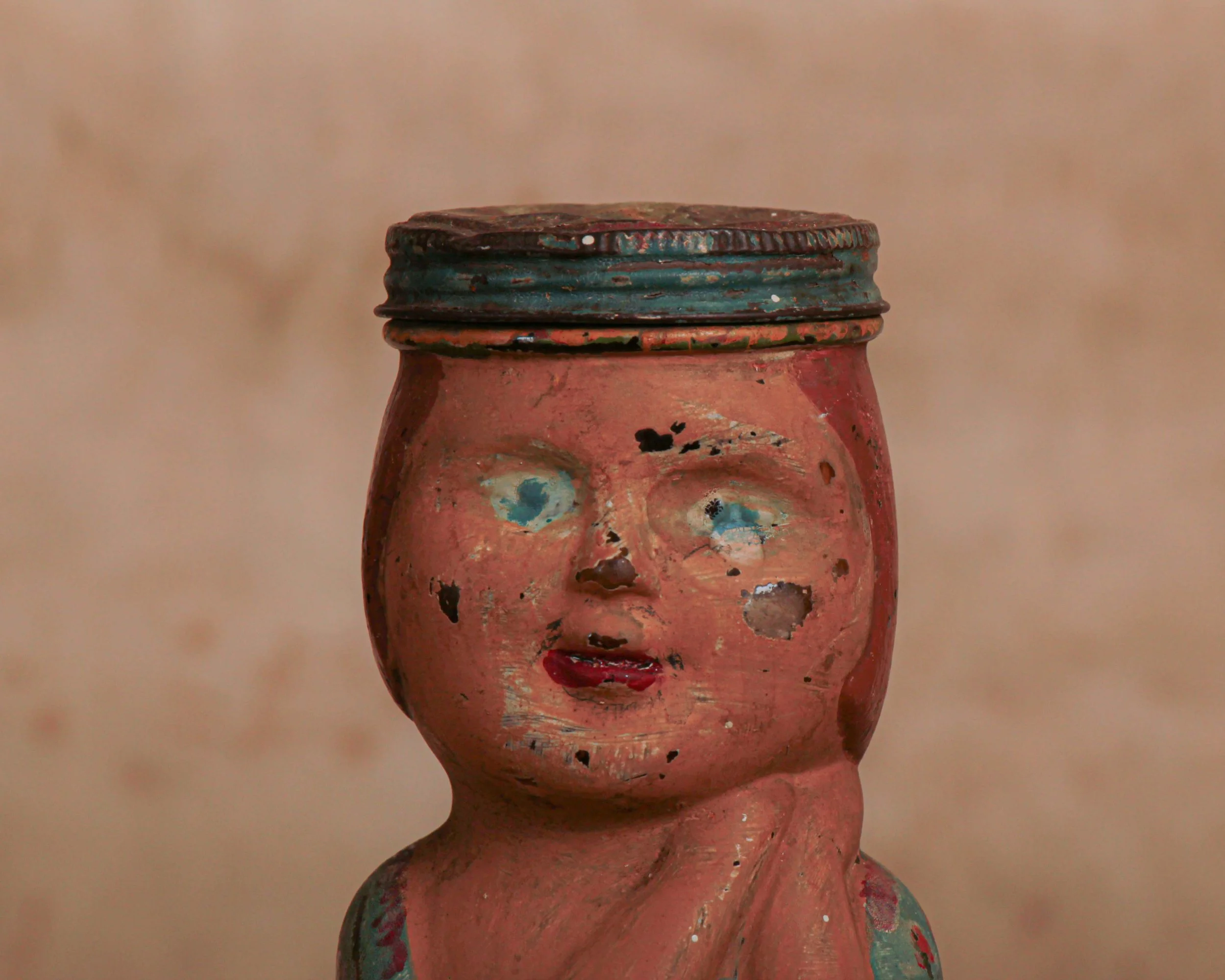
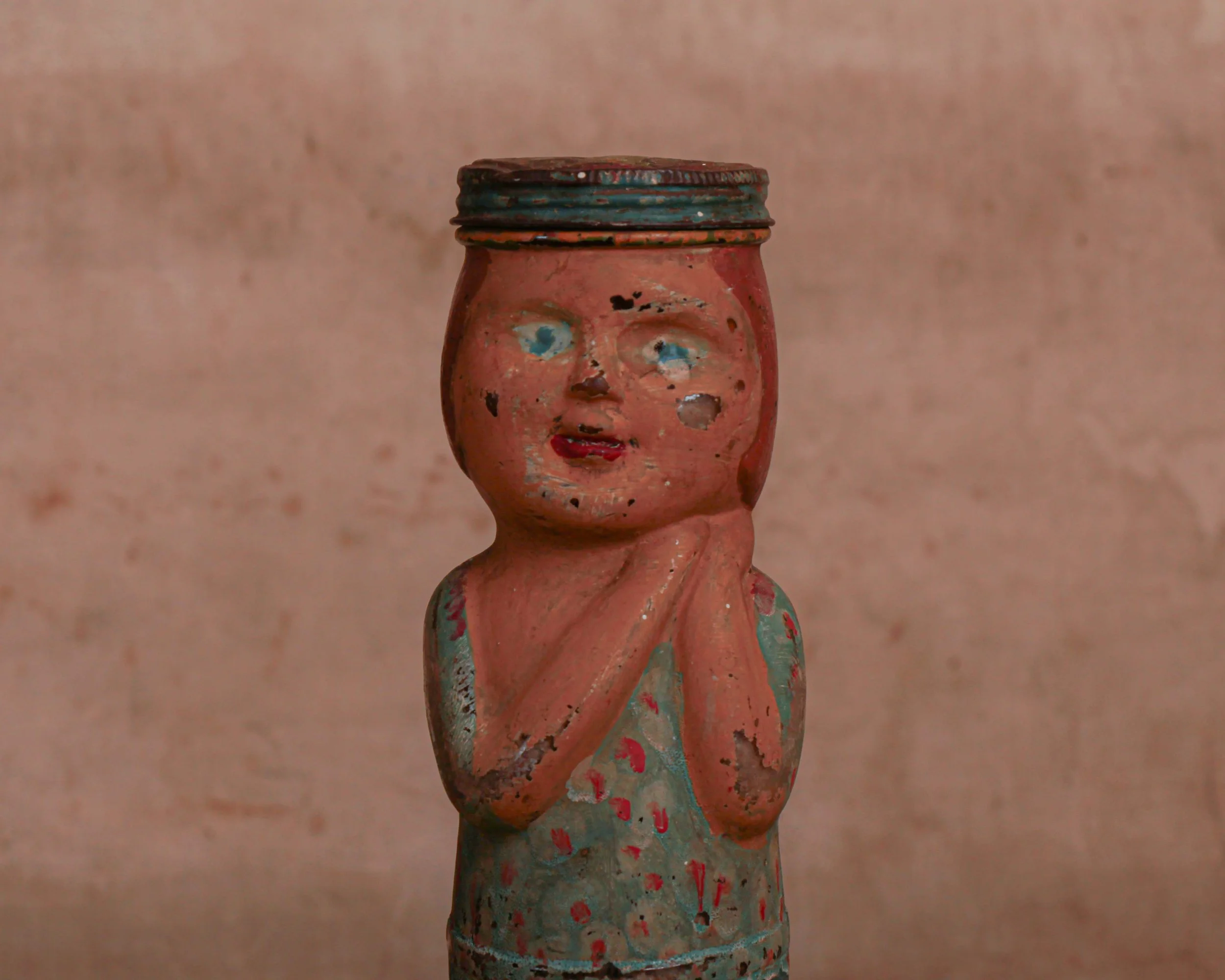
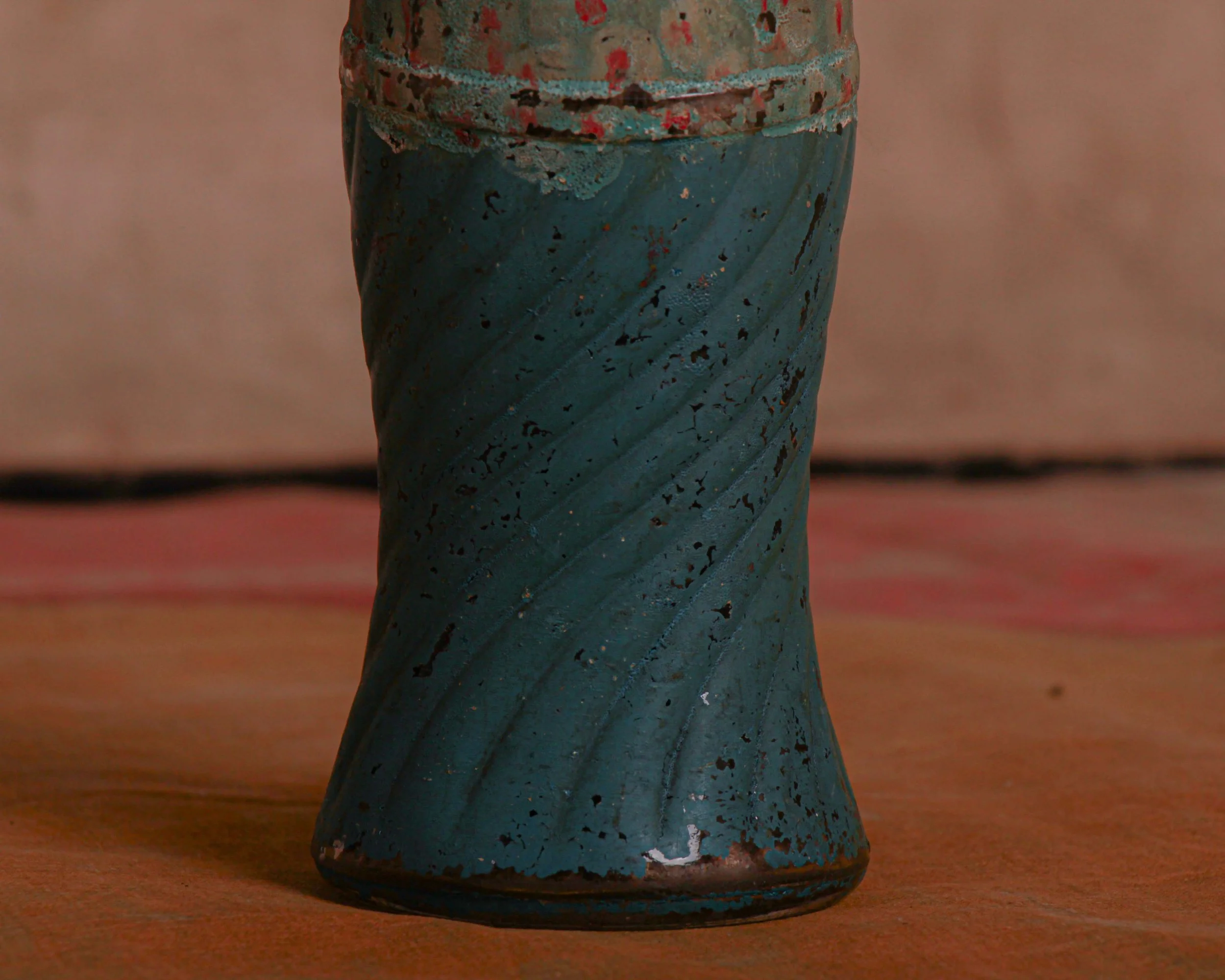
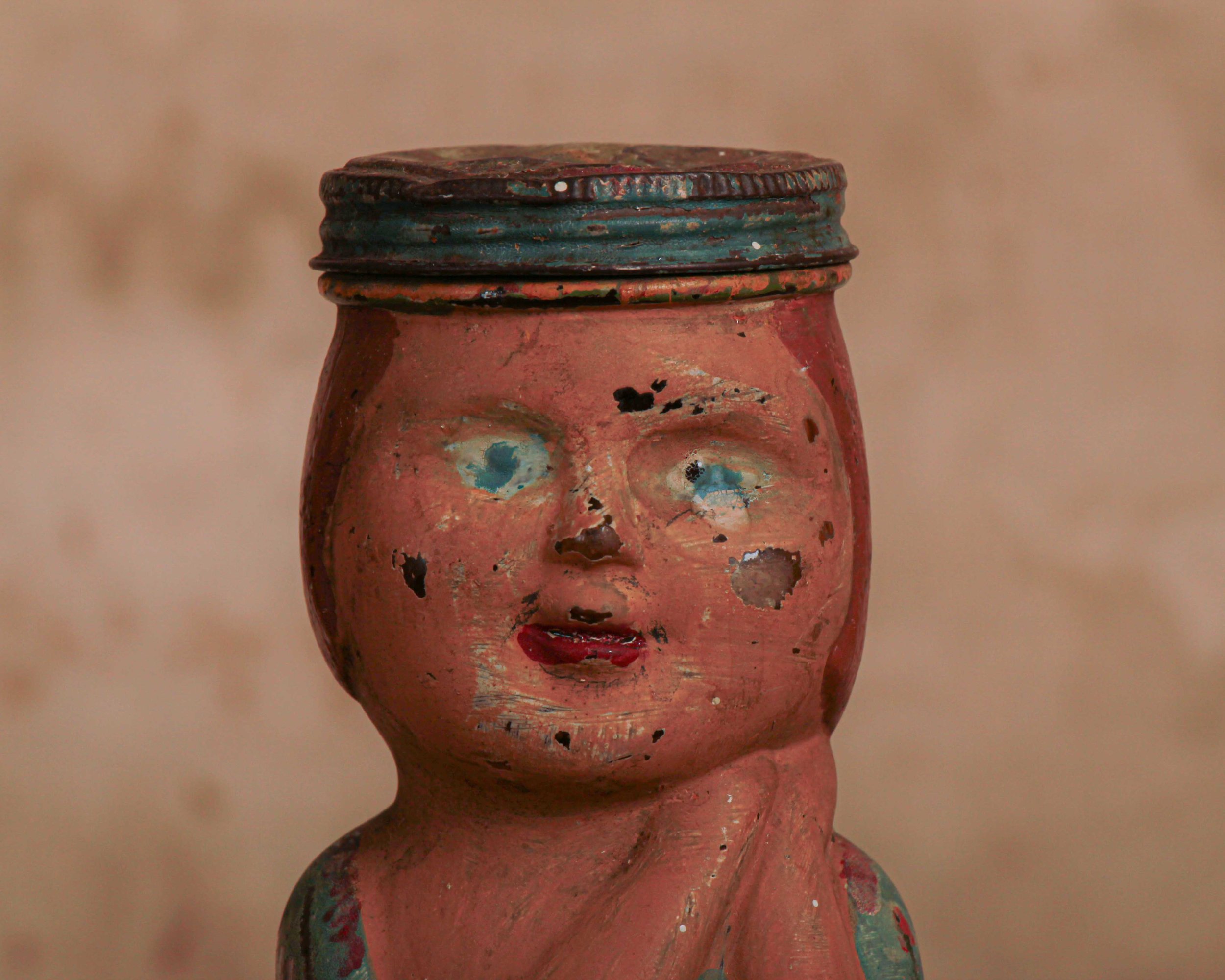
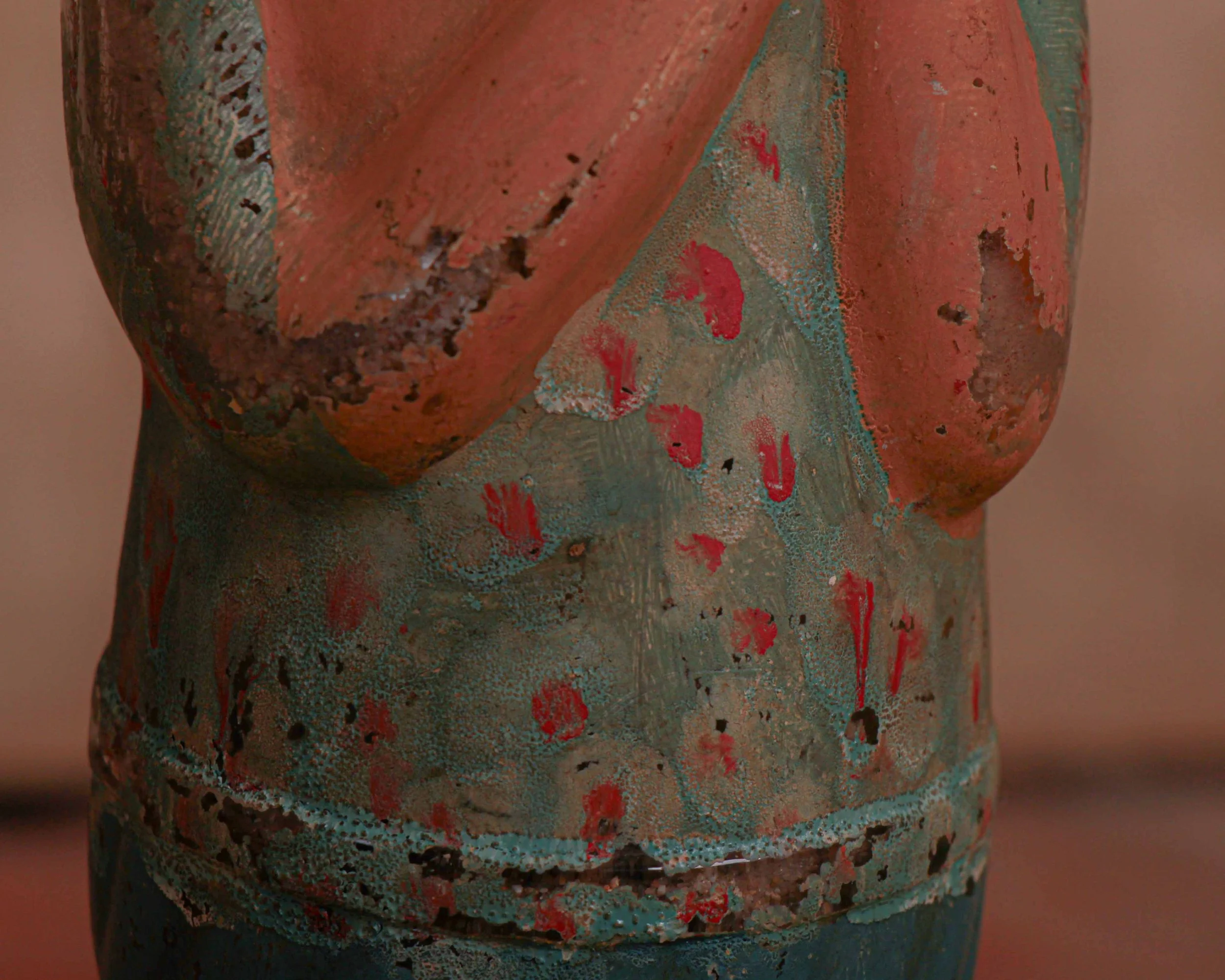
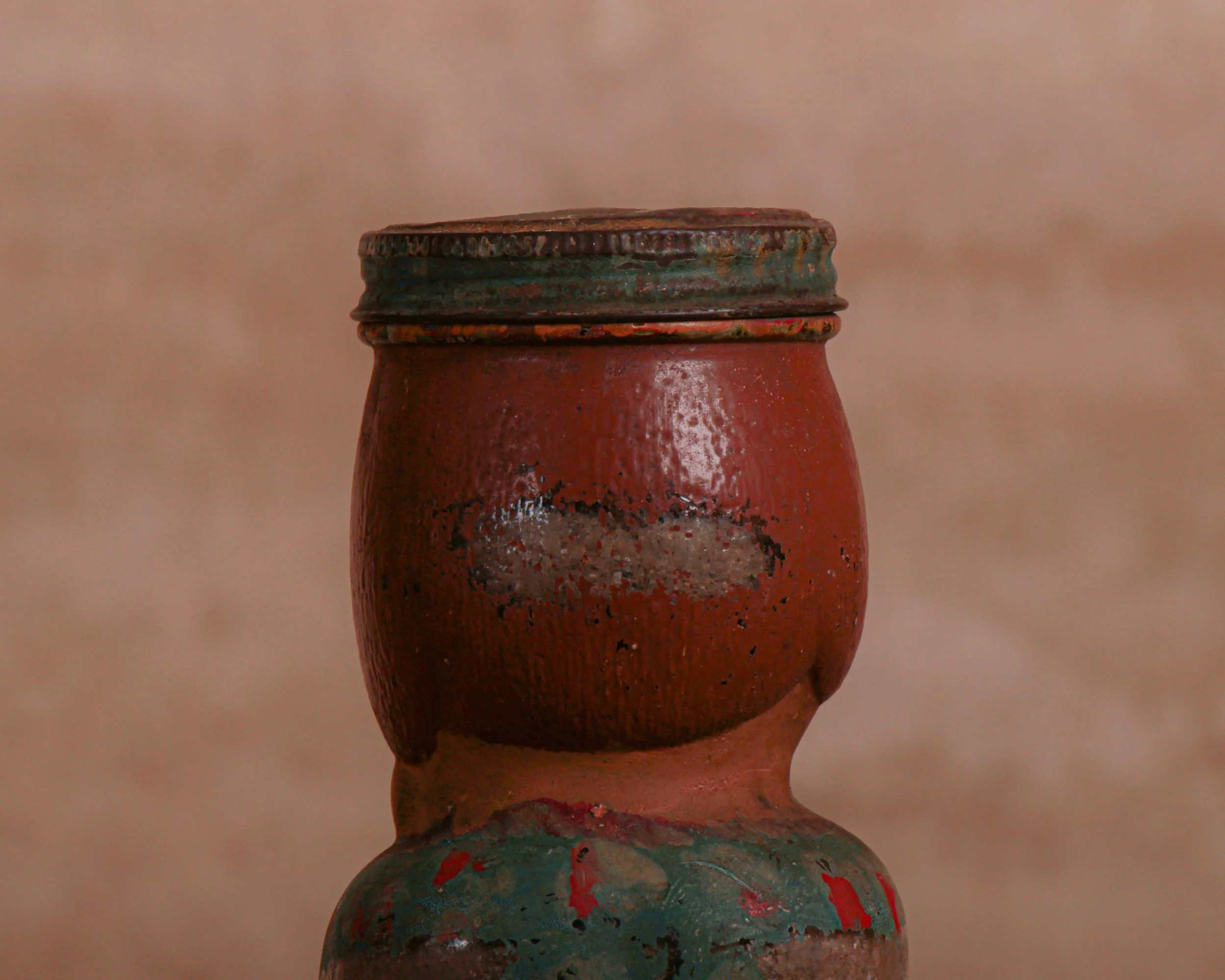
The form is tall and gently tapered, with a twisted lower body that gives it a subtle sense of movement. The upper portion has been painted into a human figure, arms folded up toward the chest in a posture that feels shy or simply prayerful. The face is where the real personality lives. Softly rounded features, pale blue eyes that wander just a bit, and red lips worn thin by time. The paint is chipped, scuffed, and thinned in all the right places, letting earlier layers peek through like memories.
The palette is earthy and unexpected. Muted teal and blue along the body, dotted with small red marks that feel almost accidental, paired with warm flesh tones up top. The lid sits like a little hat, its surface darkened and crusted from decades of handling. Inside, the jar is filled with sand, giving it a satisfying weight and a sense of finality.
Category History
Folk art lives in that space where making isn’t about fitting into an art world—it’s about expressing something directly, often with whatever is at hand. It’s shaped by necessity, tradition, and instinct rather than formal training. You see it in carved figures, painted signs, stitched textiles, weathervanes, toys—objects that were sometimes made to be useful, sometimes just because someone felt like making them.
What sets folk art apart is its independence. Proportion might bend, perspective might flatten, colors might lean bold or unexpected—but it all works because it’s guided by the maker’s eye, not a rulebook. There’s often a strong sense of place, too. Materials and motifs reflect where it was made, whether that’s rural, coastal, urban, or somewhere in between.
Many pieces carry a kind of quiet storytelling. A carved animal that feels more like a memory than a specimen, a painted scene that captures an event or daily life without worrying about precision. Imperfections aren’t flaws—they’re part of the language.
Over time, these objects shift from everyday use into something more reflective. What was once a tool or decoration becomes a record of how someone saw the world and chose to shape it. Folk art doesn’t try to impress—it connects, directly and without much explanation.
At its core, it’s an antique candy jar, the kind that once sat on a counter quietly doing the hard work of temptation. Somewhere along the way, it was reinvented with a wonderfully naive hand, transforming it into a small, sculptural figure that now reads as folk art more than shopware.
The form is tall and gently tapered, with a twisted lower body that gives it a subtle sense of movement. The upper portion has been painted into a human figure, arms folded up toward the chest in a posture that feels shy or simply prayerful. The face is where the real personality lives. Softly rounded features, pale blue eyes that wander just a bit, and red lips worn thin by time. The paint is chipped, scuffed, and thinned in all the right places, letting earlier layers peek through like memories.
The palette is earthy and unexpected. Muted teal and blue along the body, dotted with small red marks that feel almost accidental, paired with warm flesh tones up top. The lid sits like a little hat, its surface darkened and crusted from decades of handling. Inside, the jar is filled with sand, giving it a satisfying weight and a sense of finality.
Category History
Folk art lives in that space where making isn’t about fitting into an art world—it’s about expressing something directly, often with whatever is at hand. It’s shaped by necessity, tradition, and instinct rather than formal training. You see it in carved figures, painted signs, stitched textiles, weathervanes, toys—objects that were sometimes made to be useful, sometimes just because someone felt like making them.
What sets folk art apart is its independence. Proportion might bend, perspective might flatten, colors might lean bold or unexpected—but it all works because it’s guided by the maker’s eye, not a rulebook. There’s often a strong sense of place, too. Materials and motifs reflect where it was made, whether that’s rural, coastal, urban, or somewhere in between.
Many pieces carry a kind of quiet storytelling. A carved animal that feels more like a memory than a specimen, a painted scene that captures an event or daily life without worrying about precision. Imperfections aren’t flaws—they’re part of the language.
Over time, these objects shift from everyday use into something more reflective. What was once a tool or decoration becomes a record of how someone saw the world and chose to shape it. Folk art doesn’t try to impress—it connects, directly and without much explanation.