
Reach out re: shipping before purchasing at hello@heimweeantiques.com
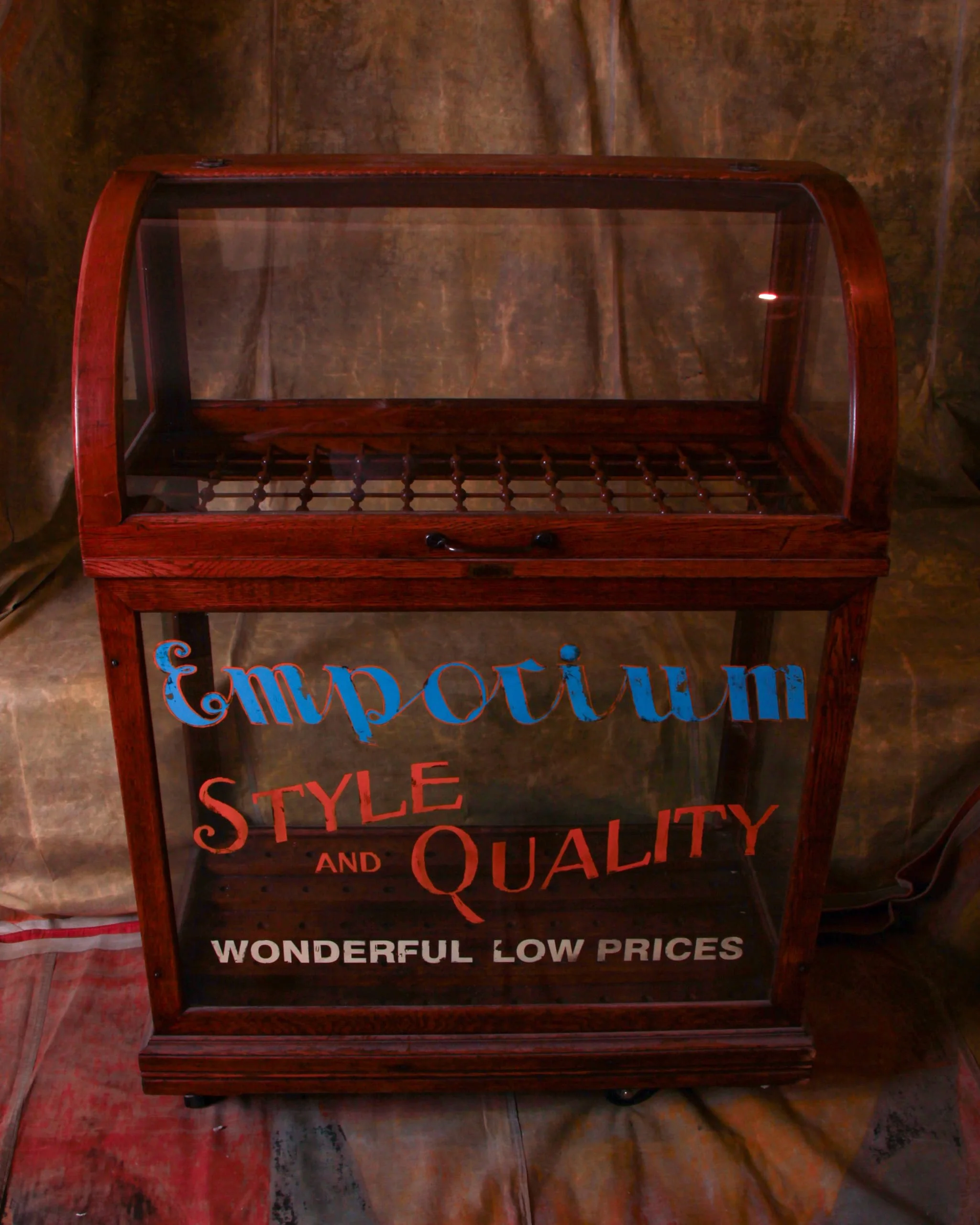
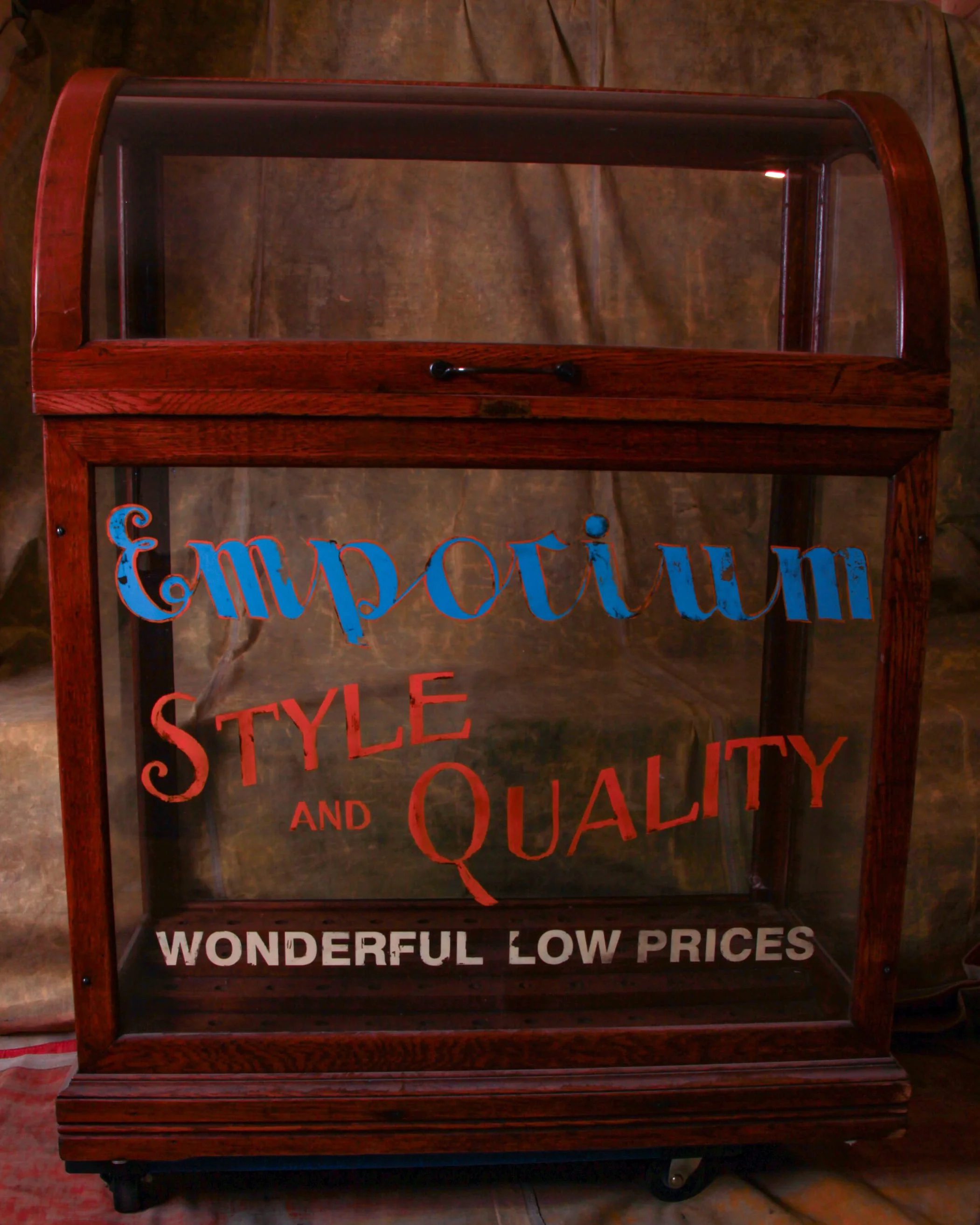
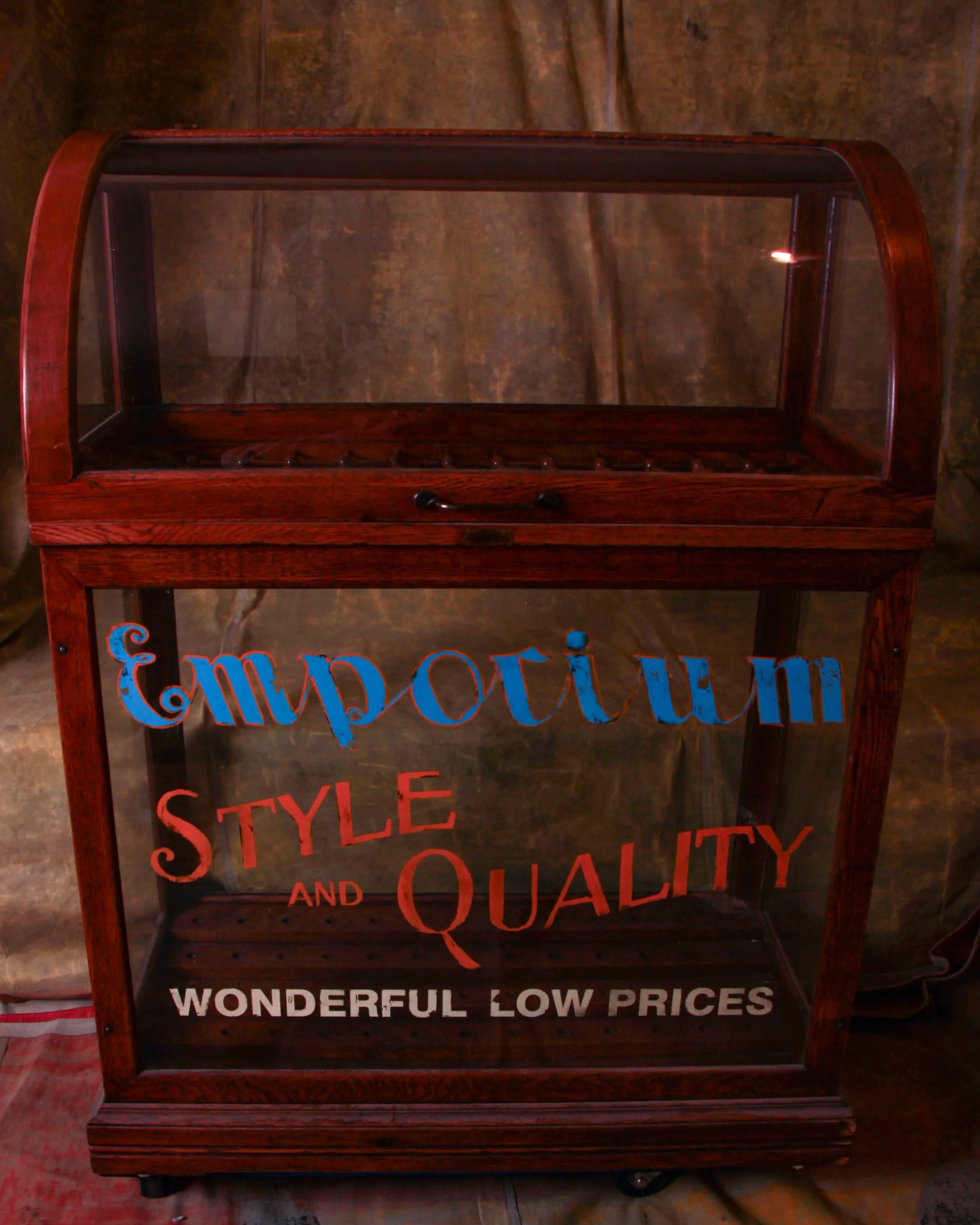
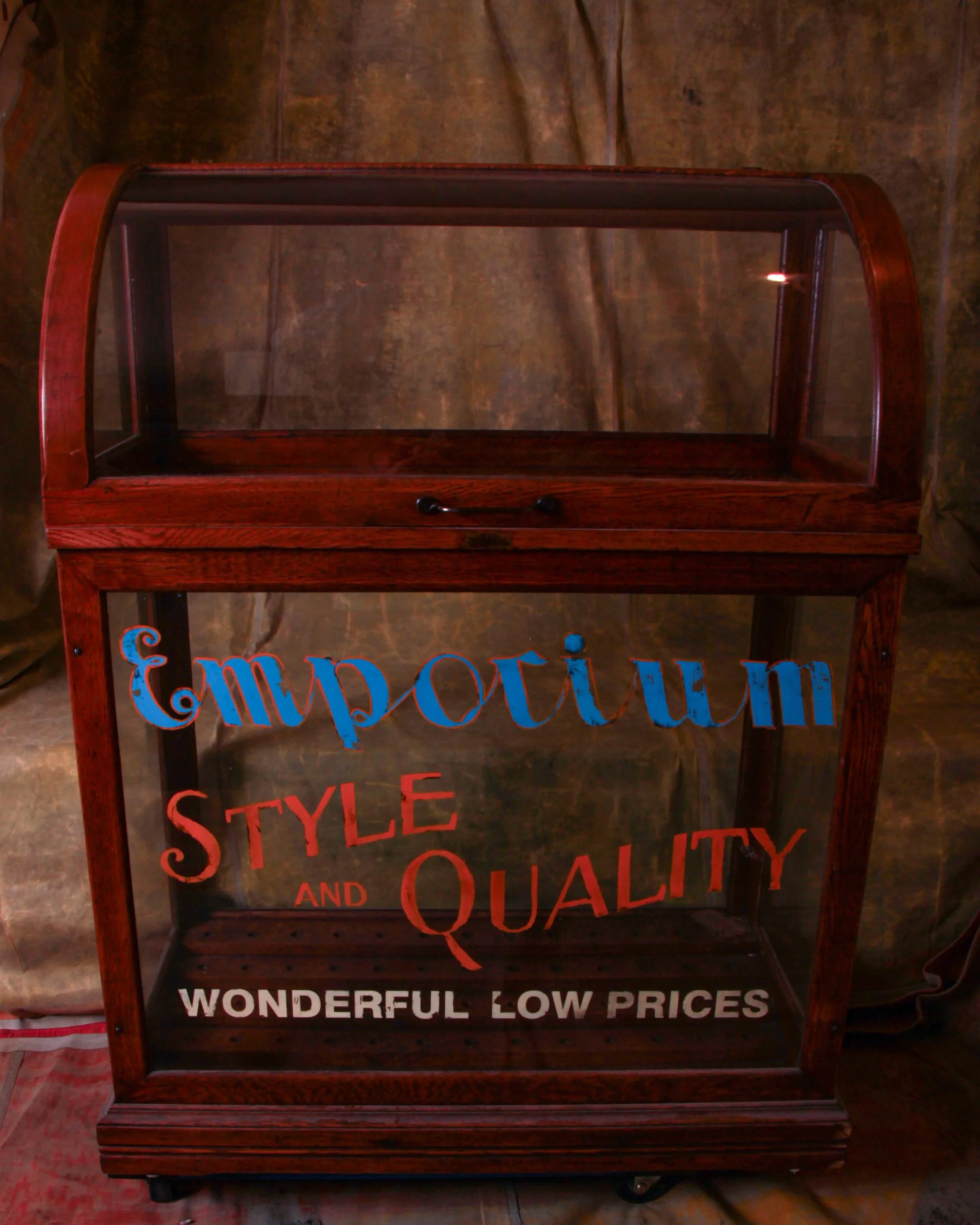
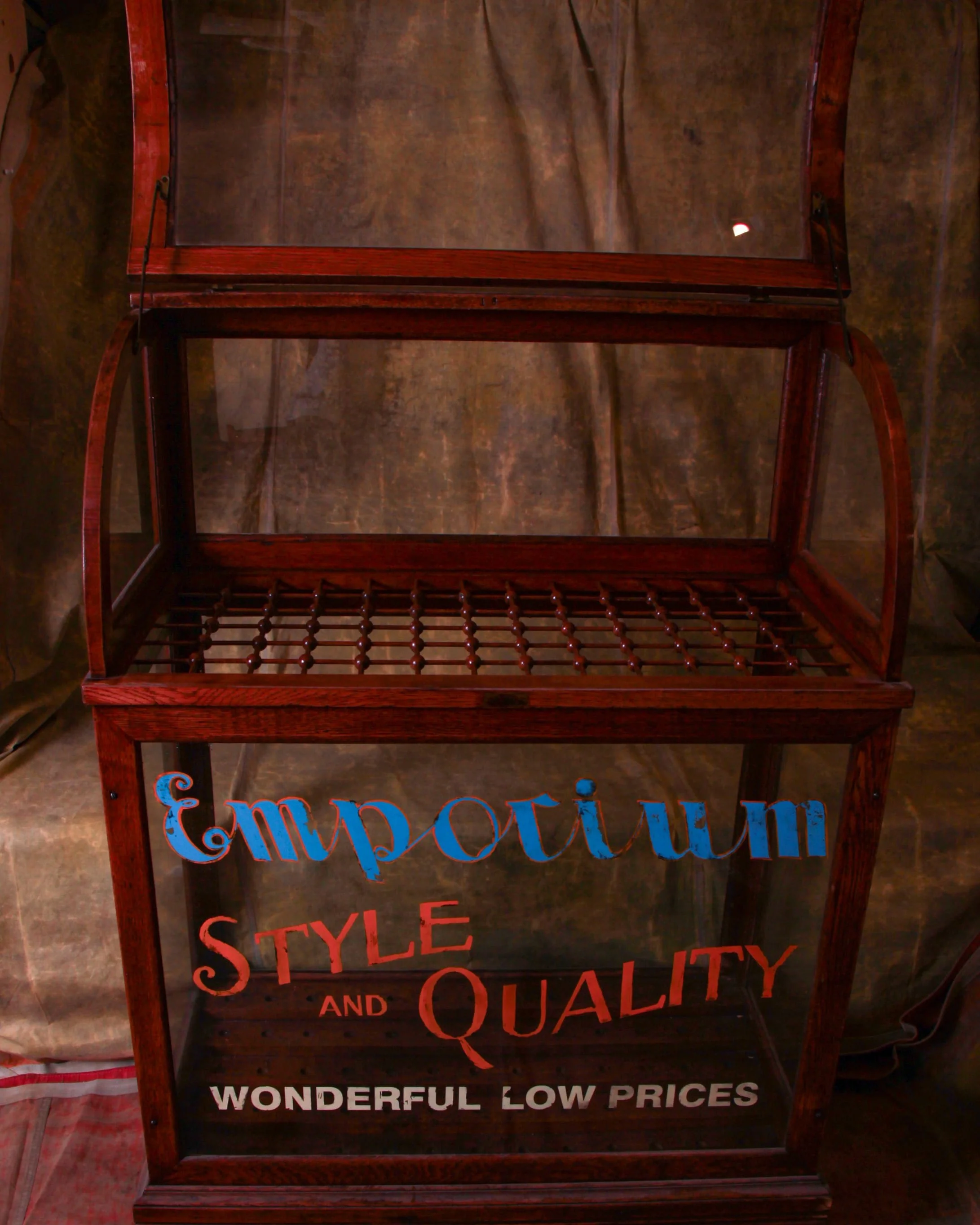
An early umbrella and cane case, built from warm oak and wrapped in glass, it was designed to turn a practical necessity into a small moment of selection. The half-dome top softens the form, giving it a kind of storefront presence, while the clear panels invite everything inside to stand on display rather than disappear into a corner. This wasn’t storage. It was presentation.
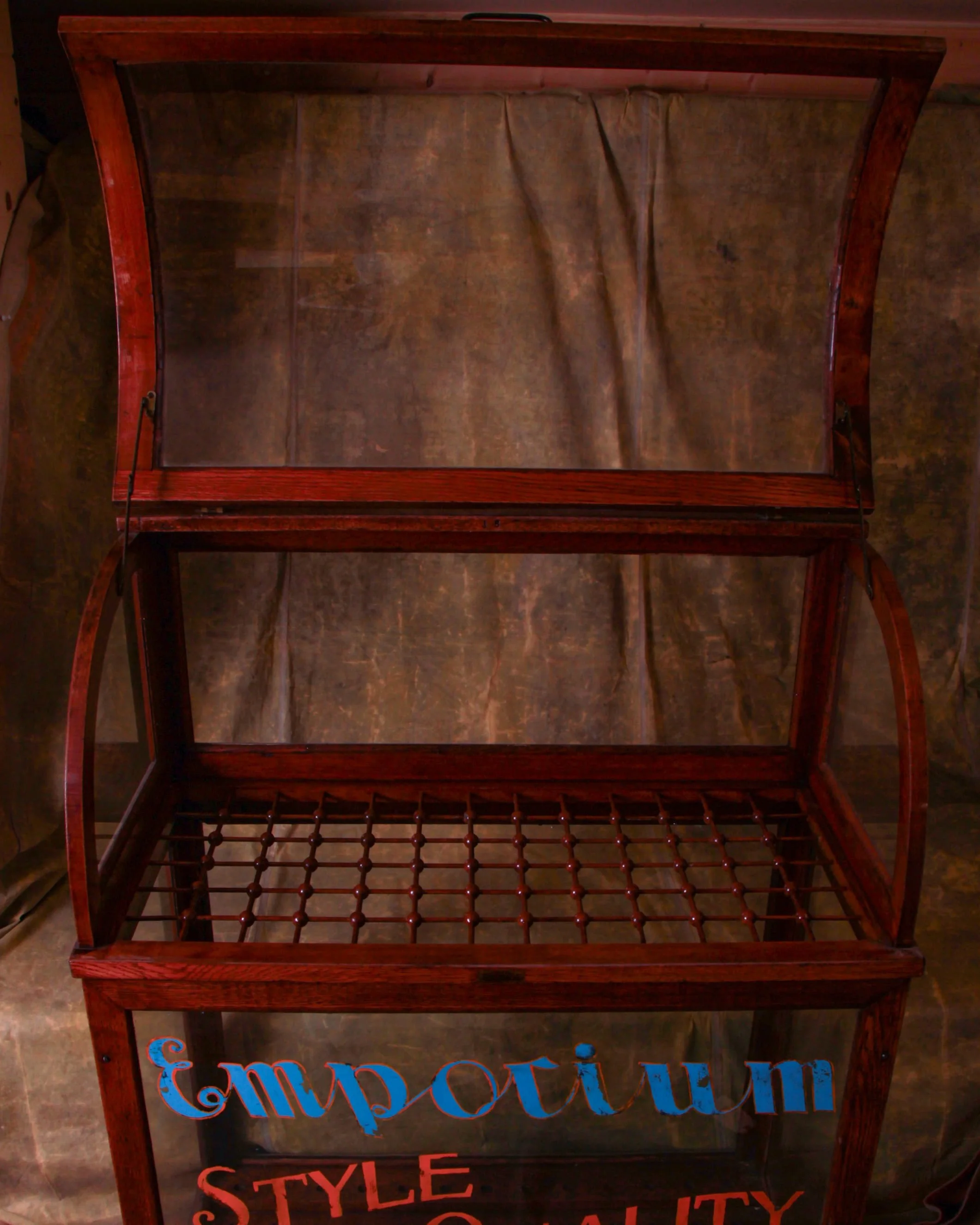
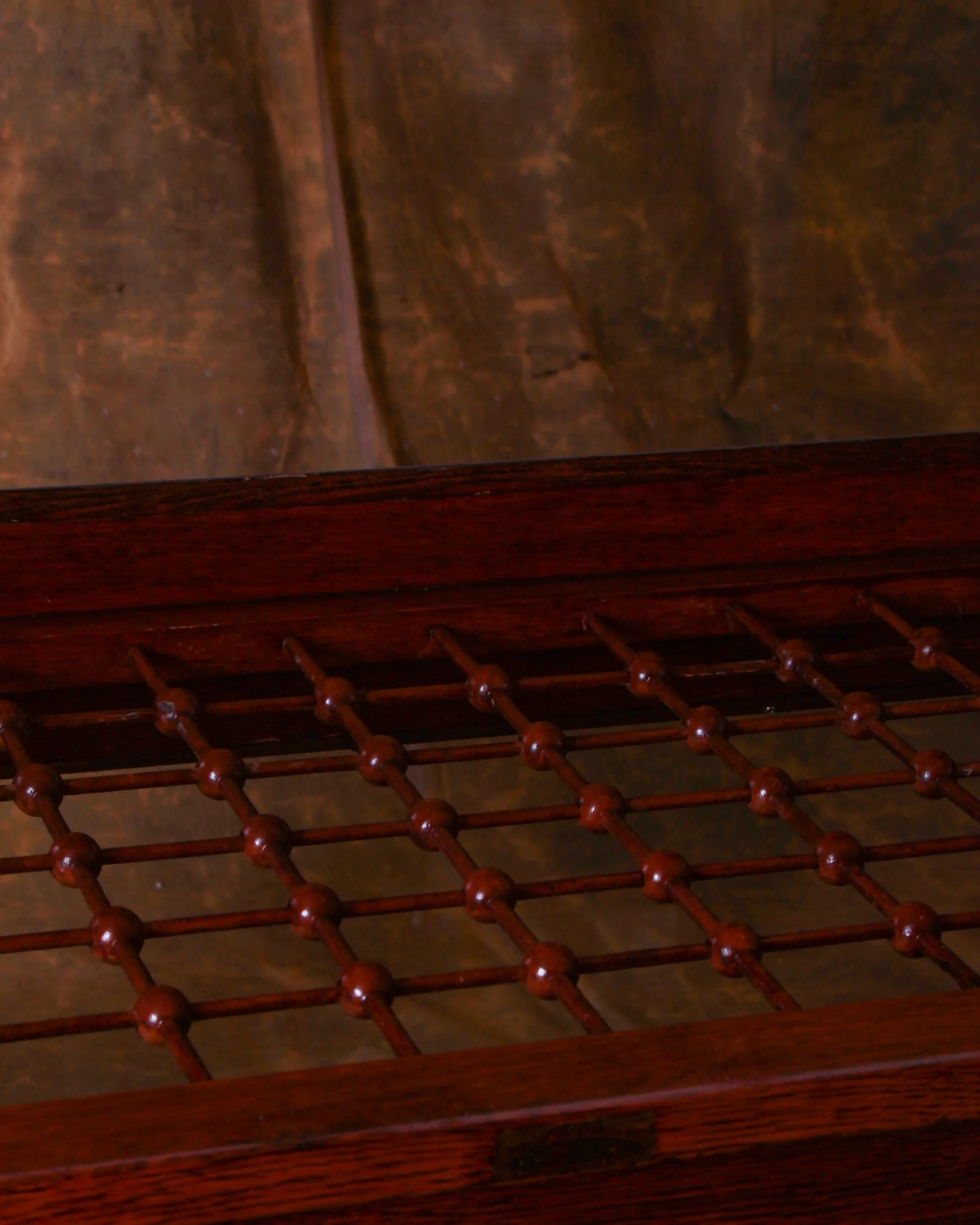
Inside, a neatly ordered grid of turned wooden dividers holds up to 78 canes or umbrellas, each one given its own place. You can almost picture them lined up, handles peeking above the rim, a mix of polished wood, curved crooks, maybe the occasional silver tip catching the light. A whole lineup of choices, waiting for weather or whim.
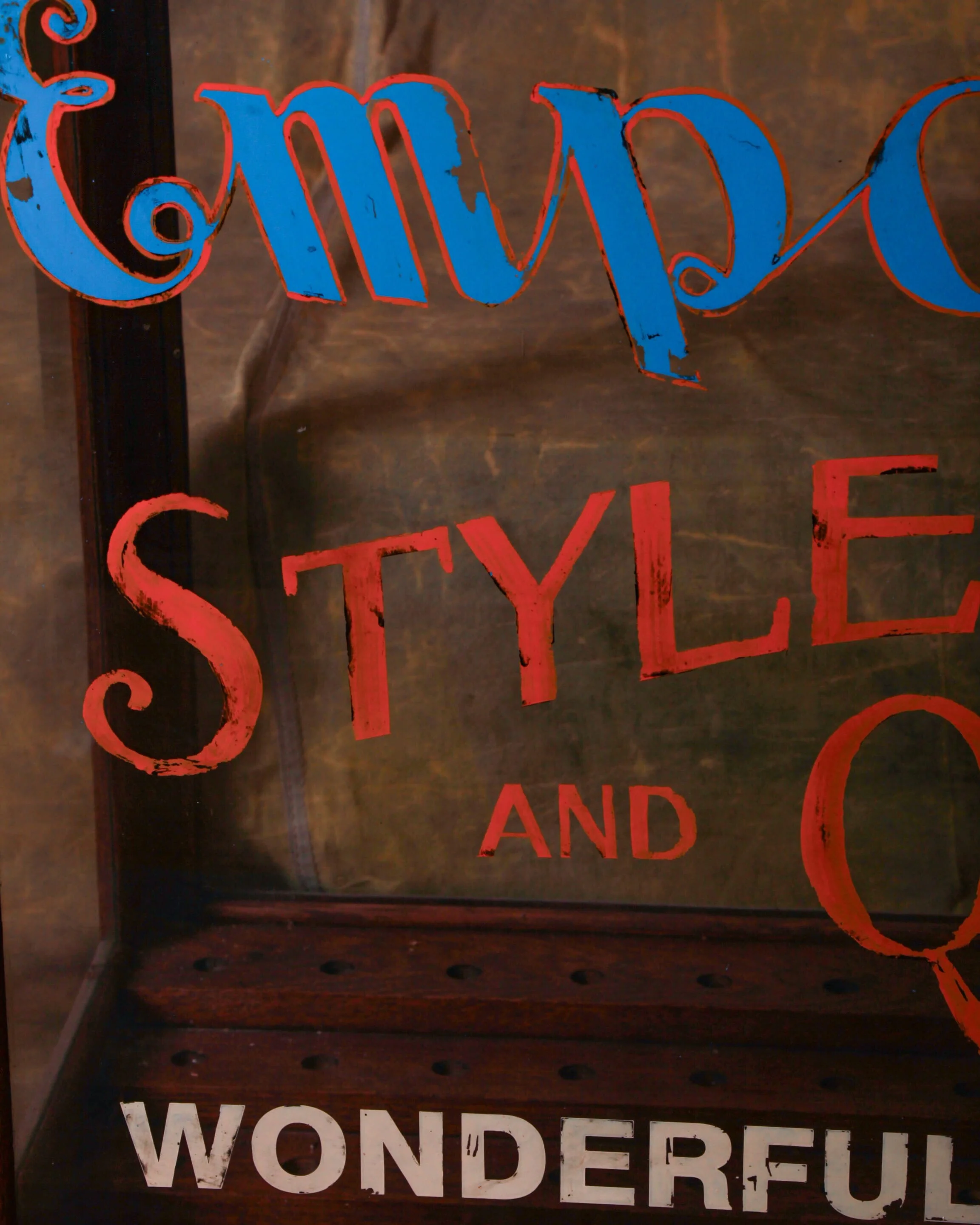
The painted glass is where it really leans in. “Emporium Style And Quality” stretches across the front in that confident, slightly ornamental lettering, followed by the promise underneath: “Wonderful Low Prices.” It’s straightforward, a little optimistic, and entirely of its time. Retail as both assurance and invitation.
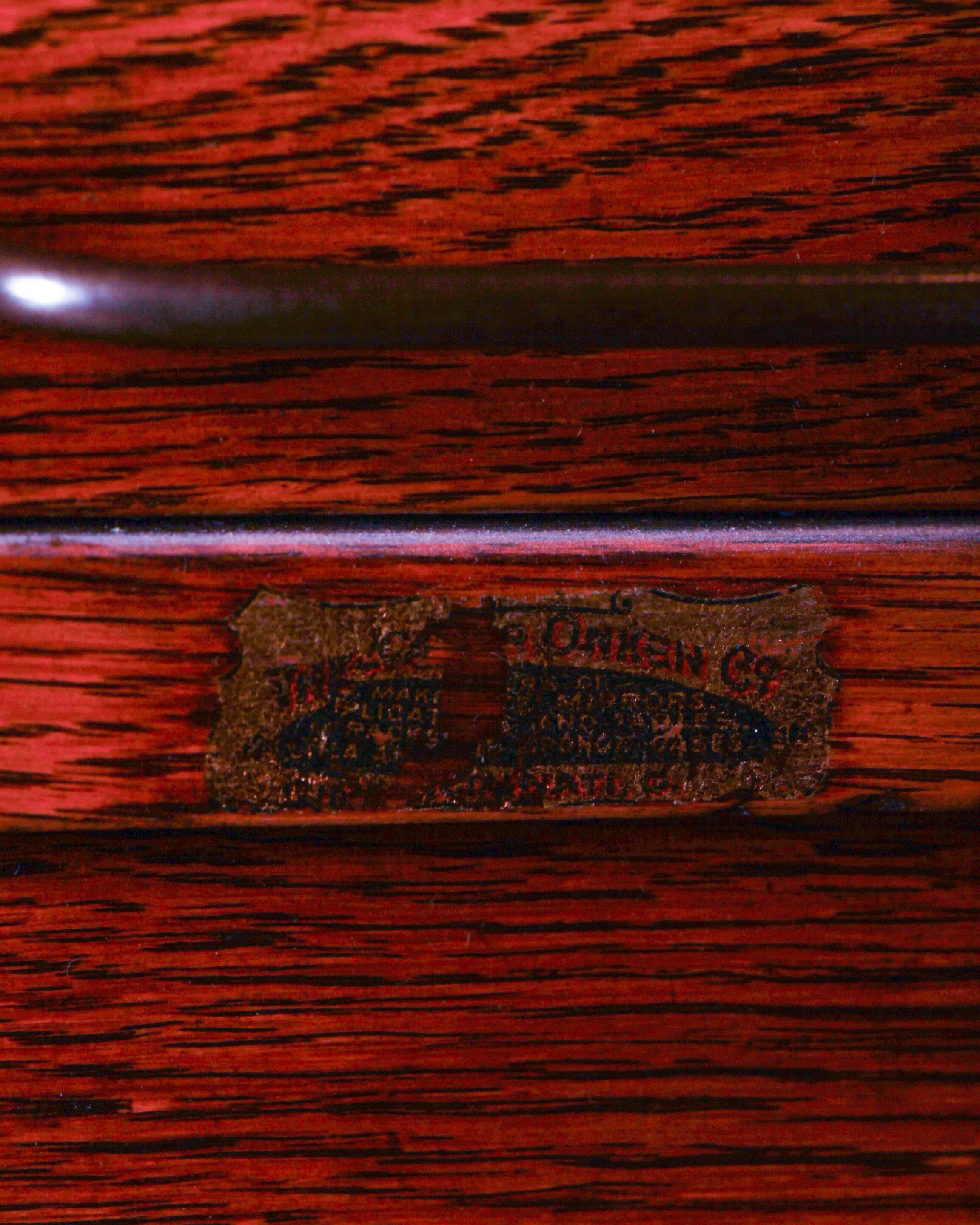
There’s wear throughout, as expected. The oak shows its age with a softened surface and small marks from years of use. The lettering has areas of color loss, giving it that slightly weathered, lived-in look that only comes from sitting in a real shop rather than a display room. Nothing distracting. Just the right amount of history.
At 47 inches high, 38 wide, and 20 deep, it has presence without feeling bulky. A functional object that doubled as a bit of quiet advertising, now standing on its own as both furniture and artifact.
Canes
In the 1920s and 1930s, canes balanced necessity and style. Still used for support, they doubled as personal statements, with carved handles, exotic woods, and even hidden compartments, reflecting an era when everyday objects carried a bit of personality and quiet flair.
Reach out re: shipping before purchasing at hello@heimweeantiques.com
An early umbrella and cane case, built from warm oak and wrapped in glass, it was designed to turn a practical necessity into a small moment of selection. The half-dome top softens the form, giving it a kind of storefront presence, while the clear panels invite everything inside to stand on display rather than disappear into a corner. This wasn’t storage. It was presentation.
Inside, a neatly ordered grid of turned wooden dividers holds up to 78 canes or umbrellas, each one given its own place. You can almost picture them lined up, handles peeking above the rim, a mix of polished wood, curved crooks, maybe the occasional silver tip catching the light. A whole lineup of choices, waiting for weather or whim.
The painted glass is where it really leans in. “Emporium Style And Quality” stretches across the front in that confident, slightly ornamental lettering, followed by the promise underneath: “Wonderful Low Prices.” It’s straightforward, a little optimistic, and entirely of its time. Retail as both assurance and invitation.
There’s wear throughout, as expected. The oak shows its age with a softened surface and small marks from years of use. The lettering has areas of color loss, giving it that slightly weathered, lived-in look that only comes from sitting in a real shop rather than a display room. Nothing distracting. Just the right amount of history.
At 47 inches high, 38 wide, and 20 deep, it has presence without feeling bulky. A functional object that doubled as a bit of quiet advertising, now standing on its own as both furniture and artifact.
Canes
In the 1920s and 1930s, canes balanced necessity and style. Still used for support, they doubled as personal statements, with carved handles, exotic woods, and even hidden compartments, reflecting an era when everyday objects carried a bit of personality and quiet flair.