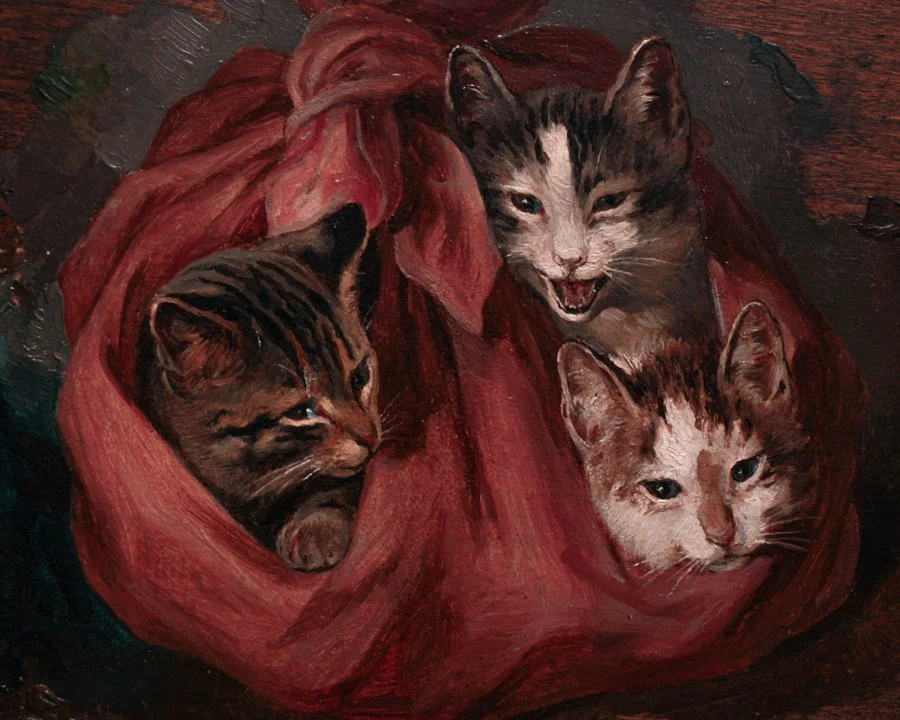
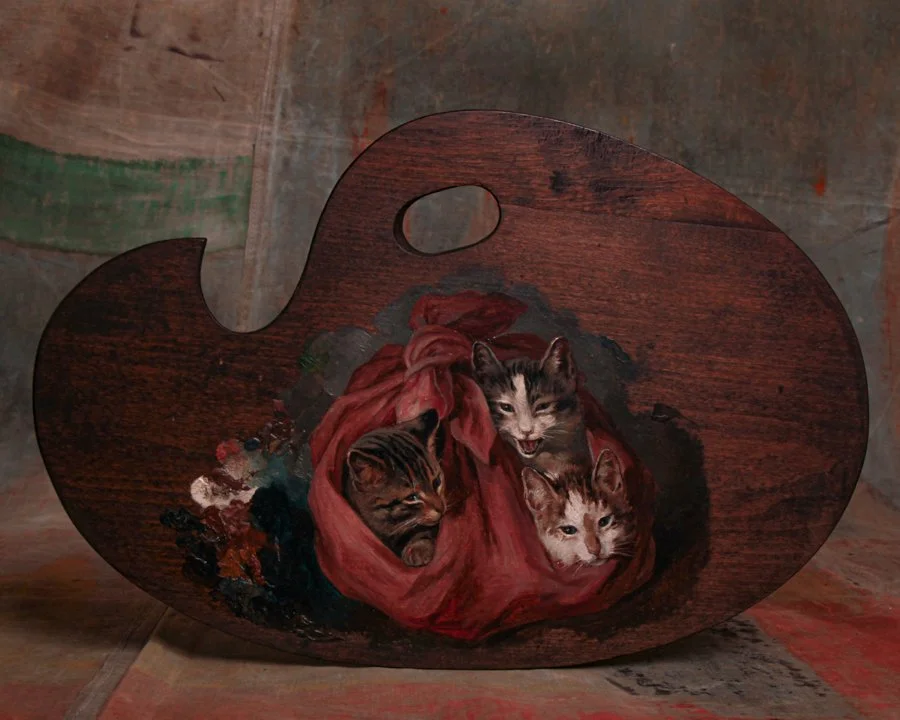
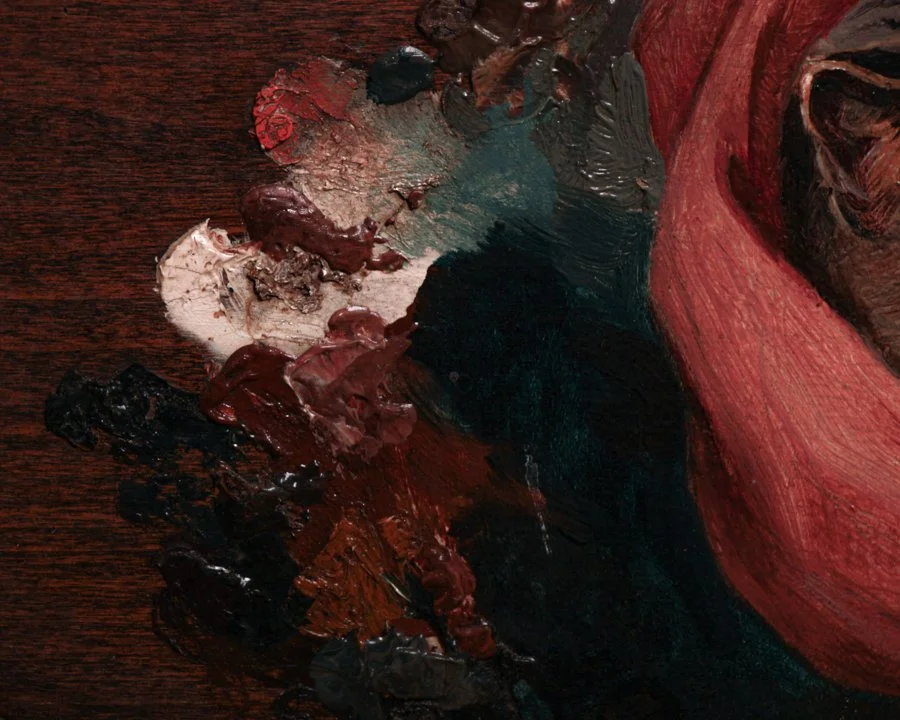
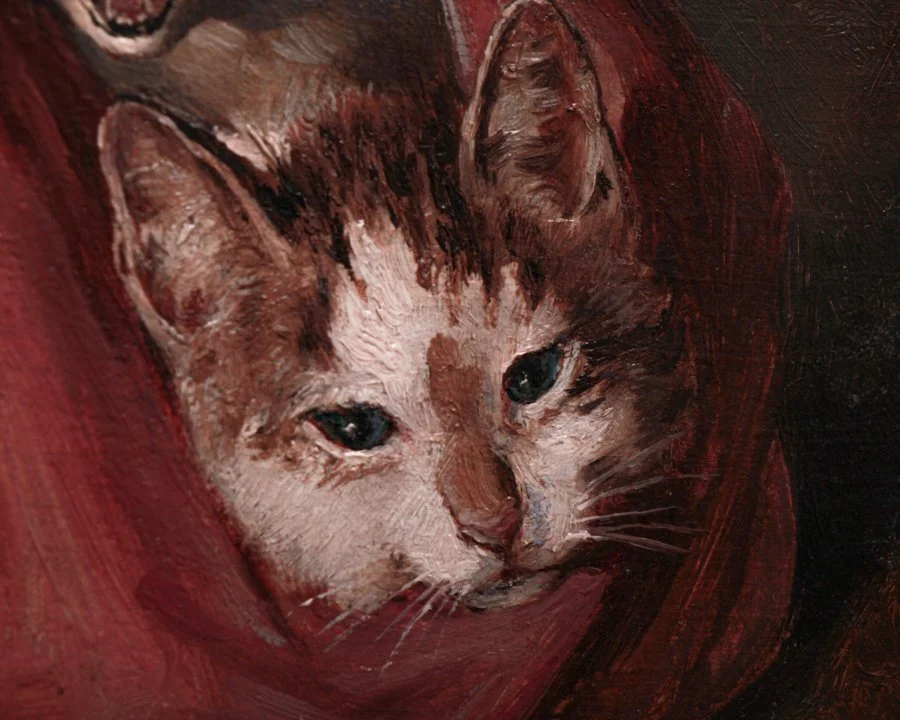
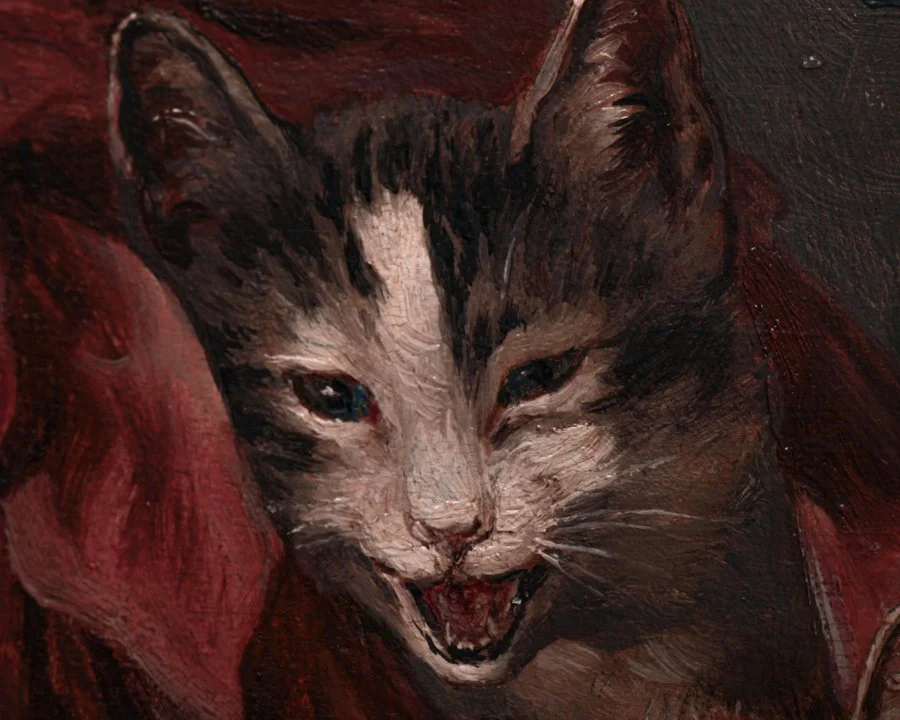
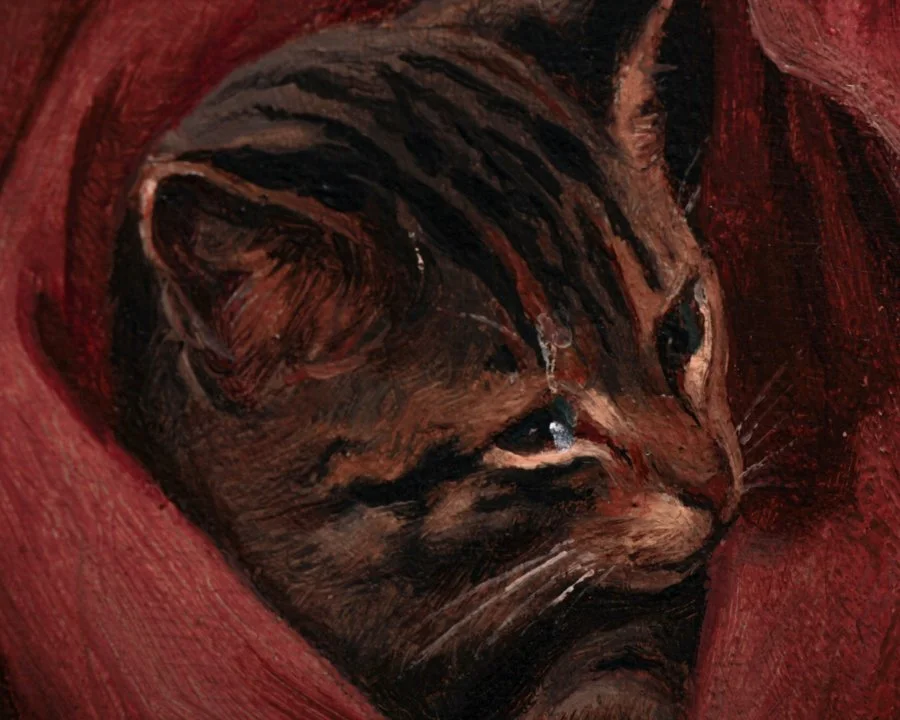
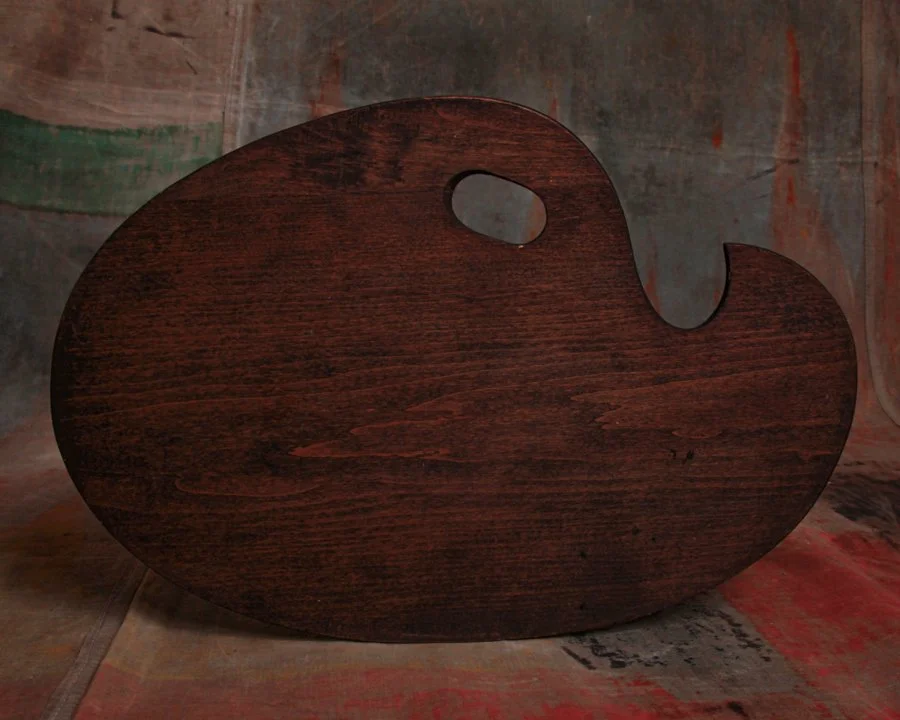
This unusual and wildly charming piece started its life as a working artist’s palette, but somewhere along the way—around 1860—it was transformed into a miniature masterpiece by German painter Carl Gerber. Three kittens peek out from a deep red cloth, nestled together in a cozy study that’s equal parts tender and mischievous. You can still see the original daubs of oil paint surrounding the image, a peek behind the curtain at the artist’s palette in every sense. The board is beautifully grained, and the back is clean and intact. It’s signed on the front and has all the quirks and warmth you'd expect from a 19th-century one-off.
Category History
Oil paintings on artists’ palettes sit in that strange, compelling overlap between tool and artwork. The palette starts as a working surface—wood, glass, or board—where paint is mixed, adjusted, and tested before it ever reaches the canvas. Over time, layers build up. Colors are pushed together, scraped back, left to dry, then painted over again, creating a surface that records the artist’s decisions in real time.
Occasionally, that surface becomes too interesting to ignore. Some artists would lean into it, turning the palette itself into a finished piece—either by shaping the existing paint into an image or by intentionally painting over the built-up ground. Others left them as they were, accidental abstractions formed through use.
What makes these objects stand out is that they carry both process and result. You’re not just seeing a composition—you’re seeing the leftovers, the transitions, the moments where color shifted or didn’t quite work. The edge of a portrait might sit next to a smear of something entirely unrelated.
They’re intimate in a way traditional paintings aren’t. Less formal, more immediate. A palette painting doesn’t separate the act of making from the final image—it folds them together, leaving the whole conversation visible.
This unusual and wildly charming piece started its life as a working artist’s palette, but somewhere along the way—around 1860—it was transformed into a miniature masterpiece by German painter Carl Gerber. Three kittens peek out from a deep red cloth, nestled together in a cozy study that’s equal parts tender and mischievous. You can still see the original daubs of oil paint surrounding the image, a peek behind the curtain at the artist’s palette in every sense. The board is beautifully grained, and the back is clean and intact. It’s signed on the front and has all the quirks and warmth you'd expect from a 19th-century one-off.
Category History
Oil paintings on artists’ palettes sit in that strange, compelling overlap between tool and artwork. The palette starts as a working surface—wood, glass, or board—where paint is mixed, adjusted, and tested before it ever reaches the canvas. Over time, layers build up. Colors are pushed together, scraped back, left to dry, then painted over again, creating a surface that records the artist’s decisions in real time.
Occasionally, that surface becomes too interesting to ignore. Some artists would lean into it, turning the palette itself into a finished piece—either by shaping the existing paint into an image or by intentionally painting over the built-up ground. Others left them as they were, accidental abstractions formed through use.
What makes these objects stand out is that they carry both process and result. You’re not just seeing a composition—you’re seeing the leftovers, the transitions, the moments where color shifted or didn’t quite work. The edge of a portrait might sit next to a smear of something entirely unrelated.
They’re intimate in a way traditional paintings aren’t. Less formal, more immediate. A palette painting doesn’t separate the act of making from the final image—it folds them together, leaving the whole conversation visible.