ITEM NOT AVAILABLE IMMEDIATELY—INQUIRE IF INTERESTED hello@heimweeantiques.com
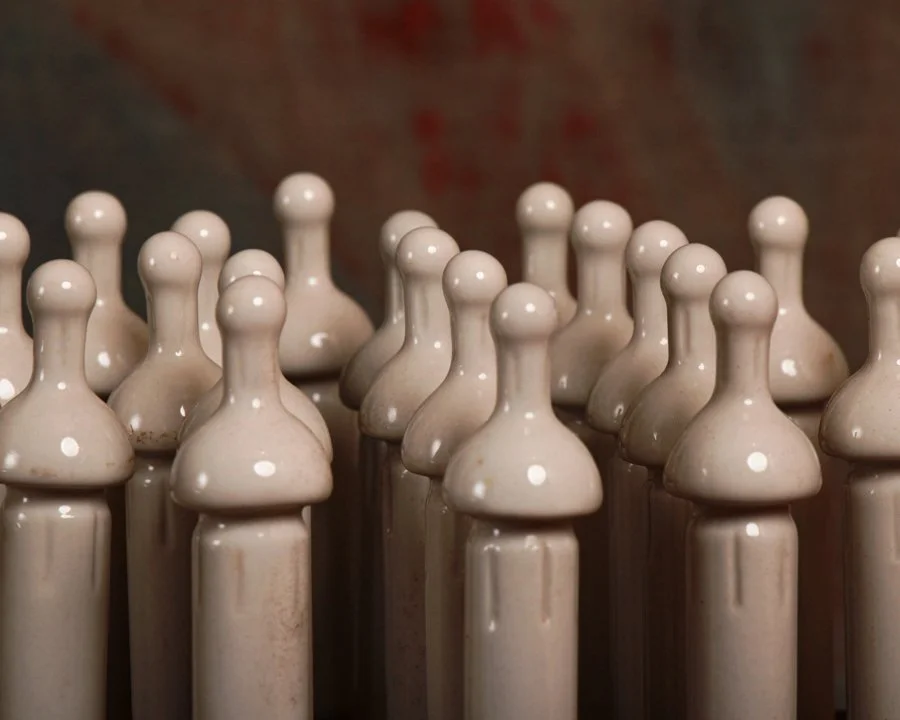
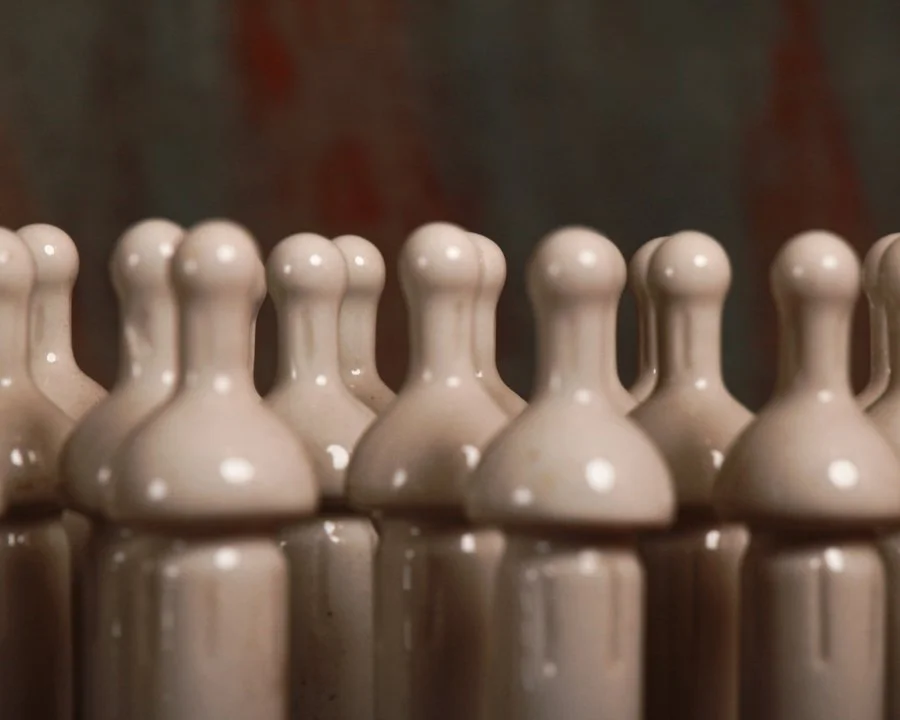
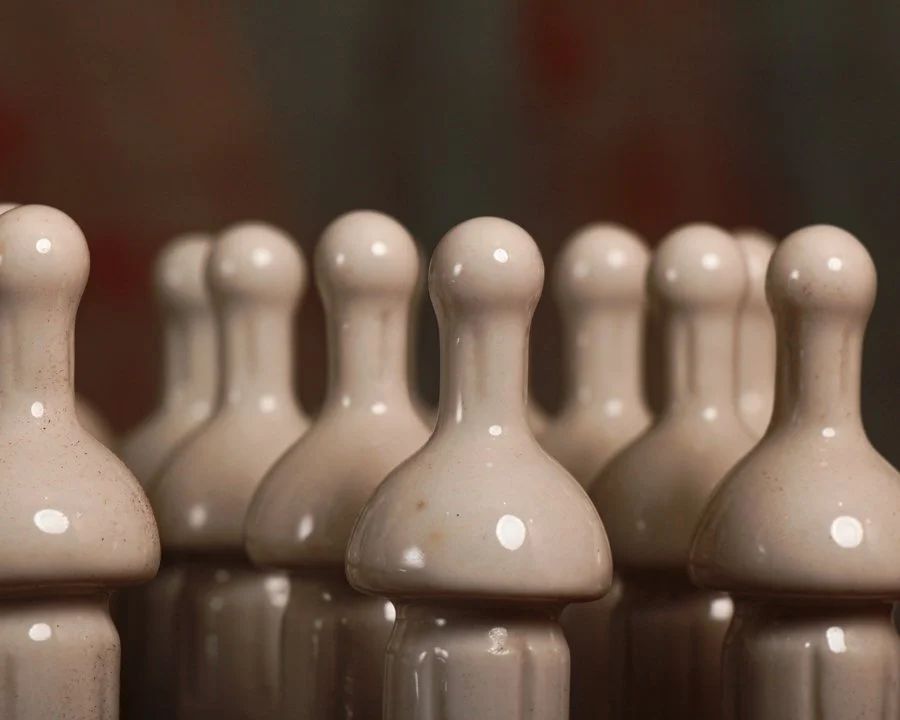
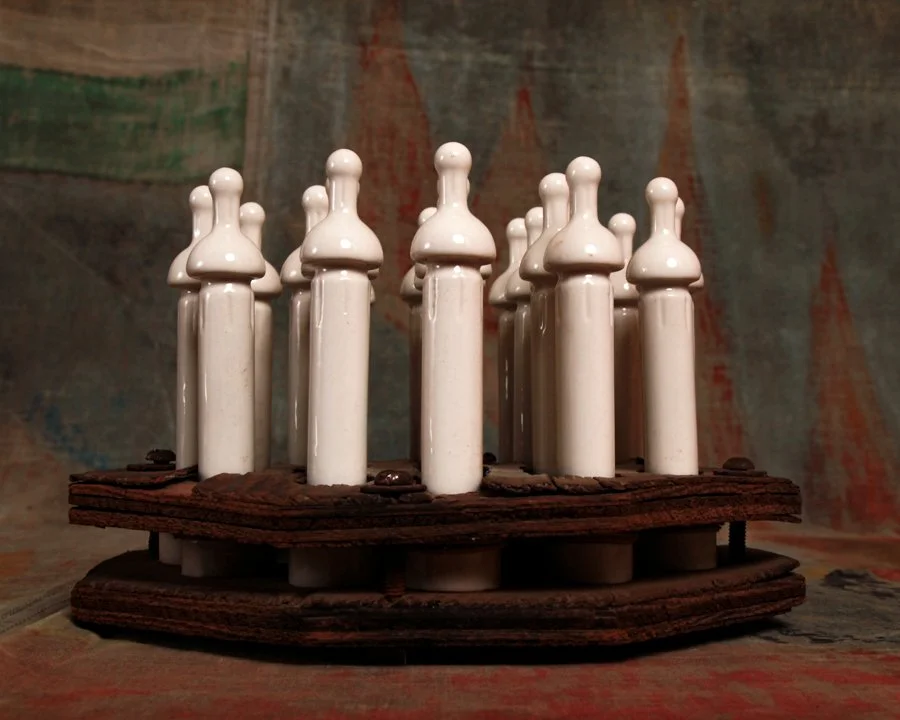
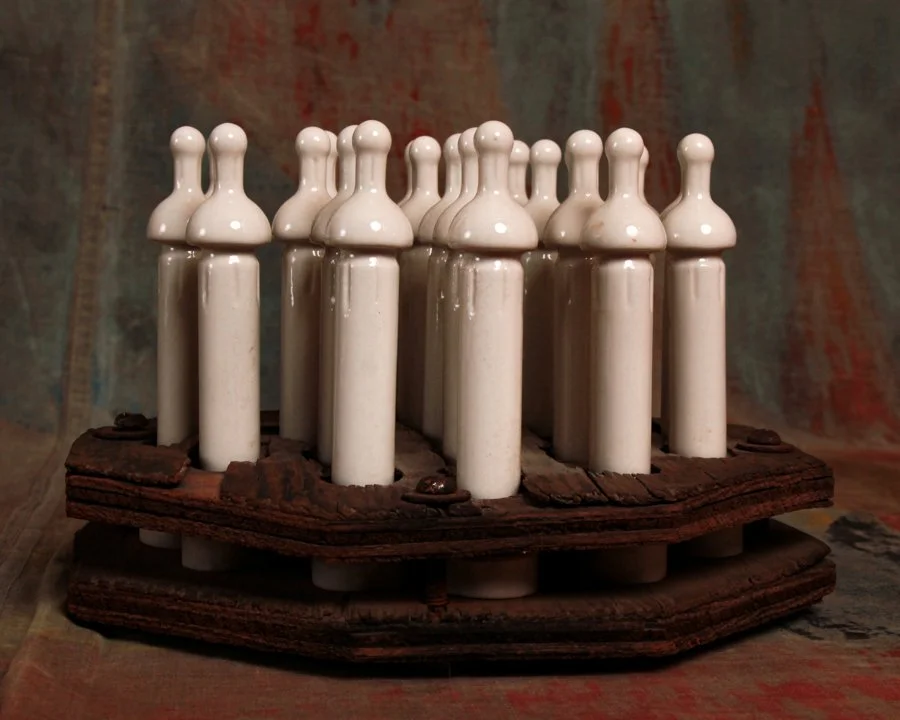
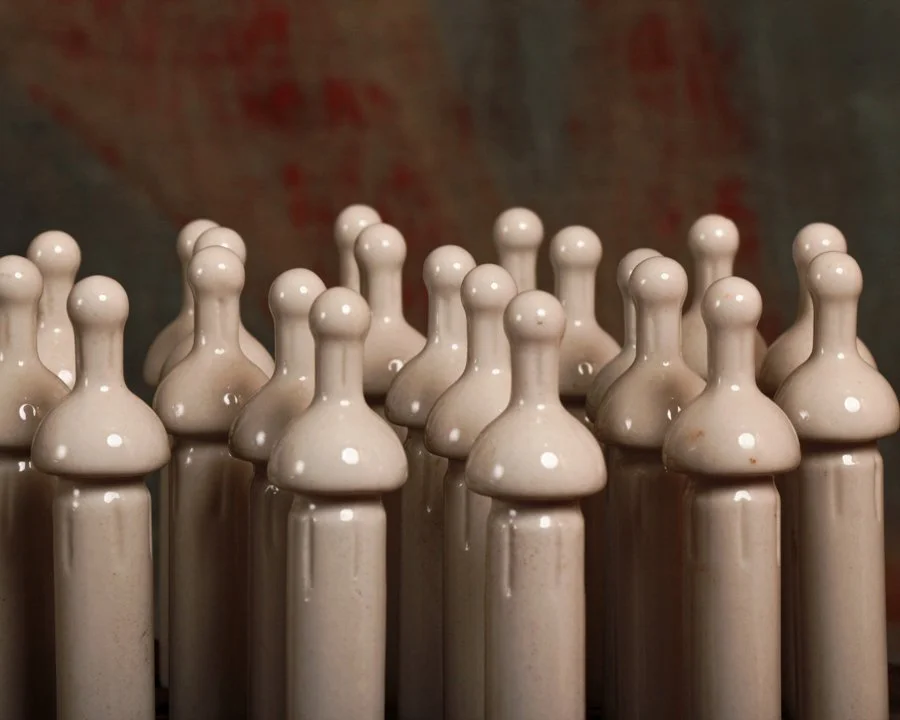
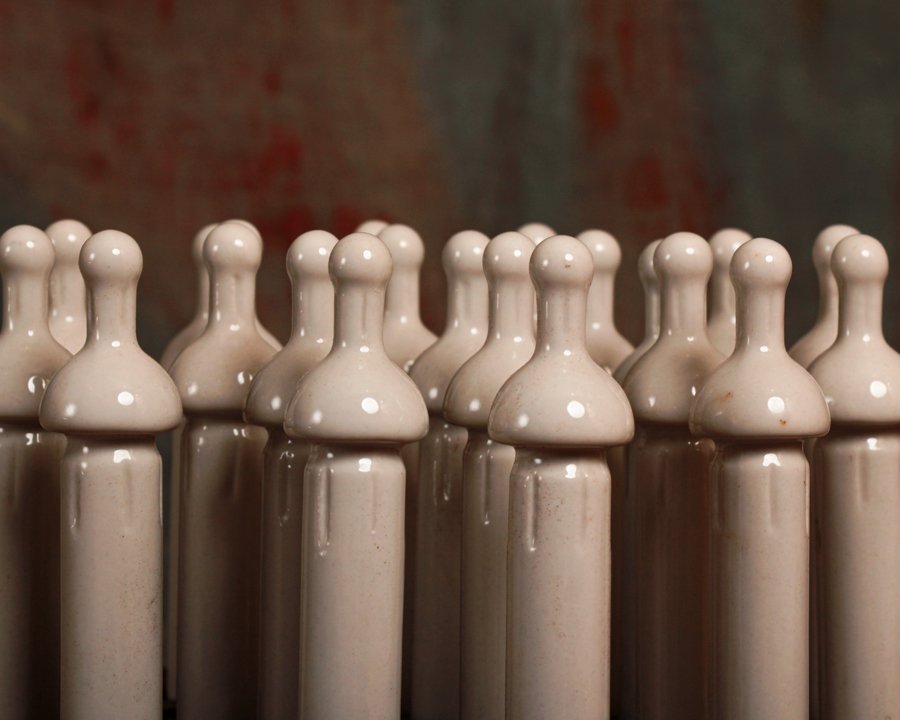
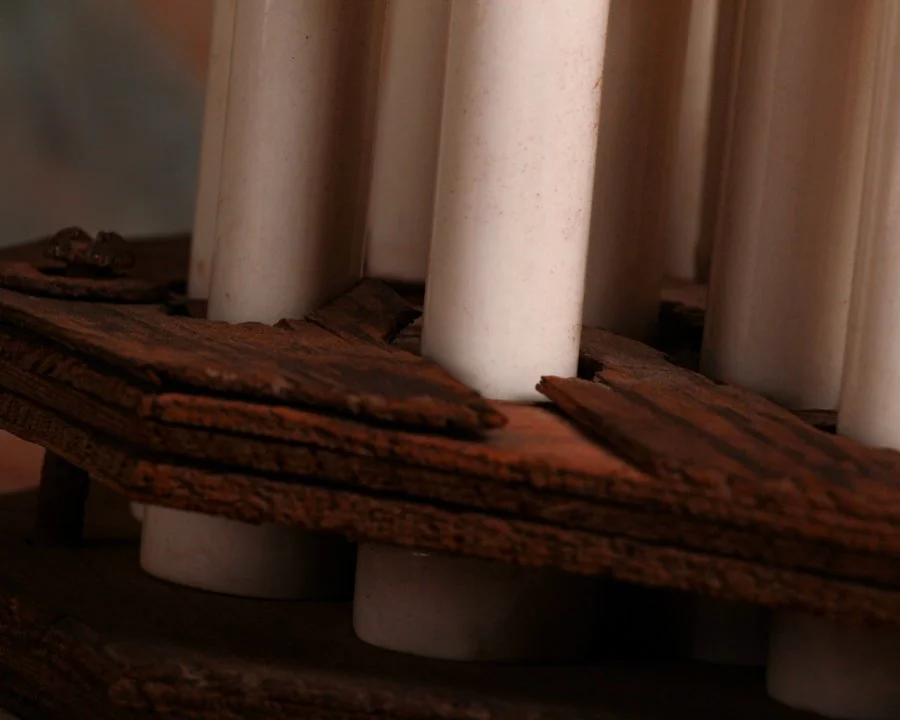
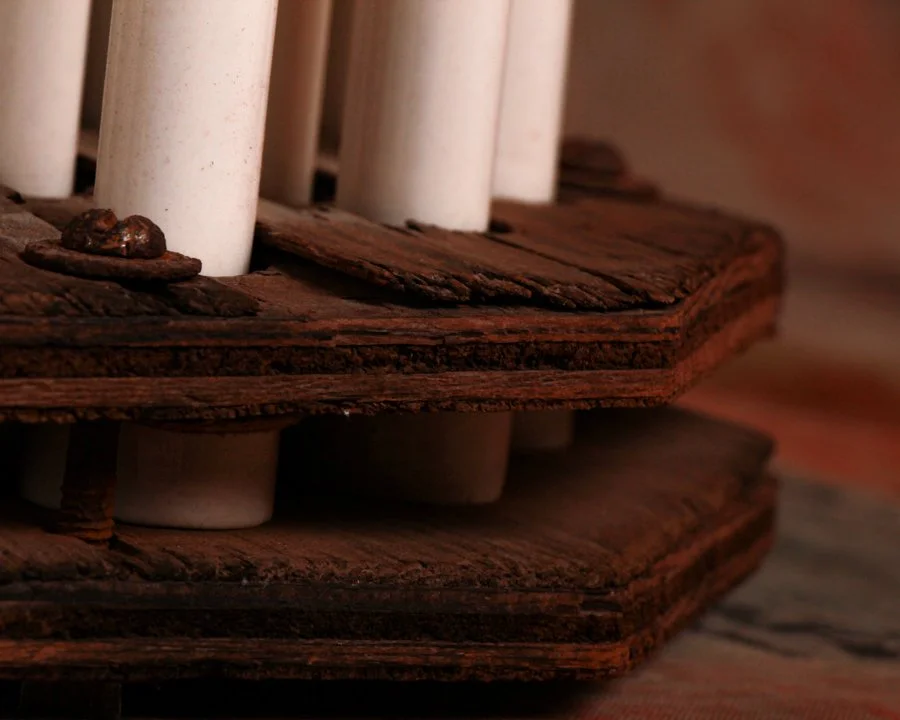
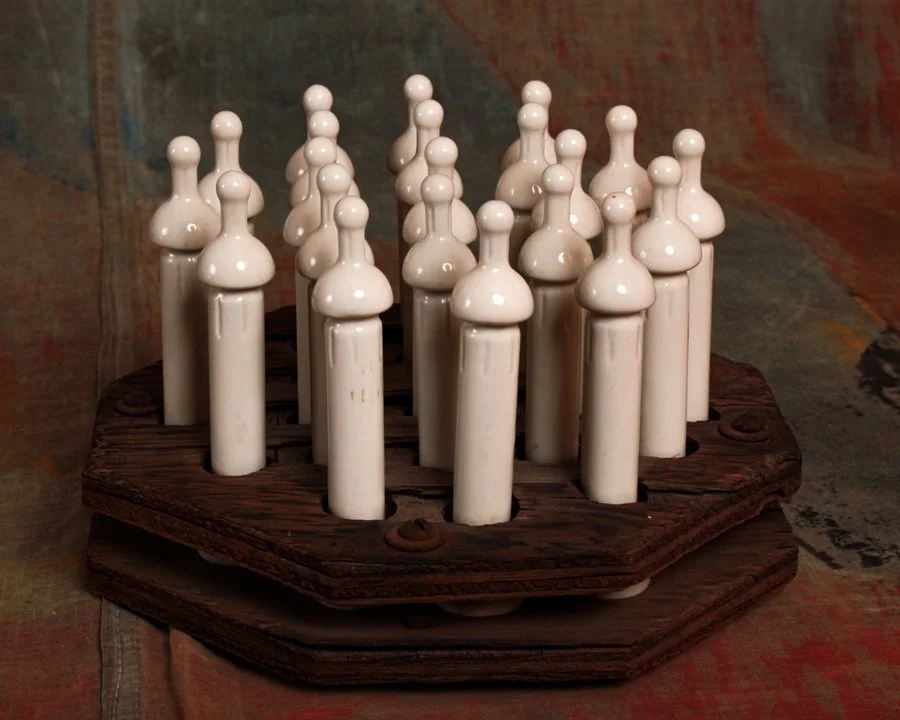
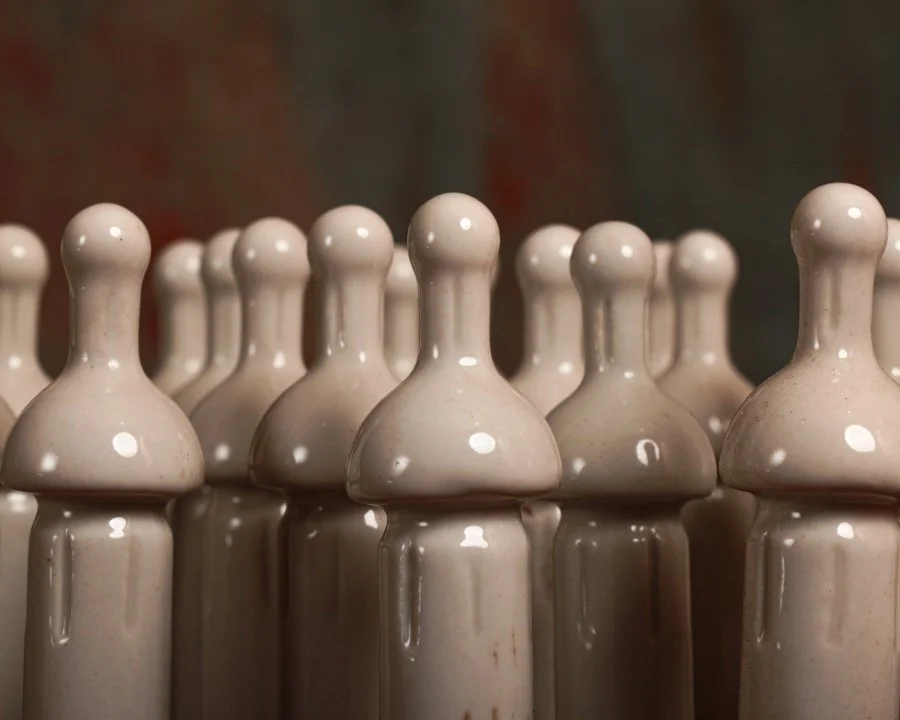
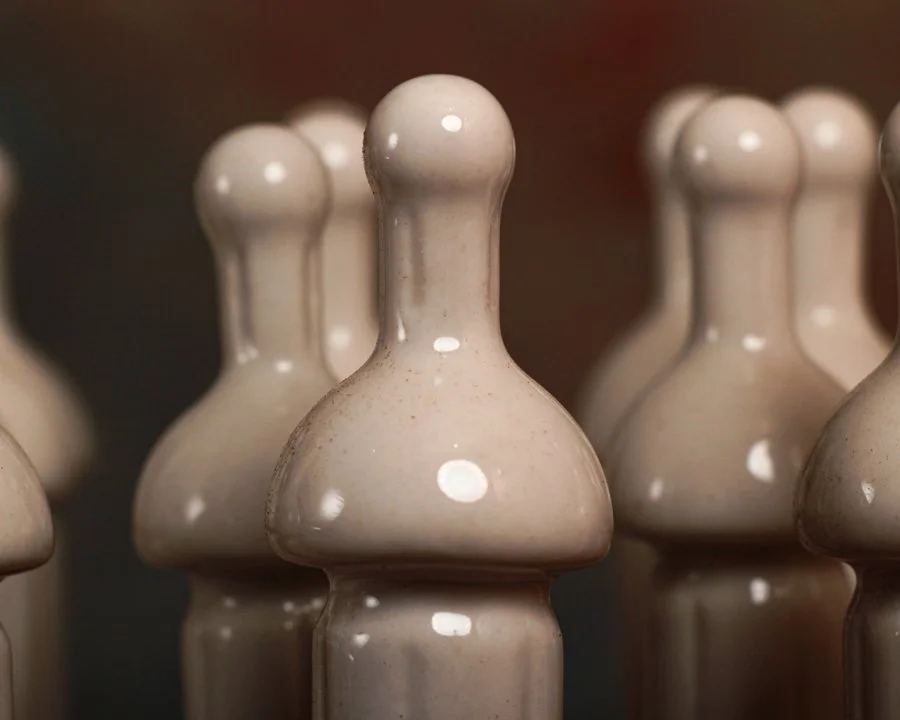
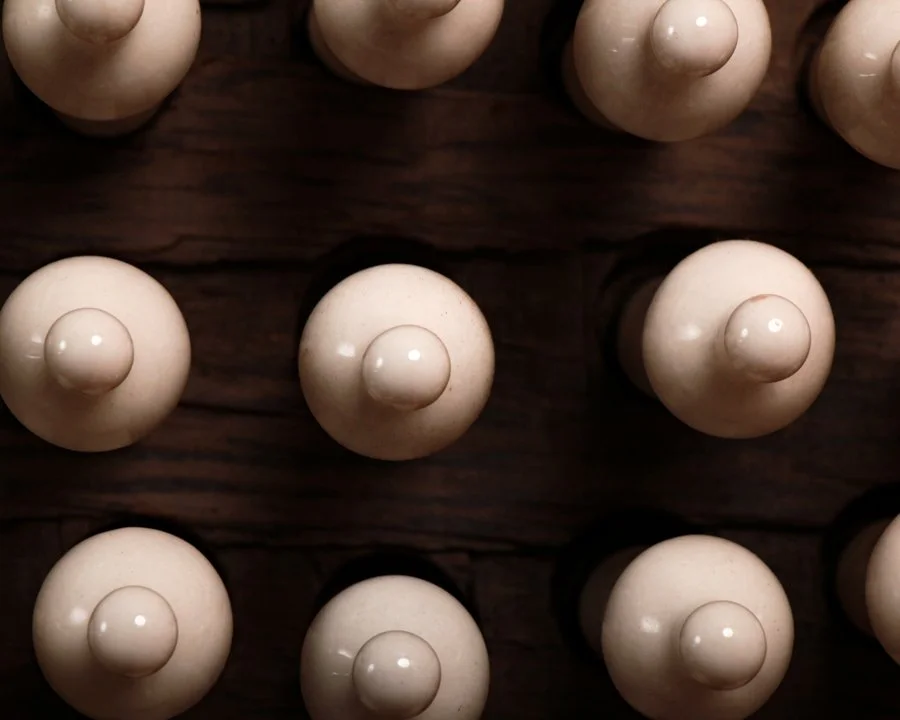
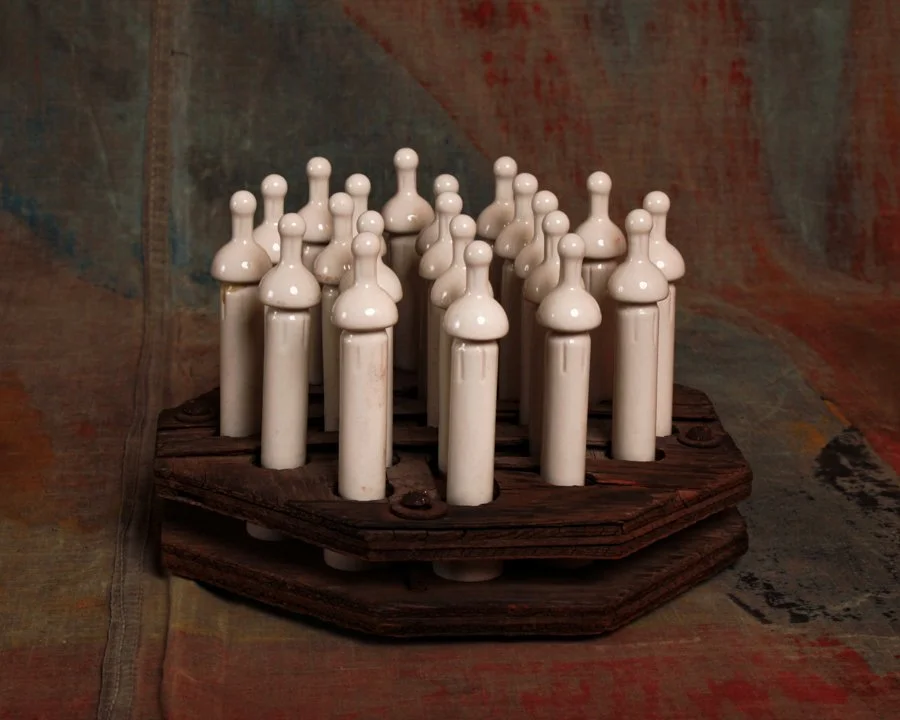
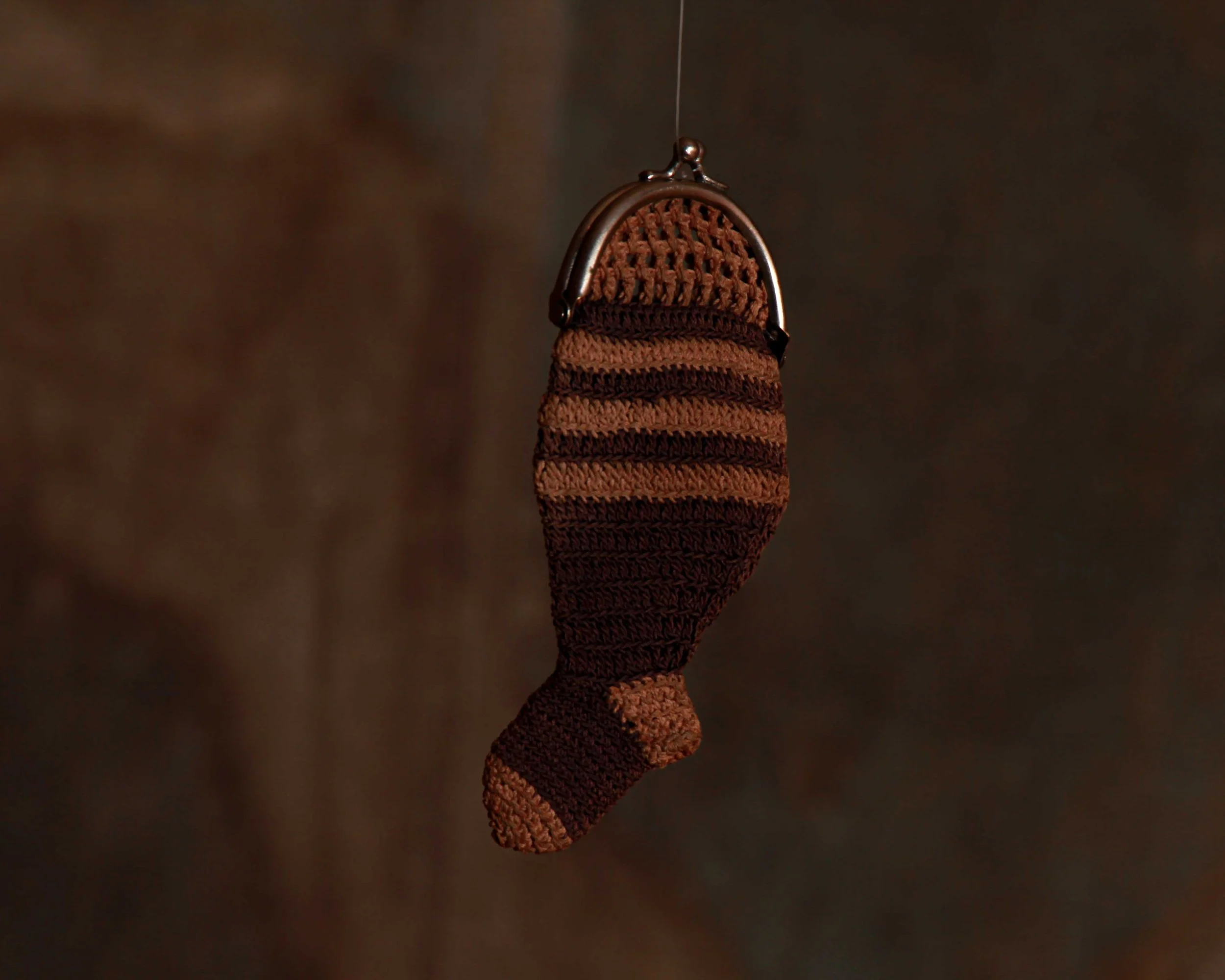
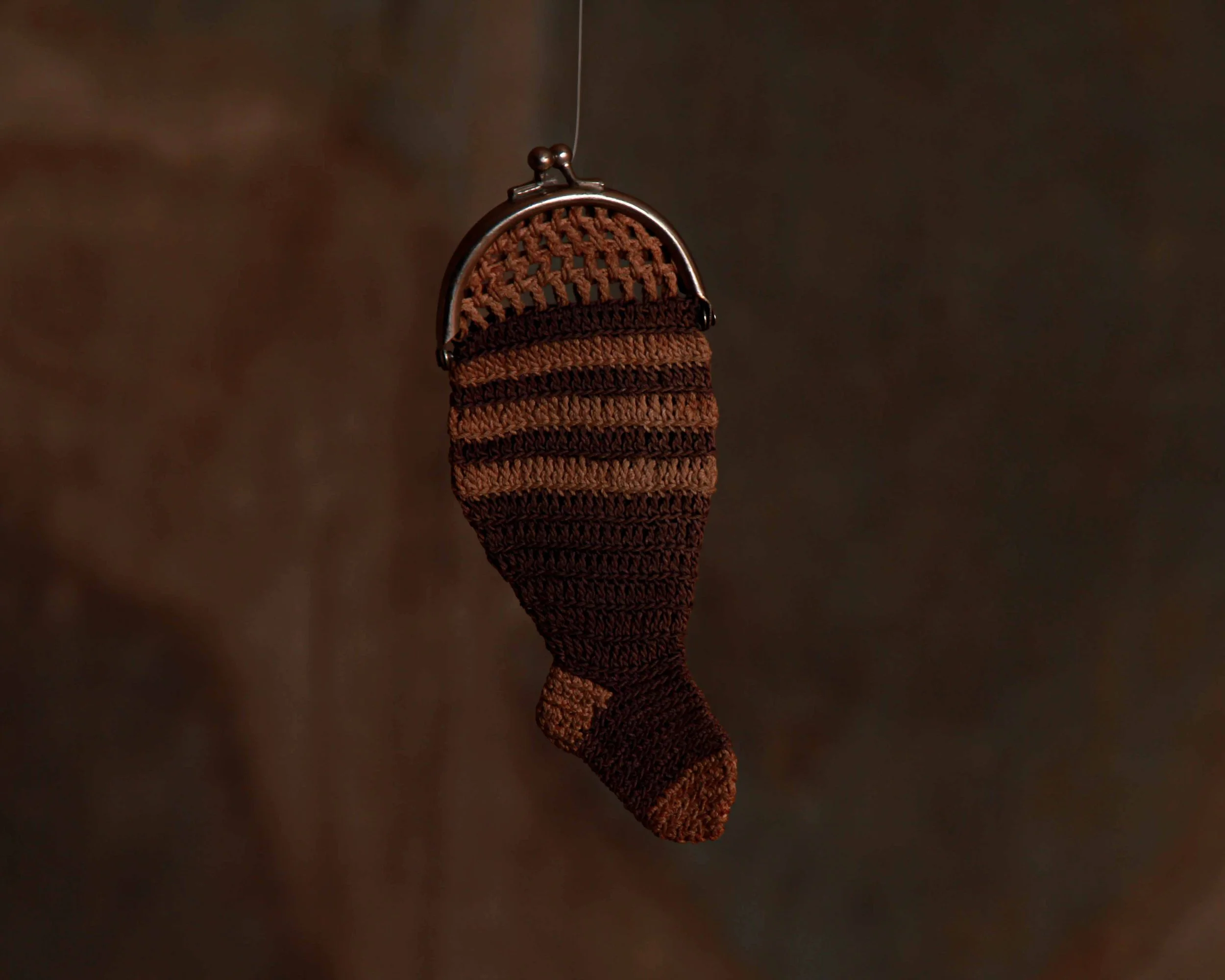
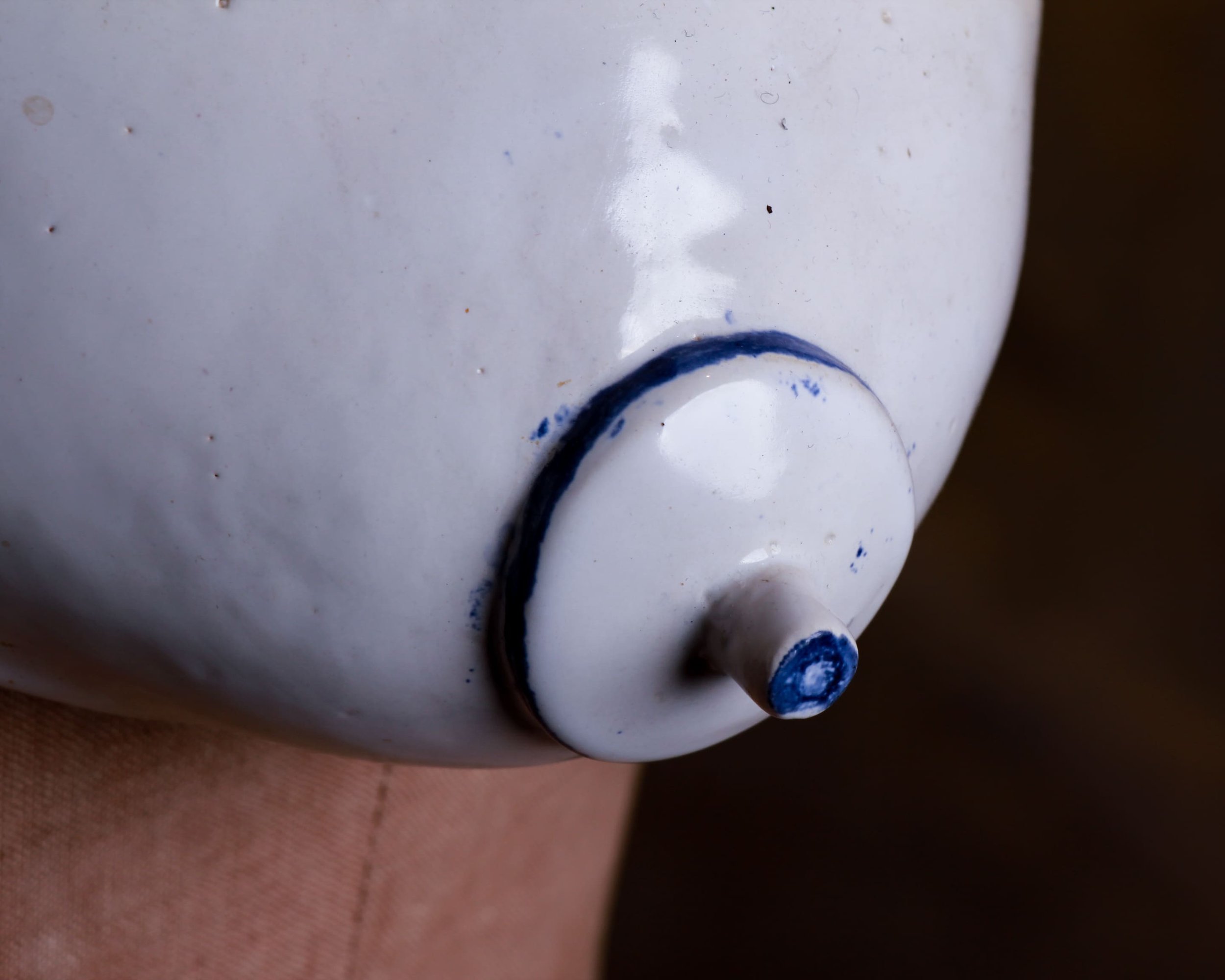
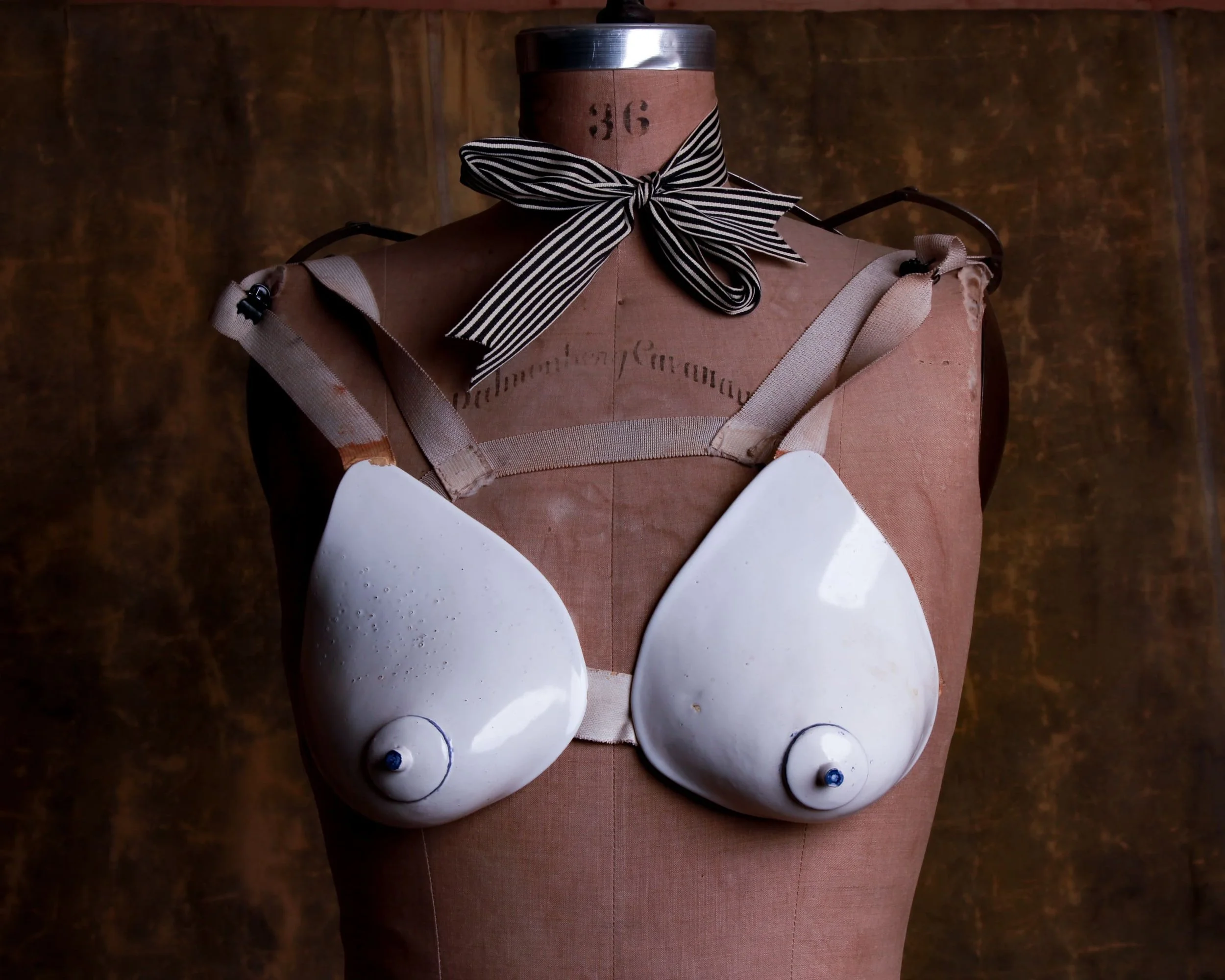
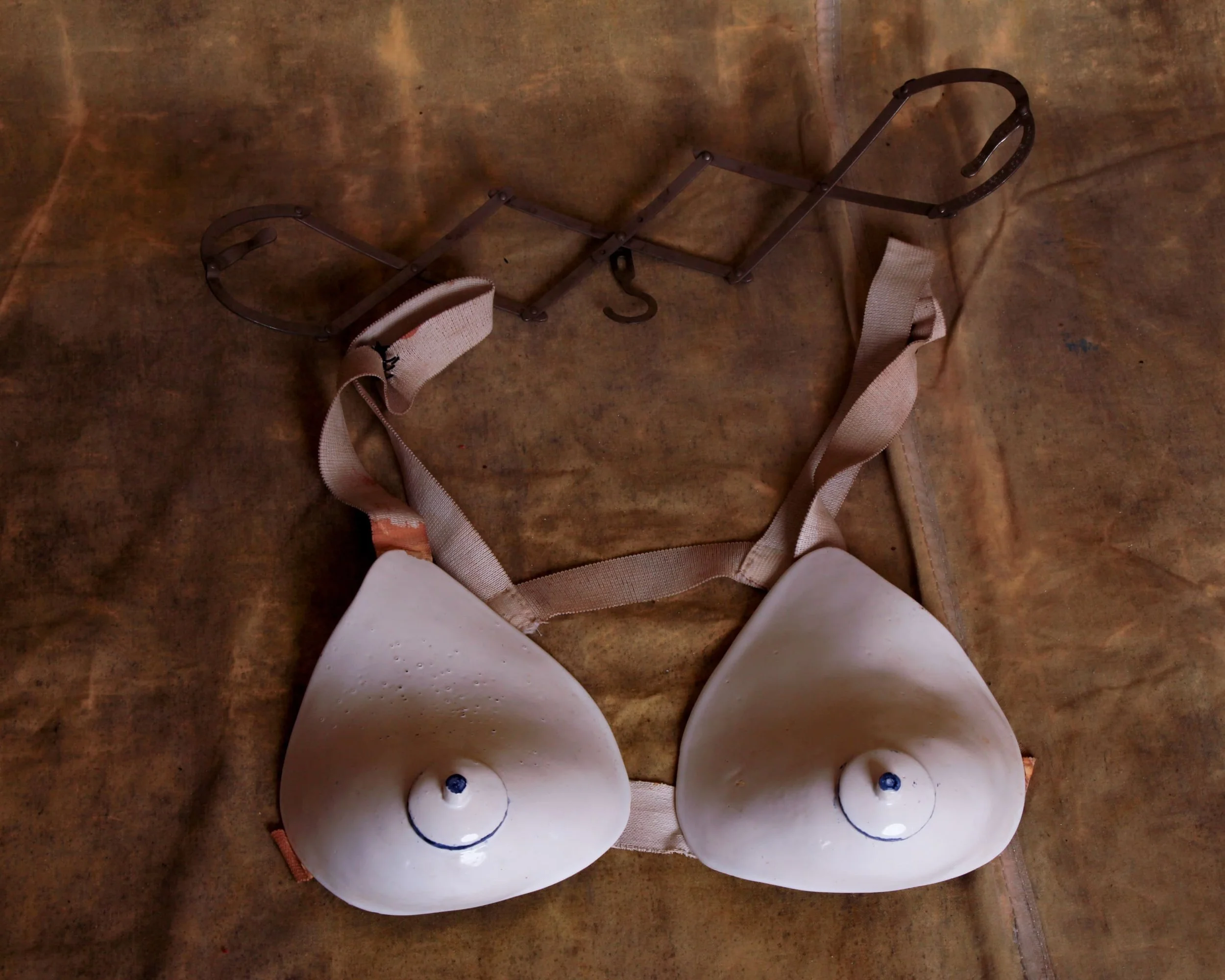
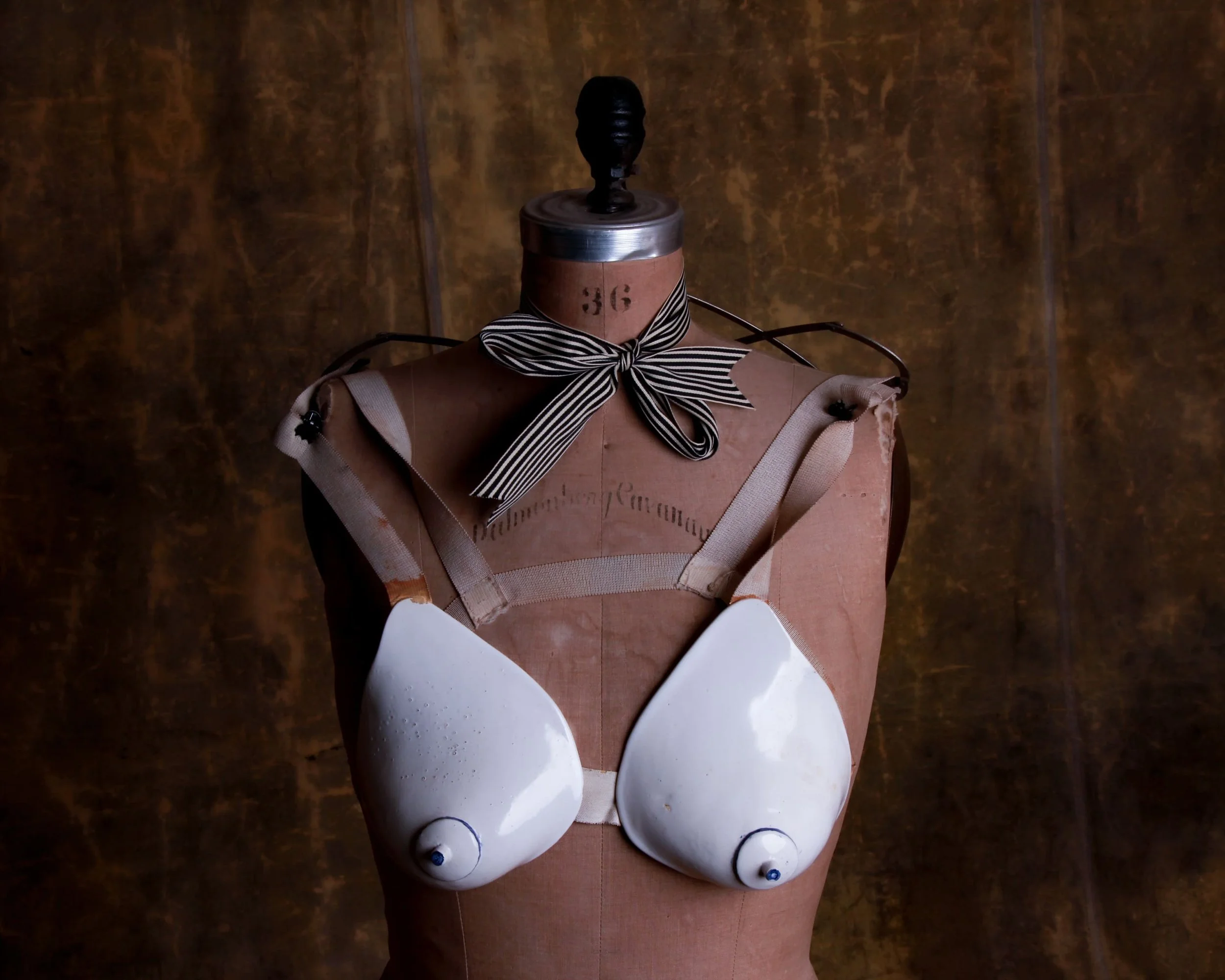
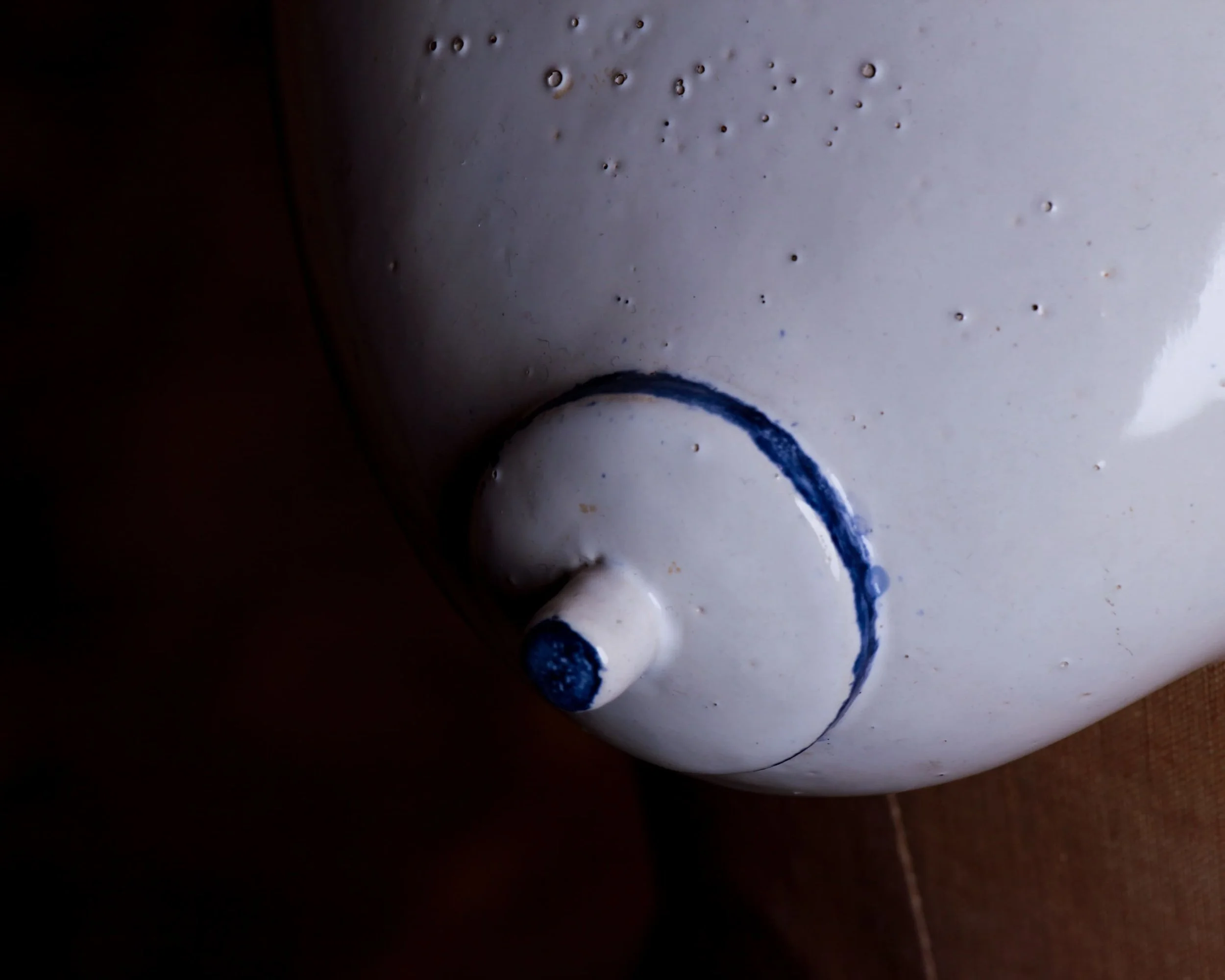
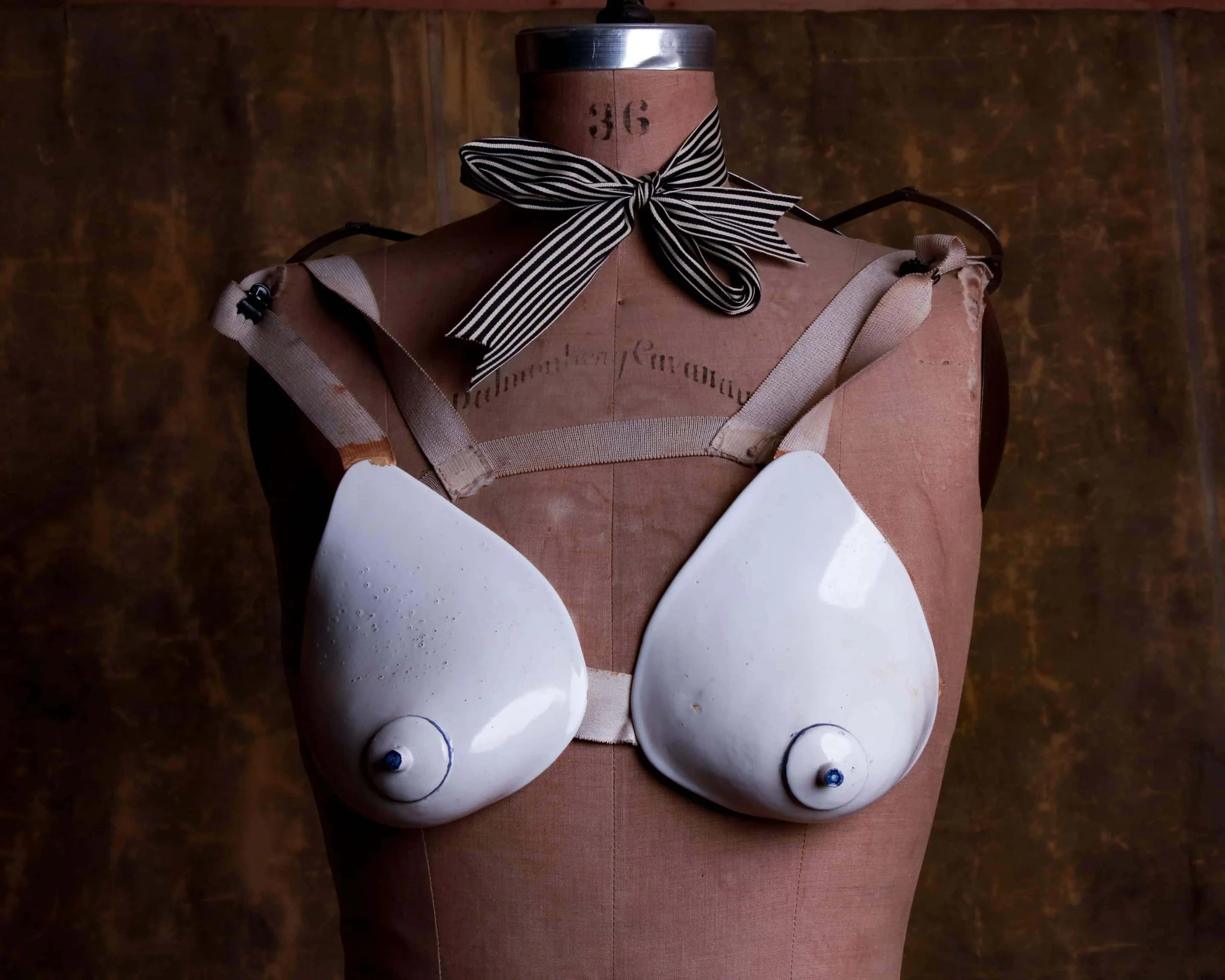
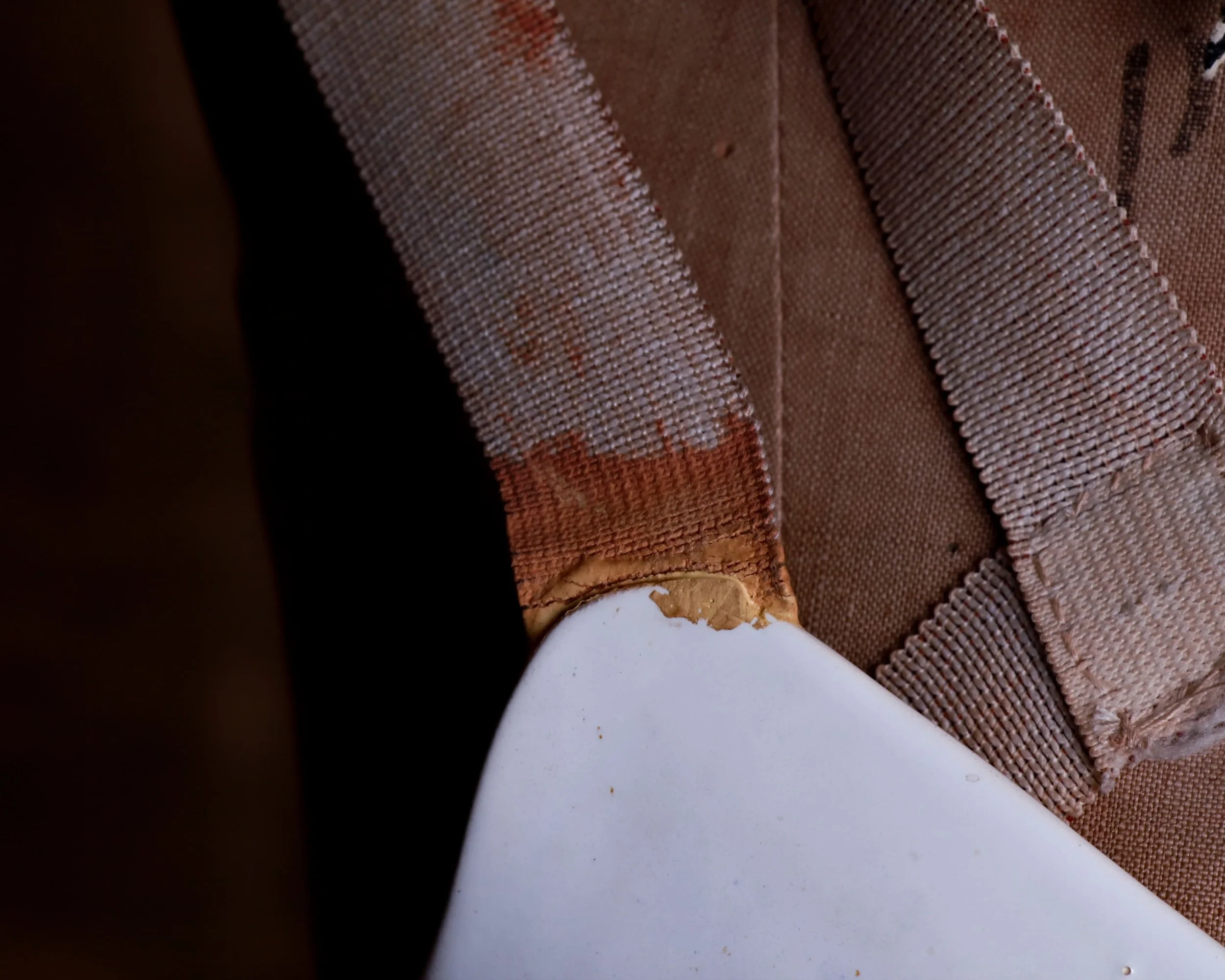
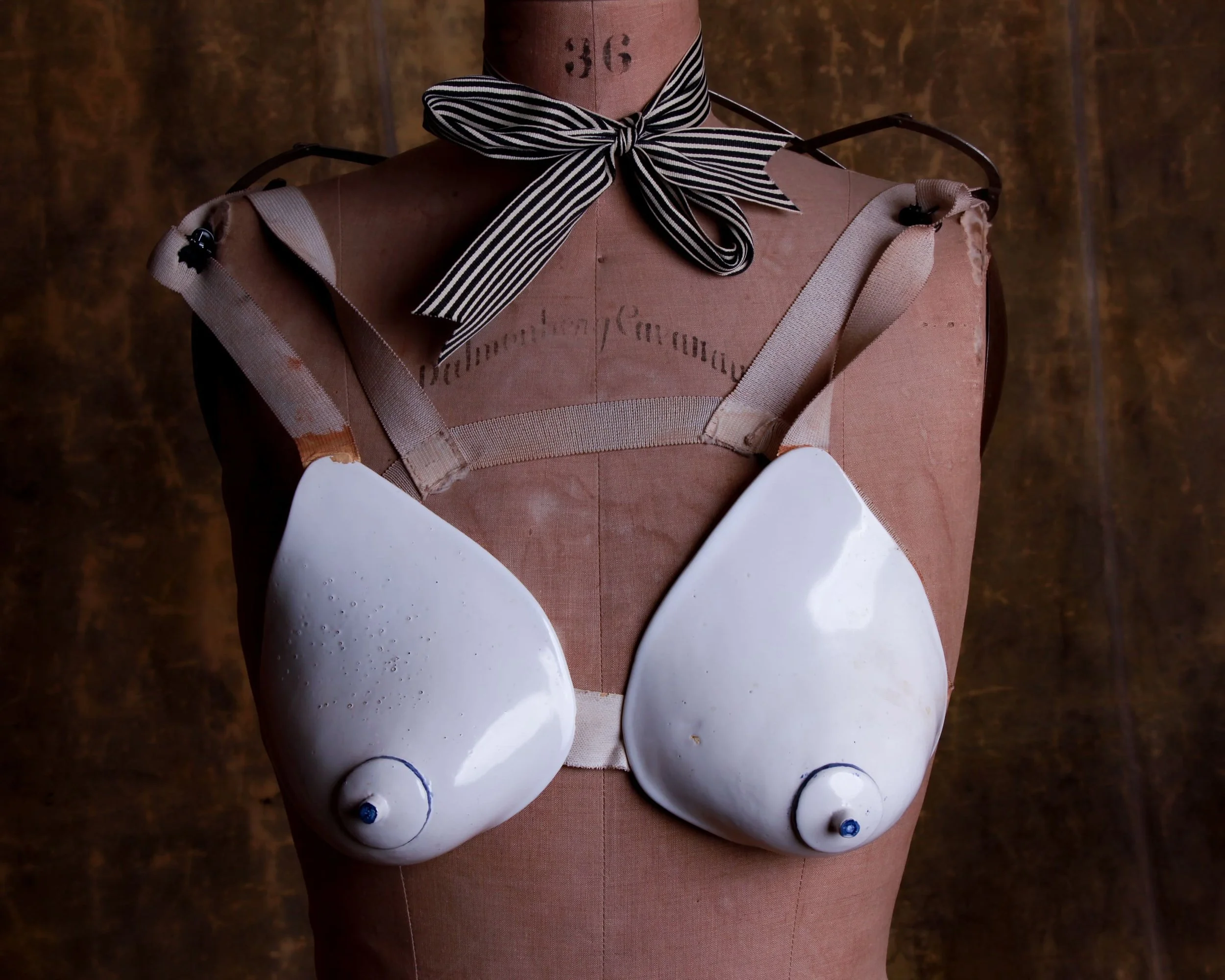
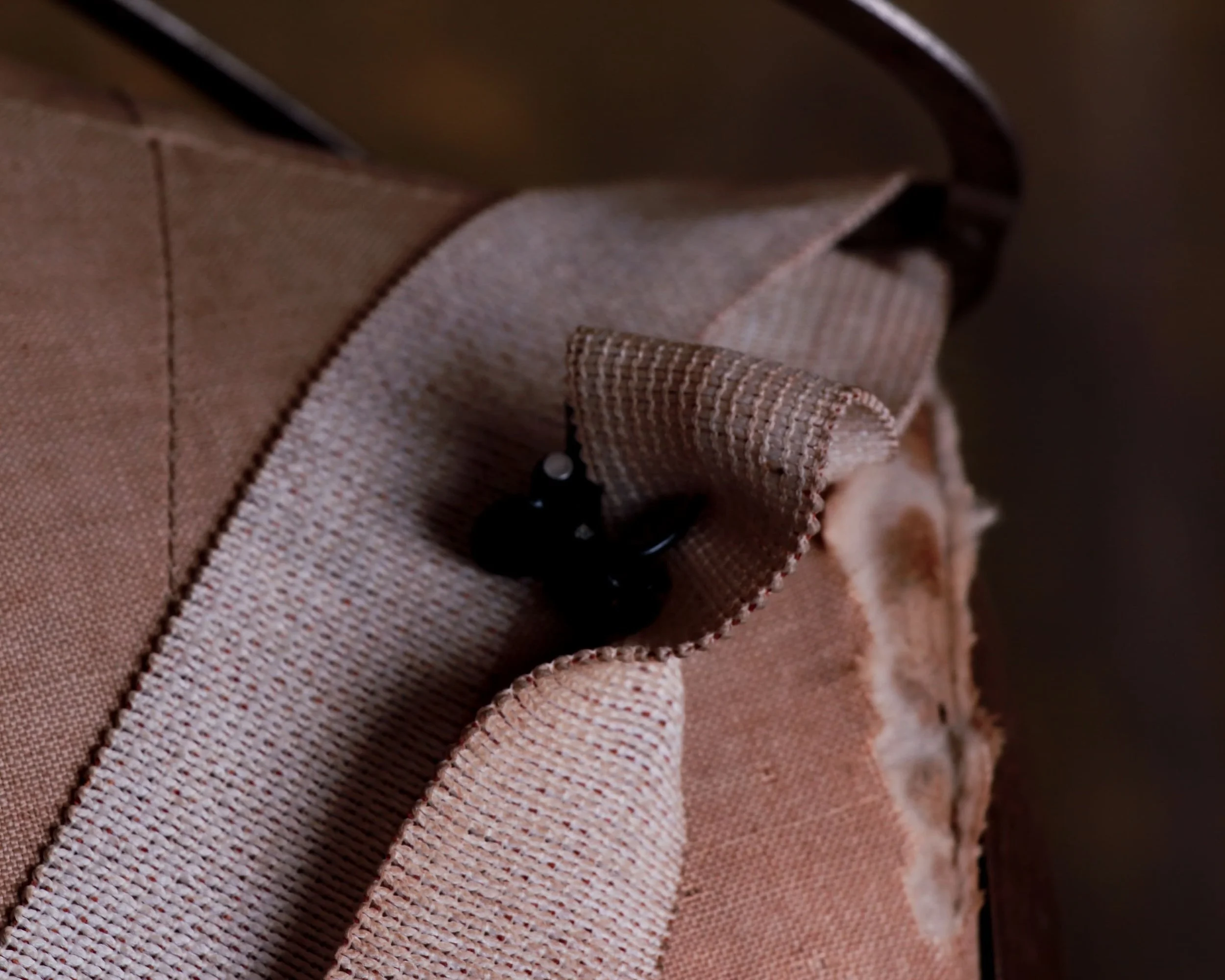
This unusual piece straddles the line between wearable object, satire, and social commentary. A ceramic bra mounted on elastic straps, likely created in the 1960s or 70s, a time when art and protest often intertwined. The hand-formed white porcelain cups, complete with blue-painted accents, nod to the female form in a way that’s both cheeky and pointed. Whether intended as an avant-garde statement, or part of the women’s liberation movement’s bold artistic expressions, it remains a conversation-starter that challenges the idea of utility, beauty, and constraint all at once.
Category History
The women’s liberation movement of the 1960s and 1970s wasn’t a single campaign so much as a broad, determined push to redraw the boundaries of everyday life. Building on earlier suffrage gains, activists turned their attention to the structures that shaped work, family, and autonomy—equal pay, access to education, reproductive rights, and the right to define one’s own role beyond expectation.
What set the movement apart was its range. It showed up in courtrooms and legislation, but also in consciousness-raising groups, publications, protests, and the language people used about themselves. The personal became political, not as a slogan but as a framework—everyday experiences were treated as evidence of larger systems at work.
There wasn’t one voice or approach. Some pushed for reform within existing systems, others challenged those systems outright. That tension is part of what gave the movement its energy and complexity.
What makes it compelling now is how much of it still feels active. Many of the rights and conversations that seem established were argued into existence, often by people working without institutional support. It reshaped laws, yes, but also expectations—about work, identity, and who gets to make decisions about their own life.
ITEM NOT AVAILABLE IMMEDIATELY—INQUIRE IF INTERESTED hello@heimweeantiques.com
This unusual piece straddles the line between wearable object, satire, and social commentary. A ceramic bra mounted on elastic straps, likely created in the 1960s or 70s, a time when art and protest often intertwined. The hand-formed white porcelain cups, complete with blue-painted accents, nod to the female form in a way that’s both cheeky and pointed. Whether intended as an avant-garde statement, or part of the women’s liberation movement’s bold artistic expressions, it remains a conversation-starter that challenges the idea of utility, beauty, and constraint all at once.
Category History
The women’s liberation movement of the 1960s and 1970s wasn’t a single campaign so much as a broad, determined push to redraw the boundaries of everyday life. Building on earlier suffrage gains, activists turned their attention to the structures that shaped work, family, and autonomy—equal pay, access to education, reproductive rights, and the right to define one’s own role beyond expectation.
What set the movement apart was its range. It showed up in courtrooms and legislation, but also in consciousness-raising groups, publications, protests, and the language people used about themselves. The personal became political, not as a slogan but as a framework—everyday experiences were treated as evidence of larger systems at work.
There wasn’t one voice or approach. Some pushed for reform within existing systems, others challenged those systems outright. That tension is part of what gave the movement its energy and complexity.
What makes it compelling now is how much of it still feels active. Many of the rights and conversations that seem established were argued into existence, often by people working without institutional support. It reshaped laws, yes, but also expectations—about work, identity, and who gets to make decisions about their own life.