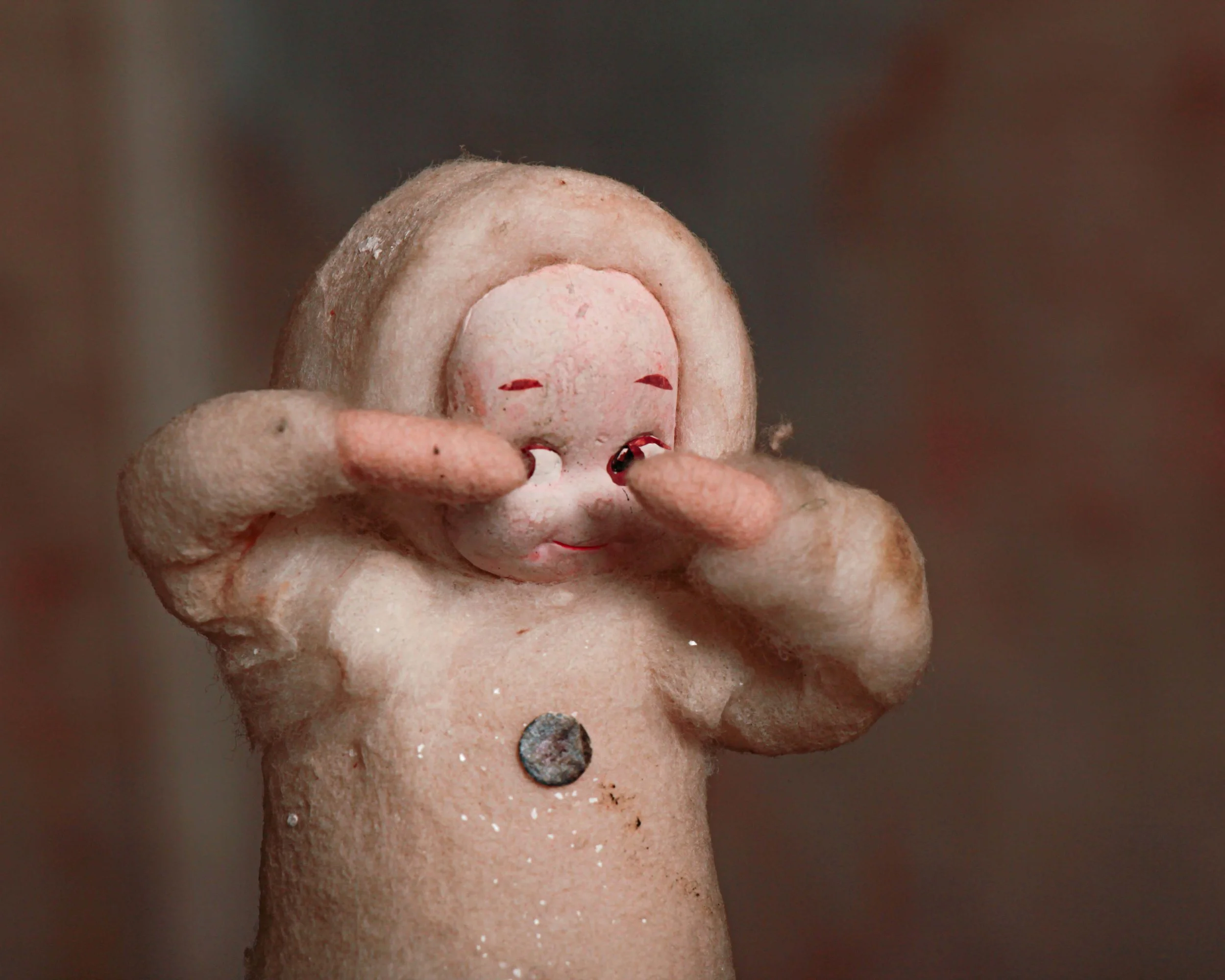
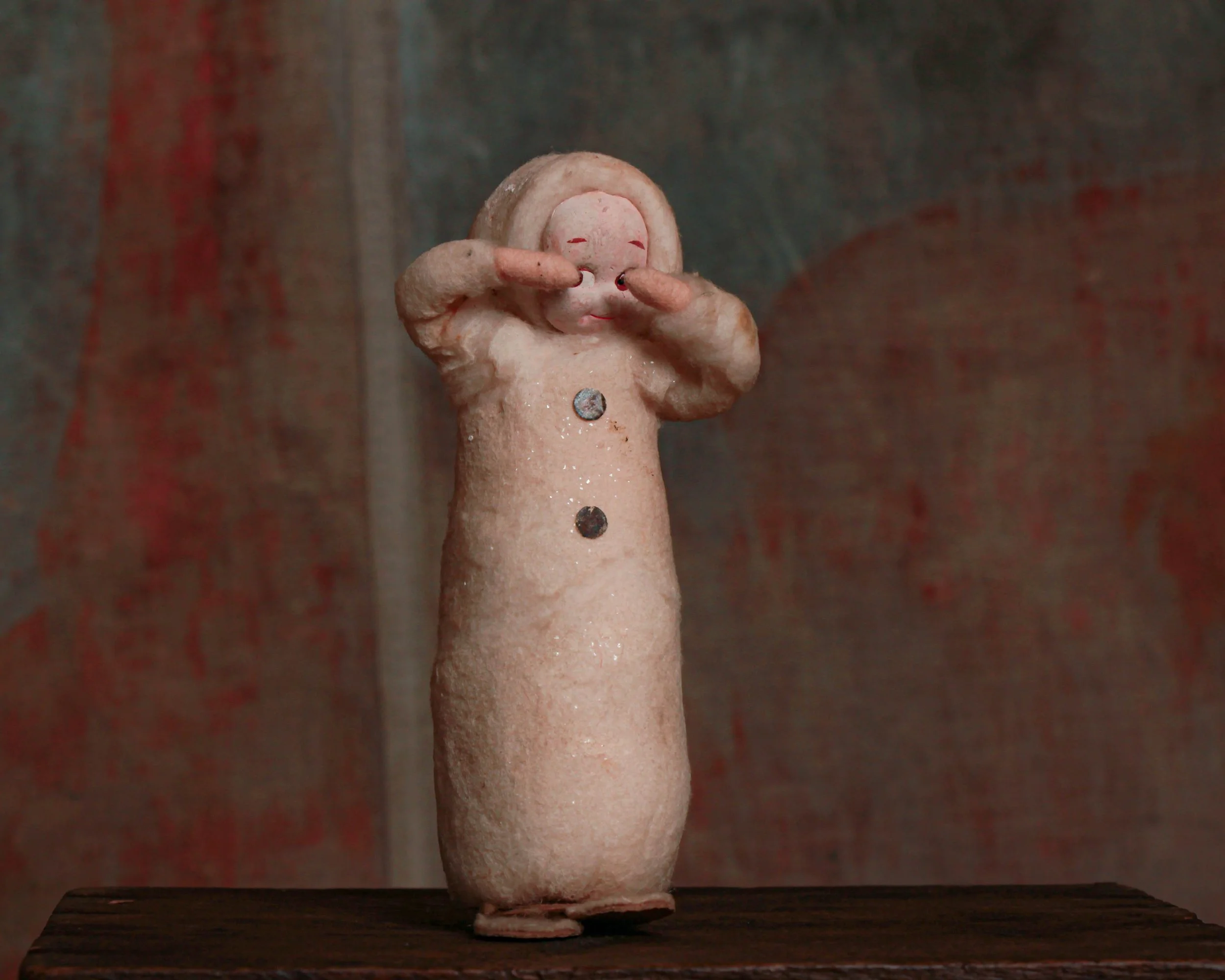
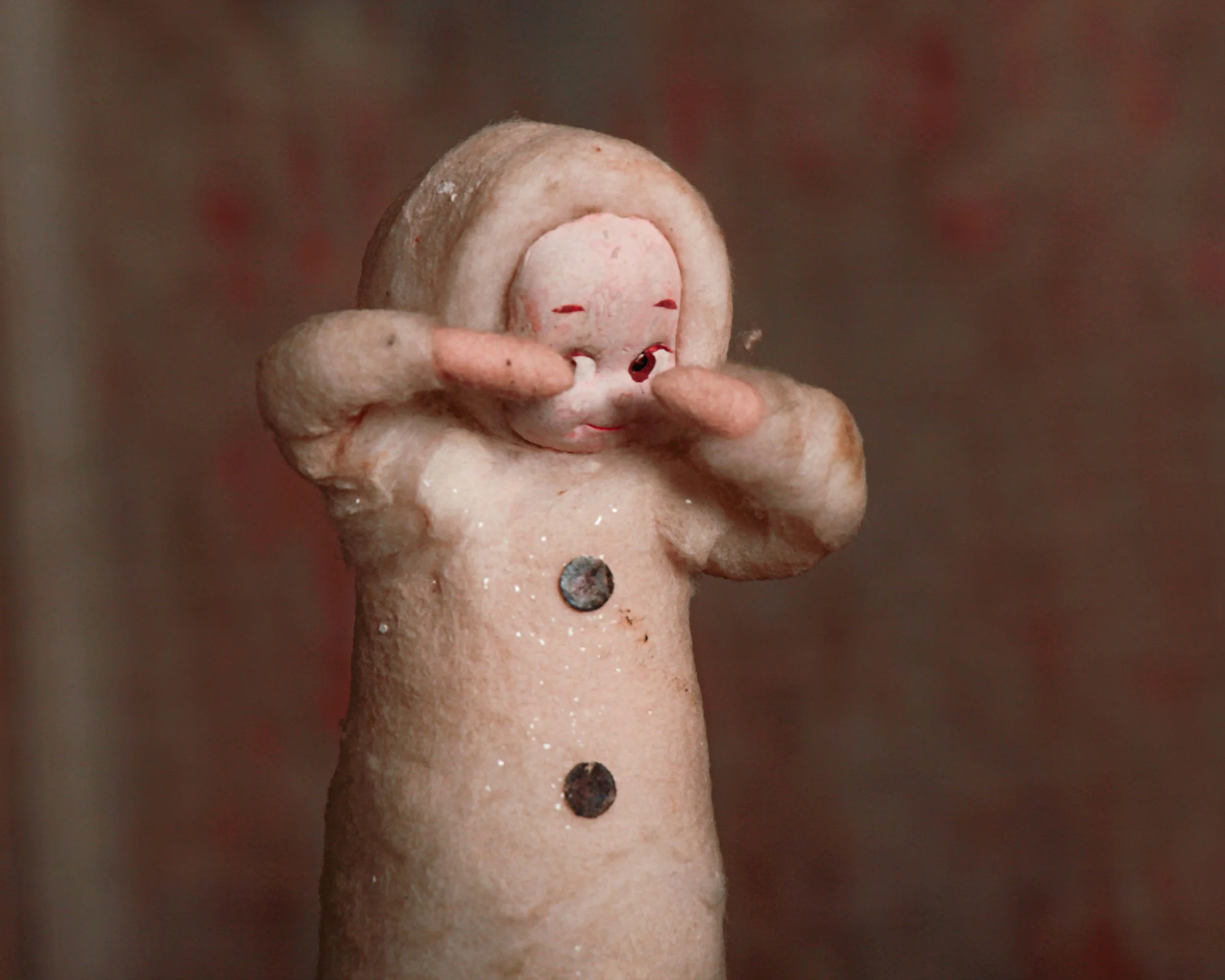
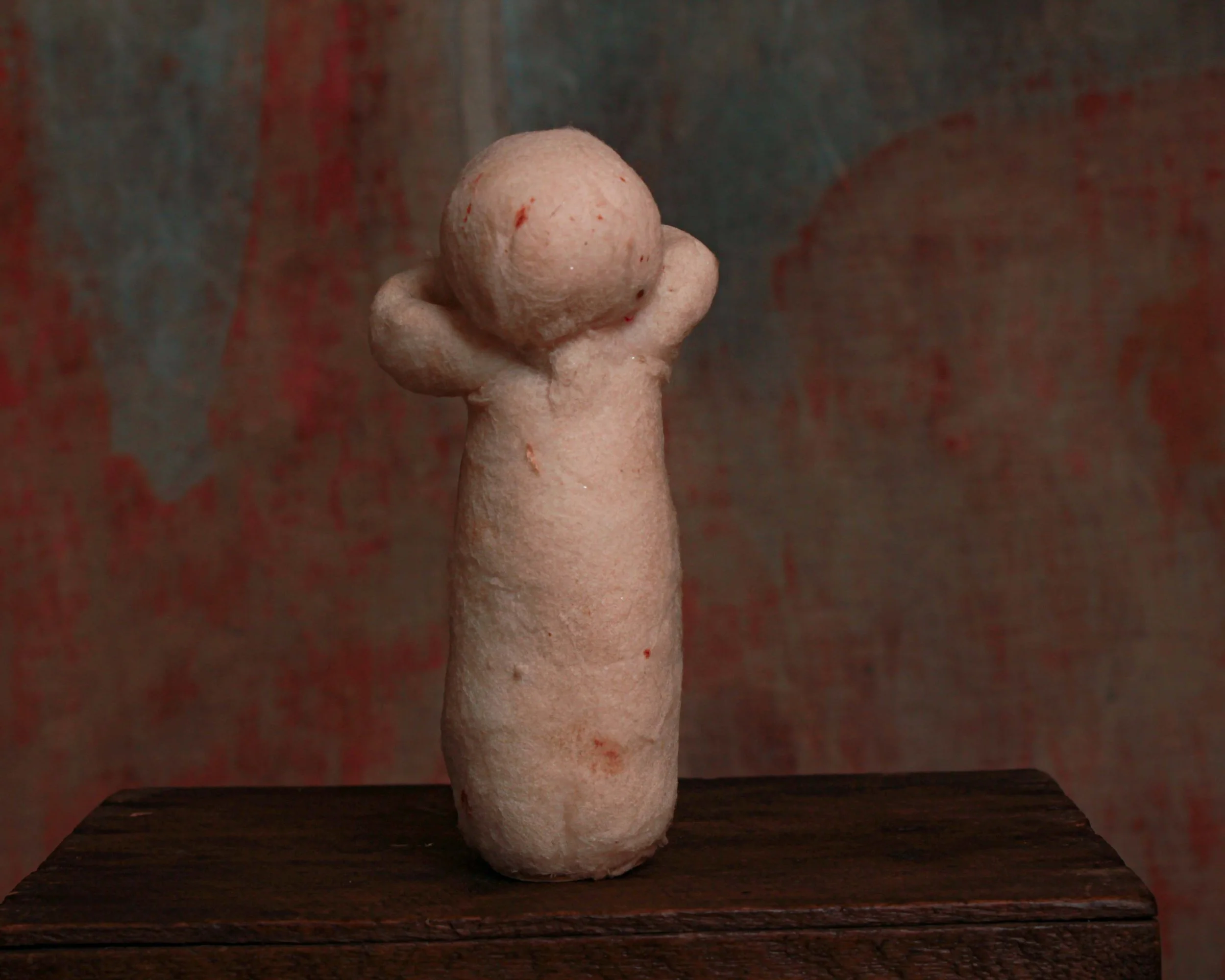
This tiny candy container figure is made from spun cotton, it has that soft, snow-drift texture that only early holiday decorations seem to possess, somewhere between a ghost, a snow baby, and a forgotten Christmas dream. Tall and slender, with a rounded head and tiny raised arms, it strikes a pose that reads like shy delight or a gentle game of peekaboo.
Two dark dots march down the front like buttons on an imaginary coat, giving the figure just enough structure to feel intentional, while still letting the handwork shine through. A perfect example of early holiday folk craft, when decorations were more about mood than perfection.
Candy Containers
Antique candy containers are where packaging got a personality. From the late 19th into the early 20th century, confectioners realized the box could be just as enticing as what was inside. So instead of plain tins or paper wrappers, they started producing containers shaped like animals, characters, buildings, and everyday objects—often made from tin, cardboard, glass, or early composition materials.
They were designed to catch the eye first, sell second, and then stick around long after the candy was gone. A child might buy it for the sweets, but keep it for the object. That second life was part of the appeal.
The graphics and forms range widely—some bright and playful, others surprisingly detailed. What they share is a sense of immediacy. You know what they are right away, but there’s usually a small twist in scale or design that makes them memorable.
Most weren’t built to last, so surviving examples often show wear—faded paint, dents, small repairs. That history feels right.
They sit somewhere between toy, container, and advertisement. Functional at first, then something else entirely. A small object that outlived its contents and kept its charm intact.
This tiny candy container figure is made from spun cotton, it has that soft, snow-drift texture that only early holiday decorations seem to possess, somewhere between a ghost, a snow baby, and a forgotten Christmas dream. Tall and slender, with a rounded head and tiny raised arms, it strikes a pose that reads like shy delight or a gentle game of peekaboo.
Two dark dots march down the front like buttons on an imaginary coat, giving the figure just enough structure to feel intentional, while still letting the handwork shine through. A perfect example of early holiday folk craft, when decorations were more about mood than perfection.
Candy Containers
Antique candy containers are where packaging got a personality. From the late 19th into the early 20th century, confectioners realized the box could be just as enticing as what was inside. So instead of plain tins or paper wrappers, they started producing containers shaped like animals, characters, buildings, and everyday objects—often made from tin, cardboard, glass, or early composition materials.
They were designed to catch the eye first, sell second, and then stick around long after the candy was gone. A child might buy it for the sweets, but keep it for the object. That second life was part of the appeal.
The graphics and forms range widely—some bright and playful, others surprisingly detailed. What they share is a sense of immediacy. You know what they are right away, but there’s usually a small twist in scale or design that makes them memorable.
Most weren’t built to last, so surviving examples often show wear—faded paint, dents, small repairs. That history feels right.
They sit somewhere between toy, container, and advertisement. Functional at first, then something else entirely. A small object that outlived its contents and kept its charm intact.