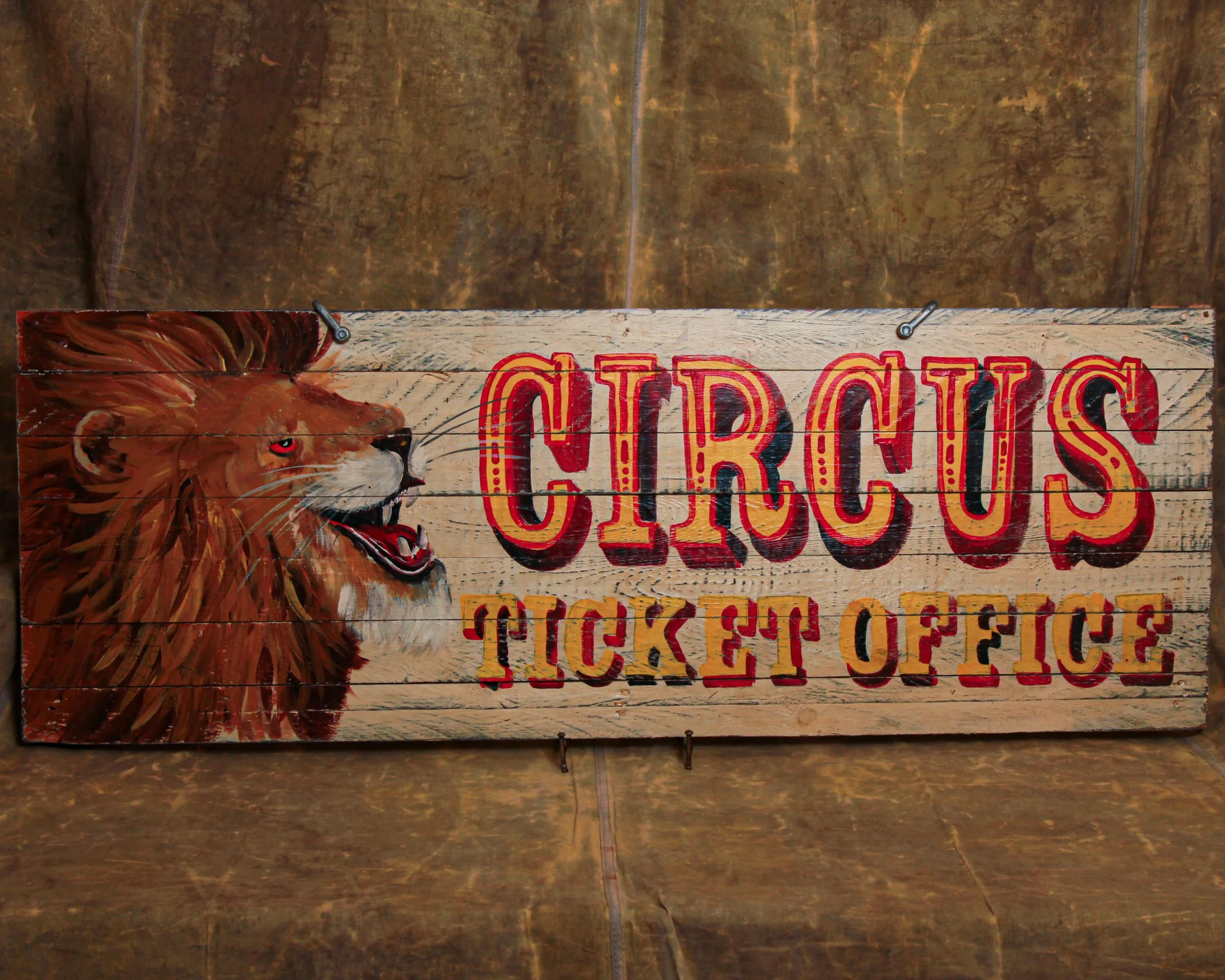
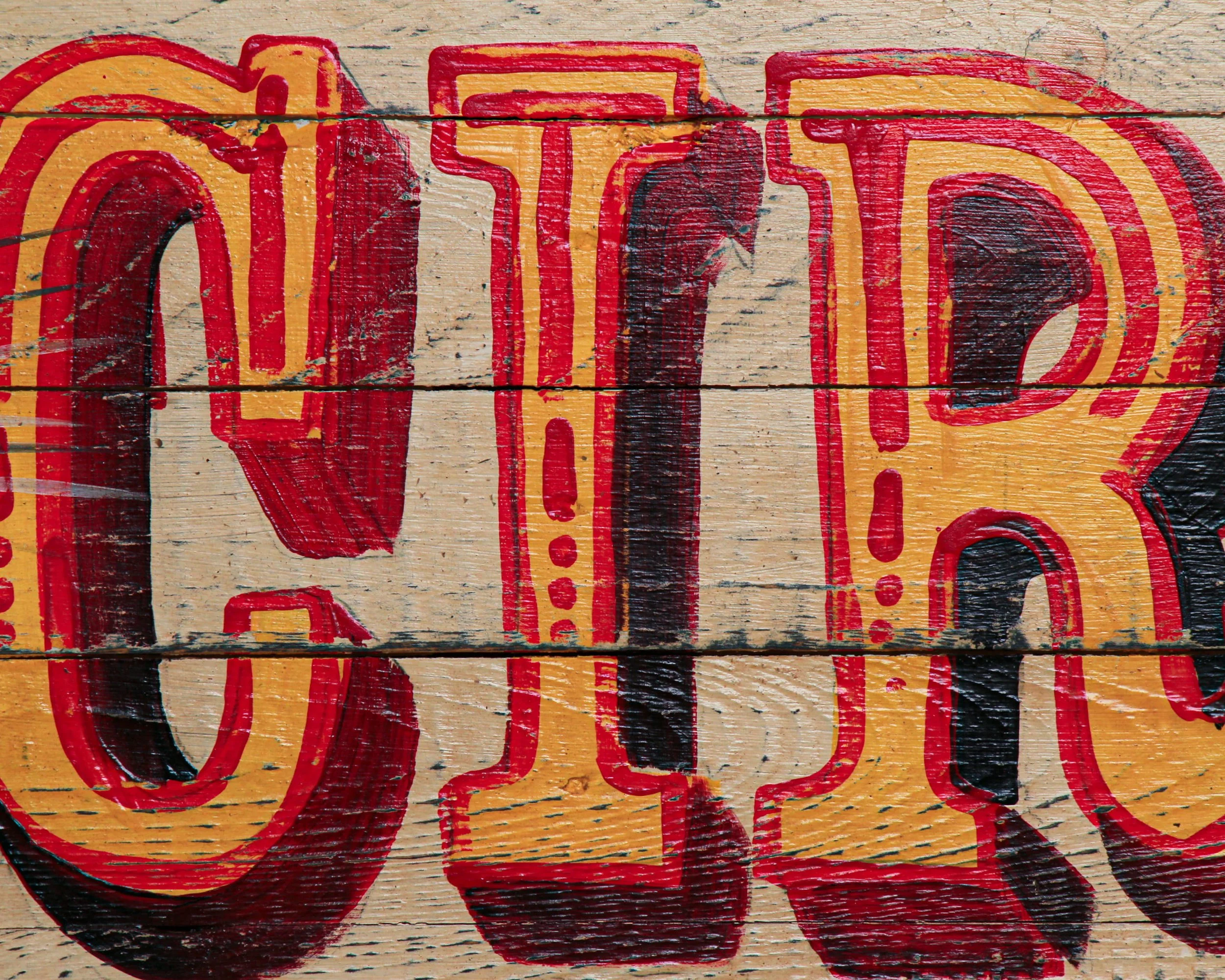

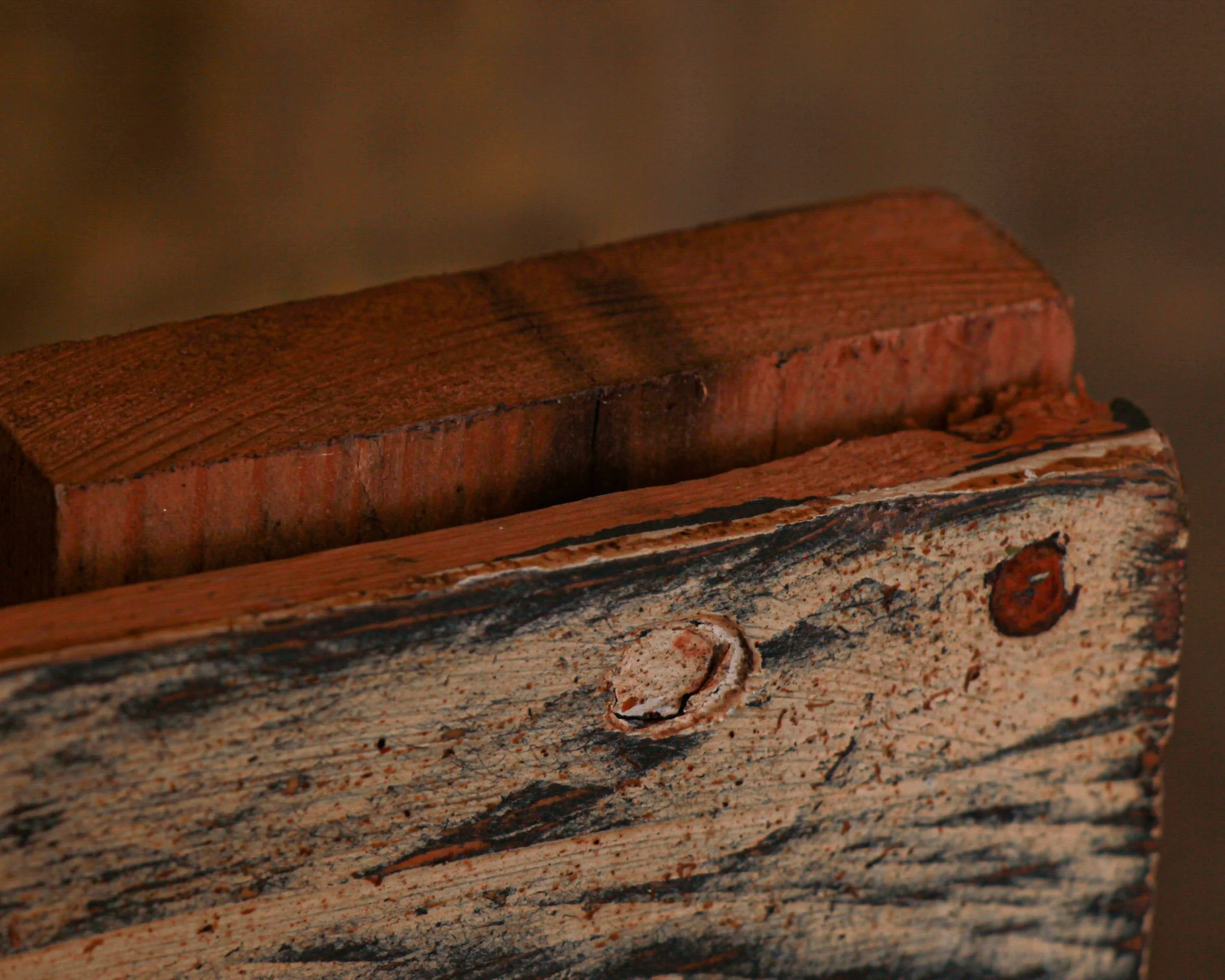
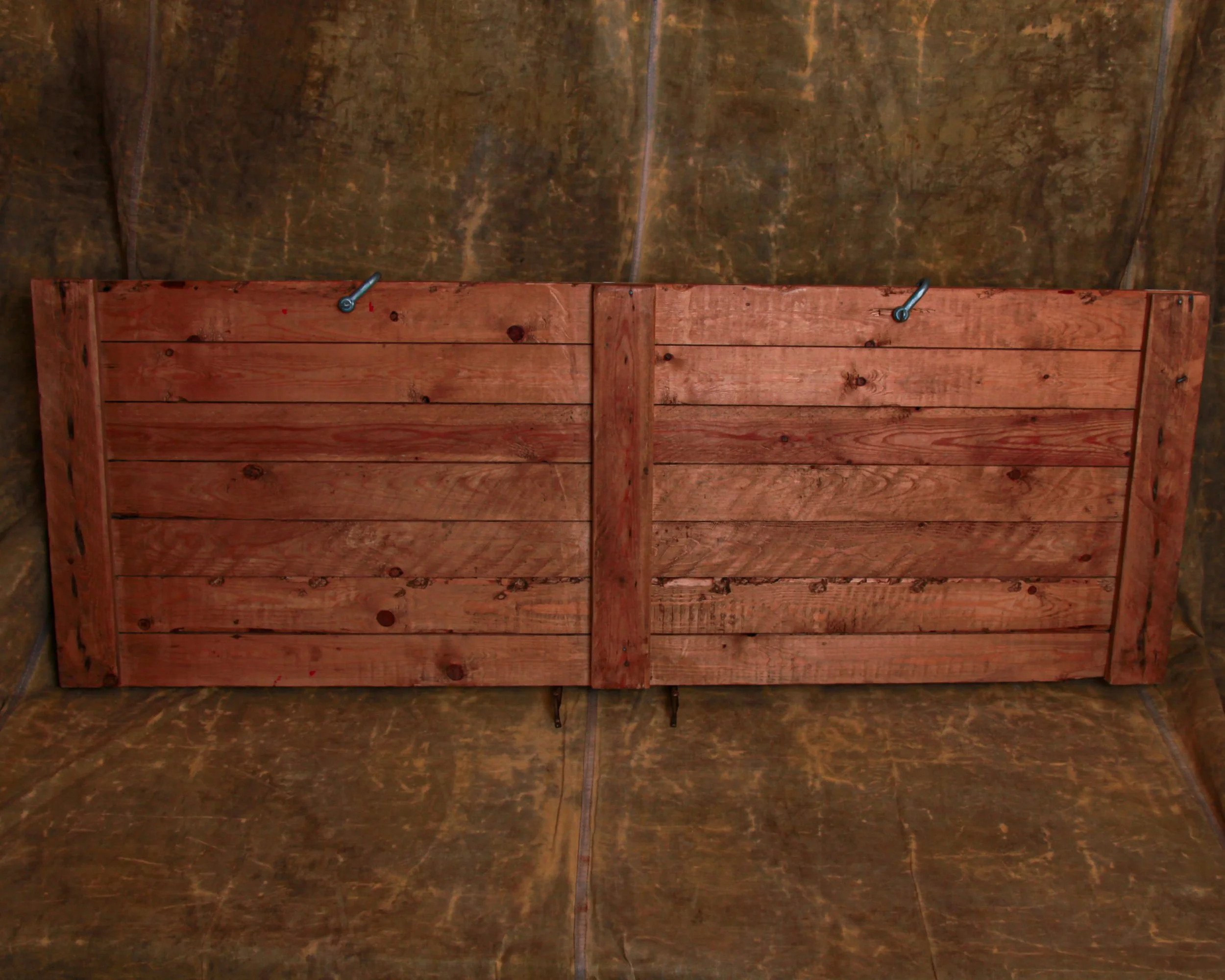
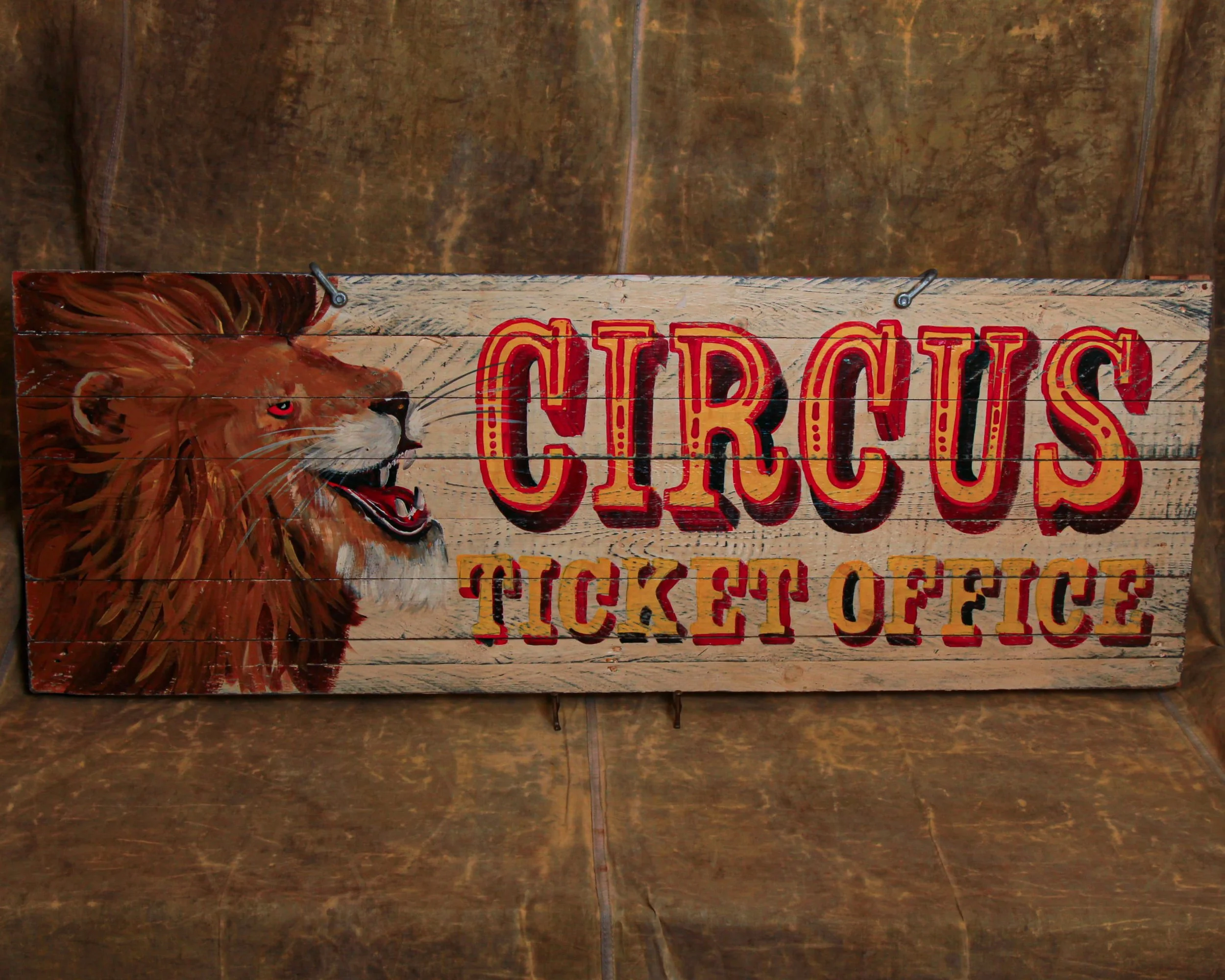
Hand-painted in the early 2000s but channeling the bold, unapologetic graphics of a 1930s circus midway, this “CIRCUS TICKET OFFICE” sign leans all the way in. The lettering has that classic carnival swagger—chunky, shadowed, and slightly irregular, painted on wide wooden planks.
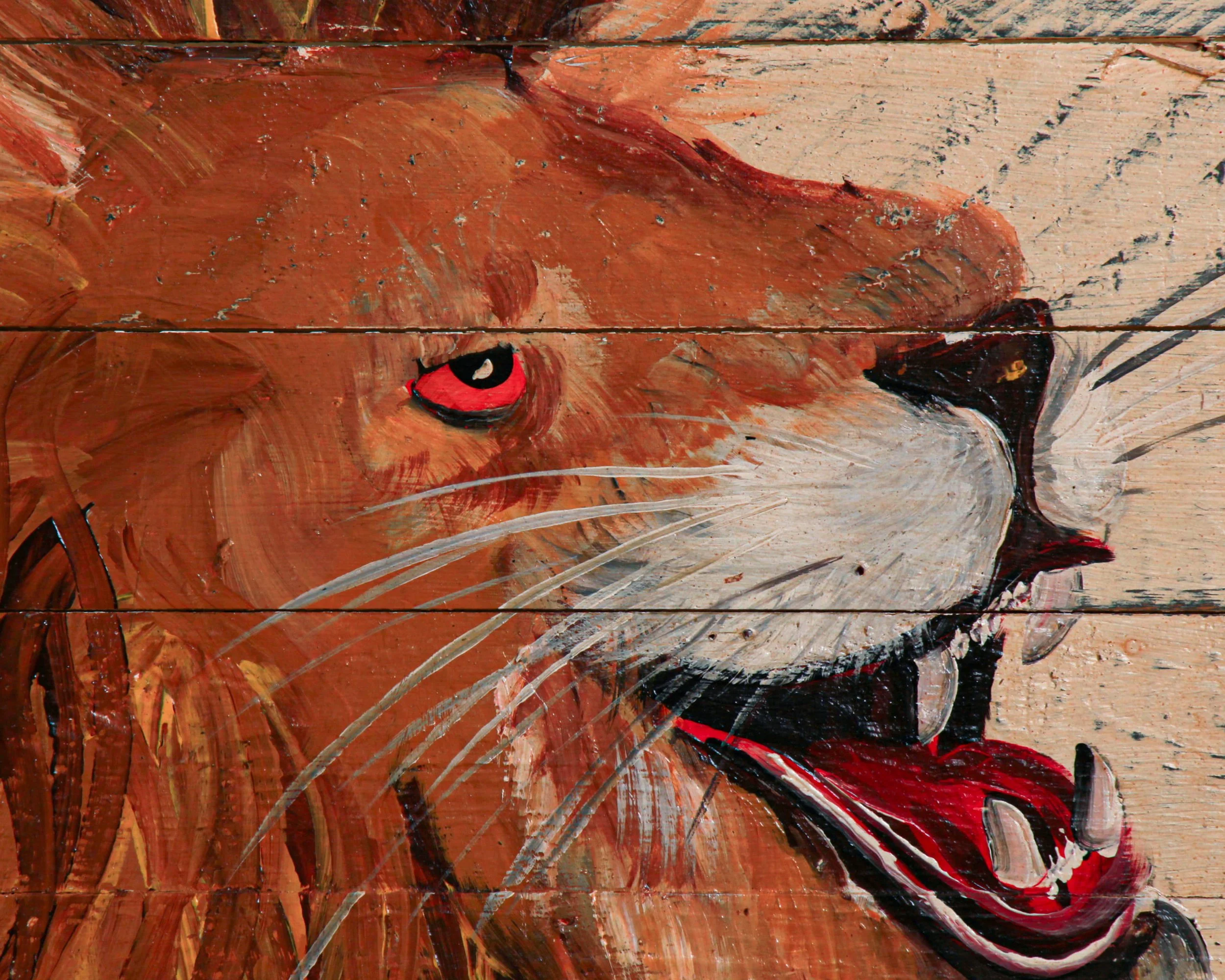
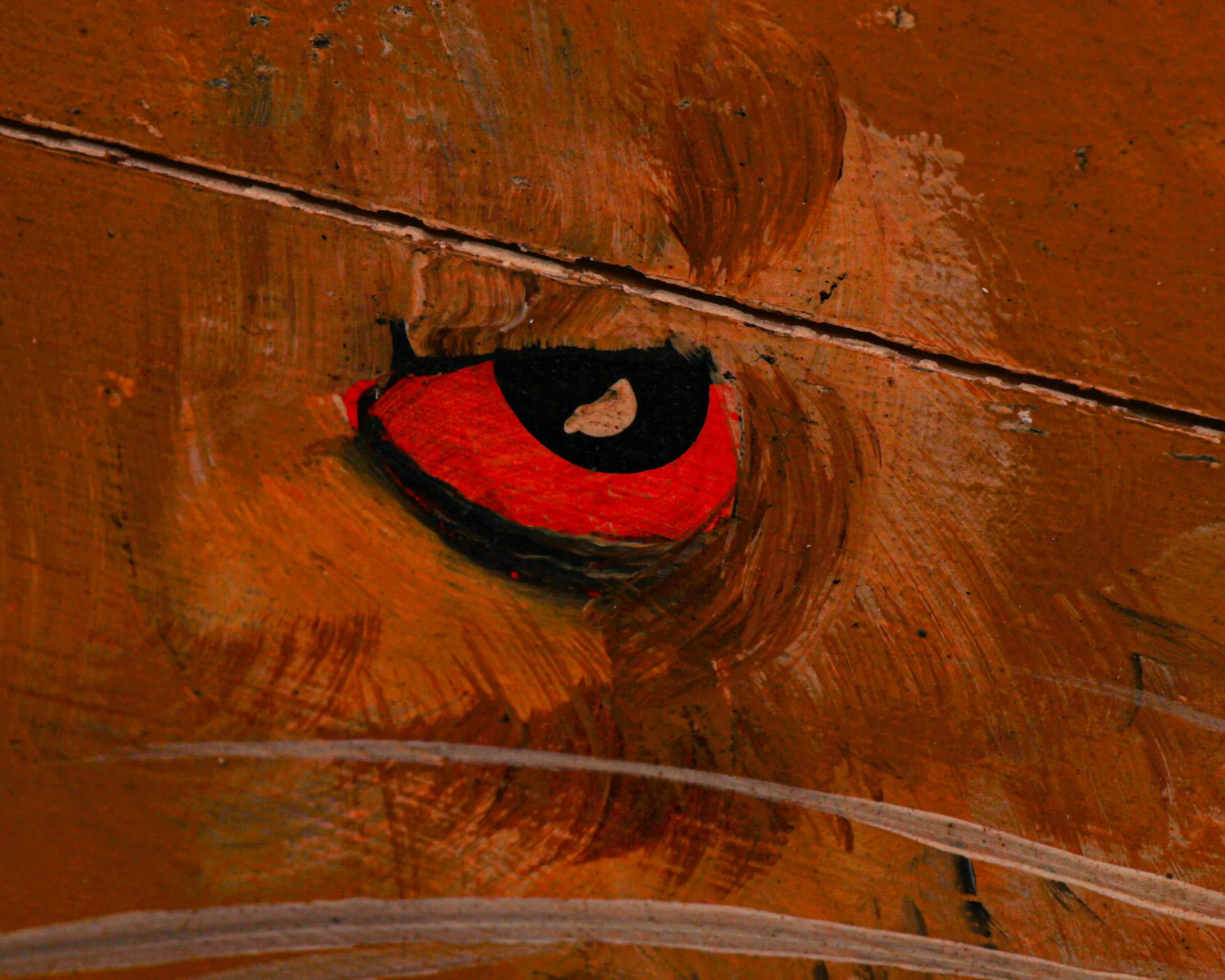
And then there’s the lion. Mid-roar, teeth out, eyes locked forward with that slightly unhinged energy you’d expect just outside a big top. It’s not polished or overly refined, which is exactly the point. It feels like it was painted fast, loud, and with conviction—built to grab attention from across a dusty fairground.
At over four and a half feet wide, it has real presence.
Sourced in England.
Circus Life
Circus life has always been a world just slightly outside the everyday, equal parts grit and spectacle. In the late 19th and early 20th centuries, traveling circuses moved like small, self-contained cities—railcars packed with performers, animals, tents, props, and everything needed to set up overnight and disappear just as quickly. It was demanding work. Days were long, conditions were rough, and everyone had a role beyond the spotlight, from rigging tents to caring for equipment and animals.
Performers often came from generations of circus families, learning their craft young and refining it through repetition rather than formal training. Acts weren’t just entertainment, they were survival. A strongman, a trapeze artist, a clown—each depended on drawing a crowd, because the crowd meant the next town, the next paycheck.
What’s often overlooked is the sense of community. Circus life created tight bonds, built on trust and shared routines. You relied on the person catching you midair or setting the stage beneath your feet. It wasn’t glamorous in the way posters suggested, but it had its own rhythm and independence.
By the mid-20th century, changing tastes and regulations began to reshape the traditional circus, but the image endures—part nostalgia, part mythology, rooted in a very real, hardworking way of life.
Hand-painted in the early 2000s but channeling the bold, unapologetic graphics of a 1930s circus midway, this “CIRCUS TICKET OFFICE” sign leans all the way in. The lettering has that classic carnival swagger—chunky, shadowed, and slightly irregular, painted on wide wooden planks.
And then there’s the lion. Mid-roar, teeth out, eyes locked forward with that slightly unhinged energy you’d expect just outside a big top. It’s not polished or overly refined, which is exactly the point. It feels like it was painted fast, loud, and with conviction—built to grab attention from across a dusty fairground.
At over four and a half feet wide, it has real presence.
Sourced in England.
Circus Life
Circus life has always been a world just slightly outside the everyday, equal parts grit and spectacle. In the late 19th and early 20th centuries, traveling circuses moved like small, self-contained cities—railcars packed with performers, animals, tents, props, and everything needed to set up overnight and disappear just as quickly. It was demanding work. Days were long, conditions were rough, and everyone had a role beyond the spotlight, from rigging tents to caring for equipment and animals.
Performers often came from generations of circus families, learning their craft young and refining it through repetition rather than formal training. Acts weren’t just entertainment, they were survival. A strongman, a trapeze artist, a clown—each depended on drawing a crowd, because the crowd meant the next town, the next paycheck.
What’s often overlooked is the sense of community. Circus life created tight bonds, built on trust and shared routines. You relied on the person catching you midair or setting the stage beneath your feet. It wasn’t glamorous in the way posters suggested, but it had its own rhythm and independence.
By the mid-20th century, changing tastes and regulations began to reshape the traditional circus, but the image endures—part nostalgia, part mythology, rooted in a very real, hardworking way of life.