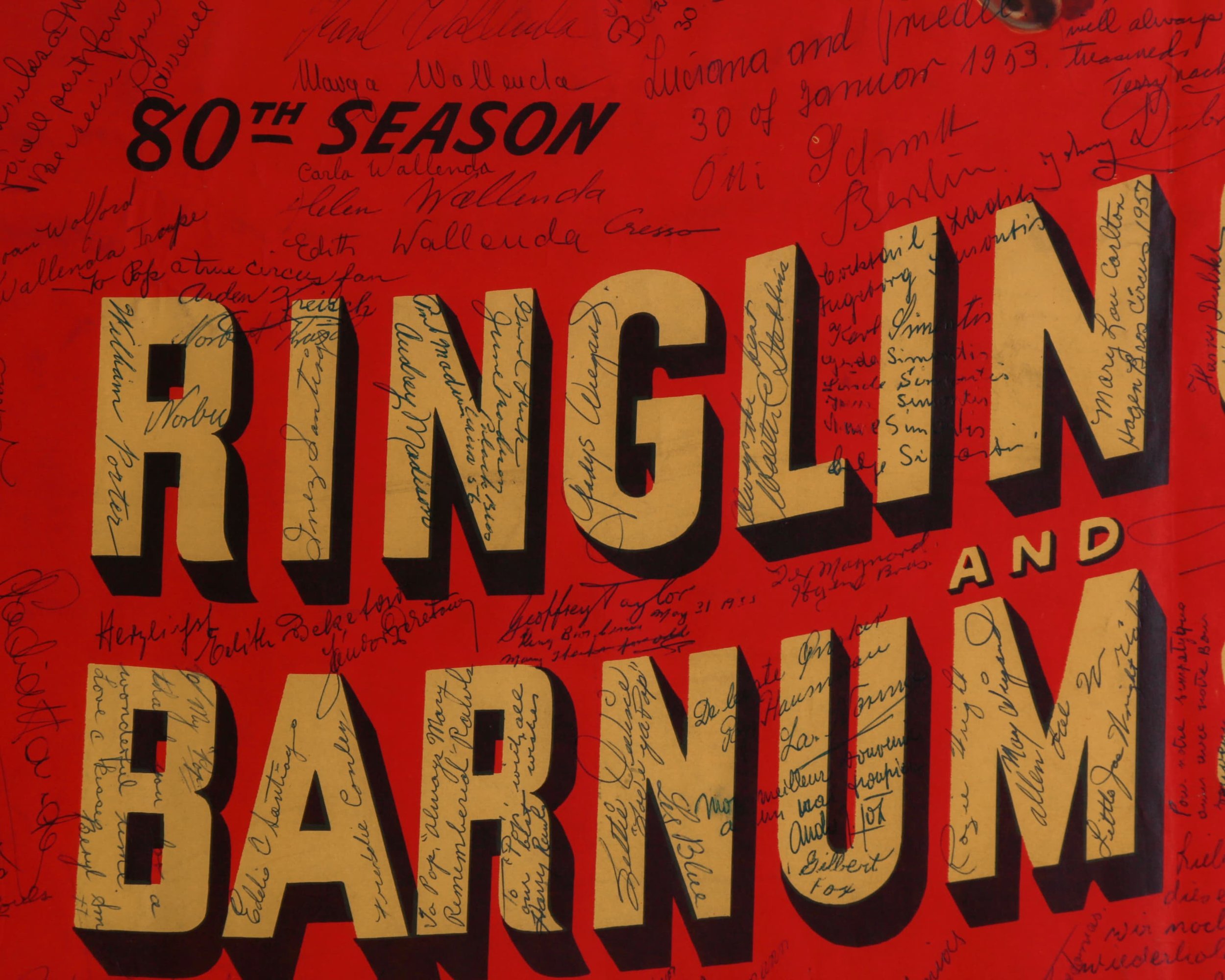
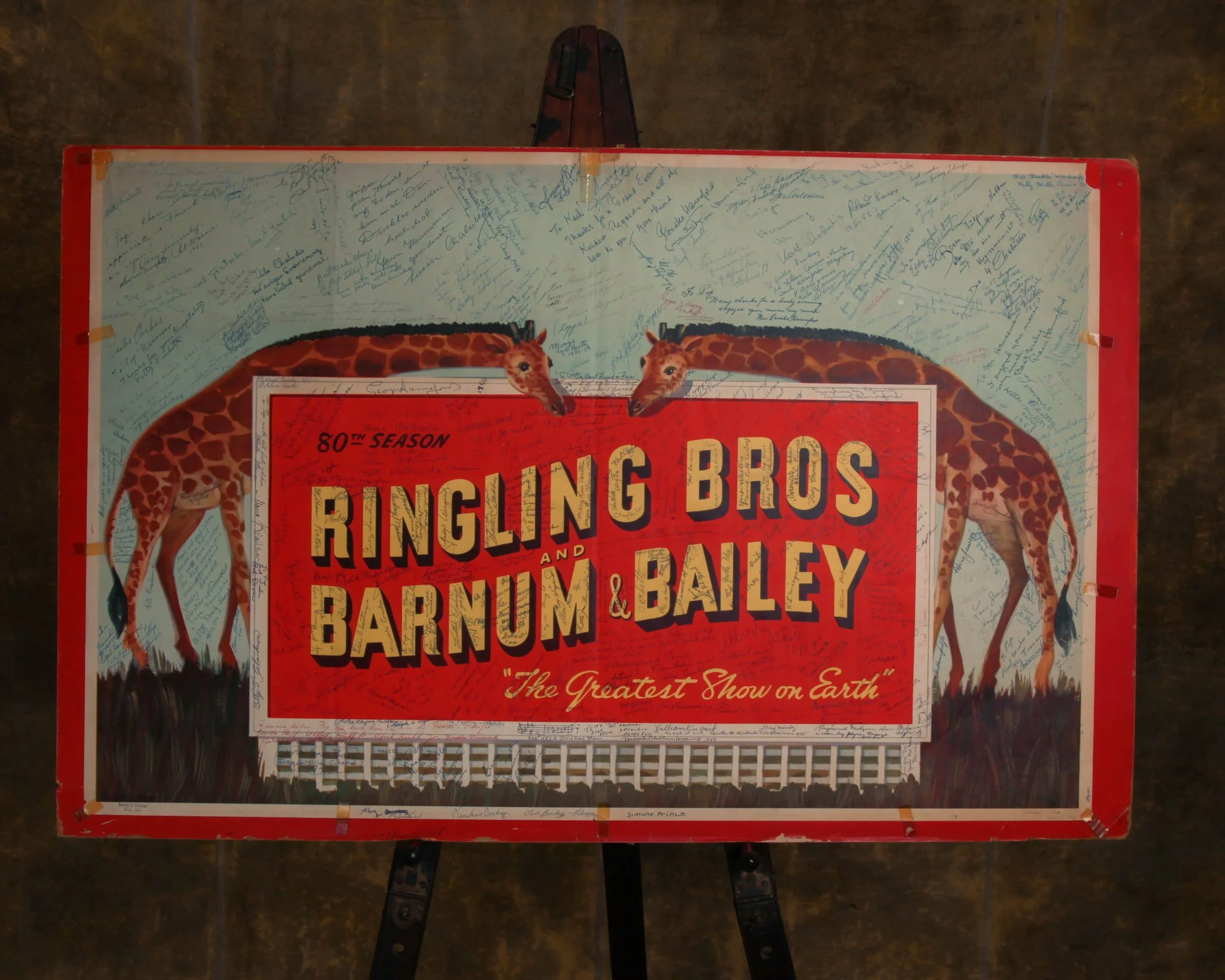
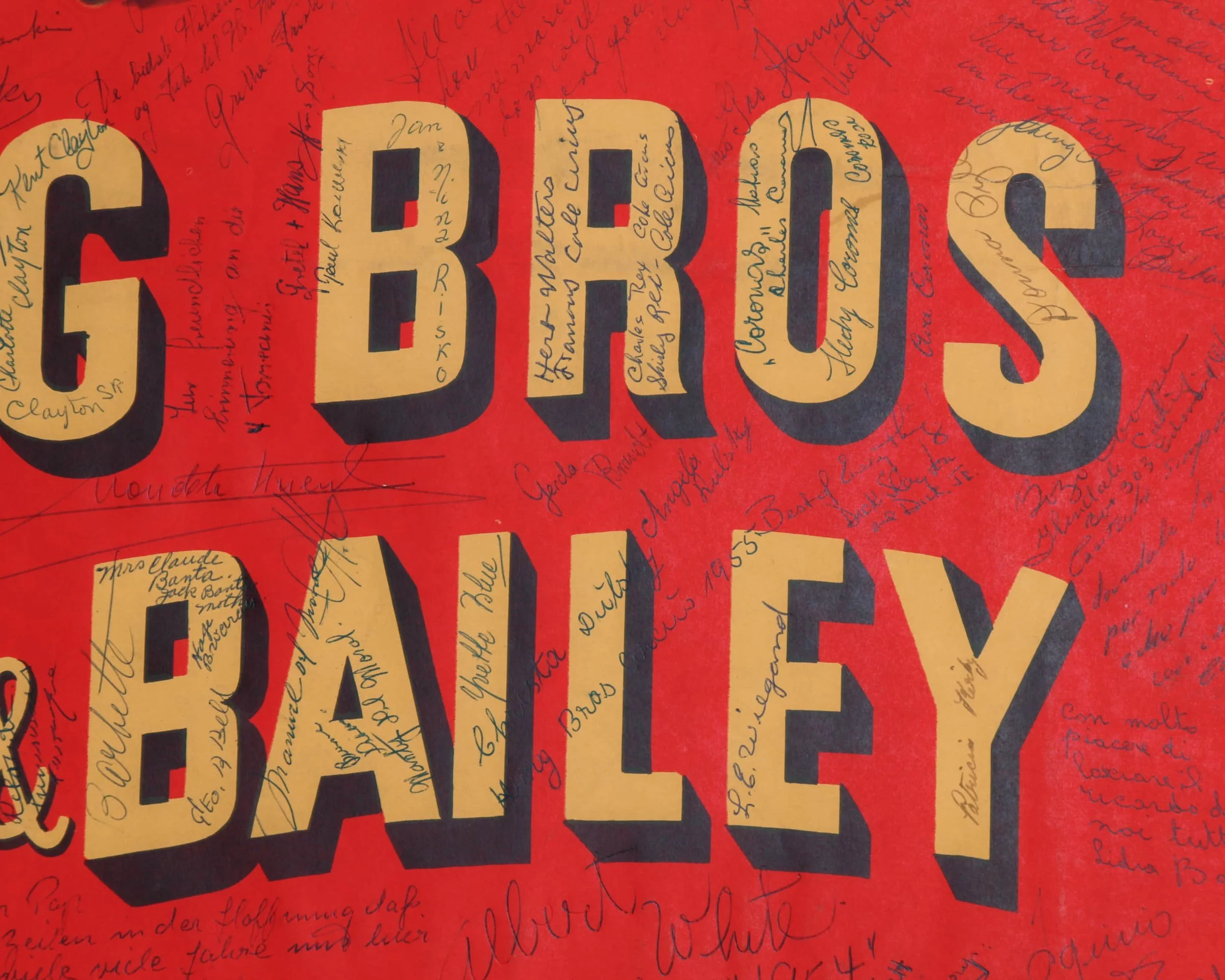
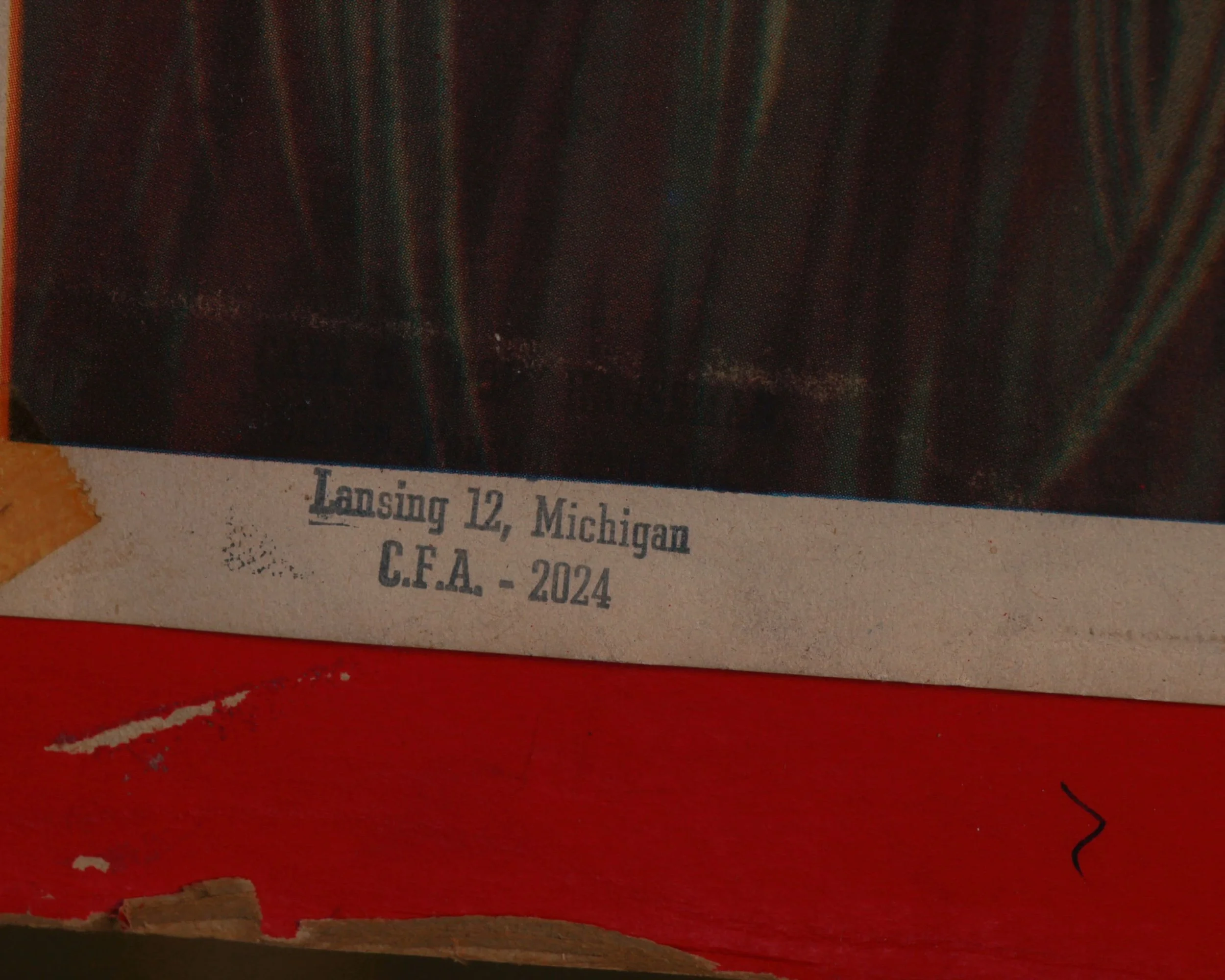
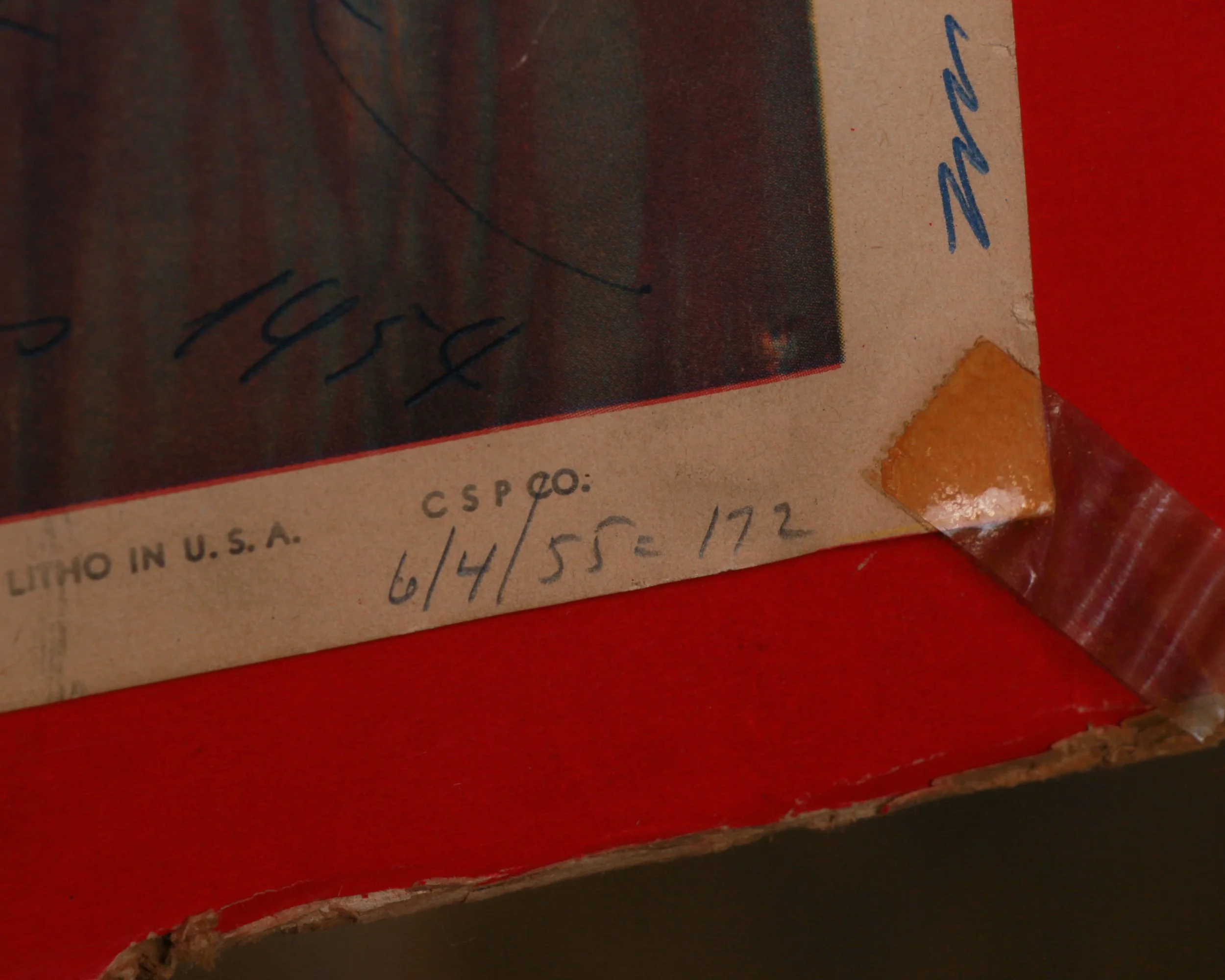
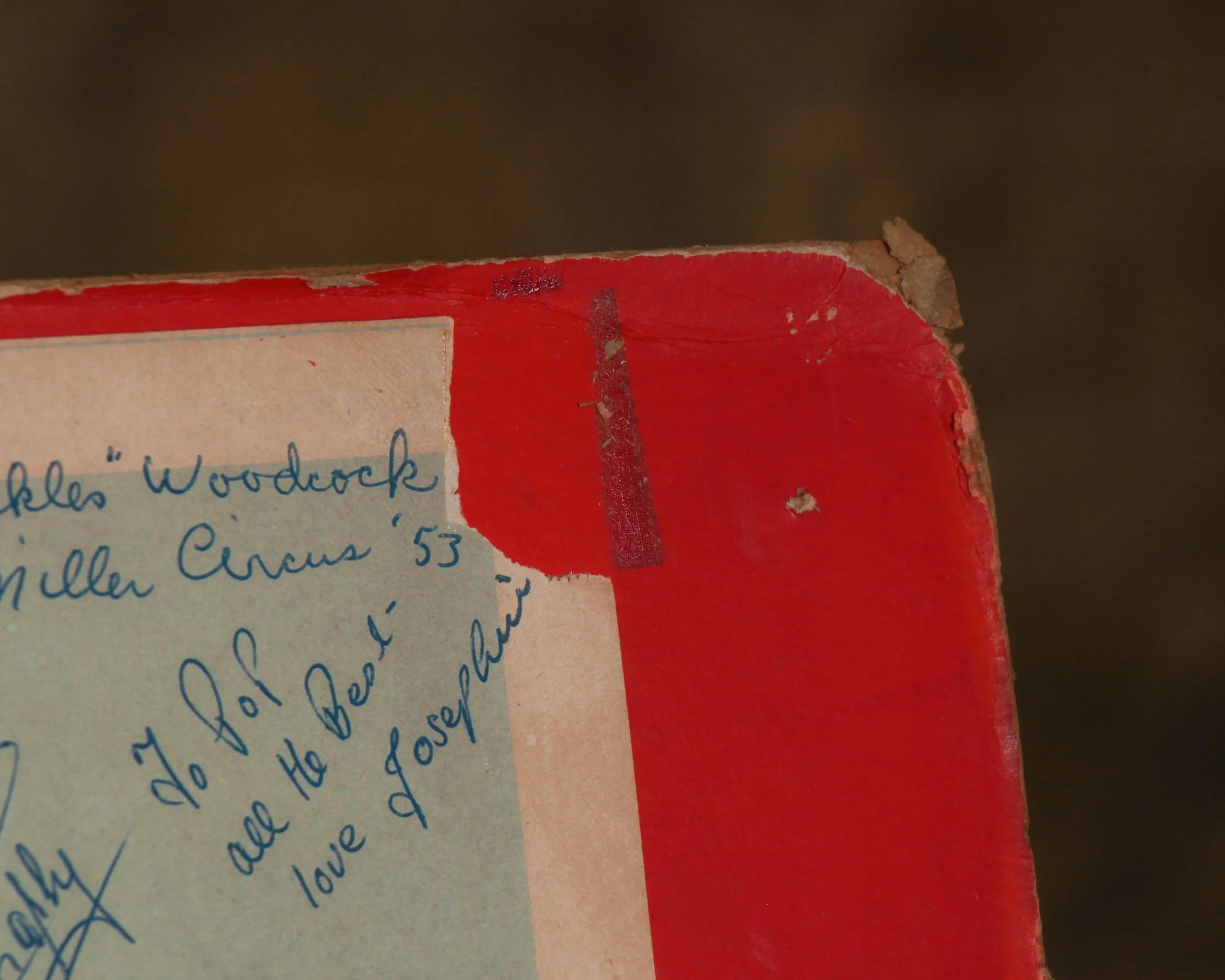
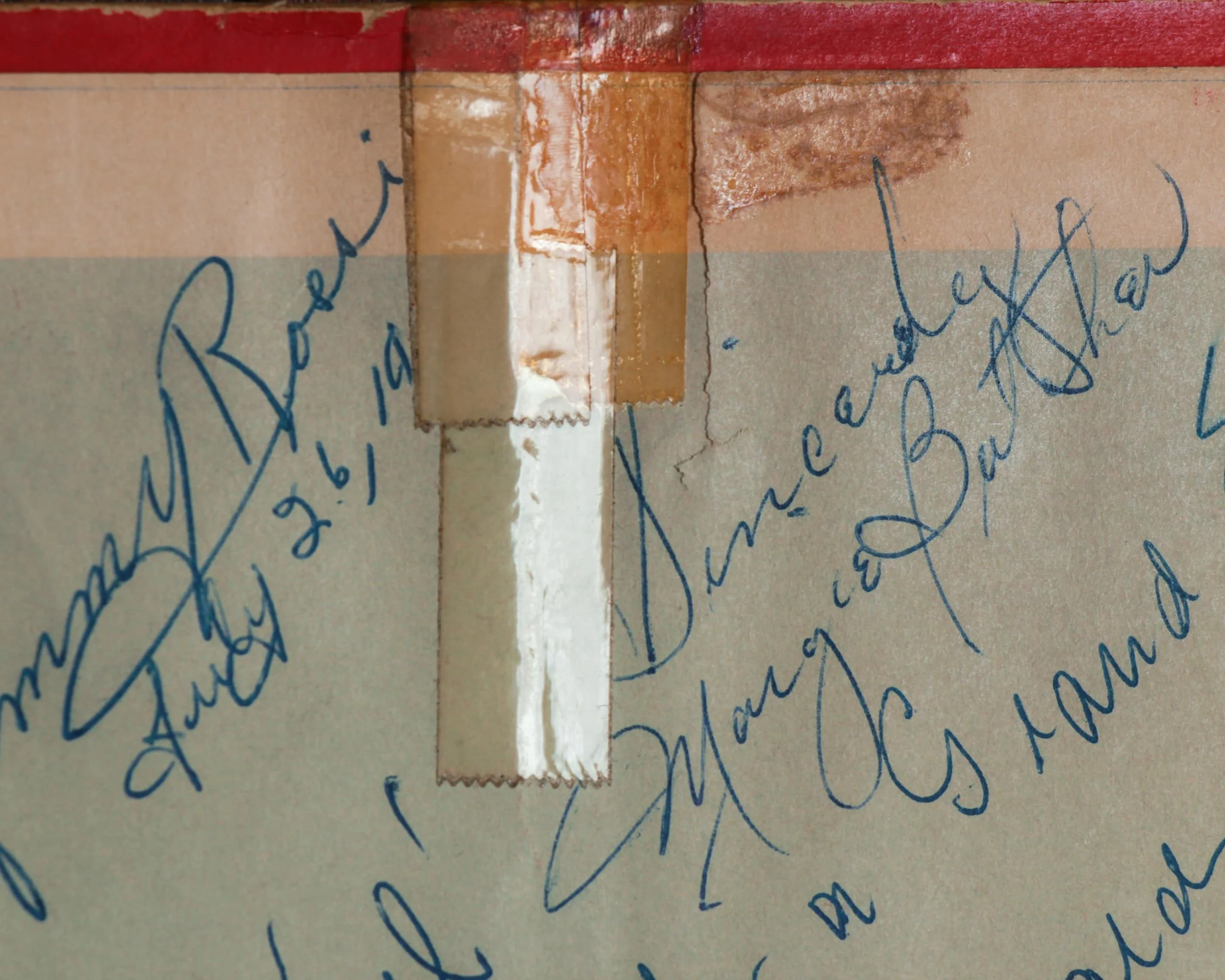
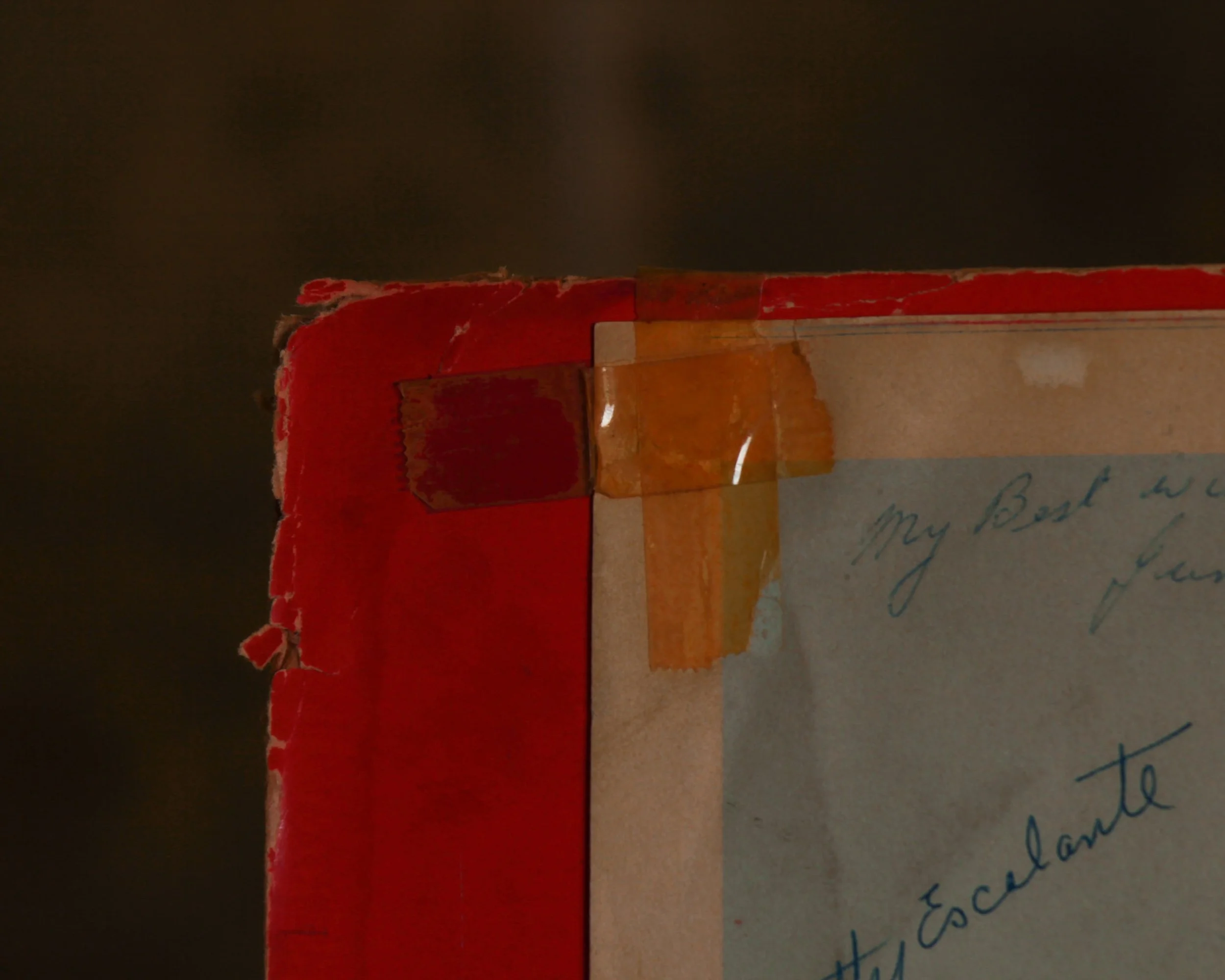
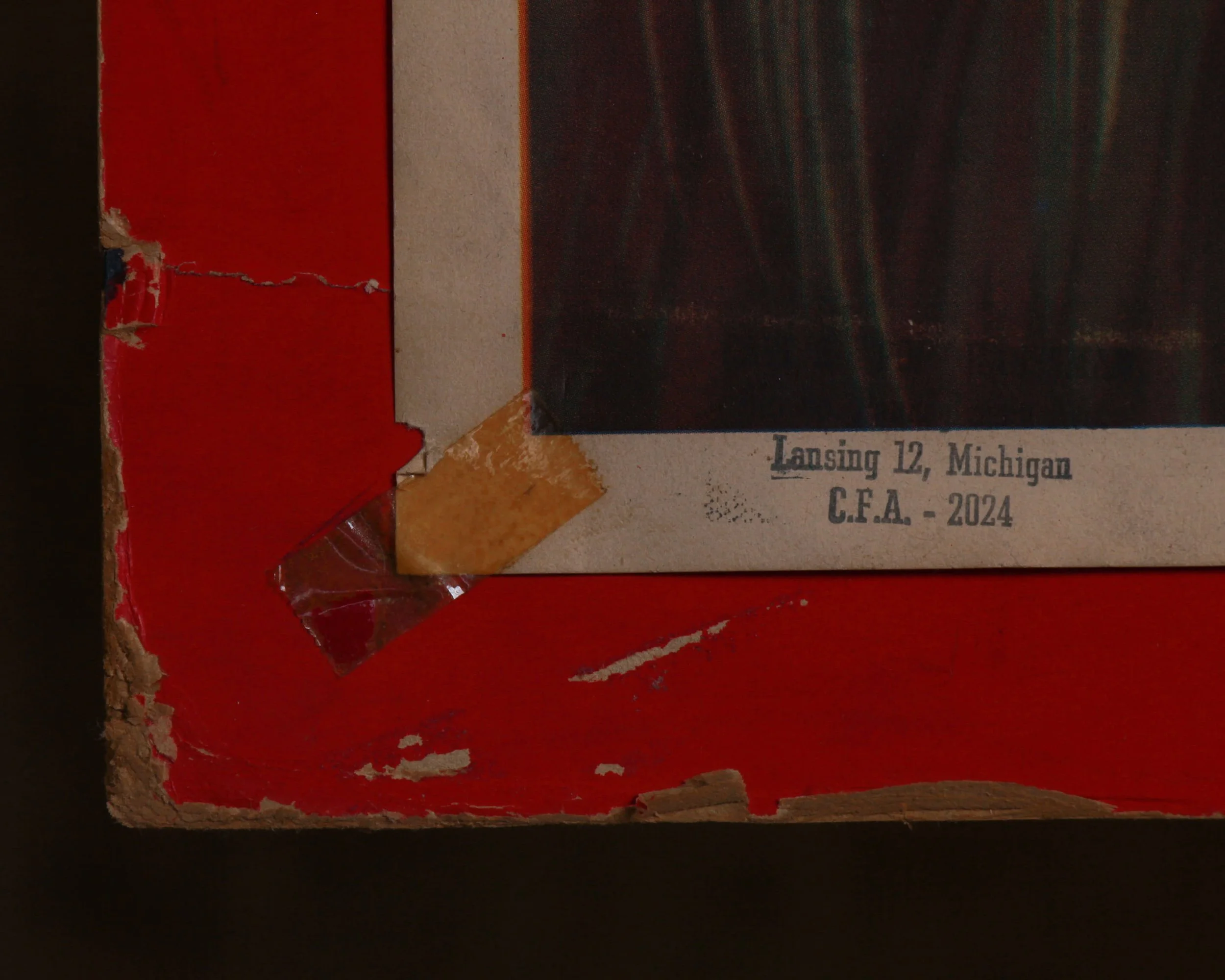
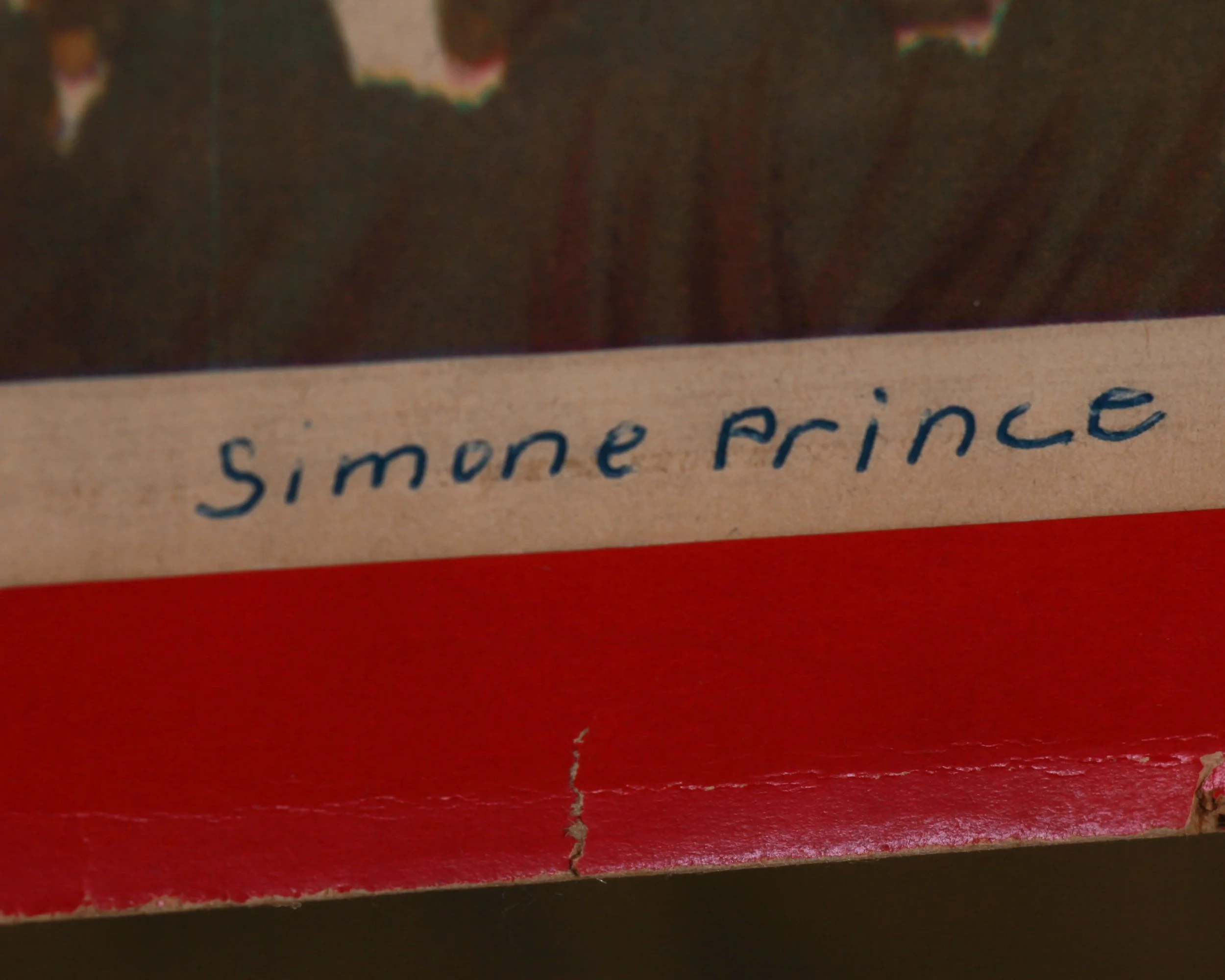
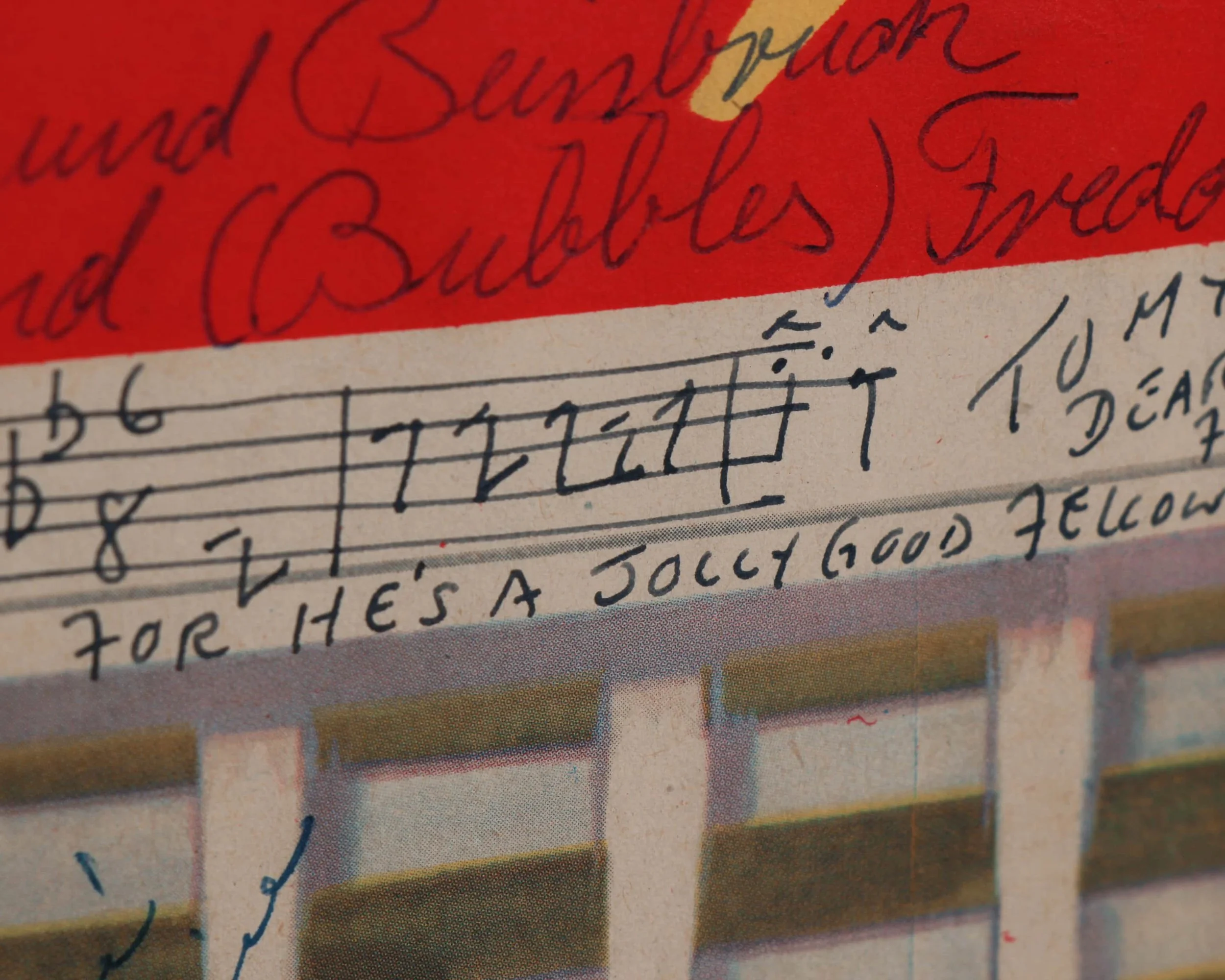
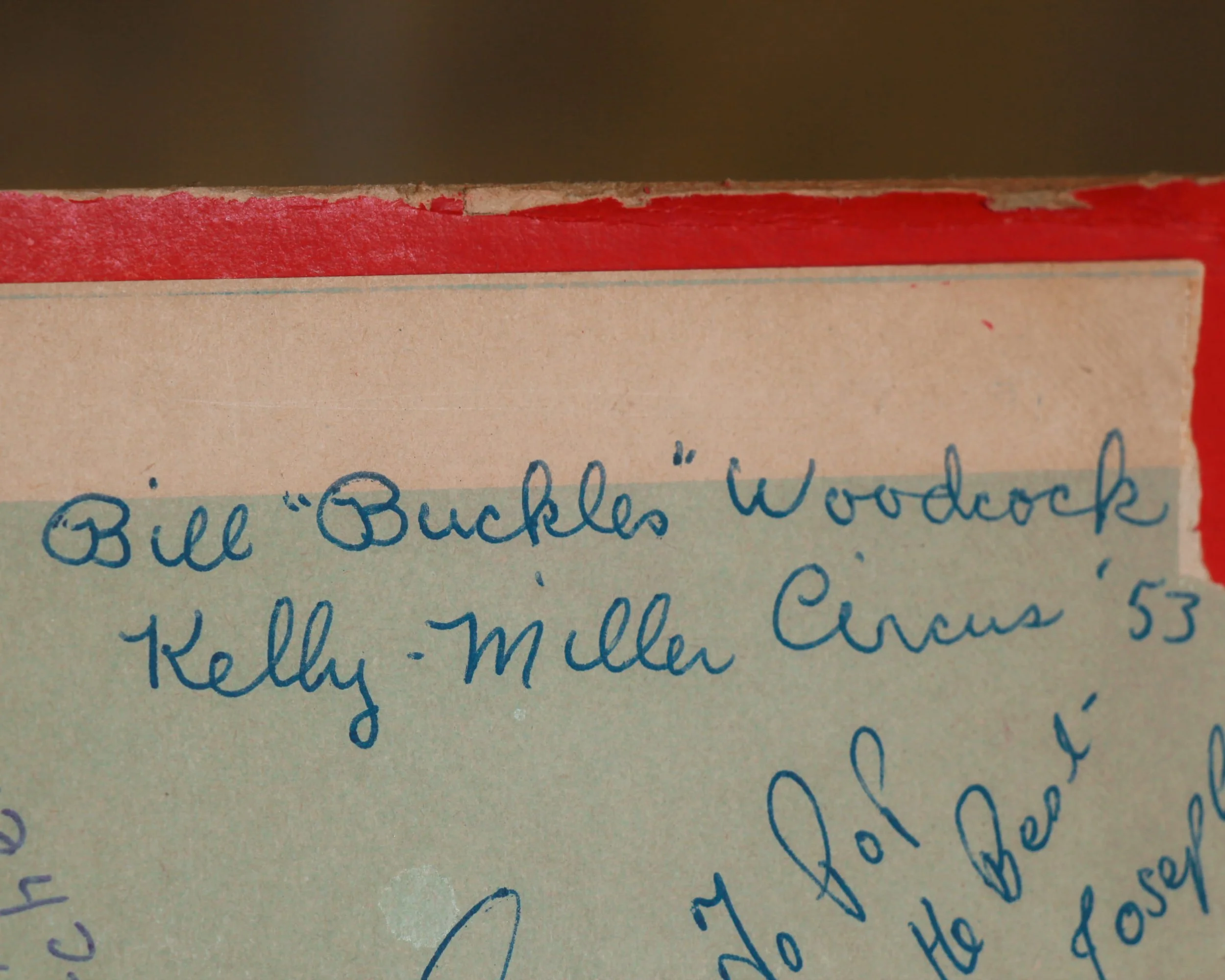
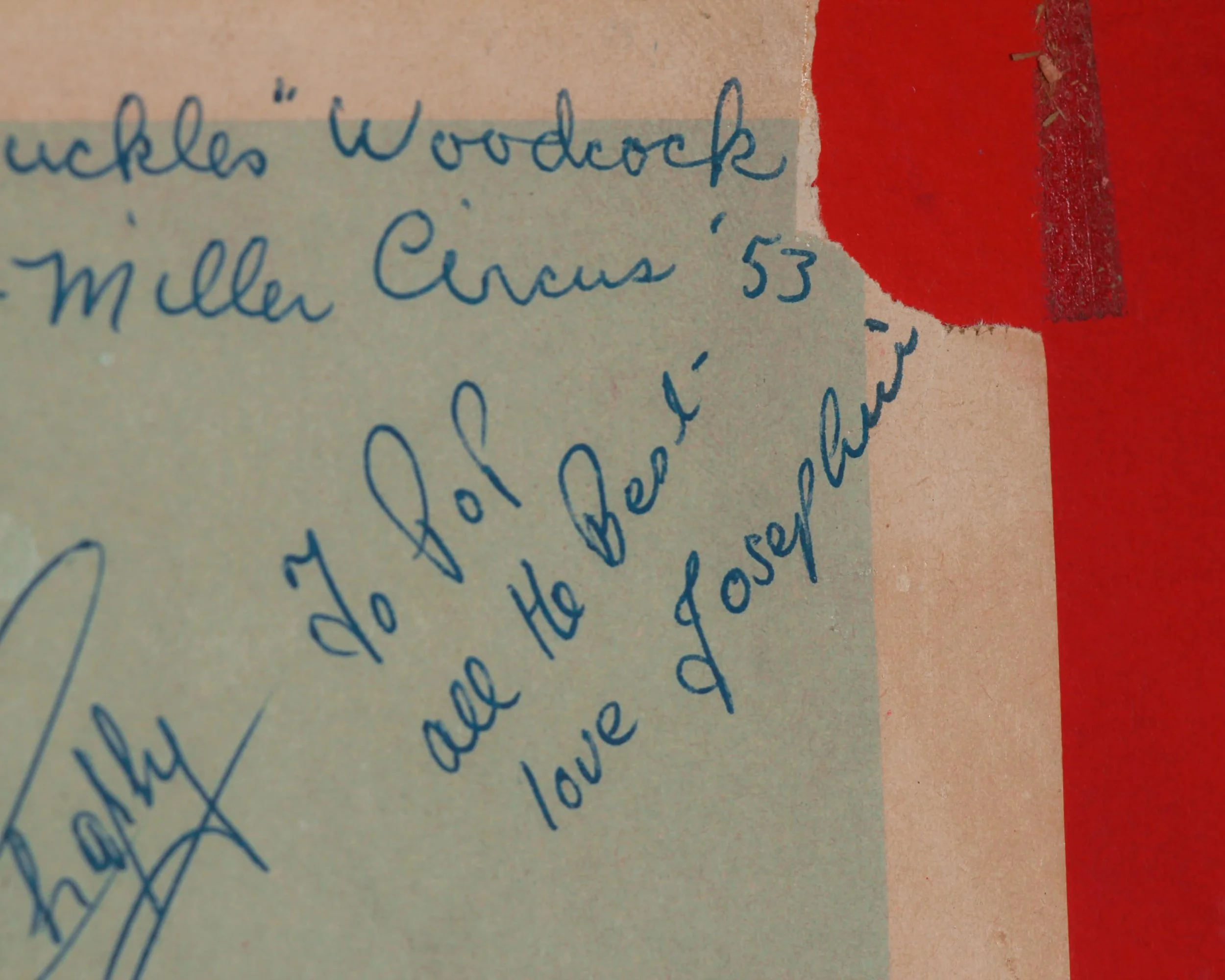
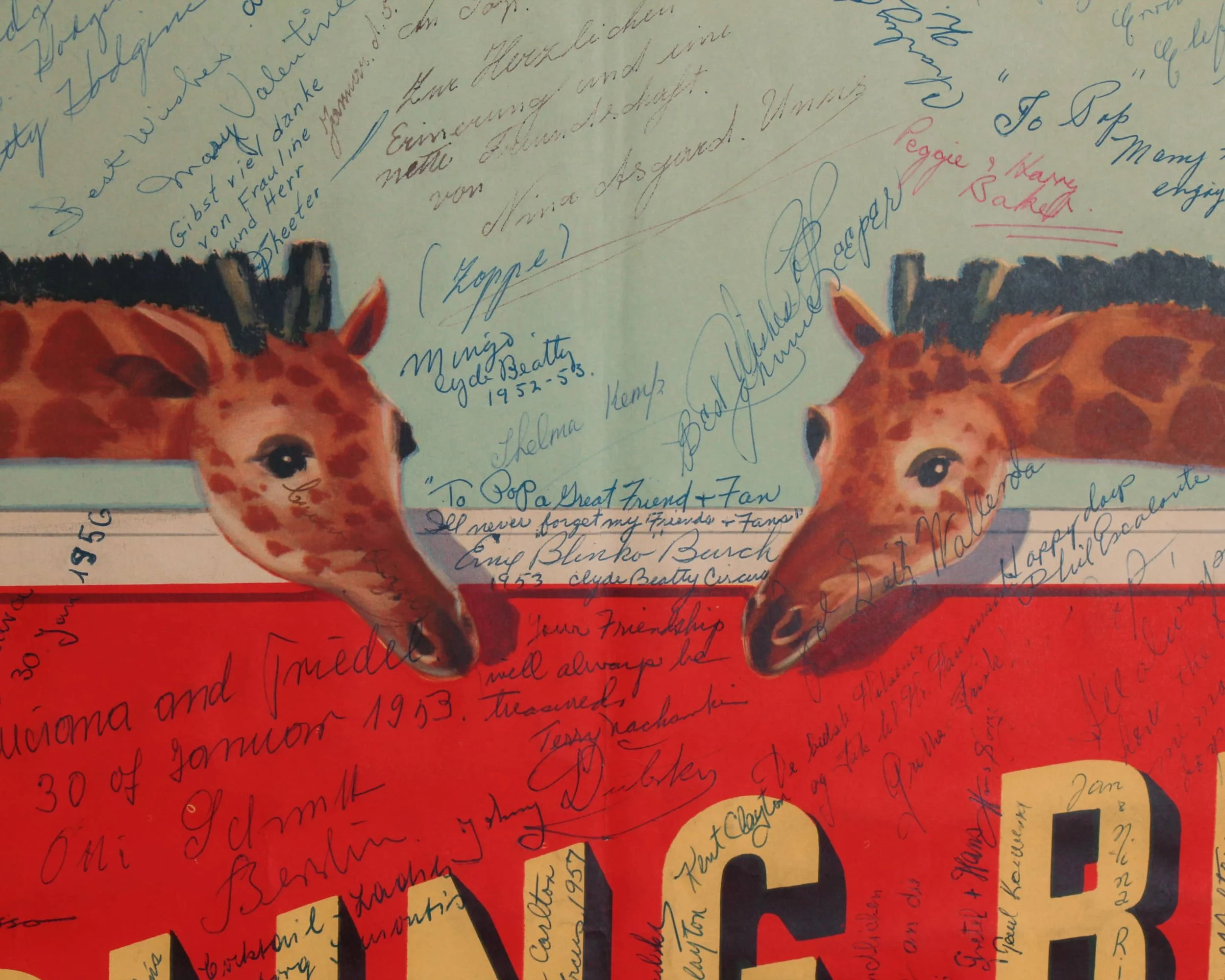
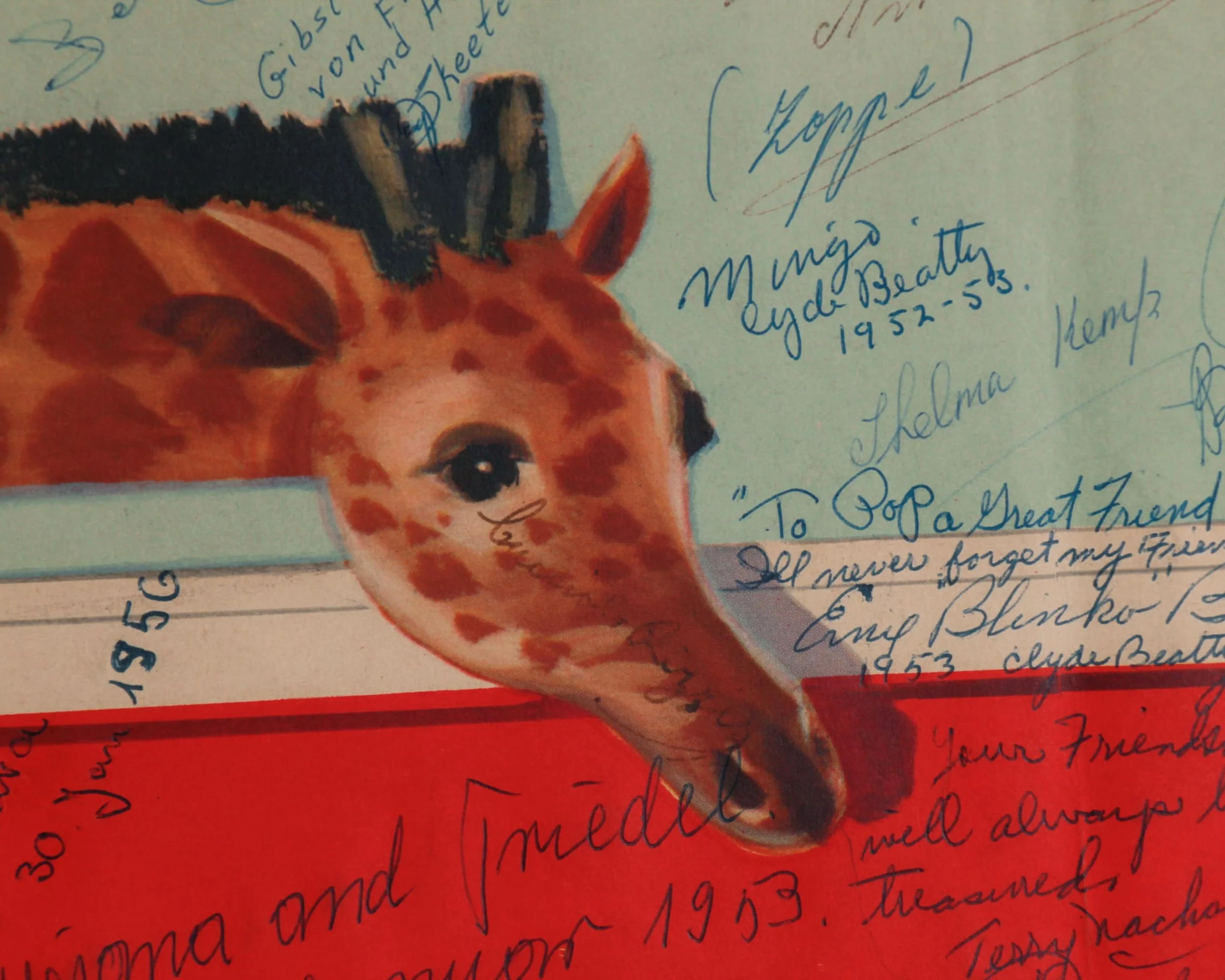
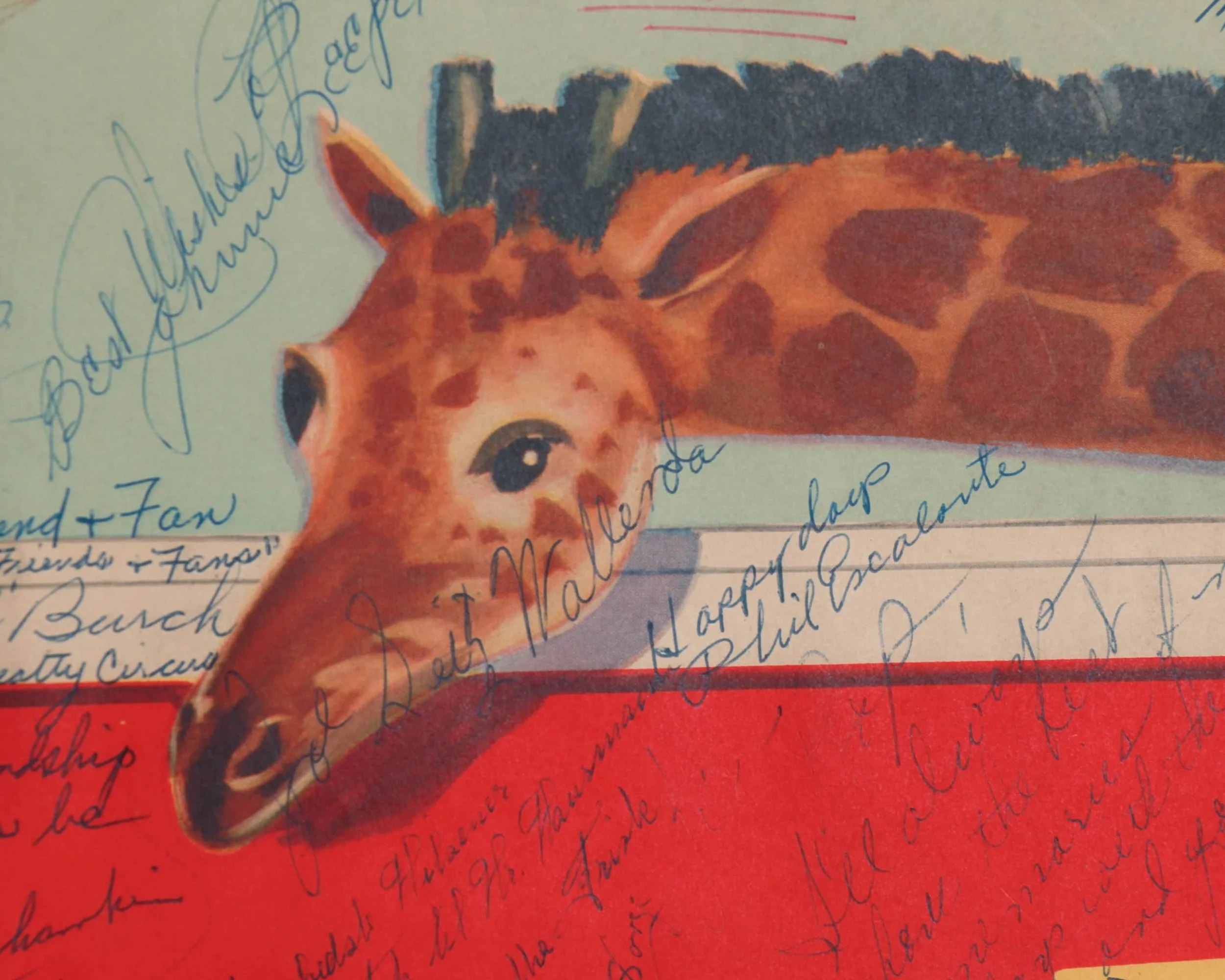
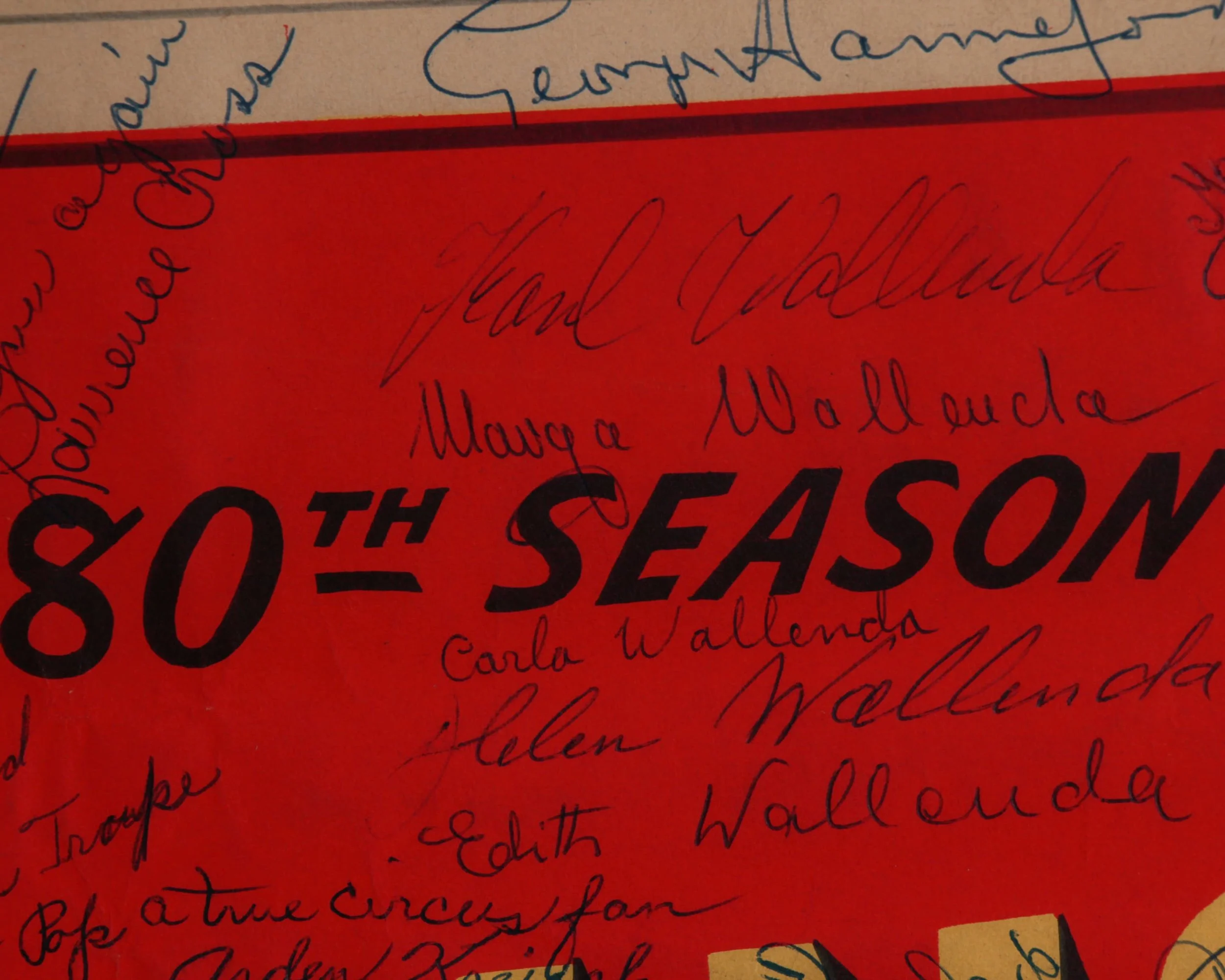
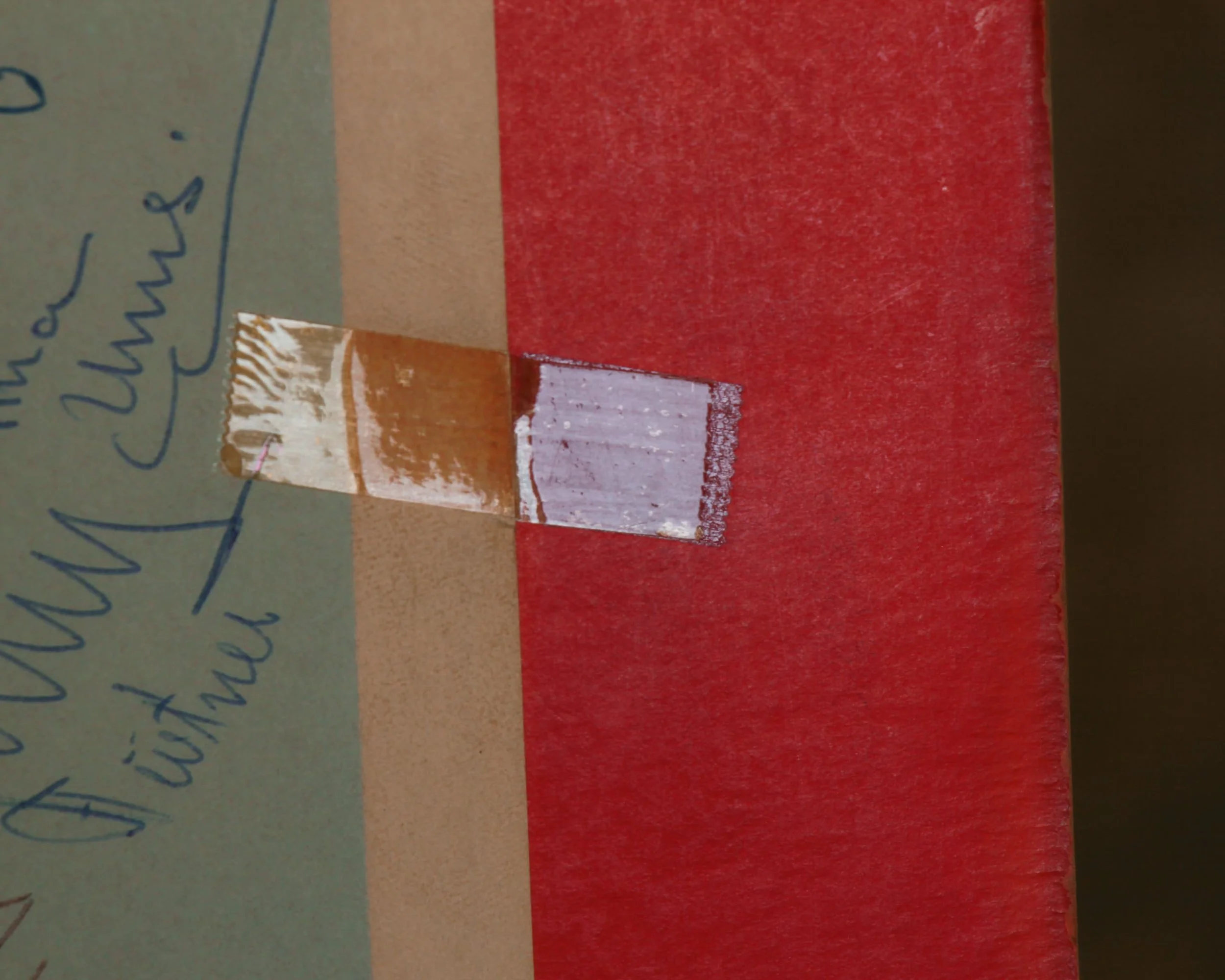
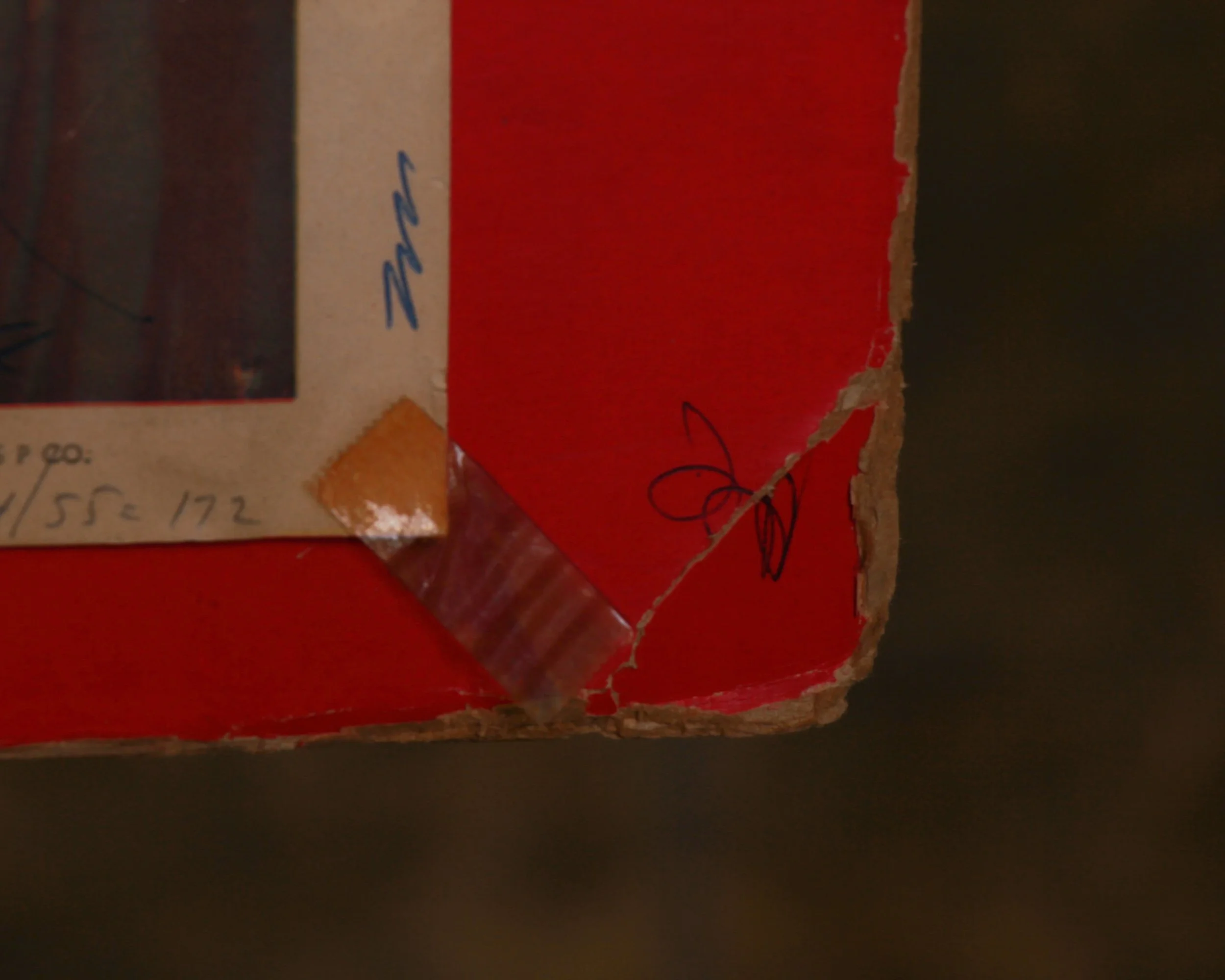
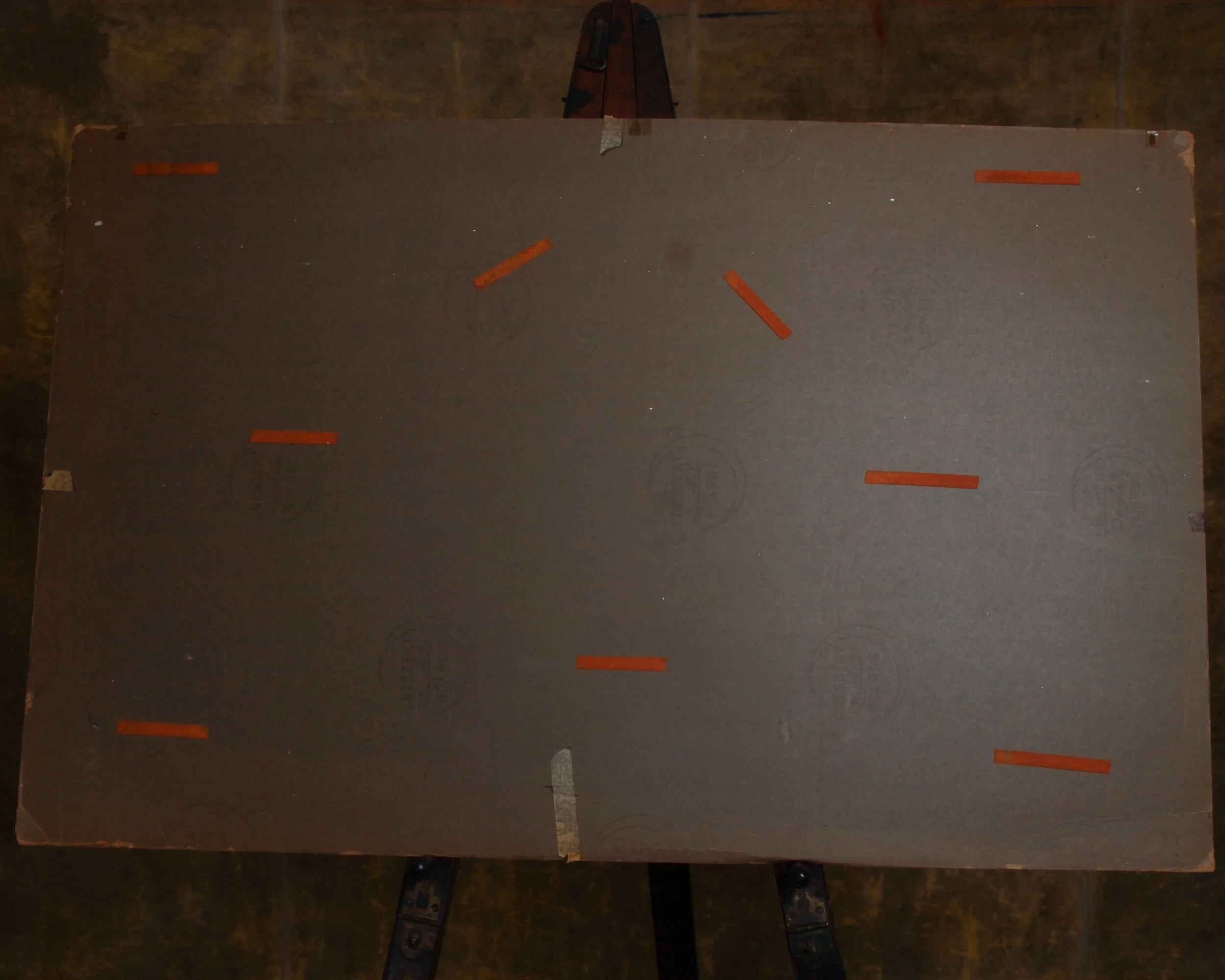
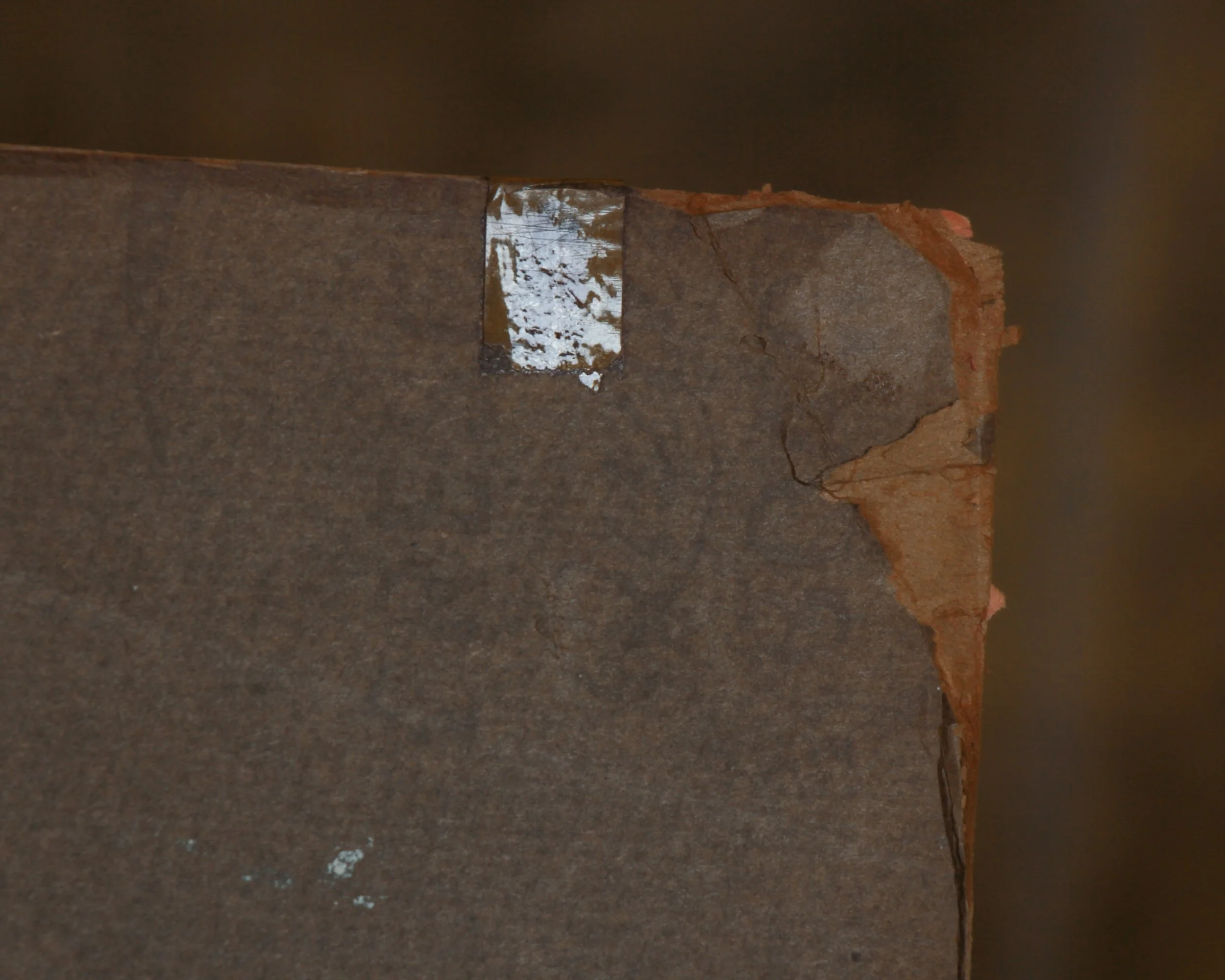
Signed, Ringling Brothers and Barnum & Bailey 80th Season Poster circa 1950. Offset lithograph circus poster of giraffes looking over a billboard, signed in English and German by dozens of contemporary circus acts, inscribing to circus photographer, collector, and enthusiast Carl “Pop” Haussman. Signatures include members of The Wallendas troupe, “Poodles” Hanneford, Unus, Albert White, Beryl Smith, Antoinetta Rizzi, Lola Dobritch, The Hodginis, to name a few. Some signatures from other circuses, with performers noting their affiliation to shows including Polack, Hagen; and King Bros. One-sheet measuring 27" x 41” and mounted to a red backing board with old cello-tape.
Category History
Ringling Brothers and Barnum & Bailey didn’t just run a circus—they engineered a traveling city. When the Ringling brothers merged their show with Barnum & Bailey in 1919, they created what was billed, without much argument, as “The Greatest Show on Earth.” It moved by rail, unloading tents, animals, performers, and entire crews into towns that would transform overnight.
At its core, it was spectacle built on precision. Parades announced arrival, big tops rose in a matter of hours, and tightly scheduled acts—acrobats, clowns, animal trainers—ran like clockwork. Barnum’s flair for promotion lingered in every banner and poster, while the Ringlings refined the logistics into something almost industrial.
What makes it interesting now is the scale and coordination behind the illusion. Dozens of acts, hundreds of people, all synchronized under canvas. The circus wasn’t just entertainment; it was infrastructure, branding, and performance rolled into one.
Over time, tastes shifted and the challenges of maintaining such a massive operation grew, but its influence stuck. It set the template for large-scale touring shows and spectacle-driven entertainment. Even in memory, it feels outsized—less a single event than a moving world that briefly set up, amazed, and disappeared.
Signed, Ringling Brothers and Barnum & Bailey 80th Season Poster circa 1950. Offset lithograph circus poster of giraffes looking over a billboard, signed in English and German by dozens of contemporary circus acts, inscribing to circus photographer, collector, and enthusiast Carl “Pop” Haussman. Signatures include members of The Wallendas troupe, “Poodles” Hanneford, Unus, Albert White, Beryl Smith, Antoinetta Rizzi, Lola Dobritch, The Hodginis, to name a few. Some signatures from other circuses, with performers noting their affiliation to shows including Polack, Hagen; and King Bros. One-sheet measuring 27" x 41” and mounted to a red backing board with old cello-tape.
Category History
Ringling Brothers and Barnum & Bailey didn’t just run a circus—they engineered a traveling city. When the Ringling brothers merged their show with Barnum & Bailey in 1919, they created what was billed, without much argument, as “The Greatest Show on Earth.” It moved by rail, unloading tents, animals, performers, and entire crews into towns that would transform overnight.
At its core, it was spectacle built on precision. Parades announced arrival, big tops rose in a matter of hours, and tightly scheduled acts—acrobats, clowns, animal trainers—ran like clockwork. Barnum’s flair for promotion lingered in every banner and poster, while the Ringlings refined the logistics into something almost industrial.
What makes it interesting now is the scale and coordination behind the illusion. Dozens of acts, hundreds of people, all synchronized under canvas. The circus wasn’t just entertainment; it was infrastructure, branding, and performance rolled into one.
Over time, tastes shifted and the challenges of maintaining such a massive operation grew, but its influence stuck. It set the template for large-scale touring shows and spectacle-driven entertainment. Even in memory, it feels outsized—less a single event than a moving world that briefly set up, amazed, and disappeared.