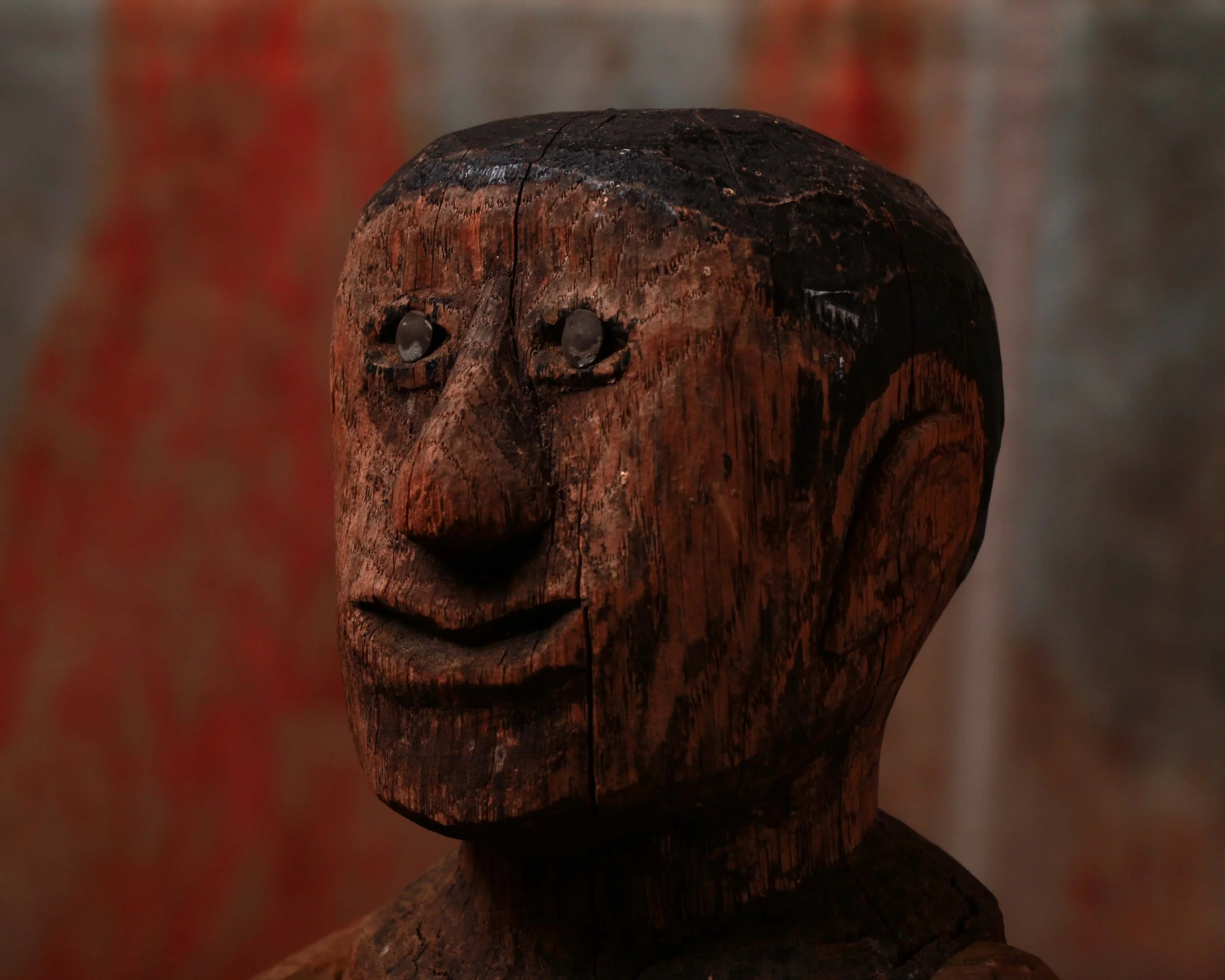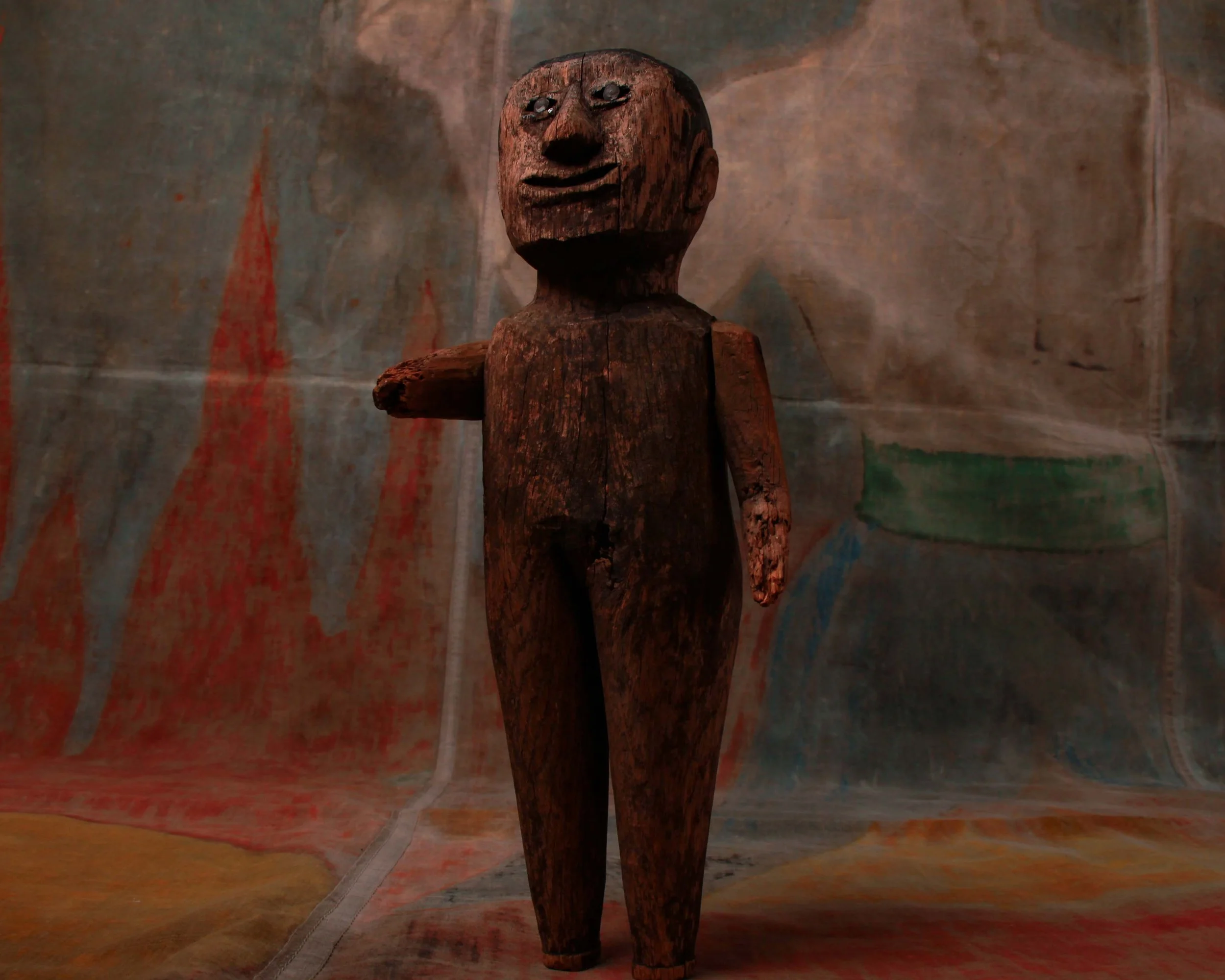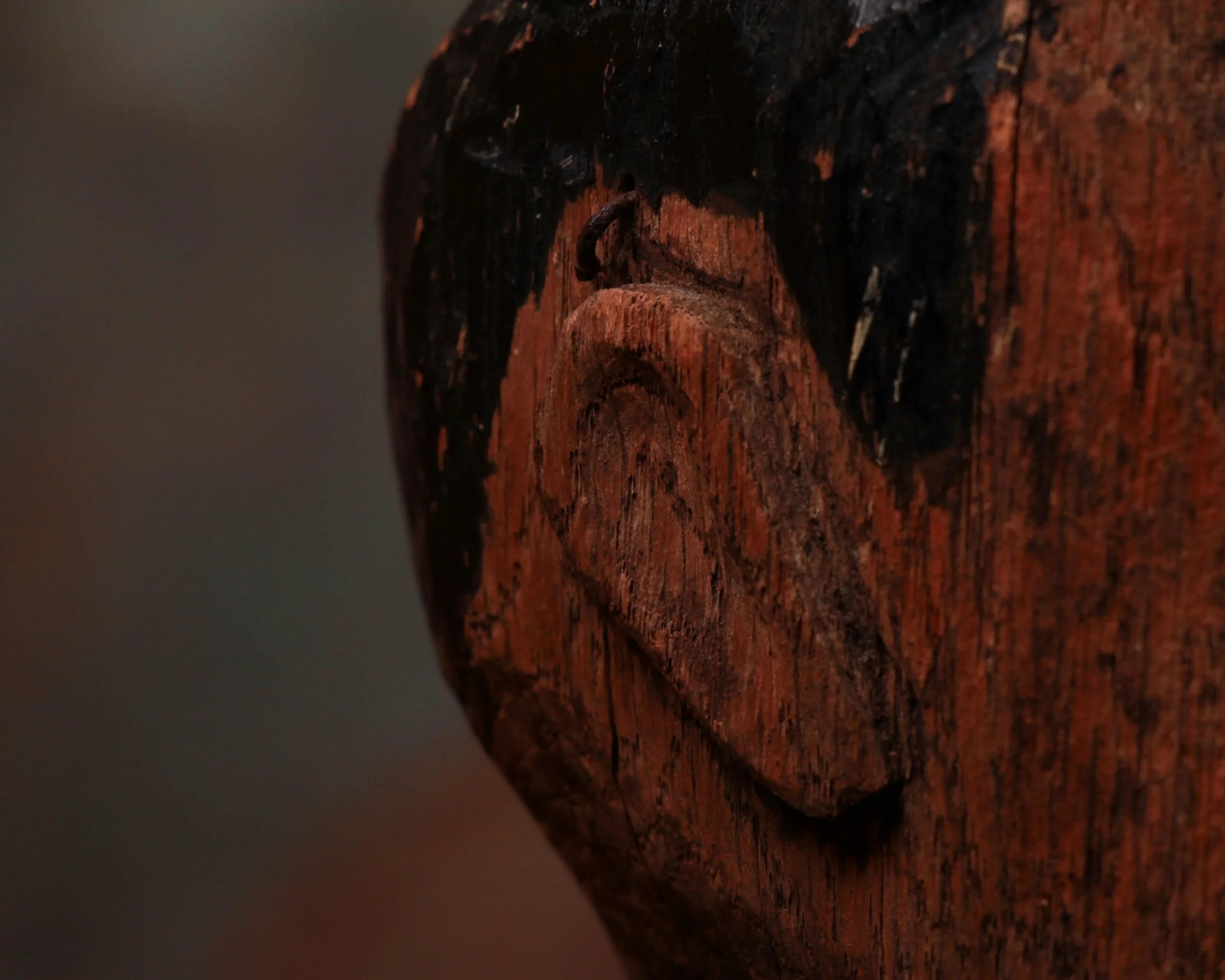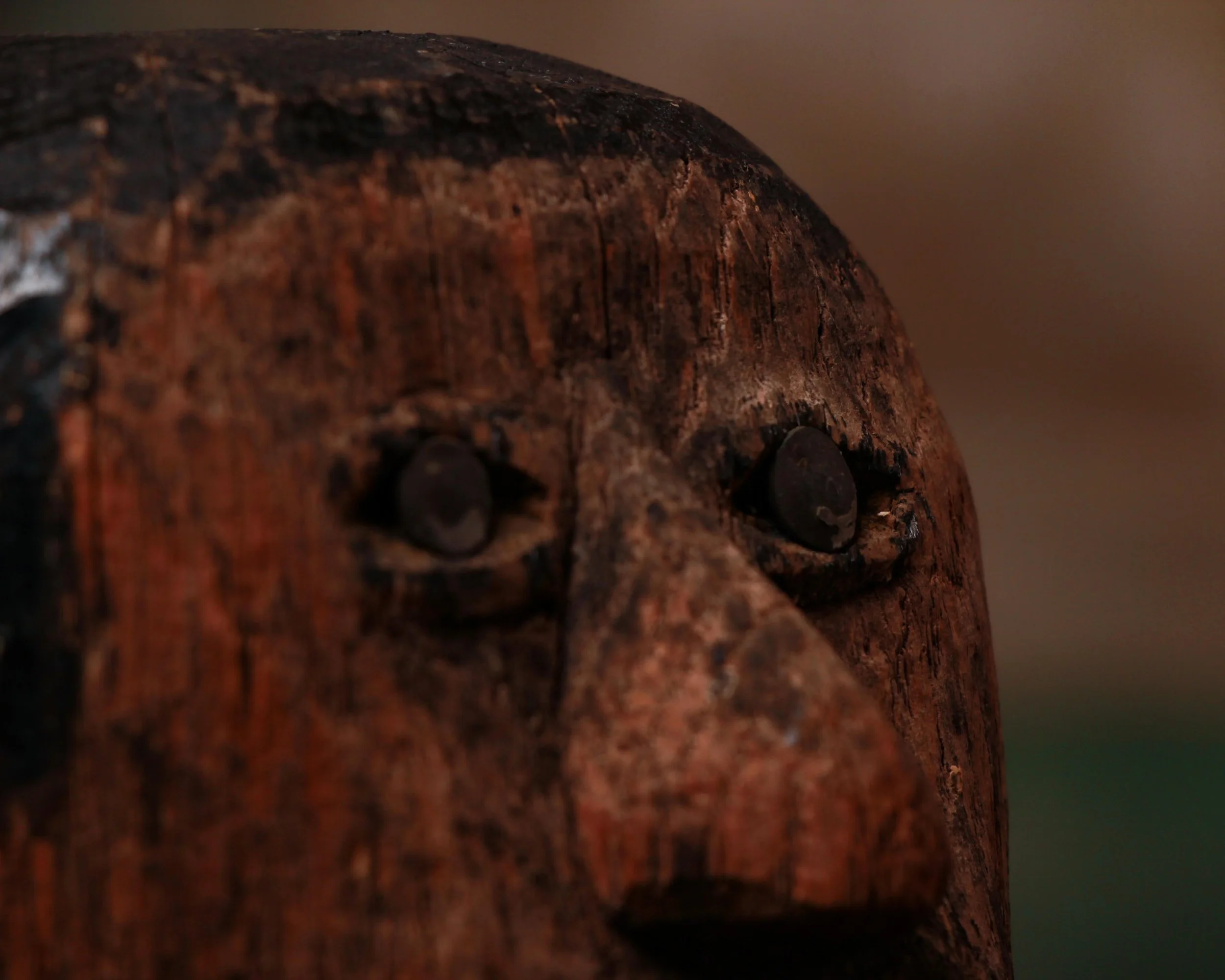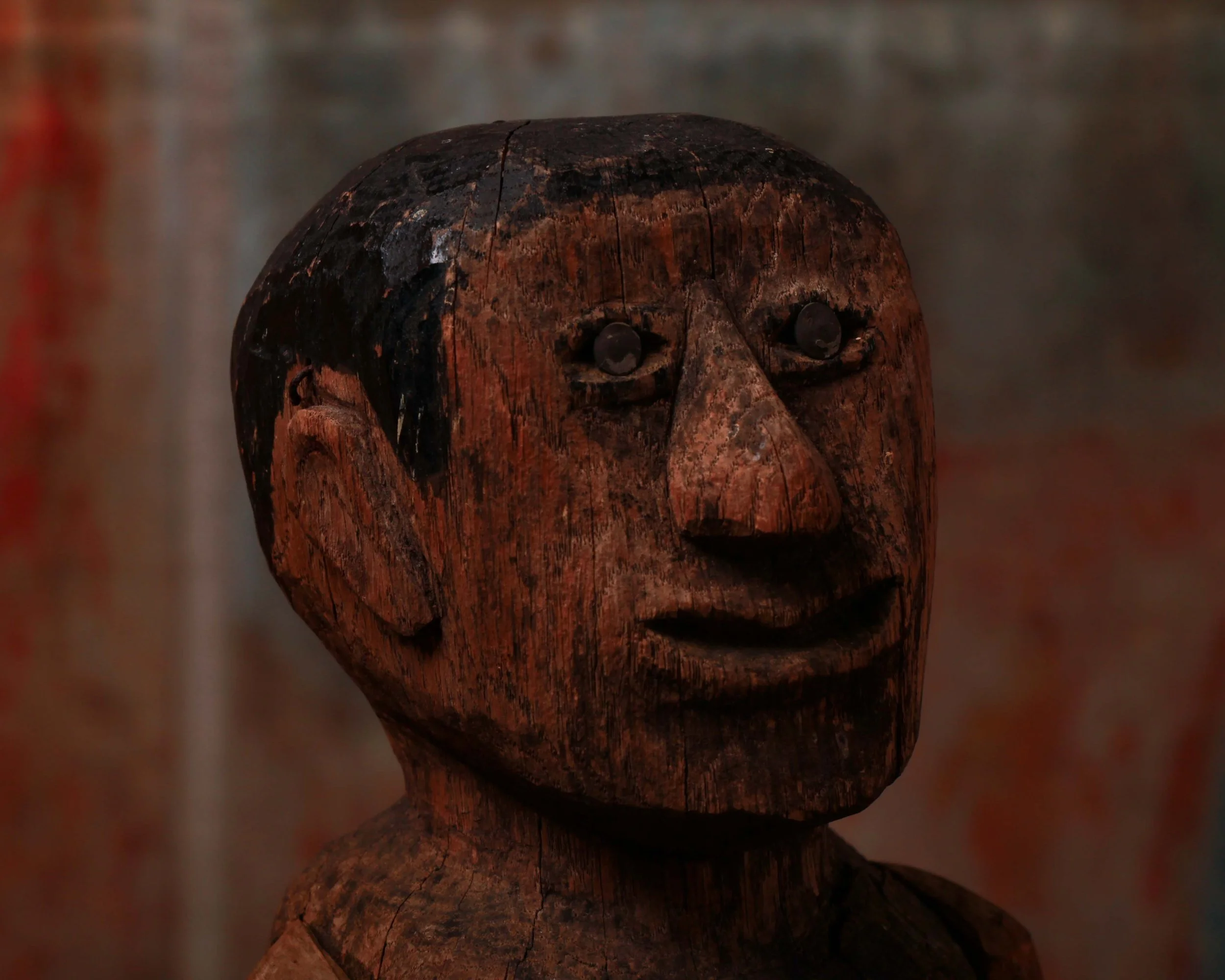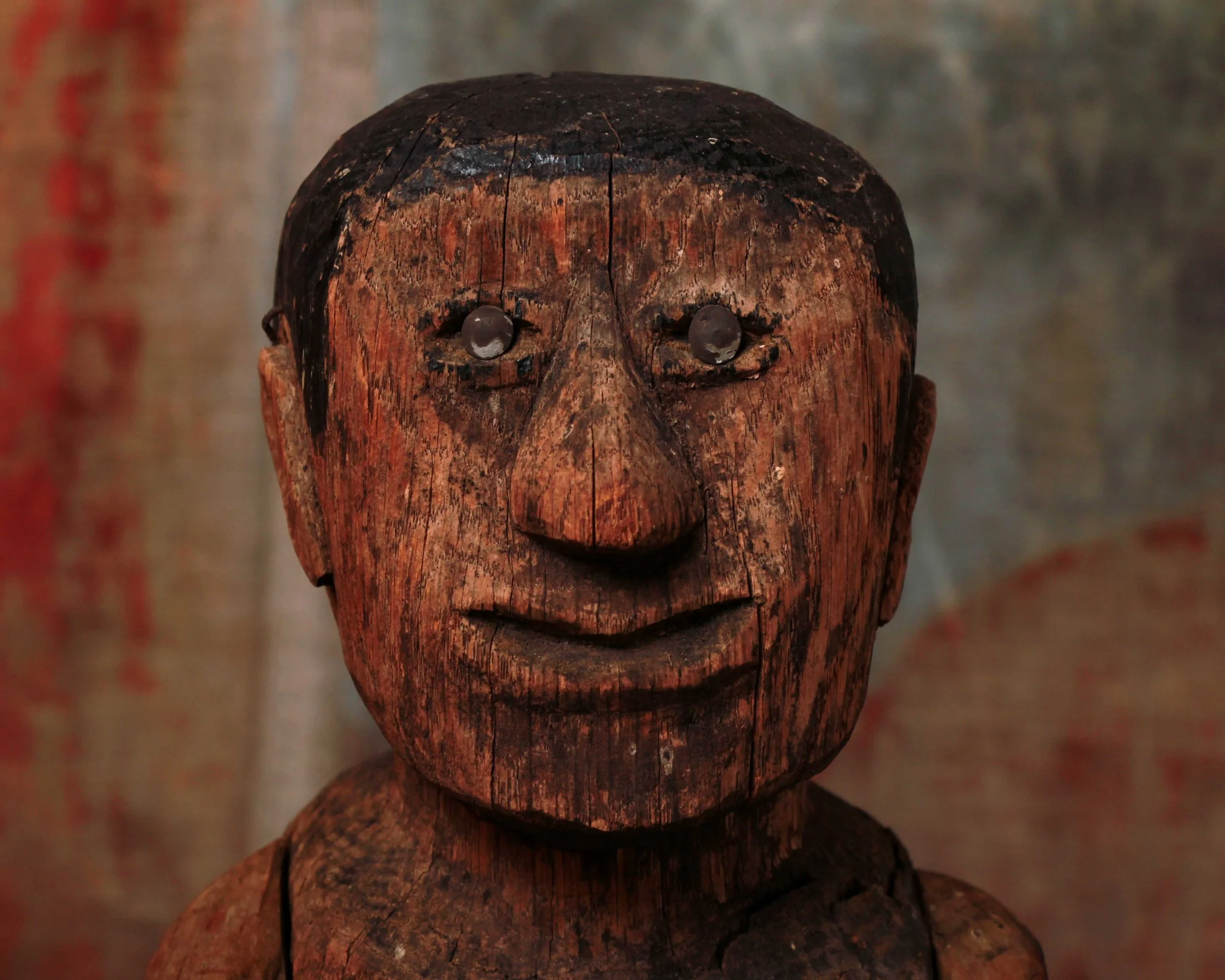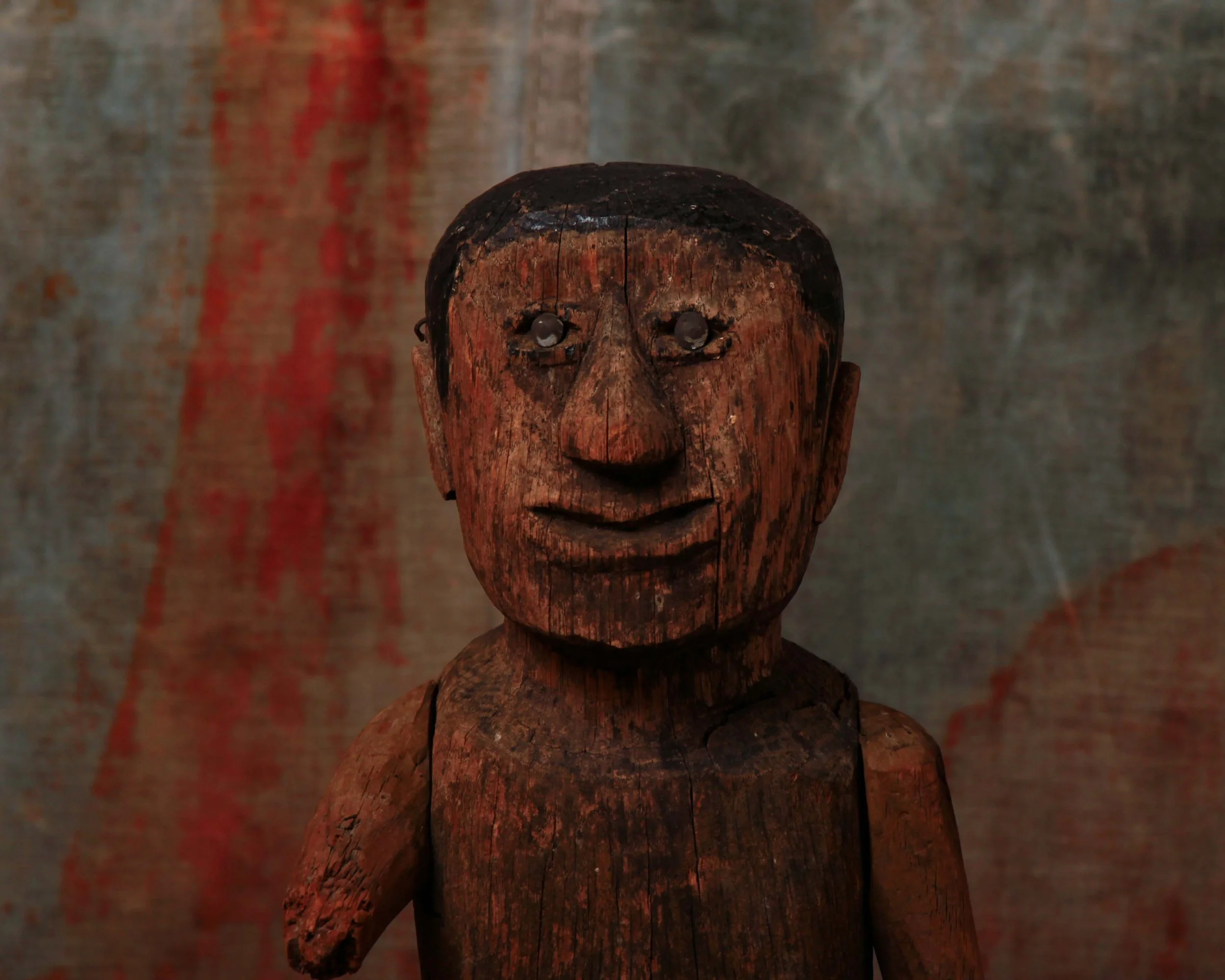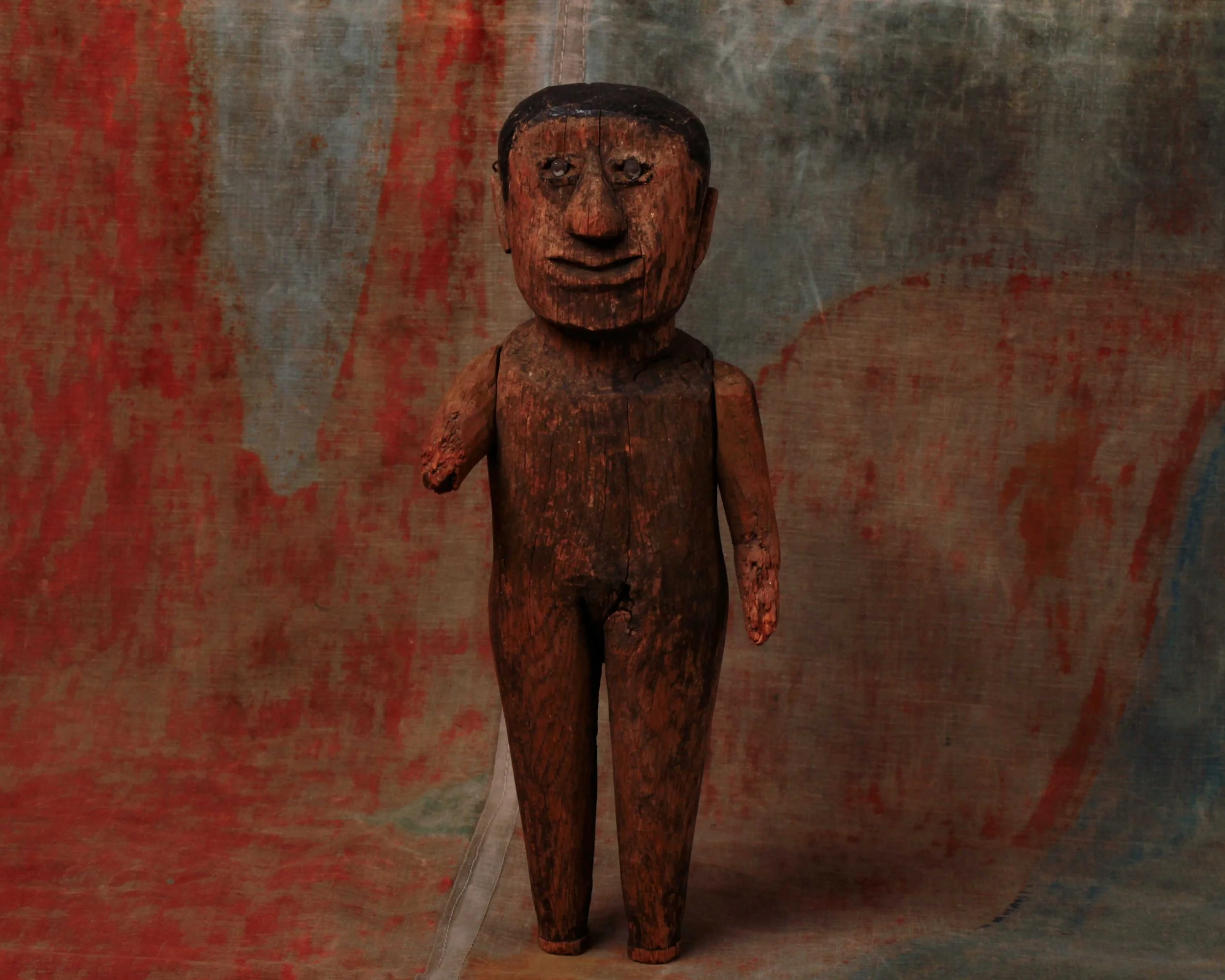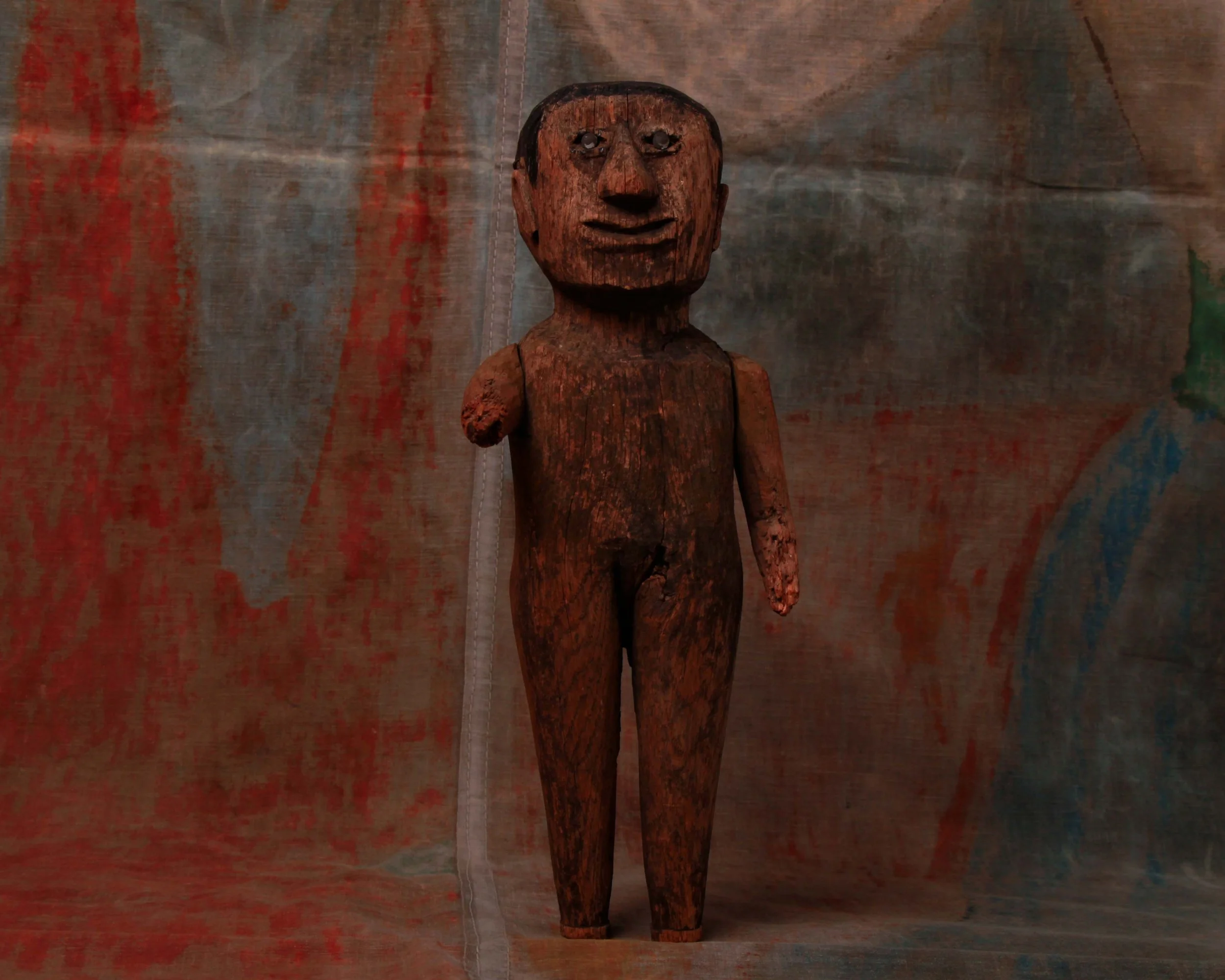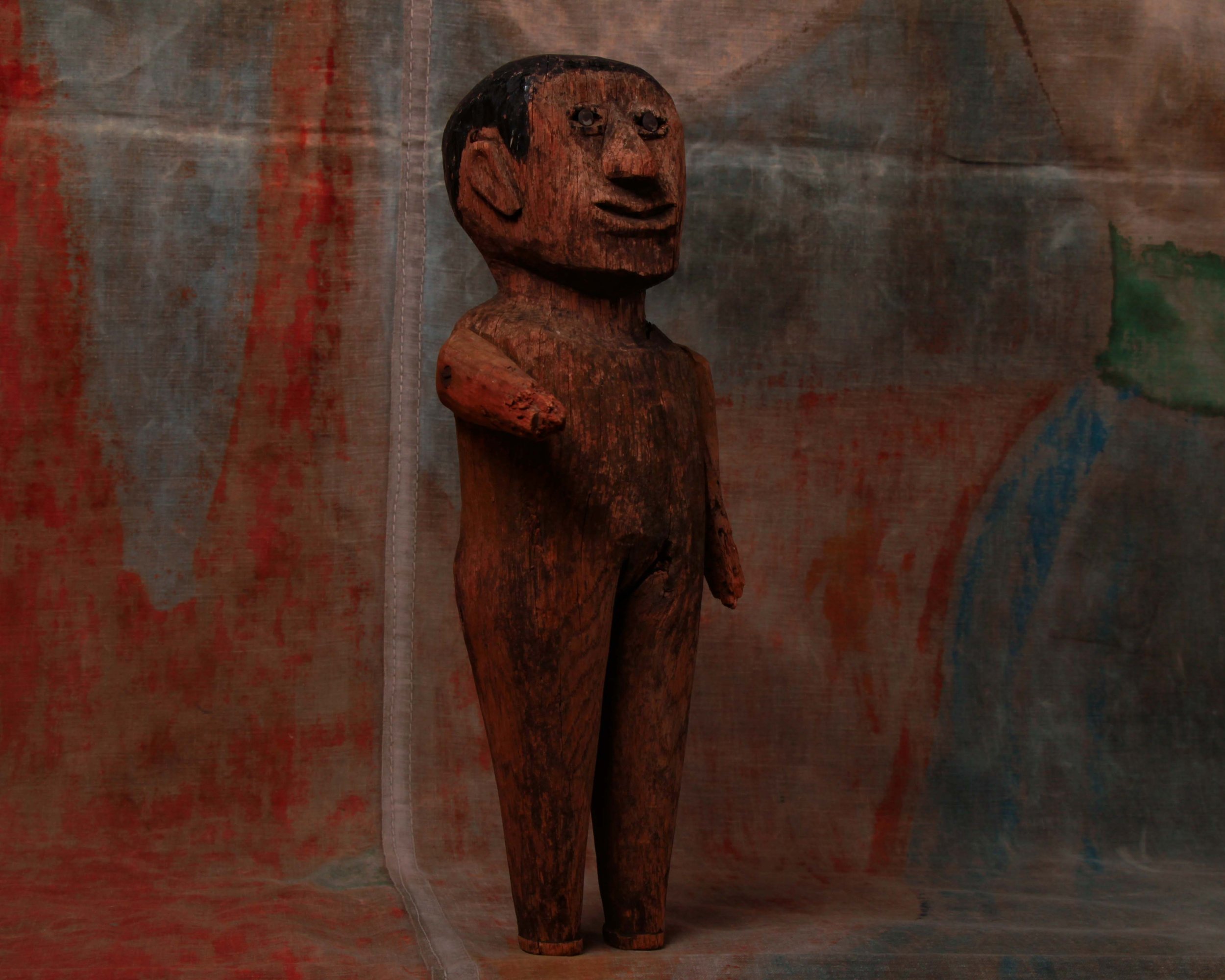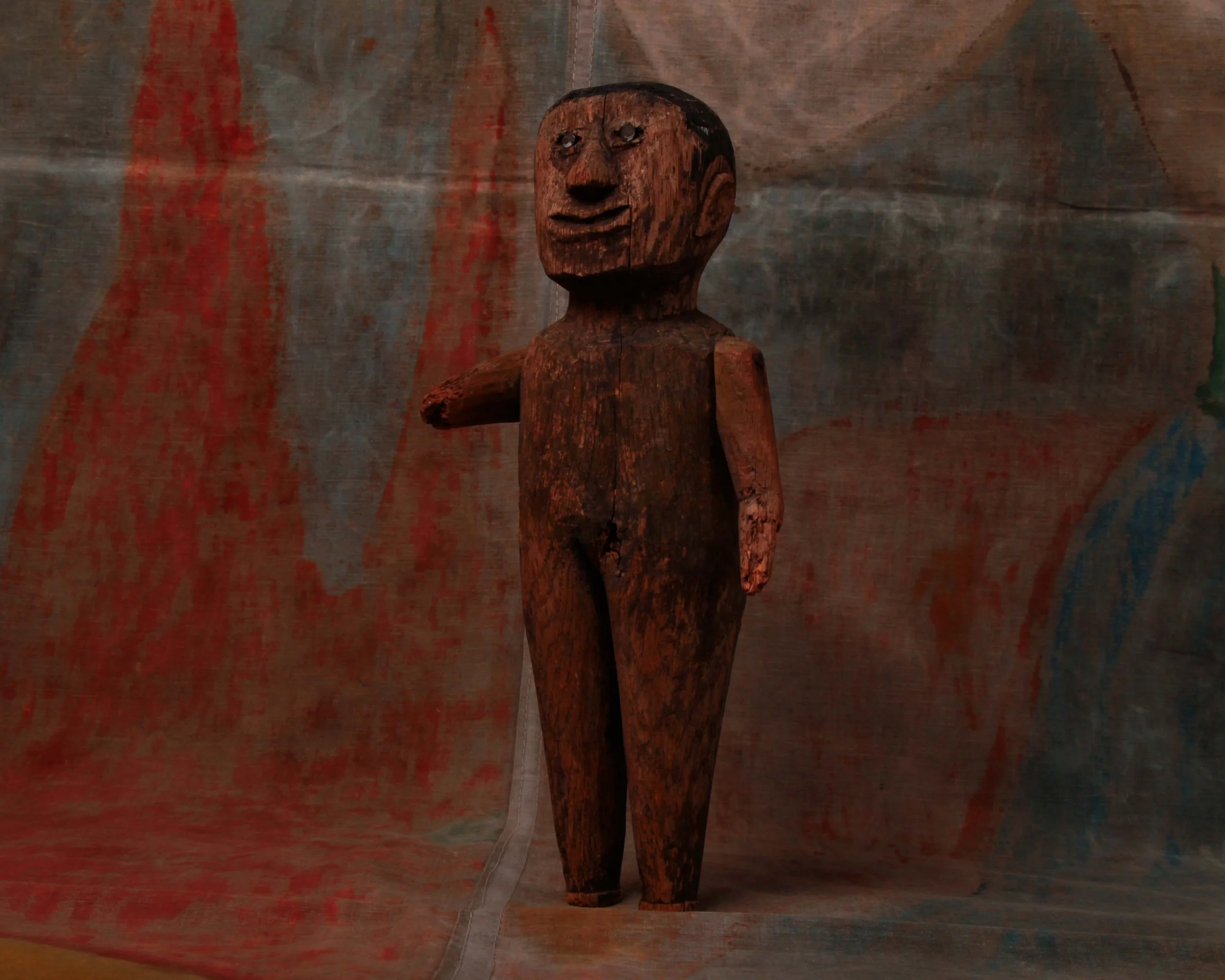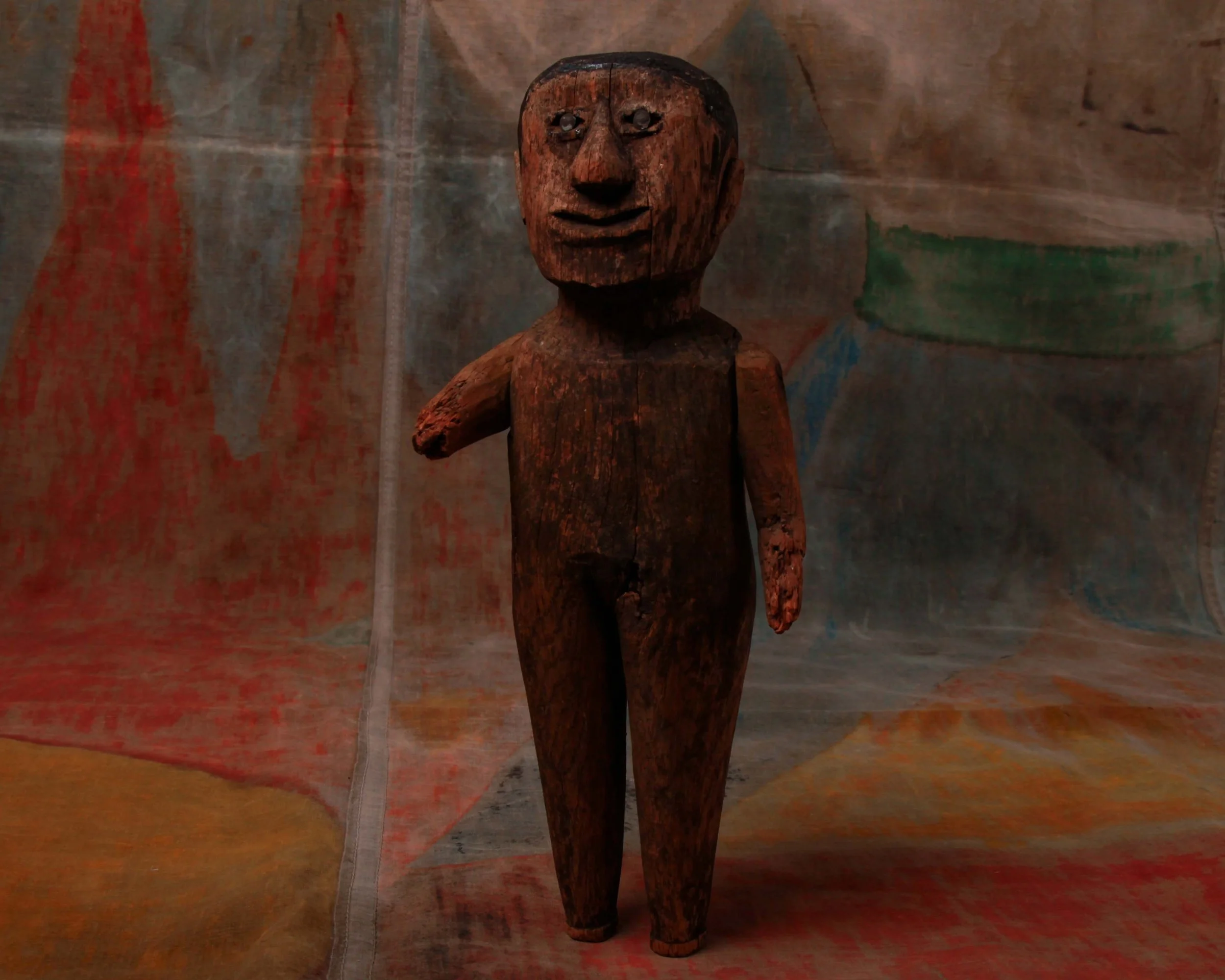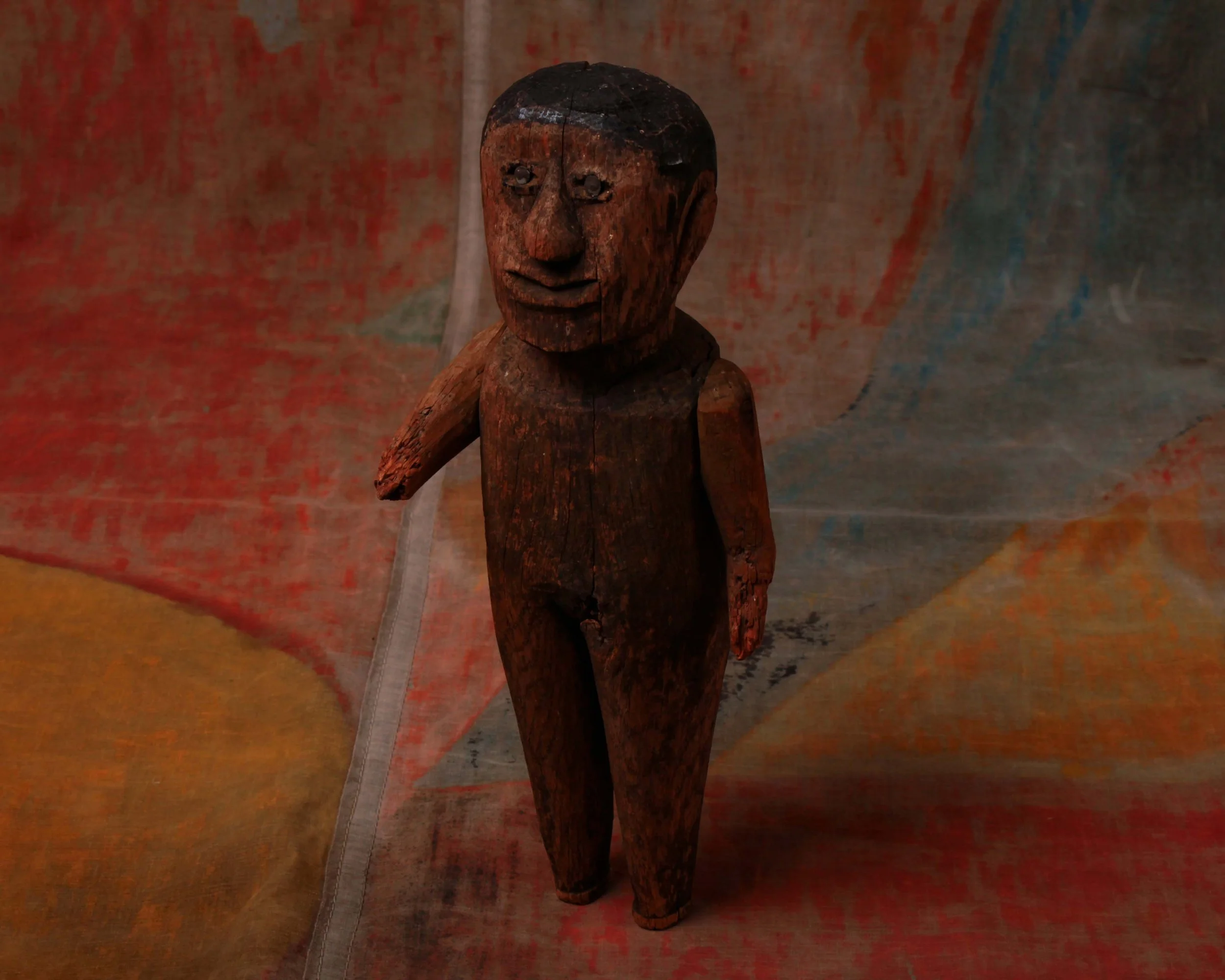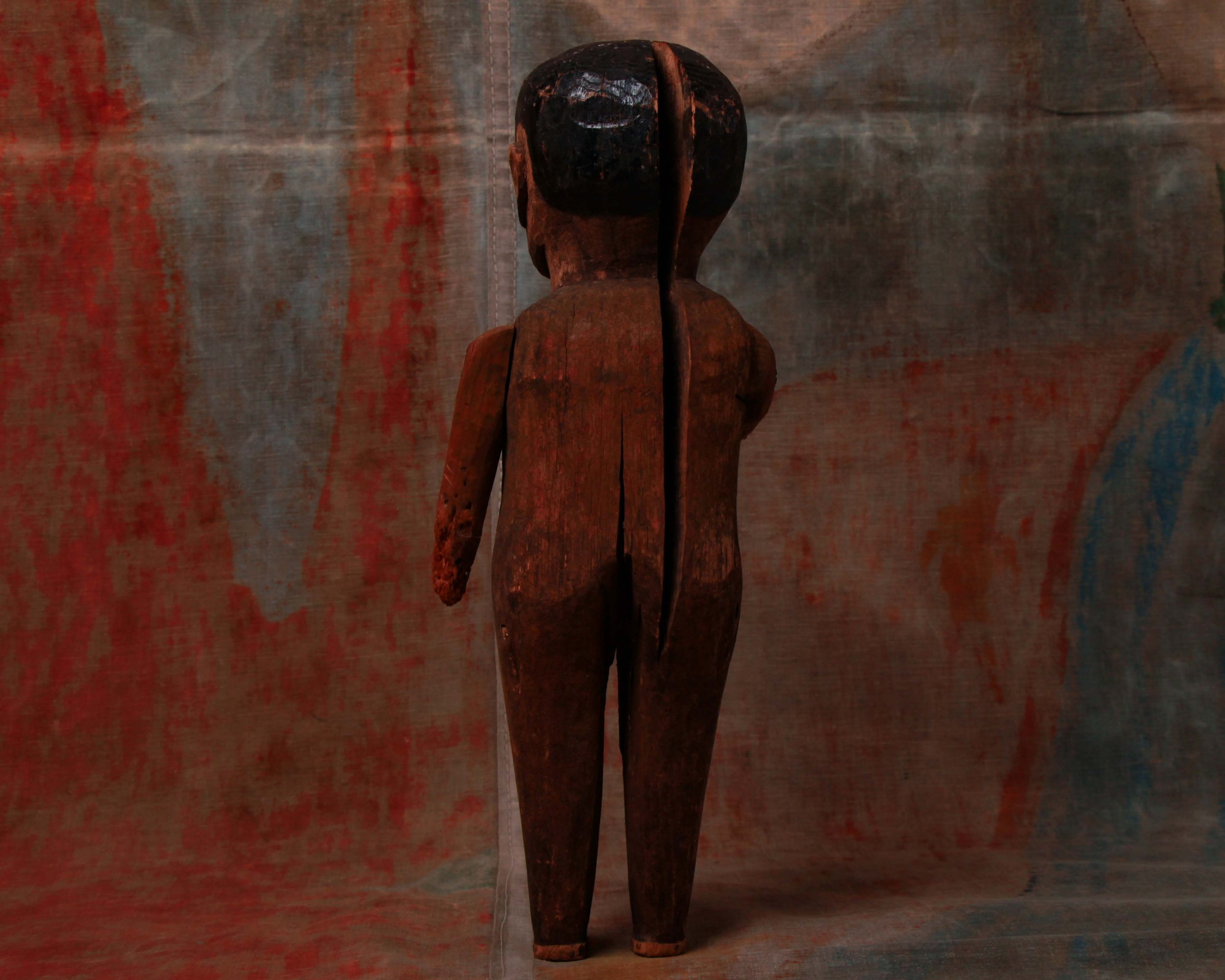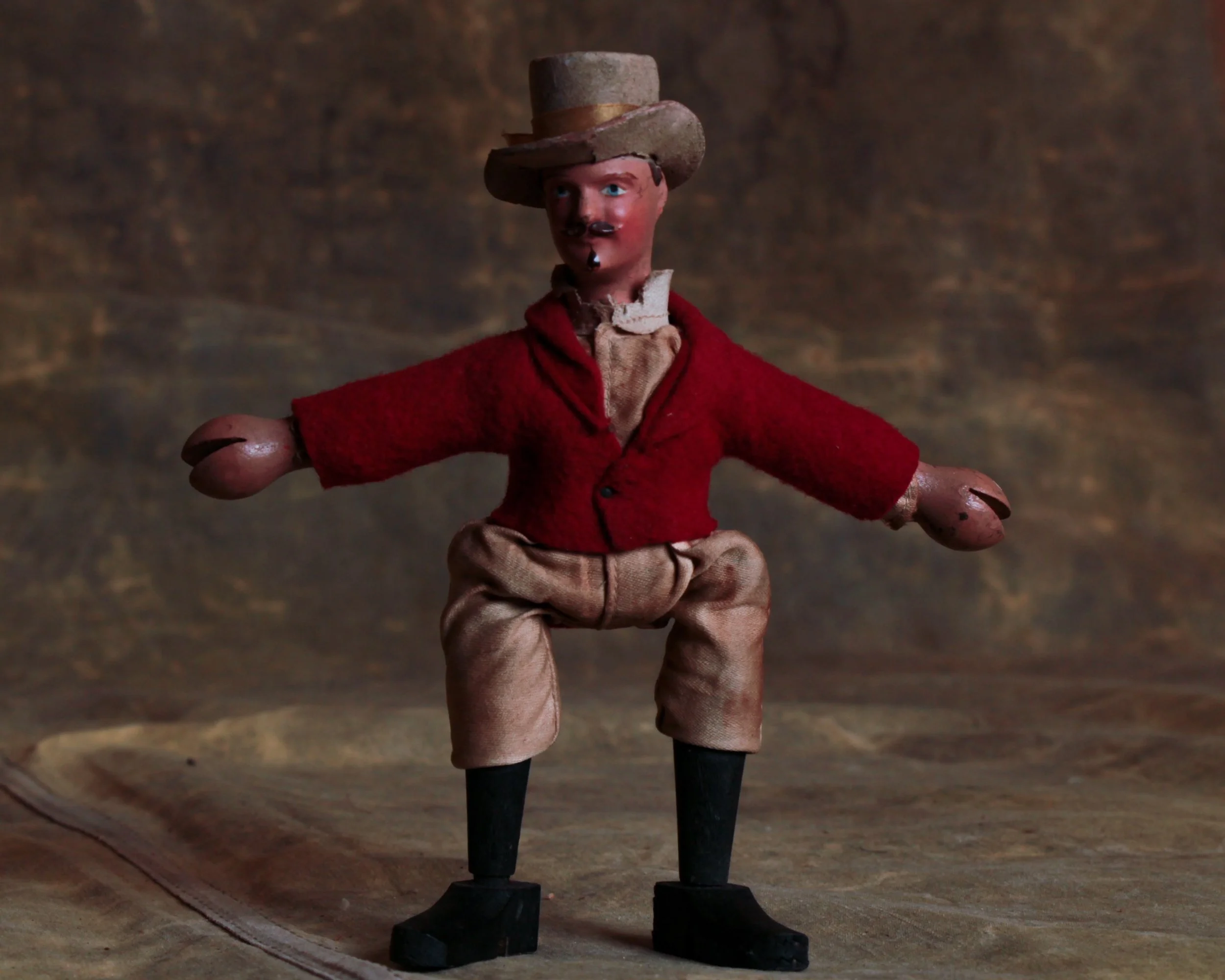
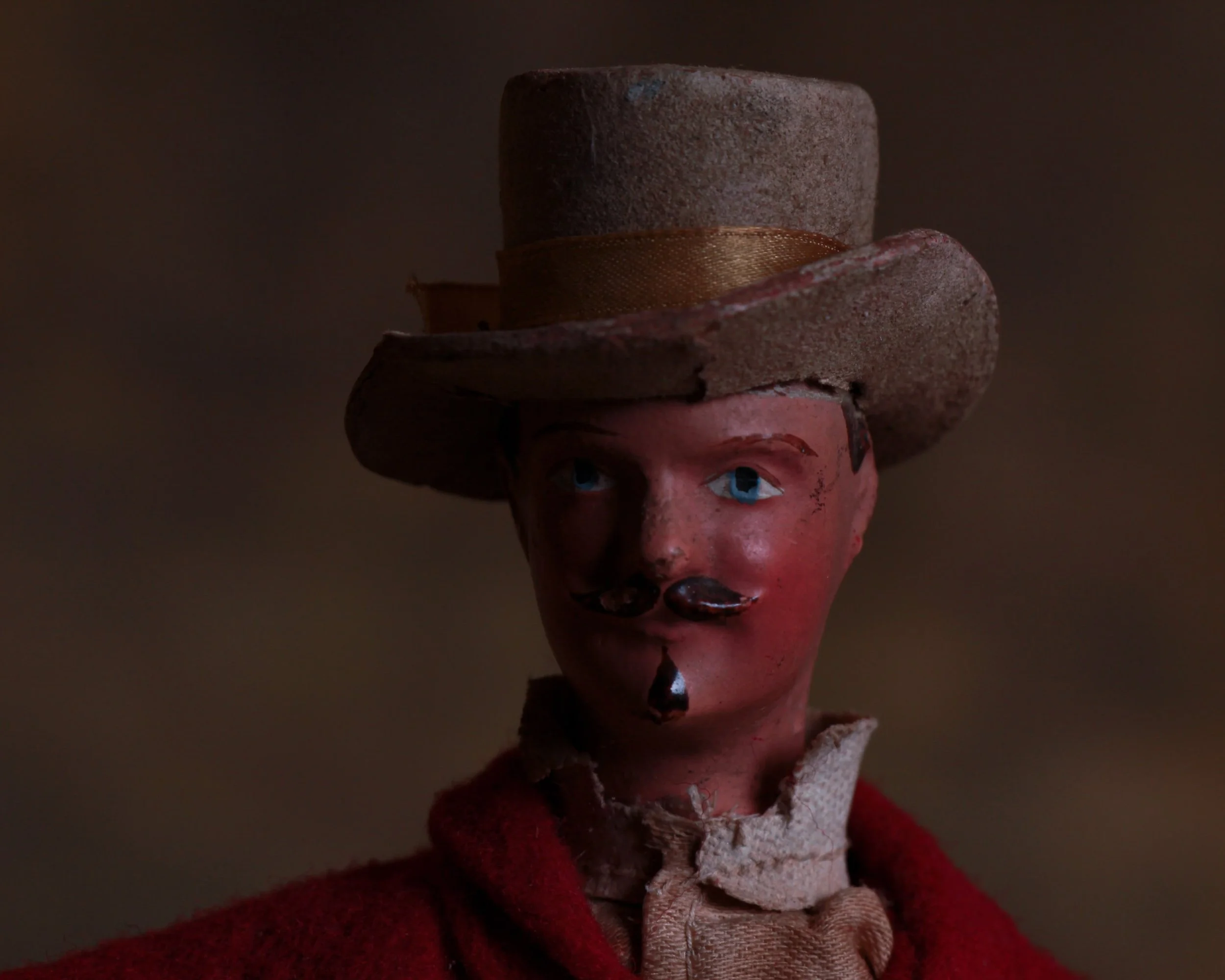
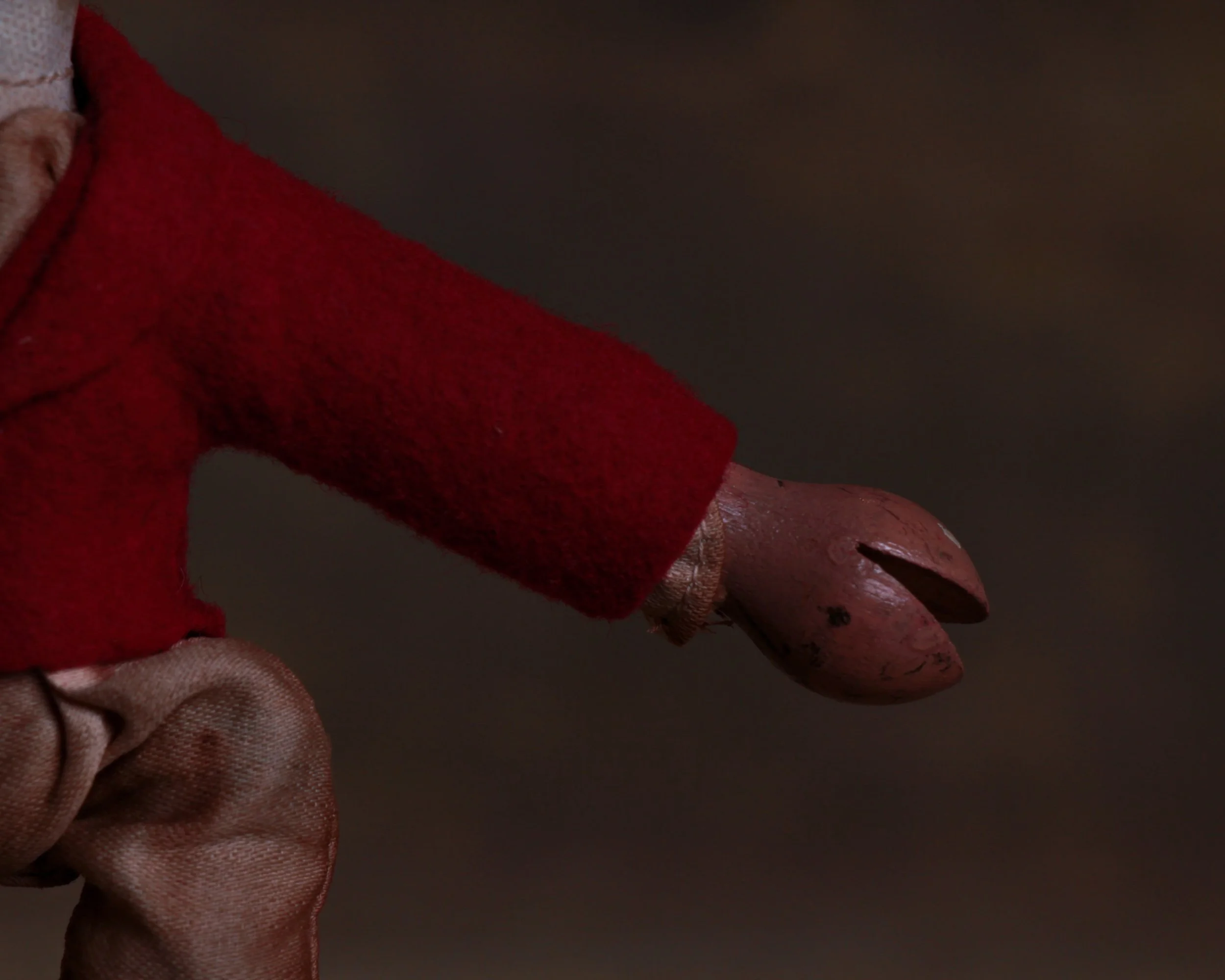
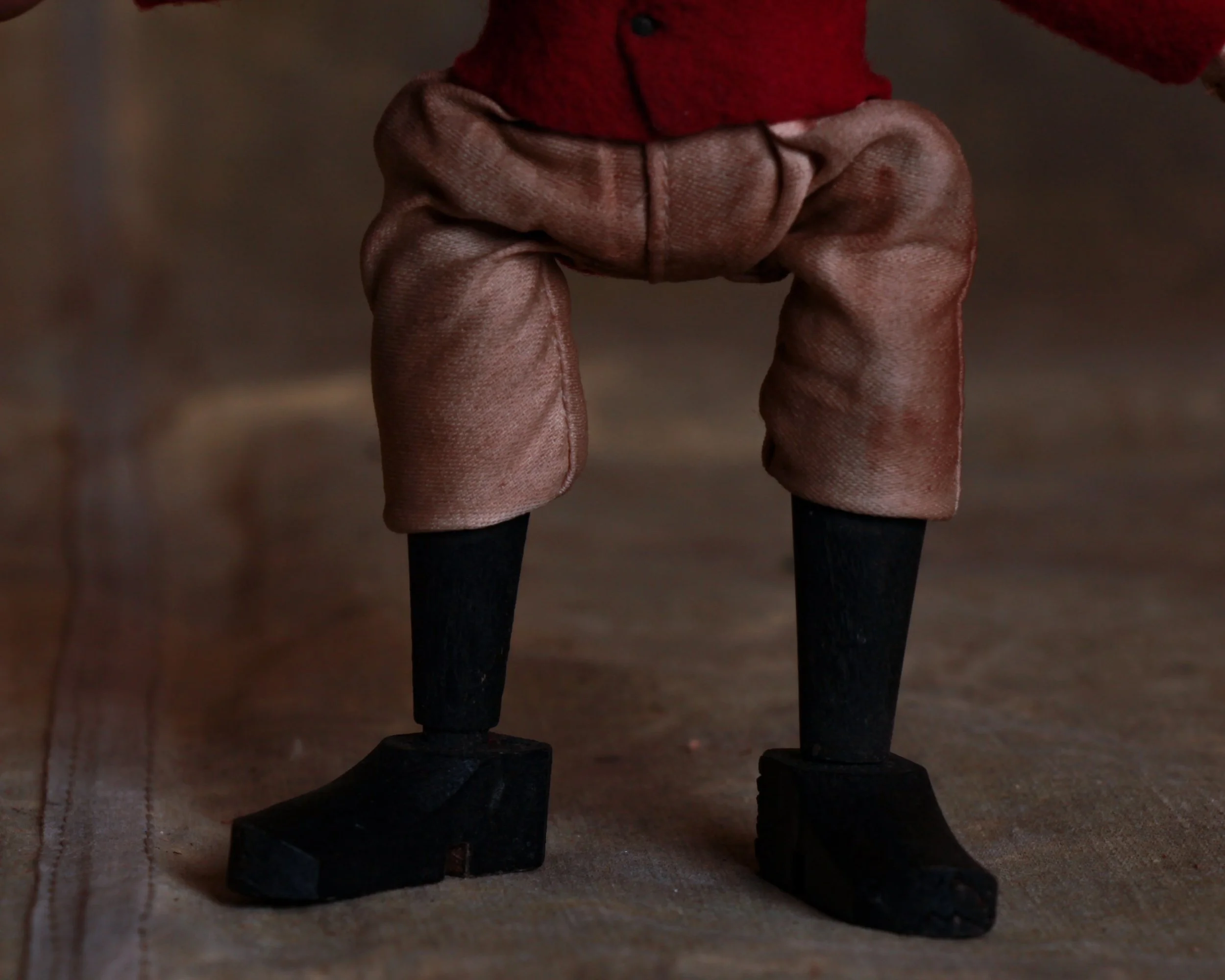
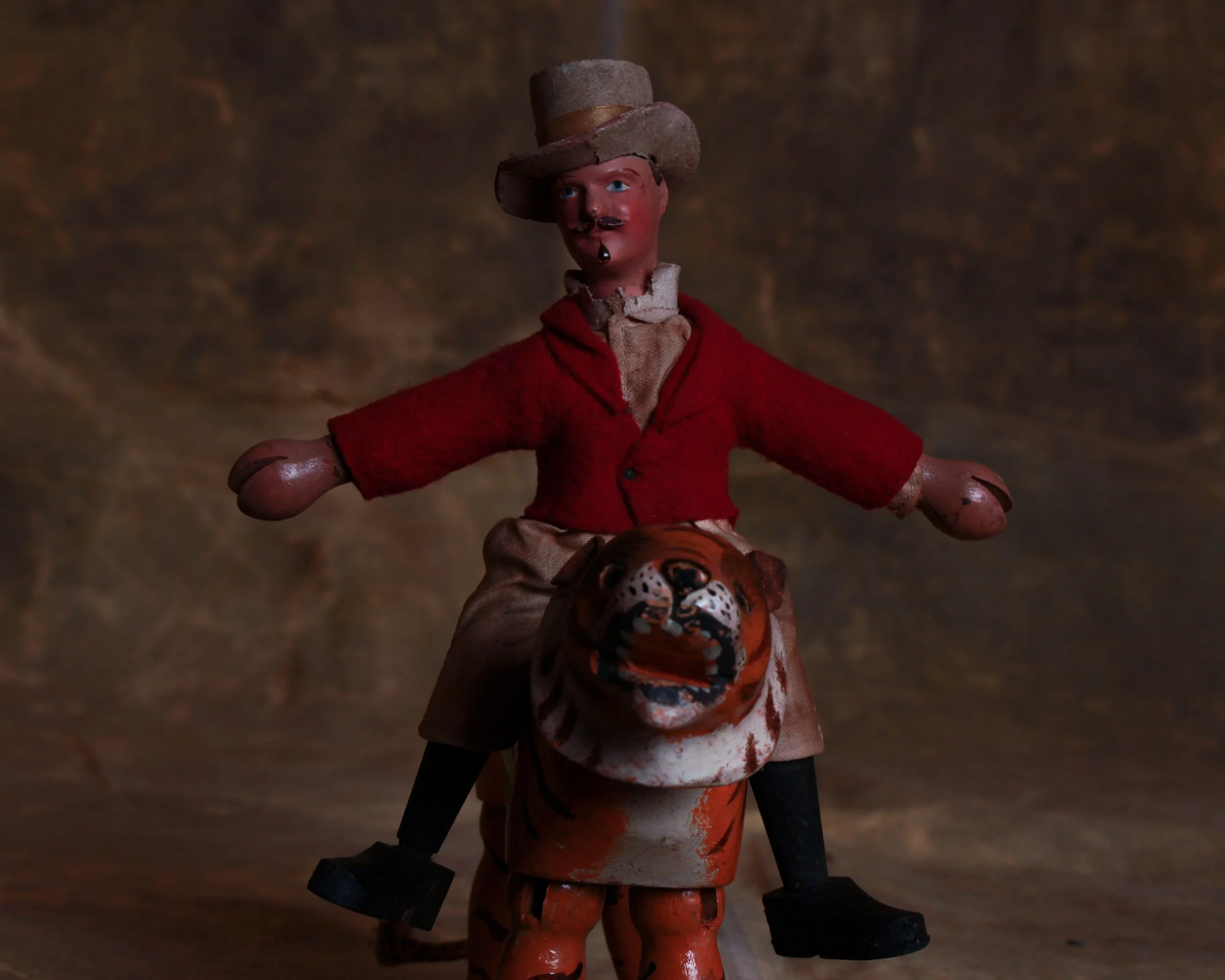
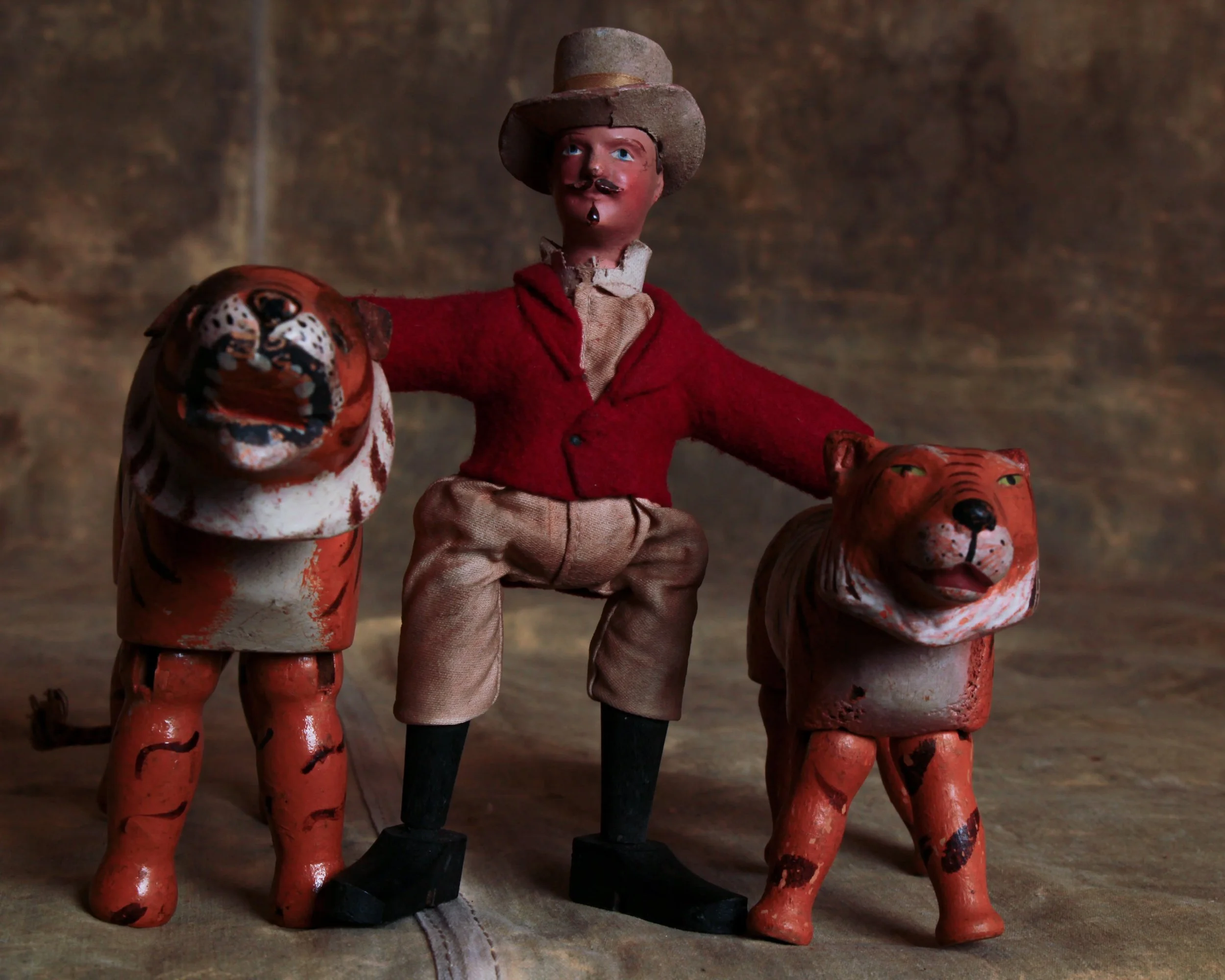
Early 20th-century Schoenhut Humpty Dumpty Circus ringmaster, complete with articulated wooden limbs, hand-painted details, and enough old-school charm to steal the whole show.
This dashing fellow is dressed to impress in a red wool felt jacket over a tan cotton shirt and matching breeches. A well-worn top hat (with just the right amount of tilt) tops off his painted mustache-and-goatee combo, giving him a look somewhere between ringmaster and rakish vaudevillian. His carved wooden hands—more like pincers, really—are posed wide open, ready to corral tigers, giraffes, or whatever chaos the big top demands.
Like most Schoenhut pieces, he’s jointed and posable, built with integrity and a real sense of play. His black-painted boots still have a firm stance, and there’s an earnestness to his bright blue eyes that suggests he’s been calling acts for over a century and still hasn’t lost his edge.
Category History
The Schoenhut Humpty Dumpty Circus is one of those early American toys that feels closer to a stage set than a plaything. Introduced in the early 1900s by the Schoenhut Piano Company of Philadelphia, it featured hand-carved wooden figures with jointed limbs, dressed in bright costumes and built to perform. Clowns, acrobats, animals—all arranged around a miniature circus ring that invited kids to direct the show.
The name “Humpty Dumpty” comes from the unique construction. Instead of fragile stringing, the figures used elastic cording threaded through wooden joints, allowing them to be posed and handled without easily falling apart. It was a smart bit of engineering that made the set durable enough for real play.
What stands out now is the balance between craftsmanship and imagination. Each figure carries a slightly naive, hand-painted quality, full of character. These weren’t just toys—they were portable performances, ready to be rearranged, restaged, and brought to life over and over again.
Early 20th-century Schoenhut Humpty Dumpty Circus ringmaster, complete with articulated wooden limbs, hand-painted details, and enough old-school charm to steal the whole show.
This dashing fellow is dressed to impress in a red wool felt jacket over a tan cotton shirt and matching breeches. A well-worn top hat (with just the right amount of tilt) tops off his painted mustache-and-goatee combo, giving him a look somewhere between ringmaster and rakish vaudevillian. His carved wooden hands—more like pincers, really—are posed wide open, ready to corral tigers, giraffes, or whatever chaos the big top demands.
Like most Schoenhut pieces, he’s jointed and posable, built with integrity and a real sense of play. His black-painted boots still have a firm stance, and there’s an earnestness to his bright blue eyes that suggests he’s been calling acts for over a century and still hasn’t lost his edge.
Category History
The Schoenhut Humpty Dumpty Circus is one of those early American toys that feels closer to a stage set than a plaything. Introduced in the early 1900s by the Schoenhut Piano Company of Philadelphia, it featured hand-carved wooden figures with jointed limbs, dressed in bright costumes and built to perform. Clowns, acrobats, animals—all arranged around a miniature circus ring that invited kids to direct the show.
The name “Humpty Dumpty” comes from the unique construction. Instead of fragile stringing, the figures used elastic cording threaded through wooden joints, allowing them to be posed and handled without easily falling apart. It was a smart bit of engineering that made the set durable enough for real play.
What stands out now is the balance between craftsmanship and imagination. Each figure carries a slightly naive, hand-painted quality, full of character. These weren’t just toys—they were portable performances, ready to be rearranged, restaged, and brought to life over and over again.