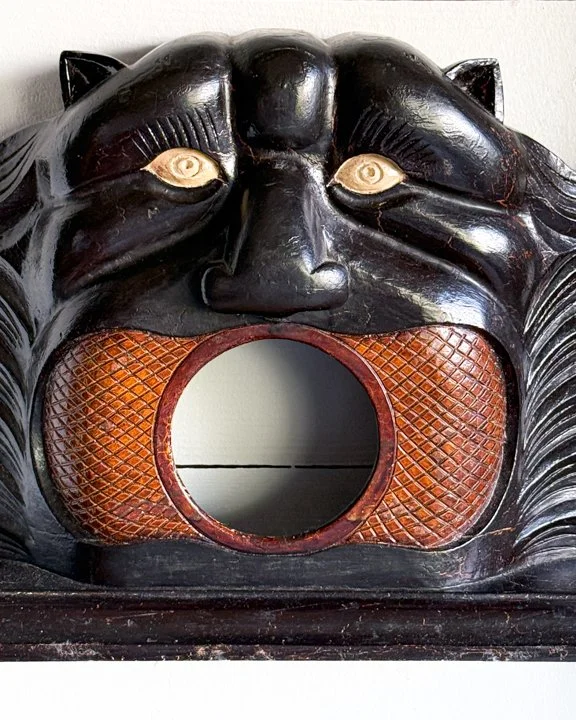
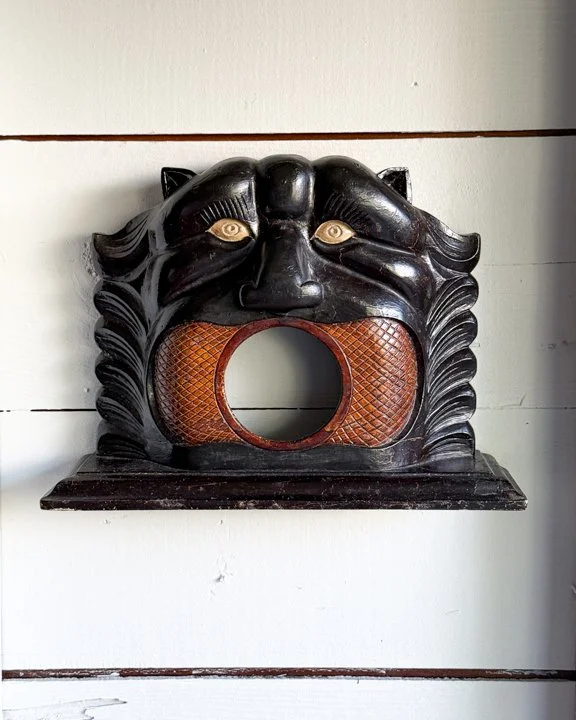
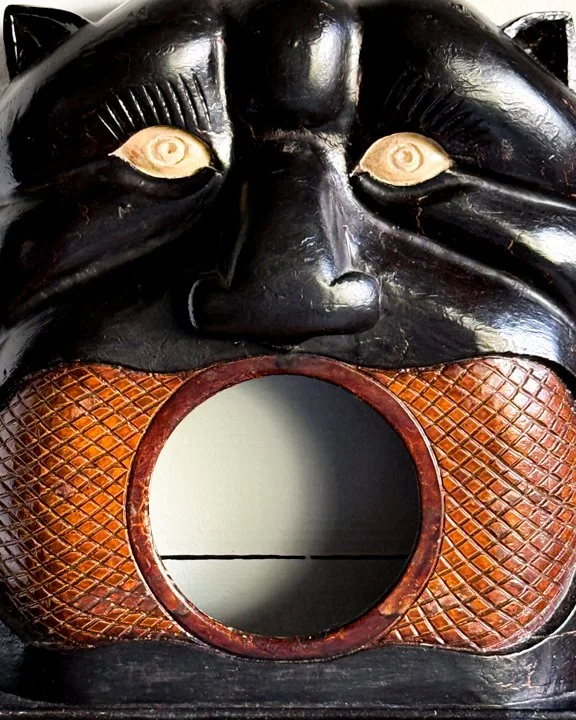
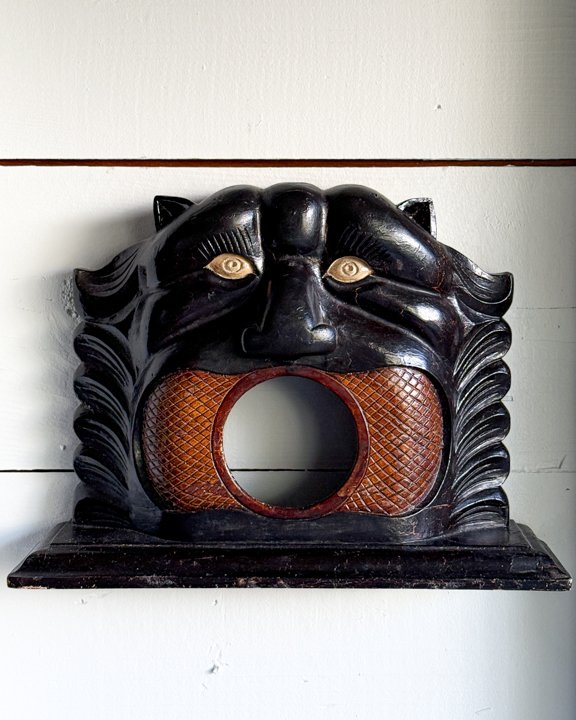
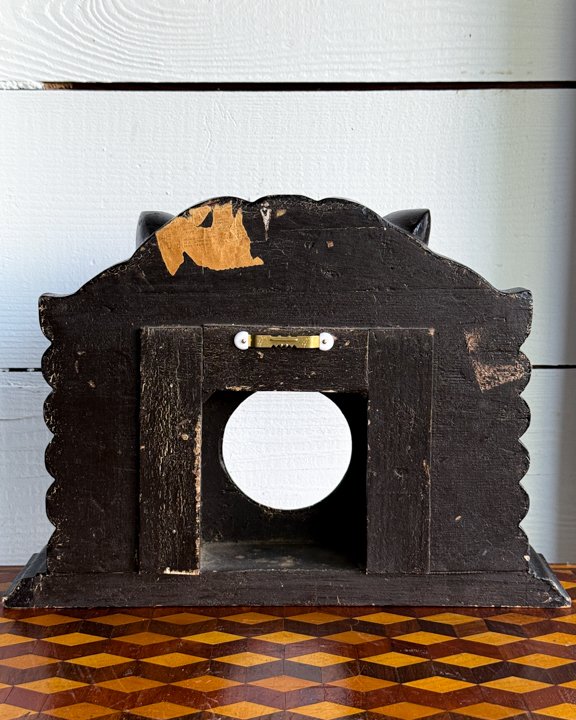
Carved and painted by hand in the 1920s, this wooden clock hutch wears its face like a stage mask—half lion, half mythological guardian, all attitude. With piercing painted eyes, rippling mane-like sides, and a wide circular opening where a clock once sat, it’s equal parts practical housing and conversation-starting sculpture. The carved crosshatch work around the mouth adds a surprising touch of texture and craftsmanship, giving the whole thing a fierce but slightly theatrical edge. It was originally designed to cradle a timepiece, but even without the clock it’s a striking work of folk art. Whether you see a lion, a watchful beast, or a guardian spirit.
Measures: W 15" x D 4" x H 11"
Clock Hutch
An antique clock hutch is the stage built for time itself. Commonly seen in the 18th and 19th centuries, especially in European and early American interiors, these cases were designed to house tall clocks—protecting the mechanism while giving it a proper presence in the room.
Construction mattered. Made from hardwoods like oak, walnut, or mahogany, the hutch was often crafted by cabinetmakers who understood both structure and proportion. Glass panels allowed the dial and pendulum to be seen, while doors provided access for winding and maintenance. Some leaned simple and functional, others carried carved details or moldings that reflected regional tastes.
What makes them interesting is how they balance protection and display. The clock inside is the focus, but the case frames it, guiding how it’s experienced. Sound plays a role too—the enclosed space softens and shapes the ticking, turning it into part of the atmosphere.
Over time, these hutches pick up a quiet patina. Worn edges, softened finishes, small repairs—evidence of years spent marking hours.
They’re not just furniture, but companions to routine—holding a mechanism that measures time, while quietly accumulating it themselves.
Carved and painted by hand in the 1920s, this wooden clock hutch wears its face like a stage mask—half lion, half mythological guardian, all attitude. With piercing painted eyes, rippling mane-like sides, and a wide circular opening where a clock once sat, it’s equal parts practical housing and conversation-starting sculpture. The carved crosshatch work around the mouth adds a surprising touch of texture and craftsmanship, giving the whole thing a fierce but slightly theatrical edge. It was originally designed to cradle a timepiece, but even without the clock it’s a striking work of folk art. Whether you see a lion, a watchful beast, or a guardian spirit.
Measures: W 15" x D 4" x H 11"
Clock Hutch
An antique clock hutch is the stage built for time itself. Commonly seen in the 18th and 19th centuries, especially in European and early American interiors, these cases were designed to house tall clocks—protecting the mechanism while giving it a proper presence in the room.
Construction mattered. Made from hardwoods like oak, walnut, or mahogany, the hutch was often crafted by cabinetmakers who understood both structure and proportion. Glass panels allowed the dial and pendulum to be seen, while doors provided access for winding and maintenance. Some leaned simple and functional, others carried carved details or moldings that reflected regional tastes.
What makes them interesting is how they balance protection and display. The clock inside is the focus, but the case frames it, guiding how it’s experienced. Sound plays a role too—the enclosed space softens and shapes the ticking, turning it into part of the atmosphere.
Over time, these hutches pick up a quiet patina. Worn edges, softened finishes, small repairs—evidence of years spent marking hours.
They’re not just furniture, but companions to routine—holding a mechanism that measures time, while quietly accumulating it themselves.