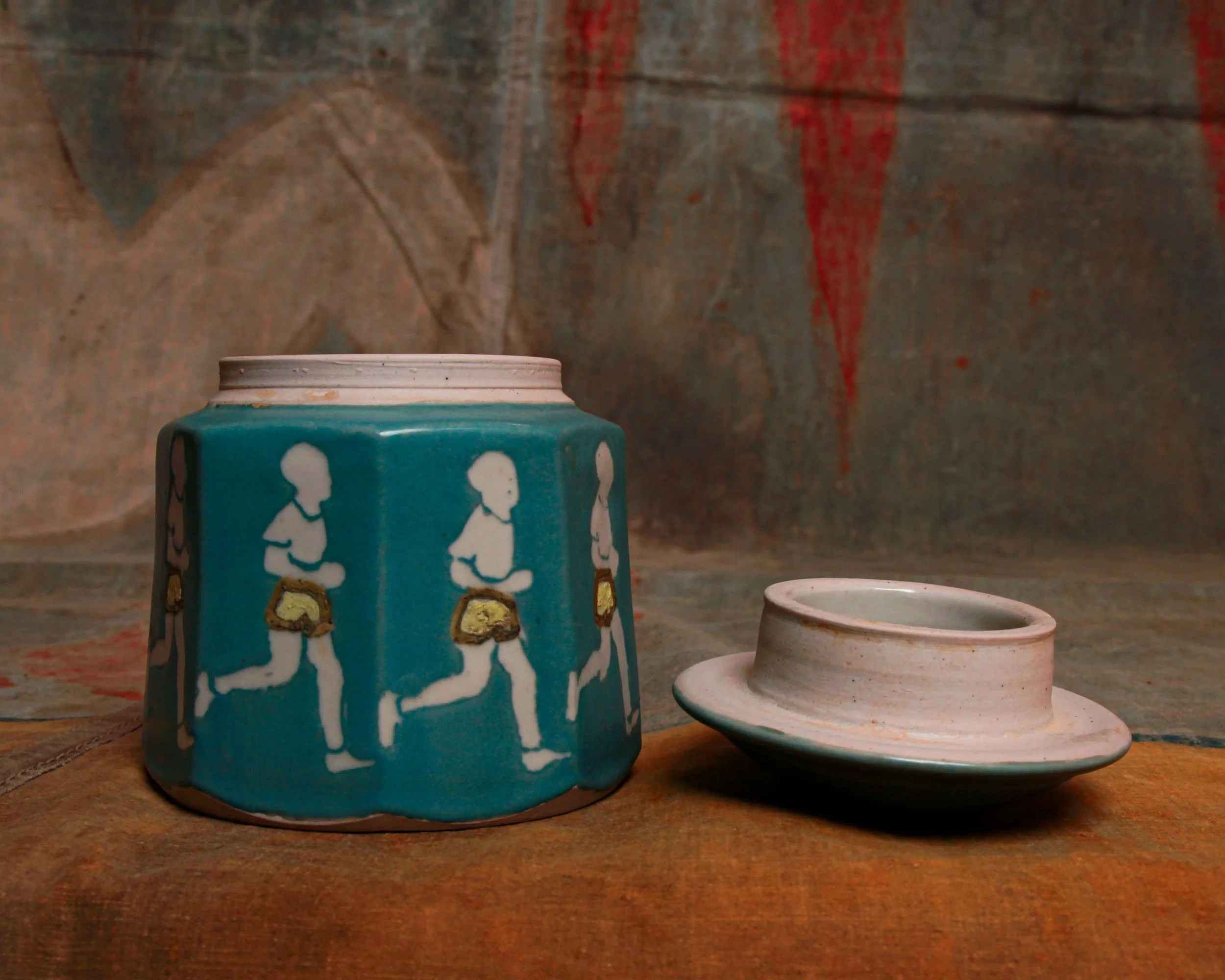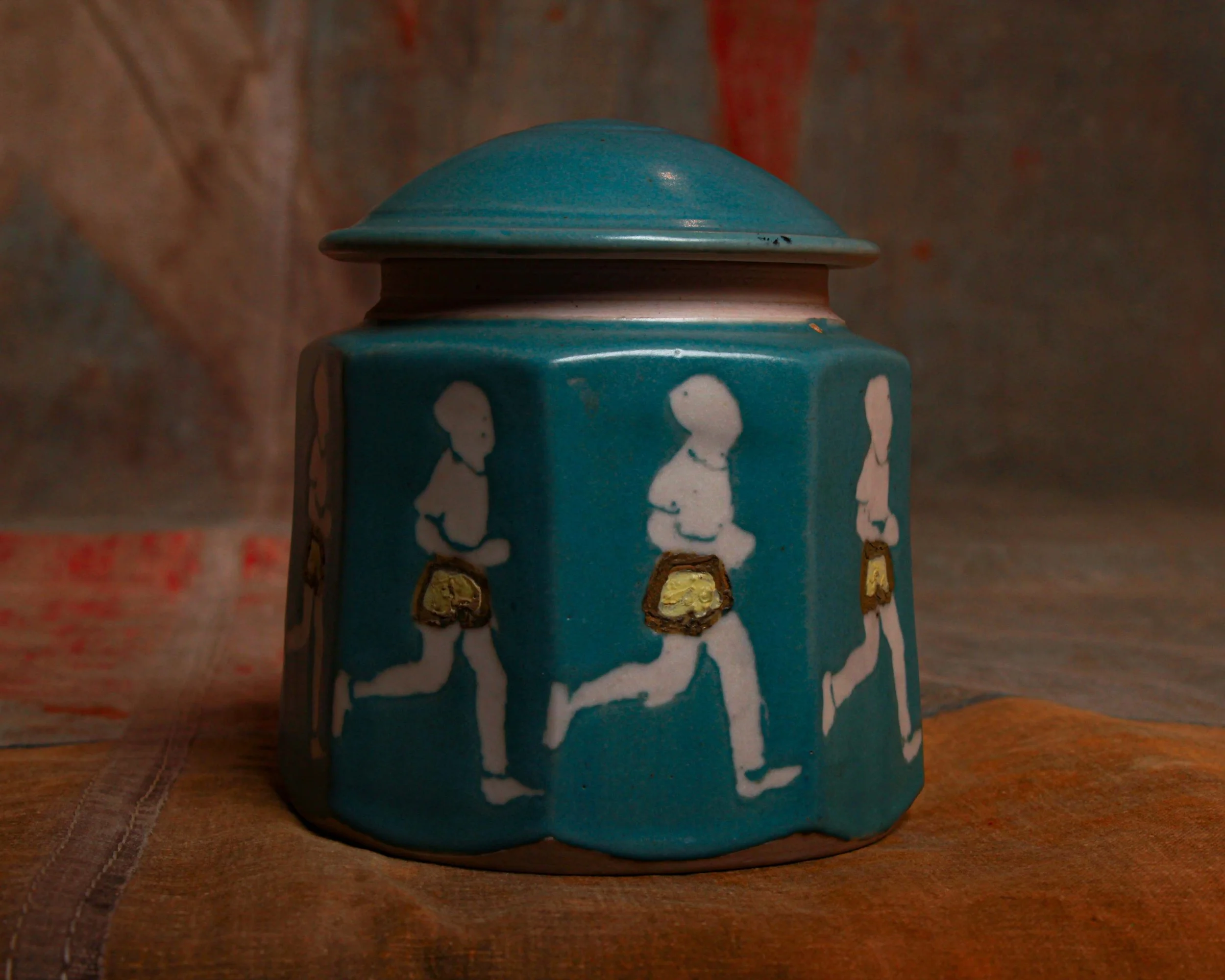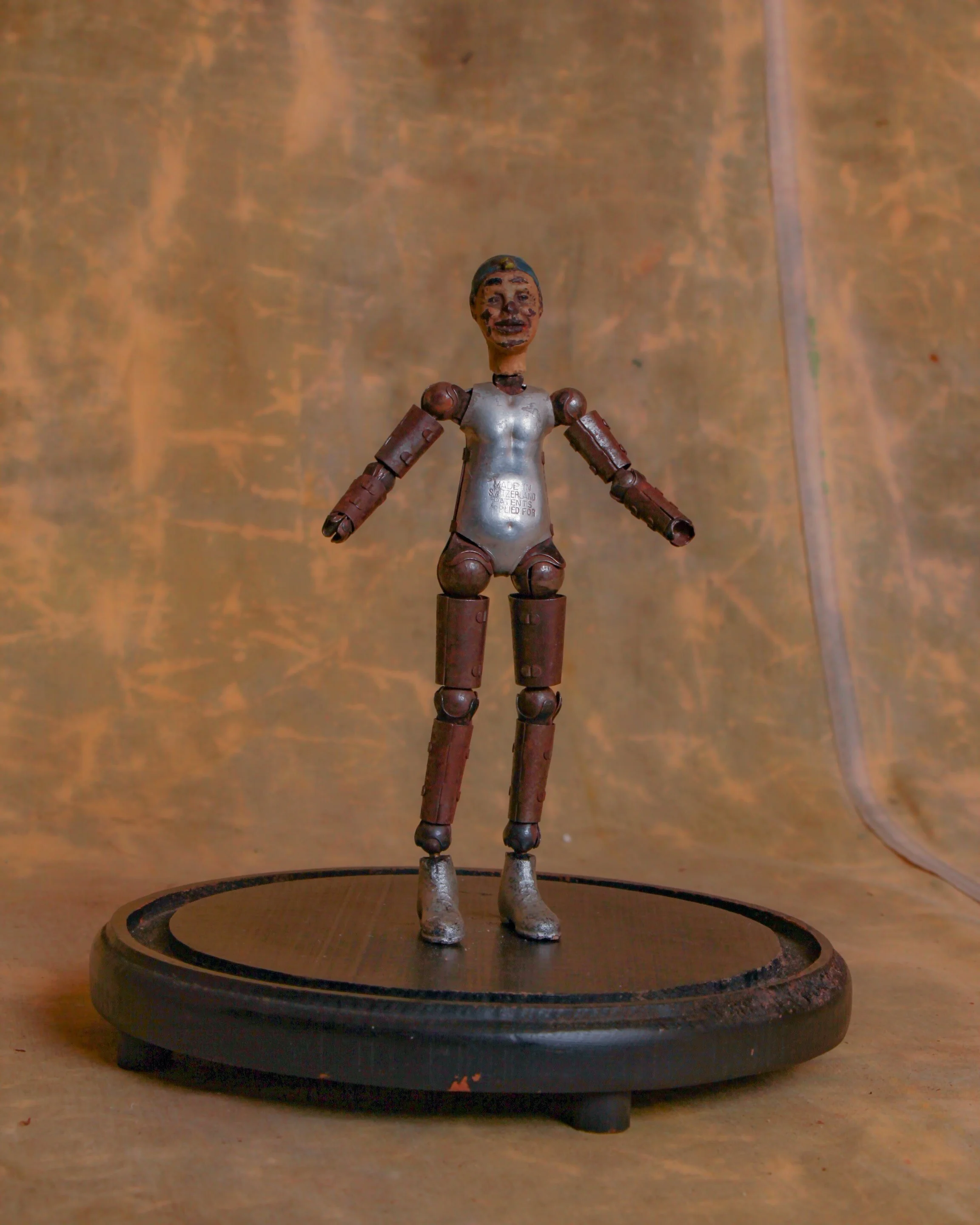
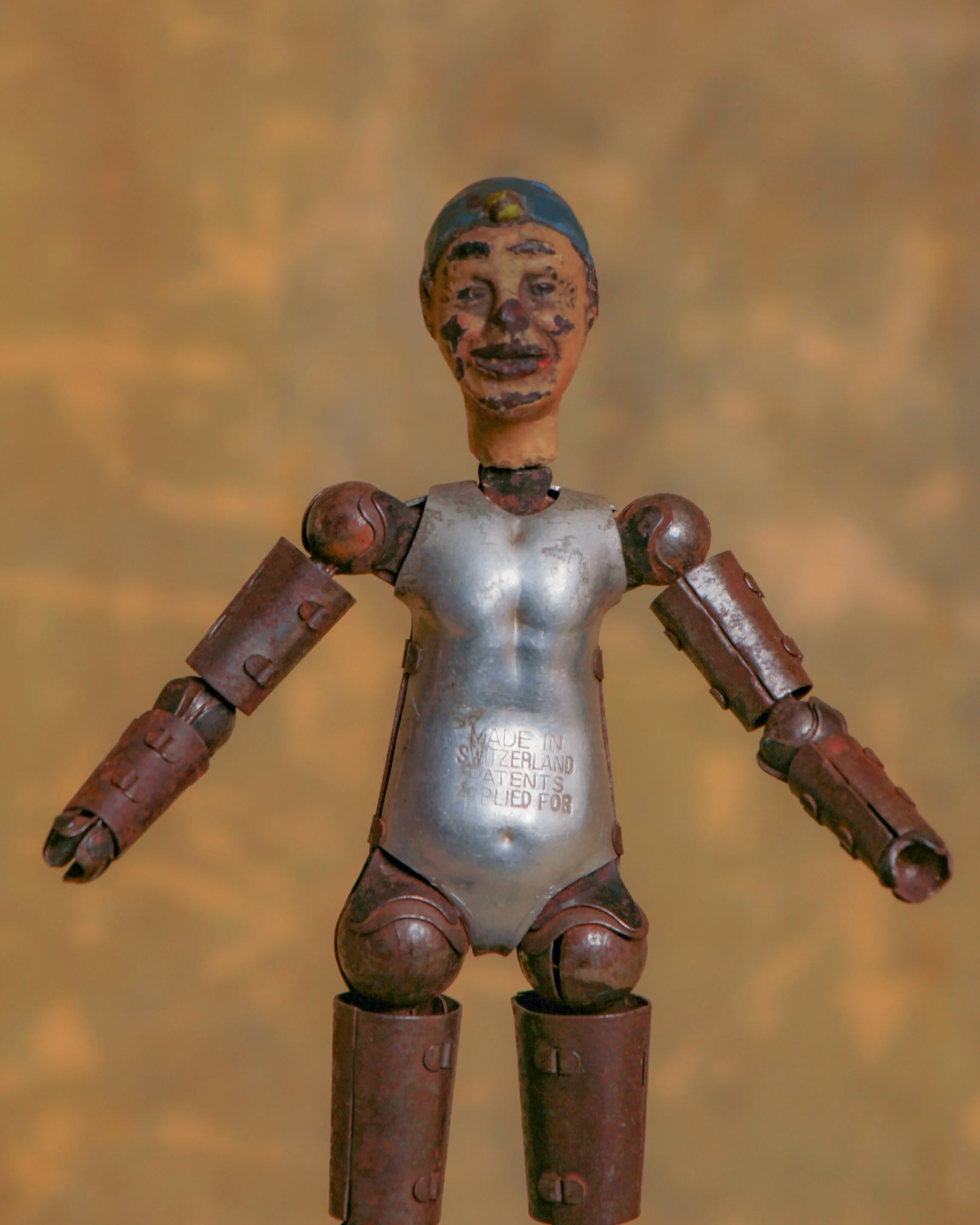
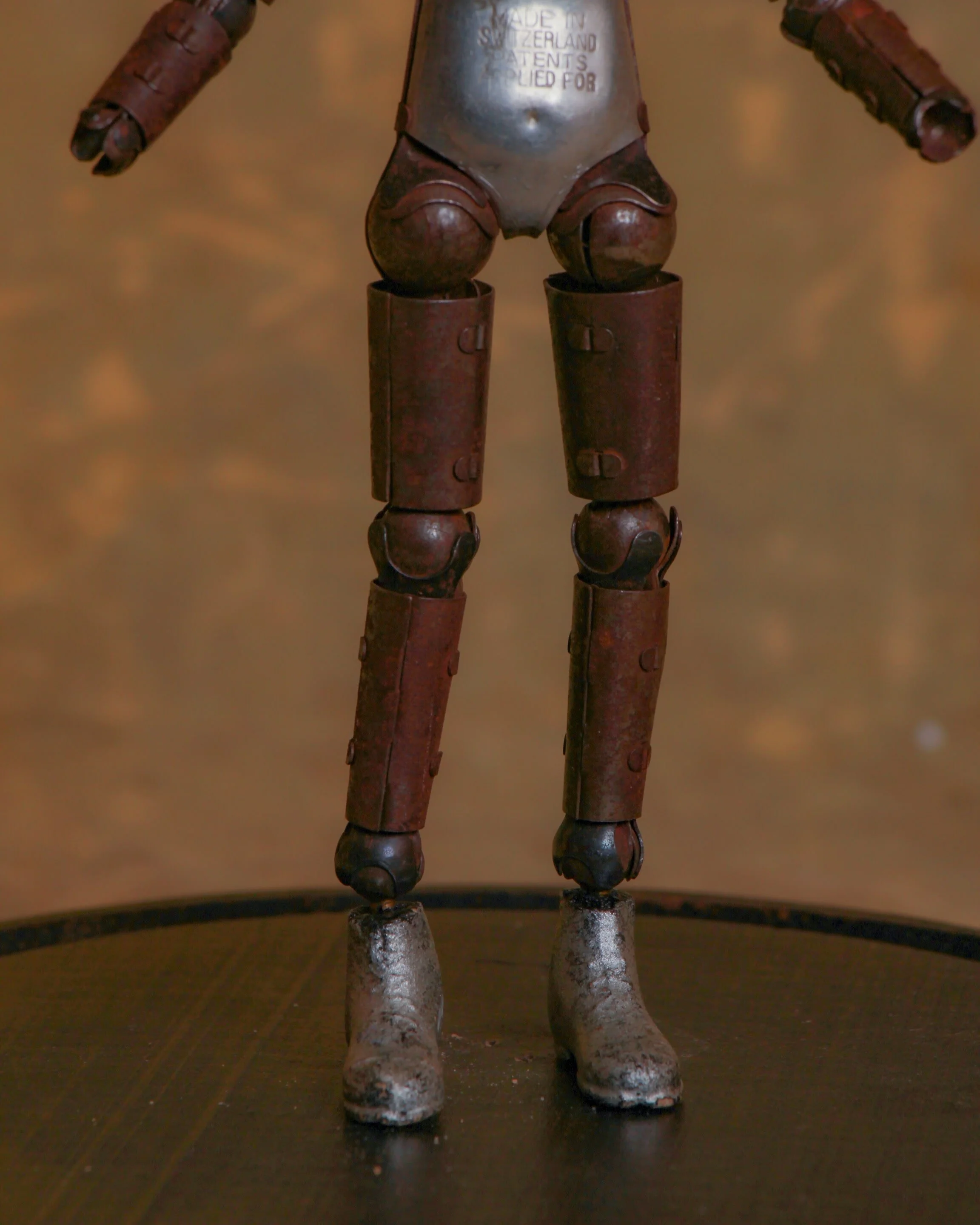
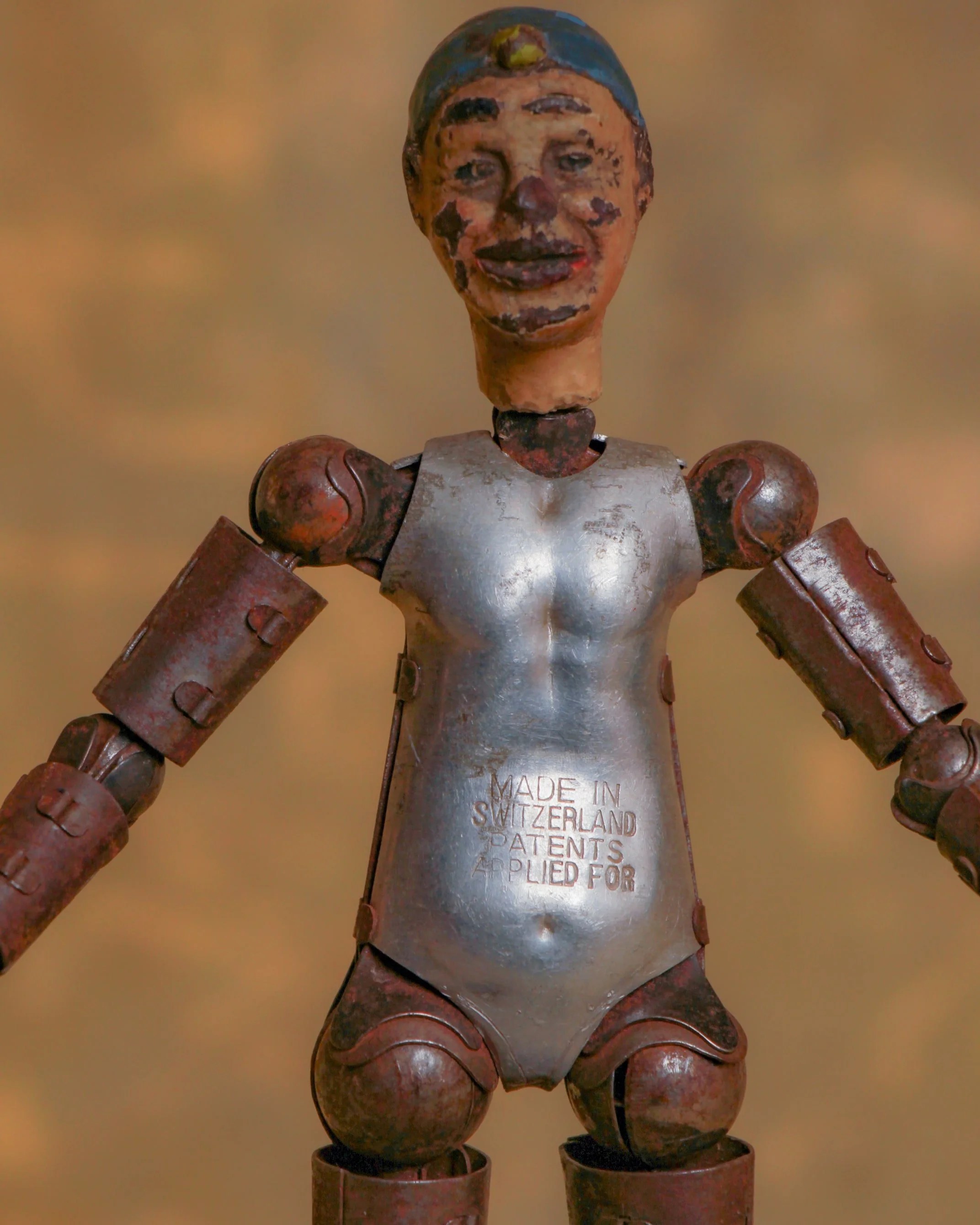
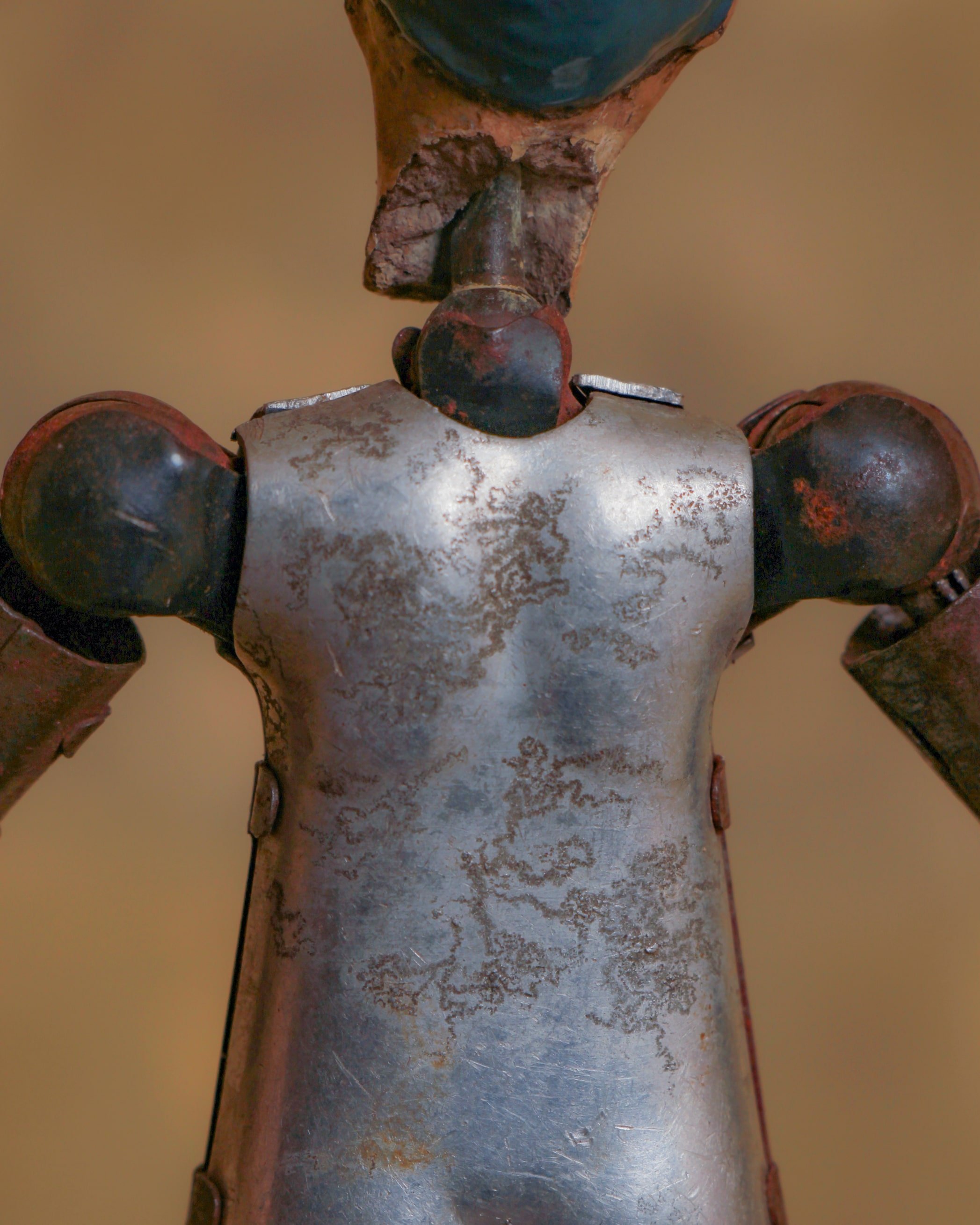
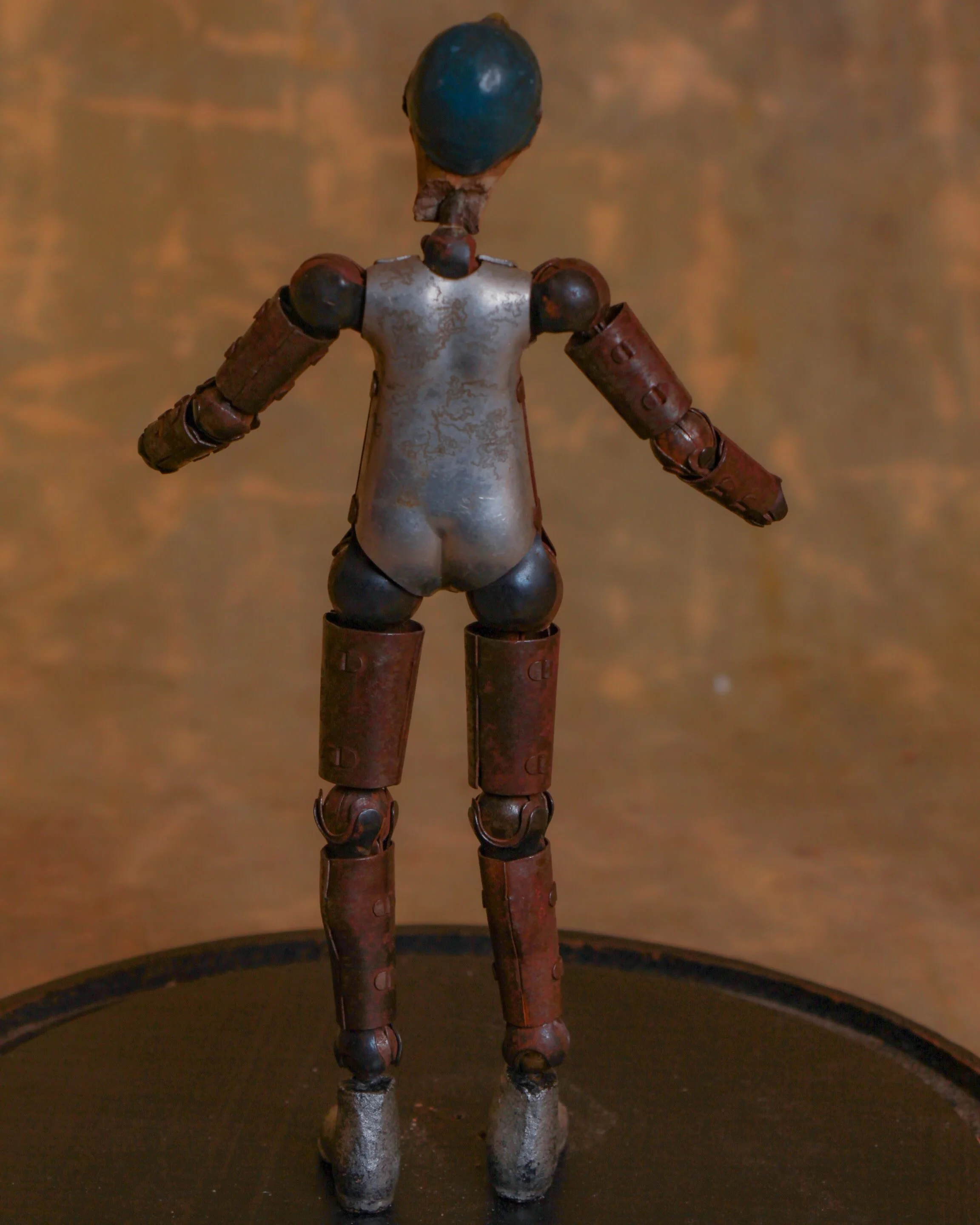
Here is a 1930s lay figure manufactured by renowned Swiss watch maker Bucherer. It has a composition head with painted facial features that resemble a clown. And a metal body made of aluminum, steel and brass. This ball-jointed "artist mannequin" can be positioned in multiple poses. Missing hands, which adds to its overall appeal. Measures roughly 7.5"
Category History
Bucherer begins in 1888, when Carl-Friedrich Bucherer opened a shop in Lucerne and set out to do two things well: sell fine watches and understand how they worked. That second part mattered. Switzerland’s watch industry was built on networks of specialists—case makers, dial painters, movement manufacturers—and Bucherer learned to navigate all of it, bridging retail and production with a clear eye for quality.
Through the early 20th century, the company grew alongside the rise of wristwatches, moving from pocket watches into more modern forms as tastes shifted. By mid-century, Bucherer wasn’t just a retailer—it was developing its own designs and building relationships with major Swiss houses, becoming a trusted name for both locals and travelers passing through Lucerne.
What sets Bucherer apart is that balance between heritage and adaptability. It stayed rooted in traditional craftsmanship while responding to changes that shook the industry, including the quartz crisis of the 1970s. Rather than disappearing, it leaned into its strengths—curation, design, and long-term partnerships.
Today, Bucherer sits in an interesting position: part historic retailer, part watchmaker, part gatekeeper of Swiss watch culture. Its pieces often reflect a clean, considered approach—less about flash, more about proportion, finish, and wearability.
It’s a name that doesn’t shout, but carries weight. Built over time, one watch—and one decision—at a time. And through it all, it has remained closely tied to place, with Lucerne still at the heart of its identity.
Here is a 1930s lay figure manufactured by renowned Swiss watch maker Bucherer. It has a composition head with painted facial features that resemble a clown. And a metal body made of aluminum, steel and brass. This ball-jointed "artist mannequin" can be positioned in multiple poses. Missing hands, which adds to its overall appeal. Measures roughly 7.5"
Category History
Bucherer begins in 1888, when Carl-Friedrich Bucherer opened a shop in Lucerne and set out to do two things well: sell fine watches and understand how they worked. That second part mattered. Switzerland’s watch industry was built on networks of specialists—case makers, dial painters, movement manufacturers—and Bucherer learned to navigate all of it, bridging retail and production with a clear eye for quality.
Through the early 20th century, the company grew alongside the rise of wristwatches, moving from pocket watches into more modern forms as tastes shifted. By mid-century, Bucherer wasn’t just a retailer—it was developing its own designs and building relationships with major Swiss houses, becoming a trusted name for both locals and travelers passing through Lucerne.
What sets Bucherer apart is that balance between heritage and adaptability. It stayed rooted in traditional craftsmanship while responding to changes that shook the industry, including the quartz crisis of the 1970s. Rather than disappearing, it leaned into its strengths—curation, design, and long-term partnerships.
Today, Bucherer sits in an interesting position: part historic retailer, part watchmaker, part gatekeeper of Swiss watch culture. Its pieces often reflect a clean, considered approach—less about flash, more about proportion, finish, and wearability.
It’s a name that doesn’t shout, but carries weight. Built over time, one watch—and one decision—at a time. And through it all, it has remained closely tied to place, with Lucerne still at the heart of its identity.