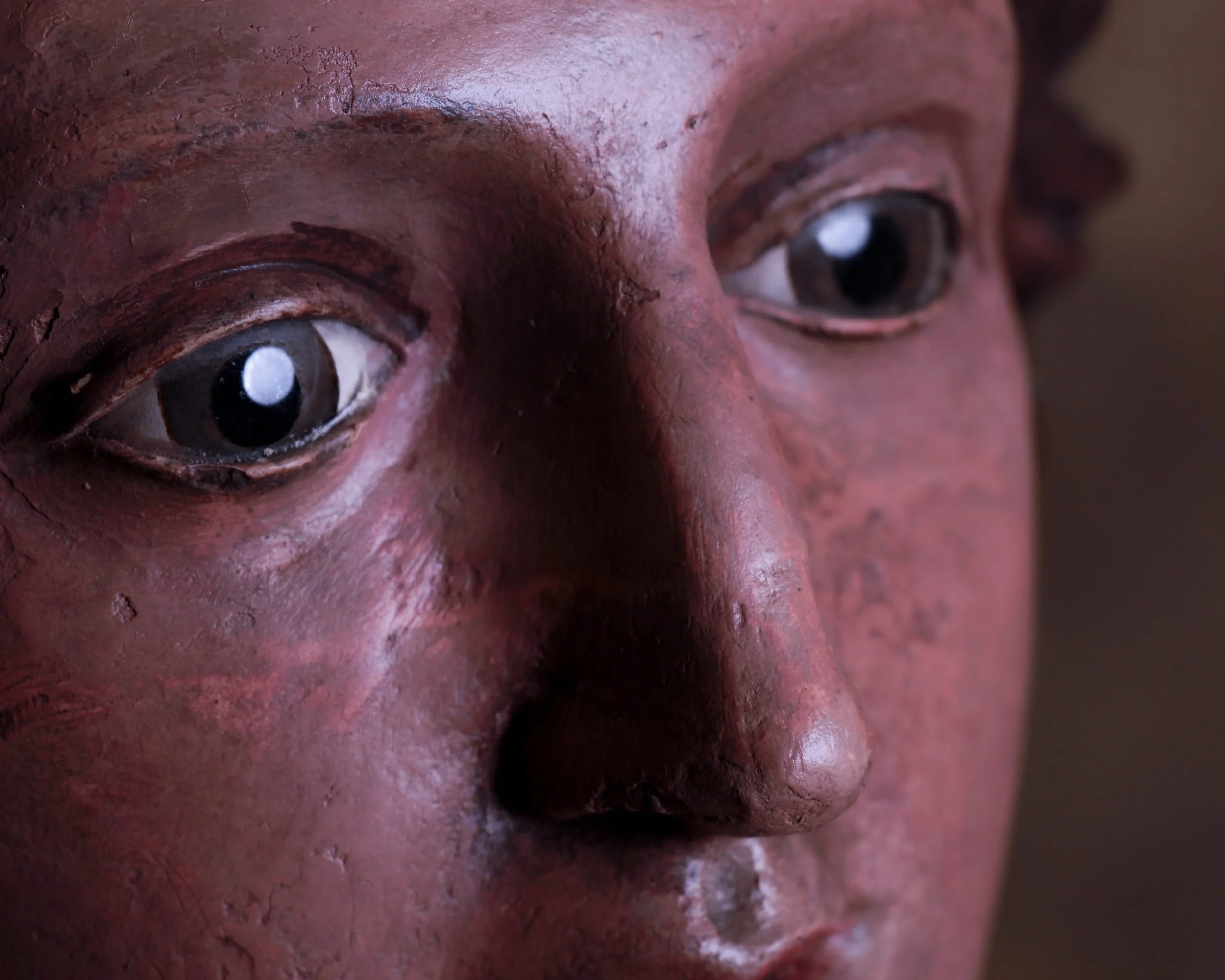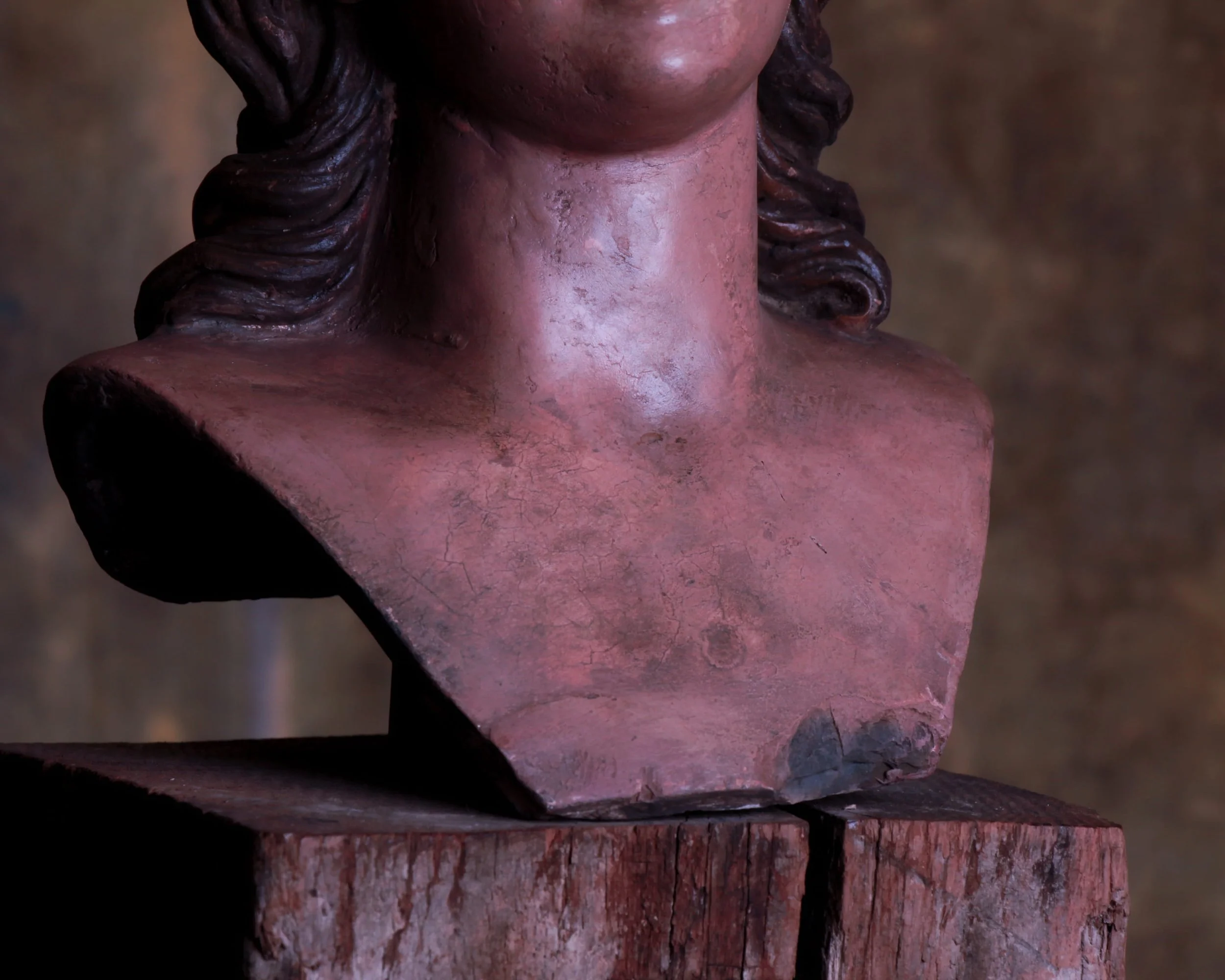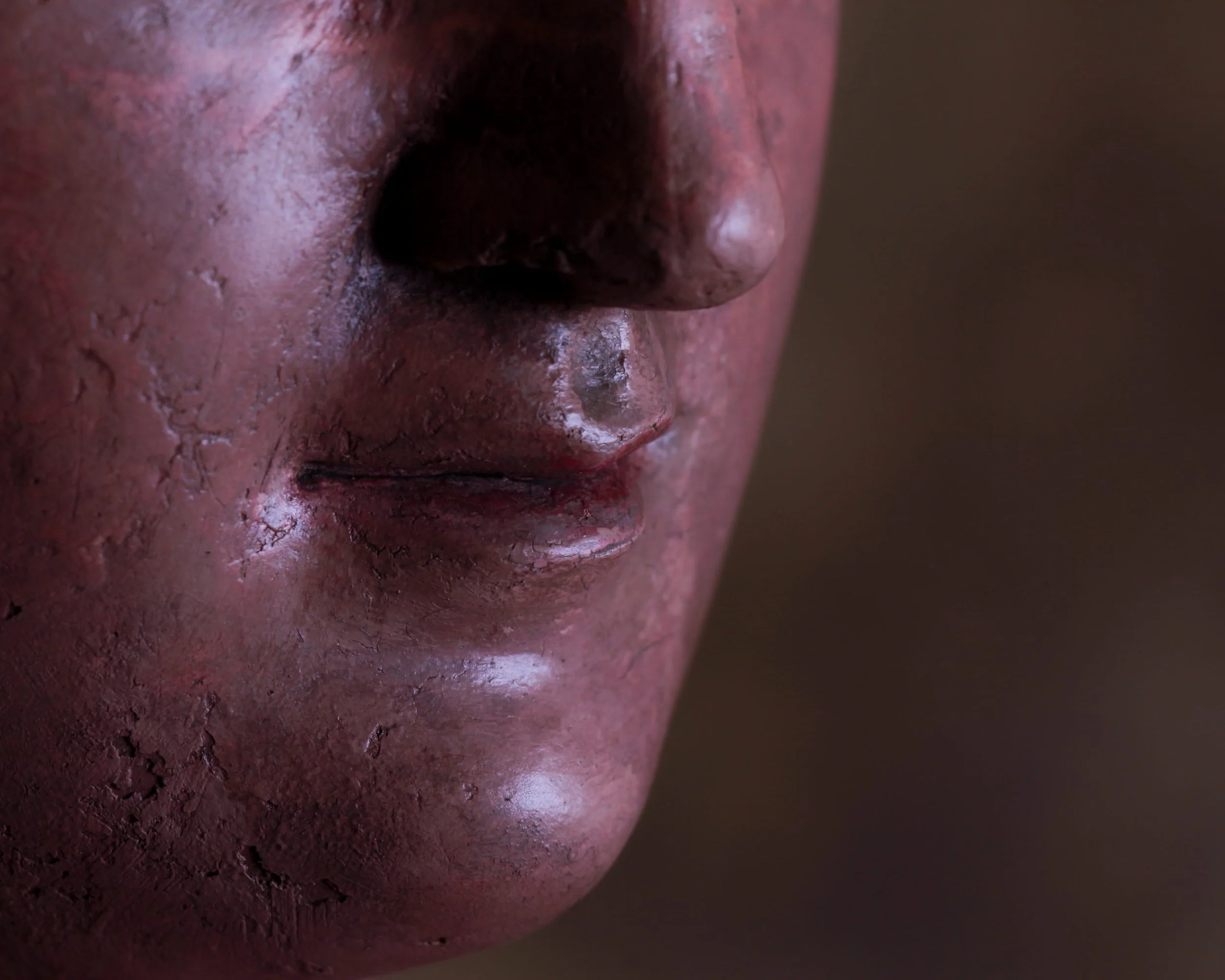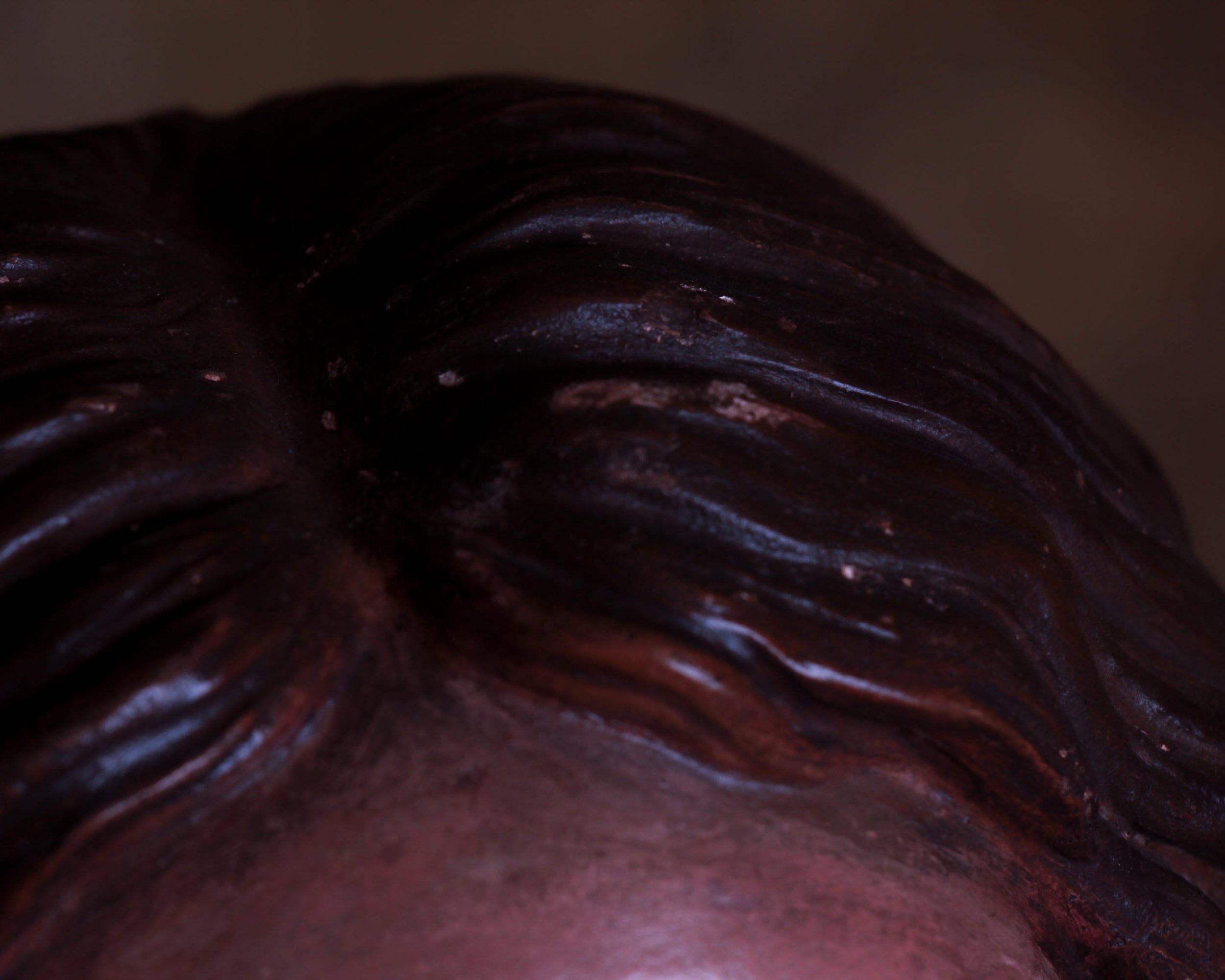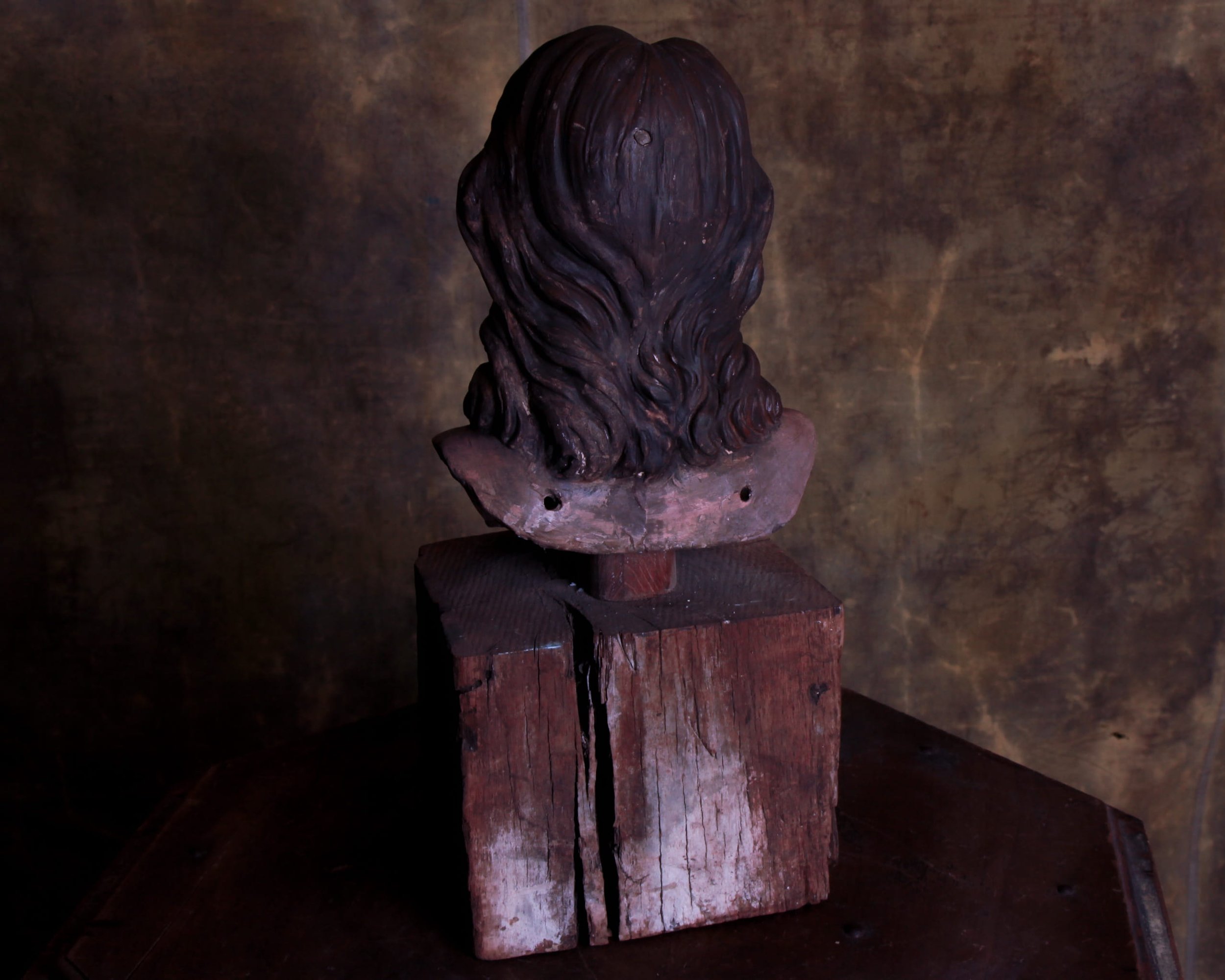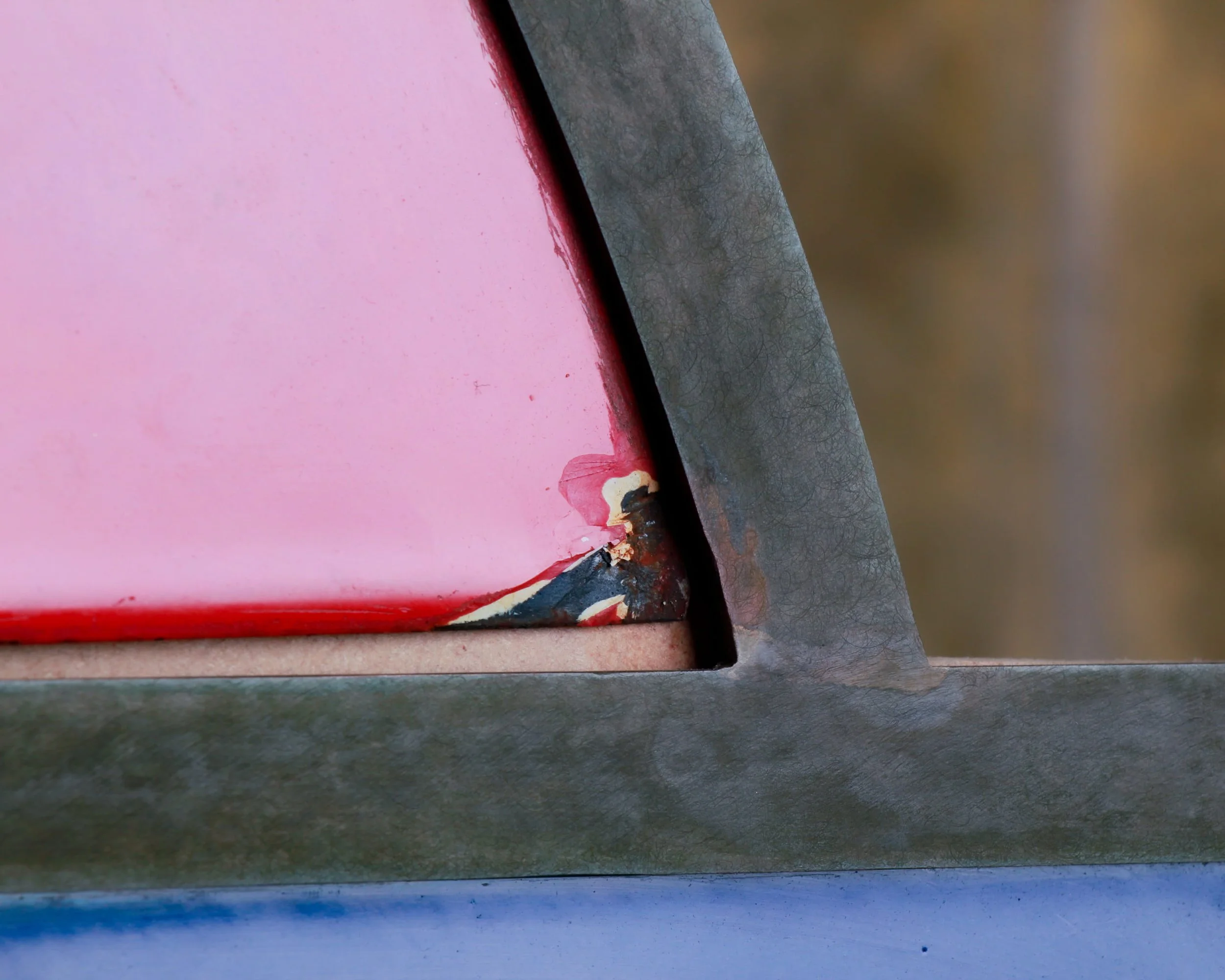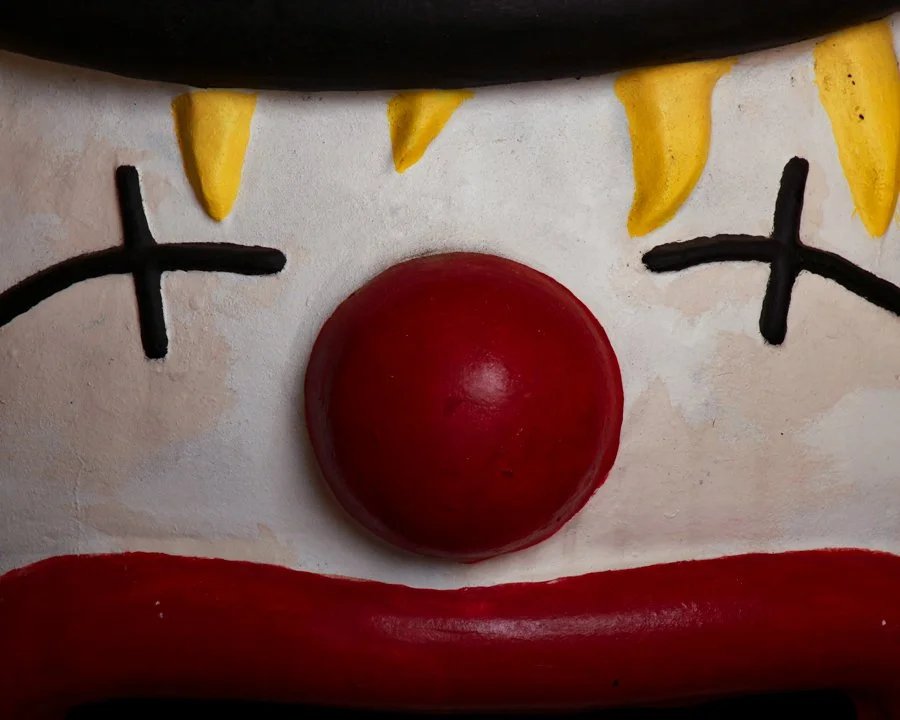
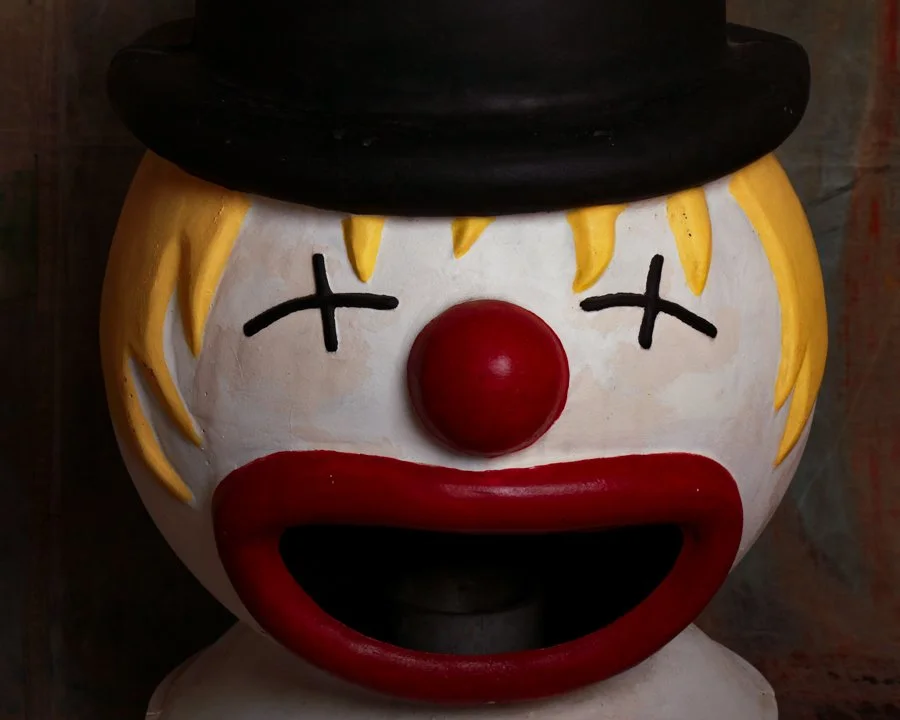
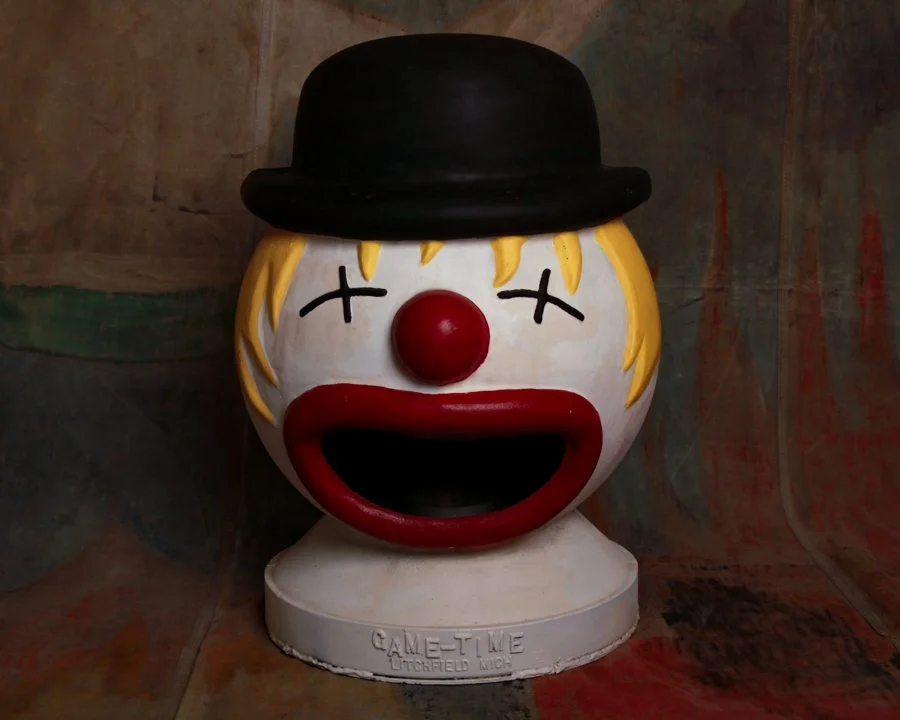
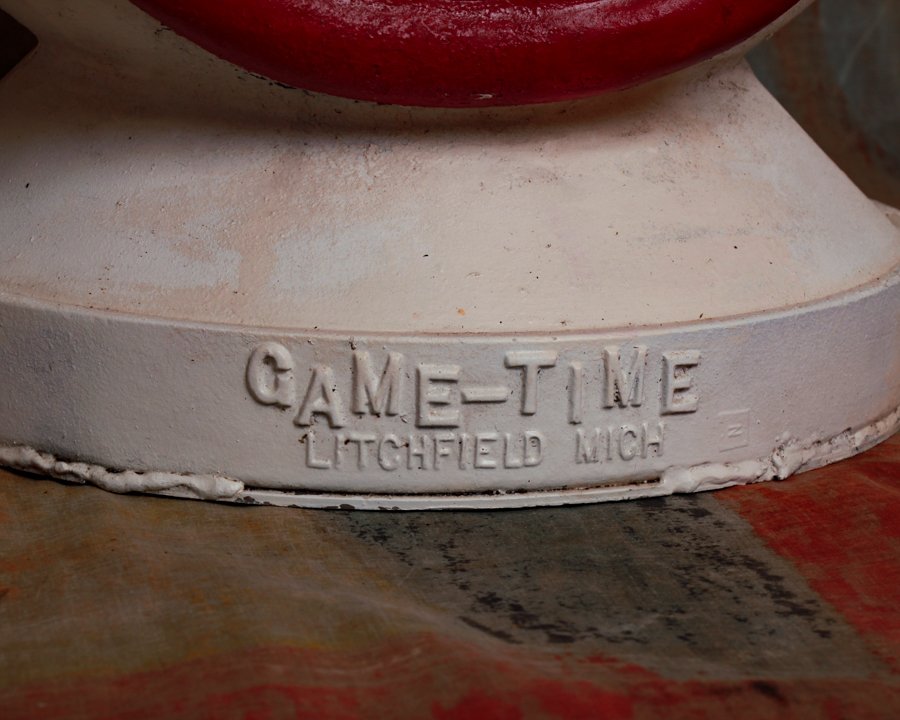
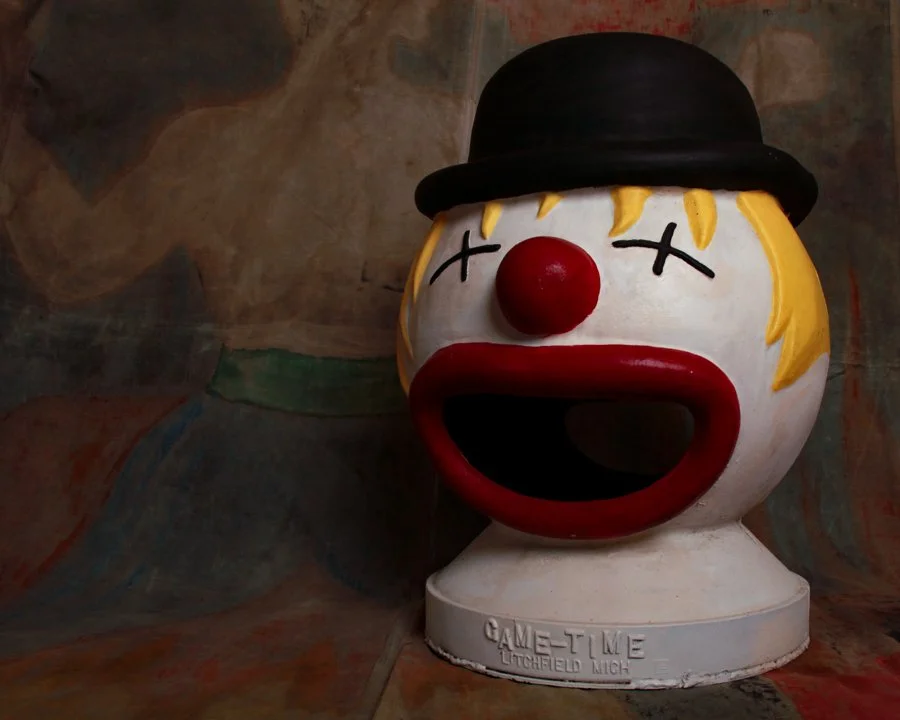
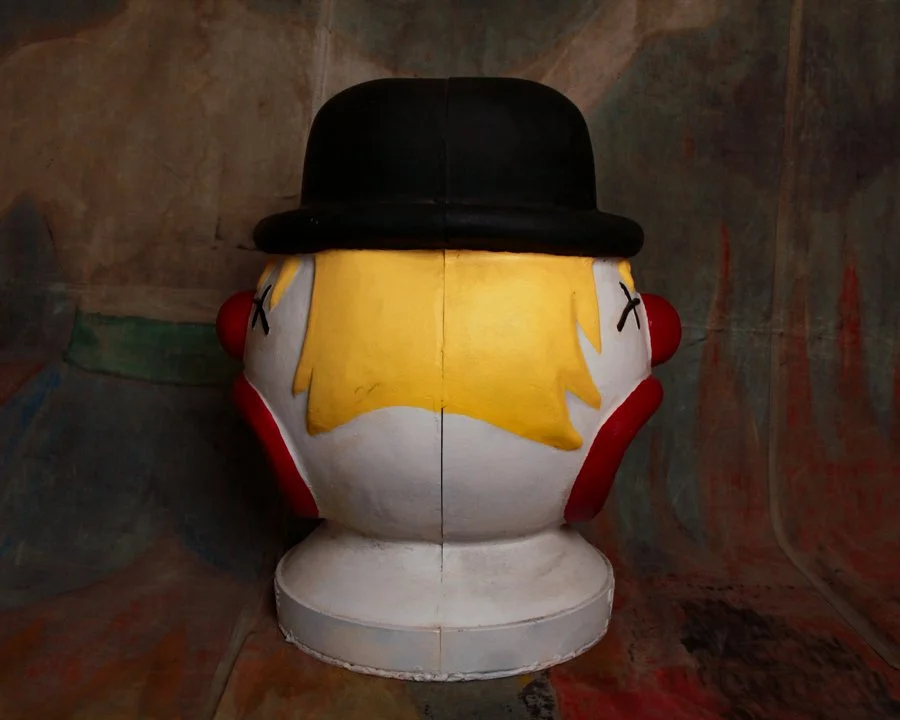
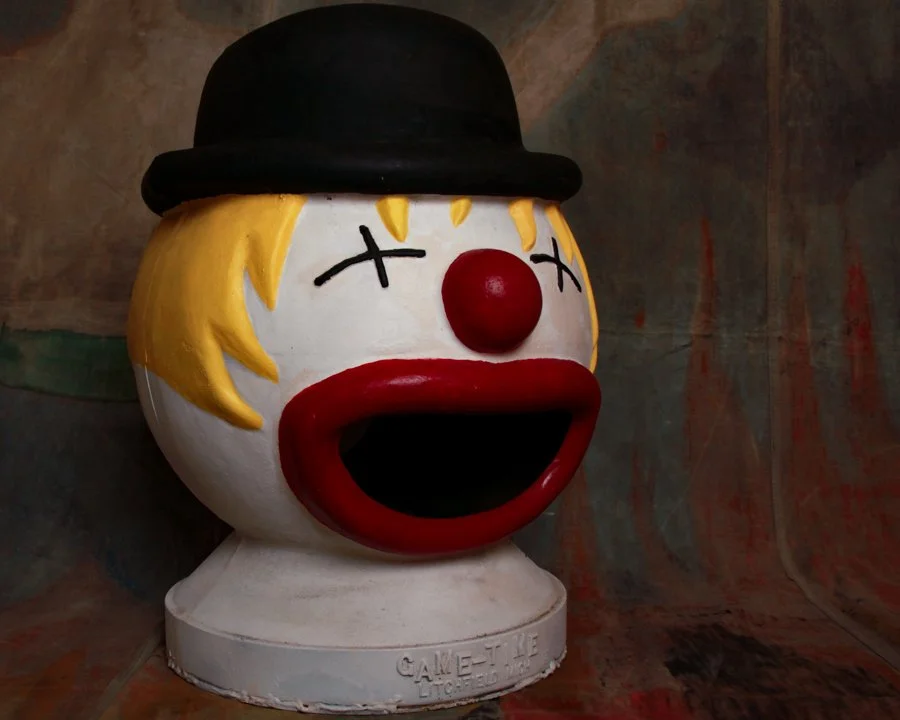
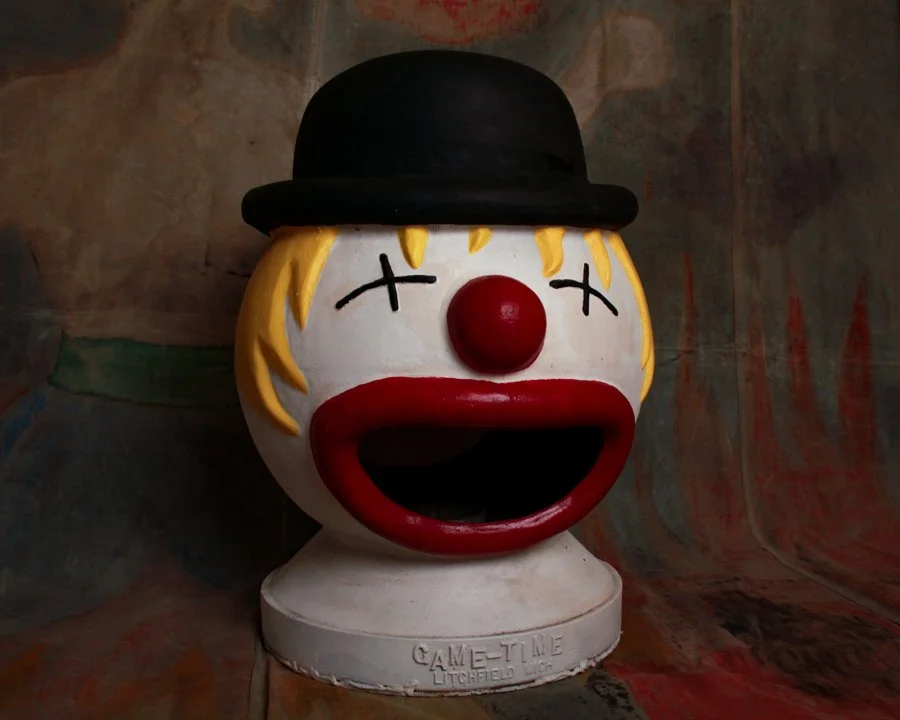
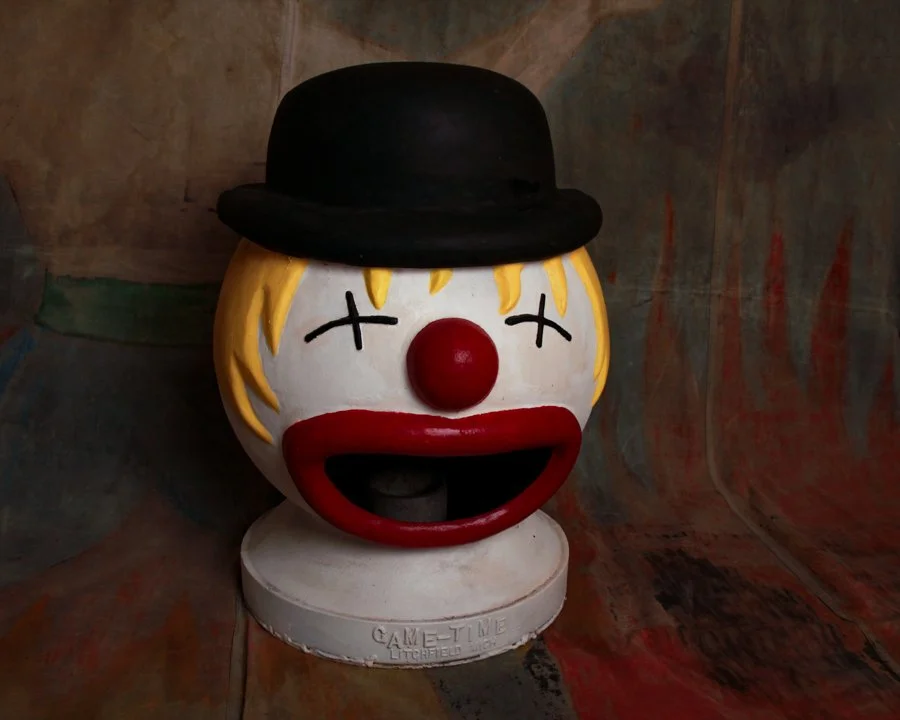
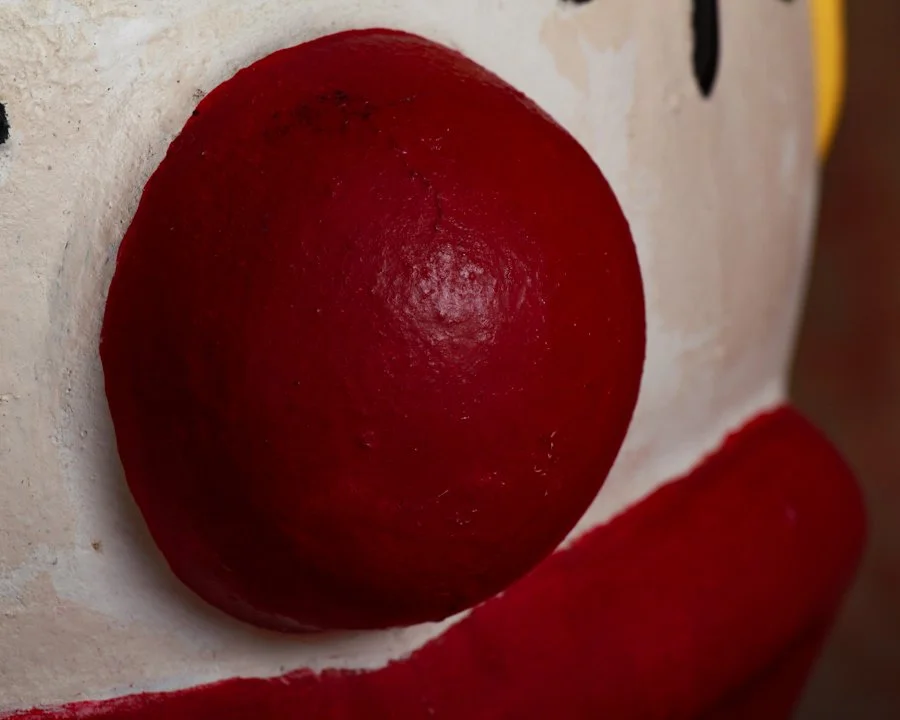
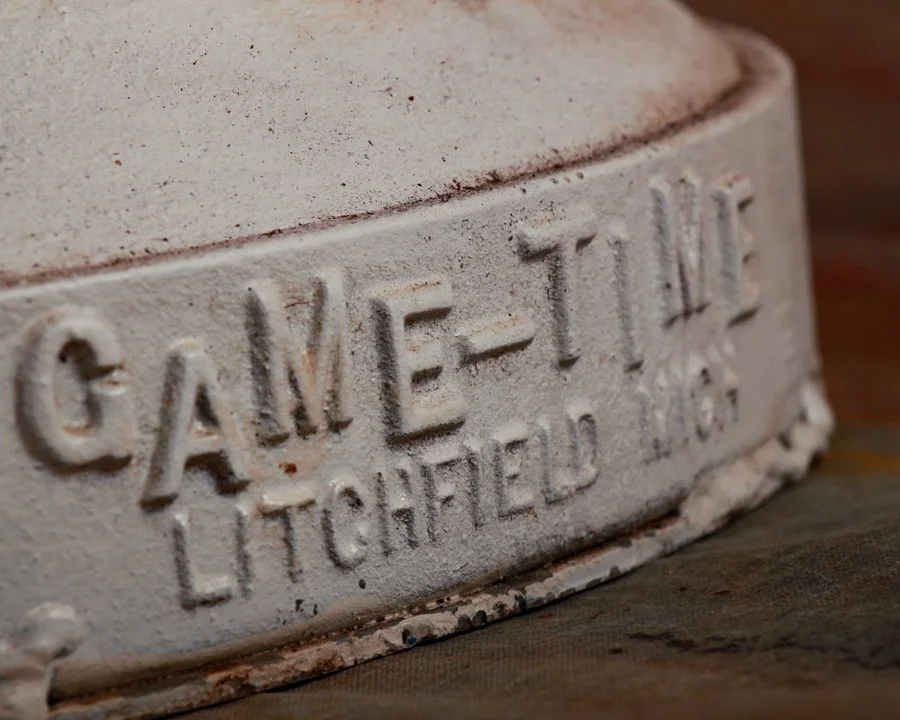

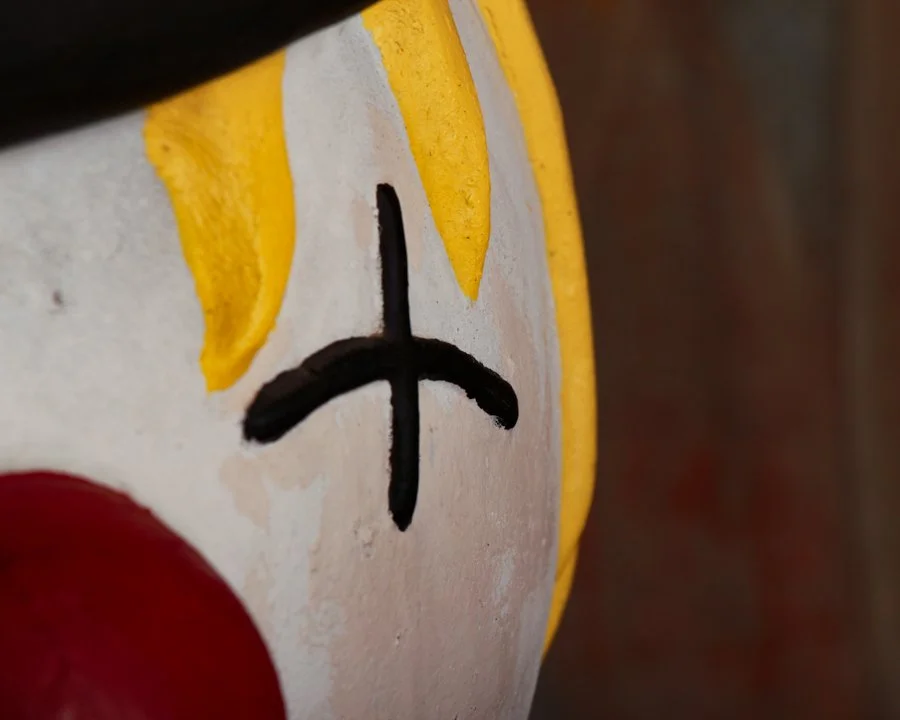
Straight out of an amusement park, this double-sided cast aluminum clown trash can topper is a relic of classic carnival fun. Manufactured by GameTime in Litchfield, Michigan, this grinning clown once sat atop a waste bin, cheerfully swallowing up discarded popcorn boxes and candy wrappers. The design is wonderfully bold—big red lips, a bulbous nose, cartoonish yellow hair, and a black bowler hat that gives it a playful yet slightly eerie charm. The eyes are painted as simple X's, adding to the whimsical, almost mischievous character.
Category History
Old school circuses and fairs were built to arrive fast, dazzle hard, and move on before the dust settled. From the late 19th into the mid-20th century, they rolled into towns by rail or caravan, bringing with them a temporary world—tents rising overnight, banners snapping in the wind, music carrying across open fields.
At the center was variety. Big-top acts, sideshows, games of chance, rides powered by muscle or early mechanics. Strongmen, acrobats, animal acts, illusionists—each part of a carefully paced experience designed to keep you moving from one attraction to the next. Fairs added a local layer—livestock competitions, food stands, and exhibitions that blended entertainment with community.
What made it work was scale and immediacy. Everything was larger, louder, more colorful than everyday life. Hand-painted signs promised wonders, and sometimes delivered them, sometimes didn’t—but that uncertainty was part of the pull.
Behind the scenes, it was all logistics. Crews, timing, transport, setup, teardown. A system built for motion.
What’s compelling now is how tactile it all feels in hindsight. Canvas, wood, metal, paint—nothing virtual, nothing distant. It was a shared, physical experience that existed briefly, then disappeared, leaving just enough memory to keep people waiting for its return.
Straight out of an amusement park, this double-sided cast aluminum clown trash can topper is a relic of classic carnival fun. Manufactured by GameTime in Litchfield, Michigan, this grinning clown once sat atop a waste bin, cheerfully swallowing up discarded popcorn boxes and candy wrappers. The design is wonderfully bold—big red lips, a bulbous nose, cartoonish yellow hair, and a black bowler hat that gives it a playful yet slightly eerie charm. The eyes are painted as simple X's, adding to the whimsical, almost mischievous character.
Category History
Old school circuses and fairs were built to arrive fast, dazzle hard, and move on before the dust settled. From the late 19th into the mid-20th century, they rolled into towns by rail or caravan, bringing with them a temporary world—tents rising overnight, banners snapping in the wind, music carrying across open fields.
At the center was variety. Big-top acts, sideshows, games of chance, rides powered by muscle or early mechanics. Strongmen, acrobats, animal acts, illusionists—each part of a carefully paced experience designed to keep you moving from one attraction to the next. Fairs added a local layer—livestock competitions, food stands, and exhibitions that blended entertainment with community.
What made it work was scale and immediacy. Everything was larger, louder, more colorful than everyday life. Hand-painted signs promised wonders, and sometimes delivered them, sometimes didn’t—but that uncertainty was part of the pull.
Behind the scenes, it was all logistics. Crews, timing, transport, setup, teardown. A system built for motion.
What’s compelling now is how tactile it all feels in hindsight. Canvas, wood, metal, paint—nothing virtual, nothing distant. It was a shared, physical experience that existed briefly, then disappeared, leaving just enough memory to keep people waiting for its return.